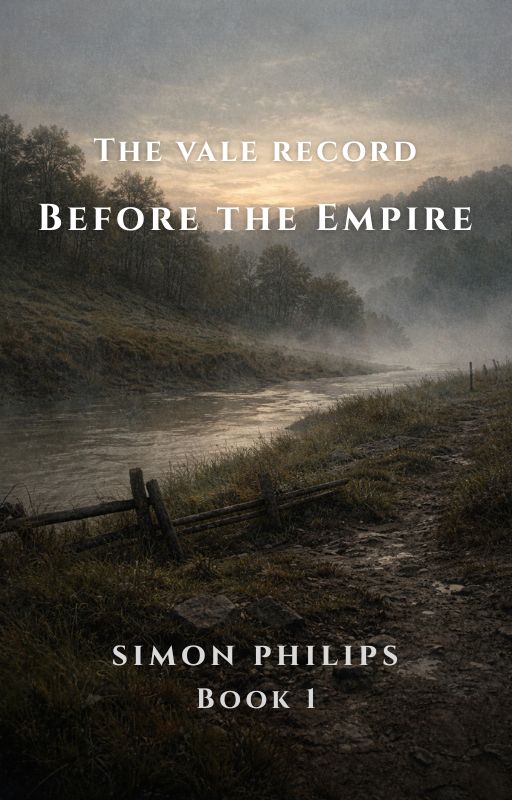
A Literary Vampire Novella Rooted in History
Long before empire fixed its roads across Britain and carved permanence into stone, there were men who believed their lives would rise and fall within the memory of their kin, carried in voice and soil and ritual, measured in seasons and burial mounds rather than conquest. It is within that fragile, communal world that The Vale Record: Before the Empire begins its quiet excavation of immortality, and in doing so positions itself within a rare corner of historical supernatural fiction: the literary vampire novella grounded in realism, erosion, and lived continuity.
This is no spectacle of gothic excess, no romance-bound fever dream of endless youth. It is an examination of survival under historical pressure, an immersive British historical fiction novella in which the supernatural exists as biological divergence, scarcely understood even by the one who endures it. The result is a slow burn gothic novella shaped by land, invasion, and the long aftermath of living beyond one’s allotted span.
Immortality here carries the weight of time, and time itself becomes an instrument of erosion.
Immortality as Erosion, Not Ascension
Within much contemporary vampire fiction without romance, immortality functions as enhancement, an ascension into strength or beauty or mythic dominance. In Before the Empire, survival operates differently. The immortal protagonist does not stride toward destiny; he remains in place while the world shifts beneath him. The land changes hands. Languages soften and fracture. Ritual becomes anecdote. Continuity dissolves.
Immortal protagonist fiction often centres on power. Here, power is incidental. Survival occurs through accident, through circumstance, through an unrecognised biological divergence that separates Marcus Vale from those beside him on the field. There is no revelation, no awakening framed by thunder or prophecy. There is only the slow realisation that time behaves differently for him than for others.
This subtle deviation transforms immortality into erosion. To live across centuries within a framework of historical realism is to experience attrition. Names fade. Kin vanish. Landscapes are renamed. The communal identity of pre-Roman Britain, cyclical and land-bound, yields to Roman order and permanence. Marcus survives through this fracture, and survival itself becomes a quiet violence.
The novella positions immortality and memory fiction within a historically disciplined framework. Major events unfold as they did. Empire advances. Tribes fracture. Cultural erasure proceeds with administrative efficiency. The supernatural offers no correction, no secret mastery. Instead, the immortal remains subject to the same pressures as any other body on the field, with the sole exception that he endures long enough to feel the full arc of consequence.
In this way, the literary vampire novella becomes a meditation on loss, an exploration of how identity erodes when time no longer releases its grip.
Historical Supernatural Fiction Without Spectacle
Historical supernatural fiction often risks spectacle, allowing magic to bend chronology or elevate its protagonist above context. The Vale Record operates with deliberate restraint. The Roman invasion of Britain arrives as disruption, as asymmetrical force, as disciplined machinery pressing against communal land-based identity. There is confusion and brief violence, disorientation and fracture, though the emphasis rests on lived perception rather than panoramic explanation.
The supernatural remains indistinct. There are no mythic hierarchies unveiled, no grand lineage of ancient immortals manipulating history from shadow. Instead, the biological condition that defines Marcus Vale exists within strict limits. He can be harmed. He can age. He will decline. Immortality extends life; it does not suspend consequence.
This restraint situates the novella within a rare sub-genre: supernatural realism novel territory in which the extraordinary unfolds beneath the weight of documented history. The land itself becomes the enduring force. Empires rise. Marcus endures. Yet endurance offers no dominion, only accumulation.
The slow burn gothic novella form proves particularly suited to this thematic terrain. Atmosphere emerges from soil, from communal ritual, from the texture of pre-Roman life before imperial infrastructure. The gothic element lies within the tension between continuity and erasure, between memory and administrative permanence. The horror, if it may be called such, resides in survival without belonging.
Memory as Burden and Inheritance
Immortality and memory fiction often gestures toward nostalgia, toward the romance of centuries. In Before the Empire, memory accumulates unevenly. It remains incomplete, selective, shaped by emotional pressure. Marcus recounts his early life without spectacle. He does not mythologise his own divergence. Instead, memory reveals fracture.
The burden of memory manifests as inheritance. The novella’s modern frame situates Marcus as an ageing patriarch within a private household, choosing to record his life while decline advances. This framing grounds the work firmly within the territory of British historical fiction novella craft, where the past exerts pressure upon the present rather than serving as decorative backdrop.
The act of recording becomes both preservation and distortion. The immortal body weakens while emotional clarity sharpens. The household surrounding Marcus appears stable, ordered, adapted across generations. Yet beneath this surface lies fragility. Memory moves through walls. Secrecy presses inward. The record itself feels finite.
In this sense, the novella becomes as much about inheritance as about survival. Immortality fractures generational continuity. The one who endures cannot fully belong to any generation. He outlives his context. The erosion extends inward.
Readers drawn to Kindle literary novella work that favours psychological restraint over spectacle will recognise this tension. The narrative weight accumulates quietly. Each remembered field, each burial, each vanished voice carries forward into the present room where recording devices hum softly within a Victorian-consolidated house adapted for discretion.
The Vale Record: Before the Empire: A Spotlight
The Vale Record: Before the Empire stands as the opening movement in the series, a British historical fiction novella rooted in pre-Roman Britain during the earliest pressure of Roman incursion. It focuses on a single sustained period, resisting compression, resisting summary. The emphasis rests upon communal identity bound to land and oral tradition, and upon the first unacknowledged divergence from human ageing.
The novella does not offer origin explanation. It avoids mythology expansion. Instead, it presents a lived period in which survival occurs unnoticed, uncelebrated, and misinterpreted. The emotional promise lies in witnessing the quiet collapse of certainty. Tribal belonging yields to empire. The body yields to time, albeit at a different rate. Identity shifts without declaration.
For readers interested in literary vampire novella work that rejects romance tropes and foregrounds historical continuity, this opening volume establishes the tonal discipline of the wider series. Immortality emerges as attrition. Empire becomes the enduring external force against which survival is measured.
The Amazon Kindle edition preserves this atmosphere in its original cadence, allowing readers to enter the world through sustained immersion. There is no urgency attached to that movement. The text waits with the patience of stone.
The Illustrated Mini-Read as Threshold
Alongside the novella, the illustrated mini-read on YouTube functions as a preserved fragment, a threshold moment distilled into visual atmosphere. It captures the tonal quality of early Britain under gathering pressure, offering viewers a brief immersion into the world before empire secures its roads and administrative permanence.
The mini-read does not summarise. It does not reveal. Instead, it extends atmosphere, holding a single breath of time in suspension. As an echo of the novella’s restraint, it operates as a preserved moment rather than promotional device, inviting quiet attention.
Those who encounter the fragment first may find themselves drawn toward the fuller immersion of the Kindle literary novella. Those who begin with the text may recognise familiar textures within the illustrated rendering. The two forms exist in dialogue, each reinforcing the other’s weight.
Empire, Continuity, and the Long Arc of Decline
As the series advances beyond Before the Empire, the scale widens while the emotional centre remains contained. The Roman invasion establishes Marcus Vale’s lifelong relationship with empire, with order imposed upon communal land. The erosion of identity begins here. It continues across centuries.
Immortality and memory fiction of this kind carries forward through accumulation rather than escalation. Each historical role, each belief once held, will gradually be relinquished. Physical decline will unfold without spectacle. Emotional clarity will sharpen even as strength fades.
The closing pages of the opening novella do not promise triumph. They reposition relationships. They introduce fragility within the modern household. The record feels finite. The immortal body approaches its natural end, extended though it may be.
Historical supernatural fiction often gestures toward transcendence. The Vale Record gestures toward extinction, approached with measured composure. The weight of endurance presses inward. Empire remains carved into landscape. Memory persists unevenly. The house stands, adapted and discreet, holding its quiet archive.
In that stillness, the literary vampire novella reveals its true preoccupation: how long a life can extend before it becomes sediment, how memory can preserve and distort in equal measure, and how erosion shapes identity more profoundly than conquest ever could.
The land endures. The record continues.


 Simon J. Phillips