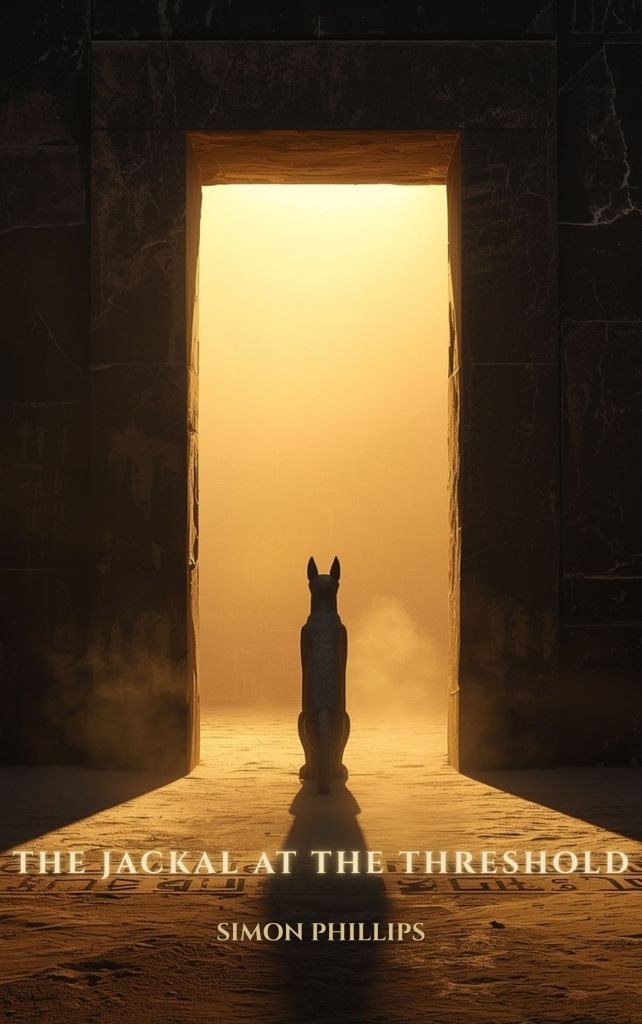
A Dark Fantasy Novella at the Edge of Life and Death
In a landscape shaped by river mud, drifting sand, and forgotten dynasties, Jackal at the Threshold unfolds as a mythic fantasy novella rooted in Egyptian-inspired fantasy and the quiet terror of judgement. This dark fantasy novella follows a thief who crosses a boundary older than kings, only to discover that the gods who guard the dead remain watchful long after temples fall silent.
For readers searching for atmospheric fantasy fiction, short fantasy reads, and Amazon fantasy novellas that carry mythic weight without spectacle, this story stands at the meeting point of ruin and reckoning. It draws from ancient necropolises and jackal-haunted desert winds, yet remains grounded in human frailty: hunger, grief, guilt, and the unbearable cost of choice.
As a British fantasy author working within mythic structures and quiet horror, I have always been drawn to thresholds. Doorways. Riverbanks. The moment before a decision reshapes a life. This Kindle novella lives in that moment and lingers there, asking what remains when gold loses its shine and judgement answers in silence.
The Drowned Kingdom and the Weight of Memory
At the heart of this fantasy novella lies the Drowned Kingdom, an ancient necropolis buried beneath shifting western dunes. Its rulers predate the settled river, its corridors carved with jackals who walk between stars and sand. The tomb does not roar. It waits.
Egyptian-inspired fantasy often leans toward spectacle: plagues, curses, elaborate tomb traps bursting into flame. In Jackal at the Threshold, the horror is colder and more intimate. The air grows still. The pigment on the walls remains untouched by time. Scales hang in perfect balance. The jackal god watches without haste.
The Weighing of the Heart forms the mythic spine of the novella. Yet this weighing concerns more than virtue. It concerns intention. Responsibility. The moment when someone sees the crack in the stone and chooses to hurry anyway.
This is where mythic fantasy becomes personal.
Neris, the central figure, robs tombs because hunger demands it. The river quarter starves while the noble terraces gleam. She descends shafts and clears chambers because coin buys breath for her mother. Such choices feel practical. Necessary. Yet beneath them lie fractures that no silver can mend.
The Drowned Kingdom does not rage at her theft. It does something far more unsettling. It remembers.
Anubis Reimagined: The Jackal at the Boundary
Anubis in this dark fantasy novella is neither tyrant nor saviour. He stands at the threshold, patient and precise, weighing what is carried across his domain. He speaks without spectacle. He offers no absolution. What has been done remains part of the one who has done it.
In many indie fantasy books, gods arrive in thunder and blaze. Here, the jackal god emerges from starlit shimmer and still air. His judgement is measured, his presence quiet and vast. He allows choice. He allows consequence.
This portrayal of Anubis honours the ancient imagery of scales and feather, yet reshapes it into something interior. The weighing becomes a confrontation with memory: a brother sent ahead into a cracking shaft, graves opened in haste, gold lifted from silence. The heart holds all of it.
The result is a mythic fantasy experience that explores divine encounter through restraint rather than spectacle. The god does not shout. The chamber grows colder. The light fades. The boundary tightens. And in that stillness, truth surfaces.
For readers seeking atmospheric fantasy fiction that treats gods as forces of measure rather than miracle, this Kindle novella offers a different path through the myth.
From Tomb Robber to Guide of the Dead
The transformation within this short fantasy read does not hinge on conquest. There is no monster slain, no hoard carried triumphantly into sunlight. Instead, the relic is returned. The sceptre becomes a talisman. The thief becomes a guide.
This shift reframes the entire novella. The necropolis, once a place of plunder, reveals itself as a structure of balance. The jackals carved along the walls do more than threaten. They protect the poor man’s burial as surely as the drowned king’s chamber. The threshold exists for all.
Back in the river quarter, the gift of judgement reshapes Neris’s life. She sees spirit-trails where others see nothing. She speaks river-prayers learned from her grandmother. She eases the hesitant dead toward current and rest.
The world remains narrow. Hunger still lingers. Coin still shapes the day. Yet something has altered. The weight she carries now lifts others rather than burying them.
This is the emotional core of the novella. Mythic fantasy, at its strongest, returns the reader to the human scale. The boundary crossed in desert darkness echoes in a small room by the river. A mark on the chest replaces stolen gold. Service replaces theft.
Jackal at the Threshold: Novella Spotlight
Title: Jackal at the Threshold
Genre: Mythic fantasy novella / Egyptian-inspired dark fantasy
Format: Kindle novella on Amazon
Tone: Atmospheric, restrained, immersive
This Amazon fantasy novella stands alone as a complete story, yet opens the way into a broader mythos of drowned dynasties and watchful gods. It is designed for readers who value short fantasy reads that linger, who prefer atmosphere over haste, and who find meaning in quiet reckoning.
If you are searching for:
- A fantasy novella rooted in ancient desert imagery
- A dark fantasy novella centred on judgement rather than battle
- Indie fantasy books by a British fantasy author exploring myth and threshold
- Kindle novellas that favour consequence over spectacle
then this story offers a deliberate and immersive experience.
You can find the Kindle edition here:
https://www.amazon.com/dp/B0GM9PLM9M
Allow the boundary to open where you choose to cross it.
A Cinematic Glimpse: The Flash-Fiction Threshold
Alongside the novella, a cinematic flash-fiction adaptation is available on YouTube. This short piece acts as a threshold glimpse into the world of the Drowned Kingdom, capturing the atmosphere of desert dusk, carved jackals, and the silent moment before a door yields.
It functions as a fragment. A doorway. A sliver of torchlight against black stone.
For readers who prefer to taste the cadence and mood before stepping fully into the Kindle novella, this flash-fiction video provides that first crossing. It carries the same immersive tone, the same slow gathering of pressure, without revealing the full arc of judgement and transformation.
You can watch the flash-fiction adaptation here:
Consider it the first step into shadow before the chamber opens.
Mythic Fantasy, Indie Spirit, and the Quiet Return of Gods
As part of a growing catalogue of indie fantasy books, Jackal at the Threshold reflects a commitment to mythic structures explored through restraint. These stories move between fantasy novella and quiet horror, between buried histories and layered cities, tracing how ordinary lives intersect with forces older than language.
Living within layered environments where old shrines sit beside neon streets has shaped my sense of story. Thresholds exist everywhere. In a doorway. In a decision. In a single breath held too long.
This dark fantasy novella asks a simple question: what happens when someone crosses a boundary and is allowed to return?
The answer lies less in reward than in responsibility. In the choice to carry balance rather than escape it. In the steady work of guiding what has been unsettled toward rest.
For readers of atmospheric fantasy fiction, Egyptian-inspired fantasy, and Kindle novellas that dwell in silence as much as speech, this story invites you to stand at the edge and listen.
The desert remains wide. The river continues to flow. Somewhere beneath the dunes, stone shifts in the dark and waits.
Step toward the threshold when you are ready.
 Simon J. Phillips