Haunted Rooms in Dark Fantasy: Stillness, Memory, and the Weight of Place

A haunted room in dark fantasy exerts its power through air, pressure, silence, and arrangement. The door closes, the bed remains where it stood, the chair faces the table, the papers wait in their ordered stacks, and still the place feels altered, as though an event has settled into the grain of the world and chosen to remain. Among ancient-feeling fantasy settings, this kind of chamber carries a singular force, since it suggests that memory can cling to matter itself, entering timber, plaster, cloth, and breath until place becomes witness.

That quiet form of haunting carries a deeper hold than spectacle ever could. A monstrous shape may terrify for a moment, while a room that has learned how to keep an absence can linger for far longer, pressing upon the reader with a slower and more intelligent unease. Such spaces feel lived in. They have served ordinary tasks. They have known routine, labour, sleep, ledgers, heat, and dust. Then something enters the pattern, and the familiar order of daily life begins to gather a second meaning.

This is where dark fantasy often finds its most lasting power. The haunted room stands at the meeting point between domestic habit and mythic disturbance. A house may appear ordinary from the lane below. An upper chamber may seem suited to work, sleep, or prayer. Yet once the atmosphere inside it begins to return in the same form after each interruption, the reader senses that the structure itself has joined the story. The haunting no longer belongs to a single hour. It belongs to the building.


The Room as a Vessel of Memory

Old fantasy worlds carry weight through layers. Streets rise above buried foundations. Chapels stand over sealed passages. Walls accept repair after repair until the visible surface and the hidden structure cease to belong to the same age. Within such places, a room becomes more than an enclosed interior. It becomes a vessel, holding the residue of every gesture that has passed through it.

A chamber used for work and rest is especially potent because order makes disturbance easier to feel. A ruined hall already bears the signs of collapse. A battlefield already carries violence in its soil. An occupied room, however, presents another kind of tension. Its chair remains in place. The cord around the papers stays tight. The coverlet lies smoothed from the morning. Every ordinary object reassures the eye, while the air itself begins to resist that reassurance. The result is a far quieter species of dread, one grounded in small recognisable details that begin to estrange one another.

This matters in mythic fantasy because memory seldom survives in complete form. It comes back through fragments, gestures, reports, and traces. A retained smell. A pressure upon the chest. A recurring stillness after the window stands open. These signs feel older than explanation. They belong to the realm of preserved account and partial witness, where certainty thins and atmosphere grows stronger.

In such writing, the room becomes a page that cannot stop rewriting itself. Each person who enters adds a further layer of record, though the deepest impression lies below language. What remains strongest is rarely the formal cause entered into a ledger. What remains strongest is the sense that the place itself has chosen to keep something.


Why Stillness Disturbs More Deeply Than Apparition

Stillness is often more frightening than motion because it suggests patience. An apparition arrives and startles. A sound in the wall provokes immediate alarm. A room that settles into a fixed condition after every disturbance offers something colder. It conveys duration. It implies that the event within the chamber has already passed into the structure, where it can endure with no visible effort.

This is one reason dark fantasy readers remain drawn to enclosed spaces shaped by silence. Silence in such settings never feels empty. It feels occupied. The absence of noise becomes its own kind of presence, and the reader begins to listen for what the room already knows. A hush over a bed, a dimness that gathers too quickly, air that weakens before it reaches the centre of the floor: these details create dread through restraint. The imagination then completes what the record declines to state.

The ancient atmosphere of a mythic setting strengthens that effect. In a contemporary apartment, stillness may suggest poor ventilation or an unpleasant memory. In an older fantasy city built over forgotten works, stillness feels tied to inheritance, ritual failure, or a pressure buried within the foundations. The room belongs to a wider order of things. It has neighbours above and below, and those neighbours belong to a district, and that district stands over earlier structures, older materials, forgotten interventions. A single chamber therefore carries the weight of an entire world beneath it.

This gives the haunted room its symbolic reach. It suggests that private life never stands entirely apart from buried history. A death recorded as strain or failure may still bear the shape of something older. A clerk working at his table may still sit above a line of pressure he has never seen. Dark fantasy becomes most compelling when the visible life of a city continues untouched on the surface while its deeper truth gathers quietly in the spaces people believe they understand.


The Clerk Who Folded Inward and the Architecture of Quiet Dread
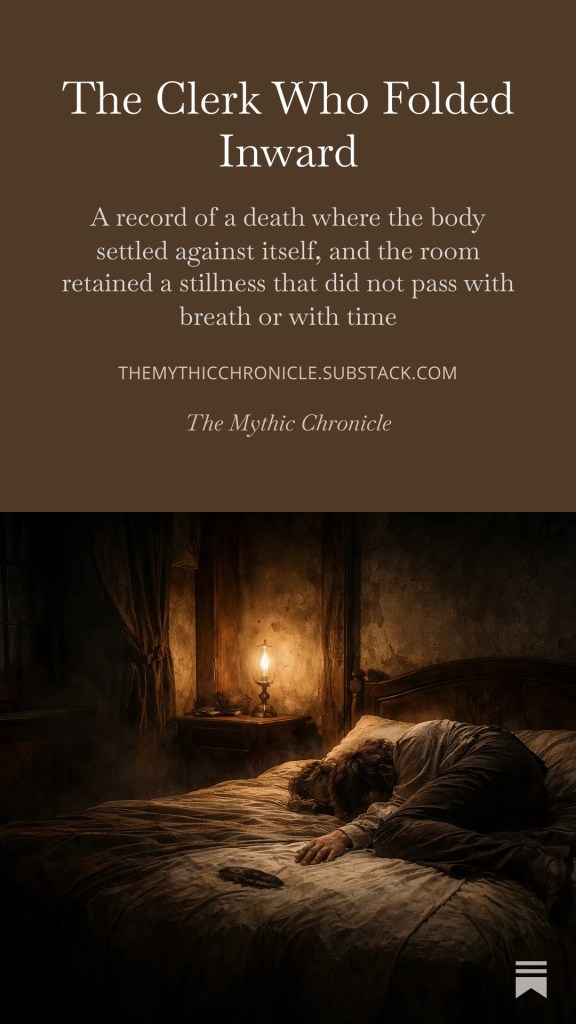
The fourth Mythic Chronicle entry, The Clerk Who Folded Inward, appeared on Substack on 28 April 2026 with the subtitle describing a death where the body settled against itself and a room whose stillness outlasted breath and time. Its opening section presents an upper chamber above a trade lane, a bed, a table, ordered papers, and an atmosphere that gathers again after each intrusion, while the post itself stands as a paid Chronicle entry approached through a free opening threshold.

What gives this Chronicle its force is the refusal of excess. The chamber remains plain. The event receives the practical language of inquiry. The witnesses behave with measured reserve. Even the unease enters gently, first as a pressure within the chest, then as a quality of air, then as a pattern of return. The space accepts fresh air only briefly. The impression upon the bed holds the eye. The chair carries a slight turn away from order. Through these details, the room becomes an instrument of dread.

The reader feels the disturbance through arrangement. Nothing has been overturned. No visible breach gives itself away. The chamber has endured within ordinary life, which makes its altered condition feel more intimate and more invasive. The haunting lies in continuity. The room remains useful. The lane continues below. The work of the house carries on. Yet each new entry confirms the same fact: once the disturbance settles, the chamber restores itself to that same enclosed state.

This kind of haunted room embodies a central strength in mythic fantasy. The supernatural enters through pressure, recurrence, and record. The official explanation may stand. The deeper reality continues beneath it. That tension between ledger and atmosphere gives the piece its authority, since the world within the Chronicle still behaves as a world of houses, clerks, constables, shutters, work, and habit. The strangeness grows from inside the structure, never from outside the frame.


When a Room Becomes Part of a Larger Pattern

A single chamber becomes truly memorable when it feels linked to something wider than itself. The upper room in Chronicle 4 carries exactly that quality. It presents an isolated death on the surface, though the atmosphere inside the space suggests continuity with a larger buried pressure. The room feels like one visible symptom in a city that has already begun to answer through its own materials.

This is where the haunted room moves beyond gothic ornament and enters mythic territory. It no longer serves as a backdrop for fear alone. It becomes evidence. A retained stillness hints at a structure learning how to hold events, perhaps even how to shape response. The room begins to feel less like a location and more like a node within a pattern stretching through walls, passages, plaster, and older unseen lines.

Readers who love ancient fantasy often seek precisely this sense of scale concealed inside intimacy. The larger power remains indirect, though its pressure reaches the smallest details. A mark under plaster. A sound beneath stone. A change in the air over a bed. Each sign appears slight when taken alone. Together they suggest a world where forgotten forces persist through environment long before they reveal themselves through open action.

That environmental form of storytelling is especially rich because it preserves mystery. The room can be entered, described, ventilated, reassigned, recorded, and still remain unresolved. The unanswered quality becomes part of the pleasure. The reader leaves with the sense that explanation exists somewhere deeper in the archive, though the fragment itself remains complete in mood and emotional consequence.


The Fuller Record Beneath the Chamber
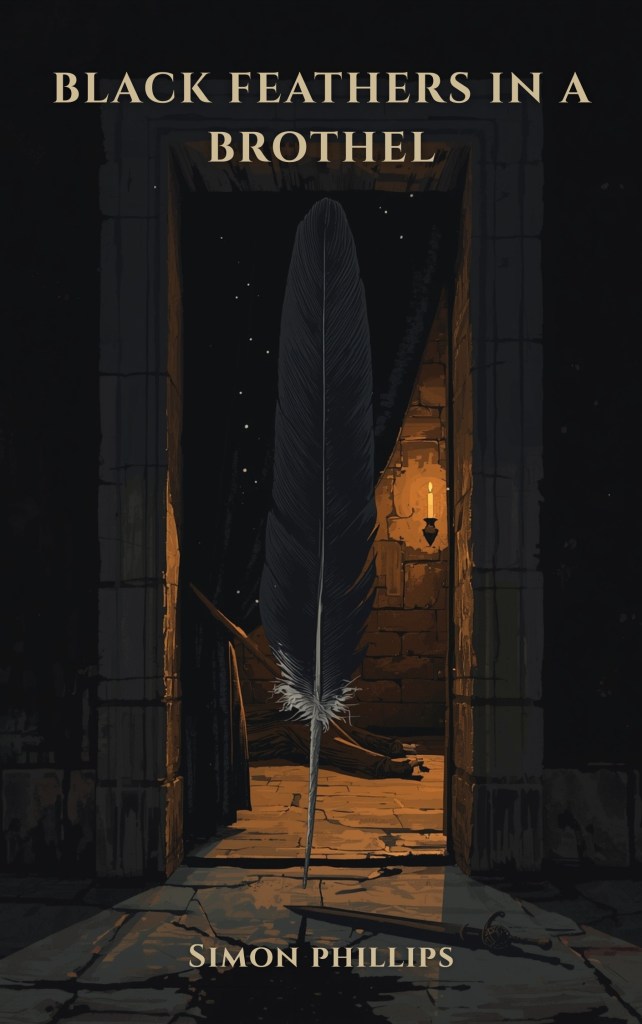
The wider thread beneath Chronicle 4 leads towards the connected novella, Black Feathers in a Brothel, which the Chronicle page presents as the fuller account preserved elsewhere. Amazon listings for ASIN B0GHHZDYVB identify it as Black Feathers in a Brothel: A Dark Fantasy Horror Story from the Hali Files, published on 18 January 2026.

This relationship between Chronicle and novella is part of what gives The Mythic Chronicle its unusual power. The Chronicle approaches the world through fragment, pressure, and half-preserved authority. The novella follows closer to the wound. One form allows memory to drift through the architecture of the city. The other moves nearer to the people caught within it. Together they produce a reading experience shaped through distance and descent.

For a reader arriving through the blog, Chronicle 4 offers an ideal threshold. The upper chamber stands clear in the mind. The imagery remains grounded. The mystery feels self-contained, while the wider pressure of the world still gathers beyond the walls. From there, the passage into the Chronicle archive feels natural, and the movement towards the novella feels like a continuation of the same atmosphere, only nearer the source.


Entering the Archive Through Place

Fantasy readers often speak of characters, magic systems, dynasties, and wars. Place deserves equal attention, especially in work that seeks a more ancient and preserved mode of storytelling. A memorable fantasy world lives through its rooms as much as through its heroes. Chambers, stairwells, chapels, passages, and yards become the vessels through which pressure moves. They hold the world in material form.

This is why the haunted room remains such a powerful gateway into dark fantasy. It offers scale through enclosure. It offers history through atmosphere. It offers emotional reality through small tactile details. Most of all, it gives myth somewhere to settle. Once that happens, even the simplest room can feel older than the house around it, and far older than the explanation written beside it.

Within The Mythic Chronicle, that power is approached through fragments and preserved accounts, where the world feels remembered, partially obscured, and quietly alive beneath the visible order of things. Chronicle 4 stands as one of those thresholds, a chamber above the lane where a death entered the ledger and the air continued to gather after every departure. From that point onward, the room belongs to memory as much as to architecture.

And that may be the deepest strength of the haunted room in dark fantasy. The door closes. The street continues. The house resumes its labour. Somewhere above the lane, the stillness returns to its appointed place, holding what the record could only touch in passing, and waiting there with the patience of stone.
When the Page Opens and the World Follows

The moment where certainty fractures is rarely loud, though it alters everything that stands upon it

There are stories that begin with spectacle, with fire or proclamation, with the unmistakable signal that something has already broken beyond repair. This is not one of those stories. This is a story that begins with a page.

A man stands beneath morning light in a conservation studio, surrounded by the quiet labour of preservation, where history is handled gently, corrected carefully, and returned to stability through patience rather than force. The world outside continues as it always has, measured and dependable, its rhythms so deeply understood that they no longer require attention. Within that space, knowledge feels contained, ordered, and complete.

Then the page shifts.

It does not announce itself. It does not tear or burn. It folds inward.

And the world follows.


A Book That Does Not Behave Like a Book

Some objects are not preserved by time. They are waiting within it.

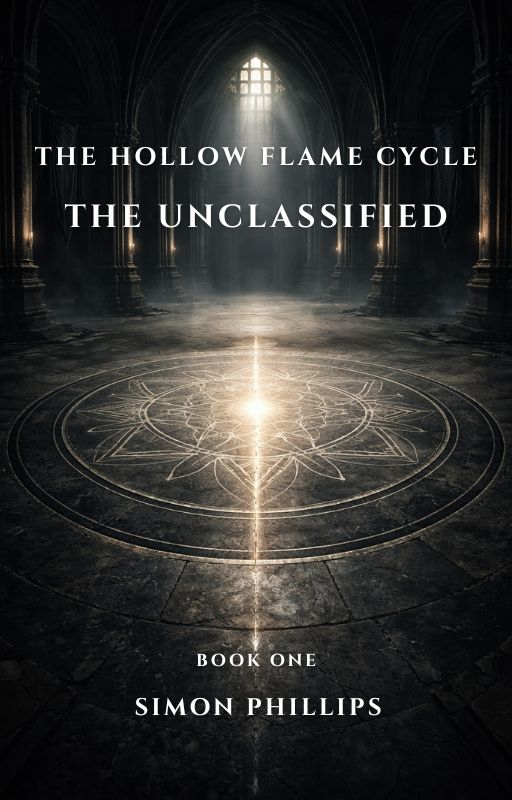
At the centre of The Unclassified, the first entry in The Hollow Flame Cycle, lies an object that resists classification at the most fundamental level. It resembles a book in form, though resemblance is the only certainty it offers. Its script refuses recognition, its structure resists familiarity, and its presence unsettles the very idea of passive material.

Silas Thorn approaches it as he would any artefact: with care, with discipline, and with the quiet confidence of someone who has spent his life restoring the past to coherence. His work is grounded in physical reality, in fibres, ink, binding, and time. Every action is deliberate, reversible, and measured against centuries of accumulated knowledge.

The book does not respond to that framework.

It holds warmth where none should exist. It bends light in ways that resist explanation. It answers touch with something that cannot be reduced to material behaviour.

What unfolds in that moment is not destruction, nor is it revelation in any familiar sense. It is intrusion.

The known world does not break. It gives way.


The Crossing That Leaves No Mark

Not all thresholds are visible. Some exist only in the moment they are crossed.

When Silas falls through the page, the act is not framed as travel. There is no preparation, no ritual, no understanding. The transition occurs in the space between expectation and perception, where reality has not yet had time to correct itself.

He lands not in chaos, though that might have been easier to comprehend.

He arrives in order.

The chamber that receives him is vast, structured, and deliberate. Its architecture carries the weight of centuries, its design shaped by authority rather than accident. Nothing appears broken. Nothing appears disturbed. The world into which he emerges does not recognise itself as interrupted.

This is the first tension the novella establishes with precision: the crossing is not treated as an anomaly by the space itself.

It is treated as an event that must be answered.


Authority Before Understanding

Institutions do not wait for clarity. They respond.

One of the defining tensions within The Unclassified lies in the way power reacts to uncertainty. The Crown, embodied through Princess Lirael and the sovereign, does not hesitate. The event is assessed, contained, and integrated into existing frameworks of control with remarkable efficiency.

There is no panic.

There is no denial.

There is only response.

Silas is not treated as an intruder in the traditional sense, nor is he embraced as a miracle. He is categorised as a problem requiring management. His presence is stabilised through containment, his movement restricted, his existence placed within the boundaries of governance.

This reaction reveals something fundamental about the world itself.

It does not collapse under pressure.

It absorbs it.


The Quiet Fracture Beneath Control

The most dangerous shift is the one that leaves everything looking unchanged.

While the structures of authority hold firm, the novella introduces a quieter, more unsettling movement beneath them. Through Princess Seréne, a different kind of awareness begins to emerge, one less concerned with immediate control and more attuned to what the event represents.

The foundations have opened.

They have closed again.

No mark remains.

This absence of damage becomes the central disturbance.

If the system can admit something without rupture, then the boundaries that define it are not as absolute as they were believed to be. The palace, the Crown, the Guild, and the very idea of structured reality all rest upon assumptions that have not yet been tested in this way.

Seréne does not rush to resolve this contradiction.

She recognises it.

And in doing so, she becomes the first to truly stand within the question the novella poses.


A World That Does Not Recognise Itself

When two systems meet, neither remains untouched.

The introduction of Silas’s world, described in fragments through his attempts to explain it, creates a second layer of tension. His reality is defined by written law, mechanical systems, and a complete absence of what this new world considers foundational.

There is no magic.

There are no sigils.

There is no binding of authority into stone.

And yet he stands within a place where all of those things are not only real, but necessary.

The contrast does not resolve into superiority or dismissal. Instead, it reveals the limits of both systems. Each world contains structures that appear complete within their own context. Each becomes unstable when viewed through the lens of the other.

The crossing does not simply move a man from one place to another.

It introduces incompatibility.


Where the First Movement Ends

The hall settles. The question remains.

By the close of the novella, nothing outwardly catastrophic has occurred. The palace still stands. Authority remains intact. The man has been contained. The Guild has been summoned. The system continues to function.

And yet something irreversible has begun.

The foundations have responded to something they were never meant to receive.

A man from a world without magic stands at the centre of a system built upon it.

The Crown has acted without understanding.

The Guild has arrived without conclusion.

The question has entered the world.

It has not left.


Step Into the Hall

If you want to experience the full unfolding of this first disturbance, you can read The Unclassified here:

This is the opening movement of The Hollow Flame Cycle, where the story does not begin with collapse, but with the moment just before it becomes possible.

The page has opened.

The world has followed.

And nothing, though it appears unchanged, will remain as it was.

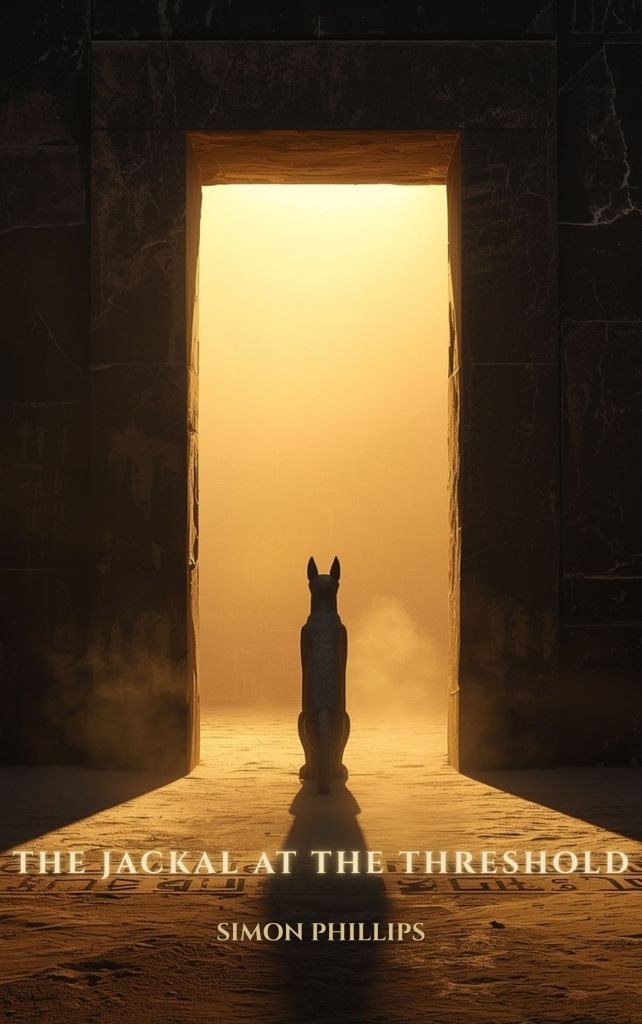
Jackal at the Threshold: A Mythic Fantasy Novella of Anubis, Judgement, and the Drowned Kingdom

A Dark Fantasy Novella at the Edge of Life and Death

In a landscape shaped by river mud, drifting sand, and forgotten dynasties, Jackal at the Threshold unfolds as a mythic fantasy novella rooted in Egyptian-inspired fantasy and the quiet terror of judgement. This dark fantasy novella follows a thief who crosses a boundary older than kings, only to discover that the gods who guard the dead remain watchful long after temples fall silent.

For readers searching for atmospheric fantasy fiction, short fantasy reads, and Amazon fantasy novellas that carry mythic weight without spectacle, this story stands at the meeting point of ruin and reckoning. It draws from ancient necropolises and jackal-haunted desert winds, yet remains grounded in human frailty: hunger, grief, guilt, and the unbearable cost of choice.

As a British fantasy author working within mythic structures and quiet horror, I have always been drawn to thresholds. Doorways. Riverbanks. The moment before a decision reshapes a life. This Kindle novella lives in that moment and lingers there, asking what remains when gold loses its shine and judgement answers in silence.

The Drowned Kingdom and the Weight of Memory

At the heart of this fantasy novella lies the Drowned Kingdom, an ancient necropolis buried beneath shifting western dunes. Its rulers predate the settled river, its corridors carved with jackals who walk between stars and sand. The tomb does not roar. It waits.

Egyptian-inspired fantasy often leans toward spectacle: plagues, curses, elaborate tomb traps bursting into flame. In Jackal at the Threshold, the horror is colder and more intimate. The air grows still. The pigment on the walls remains untouched by time. Scales hang in perfect balance. The jackal god watches without haste.

The Weighing of the Heart forms the mythic spine of the novella. Yet this weighing concerns more than virtue. It concerns intention. Responsibility. The moment when someone sees the crack in the stone and chooses to hurry anyway.

This is where mythic fantasy becomes personal.

Neris, the central figure, robs tombs because hunger demands it. The river quarter starves while the noble terraces gleam. She descends shafts and clears chambers because coin buys breath for her mother. Such choices feel practical. Necessary. Yet beneath them lie fractures that no silver can mend.

The Drowned Kingdom does not rage at her theft. It does something far more unsettling. It remembers.

Anubis Reimagined: The Jackal at the Boundary

Anubis in this dark fantasy novella is neither tyrant nor saviour. He stands at the threshold, patient and precise, weighing what is carried across his domain. He speaks without spectacle. He offers no absolution. What has been done remains part of the one who has done it.

In many indie fantasy books, gods arrive in thunder and blaze. Here, the jackal god emerges from starlit shimmer and still air. His judgement is measured, his presence quiet and vast. He allows choice. He allows consequence.

This portrayal of Anubis honours the ancient imagery of scales and feather, yet reshapes it into something interior. The weighing becomes a confrontation with memory: a brother sent ahead into a cracking shaft, graves opened in haste, gold lifted from silence. The heart holds all of it.

The result is a mythic fantasy experience that explores divine encounter through restraint rather than spectacle. The god does not shout. The chamber grows colder. The light fades. The boundary tightens. And in that stillness, truth surfaces.

For readers seeking atmospheric fantasy fiction that treats gods as forces of measure rather than miracle, this Kindle novella offers a different path through the myth.

From Tomb Robber to Guide of the Dead

The transformation within this short fantasy read does not hinge on conquest. There is no monster slain, no hoard carried triumphantly into sunlight. Instead, the relic is returned. The sceptre becomes a talisman. The thief becomes a guide.

This shift reframes the entire novella. The necropolis, once a place of plunder, reveals itself as a structure of balance. The jackals carved along the walls do more than threaten. They protect the poor man’s burial as surely as the drowned king’s chamber. The threshold exists for all.

Back in the river quarter, the gift of judgement reshapes Neris’s life. She sees spirit-trails where others see nothing. She speaks river-prayers learned from her grandmother. She eases the hesitant dead toward current and rest.

The world remains narrow. Hunger still lingers. Coin still shapes the day. Yet something has altered. The weight she carries now lifts others rather than burying them.

This is the emotional core of the novella. Mythic fantasy, at its strongest, returns the reader to the human scale. The boundary crossed in desert darkness echoes in a small room by the river. A mark on the chest replaces stolen gold. Service replaces theft.

Jackal at the Threshold: Novella Spotlight

Title: Jackal at the Threshold
Genre: Mythic fantasy novella / Egyptian-inspired dark fantasy
Format: Kindle novella on Amazon
Tone: Atmospheric, restrained, immersive

This Amazon fantasy novella stands alone as a complete story, yet opens the way into a broader mythos of drowned dynasties and watchful gods. It is designed for readers who value short fantasy reads that linger, who prefer atmosphere over haste, and who find meaning in quiet reckoning.

If you are searching for:

  • A fantasy novella rooted in ancient desert imagery
  • A dark fantasy novella centred on judgement rather than battle
  • Indie fantasy books by a British fantasy author exploring myth and threshold
  • Kindle novellas that favour consequence over spectacle

then this story offers a deliberate and immersive experience.

You can find the Kindle edition here:
https://www.amazon.com/dp/B0GM9PLM9M

Allow the boundary to open where you choose to cross it.

A Cinematic Glimpse: The Flash-Fiction Threshold

Alongside the novella, a cinematic flash-fiction adaptation is available on YouTube. This short piece acts as a threshold glimpse into the world of the Drowned Kingdom, capturing the atmosphere of desert dusk, carved jackals, and the silent moment before a door yields.

It functions as a fragment. A doorway. A sliver of torchlight against black stone.

For readers who prefer to taste the cadence and mood before stepping fully into the Kindle novella, this flash-fiction video provides that first crossing. It carries the same immersive tone, the same slow gathering of pressure, without revealing the full arc of judgement and transformation.

You can watch the flash-fiction adaptation here:

Consider it the first step into shadow before the chamber opens.

Mythic Fantasy, Indie Spirit, and the Quiet Return of Gods

As part of a growing catalogue of indie fantasy books, Jackal at the Threshold reflects a commitment to mythic structures explored through restraint. These stories move between fantasy novella and quiet horror, between buried histories and layered cities, tracing how ordinary lives intersect with forces older than language.

Living within layered environments where old shrines sit beside neon streets has shaped my sense of story. Thresholds exist everywhere. In a doorway. In a decision. In a single breath held too long.

This dark fantasy novella asks a simple question: what happens when someone crosses a boundary and is allowed to return?

The answer lies less in reward than in responsibility. In the choice to carry balance rather than escape it. In the steady work of guiding what has been unsettled toward rest.

For readers of atmospheric fantasy fiction, Egyptian-inspired fantasy, and Kindle novellas that dwell in silence as much as speech, this story invites you to stand at the edge and listen.

The desert remains wide. The river continues to flow. Somewhere beneath the dunes, stone shifts in the dark and waits.

Step toward the threshold when you are ready.