There are moments when failure announces itself loudly. Alarms sound. Lights change. Authority moves in response to visible threat.
Then there are the other moments.
The ones that pass inspection.
Harbinger Protocol was built around those quieter failures. The ones logged, approved, signed off, and archived without protest. The incidents that make sense on paper and leave a faint pressure in the room once the report ends.
The flash-fiction fragments I have been releasing recently come from that space. They are not scenes in the conventional sense. They are residues. Procedural echoes. Things overheard through systems that were never designed to listen for consequence.
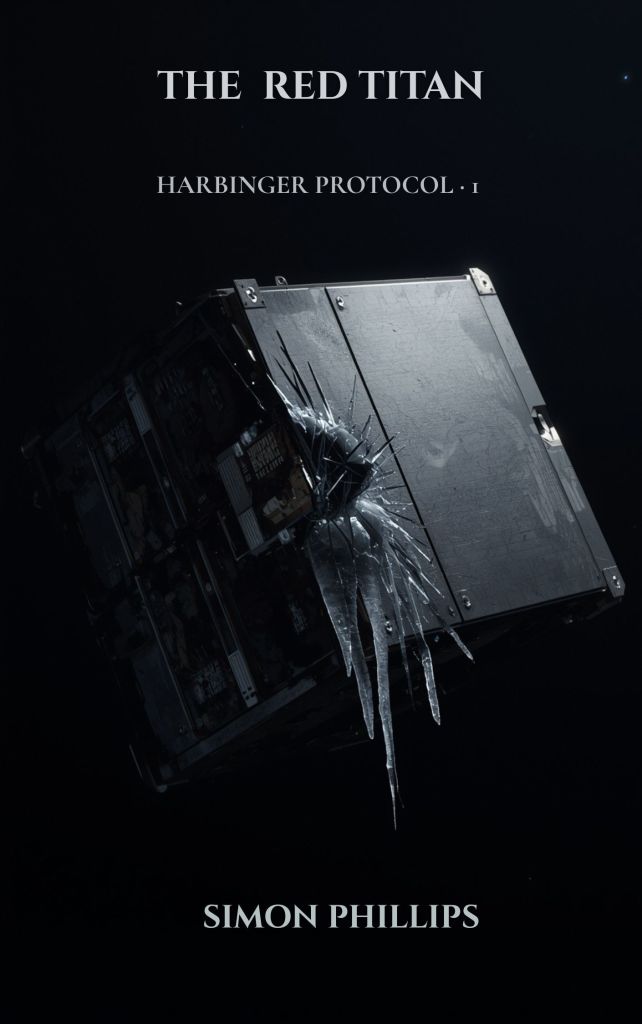
One of those fragments centres on a compartment that received clearance twice.
No alarm followed the first authorisation.
No escalation followed the second.
Every reading remained stable.
The repetition carried no technical significance. That is what unsettled it.
Clearance systems exist to remove hesitation. They translate judgement into colour states, timestamps, and confirmation loops. Once permission is granted, the system proceeds without interpretation. That design works well in stable environments. It functions less cleanly when the environment begins to change in ways the system cannot name.
In Harbinger Protocol, those changes arrive early and quietly.
The flash-fiction videos released on YouTube present these moments as isolated artefacts. A log entry. A procedural pause. A line written down and accepted because nothing else contradicted it. They are intended to feel incomplete, as though part of the context remains elsewhere.
That context lives in the short story.
📘 Harbinger Protocol: available on Amazon Kindle
https://www.amazon.com/dp/B0GJPHF7FH
The book expands the same approach across a wider frame. Institutions responding through habit. Authorities interpreting anomalies through existing language. Witnesses revising statements under pressure until they align with what the system expects to hear.
Nothing in the story announces itself as extraordinary. The horror develops through repetition, delay, and misinterpretation. By the time recognition arrives, the paperwork already carries multiple signatures.
The YouTube video linked below functions as a recovered fragment from that larger record. It stands on its own, although it gains weight when placed alongside the written report.
▶ Watch the flash-fiction video
I have chosen to release these fragments alongside the book for a specific reason. The Harbinger Protocol project relies on atmosphere and accumulation. Each piece adds pressure without resolving it. The videos create a sense of institutional proximity. The book carries the full procedural arc.
Neither replaces the other. They occupy adjacent layers.
This approach reflects the world of the story itself. Systems communicate through partial records. Decisions pass through multiple hands. Meaning emerges through overlap, delay, and repetition. The audience assembles understanding in the same way the characters do.
Slowly.
Indirectly.
After the moment when intervention might have mattered.
If you are drawn to restrained science fiction, procedural horror, and narratives that unfold through systems instead of spectacle, Harbinger Protocol was written for that space. The fragments will continue to appear. The records remain open.
Some files clear once.
Some clear twice.
The difference arrives later.

 Simon J. Phillips