Why I Wrote The Veil of Kings and Gods

There was a moment, years ago, when I finished reading a fantasy book and set it down with that lingering ache only good stories leave behind. But this time, something different stirred. I remember thinking, I love this world… but I would have done the magic differently.

That thought, quiet but persistent, was the spark that began this journey.


A Quiet Beginning

I’ve always loved stories. I was sketching characters and scribbling in notebooks before I knew what genre even meant. For me, storytelling wasn’t about ambition. It wasn’t about publishing or platforms or careers.

It was something I did because I loved the word-building and the idea of losing myself in my fantasies.

Writing, like painting, was my calm space in a world that often felt too loud.


The Question That Wouldn’t Let Go

Years later, I read a fantasy series that changed something in me. I won’t name it, but I remember wishing that the magic system worked differently. I wanted to see a kind of magic that wasn’t spoken or shouted, but silent. What if casting spells required nothing but will and cost? What if power came from absence, not control?

That question sat with me. And over time, it grew.

It became the foundation for The Veil of Kings and Gods.


Years of Silence and Sparks

Writing this novel wasn’t quick, and it certainly wasn’t easy. Life was full, sometimes too full. Jobs, exhaustion, raising a newborn, moments of doubt. There were months where I barely touched the manuscript… and others where I couldn’t stop.

I rewrote chapters. Deleted scenes. Rethought characters. Rebuilt the entire world from scratch. But I never stopped, because the story wouldn’t let me go.

What began as a simple idea, a magician who doesn’t speak, turned into something far bigger. A world where gods have gone silent. Where prophecy falters. Where fate rewrites itself.


What This Story Truly Is

I won’t spoil too much, but here’s the heart of it:

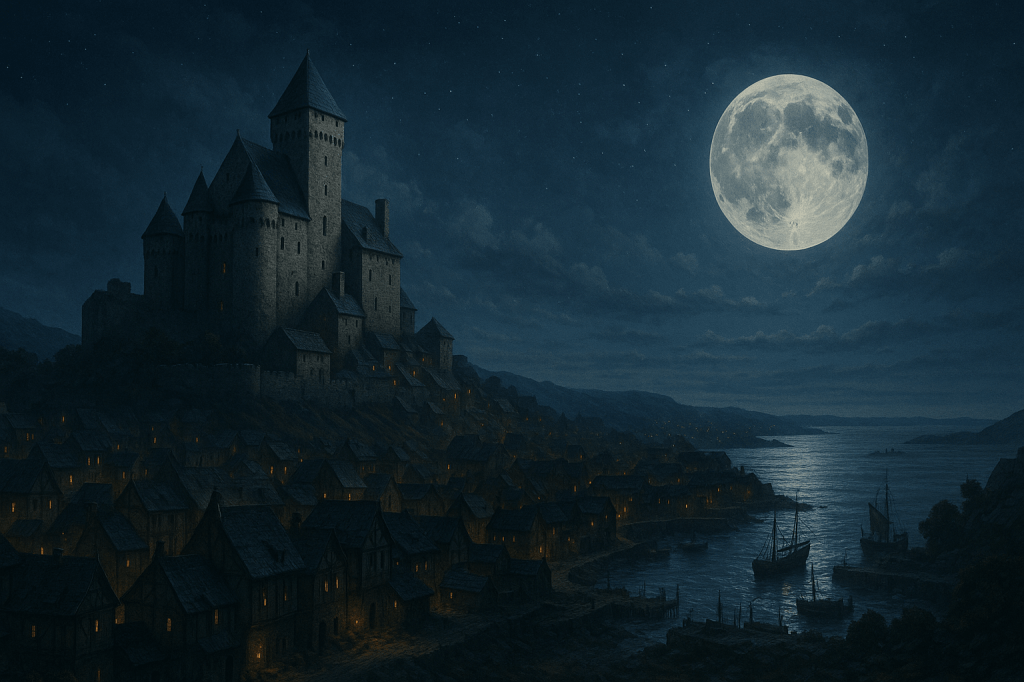
The Veil of Kings and Gods is set in Ældorra, a fractured realm of forgotten empires and divine silence. The old god-chosen magicians are gone. The demon they once sealed away is stirring again.

At the centre is Simion, a quiet magician who doesn’t cast spells the way others do. He doesn’t speak incantations. He doesn’t crave power. But he’s the one who will break the Spiral and reshape prophecy.

There’s a prince scarred by loyalty and forbidden sexual preference.

A noble sister caught between obedience and rebellion.

Secret orders. Collapsing kingdoms. Ancient ruins that whisper truths long buried.

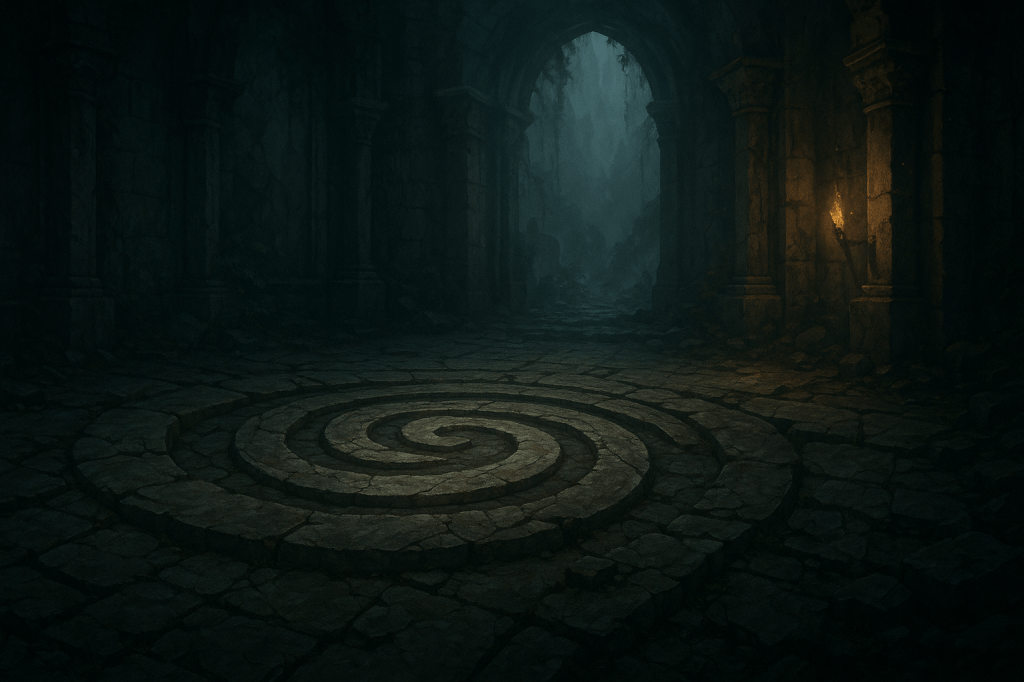
And above it all, the Spiral, a symbol that marks not just fate, but the collapse and rebirth of magic itself.


Why Now?

Because I stopped waiting.

For years I told myself the same things: “When life settles down… when I’ve got more time… when it’s perfect.” But none of that ever came.

So I’ve decided to start where I am.

I’m sharing this novel. I’m building this world aloud. Not because I believe I’m the next great fantasy author, but because I believe this story matters. And maybe… it will matter to someone else too.


Watch the Video

If you’d like to hear the more personal version of this journey, I recorded a video where I speak directly about why I wrote this book, how long it’s taken, and what’s still to come. You can watch it below:


Join Me

If this world sounds like something you’d like to explore, you’re in the right place.

I’ll be sharing lore, character art, short stories, and behind-the-scenes posts as I bring The Veil of Kings and Gods to life. You can follow the blog or subscribe to the YouTube channel.

This is just the beginning and I’m glad you’re here.
The Spiral

A symbol older than the gods. A force that remembers what prophecy has forgotten.


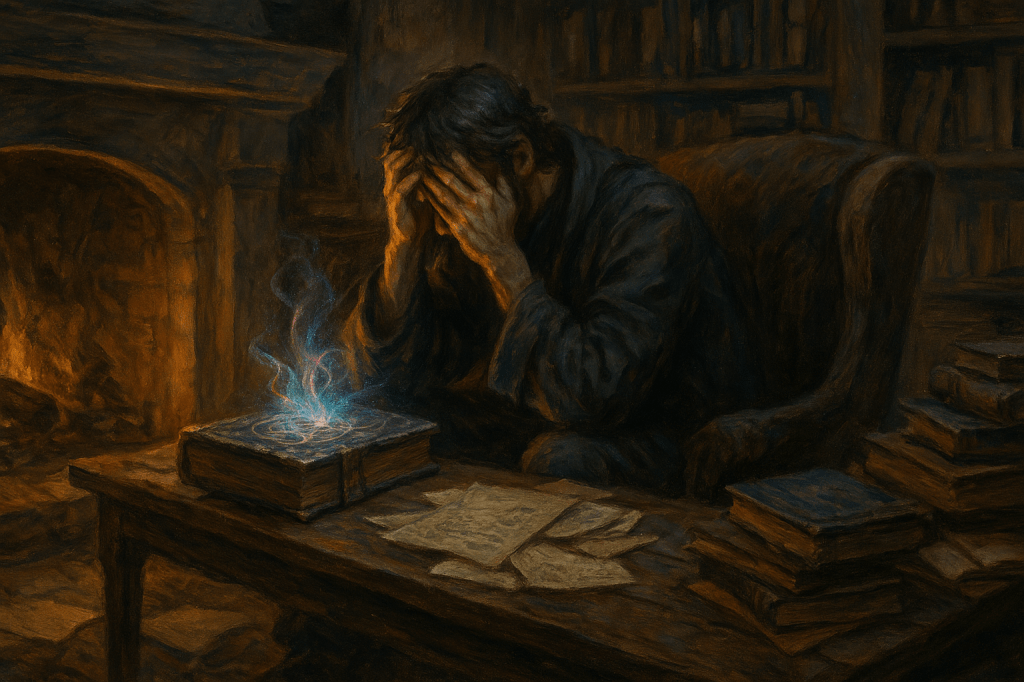
In the world of The Veil of Kings and Gods, the Spiral is not a belief. It is not a language, a temple, or a rite. It is a force, unfolding, recursive, and alive in ways mortals and divines no longer understand.

Some call it fate. Others call it a pattern. The truth lies somewhere between what is remembered and what was erased.

The Spiral does not move forward. It returns.


🌀 What Is the Spiral?

The Spiral is how fate is written, and rewritten. Unlike the straight line of mortal will or the perfect circle of divine prophecy, the Spiral folds, shifts, and remembers. It carries every path ever walked, and every path never taken, within itself.

It is the symbol of recursion, of forgotten futures, and of change that cannot be undone. Where prophecy fails, the Spiral turns.


🔮 The Spiral and the Gods

There was a time when the gods could read the Spiral. Their visions were clear, and their voices powerful. Kingdoms rose and fell by their predictions.

But something changed.

The gods grew silent, and the Spiral grew wild. Its turns no longer matched their visions. Prophets saw overlapping truths. Some disappeared. Others fractured.

Now, only a few truly understand the Spiral. Fewer still can act beyond it.


Simion and the Imbalance

Simion does not follow the Spiral. He changes it.

His presence in the world marks a thread the Spiral had not drawn before. A break in the pattern. He is not chosen by gods, nor bound by prophecy. He is the imbalance, a point where the Spiral no longer knows what comes next.

In silence, new paths unfold.


🧭 The Spiral Ages

Long before kingdoms, long before temples, there were stories.

The Chronicles of the Spiral Ages are short tales drawn from early cultures who felt the Spiral’s pull without understanding its shape. They called it a god, a storm, a curse. They carved it into sand and stone. They saw it in birth, death, and silence.

Their stories still echo.

📺 Watch: “The Spiral That Broke the Gods” – Short Lore Video
📺 Watch: “What the Spiral Really Means” – Short Lore Video


🧠 What the Spiral Represents

In this world, and in mine as a writer, the Spiral is not just a symbol. It is a question.

  • What if prophecy could fail?
  • What if fate could be rewritten?
  • What if silence held more power than a divine voice?

The Spiral appears in visions, on ruins, in sealed tombs, and in the margins of ancient texts. It does not answer. It waits.


📚 Related Posts & Stories


🔚 Closing Note

The Spiral is not a faith. It is not a prophecy. It is what comes after.

And it has already begun to turn.

Simon J. Phillips
Author of The Veil of Kings and Gods

The Veil of Kings and Gods

When the gods go silent, prophecy fractures. What rises next cannot be foretold.


This is the novel that shaped the foundation of everything I’ve written since.

At its heart lies a world left in silence. The gods once spoke clearly, shaping kingdoms through chosen bloodlines and divine rituals, but that time has ended. Now, the echoes of their will are fractured, fading, or dangerously misinterpreted. The world remembers their presence but no longer hears their voice.

The Veil of Kings and Gods follows the slow unraveling of that world, and the people who remain in the absence of clear power.

It is not a story about chosen heroes or golden prophecies fulfilled. It is about those left behind. Those who were not supposed to rise, and did.


📖 The Story

The kingdom of Bremyra stands at the edge of collapse. Its kingship is fragile, held together by tradition, prophecy, and military legacy. Beyond its borders, tensions rise between faith and silence, legacy and rebellion, loyalty and doubt.

At the centre of the story is Simion, a quiet figure born without divine favour, yet carrying something far more dangerous, imbalance. Not the kind that disrupts order with chaos, but the kind that shifts the Spiral itself. His presence begins to fracture the remaining threads of prophecy.

As kingdoms struggle to interpret the gods’ absence, and as the Spiral reveals patterns not foretold, a deeper magic begins to awaken, one that predates the divine voices altogether.

This is a world where silence speaks, and power is no longer sacred, but claimed.


🌀 Core Themes

  • Divine Silence: The gods no longer answer, and mortals are forced to act without them.
  • Broken Prophecy: Destiny unravels as old visions contradict what unfolds.
  • The Spiral: Fate is not a line or a circle; it folds, forgets, and returns.
  • Inheritance and Rebellion: Bloodlines, loyalties, and faith all come undone.

🧱 Structure and Tone

The Veil of Kings and Gods is a slow-burn epic fantasy, grounded in character, world-building, and psychological tension. Dialogue is intimate. Action is rare but decisive. Power grows quietly, then reshapes everything in its path.


📍 Where This Novel Sits in My Universe

This book is the central thread in a larger mythos. Other stories connect to it, some in the past, others in forgotten corners of the world. The short story series Chronicles of the Spiral Ages explores myths, cultures, and echoes that ripple into the events of this novel.

Characters from other works will trace their bloodlines, curses, or destinies back to the moments first seen in The Veil of Kings and Gods.

This is where it begins.


🛠️ Current Status

  • Draft One is complete
  • Draft Two is in progress
  • Lore posts and short stories connected to this world will continue to appear on the blog
  • AI-generated artwork and map reveals will be shared via YouTube and site updates

🖼️ Visions from the Realm


🔗 Explore Further


✍️ Closing Note

This page will update as the novel progresses. As more fragments fall into place, through short stories, videos, or lore posts, they will be gathered here.

The silence continues. The Spiral shifts. The Veil has only begun to lift.

Simon J. Phillips
Fantasy & Sci-Fi Author
https://authorsimonphillips.com