Grounded science-fiction noir set aboard a failing asteroid station, where every investigation exposes another fracture in the systems holding Ashfall together.
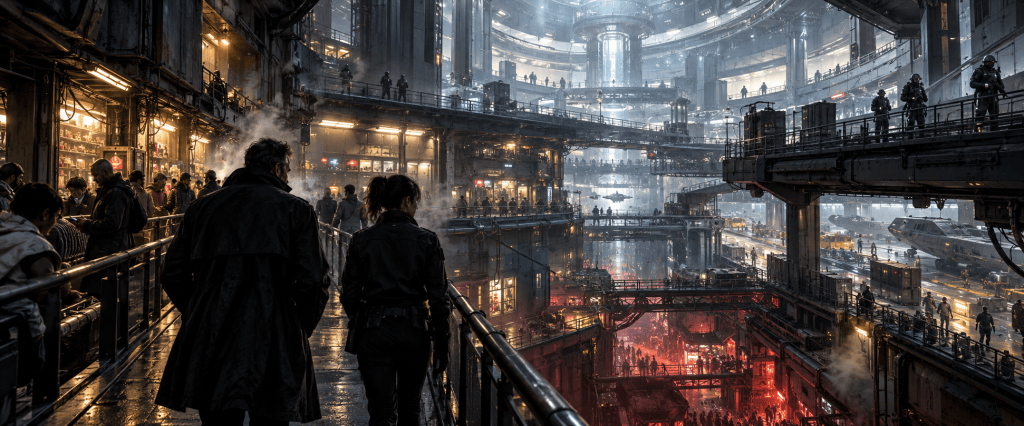
Ashfall Files is a grounded science-fiction noir series centred on crime, institutional failure and the human cost of systems built to protect order before truth. The investigations remain close to Ruff’s experience, so even the largest political developments reach the reader through rooms, corridors, witnesses, evidence, damaged infrastructure and the immediate consequences of decisions made elsewhere. A shift in Fleet policy may first appear as a security barrier appearing across a transit route. A supply problem may become a family waiting for medicine that should already have arrived. A political fracture may become conflicting orders given to officers who still have ordinary crimes waiting on the case board.
That approach keeps the series rooted in the people living aboard Ashfall. The station carries layers of workers, administrators, traders, security personnel, families, contractors and residents whose lives depend upon the same machinery while experiencing that machinery very differently. A poor housing block may hear maintenance crawlers moving through the walls during the night, while Glasswalk residents live behind privacy systems, real greenery and controlled white lighting. Both districts remain connected to the same deeper infrastructure, and both become vulnerable once the pressures inside Ashfall begin moving faster than its authorities can contain them.
Crime provides the opening into that wider world because crime reveals where pressure has already broken something. Murders, disappearances, theft, sabotage and manipulated records grow from scarcity, fear, control and opportunity rather than existing as isolated puzzles. Ruff and Lena may discover who committed an act, yet the investigation often leaves them facing the conditions that allowed it to happen. The solved case therefore becomes part of a larger pattern, and the pattern becomes increasingly difficult to ignore as the series moves forward.
Ashfall Station
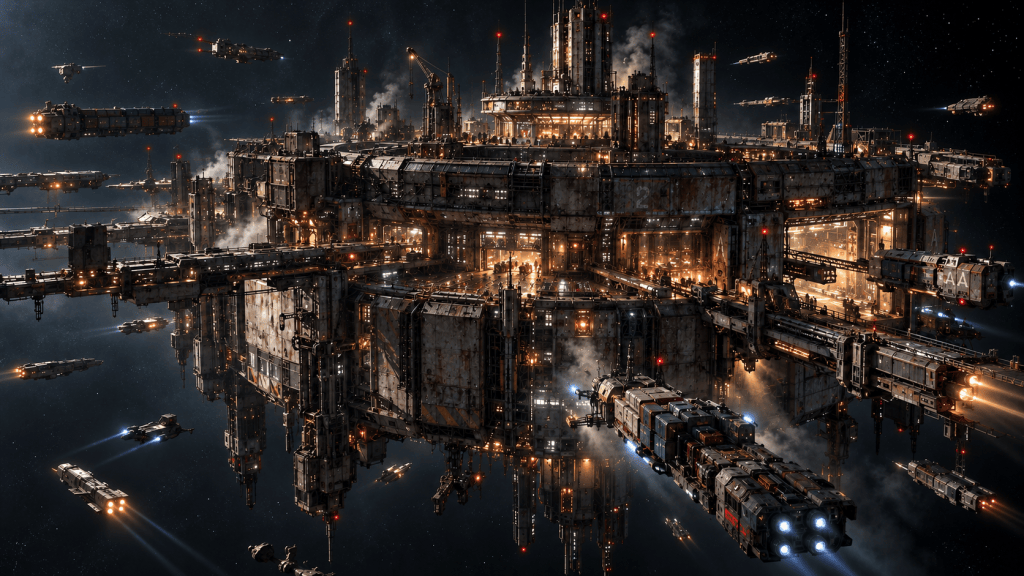
Ashfall Station is an ageing industrial settlement built from freight systems, residential sectors, service corridors, public decks, maintenance routes and administrative areas operating under Earth Fleet authority. The station continues because thousands of people repair, reroute, ration and improvise around failures before those failures become critical. Its infrastructure still works, although much of that reliability comes from people compensating for weaknesses that official systems prefer to describe as manageable. Air circulates through old filtration networks, power crosses systems that have been patched repeatedly, and every populated level remains dependent upon machinery hidden behind walls, floors and access panels.
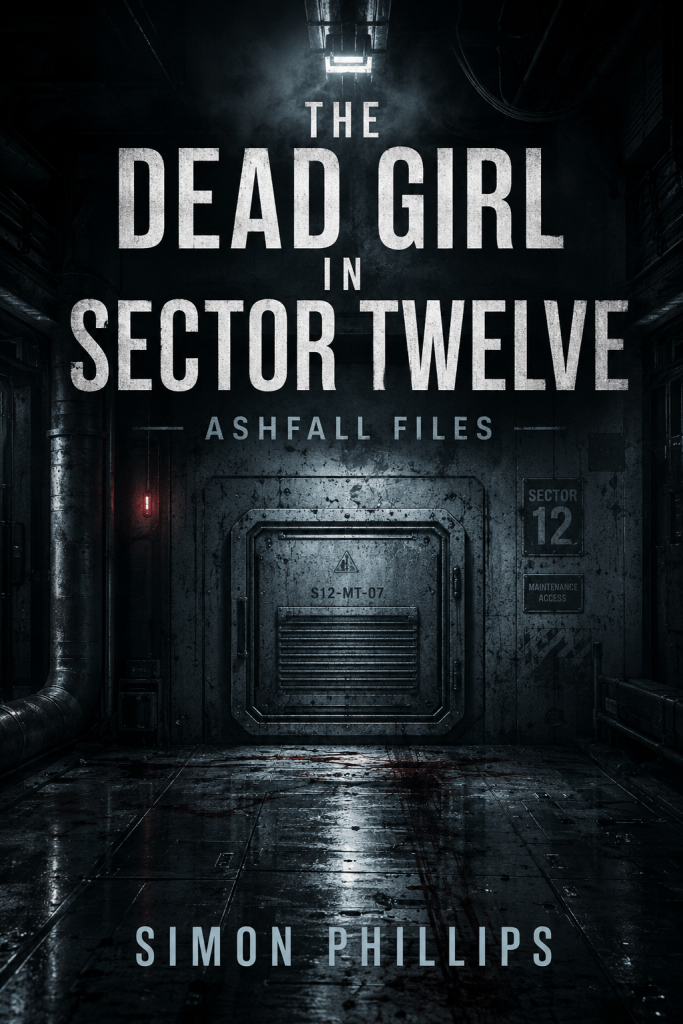
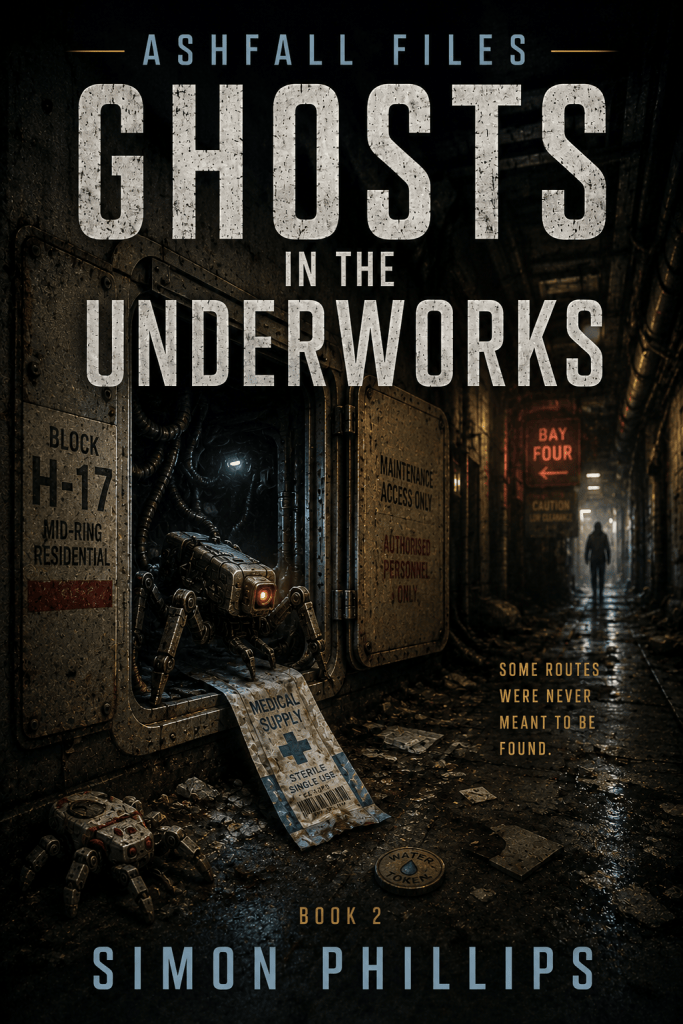
The lower and working parts of Ashfall sit close to the equipment keeping them alive. Residents hear ventilation systems through thin partitions and feel heat coming through service cavities. Lighting flickers across corridors crowded with tools, carts, market stalls and people moving between shifts. Repairs remain visible because another layer of metal, sealant or insulation often becomes part of the wall instead of replacing what came before. Privacy is limited, space is valuable and a broken system can affect an entire household long before anybody with authority arrives to inspect it. Books One and Two show this version of Ashfall particularly clearly through Sector Twelve, Mid-Ring housing, clinic queues, the Freight Spine and the maintenance routes hidden around them.
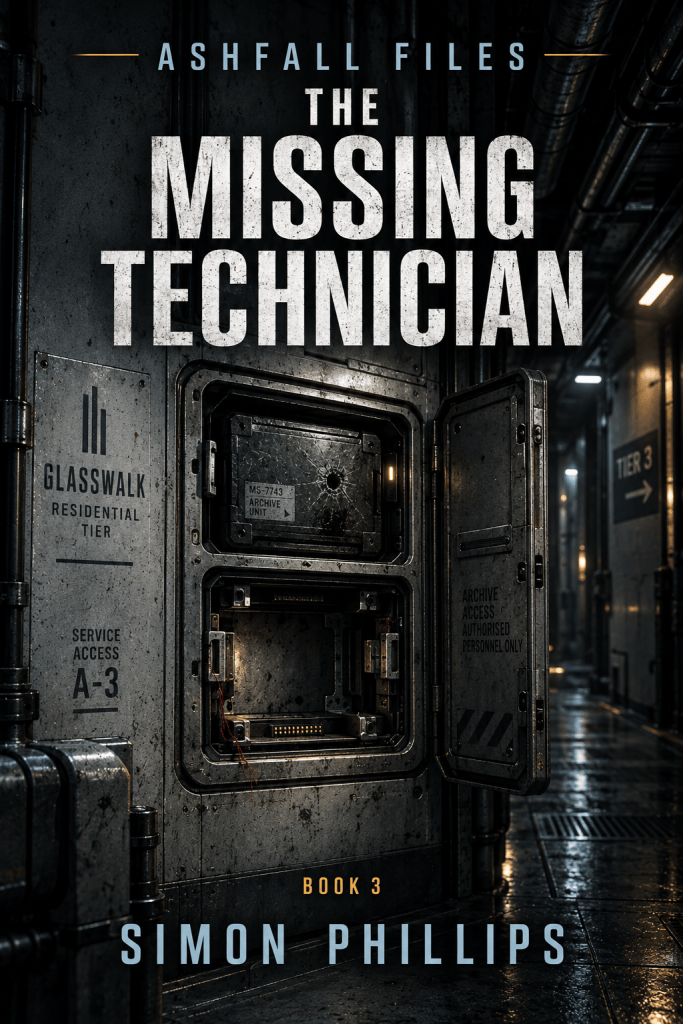
Higher levels present the same station through a different surface. Glasswalk offers broader corridors, quieter ventilation, real plants, polished walls, controlled access and layers of privacy that create distance between residents and the industrial structure supporting them. That difference extends beyond appearance. Records receive more protection, security responses are faster, movement becomes tightly controlled and residents possess far greater influence over which information leaves their homes. Book Three uses that environment to show how inequality on Ashfall operates through space, access and information as much as through money.
The contrast between these areas matters because Ashfall remains one enclosed system. Clean corridors still depend upon service workers passing through technical routes. Wealthy homes still require shared pressure systems, ventilation networks and power infrastructure. Medical shortages in one district affect markets elsewhere, while security decisions made in administrative sectors can remove officers from ordinary calls across the station. As pressure increases through the series, Ashfall becomes increasingly important as an active part of the story because political decisions, crime and infrastructure failure begin travelling through the same physical networks.
Ruff Kale
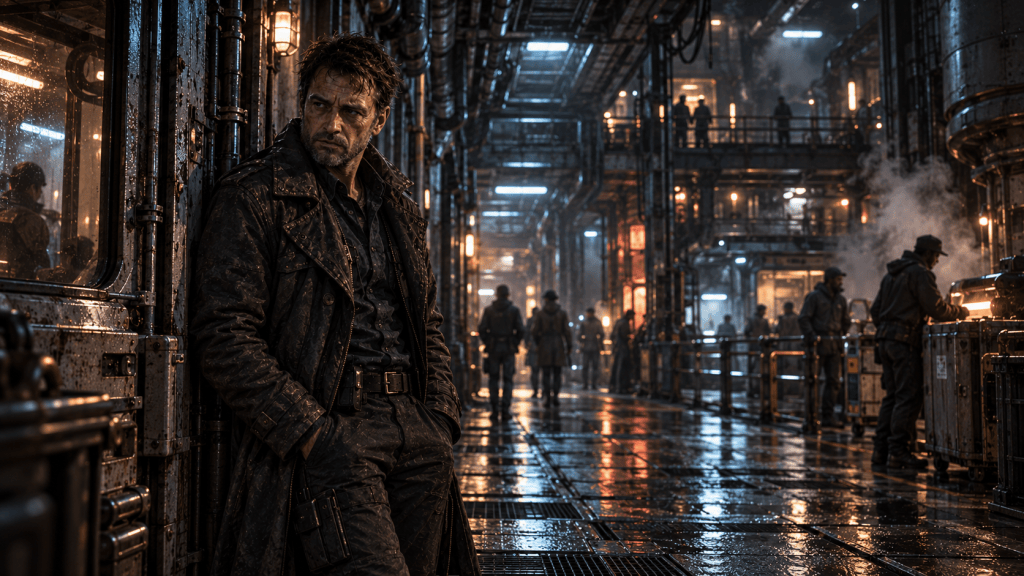
Ruff Kale has spent years working inside Ashfall Security Force and even longer learning how the station behaves when official explanations stop matching what people can see. His investigative ability comes from experience, familiarity and an instinct for inconsistency. He notices when a room appears too orderly after violence, when a corridor has been cleaned at the wrong time, when access records contain gaps more useful than the entries around them, and when somebody answers a question with language prepared long before the question was asked.
He carries a deep distrust of clean institutional answers because Ashfall has shown him how easily a system can turn disorder into paperwork. His methods reflect that understanding. Ruff uses old contacts, informal exchanges and personal knowledge of the station in ways that sit uneasily beside official procedure, and he accepts compromises that Lena initially finds difficult to understand. He has survived by treating the system as something to navigate instead of something worthy of faith.
That survival has also cost him. Ruff keeps emotional distance from people because distance allows him to continue moving from one case to the next. His family relationships have suffered, and he has learned to hold frustration, anger and concern behind the same tired practicality he brings into an interview room. The series gradually places him closer to consequences he once would have kept at arm’s length. Witnesses disappear after speaking with him, victims become harder to reduce to case numbers, and the scale of what he uncovers leaves fewer places where detachment can protect him.
His development across Ashfall Files comes through the erosion of that distance. Ruff remains cynical, observant and willing to operate in grey territory, yet he becomes increasingly unwilling to leave certain truths buried simply because exposing them will make his life harder. By the later stages of the series, his greatest difficulty comes from understanding the consequences of what he knows and deciding how far he is prepared to carry responsibility for that knowledge.
Lena Marik
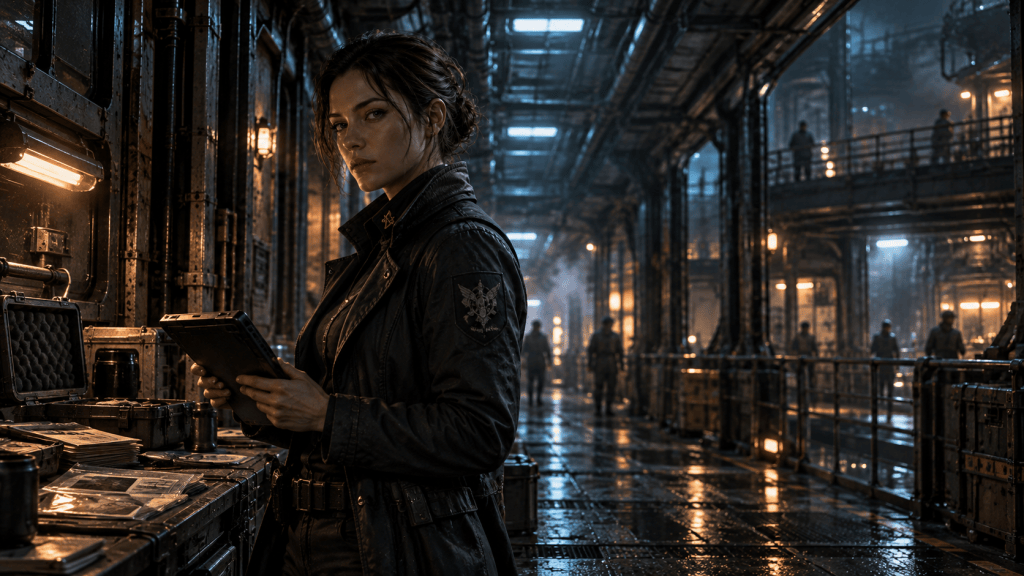
Lena Marik enters the series with training, discipline and a stronger belief in formal procedure than Ruff has carried for years. She understands evidence handling, reporting, access protocols and investigative structure, and at first she expects those systems to work properly when officers use them properly. Ashfall begins challenging that assumption almost immediately.
Her first cases show her how authority can shape procedure from inside it. Records remain technically present while their useful content disappears. Jurisdiction changes after evidence has already been collected. Witnesses become administrative transfers. Official language reframes shortages and unrest into terms designed to reduce public concern. Lena responds by becoming increasingly precise about what she records, who owns a refusal, when a status changes and which version of an account existed before somebody with greater authority entered the case.
That development makes her more capable without turning her into another version of Ruff. She learns when procedure has become part of the obstruction, while continuing to value evidence, documentation and accountability. Her stronger moral centre becomes increasingly important as the scale of the series expands because Ruff understands compromise exceptionally well, while Lena keeps asking what those compromises cost.
She gradually moves from following Ruff’s lead to shaping investigations alongside him. She begins challenging assumptions, preserving competing explanations and identifying structural connections of her own. By the later part of the series, Lena has become an investigator capable of operating inside Ashfall’s uncertainty while still holding onto the principles that first brought her into the work.
Ruff and Lena
The partnership begins as an uneven arrangement between a veteran detective who prefers working alone and a younger investigator whose training has yet to be tested by the station around her. Ruff understands Ashfall through years of lived experience, while Lena understands investigative structure through discipline and formal instruction. Early cases place those approaches beside one another, sometimes in conflict and sometimes in ways that allow each to see what the other would have missed.
Their relationship changes through shared work instead of sudden trust. Lena begins recognising the value in Ruff’s ability to read silences, routes and unofficial systems, while Ruff begins relying upon her determination to preserve evidence before somebody else can alter its context. Their conversations gradually lose the distance of a forced pairing and gain the familiarity of two people who have stood in enough dangerous rooms together to understand how the other will move.
As the cases become larger and the surrounding system becomes less reliable, that partnership develops into one of the few stable things either of them can carry from one investigation into the next. They have seen the same evidence, faced the same institutional pressure and watched the same people disappear into administrative explanations. By the later stages of Ashfall Files, their dependence upon one another extends beyond ordinary investigative convenience, even when both avoid giving that dependence a comfortable name.
Every Book Opens a Case
Each Ashfall Files book begins with a recognisable investigative problem. Someone is dead, missing, attacked, accused or connected to something that should have produced a clear response from the station. Ruff and Lena begin locally because local detail is where Ashfall becomes hardest to manipulate. They look at rooms, injuries, access records, service routes, witness behaviour and the physical traces left behind when official language has already started smoothing the edges.
The structure allows every book to function as a complete investigation while contributing to the wider story. A reader can follow the immediate case from discovery through evidence and consequence, yet the resolution leaves deeper connections behind. An altered record may connect to an earlier disappearance. A hidden route may reveal that somebody has been exploiting infrastructure for far longer than the current crime required. A witness may carry information that belongs to another layer of the station entirely.
That cumulative structure keeps the series from becoming a sequence of disconnected mysteries. The person responsible for a crime may be identified, while the system that enabled the crime remains active. The investigation therefore resolves one human problem and exposes another structural one. Over time, those structural problems begin aligning closely enough for Ruff and Lena to recognise that they are working inside a much larger pattern.
The Larger Ashfall Arc
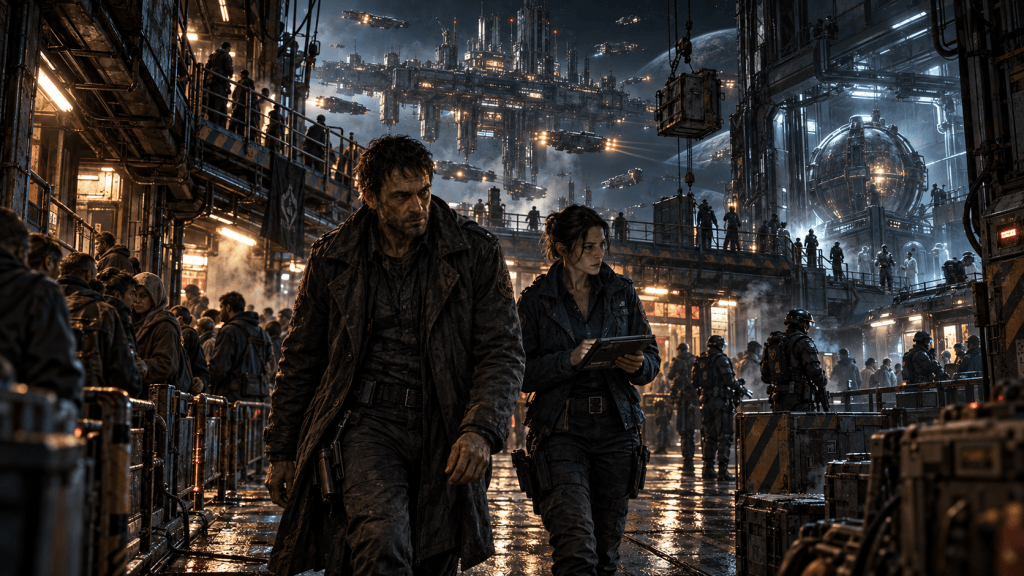
The central truth behind the series reaches far beyond ordinary station crime. Earth Fleet recovered an unknown technological object from an off-chart location, later identified within the series as the Eidolon Sphere. Researchers gained access to its internal systems and discovered a destructive biological agent capable of causing catastrophic human cellular failure. Instead of ending the programme, Fleet command authorised a controlled field test on an isolated colony selected for its limited strategic value.
The test escaped the limits intended for it and the colony was lost. Evidence was suppressed, public explanations redirected blame elsewhere and knowledge of the event was divided among a relatively small group inside Fleet. The decision created a deep internal fracture because some accepted the action as necessary while others viewed it as an abuse of authority too severe to contain indefinitely. That disagreement remains hidden from Ashfall’s population for much of the early series, although its consequences begin appearing in the way Fleet behaves.
Ruff and Lena encounter those consequences long before they understand the full chain behind them. Orders become inconsistent, information is increasingly restricted, enforcement grows more aggressive and infrastructure failures become harder to separate from neglect, interference and deliberate pressure. Ration shortages and public distrust deepen the strain already present between sectors, while Fleet responds by expanding control through security, messaging and restricted access.
The conflict grows gradually because Ashfall Files remains grounded in consequence. Civil war first appears through irregular behaviour, missing information, disrupted supply and competing authority. Later, elements within Fleet begin to resist or defect, civilian unrest increases and direct conflict reaches the station itself. Damage spreads into the same physical systems that supported the early investigations, turning power, transport, pressure control and access routes into part of a crisis far larger than any single case.
By the conclusion of the initial Ashfall Files arc, Ashfall has changed fundamentally. Earth Fleet authority has fractured into open conflict, civilian compliance has eroded, criminal networks operate with greater confidence and the station’s infrastructure has suffered direct damage. Ruff and Lena reach a point where loyalty to any single structure becomes increasingly difficult because every available system carries its own compromises, failures and consequences. The series reaches the collapse of the existing order while opening the path into a broader story beyond the original investigative cycle.
Why Read Ashfall Files?
Ashfall Files is designed for readers who enjoy science fiction where the future is experienced through places people actually live and work. The setting grows through housing blocks, service corridors, freight systems, clinics, markets, checkpoints, offices and maintenance spaces instead of relying upon distant spectacle. Technology matters because it shapes daily survival, creates opportunities for control and becomes part of the evidence when something goes wrong.
The noir element comes from the same environment. Light fails unevenly, sound carries through infrastructure, air retains the smell of machinery and crowded spaces rarely offer complete privacy. Characters speak carefully because information has consequences, and important truths often appear through hesitation, contradiction or the things somebody carefully leaves outside an official account. The atmosphere stays grounded because Ashfall’s darkness comes from pressure, compromise and institutional decay as much as from physical shadow.
The political story grows through ordinary consequences. Readers see authority through ration distribution, broadcasts, security presence, restricted access, altered records and conflicting orders before open conflict ever arrives. That allows the wider collapse to develop from the same world introduced through the earliest cases instead of feeling like a separate story added later.
At the centre of everything remain Ruff and Lena. Their partnership gives the series continuity while the station around them becomes less reliable. Ruff brings instinct, station knowledge and an understanding of compromise, while Lena brings precision, evidence discipline and a stronger belief that truth still deserves a record strong enough to survive pressure. Their investigations gradually force both of them to decide how much of themselves they are prepared to risk once the truth becomes larger than the cases that revealed it.
Current Books and Reading Order
Latest from Ashfall Files
Follow the latest posts connected to Ashfall Files, including new book releases, behind-the-scenes notes, related Future Chronicle entries, writing updates, and posts exploring the world of Ashfall Station.
Every post below is connected to the series, whether through Ruff and Lena’s investigations, the wider station setting, publication updates, or related Chronicle material.

The Future Chronicle: The Incident That Was Never Recorded
A routine airflow inspection beneath Sector Twelve leads three maintenance workers to a sealed shaft and a body that should not be there.
The hatch shows no recent entry. The station cannot confirm the dead man’s identity. Before local security can complete its report, the incident file begins narrowing around them, removing witness notes, access…

The Future Chronicle: The Quiet Investigation
The lights have returned to Ashfall Station, but the questions have only begun.
An unmarked Fleet detachment arrives after the blackout and starts pulling witness reports, maintenance logs, and restricted files from across the station. The inquiry appears quiet, controlled, and procedural — until its questions connect the blackout to missing crews, sealed corridors, and…
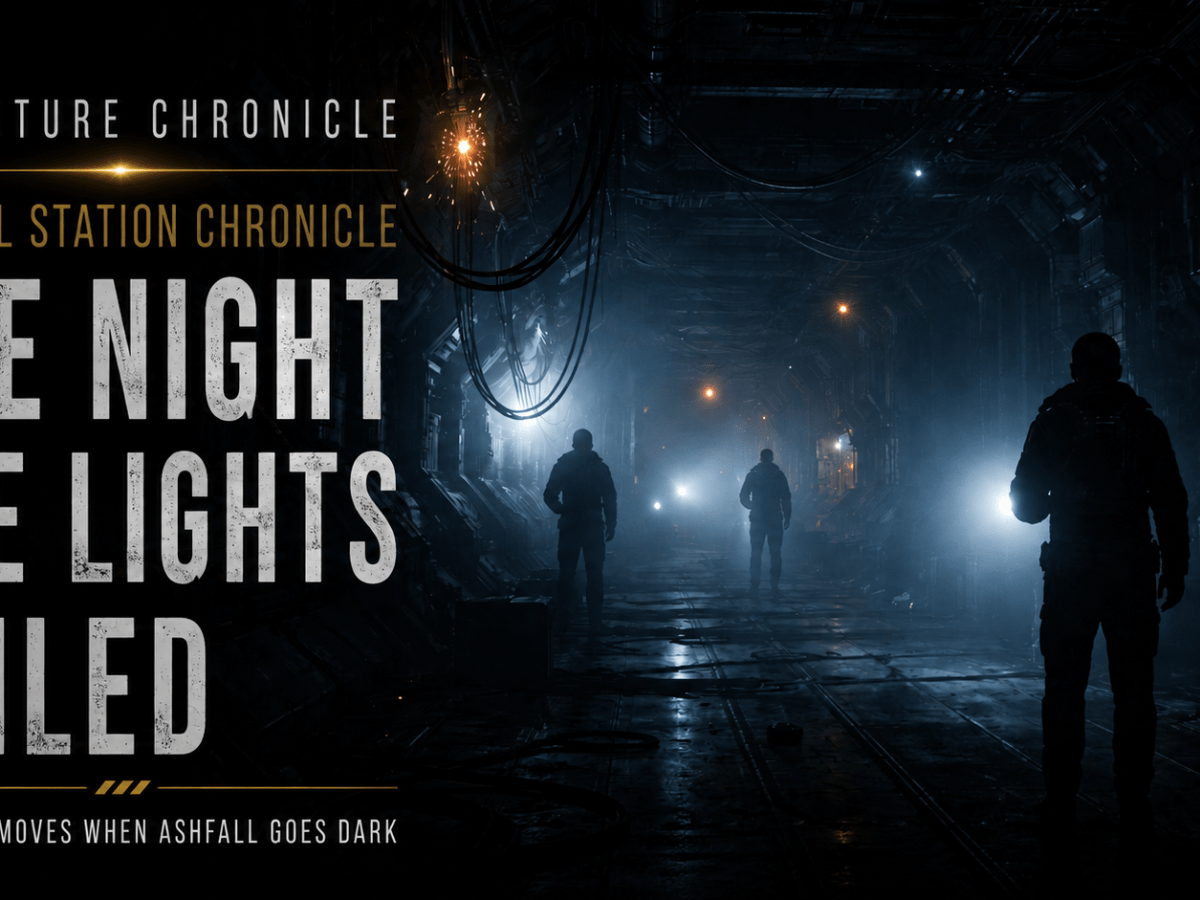
The Future Chronicle: The Night the Lights Failed
Ashfall Station has suffered power failures before. This one is different.
When the lights fail across multiple rings, emergency systems struggle to recover and workers begin hearing movement inside the walls, floors, and sealed structural spaces of the station. What first appears to be another fault in an ageing grid soon reveals a darker pattern…
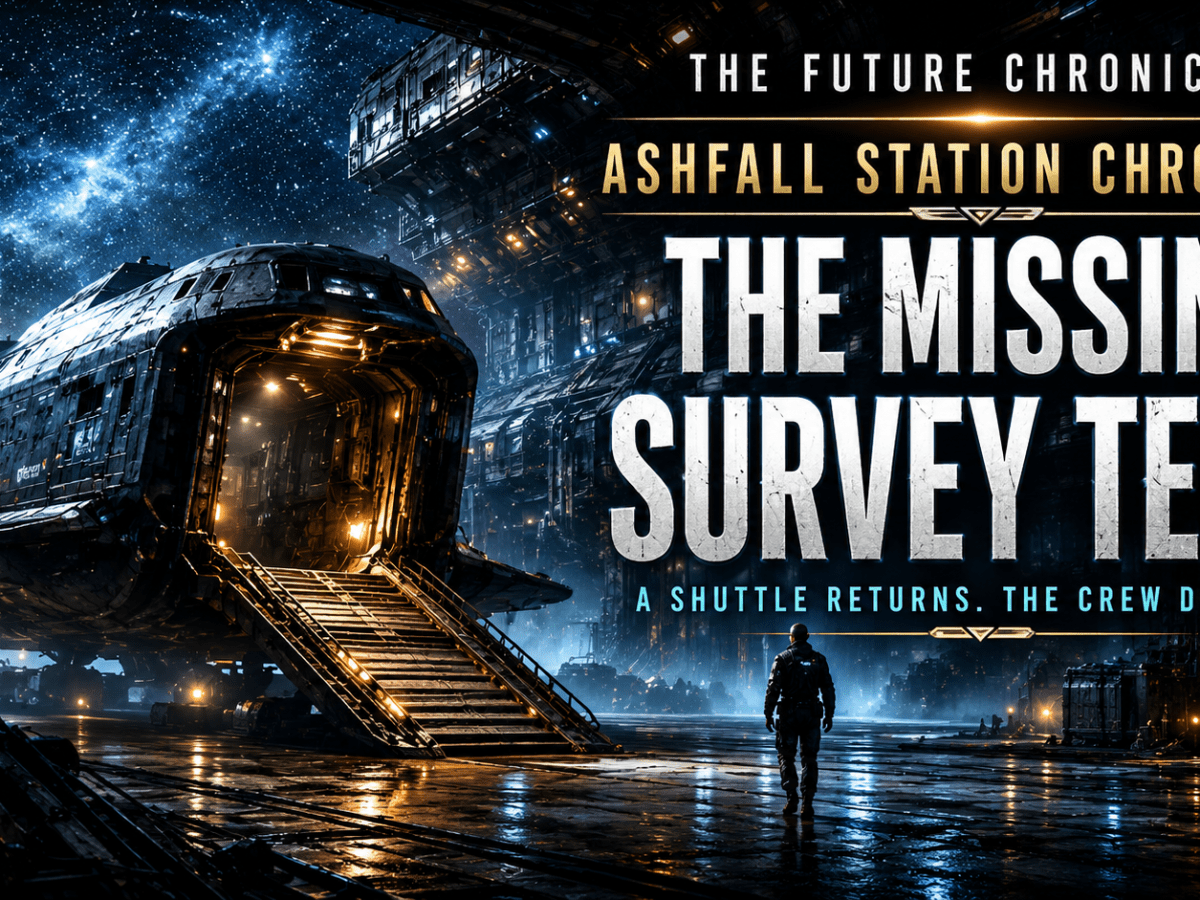
The Future Chronicle: The Missing Survey Team
A survey shuttle returns to Ashfall Station from the outer relay network. Its systems are intact. Its route is complete. Its logs show no breach, no distress signal, and no emergency departure.
Only the crew are missing.
The Missing Survey Team continues the Ashfall Station Chronicle, following one of the first recorded incidents where the…

The Future Chronicle: The Expansion Project
Ashfall Station was meant to be reinforced, expanded, and prepared for a longer future. Instead, engineers connecting new frameworks to its ageing structure discover corridors, grids, and hidden elements that do not exist in the station’s official records.
Then the new construction begins to receive an answer from somewhere beneath the surface.
Read The Expansion…
