Why Deep-Space Debris Field Signals Feel So Disturbing in Science Fiction

Out beyond the docking lanes, where a frontier station gives way to the wreckage of older industry, a debris field becomes more than background scenery. It becomes memory made physical. Broken cargo towers, relay frames, scaffold sections, and dead satellites drift in slow procession around a spent world, each fragment holding the shape of labour that once mattered. When a deep-space signal begins pulsing from within that ruin, science fiction touches a very old fear. Someone, or something, is still speaking from a place the present has already abandoned.

That tension sits at the heart of space station mystery fiction. A station suggests order, registry, mapped corridors, monitored traffic, and the steady reassurance of systems under observation. A debris field suggests the opposite: overflow, residue, long aftermath, the industrial graveyard left circling after profit has moved elsewhere. Bring the two together, and the result carries a peculiar strain of unease. The organised world remains close enough to see through the canopy glass, while the dark beyond still holds structures whose original purpose has thinned into rumour.

Chronicle 4 of the Ashfall Station sequence understands that pressure with impressive calm. In The Signal in the Debris Field, the first disturbance arrives through a routine approach, a receiver sweep, a pilot who hears something repeating where no transmitter should remain. The effect comes through restraint. The signal enters the scene as a technical irregularity, almost small enough to miss, and that scale gives it force. A corridor alarm would feel immediate. A faint pulse drifting through wreckage feels patient, older, and somehow more certain of its own endurance.


The debris field as a zone of memory

Science fiction has always found power in the image of abandoned infrastructure. A derelict ship, a sealed habitat, a disused mining platform, an orbital relay whose designation has outlived its function, each one carries a quiet promise that time has continued moving inside the machinery even after official attention moved elsewhere. The debris field expands that promise across a wider landscape. Instead of one haunted object, the reader faces an entire environment shaped by accumulation.

That matters because a debris field resists the clean romanticism often attached to deep space. This is space as aftermath. These structures once belonged to schedules, quotas, crews, budgets, accidents, repairs, and routine decisions made under industrial pressure. Someone welded those frames. Someone signed off on those towers. Someone logged the final traffic before the route fell quiet. Years later, the broken skeletons remain in orbit as a record of labour whose living context has drained away.

A repeating signal inside that setting does more than introduce mystery. It reactivates the graveyard. The field stops behaving like scenery and begins behaving like an archive. Every drifting fragment becomes a potential source, every torn ring or fractured panel a possible witness. The reader starts searching the wreckage in the same way a pilot or receiver operator would, trying to imagine which remnant still holds charge, which chamber still preserves circuitry, which cold section of metal has gone on speaking long after its builders vanished from the route maps.

That is one reason deep-space signal stories retain such force. They awaken dead environments. The pulse gives shape to emptiness. It turns drifting matter into intention, even before anyone can say what that intention means.


Why a signal unsettles more deeply than a visible threat

A visible threat lets the mind draw boundaries. A hostile vessel, a boarding party, a damaged hull, a breach warning, each one carries a recognisable edge. A signal works differently. It arrives through pattern, delay, and repetition. The source remains hidden while the effect spreads through interpretation. People listen, compare, classify, question, rerun scans, check registries, and discover that language begins to slip. A signal forces institutions to confront uncertainty in their own preferred idiom: records, arrays, identification protocols, archived frequencies, sensor sweeps, official reassurance.

That tension gives signal fiction a profoundly human quality. Fear enters through procedure. The crew member who notices the anomaly remains at a console. The navigation office answers in a steady voice. Arrays turn. Data arrives. Silence follows. The dread grows inside administrative competence.

In the Ashfall setting, that calm procedural atmosphere carries special weight because the station itself depends upon navigational certainty. Approach corridors, beacon records, traffic coordination, safe separation from older wreckage, all of these form the ordinary discipline of survival around Kestren-4. When a repeating transmission emerges from the debris field and every system insists that no registered transmitter exists there, the disruption reaches deeper than a single strange moment. It touches trust itself. The map says one thing. The receiver says another. The corridor remains open anyway.

This is where the Chronicle’s science-fiction mood becomes especially effective. The future feels inhabited through work. Pilots hold approach vectors. Navigation officers speak in measured exchanges. Sensor towers search empty space. The mystery grows within the texture of a functioning industrial culture. That sense of lived system pressure gives the signal gravity. Nothing flamboyant needs to happen. A steady pulse across the spectrum is enough.


Frontier systems make these stories feel plausible

A frontier setting gives signal fiction a natural home because frontiers contain leftovers. Expansion creates equipment faster than memory can preserve it. Systems grow around extraction, transport, survey work, emergency contingencies, contract cycles, and temporary structures whose temporary status stretches across decades. As traffic thins and economies shift, the hardware remains behind, turning orbit into a layered field of present use and historical residue.

Within that kind of environment, a signal from abandoned machinery feels plausible in the first instant. That plausibility matters. The reader accepts the practical explanation before the deeper disturbance begins. Of course old infrastructure can transmit. Of course a mining beacon or relay unit might survive. Of course a receiver operator would assume a technical remnant before anything stranger. The future opens through ordinary logic.

Then the second movement begins. The frequency matches nothing familiar. The source location feels wrong. The pattern repeats with an exactness that suggests design. The structure carrying the transmission appears cold, silent, and dead. That shift from plausible remnant to unresolved persistence is where frontier science fiction often finds its sharpest atmosphere. The story remains grounded in work, machinery, and registry, yet a pressure larger than procedure starts pressing through the seams.

The result feels less like spectacle and more like slow contamination of certainty. For readers who prefer controlled speculative fiction over grand operatic display, this mode carries unusual appeal. It trusts implication. It lets the industrial environment hold the weight.


The Chronicle as a threshold into Ashfall
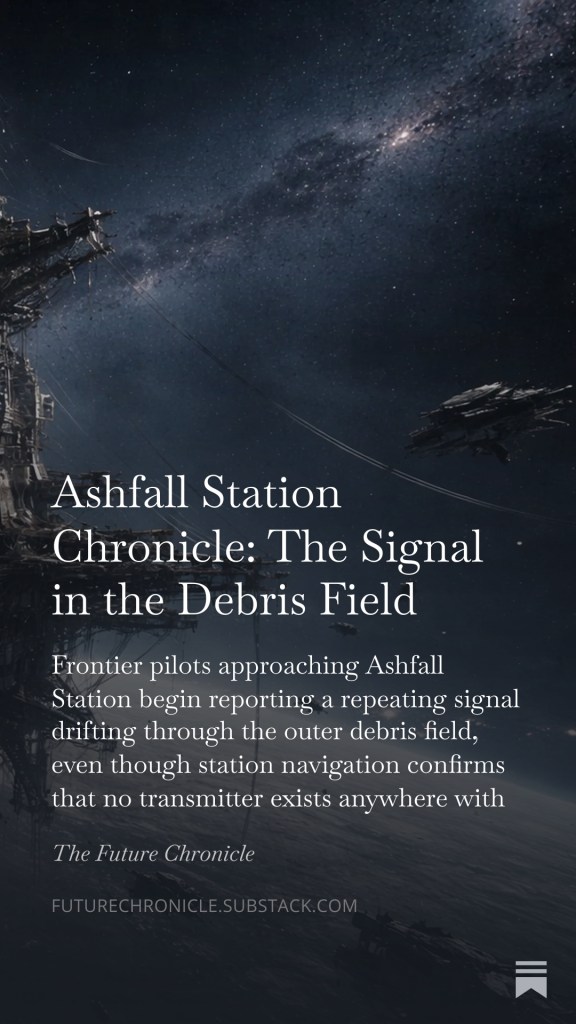
Within The Future Chronicle on Substack, The Signal in the Debris Field works especially well as a threshold text because it introduces Ashfall Station through distance. The station appears across the approach lanes, lit against the black horizon, while the deeper disturbance rises from the wreckage surrounding it. That choice gives the whole entry a measured elegance. Readers arrive from outside. They see the station as incoming crews see it. The system feels broad, quiet, and old before the mystery tightens.

This matters for the wider Ashfall Station sequence. A chronicle like this one does more than tell a contained episode. It establishes reading conditions. The archive grows through fragments, reports, observations, quiet anomalies, and moments that seemed manageable when first recorded. A signal detected on approach becomes one more entry in a larger field of pressure. The reader senses the archive thickening.

That archival method suits science fiction particularly well when the goal is psychological atmosphere instead of rapid revelation. The future enters as a record under review. Every small event acquires retrospective weight. A pilot reports a pulse. Navigation fails to locate a legal source. A structure in the debris field speaks in a sequence no one recognises. The event passes into the logs. Later, the meaning expands.

For a new reader, that creates a strong entry point. There is no burden of excessive lore. There is a station, a world beneath it, a debris corridor, a transmission, and the first slight shift in the trust people place in their systems. The world opens through implication, which often leaves a deeper impression than explanation.


From Chronicle atmosphere to novella pressure
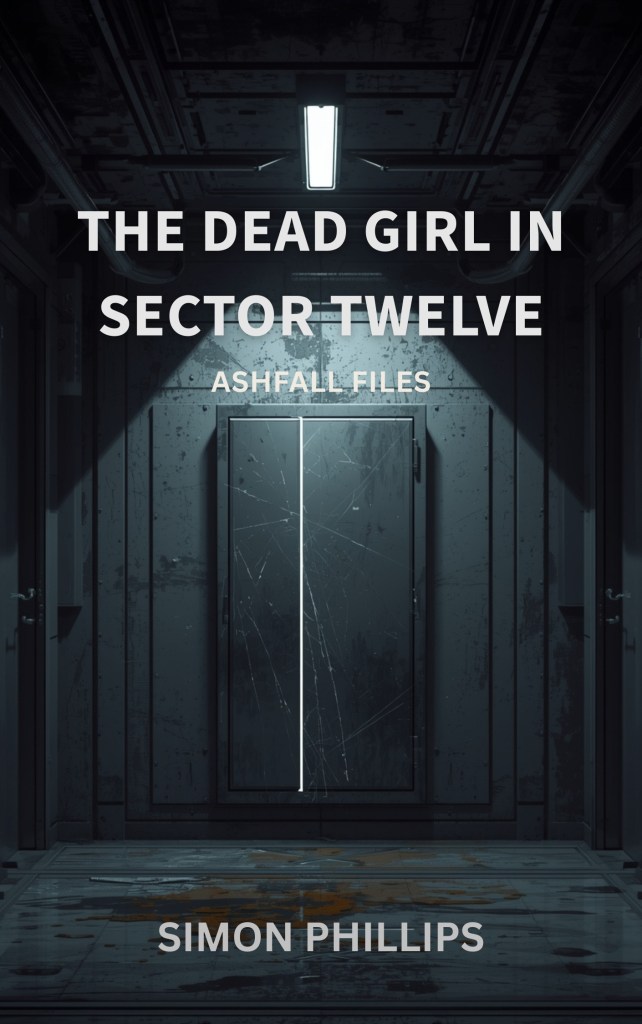
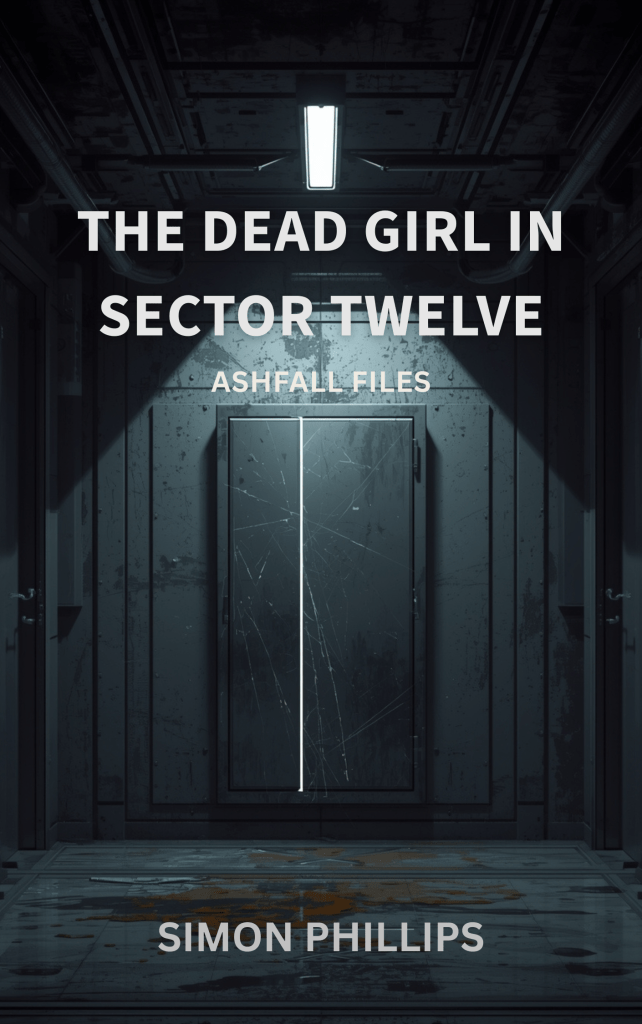
For readers who want to step from the archive into a more sustained narrative, the connected Kindle novella, Ashfall Files: The Dead Girl in Sector Twelve, provides a natural second threshold. The movement from Chronicle to novella feels organic because the Chronicle builds environment first. It lets Ashfall exist as place, record, and accumulated unease. The novella can then enter that same station carrying the denser pressure of investigation.

This relationship between Chronicle and novella is one of the strongest aspects of the wider project. The chronicle form gives room for early signs, peripheral witnesses, overlooked incidents, and the quiet sediment of history. The novella form gathers that atmosphere into a closer narrative line, where consequence presses more directly upon the people moving through the station’s ageing structure. One form broadens the archive. The other deepens the encounter.

That distinction matters for readers drawn to space station mystery, industrial science fiction, and slow-burn speculative tension. Some want the distant view first: the station as system, the route map, the old infrastructure, the fragment recovered from orbit, the unexplained signal turning through the dark. Others want the closer pressure of a case unfolding inside that world. Ashfall offers both, and Chronicle 4 sits at a particularly effective junction between them.


Why readers keep returning to signals from the dark

A signal carries something ancient inside a futuristic form. It is a call, a trace, a pattern seeking reception. It promises meaning before meaning has been secured. Human beings remain vulnerable to that structure across every age. We hear repetition and assume intention. We hear order and assume origin. We hear persistence and assume that someone, somewhere, continues to hold the other end of the line.

In science fiction, that instinct becomes even more powerful because distance removes reassurance. Space is large enough to hold forgotten industry, failed empires, unfinished projects, silent research, sealed compartments, and transmissions still moving after their makers are gone. The signal becomes a way for the past to remain active inside the future. It crosses vacuum and arrives without explanation, carrying the unsettling suggestion that history never fully releases its grip on the systems built to contain it.

That is why a debris field signal feels so potent. The message comes from waste, from structures society has already written into the margins, from a region treated as background hazard and navigational inconvenience. The future receives its disturbance from what it chose to leave behind.

Ashfall understands that dynamic with admirable restraint. The pulse enters quietly. The route remains open. The station continues its orbit. The record grows by one more line. Somewhere beyond the docking rings, among fractured towers and silent machinery turning above Kestren-4, a sequence continues repeating into the dark. The archive hears it. The station hears it. Long after the immediate approach has passed, the pressure remains.
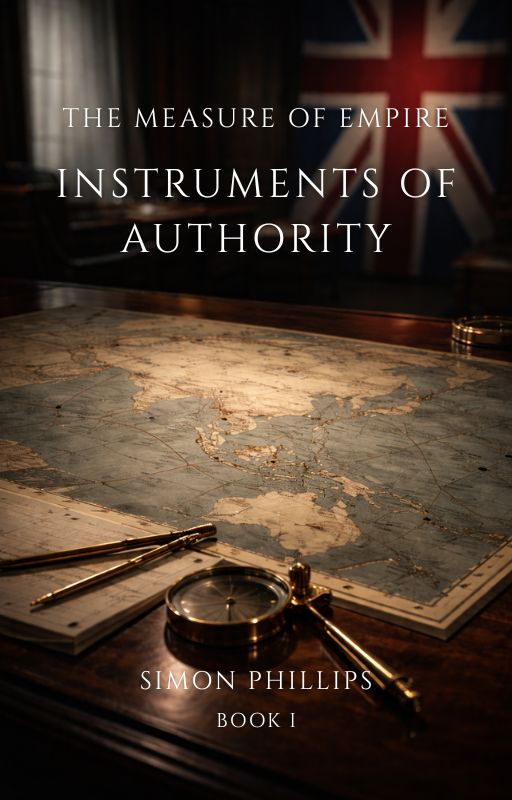

The British Empire in a Modern Timeline: Authority, America, and the Strain of Imperial Continuity

The Surface of Order

In an alternate history British Empire setting, the deepest impression rarely comes from spectacle. It comes from the settled confidence of systems that have existed long enough to mistake endurance for permanence, and from the quiet majesty of an empire that never collapsed, whose authority stretches from Westminster across the Americas, Africa, Asia, and the Pacific while Japan stands as its closest ally and China and Russia press against the edges of that order with gathering force. The world of The Measure of Empire carries that scale with unusual calm, offering a geopolitical alternate history in which modern colonial America serves as the industrial and technological heart of imperial power, even as older assumptions begin to strain beneath the weight of the century.

What gives this imperial world political fiction its particular force is the sense that control remains visible everywhere. Trade routes are supervised, fleets are deployed, encrypted messages cross oceans within seconds, and authority travels through offices, council rooms, embassies, naval towers, and colonial departments with the assurance of a structure that has governed for generations. The British Empire modern timeline at the centre of the series rests upon more than flags and ceremony. It rests upon procedure, upon military reach, upon administrative confidence, and upon the conviction that motion itself preserves stability.

That conviction gives the opening volume its atmosphere. Instruments of Authority begins far from battlefield drama and grand declaration. It opens in Ashiya, within the ordered domestic calm of Simon Hale’s life in Japan, where diplomatic service, family intimacy, and imperial duty appear to belong to the same continuous fabric. From there the novella widens across Hong Kong and Philadelphia, revealing a system whose breadth feels almost serene. Even so, every corridor carries the faint pressure of change, and every routine exchange suggests that the empire’s coherence depends upon constant adjustment.

America Within the Imperial Design

The most compelling pressure inside this speculative political fiction series lies in the place America occupies within the imperial structure. This modern colonial America thrives inside empire, draws wealth from it, strengthens it, and supplies much of its industrial and technological force. The American territories remain prosperous, militarily essential, and politically mature, which means the old language of colonial subordination carries an increasingly hollow sound. London governs the continent through a Governor-General, Colonial Congress, territorial governors, defence command, and local assemblies, yet the very sophistication of those institutions creates the conditions through which a separate political identity can harden.

That is where the larger American revolution alternate history of the series acquires its gravity. This future conflict does emerge from romantic rebellion or decorative grievance. It grows from the mismatch between administrative form and lived power. America within this world builds fleets, industries, research centres, shipyards, air bases, and communications systems that sustain the empire on a global scale. A continent carrying that degree of responsibility will eventually begin asking whether service and sovereignty can remain permanently divided. The great illusion of imperial continuity lies here: prosperity can conceal fracture for a very long time, while at the same time deepening the self-awareness that one day breaks a system open from within.

In that sense, The Measure of Empire handles imperial power global narrative with unusual intelligence. The empire remains formidable. Its armed forces possess carriers, stealth aircraft, missiles, drones, cyber systems, satellite networks, nuclear deterrence, and the global basing structure required to project power across several oceans. The Pacific, East Asia, and the American continent all exist within the same military architecture. Strength is real, visible, and measurable. Yet strength of this kind also creates obligations on a scale that no central authority can absorb forever without consequence.

Instruments of Authority and the First Movement of the Series

As the first volume in The Measure of Empire, Instruments of Authority chooses a disciplined surface narrative. Simon Hale, a gifted imperial administrator whose confidence in reform and structure defines much of his character, begins in Japan within the diplomatic sphere, receives an abrupt summons from London, and moves toward the political centre without yet understanding the full meaning of that recall. Around him, Admiral Edward Halstead embodies the empire’s naval reach in the Pacific, while Charlotte Mercer stands closer to the American administrative world where correspondence, policy, and political weather reveal the earliest shifts in imperial attention.

This structure matters because the novella refuses the easy route of telling the reader what to fear. It allows pressure to gather through setting, routine, tone, and institutional behaviour. Simon’s household in Ashiya carries warmth, education, and cultivated ease, even as Erina senses larger currents beneath the polished language of administration. Halstead’s Hong Kong reveals the calm geometry of maritime command, where freighters and carrier groups share the same horizon and where diplomacy, logistics, and strategic deterrence merge into one continuous practice. Charlotte’s Philadelphia, by contrast, reveals empire through desks, ledgers, inquiries, and corridors, where paper traffic begins rising before public events acquire a name.

That restraint gives the novella its authority. The machinery of empire appears through habit. A recall notice, a packet from Whitehall, a courier crossing a gallery, a harbour under surveillance, an aide carrying encrypted traffic, a city whose streets have grown prosperous through generations of imperial integration: these details create a sense of lived control far stronger than overt explanation could achieve. The result feels less like a conventional opening act and more like standing inside a structure just before its foundations begin to register strain.

The World Beyond the Page

The wider world continuity surrounding this novella deepens that impression. The British Empire remains the dominant global superpower. Japan, allied closely with Britain, anchors the eastern half of that imperial reach. China expands, Russia aligns against imperial influence, and East Asia becomes one of the most volatile theatres in the world. Within this setting, modern warfare belongs fully to the age of satellites, drones, stealth aircraft, long-range strike systems, cyber operations, naval groups, and nuclear deterrence. This matters because the coming crisis of the series unfolds inside a recognisably modern strategic order, which gives every administrative decision a wider military consequence.

The series blueprint extends that continuity further. Three central figures shape the long movement ahead: Simon Hale as the imperial administrator whose reforms help create the conditions for American independence, a revolutionary organiser seeking sovereignty, and a colonial military commander responsible for holding imperial order together as the world begins to fracture. Through them the saga moves toward the rise and fall of empires, the emergence of a new state, and the long decline that follows the first successful break in an apparently permanent global system.

Seen from that distance, Instruments of Authority gains an added richness. It reads as the first formal pressure line in a broader empire that never collapsed narrative, a volume concerned with attention, placement, and the early alignment of forces. The novella’s achievement lies in how completely it understands that history seldom announces itself at the moment it begins. More often it gathers in rooms where people still believe they are managing continuity. It passes through professional language before it reaches public speech. It takes shape in the interval between confidence and recognition.

The Pressure Beneath Continuity

Every enduring system teaches its servants to read motion as reassurance. Ships continue crossing harbours, dispatches continue crossing desks, aircraft continue carrying envoys between capitals, and ministers continue assuming that authority can absorb one more adjustment without changing its essential form. That is the atmosphere The Measure of Empire captures with such composure. Its world carries immense confidence, immense reach, and immense inherited force, though beneath that polished continuity lies a quieter truth: institutions evolve, colonies mature, loyalties divide, and the language of governance can only carry so much strain before it begins revealing what it once concealed.

For that reason, the opening volume leaves behind a feeling more durable than simple suspense. It leaves the impression of standing within history before history has accepted its own name. Simon travels toward Westminster. Halstead watches the Pacific frontier. Charlotte feels the administrative weather shifting through the corridors of Philadelphia. Across those distances the empire still appears whole, still speaks in the accents of control, still governs through ritual confidence and vast material reach. Even so, the pressure has already entered the system, and once such pressure begins to move through a world of this size, every port, office, fleet, and family will eventually feel its weight.

Sealed Passages in Mythic Fantasy: The Buried Foundations Behind The First Sealed Passage

The Mythic Chronical

Beneath a chapel floor, where candle smoke thins into colder air and stone remembers hands long gone, a sealed passage waits with a patience older than the living city. Few images in mythic fantasy carry such lasting force as the hidden stair, the buried foundation, the chamber whose purpose has slipped from surviving record. A sealed passage suggests more than secrecy. It suggests pressure, memory, and a world whose deepest truths lie beneath the places people still pray, trade, grieve, and sleep.

This is part of the reason ancient fantasy worlds remain so compelling. Their streets rest upon previous ages. Their halls stand over ruins. Their shrines inherit ground whose first name has fallen away. When a stair is uncovered under a chapel, the discovery opens more than a route through stone. It opens a relationship between the visible city and the older city pressed below it, where sacred use, forgotten labour, failed warding, and buried fear have settled together through time.

Chronicle One of The Mythic Chronicle, The First Sealed Passage, enters exactly that kind of place. Its power comes through restraint. The stone gives little. The record gives less. Yet the pressure within the scene gathers around every mark in the wall, every held murmur, every decision to close a passage whose closure feels uncertain even as it is recorded. That quiet weight forms the true spell of the sealed passage in mythic fantasy.

Why Sealed Passages Hold Such Power

A ruin in open air offers scale. A sealed passage offers trespass. The body feels the narrowing stair, the failing light, the change in air against the chest. Mythic fantasy thrives on such thresholds because they pull fear inward. The reader moves from landscape into enclosure, from history seen at a distance into history felt against skin and breath. Every surface begins to matter. A scratch in plaster, a gap in a register, a scent that lingers too long in stillness, each one carries force because the space around it has already been chosen for concealment.

That act of sealing matters deeply. A buried chamber may carry age, mystery, and sacred unease, yet the moment a passage has been closed by human hands, the place gains moral weight as well as atmospheric weight. Someone made a judgement. Someone chose stone, mortar, labour, and silence. In mythic fantasy, that human decision often carries more dread than any creature glimpsed in darkness, since it implies contact has already happened and memory has already failed. The wall stands as both barrier and confession.

This is where The First Sealed Passage proves so effective. The Chronicle never hurries toward spectacle. It lingers with lantern light on worn steps, with the pressure inside the stair, with the sense that sound has settled into the stone itself. Through that restraint, the passage gathers authority. The world feels old enough to have forgotten its own foundations, and human enough to keep recording stability long after certainty has weakened.

Buried Foundations and the Memory of Stone

Old cities in fantasy carry emotional force when their foundations feel layered, used, and inherited. A living district gains depth when its chapel, market, bath, tavern, or hall stands upon earlier structures whose names have faded from common speech. The ground beneath daily life becomes an archive. Stone ceases to be scenery and becomes memory given form. A stair beneath a chapel therefore carries two pressures at once: the sacred authority of the present structure and the unresolved claim of whatever came before it.

That layered architecture gives mythic fantasy its deepest atmosphere. The visible city offers order, ritual, trade, law, and custom. The buried city below offers fracture, erasure, repetition, and unfinished return. When writers bring those two cities into contact, the result feels richer than a simple haunted corridor. The setting itself begins to behave like a wounded record. Gaps appear. Marginal voices survive. Official language remains calm while the physical world suggests a stranger truth.

The chapel beneath Saint Veyne works through exactly that tension. The stair descends into a foundation whose origin has slipped from the surviving register, while the later record still tries to name the structure stable. That single contrast carries much of the Chronicle’s force. Stability is written above. Unease gathers below. Between those two layers lies the old fascination of buried foundations in fantasy literature: the sense that a city may continue functioning while its deeper stone has already begun to answer to some older pressure.

Sound becomes especially powerful in such places. A seen figure can be measured, pursued, perhaps even named. A sound held within stone resists that comfort. It belongs to structure, to weight, to enclosure, to matter that should remain still. Once a murmur seems fused to foundation, fear spreads through every block and seam around it. The threat no longer waits at the far end of the tunnel. It inhabits the tunnel itself, and by extension the city resting above it.

The First Sealed Passage and the Reading Experience of The Mythic Chronicle

The Mythic Chronicle carries a distinctive kind of fantasy authority because its entries feel preserved and lived. The reading experience resembles the handling of a surviving fragment: a record, a register, a corrected folio, a later note in the margin, a surface account whose omissions carry as much force as the lines left intact. That method suits the sealed passage perfectly, since the theme itself concerns partial knowledge, uncertain closure, and the long survival of things buried without full understanding.

In The First Sealed Passage, the reader enters through place before explanation arrives. A chapel, a stair, a mason, a brother of the order, the faint sweetness in the air, the wall drawn across the lower way, all of it gathers with measured patience. Then the Chronicle widens into register, archive, interpretation, and continuation. The effect is quietly cumulative. Instead of offering a single scene and stepping away, it allows the passage to echo through several forms of record, each one carrying its own degree of confidence and fracture.

That structure makes Chronicle One an ideal threshold into the wider Whispering Foundations cycle. The series concerns the buried layers beneath the city and the way corruption begins, spreads, and is misunderstood through broken accounts. Chronicle One establishes that governing pressure with admirable clarity. The deeper stone answers. The official record steadies itself. The gap between those two gestures becomes the space in which the wider cycle lives.

For readers who wish to enter the preserved opening itself, the first fragment rests here:

A visual companion shaped from the same buried pressure rests here: The First Sealed Passage

From Chronicle Fragment to Fuller Record

A Chronicle entry such as this one gains further weight through the sense that other records survive elsewhere, half adjacent and half concealed. The sealed passage beneath the chapel feels complete as an individual fragment, yet it also carries the impression of a wider disturbance moving through the city’s lower structures, through walls, cellars, chambers, and misread deaths. That widening pressure gives the blog reader a natural route onward, since curiosity grows from atmosphere already established, without any abrupt invitation.

This is where the movement from Chronicle to novella becomes especially effective. The Chronicle preserves distance, symbolic weight, and partial record. The novella draws nearer to consequence, human contact, and the cost of ignoring what older places continue to hold. One form gives the mythic contour of the world. The other gives the lived encounter within it. Together they create the feeling of an archive whose surviving pieces speak across different depths of time and witness.

The fuller record connected to this buried pressure, preserved in Black Feathers in a Brothel, rests here:

Placed beside Chronicle One, the novella link feels less like a sales gesture and more like a second folio brought carefully from the shelf. The reader follows the pressure from chapel stone toward the lower district, from early disturbance toward later consequence, from the moment a passage is found and sealed toward the wider pattern that seal was meant to contain. That movement honours the oldest pleasure of mythic fantasy, which lies in the sense that every surviving fragment opens onto a larger darkness holding its own order.

Why Ancient-Seeming Fantasy Worlds Continue to Linger

Readers return again and again to ancient-seeming fantasy because such worlds allow memory to remain physically present. History lives in masonry, scent, ritual, crack lines, worn thresholds, reused foundations, and names half preserved within damaged records. The past has texture there. It can be climbed, touched, uncovered, sealed again, and still felt pressing upward through the present. That intimacy gives mythic fantasy a form of gravity few other modes of storytelling can sustain.

A sealed passage expresses that gravity with unusual purity. It is at once threshold and refusal, answer and erasure, architecture and omen. It promises a world larger than the immediate scene, while also reminding the reader that access always carries cost. Once the wall is opened, even briefly, the city above can never feel entirely simple again. Every chapel floor, every cellar, every quiet district street begins to imply a second life below its visible order.

That is the lasting achievement of The First Sealed Passage. It does far more than offer a mysterious stair. It restores the oldest fantasy intuition that the world beneath the world remains active, patient, and deeply woven into the lives of those who move above it with incomplete records in hand. Through calm language, fragmentary authority, and the pressure of older stone, the Chronicle turns buried architecture into a form of memory that continues speaking even when the record insists upon silence.

The passage beneath Saint Veyne remains sealed, the register remains composed, and the city above keeps its rhythm. Yet some places hold their earlier claim with great patience, and every archive worthy of return leaves one feeling that the truest movement has only just begun, somewhere below the point where the lantern light gives way.

Why Space Station Maintenance Horror Feels So Real in Slow-Burn Science Fiction

The corridor where the machinery keeps breathing

Some of the strongest space station horror begins far from command decks, fleet engagements, or grand discoveries. It begins in the maintenance corridor, under weak industrial lighting, with a technician who knows the ordinary sound of a structure so well that the smallest change arrives like a hand laid quietly against the spine. Space station maintenance horror carries unusual force because it grows inside a place built to keep people alive. The pressure hull, the air cycling through the vents, the conduits feeding heat and power through the walls, the sealed doors that divide one ring from the next, all of it belongs to survival before it belongs to drama.

That is where slow-burn science fiction finds one of its most persuasive forms of unease. A corridor along the outer hull of an ageing installation already carries a mild emotional charge. It stands close to vacuum. It stands close to failure. It stands close to the reality that human life in space depends upon metal, routine, and trust in systems that rarely receive affection from anyone until something begins to shift inside them. In that kind of environment, fear enters through vibration, through rhythm, through the slight scrape that refuses to settle into any accepted mechanical pattern.

Industrial sci-fi has always understood that the future feels most convincing when it carries wear. A polished station with pristine surfaces can look impressive from a distance, yet an old orbital structure with patched conduits, reinforcement plates, faded markings, and long service routes feels inhabited. It has history in its joints. It has labour in its walls. The future there seems less like an exhibition and more like a place where people have been carrying out difficult work for years, perhaps decades, with no audience watching them.

Watch the visual fragment:

Why maintenance spaces carry a deeper fear

A maintenance corridor does something that a bridge or laboratory seldom achieves with equal quietness. It strips away public life. It leaves one worker, one lamp, one route, and the persistent sense that every sound has a source even when that source remains hidden. In a living station, people come to know the structure through repetition. They recognise lift motors. They recognise air circulation. They recognise the cooling cycle passing through the walls after a long rotation. Once that knowledge settles into the body, the smallest deviation begins to feel intimate.

This is why space station horror feels strongest when it grows from expertise instead of ignorance. Fear becomes far more convincing when the person experiencing it understands the machinery well enough to recognise that something has moved outside the accepted order. The technician on the graveyard shift is rarely frightened because space is vast or lonely in some abstract way. He is frightened because the station has changed character for a moment, and he knows the difference.

There is a great deal of psychological truth in that. Human beings live inside systems every day, and most of those systems fade into the background once they function smoothly enough. Elevators, trains, pipes, electrical lines, hospital monitors, ventilation grids, they become invisible through consistency. The same principle extends into speculative fiction. A future station feels real when it has settled into habit, and horror enters when habit loses its reliability. One sound arrives where no sound should be. One tremor travels in a direction that feels too deliberate. One corridor becomes less like infrastructure and more like a listening surface.

That change in perception matters. The walls cease to feel passive. The station begins to suggest awareness, or at least hidden occupation. Slow-burn science fiction excels here because it refuses easy explanation. It allows the worker to remain within uncertainty for longer than comfort allows. The result carries far more weight than a sudden reveal ever could.

Ageing infrastructure and the beauty of worn futures

There is another reason this form of science fiction endures. Ageing infrastructure creates narrative depth almost by instinct. An old station already implies forgotten decisions, deferred repairs, sealed sections, obsolete systems, corners of institutional memory that never reached the official archive. A new installation can be eerie, though an old one carries layers. Every reinforcement plate suggests an earlier fracture. Every mismatched panel suggests one generation of engineers working over the remains of another. Every rerouted conduit hints at pressure, compromise, and the long afterlife of frontier expansion.

That kind of environment gives horror a natural home. The station already possesses a buried past. The people moving through it are already living among traces of work completed by crews long gone. They inherit routines without inheriting total knowledge. They follow maintenance protocols designed to keep the structure stable, while the deeper history of the place rests behind bulkheads, under plating, within sections no one visits unless the system demands it.

In practical terms, this means the environment can hold mystery without forcing spectacle. The setting itself has earned its ambiguity. A strange vibration inside a brand-new station might feel like a plot device. The same vibration inside an orbital structure that has survived long after the industry that created it began to thin out feels plausible. The structure has had time to accumulate silence.

This is one of the great strengths of industrial sci-fi. It allows space to feel used. It allows progress to look patched, inherited, slightly tired, and therefore human. The future stops posing. It starts working.

The night shift as a speculative pressure chamber

The graveyard shift deepens all of this. Daylight, even artificial daylight, fills a station with confirmation. People move through docking arms, control rooms answer quickly, traffic creates noise, systems speak over one another. The night cycle changes the emotional register. Cargo flow slows. Habitation sectors dim. Long corridors empty. Sound becomes legible.

In story terms, the night shift functions as a pressure chamber for attention. It isolates one worker inside the most vulnerable parts of a structure and asks him to decide whether what he has felt belongs to routine or to something that should be reported. This is where plausible science fiction meets institutional tension. A technician hears movement. Control checks the logs. Sensor data reports stability. Thermal readings remain acceptable. Traffic shows nothing nearby. The system answers with calm, and that calm itself becomes unsettling.

Readers recognise that pattern because it belongs to real organisational life. A person at the edge of an event senses trouble before the wider structure does. The report enters the system. The system explains. The explanation holds for a while. Meanwhile the individual remains face to face with the thing that still has no proper name.

That space between report and recognition is fertile ground for speculative fiction. It allows the story to explore more than fear. It explores credibility, labour, isolation, and the quiet dignity of people whose work consists of noticing what everyone else hopes will remain minor.

Where The Future Chronicle enters that silence

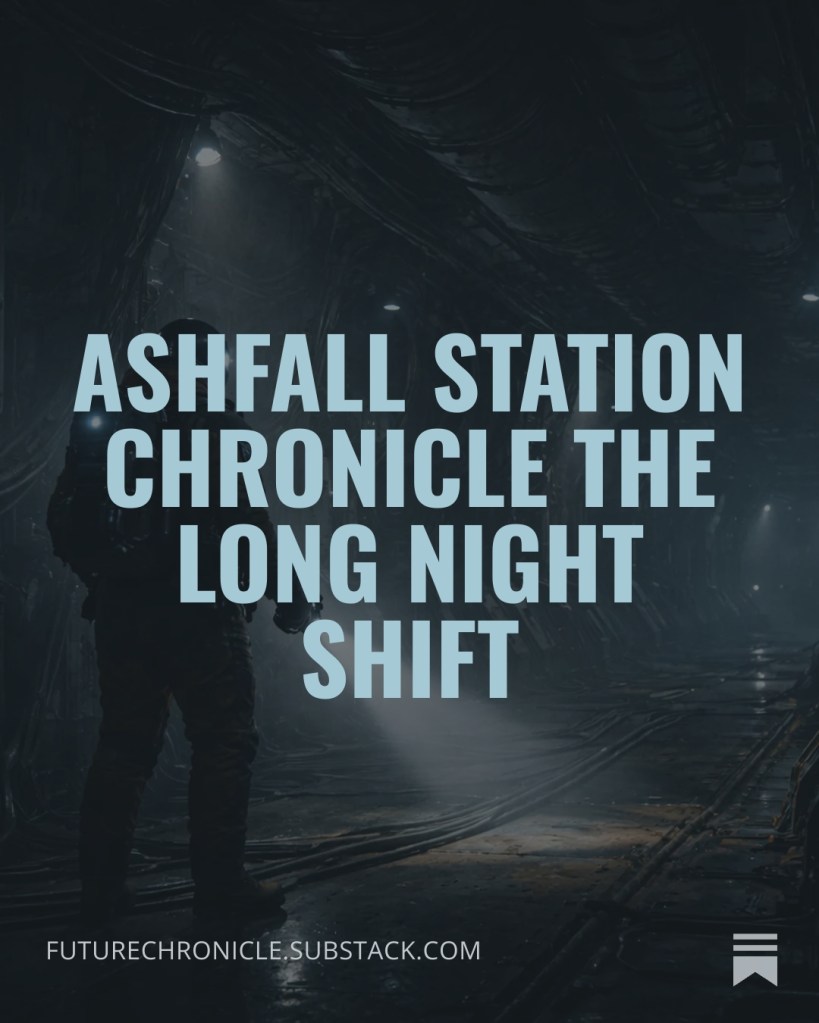
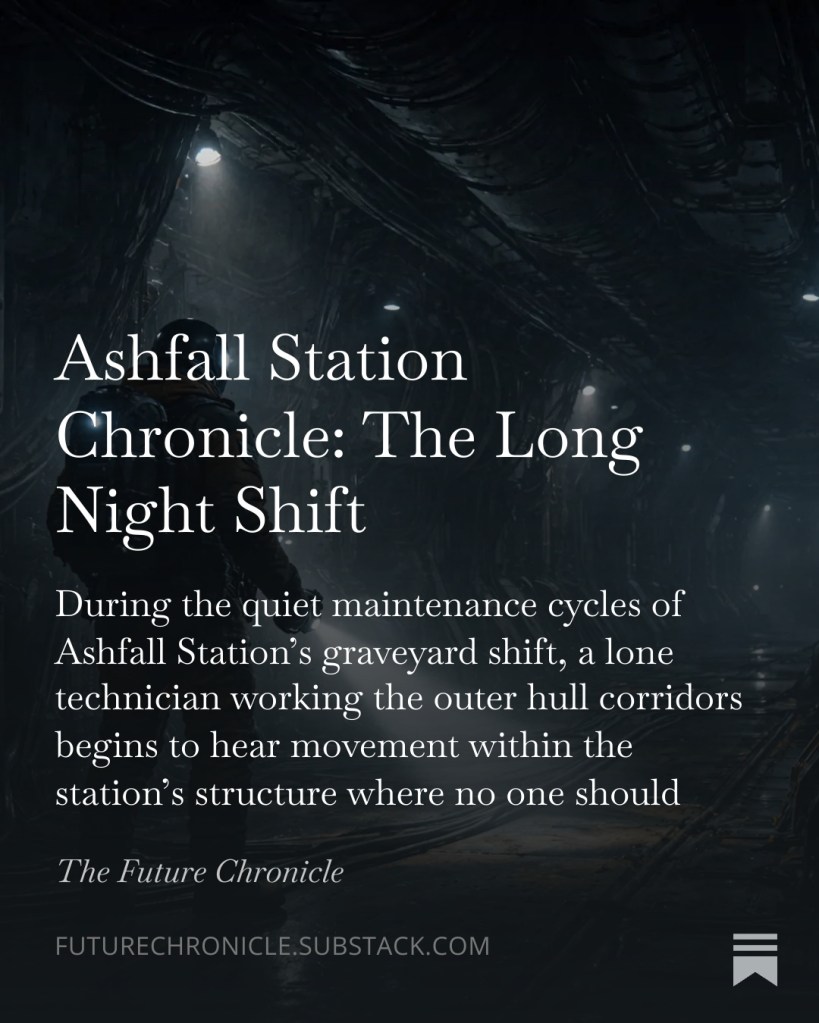
This pressure sits at the centre of Ashfall Station Chronicle The Long Night Shift, a post on The Future Chronicle that places a lone technician, Marek Ilyan, inside Ashfall Station’s outer hull corridors during the graveyard cycle, where he begins to hear and then feel movement travelling through the structure. The Substack entry frames Ashfall as an ageing industrial station in orbit above Kestren-4, with older maintenance corridors, reinforcement beams, night-shift inspections, and no scheduled external crews near the section where the disturbance begins.

What gives the piece its hold is the refusal to overstate the disturbance. The station keeps breathing through freight, power circulation, air systems, and old structural rhythms. The technician keeps working. The anomaly enters first as vibration, then as dragging weight, then as the suggestion of something moving across the outer hull where the logs should have shown nothing at all. That sequence is precisely why the Chronicle lands so well. It understands that convincing unease grows from a functioning world, not from theatrical collapse.

The wider Ashfall line deepens that effect. On the same Substack page, the Chronicle positions Ashfall as part of a broader fictional universe and connects it to the novella Ashfall Files: The Dead Girl in Sector Twelve, which follows a later investigation aboard the station. The Ashfall ebook listing describes the station as overcrowded, exhausted, and stretched by surveillance, rationing, and political strain, which gives the Chronicle’s quieter archival atmosphere a later echo in full narrative form.

Why this makes a strong entry point for new readers

For someone arriving fresh, this kind of Chronicle works especially well because it offers atmosphere before explanation. There is no need to master a dense body of lore. There is no demand to absorb a map of factions or technologies before the tension begins to function. A corridor, a maintenance route, a shift report, a vibration in the hull, that is enough. The world opens through implication, which means the reader enters through sensation and inference instead of through briefing.

That is a rare strength in science-fiction publishing. Many speculative worlds present themselves through scale. The Future Chronicle approaches through residue. It lets the world accumulate around the reader, fragment by fragment, as though each post were a recovered record from a larger future history. The effect feels less like stepping into a conventional content stream and more like opening a file that carries a little more weight than its title first suggests.

The opening section of The Long Night Shift serves as an especially clean threshold because it contains the core pressures that make Ashfall compelling. Ageing infrastructure. Solitary labour. Institutional routine. A station old enough to sound alive. A disturbance that refuses easy categorisation. From there, the archive gains force through accumulation. The next entry matters because the earlier one has already altered the reader’s sense of the station.

A companion flash-fiction short can extend that pressure in visual form, though the Chronicle itself carries the stronger emotional architecture. The written piece leaves room for the mind to inhabit the corridor fully, to feel the steel underfoot, to register how much trust goes into the systems holding vacuum beyond a few metres of alloy. That inward quality is where the unease settles.

Readers who want to step directly into that atmosphere can begin with Ashfall Station Chronicle: The Long Night Shift on The Future Chronicle, where the station’s older maintenance corridors, night inspection routes, and first recorded signs of movement across the hull emerge in the quiet language of an archival reconstruction. From there, the wider Ashfall record opens outward through the surrounding Chronicle entries, each one deepening the sense that the station carried its disturbance long before anyone found the words for it.

The Chronicle functions well as a first threshold because it asks very little of the reader except attention. It opens a corridor, lets the machinery breathe, and leaves the larger shape of Ashfall waiting further inside the archive.

The future feels strongest when it can still go unheard

Perhaps that is the deeper reason space station maintenance horror remains persuasive. It reminds us that the future, however advanced, will still depend upon unnoticed people moving through unnoticed systems at inconvenient hours, listening for the first sign that something has shifted. The great speculative image is easy to admire from a distance. The maintenance route is harder to forget. It carries duty, repetition, and the quiet fear that the structure may know more about itself than its occupants do.

An orbital station becomes memorable when it holds more than scale. It needs labour in its corridors and history in its plating. It needs the accumulated hum of years. It needs one human figure pausing beside a bulkhead because the sound travelling through it no longer belongs to the ordinary breathing of the machine.

That is where Ashfall lingers. The station continues its orbit. The records continue to fill. Somewhere along the outer structure, a disturbance first enters the archive as a minor irregularity, and the future reveals one of its oldest truths, which is that pressure almost always arrives quietly before anyone agrees on what it means.

Calibration Cycle: Meteor Event and the Quiet Violence of a Psychological Science Fiction Novella

When the room is calm, the pressure has already entered

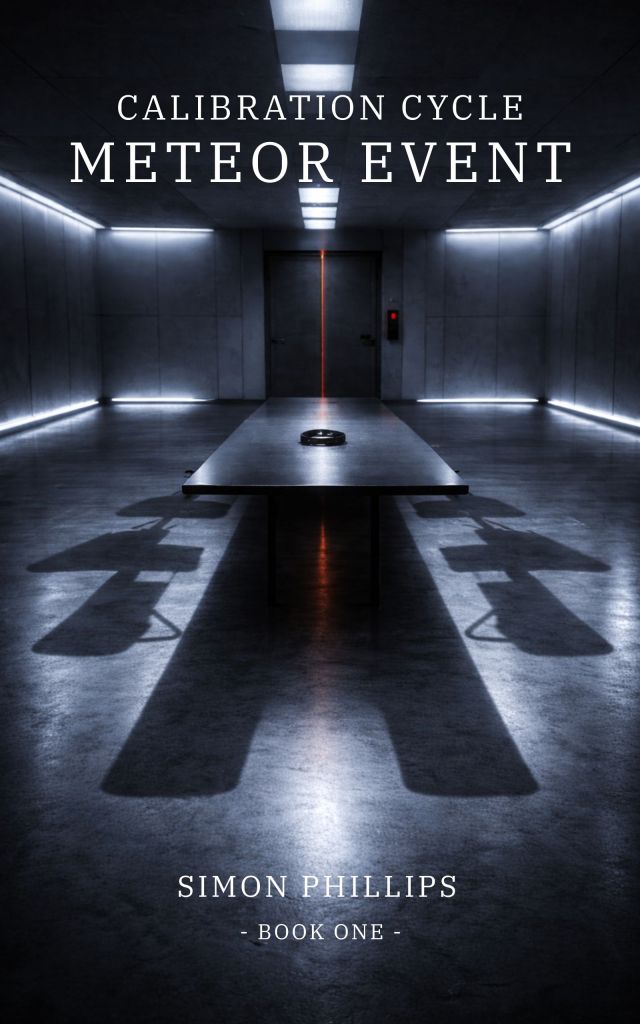
Calibration Cycle: Meteor Event is Book 1, opening inside an orientation room shaped by muted white walls, measured voices, and a clinical calm whose restraint carries unease from the first page. The project blueprint positions that opening as institutional tone and subtle unease before the transition into a meteor-threat world, permanent casualty, nuclear interception, and a return whose wrongness reveals itself through structural divergence.

Few forms of psychological science fiction novella work with pressure as effectively as simulation reality science fiction when it chooses fluorescent stillness over spectacle. Meteor Event understands that from the opening line. The room exists to settle the pulse, which means it also exists to manage compliance, and Simon Phillips lets that management gather through surfaces, posture, ventilation, lighting, and voice until the reader feels enclosed long before the wider system shows its hand. For readers drawn toward alternate reality science fiction novella territory, the strength here lies in that first act of restraint, since the environment feels composed, professional, almost ordinary, and the ordinary becomes the instrument.

At surface level, the premise carries the shape of a VR experiment gone wrong story. Volunteers arrive at a classified facility. Headbands settle against the temples. A crisis scenario begins. Yet the lived texture of the novella keeps moving away from familiar game logic. Pain registers. Authority hardens. Weather carries weight. A body falls and remains. By the time the characters start searching for the seam, the deeper unease has already shifted from technology toward consequence.

Simulation, optimisation, and the human cost of procedure

The strongest current running through Meteor Event comes from the collision between optimisation and human judgment. The yard scene, the wristband prompts, the intervention protocol, the countdown toward interception, each piece pushes the group toward decision through a language of probabilities, access, and mission framing. No speech arrives in the language of conscience. Every instruction arrives as if a calculation has already taken place elsewhere.

That shift matters because reality distortion fiction often leans on visual confusion, dream logic, or metaphysical excess. Phillips chooses a colder method. He places his people inside a structure that feels procedural enough to trust, then lets trust erode through continuity marks, fatal force, and the quiet discovery that injury remains after return. The effect is less like hallucination and more like administrative violence, the kind that passes through systems, screens, corridors, and uniforms before it reaches skin.

This is also where the novella starts to feel like an experimental science fiction story in the strongest sense. The experiment sits inside the narrative, and the prose itself behaves experimentally through control: tension accumulates through measured observation, repeated institutional language, and an almost forensic attention to how a space feels in the body. The meteor, the bunker, and the launch sequence carry scale, though the deeper fear grows from the sense that each step has already been accounted for, and that the characters are being gently shepherded toward actions whose moral cost no one around them is willing to own. The series architecture reinforces that long arc, framing the wider premise as a classified AI and VR experiment that opens into real dimensional displacement, false returns, and transformation across later books.

The moment when reality keeps its shape and loses its certainty

One of the most effective choices in Meteor Event comes from the way certainty fragments while the physical world remains coherent. The opening room feels coherent. The yard feels coherent. The bunker feels coherent. Even the return to the waiting room arrives with such smooth continuity that relief becomes plausible. Then the body begins to argue with the mind. The missing temple hardware, the swelling ankle, the bruises, the pressure marks, and the absence of other returnees all begin to undermine the comfort of re-entry.

That approach gives the novella its psychological charge. Many speculative stories ask whether reality is real. Meteor Event asks a colder question: what happens when the world feels stable enough to obey, even as consequence proves that stability false. The ending crystallises that pressure through the single-star flag, a detail small enough to require a second look, devastating enough to redraw every room that came before it. The project notes define Book 1 through an observation-room repetition and a “full wrongness” ending, and the novel’s final image delivers precisely that sensation, since the divergence arrives through symbol, absence, and institutional composure instead of spectacle.

Novella spotlight: Calibration Cycle: Meteor Event

As the opening movement in a speculative science fiction series, Meteor Event carries an unusually clean sense of purpose. It introduces Aaron Cole and the wider group inside a controlled environment whose calm grows steadily more suspect, then forces them through a crisis framed as collaborative decision-making before revealing that return itself may be another layer of displacement. The Movement I blueprint positions Book 1 around orientation, death permanence, nuclear interception, and a structurally wrong return, which gives this first volume a complete pressure arc while also opening the wider corridor of the series.

The emotional experience of the novella comes less from plot revelation and more from exposure to managed pressure. Aaron’s observational steadiness, Rei’s discipline, Connor’s analytical drive, Marcus’s tactical realism, Declan’s sceptical civilian eye, and Sofia’s growing sensory unease create a group dynamic where moral judgment shifts under stress instead of arriving as grand statement. The result feels intimate even during scenes of missile launch and atmospheric catastrophe, because the real subject remains choice under constrained information. That is where the novella earns its place inside psychological science fiction over action-first military futurism.

For readers browsing Amazon for a Kindle science fiction series or an indie sci-fi novella with a more controlled atmosphere, the listing for Calibration Cycle: Meteor Event sits under Simon Phillips in Kindle and paperback formats. The listing functions almost like the novella’s own threshold: quiet, formal, and more unsettling once the first pages begin to gather force.

Why this pressure lingers

What lingers after Meteor Event is the sense that the system gains power through calm presentation. The white room, the clipped instructions, the mission prompts, the neutral terminology around intervention and access, each one pushes against the human need for moral language. Even the series documents emphasise escalation through personal risk, false return, and grounded continuity instead of flamboyant rupture, which helps explain why the novella feels so persistent after the final page. The pressure keeps its shoes on. It walks through doors. It speaks in measured tones. It carries a badge.

That is why Calibration Cycle: Meteor Event lands so effectively within simulation reality science fiction, alternate reality science fiction novella territory, and the wider field of experimental science fiction story craft. The book extends unease through environment, consequence, and institutional behaviour, and it closes on an image that leaves reality almost intact, which in many cases is the most unsettling fracture of all. The world remains visible. The pressure remains active. The corridor continues.

The Salvage Run | Space Station Mystery Story | Ashfall Station Chronicle

The Salvage Run: A Deep Space Station Mystery at Ashfall Station

The salvage vessel emerged from the outer debris field with the unhurried motion of something returning from a place that few ships were willing to enter.

Beyond its hull, the remains of earlier industry drifted in slow orbit, fragments of relay towers and shattered cargo frames turning through the dark. Far ahead, Ashfall Station held its silent position above the pale curve of Kestren-4, its long industrial arms catching faint light from distant stars.

The object followed behind in the tow frame.

It held its shape with an unnatural stillness, its surface reflecting thin bands of light that revealed no markings, no registry codes, and no familiar signs of origin.

Every scan returned incomplete.


Introduction

Across the outer systems, salvage work forms the quiet backbone of frontier survival.

Ships travel beyond mapped traffic lanes, moving through fields of abandoned machinery where earlier waves of expansion have long since faded. Most recoveries pass through station registries without comment, reduced to material value and processed through the steady rhythm of cargo transfer systems.

This Chronicle begins with one such return.

A vessel arrives carrying a fragment recovered from deep orbit, something that resists classification even under the station’s most routine procedures. There is no immediate alarm, no sudden disruption, only the subtle presence of an object that does not quite fit within the known catalogue of frontier construction.

Within a station such as Ashfall, moments like this rarely draw attention at first.

They settle quietly into the record.


Embedded Video Section


Chronicle Series Context

Chronicle Series Context

The Future Chronicle presents speculative science fiction as archival reconstruction, a record assembled from fragments of events that unfolded across humanity’s expansion into deep space.

Within the Ashfall Station Chronicles, each entry returns to a single moment in the station’s past. Engineers, pilots, inspectors, and cargo crews move through their routines while something less visible begins to take shape within the structure itself.

Ashfall Station exists at the edge of relevance, an ageing installation orbiting a world whose richest resources have already been stripped away. Its corridors carry the accumulated weight of decades of modification, repair, and quiet adaptation. Over time, small irregularities begin to appear: signals that cannot be traced, sealed corridors without explanation, and fragments of history that seem to arrive without origin.

The arrival of the salvage vessel marks one of the earliest of these moments.

At the time, it passed through the station as routine cargo. Only later would records suggest that this was the point at which something new entered Ashfall’s systems.


Continue the Chronicle on Substack:

Read the full Chronicle and follow the fragment as it moves deeper into the station’s inner sectors, where its presence begins to leave a trace within the structure itself.

When the Page Opens and the World Follows

The moment where certainty fractures is rarely loud, though it alters everything that stands upon it

There are stories that begin with spectacle, with fire or proclamation, with the unmistakable signal that something has already broken beyond repair. This is not one of those stories. This is a story that begins with a page.

A man stands beneath morning light in a conservation studio, surrounded by the quiet labour of preservation, where history is handled gently, corrected carefully, and returned to stability through patience rather than force. The world outside continues as it always has, measured and dependable, its rhythms so deeply understood that they no longer require attention. Within that space, knowledge feels contained, ordered, and complete.

Then the page shifts.

It does not announce itself. It does not tear or burn. It folds inward.

And the world follows.


A Book That Does Not Behave Like a Book

Some objects are not preserved by time. They are waiting within it.

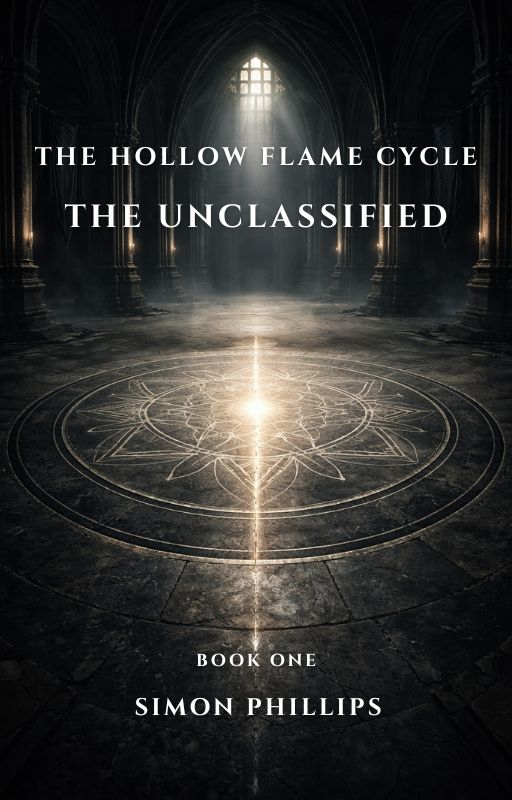
At the centre of The Unclassified, the first entry in The Hollow Flame Cycle, lies an object that resists classification at the most fundamental level. It resembles a book in form, though resemblance is the only certainty it offers. Its script refuses recognition, its structure resists familiarity, and its presence unsettles the very idea of passive material.

Silas Thorn approaches it as he would any artefact: with care, with discipline, and with the quiet confidence of someone who has spent his life restoring the past to coherence. His work is grounded in physical reality, in fibres, ink, binding, and time. Every action is deliberate, reversible, and measured against centuries of accumulated knowledge.

The book does not respond to that framework.

It holds warmth where none should exist. It bends light in ways that resist explanation. It answers touch with something that cannot be reduced to material behaviour.

What unfolds in that moment is not destruction, nor is it revelation in any familiar sense. It is intrusion.

The known world does not break. It gives way.


The Crossing That Leaves No Mark

Not all thresholds are visible. Some exist only in the moment they are crossed.

When Silas falls through the page, the act is not framed as travel. There is no preparation, no ritual, no understanding. The transition occurs in the space between expectation and perception, where reality has not yet had time to correct itself.

He lands not in chaos, though that might have been easier to comprehend.

He arrives in order.

The chamber that receives him is vast, structured, and deliberate. Its architecture carries the weight of centuries, its design shaped by authority rather than accident. Nothing appears broken. Nothing appears disturbed. The world into which he emerges does not recognise itself as interrupted.

This is the first tension the novella establishes with precision: the crossing is not treated as an anomaly by the space itself.

It is treated as an event that must be answered.


Authority Before Understanding

Institutions do not wait for clarity. They respond.

One of the defining tensions within The Unclassified lies in the way power reacts to uncertainty. The Crown, embodied through Princess Lirael and the sovereign, does not hesitate. The event is assessed, contained, and integrated into existing frameworks of control with remarkable efficiency.

There is no panic.

There is no denial.

There is only response.

Silas is not treated as an intruder in the traditional sense, nor is he embraced as a miracle. He is categorised as a problem requiring management. His presence is stabilised through containment, his movement restricted, his existence placed within the boundaries of governance.

This reaction reveals something fundamental about the world itself.

It does not collapse under pressure.

It absorbs it.


The Quiet Fracture Beneath Control

The most dangerous shift is the one that leaves everything looking unchanged.

While the structures of authority hold firm, the novella introduces a quieter, more unsettling movement beneath them. Through Princess Seréne, a different kind of awareness begins to emerge, one less concerned with immediate control and more attuned to what the event represents.

The foundations have opened.

They have closed again.

No mark remains.

This absence of damage becomes the central disturbance.

If the system can admit something without rupture, then the boundaries that define it are not as absolute as they were believed to be. The palace, the Crown, the Guild, and the very idea of structured reality all rest upon assumptions that have not yet been tested in this way.

Seréne does not rush to resolve this contradiction.

She recognises it.

And in doing so, she becomes the first to truly stand within the question the novella poses.


A World That Does Not Recognise Itself

When two systems meet, neither remains untouched.

The introduction of Silas’s world, described in fragments through his attempts to explain it, creates a second layer of tension. His reality is defined by written law, mechanical systems, and a complete absence of what this new world considers foundational.

There is no magic.

There are no sigils.

There is no binding of authority into stone.

And yet he stands within a place where all of those things are not only real, but necessary.

The contrast does not resolve into superiority or dismissal. Instead, it reveals the limits of both systems. Each world contains structures that appear complete within their own context. Each becomes unstable when viewed through the lens of the other.

The crossing does not simply move a man from one place to another.

It introduces incompatibility.


Where the First Movement Ends

The hall settles. The question remains.

By the close of the novella, nothing outwardly catastrophic has occurred. The palace still stands. Authority remains intact. The man has been contained. The Guild has been summoned. The system continues to function.

And yet something irreversible has begun.

The foundations have responded to something they were never meant to receive.

A man from a world without magic stands at the centre of a system built upon it.

The Crown has acted without understanding.

The Guild has arrived without conclusion.

The question has entered the world.

It has not left.


Step Into the Hall

If you want to experience the full unfolding of this first disturbance, you can read The Unclassified here:

This is the opening movement of The Hollow Flame Cycle, where the story does not begin with collapse, but with the moment just before it becomes possible.

The page has opened.

The world has followed.

And nothing, though it appears unchanged, will remain as it was.

The Viking Longship: How Norse Ships Changed Warfare and Exploration

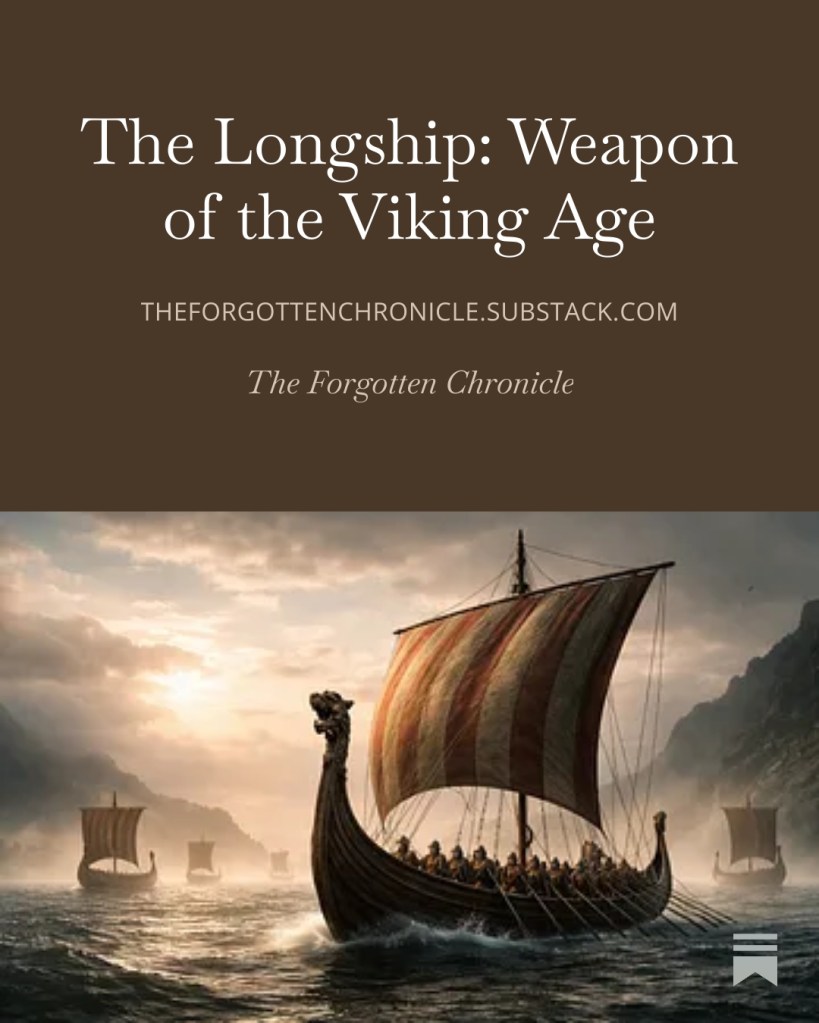
Viking Longship Explained: Design, Speed, and Impact on Europe

Along the windswept coasts of Britain, where narrow rivers met the restless waters of the North Sea, reports began to travel slowly between monasteries and trading settlements of unfamiliar vessels appearing far beyond the horizon, their forms unlike the ships that had long moved between the known ports of northern Europe.


Introduction

The Viking Age did not begin with armies alone.

It began with a ship.

During the early medieval period, the seas around Britain were seen as natural barriers, separating kingdoms and limiting the reach of conflict. Yet this belief began to shift as Scandinavian sailors developed a vessel unlike anything seen before in Europe.

The Viking longship combined speed, flexibility, and shallow design in a way that allowed it to cross open seas and travel deep inland along rivers. This innovation reshaped not only warfare, but trade, exploration, and settlement across northern Europe.


Watch the Chronicle:


Discover The Forgotten Chronicle

Each week, The Forgotten Chronicle explores a moment when history quietly changed the world.

From the first Viking raids to the rise of kingdoms, these narrative histories uncover how events unfolded and why they still matter today.

This Chronicle explores the ship that made the Viking Age possible.


Continue the Chronicle on Substack

Read the full Chronicle

Ashfall Station: The Station That Should Not Exist | A Deep Space Station Mystery

Ashfall Station Mystery | Sci-Fi Space Station Story & Deep Space Anomaly

The inspection shuttle drifted through the outer traffic corridor with the slow patience of an ageing machine that had travelled far beyond the routes it once served.

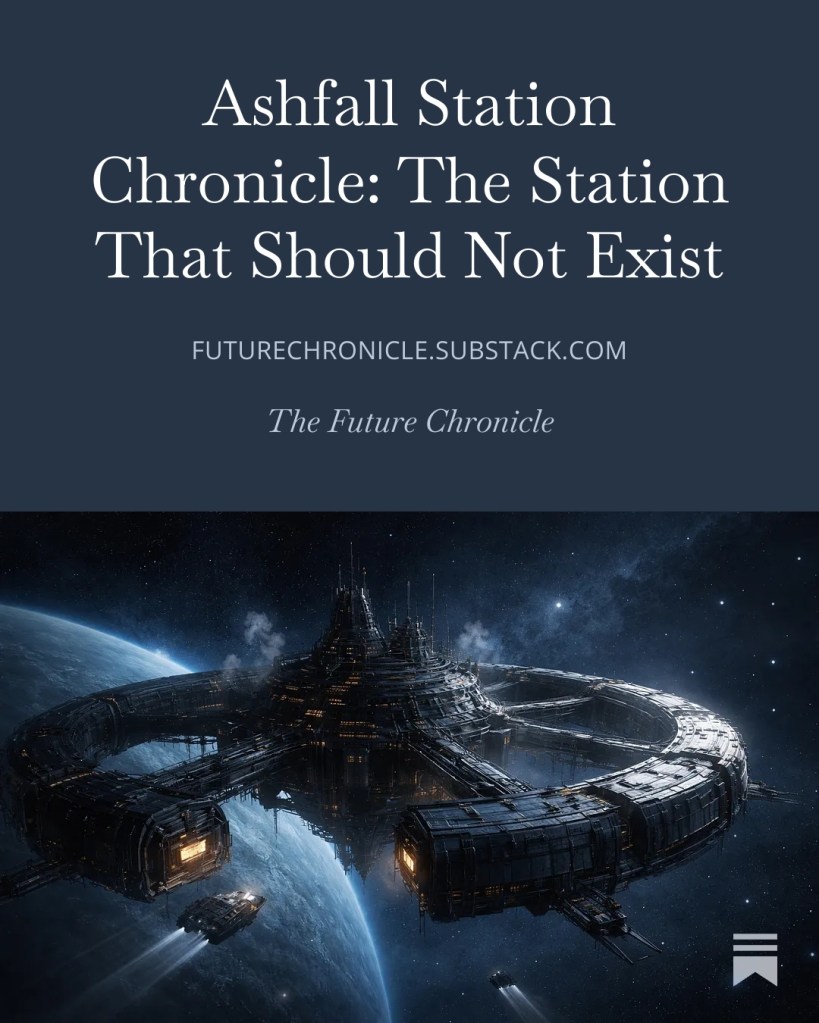
Ahead, Ashfall Station turned in quiet orbit above the pale curve of the planet below, its vast ring marked by decades of repair, expansion, and forgotten construction. Amber maintenance lights burned along the docking arms like distant lanterns suspended in the dark.

From a distance, the station carried the presence of something that had endured longer than it was ever designed to survive.


The Purpose That Had Already Ended

Ashfall Station was not meant to remain.

Built during an earlier phase of expansion, it had once served as a transfer hub for resource traffic moving between distant mining operations and the inner systems. Over time those routes faded, leaving the station suspended between relevance and abandonment.

Fleet records reflected that decline with quiet certainty. Inspection orders were issued. Closure was expected. The station would be catalogued, dismantled, and eventually forgotten like so many frontier installations before it.

Yet somewhere within the deeper layers of command, that conclusion shifted.

The same inspection that should have marked the station’s end instead became the beginning of something else.


The Moment the Record Changes

The arrival of Fleet Inspector Halverin marked that transition.

What appeared, on the surface, to be a routine administrative process carried a different weight beneath it. Maintenance reports hinted at irregularities. Salvage traffic arrived from beyond the recognised perimeter. Systems behaved in ways that official logs described, yet never fully explained.

None of these details alone suggested anything unusual.

Taken together, they formed the outline of a station that had begun to change before anyone formally acknowledged it.


A Visual Record of Arrival

The following visual reconstruction presents a brief glimpse of that moment, as the inspection shuttle approached Ashfall Station for the first time


The Ashfall Station Chronicles

The Future Chronicle presents speculative events as reconstructed records from possible futures, where fragments of human expansion remain long after their purpose has faded.

Within this series, Ashfall Station serves as the central setting. An ageing industrial installation orbiting the frontier world of Kestren-4, it exists as both infrastructure and environment, shaped by decades of adaptation and quiet persistence.

Each Chronicle follows a different individual moving through the station’s corridors—inspectors, engineers, pilots, and workers—revealing isolated events that, over time, begin to form a larger and more unsettling pattern.

The structure itself becomes part of that story, carrying traces of earlier construction, sealed sectors, and decisions that were never fully recorded.


Continue the Chronicle

The opening record captures only the moment of arrival.

To follow Inspector Halverin beyond the docking corridors, into the layered interior of Ashfall Station where the first signs of change begin to surface:

→ Continue reading on Substack


A Story Within the Station

The Chronicle records the early history of Ashfall Station.

The events that follow unfold years later.

In Ashfall Station: The Dead Girl in Sector Twelve, a routine investigation begins within the station’s ageing structure, where something long embedded within its corridors begins to emerge.

→ Explore the novella on Amazon

The Quiet Threshold: Inside a Time Travel Science Fiction Novella Where Humanity Reaches for the Future

Atmospheric Opening

Deep beneath layers of reinforced concrete and controlled silence, a research complex prepares for an experiment that humanity has imagined for centuries. Engineers monitor fields of energy that bend along equations still fresh within scientific literature, analysts observe streams of temporal telemetry, and somewhere within that quiet machinery a gateway waits for the moment when theory becomes reality. Within this atmosphere of restrained anticipation emerges a time travel science fiction novella rooted in the believable language of research institutions and technological ambition.

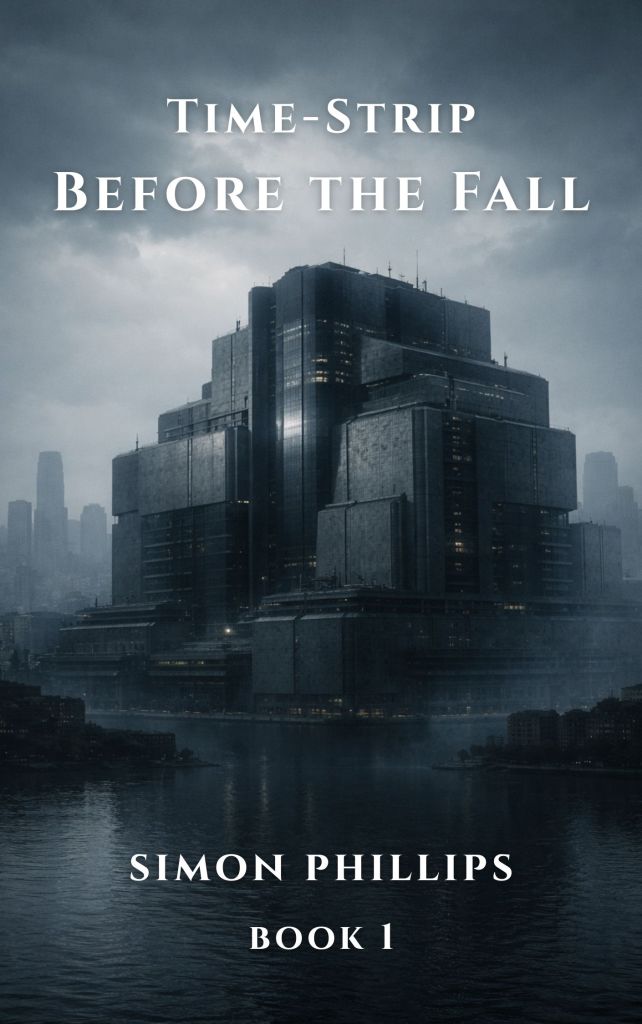
Time Strip: Before the Fall unfolds within a near-future environment where advanced systems guide human movement through buildings designed for precision and containment. Artificial intelligence manages daily routines, environmental controls respond to bodily rhythms, and the routines of scientific life proceed with the calm confidence that accompanies successful technological progress. Within such surroundings, a near-future time experiment fiction setting feels plausible rather than distant.

At the centre of this environment stands Caelen, a participant within a research programme dedicated to opening what scientists have begun to call the Time Strip, a phenomenon capable of bending chronology itself. Within the language of contemporary speculative research this experiment resembles a temporal anomaly science fiction concept, where a portal emerges through enormous energy concentration and carefully calculated containment systems.

In the early hours before the experiment begins, the facility remains almost serene. Laboratories hum with restrained power, corridors glow with quiet lighting, and human movement flows through automated architecture designed for efficiency. Every detail communicates control, calculation, and confidence. The scientific community within this world believes the experiment represents the next step in human exploration.

Yet beneath that surface calm lies the unsettling awareness that humanity now approaches the edge of something vast.


The Human Desire to Control Time

For centuries the idea of travelling through time existed largely within imagination, philosophical speculation, and theoretical mathematics. Modern speculative literature frequently explores this idea through distant futures or fantastical technology. A more grounded approach to realistic time-travel science fiction asks a quieter question: what happens when contemporary scientific culture truly attempts such an experiment.

Within the world of the Time Strip series, time travel emerges through institutional research rather than adventurous curiosity. Government agencies, corporate laboratories, and academic partnerships converge around a technology capable of generating immense energy distortions. The purpose appears straightforward: observation of past and future states, controlled experimentation, and perhaps the eventual ability to move information or travellers across chronology itself.

Within such a framework, the story transforms into a psychological science fiction story rather than a spectacle of machines. The true tension grows within the human mind confronting forces that stretch beyond familiar experience.

Scientists spend their careers mastering systems that obey measurable laws. Laboratories operate through procedure and repetition. Instruments respond predictably when calibrated correctly. The promise of a time distortion sci-fi fiction concept challenges those expectations. Time itself behaves as the underlying structure of every scientific discipline. Once that structure bends, every assumption surrounding cause and effect begins to tremble.

The earliest moments within the Time Strip research facility therefore carry a subtle psychological pressure. Engineers observe instruments that drift by fractions of a second. Timing protocols require adjustment. Minor anomalies appear within readings that previously held perfect alignment. None of these changes appear dramatic in isolation. Together they suggest a reality shifting by almost invisible degrees.

Such details build the atmosphere characteristic of a time portal science fiction novella grounded in scientific culture. Instead of sudden catastrophe, the narrative explores the creeping realisation that the universe may contain layers of complexity far beyond human modelling.


Institutional Control and the Fragility of Certainty

Large research programmes rely upon layers of institutional authority. Government oversight, scientific committees, security protocols, and carefully defined procedures maintain order within environments dealing with dangerous technology. In theory such structures prevent chaos.

Within the Time Strip facility, these systems function flawlessly during the early stages of the experiment. Automated architecture guides personnel through corridors designed for efficiency. Artificial intelligence manages schedules, monitors health indicators, and ensures that participants remain within operational parameters. Environmental systems maintain temperature, air quality, and lighting according to biometric feedback.

This environment reflects the ambition of a speculative time research fiction setting in which technology anticipates human behaviour almost before it occurs. People move through the building with the quiet trust that advanced systems will guide every step.

Yet time itself refuses simple containment.

As the experiment approaches activation, the atmosphere within the facility grows subtly different. Conversations slow as scientists watch their instruments with increased attention. Security personnel maintain calm posture while absorbing unfamiliar instructions from research supervisors. Artificial intelligence systems continue providing guidance with perfect composure.

Within such moments emerges a profound question that lies at the heart of many indie science fiction novella projects exploring technological boundaries: can institutions truly manage forces that operate on a cosmic scale.

The research teams believe preparation remains complete. The facility stands fortified beneath the earth. Energy containment fields exceed projected requirements. Mathematical models predict stable conditions throughout the activation sequence.

Confidence surrounds the experiment like a shield.

Yet the deeper narrative tension suggests that confidence alone may offer little protection when humanity begins manipulating the structure of time.


Memory, Identity, and Temporal Uncertainty

Time travel stories often focus upon dramatic paradoxes or adventurous journeys across centuries. The Time Strip series approaches the concept through a more intimate lens. When chronology bends, human perception becomes the first instrument affected.

Memory forms the core of identity. Each person carries a continuous thread of experience connecting past moments to present consciousness. Temporal distortion threatens that continuity in subtle ways long before physical travel occurs.

Inside the research facility, participants begin noticing small irregularities. A corridor feels longer than expected. A scheduled announcement arrives moments earlier than predicted. An internal sense of timing grows slightly uncertain. None of these sensations immediately appear alarming. Each observation invites reflection rather than panic.

Such details transform the narrative into a psychological science fiction story where perception itself becomes an unreliable instrument.

Scientists trained to trust empirical data suddenly face experiences that resist measurement. Artificial intelligence systems report stable readings while human participants sense minute shifts within their awareness. The gap between machine certainty and human intuition widens.

Within that space of uncertainty grows the quiet dread characteristic of time distortion sci-fi fiction grounded in human psychology. If time itself begins to slip, memory may follow. Identity may stretch across unfamiliar moments. Cause and consequence may detach from their expected order.

The Time Strip experiment therefore explores more than technological ambition. It examines how human consciousness responds when the framework of reality begins to loosen.


Novella Spotlight: Time Strip: Before the Fall

The opening entry in the Kindle sci-fi novella series introduces readers to the earliest phase of humanity’s attempt to reach across time. Time Strip: Before the Fall stands as the foundation of the broader narrative, establishing the research facility, the institutional structures supporting the experiment, and the subtle pressures building around the activation of the Time Strip itself.

At its centre stands Caelen, a participant whose life unfolds within a society deeply integrated with artificial intelligence and predictive technology. Daily routines proceed with quiet efficiency. Personal AI companions manage schedules and environmental comfort. Urban infrastructure anticipates human movement with remarkable precision.

Within such a world the decision to pursue temporal experimentation appears almost inevitable. Scientific progress continually reaches toward new frontiers, and the possibility of opening a controlled passage through time represents one of the most compelling frontiers imaginable.

The novella explores this moment before the experiment crosses its threshold. Scientists prepare instruments. Observers gather within containment areas. Systems align for the activation sequence that may transform humanity’s relationship with chronology.

The narrative tension resides within atmosphere and perception rather than explosive action. Readers encounter a time travel science fiction novella where quiet scientific ambition gradually meets the unsettling possibility that time itself holds depths beyond calculation.

Further details surrounding the novella can be found through its Kindle listing, where the story stands as the first chapter within the expanding Time Strip series.


A Glimpse Through the Research Facility: The Visual Mini-Read

Alongside the written narrative exists a brief visual fragment preserved through a short cinematic presentation. The YouTube visual mini-read offers a glimpse inside the research facility where the experiment unfolds.

Within a few moments of imagery the viewer enters the sterile corridors, the calm glow of laboratory interfaces, and the quiet movement of personnel preparing for an event that may reshape human history. The visual sequence captures the restrained atmosphere that defines the early phase of the Time Strip story.

Rather than summarising the novella, the visual piece functions as a preserved moment within the world itself. A corridor illuminated by soft light. A figure moving toward the containment chamber. Instruments waiting for activation.

The video becomes an atmospheric doorway through which the broader narrative quietly reveals its presence.

Embedded within this article, the visual fragment invites viewers to experience the mood of the facility before the experiment begins.


Closing Movement

Human civilisation has always advanced through experiments that stretched the boundaries of understanding. Fire, electricity, flight, and nuclear energy each transformed the course of history once theory met reality.

The Time Strip experiment extends that tradition toward the most fundamental structure of existence: time itself.

Inside a fortified research complex, scientists continue refining their instruments. Artificial intelligence maintains the calm rhythm of daily operations. Participants move through corridors designed for precision and containment.

Somewhere within those systems, the first distortion in chronology begins to form.

At first the shift appears almost imperceptible. A subtle hesitation within timing protocols. A faint sense that events unfold with slightly altered rhythm. Observers continue their work, guided by training and procedure, trusting the calculations that brought them to this moment.

Yet time remains older than every instrument attempting to measure it.

Within the quiet heart of the research facility, the Time Strip waits.

And humanity prepares to discover what lives beyond the edge of its own chronology.