The Viking Longship: How Norse Ships Changed Warfare and Exploration

Viking Longship Explained: Design, Speed, and Impact on Europe

Along the windswept coasts of Britain, where narrow rivers met the restless waters of the North Sea, reports began to travel slowly between monasteries and trading settlements of unfamiliar vessels appearing far beyond the horizon, their forms unlike the ships that had long moved between the known ports of northern Europe.


Introduction

The Viking Age did not begin with armies alone.

It began with a ship.

During the early medieval period, the seas around Britain were seen as natural barriers, separating kingdoms and limiting the reach of conflict. Yet this belief began to shift as Scandinavian sailors developed a vessel unlike anything seen before in Europe.

The Viking longship combined speed, flexibility, and shallow design in a way that allowed it to cross open seas and travel deep inland along rivers. This innovation reshaped not only warfare, but trade, exploration, and settlement across northern Europe.


Watch the Chronicle:


Discover The Forgotten Chronicle

Each week, The Forgotten Chronicle explores a moment when history quietly changed the world.

From the first Viking raids to the rise of kingdoms, these narrative histories uncover how events unfolded and why they still matter today.

This Chronicle explores the ship that made the Viking Age possible.


Continue the Chronicle on Substack
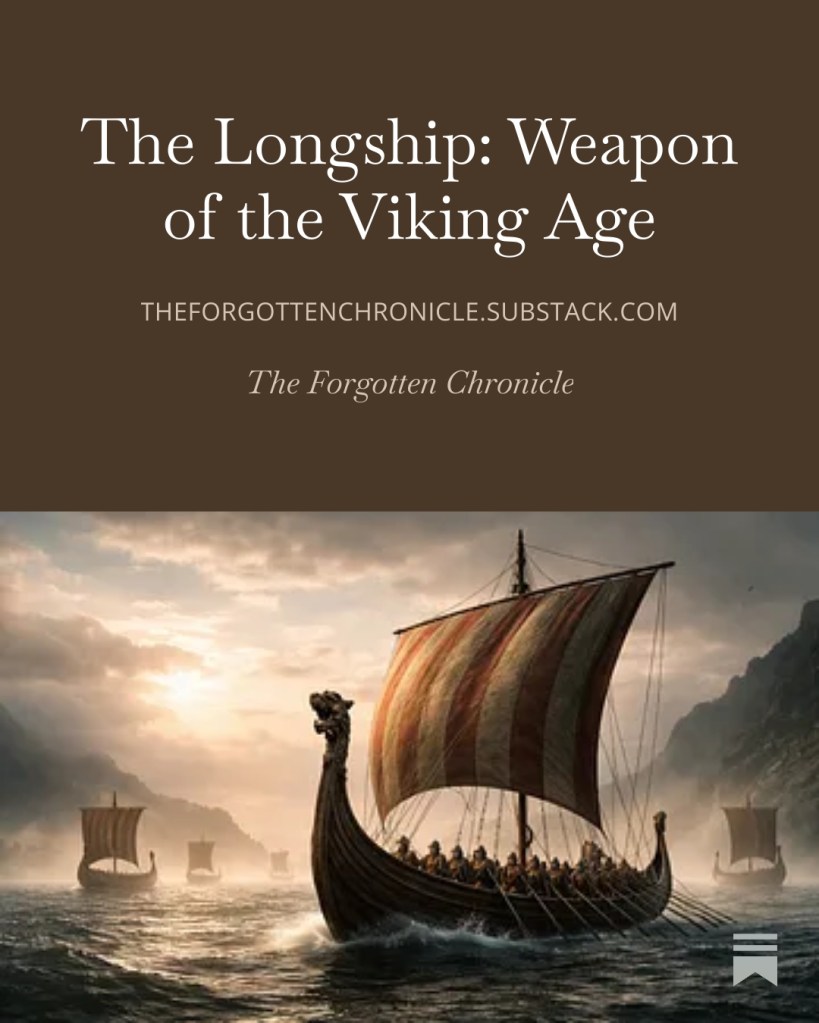
Read the full Chronicle
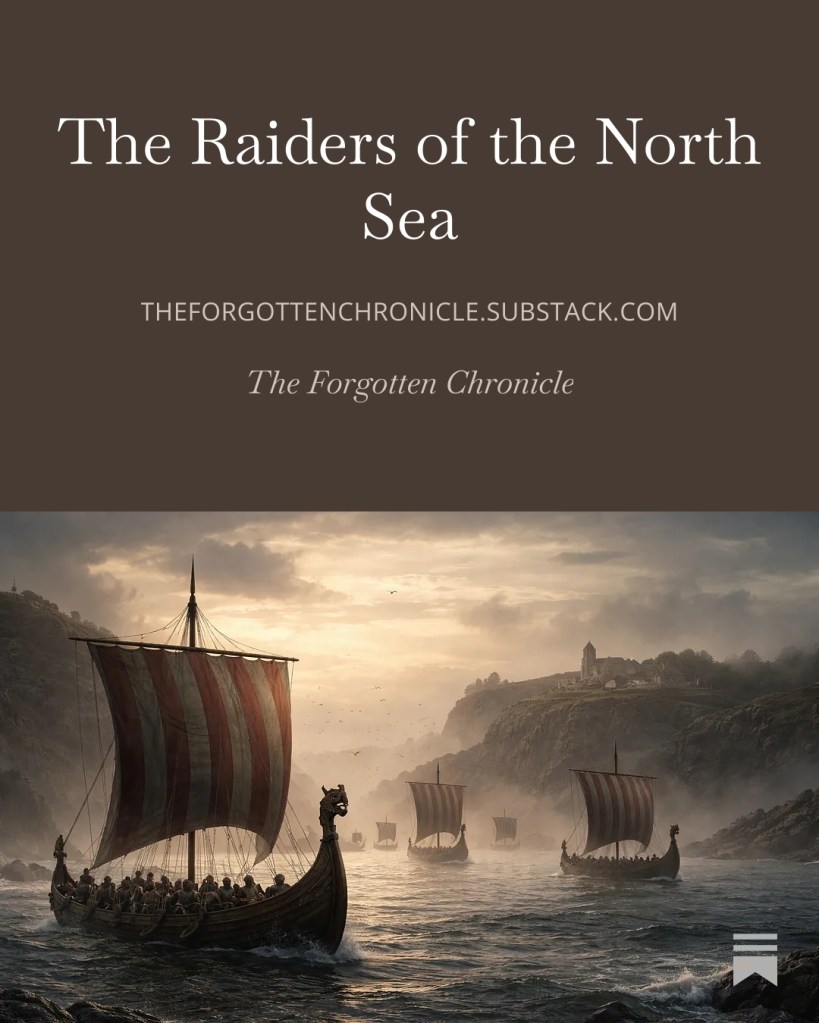
The Raiders of the North Sea: A Viking Age Coastal Mystery

The Raiders of the North Sea | Viking Longships & Coastal Raids Story

Morning gathered slowly across the wide waters of the North Sea as a pale band of light lifted along the eastern horizon. The tide moved with quiet patience against the dark rocks of the English coast while seabirds wheeled above the surf, their distant cries echoing through the cool air. Along the shoreline, villages stirred into another ordinary day, unaware that beyond the horizon, sails were already rising through the morning haze.


In the early centuries of the Viking Age, the coasts of Britain existed in a delicate balance between trade, faith, and quiet isolation. The sea brought merchants, pilgrims, and travellers whose arrivals shaped the rhythm of coastal life.

This Chronicle explores the moment that balance began to shift.

From the distant horizon came vessels unlike any seen before. Long, narrow ships capable of crossing open sea and shallow rivers alike. Their arrival introduced a new kind of encounter, one defined by speed, precision, and uncertainty.

What began as isolated raids would, over time, reshape the memory of the sea itself.


A Visual Chronicle

Watch a short visual interpretation of the events that marked the beginning of Viking activity along the British coast:


Chronicle Series Context

The Future Chronicle is a narrative publication that presents moments of history and speculation as immersive chronicles, allowing readers to experience events through atmosphere and lived perspective rather than explanation.

Each entry functions as a reconstructed record, blending storytelling with historical and speculative insight. This approach places the reader directly within the unfolding moment, where environment and detail reveal the deeper significance of each event.

The Chronicle you are reading forms part of a wider archive exploring turning points across time, from ancient civilisations to distant futures.


Continue the Chronicle

The arrival of the longships marked only the beginning of a much larger transformation.

Coastal settlements would soon learn that the horizon carried more than trade and travel. It carried a new kind of presence that would return again and again across the generations.

Continue the Chronicle on Substack: