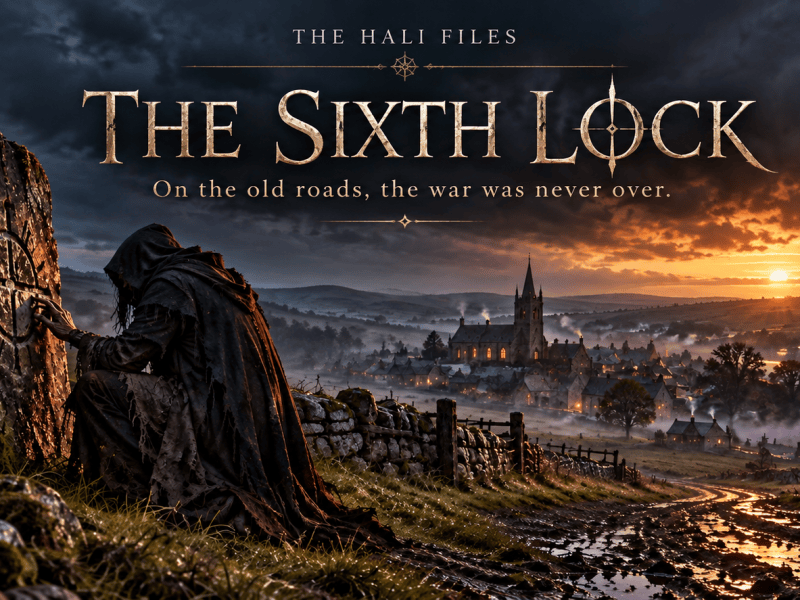
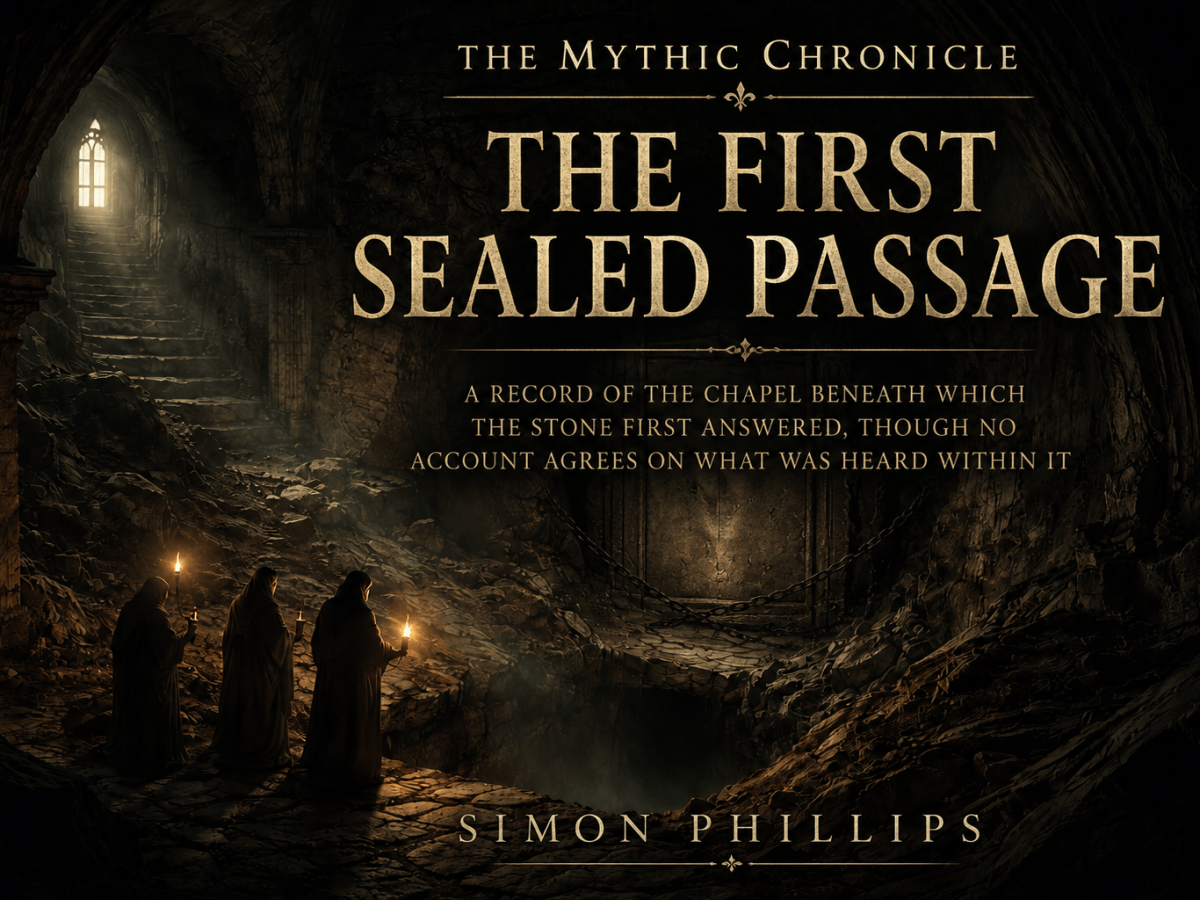
Dark modern fantasy set in a world rebuilt over buried supernatural systems, where demon hunters carry the damage of an old war and institutions keep denying what is already returning
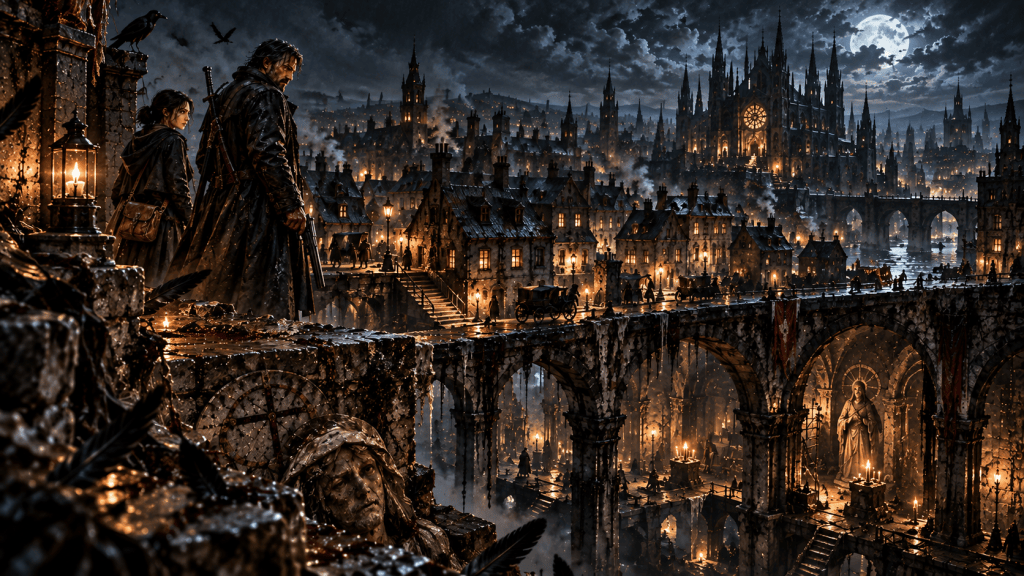
The war ended years ago, and the world built over what survived it. Old religious spaces became rented rooms, charity houses, storage chambers and civic buildings, while sealed routes, buried defences and forgotten containment sites remained beneath streets whose inhabitants learnt to treat the past as architecture. Kael has spent long enough among those places to recognise the pressure when it starts moving again, even as the Hali Sickness inside him answers more strongly each time he approaches it. Beside him, Maris carries unstable magic that senses fractures long before institutions find safer language for them, pulling both of them deeper into a deterioration already spreading through bodies, buildings and systems.
Across twenty interconnected books, Hali Files follows a world that continues functioning while the foundations beneath it begin to change. Individual deaths become strange cases, strange cases begin to share patterns, forgotten structures start answering forces they were built to contain, and institutions created to preserve order discover that secrecy has become part of the danger. Kael moves through that decline as hunter, survivor and evidence of the previous war, while Maris becomes increasingly important to forces she barely understands and increasingly necessary to the man whose decline she witnesses at closest range.
The War Ended. Its Consequences Stayed.
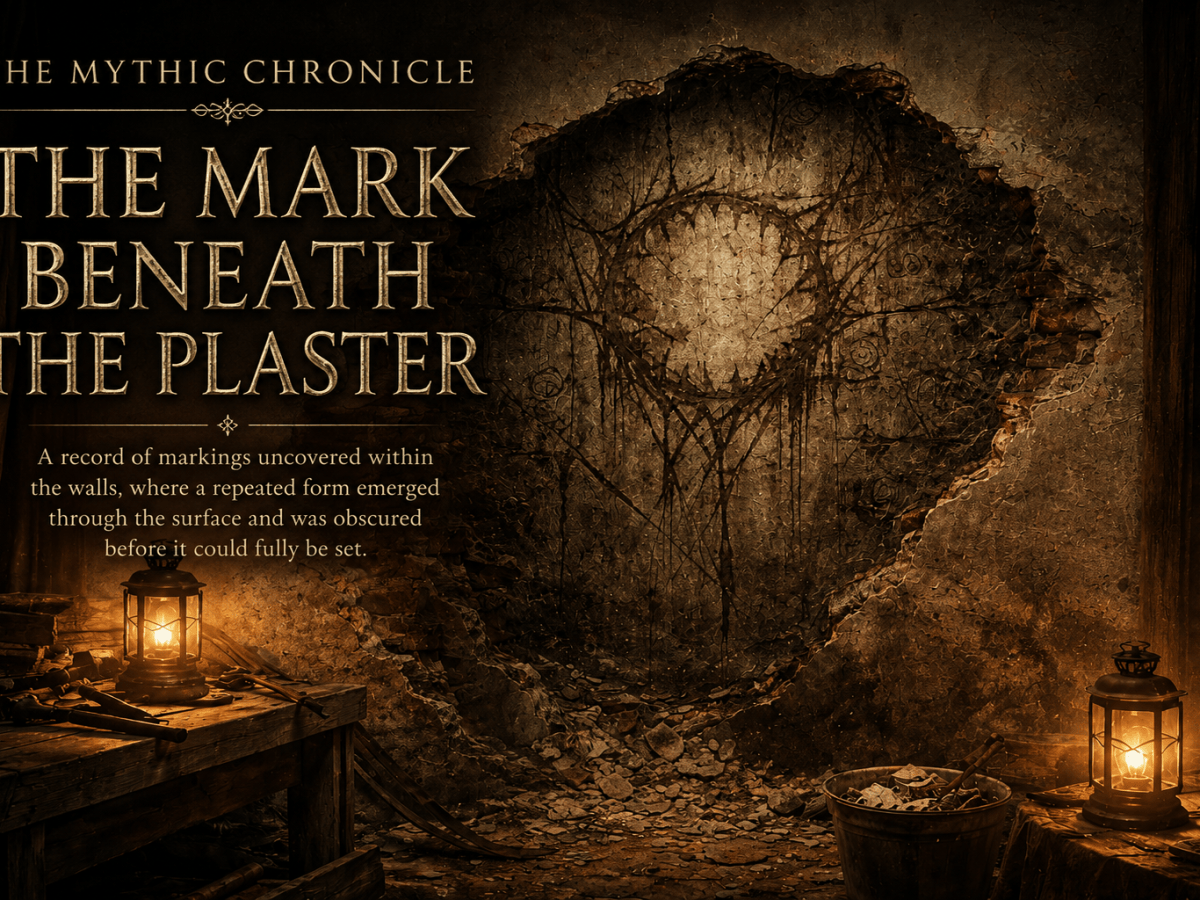
Hali Files begins with incidents small enough for the world to dismiss. A death inside an old building can become sickness, vice or misfortune once the paperwork reaches the right desk. A stolen religious object can become a criminal matter. An abandoned chamber can be sealed again, an old warning mark can be left beneath moss, and behaviour that makes little sense can be divided into separate explanations until every piece seems manageable on its own. That process of reduction allows ordinary life to continue, and for a long time it succeeds.
Kael and Maris keep entering the places where those explanations fail. Their work brings them through damaged districts, forgotten sacred rooms, rural boundaries, hidden passages, sealed structures and human lives already touched by pressures whose meaning has faded from public memory. Each case can begin as a bounty, disappearance, recovery, disturbance or death, giving the story a human problem before the deeper structure emerges. The immediate danger may be resolved, yet every encounter leaves evidence that the wider system has moved a little farther.
That accumulation drives the series. Hali Files grows through pressure instead of a constant sequence of grand revelations, allowing readers to recognise connections before the wider world accepts them. The deeper horror comes from watching institutions preserve the appearance of stability while the conditions beneath that stability keep changing, until the gap between the accepted world and the experienced world becomes too wide to manage.
Every New Street Has Something Older Beneath It
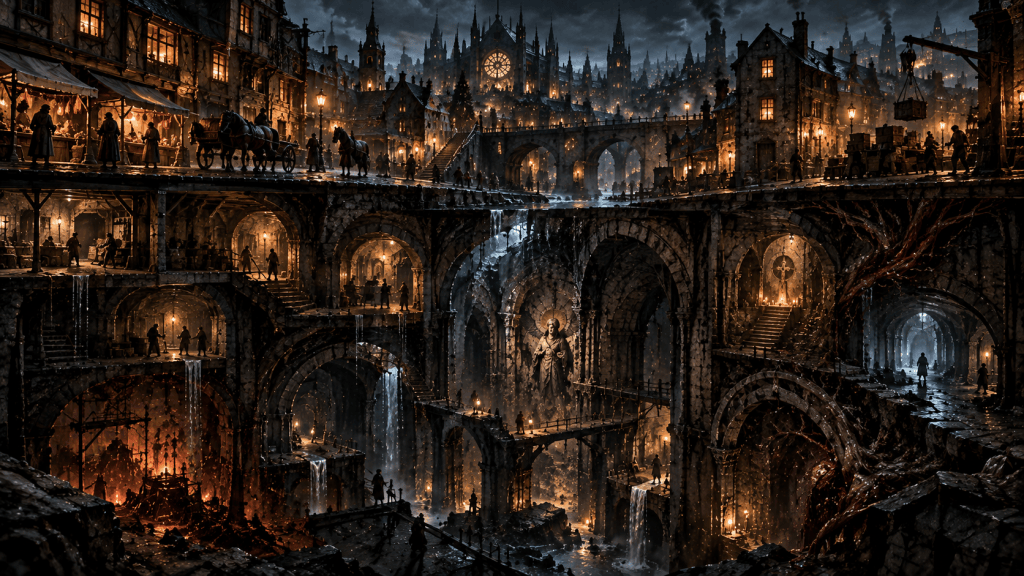
The world of Hali Files lives in layers. Trade, government, religion, housing and ordinary work occupy the visible surface, while older sacred foundations continue beneath them through blocked stairways, deconsecrated buildings, forgotten routes, abandoned defences and spaces whose original purpose has faded into local habit. A former prayer house can serve the poor, a chapel structure can disappear inside later construction, a watch post can stand across stone that once marked protected ground, and an old road can preserve the shape of a defence that generations have forgotten how to read.
People live successfully inside that visible world because most days still behave as expected. Bread rises, markets open, roads carry carts, clerks keep records, workers complain, priests hold services and families inherit routines whose original meanings disappeared generations earlier. That ordinary continuity gives the supernatural pressure its weight. The strange exists beside work, fatigue, hunger, money, bureaucracy and habit, which means every disturbance first has to compete with the human need to continue with the day.
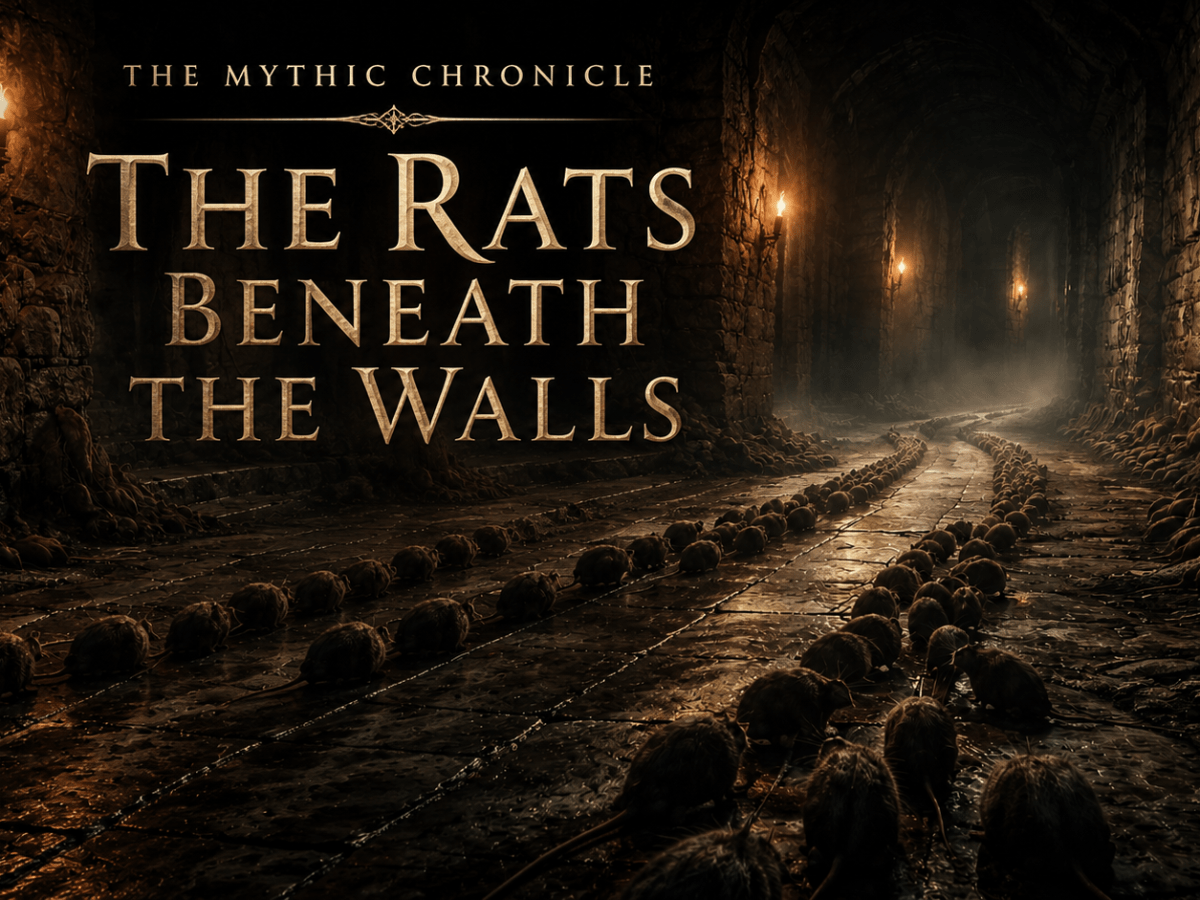
The deeper layer reveals itself through inconsistency. A wall carries heat beyond any visible source. Stone seems to remember blood. Animals refuse routes people use daily. Incense appears where no censer burns. Bodies change in ways illness fails to explain. Rats arrange themselves around pressures human senses barely register. What first appears local begins to expose a world whose buried systems are still active, still connected and increasingly capable of answering whatever has started to move through them.
A Hunter Surviving His Own Weapon
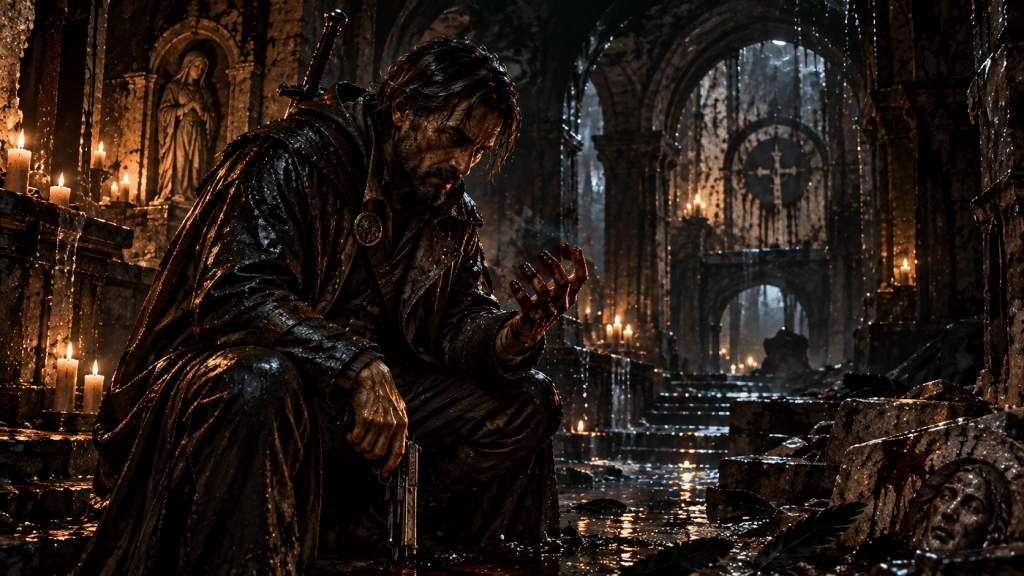
Kael carries the old war in his body. The Hali Sickness grew from exposure to conditions human beings were never meant to contain, leaving survivors capable of meeting forces that would overwhelm an ordinary fighter while steadily eroding the structures that keep those survivors human. At rest, Kael can pass through a street as another tired man with a hard history, a drink within reach and a sword carried across his back. Pressure changes him.
The sickness lives beneath restraint. Conflict sharpens perception, pushes strength beyond ordinary limits, alters voice and eyes, narrows pain, strengthens the pull towards the weapon and makes violence frighteningly clear. Those responses once made Hali fighters useful during war. Peace leaves the same responses trapped inside bodies built around danger, forcing survivors to manage an internal drive that has lost the conflict it was shaped to answer.
For Kael, every case creates a contradiction. The Hali makes him capable of entering corrupted places and surviving encounters that would kill others, while each encounter gives that same condition another reason to rise. Alcohol, exhaustion, habit and self-discipline can slow parts of the decline, though the deeper pressure becomes harder to silence as the series advances. The fear surrounding him therefore comes from far more than his ability to kill demons. Kael knows what happens when a Hali loses the final structures holding instinct inside choice.
She Feels the Fractures Before Anyone Can Name Them
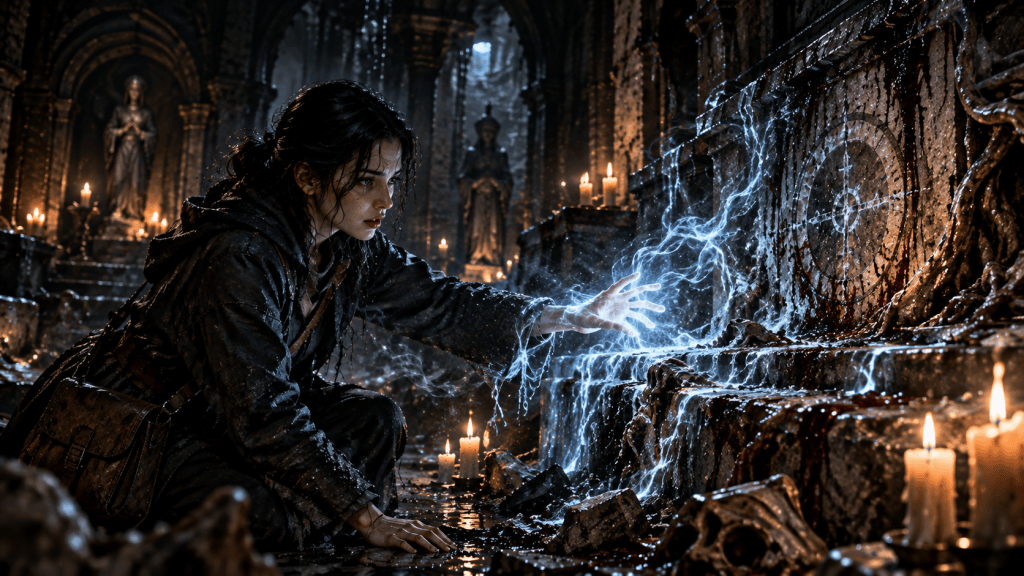
Maris enters the same world from the opposite direction. Kael carries experience sharpened by war, while Maris carries potential she barely understands. Her magic recognises pressure, buried structures, altered spaces and surviving patterns with an instinct that often moves ahead of conscious knowledge, giving her access to truths that formal systems have lost or deliberately hidden.
That ability carries danger because her magic reaches first and explains later. A touch can wake something sealed into stone. An attempt to understand a structure can connect pieces too deeply. A protective act can increase the pressure already consuming the person she means to help. Maris grows through those failures by learning where instinct helps, where structure matters and where power becomes more dangerous through scale.
Her relationship with Kael forms the human centre of Hali Files. He gives her enough experience, protection and practical judgement to survive powers she cannot yet safely interpret. She gives him something equally essential by remaining close enough to recognise when Hali pressure is replacing choice with instinct. Their partnership gradually becomes reciprocal, with Maris moving beyond the role of protected companion while Kael becomes increasingly dependent upon the presence of someone whose magic may interact with the Hali in ways both of them are still learning.
That dependence creates its own fear. Greater distance can mean greater risk. Greater closeness can mean deeper entanglement. Across twenty books, the question surrounding them grows from whether they can survive individual cases into whether either can remain stable in a world where their conditions are becoming more relevant with every new fracture.
Order Depends on the Story People Are Given
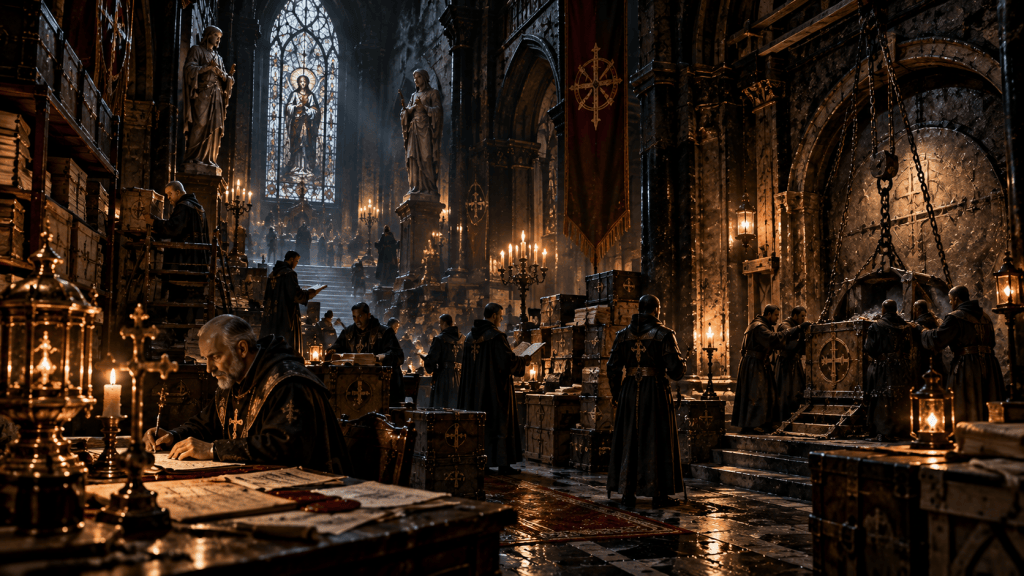
The Church survived the old conflict partly by giving civilisation an ending it could live with. War became victory, dangerous structures became sealed history, supernatural residue became something manageable through restricted knowledge, and places carrying unresolved pressure disappeared inside newer uses. That public account helped communities rebuild, which gives the Church’s denial a human logic even as its consequences become increasingly dangerous.
Inside restricted circles, the picture is far less clean. Church figures recognise Hali Sickness, preserve records ordinary clergy never see, maintain hidden containment systems and call upon people like Kael when official explanations become useless. Objects are recovered quietly. Dangerous rooms are resealed. Reports are reduced to language that protects order. Knowledge survives, yet access to that knowledge remains narrow enough for the institution to keep presenting stability as established fact.
This makes the Church one of the most important forces in the series because its conflict with truth grows from defence rather than simple cruelty. Public acknowledgement carries consequences for faith, authority, government and every person who built a life around the belief that the old danger had passed. Each new case therefore creates pressure on more than theology. It threatens the architecture of social order.
As the series advances, that strategy becomes harder to sustain. Incidents connect, buried systems answer one another, magical evidence grows harder to isolate and forces long treated as residue begin acting with increasing organisation. The Church can keep changing words for a time. Eventually the world changes faster than language can contain it.
The Threat Is Larger Than Any Creature
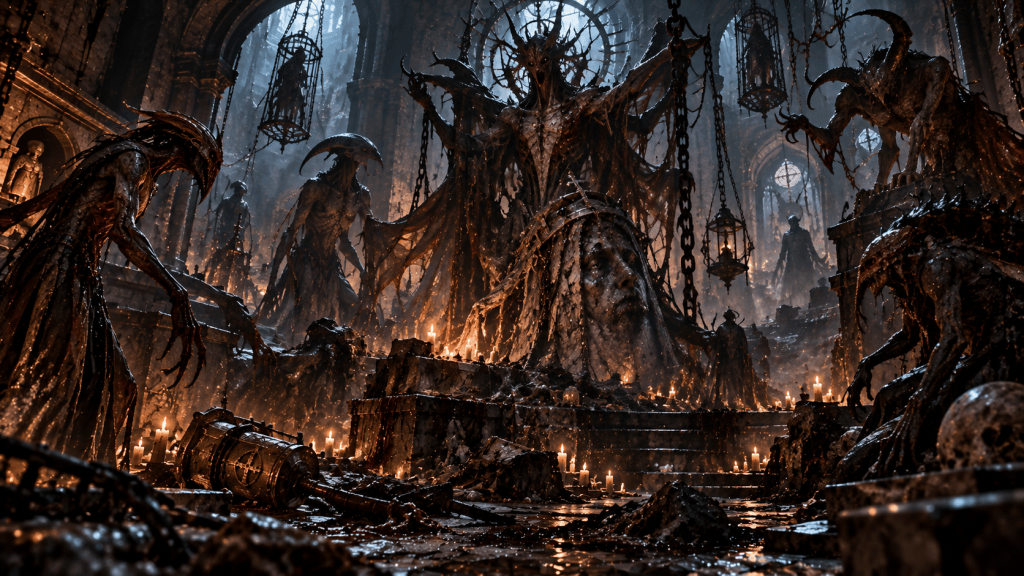
Hali Files treats demons as distributed manifestations of a deeper system whose presence can move through flesh, environment and structure. A demon may appear through altered anatomy, infection, behaviour, biological adaptation or a place beginning to act as though it carries its own appetite. The familiar becomes dangerous because corruption does not always arrive with a recognisable face.
Beneath those manifestations lies the Demon Core. It exists across multiple layers as biological pattern, structural network and reactivation mechanism, responding first to weakness, exposure and opportunity inside systems that have already begun to fail. Early encounters can therefore look unrelated. One involves a body, another a sealed chamber, another an old road, another a relic or ruined boundary, while the connection remains easier for the reader to feel than for institutions to prove.
The Core changes across the series. Response becomes organisation. Adaptation reaches beyond immediate survival. Patterns begin carrying the suggestion of awareness, turning earlier incidents into parts of something that has been developing while everyone above it argued over definitions. That progression creates the series’ deepest pressure because recognition brings little comfort once the system has already spread through structures built to deny its presence.
The danger therefore grows through reactivation instead of invasion. Hali Files asks what happens when a world prepares for an enemy crossing a border while the real threat has remained inside forgotten routes, human bodies, damaged institutions and old foundations for generations. By the time society finally understands what it is facing, understanding itself arrives late.
Twenty Cases. One World Losing Its Ability to Look Away.
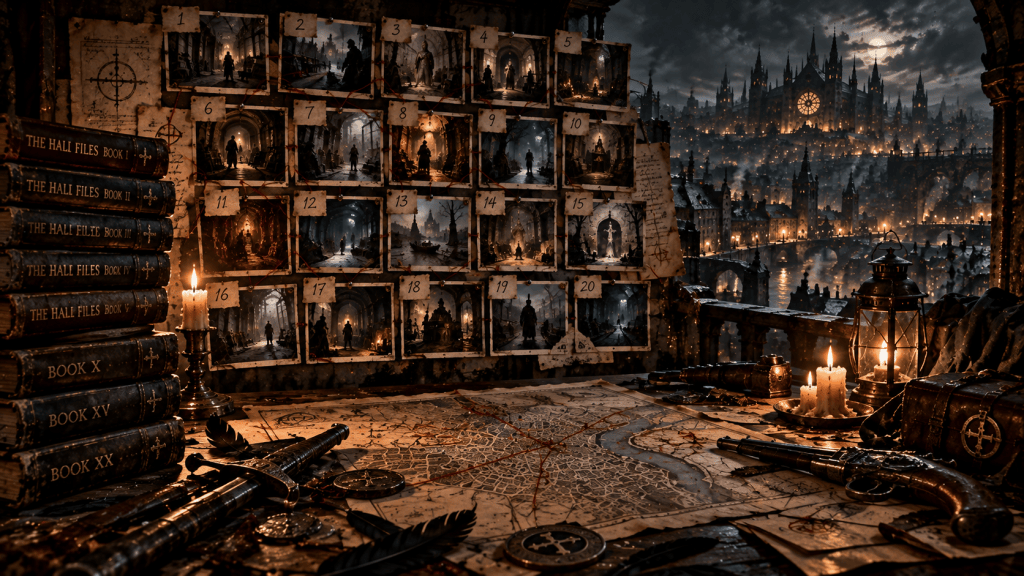
The first movement of Hali Files lives close to the ground. Cases appear isolated enough for officials, witnesses and communities to treat each one as a local disturbance, while Kael and Maris experience connections that remain difficult to prove. Old buildings carry pressure. Bodies change. sacred systems answer forces people thought buried. Warnings survive as habits whose meaning has disappeared. Denial still works because every event can be separated from the next and returned to a manageable category.
During the middle movement, separation becomes increasingly difficult. Repeated symbols, biological behaviour, buried mechanisms, magical reactions and institutional contradictions begin forming patterns large enough to place pressure on the systems hiding them. Kael’s condition becomes harder to manage as the Hali responds more strongly to the same forces rising through the wider world. Maris gains greater understanding and greater ability, while the risks surrounding her magic grow alongside that knowledge. The Church faces an expanding gap between what its internal records recognise and what its public position can safely admit.
The later movement carries those accumulated failures into open consequence. Systems created to suppress the supernatural lose their ability to keep every breach isolated. Magic enters public reality. The Demon Core moves beyond scattered response into recognised activity. Hali instability approaches crisis. The institutional narrative that allowed society to live as though the old war had reached a clean conclusion finally breaks under the amount of evidence moving through the world.
Even then, Hali Files remains a story about transition instead of annihilation. The world survives into a state it spent years refusing to imagine, where buried forces have become lived reality and the systems built around concealment must face conditions they can no longer place behind locked doors. Kael and Maris reach that point as people shaped by competing pressures instead of heroic saviours standing outside them. Their final choices belong inside the same conflict that has been changing their bodies, their dependence and their place in the world across the entire series.
Each volume still carries its own case, encounter and immediate human pressure. That structure gives every book a contained reason to enter the world while the full twenty-novella sequence builds a much larger experience around accumulation, memory, deterioration and the terrible delay between something becoming real and society becoming willing to see it.
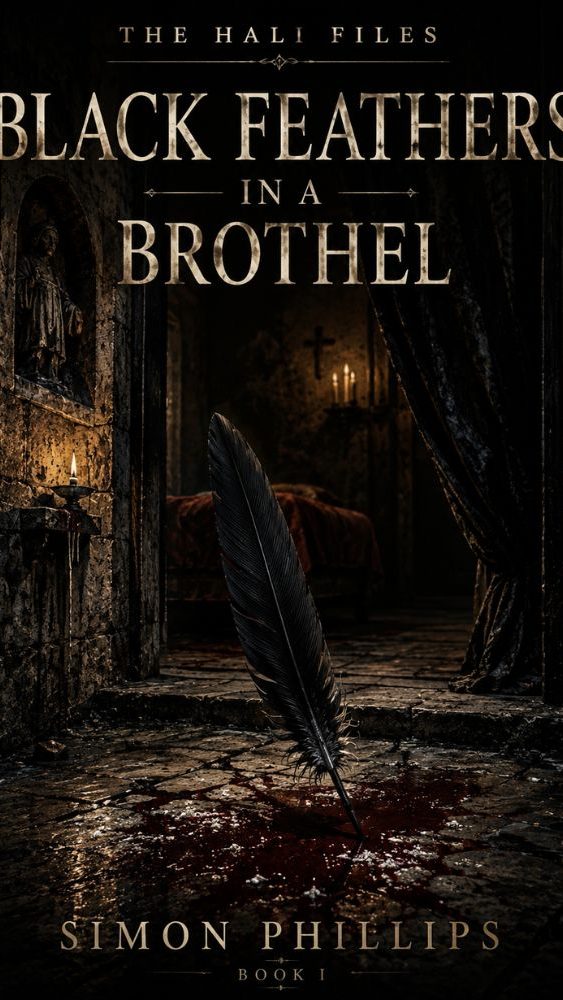
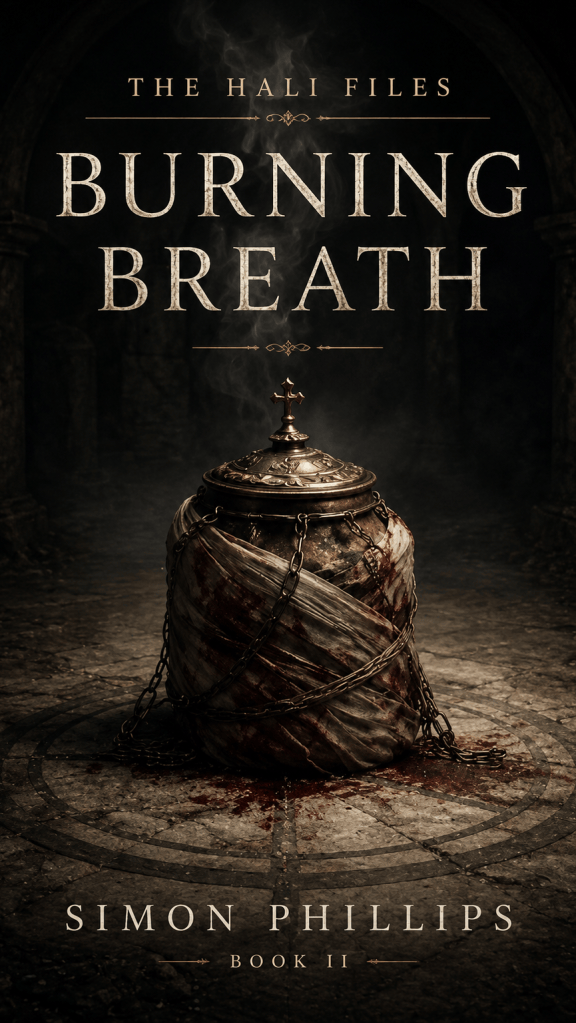
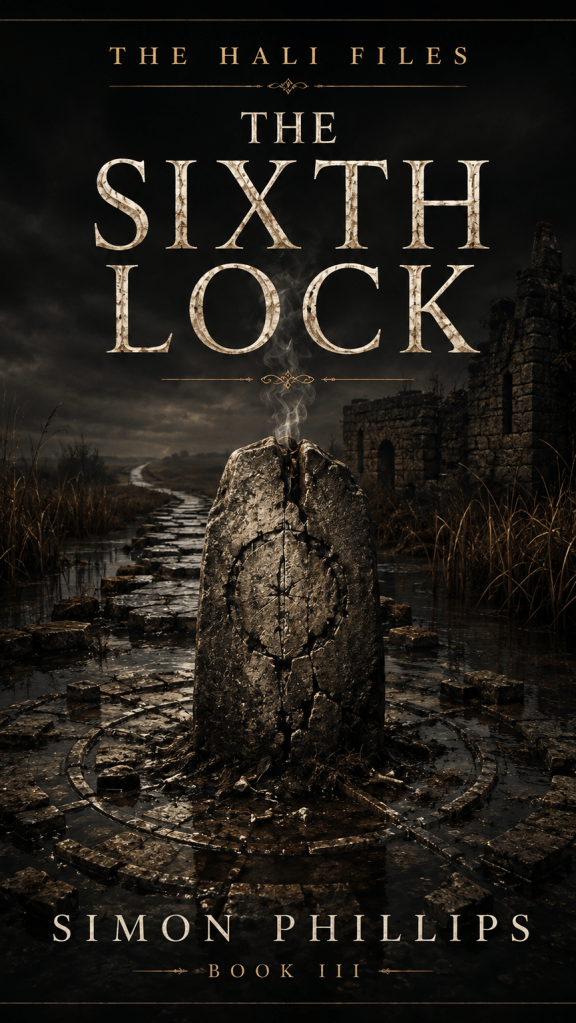
Current Books and Reading Order
Latest from Hali Files
Follow the latest posts connected to Hali Files, including new novella releases, cover reveals, behind-the-scenes notes, related Modern Chronicle entries, writing updates, and posts exploring the buried systems, damaged sacred spaces, and supernatural pressures shaping the wider Hali Files world.
Every post below is connected to the series, whether through Kael and Maris, the Hali Sickness, the Church, the Demon Core, new book releases, publication updates, or related Chronicle material. Together, these posts provide an ongoing route back into the series as the twenty-novella story expands and more of its world becomes available to readers.