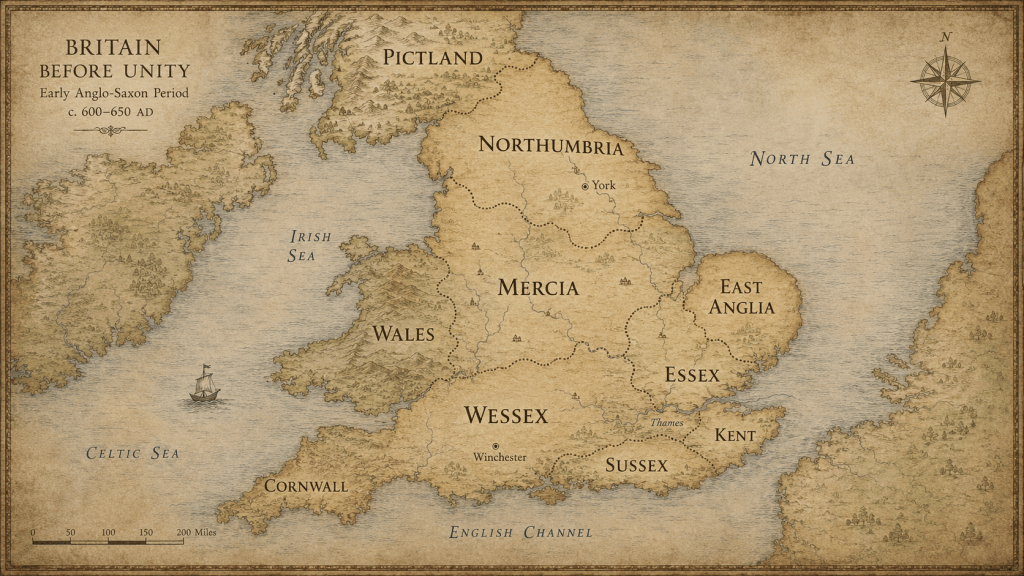
How Edward’s son took York and gathered the lands that would become England beneath one crown.
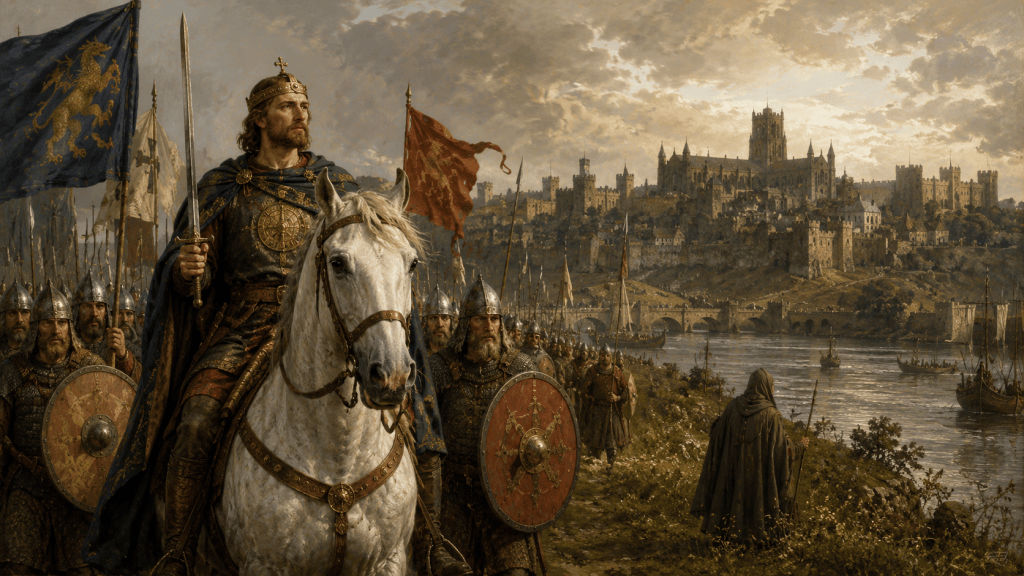
The Gates of York
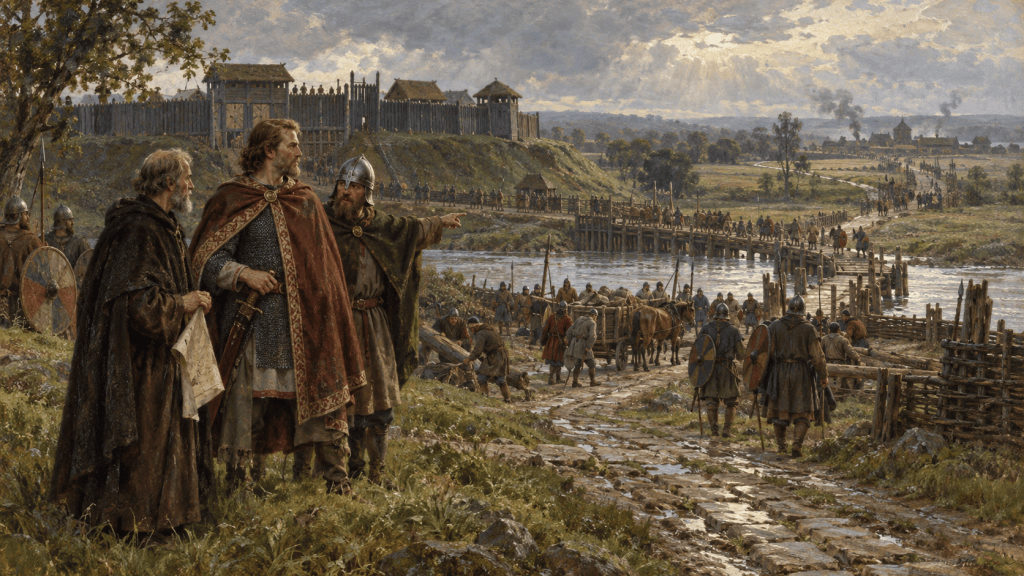
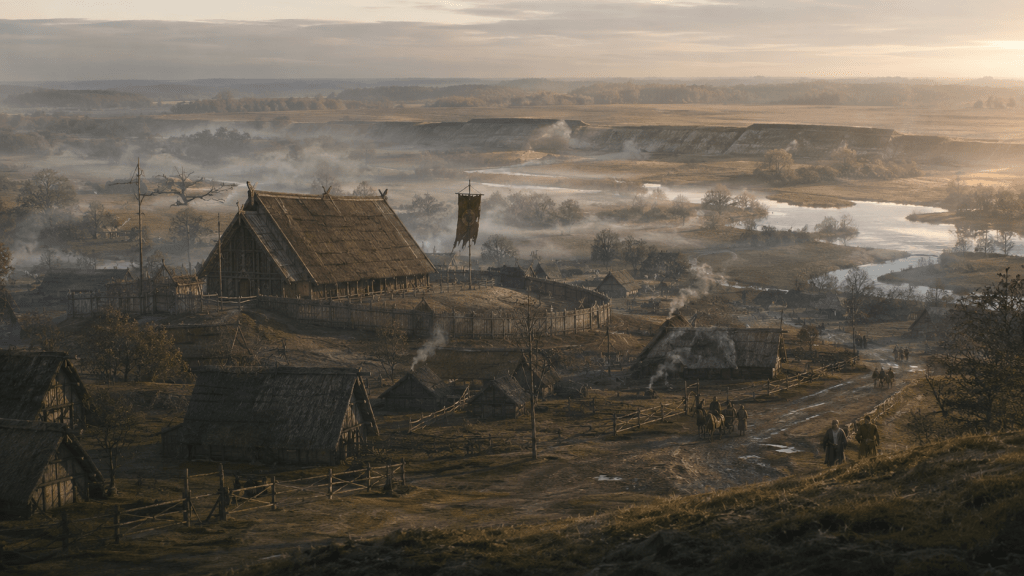
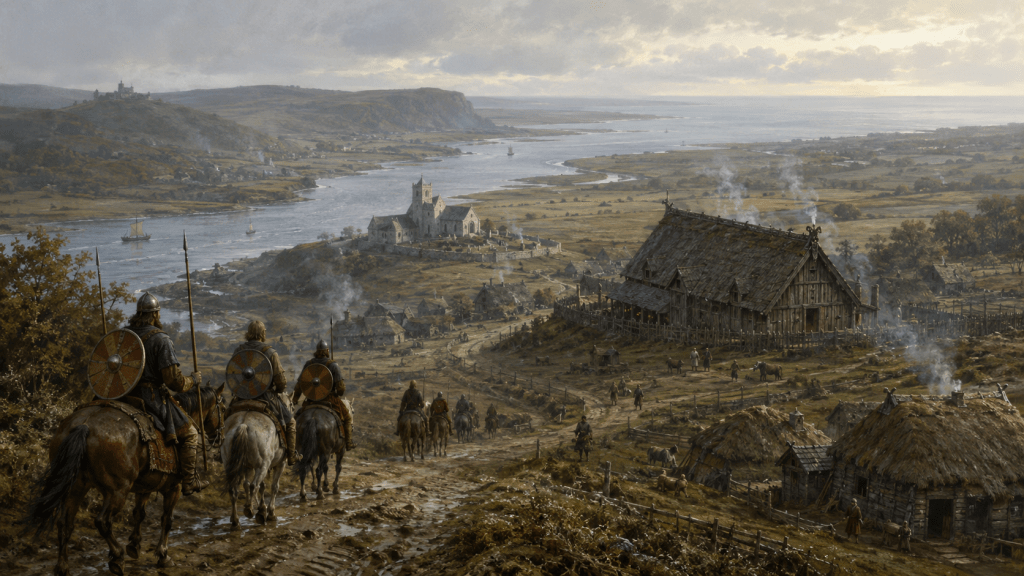
The Ouse moved beneath York’s walls with the slow weight of summer rain, carrying branches, foam, and the broken reflection of the city towards the marshes beyond. Along the southern road, men and horses emerged through the morning haze in a column darkened by mud, their shields wrapped against the damp and their spears rising above them like a travelling wood. The bells inside the city had already sounded, though their voices carried no clear warning. They rolled across the roofs, faded over the river, and left the people upon the walls listening for the first order that would decide whose king entered York before the day was done.
Æthelstan rode near the front beneath a plain royal banner, his cloak heavy across his shoulders as he studied the gate ahead. Three years had passed since Edward’s death, years shaped by disputed succession, Mercian support, and the careful gathering of authority across the lands his father had ruled. York remained beyond that inheritance. Its Scandinavian kings had governed a city of merchants, craftsmen, warriors, and churches, guarding the last great centre of power between the Humber and the kingdoms farther north. King Sihtric’s death had loosened that hold, and Æthelstan had come before another ruler could fasten it again.
A household warrior urged his horse alongside the king and wiped rain from the rim of his helmet. “The gates stand open, lord, yet armed men remain above them,” he said as he glanced towards the figures lining the parapet. “They may be waiting to measure how close we ride before choosing their answer.”
Æthelstan kept his gaze upon the entrance, where water ran in thin streams down the timber doors. “Then they shall see an army prepared for war and a king prepared to receive their oath,” he replied as he loosened the reins enough for his horse to pick a careful path through the rutted ground. “York has watched rulers come and vanish. We must give its people reason to believe this arrival will endure.”
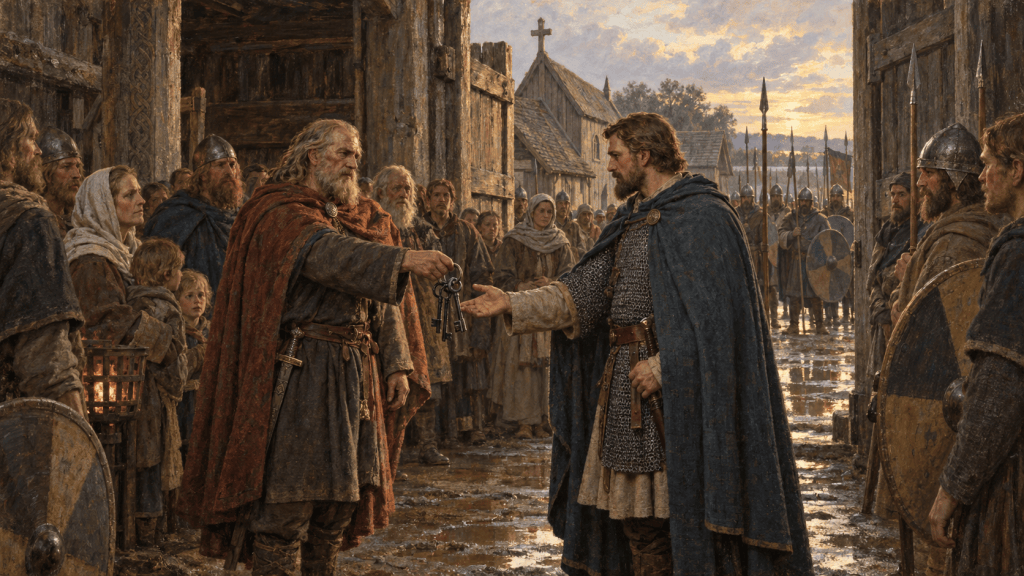
Near the gate, a small group came forward beneath a cross-topped staff. Their leader wore a woollen mantle pinned at one shoulder, and the silver upon his belt caught what little light reached the road. He halted several paces from Æthelstan and lowered his head, while the men behind him watched the West Saxon and Mercian warriors filling the road.
“My lord king,” the envoy said as he lifted both empty hands where the army could see them, “the city seeks peace, its markets protected, its churches left under their own keepers, and its people judged by the laws they know.”
Æthelstan dismounted, passing his reins to a waiting attendant before crossing the wet ground. The mud closed over the edges of his boots as he stopped before the envoy. “Peace will hold where loyalty holds,” he answered, resting one hand against the clasp of his cloak. “Your markets will open, your churches will keep their lands, and every man who gives his oath will receive the king’s protection. York will answer to one crown, and that crown will answer for York.”
The envoy’s expression shifted as he looked beyond Æthelstan towards the army, where Mercian nobles rode beside West Saxon household men and warriors from recovered Danish towns carried shields marked by older loyalties. “Many peoples stand behind you,” he said, his voice lowered as the rain softened around them.
“They stand within the same realm now,” Æthelstan replied as he turned towards the gate. “The work lies in teaching every road, shire, borough, and hall what that realm requires.”
The royal banner moved forward, its wet cloth stirring above the first riders as they passed beneath York’s defences. Townspeople watched from doorways and upper windows while hooves struck the timbered street, carrying the king towards the churches, halls, and storehouses of a city whose allegiance had changed more than once within living memory. Some faces showed fear, others calculation, and a few the guarded relief of people who had learned that conquest mattered less than the peace that followed it.
Behind Æthelstan, the gates remained open as the long column entered. Ahead lay oaths still to be demanded, rulers beyond the city still to be confronted, and lands whose submission would need more than a single morning beneath York’s walls. Even so, the old division had narrowed to the width of that gateway. Wessex, Mercia, East Anglia, and the former Danelaw had been carried to its threshold, and as Æthelstan rode into York, the scattered inheritance of generations began to take the shape of England.
Timeline of Events
924 AD – Edward the Elder dies at Farndon in Mercia, leaving Æthelstan supported by Mercian leaders while the West Saxon succession remains uncertain.
925 AD – Æthelstan is crowned at Kingston upon Thames, bringing the West Saxon and Mercian inheritance beneath his kingship.
926 AD – Æthelstan arranges the marriage of one of his sisters to Sihtric, the Scandinavian king of York, creating a brief alliance between the two realms.
927 AD – Following Sihtric’s death, Æthelstan takes York and receives the recognition of northern rulers at Eamont Bridge, allowing him to rule across the lands that would become England.
937 AD – Æthelstan defeats a coalition of Norse, Scottish, and Strathclyde forces at the Battle of Brunanburh, defending the kingdom created through his conquest of York.
The King Who Gathered England
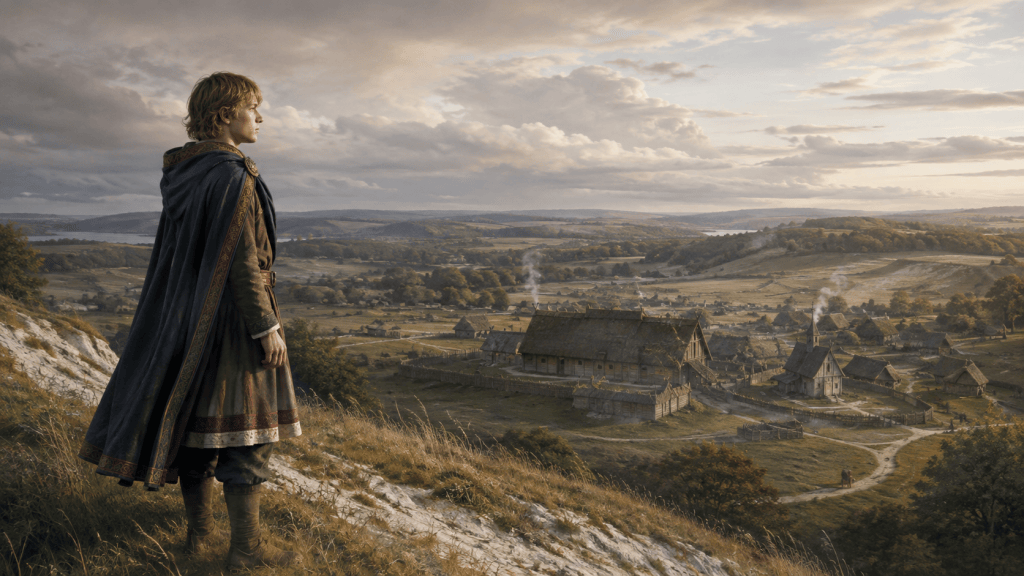
When Edward died at Farndon in 924, the realm he had built stood wide, powerful, and vulnerable. His campaigns had carried West Saxon authority through Mercia, East Anglia, and much of the former Danelaw, yet the succession opened along old political seams. Æthelstan, his eldest son, had been raised among the Mercians, where Æthelflæd’s court had shaped his education and introduced him to the men who had fought beside her. Mercian leaders recognised him quickly. In Wessex, support gathered more slowly around rival branches of the royal house, and the crown passed through a season of uncertainty before Æthelstan secured his position.
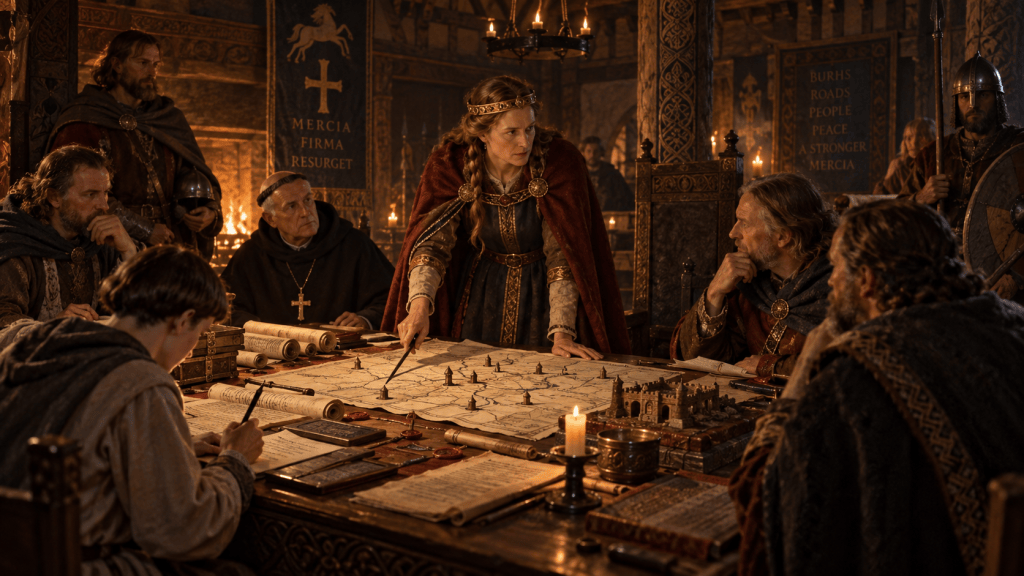
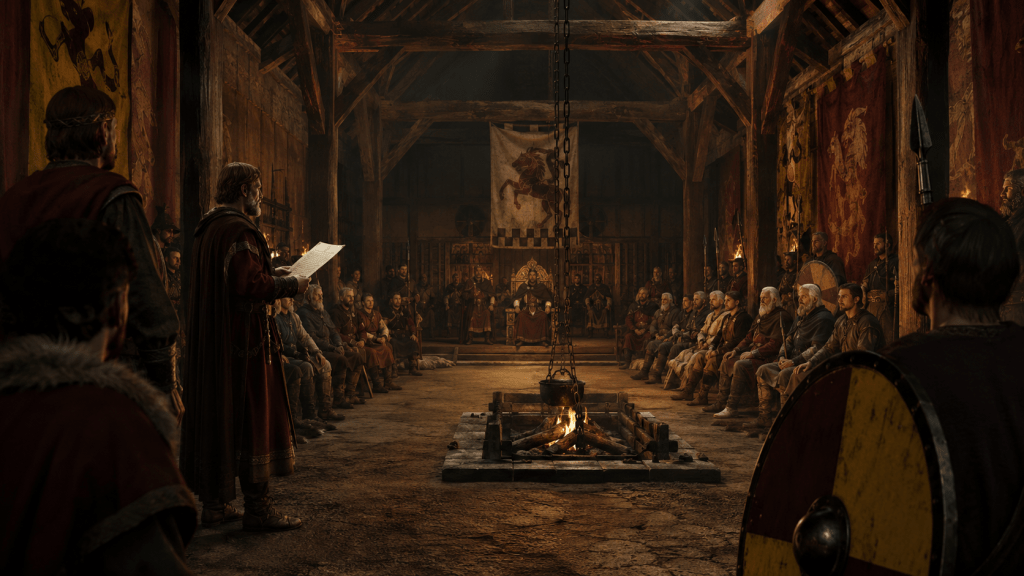
At a Mercian hall, as messengers moved between Tamworth, Gloucester, and the southern shires, an older thegn placed both hands upon the table and studied the prince across the fire. “Your father left many lands beneath one protection, lord, though each remembers the road by which it came there,” he said as sparks rose into the rafters. “Mercia will stand with you, since you were raised among us and know the weight our people carried.”
Æthelstan drew the edge of a wax tablet towards him and looked over the names already marked there. “Then Mercia must stand beside Wessex as a partner,” he answered as the hall quietened around them. “My father recovered towns and roads; I must persuade the men within them that his realm can survive the passing of its king.”
His coronation at Kingston in 925 brought sacred language, royal ritual, and political settlement together. The place lay near the boundary between Wessex and Mercia, a fitting threshold for a ruler whose strength rested upon both. Bishops anointed him, nobles gave their assent, and a crown passed to a king whose inheritance remained unfinished. Ceremony confirmed authority, yet the realm could only endure through loyalty from shires shaped by West Saxon law, Mercian custom, Danish settlement, and memories of former independence.
York remained the greatest challenge. The city stood at the centre of a Scandinavian kingdom whose rulers looked across the Irish Sea, through Northumbria, and towards the courts farther north. In 926, Æthelstan strengthened his position through marriage diplomacy, arranging for one of his sisters to marry Sihtric, king of York. The alliance offered peace across the old frontier and bound two royal houses for a brief season.
At the meeting where the agreement was settled, a churchman leaned towards Æthelstan and lowered his voice while attendants carried wine between the benches. “Some in your court will say the marriage gives too much honour to a king whose people once fought your father,” he warned as he watched the York envoys. “Others will fear that peace makes Sihtric stronger.”
Æthelstan rested his hand upon the carved arm of his chair. “A marriage may hold a road more securely than an army camp,” he replied as Sihtric’s men conferred across the hall. “If peace lasts, both kingdoms gain breathing space. If it fails, every oath made here will reveal who broke it.”
Sihtric died in 927, and the balance changed before another ruler could secure it. Æthelstan moved quickly into Northumbria, drove out Sihtric’s successor, and brought York beneath his authority. The act carried him beyond the achievements of Alfred, Æthelflæd, and Edward. Their wars had broken the power of the Danelaw south of the Humber; Æthelstan now removed the final Scandinavian kingship within England.
His advance drew other rulers towards negotiation. At Eamont Bridge, near Penrith, Constantine of Alba, Owain of Strathclyde, and other leading figures recognised Æthelstan’s supremacy through promises whose exact force remains debated. The agreements grew from military pressure, mutual fear, and the need to define boundaries before another campaigning season began.
A northern envoy looked across the assembled tents towards Æthelstan’s guards and folded his cloak against the wind. “My lord offers peace across the border and friendship where friendship is returned,” he said as clerks prepared the words of the settlement. “He will guard his own people, as every king must.”
Æthelstan stepped closer to the table where a cross and gospel book had been placed. “Let him guard them beneath an oath that keeps armed men from my roads,” he replied as the gathered nobles listened. “I seek no empty words. Let every ruler here leave knowing which peace he has sworn and what its breaking will bring.”
From 927 onward, Æthelstan’s charters increasingly presented him as king of the English and, at times, ruler over a wider Britain. Titles carried ambition, though his kingship also rested upon practical government. Royal assemblies drew bishops, ealdormen, Welsh kings, abbots, and leading landholders into gatherings where land grants were witnessed and decisions made visible before the political community. The long witness lists surviving in his charters reveal a court that travelled widely and gathered men from regions once divided by war.
Law followed conquest. Æthelstan issued measures against theft, disorder, and the failure of local communities to produce offenders. Tithings, oath-taking, sureties, and collective responsibility brought neighbours into the work of royal justice. The severity of some penalties revealed the difficulty of imposing order across a kingdom that had expanded faster than any earlier English realm. A stolen animal, a concealed fugitive, or a broken oath could test the king’s authority as surely as a border raid.
During one council, a reeve placed a bundle of complaints before the king and rubbed tired fingers across his brow. “Men know the law, lord, yet they hide kin and neighbours when the sheriff arrives,” he said as murmurs passed along the benches. “A village will swear ignorance while the stolen cattle stand in a field beyond its own hedge.”
Æthelstan opened the first complaint and traced the mark of the local court. “Then the village must learn that protection carries obligation,” he answered as the reeve waited. “A king’s peace cannot reach every lane by horseback. It reaches through men who understand that silence may serve the thief today and destroy their own safety tomorrow.”
His court also looked beyond Britain. Æthelstan fostered royal children, arranged marriages with continental dynasties, exchanged gifts with foreign rulers, and gathered relics and manuscripts that strengthened the sacred image of his kingship. His sisters married into leading European houses, while exiled princes found shelter at his court. These relationships placed England within a wider network of Christian monarchy.
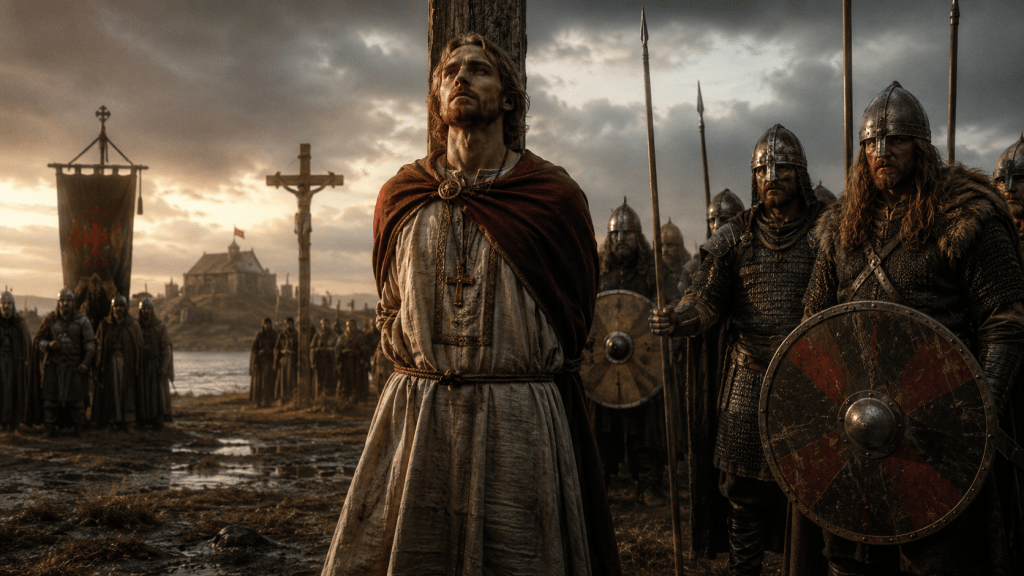
Yet York’s submission never ended resistance. Scandinavian power remained strong across the Irish Sea, and northern rulers feared the reach of a king who now commanded the whole English realm. In 934, Æthelstan campaigned into Scotland, carrying his army and fleet deep into Constantine’s lands. The expedition demonstrated strength, though lasting submission remained elusive. Three years later, the challenge returned in a far greater form.
In 937, Olaf Guthfrithson of Dublin joined Constantine of Alba and Owain of Strathclyde in a coalition aimed at breaking Æthelstan’s supremacy. Their armies entered England, and Æthelstan marched to meet them with his brother Edmund beside him. The battlefield known as Brunanburh has never been located with certainty, yet the struggle was remembered as one of the fiercest encounters of the age.
Before the fighting, as men tightened shield straps and priests moved along the lines, Edmund approached his brother beneath a sky dulled by autumn cloud. “They have come believing York will rise behind them once our line breaks,” he said as he looked towards the distant mass of the coalition army. “Every promise made since Eamont stands upon what happens here.”
Æthelstan lifted his shield and watched the standards settle above the English ranks. “Then we hold more than ground,” he replied as horns sounded along the line. “We hold the years our father and aunt spent opening these roads. Let every man remember that retreat would carry the war back to his own gate.”
The English victory shattered the coalition’s immediate hope. Olaf escaped across the sea, Constantine lost a son, and the northern armies withdrew after heavy slaughter. The Old English poem preserved in the Anglo-Saxon Chronicle celebrated the battle as a defence of the homeland, linking Æthelstan and Edmund to a shared English identity. Brunanburh proved that the kingdom created in 927 could survive a coordinated assault.
Æthelstan died in 939, and York soon returned to Scandinavian rule, revealing how much the unity of the realm still depended upon a strong king. Even so, the political claim he had established survived the temporary fracture. His successors fought to recover the north because Æthelstan had made its inclusion within the English kingdom appear rightful, achievable, and worth defending.
Alfred had preserved Wessex through fortified survival. Æthelflæd and Edward had carried recovery across Mercia and the Danelaw. Æthelstan inherited their roads, burhs, armies, and alliances, then drove their work through York and into the language of one English kingship. England remained a kingdom whose borders would face future war, rebellion, and conquest, yet after 927 its rulers could imagine the land from the Channel to the north as a single political inheritance.
The crown Æthelstan carried was still new enough to feel uncertain, though the kingdom beneath it had crossed a threshold. What earlier generations had defended in fragments now possessed a name, a ruler, and a memory of standing together.
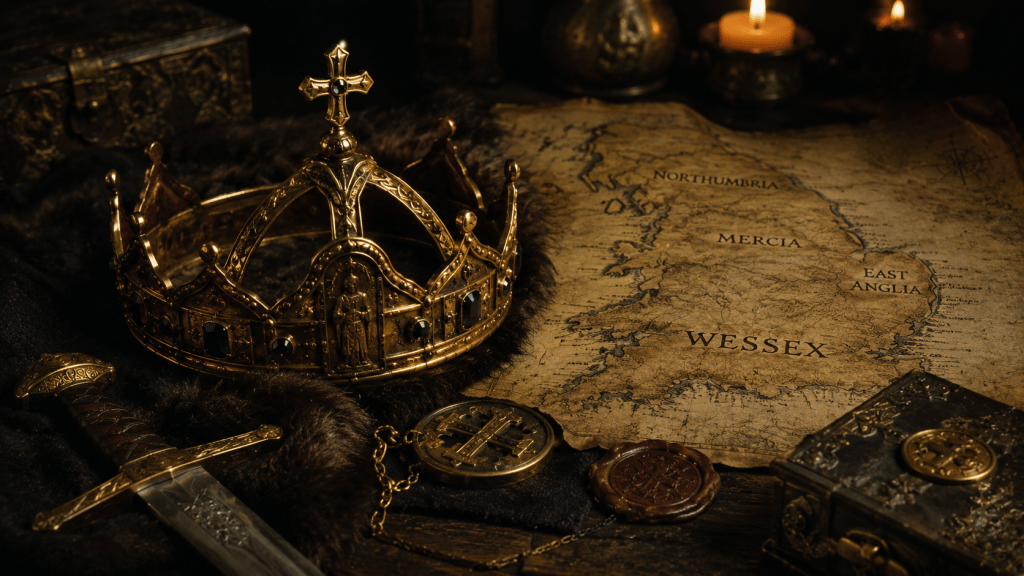
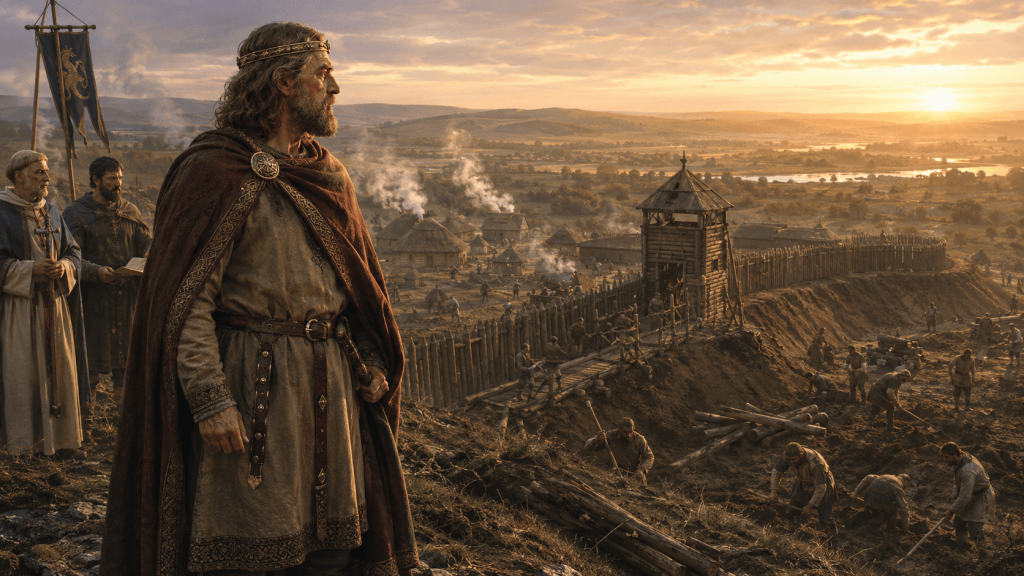
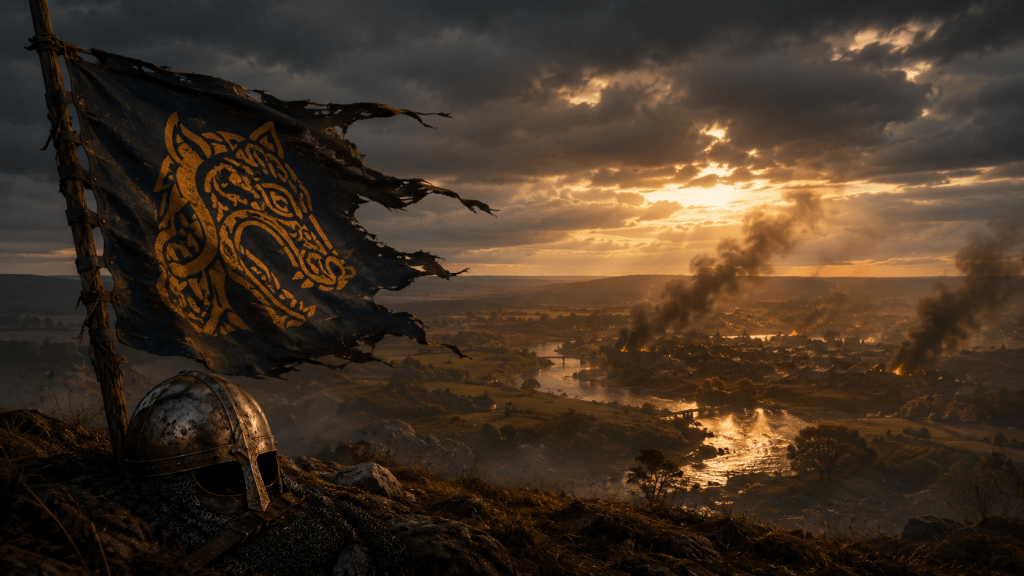
Æthelstan’s crown rests beside the kingdoms brought beneath his authority, symbolising the moment when Wessex, Mercia, East Anglia, and Northumbria began to take the shape of a single England.
Inspiration Behind the Story
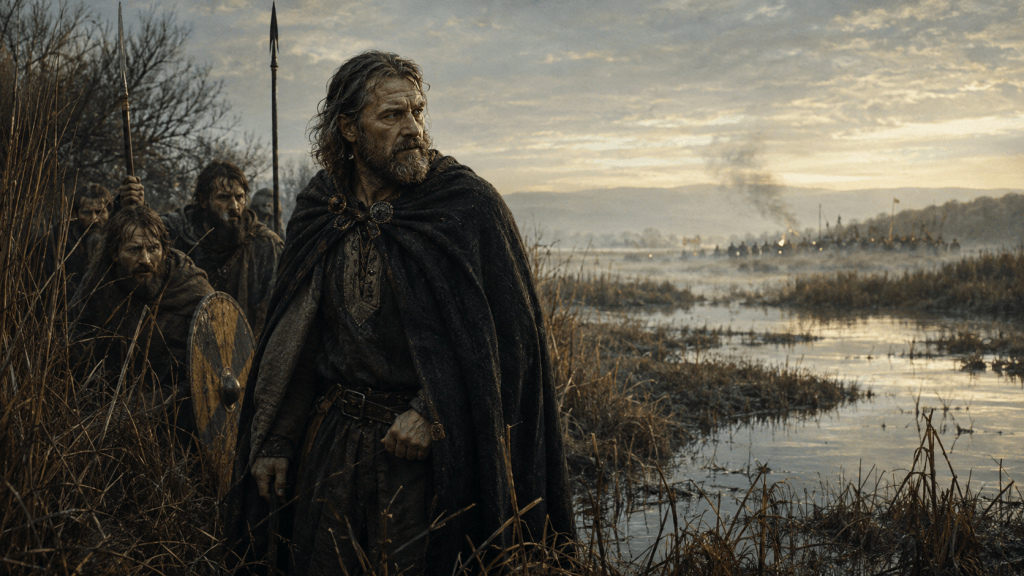
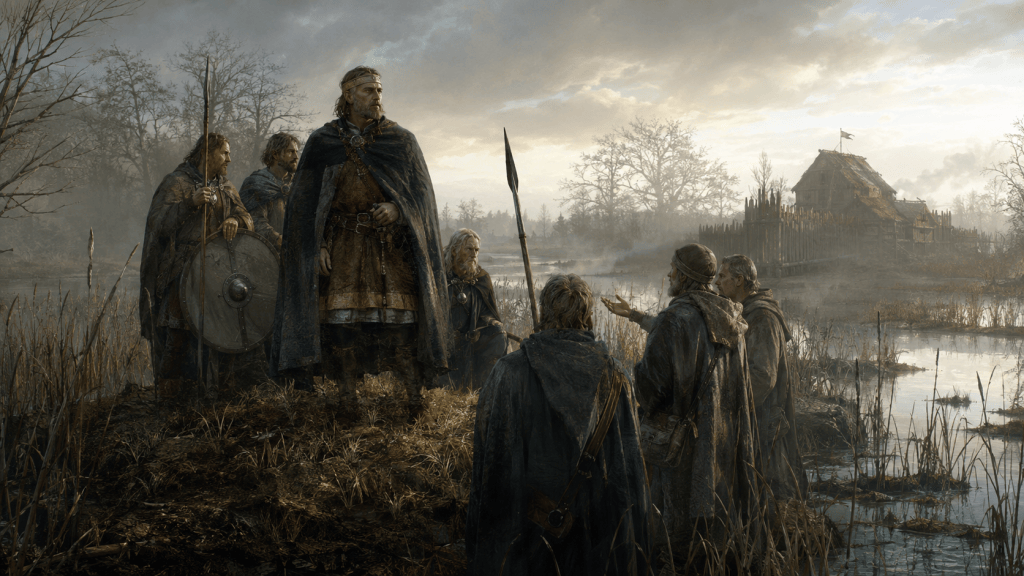
Æthelstan’s achievement begins long before he entered York. It begins in the marshes where Alfred preserved Wessex, in the burhs raised across Mercia, and in the roads, rivers, and fortified towns secured by Edward and Æthelflæd. That inheritance gives this Chronicle its power. The taking of York in 927 appears decisive, yet the kingdom gathered beneath Æthelstan’s crown had been shaped through decades of survival, recovery, and patient expansion.
What fascinates me about this moment is how unity emerged from lands that still carried separate memories. Wessex, Mercia, East Anglia, and Northumbria possessed their own loyalties, customs, rulers, and experiences of war. Æthelstan could claim authority across them, though a crown alone could never erase those differences. England had to be created through law, assemblies, oaths, protection, and the belief that one king could hold together what earlier generations had known as separate realms.
For storytelling, this creates a stronger ending than simple conquest. Æthelstan’s victory at York completed one journey while beginning another. The walls could be entered, oaths could be sworn, and rival kings could submit, yet the deeper work of turning conquest into belonging still waited beyond the ceremony.
This Chronicle matters because it reveals that nations rarely appear fully formed. They gather slowly, through inherited struggles, fragile loyalties, and the moment when scattered histories begin to recognise a shared future.
From the Author’s Desk
What stayed with me while writing this Chronicle was the distance between conquering a kingdom and persuading its people that the kingdom truly existed. Æthelstan could enter York, receive oaths, summon rulers to his court, and place his name upon charters stretching across lands his ancestors had once known as separate realms. Even so, those actions marked the beginning of unity as much as its completion.
That tension made him especially interesting to write about. Alfred’s struggle carries the drama of survival, Æthelflæd and Edward possess the momentum of reconquest, while Æthelstan inherited the harder task of gathering those victories into something that could endure. He ruled people shaped by West Saxon, Mercian, Northumbrian, and Scandinavian traditions, each carrying memories that a royal title could never erase. His achievement rested upon convincing those communities that one crown could offer law, protection, and order across old boundaries.
I also found myself thinking about how easily history remembers the visible moment and overlooks the years that made it possible. The capture of York in 927 created a clear landmark, though the road towards it passed through marshes, fortified towns, disputed successions, family alliances, and generations of people whose names have faded from the record. Æthelstan stood at the end of that long movement, carrying the labour of Alfred, Æthelflæd, Edward, and countless others into a new political age.
Reaching the final Chronicle of this series has made that accumulation feel especially clear. The England that emerged beneath Æthelstan’s rule came from kingdoms that once possessed their own courts, ambitions, rivalries, and futures. Across these ten Chronicles, those separate worlds have gradually drawn closer through war, survival, alliance, and necessity.
The crown may belong to Æthelstan in this final chapter, though the kingdom beneath it was built by generations.
You can explore my books here:
Books by Simon Phillips
You can watch my YouTube channel here:
Author Simon Phillips
Historical Notes & Context
Additional Historical Notes
Æthelstan’s succession after Edward’s death in 924 appears to have exposed a division between Mercian and West Saxon support. Mercian leaders accepted Æthelstan quickly, while his half-brother Ælfweard may have held stronger backing within Wessex before dying only weeks after their father. Æthelstan’s coronation followed at Kingston upon Thames on 4 September 925, close to the old boundary between Wessex and Mercia. The setting carried political meaning for a ruler whose authority depended upon joining both traditions beneath his crown.
The conquest of York in 927 transformed the scale of Æthelstan’s kingship. York had remained the centre of the last Scandinavian kingdom within England, and its fall brought the territory south of the northern frontier under one ruler for the first time. Soon afterwards, Constantine of Alba, Owain of Strathclyde, and other northern rulers met Æthelstan at Eamont Bridge. Their promises recognised his supremacy, though they represented negotiated overlordship and immediate political settlement more than direct English government over their kingdoms.
Æthelstan’s charters and coinage reveal how deliberately his court expressed this enlarged authority. He appeared as rex Anglorum, king of the English, and also as rex totius Britanniae, king of the whole of Britain. Such titles proclaimed a reach extending beyond the territory he governed directly, presenting him as the leading ruler among the kings of the island. Surviving grants also show large assemblies where bishops, ealdormen, abbots, Welsh rulers, and other leading figures witnessed royal decisions together.
His law codes reveal a kingdom facing practical difficulties beneath its new unity. Theft, the concealment of offenders, oath-breaking, poor enforcement, and the responsibilities of local communities received repeated attention. Some penalties were severe, then adjusted when their consequences appeared excessive. The laws also strengthened collective responsibility through sworn groups and local officials, showing how royal peace depended upon communities enforcing authority far beyond the king’s immediate presence.
Related Events
Æthelstan’s authority reached far into continental Europe through the marriages of his half-sisters and the presence of exiled princes at his court. These relationships connected England to ruling houses across Francia and the German lands, strengthening the king’s reputation as a Christian monarch whose influence extended beyond Britain. His court also became known for manuscripts, relics, religious patronage, and learned visitors, linking political power with sacred kingship.
The campaign of 934 carried Æthelstan’s army and fleet into Scotland after relations with Constantine deteriorated. The surviving record offers limited detail about fighting, though the scale of the mobilisation demonstrated the king’s ability to draw forces from across England. The campaign failed to create a permanent northern settlement, and the coalition that formed three years later revealed how strongly neighbouring rulers resisted Æthelstan’s expanding supremacy.
At Brunanburh in 937, Æthelstan and his brother Edmund defeated an alliance led by Olaf Guthfrithson of Dublin, Constantine of Alba, and Owain of Strathclyde. The battle’s location remains uncertain, despite several proposed sites. Its significance survives more clearly than its geography: the victory prevented the coalition from breaking Æthelstan’s kingdom and inspired the great Old English battle poem preserved in the Anglo-Saxon Chronicle.
Æthelstan died at Gloucester on 27 October 939 and was buried at Malmesbury, a religious house he had strongly supported. Scandinavian rule soon returned to York, showing that the unity achieved during his reign still required defence. His successors spent years recovering the north, yet they pursued that recovery within the political framework Æthelstan had established: York had become part of the English kingdom, even when control of it temporarily slipped away.
Further Reading
Æthelstan: The First King of England — Sarah Foot
The Making of England: A New History of the Anglo-Saxon World — Mark Atherton
The Battle of Brunanburh: A Casebook — Michael Livingston, editor
The Anglo-Saxon World — Nicholas J. Higham and Martin J. Ryan
England did not emerge in a single victory. It gathered slowly through marshes, walls, roads, oaths, and generations who carried an unfinished kingdom towards one crown.