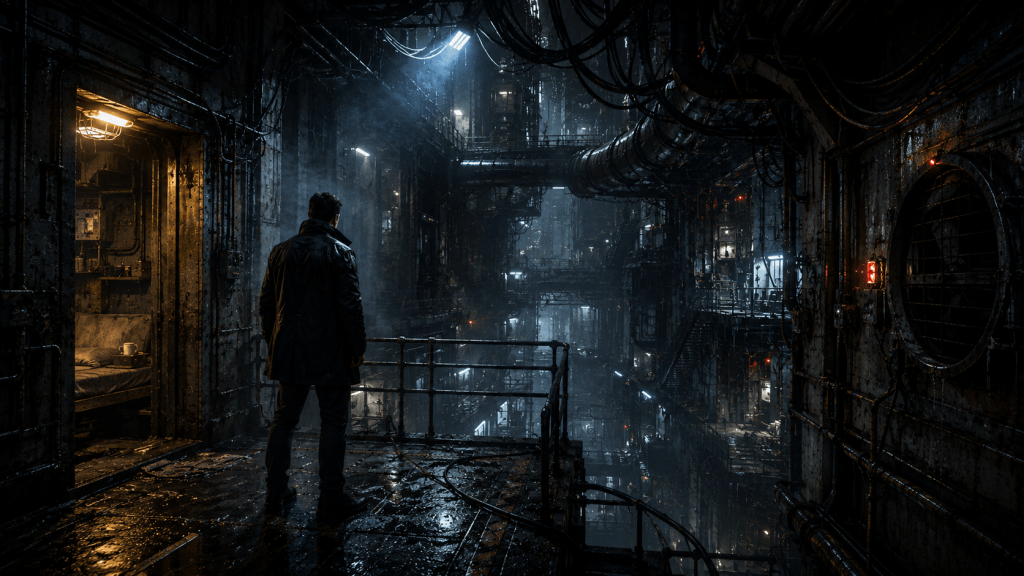
Where the Station Keeps Its Secrets
Ashfall Station has always sounded alive.
Machinery moves behind the walls. Ventilation carries tired air through housing blocks packed beyond their intended limits. Public screens repeat calm instructions while ration queues lengthen beneath them. Somewhere between the Mid-Ring corridors and the older maintenance branches, people learn which doors stick, which cameras fail, which panels move under pressure, and which official reports close before anyone has finished asking questions.
That is where Ghosts in the Underworks begins to breathe.
This second entry in the Ashfall Files cycle moves deeper into the world of Ruff Kale and Lena Marik, carrying the series from the first signs of concealment into something more troubling: a station where movement itself has become a secret economy. The surface case appears small. Missing tools. Returned objects. Reports closed cleanly. No forced entry, no access logs, no clear crime for the system to hold.
Yet Ashfall has never been a place where small things stay small.
As a sci-fi noir novella, Ghosts in the Underworks belongs to the darker edge of station-based detective fiction. It is a space station crime thriller shaped by pressure, scarcity, controlled information, and the slow erosion of trust. The mystery sits inside walls, in maintenance seams, in service lines, and in the quiet knowledge carried by people who survive by staying unseen.
The Crime Beneath the Crime
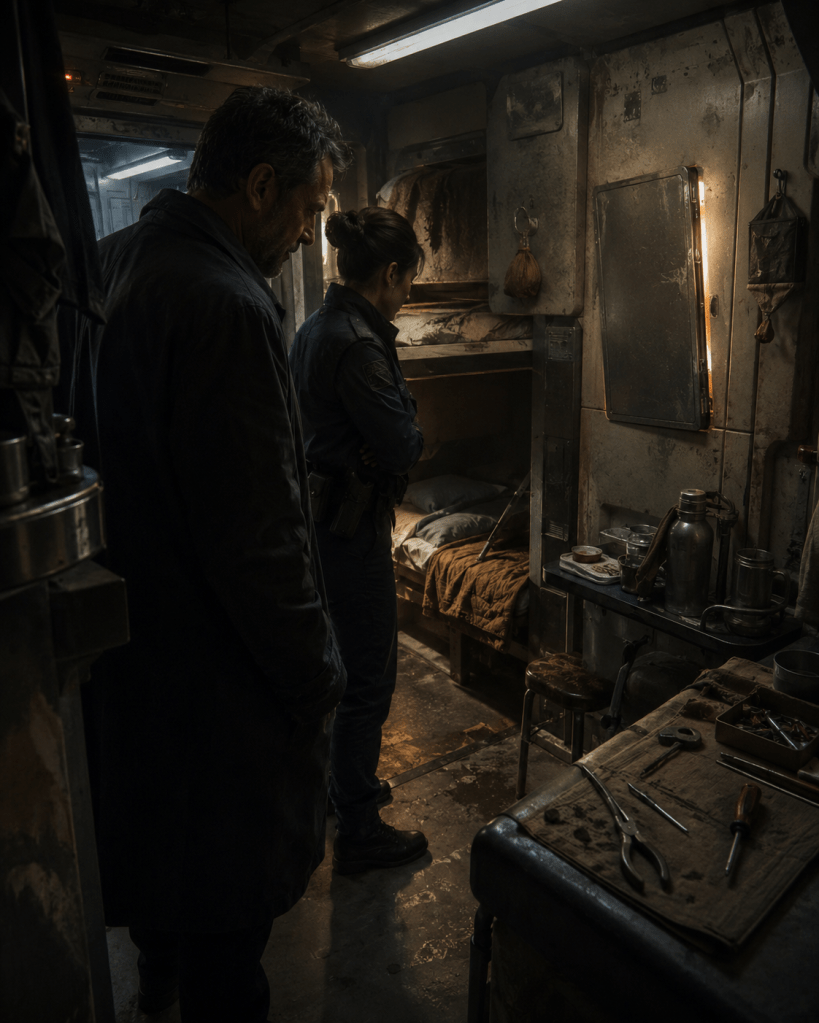
In many detective stories, a missing object points toward a thief. On Ashfall Station, a missing object may point toward a route.
That distinction matters.
Ghosts in the Underworks follows Ruff and Lena as they trace a pattern of minor theft reports in the Lower Mid-Ring. The items vanish, return, and leave no usable system trail behind. The reports resolve with language too clean to feel accidental. The official record suggests disorder has been tidied away. The physical station says otherwise.
This is one of the central pleasures of the Ashfall Files as a detective science fiction series: the investigation never belongs only to a person or a single crime. It belongs to the environment. Ruff reads the station through touch, heat, sound, hesitation, and wear. Lena reads it through records, procedure, contradiction, and pattern. Between them, Ashfall begins to reveal a truth that official systems have learned to ignore.
The hidden routes beneath the Mid-Ring are more than shortcuts. They are evidence of adaptation. People have learned how to live within the station’s failures. Runners use seams between rooms. Panels open where public maps show blank structure. Cavities inside walls hold food, tools, bedding, and traces of regular use. Something has been maintained there. Something has learned to last.
That makes the mystery colder.
A broken system can be repaired. A used system has purpose.
Order, Control, and the Shape of Silence
Ashfall Station is governed through the appearance of order. Broadcasts remain calm. Reports file correctly. Access panels answer some people faster than others. Detention procedures exist until Fleet authority requires them to become something else.
This is where Ghosts in the Underworks leans into its political sci-fi thriller roots. Earth Fleet does not need to announce itself with spectacle. Its power arrives through jurisdiction, reassignment, denial, and silence. A case can be reduced to “routine movement.” A suspect can be released before the conversation deepens. A door can refuse Lena’s clearance, then open instantly for a higher authority.
That kind of control is more frightening than open force because it leaves less for anyone to fight.
Ruff and Lena find themselves moving through a world where the truth has several layers. The first layer is what the residents know but refuse to say aloud. The second is what the station’s systems fail to record. The third is what Fleet can remove by changing the meaning of the event.
A runner becomes a nuisance.
A route becomes infrastructure noise.
An investigation becomes a distraction.
A witness becomes a Fleet matter.
The novella understands how authoritarian systems preserve themselves. They do not always erase the facts. Sometimes they rename them until nobody knows how to argue.
Ruff Kale and Lena Marik in the Underworks
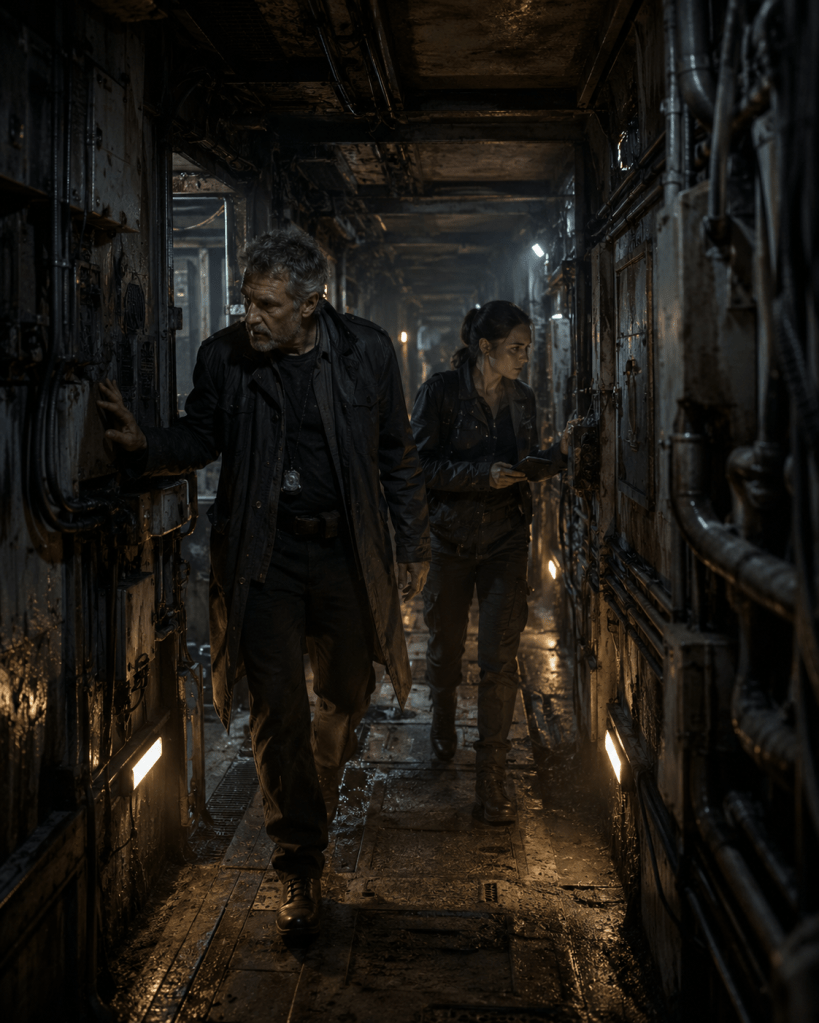
Ruff Kale enters this story with the kind of exhaustion Ashfall breeds in people who have seen too much of its machinery from the wrong side. He trusts wear more than records. He listens to the station’s rhythm because the station reveals itself before anyone inside it does. His instinct is less heroic than stubborn. He follows what resists explanation.
Lena Marik remains the crucial counterweight. She brings structure, record-keeping, and procedural intelligence into spaces where procedure starts to fail. In Book 1, the case of the dead girl in Sector Twelve introduces her to the gap between official systems and lived reality. In Ghosts in the Underworks, that gap widens. Lena sees reports align too cleanly. She sees access fail without leaving a proper trace. She sees authority correct the shape of the case in real time.
Her growth matters because Ashfall’s pressure is moral as much as investigative. She wants the system to work because people need systems to work. Ruff already knows what happens when they fail. Their partnership strengthens here through shared recognition rather than sentiment. Each sees what the other misses. Each is forced to adjust.
That dynamic keeps the series grounded. The wider space station conspiracy stays close to ordinary experience: a delayed commpad, a locked panel, a resident afraid to speak, a hidden room inside a wall, a suspect removed from local custody before anyone can ask the next question.
The world expands through pressure.
Ashfall as an Industrial Noir Setting
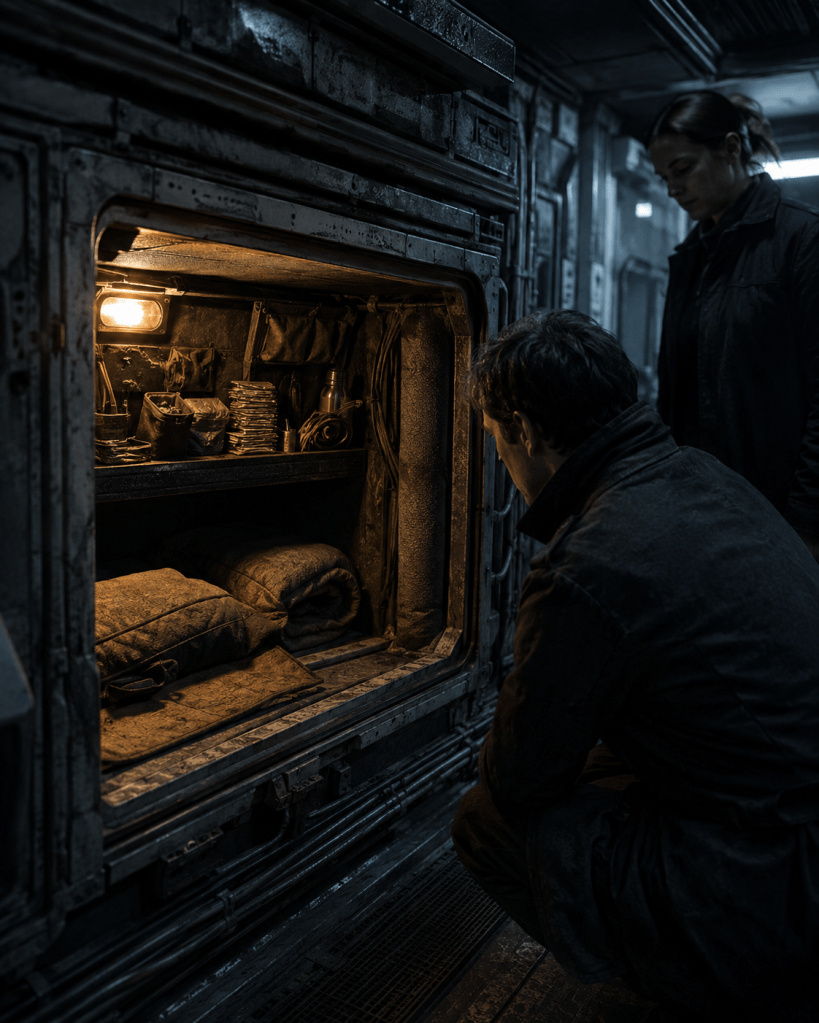
The atmosphere of Ghosts in the Underworks comes from industrial realism rather than glossy futurism. Ashfall is old, crowded, repaired in layers, and dependent on systems that have outlived their clean design. Its corridors carry the smell of coolant, heated dust, stale air, and metal touched too often by tired hands. Its lighting flattens colour. Its service branches hold warmth after something has passed through. Its walls remember use long after the system refuses to.
That physicality is central to the series.
Ashfall Files is industrial science fiction noir, where environment replaces glamour and every corridor carries social weight. The Underworks and lower maintenance routes are not exotic hidden worlds. They are the parts of the station people rely on while pretending they are separate from daily life. They hold the labour, fear, shortcuts, informal economies, and unofficial knowledge that keep Ashfall moving.
In that sense, the title Ghosts in the Underworks is less about apparitions than absence. The ghosts are people the system fails to register. Routes that official maps omit. Movements that happen beneath procedural language. Lives folded into structure until they become difficult to see.
A station can be haunted by what it refuses to record.
A Book 2 That Deepens the Cycle
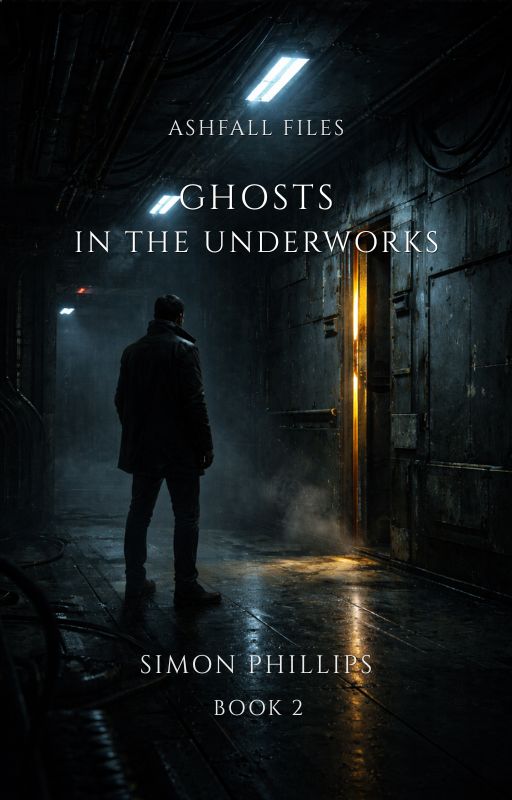
As Book 2 of the Ashfall Files sequence, Ghosts in the Underworks builds directly from the first novella without flattening the earlier mystery into explanation. The dead girl in Sector Twelve remains a pressure point. Her route through Ashfall matters because this story reveals that such routes exist, endure, and serve purposes beyond petty crime.
That makes the novella a strong entry point for readers drawn to adult science fiction mystery, atmospheric sci-fi noir, and corrupt space station fiction. The story stands as its own investigation while widening the shape of the larger cycle. It confirms that Ashfall’s problems are procedural, physical, social, and political at once.
The deeper question is no longer simply who moved through the station.
It becomes who allowed the lines to remain open.
And who benefits when nobody can prove they exist.
That question gives the series its forward pull. Each Ashfall Files novella follows a contained investigation, yet each case touches a larger pattern: ration pressure, Fleet control, missing records, information suppression, criminal adaptation, and the slow movement toward civil unrest. The station is still functioning, which may be the most unsettling part. Failure has not yet announced itself. The system still lights corridors, processes reports, opens doors for the right authority, and tells the public enough to keep them moving.
Beneath that surface, something else has already learned the layout.
Reading Ghosts in the Underworks
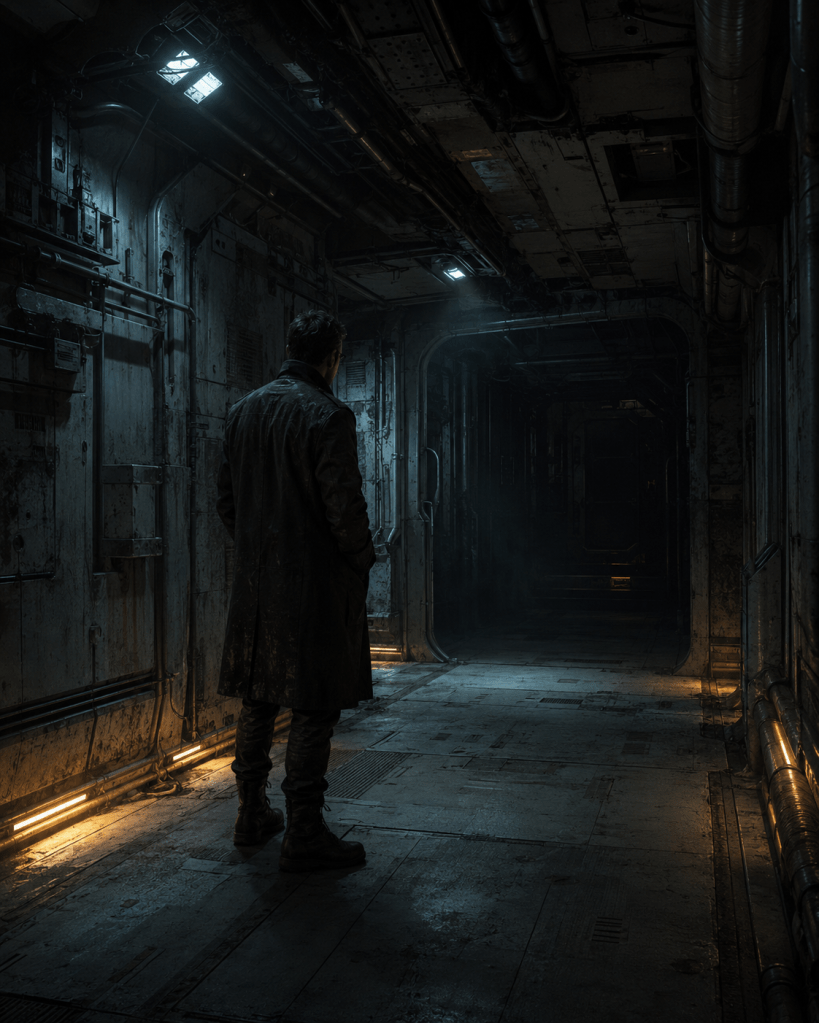
Ghosts in the Underworks is for readers who prefer science fiction grounded in human pressure rather than spectacle. It is a sci-fi crime novella where the detective work comes through observation, tension, and incomplete access. It sits within the tradition of noir investigation while using the orbital station as a living pressure system: part setting, part witness, part accomplice.
Readers entering through this second book will find Ashfall Station already under strain. Those arriving from Book 1 will recognise the deeper chill behind the pattern. The first death opened the question. This novella begins to show the mechanism.
The underworks are not separate from the station. They are the station with its skin pulled back.
What Ashfall Refuses to Admit
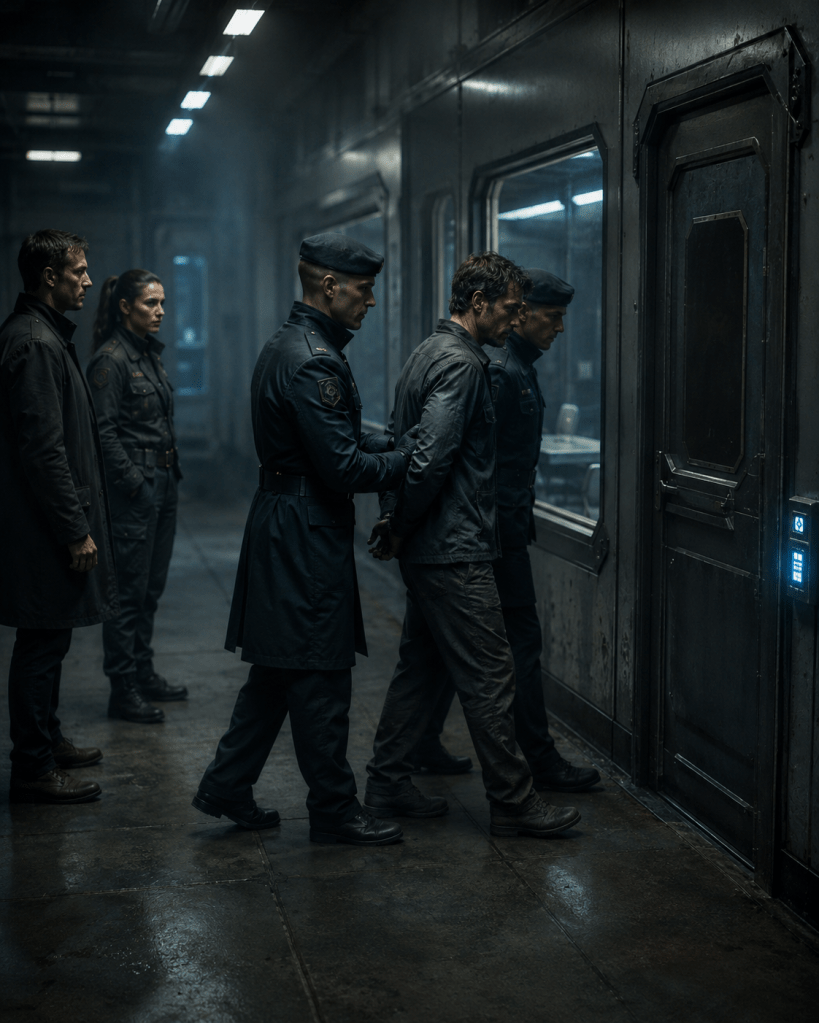
Every society has official routes and unofficial ones. Every controlled environment has places where control thins. Ashfall Station survives through those contradictions. It depends on the workers it overlooks, the corridors it fails to maintain, the rumours it cannot fully silence, and the hidden movements it later condemns when they become inconvenient.
That is the noir heart of Ghosts in the Underworks.
Truth rarely arrives cleanly. It moves through frightened witnesses, altered reports, blocked doors, and people who understand more than they can safely say. Ruff and Lena follow what remains after the official version has settled. They find heat where the panel should be cold. They find order inside a space that should have been empty. They find authority waiting at the point where the investigation begins to matter.
Ashfall carries on.
The lights hold. The screens speak. The corridors fill again.
Somewhere beneath the Mid-Ring, a line remains open.
Discover more from Simon J. Phillips
Subscribe to get the latest posts sent to your email.
