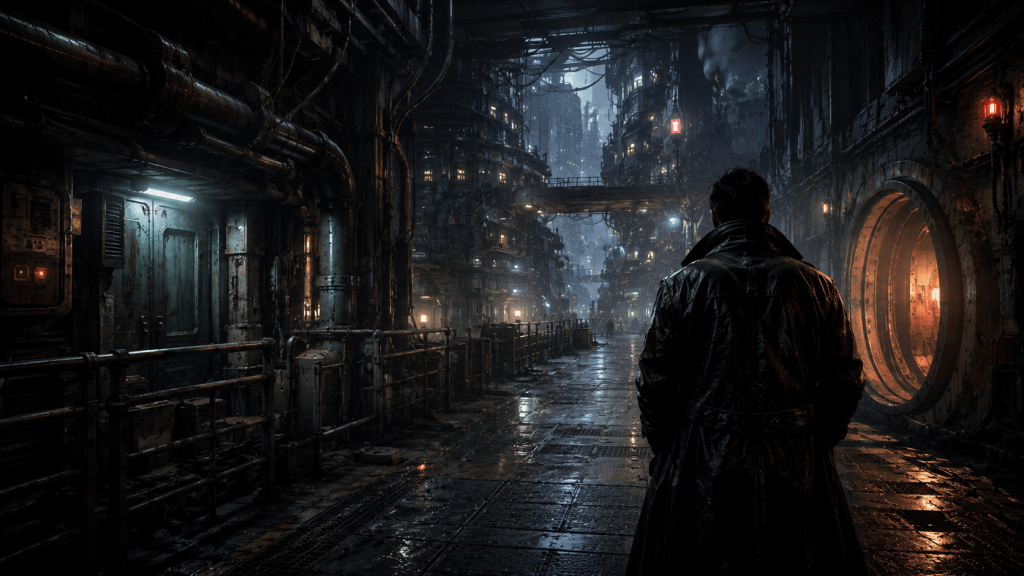
Ashfall Station wakes badly.
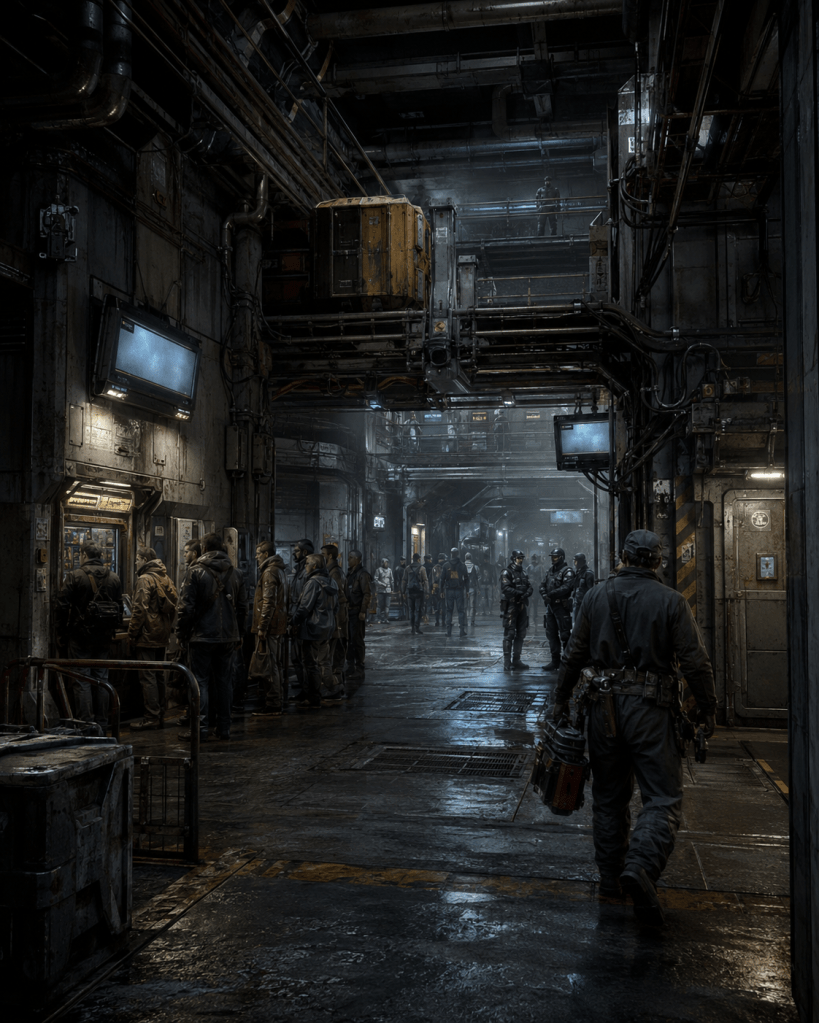
Its corridors brighten in stages, old ceiling strips warming through yellow light while ration queues form before the first shift has even settled into motion. Lift alarms drag through the transit levels. Market shutters rattle open. Public screens speak in clean administrative language, telling tired workers that delays are temporary, supplies are stable, and order remains intact. Below those screens, people count water tokens, trade rumours, watch medbay lines grow longer, and listen for the difference between a maintenance fault and the beginning of something worse.
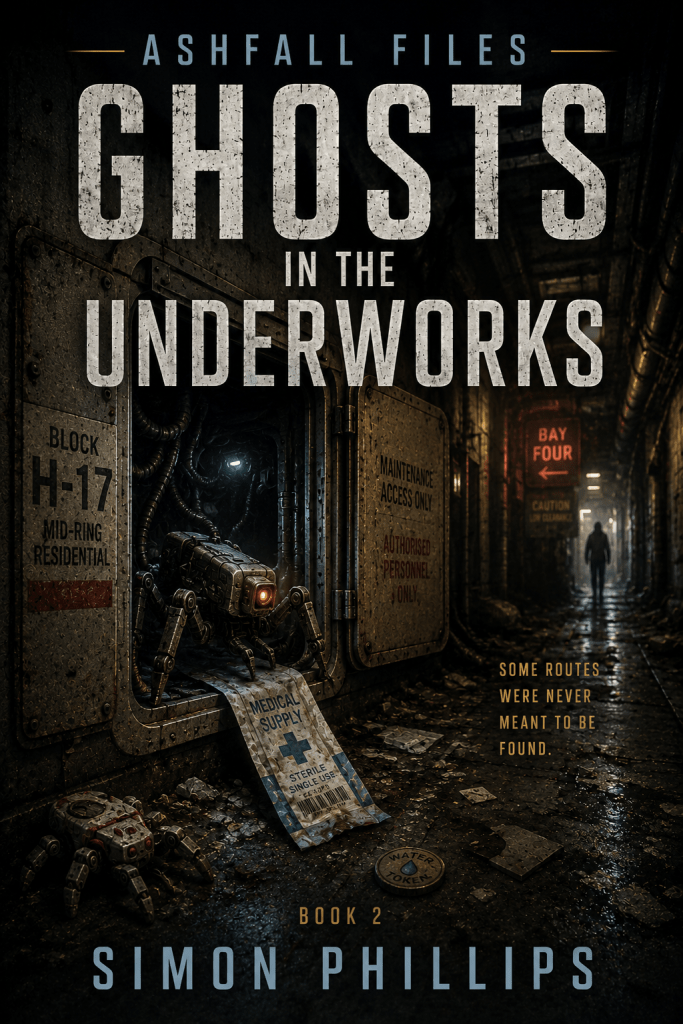
That is the world of Ghosts in the Underworks, the second book in Ashfall Files, a sci-fi noir detective series built around crime, pressure, and the slow failure of official truth aboard an ageing orbital station. It is a space station crime thriller where the mystery begins with a local wound: stolen medical ration packs, a family accused before the facts arrive, and a sick woman waiting for support that should already have reached her.
Ashfall does not fall apart in a single dramatic moment. It wears down through missed deliveries, altered records, exhausted workers, frightened witnesses, and corridors where people lower their voices before naming Earth Fleet. The danger lives in routine. That is what makes the station feel alive, and what makes each investigation matter.
When a Crime Scene Begins Inside Ordinary Life
A good noir mystery rarely begins with spectacle. It begins with a room, a body, a missing object, a witness who saw too little, or a record that seems too clean. On Ashfall Station, those small beginnings carry more weight because every ordinary failure sits inside a larger system already under strain.
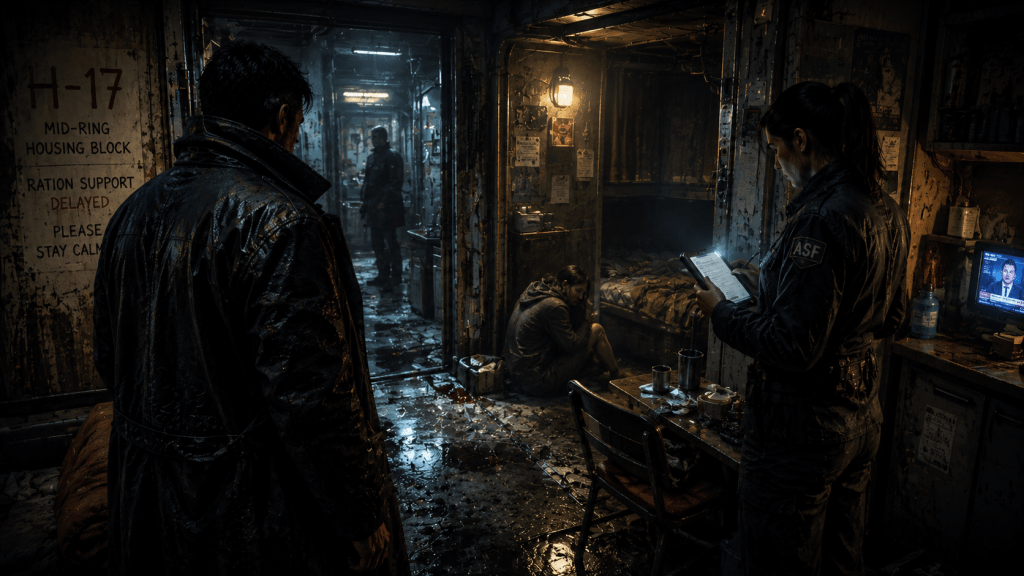
In Ghosts in the Underworks, Ruff Kale and Lena Marik are called to H-Seventeen, a Mid-Ring housing block where stolen medical ration packs and filtration components have appeared inside a civilian unit. The discovery should create a simple case. Someone stole from medical supply. Someone hid the goods. Someone else suffered because of it.
Ashfall refuses that kind of simplicity.
The Pell family become targets before evidence can catch up. Talla Vesk misses a needed medical dose. The corridor turns on itself, driven by fear, rumour, and the kind of anger that grows in places where medicine arrives late and official language never admits panic. By the time Ruff and Lena step into the block, the damage has already become social as well as criminal.
This is where the book leans into dystopian detective fiction. The crime matters because it hurts people directly, yet it also reveals how fragile the station has become. A single missing allocation can turn neighbours against one another. A phrase on a public feed can change market prices before the truth reaches the people waiting in line. A wall panel can matter more than a locked door.
Ruff Kale and the Things Records Miss
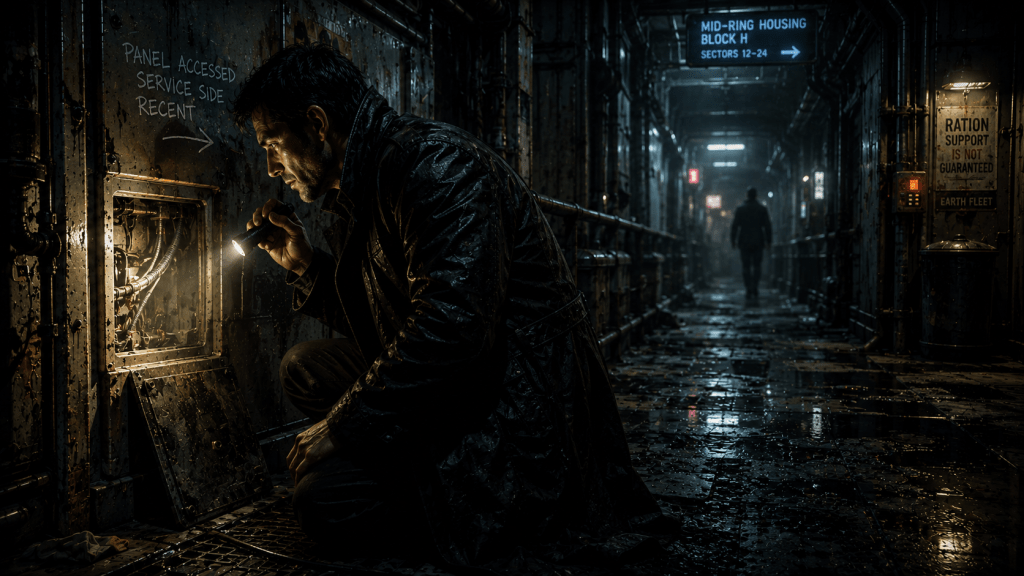
Ruff Kale is useful because Ashfall cannot be read from a case slate alone.
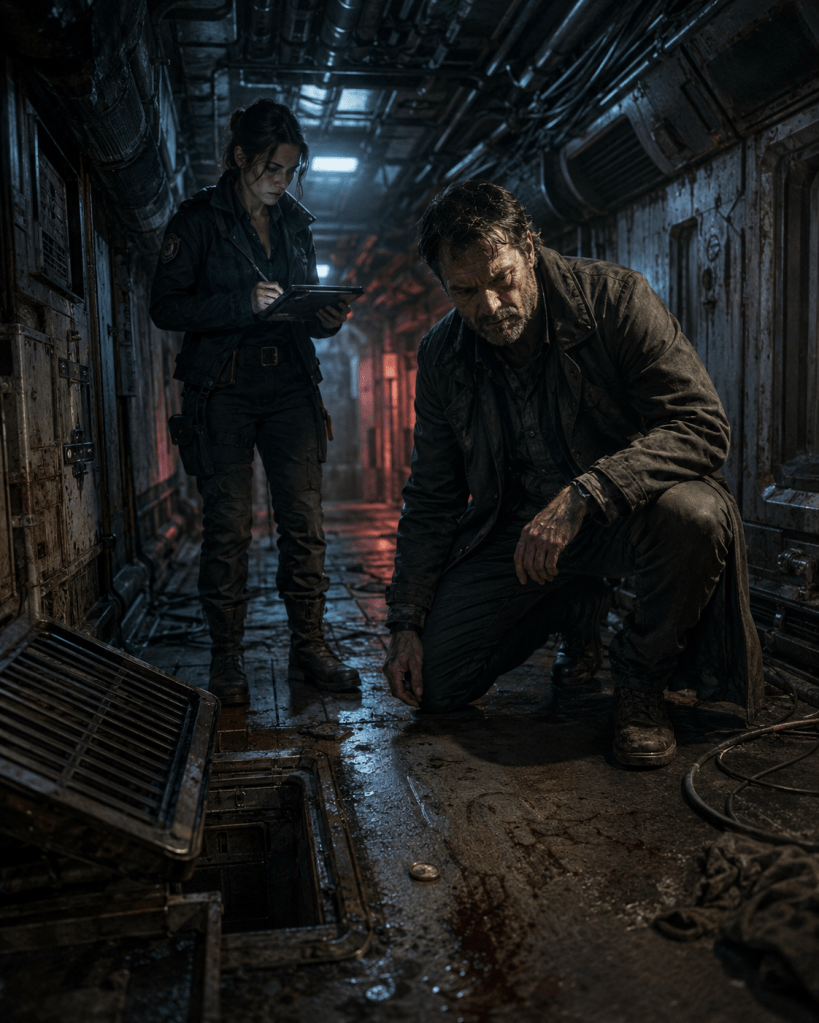
He knows the difference between a forced room and a staged one. He notices heat along a panel seam, grit where no resident should have disturbed it, and the careful silence that follows a crowd realising it may have blamed the wrong family. He understands that official records often describe the station as it wishes to appear, while walls, routes, smells, and frightened people describe what actually happened.
That makes him the centre of Ashfall Files as a noir detective in space. He is tired, rough, cynical, and difficult, yet he moves through the station with the instincts of someone who has spent years watching systems fail in practical ways. Ruff does not chase grand conspiracies from a clean desk. He follows the small human cost first.
Lena Marik gives the investigation its counterweight. She documents what Ruff senses. She preserves evidence before command can reduce it. She handles witnesses with care in rooms where fear has already done most of the damage. Her role is central because procedure still matters, even when power tries to narrow what procedure is allowed to prove.
Their partnership works because each sees a different part of the same lie. Ruff finds the route into the truth. Lena keeps enough of it alive to survive the file.
The Hidden Station Beneath the Mapped One
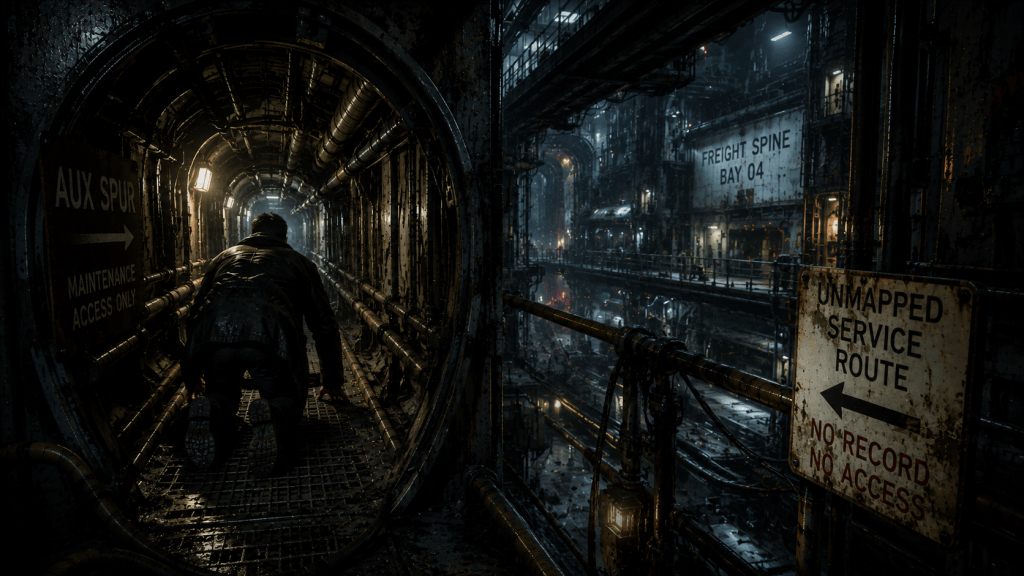
The central pressure inside Ghosts in the Underworks is movement.
Ashfall has official routes: lifts, transit bands, service corridors, cargo lanes, maintenance access, registered doors. Those routes are watched, logged, delayed, priced, restricted, or controlled. Beneath them lies another station, one made from old service spurs, crawler tubes, blind panels, hidden alcoves, route marks, dockside whispers, and people who know how to pass between systems that no longer serve them.
Medical supplies move through those spaces. So do warnings. So do rumours. So, perhaps, did the dead girl whose erased case began the wider Ashfall Files sequence.
That is what gives this book its wider mystery. The case begins with stolen medical ration packs and filtration components, yet the investigation uncovers the logic of a hidden movement network. Maintenance crawlers, auxiliary spurs, Bay Four, Dock Twelve, route marks, cleaners, runners, and unnamed “ends” create a structure that belongs partly to crime, partly to survival, and partly to something far more dangerous.
Ashfall’s hidden routes are not glamorous secret tunnels. They are practical, cramped, hot, dirty, and useful. They exist because watched people need unwatched movement, because poor residents are easier to use as cover, and because official doors often ask questions that desperate people cannot afford to answer.
Earth Fleet, Supply Pressure, and Controlled Truth
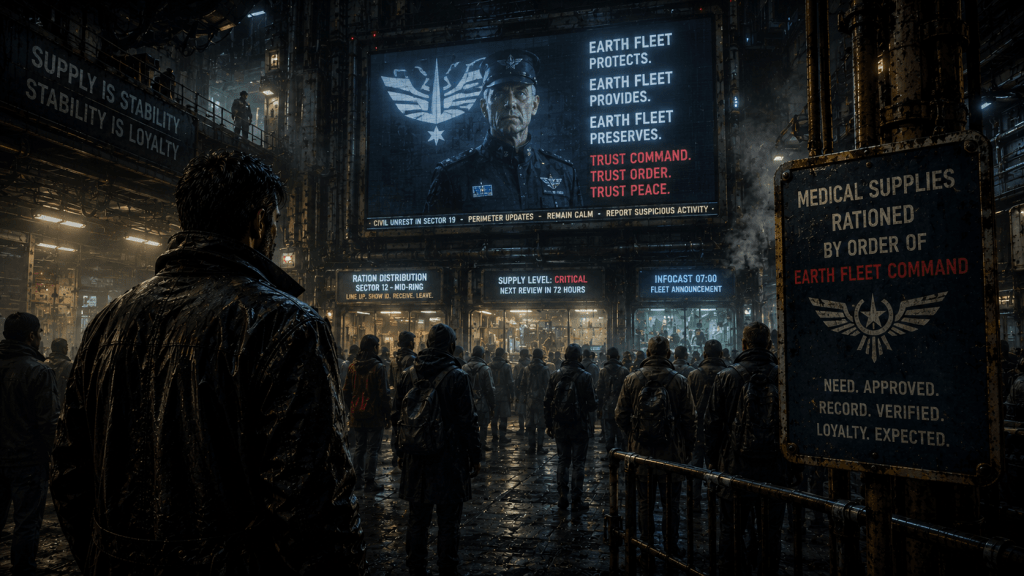
Earth Fleet’s power in Ashfall Files rarely needs to arrive shouting.
It appears through resource control, information control, and the quiet pressure of jurisdiction. Medical supplies are delayed under clean terms. Cargo lanes are inspected. Public broadcasts translate shortages into temporary redistribution. Administrative language softens danger until the people living under it have already learned to trust rumour first.
This gives Ghosts in the Underworks its political sci-fi thriller edge while keeping the story grounded in a station-level investigation. The book never needs to turn Fleet into spectacle. Its influence is felt through the systems Ruff and Lena have to work around: supply chains, maintenance access, medbay records, case routing, and official summaries that make dangerous truths smaller than they are.
That narrowing becomes one of the book’s strongest pressures. Ruff and Lena can find evidence, preserve it, and understand its shape, yet command still has the power to decide which words survive in the official file. A route can become “local smuggling.” A supply breach can become “unauthorised maintenance access.” A wider pattern can be reduced until it looks containable.
The reader is left with the same discomfort Ruff carries: the case may be partly closed, yet the station has revealed something it cannot safely admit.
Read Ghosts in the Underworks on Kindle
Ghosts in the Underworks is available now on Amazon Kindle.
This book is for readers who enjoy atmospheric sci-fi noir, space station mystery, dystopian detective fiction, and adult science fiction built around pressure rather than spectacle. It follows Ruff Kale and Lena Marik into a case where stolen medicine, hidden routes, supply control, and institutional silence all point towards a larger Ashfall Files mystery.
The story stands as its own investigation while deepening the wider series world. It begins in the heat of Mid-Ring housing and moves through medbay queues, market overhangs, maintenance spurs, crawler bays, Freight Spine service spaces, and finally towards cleaner decks where danger wears a better surface.
At the centre of the book is a simple question with dangerous consequences: how does something move through a watched station without appearing in the records? The answer does not arrive through clean exposition or distant spectacle. It emerges through witness statements, damaged rooms, service panels, maintenance crawlers, missing supplies, and the ordinary people caught between need and blame.
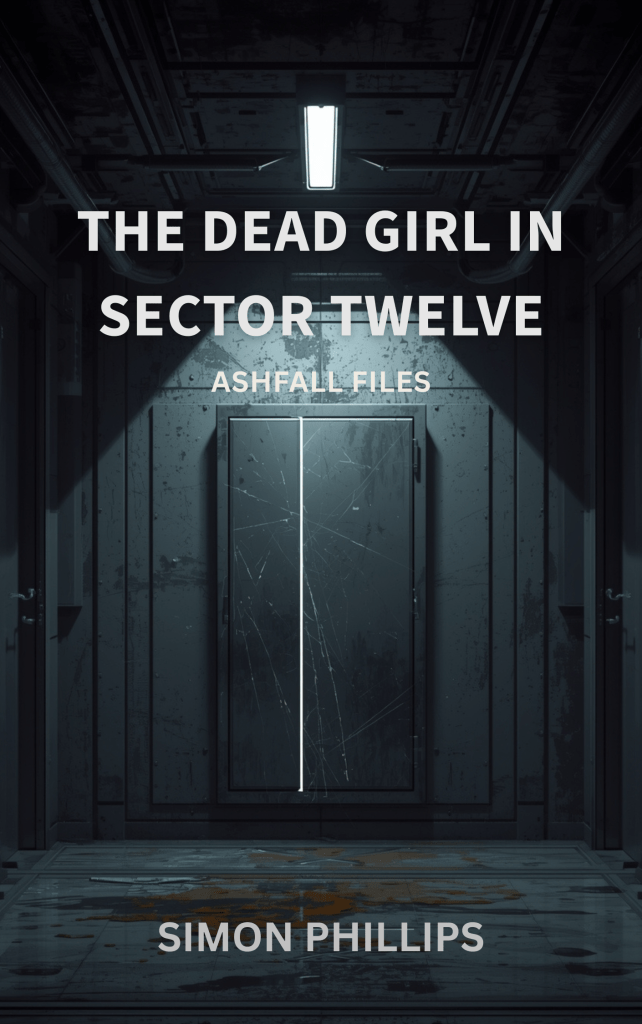
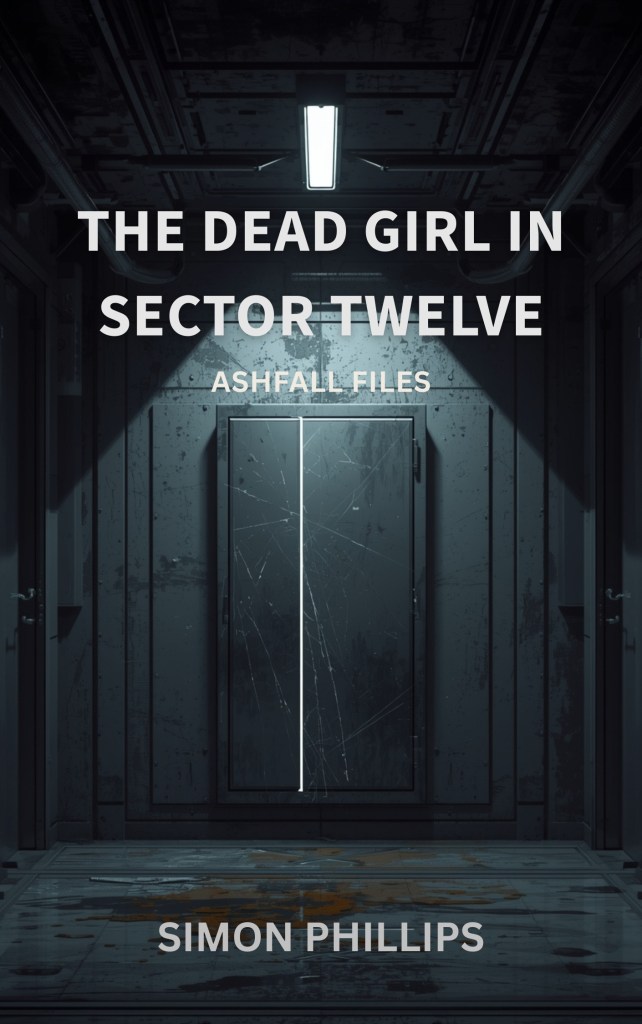
For readers entering Ashfall Files through this book, Ghosts in the Underworks offers a grounded sci-fi crime story with a complete case, while still carrying the pressure of a larger mystery beneath it. For returning readers, it follows the thread left by The Dead Girl in Sector Twelve and pushes Ruff and Lena deeper into the hidden systems that keep Ashfall Station moving even as official truth begins to fracture.
It is a story of ration pressure, compromised infrastructure, controlled language, and the quiet cost of asking questions inside a system built to narrow the answers.
Watch the Ghosts in the Underworks Short
A short atmospheric video for Ghosts in the Underworks is available on YouTube, offering a fast visual entry point into the mood of Ashfall Station and the pressure behind the book.
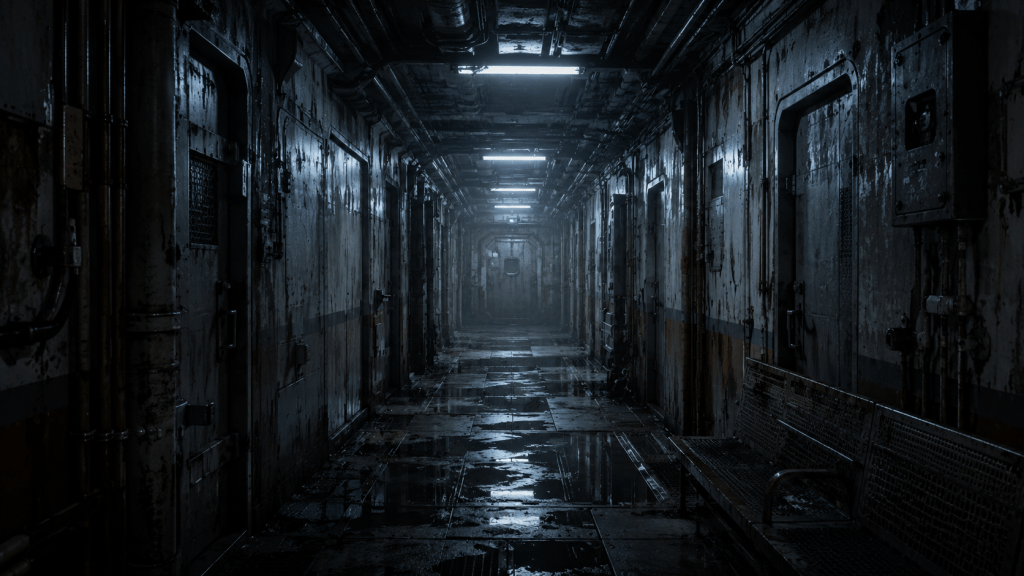
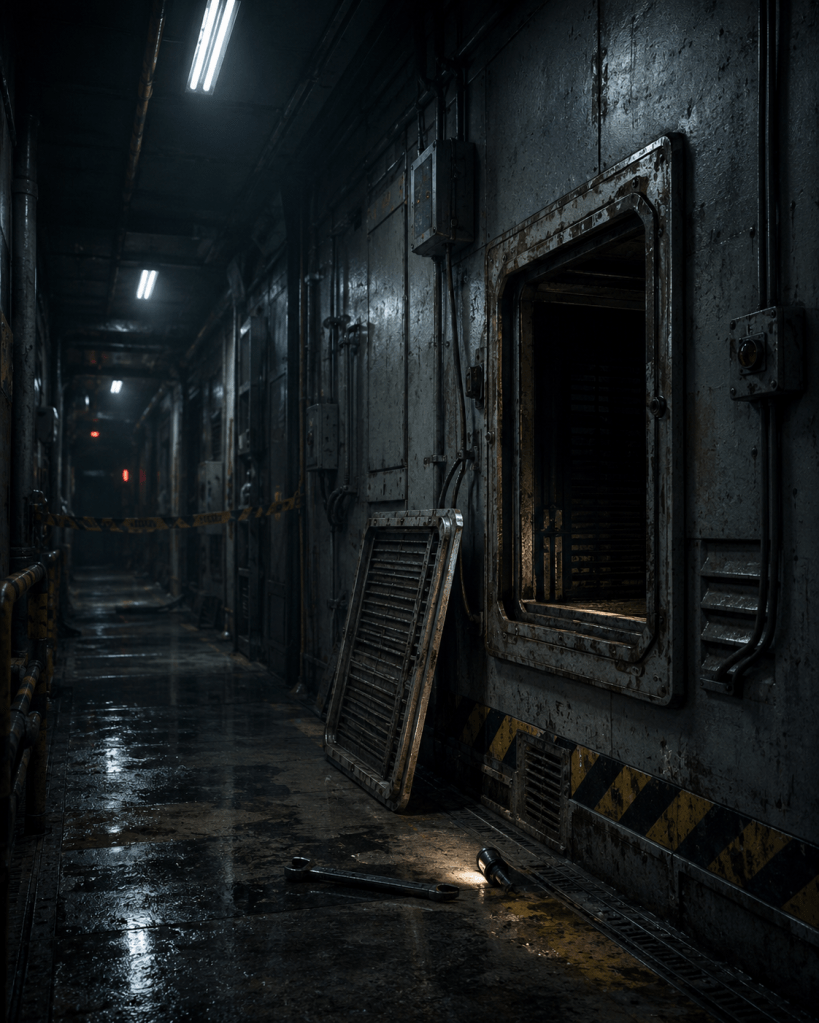
The short is designed to carry the same atmosphere as the story: industrial corridors, station grime, noir shadow, failing light, hidden movement, and the sense that every official surface has something moving behind it. It gives viewers a glimpse of the world Ruff Kale and Lena Marik move through, where ration pressure, controlled broadcasts, maintenance routes, and quiet institutional fear shape every investigation.
Rather than explaining the case outright, the video works as a mood piece for the Ashfall Files series. It reflects the book’s central feeling: a watched station where truth rarely travels through the front door, and where the most important evidence may be hidden in service tunnels, wall seams, crawler bays, and the spaces ordinary people are forced to use when official systems fail them.
For readers discovering the series through video first, it offers a brief introduction to Ashfall’s blend of sci-fi noir, space station mystery, dystopian crime, and slow-burn detective pressure before entering the full book.
Why Ashfall Files Is Built Around Pressure
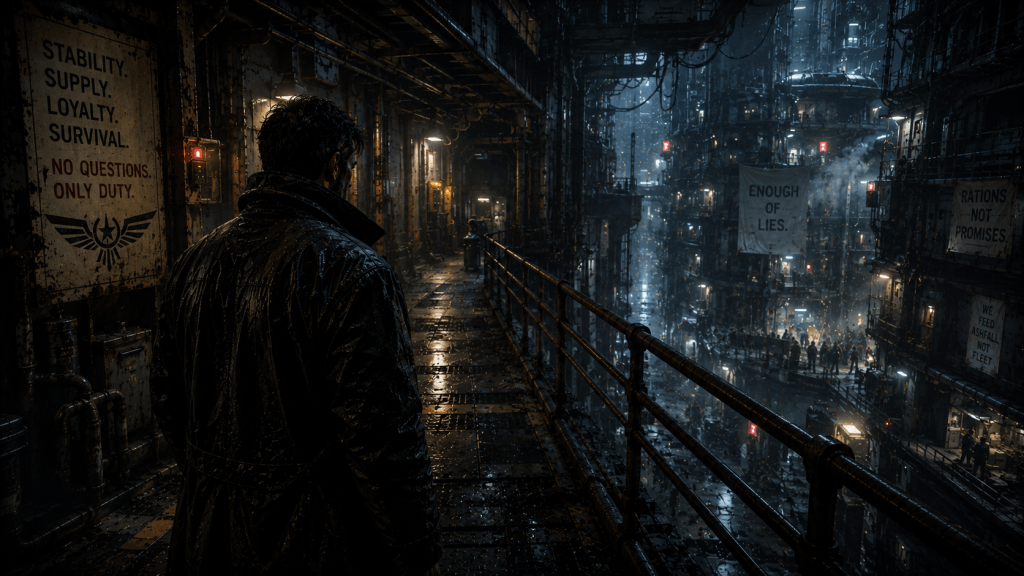
Ashfall Files is a detective science fiction series because investigation is the cleanest way to enter a dirty system.
Each case begins with something local enough to matter immediately: a dead courier, stolen medicine, missing evidence, altered records, a frightened witness, a family blamed too quickly, a route no one admits exists. The wider conspiracy does not arrive as a lecture. It appears through the practical work of asking who was hurt, who benefits from silence, who controls the file, and why the official explanation feels too neat.
That structure keeps Ashfall Station human. The station is more than a backdrop. It is a living pressure system where rationing, poverty, infrastructure decay, surveillance, and corruption shape every decision. People lie because truth costs them. Witnesses hesitate because records can be changed. Workers know routes that maps leave out. Criminal economies grow in the gaps left by official neglect.
This is what gives the series its noir identity. Truth exists, yet it moves through damaged channels. Power exists, yet it often appears first as delay, obstruction, or polite wording. Justice exists only as far as someone is willing to carry it after the case has already been made smaller.
The Station Keeps Moving
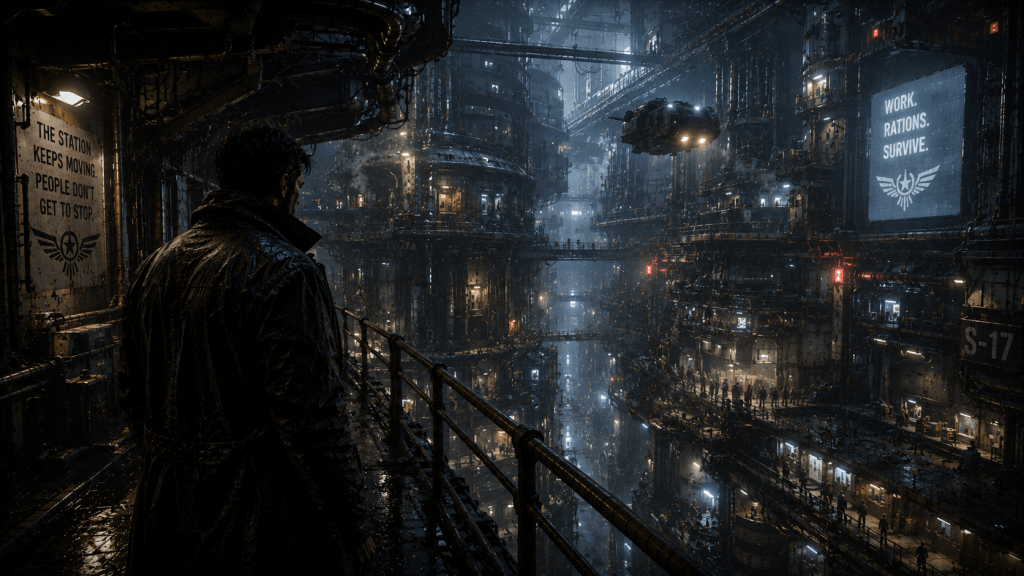
By the end of Ghosts in the Underworks, the immediate harm has been partly addressed. Evidence survives. Some supplies are recovered. The falsely accused are given enough official recognition to stand a little straighter. A sick woman receives support that should never have gone missing.
Yet Ashfall does not feel safer.
The route remains larger than the case file. The people who carry the middle still fear the ends. The dead girl’s movement through Sector Twelve has become less mysterious in one way and more dangerous in another. Ruff knows more than he can prove. Lena has preserved more than command wanted left intact.
That is the quiet strength of Ashfall Files. The books do not ask the reader to believe in a clean victory. They ask the reader to follow the evidence through a station where every answer opens another sealed panel, and every official summary leaves something breathing behind the wall.
Ashfall Station is still functioning.
The broadcasts say so.
The walls suggest otherwise.