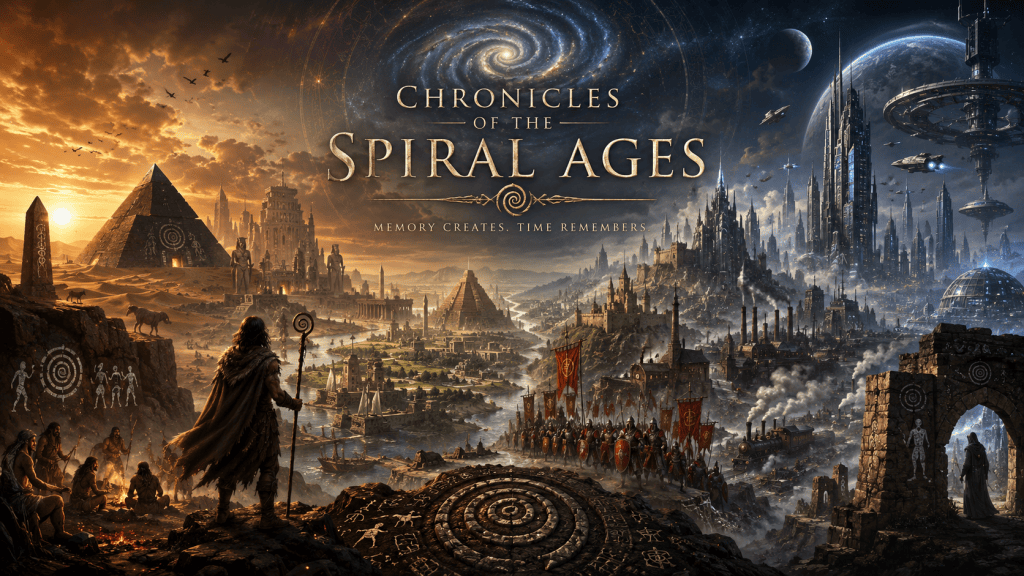
Mythic timeline fantasy across civilisation, memory, sacred architecture, and ruin
Chronicles of the Spiral Ages is a mythic timeline fantasy series set across one original fantasy world as it changes from deep prehistory into settlement, monument, kingship, empire, doctrine, industry, exploration, and the far edge of memory. Each book follows a people, a pressure, a place, or a sacred turning point as humanity struggles to understand the world beneath its feet.
This is fantasy built through deep time. The world begins before written history, before empire, before temple law, before kings raise their names above the dead. It begins in red sand, black stone, hunger, grief, and memory, then moves forward as later cultures inherit what earlier peoples once feared, revered, carved, buried, misunderstood, and lost.
Across the ages, one mark returns. The Spiral appears in stone, dust, bone, clay, ritual, architecture, doctrine, machinery, and perhaps, in time, the stars themselves. Its meaning changes with every culture that touches it, yet its pressure remains older than any single people who try to claim it.
A fantasy world becoming history
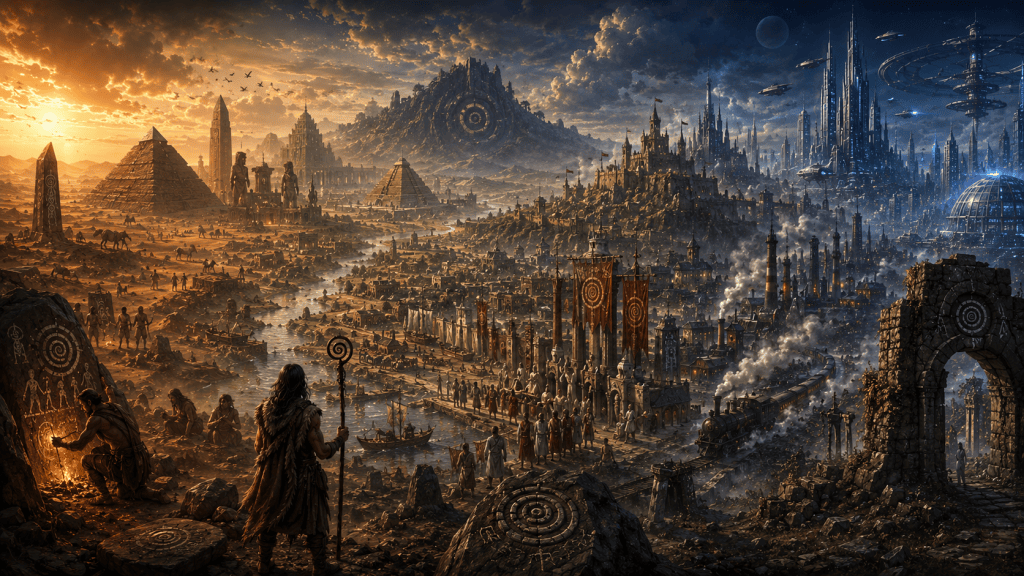
Chronicles of the Spiral Ages follows the long transformation of one world as memory becomes myth, myth becomes ritual, ritual becomes authority, authority becomes civilisation, and civilisation eventually becomes ruin. The series is shaped around the lives of people caught inside those changes. They carry water, bury their dead, carve stone, cross ice, mark names, obey priests, resist rulers, build monuments, and leave fragments for later ages to misread.
Each book stands as a complete story. Each book also leaves a trace across the wider timeline. A burial sign in one age may become a priestly emblem in a later age. A sacred place may become a ruler’s tomb field, a ruined pilgrimage road, an industrial excavation, or a coordinate studied by people who have forgotten the hands that first touched the stone.
The true movement of the series comes through consequence. A culture sees the world in one way, builds meaning around that belief, then faces the moment when belief begins to break, harden, corrupt, or survive in a new form. The people change. The land remains. History carries the wound forward.
History as the central protagonist
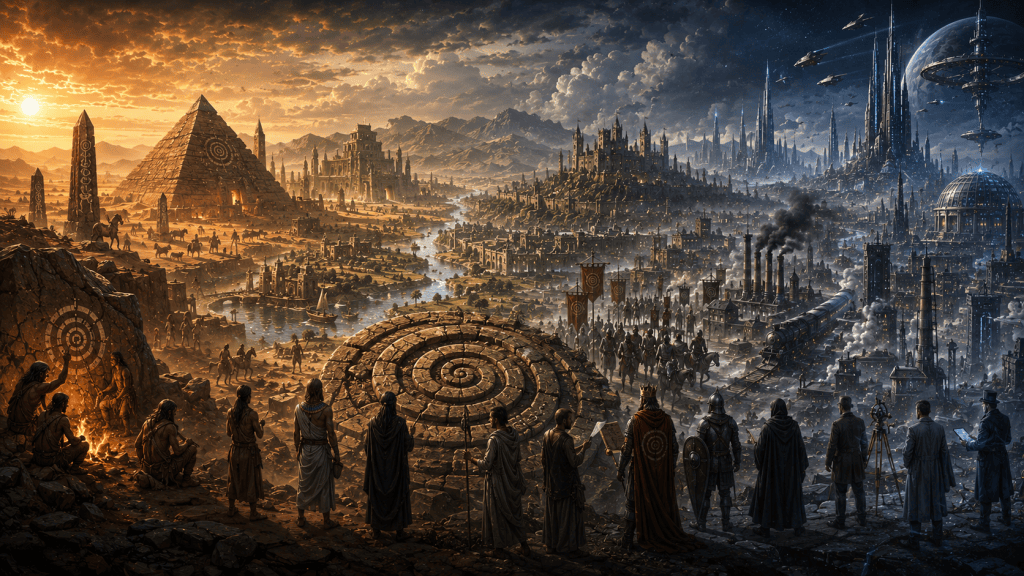
Most fantasy series follow a single hero, a throne, a war, or a quest. Chronicles of the Spiral Ages follows history itself. Characters rise, suffer, love, fear, build, rule, labour, worship, and vanish, while the world keeps their marks in stone, story, ritual, and ruin.
This series moves through eras because no civilisation owns the truth for long. One people may remember the Spiral as a burial sign. A second culture may turn it into a royal seal. A later priesthood may carve it into doctrine, while scholars far ahead in time may measure it as geometry, pattern, or relic technology. The reader sees connections that the characters often lack the language to hold.
The result is a fantasy of civilisation, memory, and sacred distortion. It asks what happens when grief becomes public ritual, when ritual becomes social power, when power builds monuments, and when later generations inherit the shape while losing the human cost beneath it.
The Spiral
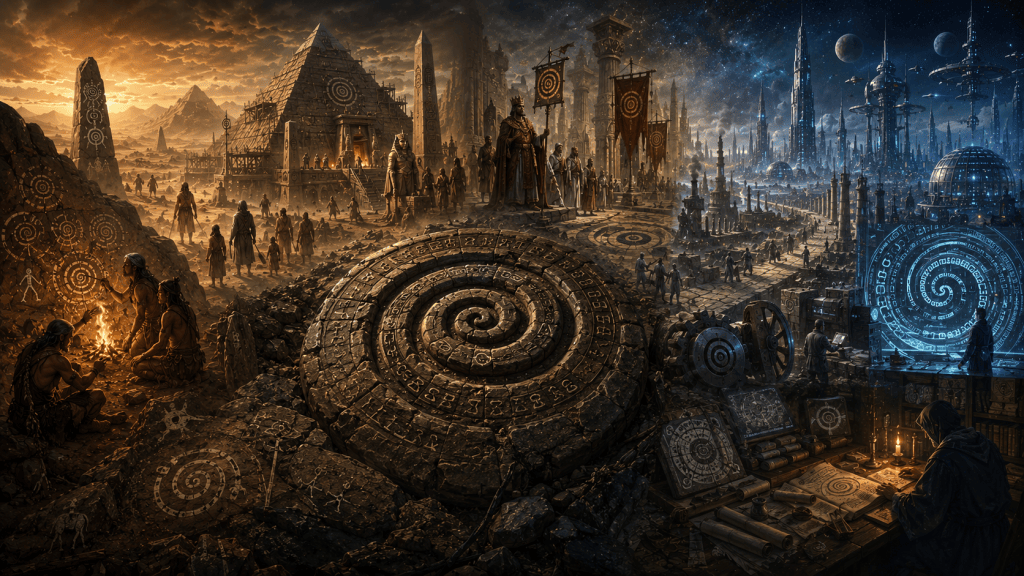
The Spiral is the recurring symbol at the heart of the series. It begins as something ancient, instinctive, and carved into black stone before human cultures can explain it. Early peoples sense it through land, dream, wind, silence, touch, burial, and unease. Later ages draw it into clay, bone, stone, seal, script, temple floor, machine housing, and star-map.
Its meaning shifts as the world changes. To one culture, the Spiral may hold the memory of the land. To a different people, it may mark the dead. To a future empire, it may sanctify a ruler, bind a road, protect a tomb, measure a flood, command a temple, or haunt a scholar’s forbidden archive.
The Spiral should feel ancient, present, and dangerous because every age tries to make it serve a human purpose. Some people kneel before it. Some carve it into law. Some hide it beneath graves. Some build around it and claim authority from its curve. The mystery remains because the Spiral belongs to a deeper history than any culture can fully possess.
Saehur and the First Breath of the Land
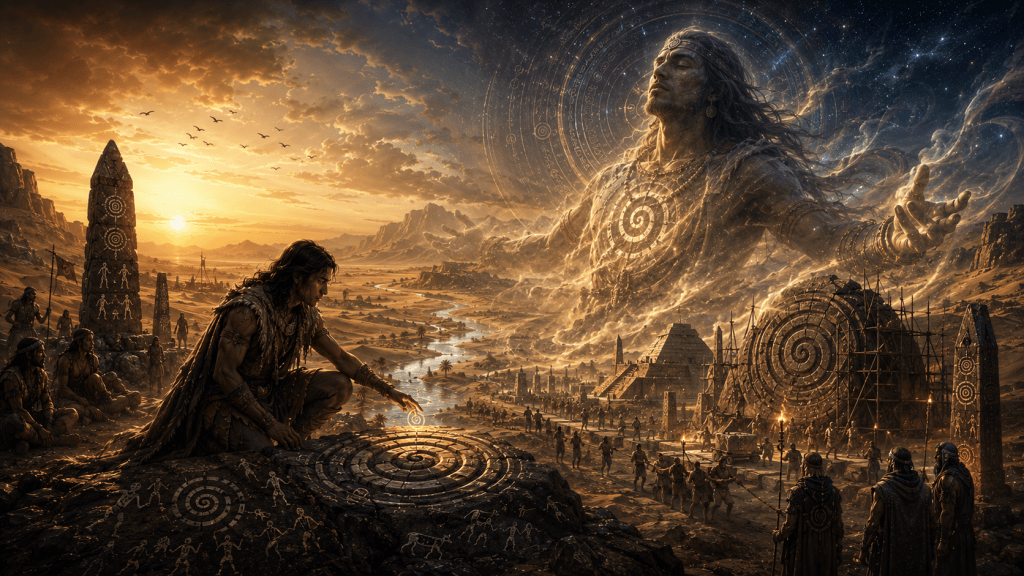
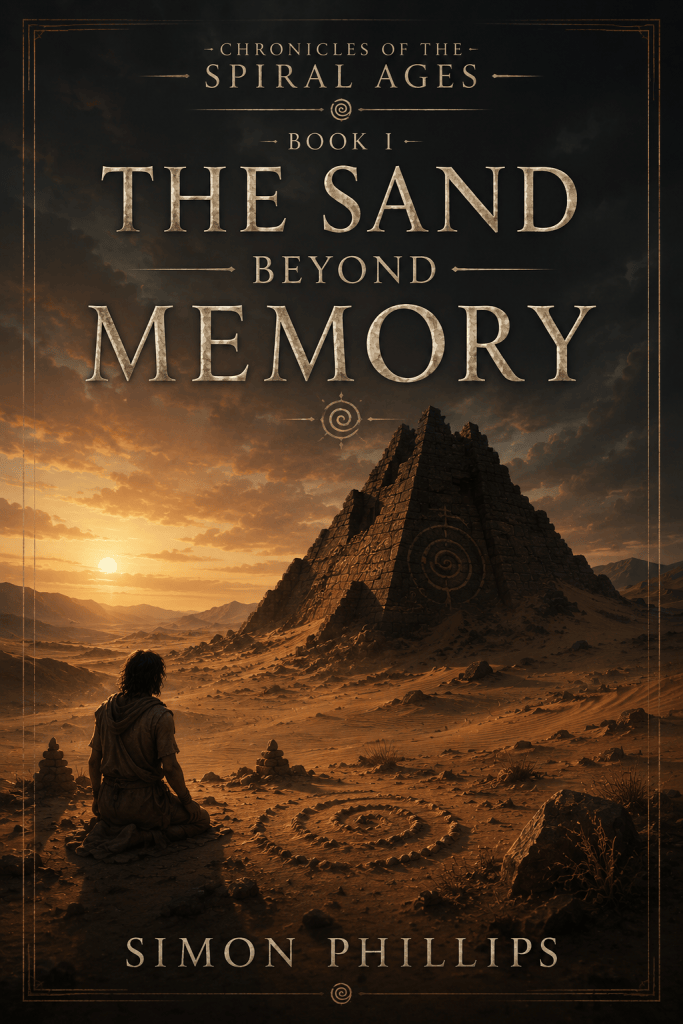
At the foundation of the series stands Saehur, the first god-memory of the world. He begins as mortal, a Teller who listens to land-memory among the people of the Red Basins. His story in The Sand Beyond Memory opens the timeline through grief, sacrifice, desert pressure, and contact with something older than the tribes who survive beside the black remnants.
Saehur’s transformation into the First Breath of the Land becomes the first great sacred wound of the world. Later cultures may remember him as a god, rename him through desert rite, bury him under priestly doctrine, fold him into rulership, or carve his sign into monuments built by hands that have forgotten his human sorrow.
That is the tragedy at the centre of his memory. The more civilisation worships the god, the more it may lose the man. Saehur’s presence should carry distance, sorrow, ambiguity, and sacred pressure, because his power comes through echo, silence, land, breath, stone, dream, and the long reshaping of belief.
The world becoming history
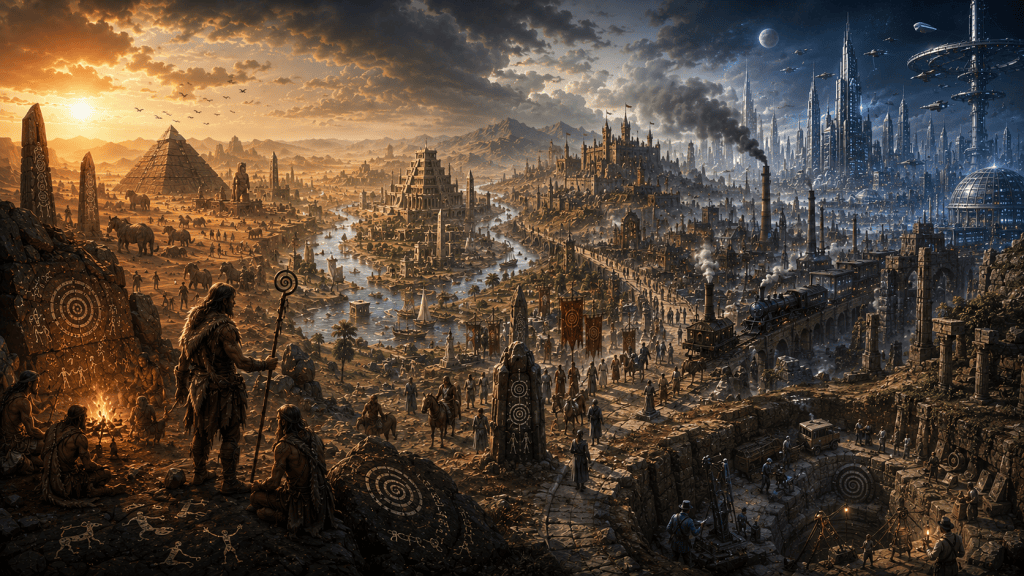
The series begins in deep prehistory, where survival, memory, hunger, burial, and landscape shape the earliest human meanings. From there, the world moves forward through successive ages. Settlement grows from need. Sacred architecture rises from grief. Authority gathers around ritual. Kingship takes shape through memory. Empires absorb old gods and rename them. Doctrines harden around fragments once held by ordinary hands.
As the timeline advances, different lands change the way people understand the Spiral. Desert basins make memory dry, buried, and stone-bound. Glacial lands may turn the Spiral towards migration, return, sky light, bone markers, and ancestral paths. River cultures may carve it into flood law, trade, writing, temple stores, and the control of grain. Iron kingdoms may raise it on fortresses, shields, roads, and oaths. Later industrial powers may wire ancient sites into machinery, convinced they have found material where older peoples once felt sacred pressure.
The world always moves forward. Earlier truths survive through fragments, distortions, half-remembered names, buried marks, altered rites, and ruins whose original purpose has slipped beyond common speech. A monument once raised through grief may later become royal propaganda. A cave sign may become doctrine. A sacred road may become an empire’s route of conquest. A relic may become a machine part in an age that believes itself beyond myth.
Cultures, memory, and ruin
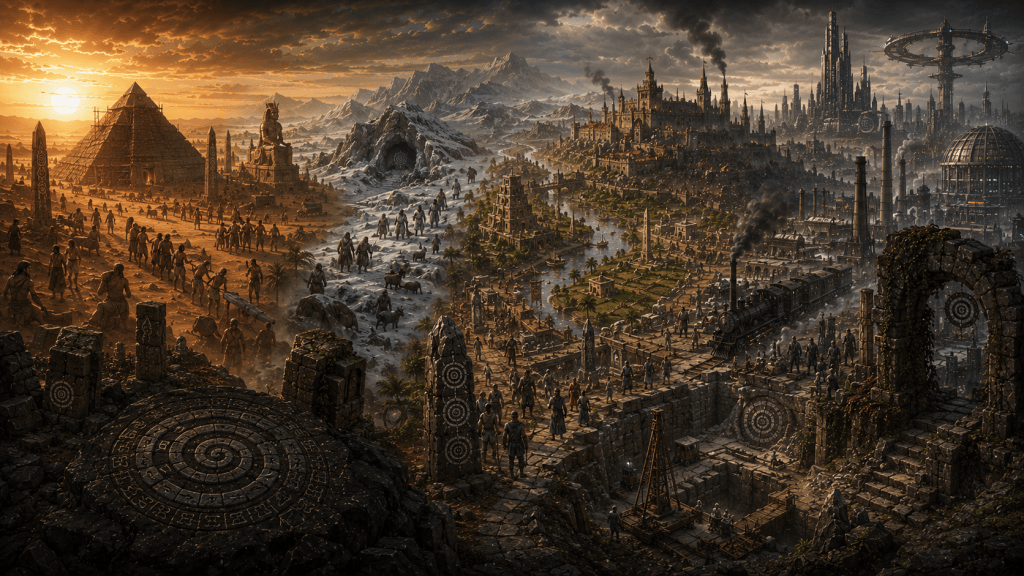
Every book in Chronicles of the Spiral Ages centres on a culture facing a pressure strong enough to change its relationship with the world. Those pressures may come from drought, hunger, migration, flood, burial, labour, priesthood, trade, war, state power, doctrine, machinery, exploration, or the discovery that an older people once stood in the same place and feared something similar.
The cultures of the series should feel rooted in the materials of their lives. A desert people think through water, dust, heat, stone, dead names, and the fear of empty basins. A glacial people think through movement, bone, fire, herd paths, sky signs, and hunger. A river people think through flood, grain, mud-brick, law, temple storage, and written memory. A later industrial people think through rail, soot, iron, excavation, engines, measurements, and the belief that old sacred things can be owned once they are mapped.
Ruins matter because every ruin was once someone’s present. A chamber once filled with grief may later become a royal shrine. A wall built by tired hands may later become evidence in a scholar’s argument. A burial mark may pass through priesthood, empire, archive, factory, and orbit, changing meaning each time human power tries to claim it.
The Age of Dust
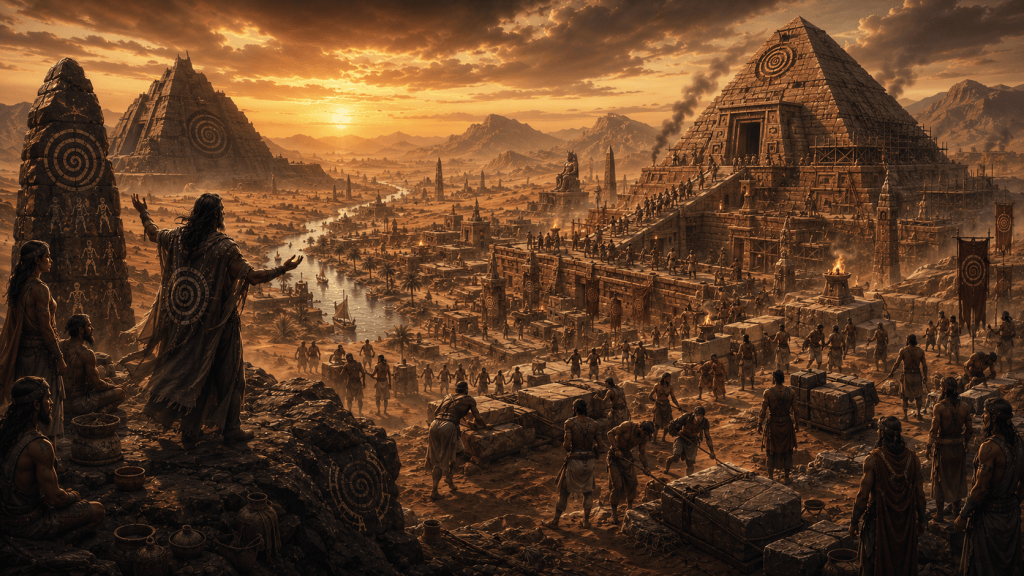
The first great civilisation arc is the Age of Dust. It begins with The Sand Beyond Memory, where Saehur becomes the First Breath of the Land and the Spiral enters human memory as something uncanny, sacred, and older than the tribes who find it. From that origin, the world moves towards settled desert life, burial practice, sacred architecture, priestly control, water pressure, labour, rulership, and the first great distortion of memory into power.
The Age of Dust is shaped by red basins, drought, black stone remnants, desert silence, proto-pyramids, burial houses, water jars, reed work, stone hauling, name-keeping, and the growing belief that the dead can bind the living. What begins as care for memory becomes a structure that can command bodies, organise labour, sanctify rulers, and bury human cost beneath beauty.
This age shows the first danger of civilisation in the series. A sacred act can become law. A house for the dead can become a monument of control. A remembered man can become a god-shaped authority used by those who never listened as he listened. The Age of Dust sets the first major pattern for the whole timeline: memory becomes power, power builds stone, and stone teaches later ages the wrong lesson.
Published Books and Reading Order
Latest from Chronicles of the Spiral Ages
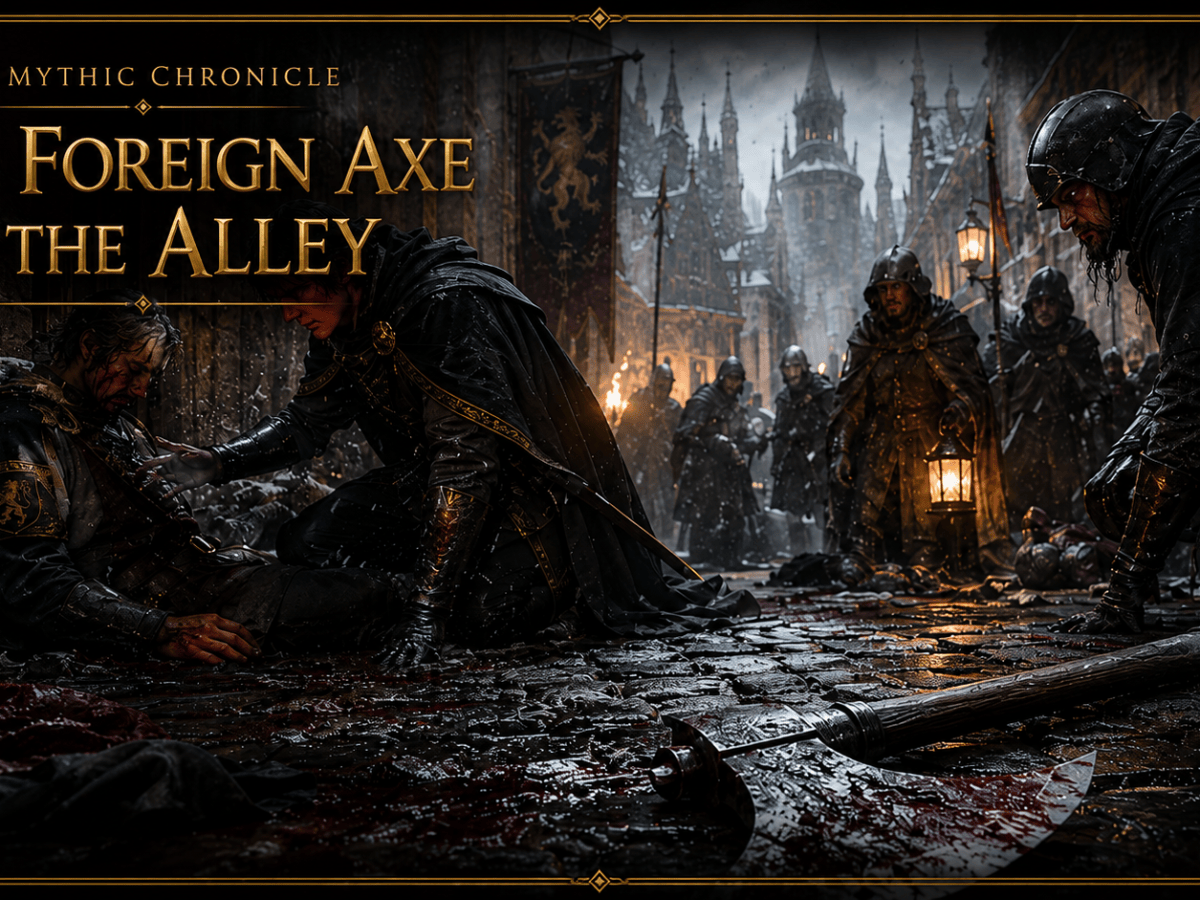
The Mythic Chronicle: The Foreign Axe in the Alley
Foreign steel has reached Bremyra.
In a narrow market alley, an assassin raises a heavy axe against Prince Patrick. Moments later, the attacker lies dead upon the stones, his weapon abandoned beside him, while witnesses struggle to explain how his body rose into the air before the killing blow could fall.
The Foreign Axe in…

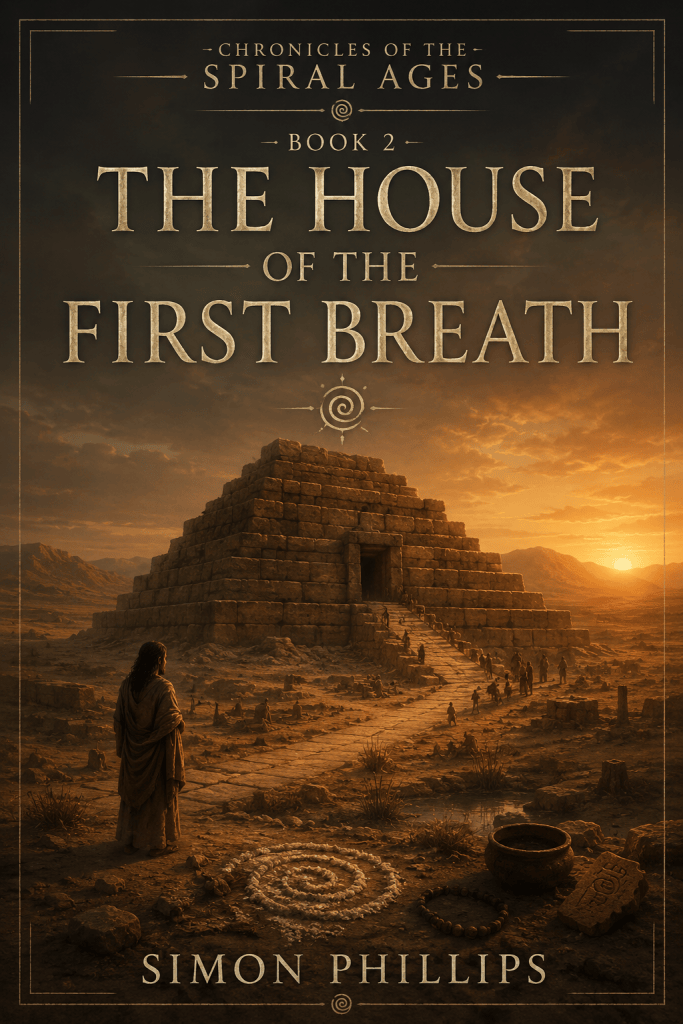
The House of the First Breath: Ancient Civilisation Fantasy, Sacred Architecture, and the First Monument of the Spiral
Before kingdoms rose, before temples claimed the dead, before sacred bloodlines learned to call themselves chosen, a frightened desert settlement tried to make memory permanent.
In the Age of Dust, the people of Khevar raise their first sacred House beside the road of the Spiral, hoping stone can preserve what drought, grief, and time threaten…
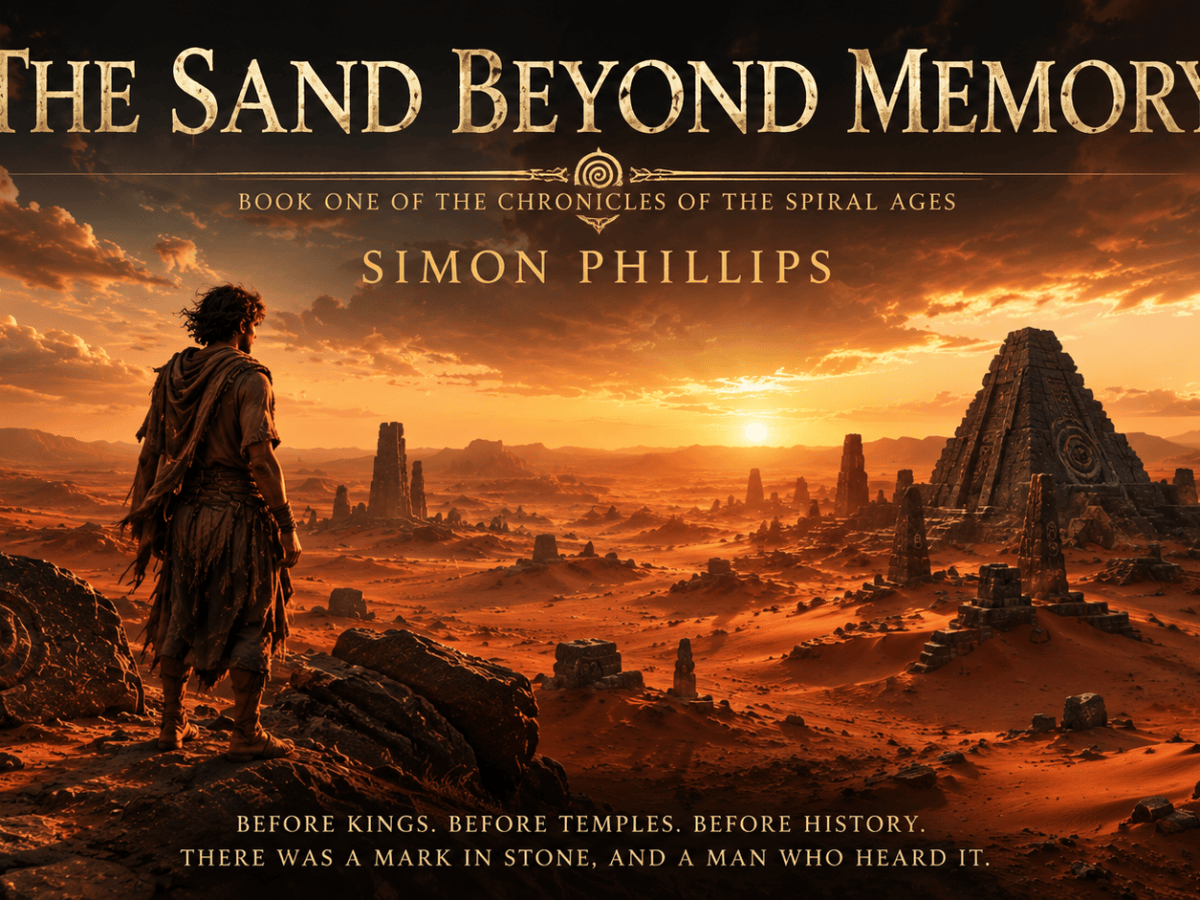
The Sand Beyond Memory and the Birth of Mythic Timeline Fantasy
Before kingdoms, before temples, before written history, the desert remembered.
In the Red Basins, black stone ruins rise from the sand, marked by a Spiral older than any living tribe. Saehur, a mortal Teller of memory and cairns, hears something beneath the dunes that no elder can explain, and his journey becomes the first wound…
