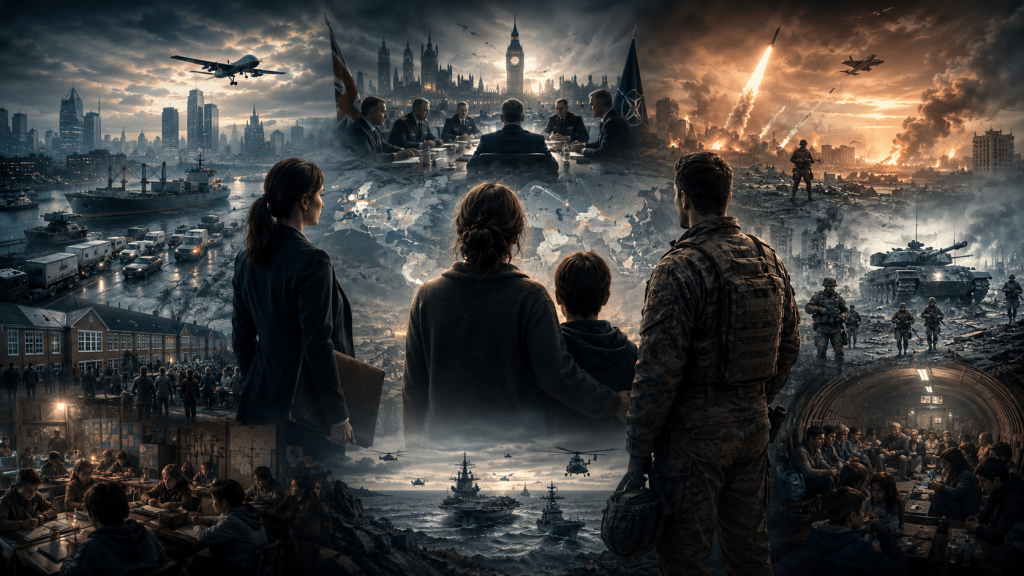
A modern-war saga about the collapse of distance
War rarely arrives as one honest announcement.
At first it comes through language. A careful statement on the news. A minister refusing to answer the second part of a question. A convoy seen at night on a road people used for work the week before. A school notice sent home in plain wording, asking parents to prepare for something everyone still pretends will pass. Aid becomes movement. Movement becomes preparation. Preparation becomes a shape too large for reassurance to cover.
The Last Deterrence is a long-form modern-war saga by Simon J. Phillips, following one family through the slow failure of managed distance. It begins in a world that still believes war can be contained somewhere else, carried through alliance phrases, proxy pressure, public briefings and controlled commitments. Then the pressure starts reaching Britain through roads, ports, schools, depots, military routes, government rooms and homes where families learn that official language often arrives later than fear.
This is modern-war fiction with a human centre: serious, grounded, politically strained, military where the story earns it, civilian where the cost lands hardest, and built around the systems people trust until those systems begin to fail in public.
A series about the moment distance fails
The world of The Last Deterrence begins close enough to our own to feel recognisable. Governments still speak in careful terms. Allies still measure each move against the danger of escalation. War remains present, visible, argued over and feared, yet it still carries the strange comfort of distance for those who live beyond the front.
That comfort becomes the first thing to break.
The saga follows the widening pressure from proxy conflict into visible preparation, from preparation into direct participation, and from direct participation into a war that reaches through the systems built to keep life ordinary. Roads begin to matter in ways civilians feel before they understand. Ports and depots move into the public imagination. Hospitals prepare for a future no one wants described too clearly. Schools become places where children hear adult fear through the tone of staff voices. Military traffic appears where civilian life used to pass without thought.
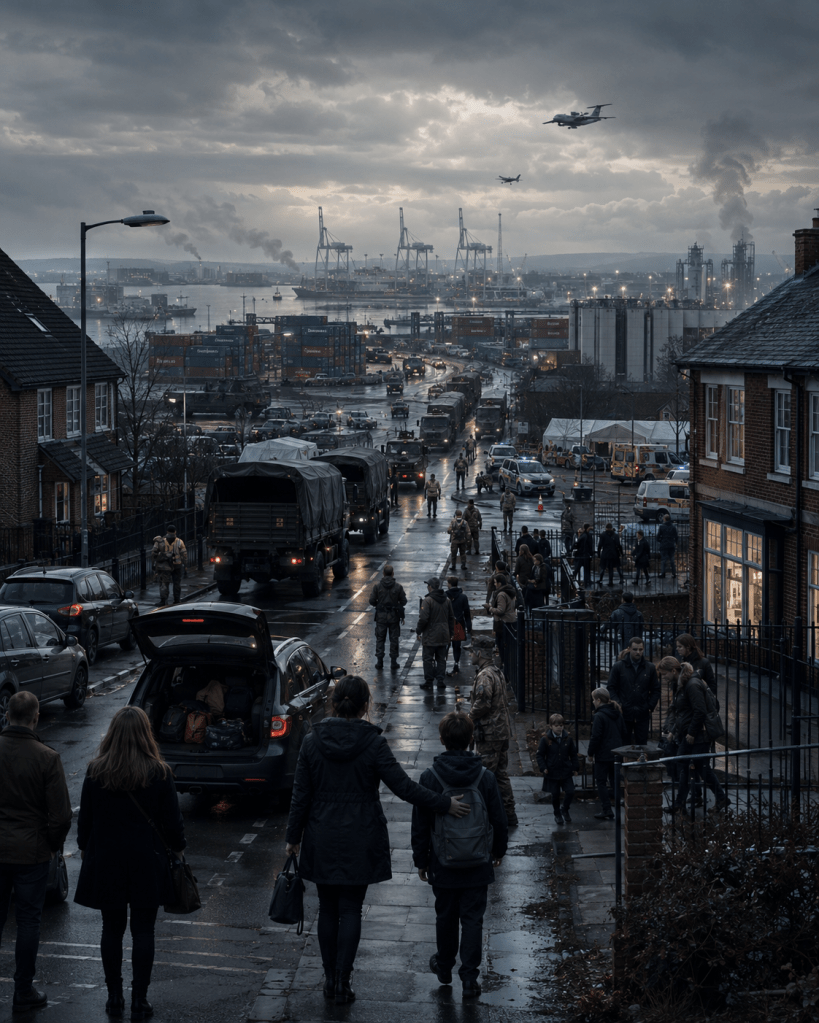
The story does not sell war as glory. It follows the way war enters ordinary spaces, changes behaviour, forces people into knowledge they never asked for, and turns national language into something families must measure against what they can see from their own windows.
The family at the centre of the war
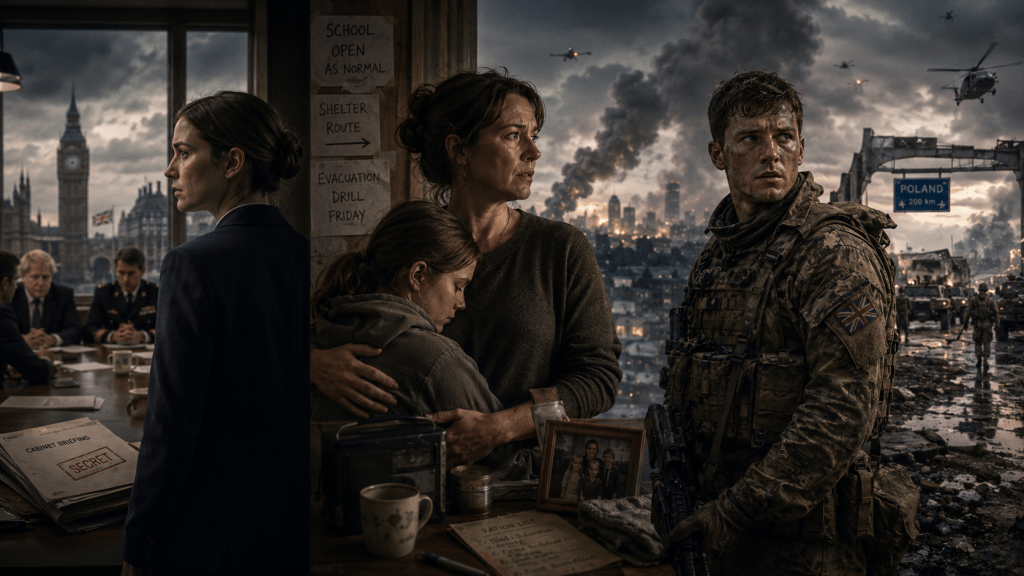
The emotional spine of The Last Deterrence is one family divided across the state, the home front and the battlefield.
One line moves close to government, where public reassurance, private intelligence, alliance pressure and political survival begin to pull against one another. This is the world of controlled phrases, guarded rooms, briefings, visits, concealed knowledge and decisions whose cost lands far from the table where they are made.
One line remains in civilian Britain, where the war appears through school life, household pressure, rumours, shortages, neighbour tension, public notices, shelter logic and the quiet strain of keeping routine alive when routine has already changed shape.
One line moves through the military, where the war becomes physical: route labour, convoy risk, damaged orders, exhaustion, fear, improvisation, attrition and the long burden of surviving long enough for authority to become heavier.
The power of the series comes from the distance between these truths. The state knows more than it says. The civilian home front feels more than it can prove. The soldier sees what policy becomes once it reaches roads, mud, steel, smoke and waiting men. Each part of the family carries a different version of the same war, and none of those versions can fully comfort the others.
Britain under pressure
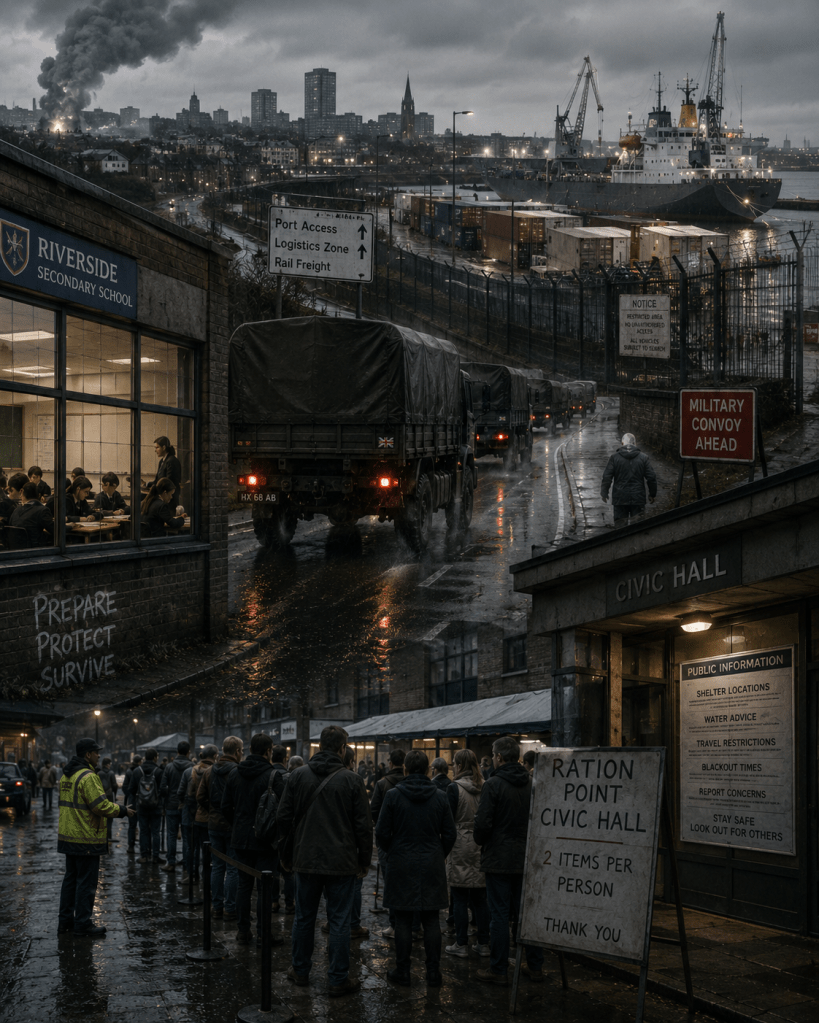
This series treats Britain as a lived place instead of a map.
The war enters through wet roads, council buildings, staff rooms, ports, logistics yards, fuel lanes, railheads, hospitals, military bases, classrooms, kitchen tables and shelters where fear gathers under strip lighting. It moves through paperwork as much as through weapons. It changes shopping, travel, school routines, news habits, family calls, public trust and the way people listen when a siren sounds too far away to explain.
A country under pressure rarely breaks all at once. It frays through the work required to keep it running. Someone has to open the school. Someone has to manage the queue. Someone has to update the notice. Someone has to drive the route, guard the depot, count the medicine, answer a parent, bury a name in a statement, move a convoy before dawn, or stand in a room where every choice feels late.
That is the texture of The Last Deterrence. The war is present in movement, delay, exhaustion and public systems forced to carry private grief.
Modern war with the safe rear gone
The military world of the series is shaped by exposure.
Drones, missiles, intelligence systems, damaged logistics, contested routes, tired command structures and the constant danger of misreading give the war its modern shape. The battlefield is larger than the place where soldiers fire weapons. It includes the convoy route, the fuel store, the railhead, the port, the damaged hospital, the shelter entrance, the civilian road used for military movement, and the public statement written while the situation is already changing.
Action exists in this saga because people have to move through danger. Convoys come under pressure. Bases become vulnerable. Evacuations fracture. Routes close. Orders arrive with gaps in them. Soldiers improvise because the system behind them is strained, delayed or already damaged.
The series allows violence, fear and heroism, yet it keeps them tied to consequence. Every violent turn must change someone, expose a failure, alter a relationship, or make the next decision harder. War here is never clean spectacle. It is labour under threat.
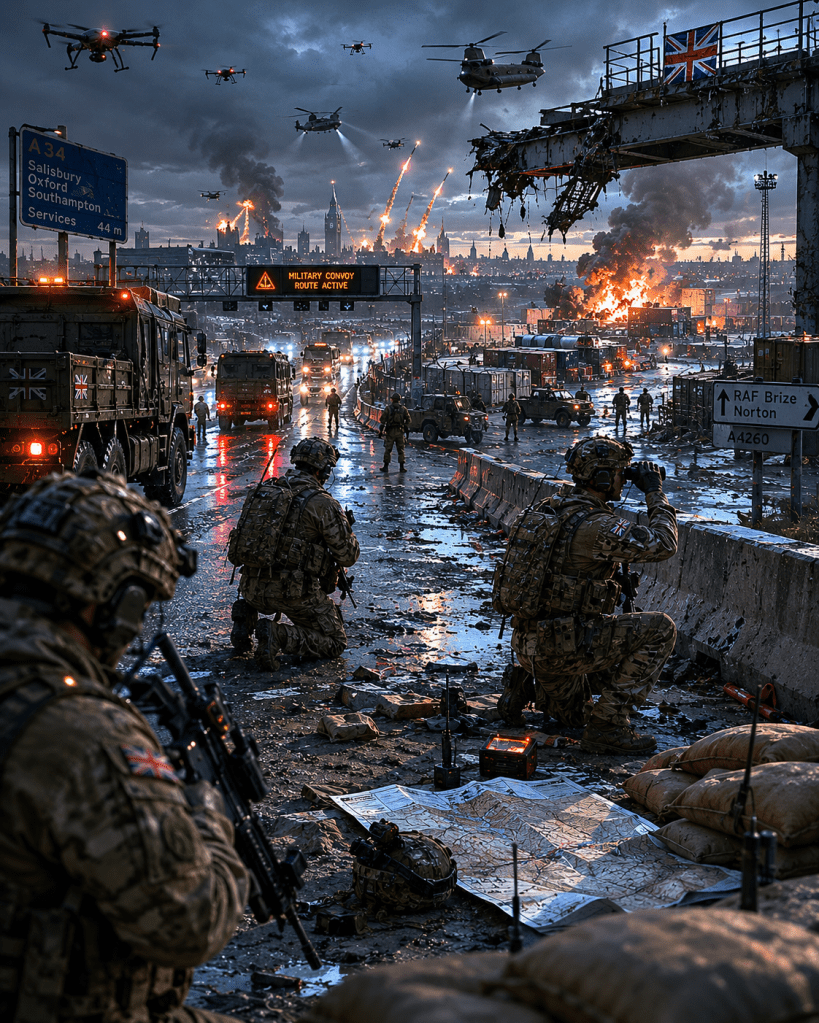
The shape of the saga
The Last Deterrence is designed as a twenty-book saga, giving the war room to widen in stages.
The opening movement breaks the belief that conflict can stay elsewhere. Later movements carry the pressure through Europe, wider alliance strain, global overload, the final failure of deterrence, and the damaged question of survival after the old public certainties have collapsed.
The structure matters because each stage has to be lived before the next one arrives. The war cannot simply leap from crisis to catastrophe. It must alter families, roads, schools, military routes, public language and private trust along the way. Each book adds another layer to that pressure, keeping the series focused in pace while giving the world enough depth to feel inhabited.
Readers can follow the saga as each release expands the same central question: what happens when the systems built to prevent collapse become part of the collapse themselves?
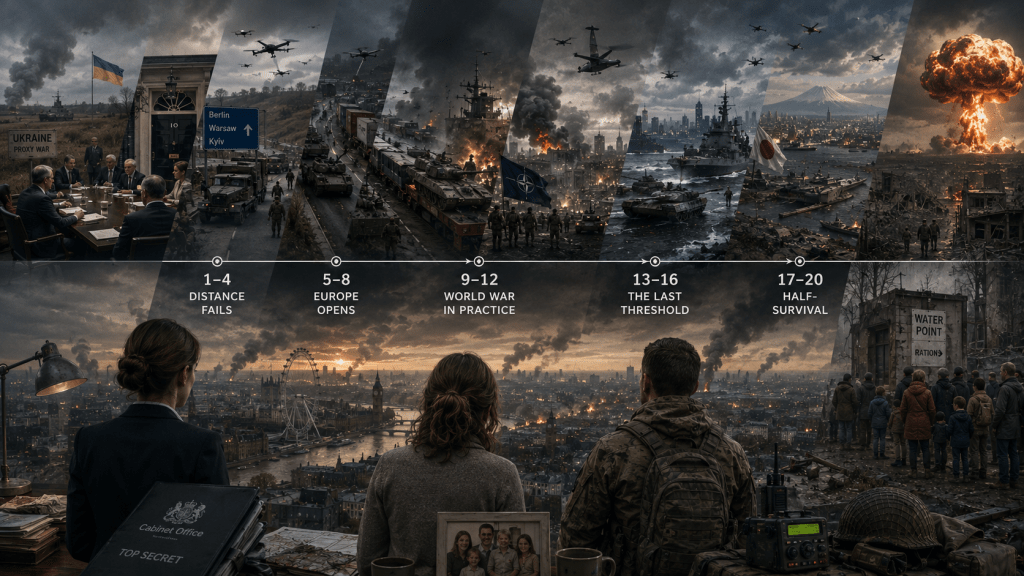
The last threshold
The nuclear threshold in The Last Deterrence is handled as the final failed rung of a long crisis.
It is never treated as a sudden shortcut into spectacle. The series moves towards that danger through exhaustion, fear, damaged trust, shrinking decision time and the failure of restraint under pressure. By the time the threshold is reached, the world has already been changed by conventional war, public strain, institutional weakness and the slow collapse of confidence.
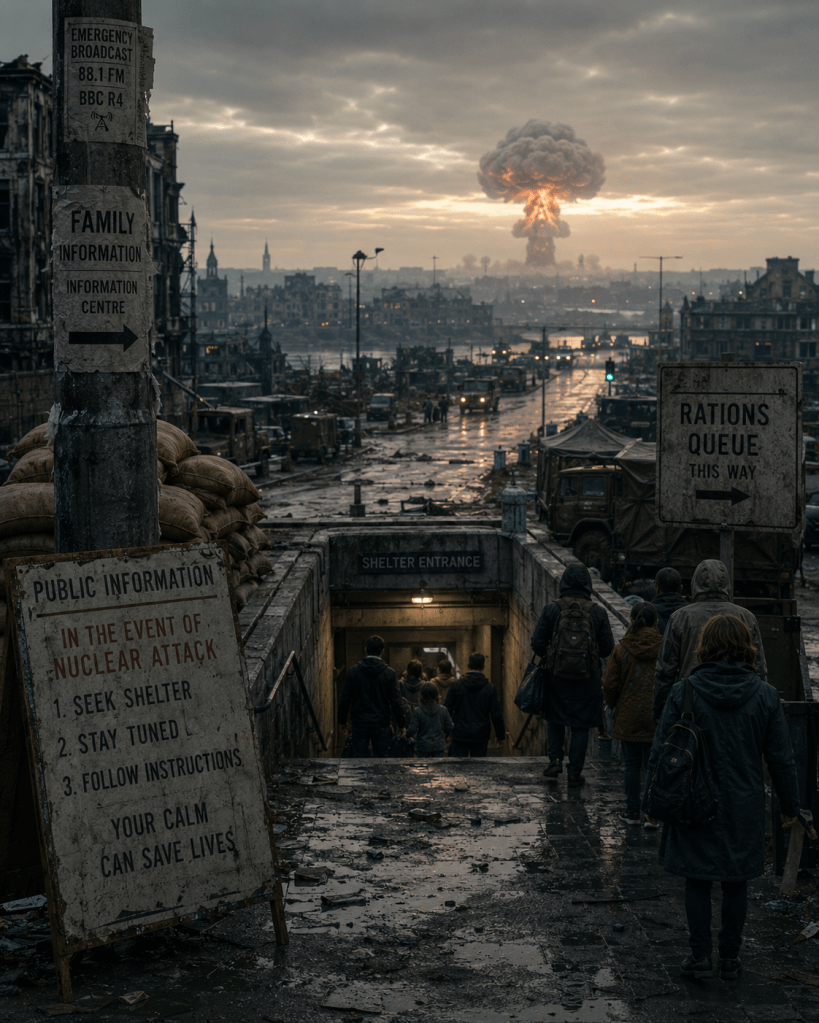
The aftermath is equally important. This is a saga of half-survival, where authority remains in fragments, communities endure unevenly, and the question of who can govern, protect, ration, punish or preserve becomes as urgent as food, water and medicine.
The end of the war is never presented as simple peace. Survival itself becomes political.
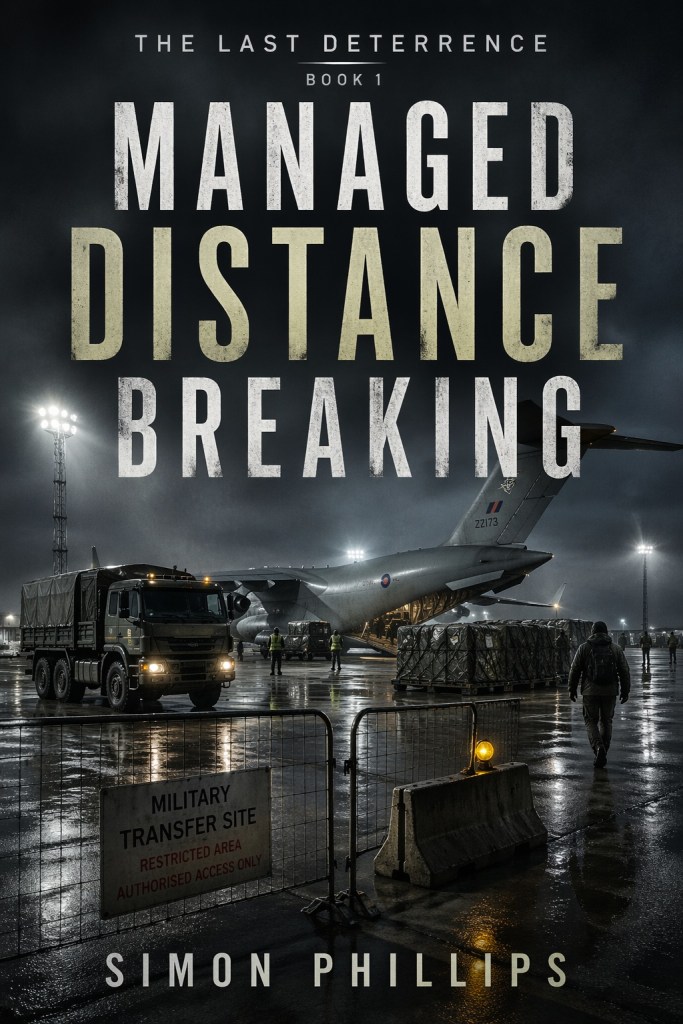
The Last Deterrence Reading Order
Latest from The Last Deterrence World
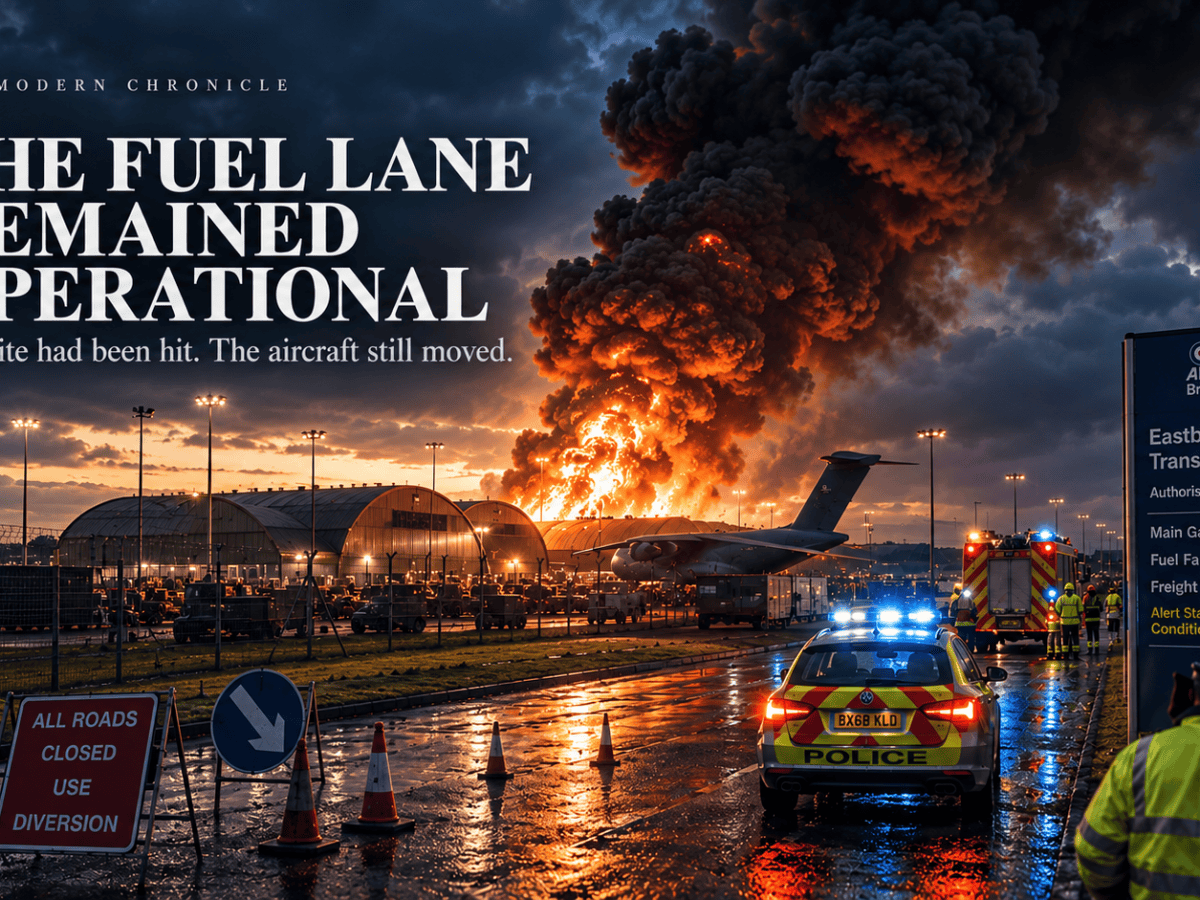
The Modern Chronicle: The Fuel Lane Remained Operational
Smoke rose above the airfield. Roads closed across the district. Families waited for messages from people still inside. Yet the aircraft kept moving. The Fuel Lane Remained Operational follows the people beyond a fictional British transfer site after a hostile unmanned-platform incident turns one damaged fuel point into a wider crisis of freight, family contact,…
The Modern Chronicle: The Object Beyond the Service Road
A damaged unmanned device lies in the grass beyond an RAF transfer site. Within minutes, the road is sealed, contractors are held at the gate and surveillance cameras turn towards the perimeter.
*The Object Beyond the Service Road* follows Corinne Hales, a civilian contractor caught inside a security response that grows larger than the object…
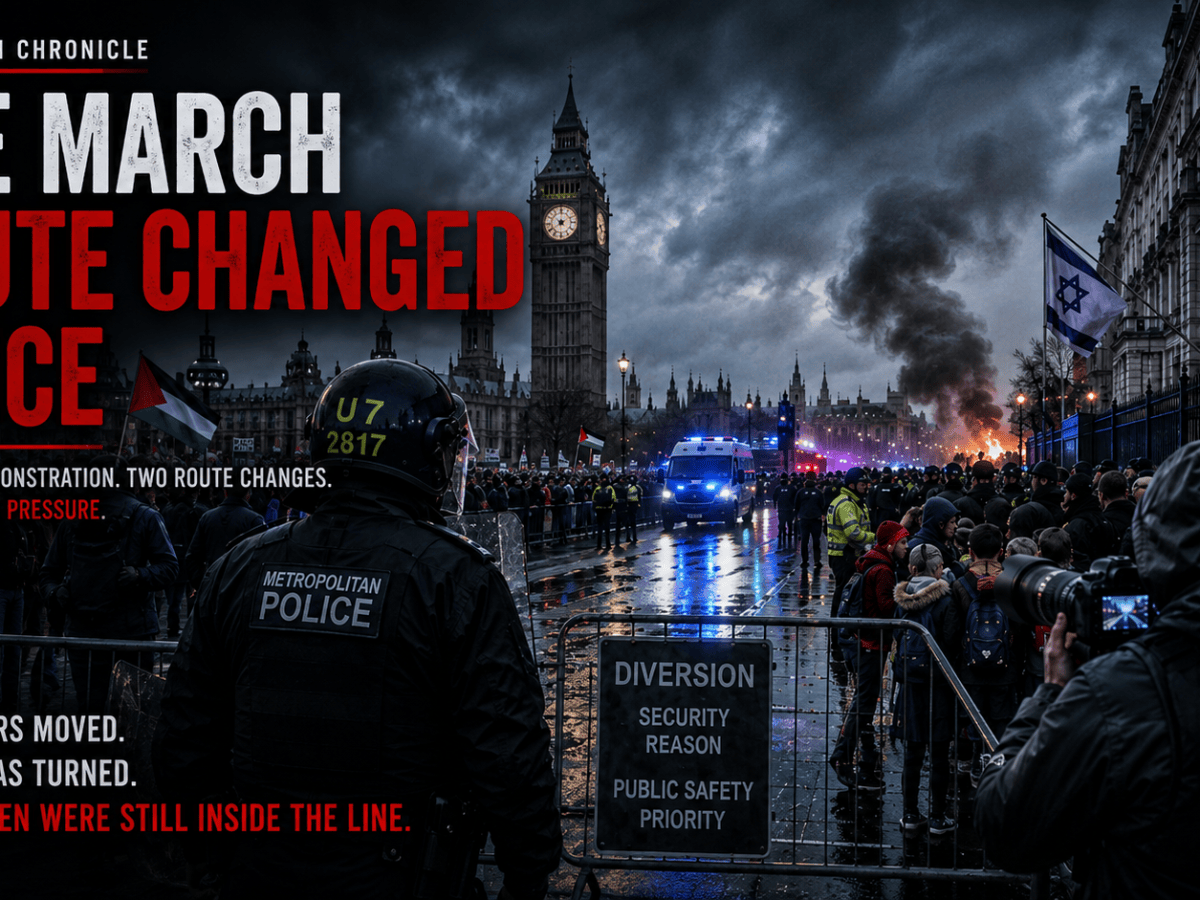
The Modern Chronicle: The March Route Changed Twice
The March Route Changed Twice follows a fictional London demonstration where the route changes before everyone inside the barriers receives the first explanation. Thirty-one pupils are caught nearby as police lines move, cameras turn and teachers try to keep an ordinary school trip intact while the city reorganises itself around them.
The official record calls…
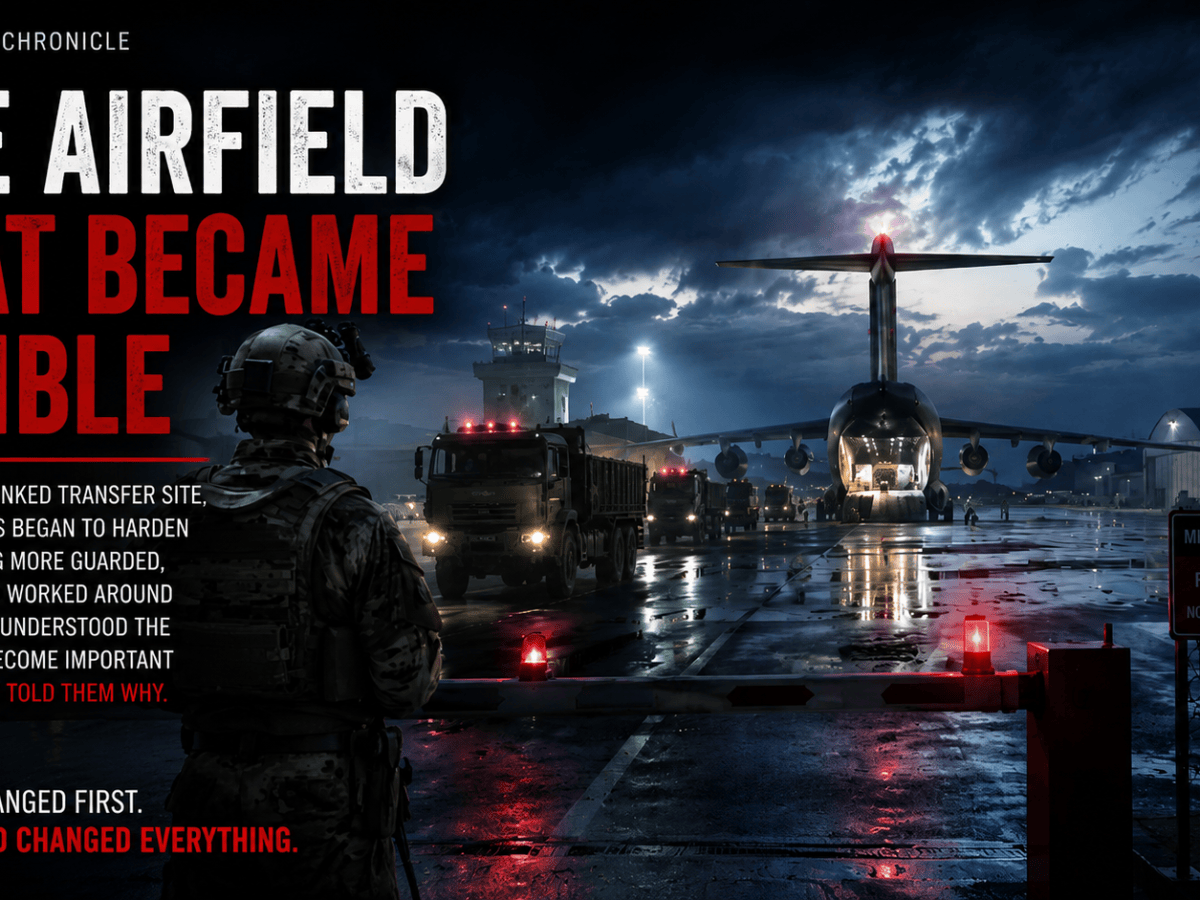
The Modern Chronicle: The Airfield That Became Visible
The Airfield That Became Visible continues The Eastbound Line at a fictional defence-linked transfer site where routine access has started to disappear. Contractors face new barriers, armed personnel, repeated checks and camera systems covering corners nobody cared about the week before.
The aircraft still load. The gates still open. Yet everyone arriving in the rain…
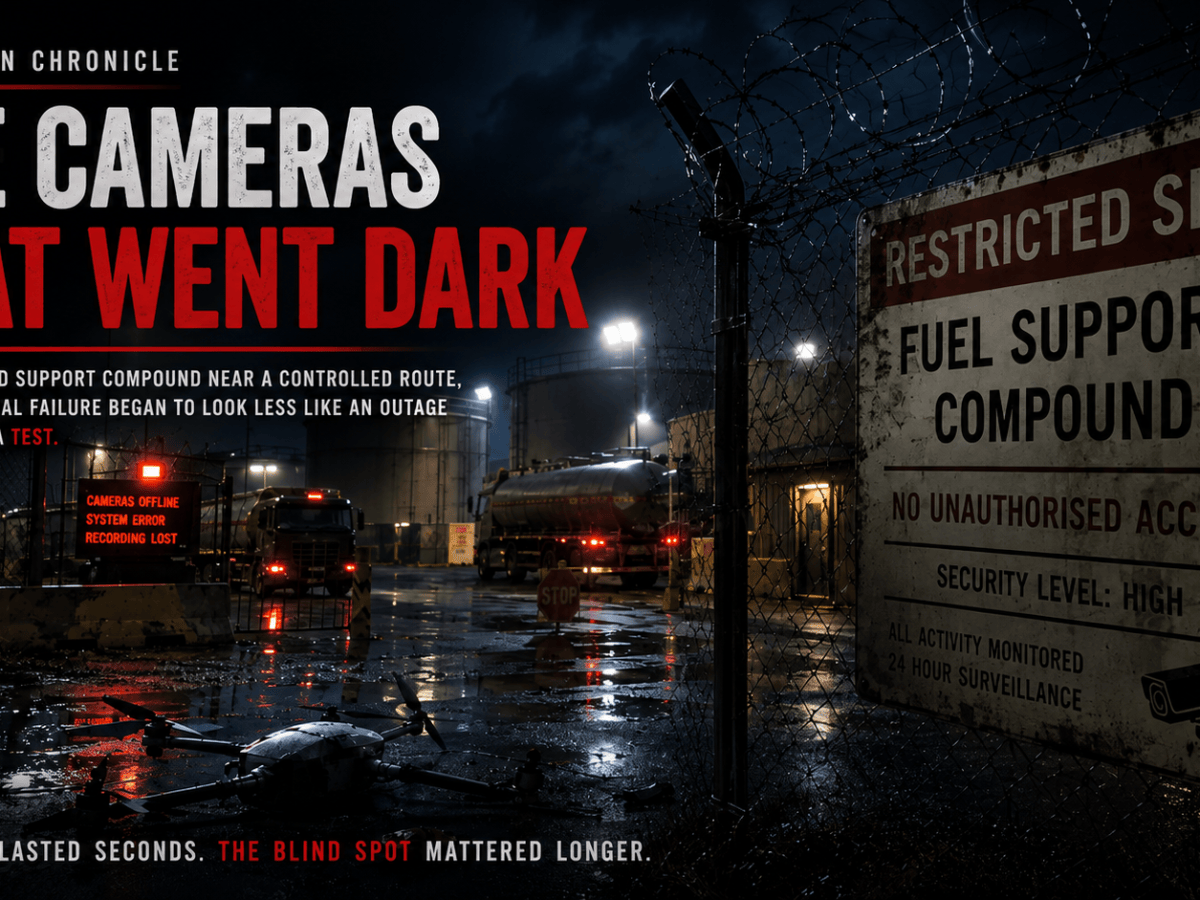
The Modern Chronicle: The Cameras That Went Dark
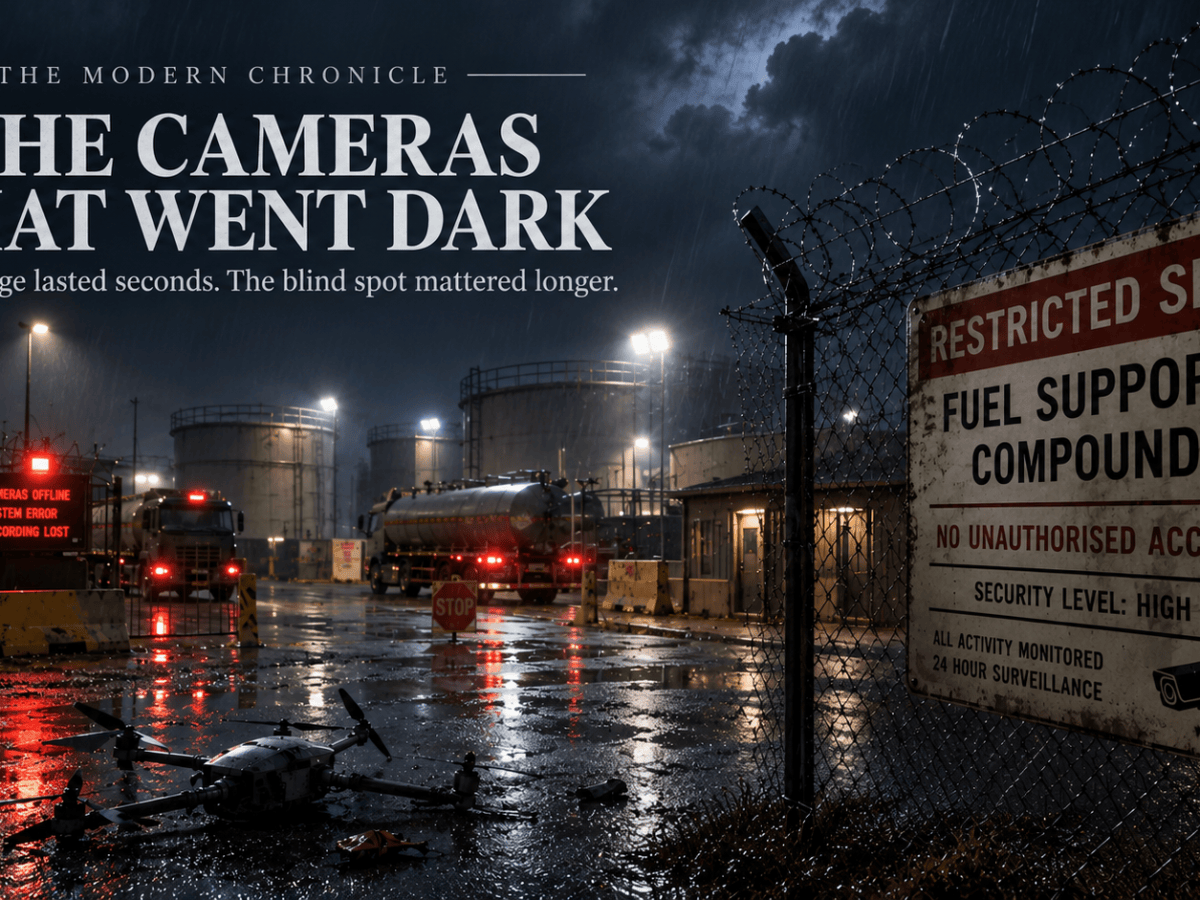
**The Cameras That Went Dark** begins with a technical fault at a fictional fuel-support compound. Then three perimeter cameras fail, a feed line is found cut, and something broken is discovered beyond the fence.
The site remains operational. The official explanation stays small. The people standing beside the wire are no longer convinced the outage…
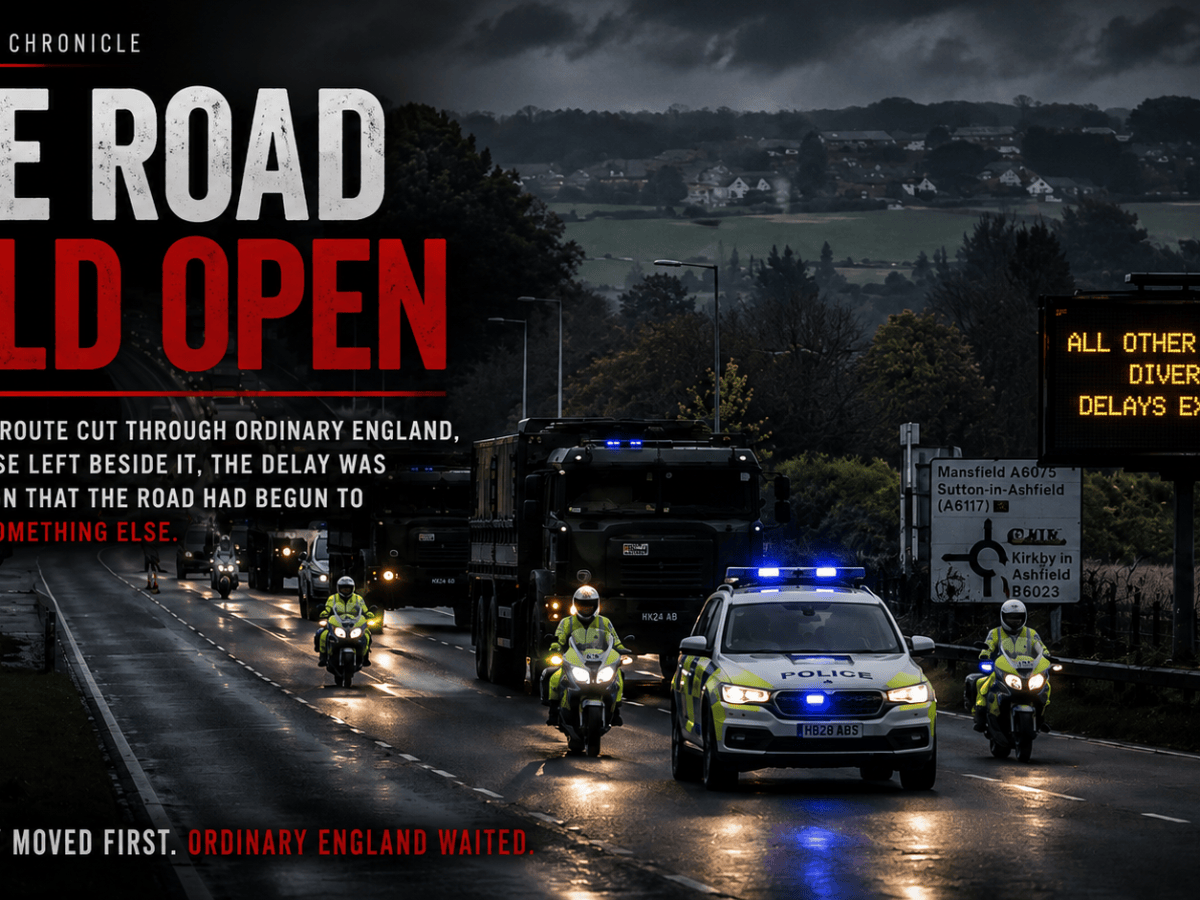
The Modern Chronicle: The Road Held Open
The Road Held Open continues The Eastbound Line on an ordinary British morning transformed by police route control. A school bus waits, deliveries slip behind schedule and a petrol queue grows while protected vehicles move east through a road temporarily taken from local traffic. The convoy passes quickly. What remains is the realisation that the…
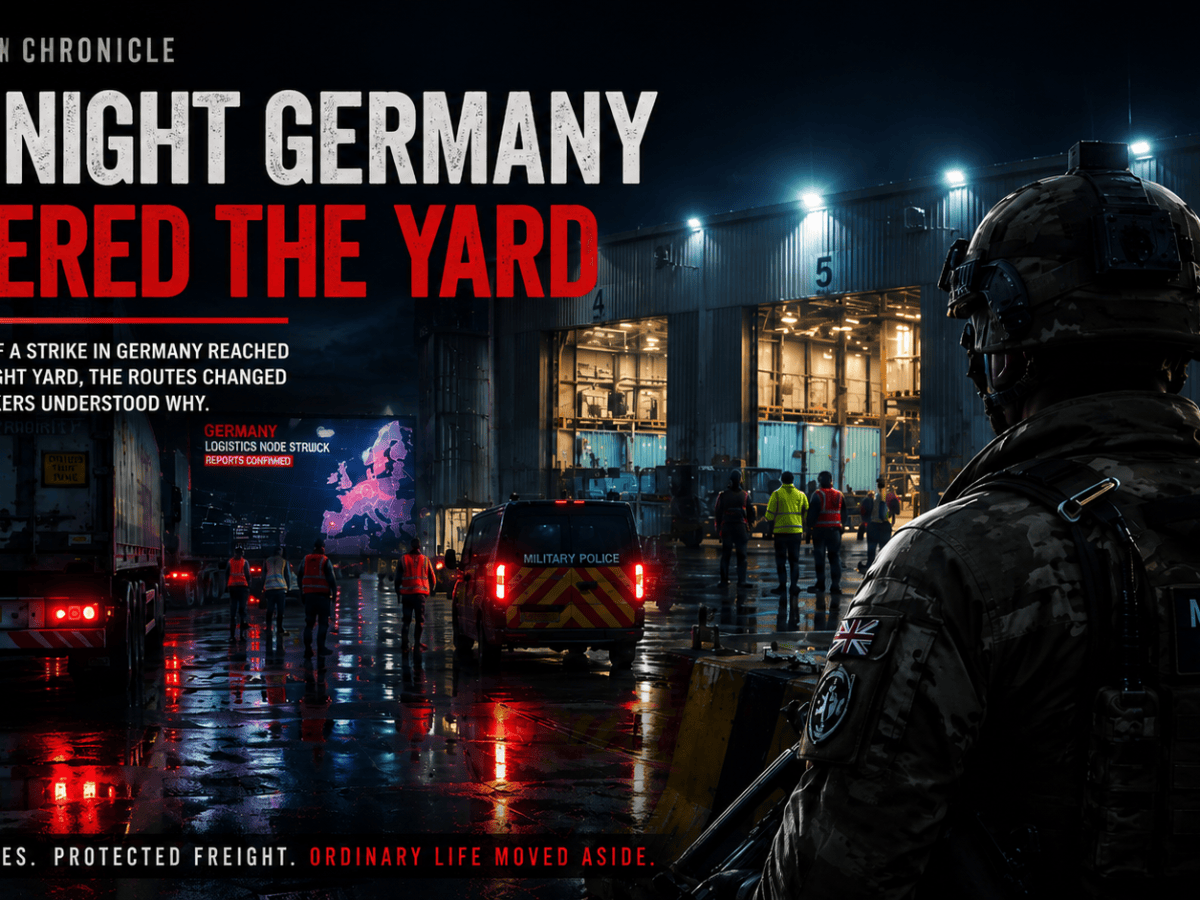
The Modern Chronicle: The Night Germany Entered the Yard
The Night Germany Entered the Yard continues The Eastbound Line at a fictional Midlands freight holding site. Reports from Germany arrive through a driver’s phone, followed by revised rail sequences, sealed consignments and military-police access control. The yard remains operational, but civilian freight is being pushed aside and everyone working beneath the floodlights can see…
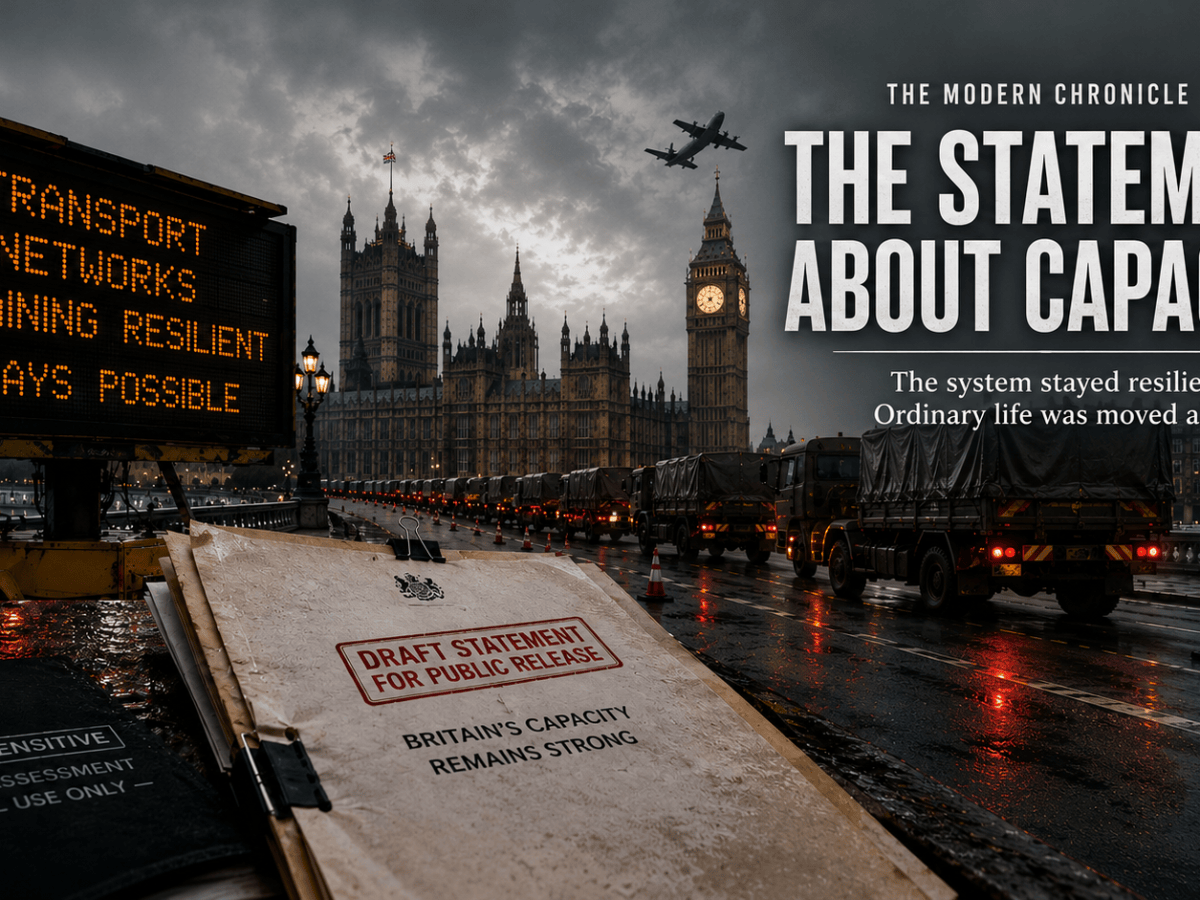
The Modern Chronicle: The Statement About Capacity
The Statement About Capacity continues The Eastbound Line inside a fictional Whitehall briefing room, where officials must reassure the public that Britain’s transport networks remain resilient. The figures tell a harder story: protected freight is moving, civilian deliveries are being postponed, and every calm sentence depends on pressure being carried somewhere else.
Continue into the…
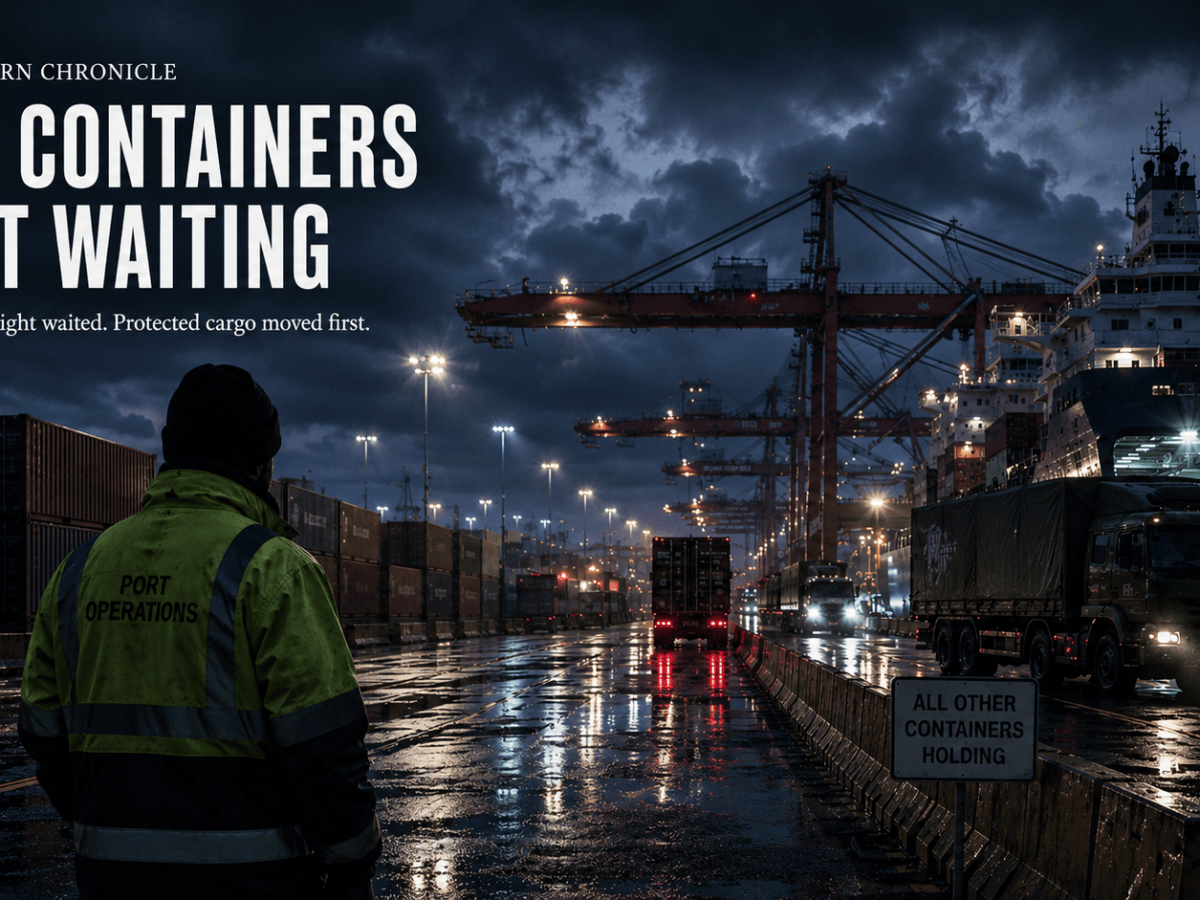
The Modern Chronicle: The Containers Left Waiting
The Containers Left Waiting opens The Eastbound Line, a fictional Modern Chronicle set during a rain-soaked night shift at an east-coast freight terminal. Civilian loads remain under floodlights while sealed containers pass through protected lanes, forcing port staff and waiting drivers to work around priorities nobody is authorised to explain. The port is still functioning,…

Grounded Modern War Fiction and the Moment Support Becomes Participation
Britain is still calling it support. But drones are testing military sites, fuel lanes are being struck, and families are learning what official language refuses to say.
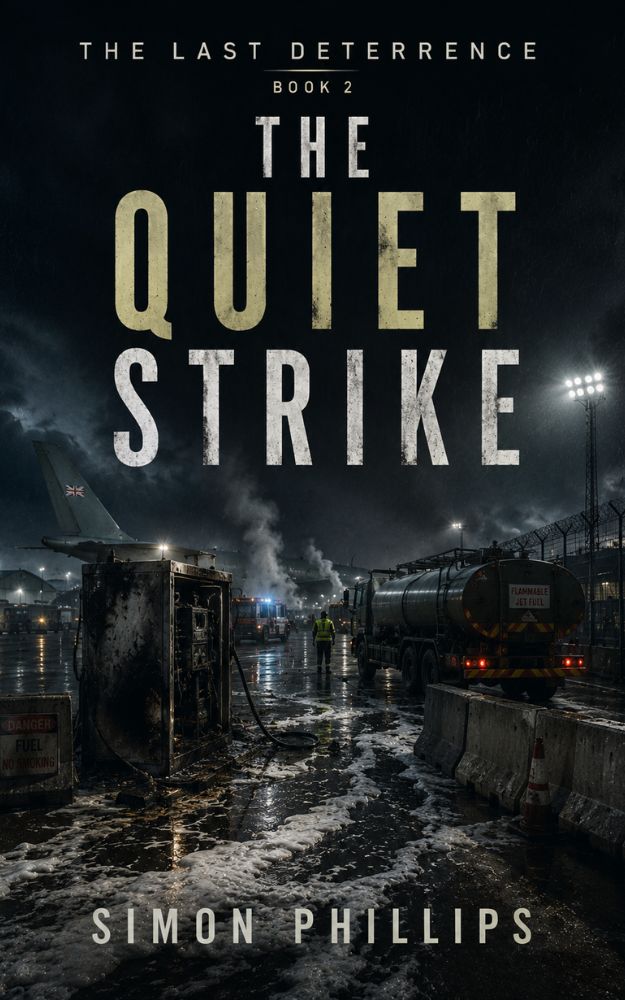
*The Quiet Strike* follows the moment distance fails and support becomes participation.
#ModernWarFiction #PoliticalThriller #MilitaryThriller #BritishWarFiction #NATOFiction #DroneWarfareFiction #TheLastDeterrence
