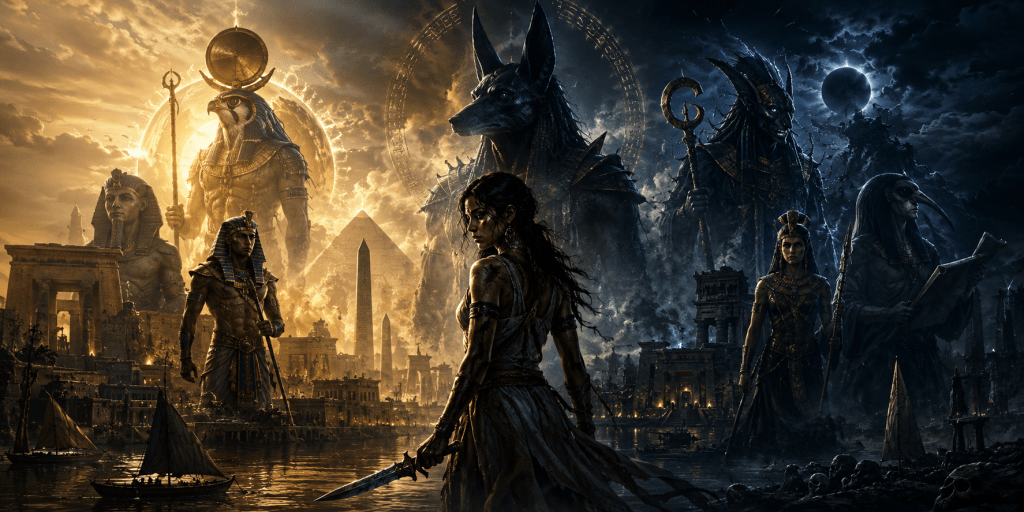
Egyptian mythic fantasy of tombs, relics, judgement, and a hidden war among the gods
The dead have roads of their own, and some roads were sealed for a reason. In the river slums, where hunger, debt, illness, and grief press closer than temple law, Neris survives by entering places the living fear to touch. She knows the weight of burial dust, the scrape of stone under her hands, the stale air inside sealed passages, and the danger carried by every chamber left beneath the sand. Her work begins as theft, shaped by poverty and guilt, yet the tombs she opens belong to powers far older than the men who trade relics in shadowed rooms.
When Neris crosses the Threshold and returns changed, she believes she has become a bridge between the living and the dead. The truth is far larger, far darker, and far more dangerous. Anubis has marked her. The god of tombs, funerary order, sacred passage, and judged souls has placed a claim upon a woman who has spent her life trespassing among the dead. That claim pulls her from the river’s edge into an ancient divine conflict, where gods move through relic weapons, chosen humans, broken burial routes, and old laws that no longer hold cleanly.
The Forgotten Gods of the Drowned Kingdom is an Egyptian mythic fantasy series about sacred disturbance, hidden divine war, and the cost of carrying power that belongs first to the gods. It begins in tombs, poverty, grief, and guilt, then widens into relic conflict, temple pressure, chosen champions, drowned memory, and the question that waits beneath every judgement: what happens when the gods who weigh the dead must answer for what they have done?
Series Overview
This is a series built around the fear of touching what should remain sealed. Tombs in this world are more than burial places. They are thresholds, records, warnings, prisons, roads, and sacred boundaries between those who still breathe and those who have already passed into judgement. When those boundaries begin to fail, the first signs arrive quietly. A burial route turns unsafe. A chamber opens in the wrong way. A soul fails to pass cleanly. A relic answers a name Neris has never spoken. A god’s attention settles upon a human life already bruised by hunger, loss, and survival.
Neris stands at the centre of that pressure. She is a grave thief from the river slums, shaped by dangerous work among the dead, a brother’s death, a sick household, and the kind of poverty that leaves little space for moral purity. Her life has taught her how to move through cramped passages, broken shafts, tomb corridors, ledges, darkness, and fear. It has given her instinct, suspicion, quick hands, and a fierce refusal to collapse. It has given her none of the comfort, training, or certainty offered to champions, priests, nobles, or soldiers.
The series follows her as a sacred claim turns survival into burden. Anubis does more than spare her. He marks her, binds her to a role she barely understands, and draws her into a hidden war among Egyptian gods who cannot openly tear the mortal world apart. Their conflict is carried through chosen humans and relic weapons, through temple factions, disturbed burial routes, broken oaths, and divine purpose disguised as judgement. Each book widens the world around Neris while keeping the story grounded in dust, blood, fear, grief, and the bodies of ordinary people who pay for decisions made far above them.
The promise of the series is mythic, intimate, and dangerous. A woman who once stole from the dead must learn why the dead have begun to move wrongly. A god who should guard passage has claimed her for a war she never chose. A weapon linked to judgement waits in her hand as burden before mastery. Every relic, every tomb, every divine name, and every death draws her closer to a truth that may condemn the gods as much as the living.
Neris and the Judgement of Anubis
Neris begins far from glory. She is born into the hard edge of the river, into rooms where sickness, rent, hunger, and grief shape the day before prayer or pride can enter it. Her familiarity with tombs comes from need before reverence. She has learned how to breathe through dust, how to read danger in loose stone, how to move when a passage narrows, and how to make a decision while fear is still inside her throat. Her courage is practical. Her violence is close, low, fast, reactive, and costly. She survives because the world has given her little else.
Her brother’s death remains the wound beneath her life. It shapes her guilt, her anger, her movement through the dead, and the way she sees every sacred rule spoken by those who can afford obedience. Neris steals from tombs because survival presses harder than purity. That makes her human, shaped by need, grief, and hard choices. She understands that the dead deserve respect, even as hunger drives her hands into places where respect has already been sold, broken, or priced beyond reach.
Then comes the Threshold. Neris crosses into judgement and returns marked by a power she cannot fit into the life she knew. She believes she has become a bridge, someone drawn between the living and the dead by accident, mercy, or punishment. That misunderstanding gives the early story its sacred tension. She feels the dead more closely. She sees routes and wrongness others miss. She senses the pressure of passage where the living world has begun to fray.
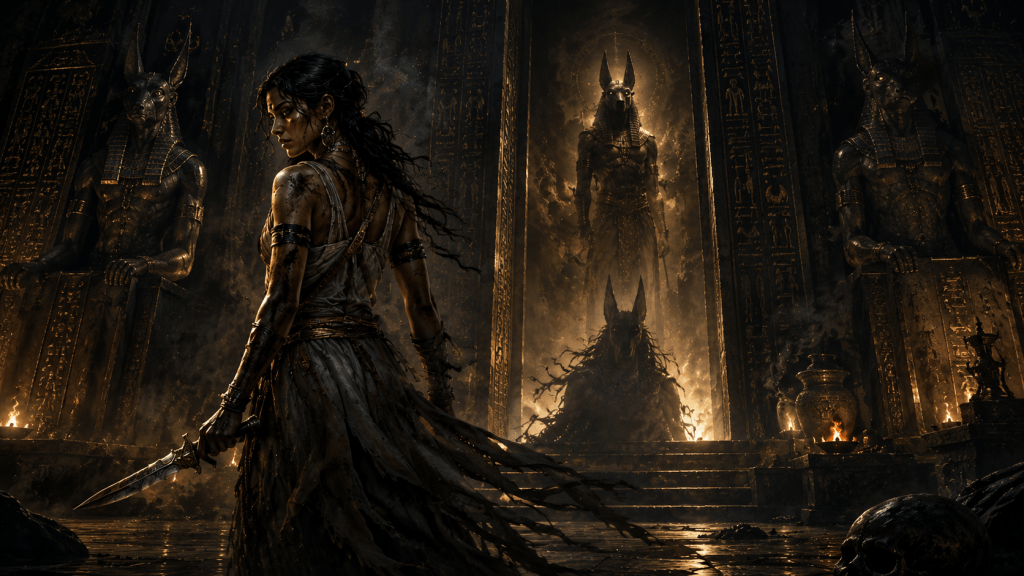
Anubis stands behind that change as more than a patron and far more than a voice sending her towards danger. He is the god of funerary practice, tombs, thresholds, judged souls, and rightful passage. His claim carries authority, gravity, and silence. To be marked by him is to be drawn into the law of the dead, yet law in this series is never clean simply because a god names it sacred. His judgement brings protection, purpose, manipulation, burden, and questions Neris has only begun to ask.
Tombs, Relics, and Sacred Thresholds
The tombs in The Forgotten Gods of the Drowned Kingdom are never simple treasure rooms. They are places where names, bodies, rites, oaths, and divine order remain bound together beneath stone. A tomb corridor can become a warning. A sealed door can become an argument between the living and the dead. A burial shaft can hold more than a body. Every chamber carries the sense that someone placed it there to preserve a boundary, to protect a passage, or to keep a truth beneath darkness until the wrong hands reached for it.
This gives the series its central atmosphere. Sand, damp stone, black water, resin, linen, torch-smoke, cracked gold, old ink, and the stale breath of sealed rooms all matter. Sacred danger comes through texture before explanation. Readers enter a world where the dead are present through absence, where silence has weight, and where an opened tomb can change the shape of a life because the act of entering has already crossed a line.
Relics carry that pressure further. A divine weapon in this series is never a simple prize. It is a vessel of old force, bound to a god’s nature, a chosen human’s endurance, and a role that deepens through suffering. The weapon carries divine force first. The bearer matters because she survives the bond, learns discipline, pays the cost, and slowly becomes capable of holding what should have crushed her. Neris’s first weapon belongs to tombs, thresholds, burial, and judgement. It suits close corridors, broken passages, and the intimate terror of survival among the dead.
The threshold is the true heart of the series. Doorways between chambers, gates into tombs, routes for the dead, crossings into judgement, and moments where a human life passes under divine attention all become part of the same sacred pressure. Neris is pulled again and again towards boundaries that should have remained sealed, because her life has become one of those boundaries. She is living flesh marked by a god of the dead, and every step forward asks what such a mark will cost.
The Drowned Kingdom
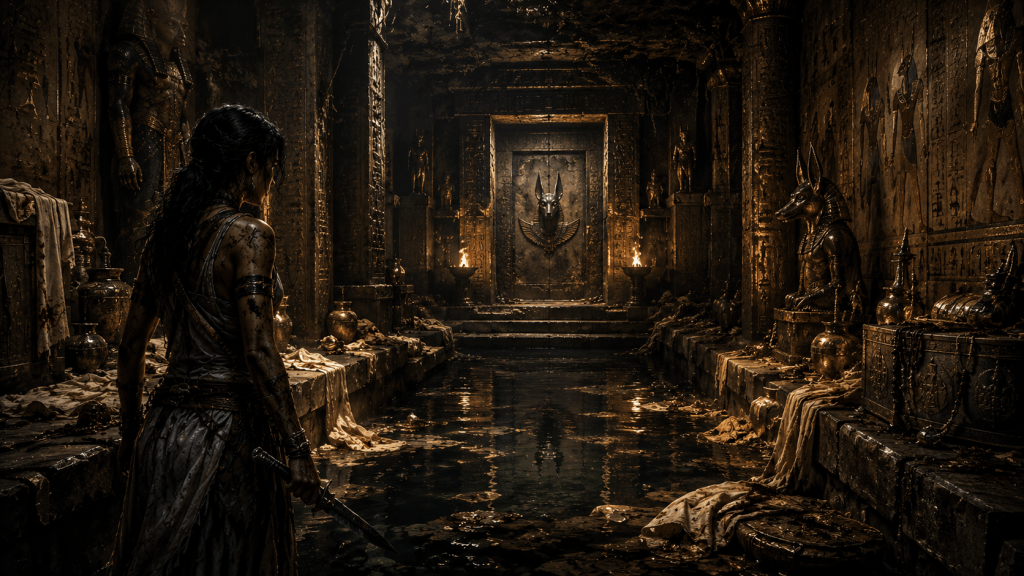
The drowned kingdom is the shadow beneath the series title: a sense of lost power, submerged record, buried memory, and divine names that refuse to vanish cleanly. It gives the world a deeper pressure than sand and sun alone. Water sits under stone. Forgotten passages fall away beneath old temples. Records rot, names sink, and sacred places remember what the living have chosen to trade, disturb, or forget.
This drowned identity should feel ancient, solemn, and dangerous. It is less a glittering ruin than a presence beneath the story, a pressure of vanished order and submerged consequence. The image of black water under carved stone belongs to the emotional language of the series: grief that never fully drains away, memory held beneath silence, and a kingdom whose forgotten gods still cast weight across the living world.
For Neris, this matters because she comes from the river, from a life where water carries rot, work, hunger, trade, bodies, and rumour. The river is survival and threat at once. The drowned kingdom turns that truth into mythic form. What sinks beneath the surface can still shape those above it. What has been buried can still judge. What has been forgotten can still reach for the living.
The Hidden War Among the Gods
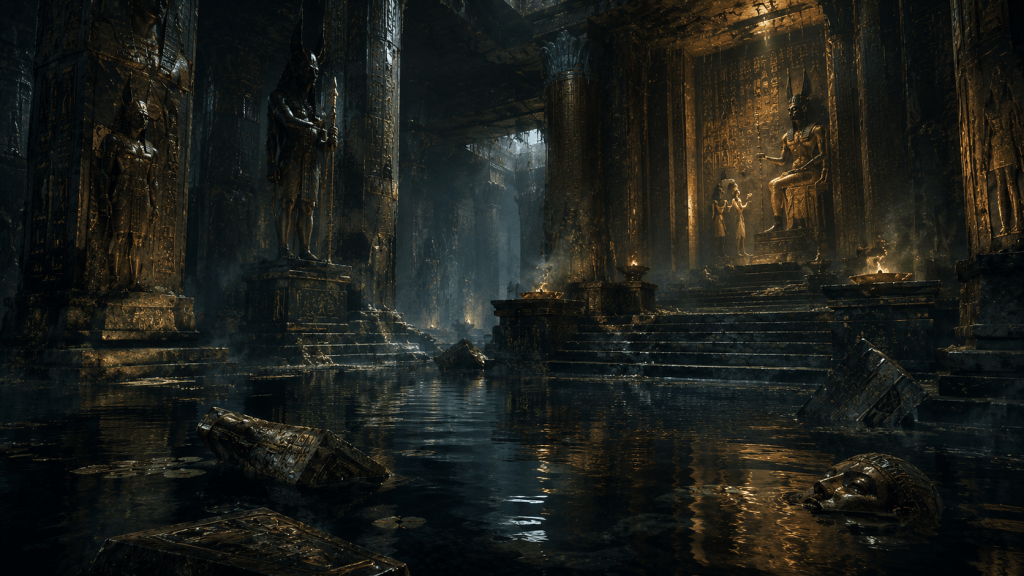
The war behind the series begins as something half-seen. Ordinary people are spared the sight of gods tearing the sky apart, yet they still live with the consequences. The dead fail to pass cleanly. Tombs open wrongly. Sacred places become unsafe. Relic weapons stir in human hands. Chosen attackers move through the edges of the world before Neris has any language for what they are. The divine war first appears as wrongness before it becomes revelation.
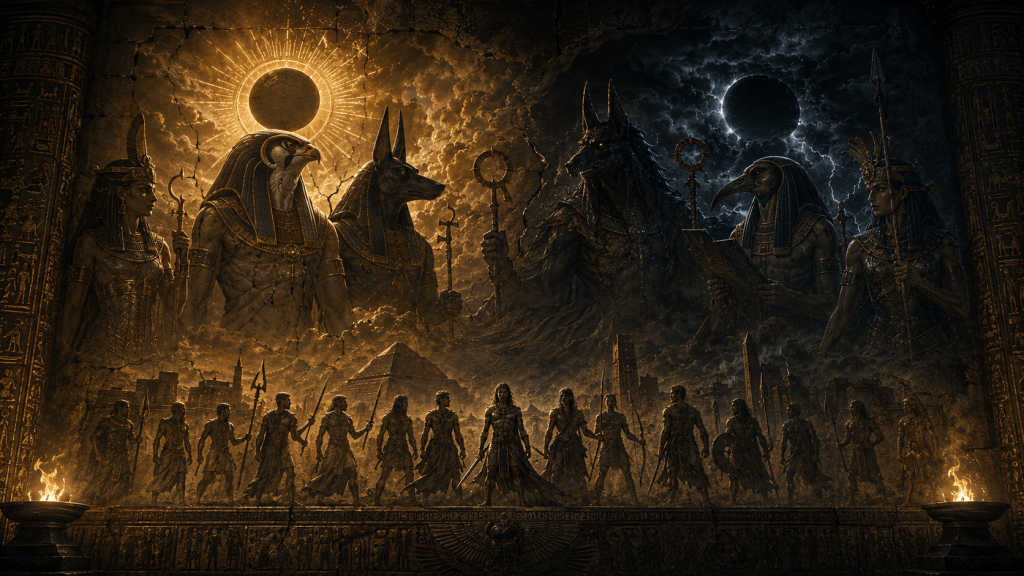
The Egyptian gods in this series remain tied to their true identities. Anubis belongs to tombs, thresholds, burial practice, judged souls, and rightful passage. Ra carries supreme solar order and cosmic authority. Set brings chaos, desert force, violence, disruption, and destabilisation. Thoth carries record, reckoning, hidden knowledge, writing, and measured intelligence. Horus brings kingship, visible legitimacy, martial divine order, and public authority. Neith carries ancient discipline, craft, strategy, and war wisdom. These powers resist simple sides in a bright heroic battle. They scheme, preserve, wound, claim, and act according to their own sacred logic.
Open divine war would shatter the mortal world. So the gods move through chosen humans, relic weapons, old compacts, hidden rules, and violence placed into mortal hands. That solution carries its own corruption. A chosen person can be trained, used, lied to, elevated, sacrificed, or abandoned. A god can call it necessity. A human body still pays the price.
Neris enters this conflict before she understands its shape. At first she sees only disturbed passage, pursuit, fear, and the evidence that something has recognised her mark. Over time, the hidden war widens. Relics answer old names. Other chosen appear. Veteran champions reveal the scale between instinct and discipline. Temple authority, divine law, and broken sacred order begin to press from every side. The reader discovers the war with Neris, through dread, collision, bruises, instruction, and loss, through lived pressure instead of a cold explanation of the board.
Chosen by Gods, Broken by Cost
Being chosen in this series begins with claim before glory. A god’s mark gives a role, a burden, and a danger that reaches into the bearer’s body, memory, and future. The chosen are human. Their fear remains. Their muscles bruise. Their wrists jar when steel meets stone or bone. Their breath fails under pressure. Their stance betrays them when training has yet to catch up with instinct. A relic may carry divine force, yet a human bearer must survive the force long enough to learn what it means.
This is why Neris’s progression matters. She begins with survival violence, built from tomb passages, ledges, shafts, darkness, and escape. She knows how to get low, move fast, use terrain, strike when cornered, and survive through ugliness instead of honour. That keeps her alive at first. It cannot carry her through chosen-war. The series turns her growth into earned pressure: bruises, humiliation, discipline, correction, fear, and the slow understanding that instinct has limits against those who have served gods for years.
The weapon is central to that growth. Neris’s Anubis-linked dagger is intimate, funerary, threshold-bound, and suited to the world that made her. It belongs to burial spaces, close quarters, and false return. As the series widens, the divine weapon path deepens with the bond, the cost, and the role expected of her. Power never arrives as a clean reward. It arrives as a weight that asks for more than the body wants to give.
The chosen-human system gives the series a mythic combat language rooted in Egyptian divine identity. Neith’s chosen carry discipline, field craft, and veteran war wisdom. Thoth’s chosen move through record, reckoning, timing, and hidden pattern. Horus-linked force carries legitimacy, public authority, and martial order. Set-linked pressure breaks rhythm through violence, disruption, and desert cruelty. Against this world, Neris must become dangerous the hard way, while remaining human enough for every cost to matter.
The Living, the Dead, and What Should Stay Buried
The Forgotten Gods of the Drowned Kingdom works because the dead are never background. They are presence, law, memory, warning, and accusation. Burial matters. Names matter. Rites matter. Routes matter. A body placed wrongly, a passage disturbed, a judgement corrupted, or a tomb opened for hunger can echo through the living world in ways that no thief, priest, champion, or god can fully contain.
That sacred pressure is always tied to human life. The series never leaves poverty behind as simple origin decoration. Neris’s river-slum world remains part of the story’s moral centre: sickness, rent, cheap oil, damp rooms, healer stalls, market noise, old grain, smoke, sweat, river rot, and the constant knowledge that survival often asks people to touch what others condemn from a safe distance. The gods may move the war, yet ordinary bodies carry its weight.
This gives the story its emotional ground. Neris is marked by Anubis, drawn towards divine weapons and hidden war, yet the wound that made her remains painfully human. She carries guilt over her brother, love for her mother, suspicion towards authority, and a hunger for answers that divine silence keeps turning into anger. She can become formidable across the series only if her humanity remains visible: wounded, stubborn, frightened, sharp, tender where tenderness survives, and capable of asking whether obedience to gods is still sacred when gods use grief as a tool.
The deeper the series moves into myth, the more dangerous that question becomes. The living disturb the dead. The gods disturb the living. The chosen stand between both, weapon in hand, asked to call burden an honour. Beneath every tomb, relic, and judgement waits the same terrible possibility: perhaps the dead were never the only ones awaiting judgement.
Reading Order and Published Books
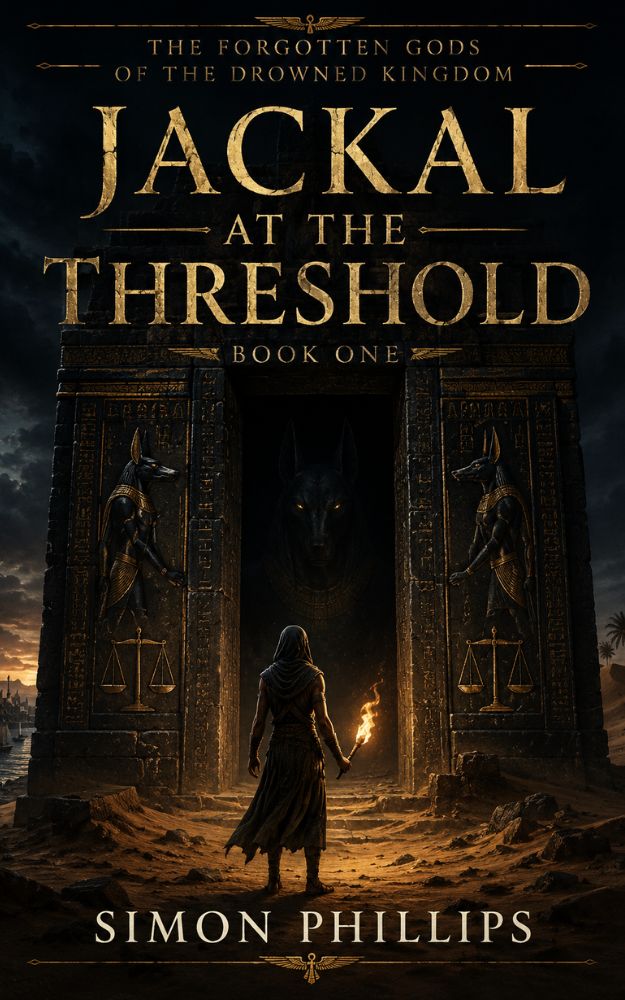
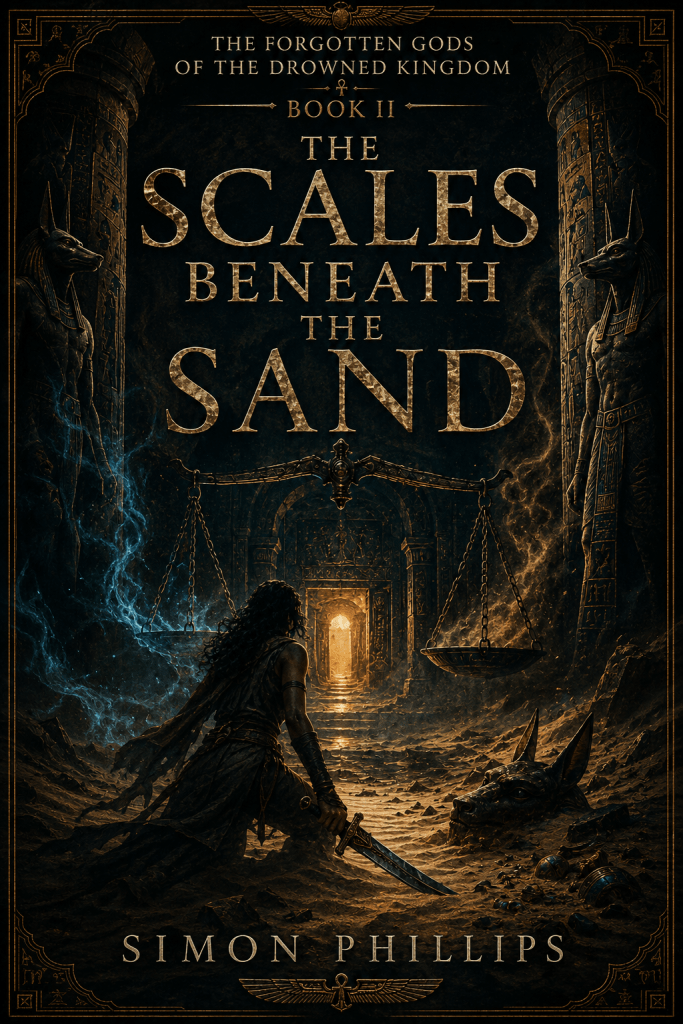
Latest from The Forgotten Gods of the Drowned Kingdom
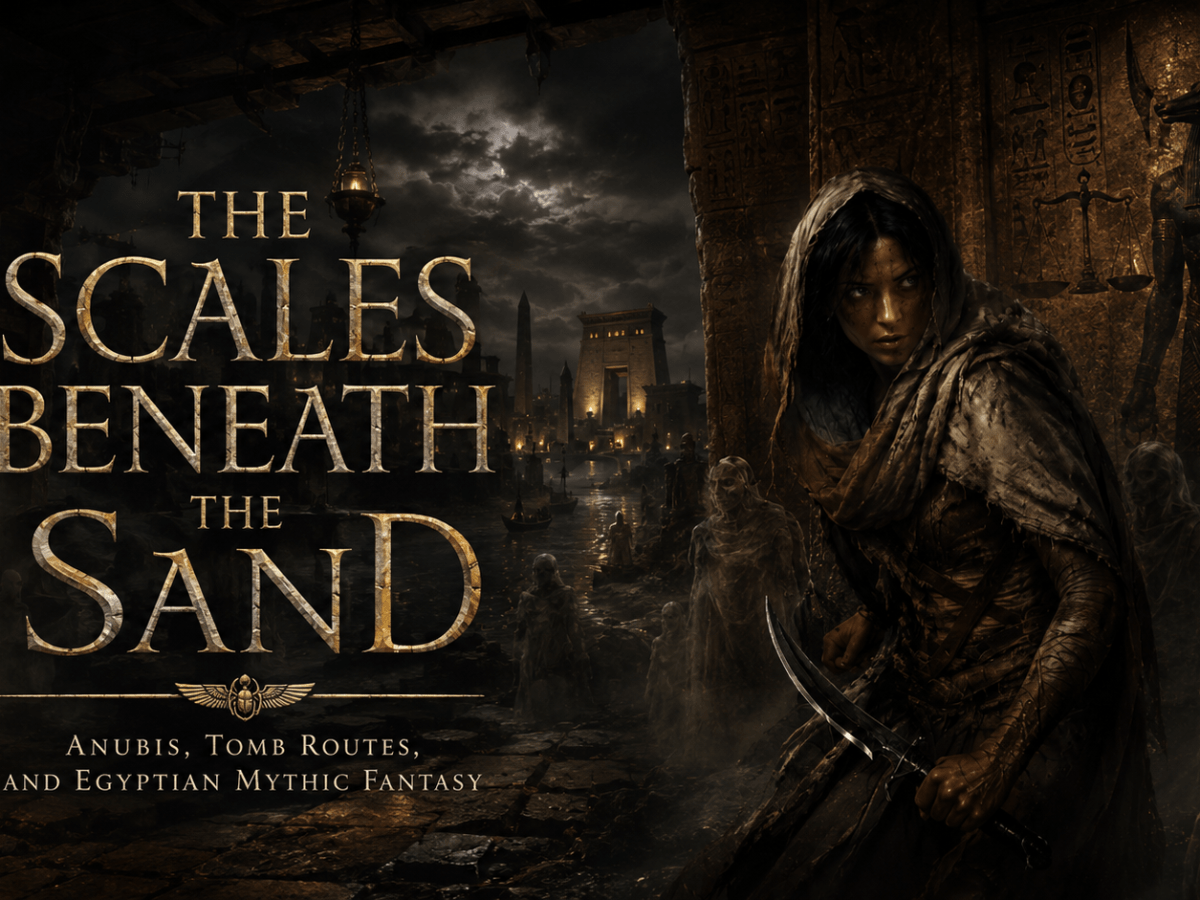
The Scales Beneath the Sand: Anubis, Tomb Routes, and Egyptian Mythic Fantasy
The dead should pass in silence.
Yet beneath a river city of tombs, shrine courts, and forgotten stone, the routes of the dead have begun to fail. Souls gather at wounded thresholds. Sacred passages hold what should have crossed. And Neris, a tomb robber marked by Anubis, has become visible to something waiting in the…
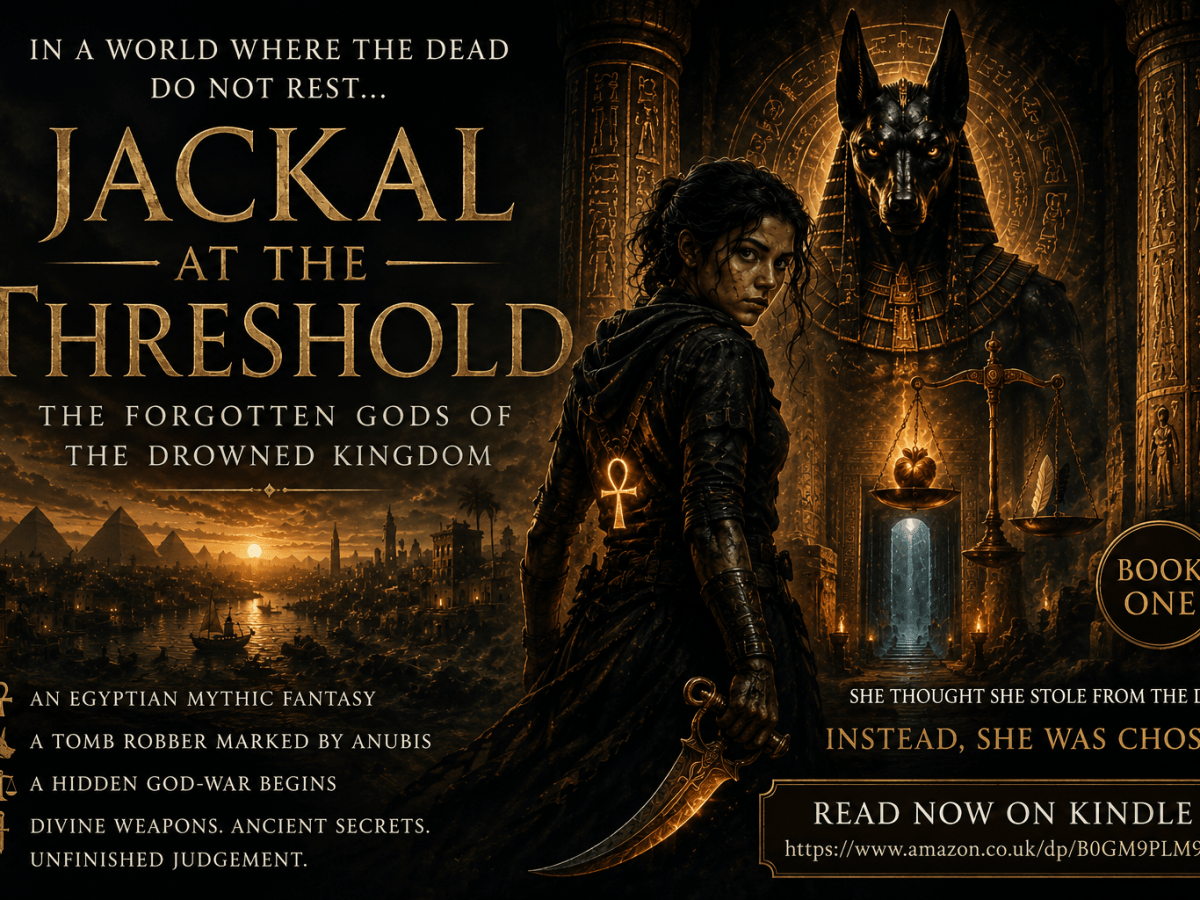
Egyptian Mythic Fantasy, Anubis, and the Burden of the Dead
The dead were never meant to be disturbed.
Neris steals from tombs because hunger, rent, and her mother’s illness leave little room for clean choices. But when a storm uncovers the buried Drowned Kingdom, she crosses a threshold older than kings and finds Anubis waiting in the dark.
Judgement does not offer mercy. It offers…
