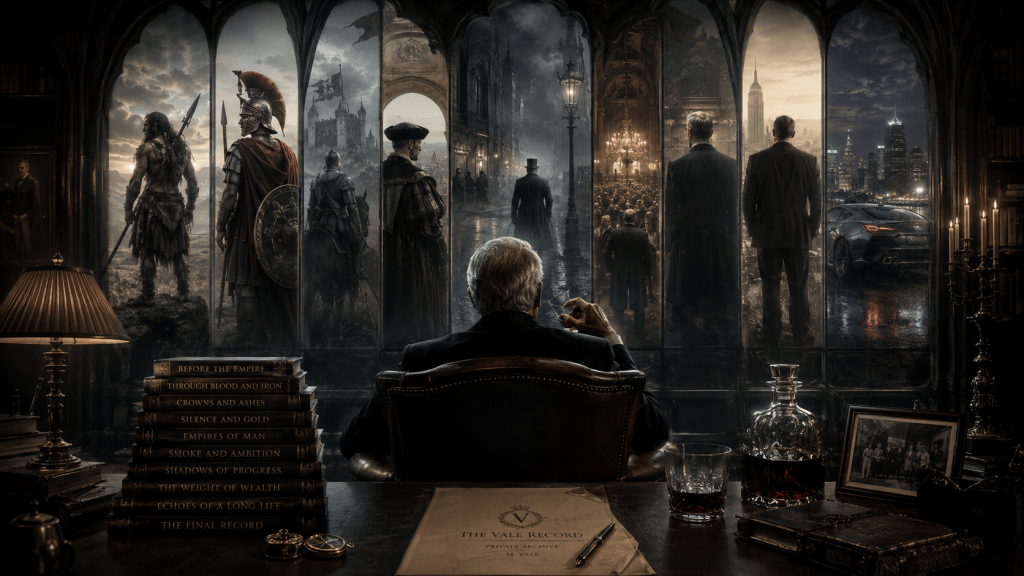
Historical vampire fiction about memory, family secrecy, and the cost of surviving too much history
Marcus Vale has lived long enough for kingdoms, empires, markets, wars, and family names to pass through his hands like worn paper. In the present, he sits inside Vale House as an elderly patriarch with a guarded family, a private fortune, and a body beginning to warn him that even old blood has an end. He has survived eras that became history, myth, doctrine, industry, and inheritance, yet the life inside those centuries has grown heavier than any public record could hold.
He summons Thomas Hargreave, a private archivist trained for sealed histories, restricted papers, and family records, and asks him to record a life no ordinary chronology can contain. The work begins as an orderly private archive inside a controlled room. Each session draws pressure through the house. Doors close earlier. Questions linger longer. The people closest to Marcus feel the shape of a truth he has spent generations keeping from them.
Begin with Book One, The Vale Record: Before the Empire, or explore the full series on Amazon as each book is released.
Series Overview
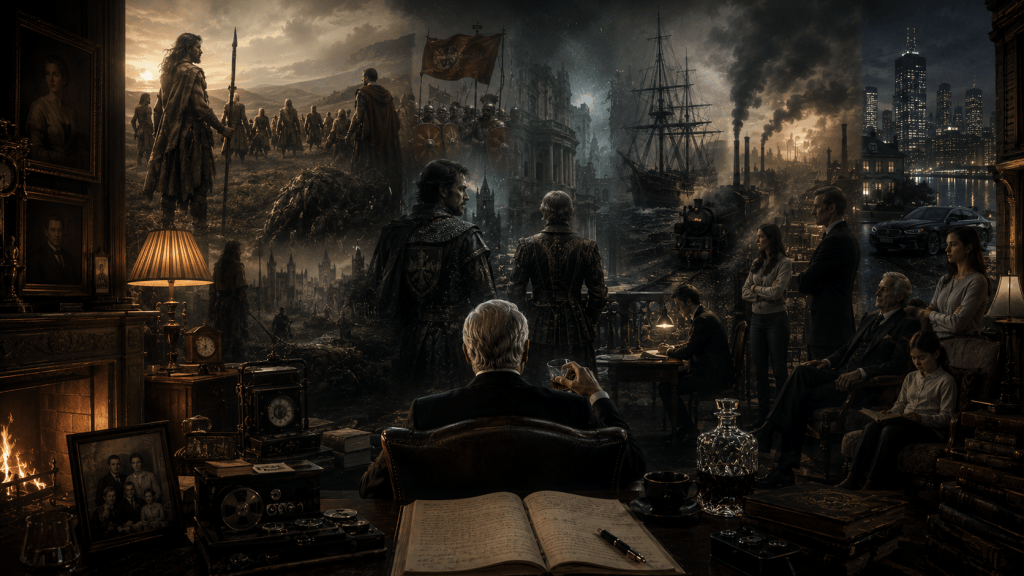
The Vale Record is historical vampire fiction centred on memory, testimony, family secrecy, and the burden of a life stretched across human history. The series follows Marcus Vale, one of the last surviving Original vampires, as he approaches the end of an unnaturally long existence and chooses to place his memories into a private record before others can shape the story after him.
This series moves through history through lived pressure, grounded in texture and consequence. Each book follows one sustained period, identity, or rupture from Marcus’s life, framed by the present-day recording sessions inside Vale House. The past brings mud, hunger, injury, roads, rank, ships, law, blood, property, war, money, and loss. The present brings family love, protected ignorance, old wealth, private rooms, controlled access, and the growing danger of a record that should have remained sealed.
The Vale Record favours restraint over theatrical horror. It is built around an old man whose life refuses to fit inside human time, an archivist asked to preserve something impossible, a granddaughter protected by silence, and a household where every ordinary routine carries a hidden cost. Vampires exist here as bodies, memories, choices, hunger, guilt, and decline. The myths people tell about them are often the safest lies.
Marcus Vale: The Last Witness
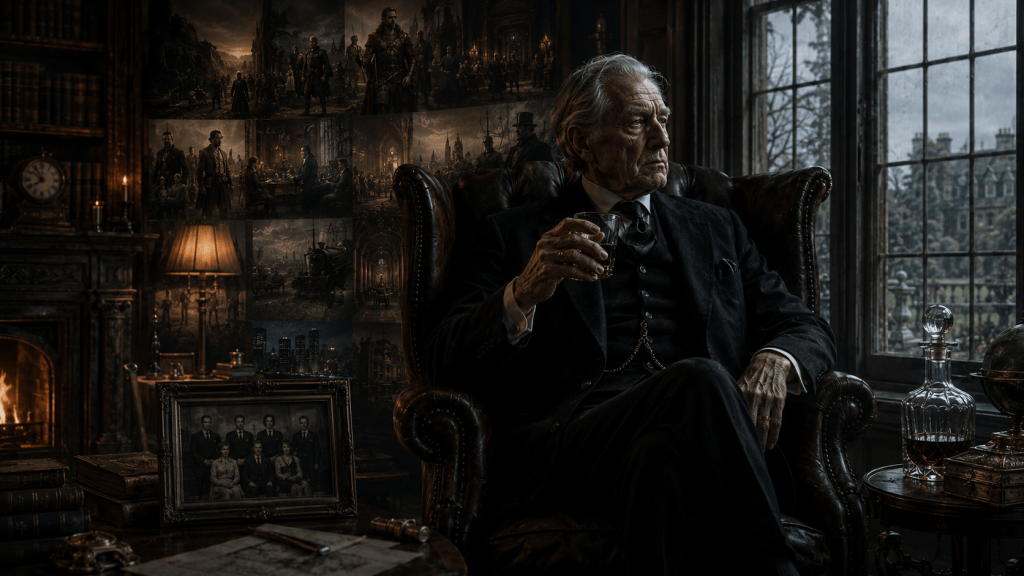
Marcus Vale is the heart of the series. In the present, he appears to be an elderly man in the visual register of someone in his eighties or nineties. He remains lucid, socially capable, physically agile, and dangerous in the quiet way of someone who has survived longer than institutions, countries, and family names. His decline is deeper than age. Something inside his body has begun to move toward an end even he can feel.
Marcus carries warmth as well as danger. He can be dryly funny, direct, careful with affection, and deeply attached to the family he has built around himself. Eleanor Vale knows him as her grandfather. Staff know him as the old master of the house. Thomas first meets him as a wealthy patriarch with unusual private papers. Every role is true, and every role is incomplete.
Across the record, Marcus has been tribal survivor, wanderer, soldier, knight, nobleman, ruler, financier, industrial power, and modern tycoon. These identities are more than disguises. They are attempts to remain coherent while the world changes around him. He survives history. He absorbs it. He is altered by it. He carries too much of it inside one body.
His story is a controlled transfer of memory before extinction reaches him. The question is less whether Marcus deserves sympathy, judgement, fear, or love, and more whether any single life can carry so much history and remain whole.
The Record
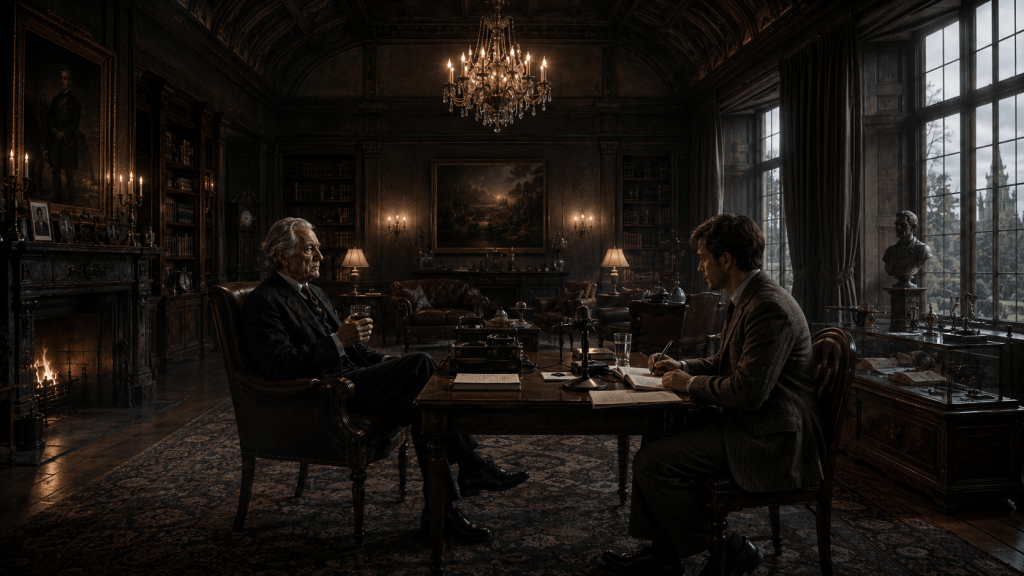
The Record begins as a private act. Marcus hires Thomas Hargreave, a legacy archivist and private biographer, to preserve his memories under strict conditions. Thomas is chosen because he understands discretion, sealed papers, family archives, and the quiet discipline required when history belongs to living people.
At first, the work appears formal. A room is prepared. Notes are taken. Questions are asked carefully. Technology stays minimal. The process leans toward paper, recorded voice, patient listening, and controlled access. The atmosphere matters because the record is dangerous. It contains impossible chronology, concealed vampire history, and personal truths that could damage Marcus’s family as much as they could expose him.
Thomas becomes the reader’s doorway into the record. He begins with professional restraint and practical questions. As Marcus speaks, the archive becomes harder to file, harder to doubt, and harder to leave behind at the end of a session. Listening becomes consequence. Preservation becomes risk.
Every memory changes the present-day room. A story from a battlefield, a road, a court, a plague street, a counting house, or a family chamber leaves pressure behind in Vale House. The past is never safely past for Marcus Vale. It has only learned to wait.
Vale House
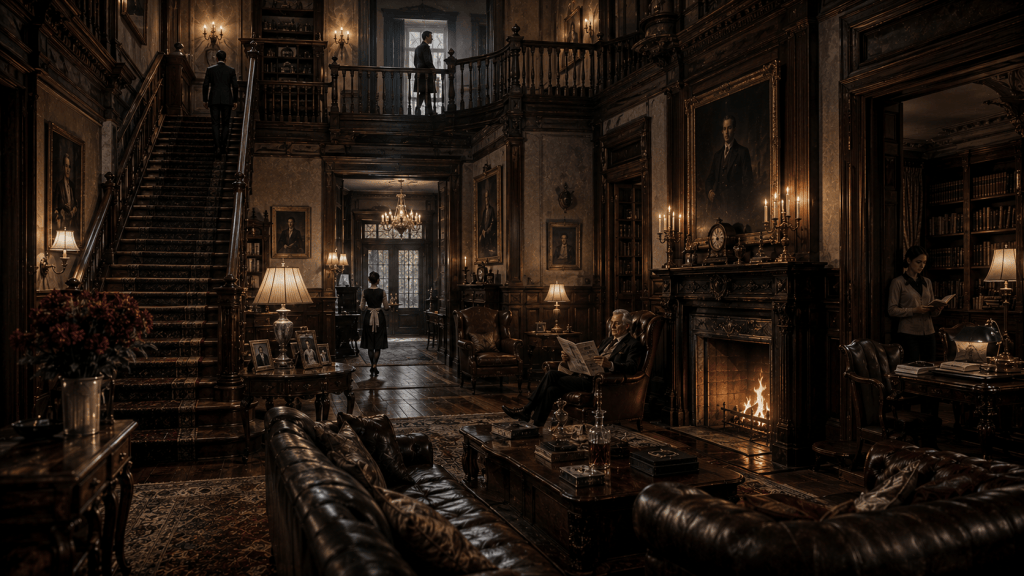
Vale House is the primary present-day setting of The Vale Record. It is a large, old family residence shaped by centuries of adaptation, Victorian consolidation, and modern updates. It carries the respectability of inheritance before it reveals any sense of danger. Its power lies in ordinary surfaces: polished wood, inherited furniture, staff moving quietly, tea carried through corridors, family members crossing landings, doors closing at the correct moment, and rooms guests enter only by invitation.
To the younger family, Vale House is privilege, ancestry, and home. To Marcus and Julian, it is containment, privacy, wealth structure, and protection. To Thomas, it becomes a recording environment with rules he learns slowly through silence, access, withheld rooms, and the behaviour of people who understand more than they say.
The house should feel lived in before it feels threatening. Its danger comes through control. The wrong door opens. A conversation stops. A landing falls quiet. A family member asks a harmless question at the wrong moment. Vale House protects Marcus’s ending, and the more he speaks, the harder the house must work to remain respectable.
Family, Secrecy, and Protection
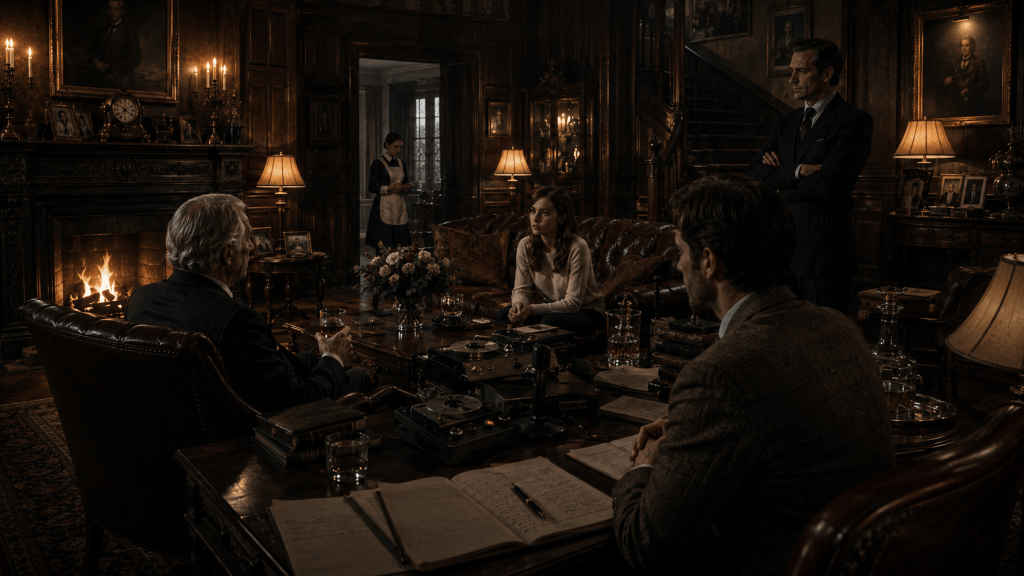
The present-day story is held together by love, silence, and layered knowledge. Marcus knows the full truth of his nature, his decline, and the reason the record has begun. Julian Vale knows enough to watch the household, manage exposure risk, and act when pressure crosses into threat. Eleanor Vale, one of the emotional centres of the present, loves Marcus as her grandfather and remains protected from the truth by decisions made long before Thomas entered the house.
Eleanor’s ignorance is emotional, practical, and dangerous. Marcus wants a human ending with her. He wants to be loved as family, held in ordinary affection, and spared the gaze of myth, fear, or impossible inheritance. Her closeness gives the series much of its present-day pressure. The more Thomas learns, the more fragile Marcus’s protection of Eleanor becomes.
Julian’s role is quieter and sharper. He is the hidden vampire inside the family structure, controlled, reserved, loyal, and dangerous when necessary. He is no equal to Marcus, yet he understands the household’s real boundaries. He watches Thomas. He reads threat in small movements. He exists as safeguard, warning, and consequence.
The family material gives The Vale Record its human centre. The danger in this series comes from truth entering rooms where love has survived through silence.
Vampires Beyond the Myth
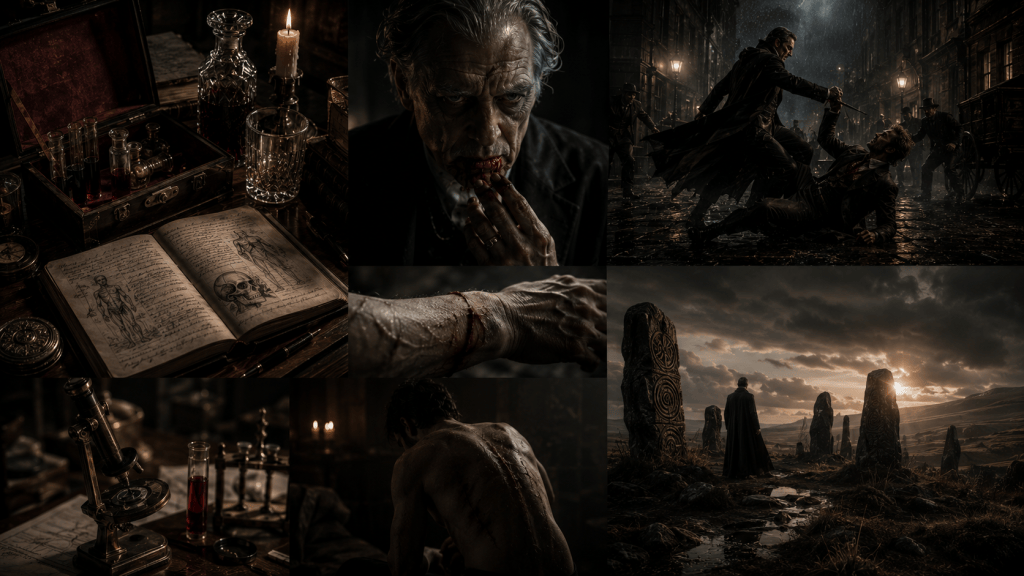
Vampirism in The Vale Record is treated as a biological divergence shaped by blood, injury, age, hunger, recovery, memory, and bodily decline. Vampires retain human psychology, humour, attachment, guilt, morality, choice, and fear. The condition changes the body. It leaves the moral soul in human hands.
Marcus is one of the Originals, a class of vampire far older and more resilient than the standard vampires created later. He is stronger, faster, and harder to kill than those who came after him, though he remains physical. Wounds matter. Fire matters. Blades, bullets, damage, hunger, and exhaustion matter. Blood aids recovery, yet it offers no simple miracle. Age gathers even in old blood.
Folklore survives in the series as distortion, camouflage, superstition, and useful error. Human stories search for capes, coffins, theatrical weaknesses, sacred objects, and monsters with simple rules. The Vale Record is more interested in the body beneath the myth, the person beneath the condition, and the damage caused when false stories outlive accurate memory.
The vampire world in this series is moving toward decline. Turning is rare, costly, unreliable, and ethically heavy. The species has endured through secrecy, restraint, violence, fear, and adaptation, yet endurance has limits. The record Marcus begins is part testimony, part warning, and part final arrangement.
History as Lived Pressure
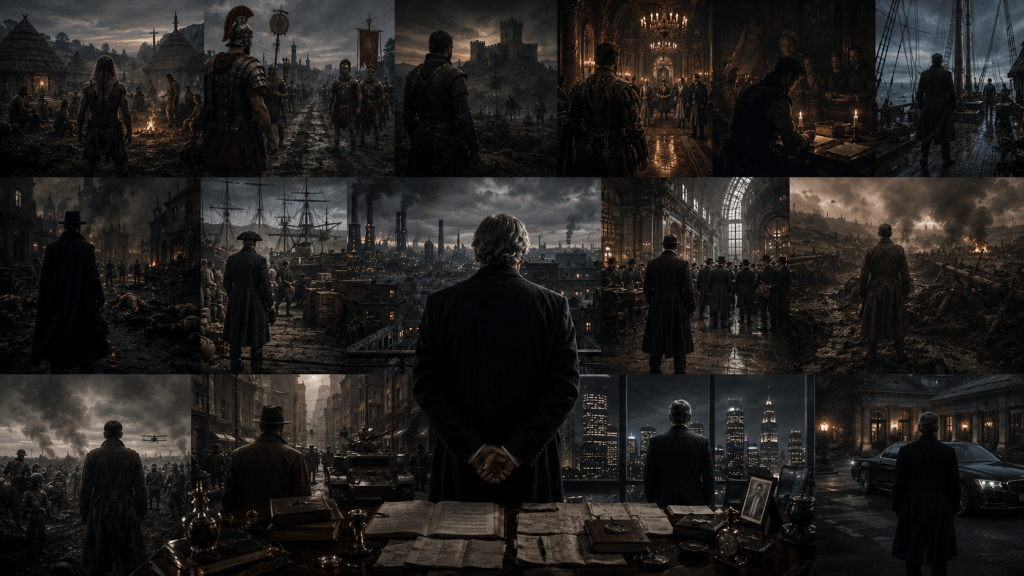
Each book in The Vale Record moves through a sustained historical period or identity from Marcus’s life. The series follows human history as human history. Marcus passes through it as witness, survivor, participant, victim, beneficiary, and burdened remnant. He survives roads, invasions, courts, ships, plagues, accounts, wars, rank, labour, law, documents, and inheritance. He carries history through the body before it ever reaches the archive.
The historical material is grounded in physical life. A Roman road changes movement across land. A winter alters hunger. A wound shapes belief. A ship changes distance. A document fixes property. A title alters how a man is greeted at a door. A plague changes the meaning of touch. A fortune changes the lies a family can afford to preserve.
The series begins before empire has fully named Marcus’s world. It then follows a life that keeps encountering new forms of power: tribal belonging, imperial order, feudal loyalty, religious pressure, trade, nobility, industry, finance, and modern wealth. Marcus never stands outside these systems. He survives inside them, adapts to them, uses them, suffers through them, and loses parts of himself to them.
The result is historical vampire fiction where the supernatural element deepens history instead of replacing it. The horror comes from continuity, memory, hunger, secrecy, and the realisation that a single witness has carried far more than any human life should hold.
Published Books and Reading Order
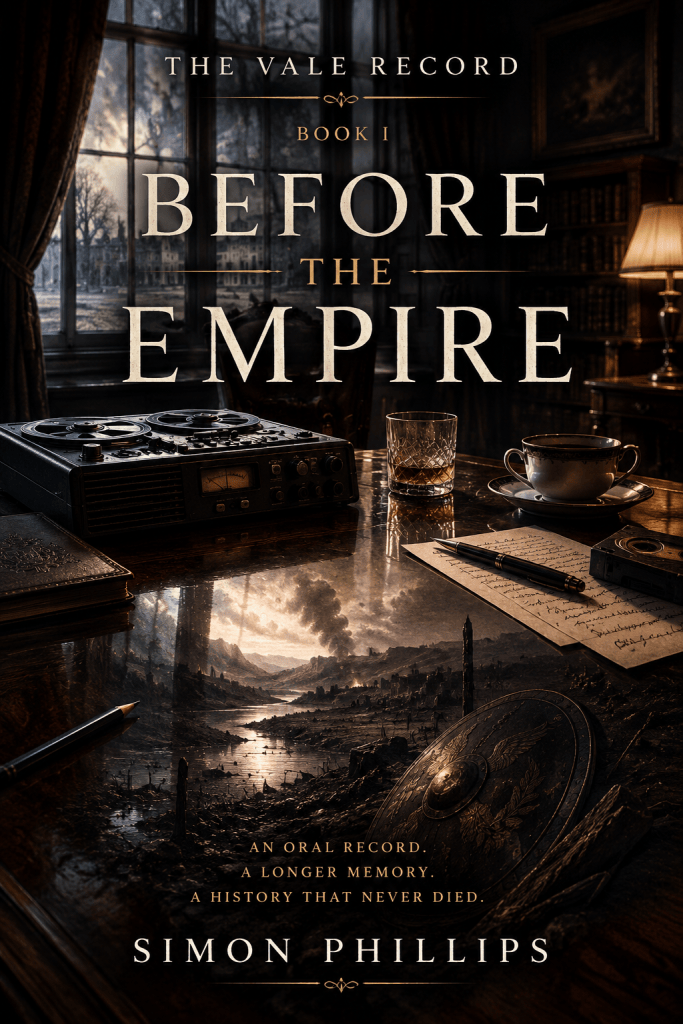
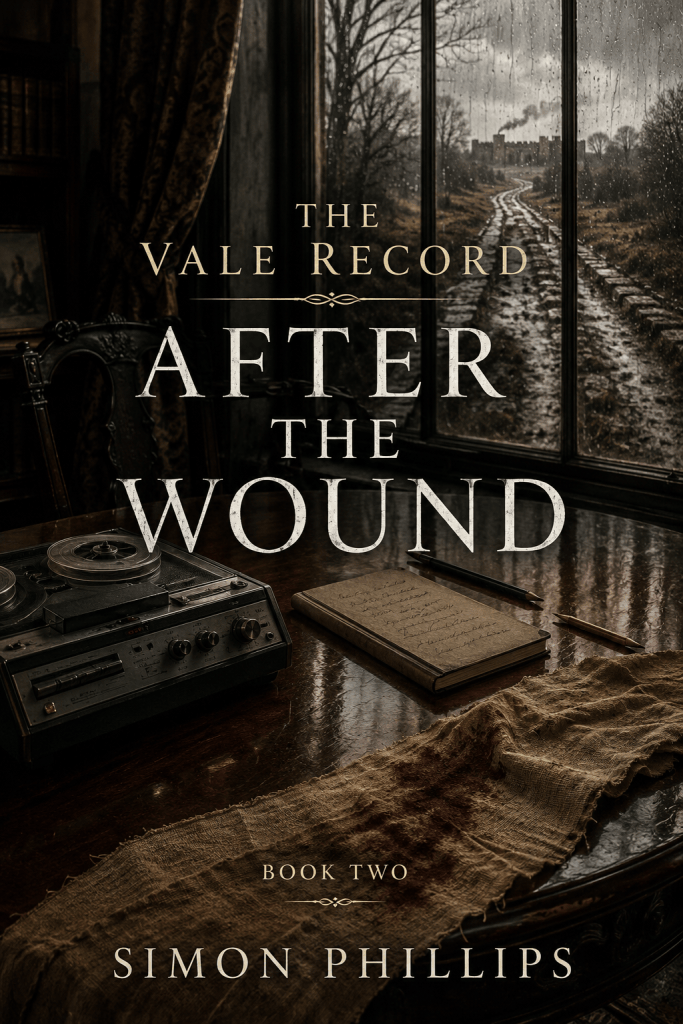
Latest from The Vale Record

After the Wound: Roman Britain, Blood Hunger, and the Quiet Horror of Historical Vampire Fiction
Some wounds close. Others leave something behind.
The Vale Record: After the Wound continues Marcus Vale’s recorded testimony into Roman Britain, where survival becomes more disturbing than death, blood begins to call from places the body should resist, and the quiet rooms of Vale House start to feel less secure with every turn of the…
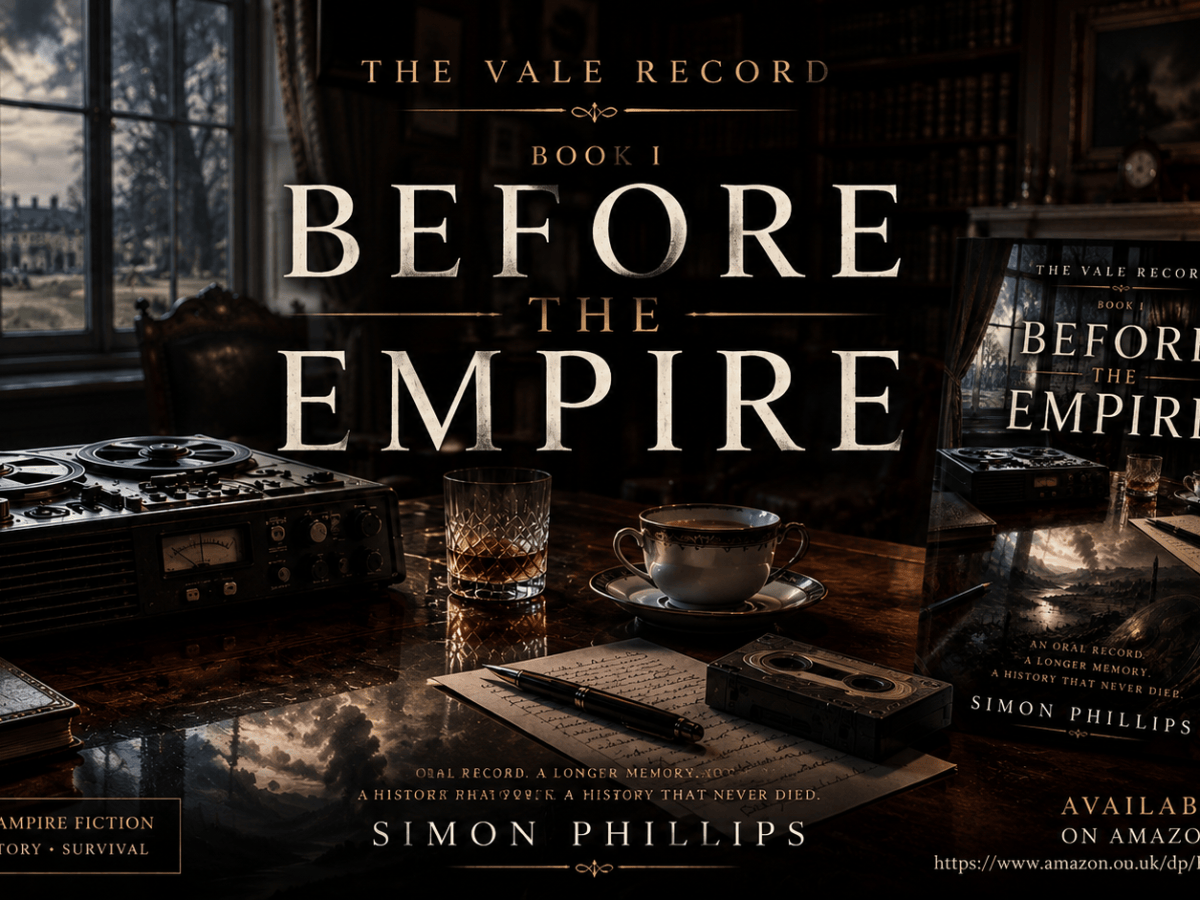
Historical Vampire Fiction, Roman Britain, and the Burden of Memory in The Vale Record: Before the Empire
Some lives are too long to be believed.
In The Vale Record: Before the Empire, Marcus Vale begins recording memories no human life should contain. Inside Vale House, an old recorder turns, family secrets tighten, and the first memory reaches back to ancient Britain, before Rome, before empire, and before survival became something darker than…
