Present-day and near-present stories told through records, pressure, and the systems people trust until their purpose begins to change.
The Modern Chronicle is Simon J. Phillips’s present-day and near-present Chronicle branch: a growing archive of grounded, document-style fiction drawn from modern story worlds where public life, official language, private records, and controlled systems begin to strain.
These Chronicles move through government rooms, family kitchens, school corridors, military bases, road networks, depots, airfields, ports, controlled sites, diplomatic offices, archive rooms, secure facilities, and the ordinary language used to keep pressure contained.
Each Chronicle begins with an immersive opening scene. A briefing room before the wording changes. A family home before reassurance loses its weight. A perimeter route before the equipment stops behaving as expected. A controlled facility before the scenario leaves marks behind. A private record before history becomes harder to contain.
From there, the story opens into documents, records, statements, reports, transcripts, warnings, and the wider pressure surrounding the event.
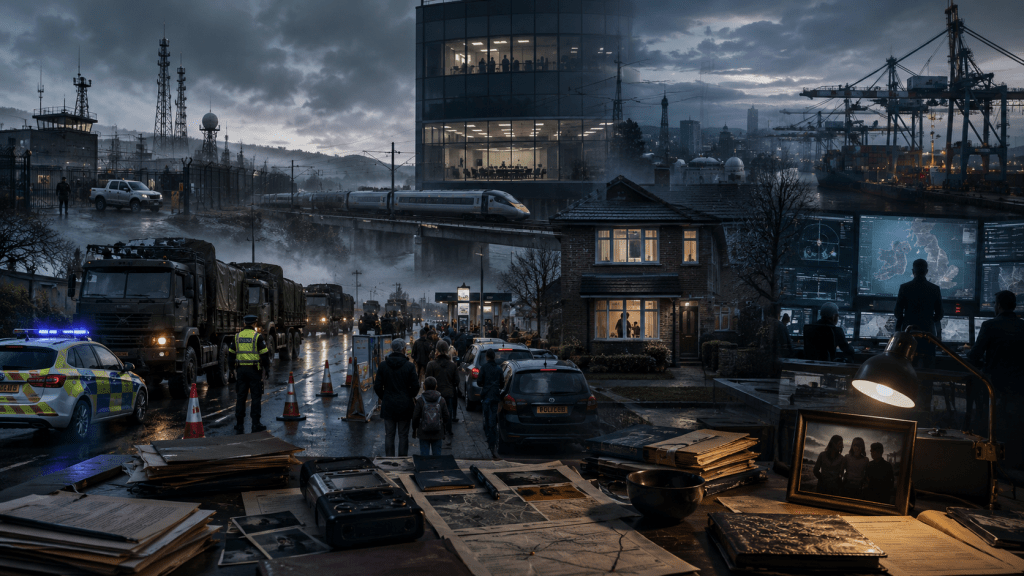
Present-Day Stories Told Through Records and Pressure
The Modern Chronicle is a fiction archive built around realities close enough to recognise: places where official explanation continues to function while lived experience has already moved beyond it.
Each entry begins inside a plausible moment. The reader is placed near the ordinary surface of the world: a government corridor, a delayed bus route, a school staff room, a loading yard, a guarded compound, a military checkpoint, a diplomatic residence, an archive table, a research chamber, or a family kitchen where the news has started to enter the room.
From there, the Chronicle widens through document-style realism. A briefing. A movement order. A witness statement. A transcript. A restricted note. A public-facing notice. A private recording. A technical log. These records rarely explain the whole truth. They show the pressure gathering around it.
The aim is simple: to make the present feel unstable through recognisable systems, human consequence, and official language placed under strain.
Some Chronicles stand alone. Others form longer ten-issue cycles tied to Simon’s modern and near-present story worlds, expanding the reality around the main story.
What You’ll Find Here
Document-Style Realism
Government briefings, internal memos, witness statements, movement orders, police reports, technical notes, public notices, transcripts, archive records, and media extracts that make each Chronicle feel like a recovered fragment of a larger event.
Ordinary Systems Under Pressure
Roads, ports, rail lines, fuel lanes, public buildings, military sites, schools, offices, embassies, controlled facilities, perimeter routes, communication networks, and domestic spaces placed under strain before anyone fully understands what has changed.
Civilian and Personal Consequences
Families, workers, commuters, teachers, soldiers, officials, archivists, contractors, local residents, and ordinary people caught inside events that larger institutions are still trying to classify, contain, or explain.
Modern Story Worlds
Chronicle cycles connected to Simon’s present-day and near-present fiction worlds, showing adjacent lives, public records, private pressure, institutional control, and consequences around the main story.
How Each Modern Chronicle Is Read
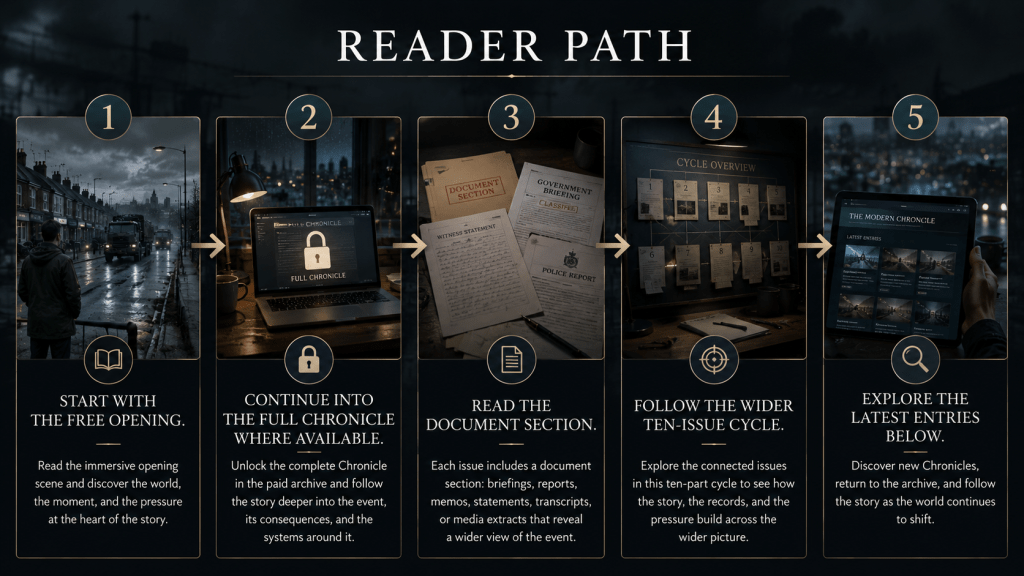
Each Modern Chronicle usually opens with a free immersive scene. This gives new readers a clear sense of the place, tone, and pressure surrounding the event.
The continuation may sit inside the paid WordPress archive, where the Chronicle moves deeper into the incident, its documents, its consequences, and the wider system beginning to shift.
Each issue may also include a document section, such as a government briefing, movement order, police report, internal memo, witness statement, technical log, transcript, private record, public-facing news extract, or another grounded document from the world of the story.
This structure keeps the page open and discoverable while also building a serious paid archive for readers who want the full Chronicle experience.
Current Featured Chronicle Cycle
The Eastbound Line
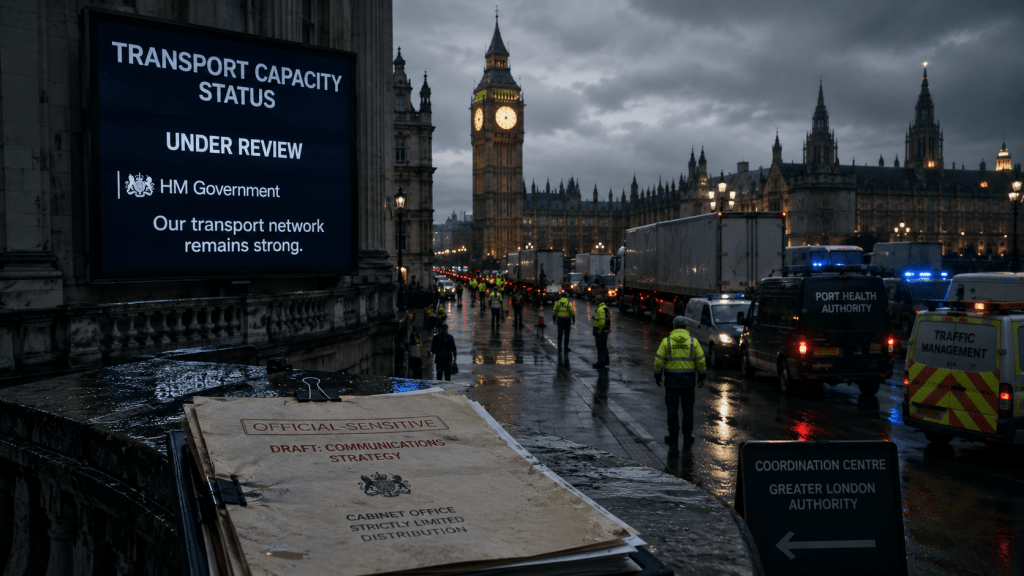
The first active cycle of The Modern Chronicle is The Eastbound Line, connected to The Last Deterrence story world.
This cycle follows the transformation of a British support corridor into a militarised and politically exposed national pressure system. It opens through government language, transport strain, military movement, family pressure, public confusion, official caution, and the lives caught around the edges of the main event.
The Eastbound Line is the first route into this archive, with future cycles opening other parts of The Modern Chronicle branch.
Future Modern Chronicle cycles may move into other modern and near-present story worlds: controlled sites, perimeter systems, institutional testing, private records, diplomatic pressure, archive rooms, family secrecy, technical failures, official procedures, and other realities where ordinary life begins to show the strain beneath its surface.
The entries can be read individually, though together they form a wider movement: from ordinary route disruption to national pressure, from local uncertainty to system-level exposure.
When the active cycle changes, this section can be updated to introduce the next Modern Chronicle run.
Connected Modern Worlds
The Modern Chronicle connects to Simon J. Phillips’s modern and near-present story worlds while preserving their place as the main fiction paths.
The series carries the central story. The Chronicle expands the surrounding reality.
A cycle may follow military escalation, government pressure, domestic strain, controlled sites, perimeter anomalies, institutional trials, technical systems, diplomatic movement, private archives, or official records that reveal what the central story leaves at the edge of view.
Some cycles may feel political or military. Others may feel procedural, archival, psychological, uncanny, or quietly speculative. Each one remains grounded in the same principle: a recorded fragment of a reality that exists just beneath the surface of the present world.
Latest from The Modern Chronicle

The Measure of Empire: The Case by the Door
The Modern Chronicle | The Measure of Empire: The Case by the Door
An urgent instruction from London has reached a British diplomat’s household in Ashiya, Japan.
Simon Hale must leave that evening, while his wife and son remain behind awaiting further direction. For Thomas Hadley, the household attendant preparing his departure, the uncertainty is…
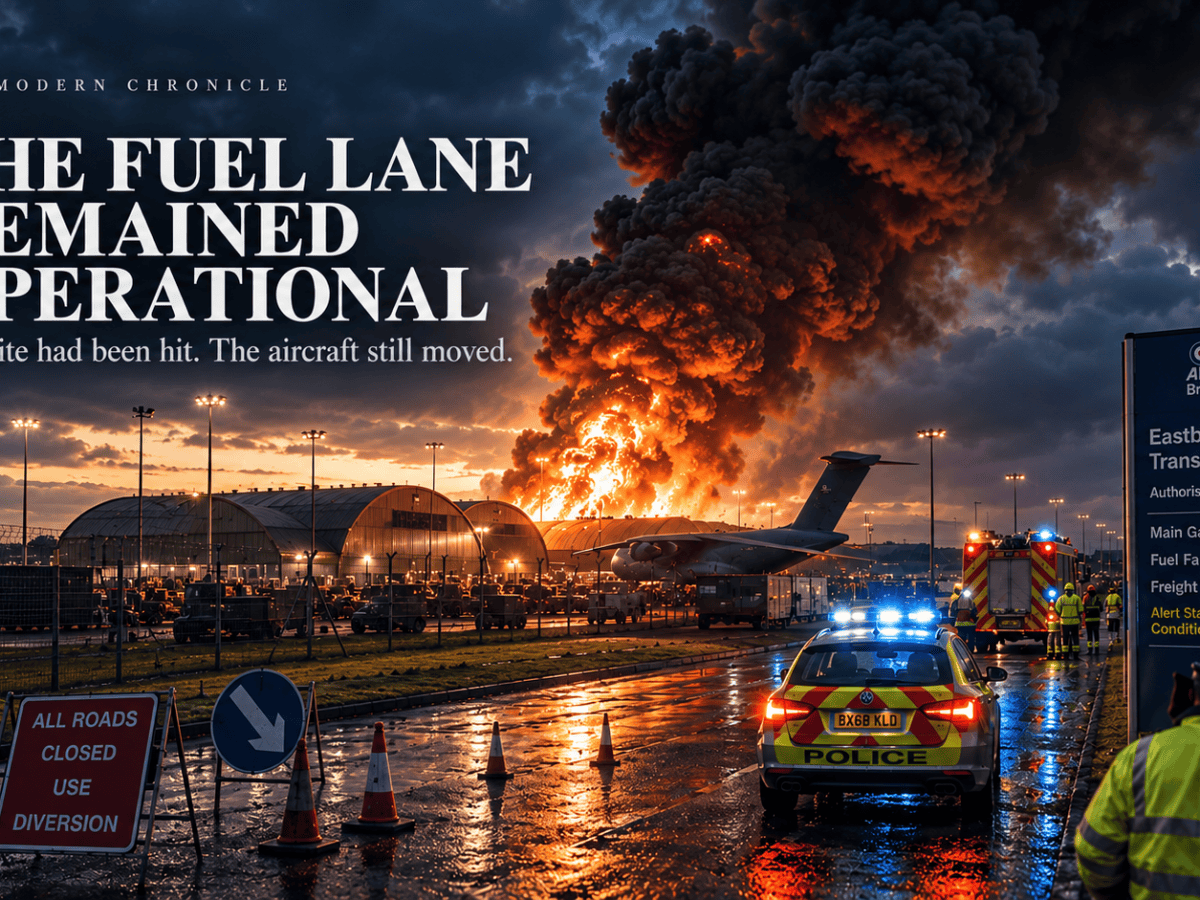
The Modern Chronicle: The Fuel Lane Remained Operational
Smoke rose above the airfield. Roads closed across the district. Families waited for messages from people still inside. Yet the aircraft kept moving. The Fuel Lane Remained Operational follows the people beyond a fictional British transfer site after a hostile unmanned-platform incident turns one damaged fuel point into a wider crisis of freight, family contact,…
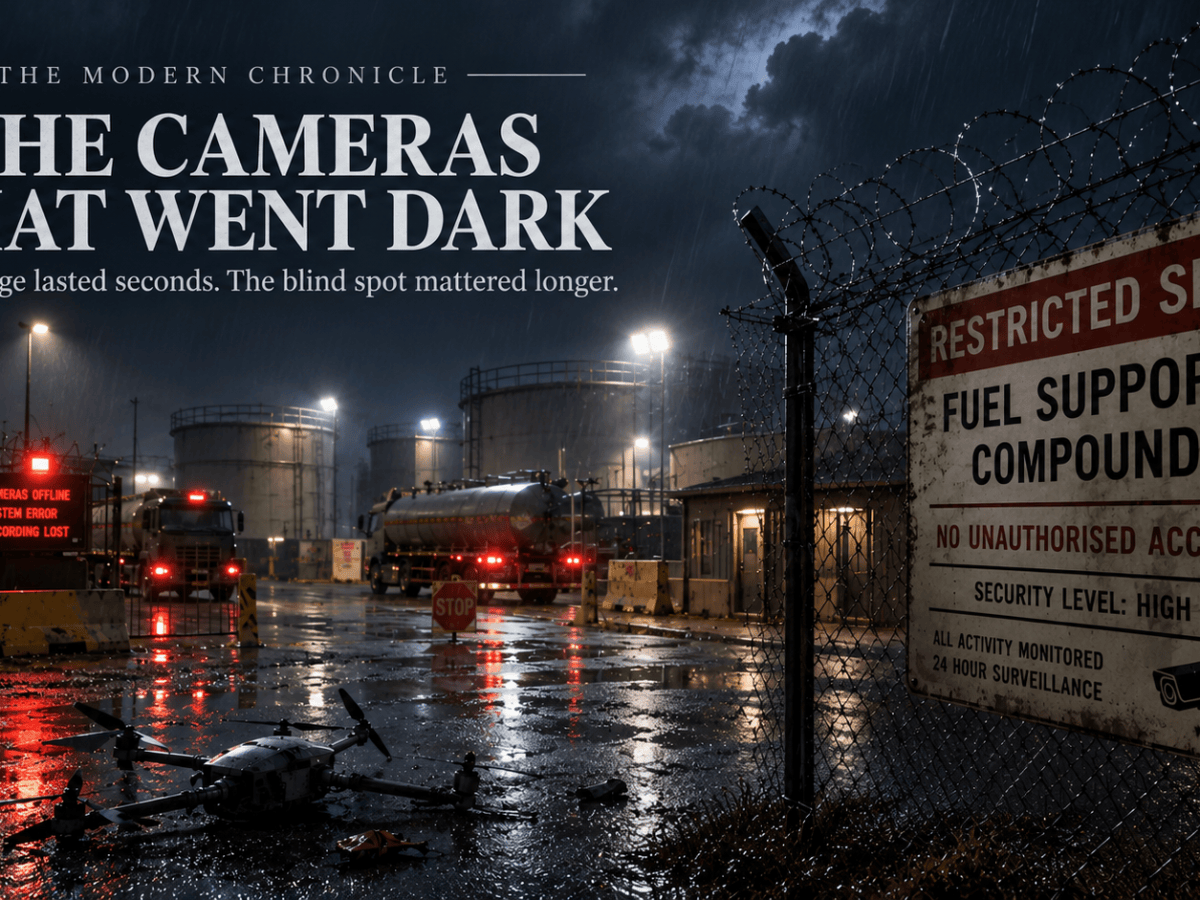
The Modern Chronicle: The Object Beyond the Service Road
A damaged unmanned device lies in the grass beyond an RAF transfer site. Within minutes, the road is sealed, contractors are held at the gate and surveillance cameras turn towards the perimeter.
*The Object Beyond the Service Road* follows Corinne Hales, a civilian contractor caught inside a security response that grows larger than the object…
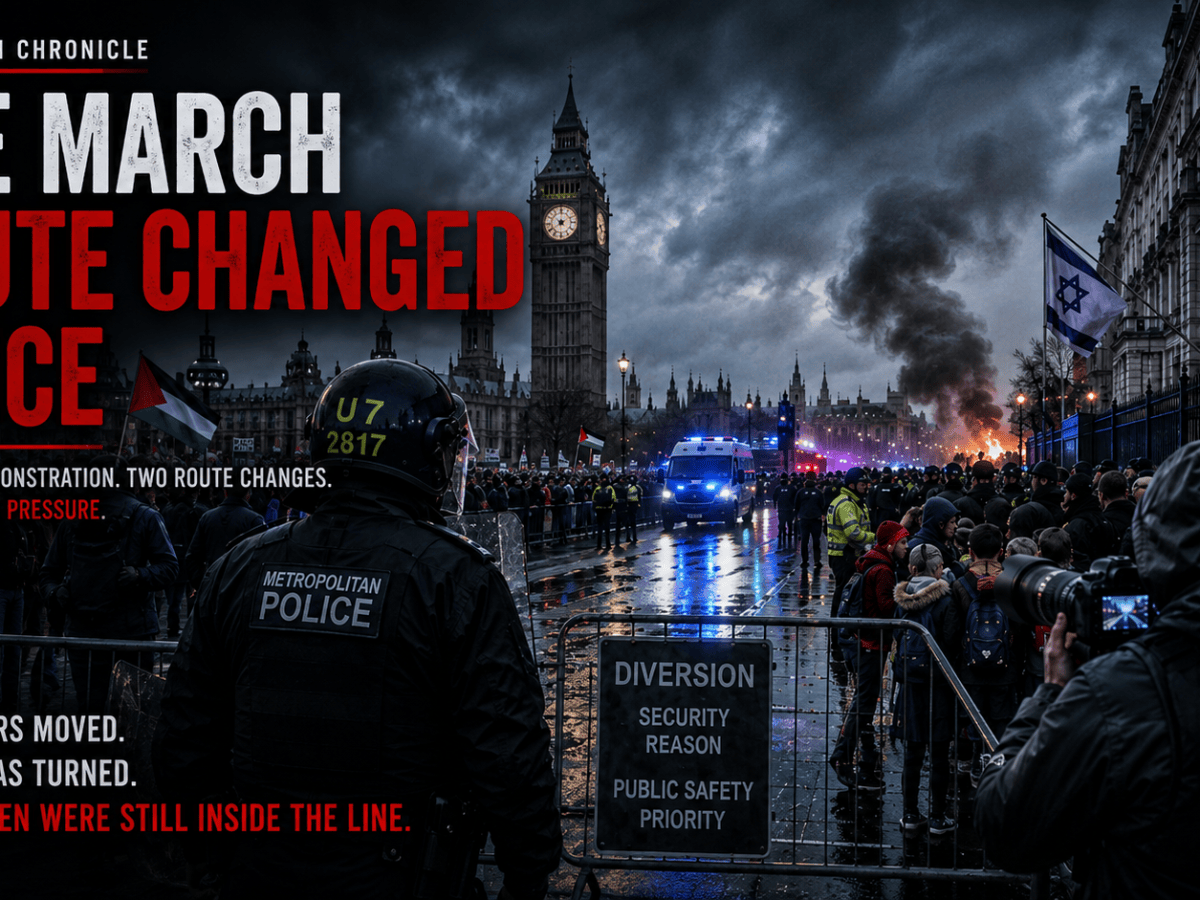
The Modern Chronicle: The March Route Changed Twice
The March Route Changed Twice follows a fictional London demonstration where the route changes before everyone inside the barriers receives the first explanation. Thirty-one pupils are caught nearby as police lines move, cameras turn and teachers try to keep an ordinary school trip intact while the city reorganises itself around them.
The official record calls…
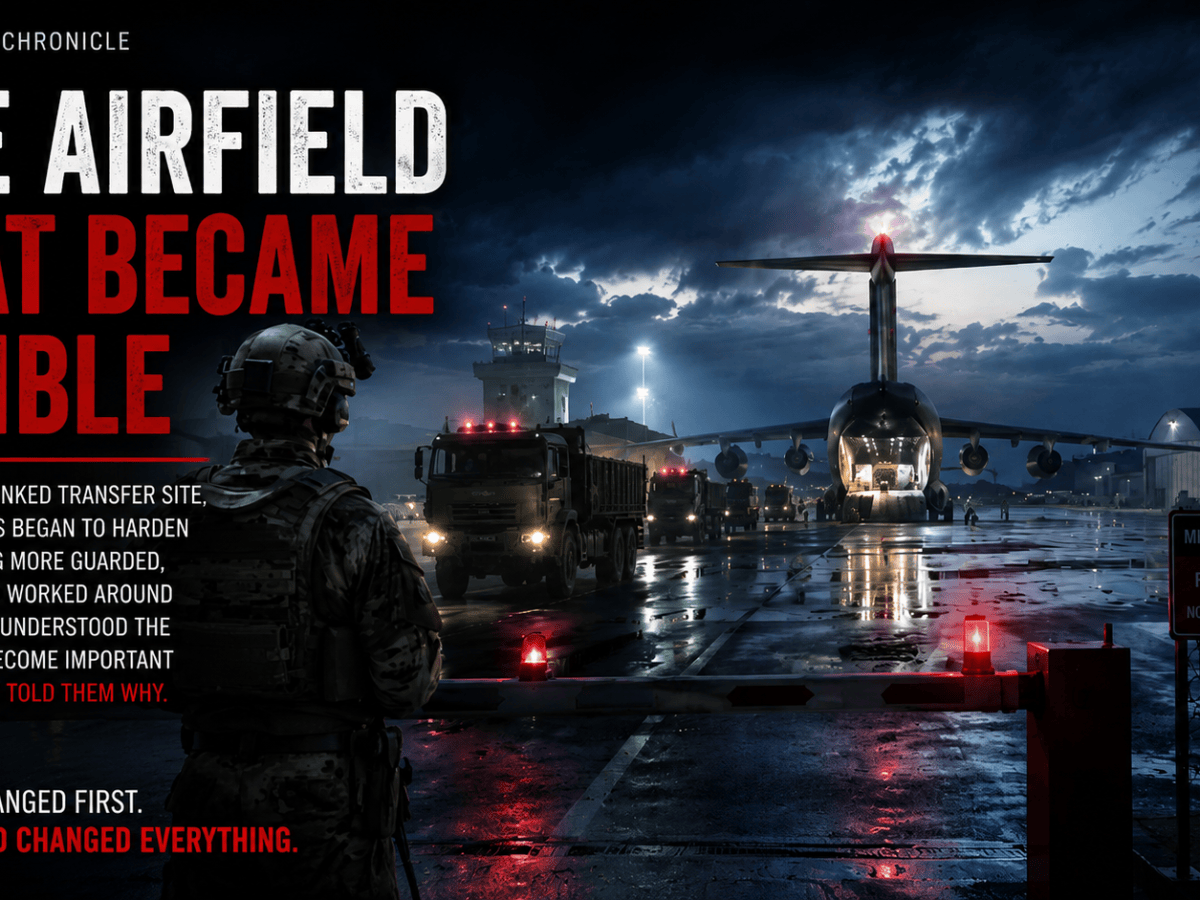
The Modern Chronicle: The Airfield That Became Visible
The Airfield That Became Visible continues The Eastbound Line at a fictional defence-linked transfer site where routine access has started to disappear. Contractors face new barriers, armed personnel, repeated checks and camera systems covering corners nobody cared about the week before.
The aircraft still load. The gates still open. Yet everyone arriving in the rain…
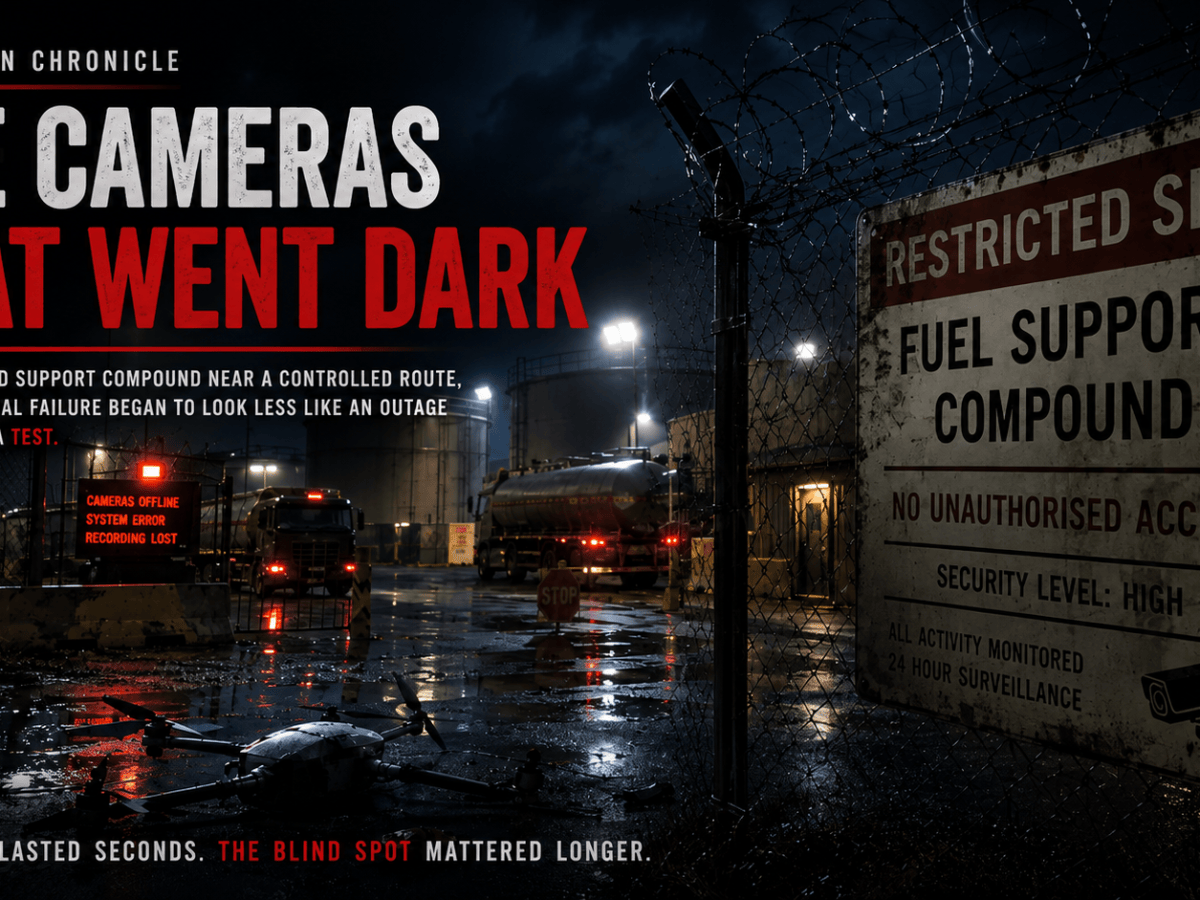
The Modern Chronicle: The Cameras That Went Dark
**The Cameras That Went Dark** begins with a technical fault at a fictional fuel-support compound. Then three perimeter cameras fail, a feed line is found cut, and something broken is discovered beyond the fence.
The site remains operational. The official explanation stays small. The people standing beside the wire are no longer convinced the outage…

The Modern Chronicle: The Road Held Open
The Road Held Open continues The Eastbound Line on an ordinary British morning transformed by police route control. A school bus waits, deliveries slip behind schedule and a petrol queue grows while protected vehicles move east through a road temporarily taken from local traffic. The convoy passes quickly. What remains is the realisation that the…
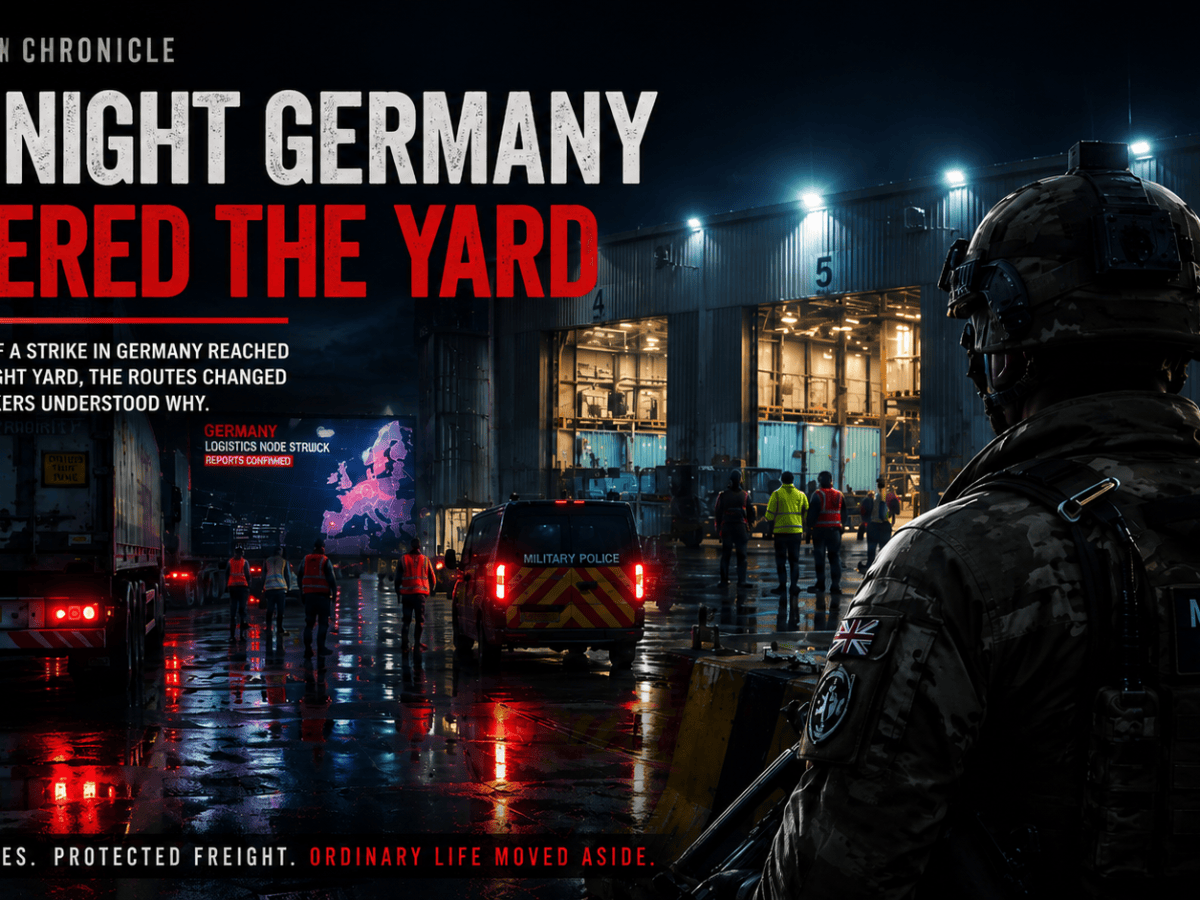
The Modern Chronicle: The Night Germany Entered the Yard
The Night Germany Entered the Yard continues The Eastbound Line at a fictional Midlands freight holding site. Reports from Germany arrive through a driver’s phone, followed by revised rail sequences, sealed consignments and military-police access control. The yard remains operational, but civilian freight is being pushed aside and everyone working beneath the floodlights can see…
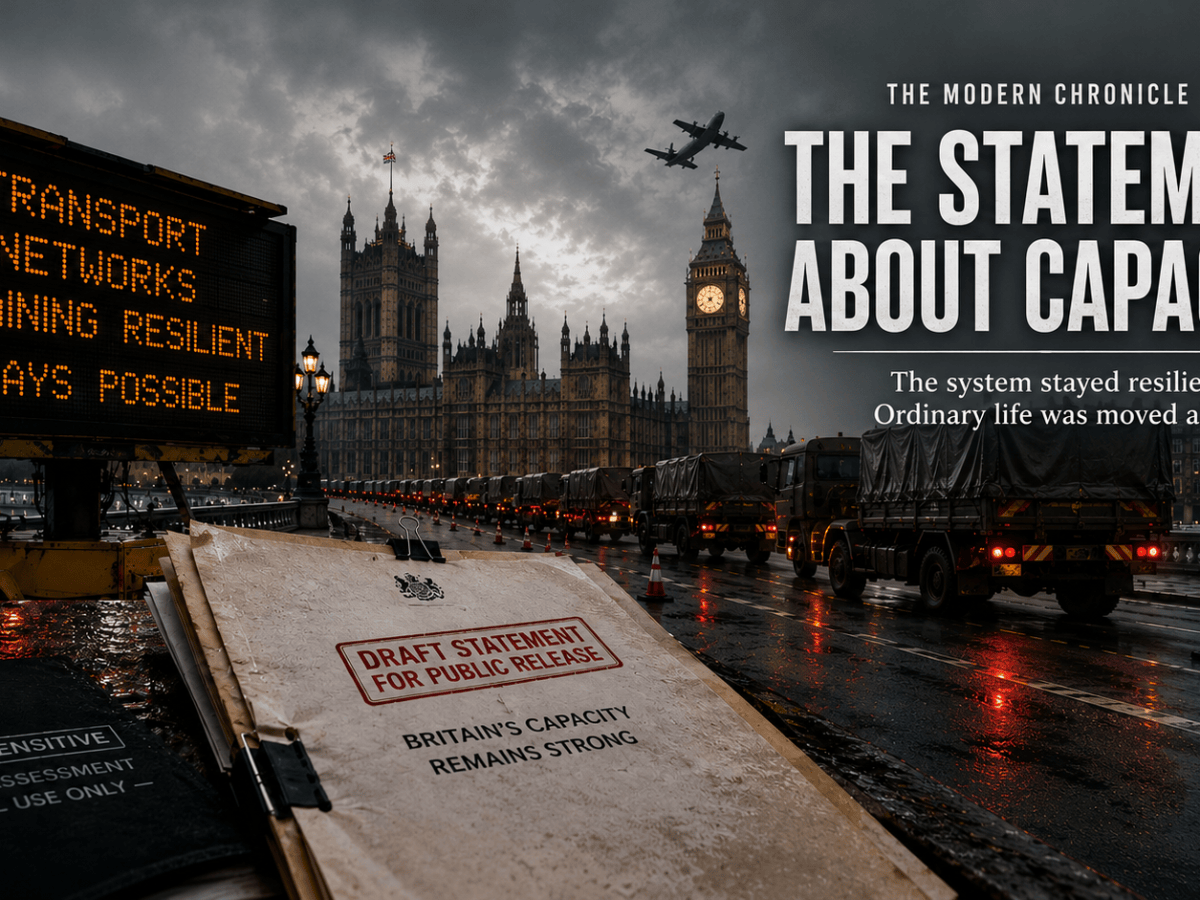
The Modern Chronicle: The Statement About Capacity
The Statement About Capacity continues The Eastbound Line inside a fictional Whitehall briefing room, where officials must reassure the public that Britain’s transport networks remain resilient. The figures tell a harder story: protected freight is moving, civilian deliveries are being postponed, and every calm sentence depends on pressure being carried somewhere else.
Continue into the…
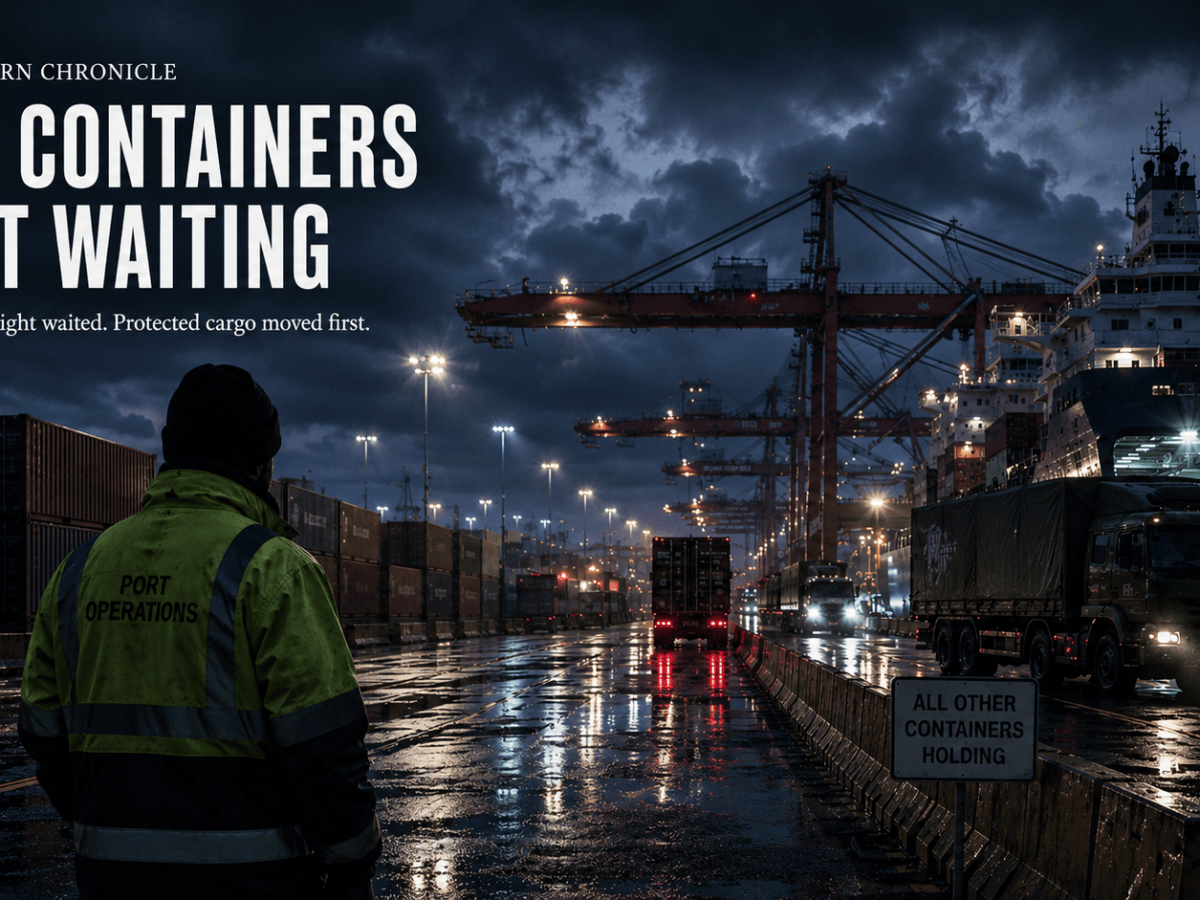
The Modern Chronicle: The Containers Left Waiting
The Containers Left Waiting opens The Eastbound Line, a fictional Modern Chronicle set during a rain-soaked night shift at an east-coast freight terminal. Civilian loads remain under floodlights while sealed containers pass through protected lanes, forcing port staff and waiting drivers to work around priorities nobody is authorised to explain. The port is still functioning,…
