A fictional paranormal case archive of haunted rooms, failed investigations, corrupted recordings, and ordinary spaces that should have remained empty.
Every case begins with a room someone believed could be documented safely.
A family requests help. A camera is placed in the corner. A production crew receives access. A sound recorder is left running. A witness signs a form. A keyholder opens a door and waits outside.
The Unquiet Rooms Chronicle follows the cases that remain after those assumptions fail.
These are fictional paranormal case files built around haunted rooms, damaged evidence, witness uncertainty, archive notes, and investigations that may have made the haunting worse.
Start with the first case, or enter the latest file below.
What Is The Unquiet Rooms Chronicle?
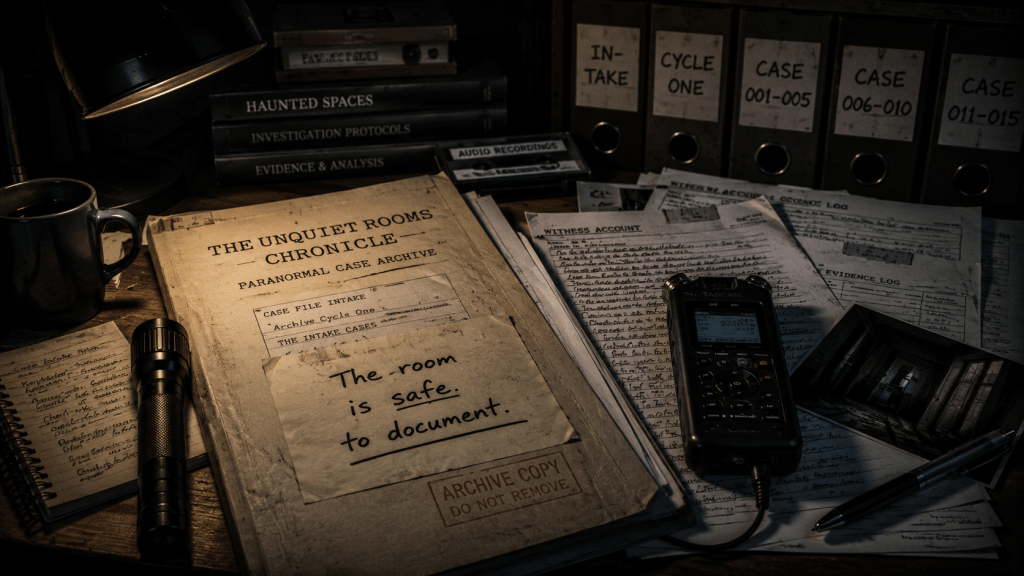
The Unquiet Rooms Chronicle is a WordPress-first fictional paranormal horror archive.
Each entry is presented as a case file: part scene, part record, part evidence fragment, part unresolved archive. The cases centre on ordinary human spaces that have become unsafe. A flat. A spare room. A hotel corridor. A church hall. A storage room. A rented house. A studio after the crew has gone.
The Chronicle is built around a simple question:
What if the act of investigating a haunting made the haunting worse?
The case files do not claim to document real hauntings. They are fictional paranormal stories written with the texture of records, witness accounts, corrupted recordings, access notes, and evidence that fails at the exact moment it should become useful.
The fear is not built around spectacle.
It comes from the gap between what happened and what the archive can prove.
What You’ll Find Here
The archive collects fictional paranormal cases built from the kinds of details ordinary investigations leave behind.
You will find rooms that remain uncleared, recordings that continue after power loss, witnesses whose accounts no longer match, and documents that seem more careful than they should be.
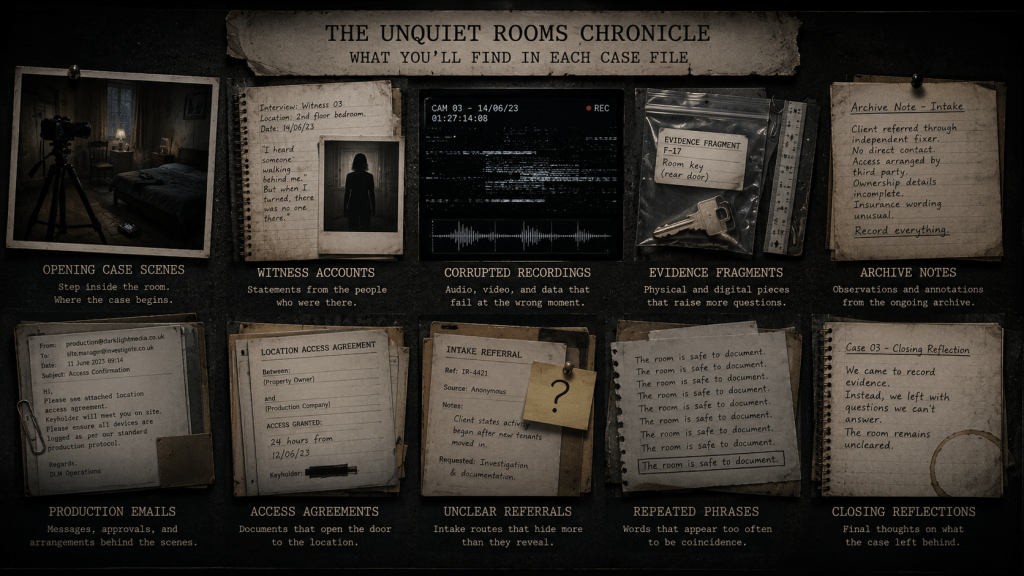
Some cases appear isolated.
Others begin to share language, paperwork, legal wording, ownership gaps, and access arrangements that suggest certain rooms may have been routed towards investigators before anyone understood why.
How the Case Files Work
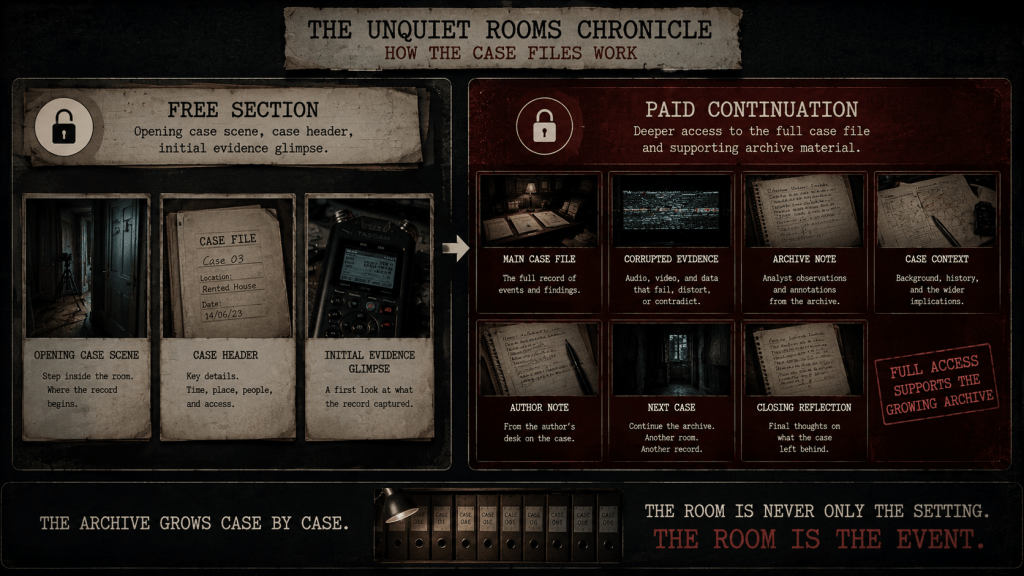
Each Unquiet Rooms case begins with a free opening scene.
That opening is designed to stand on its own. It places the reader inside the room, the visit, the investigation, or the moment before the record begins to fail.
Where a paid continuation is available, the deeper case file continues beyond the opening. Paid sections may include the main case record, fuller evidence fragments, archive notes, case context, behind-the-haunting commentary, and the unresolved closing material that connects the file to the wider archive.
The structure allows free readers to understand the case and enter the atmosphere, while paid readers can follow the deeper pattern across the archive.
Archive Cycles
The Unquiet Rooms Chronicle is organised through ten-case Archive Cycles.
Each cycle gathers a group of fictional paranormal cases that may seem unrelated at first. A family home. A village hall. A hotel room. A corridor behind a locked service door. A livestream that should have ended before the worst part began.
Over time, small patterns begin to surface.
Archive Cycle One: The Intake Cases
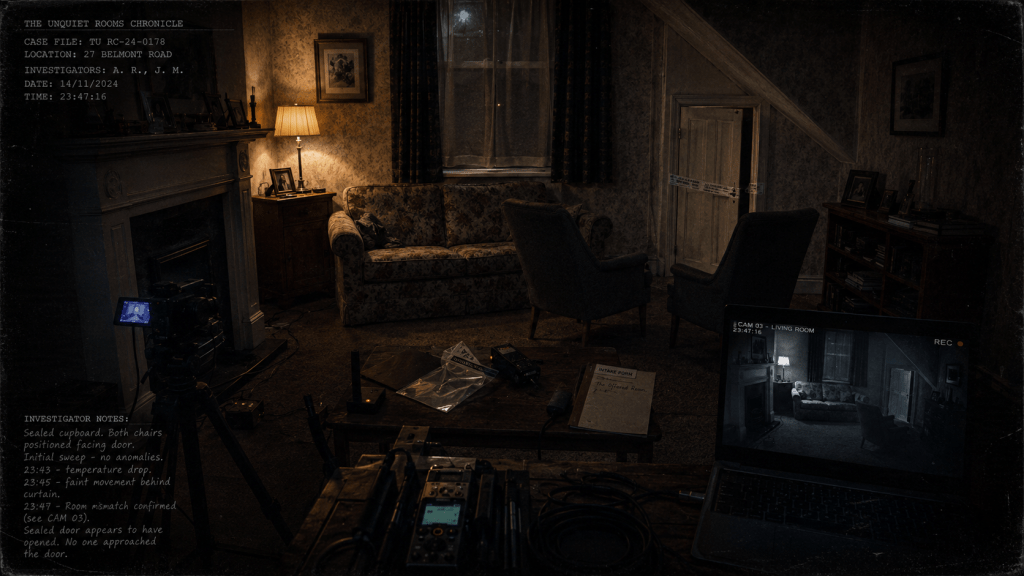
These early files focus on separate hauntings that begin to share similar intake language, unclear referrals, missing ownership details, unusual access arrangements, repeated legal wording, and carefully controlled evidence behaviour.
One phrase appears before the archive fully understands its meaning:
“The room is safe to document.”
Later, when the cycle has earned its darker turn, another phrase may begin to appear:
“The room has answered.”
The pattern is not explained too quickly.
The cases come first. The archive follows what remains.
Why the Investigation Matters
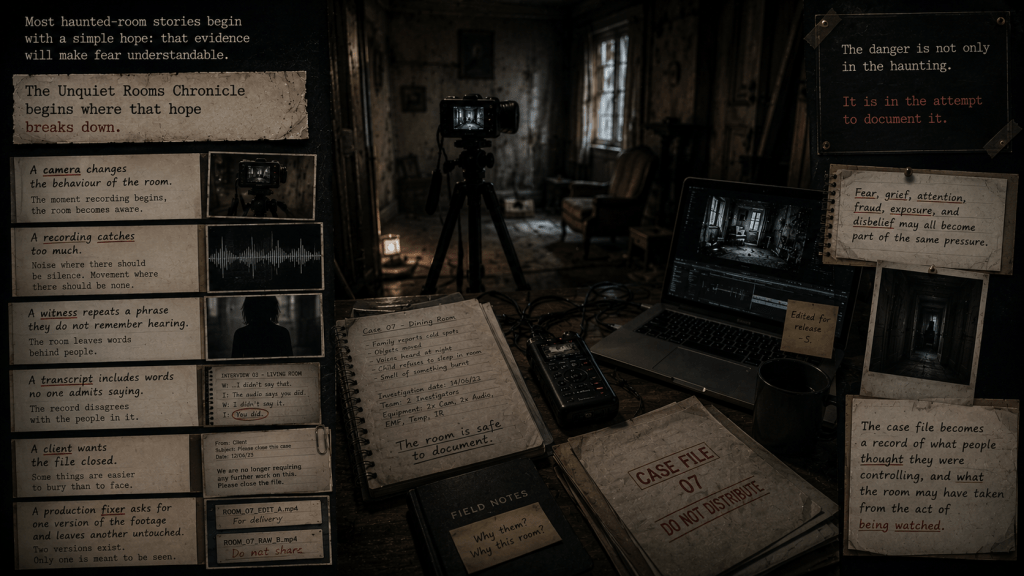
Most haunted-room stories begin with a simple hope: that evidence will make fear understandable.
The Unquiet Rooms Chronicle begins where that hope breaks down.
A camera changes the behaviour of the room. A recording catches too much. A witness repeats a phrase they do not remember hearing. A transcript includes words no one admits saying. A client wants the file closed. A production fixer asks for one version of the footage and leaves another untouched.
The danger is not only in the haunting.
It is in the attempt to document it.
Fear, grief, attention, fraud, exposure, and disbelief may all become part of the same pressure. The case file becomes a record of what people thought they were controlling, and what the room may have taken from the act of being watched.
Latest Case Files
The Unquiet Rooms: The Room That Put Things Back
Ruth Calder expected one final controlled test in a spare bedroom where objects kept returning to their old places. By the end of the evening, the threshold meant something very different.
Read The Room That Put Things Back, a complete free fictional paranormal case from The Unquiet Rooms Chronicle.
#TheUnquietRooms #ParanormalHorror #GhostStory #AtmosphericHorror #ArchiveHorror #HauntedRoom…
