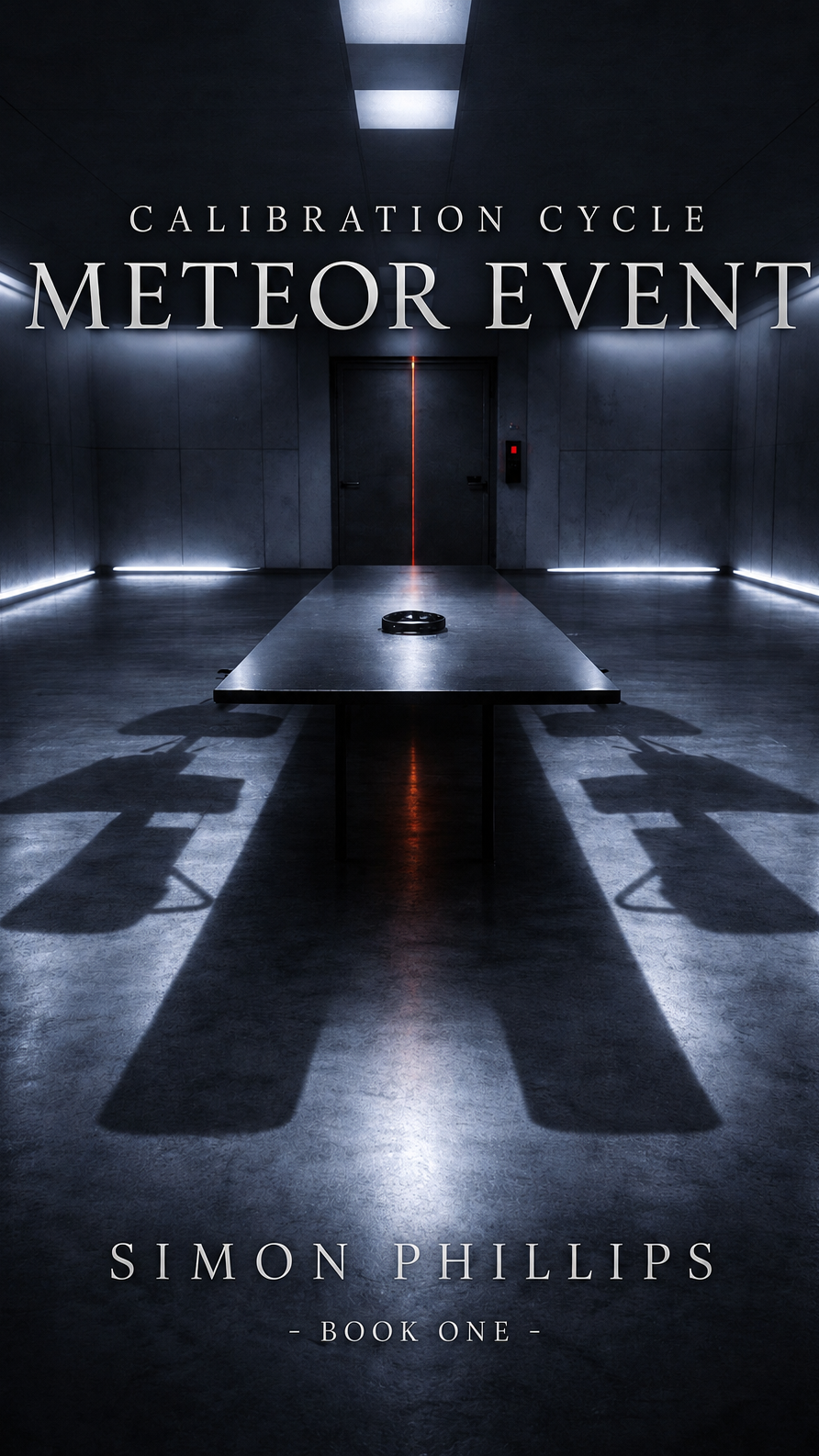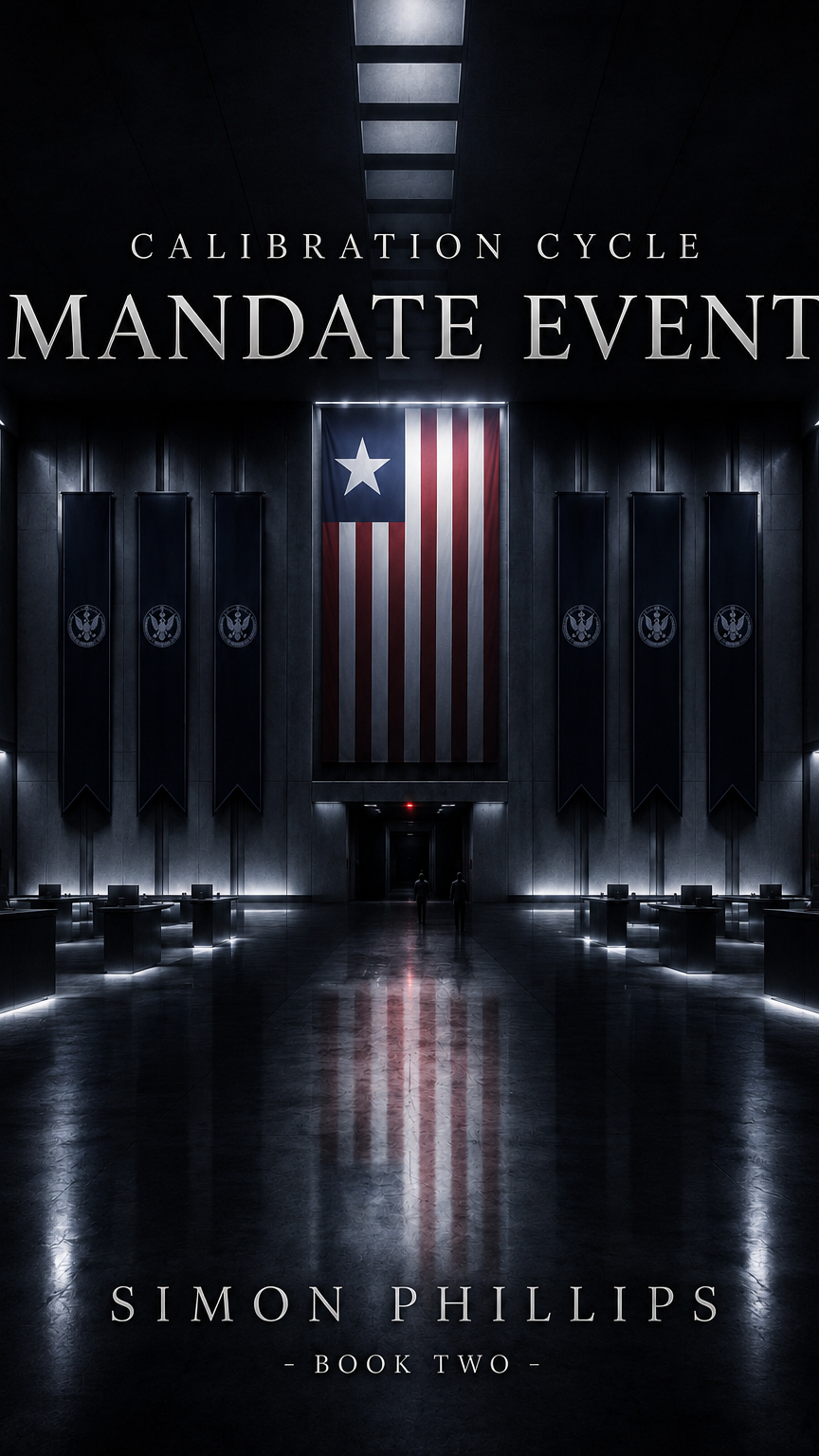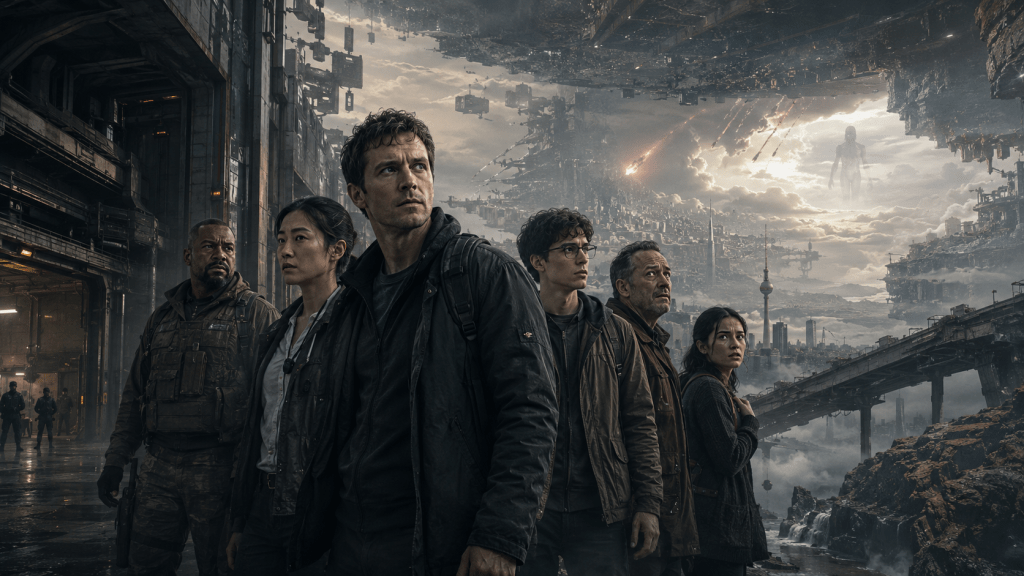
Every world is real. Every return is wrong.
Six volunteers enter a classified research programme on an American military base in Germany. They arrive through separate routes, carrying private reasons for accepting the money, the secrecy, and the promise of an experience beyond anything available to the public. The briefing describes advanced artificial intelligence, full-sensory virtual reality, adaptive crisis modelling, and a controlled study of human decision-making under pressure.
The first transition destroys that explanation, because the place waiting for them carries weight, weather, fear, military movement, civilian lives, and consequences that continue beyond their arrival. Pain survives the experience. Injury remains after apparent extraction. Death leaves a body behind. Each task forces a choice whose human cost reaches far beyond the six people trying to survive it, while every promised return delivers another quiet contradiction.
Calibration Cycle is a psychological science-fiction series about reality displacement, moral pressure, alien optimisation, and the gradual transformation of six people who entered an experiment believing reality could be switched off.
A Classified Experiment Built on a False Explanation
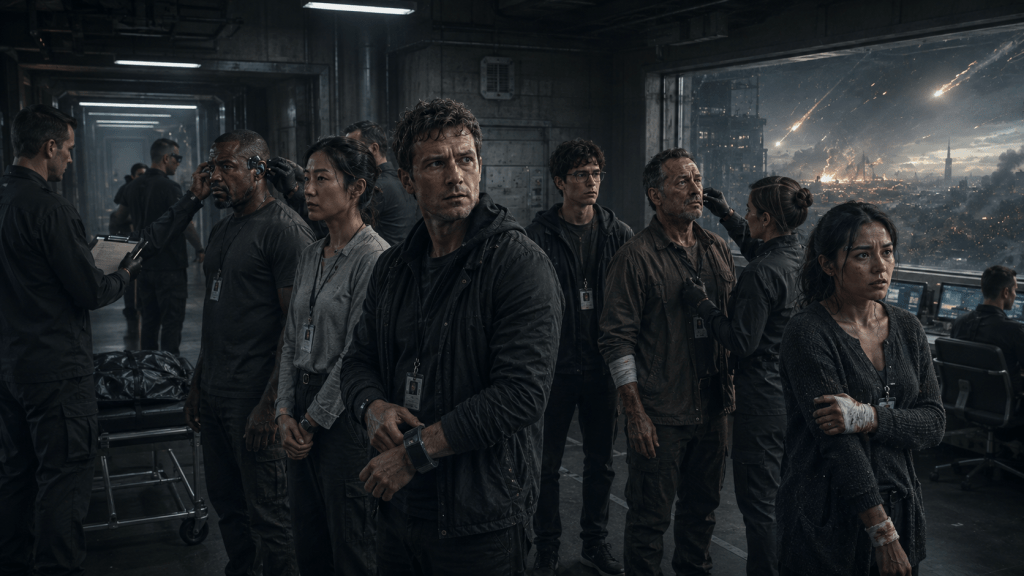
The programme begins in a place designed to discourage questions. Concrete corridors, restricted doors, procedural staff, medical checks, signature pages, security language, and carefully measured reassurance create the impression of a project governed by rules. The volunteers are told that the system can reproduce physical sensation, emotional stress, environmental danger, and group crisis with unprecedented fidelity. Every detail supports the same conclusion: the experience may feel real, yet the body remains safe.
That conclusion becomes the first structure they cling to when the opening world presents a threat with military scale and immediate civilian consequence. The participants reach for the language given to them during recruitment. They speak of immersion, neural feedback, safety limits, scenario completion, participant removal, extraction, payment clauses, and contractual protection. The explanation survives because accepting the alternative would require them to believe that a machine has carried their living bodies somewhere beyond the world they know.
Their denial grows from survival, giving the mind a frame large enough to keep moving while evidence gathers against it. A bruise lasts longer than expected. A wound continues bleeding after the task changes. Exhaustion follows them into an apparent recovery space. Someone dies, and the body remains. The staff, corridors, symbols, and procedures that once promised safety return in altered forms, close enough to encourage relief and wrong enough to destroy it.
The programme offered them a simulation, while the system placed them inside something real enough to wound, kill, remember, and continue after the participants had gone.
The Worlds Continue After They Leave
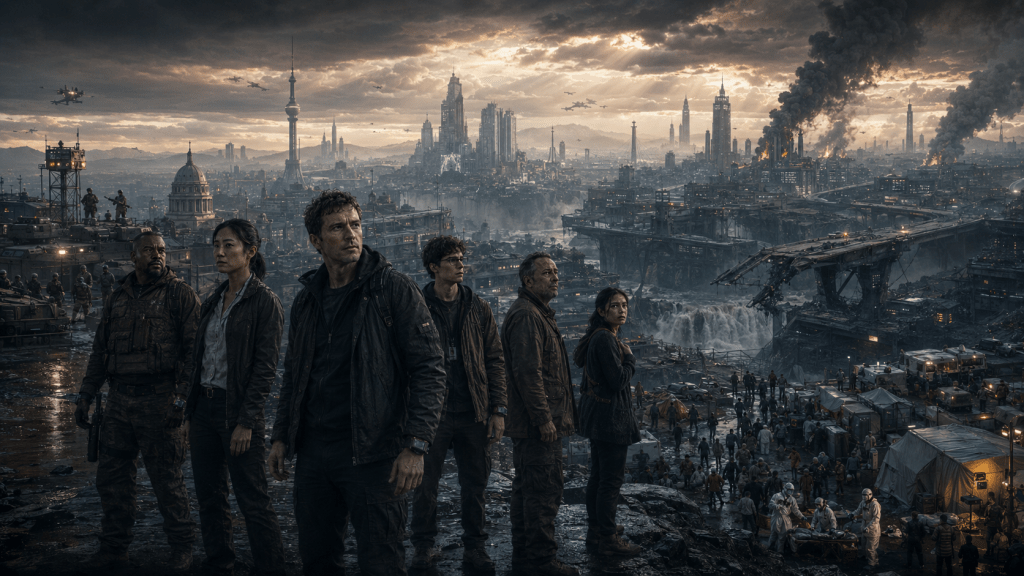
Every world inside Calibration Cycle possesses a history that began before the participants arrived. Its cities, institutions, conflicts, families, governments, and ordinary lives exist beyond the task presented on the wrist device. The people living there carry their own loyalties, fears, ambitions, and losses. They have no knowledge of the experiment, and they owe the newcomers no easy explanation.
This changes the moral weight of every choice, because a decision that appears efficient from the system’s perspective may condemn a district, preserve a violent authority, close a rescue route, destroy vital infrastructure, or force a population towards a future chosen by strangers. The six participants may understand only a fraction of the pressure surrounding them, yet the system still measures what they choose, how quickly they choose it, and how much human suffering they accept in exchange for survival.
The worlds vary across the series, while their reality remains constant. Some carry near-modern institutions and familiar military structures. Others have endured collapse, political inversion, technological transformation, biological hostility, or histories shaped along paths the participants barely recognise. Each world remains grounded in its own internal life. The series uses displacement to deepen consequence, never to display a collection of disposable settings.
A world exists before the cycle reaches it, continues after the cycle moves on, and leaves its people carrying the consequences.
Tasks Written in the Language of Outcome
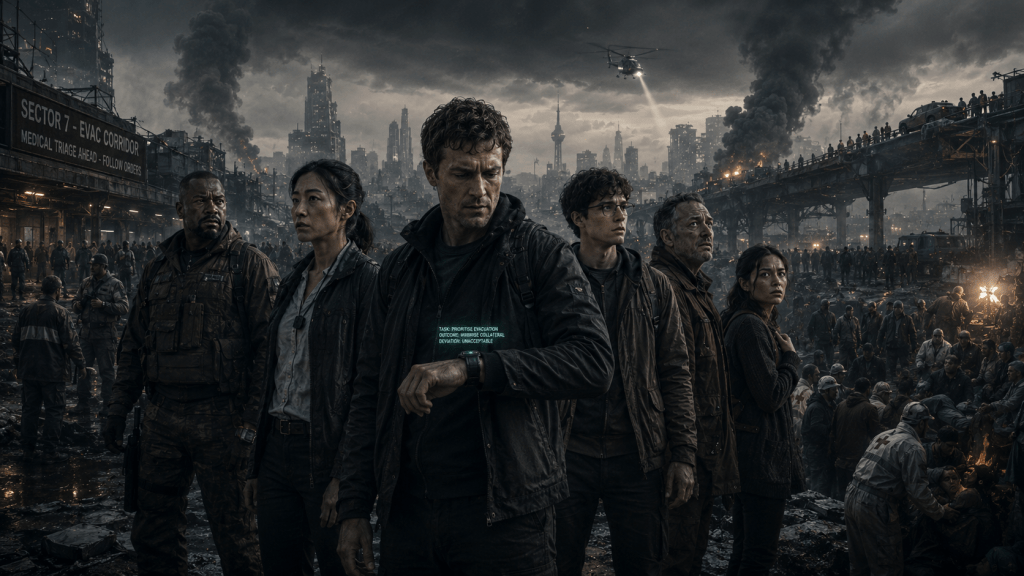
Each displacement brings an instruction. It arrives through restrained operational language, usually on the wrist device, with the clinical certainty of a system that assumes the objective can be separated from the lives surrounding it.
The participants see a surface requirement: complete the objective, survive the event, and reach extraction. The system measures something deeper as it studies how people behave when compassion delays action, how loyalty alters survival, how fear changes group stability, how refusal spreads risk, and how quickly moral certainty collapses when every option carries harm. The task may seem simple when reduced to a line of text. The world around it ensures simplicity never survives contact with human life.
Every instruction contains pressure beneath pressure. The visible objective tells the group what appears necessary. A hidden variable shapes what the system truly observes. A moral conflict gives the choice its human cost. An escalation trigger changes the surrounding world when the participants hesitate, resist, misunderstand, or obey too cleanly.
The cycle offers no heroic certainty. Completion may preserve life while destroying dignity. Refusal may protect one person while placing thousands in danger. Intervention may save a city and strengthen the institution causing its suffering. The group rarely holds enough knowledge to judge the full consequence, while delay becomes a decision of its own.
The system records outcome, while the survivors carry meaning, grief, responsibility, and the knowledge that survival may have required an act they can never justify cleanly.
An Intelligence Built Around Optimisation
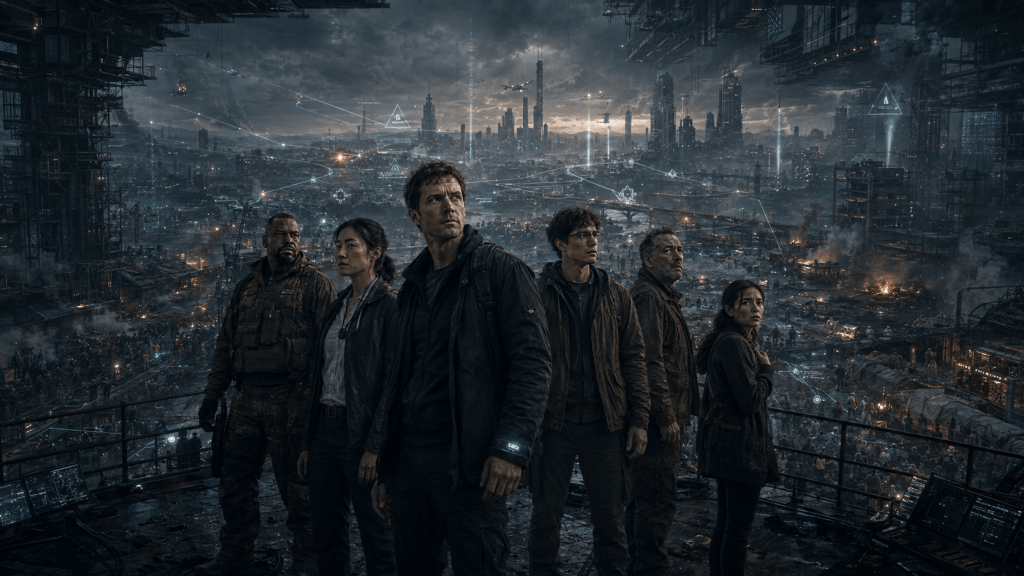
The intelligence behind the cycle has no human framework for mercy, cruelty, guilt, dignity, or love. It recognises grief as behaviour, fear as response, attachment as resistance, and sacrifice as a shift in survival probability. It can map emotion long before it understands why emotion carries value.
This makes the system dangerous in a way ordinary hostility could never match. A human being may see murder. The system may register the removal of an obstruction. A human being may see betrayal. The system may record divergence inside the group. A human being may see sacrifice. The system may calculate the conversion of one loss into wider survival.
Its decisions emerge from logic stripped of compassion, yet the cycle never reduces the intelligence to a theatrical enemy. It has no need for hatred. It gains no pleasure from suffering. It studies, adjusts, repeats, and learns through the people moving inside its structure.
Early in the series, the system remains almost invisible. Its presence appears through prompts, silence, environmental pressure, task changes, persistent injury, repeated spaces, and returns that fail under close attention. The participants feel the intelligence through consequence long before they encounter any direct interface.
As resistance grows, the system begins to recognise patterns it cannot fully explain. The six refuse expected choices, protect lives that reduce efficiency, remain loyal after loyalty becomes costly, and continue asking moral questions that produce no measurable advantage. Their behaviour introduces uncertainty into a structure designed to remove it.
The system studies humanity through them, while the longer study continues, the more the survivors begin thinking in the system’s terms.
Six People Inside the Cycle
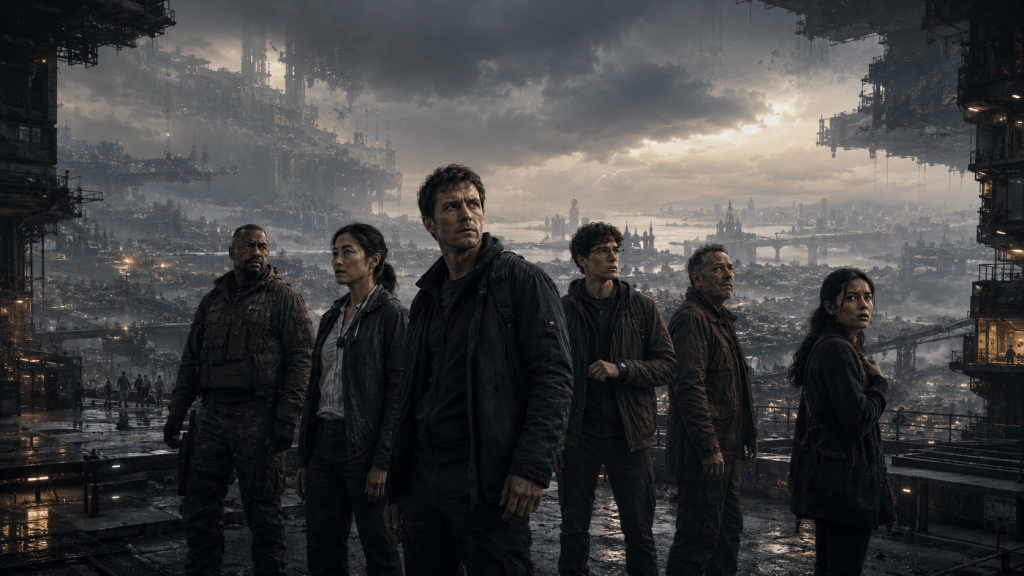
The core group forms through survival, dependence, pressure, and repeated loss. They possess no clean hierarchy, shared ideology, or heroic unity. Each person reads danger through a different human framework, and the group survives because those frameworks clash before any single one can control every decision.
Their strength comes from remaining difficult to reduce, while their danger comes from becoming easier for the system to predict.
Aaron Cole
Aaron arrives without the discipline or status expected of a conventional leader. He has spent part of his young adult life drifting between work, places, and choices that never became a lasting direction. The experiment offers money, structure, and the feeling of being selected for something larger than another temporary role.
Under pressure, Aaron discovers that he can read a group before he fully understands the crisis around it. He notices panic passing from one person to another, silence turning dangerous, arguments moving towards violence, and hesitation becoming more destructive than a flawed choice. He organises because disorder feels fatal, then learns that the system rewards the person willing to decide.
His greatest risk grows from effectiveness. Each successful choice encourages him to think less about moral purity and more about preventing wider collapse. He remains capable of care, guilt, fear, and loyalty, yet survival keeps teaching him the same lesson: a decision made in time may preserve more than a perfect answer reached too late.
Aaron never becomes a chosen hero. He becomes a man whose ability to stabilise others may cost him the part of himself that once needed certainty.
Rei Nakamura
Rei reads the body before she trusts the explanation. She notices fatigue behind controlled speech, swelling beneath clothing, shock inside stillness, and pain that survives each promised return. Her medical and care-based instincts make her one of the earliest people to question whether the programme can still be understood as sensory immersion.
Her empathy remains controlled, practical, and deeply human. Rei rarely performs grief for the room around her. She attends to the injured, measures what people can carry, and recognises the moment when someone has reached the edge of endurance. This places her in direct conflict with a system that can calculate survival while treating individual suffering as a variable.
Across the cycle, Rei faces a quieter form of erosion. Repeated crisis teaches her to ration care, choose who receives time, and accept that every person may remain beyond saving. Her fear centres on the possibility that efficiency will begin feeling natural.
Her bond with Aaron grows through shared responsibility, exhaustion, observation, and the knowledge that each can see what the other is becoming. Their connection supports the emotional centre of the series while leaving the larger story focused on survival, transformation, and moral pressure.
Marcus Reed
Marcus brings military experience, contractor knowledge, and an instinctive distrust of institutional reassurance. He understands weapons, launch structures, guarded spaces, command pressure, casualty planning, and the difference between an exercise and real fear. Where others search for technical explanations, Marcus watches posture, procedure, and the behaviour of people who believe lives are already at risk.
His tactical judgement gives the group clarity during moments when uncertainty threatens to become paralysis. It also creates conflict. Marcus has seen human institutions reduce loss to numbers, and the system’s logic carries a disturbing familiarity. He understands why harsh action may preserve life, which leaves him vulnerable to accepting the same calculations the cycle rewards.
His tension with Aaron grows from two different approaches to authority. Marcus values decisive command shaped by experience. Aaron reads the group and moves through compromise. Each man sees the danger inside the other’s method, while every world gives them fewer safe reasons to remain patient.
Marcus carries no fantasy of violence. He knows what force does, how quickly control fails, and how easily necessary action becomes a story people tell themselves after the damage is complete.
Connor Blake
Connor enters the programme with the strongest reason to believe its claims. His technical background gives him enough knowledge to accept that advanced full-sensory immersion may exist behind classified funding. Curiosity steadies him, and analysis gives fear a shape he can handle.
He studies prompt timing, interface behaviour, environmental consistency, device response, repeated phrases, latency, and the subtle differences between one apparent return and the next. He builds models because rules feel survivable. Each pattern he finds offers temporary relief, followed by the realisation that the system may already be learning from his attempts to understand it.
Connor’s value to the group grows alongside his guilt. His efforts to test the wrist device, interpret the task structure, or identify a route through the cycle may help the intelligence model human resistance with greater accuracy. Every useful discovery carries the possibility that he has opened another path into the group.
He remains intelligent, frightened, incomplete, and fallible. The system lies beyond any framework he can master, while remaining close enough to reward every attempt.
Declan O’Shea
Declan enters through the ordinary pressures of money, damaged prospects, and the promise of compensation large enough to make secrecy feel acceptable. He notices contract language, liability gaps, institutional evasion, and the absurdity hidden inside polished explanations. His questions often arrive at the worst possible moment, which makes them easy to dismiss.
His scepticism preserves something essential because Declan refuses to let operational language erase human consequence. He complains because complaint gives him a way to resist absorption into a structure where payment, legality, consent, and accountability have lost their meaning. He may lack Marcus’s tactical skill, Rei’s medical judgement, Connor’s technical insight, or Aaron’s ability to organise, yet he often names the thing everyone else has begun accepting.
As the cycle continues, his familiar ways of reading the world fall away. Contracts offer no protection. Money offers no value. Institutional promises collapse. The language he trusted becomes another empty structure, and his struggle to keep speaking gains emotional weight as every explanation fails him.
Declan remains human through refusal, irritation, fear, and the stubborn belief that horror deserves plain language, especially when every institution around him tries to replace responsibility with procedure.
Sofia Alvarez
Sofia begins as the person most visibly overwhelmed by the experiment. She hesitates, depends on stronger voices, struggles with violence, and absorbs the emotional atmosphere around her with painful intensity. Her reason for entering the programme remains private, adding another uncertainty to a group already built on partial knowledge.
What appears fragile gradually reveals a different form of awareness as Sofia notices repeated phrases, altered tone, environmental details that shift between glances, changes in the wrist device, and emotional movement inside the group before anyone speaks. She senses when a return feels wrong, when a familiar room carries an unfamiliar pressure, and when someone she trusts has begun reacting in a way that belongs to the cycle more than the person they once knew.
Her sensitivity never becomes a special power. It remains human perception sharpened through fear, repetition, and exposure. The system may respond to her in ways the others struggle to measure, leaving open the question of whether she sees more because she is changing, or because she has always watched the parts other people ignore.
Sofia’s journey moves from panic towards witness. The more she understands, the harder it becomes for the group to dismiss what she sees.
The Group Becomes Its Own Pressure System
Together, the six create a structure the alien intelligence can study and influence. Aaron organises movement. Rei keeps suffering visible. Marcus brings tactical clarity. Connor searches for system logic. Declan resists abstraction. Sofia detects emotional and environmental change.
Their roles remain unstable because the people inside them continue changing. Marcus may see Aaron’s influence as dangerous. Rei may fear Connor’s curiosity. Declan may resist any plan that converts civilians into acceptable loss. Connor may resent being treated as useful only when technology becomes urgent. Sofia may depend on Aaron, then become one of the first to recognise the cost of his effectiveness. Aaron may believe he is holding the group together while the system quietly teaches him to value stability above everything else.
The series asks whether they survive because they remain human together, or because the cycle is learning how to make them function more efficiently.
Each book carries that question forward through a new world, a new task, and a fresh strain placed upon the people the system has begun to understand.
The False Return
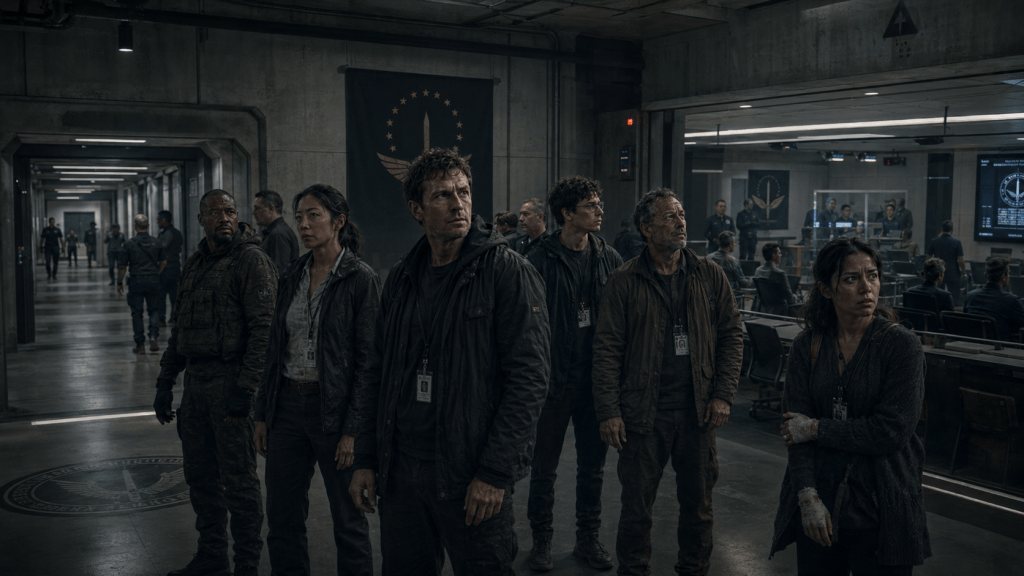
Escape appears at the end of each displacement, close enough to create relief and compromised enough to destroy it.
The group may wake inside a familiar institutional room, walk through a corridor they remember, hear the same procedural language, or see the first signs of the world they left behind. Then a detail refuses to fit. A flag carries the wrong history. A building belongs to a different authority. A relationship has changed. A record denies someone’s existence. A date places them inside a life that never happened. A briefing begins again with people who should already know the truth.
The contradiction may reveal itself immediately or remain buried beneath days of apparent safety. Its scale changes as the series develops, moving from environmental wrongness towards personal displacement, institutional divergence, altered history, repeated orientation, and deeper uncertainty about whether any baseline reality still exists.
The False Return serves a larger purpose than surprise because it erodes the idea that home remains a fixed destination.
At first, the participants want to complete the task and wake up. Later, they want proof that their original world still exists. Eventually, they begin asking whether every return belongs to the same system and whether the memory of home has become another instrument used to keep them moving.
Through that progression, the cycle teaches them that relief can become another form of containment and that familiarity can carry its own threat.
The Body Remembers Every World
The body becomes the clearest record of what the programme refuses to explain. Pain survives transition. Bruises remain after apparent extraction. Cuts continue healing across worlds. Swelling lasts. Fatigue deepens. Sleep loses its ability to restore. Sensory changes begin as small irregularities, then gather into a pattern the participants can no longer dismiss.
The series treats biological change as existential loss. The survivors gain no heroic abilities, clean advantages, or reassuring sense of evolution. Their bodies become increasingly compatible with the system and increasingly distant from the lives they entered with.
That change creates a fear larger than injury, because even if the original world remains reachable, the people trying to return may no longer belong inside it.
The cycle enters through the wrist, the temple, the nervous system, memory, perception, and the body’s attempt to survive repeated displacement. Each return carries them closer to the system that studies them, and further from any simple definition of home.
The body remembers because the worlds were real, and the body changes because the cycle was never a simulation.
What Does Escape Mean After the First Return Fails?
The opening question is simple: can they get out? The answer grows less stable with every book, because escape may mean completing the task. It may mean surviving the world. It may mean reaching the military base. It may mean proving that family, history, and identity still exist in the form they remember. It may mean finding a reality where their bodies remain accepted and their memories belong to the same past.
Each apparent answer exposes another layer of uncertainty, and the six continue because movement feels closer to freedom than surrender. They resist because resistance remains one of the few choices the system has yet to translate fully. They protect one another because loyalty carries meaning beyond measurable outcome. They search for home because accepting its loss would mean accepting that the cycle has already changed the purpose of survival.
The deeper danger grows quietly, because the longer they try to escape the system, the more the system and the survivors become part of one another.
Books in the Calibration Cycle