Historical fantasy set in a Britain becoming England, where relics carry the weight of older belief and magic is losing the world it needs to survive
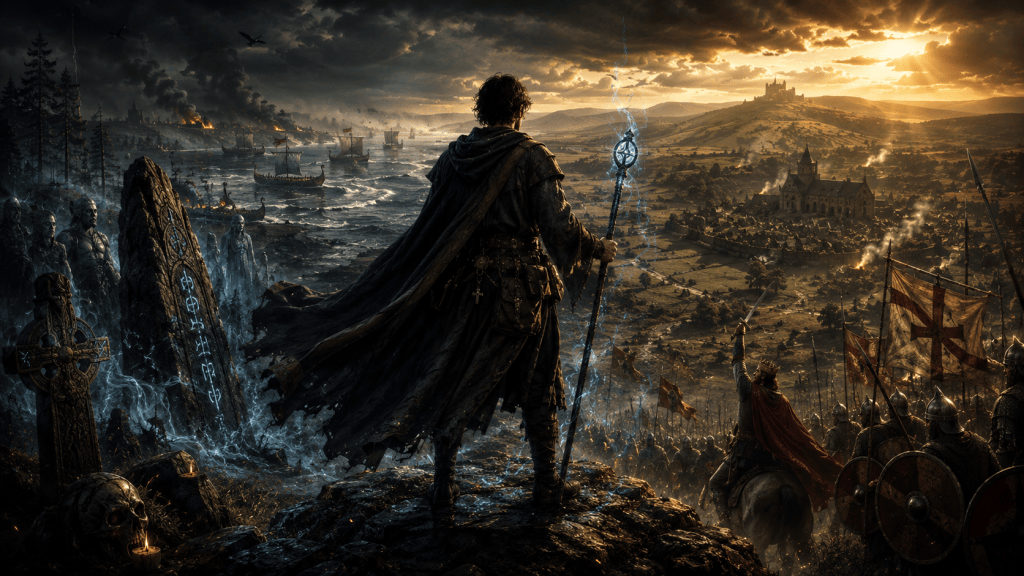
Britain stands between worlds. Kingdoms rise beside old roads, monasteries hold records that can travel farther than armies, Norse ships bring raiders, settlers, traders and families into a landscape already divided by older loyalties, and the Church extends a form of authority capable of crossing borders that kings still struggle to hold. Beneath that visible history, another change is taking place. Runes lose their meaning when the land around them changes. Relics preserve memories that have outlived the people who understood them. Older practices survive through body, place and repetition, while the growing structures of faith, law and political order steadily narrow the spaces where such power can remain whole.
Eadric has been trained to enter those spaces for the Church. He travels as a relic-hunter, carrying discipline, instruction and a belief that dangerous things can be identified, contained and removed. His work begins with objects, old sites and forces that Church teaching struggles to describe cleanly. Across the series, that work draws him into something far larger than any individual relic. He moves through the first wounds of the Viking Age, through widening Norse settlement and conflict, through changing kingdoms and expanding Christian authority, and eventually towards a world where land, household, loyalty and political responsibility bind him to the very transformation he once observed from the road.
At the centre of that transformation stands a question greater than the survival of any single object or tradition. The world around Eadric is learning how to hold together through stronger systems of law, belief, governance and identity, while the older forms of magic depend upon local memory, inherited meaning and ways of living that cannot easily survive such change. England is forming, and every step towards greater stability carries something else towards the edge.
A Historical Fantasy Series About a World in Transition
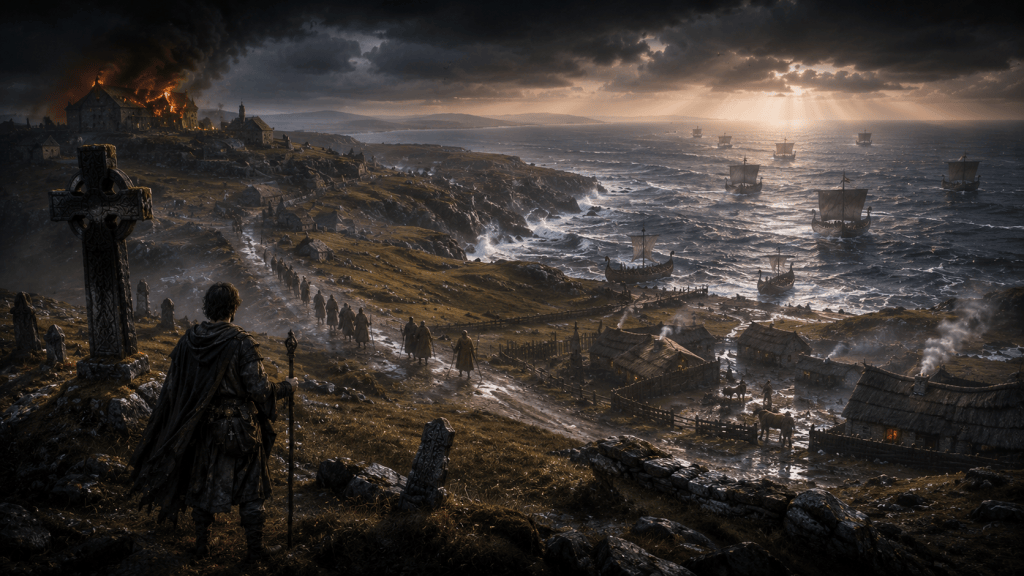
The Last Rune Keeper follows history through the people forced to live inside its movement. Early medieval Britain is politically fractured, geographically difficult, vulnerable along its coasts and tied together through roads, rivers, monasteries, households and local loyalties that carry different meanings from one region to the next. Authority can be powerful in one settlement and uncertain beyond the next ridge. News travels slowly. Rumour may reach a village before soldiers do. A raid on a distant coast can alter the way priests secure a gate, the way travellers study the horizon, or the way a family decides whether another winter can be trusted.
The series begins within that uncertainty and grows alongside it. Eadric’s earliest work keeps him close to Church houses, relics, instruction and the quiet pressure of things brought into consecrated spaces from a world whose older systems have never fully disappeared. As the historical landscape widens, so does his place within it. Norse presence changes from distant fear to human contact, settlement, negotiation, conflict and cultural permanence. Kingdoms face pressures that demand stronger coordination. Church networks grow in reach and confidence. Local practices continue where people still understand them, even as the meanings attached to land, objects and sacred places begin to shift.
History remains recognisable throughout that movement. Kings, Churchmen, families, warriors, settlers and ordinary communities shape the emerging political world through human decisions, ambition, fear, survival and belief. Magic exists inside that history as another form of inherited reality, one whose survival depends upon conditions that history itself is steadily changing. The result is a series where the supernatural carries weight because the physical world around it remains so grounded. Rain matters. Distance matters. Hunger matters. Roads matter. A monastery wall matters. The meaning attached to a field, boundary, burial place or carved piece of bone matters because people have lived beside those things long enough for memory to become part of them.
This gives The Last Rune Keeper its deeper direction. The story asks what happens when a society becomes more capable of governing itself while becoming less capable of sustaining forms of understanding that once belonged naturally within everyday life. Greater order brings safety, communication, law and collective defence. It also brings definition, fixed interpretation and a growing pressure towards shared structures. Some things fit inside that future. Others slowly lose the relationships that once allowed them to exist.
Eadric: The Relic-Hunter Between Worlds
Eadric begins inside the Church because the Church gives his life shape. It provides teachers, rules, routes, records and a purpose that feels clear enough to follow. Relic hunting sits within a difficult part of that structure, where doctrine and lived experience meet objects that refuse to behave as doctrine expects. Eadric enters that work as someone trained to observe before acting, to control his own responses, and to treat uncertainty as something that can be reduced through discipline.
His value grows from an ability that places him in an unusual position around magic. Eadric does not command the forces he encounters. He interferes with the conditions that allow them to remain aligned. A rune may weaken around him. A relic may lose part of its outward influence. A dangerous response may be disrupted long enough for an object to be moved or contained. That interference makes him useful to Church authority, especially when ordinary methods fail, while every encounter also exposes the limits of the role he has been given.
Suppression brings time. It rarely brings a final answer. A relic that falls quiet can still carry whatever made it dangerous. A rune may fail after its relationship with place has shifted, even while the mark itself survives. Eadric gradually learns that his presence can interrupt a magical condition while leaving the deeper causes untouched. The knowledge changes how he understands his work because each successful containment begins to carry a second question: what has actually been made safer, and what has merely been moved elsewhere?
The cost is physical as well as moral. Forced interaction with relics and magical structures can leave fever, blurred vision, loss of coordination, sensory disturbance and bodily exhaustion behind. His growing perception of magical patterns offers little comfort because increased understanding brings greater awareness of consequence. Impressions begin as fragments, sensations and structures he can barely interpret. Across the wider series, those fragments organise themselves into patterns that reveal direction more clearly than outcome. Eadric becomes increasingly able to sense where change is leading while remaining unable to stand outside that change.
His importance therefore grows through proximity and responsibility. He travels through places where Church authority, old practice and political transformation meet. He carries the ability to alter what happens there, while the meaning of that ability becomes harder to separate from the larger process unfolding across Britain. The further he travels, the more difficult it becomes to believe that he is merely removing dangerous objects from an otherwise stable world.
Britain Before England
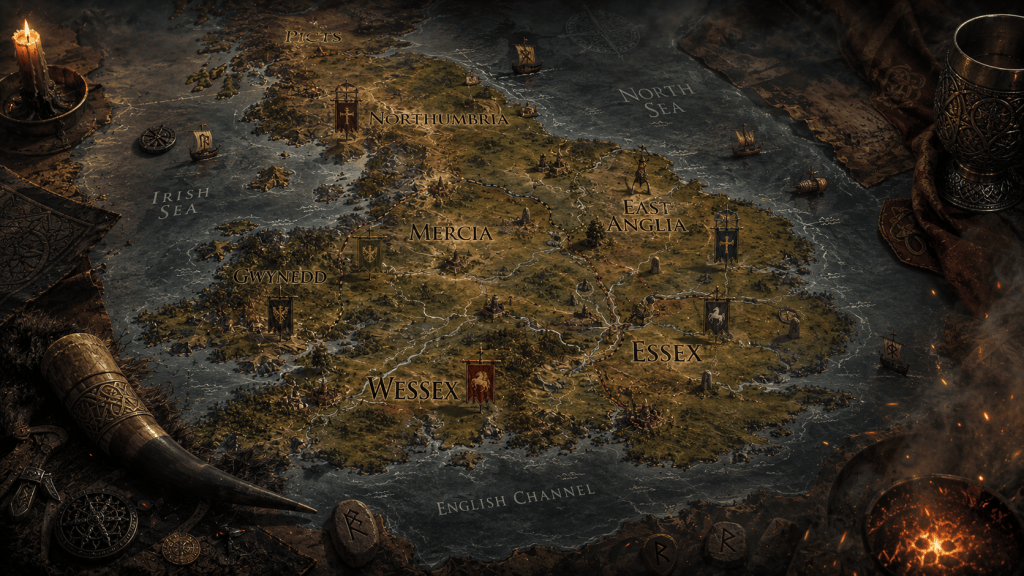
The Britain Eadric crosses is a landscape of kingdoms, local rulers, Church houses, farms, settlements, old boundaries and difficult distances. Political identity belongs closely to place and loyalty. Power rests where it can be enforced, recognised or inherited, leaving borders vulnerable to pressure and authority dependent upon the people capable of carrying it from one region into another.
Travel gives that fragmentation physical form. A road may connect important centres while still leaving travellers exposed between them. River crossings create points of control. Coastal communities live with a horizon that can carry trade, weather or violence. Inland settlements may hear of distant events through travellers whose information has passed through several hands before reaching them. A decision made far away can arrive first as rumour, then as fear, and only later as official instruction.
Norse presence deepens the uncertainty because it changes across time and place. A group arriving by sea may come to raid, trade, settle or pursue a purpose shaped by circumstances that shift between seasons. Families and communities follow paths that armies alone cannot explain. Settlement creates a deeper pressure than invasion because people begin to share land, routes and resources while carrying different understandings of law, belief, obligation and sacred meaning.
That changing human landscape matters as much to the supernatural one. Old practices depend upon continuity. A boundary has power partly because generations understand what the boundary means. A place carries memory because people continue to behave as though that memory matters. When settlements move, land is reassigned, religious use changes or political authority gives a place a new purpose, the physical ground remains while the relationships attached to it begin to alter.
Across The Last Rune Keeper, Britain therefore acts as more than setting. It applies pressure to every part of the story. History changes what people can believe, where they can live, which authorities they can trust and what forms of power remain possible. The map itself may look familiar across decades, while the world held inside that map changes profoundly.
The Church: Structure Against Uncertainty
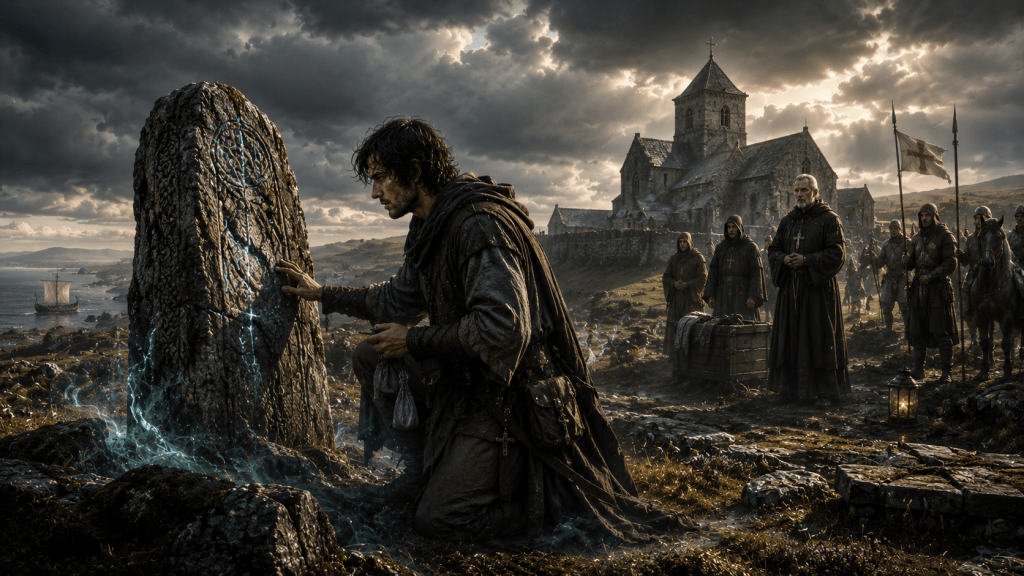
The Church reaches across fragmented Britain through something few other institutions possess at the same scale: continuity. Monasteries preserve records, clergy carry doctrine between regions, written communication allows instruction to survive distance, and a shared religious structure creates connections that can extend beyond the immediate authority of individual rulers. In a landscape shaped by local loyalties and unreliable communication, that network offers a form of stability capable of travelling.
That stability explains part of the Church’s relationship with magic. Its practical experience tells it that relics, runes and older forms of power can affect people, places and physical conditions. Its deeper concern lies in governability. Magic tied to local meaning, inherited practice and individual capability cannot be applied consistently. A relic may respond in one place and fall quiet in another. A rune may remain active while a particular relationship with land survives, then lose its function as that relationship changes. Embodied practices may depend upon knowledge that can only be maintained through participation.
The Church responds by classifying, containing and removing where it can. Minor objects may be destroyed. More significant relics may be sealed, transported or passed towards stronger authority. Relic-hunters occupy the difficult space between doctrine and experience, sent towards things that Church structures recognise as dangerous even when the language available to describe them remains constrained.
This creates tension inside the institution itself. Individual clergy may approach the same object with fear, curiosity, caution, compassion or certainty. A monastery can serve as sanctuary, archive, administrative centre and place of genuine faith while still participating in a larger process that changes the meaning of the world around it. The Last Rune Keeper keeps that tension human. Church authority can preserve lives and destroy continuity within the same historical movement. Its strength comes from structure, and that structure carries consequences far beyond any single decision.
For Eadric, this becomes increasingly personal. The institution that trained him also gave him the skills needed to recognise the gaps inside its understanding. He continues to move through its routes and obligations even as direct experience teaches him that control, danger and preservation rarely divide along clean lines.
Runes, Relics and the Conditions of Magic
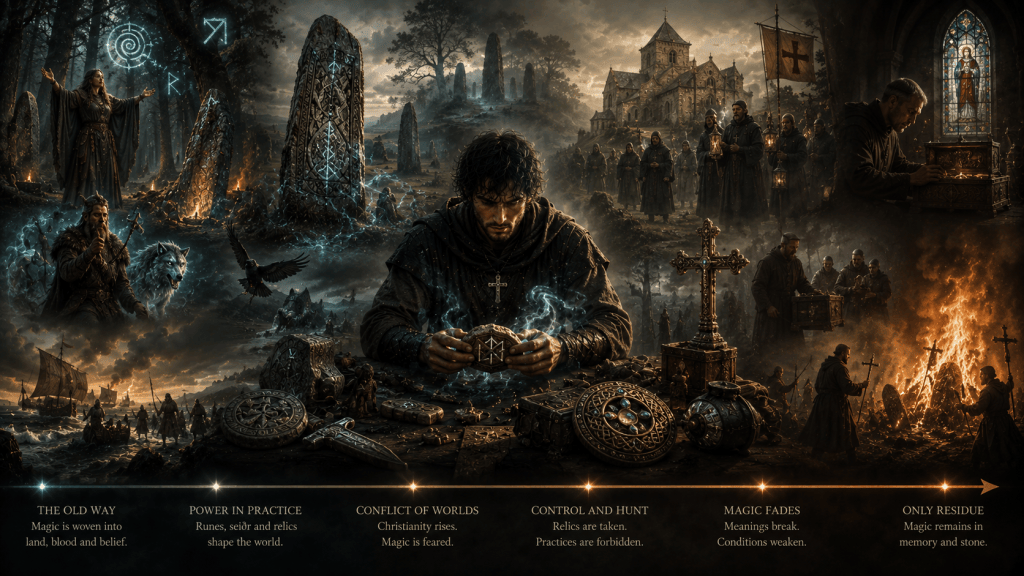
Magic in The Last Rune Keeper lives through relationship. It exists where meaning, place, memory, body and belief remain aligned closely enough for an older condition to continue. Power therefore belongs less to spectacle than to continuity. A carved mark can matter because people have understood and used it in the same relationship with a place for years. An object can retain influence because repeated ritual, memory or significant experience has become fixed within it. A practice can survive because a person has learned through lived participation how body, breath, environment and belief connect.
Runes offer one of the clearest expressions of this structure. Their function depends upon more than inscription. Form, context, understanding and established purpose must remain aligned. A mark carved into wood, bone or stone may remain physically clear long after the conditions that once allowed it to act have weakened. A boundary rune can lose its function because the meaning of the land around it has changed. The mark survives. The relationship that gave it force has begun to fail.
Relics preserve more of their conditions inside themselves. Some may have been deliberately created, while others have accumulated significance through use, ritual or proximity to events powerful enough to leave an imprint. Their stability makes them valuable, dangerous and difficult to manage. They may affect perception, respond to proximity, alter physical surroundings or interact with other magical structures in ways that exceed Church classification.
Embodied practice exists closer to the person. Within Norse traditions, forms such as seiðr emerge through participation, body, breath and a lived understanding of the world. They resist standardisation because the practitioner forms part of the condition itself. Such power can be immediate and responsive, carrying physical and psychological danger as the boundary between individual control and the wider forces being engaged begins to weaken.
These forms share one vulnerability. They require continuity. When the social world changes the meaning of a place, interrupts a practice, redefines land, replaces a ritual or separates an object from the relationships that sustained it, magic loses more than access to power. It loses the structure that made power possible.
Sigrun: A World That Needs No Permission
Sigrun enters Eadric’s life from a cultural understanding that operates along different lines from Church doctrine. Her relationship with belief has no need for institutional explanation before it becomes real. Land, weather, body, memory and inherited practice already belong within the same lived world, giving her a coherence that Eadric finds difficult to fit inside the categories he has been trained to use.
Her strength comes from that coherence as much as from anything she can physically do. Sigrun has no need to reshape herself around Eadric’s expectations, and she carries little interest in making her world easier for him to classify. She acts according to an understanding that has its own history, limits and costs, leaving Eadric to confront a truth that becomes increasingly difficult to avoid: unfamiliarity and disorder are very different things.
The wider Norse world around her carries the same complexity. Raiders exist alongside settlers, families, traders, fighters and communities building lives in new places. Belief varies between individuals and circumstances. Older practices remain embedded in daily life rather than arranged as a single organised magical religion. The sea, weather, land, inherited memory and bodily participation can all carry sacred meaning because the division between ordinary existence and spiritual experience is less rigid.
Sigrun gives that cultural difference a human centre. She carries conviction, practical judgement and an identity capable of surviving sustained contact with Eadric’s world. Her importance across the series grows from the fact that she remains recognisably herself while their lives become increasingly entangled. She offers an alternative way of understanding what Eadric encounters, while carrying her own limits, loyalties and pressures into every choice.
Eadric and Sigrun: Two Systems Sharing the Same Ground
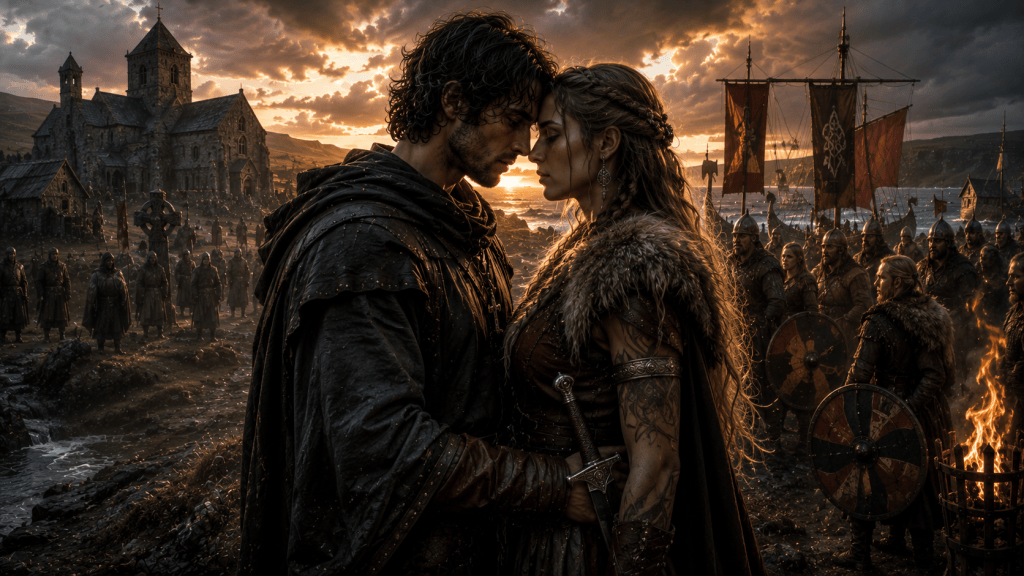
Eadric and Sigrun grow closer through experience long before any shared understanding can become simple. Their relationship develops through repeated contact, practical cooperation, danger, disagreement and the accumulation of moments where trust has to be extended ahead of certainty. Each brings knowledge the other lacks, and each carries assumptions that remain difficult for the other to accept.
That difference gives their connection its weight. Eadric belongs to a structure that depends upon hierarchy, record, doctrine and controlled interpretation. Sigrun comes from a world where belief survives through participation, memory and practice. Their lives can occupy the same physical space while their understanding of that space remains divided. A relic, a boundary, a ritual or an act of protection may carry very different meanings to each of them, even when both are responding to the same danger.
Cooperation therefore carries emotional consequence. The more they rely upon each other, the harder it becomes to retreat into the safety of separate systems. Eadric can encounter places where Church training gives him too little understanding, leaving Sigrun’s knowledge essential. Sigrun can face magical conditions where Eadric’s ability to interfere changes what becomes possible. Functional dependence grows through lived experience, and emotional dependence begins to follow.
Their attraction exists inside that tension. It grows from proximity, contrast, trust and the recognition that each carries a way of living the other cannot simply absorb. Love, when it develops, cannot erase culture, belief or history. It makes every division more immediate because the argument between systems has entered the space between two people who increasingly matter to one another.
Across the wider series, that connection becomes one of the most human expressions of the historical transformation taking place around them. They are drawn together by differences that remain real, and the world gradually makes those differences harder to keep separate from questions of land, authority, family and survival.
A World Where Magic Is Losing Its Place
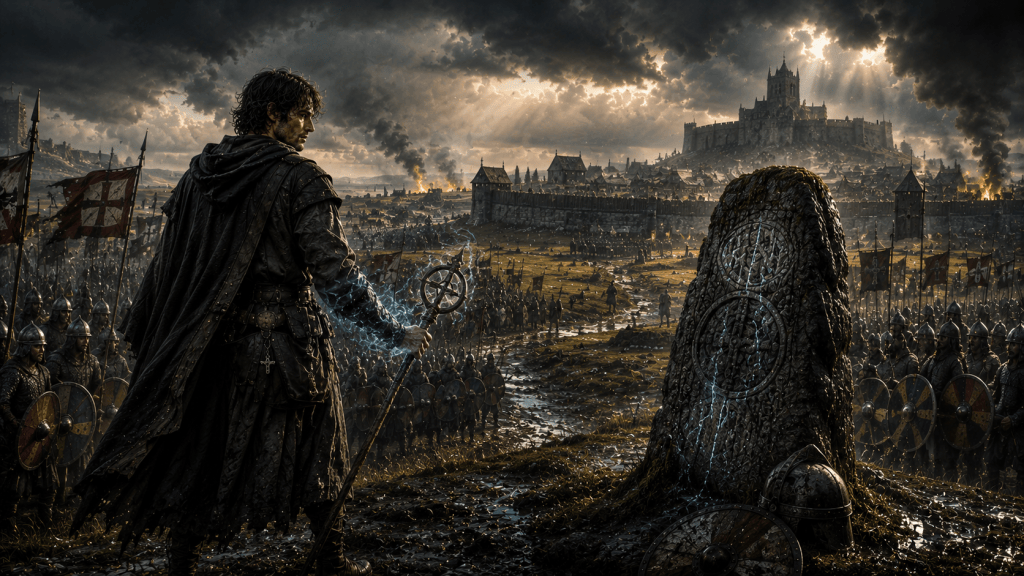
The fading of magic begins long before anyone can stand far enough away to understand the full pattern. A rune ceases to respond where it once held. A relic behaves differently after removal from its original setting. An inherited practice becomes harder to sustain because fewer people share the understanding that once surrounded it. A sacred place survives physically while the meaning carried by generations begins to shift.
None of these changes requires a single enemy. They emerge from the wider transformation of society. Written law replaces local interpretation. Political authority redefines boundaries. Church consecration gives older sites new meanings. Settlement changes how land is occupied. Roads and communication strengthen connections between regions. Practices once carried through memory encounter systems increasingly capable of preserving knowledge through record and enforcing meaning through institutional continuity.
Magic suffers precisely because it belongs to the older relationships being altered. Its survival requires variability, inherited understanding and the continued connection between people, place and practice. A world moving towards greater consistency steadily reduces those conditions.
Eadric’s own role becomes harder to escape as he recognises the pattern. His work has always involved interruption. He can weaken alignment, suppress a response and create temporary stability around dangerous magical conditions. Across years of repeated encounters, those local actions begin to resemble the wider historical process. The Church changes meaning through doctrine. Political authority changes land through law. Eadric changes magical conditions through his presence.
He becomes important because he repeatedly stands where these pressures meet. Responsibility grows long before complete understanding arrives, leaving him to confront the difference between acting with good reason in the moment and understanding what thousands of such actions may help create over time.
The defining movement of The Last Rune Keeper grows from that recognition. Magic is losing its place because the world around it is becoming something else, and the people caught inside that transformation still have to decide how to live while both realities remain present.
From the Road to Land, Household and Responsibility
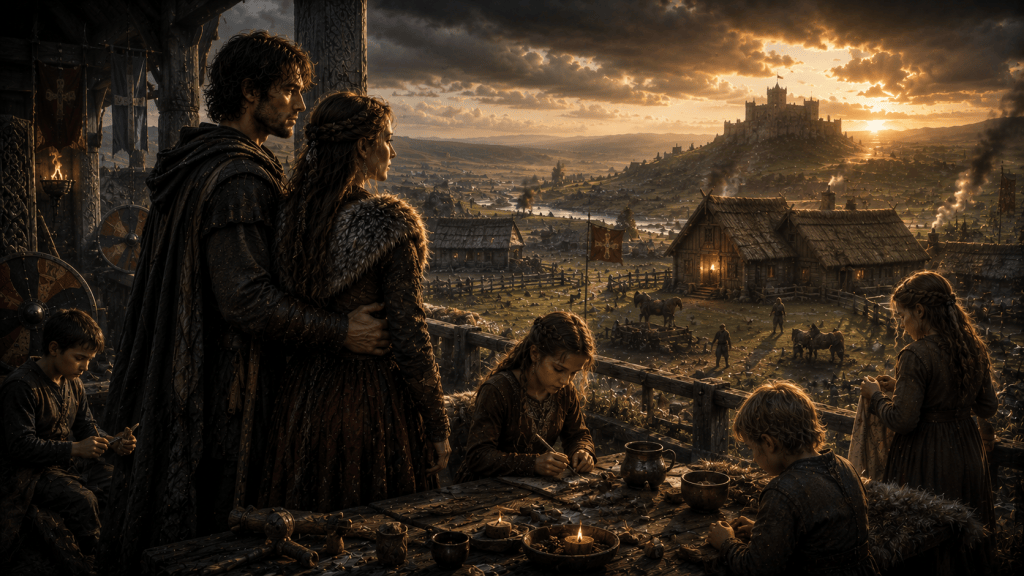
Eadric’s early life is defined by movement. Relic hunting carries him into unfamiliar places where he can observe, act and eventually leave. That pattern creates distance between action and consequence because the communities affected by a decision remain behind when the road carries him onward.
The scale of the series changes as Eadric’s place in the world changes. Travel gradually gives way to stronger forms of attachment. Land, political responsibility and household bring consequence closer because decisions remain present after they are made. Protecting a place requires more than arriving during a crisis. Holding land means answering for the people living upon it, recognising larger authority, managing obligations and deciding what forms of practice can continue inside a space that others increasingly expect to be governed.
Household life brings the cultural pressure between Eadric and Sigrun into daily experience. Belief becomes part of how a home is ordered, how children understand the world, how land is treated and how outside authority interprets the people living there. Church expectation and Norse continuity can occupy the same household while retaining different ideas of what survival, loyalty and sacred responsibility require.
The widening into family gives the series a generational dimension while preserving the intimate scale that gives the historical movement meaning. The emerging world is inherited unevenly. Different members of a family may respond to law, Church authority, Norse belief and fading magic according to their own experience. What began as friction between institutions eventually passes through relationships, choices and inherited responsibilities that no decree can resolve completely.
This later movement changes Eadric as deeply as any relic. A man who once travelled between systems gradually becomes part of the structure through which those systems meet. His responsibilities make neutrality harder to claim because land, family and political position force consequences to remain close enough to be seen.
The Making of England
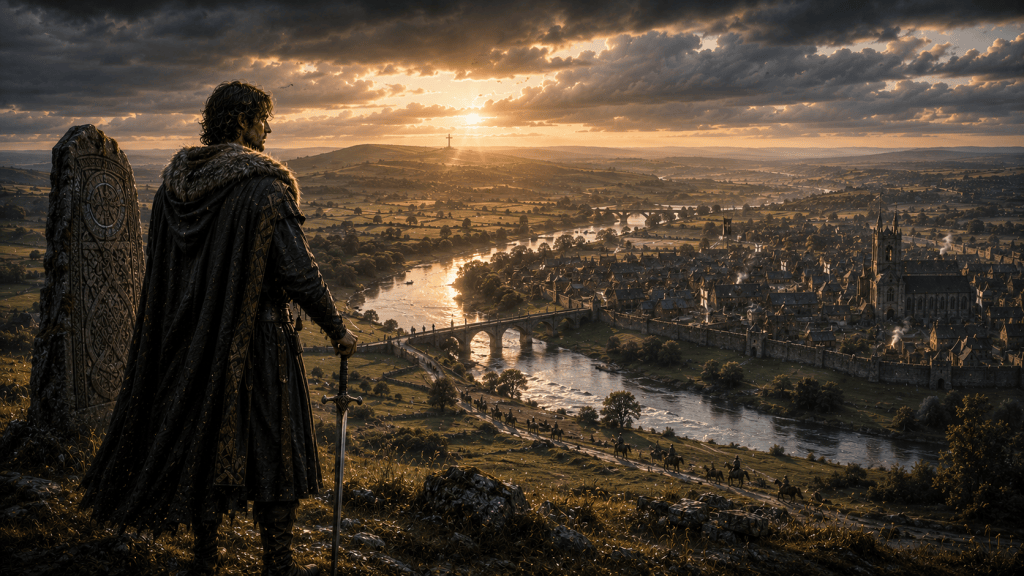
England emerges across The Last Rune Keeper as a historical process built through pressure, adaptation and repeated attempts to create greater stability across a fractured land. Kingdoms face raiding, settlement, warfare and internal competition. Defence requires coordination. Authority becomes more ambitious. Law and religious identity grow in reach. Norse communities become part of a changing political landscape through conflict, settlement, agreement and cultural adaptation.
That movement creates real gains. Stronger structures can protect larger territories, organise military response, move information more effectively and establish rules that survive beyond the life or presence of a single local authority. Communities that once depended heavily upon immediate relationships become connected to systems capable of extending across far greater distances.
The same process reduces variation. Local understandings come under pressure from wider definitions. Land gains legal and political meanings that can displace older associations. Church teaching spreads through networks that can preserve and reproduce a shared interpretation more effectively than practices carried mainly through oral memory and participation. The emerging world becomes easier to govern because more people are expected to understand authority through common structures.
That gives the historical movement its cost. The Last Rune Keeper treats England’s formation as an achievement built alongside forms of loss that history often leaves at the edge of the record. A more coherent society can protect people while narrowing the space available to customs, meanings and forms of belief rooted in local continuity. Magic becomes part of that loss because the relationships sustaining it become increasingly difficult to preserve.
Eadric and Sigrun live inside both sides of the process. They experience the value of stability and the pressure it places upon what once existed outside central definition. Their lives become tied to the emerging structure even as parts of their shared world grow harder to carry forward. The result is a historical fantasy series where national formation remains human, political and recognisable, while the supernatural reveals another layer of what cultural change can cost.
Why The Last Rune Keeper Is Different
The Last Rune Keeper approaches historical fantasy through pressure instead of spectacle. The magic remains physical, restrained and dependent upon context. The historical world continues to move through human action. Relics matter because they have survived relationships that the present can barely understand. Runes matter because meaning can outlive function. Cultural conflict matters because people can care for one another deeply while carrying beliefs that refuse easy reconciliation.
The series begins with relic work because relics offer the clearest point of contact between the old world and the emerging one. From there the story widens naturally. Roads lead towards raiding and settlement. Church authority meets Norse presence. Personal uncertainty becomes cultural conflict. Cultural conflict enters relationships. Relationships become household. Household becomes land, loyalty and generational consequence. All of it unfolds against the long historical movement towards England.
Readers entering the series can therefore expect a continuing story shaped by old roads, monasteries, coastlines, villages, working landscapes, religious houses, Norse settlements, changing kingdoms and the people forced to make choices inside them. The supernatural remains close to wood, stone, bone, blood, breath, memory and belief, giving every magical encounter a sense of physical consequence.
At the centre remains Eadric, travelling farther into a transformation he was trained to manage long before he understood that management itself could become part of the change.
Published Books and Reading Order
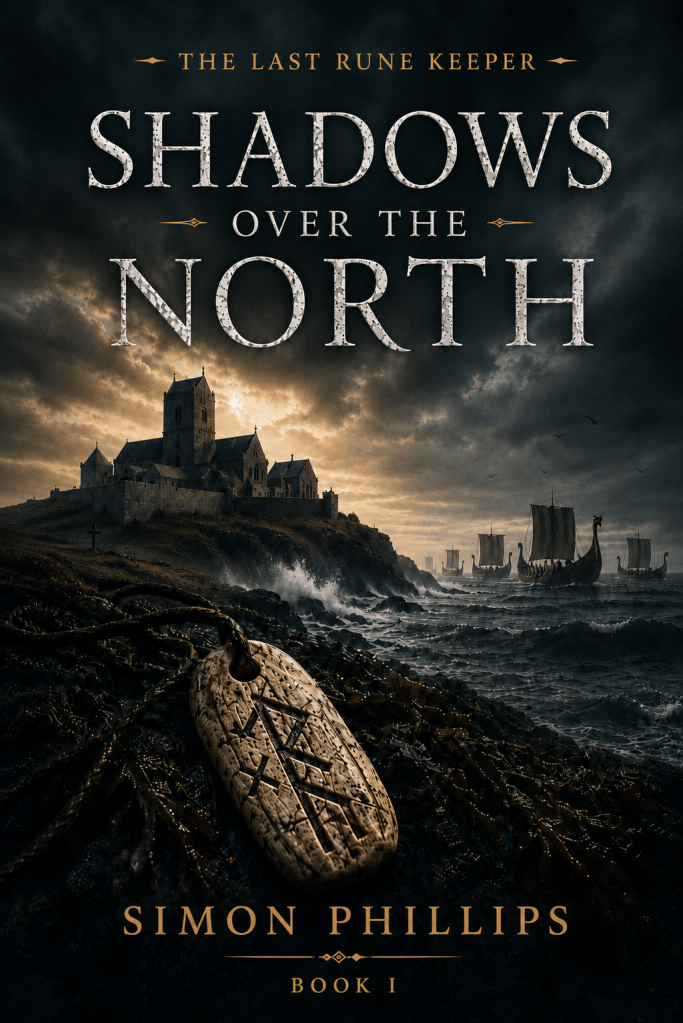
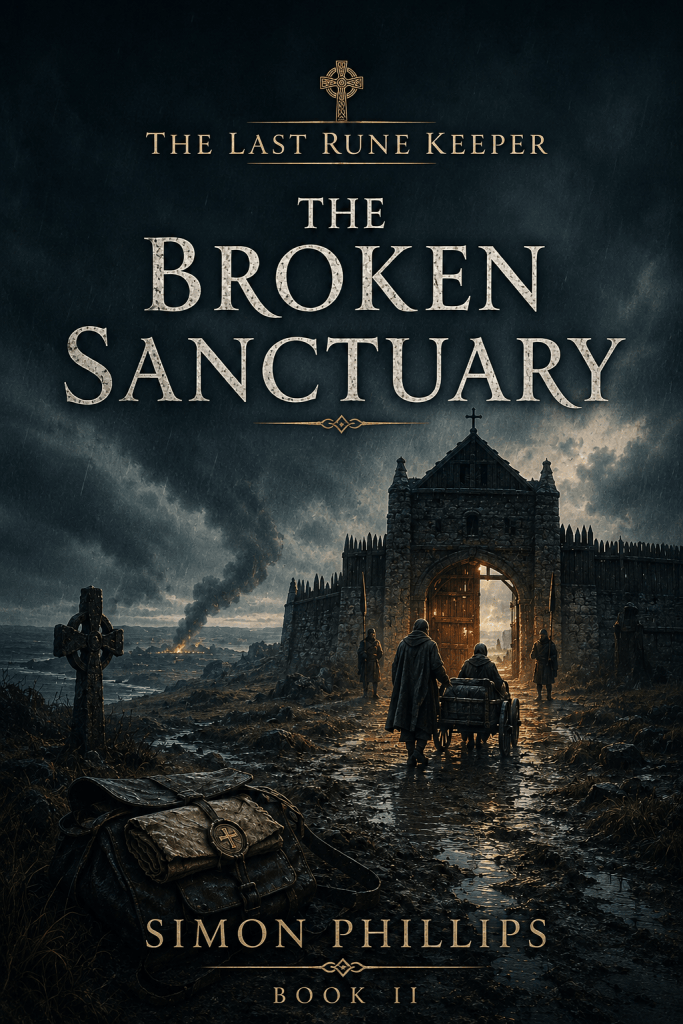
Latest from The Last Rune Keeper
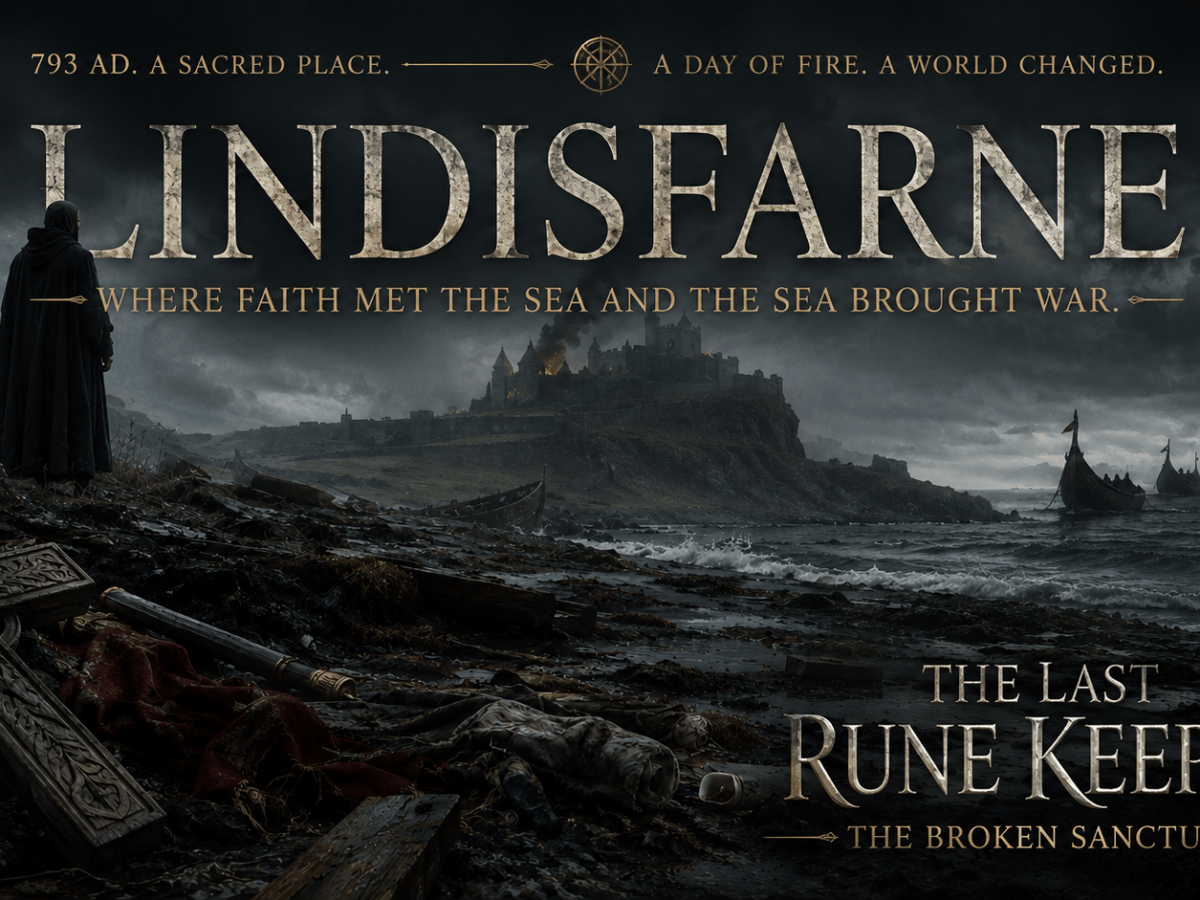
After the Viking Raid on Lindisfarne: Sanctuary, Fear and Faith in Anglo-Saxon Britain
In 793, Lindisfarne was attacked and a sacred place once thought secure became proof that the sea could carry danger straight into the heart of Christian Northumbria.
The raid lasted a day. Its fear travelled far longer, carried along roads, through monasteries, across household thresholds, and into a Britain already beginning to change.
Explore the…
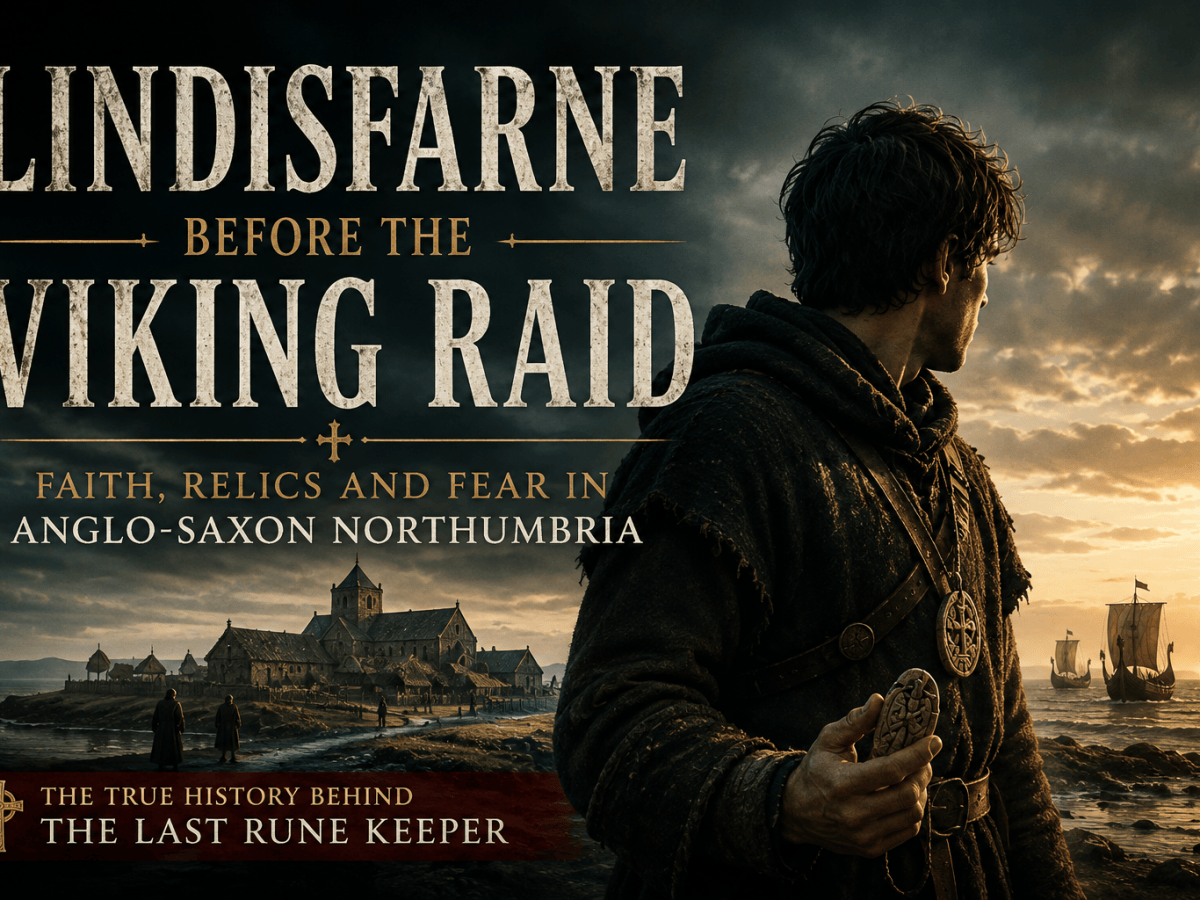
Lindisfarne Before the Viking Raid: Faith, Relics and Fear in Anglo-Saxon Northumbria
Before England existed, the Northumbrian coast was already changing.
In 793, the raid on Lindisfarne became one of the defining moments of Viking Age Britain, striking at a monastery bound to faith, kingship, relics and the memory of St Cuthbert. Yet the world surrounding that raid was far more complex than Vikings against Anglo-Saxons.
This…
