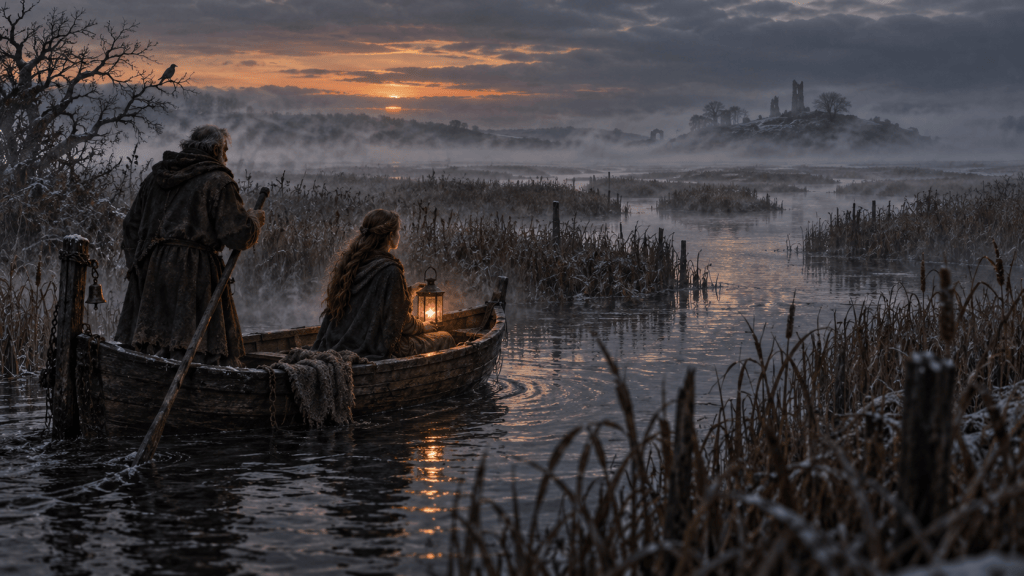
On the final crossing before winter, an ageing ferryman carries a young woman towards an island that disappeared from the marsh generations ago.
Estimated reading time: 5 minutes.
By the time Jory Venn hauled the last mooring rope through the iron ring, dusk had flattened the Greyfen marsh into pewter channels between black reeds, and the first skin of winter ice had begun to gather along the shore. He had covered the ferry lantern and stacked his pole beneath the gunwale when footsteps came down the plank path behind him.
The young woman stopped beside the weathered post, carrying a hooded lantern in one hand and a leather case in the other. Her cloak was travel-stained, and when she looked across the marsh she seemed to be measuring distance against something only she could see.
“You’ve left it late,” Jory said, keeping one hand on the rope while his eyes moved towards the thickening mist. “Where are you trying to reach?”
“The island beyond the Crown Reach,” she said, giving a small inclination of her head. “My name is Elianor.”
Jory rested the rope against the post and studied her. “No island has stood beyond that reach in my lifetime, and I’ve spent most of it crossing these waters.”
“There was a landing there once,” Elianor replied, taking a dark silver seal from the leather case. “Perhaps this will persuade you that I know the place I mean.”
It was worn smooth at the edges, with the old split crown of Greyfen pressed deep into its face. Jory had seen the same mark half-erased on stones beneath newer jetties and carved into the oldest timber in his ferry shed. He looked from the seal to Elianor, then towards the mist swallowing the far bank.
“If I take you out there and find reeds, you’ll still owe the fare,” Jory said as he loosened the rope again.
The young woman answered with a faint smile and stepped aboard. Jory freed the ferry from the post, and the marsh closed around them quickly, the landing lamp shrinking behind the reeds as he worked the long pole through water he knew by depth, pull and resistance. She settled near the bow with the old lantern between her feet, speaking only when the channels divided, and each turning she named made the familiar water shift beneath his understanding.
“Take the left fork after the drowned gate,” Elianor said, leaning forward as broken stone appeared beside the reeds.
Jory eased the ferry round with a practised turn of the pole. “That’s Marsh Hook. Always has been.”
Elianor kept her gaze on the stones as they passed. “It was a gate before the road sank.”
Her words carried the quiet correction of someone remembering where a chair had once stood in a room. As they moved farther into the marsh, she called a low ridge of masonry the eastern landing, though Jory had crossed above those stones since boyhood and thought of them only as a place where nets snagged. When the lantern’s covering shifted in the breeze, a narrow gold line moved across the water, and for several breaths he saw squared foundations beneath the black surface where he had always believed the marsh bed lay empty.
“What are you carrying?” Jory asked, slowing the ferry until the pole rested against his shoulder.
Elianor placed one hand over the lantern’s warm metal crown, and the composure in her face softened as she looked down. “The last light of Greyfen.”
Jory waited for more, though none came. The flame behind the glass was small and steady, yet wherever its glow touched the marsh, old shapes gathered briefly through the water and mist, a blackened post rising beside steps that descended beneath the channel before the broken edge of a causeway appeared farther on.
He pushed them onwards, watching those vanished traces appear and fade beside the ferry while Elianor kept one hand upon the lantern. Ahead, the mist thinned so gradually that he first took the darker mass for reeds, until stone steps rose from the water, followed by a low landing and bare trees whose branches lifted around fragments of wall that should have lain generations beneath the marsh. Jory knew this stretch through summer drought and winter flood, and there had never been land beneath his boat.
“Do you want me to wait?” he asked, catching the landing with his pole, though he already knew there would be no return fare.
Elianor stepped ashore and turned towards him, the lantern casting warmth over her tired face. “No, Jory. You have already brought me farther than anyone else could.”
He watched her walk between the ruined walls until the mist reduced her to a moving glow, then to a single point of gold among the stones. The light faded there, softly enough that Jory almost missed the moment it went, and as darkness settled, the landing, bare trees and broken walls thinned with it, dissolving into reeds and open water around the ferry. Jory remained in the channel until cold worked through his gloves, then turned towards home.
The royal seal lay on the bench where Elianor had been sitting, solid beneath his thumb when he picked it up, while the marsh stretched around him exactly as it had every winter of his life. As he guided the ferry back through the dark, the broken stones beside the channels no longer looked like debris, only the last traces of roads, doorways and crossings that had once carried people home, and Greyfen felt older in its absence than it ever had in ruin.
Author Note
The Last Lantern of Greyfen grew from the idea of a place that had already disappeared from history, yet had one final thing left to surrender. I liked the thought of an ordinary ferryman travelling through a landscape he believed he knew completely, only to discover that the ruins and old stones around him had once belonged to a living world.
At its heart, this is a story about memory, disappearance, and the quiet moment when something finally passes beyond anyone’s keeping.
Monthly Free Stories is a project where I publish complete pieces of fiction here on my website. The stories can move between fantasy, horror, science fiction, historical fiction, mystery, and anything else that suits the idea. Each one is written to stand as a finished story in its own right and is freely available to read.
If you enjoyed this story, you can explore more free fiction on the website or take a look at my published books.
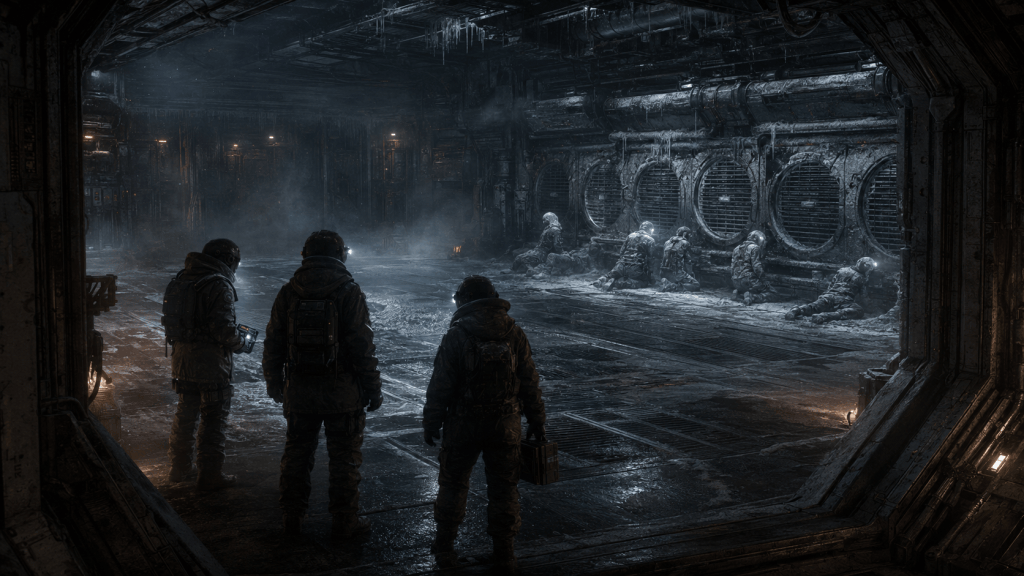
A first-response team entered a silent auxiliary station and found its frozen crew gathered beside the ventilation grilles, as though listening to something the official record could not call a voice.
Where the Air Was Still Moving
Morrow Auxiliary Four hung beneath the shadow of a stripped iron moon, turning through the scattered light of the Kheled Verge with its guidance lamps reduced to a single pale line along the docking collar. From the forward glass of the ESC response cutter Ardent, the station resembled a piece of discarded machinery caught above the moon’s broken horizon, its habitation drum dark, its service spine edged with frost, and its two external relay vanes locked at different angles as though work had ended in the middle of an ordinary adjustment. The stars remained clear around it, sharp against the absence of local traffic, while the cutter moved closer under restrained thrust and received only the same faint carrier pulse repeating every eleven seconds from a communications array that had missed three scheduled reports. Morrow Four still held power somewhere inside its hull, although every system meant to welcome an approaching vessel had fallen silent.
Medical Response Officer Lena Oras watched the station grow across the glass while cold gathered through the soles of her boots from the cutter’s forward deck. The Ardent had left a Republic-linked freight lane six hours earlier with a four-person response team, a sealed medical cradle, and an initial failure notice describing fourteen missing workers as a probable life-support casualty. That description had followed them through the dark in clean official lettering, joined by estimates for coolant loss, communications collapse, and evacuation delay, each possibility familiar enough to fit inside the equipment stacked behind Lena’s seat. Even so, the station ahead carried an order that the report had failed to describe, because the docking arms remained folded, the maintenance crawler sat secured in its rail, and every outer hatch showed green seal integrity while the people responsible for those systems had vanished from the network together.
“Range is four hundred metres, and the collar still refuses an active handshake,” pilot-specialist Corin Jale said as he leaned over the approach board and reduced the cutter’s forward drift. He ran two fingers along the response trace, then glanced towards Lieutenant Harun Cade at the rear of the flight deck. “I can place us against the passive guides, Lieutenant, although the station will be accepting us from stored instruction. If the clamps close, they may have no live controller behind them.”
Cade tightened the seal at his right wrist and studied the docking image from beside Lena’s chair. The lieutenant had spent most of the approach speaking in the even practical tone of someone refusing to let uncertainty set the pace of a room. “Bring us in on mechanical capture and keep our data link narrow,” he said as he rested one hand against Corin’s seat. “If Morrow tries to widen the exchange after contact, isolate the cutter first and ask questions once our own systems are clear.”
Engineer Sera Quill shifted inside her harness near the rear equipment rack and raised the station diagram across her forearm slate. “The carrier pulse includes a valid house key from the previous shift,” she said while the habitation layout opened in dim blue lines. “That gives us access through Dock Two and the central service passage. It also tells us somebody left the communications shell running long enough to load the current key before the reports stopped.”
Lena turned from the station and checked the fourteen crew identifiers waiting on her medical display, where each name held the same unresolved grey field beside life status. “A valid key tells us the station remembered its last instruction,” she said as she secured the display against her sleeve. “It gives us very little about the people who entered it.”
The Ardent crossed the remaining distance with the low vibration of manoeuvring jets passing through its frame. Morrow Four slid above the forward glass until the docking collar filled the view, scarred by mineral dust and old repair plates whose Republic contract markings had faded into dull red bars. Corin brought the cutter between the passive guides with small measured corrections, and the hull answered each thrust with a pressure that moved through Lena’s ribs. Contact came as a firm metallic knock, followed several seconds later by the deeper pull of clamps closing around the cutter’s docking lugs one after the next.
Corin held his hands above the controls while a thin status line travelled across the board and stopped short of completion. “Mechanical capture is secure,” he said as he watched the unfinished line remain in place. “The station accepted our mass and sealed the collar. Its traffic system still refuses to acknowledge that we arrived.”
Cade released his harness and stepped into the narrow aisle between the seats. “Then we treat the collar as unsecured beyond our own hatch,” he said while drawing his helmet forward from the equipment rail. “Closed suits, local air, cold lights, and a fixed line back to the cutter. Sera reads systems, Corin holds the link from this side, and Lena stays behind me until the receiving lock gives us a clear environmental picture.”
“I heard the order,” Lena replied as she lifted the medical pack onto her shoulders and met his eyes through the rising edge of her faceplate. “If someone is alive in there, I move when the reading supports it. You may complain after I bring them back.”
Cade’s expression softened for a moment as he locked his helmet ring into place. “Bring them back first, Officer Oras,” he said while the suit display painted a faint amber reflection across his face. “I will prepare a thorough complaint for the return flight.”
The docking passage opened ahead of them beneath two strips of emergency light that brightened slowly from red to weak amber. Lena followed Cade through the cutter hatch with Sera close behind, their boots crossing the flexible collar while the metal around them carried a distant shiver from Morrow Four. The station-side seal showed full pressure, although the indicator took three attempts to settle on a stable figure, sliding from breathable mix to sensor review and back again before Sera placed her glove against the manual reader. A line of frost had formed around the inner frame, pale and delicate across hinges that had seen years of freight dust, coolant vapour, and human hands.
Sera angled her helmet lamp across the lock and traced the pressure feed to its local panel. “Temperature sits at nine below, oxygen is low yet serviceable, and air movement is holding at preservation draw,” she said as she expanded the environmental reading. “The habitat heaters dropped out in stages. Ventilation kept running at reduced load after the main grid fell away.”
Cade looked through the small window set into the inner hatch, where a reception passage extended beyond the glass in blue shadow. “Any atmosphere event strong enough to kill the full crew?” he asked as he raised one gloved hand towards the manual release.
Lena checked the pressure history moving along her wrist. “No rapid loss, no fire purge, and no toxic warning preserved in the local buffer,” she said while the final six hours arranged themselves into a descending temperature curve. “Cold could have killed them after prolonged exposure. It fails to explain why every medical tag disappeared from the station board before the habitat reached freezing.”
Cade held her gaze for a second through the faceplate, then turned the release wheel. The inner hatch withdrew with a slow grinding pull, allowing a blade of colder air to cross their suits and carry the smell of metal, stale filtration, and something faintly sweet from the unheated passage. Their helmet lamps reached over wall cabinets, two empty pressure-suit cradles, and a row of work boots left beneath the crew board. One boot lay on its side near the centre of the deck, its laces open, while a thermal coat remained hooked above it with a station badge fixed neatly to the breast.
Sera stepped through after Cade and swept her system reader along the walls. “Local current is present in the emergency run, and the habitat door reports sealed open,” she said as she stopped beside the abandoned boot. “The board has erased crew location data. I can see the memory blocks where the tags should sit, all of them cleared within the same minute.”
Lena crouched beside the boot and moved her lamp across the deck. A shallow crescent of frost marked the floor around its heel, interrupted by a dragged line leading towards the habitat passage, while the thermal coat above it showed no sign of hurried removal. “Someone came through here after the temperature fell,” she said as she rose and followed the line with her light. “They lost the boot, kept moving, and left the warmest coat on the wall.”
Cade faced the dark passage beyond the reception lock and increased his lamp until the beam reached a junction thirty metres ahead. “Morrow Response, this is ESC Lieutenant Cade aboard the Ardent,” he called through his suit speaker while his free hand remained close to the restraint weapon at his hip. “We are inside Dock Two and moving towards habitation. Any crew member receiving this call, answer through local comms or strike a bulkhead three times.”
His voice travelled into the station and returned as a thin reflection from the metal walls. For several seconds the only reply came from the ventilation system, a low pull of air passing through service channels behind the panels with enough force to stir fine frost from a grille near the ceiling. Then a softer sound moved beneath it, carrying the rounded shape of a human vowel before pressure flattened it into the hum of the duct.
Sera lifted one hand and turned her helmet towards the grille. “Hold your next call,” she said as she brought the acoustic trace onto her slate and watched a narrow band rise through the airflow noise. “There was something inside the return line. It could be a damaged announcement fragment crossing from the habitat speakers.”
Cade kept his lamp on the grille while he opened a local record marker. “Log it as an untraced acoustic event,” he said as his thumb moved across the suit control. “We follow the crew search route and leave the duct sealed until you have a source.”
Lena remained beneath the grille long enough to hear the airflow draw through it again. The sound carried no clear word, only a fragile lift and fall that resembled a person speaking from the far side of a closed door, and her training supplied a dozen mechanical causes before memory could offer a human face. She turned towards the habitat corridor, where Cade had begun moving under the emergency lights, and followed with her medical scanner open across the centre of her visor.
They passed the galley first, finding cups secured in their wall recesses and a half-completed shift list waiting on a table beneath a film of frost. The next compartment held six sleep berths with their curtains drawn back, blankets folded at the foot of four mattresses, and one personal lamp still glowing beside an unfinished message slate. Every room carried the marks of people expecting to return within minutes, while the dragged frost lines on the deck led deeper towards Habitation Junction South, crossing each other at corners and converging along the route taken by the station’s main return ducts.
Sera slowed beside a wall panel where the service diagram showed three ventilation branches joining beyond the next hatch. “All return airflow passes through the south junction before it reaches the exchange stack,” she said as she placed her glove against a vibration in the metal. “The pressure is low, although this panel feels warmer than the corridor. Something in the exchange route still carries load.”
Cade reached the junction hatch and studied the narrow darkness beyond its window. “Officer Oras, I have a possible casualty,” he said as he shifted to one side and directed his lamp through the glass. “Three metres inside, seated against the left wall. I need your reading before we enter.”
Lena moved beside him and lifted the medical scanner towards the window. The beam crossed a figure wearing station overalls, knees drawn close to the chest, one bare foot resting against the deck where frost had closed around the skin. The figure’s head leaned towards a service grille at shoulder height, and one hand remained pressed flat across the mesh with the fingers spread as though feeling for air. Her scanner searched through the hatch, returned no cardiac activity, and placed the time of death somewhere inside the long fall of the station’s temperature.
“Adult male, preserved by cold, with no visible suit breach or external injury,” Lena said as she forced her breath into a slower rhythm and widened the scan. More shapes appeared beyond the first body, soft grey outlines gathered along the far wall and beneath the ceiling returns. “Harun, there are at least seven people inside that junction, and every one of them is facing a grille.”
Cade lowered his head for half a second, then raised it as duty settled back across his posture. “Record before entry and keep the hatch between us and the room until Sera checks the air path,” he said while his lamp moved from one frozen face to the next. “These people came here together, so we learn what brought them before we follow the same route.”
The ventilation shifted beyond the glass, drawing a veil of frost from the nearest grille and carrying the sound through the sealed hatch with startling softness. This time the shape lasted longer, rising beneath the mechanical pull as though a tired speaker had formed two words and lost them inside the metal. Lena saw the dead man’s hand against the mesh, the waiting turn of his head, and the seven pale faces angled towards the same narrow opening while her suit recorder struggled to decide whether it had captured airflow or speech.
Sera stepped back from the hatch, her system reader trembling slightly in her grip. “The station archive will call that duct resonance,” she said as she looked towards Cade through the blue light. “Lieutenant, it sounded like someone asking us to come closer.”
Cade kept his eyes on the people gathered beyond the glass and sealed the junction access beneath a restricted-entry marker. “Then we stay here,” he said as his hand remained firm against the manual lock. “We listen from this side until we understand why fourteen experienced workers chose the other one.”
Station Record: Morrow Auxiliary Four
Morrow Auxiliary Four occupied a narrow maintenance orbit above an iron-rich moon on the southern edge of the Kheled Verge, positioned where three freight routes crossed before separating towards the outer extraction fields. The station had been built to support the civilian haulers, mineral carriers, maintenance cutters, and survey vessels working beyond the reach of the larger Republic-linked ports.
Its original structure consisted of a docking collar, a service spine, and two rotating relay vanes assembled from prefabricated industrial sections. Later contracts added a habitation drum, an equipment store, and an environmental exchange stack large enough to sustain twenty-two workers. Permanent staffing rarely exceeded fourteen, with most shifts divided between traffic monitoring, relay maintenance, hull inspection, and emergency support for vessels crossing the Verge.
Life aboard Morrow Four followed the requirements of the freight lanes. Crews worked irregular shifts around convoy arrivals, equipment failures, and the long communication delays common beyond the central routes. The station possessed a compact galley, six shared sleeping compartments, a medical room intended for stabilisation work, and a narrow observation gallery overlooking the moon. Personal space remained limited, and most of the crew lived within hearing distance of the machinery that kept the station functioning.
The ventilation system formed one of its oldest surviving networks. Air drawn through the habitation compartments passed along three return branches before meeting at Habitation Junction South, where the combined flow entered the exchange stack beneath the service spine. Years of repairs had left the ducts lined with replacement filters, pressure regulators, and mismatched acoustic baffles installed under several different maintenance contracts.
Crew reports from earlier rotations occasionally mentioned vibration passing through the southern grilles when the exchange fans moved between operating levels. The station engineer had classified the effect as pressure flutter caused by the age of the return channels. Repair work had been scheduled twice and postponed after inspections found airflow within acceptable limits.
Morrow Four also carried a preservation cycle intended to protect critical equipment during power loss. When the main grid failed, the station reduced heat, lighting, and residential power while maintaining a controlled draw through the ventilation network. The system could slow corrosion, preserve medical supplies, and prevent moisture damage until a repair crew arrived. It had never been designed to keep the habitation compartments safe for prolonged human occupation.
The final routine report from Morrow Four described a minor irregularity inside the environmental exchange stack. One pressure sensor had begun correcting its own readings after each diagnostic pass, while a second registered short changes in airflow during periods when the fans remained at fixed output. The duty engineer opened a maintenance file and requested replacement components from the next scheduled supply vessel.
Two hours later, the station transmitted its last complete traffic update.
Over the following shift, all fourteen medical tags disappeared from the local crew board within the same minute. The main heaters then failed in stages, internal communications fragmented, and the preservation cycle assumed control of the remaining environmental systems. No decompression alarm, evacuation order, or fire warning entered the emergency archive.
The station continued transmitting a valid carrier pulse every eleven seconds.
When the ESC response cutter Ardent reached Morrow Four, the outer seals remained intact, the docking equipment accepted mechanical capture, and reduced ventilation still moved air through the darkened habitation drum. Inside, the crew’s abandoned rooms suggested an interruption measured in minutes. Cups remained secured beside unfinished meals, personal displays waited beside open messages, and thermal clothing hung where the workers had left it.
Every trace of movement led towards Habitation Junction South.
There, beside the oldest ventilation grilles aboard the station, the response team found the missing crew gathered in the cold.
About the Creator
The Future Chronicle is written and curated by Simon Phillips, a writer of science fiction and speculative storytelling who explores the fragile edges of human expansion, where freight routes, inspection bays, patrol vessels, and isolated industrial stations continue their ordinary work while larger dangers gather quietly beneath routine procedure.
Many of the stories presented in these Chronicles exist within wider fictional worlds shaped by workers, survivors, officers, and investigators who encounter the first signs of events far greater than they are prepared to understand. These settings remain grounded in lived environments, where machinery, bureaucracy, and human judgement often shape the path of catastrophe long before anyone can give it a name.
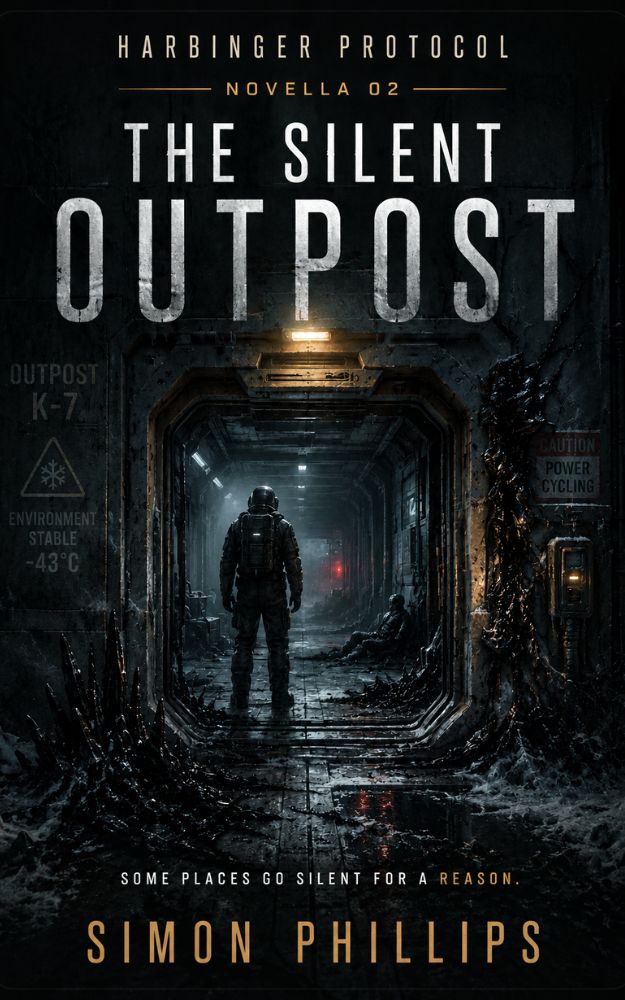
The Harbinger Protocol follow that unfolding pressure through the experiences of Soren Vale, beginning with the civilian freighter disaster recorded in The Ash in Transit and continuing into the colder, more procedural dread of The Silent Outpost, where isolated incidents begin to reveal the outline of something spreading across human routes and systems.
Readers who wish to explore the full opening phase of the Harbinger crisis can find the below.
The following Chronicle reconstructs the first-response search inside Morrow Auxiliary Four, where the crew of the Ardent found fourteen station workers gathered beside the ventilation grilles and began tracing the sound that had drawn them into the cold.
Readers supporting The Future Chronicle can continue the record below.
Subscribe to continue reading
Subscribe to get access to the rest of this post and other subscriber-only content.
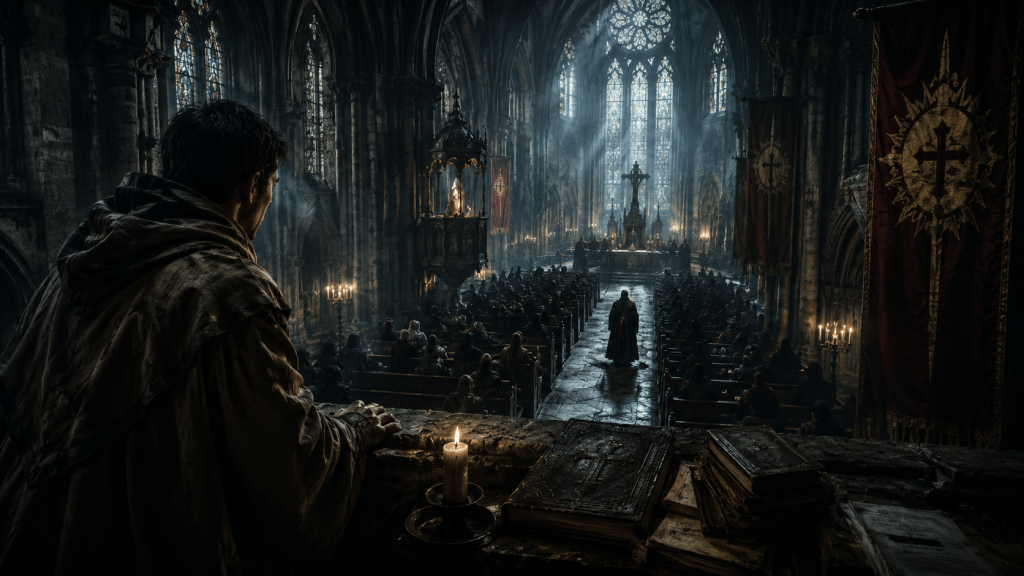
A chapel-side account of the morning Archbishop Alaric’s summons crossed the nave, and the old stones of Bremyra seemed to listen for what the Order might uncover beneath them.
Beneath the Morning Incense
The cathedral bell sounded before Bremyra woke, carrying one low note across the roofs while snow clung to gutters and harbour mist folded against the lower streets. Within the cathedral, Sister Maelis rose by the vestry door and held the taper dish until the tremor passed from her fingers. The bell had been rung by order, three strokes at Prime, a signal reserved for early confession, royal death, or the Archbishop’s own summons, and those beneath the vaulted roof understood that the hour had been claimed for disturbance still held behind closed doors.
She moved along the side aisle with the quiet expected near the sanctuary before first prayer, her woollen hem brushing the cold flagstones while the saints watched from shadowed niches. The candles before Christiana’s image had burned unevenly through the night, three guttered low into cups of hardened wax, one drowned where any draught should have failed to reach, and one still holding a straight white flame that gave no smoke. Maelis marked such things because small traces formed the language of holy houses, and that morning the language of the cathedral felt changed.
Brother Halven entered from the cloister carrying fresh coals beneath a linen cover, his shoulders raised against the cold that had crossed the yard with him. Frost silvered the edge of his beard as he lowered the tray near the chapel brazier, and the first breath of charcoal warmth stirred through the incense-heavy air. “The Archbishop has called for the red book and the winter register,” Brother Halven said, keeping his voice low while his gaze moved towards the closed door beyond the altar screen. “He wants the side chapel cleared before the second bell, and the western candles lit, every one of them.”
Maelis looked towards the sealed door behind the altar screen, where Archbishop Alaric Thorne had already gathered his senior clerks. A line of light glowed beneath the threshold and trembled across the stone, broken now and again by shadows moving on the far side. “For confession?” Maelis asked as she adjusted the taper dish against her apron, although the hush around the sanctuary had already carried the answer ahead of her question. “For a letter,” Halven replied as he lifted the linen from the coals. “A sealed one, brought before dawn from the upper house.”
The upper house meant the manor of the Order, though no servant of the cathedral needed the name spoken aloud. Across Bremyra, certain words drew eyes when carried too freely, and the Order remained one of those old shapes people recognised first through silence. During the previous day’s duties Maelis had heard fragments drifting through the nave as merchants crossed themselves too often, pages whispered near the font, and an old woman paused before Christiana’s image to ask whether magicians still cast shadows like other men. A letter beneath gold wax had entered the castle. Fires had been lit at the manor above the city. A magician had returned to Bremyra, depending upon the mouth that carried the rumour.
The door behind the altar screen opened while Maelis trimmed the third candle, releasing warm light across the sanctuary as Archbishop Alaric stepped into view with two clerks behind him. His robes were immaculate, dark beneath the white stole, and the embroidered signs of Christiana’s blessing caught dull gold where candlelight touched them. His face held the cold control that made merchants lower their gaze and nobles choose their words with care, though Maelis saw the set of his jaw and the stillness of his hands.
He crossed the sanctuary slowly, pausing beneath the great hanging cross, and looked along the empty nave towards the western doors. “The cathedral will open through the south porch after Prime,” Alaric said, his voice carrying to every servant in reach while his gaze settled on no one. “Those seeking blessing may attend the lesser chapel. The nave remains clear until I give further instruction.” Brother Halven bowed over the coal tray. Maelis lowered the taper dish against her apron and bent her head. The younger clerk shifted the parchments in his arms and glanced towards the sealed red book resting upon the lectern beside the choir steps. Alaric saw the movement, and the clerk stilled beneath his eyes.
“Send Tamor to the manor,” Alaric said as one hand moved to the edge of his stole. “He will carry my summons in formal hand. No page from the castle. No royal servant. The Church will speak through its own door.” The words entered the nave and appeared to remain there, held between stone and incense. The Order had entered Bremyra by royal receipt, with manor, lodging, clerk, and seal. Alaric’s reply would come from the cathedral, carried under Christiana’s authority, and every servant who heard the instruction understood that the summons also drew a boundary.
Tamor arrived moments later from the lower sacristy, still fastening his cloak across his shoulder, a narrow young attendant who copied hymn sheets during Lent and delivered alms lists when roads lay clear. One clerk spread a strip of parchment across the small side table, and the Archbishop dictated in a voice so measured that each word seemed chosen from a store of sharpened things. The letter named the Lord Magician with ceremony, acknowledged his presence within Bremyra, and required his attendance at the cathedral before the morning advanced beyond its first offices. It offered welcome in form, summons in substance, and warning in the spaces between its lines.
Maelis kept her eyes lowered while the letter was sanded, folded, and sealed, though she marked every sound. The scrape of the clerk’s knife against wax. The crackle of parchment drawn into shape. The press of Alaric’s ring into red. The small intake of breath from Tamor when the sealed letter was placed against his palms. Outside, the city gave its first waking noises, carts in the lower street, hooves near the fountain, gulls crying somewhere towards the harbour. Inside the cathedral, those daily sounds arrived muted and distant, as if Bremyra had been lowered beneath a bell jar.
Tamor bowed and departed through the south porch with Halven beside him to lift the bar. Cold air entered in a bright blade, cutting through incense and candle warmth before the door closed again. Alaric remained before the altar, his eyes turned towards the western shadow of the nave, where the great doors stayed barred against the morning. Then he spoke again, still facing the doors. “The lower archive door is to remain locked. The reliquary passage also. No attendant enters the undercroft unless Brother Osric stands present with the key.”
Maelis felt Halven’s gaze lift across the sanctuary. The undercroft lay beneath the eastern chapels, a place of stone shelves, sealed reliquaries, old burial slabs, and records older than most families still named in the city. Its door had always remained locked except during feast preparation or episcopal inventory, yet the Archbishop’s instruction gave usual caution the shape of sudden urgency. One clerk made a note with a hand that scratched too quickly. Maelis folded the taper cloth once, then twice, drawing the corners together until the linen edge pressed into her palm.
The Archbishop turned at last, and his gaze moved across them, measuring servant, clerk, brother, flame, door, and shadow. “Bremyra has been kept by the mercy of Christiana and the discipline of her Church,” Alaric said as his hand rested against the red book on the lectern. “No visitor, however adorned by old authority, receives freedom among its holy places.”
By the time the first worshippers came to the lesser chapel, the nave had been cleared, the western candles had all been lit, and the undercroft key had been removed from its usual hook beside the vestry inventory board. Maelis marked the empty place, and the bare shape of it troubled her more than the sealed letter or the closed nave. A key absent from its place meant a door expected pressure.
When the second bell rang, its sound travelled down through the tower and shivered along the pillars, and for a breath the floor beneath the choir seemed to answer with a low, buried tremor too faint for certainty and too near for comfort. Halven looked towards Maelis from the brazier. She looked towards the eastern steps. The candles before Christiana’s image leaned together in their cups, every flame bending towards the sealed undercroft door as though listening to something below the stone. The formal register preserved only the early summons, the restricted nave, and the Archbishop’s reception of an Order magician under conditions of proper ecclesiastical authority. Yet among those who tended the side chapel, a quieter memory endured: that before the summoned man crossed the threshold, the cathedral had already drawn its keys close, gathered its candles, and turned its attention downward, as though the Church feared the Order might hear something under Bremyra that holy stone had long been keeping silent.
A Visual Chronicle
Before the summoned magician crossed Bremyra Cathedral’s threshold, its candles had already turned towards the sealed door beneath the choir.
Cathedral Register: The Eastern Undercroft
The cathedral of Bremyra held an eastern undercroft beneath the choir and lesser chapels, entered by a narrow stair behind the vestry screen and recorded in the oldest inventories as a place of reliquary storage, burial tablets, sealed church papers, and foundation stonework retained from the first raising of the sanctuary.
A winter entry from the episcopal register recorded that access to the lower archive, reliquary passage, and undercroft was restricted on the morning of Archbishop Alaric Thorne’s summons to the newly arrived servant of the Order, with the key removed from the vestry board and placed under Brother Osric’s charge until the close of the day.
The cause of the restriction was entered only as ecclesiastical caution during reception of arcane authority, though a lesser chapel copy preserved additional remarks concerning candle movement near Christiana’s image, unusual stillness beneath the choir steps, and a low tremor felt during the second bell.
The same copy stated that the nave remained clear until the Archbishop’s command, the south porch alone being opened for lesser blessing, while the western candles were lit in full and the red book was brought to the lectern before the summoned guest crossed the cathedral threshold.
Later copies treated the matter as ordinary clerical procedure, yet one marginal hand described the undercroft as “held against inquiry” during the hour of reception, a phrase later scraped from the formal register while remaining visible in the chapel duplicate beneath a thin wash of pale ink.
The undercroft was afterwards entered as secure, its locks restored, its passages accounted for, and its foundation stable, though the winter register gave unusual care to the position of the key, the presence of witnesses, and the condition of the sealed lower door.
About the Creator
The Mythic Chronicle is written and curated by Simon Phillips, a writer of mythic and speculative fantasy whose work explores forgotten kingdoms, fractured records, old institutions, and the moments when history begins to shift before those living through it understand what has changed.
The accounts preserved within these Chronicles form part of a wider body of work in which castles keep older secrets beneath familiar rooms, roads carry rumours ahead of armies, and ordinary witnesses preserve fragments of events whose true meaning remained sealed from them at the time.
One such account survives in a separate record, following the return of a magician to Bremyra during a season of court unease, royal absence, Church suspicion, and gathering danger beyond the kingdom’s roads. What the servants, clerks, and watchers of the city remembered only in fragments is followed more closely in The Unmarked Path, the opening book of The Veil of Kings and Gods within The Chronicles of the Spiral Realms.
Readers who wish to examine that fuller account may find the record below.
What follows is taken from a later chapel account concerning the morning Archbishop Alaric Thorne sent formal summons to the newly arrived servant of the Order, while the eastern undercroft was placed under key and the cathedral nave held clear beneath the first offices.
Subscribe to continue reading
Subscribe to get access to the rest of this post and other subscriber-only content.
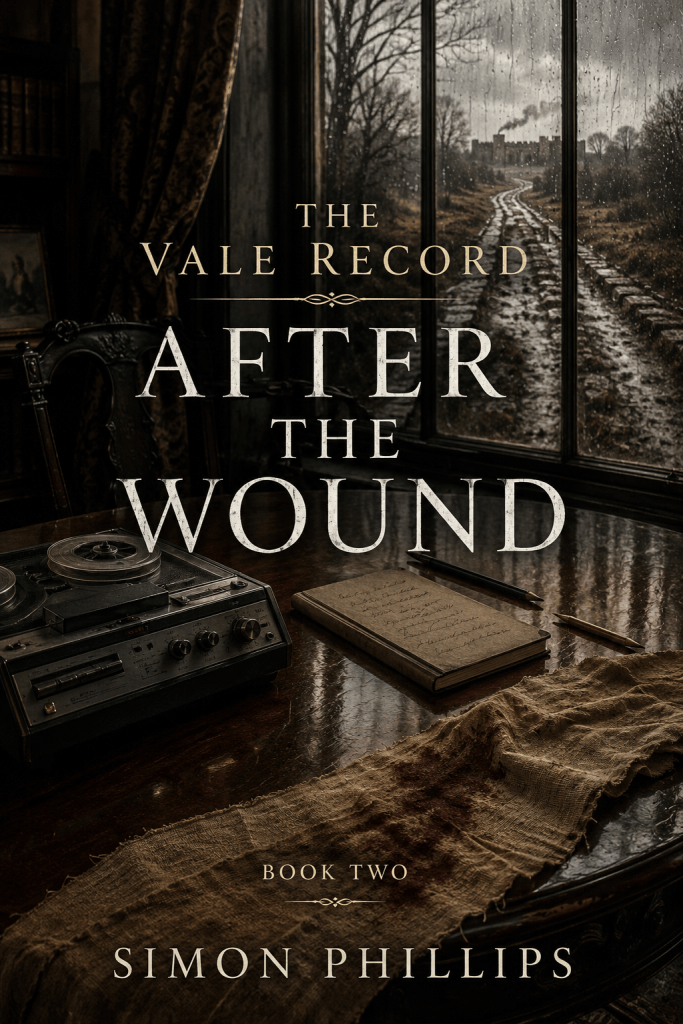
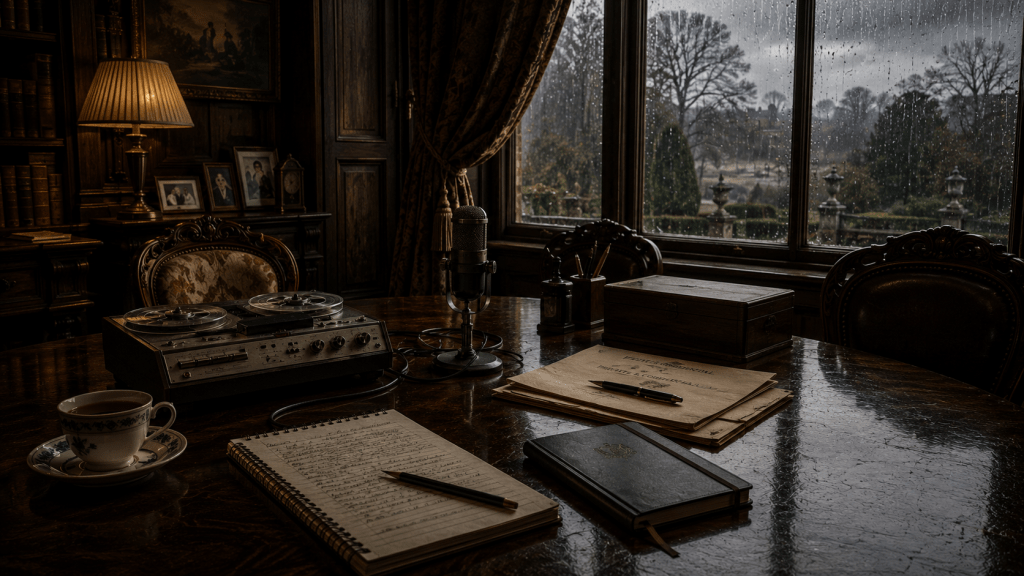
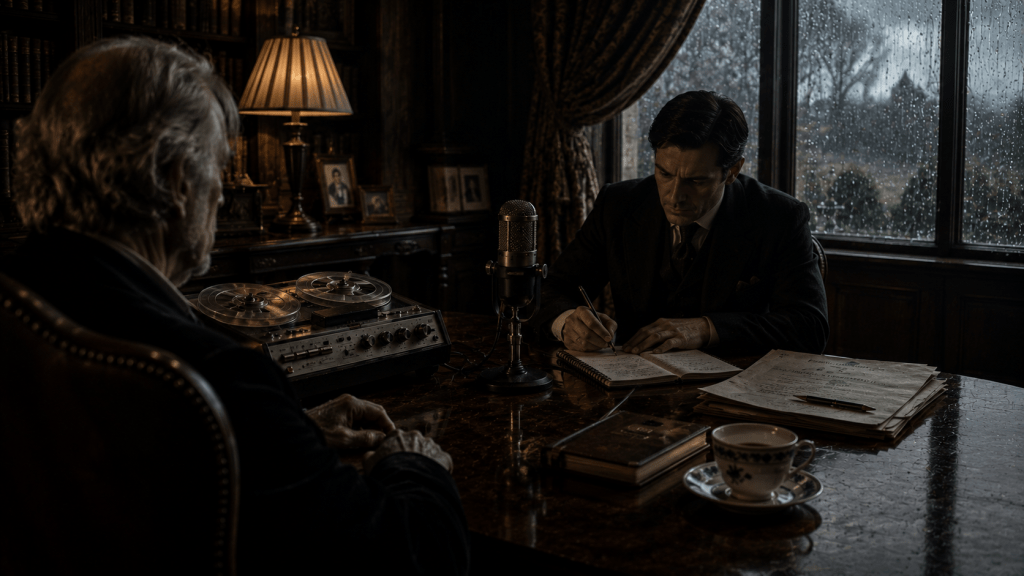
Rain presses against the glass of Vale House, soft enough to seem harmless until it begins to mark the room. On the table lies the recording equipment, the kind chosen because it feels deliberate, contained, almost old-fashioned; a machine with a patient wheel, a notebook, a pencil, a clean space on polished wood where memory is expected to become record. Marcus Vale sits nearby, old enough to be handled carefully by those who love him, composed enough to make that care feel almost unnecessary, and carrying within him a life that should have ended before the world became recognisable to anyone now living.
This is the pressure at the centre of The Vale Record, a work of historical vampire fiction where immortality is not treated as glamour, romance, or triumph. It is treated as evidence. It is there in the hand resting too long over an old wound, in the silence before Thomas Hargreave asks another question, in the family members who know too much and those who know almost nothing, and in the uneasy realisation that history may have been witnessed by someone who had no right to survive it.
The Vale Record: After the Wound, the second book in the series, moves deeper into that unease. The first book opened the record and allowed Marcus’s memory to return to a Britain standing on the edge of Roman invasion. This second entry turns toward the aftermath, where empire is no longer merely arriving through shields and terror, but settling into roads, grain tallies, labour demands, marked doors, and the slow rearrangement of ordinary lives. It is a book about early Roman Britain, quiet vampire horror, family secrecy, and the frightening moment when survival itself begins to look like something less human.
The House Where Memory Has Already Started to Damage the Present
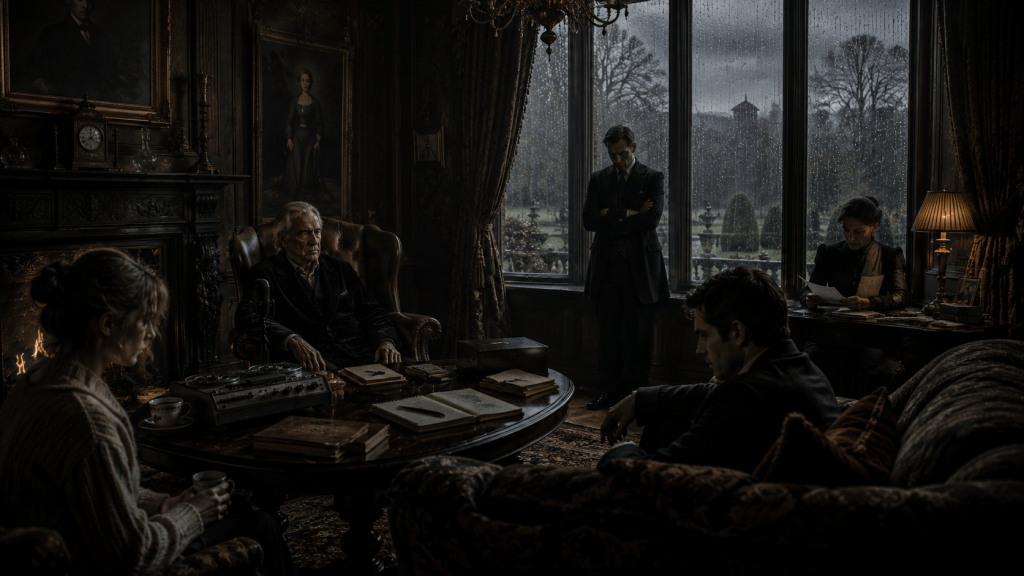
Vale House is not simply a grand old residence with a recording room inside it. It is a place designed by habit, silence, money, affection, and containment. Its surface remains domestic: tea cooling in mugs, doors closing carefully, family members crossing landings, staff moving quietly through rooms that know when to pretend nothing has changed. Yet after the first recording session, the house no longer feels neutral. The table has shifted. The chairs have been arranged with more intention. Margaret Vale has brought documents into a room where memory was supposed to be spoken, and Julian Vale no longer watches only the outside approach. He watches the room itself.
That alteration matters because After the Wound understands that testimony is not passive. Once Marcus speaks, other people change around what they have heard. Thomas Hargreave, hired as a careful archivist and private recorder, returns not with easy belief, but with discipline. He has listened to something that cannot be fitted safely inside accepted chronology, and walking away has failed to make it smaller. Margaret, alert to reputation and exposure, tries to turn fear into procedure. Eleanor Vale, emotionally close to Marcus and still kept from the central truth, feels the shape of exclusion even when no one will name it for her.
This is where the series becomes more than a tale of an immortal protagonist remembering the past. The present-day frame is alive. It tightens each time the recorder turns. Thomas is not merely preserving Marcus’s words; he is learning how to hear the pauses, the evasions, the places where memory becomes too exact. Eleanor is not simply waiting outside the truth; she is being wounded by the silence meant to protect her. Julian is not only a guardian of secrecy; he is a controlled danger inside the same room. The record is supposed to contain history, yet history keeps altering the people who gather to hear it.
Roman Britain After the First Violence
In many stories, conquest is treated as a dramatic moment: a battle, a burning settlement, a leader fallen, a people broken. After the Wound is more interested in what comes after that first rupture, when the smoke thins and the road remains. Roman Britain in this book is not presented through detached explanation or grand historical lecture. It is felt through hunger, wet ground, cold camps, grain moving under guard, doors marked for collection, men taken for labour, and families forced to decide which compromises will keep children alive.
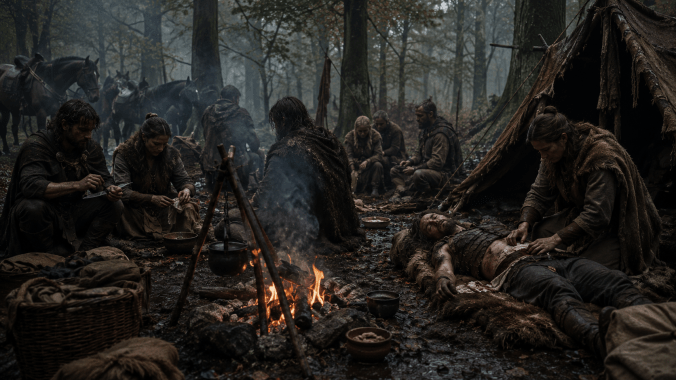
Marcus’s remembered world is one of displaced survivors moving through woodland and broken margins after resistance has been damaged. Aeddan’s group is not heroic in any clean or theatrical way. They are hungry, wounded, frightened, practical, suspicious, generous when they can afford it, and cruel when survival narrows the room available for kindness. Rheda binds wounds and sees too much. Celyn watches Marcus with gratitude that slowly becomes observation. Garan bleeds in a hollow after a raid, and that blood changes the book’s direction more deeply than the fight itself.
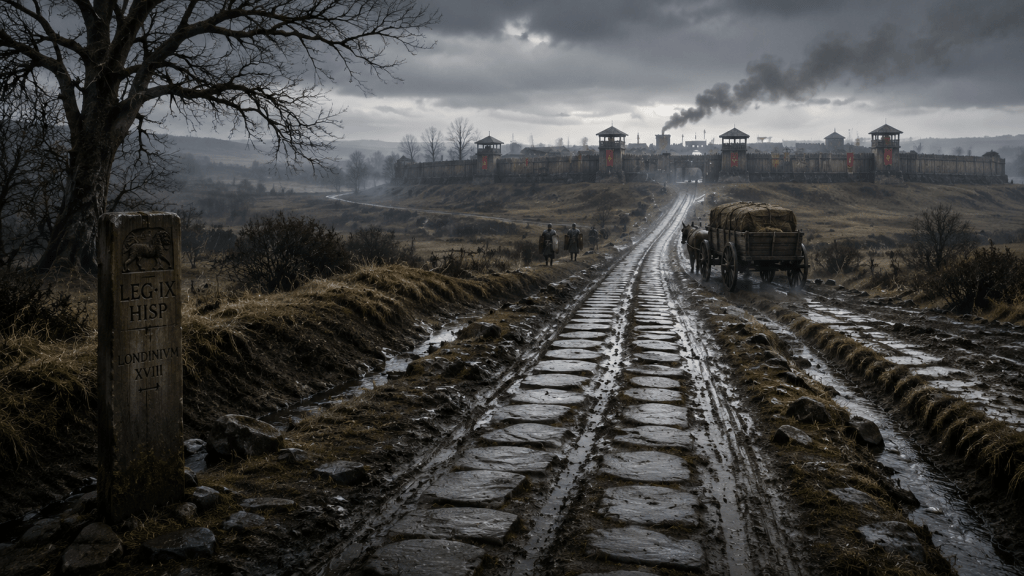
The Romans in the book are frightening because they stay. Their roads cut through the land with a permanence older tracks never claimed. Their carts carry grain away from people who need it. Their forts gather smoke in the distance. Their order is not supernatural, yet it possesses its own quiet horror: the horror of a system that returns every day until the people living beneath it must adapt, resist, collaborate, starve, or move again.
That grounding gives the book its force as British historical supernatural fiction. The vampire element does not rewrite Roman history or explain empire away. Marcus does not stand above events as a hidden ruler or secret architect. He survives among people being pressed by real historical forces, and the supernatural emerges through the body rather than through spectacle. Mud, iron, rain, leather, blood, hunger, and cold carry more weight than any dramatic declaration ever could.
The Body That Refuses to Behave Like a Human Body
The title After the Wound is exact because the wound itself is not the only terror. The terror lies in what follows it.
Marcus has already survived once when he should have died. In the second book, that survival becomes pattern. He wakes after another severe injury, lying in damp earth beneath trees, his body damaged enough that others believed him gone. Celyn finds him. Rheda examines him. The wound should remain open. He should be colder. He should be weaker. He should not be speaking so steadily, standing so soon, walking so far, or returning to usefulness while others carry injuries that scar, stiffen, and remain.
This is where the series becomes powerful as literary vampire fiction. Marcus does not understand himself through a burst of lore or revelation. He understands through discomfort. Through other people looking at him for slightly too long. Through Rheda’s practical concern when the body under her hands refuses ordinary sequence. Through Aeddan’s recognition that Marcus can do too much. Through Celyn’s quiet observation that Marcus looks the same while everyone else is changing.
The horror grows because Marcus remains morally awake. He is not frightened because he has become a monster in the simple sense. He is frightened because his body begins answering before he has given it permission. He runs too fast when Celyn falls. He carries too much after the grain raid. He heals too cleanly. He stands when other wounded men remain bound to the ground by pain. At first these differences make him useful, and usefulness is dangerous because people in desperate circumstances will accept almost anything that keeps them alive.
Yet usefulness is never the same as belonging. Aeddan understands this. People may lean towards what saves them, then turn against it once they feel ashamed for needing it. Marcus’s condition begins isolating him before anyone names it, and the book’s deepest unease lives in that space between gratitude and suspicion.
Blood, Shame, and the First Shape of Hunger
The most important moment in After the Wound does not arrive as a dramatic feeding scene. No one is attacked in theatrical fashion. There is no gothic flourish, no indulgent monster moment, no romanticised appetite. Instead, the horror arrives in a hollow after violence has already passed, when Garan is wounded and Marcus moves close with cloth in his hand.
The smell of warm blood reaches him. His attention narrows. The ordinary world recedes. His mouth dries. Something inside him leans towards the wound before he has shaped the movement into thought. His hand moves closer when it should be helping. Then shame catches up.
That is quiet vampire horror at its strongest. The danger is not spectacle. It is delay. The tiny interval between bodily impulse and moral control. Marcus’s fear is not that he has become powerful, but that part of him may move before choice arrives. That single recognition changes how he behaves afterwards. He washes his hands too long in the stream. He avoids the wounded. He chooses tasks that take him away from blood. He begins the long work of concealment before he fully understands what he is concealing.
For readers looking for vampire fiction without romance, this is where The Vale Record offers something different. It does not treat blood as seduction. It treats blood as need, danger, repair, shame, and discipline. Marcus remains human in conscience even as his body begins proving otherwise. That tension gives the series its emotional centre: the vampire is not frightening because he has lost all humanity, but because he has retained enough humanity to be horrified by what survival demands.
Thomas Hargreave and the Danger of Learning How to Listen
In the present day, Thomas Hargreave’s role sharpens. In the first book, he was troubled by impossible chronology. In After the Wound, he becomes troubled by biology. He begins to understand that the most revealing parts of Marcus’s account are not always dates, names, or formal historical markers, but bodily repetitions: wounds that heal too quickly, cold that fails to take hold, hunger near blood, strength arriving where collapse should have been, and Marcus’s own careful avoidance when a subject comes too close to truth.
Thomas’s danger lies in his restraint. He is not reckless. He is not a sensationalist. He does not burst into accusation or demand an explanation the story has no intention of giving too early. He listens. He notices. He waits. He begins to understand that belief is a poor starting point, yet pattern is harder to dismiss.
That makes him one of the most important figures in the series. He is not simply a recorder of old stories. He is becoming a witness to the cost of them. When Marcus gives him a chance to leave, Thomas understands that leaving would serve comfort more than clarity. By choosing to continue, he accepts that the record is changing him as well.
The series therefore becomes a story about recorded history in a deeply intimate sense. Not public history. Not museum history. Not the kind of history arranged safely behind glass. This is history spoken by an old man whose body remembers too much, taken down by a careful listener who cannot yet know what his listening will cost.
Family Secrecy as Wound, Not Decoration
The present-day family pressure in After the Wound is as important as the Roman past. Margaret Vale tries to control the recording through documents because paper is the kind of authority she understands. Julian tries to control the room through position, attention, and readiness. Eleanor tries to understand why everyone suddenly speaks around her. Marcus tries to keep the people he loves safe from a truth that may already be hurting them through absence.
This is why Vale House matters so strongly. It is not a generic old house placed around a vampire for atmosphere. It is a family structure under strain. Every closed door means something. Every unanswered question leaves a mark. Eleanor’s pain comes from being loved and excluded at the same time, and that is one of the series’ most human pressures. Marcus wants her to love him as her grandfather, not as a myth, monster, or impossible witness to human history. Yet protection has its own cruelty, and Eleanor is beginning to feel it.
Julian’s role deepens as well. He is secrecy’s safeguard, yet the second recording shows that even he can be affected by what is spoken. When Thomas presses Marcus about blood, Julian’s restraint strains in a way Marcus recognises immediately. The past has entered the present with enough force to make the room unsafe. The danger is no longer contained in memory.
For readers drawn to books about family secrets and immortality, After the Wound offers a restrained, emotionally weighted version of that promise. The secret is not a puzzle-box gimmick. It is inheritance, love, fear, bodily need, and the cost of deciding who deserves truth before the person holding it disappears.
Why After the Wound Belongs to Adult Historical Vampire Fiction
The Vale Record: After the Wound is historical vampire fiction for readers who prefer atmosphere over spectacle, consequence over action display, and moral pressure over easy supernatural glamour. It belongs to the tradition of gothic historical fiction in mood, yet it resists the obvious trappings of gothic melodrama. Its darkness lies in the quiet places: the altered recording room, the road that stays after conquest, the wound closing too quickly, the bowl of thin broth, the hand reaching towards blood before conscience catches it.
The book’s vampire element remains grounded in the body. Marcus is not invulnerable. He is wounded, frightened, ashamed, and forced into self-observation. His strength does not free him from history. His endurance does not save the people around him from Rome, hunger, injury, or compromise. The supernatural thread deepens the human pressure rather than replacing it.
That is what makes the series compelling as literary supernatural historical fiction. It asks what immortality would feel like once stripped of glamour. What happens when a man survives long enough to become evidence against his own humanity? What does family love become when truth would damage the people it is meant to protect? What does memory become when speaking it aloud alters the room, the listener, and the old man telling it?
In After the Wound, Marcus Vale is no longer only the man who remembers before the empire. He is the man who begins to understand that his body has carried him into something he cannot name, something that will shape every later century, every act of concealment, every relationship he tries to preserve, and every silence inside Vale House.
The record has only just begun, yet it has already learned where to hurt him.
There are cities whose history rests in towers, banners, gates, and names carried openly from reign to reign. There are others whose truest memory lies lower, pressed into cellar stone, sealed within repair work, or held beneath streets that continue their daily traffic while older roads persist below. Mythic fantasy returns to such places again and again because buried ground carries a peculiar authority. It suggests age without needing proclamation. It suggests danger before any blade is raised. It allows a reader to feel that the world has been built over something earlier, and that the earlier shape has never wholly gone.
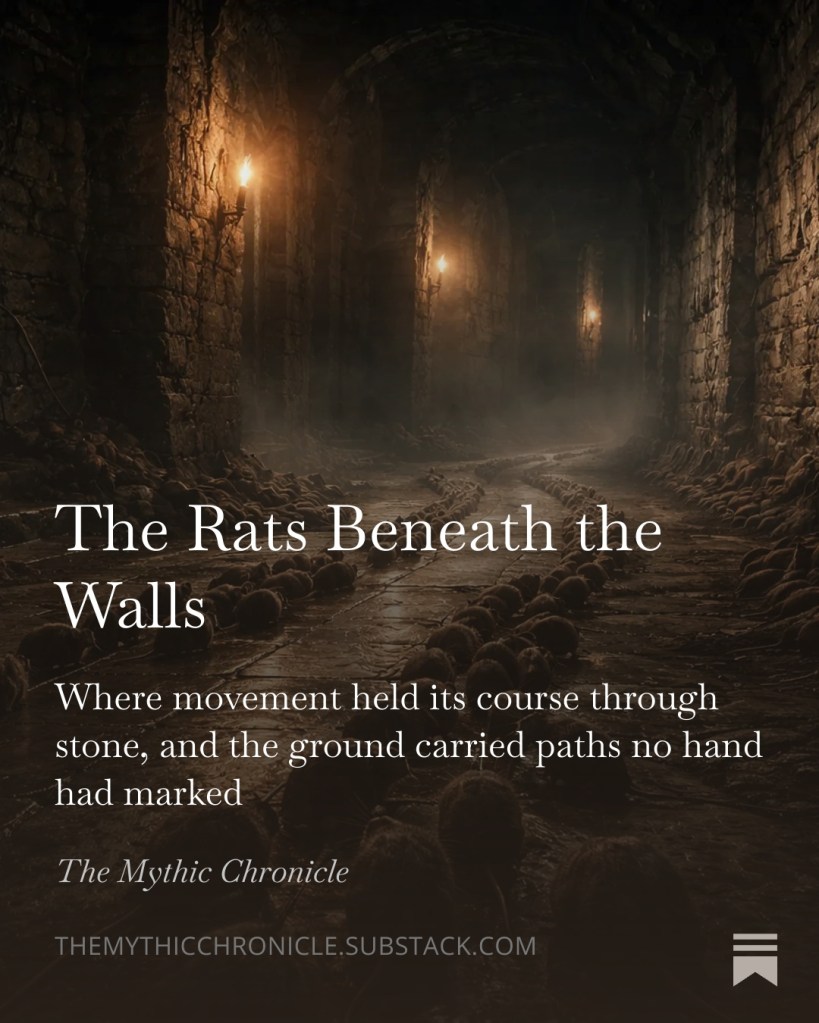
That pressure runs through dark fantasy at its strongest. A ruin in the forest carries one kind of silence. A living district raised upon forgotten foundations carries another, for ordinary life continues above while older forms exert their influence below. Grain is stored, lamps are lit, the lane fills with work and trade, and somewhere under all of it a hidden alignment begins to make itself known. In The Rats Beneath the Walls, the second Chronicle in The Whispering Foundations, that emergence takes place through the most common of creatures, whose movement becomes more disturbing precisely because it remains so calm, so exact, and so resistant to the easy comfort of ordinary explanation. The series guide places this Chronicle within a larger arc of buried corruption and misunderstood foundations, where the city’s lower layers begin to reveal themselves through fragmented accounts and partial records.
The Old Language of Vermin and Stone
Rats belong to the oldest grammar of human settlement. They move where grain is stored, where water gathers, where timber rots, where refuse lingers, and where the shape of habitation creates warmth enough to sustain lesser lives in the margins of greater ones. Their presence usually points toward material facts: hunger, damp, neglect, breach, waste. That is why they are so effective in mythic fantasy. They begin within the language of the practical. They seem legible.
When that legibility begins to fail, unease deepens far more quickly than it would with some grander marvel. A dragon announces itself as legend from the first glimpse. A line of rats crossing a cellar floor should remain within the reach of habit and craft. A householder knows what such creatures mean. A warden knows what measures to take. A priest knows the words used to restore ordinary order. Once those familiar structures touch the phenomenon and find that the phenomenon continues unchanged, the ground under certainty begins to soften.
That is the precise force of The Rats Beneath the Walls. The Chronicle does not depend upon spectacle. It depends upon repetition, direction, and the unnerving calm of a pattern that refuses to break. The creatures cross stone in narrow lines, keep their spacing, bend around interruption, and pass through walls as though earlier roads persist within the masonry. Their movement feels less like infestation than adherence. They travel as if answering an alignment older than the houses themselves.
In mythic fantasy, this kind of image carries unusual strength because it joins the low and the ancient. Vermin belongs to the cellar. Forgotten alignments belong to the buried past. When those two meet, the result feels intimate and civilisational at once. The menace has already entered the lived fabric of the city, and the city has no language prepared for what that entrance implies.
When a City Keeps Earlier Roads
A buried city, a layered city, or a city built upon older works has long held a special place within fantasy. Such settings create the sense that every visible structure stands in relation to something prior: an earlier faith, an erased dynasty, a sealed chamber, a failed ward, a road whose purpose has outlived its name. Readers are drawn to these worlds because they suggest that history is never finished. It persists physically. It presses upward. It leaves consequences in mortar, drainage, subsidence, ritual habit, and half-understood custom.
The lower districts in The Rats Beneath the Walls belong to this tradition. Cellars extend beyond their original use. Foundation walls rest upon older stone whose full origin no longer appears in the surviving plans. Seams, damp, hollows, and concealed alignments turn the district into an archive of physical memory. That setting matters because the Chronicle’s central disturbance would lose much of its power in open country or within some untouched ruin. Here, the menace arises in a working quarter where life continues. The pressure comes through storage rooms, brewer’s cellars, plaster repairs, ledger entries, and the low routines of those who maintain the city without ever seeing the whole of what supports it.
This is one reason mythic fantasy remains so drawn to subterranean architecture. The understructure of a city offers more than atmosphere. It offers an argument about inheritance. Streets may belong to the present, yet foundations belong to many ages at once. A ruler may claim dominion over the district, yet the district still obeys the geometry of works laid down long before his reign. When animals begin to trace those hidden geometries, the city briefly reveals its true allegiance.
The Chronicle’s power also comes from the way official record and lived observation begin to part company. Separate reports remain manageable in isolation. Seasonal damp, settlement, infestation, underlying channels: each explanation can stand on its own. Once someone sets the entries beside one another, a shape emerges that exceeds any single case. That tension is central to fantasy shaped by archives and fragments. Truth survives in repetition long before it is granted authority.
Why These Images Hold Such Weight in Mythic Fantasy
There is a reason readers continue to seek fantasy shaped by forgotten structures, sacred tension, and incomplete records. Such fiction offers more than lore. It restores consequence to place. A corridor is never only a corridor. A wall may hold repair work, older stone, and an erased sign beneath the plaster. A cellar may function as a place of storage while also serving as the roof of something earlier and less benign. The world feels inhabited across time.
In that kind of writing, small disturbances matter. A pressure in the air, a room that refuses to clear, a line of flour reforming after it has been swept aside, the sound of interior movement passing downward through stone: these details carry mythic force because they suggest pattern without forcing immediate disclosure. Mystery thrives where explanation remains partial and physical consequence remains immediate.
That balance is difficult to achieve. Too much explanation reduces wonder into system. Too much obscurity weakens the reader’s footing. The most resonant mythic fantasy occupies the middle ground where the senses remain clear, the record remains fragmentary, and the world hints at coherence beyond what any single witness can grasp. The Rats Beneath the Walls enters that space with assurance. It allows the line of movement to become the central image, and through that image the Chronicle touches themes of buried inheritance, civic blindness, and the old fear that a city may still be shaped by designs its current inhabitants have forgotten.
Chronicle Spotlight: The Rats Beneath the Walls
Within The Mythic Chronicle, this entry works as a preserved account from the lower districts, where practical observation begins to brush against something older. The reading experience feels close to a recovered municipal record crossed with a whispered local memory. A cellar becomes the threshold. A procession of animals becomes evidence. A wall becomes a surface through which the city briefly speaks.
The Chronicle entry itself can be entered through The Rats Beneath the Walls on The Mythic Chronicle. It carries the publication’s characteristic mode: immersive prose, archive fragments, interpretive pressure, and the sense that every recovered account belongs to a greater pattern whose full shape remains withheld. For a reader approaching the archive for the first time, this Chronicle serves as a strong threshold because it offers a clear image, a confined space, and a disturbance that widens as the record expands outward from one household into the wider district.
A visual companion to the same Chronicle also survives in watch form on YouTube. It extends the atmosphere of the entry through image and motion, which suits this particular subject well, since the core unease lies in patterned movement. Here again, the power comes from persistence. The viewer sees a sign that could almost belong to ordinary life, until repetition gives it another meaning.
A Fuller Record Beyond the Fragment
Chronicles of this kind thrive on incompletion. They preserve what was seen, what was entered, what was argued over in the margins, and what later readers may infer from the pattern. Yet somewhere beyond the fragment, a fuller account often survives. That relationship gives The Mythic Chronicle much of its quiet force. The archive entry and the novella stand beside one another in different modes of truth.
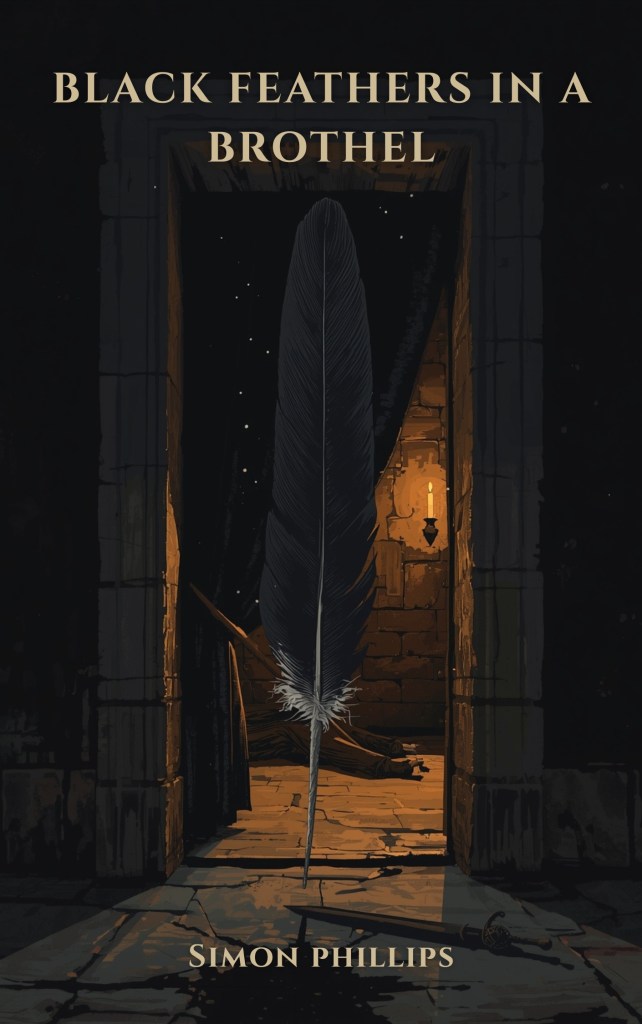
For readers drawn toward the deeper narrative beneath the preserved account, a fuller record remains in Black Feathers in a Brothel on KDP. The Chronicle approaches the world through memory, distance, and partial authority. The novella moves closer, following event, consequence, and the spaces where atmosphere hardens into direct experience. That movement from archive to story feels especially apt in a world shaped by layered foundations, since such settings always imply that surface evidence belongs to larger buried histories.
The relationship between these forms is part of what gives the series its distinction. One text preserves. Another inhabits. One gives the city’s remembered shape. Another passes through the rooms where that shape begins to assert itself. The reader moves from sign to presence, from register to encounter, from the visible line upon the floor to the deeper question of what caused the line to hold.
What Remains Beneath the Floor
Fantasy concerned with forgotten powers often reaches toward crowns, gods, ruins, and wars. Those elements carry grandeur, and grandeur has its place. Yet some of the oldest fears begin lower. They begin where a household keeps its winter stores. They begin where plaster parts from stone. They begin where someone opens a cellar after supper and finds that the ground has already chosen a road.
That is why The Rats Beneath the Walls lingers. It understands that buried history rarely announces itself with ceremony. It arrives through repetition, through altered behaviour, through the subtle conviction that a visible room has joined itself to an invisible system. The lower district continues above. Ledgers are filed. Repairs are made. Daily life resumes its rhythm. Under that rhythm, the earlier lines remain.
In mythic fantasy, those are the moments that endure. A city becomes memorable when its stones seem to remember more than its citizens. A Chronicle becomes compelling when it preserves the instant in which common life brushes against that deeper memory and fails to master it. The path survives beyond the eye’s reach. The record closes. The pressure remains.
And somewhere beneath the walls, the road continues.
There are moments when failure announces itself loudly. Alarms sound. Lights change. Authority moves in response to visible threat.
Then there are the other moments.
The ones that pass inspection.
Harbinger Protocol was built around those quieter failures. The ones logged, approved, signed off, and archived without protest. The incidents that make sense on paper and leave a faint pressure in the room once the report ends.
The flash-fiction fragments I have been releasing recently come from that space. They are not scenes in the conventional sense. They are residues. Procedural echoes. Things overheard through systems that were never designed to listen for consequence.
One of those fragments centres on a compartment that received clearance twice.
No alarm followed the first authorisation. No escalation followed the second. Every reading remained stable.
The repetition carried no technical significance. That is what unsettled it.
Clearance systems exist to remove hesitation. They translate judgement into colour states, timestamps, and confirmation loops. Once permission is granted, the system proceeds without interpretation. That design works well in stable environments. It functions less cleanly when the environment begins to change in ways the system cannot name.
In Harbinger Protocol, those changes arrive early and quietly.
The flash-fiction videos released on YouTube present these moments as isolated artefacts. A log entry. A procedural pause. A line written down and accepted because nothing else contradicted it. They are intended to feel incomplete, as though part of the context remains elsewhere.
The book expands the same approach across a wider frame. Institutions responding through habit. Authorities interpreting anomalies through existing language. Witnesses revising statements under pressure until they align with what the system expects to hear.
Nothing in the story announces itself as extraordinary. The horror develops through repetition, delay, and misinterpretation. By the time recognition arrives, the paperwork already carries multiple signatures.
The YouTube video linked below functions as a recovered fragment from that larger record. It stands on its own, although it gains weight when placed alongside the written report.
▶ Watch the flash-fiction video
I have chosen to release these fragments alongside the book for a specific reason. The Harbinger Protocol project relies on atmosphere and accumulation. Each piece adds pressure without resolving it. The videos create a sense of institutional proximity. The book carries the full procedural arc.
Neither replaces the other. They occupy adjacent layers.
This approach reflects the world of the story itself. Systems communicate through partial records. Decisions pass through multiple hands. Meaning emerges through overlap, delay, and repetition. The audience assembles understanding in the same way the characters do.
Slowly. Indirectly. After the moment when intervention might have mattered.
If you are drawn to restrained science fiction, procedural horror, and narratives that unfold through systems instead of spectacle, Harbinger Protocol was written for that space. The fragments will continue to appear. The records remain open.
Some files clear once. Some clear twice. The difference arrives later.
Some stories begin with crowns, borders, and conflict already in motion. Others reach further back, to a time when the world itself had not yet learned how to answer those who lived upon it.
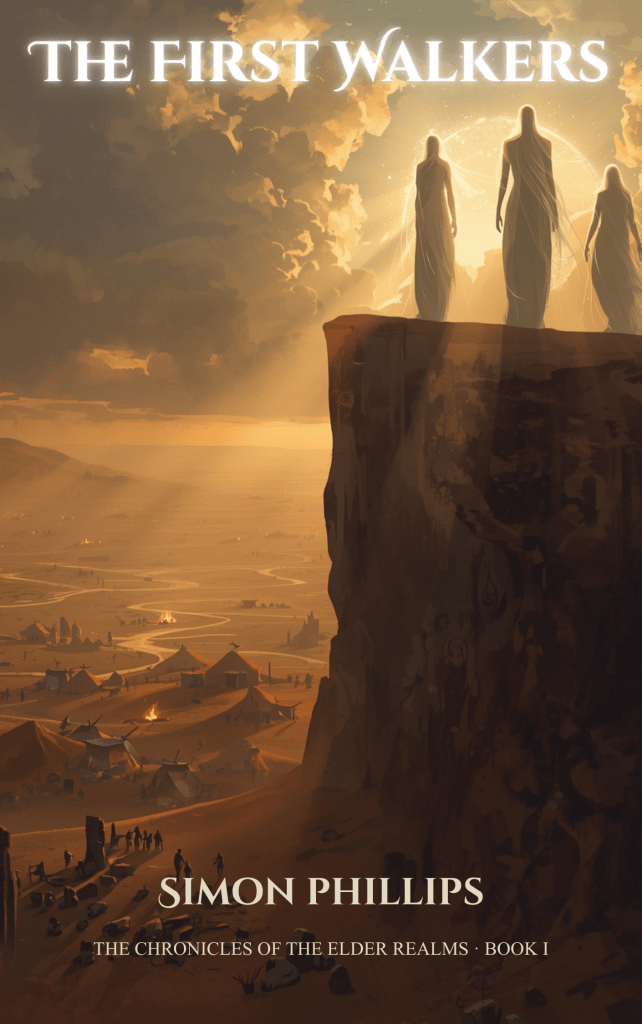
The First Walkers belongs to that earlier age.
This short story emerged during a period of stepping away from the main novel, The Veil of Kings and Gods, in order to explore the ground beneath it. Before returning fully to kings, councils, and divine fracture, there was a need to listen to the first layer of the world. An age shaped by memory, firelight, and watching presences, where meaning travelled through instinct rather than record.
The Elder Realms, in their earliest form, are quiet places. Humanity moves cautiously through landscapes that feel aware yet unreadable. The gods observe from distance and height, bound by their own silences. Magic exists as potential, sensed through alignment and response instead of mastery.
The First Walkers is written as a fragment from this age. It stands as a complete short story, while also serving as a foundation stone for what comes later. Ideas seeded here carry forward into later ages, where they take on clearer shapes through belief, power, and consequence.
Alongside the short story, I have been sharing brief mythic fragments drawn from the same period. These appear as narrated pieces and flash-fiction, shaped to feel like recovered scripture or ancestral memory. They offer atmosphere and tone, allowing the world to be approached slowly, without explanation pressing ahead of experience.
One such fragment can be experienced below. It reflects the mood and substance of The First Walkers, presenting a single moment from the earliest age, shaped for listening.
Watch the narrated mythic fragment here:
These fragments act as quiet entry points. Some readers may encounter the world first through sound and image, others through the written story. Both paths lead toward the same long memory.
The complete short story, The First Walkers, is available as a Kindle ebook for those who wish to read the full piece and remain with the world for longer:
Further stories and fragments from the Elder Realms will follow over time, each exploring a different age in the long descent toward kingdoms, faith, and fracture.