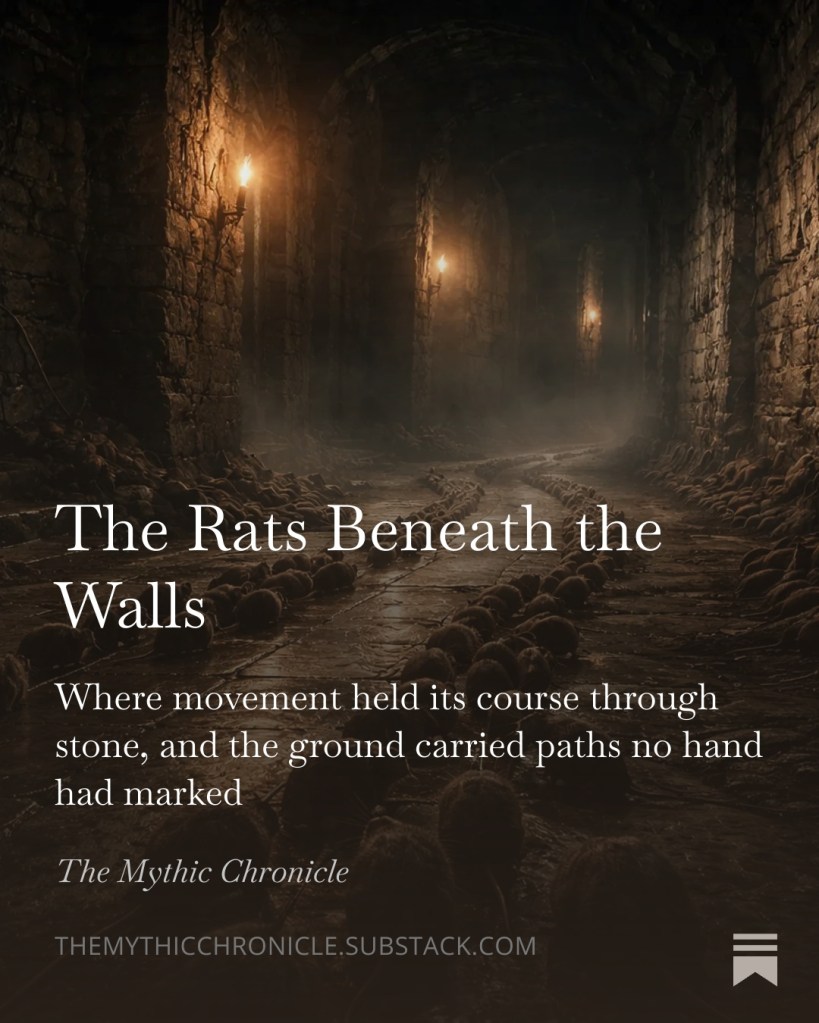
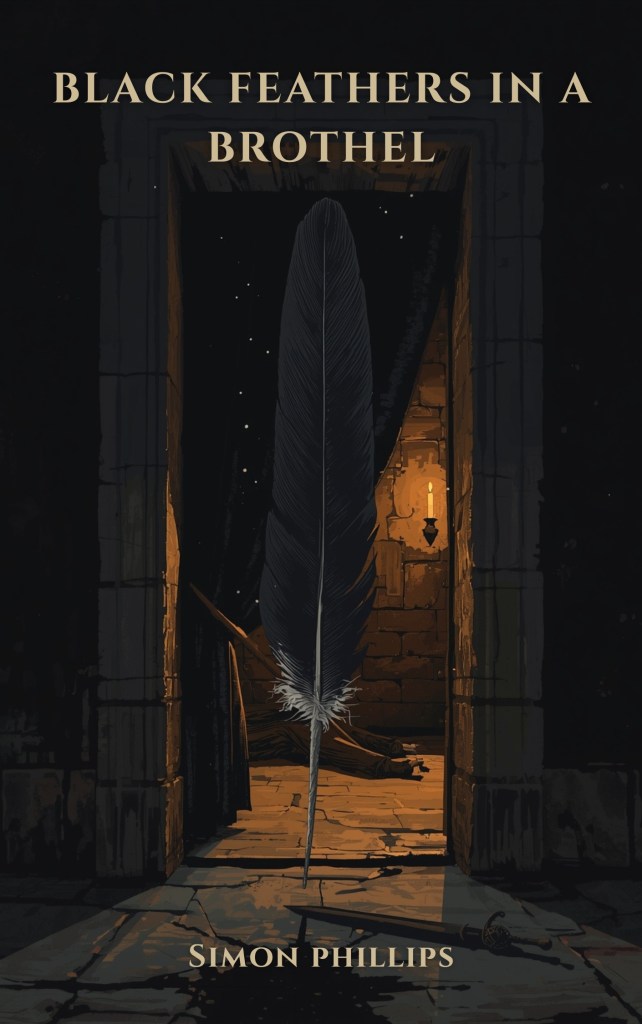
A haunted room in dark fantasy exerts its power through air, pressure, silence, and arrangement. The door closes, the bed remains where it stood, the chair faces the table, the papers wait in their ordered stacks, and still the place feels altered, as though an event has settled into the grain of the world and chosen to remain. Among ancient-feeling fantasy settings, this kind of chamber carries a singular force, since it suggests that memory can cling to matter itself, entering timber, plaster, cloth, and breath until place becomes witness.
That quiet form of haunting carries a deeper hold than spectacle ever could. A monstrous shape may terrify for a moment, while a room that has learned how to keep an absence can linger for far longer, pressing upon the reader with a slower and more intelligent unease. Such spaces feel lived in. They have served ordinary tasks. They have known routine, labour, sleep, ledgers, heat, and dust. Then something enters the pattern, and the familiar order of daily life begins to gather a second meaning.
This is where dark fantasy often finds its most lasting power. The haunted room stands at the meeting point between domestic habit and mythic disturbance. A house may appear ordinary from the lane below. An upper chamber may seem suited to work, sleep, or prayer. Yet once the atmosphere inside it begins to return in the same form after each interruption, the reader senses that the structure itself has joined the story. The haunting no longer belongs to a single hour. It belongs to the building.
The Room as a Vessel of Memory
Old fantasy worlds carry weight through layers. Streets rise above buried foundations. Chapels stand over sealed passages. Walls accept repair after repair until the visible surface and the hidden structure cease to belong to the same age. Within such places, a room becomes more than an enclosed interior. It becomes a vessel, holding the residue of every gesture that has passed through it.
A chamber used for work and rest is especially potent because order makes disturbance easier to feel. A ruined hall already bears the signs of collapse. A battlefield already carries violence in its soil. An occupied room, however, presents another kind of tension. Its chair remains in place. The cord around the papers stays tight. The coverlet lies smoothed from the morning. Every ordinary object reassures the eye, while the air itself begins to resist that reassurance. The result is a far quieter species of dread, one grounded in small recognisable details that begin to estrange one another.
This matters in mythic fantasy because memory seldom survives in complete form. It comes back through fragments, gestures, reports, and traces. A retained smell. A pressure upon the chest. A recurring stillness after the window stands open. These signs feel older than explanation. They belong to the realm of preserved account and partial witness, where certainty thins and atmosphere grows stronger.
In such writing, the room becomes a page that cannot stop rewriting itself. Each person who enters adds a further layer of record, though the deepest impression lies below language. What remains strongest is rarely the formal cause entered into a ledger. What remains strongest is the sense that the place itself has chosen to keep something.
Why Stillness Disturbs More Deeply Than Apparition
Stillness is often more frightening than motion because it suggests patience. An apparition arrives and startles. A sound in the wall provokes immediate alarm. A room that settles into a fixed condition after every disturbance offers something colder. It conveys duration. It implies that the event within the chamber has already passed into the structure, where it can endure with no visible effort.
This is one reason dark fantasy readers remain drawn to enclosed spaces shaped by silence. Silence in such settings never feels empty. It feels occupied. The absence of noise becomes its own kind of presence, and the reader begins to listen for what the room already knows. A hush over a bed, a dimness that gathers too quickly, air that weakens before it reaches the centre of the floor: these details create dread through restraint. The imagination then completes what the record declines to state.
The ancient atmosphere of a mythic setting strengthens that effect. In a contemporary apartment, stillness may suggest poor ventilation or an unpleasant memory. In an older fantasy city built over forgotten works, stillness feels tied to inheritance, ritual failure, or a pressure buried within the foundations. The room belongs to a wider order of things. It has neighbours above and below, and those neighbours belong to a district, and that district stands over earlier structures, older materials, forgotten interventions. A single chamber therefore carries the weight of an entire world beneath it.
This gives the haunted room its symbolic reach. It suggests that private life never stands entirely apart from buried history. A death recorded as strain or failure may still bear the shape of something older. A clerk working at his table may still sit above a line of pressure he has never seen. Dark fantasy becomes most compelling when the visible life of a city continues untouched on the surface while its deeper truth gathers quietly in the spaces people believe they understand.
The Clerk Who Folded Inward and the Architecture of Quiet Dread
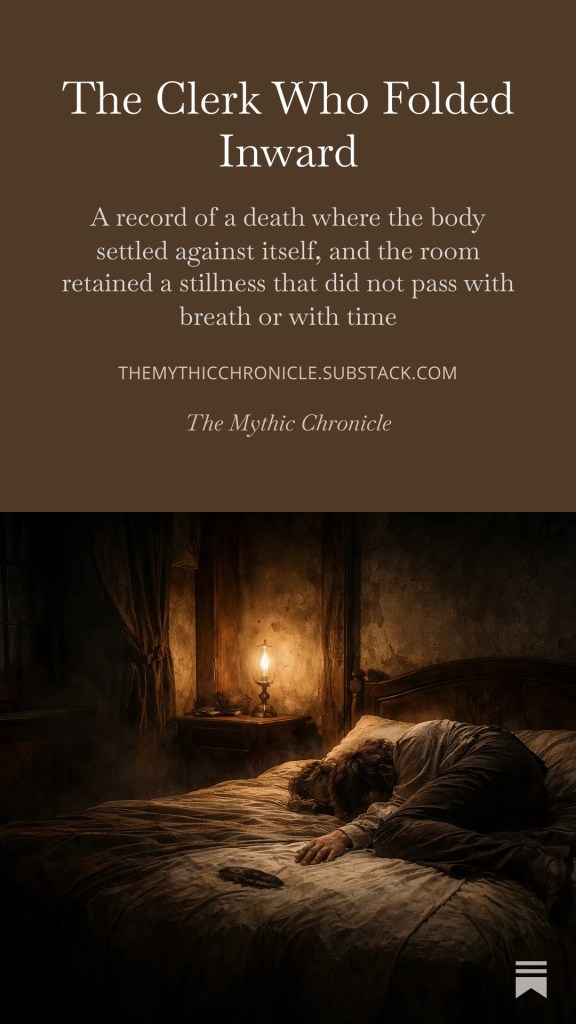
The fourth Mythic Chronicle entry, The Clerk Who Folded Inward, appeared on Substack on 28 April 2026 with the subtitle describing a death where the body settled against itself and a room whose stillness outlasted breath and time. Its opening section presents an upper chamber above a trade lane, a bed, a table, ordered papers, and an atmosphere that gathers again after each intrusion, while the post itself stands as a paid Chronicle entry approached through a free opening threshold.
What gives this Chronicle its force is the refusal of excess. The chamber remains plain. The event receives the practical language of inquiry. The witnesses behave with measured reserve. Even the unease enters gently, first as a pressure within the chest, then as a quality of air, then as a pattern of return. The space accepts fresh air only briefly. The impression upon the bed holds the eye. The chair carries a slight turn away from order. Through these details, the room becomes an instrument of dread.
The reader feels the disturbance through arrangement. Nothing has been overturned. No visible breach gives itself away. The chamber has endured within ordinary life, which makes its altered condition feel more intimate and more invasive. The haunting lies in continuity. The room remains useful. The lane continues below. The work of the house carries on. Yet each new entry confirms the same fact: once the disturbance settles, the chamber restores itself to that same enclosed state.
This kind of haunted room embodies a central strength in mythic fantasy. The supernatural enters through pressure, recurrence, and record. The official explanation may stand. The deeper reality continues beneath it. That tension between ledger and atmosphere gives the piece its authority, since the world within the Chronicle still behaves as a world of houses, clerks, constables, shutters, work, and habit. The strangeness grows from inside the structure, never from outside the frame.
When a Room Becomes Part of a Larger Pattern
A single chamber becomes truly memorable when it feels linked to something wider than itself. The upper room in Chronicle 4 carries exactly that quality. It presents an isolated death on the surface, though the atmosphere inside the space suggests continuity with a larger buried pressure. The room feels like one visible symptom in a city that has already begun to answer through its own materials.
This is where the haunted room moves beyond gothic ornament and enters mythic territory. It no longer serves as a backdrop for fear alone. It becomes evidence. A retained stillness hints at a structure learning how to hold events, perhaps even how to shape response. The room begins to feel less like a location and more like a node within a pattern stretching through walls, passages, plaster, and older unseen lines.
Readers who love ancient fantasy often seek precisely this sense of scale concealed inside intimacy. The larger power remains indirect, though its pressure reaches the smallest details. A mark under plaster. A sound beneath stone. A change in the air over a bed. Each sign appears slight when taken alone. Together they suggest a world where forgotten forces persist through environment long before they reveal themselves through open action.
That environmental form of storytelling is especially rich because it preserves mystery. The room can be entered, described, ventilated, reassigned, recorded, and still remain unresolved. The unanswered quality becomes part of the pleasure. The reader leaves with the sense that explanation exists somewhere deeper in the archive, though the fragment itself remains complete in mood and emotional consequence.
The Fuller Record Beneath the Chamber
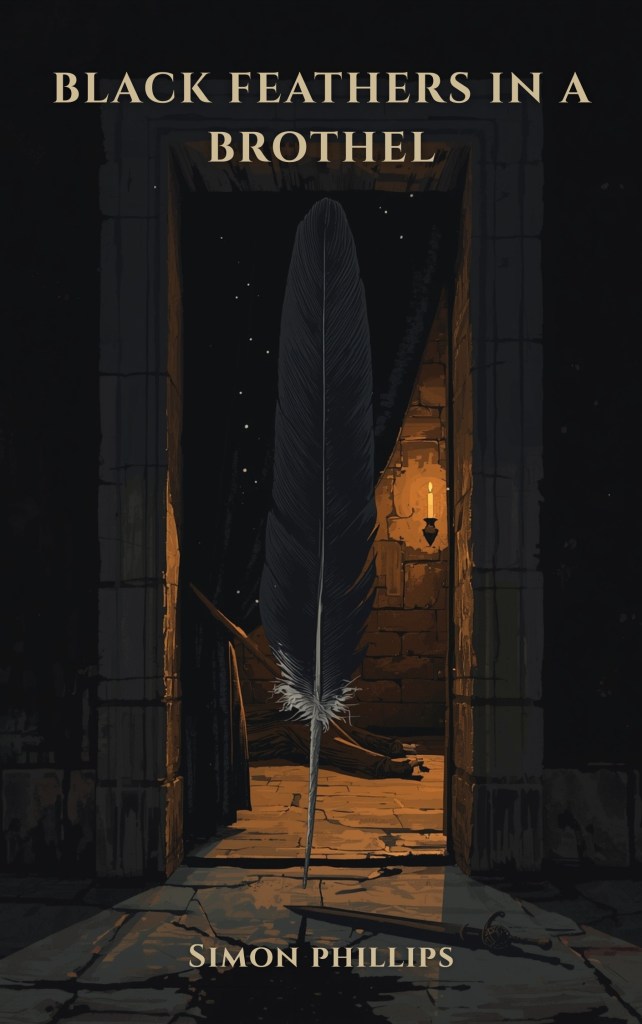
The wider thread beneath Chronicle 4 leads towards the connected novella, Black Feathers in a Brothel, which the Chronicle page presents as the fuller account preserved elsewhere. Amazon listings for ASIN B0GHHZDYVB identify it as Black Feathers in a Brothel: A Dark Fantasy Horror Story from the Hali Files, published on 18 January 2026.
This relationship between Chronicle and novella is part of what gives The Mythic Chronicle its unusual power. The Chronicle approaches the world through fragment, pressure, and half-preserved authority. The novella follows closer to the wound. One form allows memory to drift through the architecture of the city. The other moves nearer to the people caught within it. Together they produce a reading experience shaped through distance and descent.
For a reader arriving through the blog, Chronicle 4 offers an ideal threshold. The upper chamber stands clear in the mind. The imagery remains grounded. The mystery feels self-contained, while the wider pressure of the world still gathers beyond the walls. From there, the passage into the Chronicle archive feels natural, and the movement towards the novella feels like a continuation of the same atmosphere, only nearer the source.
Entering the Archive Through Place
Fantasy readers often speak of characters, magic systems, dynasties, and wars. Place deserves equal attention, especially in work that seeks a more ancient and preserved mode of storytelling. A memorable fantasy world lives through its rooms as much as through its heroes. Chambers, stairwells, chapels, passages, and yards become the vessels through which pressure moves. They hold the world in material form.
This is why the haunted room remains such a powerful gateway into dark fantasy. It offers scale through enclosure. It offers history through atmosphere. It offers emotional reality through small tactile details. Most of all, it gives myth somewhere to settle. Once that happens, even the simplest room can feel older than the house around it, and far older than the explanation written beside it.
Within The Mythic Chronicle, that power is approached through fragments and preserved accounts, where the world feels remembered, partially obscured, and quietly alive beneath the visible order of things. Chronicle 4 stands as one of those thresholds, a chamber above the lane where a death entered the ledger and the air continued to gather after every departure. From that point onward, the room belongs to memory as much as to architecture.
And that may be the deepest strength of the haunted room in dark fantasy. The door closes. The street continues. The house resumes its labour. Somewhere above the lane, the stillness returns to its appointed place, holding what the record could only touch in passing, and waiting there with the patience of stone.