Ancient Gods, Forbidden Magic, and the First Turning of an Epic Fantasy Saga


Where the Road Begins Beneath Winter Stone

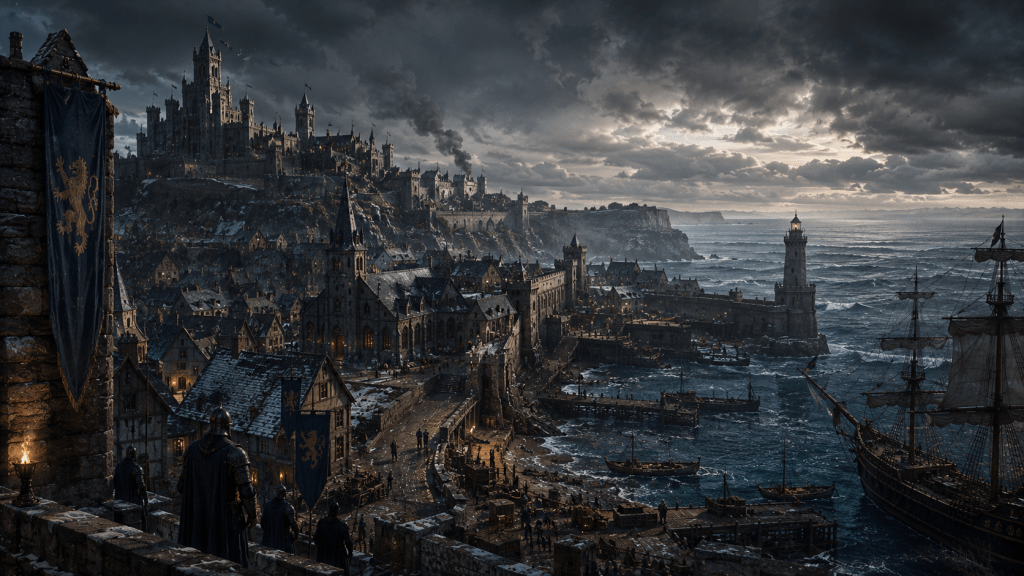
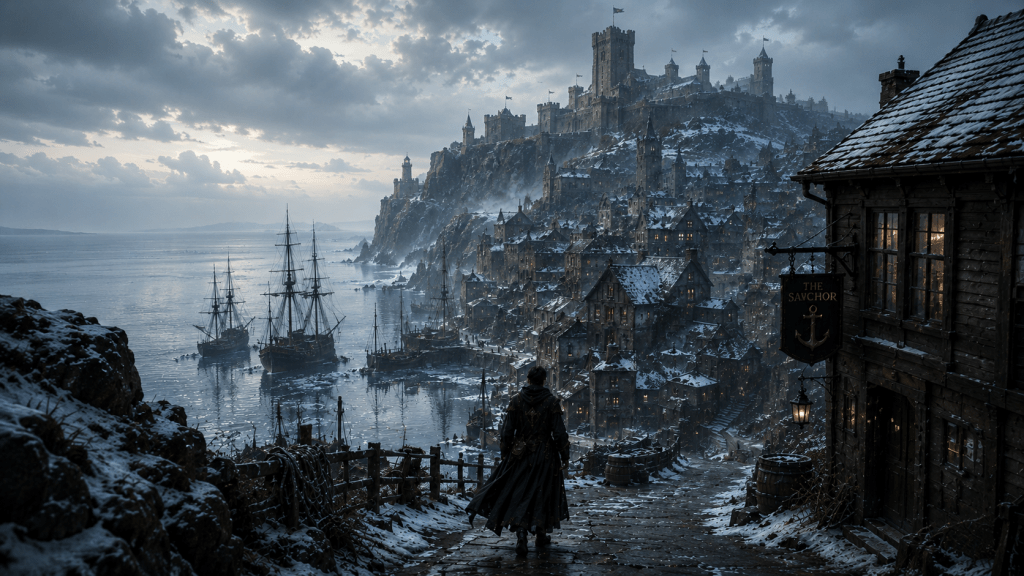
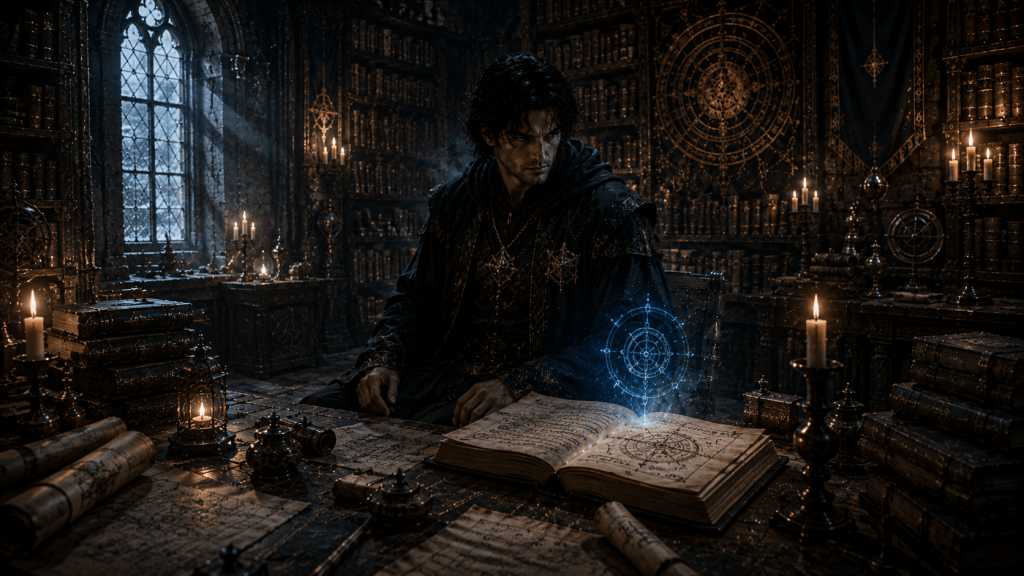
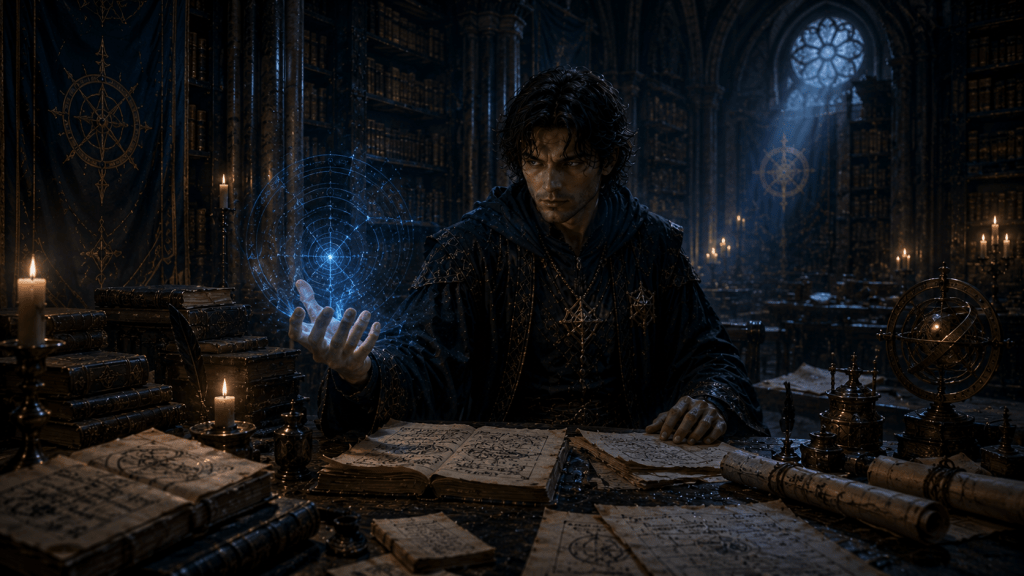
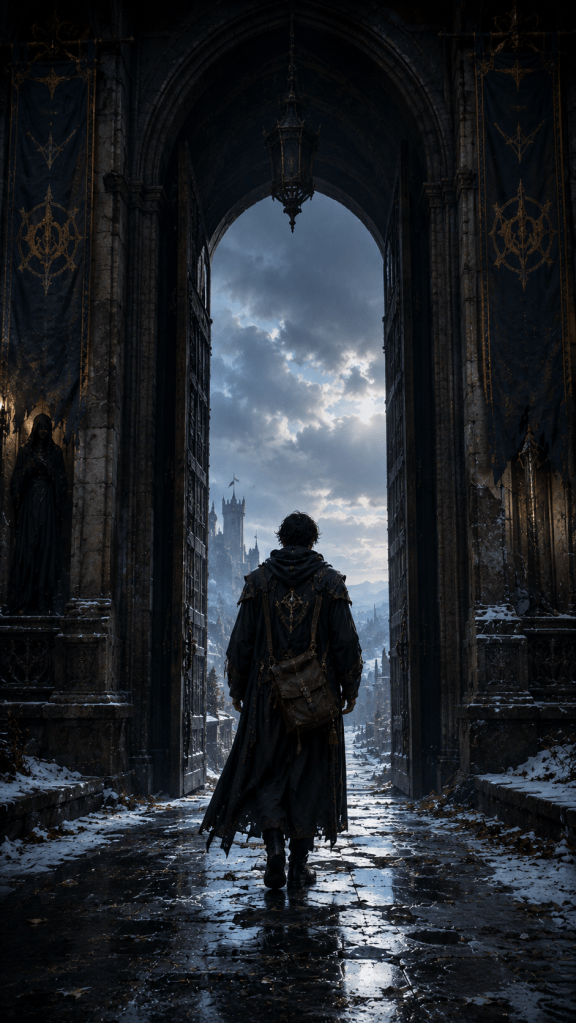
A cold road leads into Bremyra, where the sea wind carries salt through narrow streets and old stone holds more memory than any living court dares to name. In The Unmarked Path, the opening novella of The Veil of Kings and Gods, magic is never treated as ornament. It belongs to law, fear, inheritance, and silence. It lingers beneath castle floors, inside sealed books, in the guarded breath of the Church, and in the hands of a magician who scarcely understands why the world has begun to turn around him.

This is the beginning of The Chronicles of the Spiral Realms, a serious adult high fantasy series shaped by ancient gods, forbidden magic, kingdom politics, fallen empires, and the slow return of truths buried beneath the present age. Ældorra is a world where mortal institutions believe they hold power, yet every crown, altar, and magical order stands upon older ground.


A World Built Over Forgotten Power

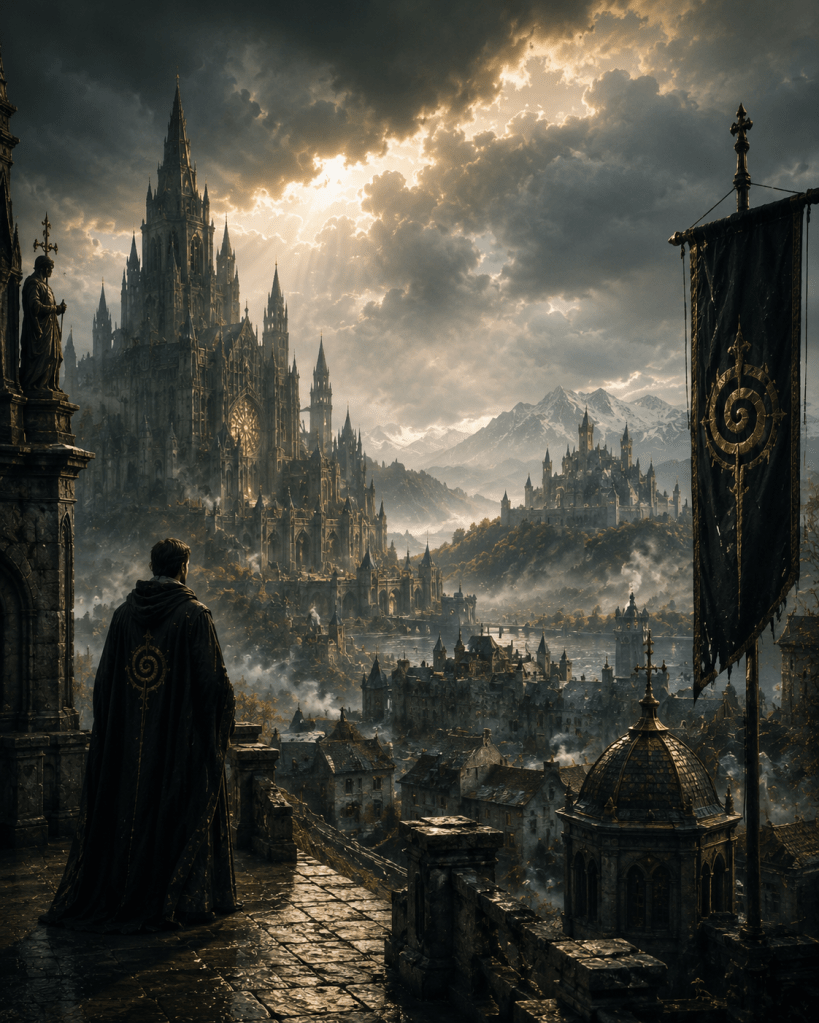
The world of Ældorra carries the remains of the Imperium Arcana, a fallen magical empire whose ruins still press through the age of kings. Its laws have decayed into custom. Its divine wounds have hardened into doctrine. Its power survives in fragments, watched over by institutions that remember enough to fear the past, yet never enough to understand it.

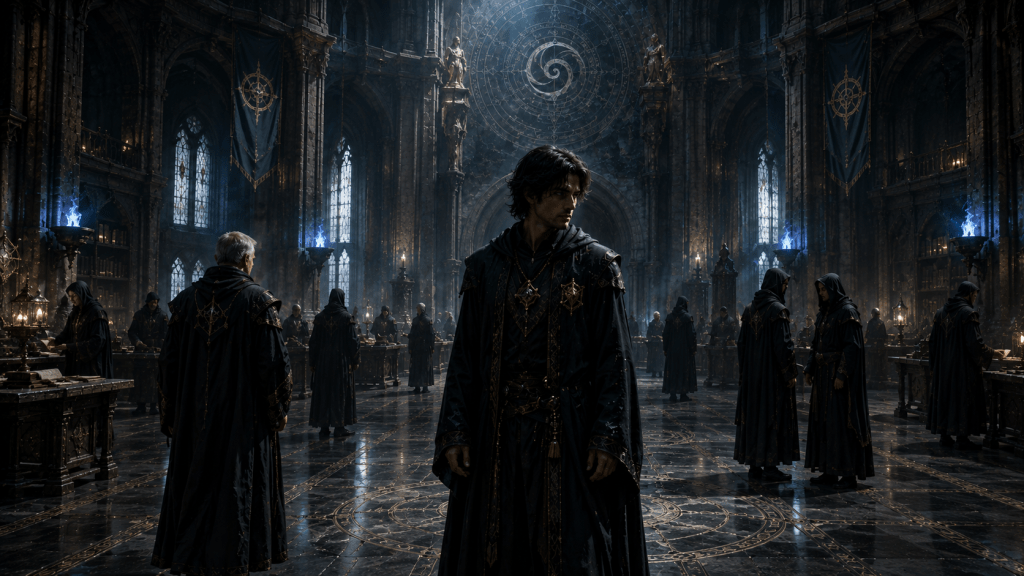
The Order of Magicians stands at the centre of that inheritance. Powerful, feared, and separate from crown or Church, the Order preserves magic through discipline and secrecy. Yet preservation is not the same as wisdom. Beneath its authority lies fracture, and beneath its history lies a truth far older than its masters are willing to face.

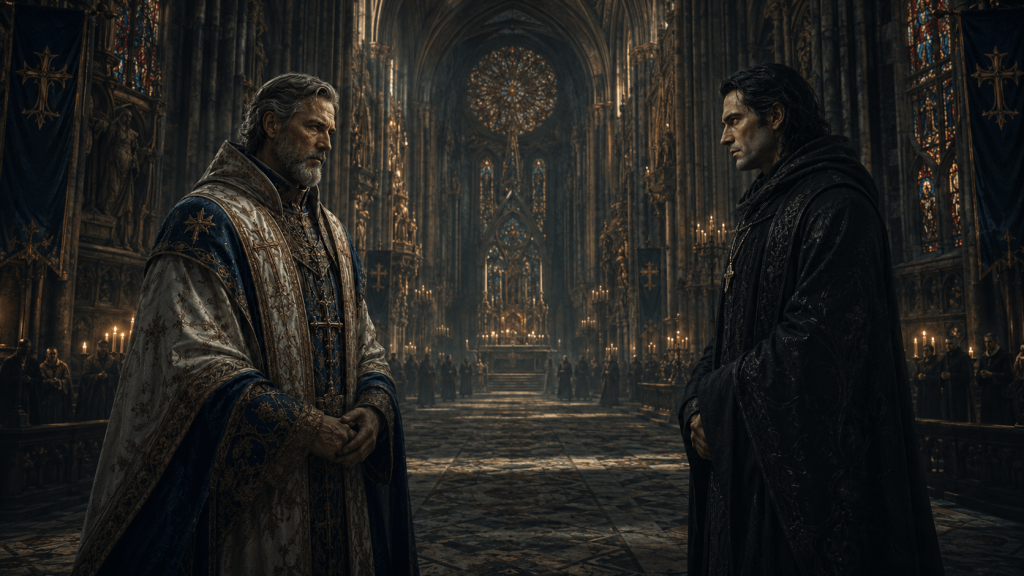
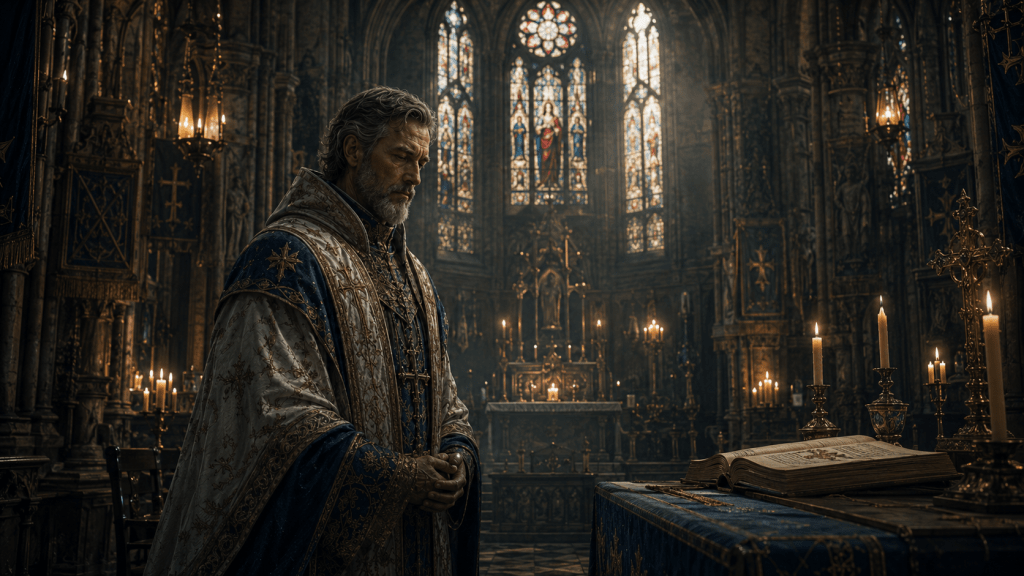
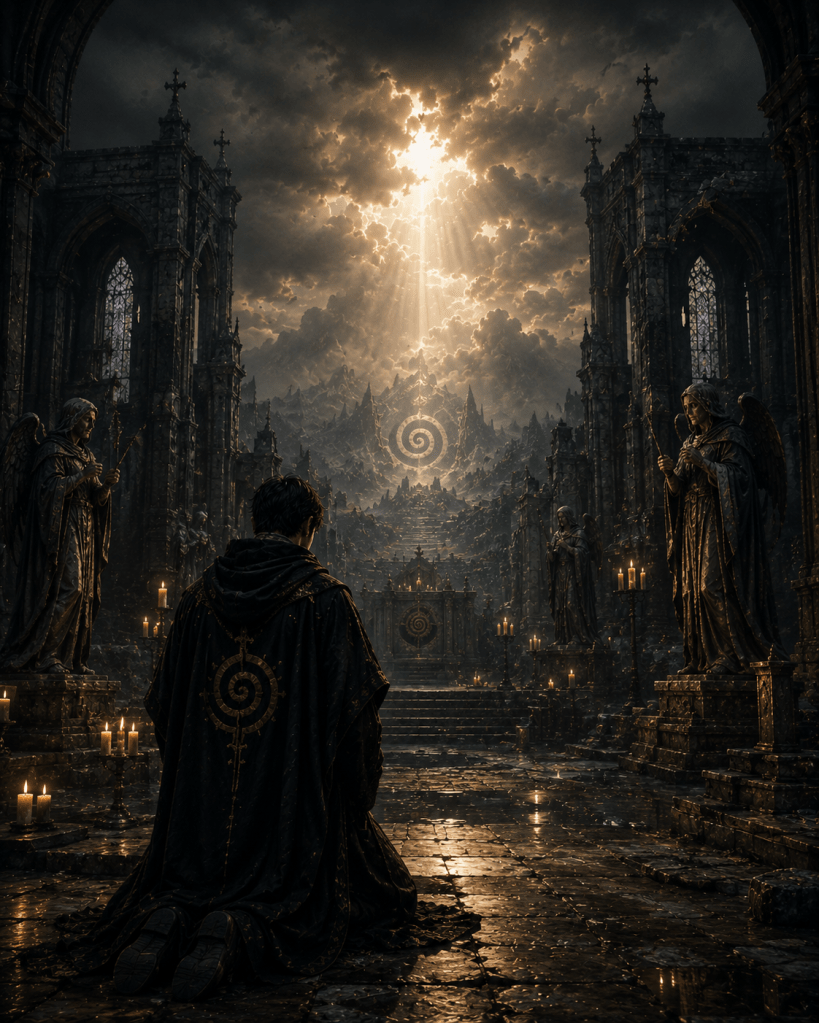
Opposite it stands the Church of Christiana, sacred and political in equal measure. Its cathedrals offer prayer, order, and memory, yet those memories are guarded by men who understand that truth can unmake authority as easily as war can unmake kingdoms. In this kind of mythic fantasy series, faith and magic are never safely divided. Each claims to serve the world. Each fears what the other might uncover.


Simion and the Burden of Reluctant Power

Simion enters the story as no triumphant chosen hero. He arrives tired, uncertain, and obedient, sent by the Order to Bremyra under instructions he only partly understands. His strength lies not in arrogance, but in restraint. He carries power, yet he also carries doubt, old loneliness, and the uneasy knowledge that magic has never fitted him in the way it fitted others.

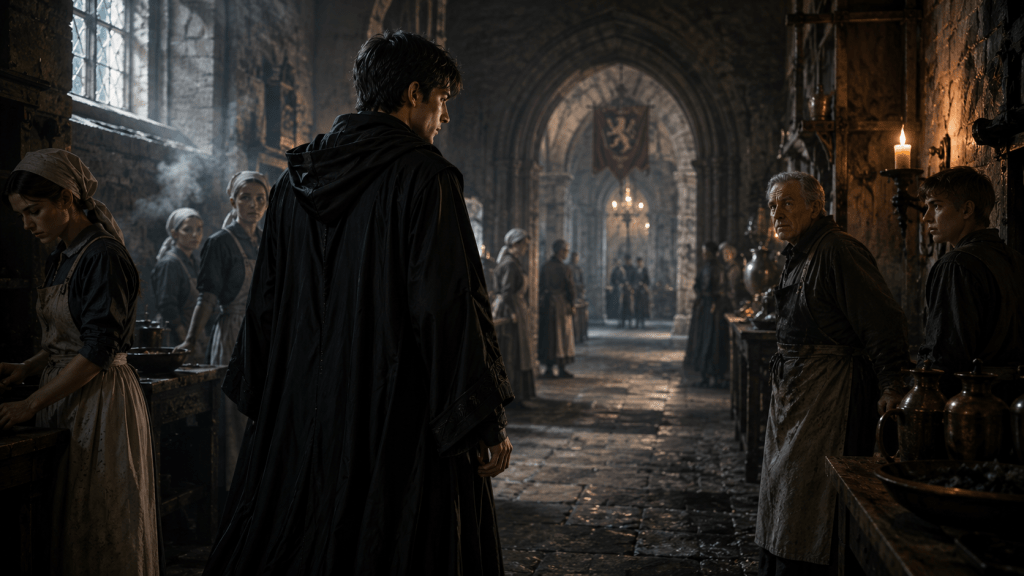
That makes him central to the series’ tone. The Unmarked Path is an epic fantasy novella concerned with consequence before spectacle. Simion’s magic matters because it alters rooms, relationships, loyalties, and fear. When he walks through Bremyra, people remember the idea of magicians before they see the man. His black robe is enough to change the air around him.

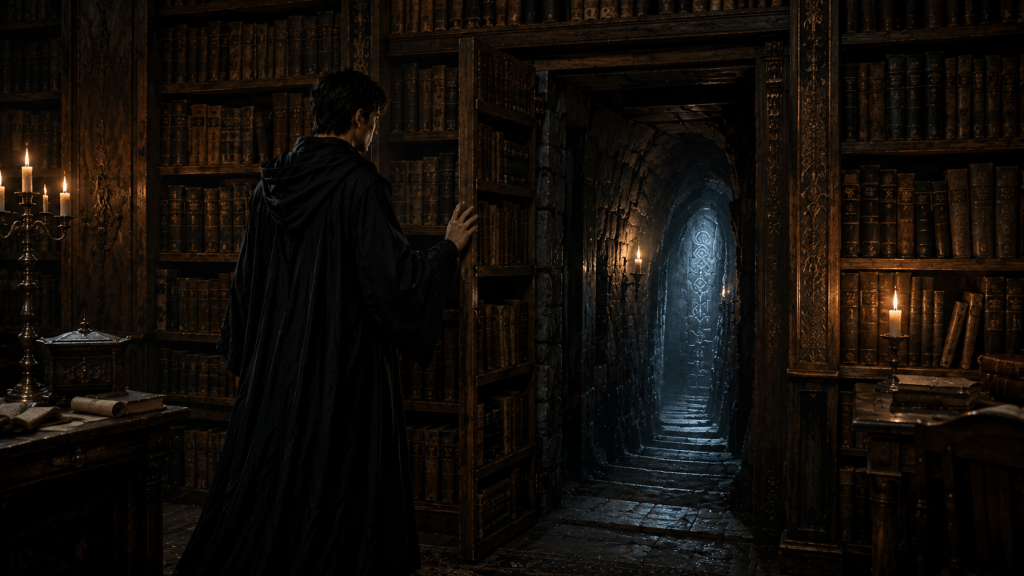
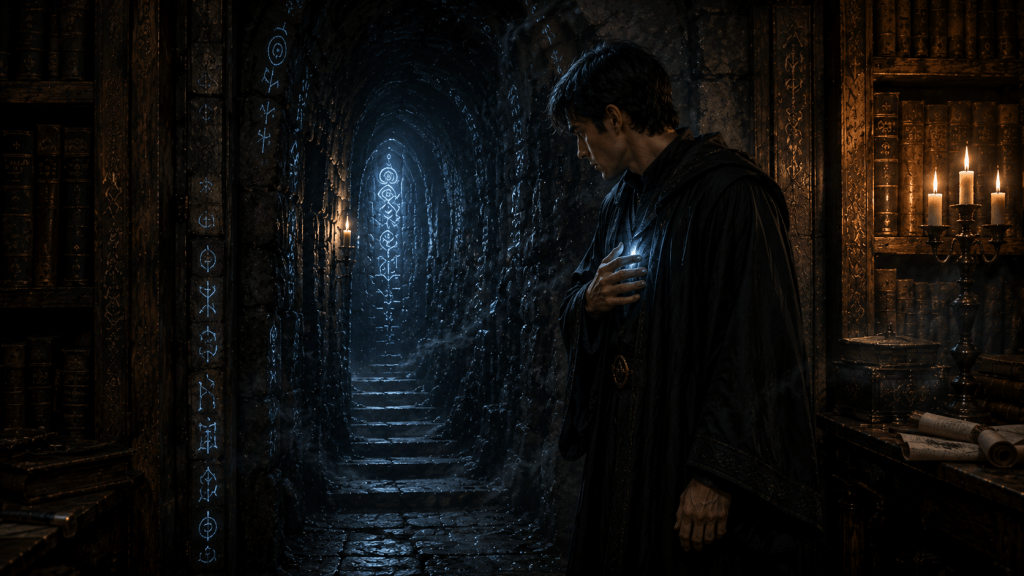
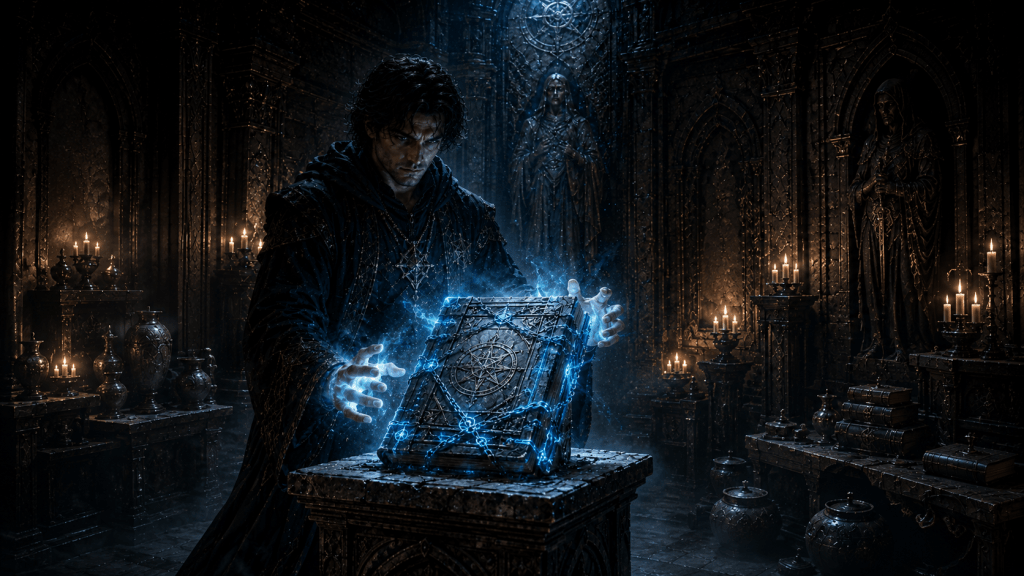
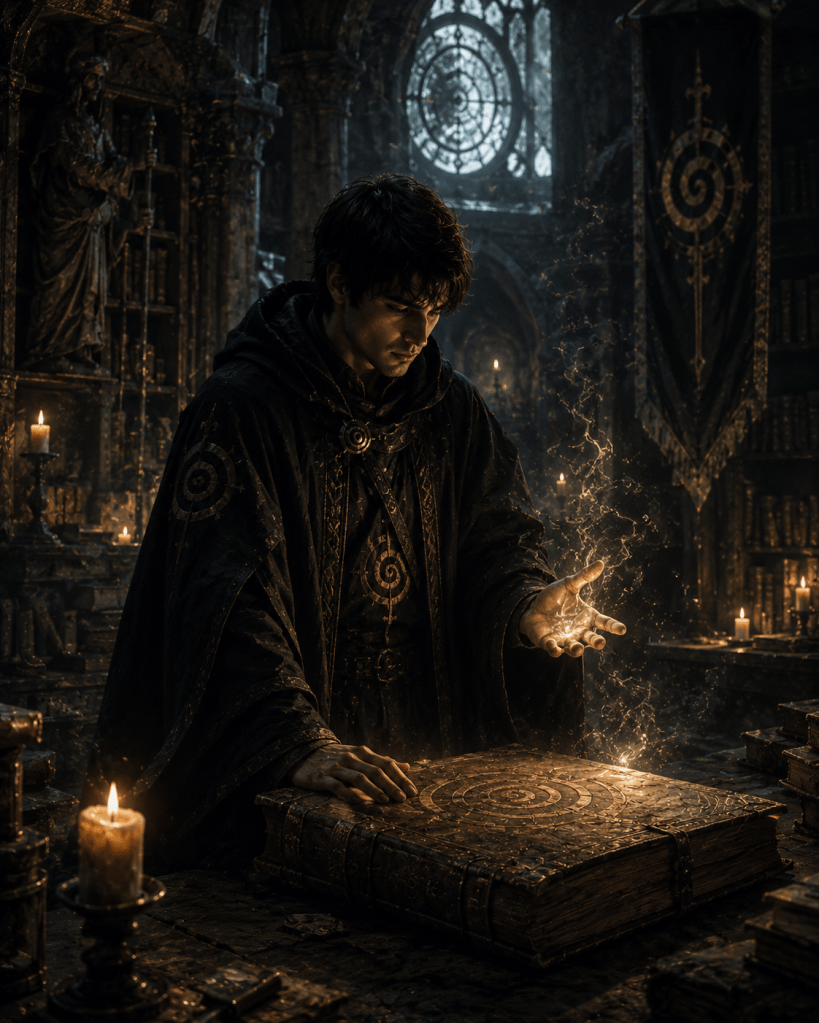
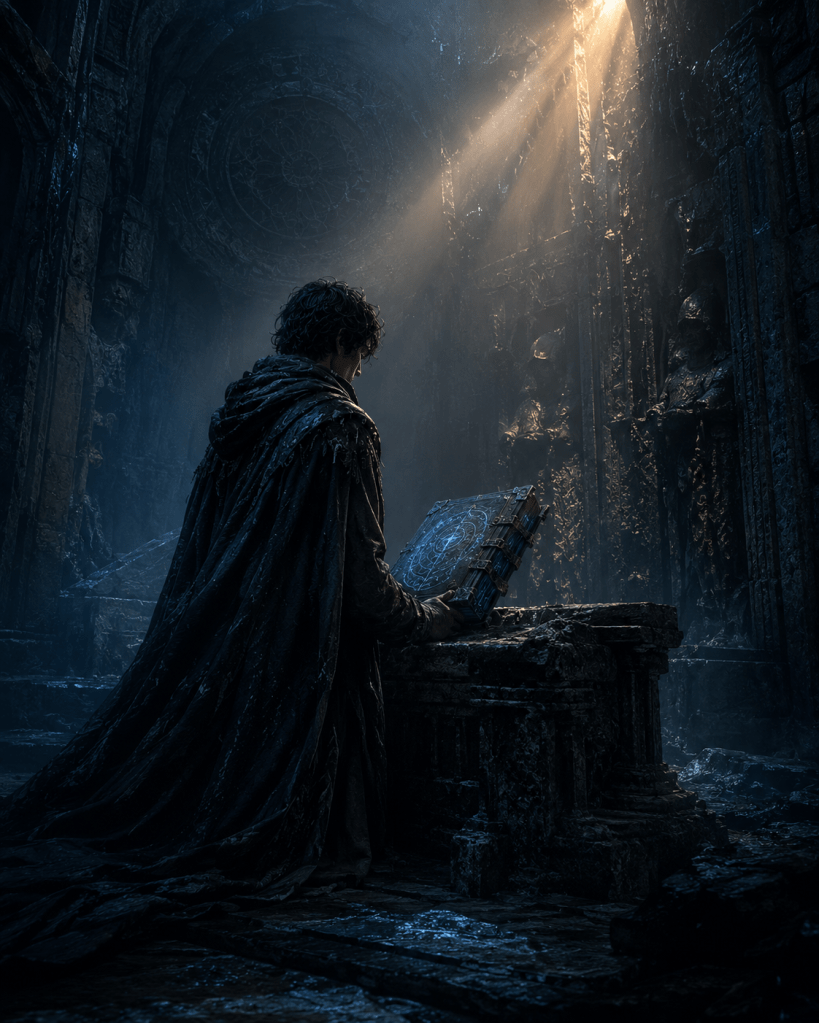
Yet the deeper pressure comes from what he cannot explain. A hidden book. A seal. A divine whisper. A moment when magic moves through him in silence, beyond the methods the Order taught him. These are not answers. They are openings.


Kingdoms, Churches, and the Shape of War

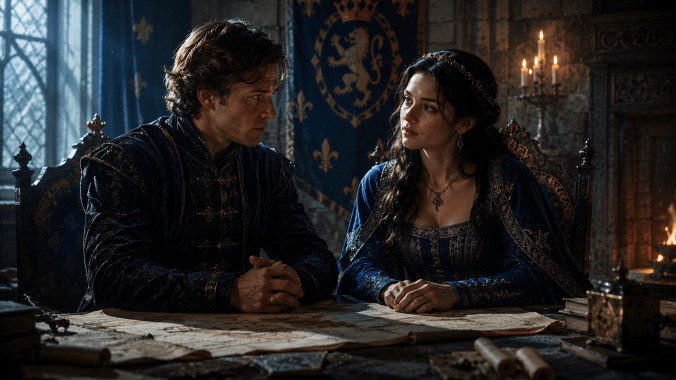
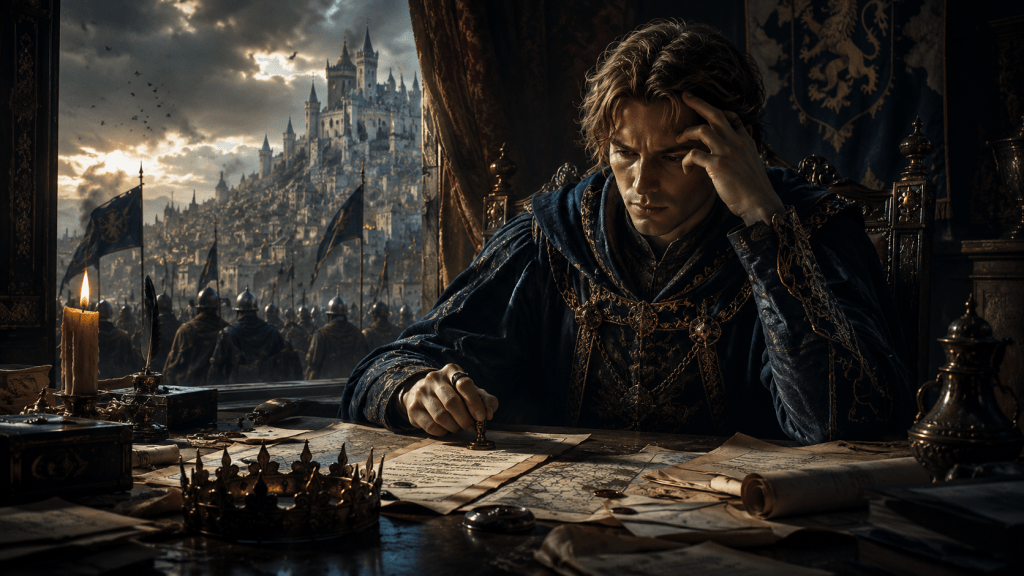
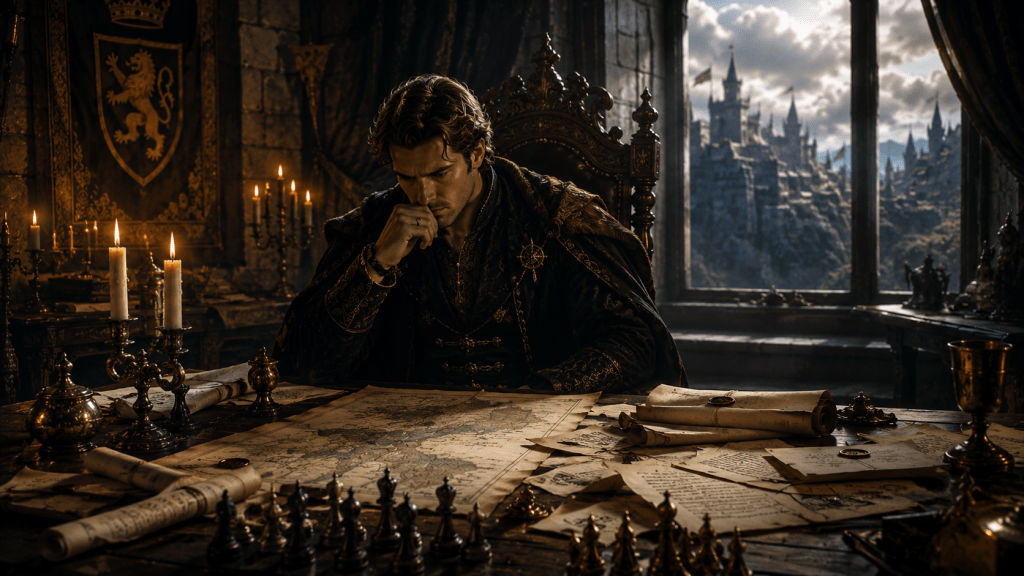
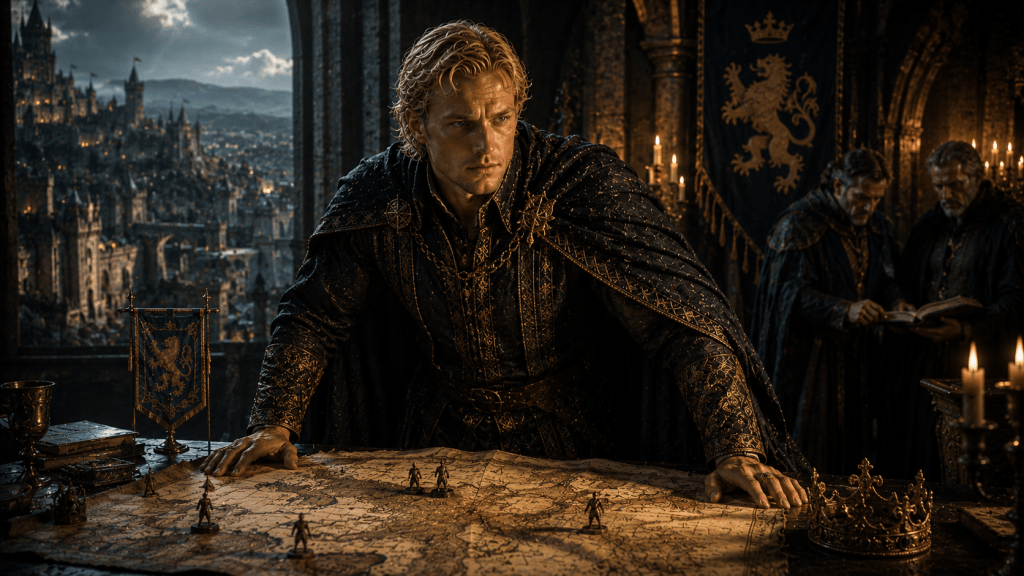
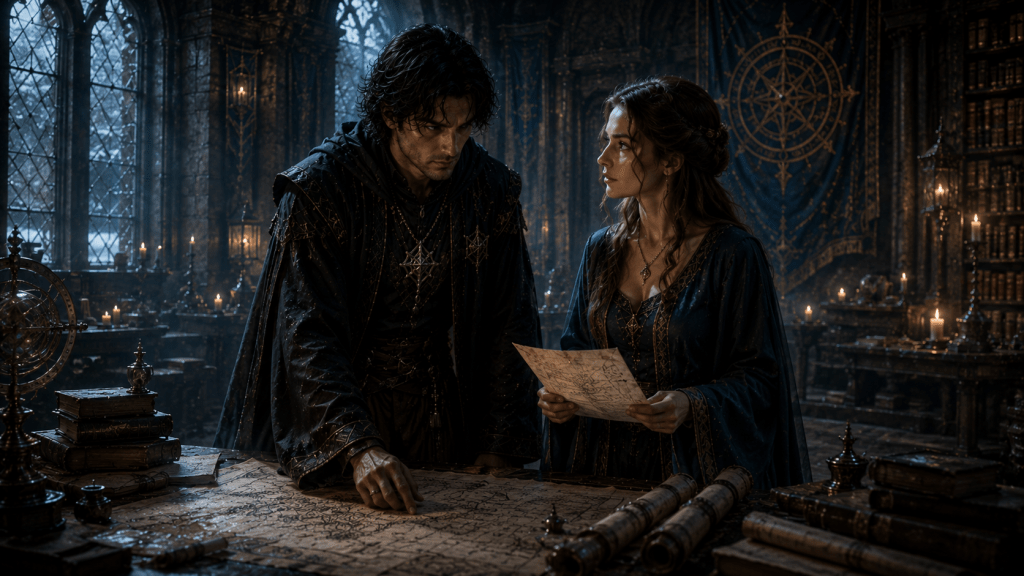
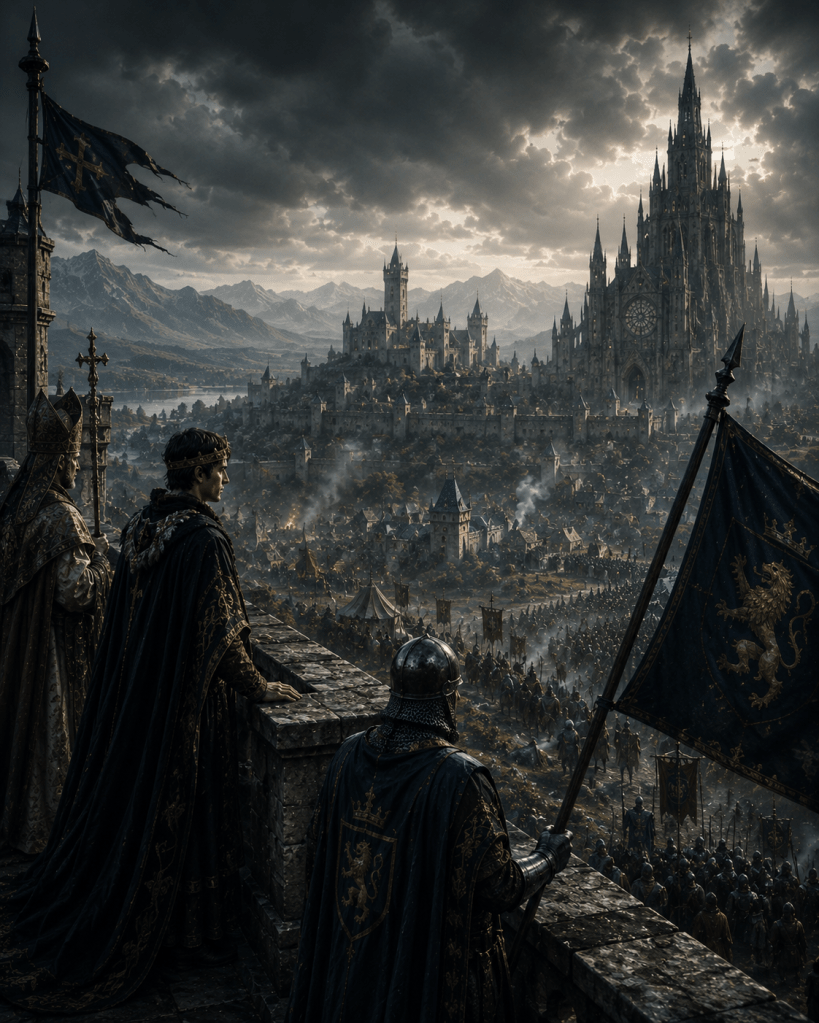
While Simion is drawn toward buried magic, Prince Patrick struggles beneath the weight of mortal rule. Bremyra is a kingdom under strain, held together by court procedure, family duty, marriage alliances, and the absence of a king whose return grows less certain with every passing day.

Patrick’s world is political fantasy in its most human form. There are borders to guard, letters to answer, marriages to arrange, rumours to test, and enemies to watch. War does not arrive as grand spectacle at first. It arrives through uncertainty, through foreign blades in city streets, through reports from the north, through councils where no one has enough knowledge to feel safe.

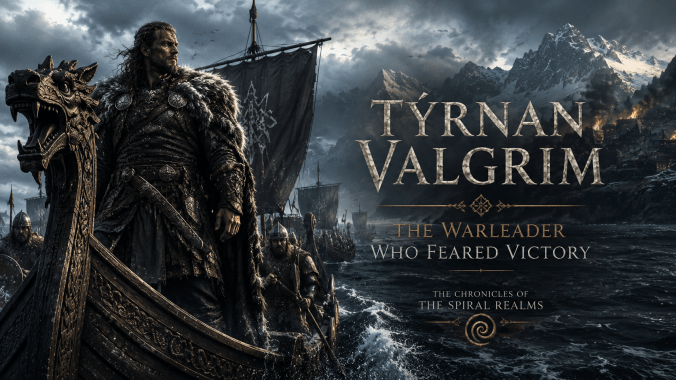
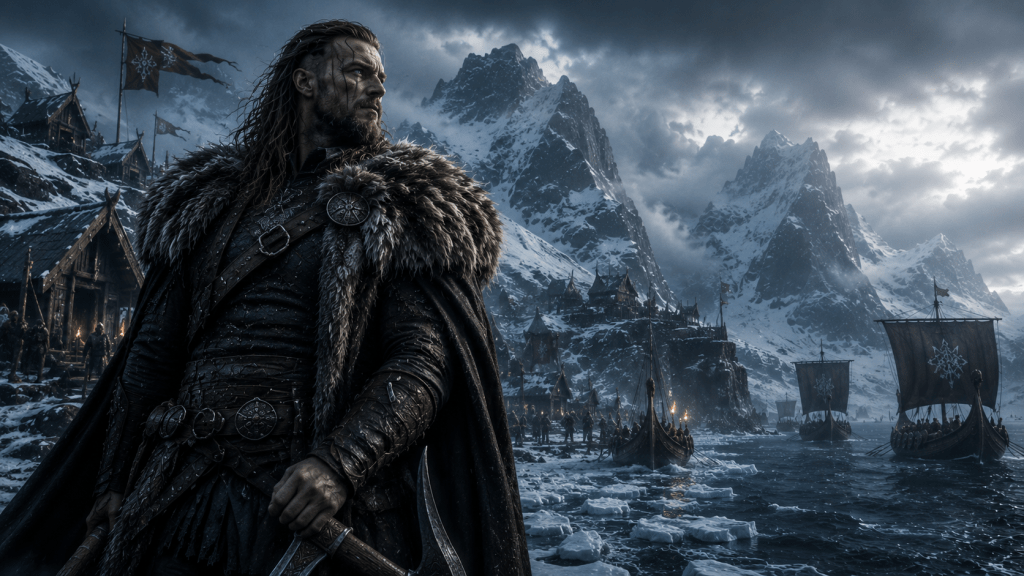
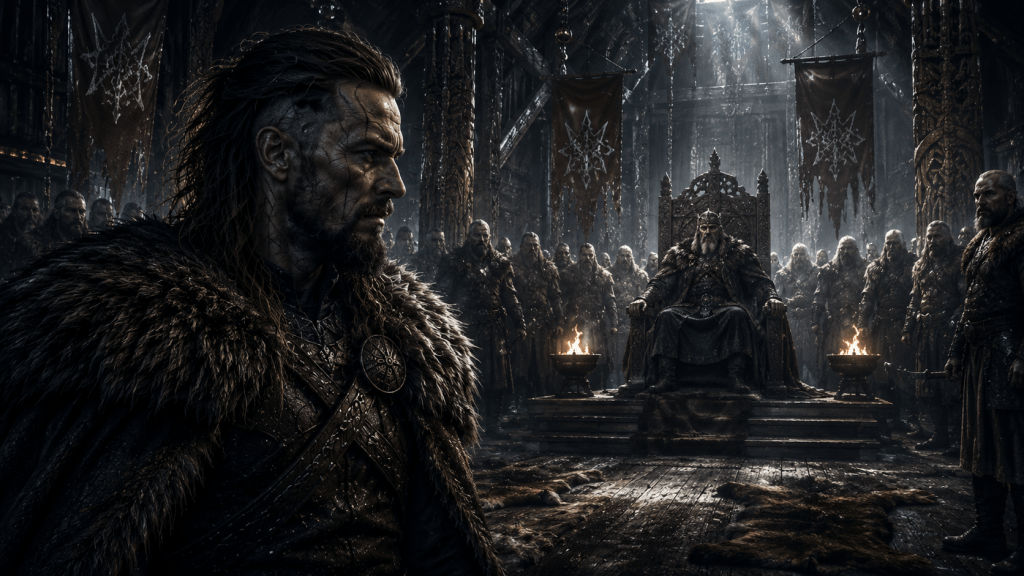
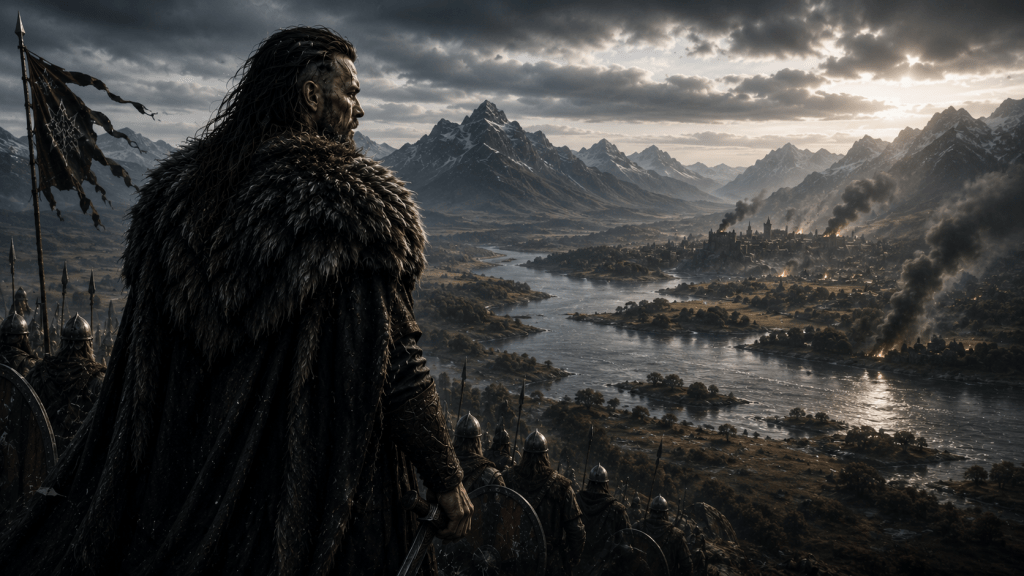
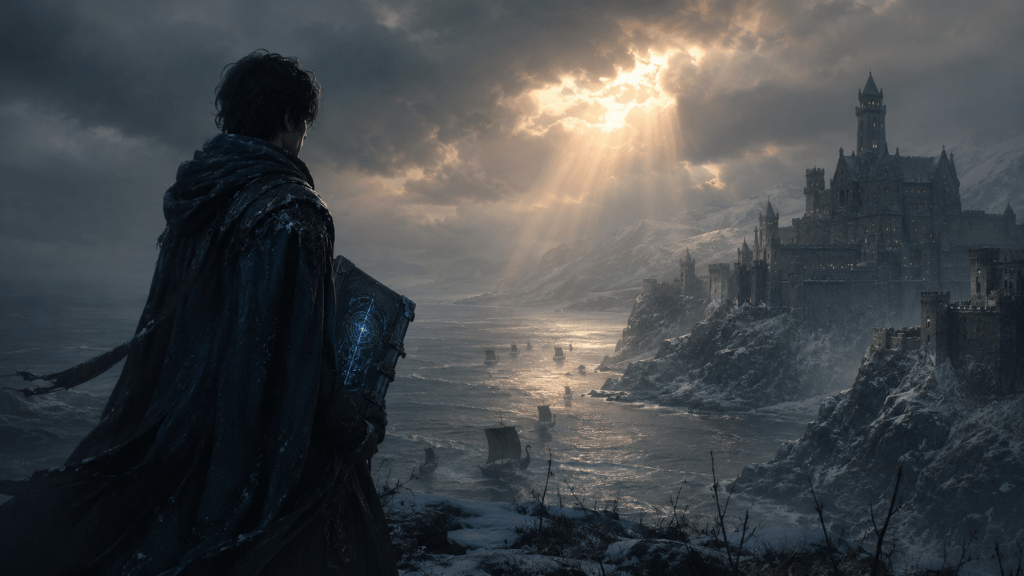
Týrnan Valgrim’s northern arc gives that pressure another face. His people move south beneath the command of a High Chieftain whose ambition already carries a shadow. Týrnan is a war leader, yet not a simple raider or clean heroic figure. His path is marked by survival, honour, violence, and doubt. Through him, the series begins to show war as moral corrosion as much as military action.


Why Silent Gods Carry More Weight

The gods of The Chronicles of the Spiral Realms are powerful because they are distant. They do not stride through the mortal world giving simple answers. Their silence hangs over prayer, magic, fear, and memory. When divine presence touches the story, it arrives through pressure, vision, symbol, and burden.

This makes the series closer to ancient gods fantasy than conventional quest fantasy. The divine is not a ladder for characters to climb. It is a cost. Mortals pray into silence, institutions build doctrine around absence, and magicians inherit fragments of power whose origins have been softened by myth.

The Spiral itself belongs to that hidden language. It suggests recurrence, divine memory, forgotten truth, and a pattern returning through the lives of people who believe they are facing isolated crises. In The Unmarked Path, the Spiral is felt before it is understood. That restraint gives the saga much of its force.


Entering The Unmarked Path

Readers can begin the saga with The Unmarked Path, available on Amazon Kindle or paperback.

The novella opens the world without emptying it of mystery. It gives the reader Bremyra’s winter roads, the fear of magicians, the weight of royal duty, the unease of the Church, the first movement of northern war, and the sense that older powers have begun to stir beneath every visible conflict.

This is a fantasy novella series for readers who enjoy slow-burn epic fantasy, ancient gods, forbidden magic, magical orders, political tension, and worlds where history is never truly dead. Its power lies in the way the mortal and divine pressures touch one another. A prince’s council, a hidden chamber, a northern storm, a royal ambush, and a sealed book all belong to the same turning, even before the characters can see the shape of it.


The First Sign of a Larger Chronicle

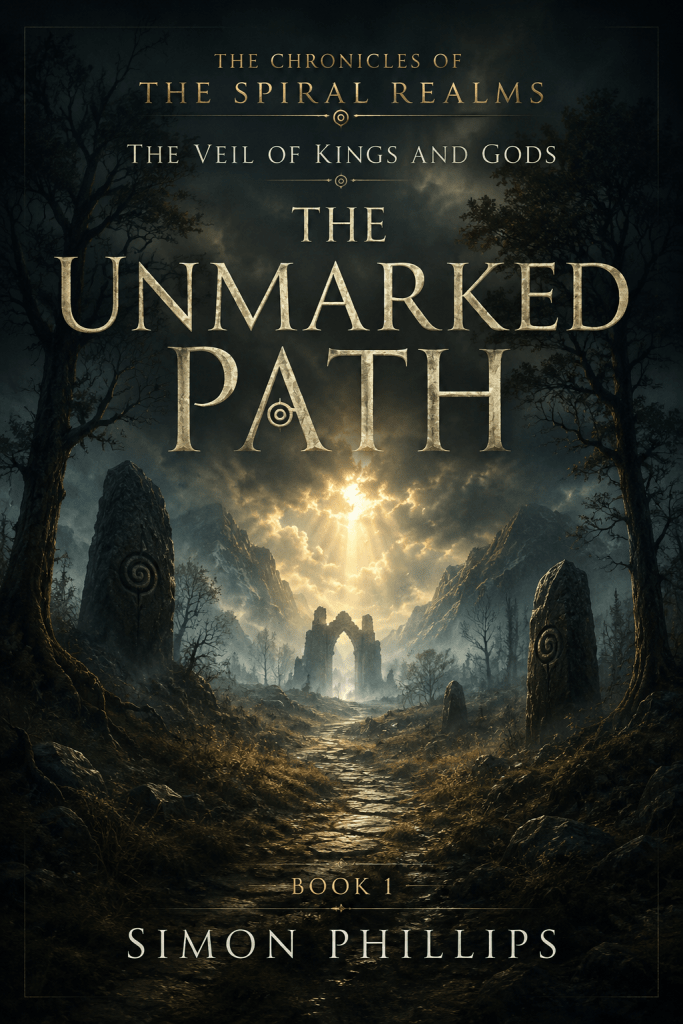
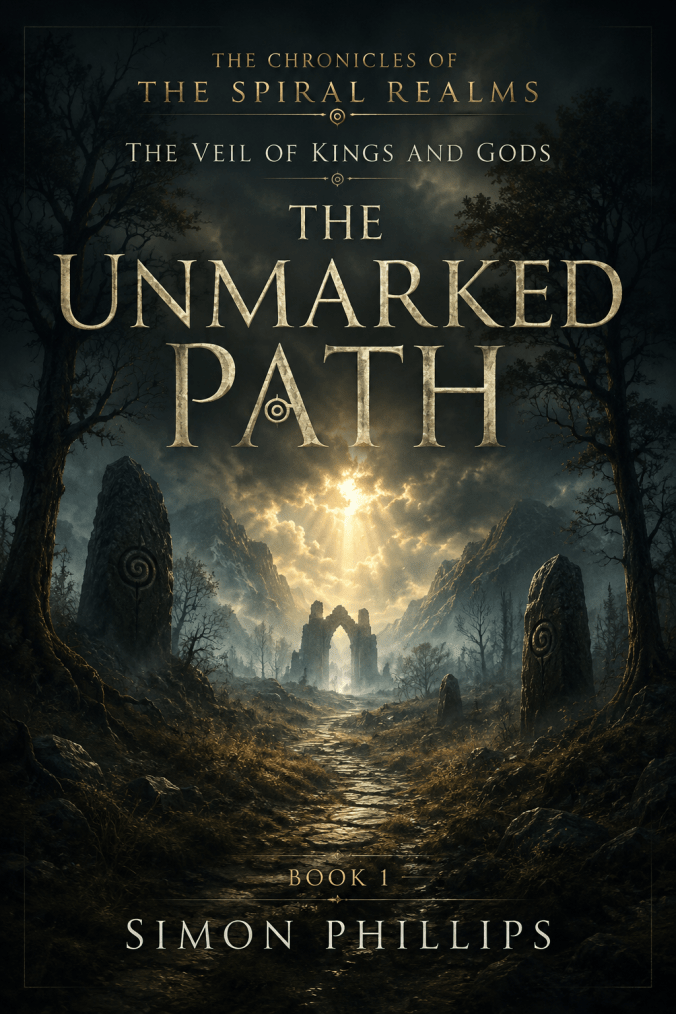
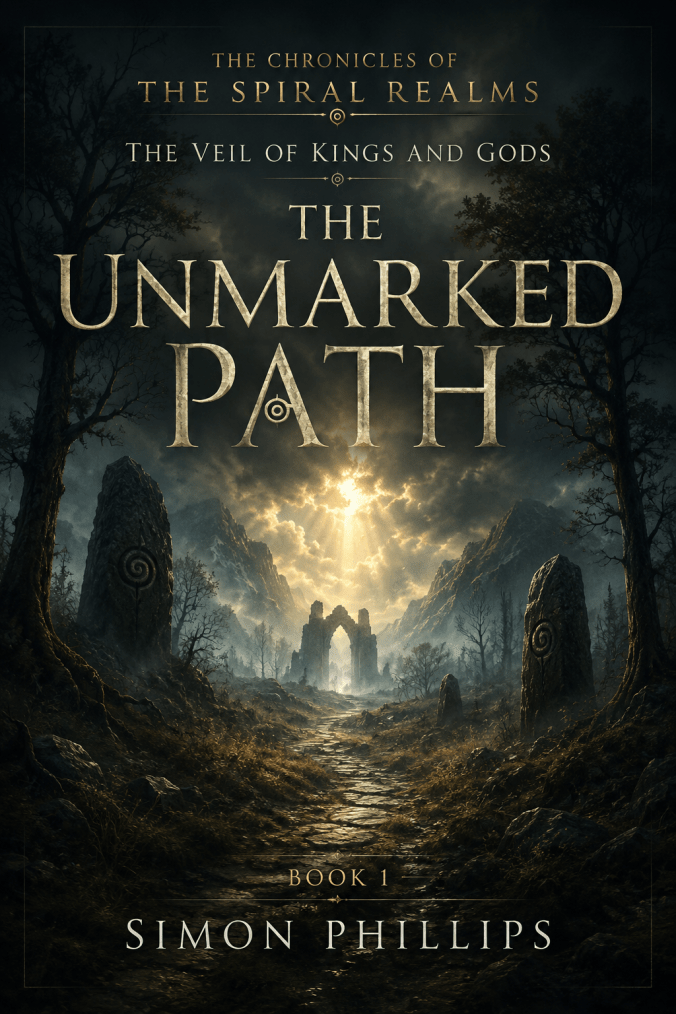
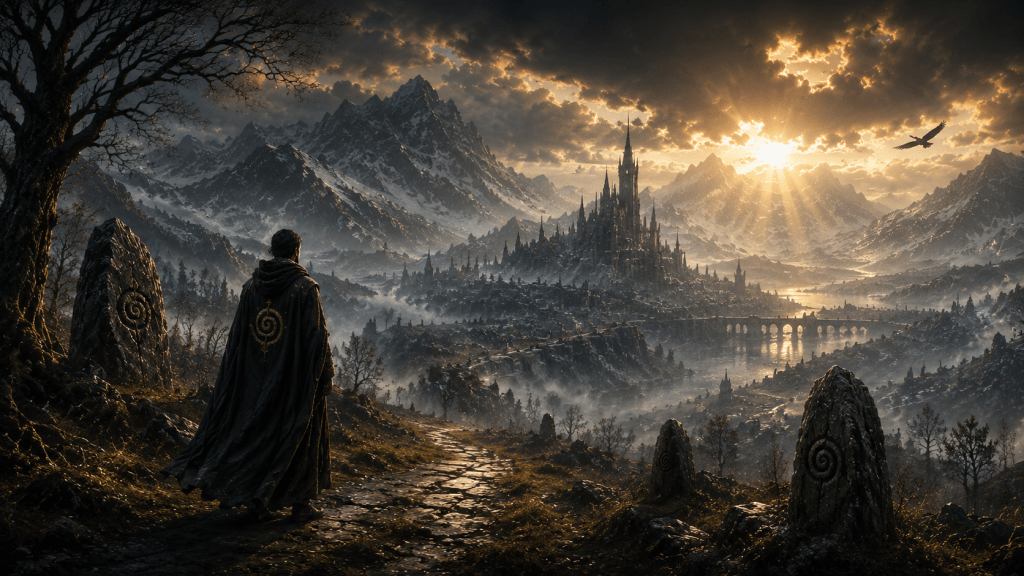
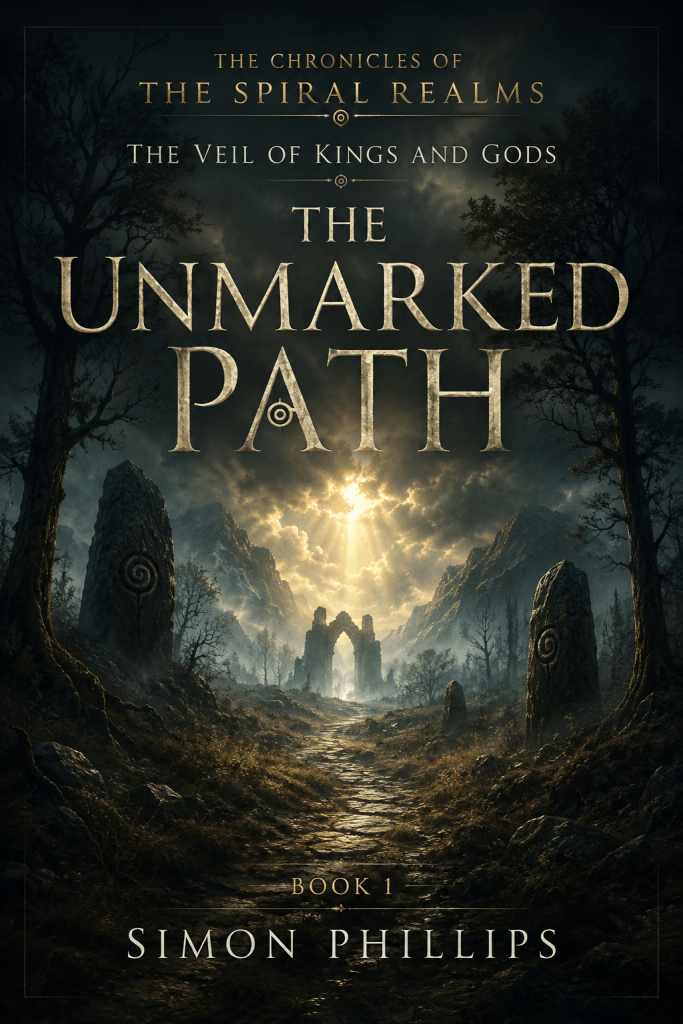
The cover of The Unmarked Path captures that threshold well: a road leading through dark trees and ancient stones, spiral marks cut into a landscape where ruin and destiny seem to share the same breath. It is an image of entry rather than conclusion. The path waits. The title promises no certainty.

That is the heart of the opening novella. The world has not yet broken, yet the first strain is audible. The gods remain silent, yet something divine has already reached toward Simion. The kingdoms continue their ceremonies, yet war gathers beyond their borders. The Order still believes it controls magic, yet magic has begun to move beyond its rules.

The saga is entered through a road, a castle, a book, and a burden. What waits beyond them is older than any king’s claim, deeper than any archive, and far less willing to remain forgotten.

The Unmarked Path Is Available Now: Begin The Veil of Kings and Gods

The Unmarked Path Is Available Now

The Unmarked Path, Book 1 of The Veil of Kings and Gods, is now available.

This is the beginning of a new epic fantasy saga within The Chronicles of the Spiral Realms, a world of kingdoms, forbidden magic, ancient gods, buried histories, and mortal lives caught in the shadow of forces far older than they understand.

Every long fantasy series has a first doorway. For this one, that doorway opens in Bremyra, a coastal kingdom of stone, cold sea air, royal duty, old secrets, and the lingering fear of magicians. It begins with Simion, a magician of the Order who arrives under instruction, though even he has little idea why he has truly been sent.

He is not the kind of figure who strides into the story already certain of his destiny. He is uncertain, guarded, and burdened by the feeling that he stands in the wrong place at the wrong time. Yet around him, the world begins to shift. A hidden mission, a royal court under pressure, a princess bound by duty, northern raiders crossing the sea, and whispers of something sealed beneath the old stones all draw the story into motion.

The Unmarked Path is a slow-burn opening to a larger mythic fantasy world. It is built around atmosphere, character, mystery, and consequence. The story is not only about magic as power, but magic as inheritance, memory, fear, and responsibility.

At the heart of the novella is Simion, a reluctant magician shaped by the Order of Magicians, an ancient institution descended from a broken magical empire. He has been trained in power, discipline, and obedience, though he has never truly felt at home among those who taught him. When he arrives in Bremyra, he carries more than a letter from his superiors. He carries the first pressure of a destiny he cannot yet name.

Alongside him stands Prince Patrick, a royal son forced into responsibility while his father and brothers remain absent. Patrick’s world is one of council chambers, alliances, military pressure, marriage arrangements, and decisions made under uncertainty. His story brings the political heart of the novella into focus. Kingdoms are watching one another. Borders are tense. Peace feels formal rather than secure.

Then there is Týrnan Valgrim, a northern warleader whose people begin moving south across dangerous seas. His chapters carry the weight of iron, salt, storm, clan loyalty, and conquest. Through him, the wider world of Ældorra starts to open beyond Bremyra’s walls.

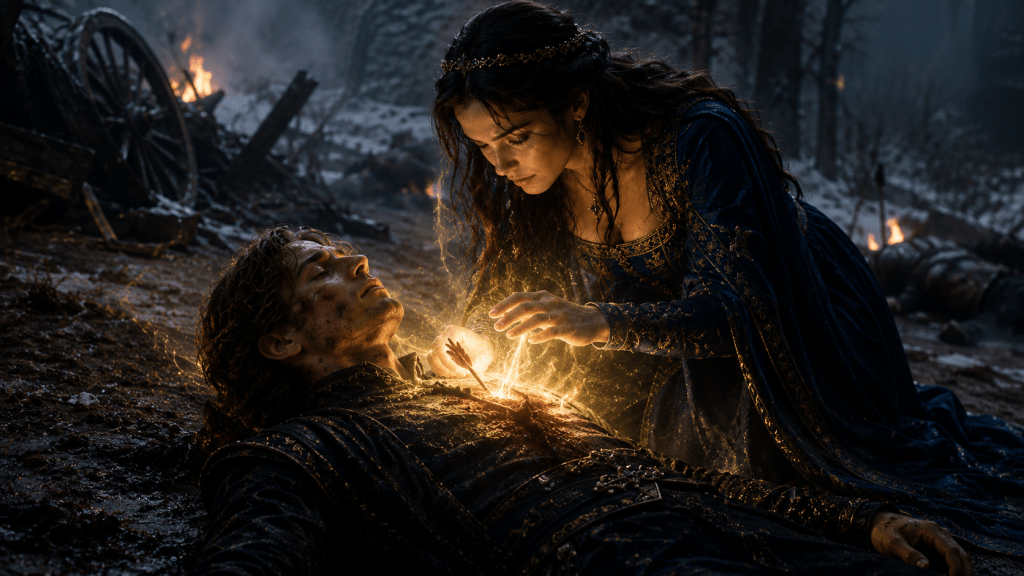
The novella also introduces Elana, Patrick’s sister, whose role reaches beyond royal duty. She brings warmth, intelligence, and emotional force into the story, while also revealing that the laws of magic in this world may be far more fragile than the institutions around her are willing to admit.

What begins as political unease slowly brushes against something older.

The history of Ældorra has been shaped by the Imperium Arcana, the Order of Magicians, the Church, the fallen god Azaroth, and the death of the God of Magic. Much of that history has faded into myth, yet myth has a way of returning when the world grows weak enough to hear it again.

That is where the Spiral begins to matter.

The Spiral is one of the central mysteries of The Chronicles of the Spiral Realms. In this first novella, it is not explained in full. It appears more as pressure, pattern, memory, and warning. It belongs to ruins, divine silence, forgotten truths, and the sense that history is not finished with the living.

For readers who enjoy fantasy that takes its time to build weight and atmosphere, The Unmarked Path offers the first step into a larger saga. It is not a light adventure or a simple quest story. It is a mythic fantasy opening about a world beginning to remember what it buried.

The story is for readers who enjoy:

ancient magical orders, reluctant magicians, royal courts under pressure, forbidden power, divine silence, old books, hidden chambers, political tension, northern warbands, and the feeling that a larger storm is gathering beyond the edge of the page.

This first novella is only the beginning. It opens the path, introduces the key players, and places the first cracks in the world. Simion does not yet understand what is reaching for him. Patrick does not yet understand how far duty will carry him. Elana does not yet understand the cost of the power within her. Týrnan does not yet understand what his people’s march will awaken.

The reader, like them, enters at the point where history begins to turn.

The Unmarked Path is available now on Amazon Kindle.

Begin the saga with The Veil of Kings and Gods.

The Unmarked Path Is Coming Soon: A First Look at The Veil of Kings and Gods

Some stories begin with war. Others begin with prophecy, a fallen kingdom, or a blade drawn at the edge of an empire.

The Unmarked Path begins with a quieter disturbance.

A magician arrives in a coastal kingdom under sealed orders. A prince governs in the absence of his father and elder brothers. A northern war leader crosses the sea with warriors at his back, uncertain whether the conquest ahead will preserve his people or carry them into something far darker. Beneath these movements, older powers begin to stir. The world has shifted before any of them fully understand what has changed.

This is the opening movement of The Veil of Kings and Gods, my upcoming fantasy novella series, and the first book, The Unmarked Path, will be released soon.

To mark that approaching release, I have created a short animated promotional video offering a first glimpse of the stakes surrounding the story. It is not a full trailer in the traditional sense, and it is not meant to explain every strand of the plot. It is a mood piece, a visual opening into the pressure gathering around the novella: ancient danger, royal uncertainty, invasion from the north, and one magician beginning to stand too close to forces far older than he realises.

At the centre of The Unmarked Path is Simion, a magician of the Order who has never thought of himself as exceptional. He returns to Bremyra, the kingdom where he once lived as a kitchen boy, carrying private instructions from the Council of Five. Three magicians vanished there years earlier while investigating disturbances tied to the ruins of the ancient Imperium Arcana. Simion has been sent to discover what became of them, even as the court around him grows increasingly unstable.

Bremyra is already strained when he arrives. Prince Patrick, third in line to the throne, has been left to manage the kingdom while his father and elder brothers remain absent on a distant expedition. Border tensions are rising. Marriage alliances carry more weight than comfort. The Church watches the Order’s return with suspicion. Every part of the court appears to be functioning, yet uncertainty has settled beneath it.

Then the threats begin to move closer.

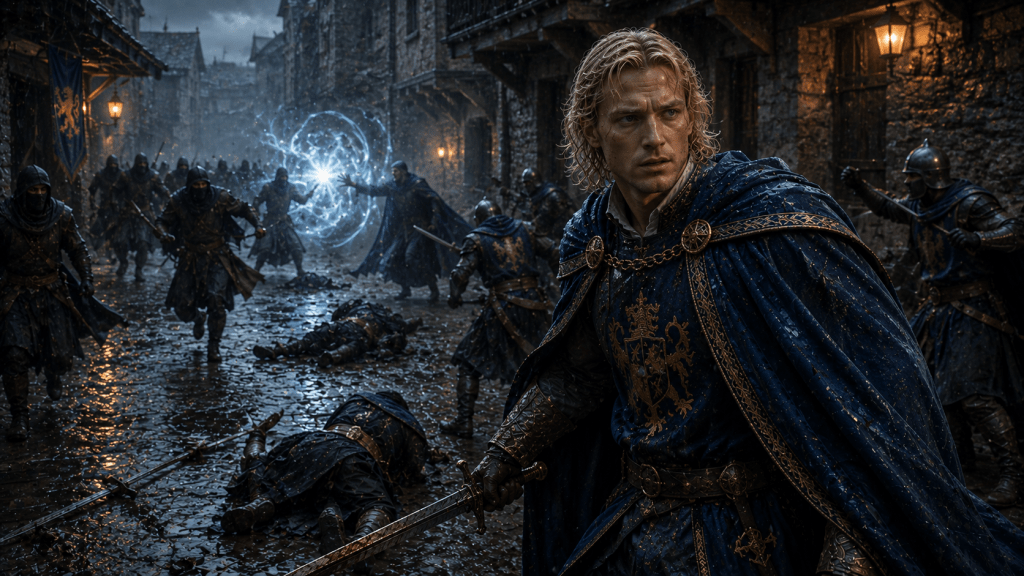
An ambush inside Bremyra reveals attackers whose weapons and clothing belong to no familiar neighbouring realm. A royal journey turns violent. Ancient magic hidden beneath the castle awakens to Simion’s touch. A sealed book comes into his possession. A voice beyond mortal understanding warns that the balance is failing and that an old binding is beginning to weaken.

At the same time, far to the north, Týrnan Valgrim leads his people across storm-torn seas. He is a war leader, disciplined and respected, yet already troubled by the cruelty growing within the wider invasion. His arrival on southern shores widens the novella beyond Bremyra’s walls. The world is not facing one contained crisis. Several pressures are beginning to converge, each still distant enough to be misunderstood, each moving towards consequence.

That convergence is what drew me most strongly to this opening book.

I wanted The Unmarked Path to begin at the point before the central conflict becomes fully visible. The story is not about heroes already prepared for destiny. It is about people standing inside ordinary duties, court work, political obligation, military command, magical service, before realising that the ground beneath those duties has started to give way.

Simion does not arrive knowing that his life has entered a larger design. Patrick does not yet know that his temporary stewardship of Bremyra may demand far more than governance. Týrnan does not understand what the southern campaign will truly become. Even Princess Elana, whose presence carries an emotional warmth through the first novella, begins the story on a path chosen for dynastic duty rather than personal freedom.

Each of them is caught at the edge of change.

That was the feeling I wanted the animated promo to carry. Not a summary. Not a sequence of plot revelations. A sense that several lives are moving towards the same gathering storm, and that once they cross the threshold, the world they understood will no longer be enough.

The Veil of Kings and Gods is a long-form fantasy novella series concerned with power, belief, memory, empire, and the individuals drawn into histories they never asked to inherit. The Unmarked Path opens that wider arc through political tension, magical mystery, northern invasion, and the first signs of an ancient danger pressing once more against the world.

The book will be released soon, and I will share the publication details once the final launch is ready.

For now, this animated preview offers the first public look at the tone and stakes of the story.

The path has begun to reveal itself.

Why I’m Writing Fantasy Short Stories (And How They Expand My Novel’s World)

Before my epic fantasy novel The Veil of Kings and Gods releases, I wanted to open a small window into the world of Ældorra, a world of stone kingdoms, fading gods, and myths that refuse to die.

Each short story I write is its own world in miniature. They don’t rely on the main novel, yet every one of them echoes it, a fragment of history, a lost prayer, or a legend that shaped the lands my characters now walk. Some are quiet and personal; others burn with the power of the divine. Together, they breathe life into Ældorra in a way that maps and lore pages never could.

Writing these stories is more than worldbuilding, it’s a way of feeling the world I’ve spent years creating. When I step into a new tale, I discover the texture of the world again: the smell of rain on stone, the flicker of temple light, the forgotten names carved into the ruins.

These short stories aren’t just for readers waiting for the novel, they’re for anyone who loves myth, emotion, and the quiet moments that make a fantasy world feel alive.

You’ll soon be able to explore them as ebooks, see the artwork behind them, and even collect the prints.

Welcome to Ældorra. The gods don’t stay silent forever.

🎥 Watch the video

Writing Through Illness Keeping the Flame Lit

There’s a particular stillness to the house when one is unwell. The windows dim, the hours stretch thin, and even the simple act of sitting at a desk becomes a task weighed with strange solemnity. Over the past week, I’ve been writing through a heavy spell of illness, not the romantic sort that lends itself to poetic fever-dreams and sudden inspiration, but the ordinary kind. The draining, silent kind. Head fog, aching bones, and the slow drag of breath.

And still, the story asks to be told.

It hasn’t been easy. The rhythm of my chapters, those long, rolling sentences that mirror the breath of the world I’m building, do not come quickly when my mind is wrapped in cotton. Dialogue feels slower to surface, the flow of magic across a battlefield takes more effort to visualise, and Simion’s thoughts… his weariness starts to echo my own. Yet somehow, that makes the writing more honest. There’s no room for pretense when you are sick. What emerges on the page feels stripped back to truth.

There’s comfort in the discipline, too. Even a few hundred words become a kind of anchor. I’ve been working steadily through Chapter 31, part by part, and while I’ve not progressed at my usual pace, I’ve remained in the world. That matters more than anything. Staying inside the rhythm of the novel, no matter how slowly, prevents the silence from becoming distance. And when you are tired, truly tired, that distance grows fast.

This post is not a grand revelation, nor a triumphant declaration of productivity. It is simply a mark on the wall. A quiet signal that the story lives, even on days when the author does not feel particularly alive himself. If you are also working through something, whether a cold, a long week, or a deeper weariness, I hope you remember this: words written under strain are still worthy. They still carry weight. And sometimes, they carry more of you than you realise.

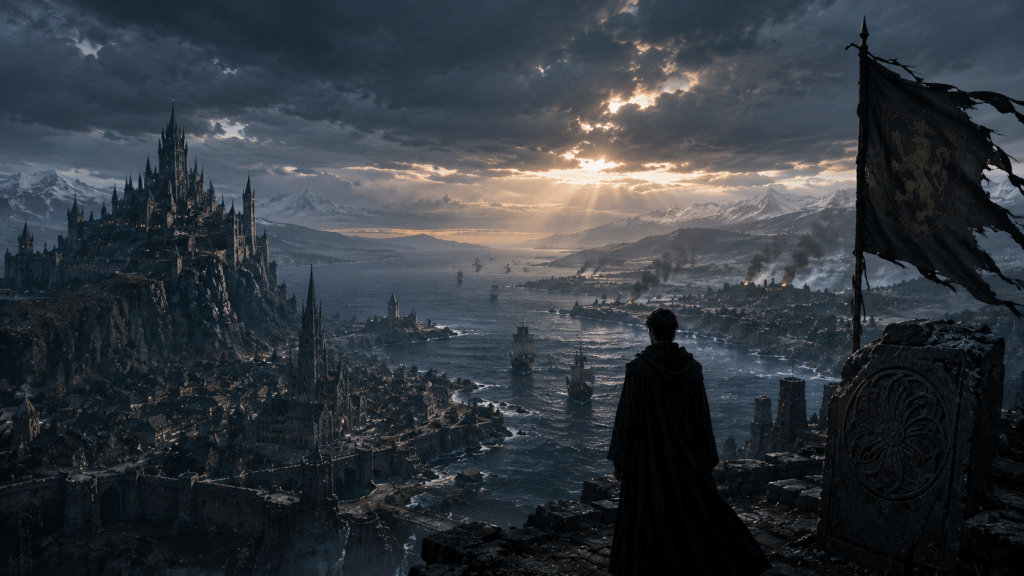
I’ll return to the cliff’s edge soon, where Simion waits beside those ancient stones. There is much still to tell.

Until then, rest, breathe, and if you can, keep the flame lit.

How I Plan Epic Conflicts Without Losing the Characters

If there’s one question I return to again and again while writing The Veil of Kings and Gods, it’s this: how do you make war feel personal? Not just dramatic, not just explosive or large in scale, but real, rooted in the hearts of the people forced to live through it.

High fantasy is often filled with titanic clashes: gods levelling mountains, kings raising armies, ancient orders clashing across the centuries. But if I’m being honest, those scenes only truly work when they grow from something human. When a character you care about walks into the storm and you understand why.

I’ve spent the past year trying to balance these two worlds: the grand and the intimate. The arcane and the emotional. And nowhere has that balance been more important than in planning the major conflicts of this story, political, magical, divine. Today, I want to share how I approach that.

The Characters Always Come First

It sounds simple. Obvious, even. But when you’re building a vast world with kingdoms at the brink and gods whispering from beyond the veil, it’s shockingly easy to forget that someone still has to live through it.

For me, that’s Simion, Patrick, Týrnan. Each of them sees the oncoming storm from a different vantage point and each is wounded by it in ways that are quiet, personal, and rooted in character. Simion is a man caught between divine expectation and the fragile world of expectation. Patrick bears the weight of kingship while hiding parts of himself that would shatter his position. Týrnan fights not for conquest, but to keep his people from losing their soul.

The conflicts around them may escalate. But unless those conflicts are built on the foundation of who they are, their doubts, fears, loyalties, and flaws, the story would ring hollow.

Conflict as Mirror, Not Just Plot Device

One of my guiding principles is that every external conflict must reflect an internal one. If a battle breaks out between kingdoms, it needs to echo the unrest already stirring within the characters.

Take Patrick. His kingdom teeters on the edge of diplomatic collapse, but what drives that tension is not just geopolitics, it’s his own repression. His court senses weakness. His enemies sense distance. And Patrick, for all his strength, has no safe space to be fully himself. The war outside is the war inside.

Likewise with Simion, who is being slowly crushed by the power he once sought. The threats he faces aren’t always from enemies; sometimes they come from within, from his refusal to be the weapon the gods demands, from his fear of harming those he loves, from the ancient force he’s inherited that now forgets its own wisdom. These are personal wars. The divine and the magical are just the landscape they bleed into.

Intimacy in the Midst of Chaos

One of the joys and challenges of writing a large-scale fantasy series is finding the quiet in the chaos. There are scenes in Book 1 where cities are burning or armies are gathering, and yet the most important moment is a hand held too tightly, or a look that lingers a second too long. That’s what I strive for.

When Simion walks into battle, I don’t want the reader to think of fire and ruin. I want them to think of his challenges. Of the weight of the cloak he wears. These are the things that make his power mean something. Without them, he’s just another mage with too much fire in his hands.

And when Patrick makes a decision that could cost him the alliance of a kingdom, it’s not the politics that matter. It’s what he sacrifices to stand firm, the love he denies, the truth he cannot speak, the safety he’ll never truly have. These are the human costs, and they’re what I try never to lose sight of.

Final Thoughts

I love grand fantasy. I always will. But I believe its heart lies not in its spectacle, but in its people. In the ones who stumble through magic and war with bruised hearts and broken promises, doing their best to hold on.
So when I plan my conflicts, magical or mortal, I don’t begin with maps or power levels or ancient histories. I begin with the characters. With their wounds and their wants. And I try, as best I can, not to lose them in the storm.

Because the war may shape the world.
But it’s the people who shape the war.

Prince Patrick: Duty Wears a Crown of Silence

There are kings born with glory in their blood, and there are those who wear power like a wound.

Prince Patrick of Bremyra is no conqueror carved from legend. He is not the first son, nor the boldest. He did not march off with banners raised and swords drawn like his father and brothers. Instead, he was left behind, to rule in silence, to shoulder a realm not by destiny, but by circumstance.

When King Cedric departed on his expedition, taking with him Patrick’s elder brothers, Aric and Aiden, the third-born prince was not meant to lead. And yet, years have passed, and no word has returned from the expedition’s path. Now the court stirs with unease, and Patrick remains, a regent in all but name.

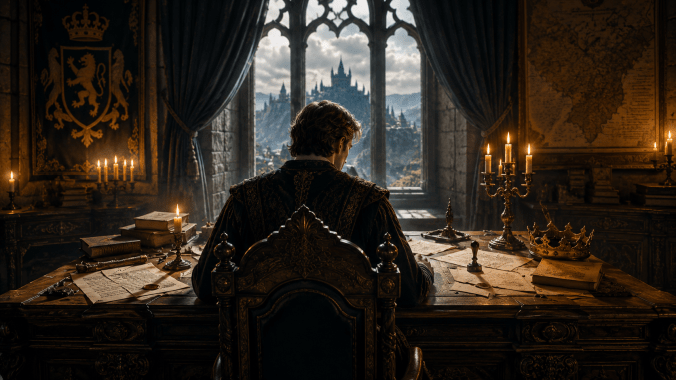
He governs with quiet endurance. His hands are stained not with blood, but with ink, the endless scrolls of diplomacy, tax levies, marriage negotiations, and royal petitions. Yet there is something deeper behind his golden hair and cool gaze. A weight. A weariness. A knowing look passed only between those who did not ask to carry the realm, but do so anyway.

In the quiet of the library, where the firelight reflects off old treaties and maps, Patrick does not play at king. He studies. He listens. He calculates not in ambition, but in caution. Around him, kingdoms bristle, Arvendral grows restless, Tsunamia watches with silent interest, and suitors press for alliances. Yet the prince offers no bold proclamations. Only silence. Measured decisions. The stillness of a man who understands the cost of speaking too soon.

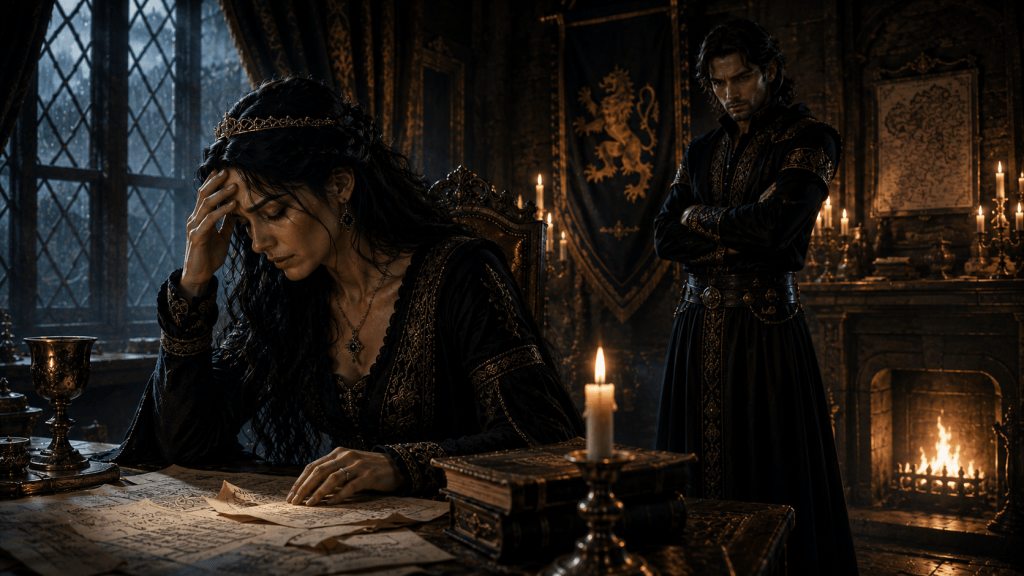
He is not alone in his burden. His sister, Elana, moves like a shadow alongside him, fierce, articulate, and bound for marriage to secure Bremyra’s position. There is a shared understanding between them: the weight of expectation, the sacrifices they will not name aloud.

And then there is Simion, the magician now bound to Patrick’s court,once a kitchen boy in the same castle where Patrick now rules. A childhood thread, pulled taut by fate.

If Patrick sees more than he says, he does not show it. But one cannot walk long among wolves without learning how to bare their teeth.

He was never meant to wear the mantle of power. Yet power, like silence, often chooses those who do not crave it.

Writing The Veil of Kings and Gods: Where the Story Began

There was no single spark. The story came slowly, like a breath remembered from long ago, or a half-formed thought whispered through stone. A world shaped by old powers. A realm where kings fear magic, and magicians serve at the edge of thrones.

In the beginning, there was only a boy. He worked the castle kitchens in Bremyra, sweeping floors and scrubbing pans beneath the gaze of guards who barely noticed him. One day, something stirred. It broke through him, unseen, instinctive, and changed the course of his life. The Order of Magicians arrived, and the boy was taken.

He did not shine. While others rose through the ranks with ease, he struggled. There were no accolades, no whispered praises in candlelit halls. His tutors pushed him hard, and he endured. The hours were long. The silence longer. He studied while others excelled, remembered spells long after others had passed their trials.

In time, he left the Academy. There were no citadels calling his name. No grand appointments. His master in the Council intervened, and so he returned, back to the same castle where he once carried bread and carved meat. This time, he came as Advisor. The halls had changed. The faces had not.

That was where the story found its voice.

The world around him unfolded slowly. Whispered tensions in the council chamber. Glances that carried more weight than words. A kingdom balanced on memory and suspicion. Within those stone walls, something deeper began to stir, an echo, perhaps, or a remnant of something long buried.

As I wrote, I did not seek grand battles or sweeping prophecy. I sought something quieter. A man who carried more than others saw. A world that remembered what others had forgotten. Magic that did not burn with spectacle, but pulsed through the earth like a second heartbeat.

The Veil, once unseen, began to lift.

What lies beyond that veil remains hidden, for now. This story, like the world it inhabits, is still becoming. Yet its heart remains the same: a kitchen boy, a crown too close, and a voice that waits beneath the silence.

Azaroth and the First Hell: The Demon God Who Was Once Divine

Before he became the greatest threat to Ældorra, Azaroth held a place among the divine.

During the age of the Imperium Arcana, the gods still shaped the world. Their presence guided the rise of empires, the movement of stars, and the sacred flow of magic. Among them stood Azaroth, an entity devoted to balance and universal law. He did not govern love or war. His realm existed at the intersection of order and arcane truth. Mortal kingdoms honoured him with silent offerings, while the Order of Magicians held his name among the highest in their ancient texts.

Over time, something within Azaroth shifted.

No records reveal the full path of his descent. Even the Order, with all its stored knowledge and sealed tomes, whispers only fragments. What remains clear is this: Azaroth chose to leave the High Heavens. He reached downward, into the wounded depths of reality, the realm known only as the First Hell.
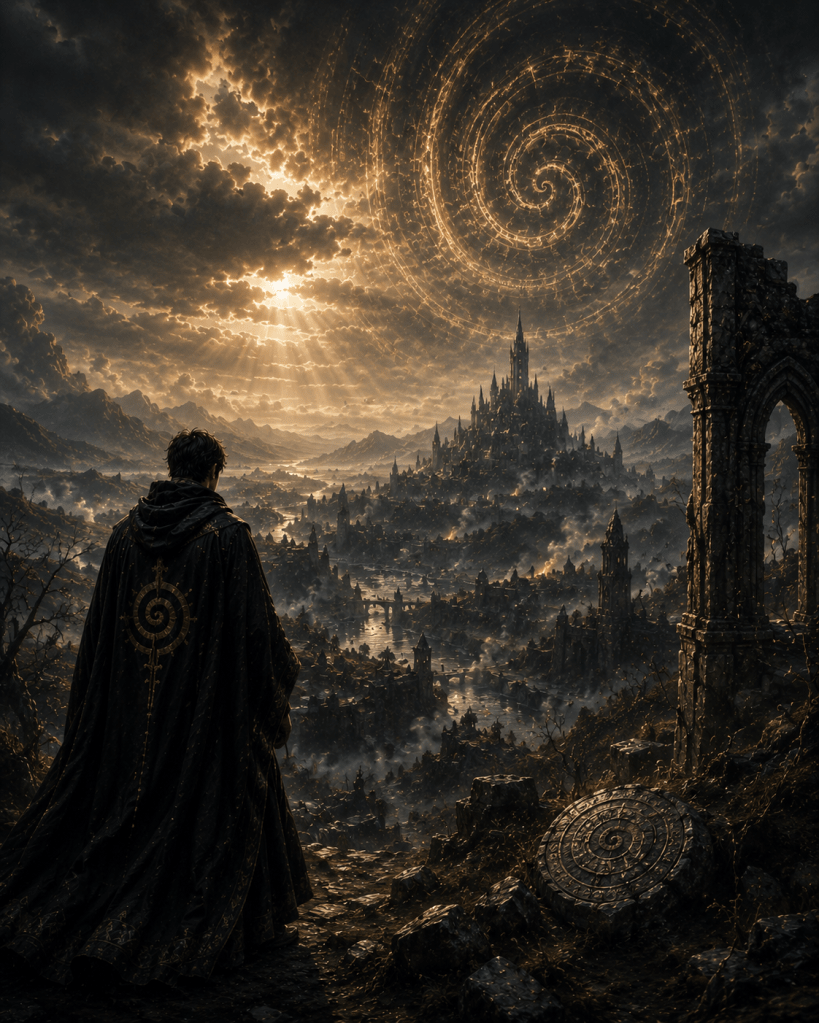
That place devours meaning. Magic there fractures into madness. Time becomes a storm of echoes. Azaroth returned changed. Divine no longer, he emerged cloaked in shadows that moved like thought. His magic no longer carried harmony. It consumed. Across the divine realms, tremors of dread followed in his wake.

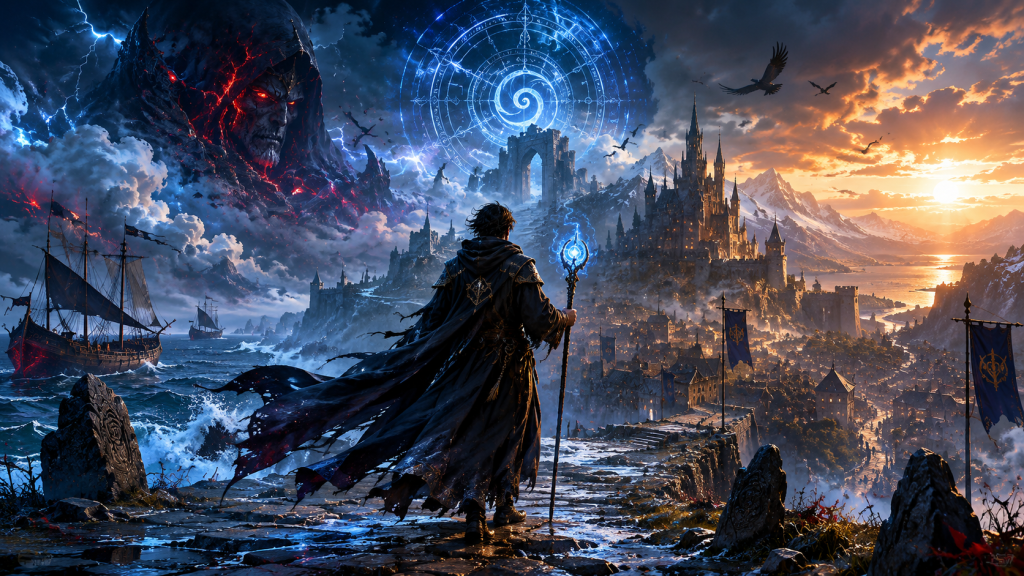
The God of Magic rose in response. Once kin to Azaroth, he stood alone before the fallen deity. The clash between them tore across sky, land, and sea. Entire mountain ranges cracked. Oceans surged beyond their borders. Celestial towers collapsed into memory.

The fallen was sealed. Azaroth’s essence remained trapped within the First Hell. To ensure the prison held, the God of Magic sacrificed himself. No tomb bears his name. No statue rises in his honour. His essence faded, though his victory allowed the world to continue.
The seal endured across centuries.

Now, it weakens.

In The Veil of Kings and Gods, faint tremors move through forgotten chambers and shattered temples. Spells fail. Visions twist. In moments of silence, some hear voices echoing with words never spoken. The First Hell watches once more. Azaroth reaches toward the living world through cracks in the veil.

He remains more than a demon. A god’s ambition shaped his fall. His memory was stripped from scripture, yet his will never faded. He waits, not in silence, but in hunger.

And now, the gate flickers.

Editing, Rereading, and Rediscovering My Story

Over the past few days, I’ve been deep in the process of proof-reading and editing three chapters of my novel, The Veil of Kings and Gods. It’s not the most glamorous part of writing, but this time, it felt different.

Something about reading the story with fresh eyes after a short break made the experience… enjoyable. Genuinely enjoyable.

I wasn’t just correcting grammar or trimming repetition, I was rediscovering the world I’d built. The tension in a particular scene, the rhythm of dialogue I’d forgotten writing, or that one line that landed exactly how I hoped it would months ago. These small victories reminded me that, yes, I’m actually telling a story worth reading.

There’s a strange kind of pride that comes with this phase. It’s less about ambition and more about affirmation. Not “Will this sell?” but “I’m glad I wrote this.”

Of course, I still tweak. I still cut. I still sigh when a sentence refuses to behave. But the difference now is that I’m refining something real, something that already exists, not chasing a blank page.

If you’ve ever written something long-form, be it a novel, a thesis, or even a personal journal, you might know the feeling: rereading your own words and thinking, This isn’t perfect… but it’s mine. And it’s good.

That’s the stage I’m in right now. And I wanted to share it, not just the technical process, but the strange joy of falling back into a world you created and realising you want to stay there a little longer.

Want to Hear the Behind-the-Scenes Version?

If you’d rather hear me talk through the editing process, I recorded a short face-to-camera video as well. You can watch it here:

Whether you’re a fellow writer, a reader waiting for the book, or just curious about the creative process, I hope this gives you a little window into what it means to edit with joy.

Let me know in the comments: Have you ever gone back to something you made and felt quietly proud of it?