The Unmarked Path Is Available Now: Begin The Veil of Kings and Gods

The Unmarked Path Is Available Now

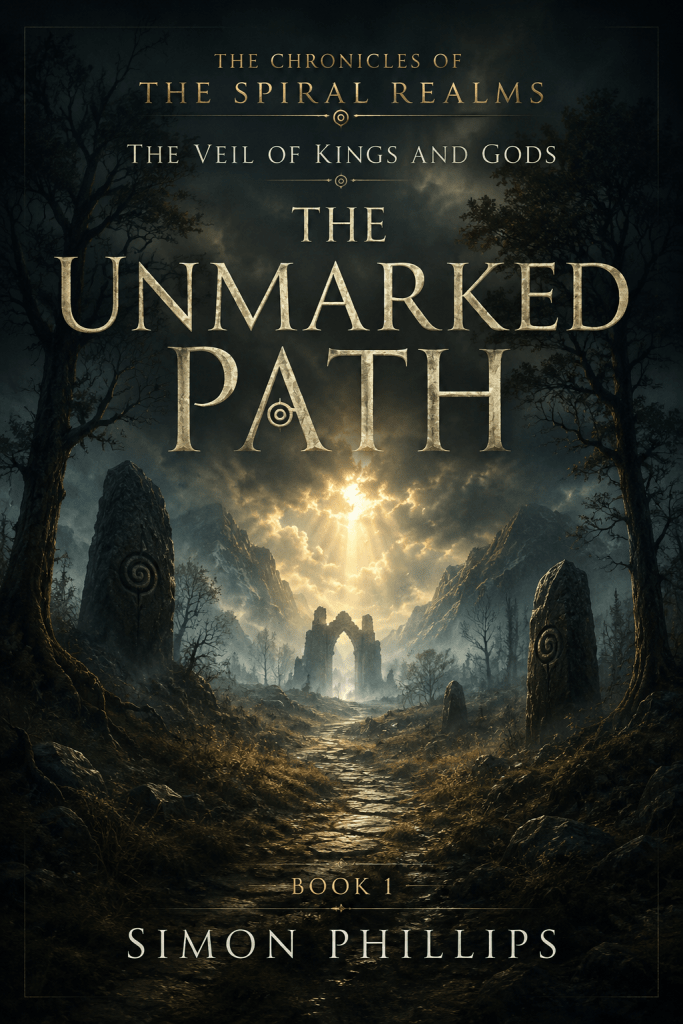
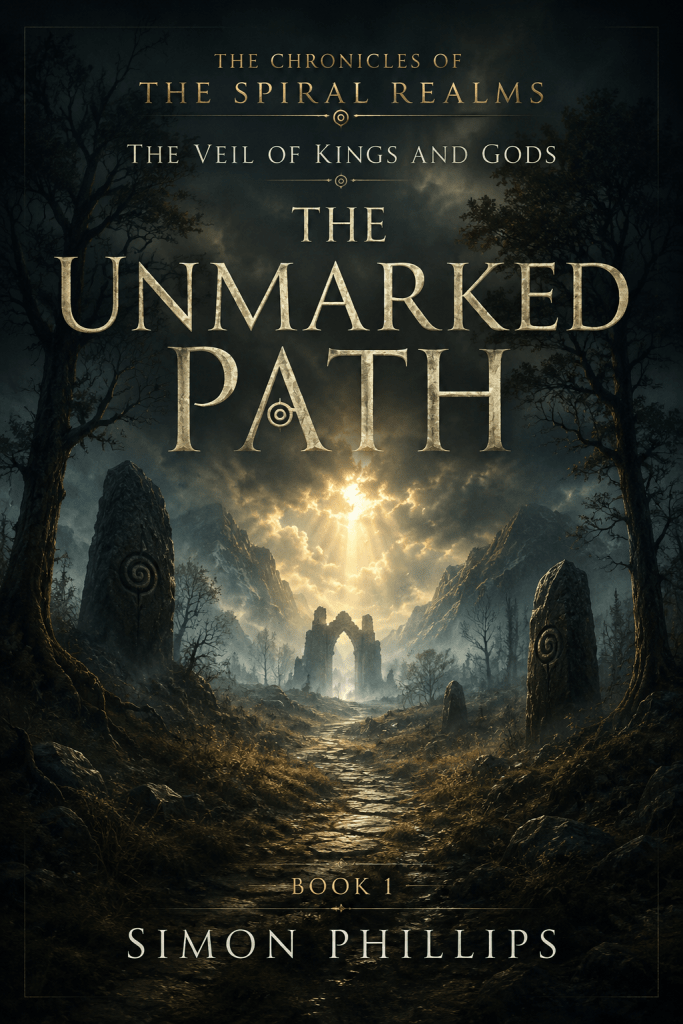
The Unmarked Path, Book 1 of The Veil of Kings and Gods, is now available.

This is the beginning of a new epic fantasy saga within The Chronicles of the Spiral Realms, a world of kingdoms, forbidden magic, ancient gods, buried histories, and mortal lives caught in the shadow of forces far older than they understand.

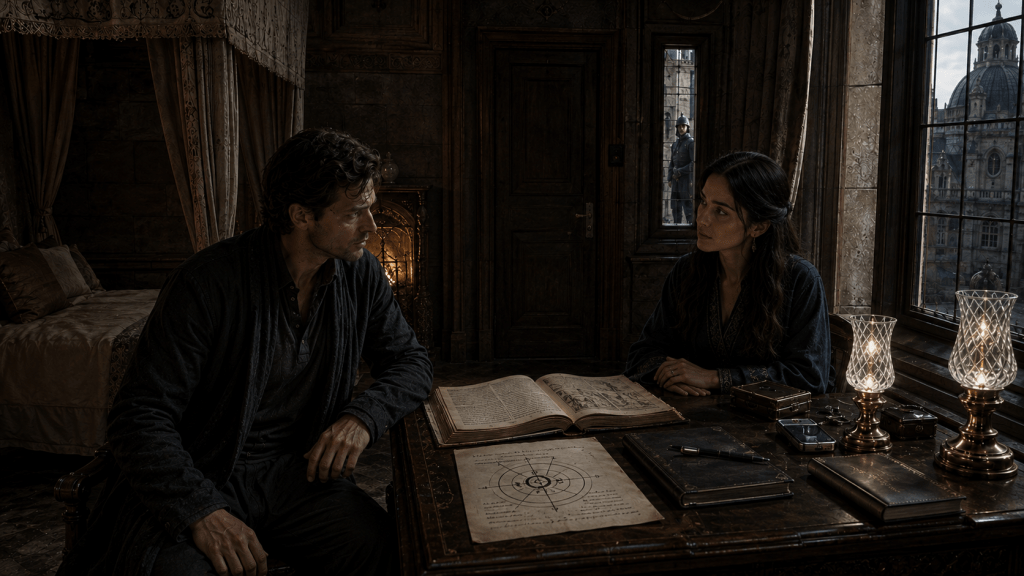
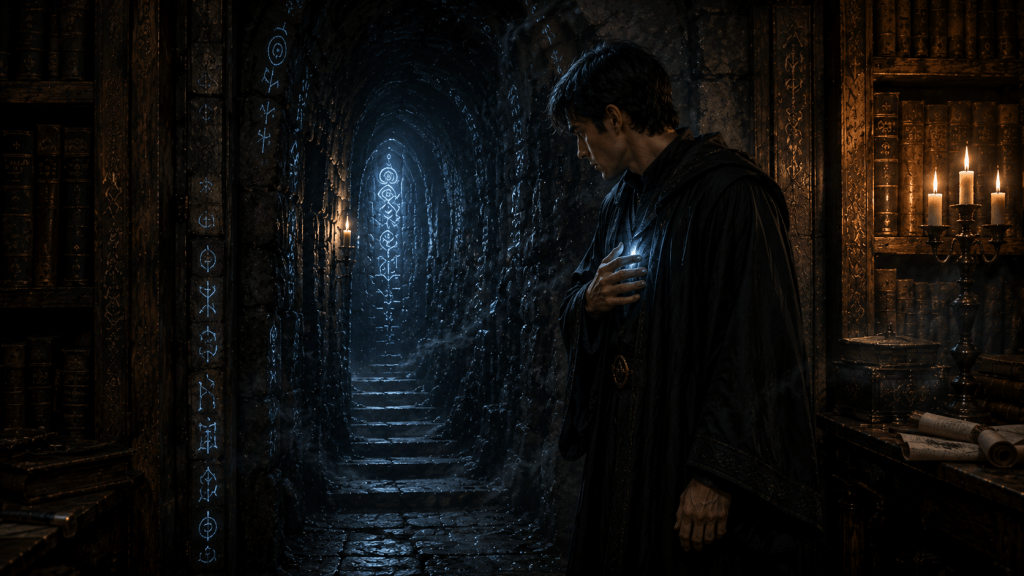
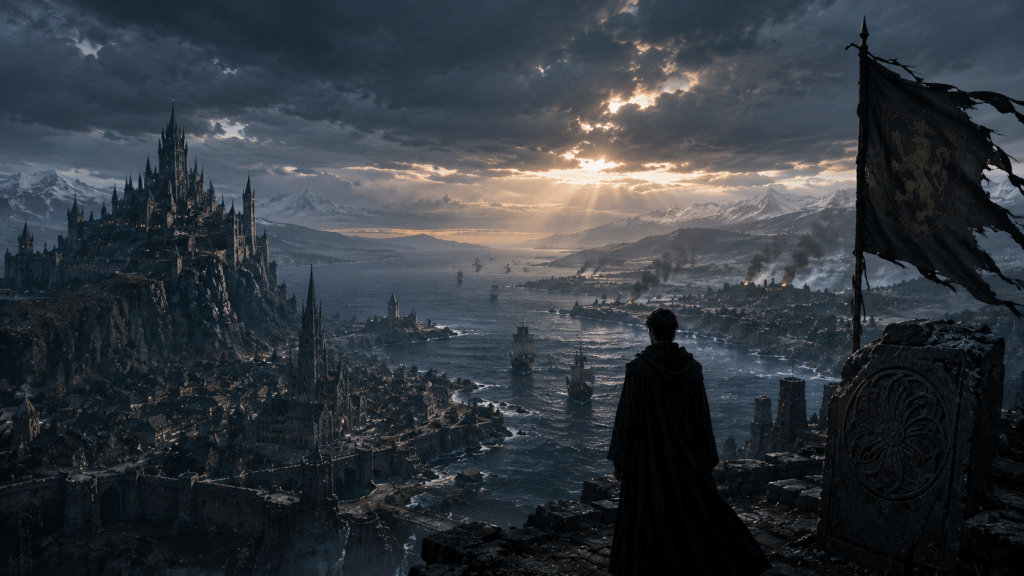
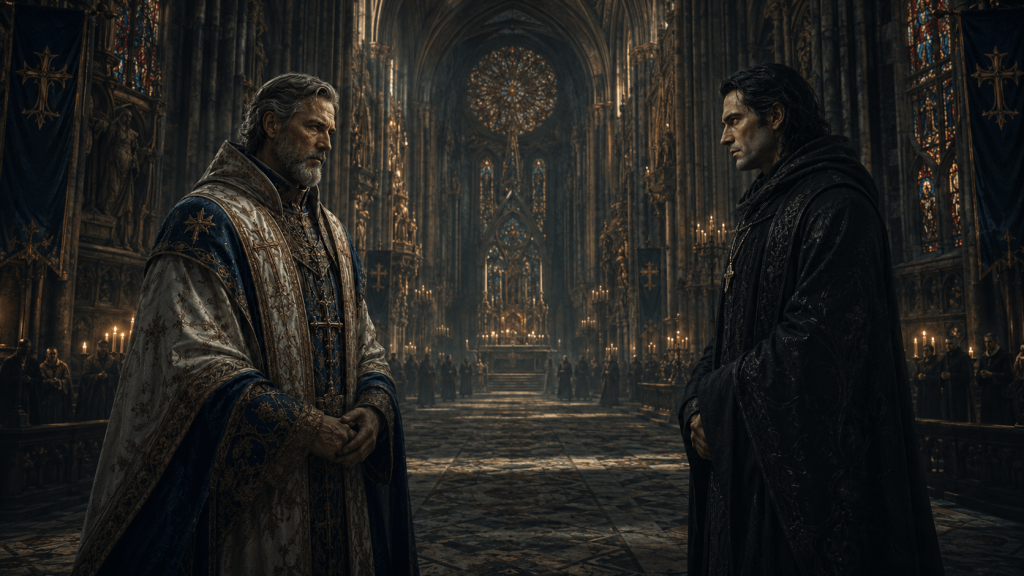
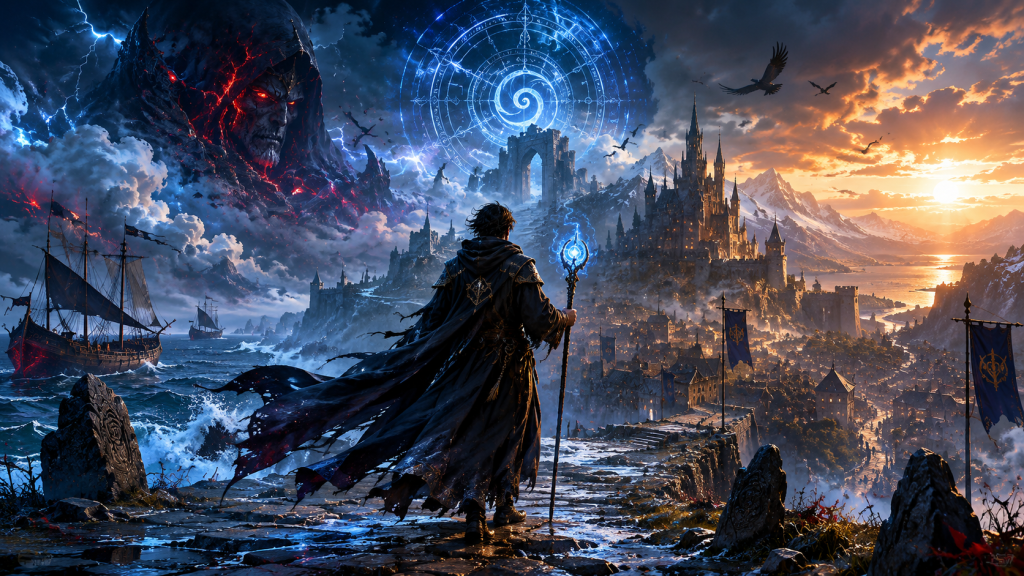
Every long fantasy series has a first doorway. For this one, that doorway opens in Bremyra, a coastal kingdom of stone, cold sea air, royal duty, old secrets, and the lingering fear of magicians. It begins with Simion, a magician of the Order who arrives under instruction, though even he has little idea why he has truly been sent.

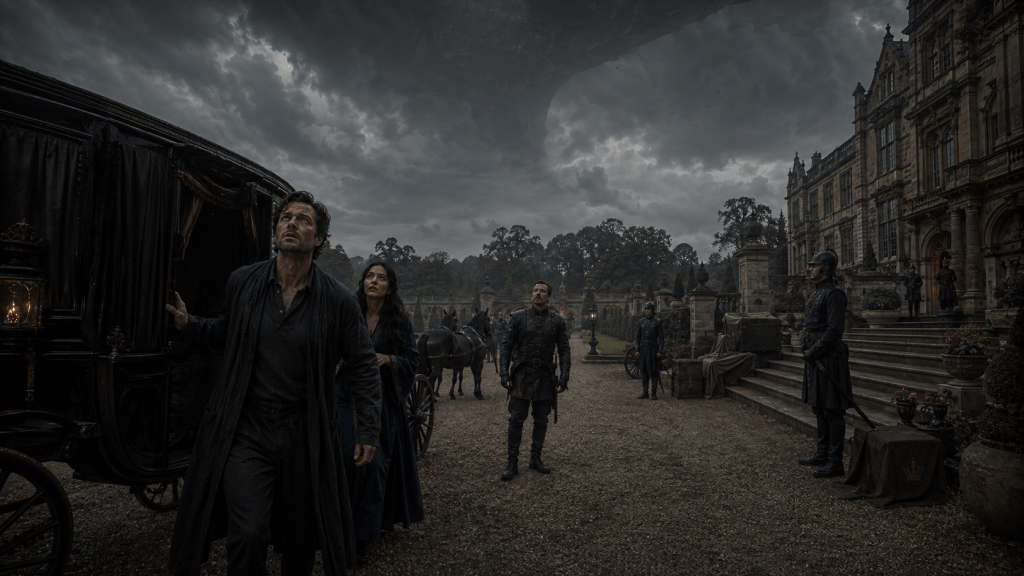
He is not the kind of figure who strides into the story already certain of his destiny. He is uncertain, guarded, and burdened by the feeling that he stands in the wrong place at the wrong time. Yet around him, the world begins to shift. A hidden mission, a royal court under pressure, a princess bound by duty, northern raiders crossing the sea, and whispers of something sealed beneath the old stones all draw the story into motion.

The Unmarked Path is a slow-burn opening to a larger mythic fantasy world. It is built around atmosphere, character, mystery, and consequence. The story is not only about magic as power, but magic as inheritance, memory, fear, and responsibility.

At the heart of the novella is Simion, a reluctant magician shaped by the Order of Magicians, an ancient institution descended from a broken magical empire. He has been trained in power, discipline, and obedience, though he has never truly felt at home among those who taught him. When he arrives in Bremyra, he carries more than a letter from his superiors. He carries the first pressure of a destiny he cannot yet name.

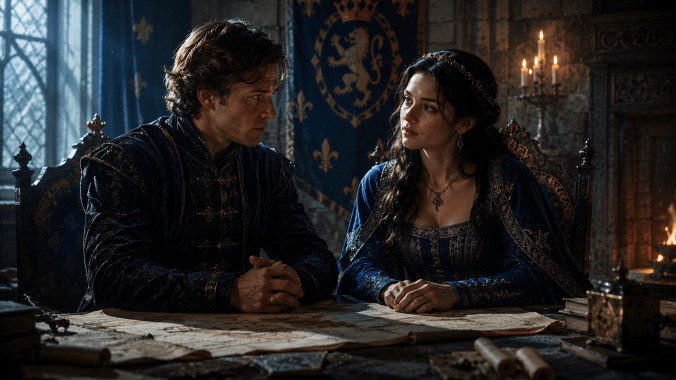
Alongside him stands Prince Patrick, a royal son forced into responsibility while his father and brothers remain absent. Patrick’s world is one of council chambers, alliances, military pressure, marriage arrangements, and decisions made under uncertainty. His story brings the political heart of the novella into focus. Kingdoms are watching one another. Borders are tense. Peace feels formal rather than secure.

Then there is Týrnan Valgrim, a northern warleader whose people begin moving south across dangerous seas. His chapters carry the weight of iron, salt, storm, clan loyalty, and conquest. Through him, the wider world of Ældorra starts to open beyond Bremyra’s walls.

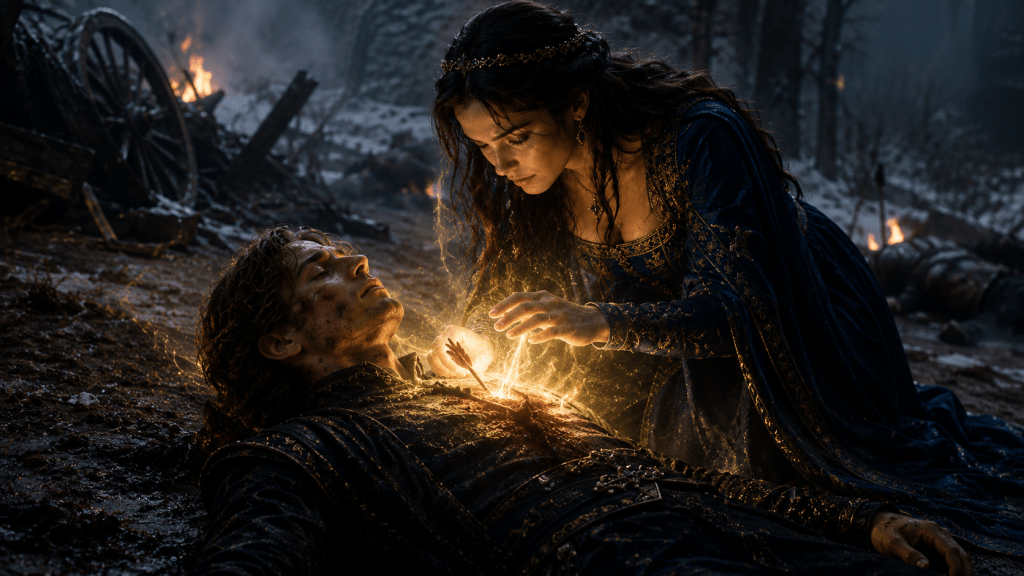
The novella also introduces Elana, Patrick’s sister, whose role reaches beyond royal duty. She brings warmth, intelligence, and emotional force into the story, while also revealing that the laws of magic in this world may be far more fragile than the institutions around her are willing to admit.

What begins as political unease slowly brushes against something older.

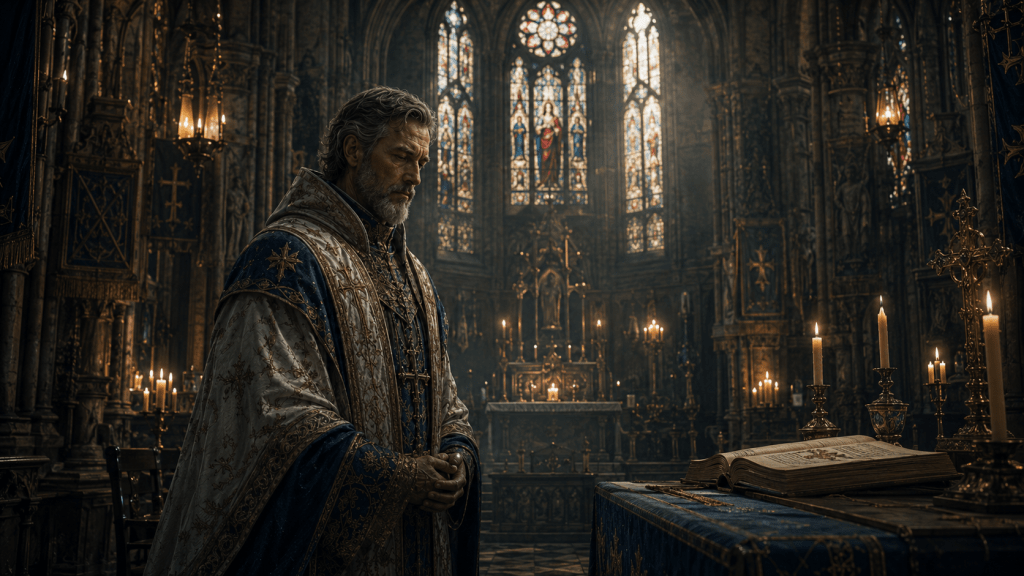
The history of Ældorra has been shaped by the Imperium Arcana, the Order of Magicians, the Church, the fallen god Azaroth, and the death of the God of Magic. Much of that history has faded into myth, yet myth has a way of returning when the world grows weak enough to hear it again.

That is where the Spiral begins to matter.

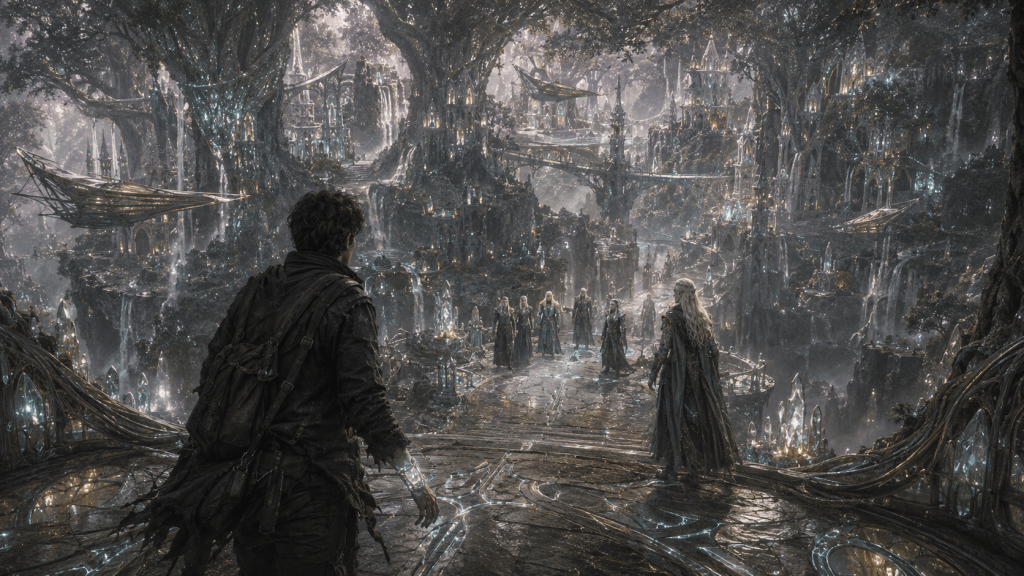
The Spiral is one of the central mysteries of The Chronicles of the Spiral Realms. In this first novella, it is not explained in full. It appears more as pressure, pattern, memory, and warning. It belongs to ruins, divine silence, forgotten truths, and the sense that history is not finished with the living.

For readers who enjoy fantasy that takes its time to build weight and atmosphere, The Unmarked Path offers the first step into a larger saga. It is not a light adventure or a simple quest story. It is a mythic fantasy opening about a world beginning to remember what it buried.

The story is for readers who enjoy:

ancient magical orders, reluctant magicians, royal courts under pressure, forbidden power, divine silence, old books, hidden chambers, political tension, northern warbands, and the feeling that a larger storm is gathering beyond the edge of the page.

This first novella is only the beginning. It opens the path, introduces the key players, and places the first cracks in the world. Simion does not yet understand what is reaching for him. Patrick does not yet understand how far duty will carry him. Elana does not yet understand the cost of the power within her. Týrnan does not yet understand what his people’s march will awaken.

The reader, like them, enters at the point where history begins to turn.

The Unmarked Path is available now on Amazon Kindle.

Begin the saga with The Veil of Kings and Gods.

Zone Thirteen and the Pressure of a Fractured Sci-Fantasy World

Where Broken Systems Still Breathe

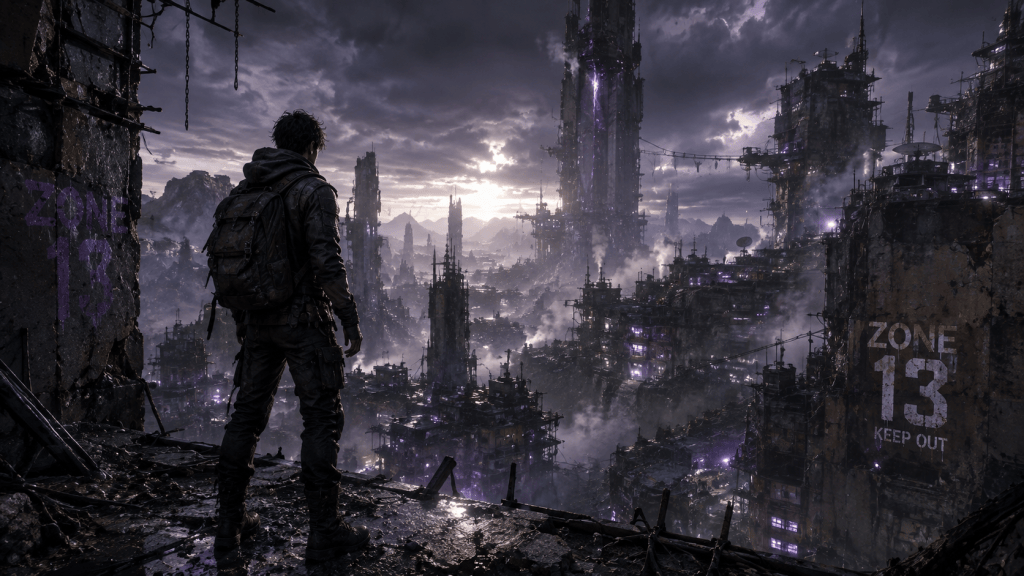
Zone Thirteen stood at the edge of human order, though order had become a generous word for what remained there. The roads held their shape through habit more than repair. Pylons leaned into the wind with stripped frames and tired wires. Habitation shells endured by patchwork, scavenged metal, old clamps, and the quiet discipline of those who had learned to survive among systems already past their intended life.

For a mythic sci-fantasy novella, this kind of place matters. Power rarely begins inside palaces or temples. It begins where nobody expects consequence to gather. It begins in forgotten ground, beneath broken infrastructure, among salvage routes and old machines that still carry a faint memory of function. In Zone Thirteen, the opening movement of The Chronicles of Aeloria, the world does not announce itself through prophecy. It presses against the skin first.

Aeloria’s world is built from edges. The edge of roads. The edge of notice. The edge of value. The edge of systems that still respond in fragments. His life among salvage, tokens, failed conduits, and old relay units places him inside a fractured worlds fantasy series before the wider realms are ever named. The science fantasy pressure is already present in the environment itself, where broken technology carries something older than machinery and where dormant crystal behaviour waits beneath practical survival.

Zone Thirteen is not simply a damaged settlement. It is a pressure space. Every surface suggests previous use, previous collapse, previous hands stripping away whatever could still be sold or made useful. The people living there have inherited failure without receiving explanation. They cross unstable ground because the ground still allows them to cross. They use systems because enough of those systems continue to answer. They survive without believing survival has larger meaning.

That is why the shard matters before it is understood.


Power Before Understanding

In many fantasy stories, power arrives as revelation. In Zone Thirteen, power arrives as misalignment. The hum changes. The ground delays its response. Pylons flare when no working line should carry current. A storm gathers around an object whose shape and behaviour exceed every category available to the boy who finds it.

This is where the novella’s strongest discovery language sits. Aeloria does not step into mastery. He is pulled into pressure. The shard responds to him through heat, weight, resistance, and bodily consequence, making power feel like an event before it becomes a destiny. It is a magical crystal world fantasy without the comfort of clean enchantment. The crystal does not explain itself. It enters the body’s awareness through pulse and strain.

That restraint gives the world its force. Ancient systems remain present, yet their purpose has thinned into fragments. Relay units, pylons, conduits, machines, and scanning beams all belong to a technological order, while the shard and surge belong to an inheritance older than human control. The result is fantasy with ancient technology shaped through use, decay, and response. Nothing feels decorative. Nothing exists only to signal wonder. Every object carries function, failure, or threat.

The Zone teaches Aeloria how to read surfaces. He knows which paths draw attention, which structures still offer cover, which salvage holds value, and which movements might leave traces. That training becomes crucial once the world itself begins acting like a system that can notice him. He has spent his life avoiding attention in a place where attention costs. Once the shard wakes, hiding becomes more difficult because the environment responds before people do.

This is one of the deeper tensions inside atmospheric sci-fantasy fiction. A broken system can remain survivable for years, even generations, until something returns meaning to it. Zone Thirteen has survived through neglect because neglect is predictable. The surge changes that. It reminds the Zone of older pathways, older connections, and older power. What once failed quietly begins answering in fragments, and each answer draws the attention of forces trained to contain rather than understand.

The figures who arrive after the surge carry a different kind of fear. They are clean where the Zone is worn. Their machines move with coordinated precision through a place that usually belongs to improvisation and adaptation. They speak in controlled signals: contact, containment, grid. Their presence turns Aeloria’s home into an operational field, reducing lived ground into a map of detection and response.

That shift matters because The Awakening of Power is a series about misreading. Institutions see signal before person. Systems see anomaly before fear. Power is classified before it is understood. Aeloria becomes dangerous to others the moment the world reacts to him, even though he remains the one least able to explain what has happened.


Entering Zone Thirteen

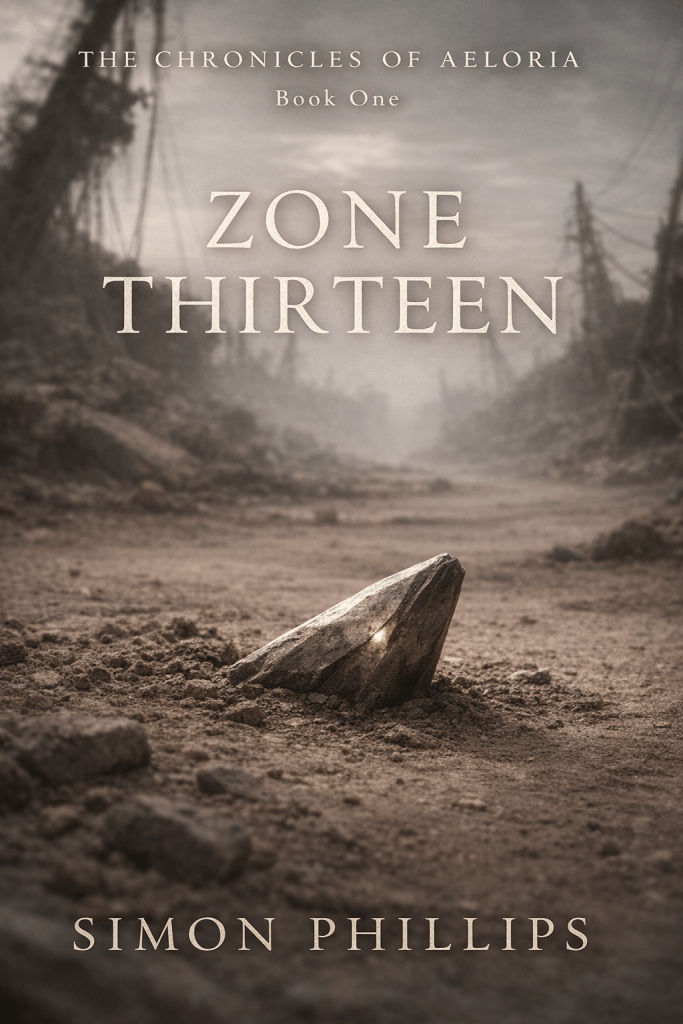
Zone Thirteen is Book 1 of The Chronicles of Aeloria, and it functions as the first contained movement in a slow-burn fantasy novella series shaped around pressure, displacement, and awakening. Its focus remains intimate. It holds close to one boy, one settlement, one guardian figure, one shard, and one rupture that changes the scale of everything.

The novella’s surface is survival. Aeloria moves through salvage routes, trades recovered parts, returns to the shack he shares with Larn, and measures value through tokens, repairs, and risk. Beneath that practical rhythm, the world begins to reveal its deeper instability. The ground shifts by fractions before larger distortions arrive. Systems respond in brief fragments before the surge takes hold. The storm grows from environmental pressure into something that feels almost structural, as though reality itself has begun to move out of alignment.

The experience of entering Zone Thirteen is the experience of entering a world already strained past comfort. It does not rush to explain its history. Instead, it lets the reader feel the shape of life inside its failure. Salvage is labour, habit, economy, and concealment. Larn’s shack is shelter, base, repair space, and emotional centre. The shard is discovery, wound, inheritance, and signal. The rupture is departure, threat, and threshold at once.

The KDP ebook link can sit quietly as the reader’s next step rather than as a loud interruption: The Chronicles of Aeloria: Zone Thirteen

What makes this opening work as a science fantasy novella series entry is its refusal to treat awakening as triumph. Aeloria gains no clean victory from the shard. He loses stability. He loses the safety of being overlooked. He sees Larn threatened. He feels the world answer him without consent. By the end, the Zone itself tears open, and the familiar ground beneath him gives way to motion, light, and the unknown.

The result is a beginning that feels complete in emotional pressure while leaving the larger mythic system unresolved. The novella closes the life Aeloria knew. It opens the passage into everything his world had buried.


The First Pressure of the Fractured Realms

Beyond Zone Thirteen, the larger movement of The Awakening of Power rests on fractured realms, ancient crystal systems, separated races, weakened pathways, and a forgotten inheritance that each civilisation understands only in part. The first novella keeps that larger architecture mostly beneath the surface, which strengthens its mystery. The reader senses scale through reaction rather than explanation.

The shard’s behaviour suggests inheritance before history names it. The surge shows that dormant systems can awaken through contact with the right presence. The glider introduces the possibility of non-human craft without turning the scene into exposition. The machines and external operators reveal that human authority has already developed methods for detection and containment, perhaps long before Aeloria ever became visible to them.

This layered approach allows the series to grow without feeling sudden. Zone Thirteen becomes the first pressure chamber of the wider fractured worlds fantasy series. It shows the human edge of a broken order: poor infrastructure, procedural enforcement, salvage economies, survival routes, and old systems degraded into partial function. Later realms may bring temples, pathways, crystal harmonics, elven vessels, ancient ruins, and political fear, yet their foundation is already present in the way Zone Thirteen behaves.

The fractured realms are living systems rather than simple locations. They remember through infrastructure. They answer through instability. They preserve old connections in damaged forms. When Aeloria touches the shard, he does more than activate an object. He forces the hidden relationship between body, crystal, environment, and old design into motion again.

That is where the mythic weight begins. Power in this world is neither prize nor weapon in its first expression. It is pressure. It changes footing. It changes sound. It changes how machines move and how people speak. It turns a scavenger into a signal and a home into a containment zone.

The cost of that awakening lies in the way no one present can fully interpret it. The Zone cannot explain itself. The operators act through procedure. Larn understands enough to recognise danger, yet even his protection cannot hold against the scale of what has begun. Aeloria feels the truth physically, long before he can name it. That gives the series its strongest continuity thread: understanding always arrives late.


What the World Remembers

Zone Thirteen remains behind, though it does not vanish. Places like that never vanish cleanly. They remain in the body through habit, caution, and the memory of ground tested before each step. They remain in the way a person watches doorways, listens to hums, weighs silence, and understands that attention can become a form of danger.

Aeloria leaves the Zone through rupture, yet the Zone has already shaped the way he will move through every realm that follows. He has learned broken systems before he learns ancient ones. He has learned survival before inheritance. He has learned that value is always judged by those holding power, and that being useful can become another kind of trap.

The world beyond the rupture waits with its own temples, pathways, ruins, and crystal pressures. Other races will carry their own partial truths. Other systems will claim older authority. The fractured realms may speak of balance, restoration, fear, and unity, yet the first lesson remains grounded in dust, salvage, and failing pylons.

A forgotten place answered first.

A shard woke inside a boy who had spent his life avoiding notice.

The world shifted before anyone understood why.

When the Page Opens and the World Follows

The moment where certainty fractures is rarely loud, though it alters everything that stands upon it

There are stories that begin with spectacle, with fire or proclamation, with the unmistakable signal that something has already broken beyond repair. This is not one of those stories. This is a story that begins with a page.

A man stands beneath morning light in a conservation studio, surrounded by the quiet labour of preservation, where history is handled gently, corrected carefully, and returned to stability through patience rather than force. The world outside continues as it always has, measured and dependable, its rhythms so deeply understood that they no longer require attention. Within that space, knowledge feels contained, ordered, and complete.

Then the page shifts.

It does not announce itself. It does not tear or burn. It folds inward.

And the world follows.


A Book That Does Not Behave Like a Book

Some objects are not preserved by time. They are waiting within it.

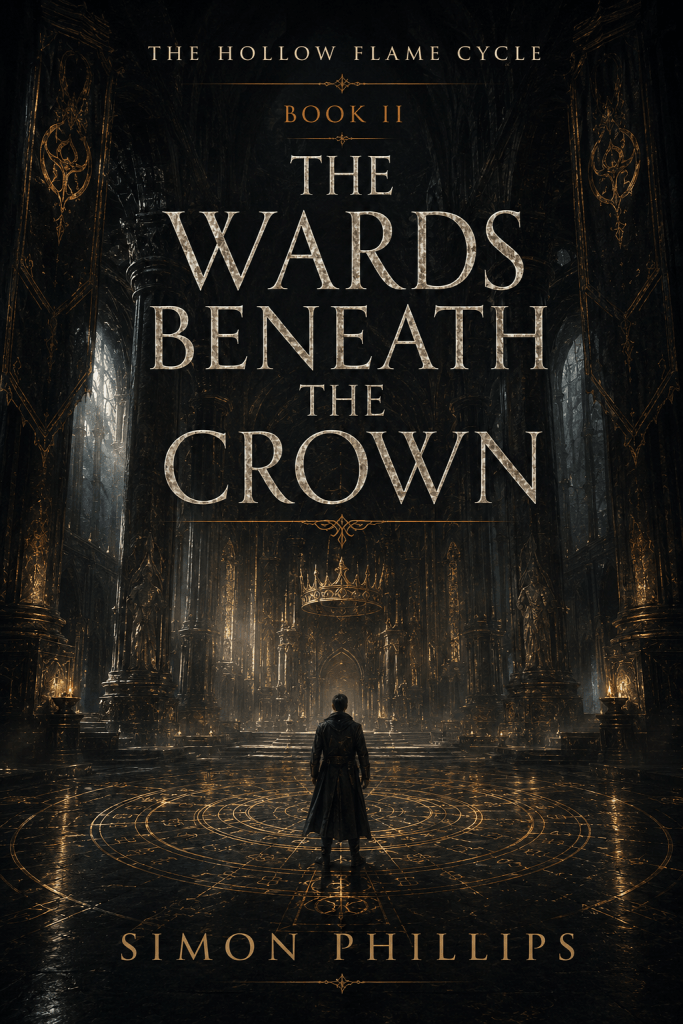
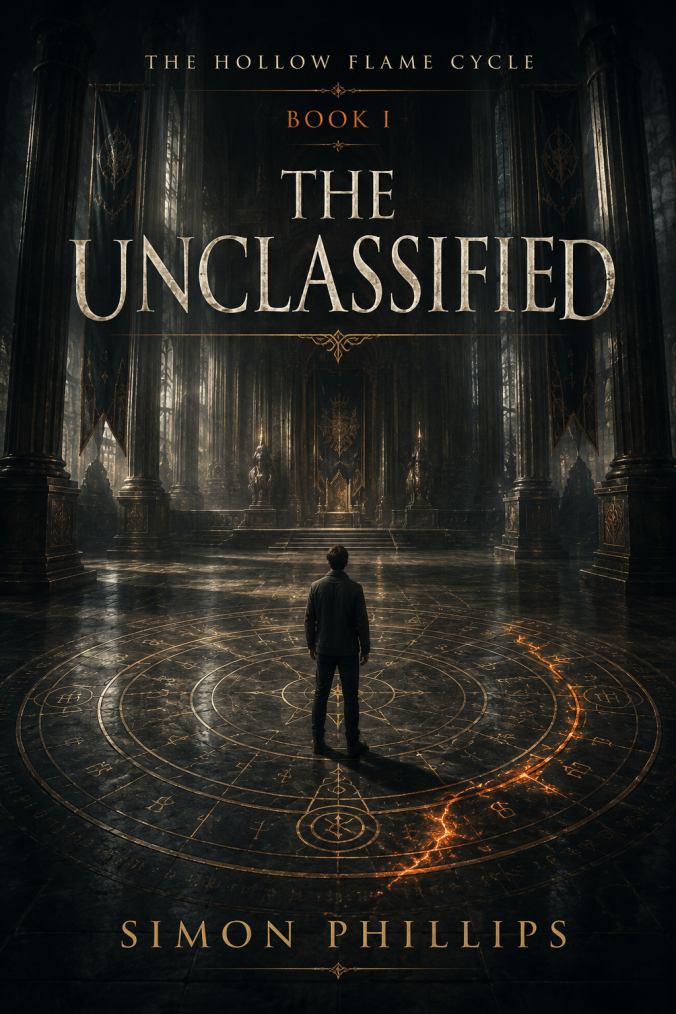
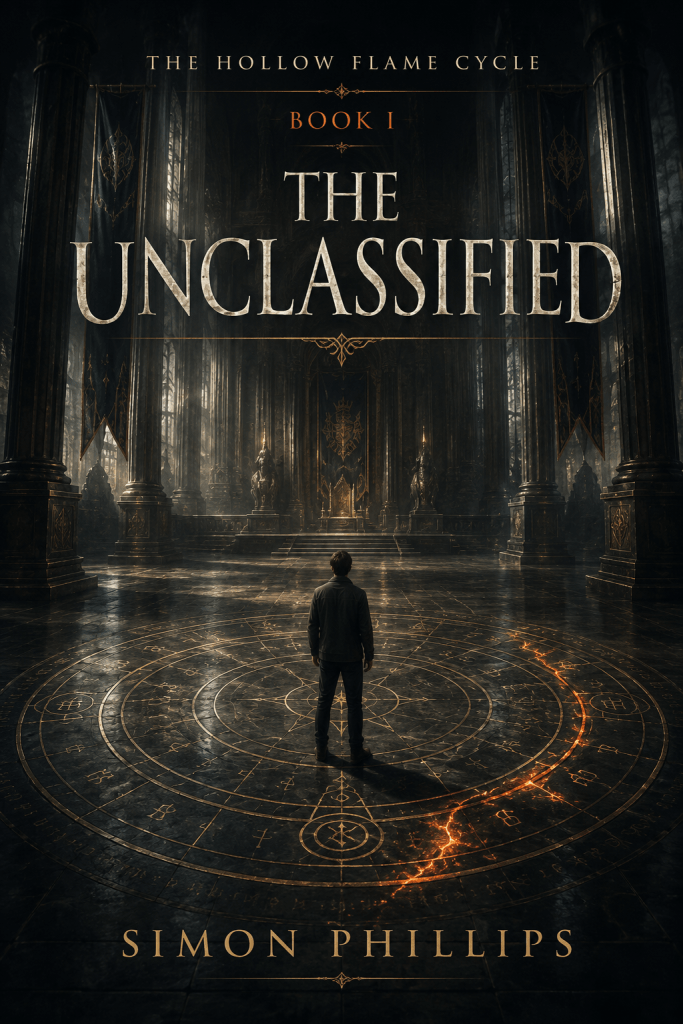
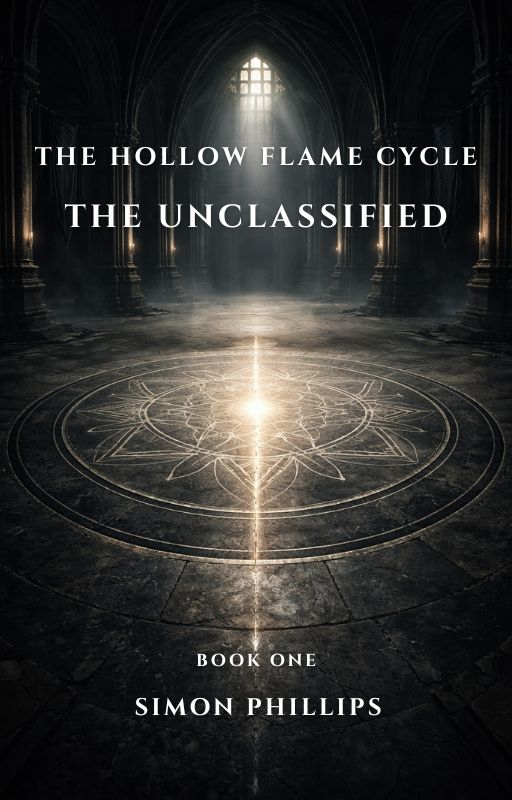
At the centre of The Unclassified, the first entry in The Hollow Flame Cycle, lies an object that resists classification at the most fundamental level. It resembles a book in form, though resemblance is the only certainty it offers. Its script refuses recognition, its structure resists familiarity, and its presence unsettles the very idea of passive material.

Silas Thorn approaches it as he would any artefact: with care, with discipline, and with the quiet confidence of someone who has spent his life restoring the past to coherence. His work is grounded in physical reality, in fibres, ink, binding, and time. Every action is deliberate, reversible, and measured against centuries of accumulated knowledge.

The book does not respond to that framework.

It holds warmth where none should exist. It bends light in ways that resist explanation. It answers touch with something that cannot be reduced to material behaviour.

What unfolds in that moment is not destruction, nor is it revelation in any familiar sense. It is intrusion.

The known world does not break. It gives way.


The Crossing That Leaves No Mark

Not all thresholds are visible. Some exist only in the moment they are crossed.

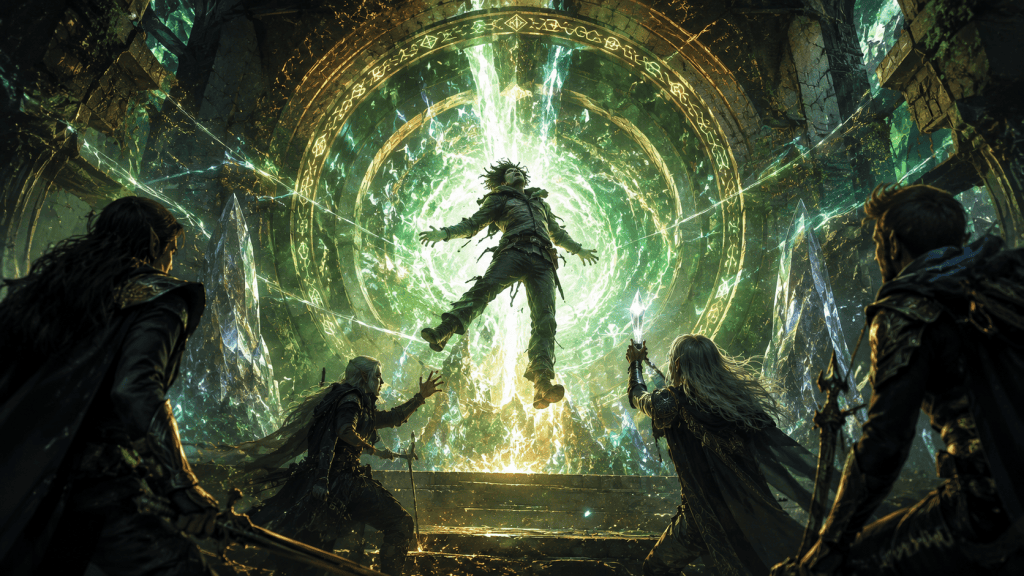
When Silas falls through the page, the act is not framed as travel. There is no preparation, no ritual, no understanding. The transition occurs in the space between expectation and perception, where reality has not yet had time to correct itself.

He lands not in chaos, though that might have been easier to comprehend.

He arrives in order.

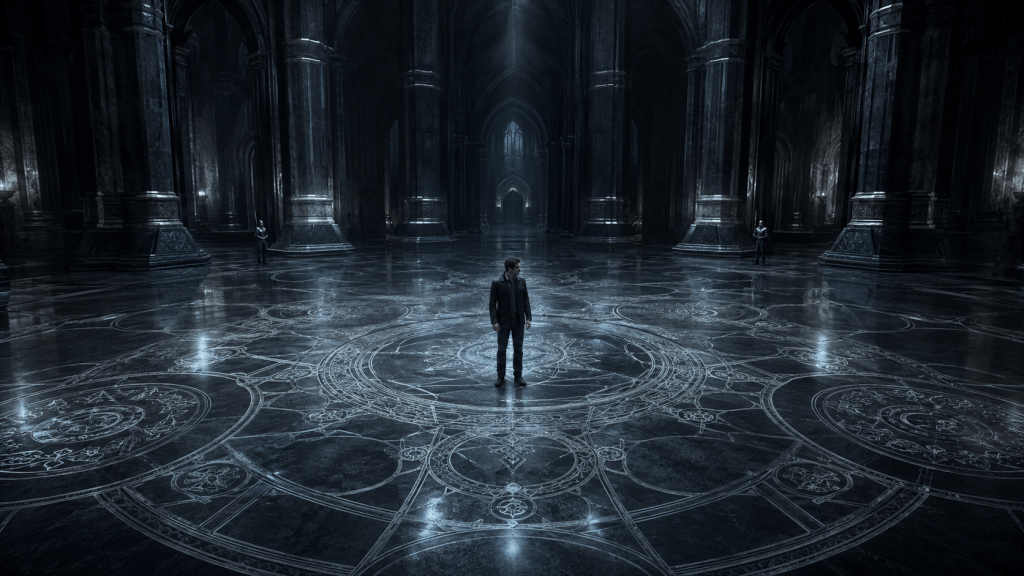
The chamber that receives him is vast, structured, and deliberate. Its architecture carries the weight of centuries, its design shaped by authority rather than accident. Nothing appears broken. Nothing appears disturbed. The world into which he emerges does not recognise itself as interrupted.

This is the first tension the novella establishes with precision: the crossing is not treated as an anomaly by the space itself.

It is treated as an event that must be answered.


Authority Before Understanding

Institutions do not wait for clarity. They respond.

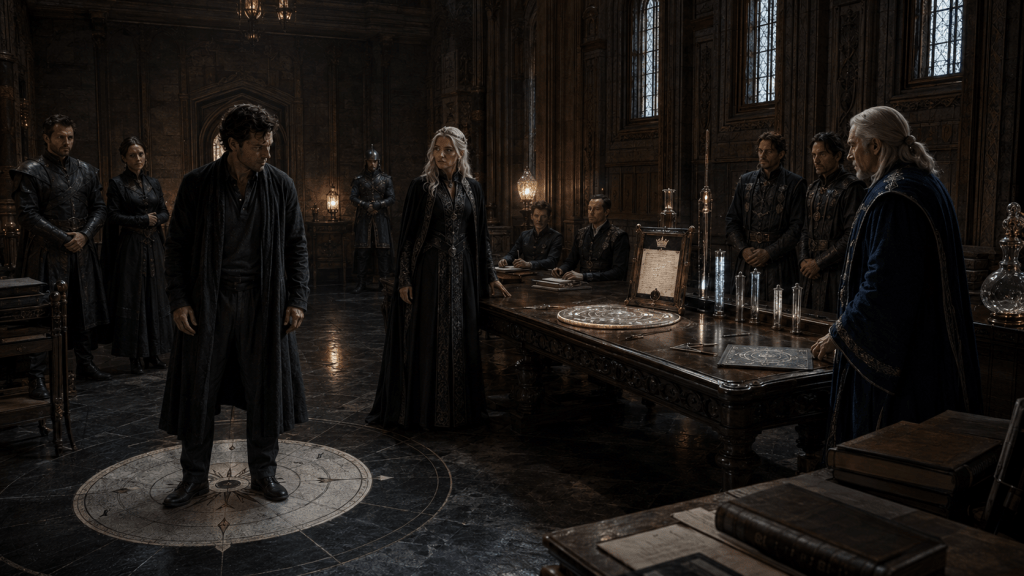
One of the defining tensions within The Unclassified lies in the way power reacts to uncertainty. The Crown, embodied through Princess Lirael and the sovereign, does not hesitate. The event is assessed, contained, and integrated into existing frameworks of control with remarkable efficiency.

There is no panic.

There is no denial.

There is only response.

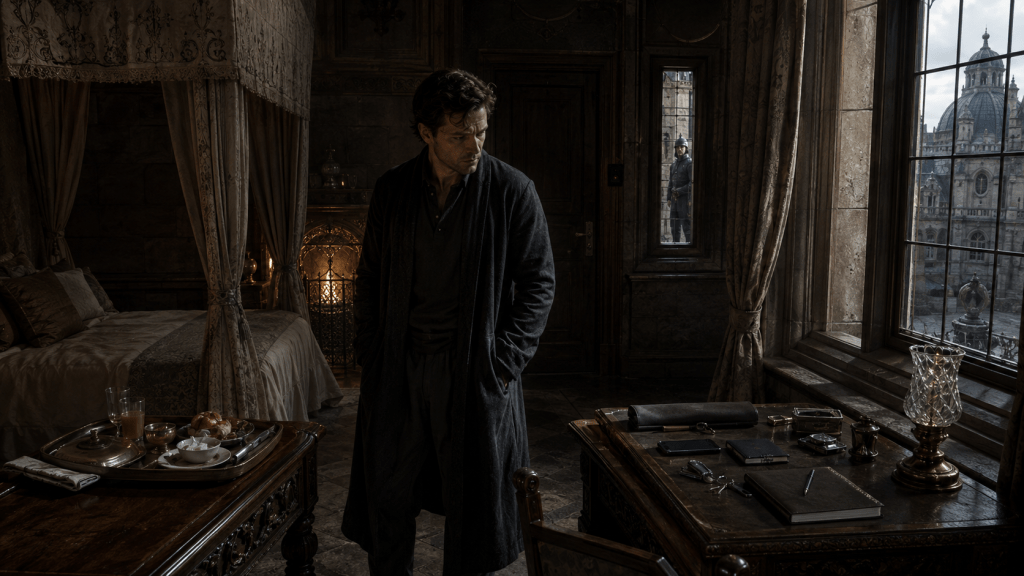
Silas is not treated as an intruder in the traditional sense, nor is he embraced as a miracle. He is categorised as a problem requiring management. His presence is stabilised through containment, his movement restricted, his existence placed within the boundaries of governance.

This reaction reveals something fundamental about the world itself.

It does not collapse under pressure.

It absorbs it.


The Quiet Fracture Beneath Control

The most dangerous shift is the one that leaves everything looking unchanged.

While the structures of authority hold firm, the novella introduces a quieter, more unsettling movement beneath them. Through Princess Seréne, a different kind of awareness begins to emerge, one less concerned with immediate control and more attuned to what the event represents.

The foundations have opened.

They have closed again.

No mark remains.

This absence of damage becomes the central disturbance.

If the system can admit something without rupture, then the boundaries that define it are not as absolute as they were believed to be. The palace, the Crown, the Guild, and the very idea of structured reality all rest upon assumptions that have not yet been tested in this way.

Seréne does not rush to resolve this contradiction.

She recognises it.

And in doing so, she becomes the first to truly stand within the question the novella poses.


A World That Does Not Recognise Itself

When two systems meet, neither remains untouched.

The introduction of Silas’s world, described in fragments through his attempts to explain it, creates a second layer of tension. His reality is defined by written law, mechanical systems, and a complete absence of what this new world considers foundational.

There is no magic.

There are no sigils.

There is no binding of authority into stone.

And yet he stands within a place where all of those things are not only real, but necessary.

The contrast does not resolve into superiority or dismissal. Instead, it reveals the limits of both systems. Each world contains structures that appear complete within their own context. Each becomes unstable when viewed through the lens of the other.

The crossing does not simply move a man from one place to another.

It introduces incompatibility.


Where the First Movement Ends

The hall settles. The question remains.

By the close of the novella, nothing outwardly catastrophic has occurred. The palace still stands. Authority remains intact. The man has been contained. The Guild has been summoned. The system continues to function.

And yet something irreversible has begun.

The foundations have responded to something they were never meant to receive.

A man from a world without magic stands at the centre of a system built upon it.

The Crown has acted without understanding.

The Guild has arrived without conclusion.

The question has entered the world.

It has not left.


Step Into the Hall

If you want to experience the full unfolding of this first disturbance, you can read The Unclassified here:

This is the opening movement of The Hollow Flame Cycle, where the story does not begin with collapse, but with the moment just before it becomes possible.

The page has opened.

The world has followed.

And nothing, though it appears unchanged, will remain as it was.

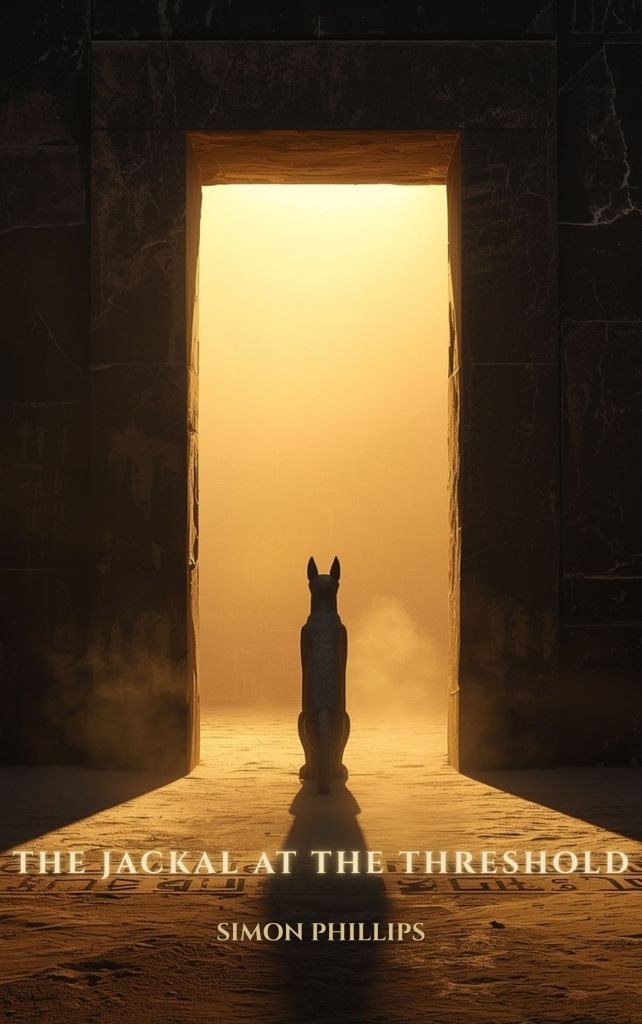
Jackal at the Threshold: A Mythic Fantasy Novella of Anubis, Judgement, and the Drowned Kingdom

A Dark Fantasy Novella at the Edge of Life and Death

In a landscape shaped by river mud, drifting sand, and forgotten dynasties, Jackal at the Threshold unfolds as a mythic fantasy novella rooted in Egyptian-inspired fantasy and the quiet terror of judgement. This dark fantasy novella follows a thief who crosses a boundary older than kings, only to discover that the gods who guard the dead remain watchful long after temples fall silent.

For readers searching for atmospheric fantasy fiction, short fantasy reads, and Amazon fantasy novellas that carry mythic weight without spectacle, this story stands at the meeting point of ruin and reckoning. It draws from ancient necropolises and jackal-haunted desert winds, yet remains grounded in human frailty: hunger, grief, guilt, and the unbearable cost of choice.

As a British fantasy author working within mythic structures and quiet horror, I have always been drawn to thresholds. Doorways. Riverbanks. The moment before a decision reshapes a life. This Kindle novella lives in that moment and lingers there, asking what remains when gold loses its shine and judgement answers in silence.

The Drowned Kingdom and the Weight of Memory

At the heart of this fantasy novella lies the Drowned Kingdom, an ancient necropolis buried beneath shifting western dunes. Its rulers predate the settled river, its corridors carved with jackals who walk between stars and sand. The tomb does not roar. It waits.

Egyptian-inspired fantasy often leans toward spectacle: plagues, curses, elaborate tomb traps bursting into flame. In Jackal at the Threshold, the horror is colder and more intimate. The air grows still. The pigment on the walls remains untouched by time. Scales hang in perfect balance. The jackal god watches without haste.

The Weighing of the Heart forms the mythic spine of the novella. Yet this weighing concerns more than virtue. It concerns intention. Responsibility. The moment when someone sees the crack in the stone and chooses to hurry anyway.

This is where mythic fantasy becomes personal.

Neris, the central figure, robs tombs because hunger demands it. The river quarter starves while the noble terraces gleam. She descends shafts and clears chambers because coin buys breath for her mother. Such choices feel practical. Necessary. Yet beneath them lie fractures that no silver can mend.

The Drowned Kingdom does not rage at her theft. It does something far more unsettling. It remembers.

Anubis Reimagined: The Jackal at the Boundary

Anubis in this dark fantasy novella is neither tyrant nor saviour. He stands at the threshold, patient and precise, weighing what is carried across his domain. He speaks without spectacle. He offers no absolution. What has been done remains part of the one who has done it.

In many indie fantasy books, gods arrive in thunder and blaze. Here, the jackal god emerges from starlit shimmer and still air. His judgement is measured, his presence quiet and vast. He allows choice. He allows consequence.

This portrayal of Anubis honours the ancient imagery of scales and feather, yet reshapes it into something interior. The weighing becomes a confrontation with memory: a brother sent ahead into a cracking shaft, graves opened in haste, gold lifted from silence. The heart holds all of it.

The result is a mythic fantasy experience that explores divine encounter through restraint rather than spectacle. The god does not shout. The chamber grows colder. The light fades. The boundary tightens. And in that stillness, truth surfaces.

For readers seeking atmospheric fantasy fiction that treats gods as forces of measure rather than miracle, this Kindle novella offers a different path through the myth.

From Tomb Robber to Guide of the Dead

The transformation within this short fantasy read does not hinge on conquest. There is no monster slain, no hoard carried triumphantly into sunlight. Instead, the relic is returned. The sceptre becomes a talisman. The thief becomes a guide.

This shift reframes the entire novella. The necropolis, once a place of plunder, reveals itself as a structure of balance. The jackals carved along the walls do more than threaten. They protect the poor man’s burial as surely as the drowned king’s chamber. The threshold exists for all.

Back in the river quarter, the gift of judgement reshapes Neris’s life. She sees spirit-trails where others see nothing. She speaks river-prayers learned from her grandmother. She eases the hesitant dead toward current and rest.

The world remains narrow. Hunger still lingers. Coin still shapes the day. Yet something has altered. The weight she carries now lifts others rather than burying them.

This is the emotional core of the novella. Mythic fantasy, at its strongest, returns the reader to the human scale. The boundary crossed in desert darkness echoes in a small room by the river. A mark on the chest replaces stolen gold. Service replaces theft.

Jackal at the Threshold: Novella Spotlight

Title: Jackal at the Threshold
Genre: Mythic fantasy novella / Egyptian-inspired dark fantasy
Format: Kindle novella on Amazon
Tone: Atmospheric, restrained, immersive

This Amazon fantasy novella stands alone as a complete story, yet opens the way into a broader mythos of drowned dynasties and watchful gods. It is designed for readers who value short fantasy reads that linger, who prefer atmosphere over haste, and who find meaning in quiet reckoning.

If you are searching for:

  • A fantasy novella rooted in ancient desert imagery
  • A dark fantasy novella centred on judgement rather than battle
  • Indie fantasy books by a British fantasy author exploring myth and threshold
  • Kindle novellas that favour consequence over spectacle

then this story offers a deliberate and immersive experience.

You can find the Kindle edition here:
https://www.amazon.com/dp/B0GM9PLM9M

Allow the boundary to open where you choose to cross it.

A Cinematic Glimpse: The Flash-Fiction Threshold

Alongside the novella, a cinematic flash-fiction adaptation is available on YouTube. This short piece acts as a threshold glimpse into the world of the Drowned Kingdom, capturing the atmosphere of desert dusk, carved jackals, and the silent moment before a door yields.

It functions as a fragment. A doorway. A sliver of torchlight against black stone.

For readers who prefer to taste the cadence and mood before stepping fully into the Kindle novella, this flash-fiction video provides that first crossing. It carries the same immersive tone, the same slow gathering of pressure, without revealing the full arc of judgement and transformation.

You can watch the flash-fiction adaptation here:

Consider it the first step into shadow before the chamber opens.

Mythic Fantasy, Indie Spirit, and the Quiet Return of Gods

As part of a growing catalogue of indie fantasy books, Jackal at the Threshold reflects a commitment to mythic structures explored through restraint. These stories move between fantasy novella and quiet horror, between buried histories and layered cities, tracing how ordinary lives intersect with forces older than language.

Living within layered environments where old shrines sit beside neon streets has shaped my sense of story. Thresholds exist everywhere. In a doorway. In a decision. In a single breath held too long.

This dark fantasy novella asks a simple question: what happens when someone crosses a boundary and is allowed to return?

The answer lies less in reward than in responsibility. In the choice to carry balance rather than escape it. In the steady work of guiding what has been unsettled toward rest.

For readers of atmospheric fantasy fiction, Egyptian-inspired fantasy, and Kindle novellas that dwell in silence as much as speech, this story invites you to stand at the edge and listen.

The desert remains wide. The river continues to flow. Somewhere beneath the dunes, stone shifts in the dark and waits.

Step toward the threshold when you are ready.

Writing Through Illness Keeping the Flame Lit

There’s a particular stillness to the house when one is unwell. The windows dim, the hours stretch thin, and even the simple act of sitting at a desk becomes a task weighed with strange solemnity. Over the past week, I’ve been writing through a heavy spell of illness, not the romantic sort that lends itself to poetic fever-dreams and sudden inspiration, but the ordinary kind. The draining, silent kind. Head fog, aching bones, and the slow drag of breath.

And still, the story asks to be told.

It hasn’t been easy. The rhythm of my chapters, those long, rolling sentences that mirror the breath of the world I’m building, do not come quickly when my mind is wrapped in cotton. Dialogue feels slower to surface, the flow of magic across a battlefield takes more effort to visualise, and Simion’s thoughts… his weariness starts to echo my own. Yet somehow, that makes the writing more honest. There’s no room for pretense when you are sick. What emerges on the page feels stripped back to truth.

There’s comfort in the discipline, too. Even a few hundred words become a kind of anchor. I’ve been working steadily through Chapter 31, part by part, and while I’ve not progressed at my usual pace, I’ve remained in the world. That matters more than anything. Staying inside the rhythm of the novel, no matter how slowly, prevents the silence from becoming distance. And when you are tired, truly tired, that distance grows fast.

This post is not a grand revelation, nor a triumphant declaration of productivity. It is simply a mark on the wall. A quiet signal that the story lives, even on days when the author does not feel particularly alive himself. If you are also working through something, whether a cold, a long week, or a deeper weariness, I hope you remember this: words written under strain are still worthy. They still carry weight. And sometimes, they carry more of you than you realise.

I’ll return to the cliff’s edge soon, where Simion waits beside those ancient stones. There is much still to tell.

Until then, rest, breathe, and if you can, keep the flame lit.