When Space Station Expansion Opens Forgotten Sectors: Why Layered Orbital Structures Create Such Powerful Science Fiction

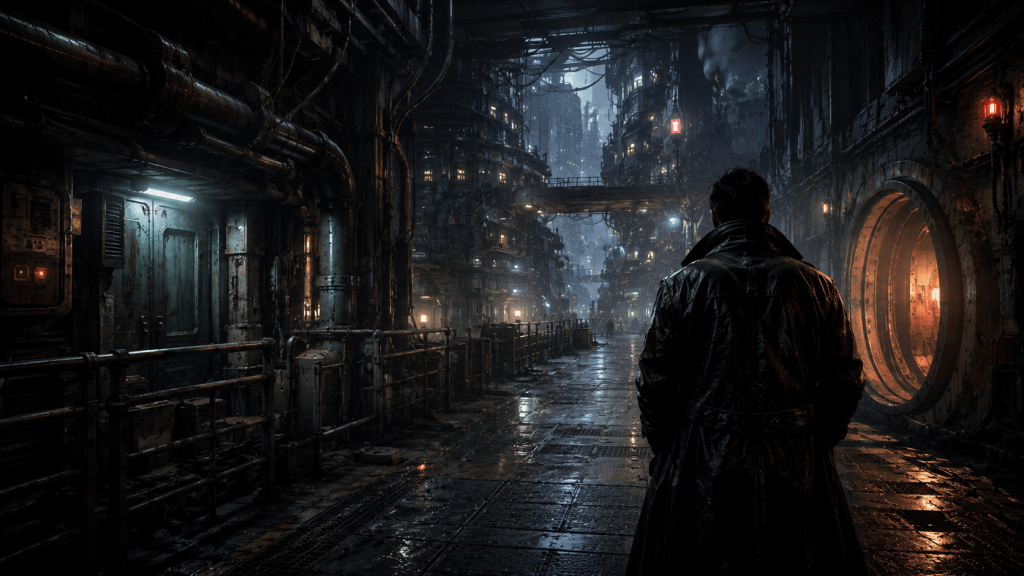
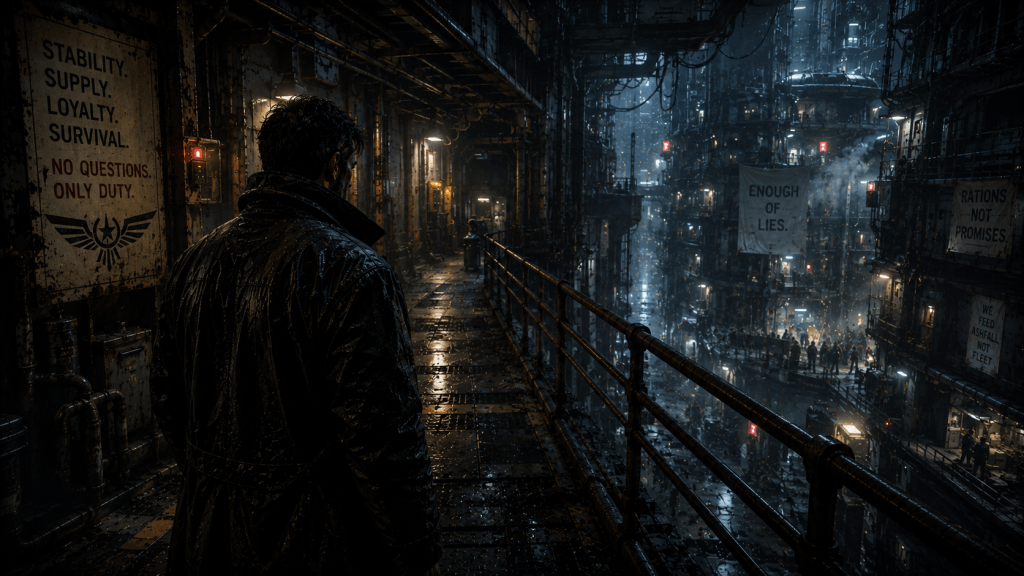
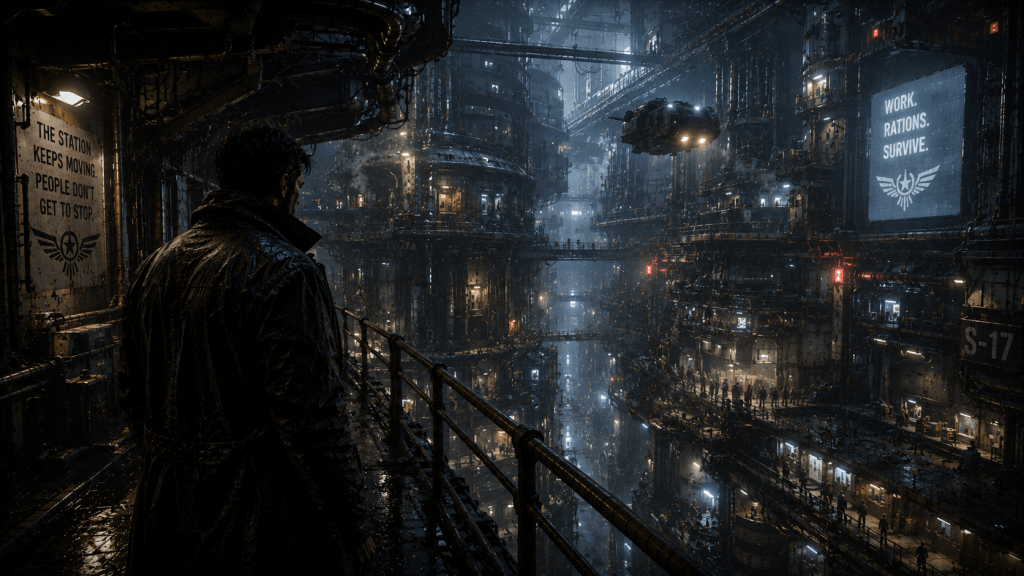
A station always reveals its age through the places where one era joins another. Fresh trusses arrive with their clean geometry and calibrated tolerances, while the older hull carries decades of weld seams, patched conduits, rerouted cable runs, and corridors whose original purpose has faded into routine. In stories built around space station expansion, that point of contact becomes one of the richest sources of unease, since the act of strengthening a structure often exposes everything the structure has been carrying in silence.

That is the central pressure inside any strong orbital station mystery. The danger rarely begins with explosion or invasion. It begins with access. A maintenance team opens a hatch. A new framework meets an old support corridor. Archived schematics suggest continuity, while the metal itself suggests something else entirely. Within that narrow gap between record and reality, science fiction finds one of its most human tensions, because every large system depends upon trust in its own memory.

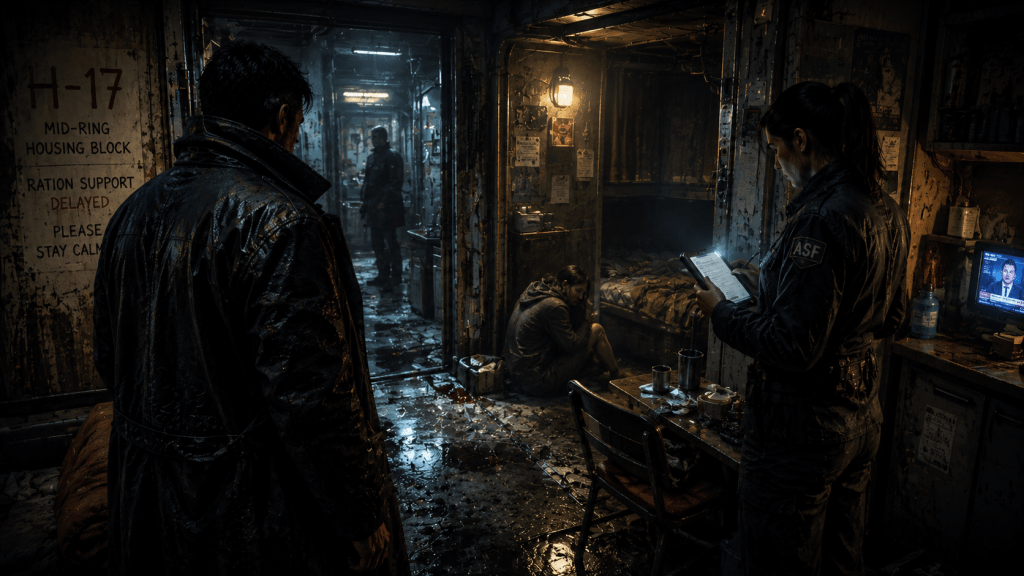
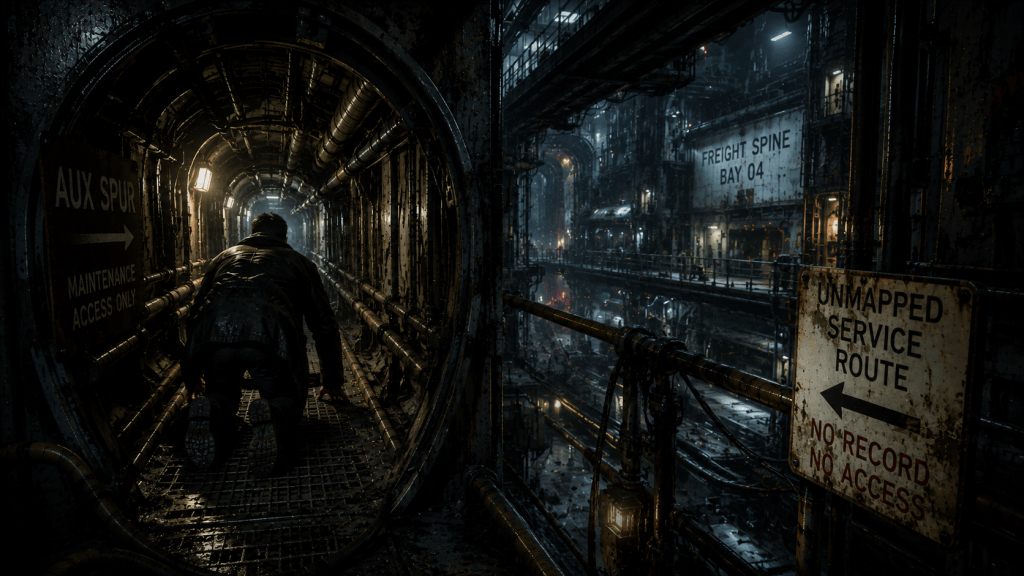
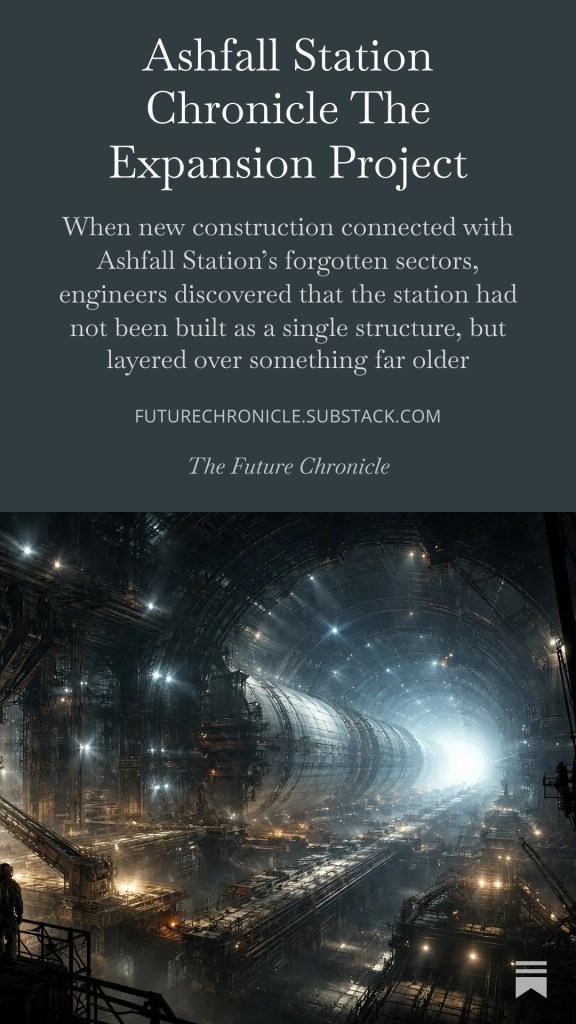
Chronicle 6 of The Future Chronicle, Ashfall Station Chronicle The Expansion Project, enters that exact threshold. Its opening presents new construction reaching Ashfall Station, then follows Senior Structural Engineer Halren Voss into older support corridors where real-time scans diverge from the archived grid, a sealed panel rests inside undocumented structure, and the station begins to feel less like a single design than an accumulation of buried decisions. The entry was published on 27 April 2026, and its free opening serves as the reader’s first descent into that layered machinery.


The quiet power of layered infrastructure in science fiction

Science fiction has long loved frontier ships, research domes, and colony towers, though the orbital station carries a unique emotional charge. A station remains in place. It circles, endures, receives cargo, absorbs repair, survives policy changes, staffing shortages, rerouted trade, deferred maintenance, and the long slow compromises that gather around any inhabited machine. Over time, its structure becomes historical in a way that a sleek new vessel never can. It starts to resemble a city’s oldest quarter, a harbour wall rebuilt in sections, a factory expanded under several administrations, each leaving its own logic embedded in steel.

That sense of accumulation gives writers access to an especially believable form of speculative atmosphere. Readers understand instinctively that a long-operating station will have sealed sections, retired junctions, renamed corridors, patched subsystems, and documentation that no longer matches lived reality. Even before anything strange happens, the environment already carries memory. The architecture holds evidence of use. It has been touched by generations of workers who solved urgent problems, then moved on. Their solutions remain, layered one across another, until the present inherits a structure whose behaviour can still be managed, though never fully reduced to a clean diagram.

In practical terms, this creates a powerful narrative engine. A story can begin with ordinary engineering language, ordinary inspection routines, ordinary tolerance checks. From there, the smallest deviation gains dramatic weight. A plate sits at the wrong angle. A seam follows an older grid. A corridor continues beyond the place where the plans say it should end. None of these details requires spectacle. Their force comes from the calm recognition that the station possesses a deeper history than its operators can currently read.


Why forgotten sectors feel inhabited long before anyone speaks

Forgotten sectors in science fiction carry more than mystery. They carry social pressure. A sealed corridor suggests previous labour, previous authority, previous reasons for closure. Someone routed power through that section once. Someone marked it on a map. Someone approved its isolation. Even an empty passage retains the shape of institutional behaviour, and that gives these environments a psychological density that reaches beyond simple suspense.

This is why neglected infrastructure often feels more unsettling than overt ruin. Ruin announces its condition openly. A forgotten sector remains folded inside active life. People work two decks away. Freight continues to move. Lights still hum through occupied corridors. Administrative orders still pass from console to console. The station remains operational, which means the buried section has survived within a living system. Its silence becomes harder to dismiss because the surrounding machinery continues to function with professional confidence.

A strong Chronicle understands that pressure and allows the environment to speak through material detail. Ageing strips flicker. Reinforcement ribs sit at irregular intervals. Cable conduits show decades of rerouting. Air pressure shifts between sectors. A hatch resists opening in small mechanical ways that feel older than bureaucracy. When prose handles these details with patience, readers begin to experience the station as an inhabited archive, a structure that has preserved traces of earlier intentions even after those intentions slipped from official awareness.

That is one reason layered orbital settings hold such lasting appeal. They bring together two scales of time at once. On one level, there is the immediate shift rotation, the engineer with a display in hand, the technician waiting for instructions, the fresh frame arriving along the outer ring. On another, there is the station’s deep duration, measured in decades of expansion, closure, reinforcement, and omission. The human moment unfolds inside an older architectural memory, and the friction between those scales produces a form of unease that feels earned.


Expansion changes the emotional meaning of a station

A sealed section already carries mystery, though expansion changes its meaning. Once new construction begins to connect with older infrastructure, the buried past stops being passive. It becomes load-bearing again. That shift matters because science fiction thrives on moments when routine activity reactivates a larger hidden pattern.

Expansion projects are especially useful for this kind of storytelling since they arrive under the banner of improvement. The language around them belongs to capacity, reinforcement, efficiency, logistics, and operational lifespan. They promise stability. They promise growth. They promise a longer future for the installation and the people who depend on it. Then, through the act of connection, they expose a structure whose continuity stretches beyond accepted documentation. The project meant to secure the station begins instead to uncover the degree to which the station has been living above an unresolved foundation.

This is where the Chronicle’s premise becomes especially compelling. The fear comes less from collapse than from acceptance. The structure accepts the connection. The framework seats itself against older material. Load paths redistribute. Diagnostic systems classify anomalies within acceptable thresholds. Lights shift as though power is learning a route it once knew. A station like Ashfall grows more disturbing in the moment when it appears to cooperate with integration, since cooperation suggests history, and history suggests prior contact.

From a speculative point of view, that is a deeply satisfying move. It keeps the story grounded in engineering logic while opening the emotional space of mystery. Nothing in the scene needs to abandon procedure. Technicians still log variance. Supervisors still authorise holds. Surveys still move through standard channels. Yet the station begins to answer through pattern, rhythm, and structural response. The future feels inhabited through system behaviour rather than explanation.


The Chronicle entry as a threshold into Ashfall Station

Within The Future Chronicle, Ashfall Station Chronicle The Expansion Project uses that layered tension with unusual control. The Substack entry frames Ashfall as an ageing industrial station whose new expansion meets forgotten sectors, and its opening follows Voss from the observation deck into older support corridors where mapping diverges, floor plating resists the established grid, and a sealed access panel introduces a low-level vibration that engineering systems cannot easily resolve. The post is marked paid, while the opening remains available as a free entry point into the wider archive.

That matters because the reading experience mirrors the subject itself. A reader enters through a narrow access point, steps into a compressed corridor of detail, and gradually realises that the station’s visible form rests upon something more layered than first assumed. The Chronicle functions less like a plot summary and more like a recovered operational descent. It offers atmosphere first, then structural implication, then the quiet pressure of a system that seems to recognise the connection being imposed upon it.

A companion YouTube short extends the same premise in visual miniature, presenting the Expansion Project as routine work that uncovers something buried beneath decades of industrial construction. That additional fragment helps establish Ashfall as a living archive across formats, one where each entry feels like another angle on the same long disturbance.

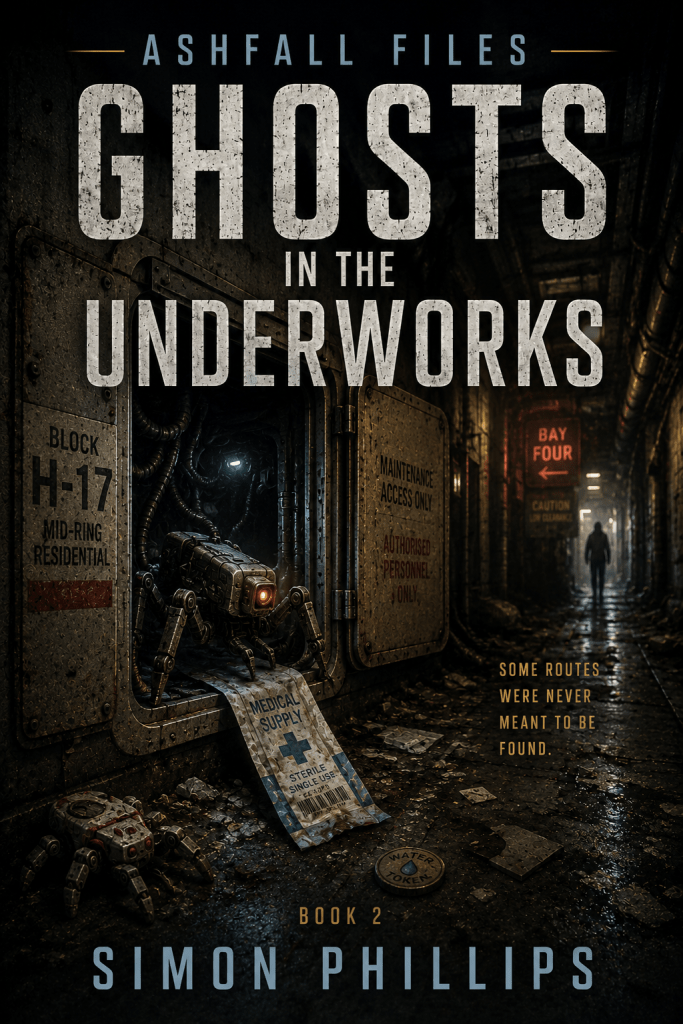
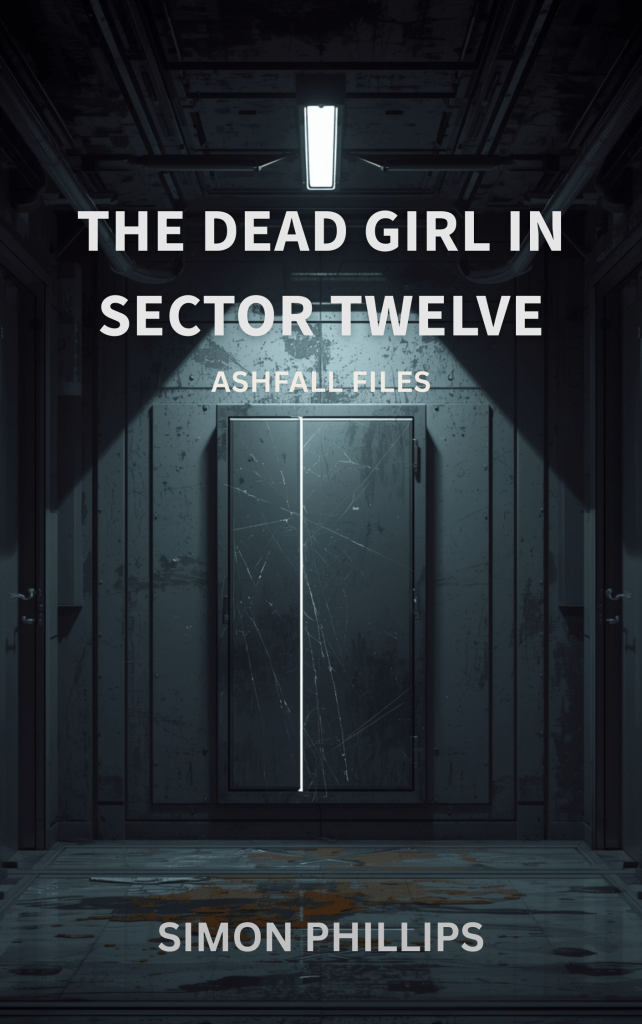
The linked Kindle book page deepens that path further. There, the station’s later consequences take investigative form in Ashfall Files: The Dead Girl in Sector Twelve, a sci-fi noir mystery centred on a young woman found dead inside a maintenance vent. Read alongside the Chronicle, the novella suggests a larger continuity in which buried structure, suppressed records, and institutional pressure continue to gather weight across time.


Why readers keep returning to stations like this

Readers return to this kind of science fiction because it understands that the future will arrive through maintenance as often as through invention. Human beings will keep living inside systems older than the policies governing them. They will keep trusting archives that only partly match material reality. They will keep expanding cities, stations, and networks whose earliest layers were shaped by motives no longer fully visible. A layered orbital station turns all of that into environment.

It also honours a quieter kind of speculative fear. Many futures on the page feel loud from the beginning. The most durable ones often begin with the sound of machinery carrying on as usual. A work order clears review. A frame locks into place. A corridor lights in sequence. Somewhere inside the structure, a pattern continues. That rhythm lingers because it suggests a civilisation extending itself into distances it can manage operationally, though never completely master emotionally.

This is where The Future Chronicle finds its strongest ground. It approaches science fiction through systems, atmosphere, and the lived pressure of environments that have endured long enough to develop their own silence. Chronicle 6 stands as a particularly strong entry into that world, since expansion offers a clean narrative surface while the deeper station keeps pressing upward through it. The official project concerns cargo capacity and reinforcement. The felt reality concerns contact with an older order concealed inside the metal.

A station like Ashfall remains compelling for the same reason old ports, old rail tunnels, and old industrial districts remain compelling. Growth never erases earlier layers. It builds across them. It seals them. It routes around them. Then, sooner or later, someone opens a hatch, extends a new connection, and realises the structure has been waiting much longer than the current shift can measure.

Beyond the record, the station continues its orbit. Framework holds. Reports enter the archive. The deeper pattern remains in place, patient as load-bearing steel, quiet as an active corridor after lights have settled, carrying the sense that somewhere inside the machinery of expansion, the future has touched something that was already there.

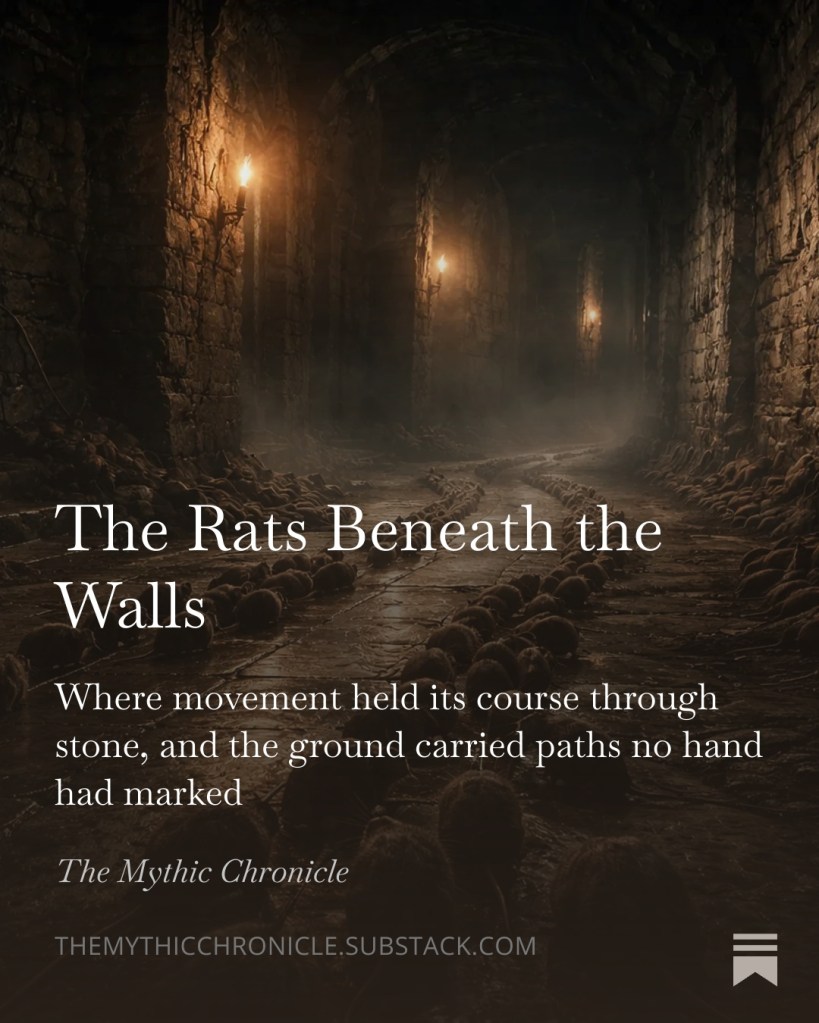
Buried Paths and Unquiet Foundations in Dark Fantasy: The Rats Beneath the Walls

There are cities whose history rests in towers, banners, gates, and names carried openly from reign to reign. There are others whose truest memory lies lower, pressed into cellar stone, sealed within repair work, or held beneath streets that continue their daily traffic while older roads persist below. Mythic fantasy returns to such places again and again because buried ground carries a peculiar authority. It suggests age without needing proclamation. It suggests danger before any blade is raised. It allows a reader to feel that the world has been built over something earlier, and that the earlier shape has never wholly gone.

That pressure runs through dark fantasy at its strongest. A ruin in the forest carries one kind of silence. A living district raised upon forgotten foundations carries another, for ordinary life continues above while older forms exert their influence below. Grain is stored, lamps are lit, the lane fills with work and trade, and somewhere under all of it a hidden alignment begins to make itself known. In The Rats Beneath the Walls, the second Chronicle in The Whispering Foundations, that emergence takes place through the most common of creatures, whose movement becomes more disturbing precisely because it remains so calm, so exact, and so resistant to the easy comfort of ordinary explanation. The series guide places this Chronicle within a larger arc of buried corruption and misunderstood foundations, where the city’s lower layers begin to reveal themselves through fragmented accounts and partial records.


The Old Language of Vermin and Stone

Rats belong to the oldest grammar of human settlement. They move where grain is stored, where water gathers, where timber rots, where refuse lingers, and where the shape of habitation creates warmth enough to sustain lesser lives in the margins of greater ones. Their presence usually points toward material facts: hunger, damp, neglect, breach, waste. That is why they are so effective in mythic fantasy. They begin within the language of the practical. They seem legible.

When that legibility begins to fail, unease deepens far more quickly than it would with some grander marvel. A dragon announces itself as legend from the first glimpse. A line of rats crossing a cellar floor should remain within the reach of habit and craft. A householder knows what such creatures mean. A warden knows what measures to take. A priest knows the words used to restore ordinary order. Once those familiar structures touch the phenomenon and find that the phenomenon continues unchanged, the ground under certainty begins to soften.

That is the precise force of The Rats Beneath the Walls. The Chronicle does not depend upon spectacle. It depends upon repetition, direction, and the unnerving calm of a pattern that refuses to break. The creatures cross stone in narrow lines, keep their spacing, bend around interruption, and pass through walls as though earlier roads persist within the masonry. Their movement feels less like infestation than adherence. They travel as if answering an alignment older than the houses themselves.

In mythic fantasy, this kind of image carries unusual strength because it joins the low and the ancient. Vermin belongs to the cellar. Forgotten alignments belong to the buried past. When those two meet, the result feels intimate and civilisational at once. The menace has already entered the lived fabric of the city, and the city has no language prepared for what that entrance implies.


When a City Keeps Earlier Roads

A buried city, a layered city, or a city built upon older works has long held a special place within fantasy. Such settings create the sense that every visible structure stands in relation to something prior: an earlier faith, an erased dynasty, a sealed chamber, a failed ward, a road whose purpose has outlived its name. Readers are drawn to these worlds because they suggest that history is never finished. It persists physically. It presses upward. It leaves consequences in mortar, drainage, subsidence, ritual habit, and half-understood custom.

The lower districts in The Rats Beneath the Walls belong to this tradition. Cellars extend beyond their original use. Foundation walls rest upon older stone whose full origin no longer appears in the surviving plans. Seams, damp, hollows, and concealed alignments turn the district into an archive of physical memory. That setting matters because the Chronicle’s central disturbance would lose much of its power in open country or within some untouched ruin. Here, the menace arises in a working quarter where life continues. The pressure comes through storage rooms, brewer’s cellars, plaster repairs, ledger entries, and the low routines of those who maintain the city without ever seeing the whole of what supports it.

This is one reason mythic fantasy remains so drawn to subterranean architecture. The understructure of a city offers more than atmosphere. It offers an argument about inheritance. Streets may belong to the present, yet foundations belong to many ages at once. A ruler may claim dominion over the district, yet the district still obeys the geometry of works laid down long before his reign. When animals begin to trace those hidden geometries, the city briefly reveals its true allegiance.

The Chronicle’s power also comes from the way official record and lived observation begin to part company. Separate reports remain manageable in isolation. Seasonal damp, settlement, infestation, underlying channels: each explanation can stand on its own. Once someone sets the entries beside one another, a shape emerges that exceeds any single case. That tension is central to fantasy shaped by archives and fragments. Truth survives in repetition long before it is granted authority.


Why These Images Hold Such Weight in Mythic Fantasy

There is a reason readers continue to seek fantasy shaped by forgotten structures, sacred tension, and incomplete records. Such fiction offers more than lore. It restores consequence to place. A corridor is never only a corridor. A wall may hold repair work, older stone, and an erased sign beneath the plaster. A cellar may function as a place of storage while also serving as the roof of something earlier and less benign. The world feels inhabited across time.

In that kind of writing, small disturbances matter. A pressure in the air, a room that refuses to clear, a line of flour reforming after it has been swept aside, the sound of interior movement passing downward through stone: these details carry mythic force because they suggest pattern without forcing immediate disclosure. Mystery thrives where explanation remains partial and physical consequence remains immediate.

That balance is difficult to achieve. Too much explanation reduces wonder into system. Too much obscurity weakens the reader’s footing. The most resonant mythic fantasy occupies the middle ground where the senses remain clear, the record remains fragmentary, and the world hints at coherence beyond what any single witness can grasp. The Rats Beneath the Walls enters that space with assurance. It allows the line of movement to become the central image, and through that image the Chronicle touches themes of buried inheritance, civic blindness, and the old fear that a city may still be shaped by designs its current inhabitants have forgotten.


Chronicle Spotlight: The Rats Beneath the Walls

Within The Mythic Chronicle, this entry works as a preserved account from the lower districts, where practical observation begins to brush against something older. The reading experience feels close to a recovered municipal record crossed with a whispered local memory. A cellar becomes the threshold. A procession of animals becomes evidence. A wall becomes a surface through which the city briefly speaks.

The Chronicle entry itself can be entered through The Rats Beneath the Walls on The Mythic Chronicle. It carries the publication’s characteristic mode: immersive prose, archive fragments, interpretive pressure, and the sense that every recovered account belongs to a greater pattern whose full shape remains withheld. For a reader approaching the archive for the first time, this Chronicle serves as a strong threshold because it offers a clear image, a confined space, and a disturbance that widens as the record expands outward from one household into the wider district.

A visual companion to the same Chronicle also survives in watch form on YouTube. It extends the atmosphere of the entry through image and motion, which suits this particular subject well, since the core unease lies in patterned movement. Here again, the power comes from persistence. The viewer sees a sign that could almost belong to ordinary life, until repetition gives it another meaning.


A Fuller Record Beyond the Fragment

Chronicles of this kind thrive on incompletion. They preserve what was seen, what was entered, what was argued over in the margins, and what later readers may infer from the pattern. Yet somewhere beyond the fragment, a fuller account often survives. That relationship gives The Mythic Chronicle much of its quiet force. The archive entry and the novella stand beside one another in different modes of truth.

For readers drawn toward the deeper narrative beneath the preserved account, a fuller record remains in Black Feathers in a Brothel on KDP. The Chronicle approaches the world through memory, distance, and partial authority. The novella moves closer, following event, consequence, and the spaces where atmosphere hardens into direct experience. That movement from archive to story feels especially apt in a world shaped by layered foundations, since such settings always imply that surface evidence belongs to larger buried histories.

The relationship between these forms is part of what gives the series its distinction. One text preserves. Another inhabits. One gives the city’s remembered shape. Another passes through the rooms where that shape begins to assert itself. The reader moves from sign to presence, from register to encounter, from the visible line upon the floor to the deeper question of what caused the line to hold.


What Remains Beneath the Floor

Fantasy concerned with forgotten powers often reaches toward crowns, gods, ruins, and wars. Those elements carry grandeur, and grandeur has its place. Yet some of the oldest fears begin lower. They begin where a household keeps its winter stores. They begin where plaster parts from stone. They begin where someone opens a cellar after supper and finds that the ground has already chosen a road.

That is why The Rats Beneath the Walls lingers. It understands that buried history rarely announces itself with ceremony. It arrives through repetition, through altered behaviour, through the subtle conviction that a visible room has joined itself to an invisible system. The lower district continues above. Ledgers are filed. Repairs are made. Daily life resumes its rhythm. Under that rhythm, the earlier lines remain.

In mythic fantasy, those are the moments that endure. A city becomes memorable when its stones seem to remember more than its citizens. A Chronicle becomes compelling when it preserves the instant in which common life brushes against that deeper memory and fails to master it. The path survives beyond the eye’s reach. The record closes. The pressure remains.

And somewhere beneath the walls, the road continues.

Why Deep-Space Debris Field Signals Feel So Disturbing in Science Fiction

Out beyond the docking lanes, where a frontier station gives way to the wreckage of older industry, a debris field becomes more than background scenery. It becomes memory made physical. Broken cargo towers, relay frames, scaffold sections, and dead satellites drift in slow procession around a spent world, each fragment holding the shape of labour that once mattered. When a deep-space signal begins pulsing from within that ruin, science fiction touches a very old fear. Someone, or something, is still speaking from a place the present has already abandoned.

That tension sits at the heart of space station mystery fiction. A station suggests order, registry, mapped corridors, monitored traffic, and the steady reassurance of systems under observation. A debris field suggests the opposite: overflow, residue, long aftermath, the industrial graveyard left circling after profit has moved elsewhere. Bring the two together, and the result carries a peculiar strain of unease. The organised world remains close enough to see through the canopy glass, while the dark beyond still holds structures whose original purpose has thinned into rumour.

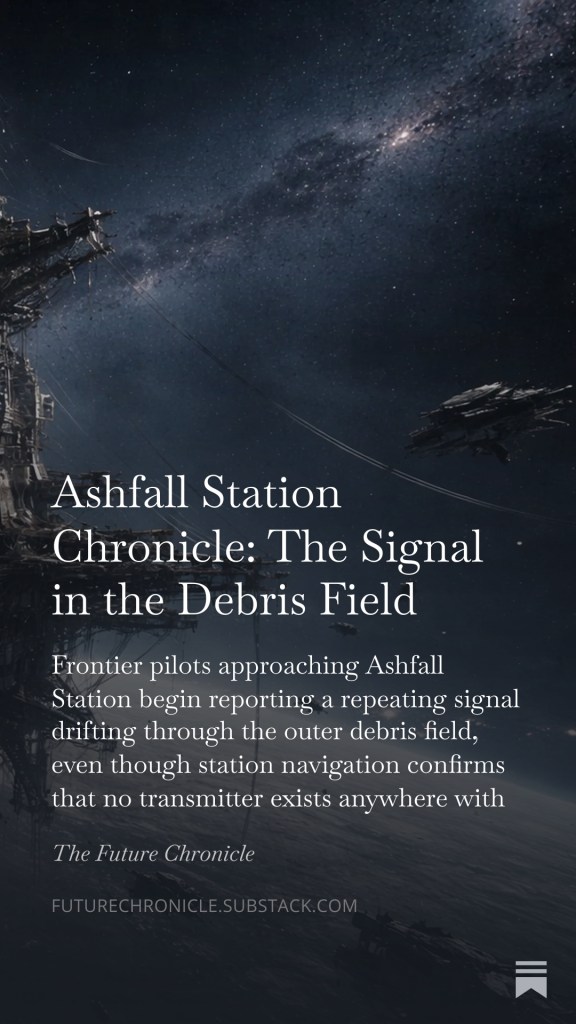
Chronicle 4 of the Ashfall Station sequence understands that pressure with impressive calm. In The Signal in the Debris Field, the first disturbance arrives through a routine approach, a receiver sweep, a pilot who hears something repeating where no transmitter should remain. The effect comes through restraint. The signal enters the scene as a technical irregularity, almost small enough to miss, and that scale gives it force. A corridor alarm would feel immediate. A faint pulse drifting through wreckage feels patient, older, and somehow more certain of its own endurance.


The debris field as a zone of memory

Science fiction has always found power in the image of abandoned infrastructure. A derelict ship, a sealed habitat, a disused mining platform, an orbital relay whose designation has outlived its function, each one carries a quiet promise that time has continued moving inside the machinery even after official attention moved elsewhere. The debris field expands that promise across a wider landscape. Instead of one haunted object, the reader faces an entire environment shaped by accumulation.

That matters because a debris field resists the clean romanticism often attached to deep space. This is space as aftermath. These structures once belonged to schedules, quotas, crews, budgets, accidents, repairs, and routine decisions made under industrial pressure. Someone welded those frames. Someone signed off on those towers. Someone logged the final traffic before the route fell quiet. Years later, the broken skeletons remain in orbit as a record of labour whose living context has drained away.

A repeating signal inside that setting does more than introduce mystery. It reactivates the graveyard. The field stops behaving like scenery and begins behaving like an archive. Every drifting fragment becomes a potential source, every torn ring or fractured panel a possible witness. The reader starts searching the wreckage in the same way a pilot or receiver operator would, trying to imagine which remnant still holds charge, which chamber still preserves circuitry, which cold section of metal has gone on speaking long after its builders vanished from the route maps.

That is one reason deep-space signal stories retain such force. They awaken dead environments. The pulse gives shape to emptiness. It turns drifting matter into intention, even before anyone can say what that intention means.


Why a signal unsettles more deeply than a visible threat

A visible threat lets the mind draw boundaries. A hostile vessel, a boarding party, a damaged hull, a breach warning, each one carries a recognisable edge. A signal works differently. It arrives through pattern, delay, and repetition. The source remains hidden while the effect spreads through interpretation. People listen, compare, classify, question, rerun scans, check registries, and discover that language begins to slip. A signal forces institutions to confront uncertainty in their own preferred idiom: records, arrays, identification protocols, archived frequencies, sensor sweeps, official reassurance.

That tension gives signal fiction a profoundly human quality. Fear enters through procedure. The crew member who notices the anomaly remains at a console. The navigation office answers in a steady voice. Arrays turn. Data arrives. Silence follows. The dread grows inside administrative competence.

In the Ashfall setting, that calm procedural atmosphere carries special weight because the station itself depends upon navigational certainty. Approach corridors, beacon records, traffic coordination, safe separation from older wreckage, all of these form the ordinary discipline of survival around Kestren-4. When a repeating transmission emerges from the debris field and every system insists that no registered transmitter exists there, the disruption reaches deeper than a single strange moment. It touches trust itself. The map says one thing. The receiver says another. The corridor remains open anyway.

This is where the Chronicle’s science-fiction mood becomes especially effective. The future feels inhabited through work. Pilots hold approach vectors. Navigation officers speak in measured exchanges. Sensor towers search empty space. The mystery grows within the texture of a functioning industrial culture. That sense of lived system pressure gives the signal gravity. Nothing flamboyant needs to happen. A steady pulse across the spectrum is enough.


Frontier systems make these stories feel plausible

A frontier setting gives signal fiction a natural home because frontiers contain leftovers. Expansion creates equipment faster than memory can preserve it. Systems grow around extraction, transport, survey work, emergency contingencies, contract cycles, and temporary structures whose temporary status stretches across decades. As traffic thins and economies shift, the hardware remains behind, turning orbit into a layered field of present use and historical residue.

Within that kind of environment, a signal from abandoned machinery feels plausible in the first instant. That plausibility matters. The reader accepts the practical explanation before the deeper disturbance begins. Of course old infrastructure can transmit. Of course a mining beacon or relay unit might survive. Of course a receiver operator would assume a technical remnant before anything stranger. The future opens through ordinary logic.

Then the second movement begins. The frequency matches nothing familiar. The source location feels wrong. The pattern repeats with an exactness that suggests design. The structure carrying the transmission appears cold, silent, and dead. That shift from plausible remnant to unresolved persistence is where frontier science fiction often finds its sharpest atmosphere. The story remains grounded in work, machinery, and registry, yet a pressure larger than procedure starts pressing through the seams.

The result feels less like spectacle and more like slow contamination of certainty. For readers who prefer controlled speculative fiction over grand operatic display, this mode carries unusual appeal. It trusts implication. It lets the industrial environment hold the weight.


The Chronicle as a threshold into Ashfall

Within The Future Chronicle on Substack, The Signal in the Debris Field works especially well as a threshold text because it introduces Ashfall Station through distance. The station appears across the approach lanes, lit against the black horizon, while the deeper disturbance rises from the wreckage surrounding it. That choice gives the whole entry a measured elegance. Readers arrive from outside. They see the station as incoming crews see it. The system feels broad, quiet, and old before the mystery tightens.

This matters for the wider Ashfall Station sequence. A chronicle like this one does more than tell a contained episode. It establishes reading conditions. The archive grows through fragments, reports, observations, quiet anomalies, and moments that seemed manageable when first recorded. A signal detected on approach becomes one more entry in a larger field of pressure. The reader senses the archive thickening.

That archival method suits science fiction particularly well when the goal is psychological atmosphere instead of rapid revelation. The future enters as a record under review. Every small event acquires retrospective weight. A pilot reports a pulse. Navigation fails to locate a legal source. A structure in the debris field speaks in a sequence no one recognises. The event passes into the logs. Later, the meaning expands.

For a new reader, that creates a strong entry point. There is no burden of excessive lore. There is a station, a world beneath it, a debris corridor, a transmission, and the first slight shift in the trust people place in their systems. The world opens through implication, which often leaves a deeper impression than explanation.


From Chronicle atmosphere to novella pressure

For readers who want to step from the archive into a more sustained narrative, the connected Kindle novella, Ashfall Files: The Dead Girl in Sector Twelve, provides a natural second threshold. The movement from Chronicle to novella feels organic because the Chronicle builds environment first. It lets Ashfall exist as place, record, and accumulated unease. The novella can then enter that same station carrying the denser pressure of investigation.

This relationship between Chronicle and novella is one of the strongest aspects of the wider project. The chronicle form gives room for early signs, peripheral witnesses, overlooked incidents, and the quiet sediment of history. The novella form gathers that atmosphere into a closer narrative line, where consequence presses more directly upon the people moving through the station’s ageing structure. One form broadens the archive. The other deepens the encounter.

That distinction matters for readers drawn to space station mystery, industrial science fiction, and slow-burn speculative tension. Some want the distant view first: the station as system, the route map, the old infrastructure, the fragment recovered from orbit, the unexplained signal turning through the dark. Others want the closer pressure of a case unfolding inside that world. Ashfall offers both, and Chronicle 4 sits at a particularly effective junction between them.


Why readers keep returning to signals from the dark

A signal carries something ancient inside a futuristic form. It is a call, a trace, a pattern seeking reception. It promises meaning before meaning has been secured. Human beings remain vulnerable to that structure across every age. We hear repetition and assume intention. We hear order and assume origin. We hear persistence and assume that someone, somewhere, continues to hold the other end of the line.

In science fiction, that instinct becomes even more powerful because distance removes reassurance. Space is large enough to hold forgotten industry, failed empires, unfinished projects, silent research, sealed compartments, and transmissions still moving after their makers are gone. The signal becomes a way for the past to remain active inside the future. It crosses vacuum and arrives without explanation, carrying the unsettling suggestion that history never fully releases its grip on the systems built to contain it.

That is why a debris field signal feels so potent. The message comes from waste, from structures society has already written into the margins, from a region treated as background hazard and navigational inconvenience. The future receives its disturbance from what it chose to leave behind.

Ashfall understands that dynamic with admirable restraint. The pulse enters quietly. The route remains open. The station continues its orbit. The record grows by one more line. Somewhere beyond the docking rings, among fractured towers and silent machinery turning above Kestren-4, a sequence continues repeating into the dark. The archive hears it. The station hears it. Long after the immediate approach has passed, the pressure remains.

Stone Age Fantasy and the Memory of the First Civilisations

A Timeline Fantasy Story from Chronicles of the Spiral Ages

The Memory of Sand and the First Age of Story

Across the earliest horizon of civilisation, long before cities gathered beside rivers and long before history carved its record into clay or stone, humanity moved across the land in small and fragile communities. These early peoples lived within landscapes that shaped every instinct and every belief. Wind across desert ridges, shifting dunes beneath distant mountains, and the slow passage of seasons formed the boundaries of existence. Within such worlds, myth emerged quietly, carried through memory rather than through writing.

Stone Age fantasy fiction often returns to this distant threshold of humanity, since the age itself invites a different kind of storytelling. Survival and wonder exist beside each other. Every natural formation might conceal meaning. Every unexplained ruin stands like a question carved into the earth. When mythic historical fantasy explores this era, the story begins where language itself still searches for shape.

In a timeline fantasy series, these early moments become the first turning of a much larger wheel. Civilisations grow across centuries, belief systems evolve, and symbols travel through cultures long after their original meaning fades. The earliest ages therefore hold unusual significance, since they reveal the beginning of ideas that echo across the entire arc of history.

Within Chronicles of the Spiral Ages, the Stone Age stands as the first chapter of that unfolding world. Here the landscape remains vast and untamed, and the people who cross it carry the first sparks of story. What they encounter in these silent lands will shape memory long after their own voices disappear.


Where Myth Begins: The Landscape of Early Civilisation

Across mythic historical imagination, deserts often become places where forgotten knowledge lingers beneath the sand. The environment itself encourages reflection. Endless red dunes stretch toward a horizon where the sky grows pale and distant, while ancient rock formations rise from the desert floor as though they have watched countless generations pass.

In such a setting, the boundary between natural formation and ancient construction becomes uncertain. A weathered stone structure might appear as though it has stood since the dawn of the world. A carving discovered beneath centuries of wind erosion might resemble a symbol that no living tribe remembers.

This ambiguity forms the foundation of ancient civilisation fantasy. When a story returns to the earliest ages of humanity, the landscape becomes more than scenery. It acts as a silent archive. Every ridge and valley contains traces of cultures that existed before the present generation. Even when the characters possess no written language and little knowledge of the past, the land itself carries memory.

The Stone Age therefore becomes a fertile setting for mythic fantasy storytelling. Humanity exists close to the natural world, moving with the rhythms of migration and seasonal survival. Ritual emerges gradually as communities attempt to interpret forces that feel older than themselves. Symbols appear long before anyone fully understands their meaning.

One of the most powerful of these symbols within the Chronicles of the Spiral Ages timeline is the Spiral.

The Spiral represents continuity across time. It appears within distant cultures that have never met one another, carved into stone or traced in dust by hands that may never know why they repeat the shape. The symbol becomes a quiet thread binding centuries together, suggesting that memory travels farther than any tribe or kingdom.

In this way, the Spiral functions less as decoration and more as a living trace of history. It suggests that the earliest ages of humanity carried fragments of understanding that later civilisations only half remember.


Symbols Becoming Belief

The birth of mythology often begins with observation. A natural formation that resembles a pattern becomes a symbol. A repeated experience becomes ritual. Over time, these small acts of interpretation accumulate until they form the foundation of belief.

Ancient world fantasy novellas frequently explore this transition, showing how early cultures begin to organise the mysteries around them. When language remains young and history remains unwritten, meaning grows slowly through repeated experience.

A spiral carved into a stone wall might first appear as a curiosity. A generation later it might become a sacred mark of passage. Centuries later the same shape could stand at the centre of an entire cosmology.

The transformation occurs gradually, shaped by migration, survival, and the passage of time. Every generation inherits fragments of the previous one. Stories shift, details change, and meanings deepen.

Within a timeline fantasy series, these evolving interpretations become essential. The earliest appearance of a symbol rarely explains its purpose. Instead, the story reveals how different cultures reinterpret the same mark across centuries. What begins as a mystery eventually becomes legend, and legend slowly becomes faith.

This process forms the emotional core of mythic historical fantasy. The stories themselves become echoes of forgotten experiences. A traveller’s discovery, a tribal memory, or a carved monument may ripple outward through centuries until entire civilisations grow around those first quiet moments.

The Stone Age therefore holds unusual narrative weight. It represents the earliest turning of the wheel. Here the foundations of later myth are laid without anyone recognising their importance.


Novella Spotlight: The Sand Beyond Memory

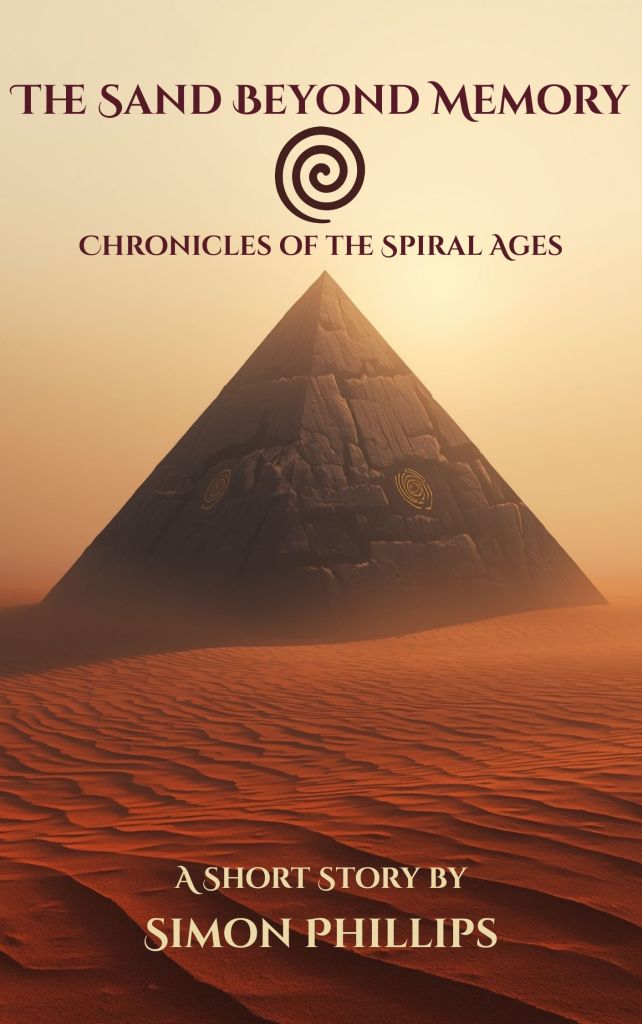
The opening entry within the Chronicles of the Spiral Ages timeline explores this early world through the novella The Sand Beyond Memory. Set within the deep desert of the Stone Age, the story follows a migrating tribe as they encounter a monument whose origin lies far beyond their understanding.

Within the red basin where the desert winds carve endless dunes, a broken pyramid rises from the sand. Time has stripped the monument of its upper form, leaving fractured stone blocks and eroded carvings exposed to the sky. No living tribe remembers who raised it. Even the oldest storytellers speak only in fragments.

For the travellers who discover it, the structure becomes a source of both curiosity and unease. Its scale suggests a civilisation older than any living memory. Its carvings hint at symbols that feel strangely familiar, even to people who have never seen them before.

Through this encounter, the novella explores the earliest tension between instinct and belief. The tribe carries its own traditions, shaped through migration and survival, yet the monument suggests a deeper past that challenges those inherited stories.

Rather than presenting the Stone Age as a primitive world, the story treats it as a formative moment in human memory. The characters stand at the edge of something larger than themselves. They sense the presence of an earlier civilisation without possessing the knowledge required to interpret it.

This quiet confrontation with the unknown forms the emotional centre of the novella. The landscape itself becomes a witness to forgotten ages, while the Spiral symbol begins its long journey through history.

Readers interested in exploring the story itself can find the novella here:
https://www.amazon.com/dp/B0GGXBP8G6


A Fragment Preserved in Motion: The Illustrated Mini-Read

Alongside the written novella, a brief illustrated mini-read offers a glimpse into the atmosphere of this early age. The video functions less as a summary and more as a preserved moment from the world itself.

The sequence focuses on a single fragment of experience within the desert landscape. Dust drifts across the broken monument. Light moves across eroded stone surfaces. The tribe approaches the structure slowly, uncertain whether the place carries danger or meaning.

Within the broader ancient civilisation fantasy setting, such moments hold unusual power. They capture the emotional texture of the story without revealing its deeper transformation. The viewer stands beside the travellers, sensing the presence of history beneath the sand.

This short visual fragment acts as a threshold into the wider world of Chronicles of the Spiral Ages, offering a brief immersion into the earliest chapter of the timeline.

You can view the illustrated mini-read here:


The Spiral Across the Ages

The Stone Age marks only the beginning of the larger timeline explored throughout the Chronicles of the Spiral Ages series. As centuries pass, new cultures emerge across distant regions. Metallurgy reshapes tools and weapons. Trade routes connect societies that once lived in isolation. Kingdoms rise beside rivers and coastlines.

Yet the Spiral continues to appear.

Sometimes it emerges as a sacred carving within temple walls. Sometimes it appears within pottery or woven cloth. In other eras it becomes a philosophical symbol associated with the passage of time itself.

Each appearance suggests continuity across generations who possess no direct knowledge of one another. The symbol survives because memory itself survives. Even when languages fade and cultures disappear, traces remain embedded within tradition and myth.

Through this long historical arc, the Spiral becomes a quiet witness to humanity’s unfolding story. It represents the persistence of meaning across centuries, a reminder that even the smallest discoveries in the earliest ages can ripple outward across time.


A Story That Begins Before History

Stories set in the earliest ages of humanity carry a unique atmosphere. They unfold in worlds where the future remains entirely unknown and where every discovery might shape the direction of civilisation.

Stone Age fantasy fiction therefore invites readers to step into a moment when myth itself still waits to be born. Symbols appear without explanation. Landscapes conceal fragments of forgotten worlds. Every encounter with the unknown becomes part of a larger historical memory.

Within Chronicles of the Spiral Ages, The Sand Beyond Memory stands as the first step into that long journey through time. The desert monument, the Spiral carving, and the quiet uncertainty felt by the travellers form the beginning of a much larger narrative stretching across centuries.

The earliest ages rarely leave written records, yet their influence lingers in the stories told by later civilisations. By returning to that distant beginning, the series explores how myth grows from memory and how symbols endure long after the voices that first carved them have faded.

Across the red desert basin, the wind continues to move across the broken pyramid. Sand drifts slowly against stone that has watched countless generations pass. Beneath those ancient carvings, the Spiral waits patiently for the ages that will follow.

Immortality Before Empire: A Literary Vampire Novella of Memory, Erosion, and Early Britain

A Literary Vampire Novella Rooted in History

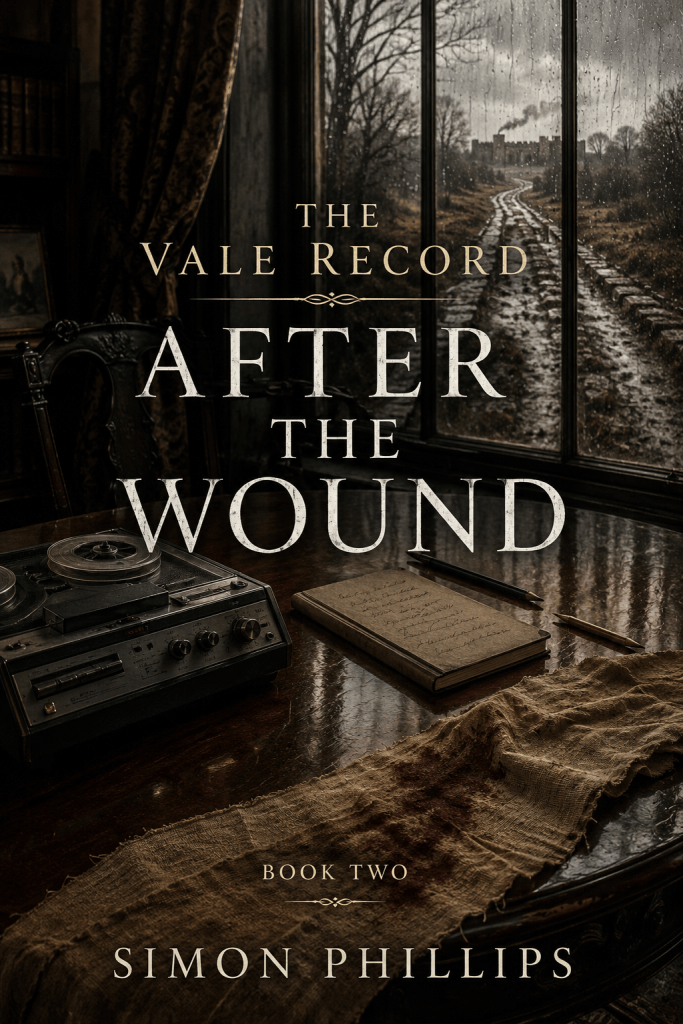
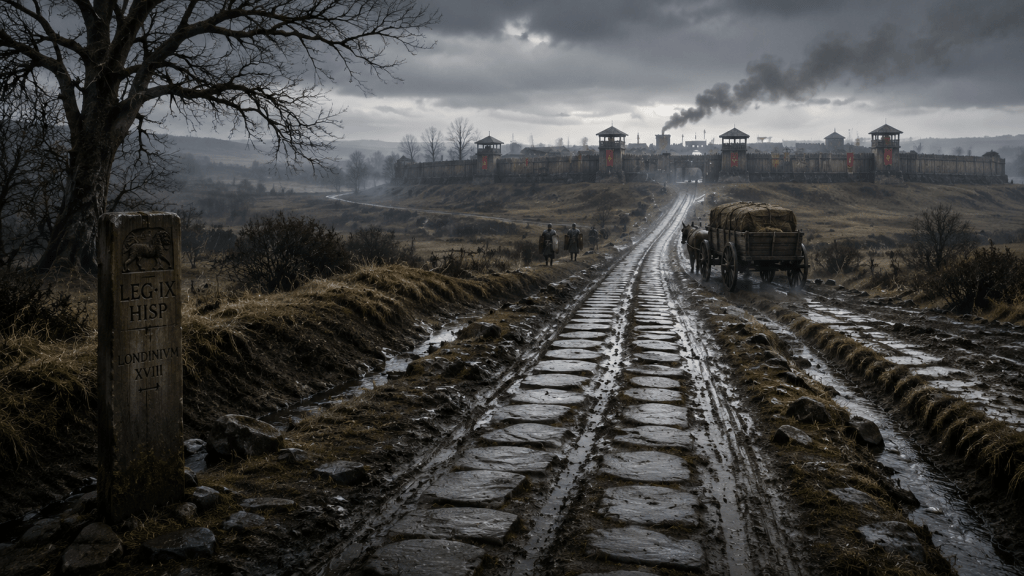
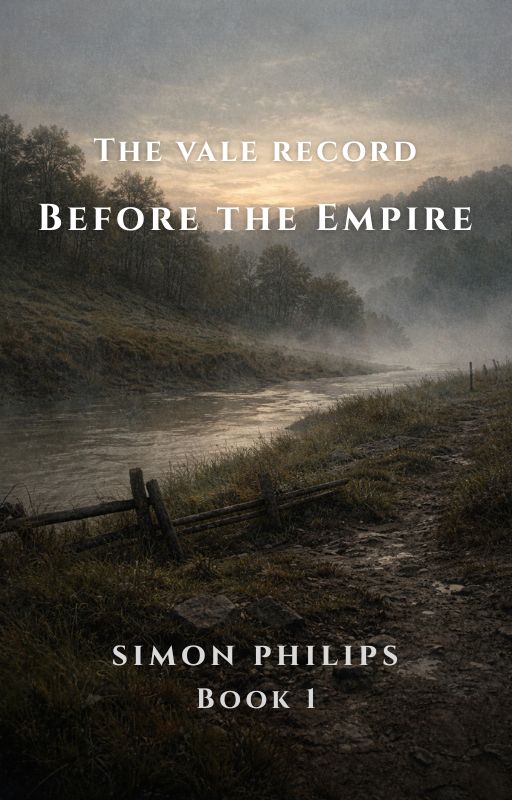
Long before empire fixed its roads across Britain and carved permanence into stone, there were men who believed their lives would rise and fall within the memory of their kin, carried in voice and soil and ritual, measured in seasons and burial mounds rather than conquest. It is within that fragile, communal world that The Vale Record: Before the Empire begins its quiet excavation of immortality, and in doing so positions itself within a rare corner of historical supernatural fiction: the literary vampire novella grounded in realism, erosion, and lived continuity.

This is no spectacle of gothic excess, no romance-bound fever dream of endless youth. It is an examination of survival under historical pressure, an immersive British historical fiction novella in which the supernatural exists as biological divergence, scarcely understood even by the one who endures it. The result is a slow burn gothic novella shaped by land, invasion, and the long aftermath of living beyond one’s allotted span.

Immortality here carries the weight of time, and time itself becomes an instrument of erosion.

Immortality as Erosion, Not Ascension

Within much contemporary vampire fiction without romance, immortality functions as enhancement, an ascension into strength or beauty or mythic dominance. In Before the Empire, survival operates differently. The immortal protagonist does not stride toward destiny; he remains in place while the world shifts beneath him. The land changes hands. Languages soften and fracture. Ritual becomes anecdote. Continuity dissolves.

Immortal protagonist fiction often centres on power. Here, power is incidental. Survival occurs through accident, through circumstance, through an unrecognised biological divergence that separates Marcus Vale from those beside him on the field. There is no revelation, no awakening framed by thunder or prophecy. There is only the slow realisation that time behaves differently for him than for others.

This subtle deviation transforms immortality into erosion. To live across centuries within a framework of historical realism is to experience attrition. Names fade. Kin vanish. Landscapes are renamed. The communal identity of pre-Roman Britain, cyclical and land-bound, yields to Roman order and permanence. Marcus survives through this fracture, and survival itself becomes a quiet violence.

The novella positions immortality and memory fiction within a historically disciplined framework. Major events unfold as they did. Empire advances. Tribes fracture. Cultural erasure proceeds with administrative efficiency. The supernatural offers no correction, no secret mastery. Instead, the immortal remains subject to the same pressures as any other body on the field, with the sole exception that he endures long enough to feel the full arc of consequence.

In this way, the literary vampire novella becomes a meditation on loss, an exploration of how identity erodes when time no longer releases its grip.

Historical Supernatural Fiction Without Spectacle

Historical supernatural fiction often risks spectacle, allowing magic to bend chronology or elevate its protagonist above context. The Vale Record operates with deliberate restraint. The Roman invasion of Britain arrives as disruption, as asymmetrical force, as disciplined machinery pressing against communal land-based identity. There is confusion and brief violence, disorientation and fracture, though the emphasis rests on lived perception rather than panoramic explanation.

The supernatural remains indistinct. There are no mythic hierarchies unveiled, no grand lineage of ancient immortals manipulating history from shadow. Instead, the biological condition that defines Marcus Vale exists within strict limits. He can be harmed. He can age. He will decline. Immortality extends life; it does not suspend consequence.

This restraint situates the novella within a rare sub-genre: supernatural realism novel territory in which the extraordinary unfolds beneath the weight of documented history. The land itself becomes the enduring force. Empires rise. Marcus endures. Yet endurance offers no dominion, only accumulation.

The slow burn gothic novella form proves particularly suited to this thematic terrain. Atmosphere emerges from soil, from communal ritual, from the texture of pre-Roman life before imperial infrastructure. The gothic element lies within the tension between continuity and erasure, between memory and administrative permanence. The horror, if it may be called such, resides in survival without belonging.

Memory as Burden and Inheritance

Immortality and memory fiction often gestures toward nostalgia, toward the romance of centuries. In Before the Empire, memory accumulates unevenly. It remains incomplete, selective, shaped by emotional pressure. Marcus recounts his early life without spectacle. He does not mythologise his own divergence. Instead, memory reveals fracture.

The burden of memory manifests as inheritance. The novella’s modern frame situates Marcus as an ageing patriarch within a private household, choosing to record his life while decline advances. This framing grounds the work firmly within the territory of British historical fiction novella craft, where the past exerts pressure upon the present rather than serving as decorative backdrop.

The act of recording becomes both preservation and distortion. The immortal body weakens while emotional clarity sharpens. The household surrounding Marcus appears stable, ordered, adapted across generations. Yet beneath this surface lies fragility. Memory moves through walls. Secrecy presses inward. The record itself feels finite.

In this sense, the novella becomes as much about inheritance as about survival. Immortality fractures generational continuity. The one who endures cannot fully belong to any generation. He outlives his context. The erosion extends inward.

Readers drawn to Kindle literary novella work that favours psychological restraint over spectacle will recognise this tension. The narrative weight accumulates quietly. Each remembered field, each burial, each vanished voice carries forward into the present room where recording devices hum softly within a Victorian-consolidated house adapted for discretion.

The Vale Record: Before the Empire: A Spotlight

The Vale Record: Before the Empire stands as the opening movement in the series, a British historical fiction novella rooted in pre-Roman Britain during the earliest pressure of Roman incursion. It focuses on a single sustained period, resisting compression, resisting summary. The emphasis rests upon communal identity bound to land and oral tradition, and upon the first unacknowledged divergence from human ageing.

The novella does not offer origin explanation. It avoids mythology expansion. Instead, it presents a lived period in which survival occurs unnoticed, uncelebrated, and misinterpreted. The emotional promise lies in witnessing the quiet collapse of certainty. Tribal belonging yields to empire. The body yields to time, albeit at a different rate. Identity shifts without declaration.

For readers interested in literary vampire novella work that rejects romance tropes and foregrounds historical continuity, this opening volume establishes the tonal discipline of the wider series. Immortality emerges as attrition. Empire becomes the enduring external force against which survival is measured.

The Amazon Kindle edition preserves this atmosphere in its original cadence, allowing readers to enter the world through sustained immersion. There is no urgency attached to that movement. The text waits with the patience of stone.

The Illustrated Mini-Read as Threshold

Alongside the novella, the illustrated mini-read on YouTube functions as a preserved fragment, a threshold moment distilled into visual atmosphere. It captures the tonal quality of early Britain under gathering pressure, offering viewers a brief immersion into the world before empire secures its roads and administrative permanence.

The mini-read does not summarise. It does not reveal. Instead, it extends atmosphere, holding a single breath of time in suspension. As an echo of the novella’s restraint, it operates as a preserved moment rather than promotional device, inviting quiet attention.

Those who encounter the fragment first may find themselves drawn toward the fuller immersion of the Kindle literary novella. Those who begin with the text may recognise familiar textures within the illustrated rendering. The two forms exist in dialogue, each reinforcing the other’s weight.

Empire, Continuity, and the Long Arc of Decline

As the series advances beyond Before the Empire, the scale widens while the emotional centre remains contained. The Roman invasion establishes Marcus Vale’s lifelong relationship with empire, with order imposed upon communal land. The erosion of identity begins here. It continues across centuries.

Immortality and memory fiction of this kind carries forward through accumulation rather than escalation. Each historical role, each belief once held, will gradually be relinquished. Physical decline will unfold without spectacle. Emotional clarity will sharpen even as strength fades.

The closing pages of the opening novella do not promise triumph. They reposition relationships. They introduce fragility within the modern household. The record feels finite. The immortal body approaches its natural end, extended though it may be.

Historical supernatural fiction often gestures toward transcendence. The Vale Record gestures toward extinction, approached with measured composure. The weight of endurance presses inward. Empire remains carved into landscape. Memory persists unevenly. The house stands, adapted and discreet, holding its quiet archive.

In that stillness, the literary vampire novella reveals its true preoccupation: how long a life can extend before it becomes sediment, how memory can preserve and distort in equal measure, and how erosion shapes identity more profoundly than conquest ever could.

The land endures. The record continues.

When a System Clears Something Twice

There are moments when failure announces itself loudly. Alarms sound. Lights change. Authority moves in response to visible threat.

Then there are the other moments.

The ones that pass inspection.

Harbinger Protocol was built around those quieter failures. The ones logged, approved, signed off, and archived without protest. The incidents that make sense on paper and leave a faint pressure in the room once the report ends.

The flash-fiction fragments I have been releasing recently come from that space. They are not scenes in the conventional sense. They are residues. Procedural echoes. Things overheard through systems that were never designed to listen for consequence.

One of those fragments centres on a compartment that received clearance twice.

No alarm followed the first authorisation.
No escalation followed the second.
Every reading remained stable.

The repetition carried no technical significance. That is what unsettled it.

Clearance systems exist to remove hesitation. They translate judgement into colour states, timestamps, and confirmation loops. Once permission is granted, the system proceeds without interpretation. That design works well in stable environments. It functions less cleanly when the environment begins to change in ways the system cannot name.

In Harbinger Protocol, those changes arrive early and quietly.

The flash-fiction videos released on YouTube present these moments as isolated artefacts. A log entry. A procedural pause. A line written down and accepted because nothing else contradicted it. They are intended to feel incomplete, as though part of the context remains elsewhere.

That context lives in the short story.

📘 Harbinger Protocol: available on Amazon Kindle
https://www.amazon.com/dp/B0GJPHF7FH

The book expands the same approach across a wider frame. Institutions responding through habit. Authorities interpreting anomalies through existing language. Witnesses revising statements under pressure until they align with what the system expects to hear.

Nothing in the story announces itself as extraordinary. The horror develops through repetition, delay, and misinterpretation. By the time recognition arrives, the paperwork already carries multiple signatures.

The YouTube video linked below functions as a recovered fragment from that larger record. It stands on its own, although it gains weight when placed alongside the written report.

Watch the flash-fiction video

I have chosen to release these fragments alongside the book for a specific reason. The Harbinger Protocol project relies on atmosphere and accumulation. Each piece adds pressure without resolving it. The videos create a sense of institutional proximity. The book carries the full procedural arc.

Neither replaces the other. They occupy adjacent layers.

This approach reflects the world of the story itself. Systems communicate through partial records. Decisions pass through multiple hands. Meaning emerges through overlap, delay, and repetition. The audience assembles understanding in the same way the characters do.

Slowly.
Indirectly.
After the moment when intervention might have mattered.

If you are drawn to restrained science fiction, procedural horror, and narratives that unfold through systems instead of spectacle, Harbinger Protocol was written for that space. The fragments will continue to appear. The records remain open.

Some files clear once.
Some clear twice.
The difference arrives later.

The First Walkers and the Earliest Age of the Elder Realms

Some stories begin with crowns, borders, and conflict already in motion. Others reach further back, to a time when the world itself had not yet learned how to answer those who lived upon it.

The First Walkers belongs to that earlier age.

This short story emerged during a period of stepping away from the main novel, The Veil of Kings and Gods, in order to explore the ground beneath it. Before returning fully to kings, councils, and divine fracture, there was a need to listen to the first layer of the world. An age shaped by memory, firelight, and watching presences, where meaning travelled through instinct rather than record.

The Elder Realms, in their earliest form, are quiet places. Humanity moves cautiously through landscapes that feel aware yet unreadable. The gods observe from distance and height, bound by their own silences. Magic exists as potential, sensed through alignment and response instead of mastery.

The First Walkers is written as a fragment from this age. It stands as a complete short story, while also serving as a foundation stone for what comes later. Ideas seeded here carry forward into later ages, where they take on clearer shapes through belief, power, and consequence.

Alongside the short story, I have been sharing brief mythic fragments drawn from the same period. These appear as narrated pieces and flash-fiction, shaped to feel like recovered scripture or ancestral memory. They offer atmosphere and tone, allowing the world to be approached slowly, without explanation pressing ahead of experience.

One such fragment can be experienced below. It reflects the mood and substance of The First Walkers, presenting a single moment from the earliest age, shaped for listening.

Watch the narrated mythic fragment here:

These fragments act as quiet entry points. Some readers may encounter the world first through sound and image, others through the written story. Both paths lead toward the same long memory.

The complete short story, The First Walkers, is available as a Kindle ebook for those who wish to read the full piece and remain with the world for longer:

📖 https://www.amazon.co.jp/dp/B0GDWMMQ4P

Further stories and fragments from the Elder Realms will follow over time, each exploring a different age in the long descent toward kingdoms, faith, and fracture.

Inside the Life of an Aspiring Author

Most people imagine authors as curled up in quiet rooms, sipping tea and watching the words pour effortlessly onto the page. A kind of literary tranquillity, wrapped in books and warmed by candlelight.

I wish that were true.

The reality, at least for me, is far from romantic. It’s writing between real-life responsibilities, when the house is quiet and the world finally pauses. I’ve made a decision to pursue this dream fully, working extra hours not because I love the grind, but because that income, after family needs, goes straight into editing, proofreading, and eventually publishing. I’m investing in my own story, one sacrifice at a time.

My day is a patchwork of obligations. I run a small English school in Japan, manage creative routines around work and home life, and still find time to draw maps, script lore videos, and edit chapters that feel like they’ll never end. I’m not yet published. I’m not famous. But I’m building something, page by page, post by post.

There’s a mental weight to this work that few talk about. Some days, I stare at a sentence for an hour, unsure if it even belongs. Other days, it all flows so quickly I can barely keep up. The emotional shifts are real, self-doubt, exhaustion, the nagging feeling that I should be doing something more “practical.” But then a scene clicks. A piece of world-building locks into place. And for a moment, it feels like magic again.

So why do I keep going?

Because I believe in the stories I’m telling. The Veil of Kings and Gods is more than a novel, it’s a world I’ve carried for years. The short stories of Ældorra let me explore lost myths and haunted corners I’ve only glimpsed in dreams. And my sci-fi series, still in early development, pushes me to imagine a future I can barely articulate.

I don’t know when success will come, or even what it’ll look like when it does. But I know this: I want to create worlds that feel real, dangerous, and beautiful. Worlds where characters fight for something, where gods whisper from beyond, and where the weight of time never fully lifts.