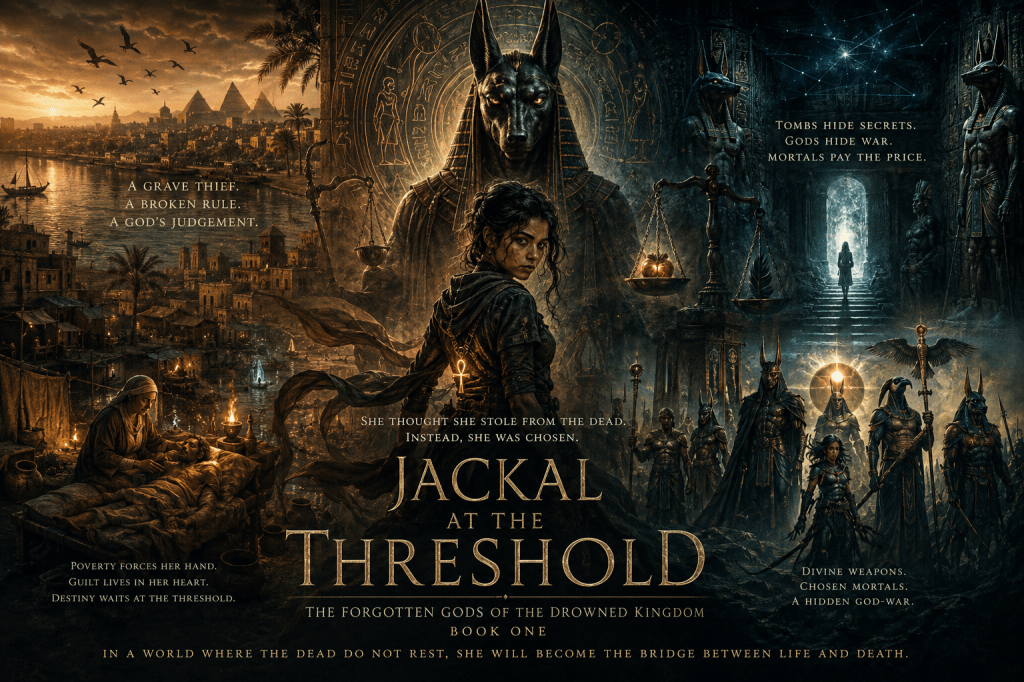
Where the River Meets the Dead
The dead were never far from the living in The Forgotten Gods of the Drowned Kingdom. They pressed close through river stink, damp stone, old prayers, sealed doors, and the narrow spaces where poverty forced the living to touch what should have remained undisturbed. In this Egyptian mythic fantasy world, tombs were never simple ruins. They were sacred architecture, built around memory, judgement, passage, and the uneasy belief that the dead still had claims upon the world they had left behind.
That closeness shaped Jackal at the Threshold, the first book in the series, before Anubis ever stepped fully into view. The story began in the river quarter, where Neris lived between hunger and guilt, between the need to keep her mother alive and the knowledge that her work among the dead had already cost too much. The noble terraces rose upriver in white stone, catching the last light of the day, while the slums below sank into shadow, smoke, mudbrick, and the rot lifted from the water by evening heat.
This is the root of the series. Egyptian mythology is not laid over the world as decoration. It is felt through burial practice, thresholds, funerary silence, jackal imagery, and the dreadful possibility that judgement may be waiting in places ordinary people have learned to rob, fear, or ignore. The gods do not begin as distant names from old stories. They begin as pressure in the stone, as warnings cut into doorways, as whispered talk of Anubis stirring when a boundary has been broken too often.
Anubis at the Edge of Judgement
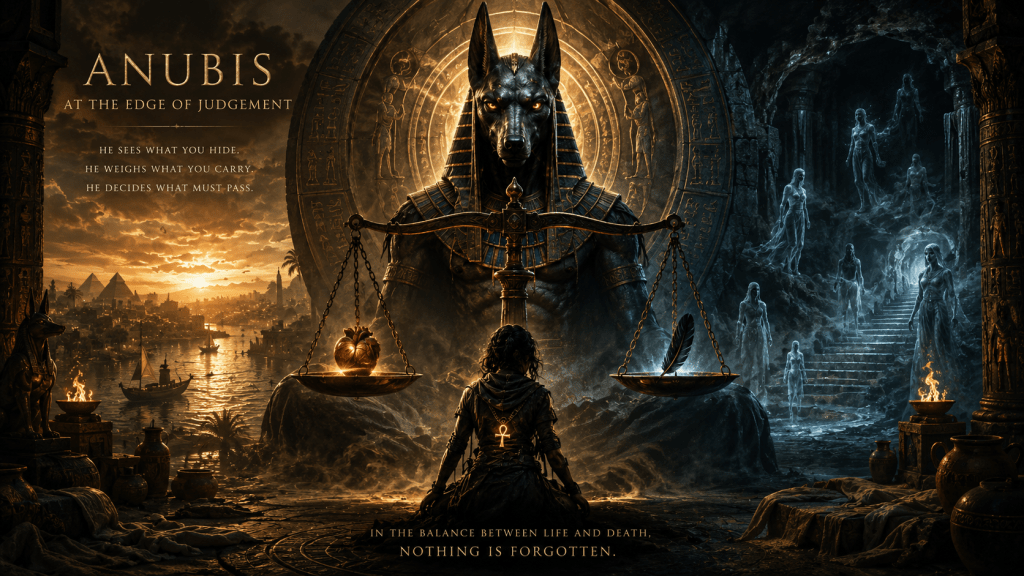
Anubis belongs to thresholds. He stands at the edge between the living and the dead, between burial and desecration, between memory and judgement. In this dark mythological fantasy series, that role matters more than spectacle. He is not a generic shadow god, nor a simple patron offering power to a chosen hero. His presence is severe, patient, and bound to what has been done.
That is why Jackal at the Threshold begins with theft rather than battle. Neris is a tomb robber from the river slums, and her skill lies in stone, rope, darkness, narrow ledges, old mechanisms, and the ability to keep moving when fear should have stopped her. She steals from the dead because rent, food, medicine, and hunger have left little room for clean choices. Yet the story refuses to make survival into absolution. Poverty explains much. It does not erase everything.
Anubis enters through that tension. The western dunes uncover black stone after a storm. Workers enter and fail to return. Rumours move through the slums faster than certainty. A buried place, older than the known order of the city, waits beneath the sand. Neris goes because the world has trained her to see danger and value together. She knows the signs. She reads blood, abandoned tools, carvings, warnings, and silence. Still, need pulls harder.
When she crosses into the Drowned Kingdom, the tomb itself becomes an instrument of judgement. Jackals walk the walls. Scales wait in carved stillness. Hearts are shown in stone as if every secret has already been measured. The deeper Neris goes, the less the place feels like a tomb built for the dead alone. It becomes a boundary that remembers who has entered it, what they carried, and what they tried to leave unnamed.
Neris and the Cost of Survival
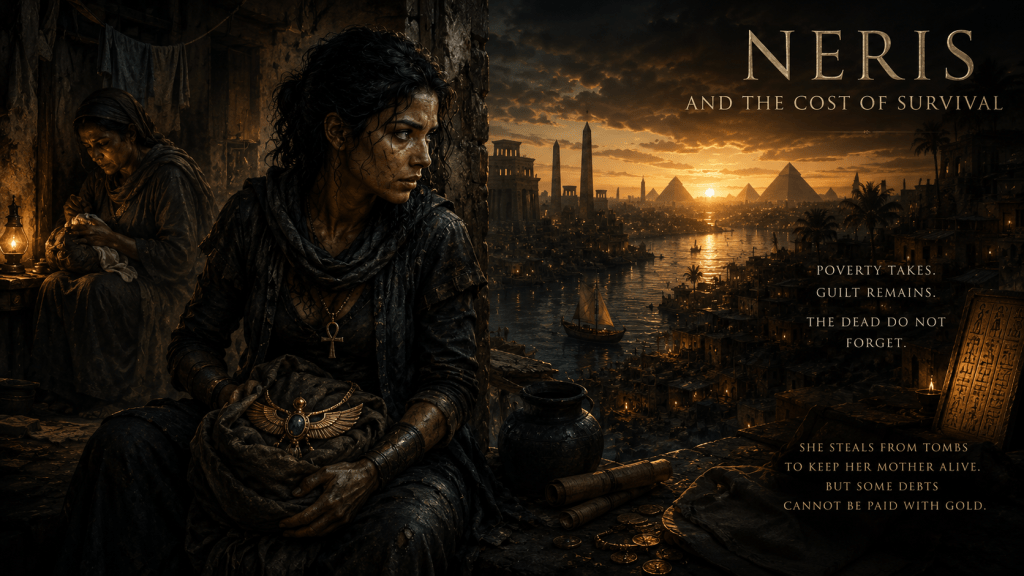
Neris is central because she is human before she is anything else. She is not a polished champion waiting for a divine weapon. She is a daughter, a thief, a survivor, and a woman shaped by a death she has never truly faced. Her brother’s collapse in a tomb shaft lies beneath every choice she makes. She saw the crack. She dismissed it. She sent him ahead. That single remembered moment gives the first book its deepest weight.
The power of this Egyptian mythology fantasy series comes from that kind of pressure. Divine judgement does not arrive in an empty life. It arrives where guilt has already made a home.
Neris’s mother keeps the story grounded in the mortal world. Her illness, the cost of healers, the bare room by the river, the careful division of four silvers between medicine, rent, and food all matter. These details prevent the mythic world from floating away into abstract gods and relics. Before Neris stands before Anubis, she stands before hunger. Before she touches the Threshold, she has already crossed moral boundaries in order to survive.
That makes her judgement more painful. Anubis does not condemn her simply because she is poor. He does not ignore the cruelty of a world where the dead are buried with gold while the living starve beside the river. Yet he draws her back to the moment where choice remained. The crack in the stone. The hurry. The brother who trusted her. The weight she carried and refused to name.
This is where the story changes. Neris returns the relic she came to steal. She confesses what she has hidden even from herself. Anubis marks her, and the burden he gives is no easy blessing. She will see when souls stray. She will hear unrest where others hear only night wind and water. What she disturbed will no longer pass unnoticed.
The Door Opened by Jackal at the Threshold
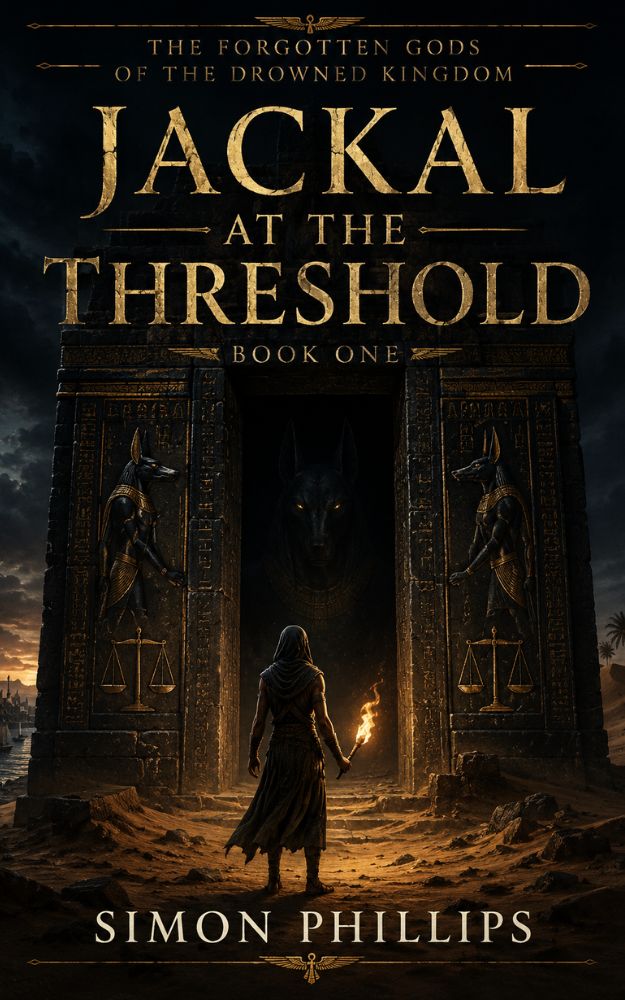
Jackal at the Threshold is the first entry in The Forgotten Gods of the Drowned Kingdom, and it works as a doorway rather than an explanation of the entire war. It brings the reader into a world of tombs, river-prayers, restless spirits, funerary dread, and divine attention without emptying the larger series of mystery.
The book belongs to Egyptian mythic fantasy because its supernatural force rises from recognisable sacred ground. The Drowned Kingdom is not simply an ancient ruin with treasure inside. It is a necropolis of judgement, silence, and unfinished passage. Its walls are carved with jackals, scales, hearts, stars, drowned kings, and warnings left by those who understood too late that the dead are not abandoned things.
The experience of entering the book is intimate rather than grand. The reader follows Neris through the alleys, the heat, the old smoke of her home, the desert road, and finally into cold black stone. Every movement carries the body with it: sand under sandals, torchlight bending across carved walls, breath misting in impossible cold, fingers testing ledges, muscles straining against fear. This is not a clean chosen-one adventure. It is a story about what happens when someone desperate crosses into death’s territory and is allowed to return.
By the end, Neris has stopped being merely a thief of the dead, yet she has not become safe, powerful, or fully informed. She believes she has become a bridge between the living and the dead. She has no understanding yet of the full hidden god-war moving beneath the surface of the world. That ignorance is essential. The first book closes with a woman changed by judgement, walking back into the same poor streets, with the same hunger still waiting, and a new awareness of the dead moving around her.
The Gods Beneath the Sand
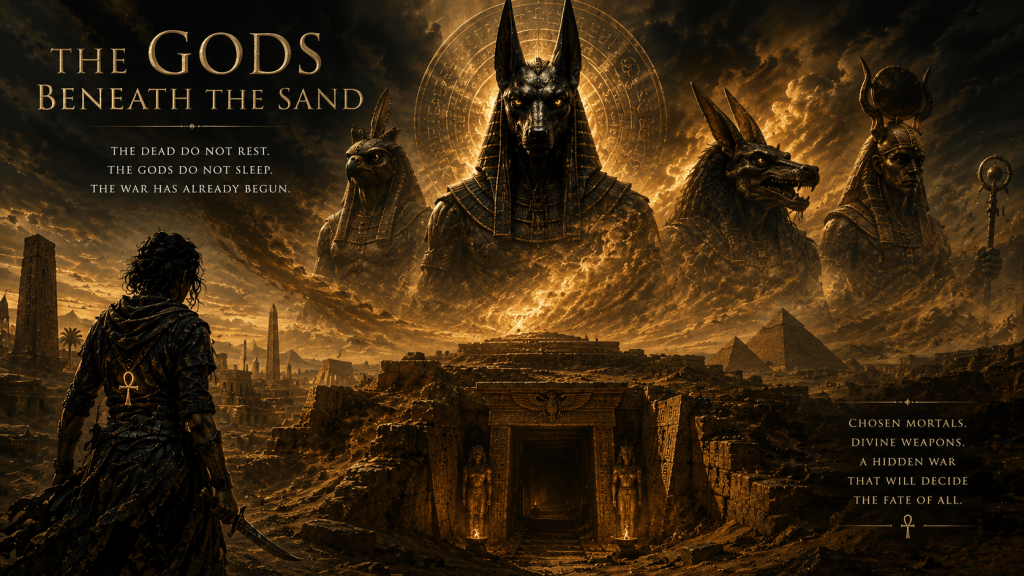
The wider series will open slowly from that first burden. The Egyptian gods do not begin by shattering the sky. Their war begins through sacred wrongness. Burial routes falter. Souls fail to pass cleanly. Tombs open when they should remain sealed. Relics wake. Human beings are chosen, armed, watched, and used.
This is the hidden engine of The Forgotten Gods of the Drowned Kingdom. The gods avoid open war because such conflict would devastate the mortal world. Instead, they act through chosen humans bound to divine weapons. The weapon carries the force first. The human bearer becomes dangerous only through endurance, discipline, survival, and cost.
That rule keeps the series grounded. Neris does not rise because she has been handed effortless power. Her first Anubis-linked weapon is intimate, funerary, close-range, and judgement-bound. It belongs to tombs and thresholds, not battlefield spectacle. Its danger comes from what it is tied to: burial order, false return, broken passage, and the dead who have failed to rest.
Other gods wait beyond the first threshold. Set moves through disorder, desert violence, destabilisation, and predatory pressure. Thoth brings record, reckoning, hidden knowledge, and an intelligence that can be as dangerous as any blade. Neith carries ancient discipline, strategy, and martial severity. Horus represents visible legitimacy, kingship, and ordered force. Ra remains the remote solar authority whose weight shapes the divine hierarchy even before he steps forward.
Yet the series must always return to Neris. Gods may shift the board, but human lives carry the cost. The river slums, Hamat’s warnings, her mother’s illness, the memory of her brother, and the quiet work of guiding unsettled souls remain as important as any relic duel or divine decree. Without those things, the war would become spectacle. With them, it remains sacred, dangerous, and painfully human.
What Waits Beyond the Threshold
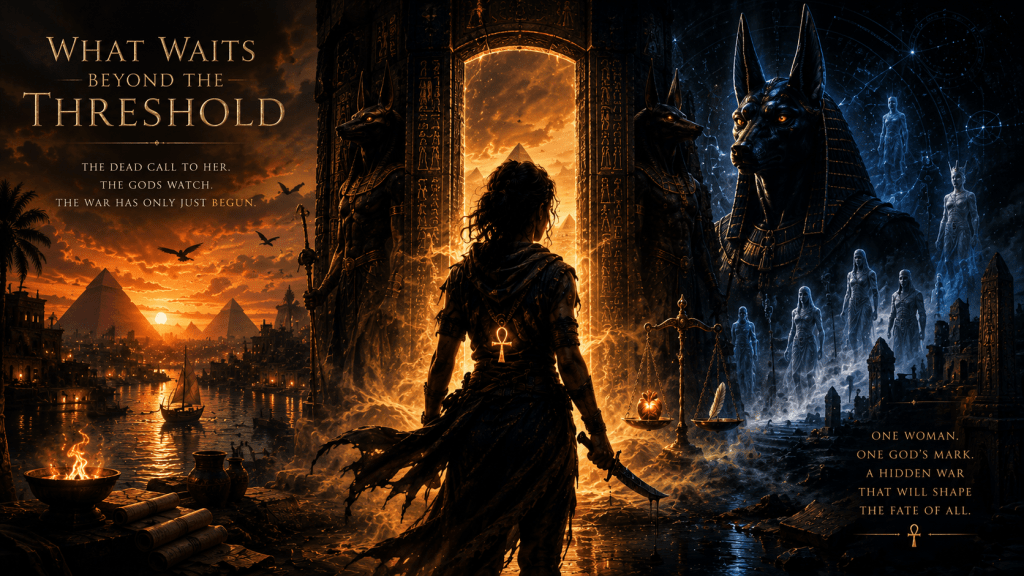
The first book leaves its deepest questions unanswered because the world has only begun to move. Neris has crossed the Threshold. Anubis has marked her. The dead now call to her when their passage fails. Somewhere beyond the city, old stone shifts beneath the sand, and attention stirs in places she cannot yet name.
That is the shape of the series promise. A grave thief has been pulled into the service of judgement, yet the judgement of gods may prove no cleaner than the lives they weigh. Divine weapons will appear as burdens rather than gifts. Chosen humans will discover that being claimed by a god can mean being protected, used, lied to, or sacrificed. The dead will not always pass cleanly, and the living will not always understand who has broken the route.
In this world, tombs are not background scenery. They are pressure points between the living and the dead. The river is not merely water. It is memory, passage, rot, need, and prayer. Anubis is not a symbol printed on the surface of a fantasy setting. He is first felt through the silence before judgement, the dark edge of a doorway, the unseen weight of a heart, and the terrible mercy of being sent back changed.
The war has already begun, though Neris does not yet understand its shape.
She has only heard the dead.
The gods will come later.
