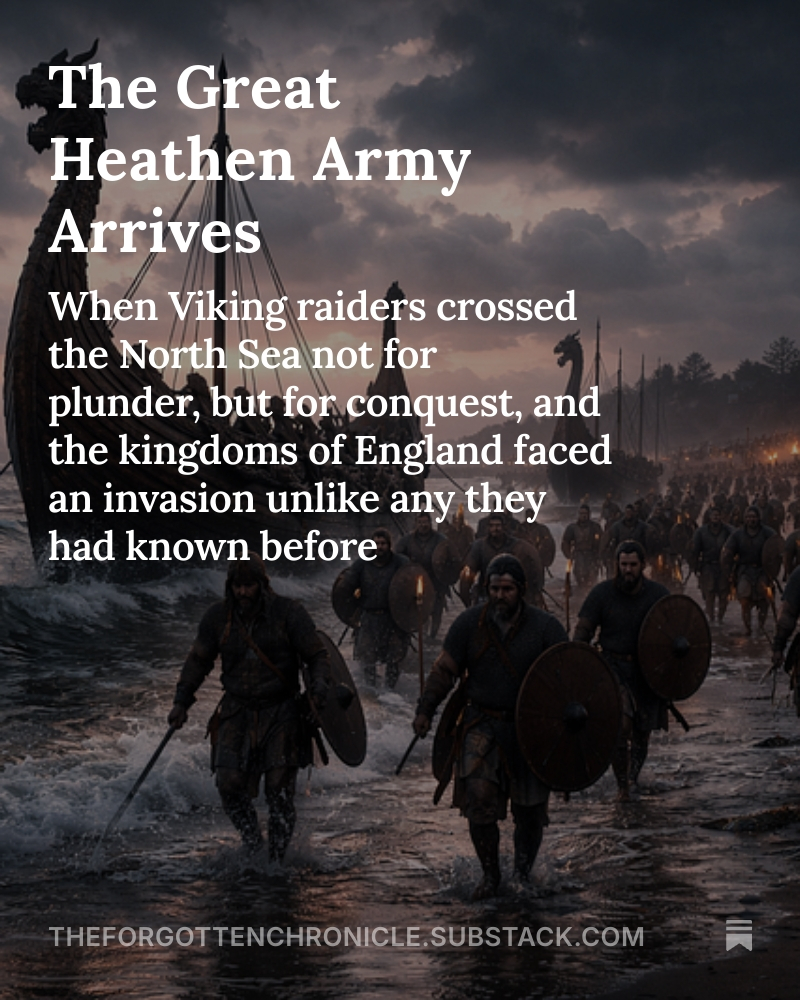
The Great Heathen Army (865) | Viking Invasion of England
In 865, the Great Heathen Army landed in England and changed the course of the Viking Age. Explore how invasion replaced raiding in this pivotal moment of history.
A low mist lay across the fields of East Anglia, clinging to the earth as though reluctant to lift. The land rested in a quiet stillness, the harvest gathered and the long cold settling in.
No bells carried across the fields.
Only the distant movement of ships along the coast.
Introduction
In the year 865, something shifted along the shores of England.
For generations, the sea had delivered raiders. Longships came with the tide, struck fast, and slipped back into the open water before any force could gather against them. These attacks left scars along the coast, yet they passed like storms, fierce and fleeting.
This time, the movement felt different.
The Great Heathen Army arrived in East Anglia as a force that carried weight and intent. These were warriors who came to remain, to press inland, and to claim ground that would hold through the winter and beyond.
What had once been a pattern of raids began to take on the shape of conquest.
Watch the Chronicle (YouTube Short)
About The Forgotten Chronicle
Each week, The Forgotten Chronicle explores a moment when history quietly changed the world.
These accounts unfold through place, atmosphere, and the people who stood within them, allowing each event to emerge with clarity and weight.
The Viking Age in England carries many such moments.
The arrival of the Great Heathen Army stands among the most decisive, where the line between raiding and invasion began to blur, and the future of England shifted in its wake.
Continue the Chronicle
The full Chronicle follows the movement of the army beyond the shoreline, tracing its arrival in East Anglia and the decisions that allowed it to take hold.
It explores:
• the landing and early movements inland • the figures who led the force • the change in strategy from fleeting raids to lasting control • the opening stages of a conflict that would shape England for generations
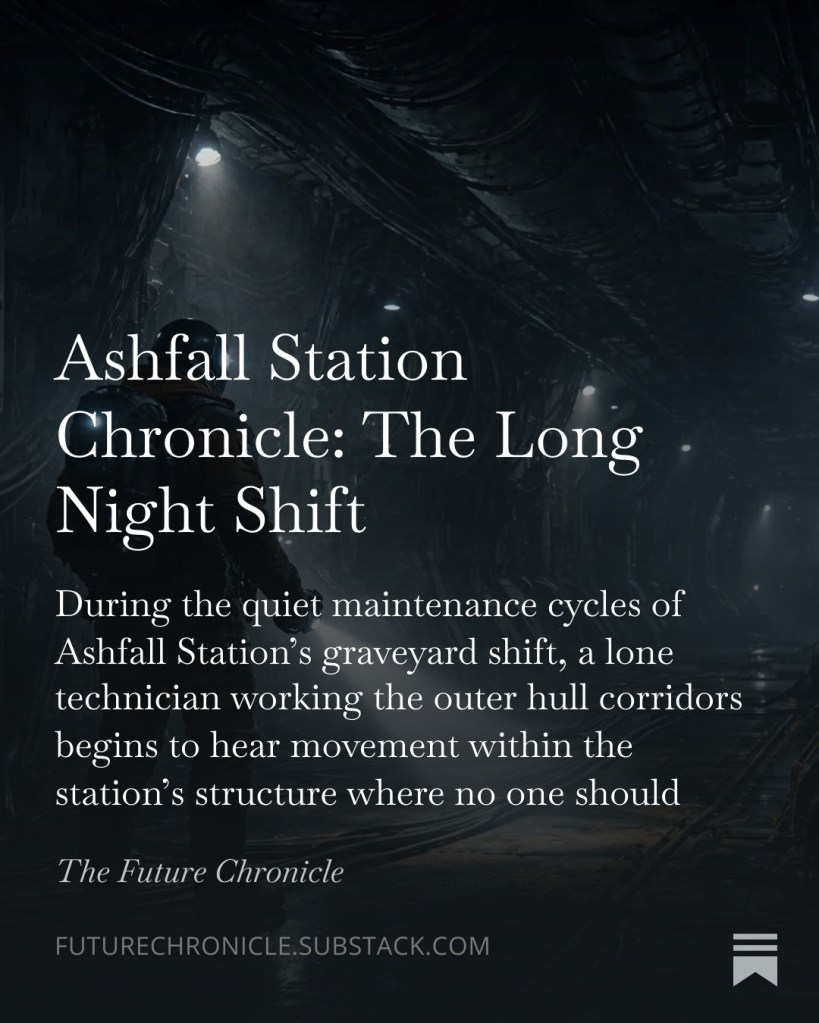
The Salvage Run: A Deep Space Station Mystery at Ashfall Station
The salvage vessel emerged from the outer debris field with the unhurried motion of something returning from a place that few ships were willing to enter.
Beyond its hull, the remains of earlier industry drifted in slow orbit, fragments of relay towers and shattered cargo frames turning through the dark. Far ahead, Ashfall Station held its silent position above the pale curve of Kestren-4, its long industrial arms catching faint light from distant stars.
The object followed behind in the tow frame.
It held its shape with an unnatural stillness, its surface reflecting thin bands of light that revealed no markings, no registry codes, and no familiar signs of origin.
Every scan returned incomplete.
Introduction
Across the outer systems, salvage work forms the quiet backbone of frontier survival.
Ships travel beyond mapped traffic lanes, moving through fields of abandoned machinery where earlier waves of expansion have long since faded. Most recoveries pass through station registries without comment, reduced to material value and processed through the steady rhythm of cargo transfer systems.
This Chronicle begins with one such return.
A vessel arrives carrying a fragment recovered from deep orbit, something that resists classification even under the station’s most routine procedures. There is no immediate alarm, no sudden disruption, only the subtle presence of an object that does not quite fit within the known catalogue of frontier construction.
Within a station such as Ashfall, moments like this rarely draw attention at first.
They settle quietly into the record.
Embedded Video Section
Chronicle Series Context
Chronicle Series Context
The Future Chronicle presents speculative science fiction as archival reconstruction, a record assembled from fragments of events that unfolded across humanity’s expansion into deep space.
Within the Ashfall Station Chronicles, each entry returns to a single moment in the station’s past. Engineers, pilots, inspectors, and cargo crews move through their routines while something less visible begins to take shape within the structure itself.
Ashfall Station exists at the edge of relevance, an ageing installation orbiting a world whose richest resources have already been stripped away. Its corridors carry the accumulated weight of decades of modification, repair, and quiet adaptation. Over time, small irregularities begin to appear: signals that cannot be traced, sealed corridors without explanation, and fragments of history that seem to arrive without origin.
The arrival of the salvage vessel marks one of the earliest of these moments.
At the time, it passed through the station as routine cargo. Only later would records suggest that this was the point at which something new entered Ashfall’s systems.
Continue the Chronicle on Substack:
Read the full Chronicle and follow the fragment as it moves deeper into the station’s inner sectors, where its presence begins to leave a trace within the structure itself.
The moment where certainty fractures is rarely loud, though it alters everything that stands upon it
There are stories that begin with spectacle, with fire or proclamation, with the unmistakable signal that something has already broken beyond repair. This is not one of those stories. This is a story that begins with a page.
A man stands beneath morning light in a conservation studio, surrounded by the quiet labour of preservation, where history is handled gently, corrected carefully, and returned to stability through patience rather than force. The world outside continues as it always has, measured and dependable, its rhythms so deeply understood that they no longer require attention. Within that space, knowledge feels contained, ordered, and complete.
Then the page shifts.
It does not announce itself. It does not tear or burn. It folds inward.
And the world follows.
A Book That Does Not Behave Like a Book
Some objects are not preserved by time. They are waiting within it.
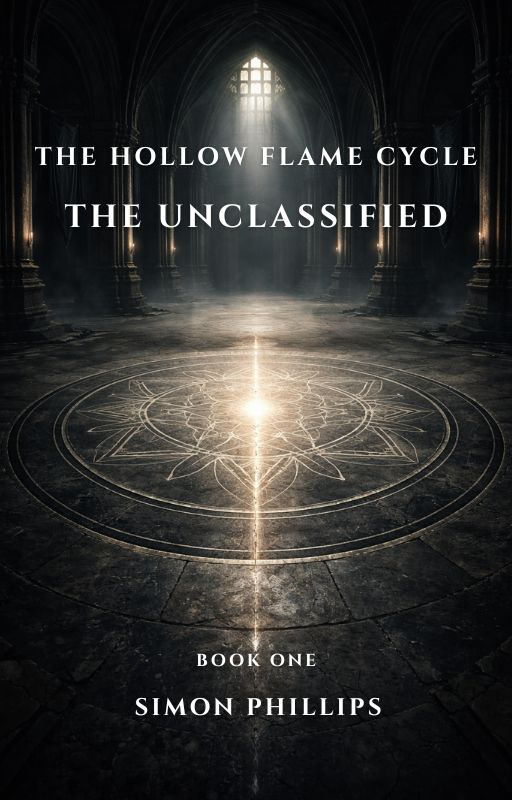
At the centre of The Unclassified, the first entry in The Hollow Flame Cycle, lies an object that resists classification at the most fundamental level. It resembles a book in form, though resemblance is the only certainty it offers. Its script refuses recognition, its structure resists familiarity, and its presence unsettles the very idea of passive material.
Silas Thorn approaches it as he would any artefact: with care, with discipline, and with the quiet confidence of someone who has spent his life restoring the past to coherence. His work is grounded in physical reality, in fibres, ink, binding, and time. Every action is deliberate, reversible, and measured against centuries of accumulated knowledge.
The book does not respond to that framework.
It holds warmth where none should exist. It bends light in ways that resist explanation. It answers touch with something that cannot be reduced to material behaviour.
What unfolds in that moment is not destruction, nor is it revelation in any familiar sense. It is intrusion.
The known world does not break. It gives way.
The Crossing That Leaves No Mark
Not all thresholds are visible. Some exist only in the moment they are crossed.
When Silas falls through the page, the act is not framed as travel. There is no preparation, no ritual, no understanding. The transition occurs in the space between expectation and perception, where reality has not yet had time to correct itself.
He lands not in chaos, though that might have been easier to comprehend.
He arrives in order.
The chamber that receives him is vast, structured, and deliberate. Its architecture carries the weight of centuries, its design shaped by authority rather than accident. Nothing appears broken. Nothing appears disturbed. The world into which he emerges does not recognise itself as interrupted.
This is the first tension the novella establishes with precision: the crossing is not treated as an anomaly by the space itself.
It is treated as an event that must be answered.
Authority Before Understanding
Institutions do not wait for clarity. They respond.
One of the defining tensions within The Unclassified lies in the way power reacts to uncertainty. The Crown, embodied through Princess Lirael and the sovereign, does not hesitate. The event is assessed, contained, and integrated into existing frameworks of control with remarkable efficiency.
There is no panic.
There is no denial.
There is only response.
Silas is not treated as an intruder in the traditional sense, nor is he embraced as a miracle. He is categorised as a problem requiring management. His presence is stabilised through containment, his movement restricted, his existence placed within the boundaries of governance.
This reaction reveals something fundamental about the world itself.
It does not collapse under pressure.
It absorbs it.
The Quiet Fracture Beneath Control
The most dangerous shift is the one that leaves everything looking unchanged.
While the structures of authority hold firm, the novella introduces a quieter, more unsettling movement beneath them. Through Princess Seréne, a different kind of awareness begins to emerge, one less concerned with immediate control and more attuned to what the event represents.
The foundations have opened.
They have closed again.
No mark remains.
This absence of damage becomes the central disturbance.
If the system can admit something without rupture, then the boundaries that define it are not as absolute as they were believed to be. The palace, the Crown, the Guild, and the very idea of structured reality all rest upon assumptions that have not yet been tested in this way.
Seréne does not rush to resolve this contradiction.
She recognises it.
And in doing so, she becomes the first to truly stand within the question the novella poses.
A World That Does Not Recognise Itself
When two systems meet, neither remains untouched.
The introduction of Silas’s world, described in fragments through his attempts to explain it, creates a second layer of tension. His reality is defined by written law, mechanical systems, and a complete absence of what this new world considers foundational.
There is no magic.
There are no sigils.
There is no binding of authority into stone.
And yet he stands within a place where all of those things are not only real, but necessary.
The contrast does not resolve into superiority or dismissal. Instead, it reveals the limits of both systems. Each world contains structures that appear complete within their own context. Each becomes unstable when viewed through the lens of the other.
The crossing does not simply move a man from one place to another.
It introduces incompatibility.
Where the First Movement Ends
The hall settles. The question remains.
By the close of the novella, nothing outwardly catastrophic has occurred. The palace still stands. Authority remains intact. The man has been contained. The Guild has been summoned. The system continues to function.
And yet something irreversible has begun.
The foundations have responded to something they were never meant to receive.
A man from a world without magic stands at the centre of a system built upon it.
The Crown has acted without understanding.
The Guild has arrived without conclusion.
The question has entered the world.
It has not left.
Step Into the Hall
If you want to experience the full unfolding of this first disturbance, you can read The Unclassified here:
This is the opening movement of The Hollow Flame Cycle, where the story does not begin with collapse, but with the moment just before it becomes possible.
The page has opened.
The world has followed.
And nothing, though it appears unchanged, will remain as it was.
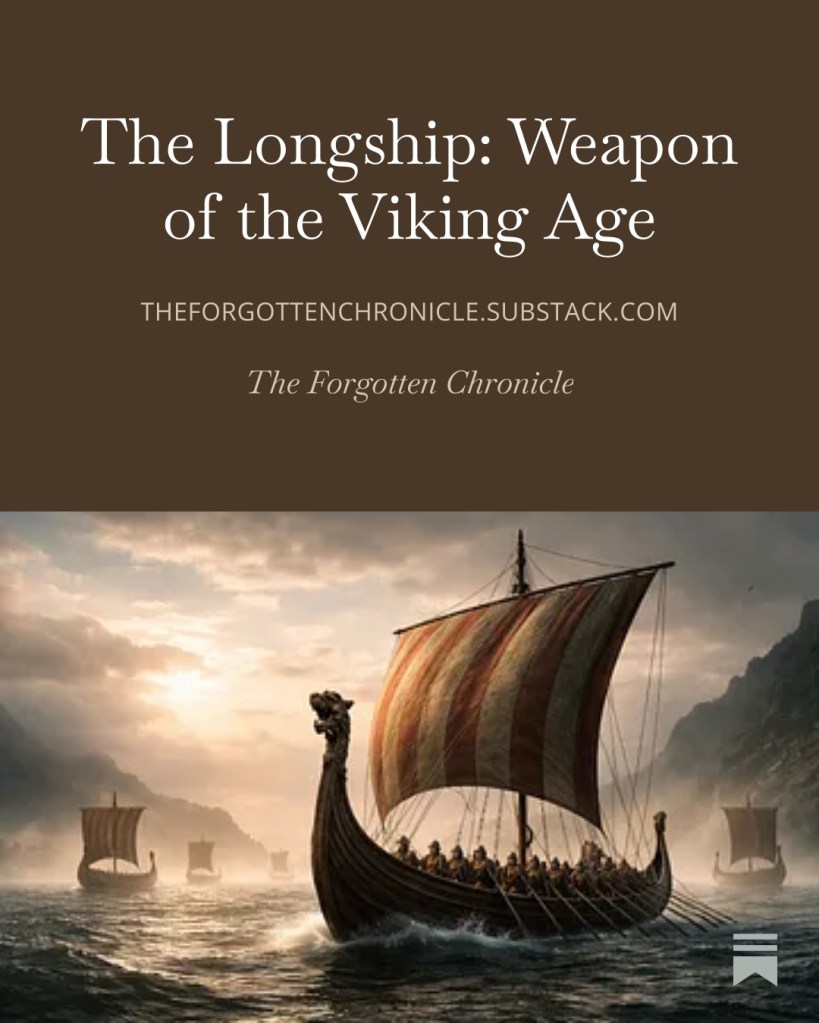
Viking Longship Explained: Design, Speed, and Impact on Europe
Along the windswept coasts of Britain, where narrow rivers met the restless waters of the North Sea, reports began to travel slowly between monasteries and trading settlements of unfamiliar vessels appearing far beyond the horizon, their forms unlike the ships that had long moved between the known ports of northern Europe.
Introduction
The Viking Age did not begin with armies alone.
It began with a ship.
During the early medieval period, the seas around Britain were seen as natural barriers, separating kingdoms and limiting the reach of conflict. Yet this belief began to shift as Scandinavian sailors developed a vessel unlike anything seen before in Europe.
The Viking longship combined speed, flexibility, and shallow design in a way that allowed it to cross open seas and travel deep inland along rivers. This innovation reshaped not only warfare, but trade, exploration, and settlement across northern Europe.
Watch the Chronicle:
Discover The Forgotten Chronicle
Each week, The Forgotten Chronicle explores a moment when history quietly changed the world.
From the first Viking raids to the rise of kingdoms, these narrative histories uncover how events unfolded and why they still matter today.
This Chronicle explores the ship that made the Viking Age possible.
Ashfall Station Mystery | Sci-Fi Space Station Story & Deep Space Anomaly
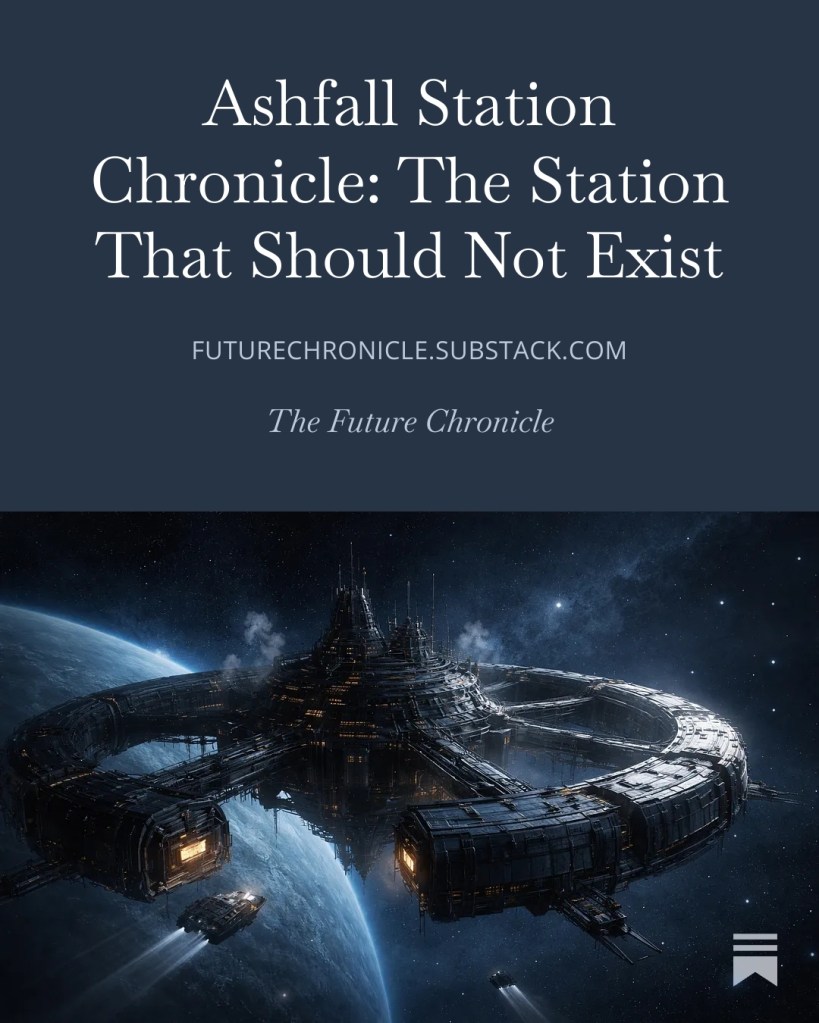
The inspection shuttle drifted through the outer traffic corridor with the slow patience of an ageing machine that had travelled far beyond the routes it once served.
Ahead, Ashfall Station turned in quiet orbit above the pale curve of the planet below, its vast ring marked by decades of repair, expansion, and forgotten construction. Amber maintenance lights burned along the docking arms like distant lanterns suspended in the dark.
From a distance, the station carried the presence of something that had endured longer than it was ever designed to survive.
The Purpose That Had Already Ended
Ashfall Station was not meant to remain.
Built during an earlier phase of expansion, it had once served as a transfer hub for resource traffic moving between distant mining operations and the inner systems. Over time those routes faded, leaving the station suspended between relevance and abandonment.
Fleet records reflected that decline with quiet certainty. Inspection orders were issued. Closure was expected. The station would be catalogued, dismantled, and eventually forgotten like so many frontier installations before it.
Yet somewhere within the deeper layers of command, that conclusion shifted.
The same inspection that should have marked the station’s end instead became the beginning of something else.
The Moment the Record Changes
The arrival of Fleet Inspector Halverin marked that transition.
What appeared, on the surface, to be a routine administrative process carried a different weight beneath it. Maintenance reports hinted at irregularities. Salvage traffic arrived from beyond the recognised perimeter. Systems behaved in ways that official logs described, yet never fully explained.
None of these details alone suggested anything unusual.
Taken together, they formed the outline of a station that had begun to change before anyone formally acknowledged it.
A Visual Record of Arrival
The following visual reconstruction presents a brief glimpse of that moment, as the inspection shuttle approached Ashfall Station for the first time
The Ashfall Station Chronicles
The Future Chronicle presents speculative events as reconstructed records from possible futures, where fragments of human expansion remain long after their purpose has faded.
Within this series, Ashfall Station serves as the central setting. An ageing industrial installation orbiting the frontier world of Kestren-4, it exists as both infrastructure and environment, shaped by decades of adaptation and quiet persistence.
Each Chronicle follows a different individual moving through the station’s corridors—inspectors, engineers, pilots, and workers—revealing isolated events that, over time, begin to form a larger and more unsettling pattern.
The structure itself becomes part of that story, carrying traces of earlier construction, sealed sectors, and decisions that were never fully recorded.
Continue the Chronicle
The opening record captures only the moment of arrival.
To follow Inspector Halverin beyond the docking corridors, into the layered interior of Ashfall Station where the first signs of change begin to surface:
→ Continue reading on Substack
A Story Within the Station
The Chronicle records the early history of Ashfall Station.
The events that follow unfold years later.
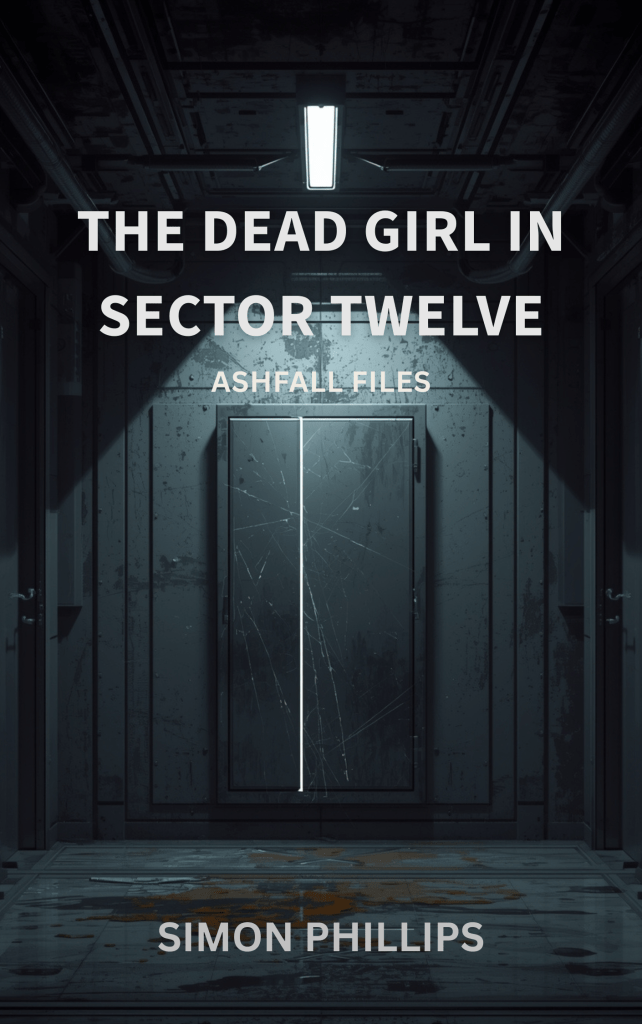
In Ashfall Station: The Dead Girl in Sector Twelve, a routine investigation begins within the station’s ageing structure, where something long embedded within its corridors begins to emerge.
There is a particular kind of silence that forms around controlled places, a silence shaped through repetition, procedure, and the quiet confidence of systems that have held for longer than anyone working within them can fully account for. In a speculative science fiction novella such as The Open Gate, that silence becomes the first signal, faint at first, though persistent enough to suggest that something within the structure has begun to drift beyond its original design.
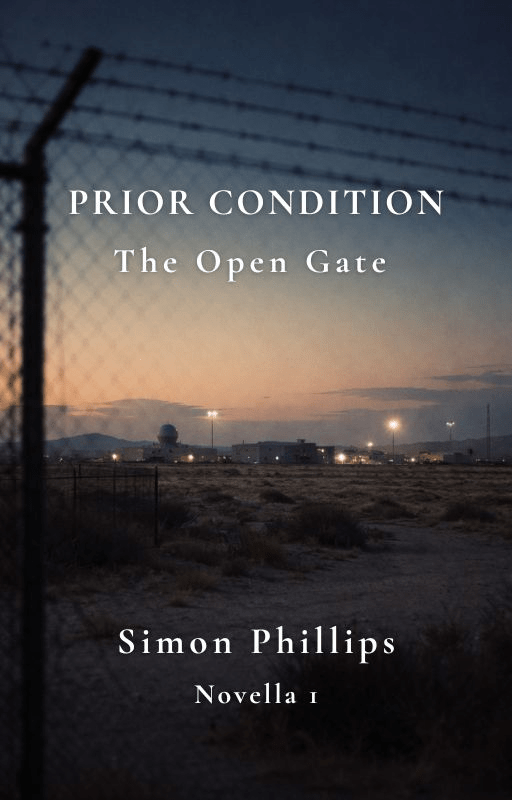
The landscape surrounding the facility offers nothing dramatic to draw the eye, only distance, fencing, and the slow rhythm of movement along established routes. Vehicles pass through checkpoints with practised ease, personnel follow familiar patterns, and each action reinforces the impression that the system remains intact. This is the architecture of institutional science fiction horror, where tension gathers through routine rather than disruption, and where certainty begins to thin long before anything visibly fails.
Within this kind of slow-burn science fiction novella, the unease emerges through proximity rather than spectacle. The closer one moves toward the centre of control, the more the atmosphere shifts, almost imperceptibly, into something denser, something that resists easy explanation. The language of procedure continues to operate, though its meaning begins to stretch, and the structures designed to contain begin to reveal the limits of their understanding.
When Access Becomes Assumption
At the heart of The Open Gate lies a question that extends beyond the physical boundary of the installation itself, reaching into a broader reflection on how humanity approaches systems it believes it has mastered. Access, once granted, carries with it an unspoken confidence, a belief that entry implies comprehension, and that comprehension implies control. Over time, this belief settles into routine, and routine hardens into institutional certainty.
In psychological speculative fiction, this shift becomes the foundation of tension. The facility continues to function, reports continue to circulate, and personnel continue to operate within defined parameters, even as the underlying reality begins to diverge from those parameters. There is no sudden collapse, no immediate rupture. Instead, there is a gradual misalignment between what is observed and what is recorded, between what is experienced and what is permitted to be acknowledged.
The language used within such environments reflects this resistance. Observations are softened, anomalies are reframed, and deviations are absorbed into existing frameworks wherever possible. The system protects itself through interpretation, maintaining coherence even as coherence becomes increasingly difficult to sustain. This is the essence of science fiction about secrecy and control, where the most dangerous element lies in the refusal to recognise that control has already begun to slip.
The Weight of Containment
A base or facility science fiction novella often draws its strength from the tension between structure and what exists beyond that structure. In The Open Gate, containment serves as both a physical and psychological boundary, shaping how individuals move, think, and interpret their surroundings. The walls, the protocols, and the layered systems of verification create an environment where uncertainty has little room to surface openly.
Yet uncertainty finds its way through smaller channels. It appears in hesitation, in repeated checks that extend beyond necessity, and in the subtle shift of attention toward elements that once required no thought. The individuals within the facility continue their roles, maintaining outward composure, while an internal awareness begins to form, one that remains difficult to articulate within the language available to them.
This tension between internal recognition and external procedure forms a central thread in existential science fiction stories. The system demands continuity, while the individual senses discontinuity. The result is a form of quiet psychological pressure, one that builds through accumulation rather than escalation. Each moment passes without incident, though each moment carries an increasing weight, as if the structure itself has begun to hold something it cannot fully contain.
Routine as a Form of Denial
Within institutional settings, routine serves a dual purpose. It provides stability, allowing complex operations to continue without interruption, and it offers a form of insulation against uncertainty. In a slow-burn science fiction novella, routine becomes a mechanism through which denial operates, smoothing over inconsistencies and maintaining the appearance of normality.
The repetition of actions reinforces the belief that nothing has changed. Doors open and close as expected, systems respond within acceptable parameters, and communications follow established patterns. Each confirmation strengthens the illusion of continuity, even as subtle deviations begin to accumulate beneath the surface.
Psychological speculative fiction often explores this space, where the most significant shifts occur in areas that remain technically functional. The system continues to operate, though its outputs no longer align perfectly with the reality it seeks to manage. The individuals within the system recognise these discrepancies, though recognition alone proves insufficient to disrupt the broader structure.
This creates a condition where awareness exists alongside compliance, where individuals continue to perform their roles even as their confidence in those roles begins to erode. The result is a form of quiet tension that permeates the environment, shaping interactions and altering perception without ever fully breaking through into open confrontation.
The Open Gate: Novella Spotlight
The Open Gate: Prior Condition stands as the opening movement within a broader Kindle sci-fi novella series, establishing the tonal and thematic foundation through a restrained, observational approach to speculative fiction. Positioned at the beginning of the sequence, it introduces a world defined through systems, boundaries, and the quiet assumption that those boundaries remain secure.
The central pressure shaping this novella emerges through the intersection of procedure and perception. The facility operates as intended, its structures intact, its protocols unchanged. At the same time, a subtle shift begins to take hold, one that resists clear definition and remains just beyond the reach of formal acknowledgement. The narrative moves through this space with a steady, controlled cadence, allowing the tension to gather through detail, observation, and the gradual erosion of certainty.
For those drawn to indie science fiction novellas that prioritise atmosphere and psychological depth over spectacle, The Open Gate offers an entry point into a series that unfolds through accumulation, where each layer adds weight to what remains unseen. The novella can be found here: https://www.amazon.com/dp/B0GSLLRL7C
A Threshold Made Visible
Alongside the written work, the visual and atmospheric media connected to The Open Gate functions as an extension of the same space, capturing fragments of the environment in a form that allows them to be observed from a slight remove. These pieces act as preserved thresholds, moments where the system remains intact on the surface, while something beneath that surface suggests a different reality.
The imagery associated with the series often focuses on the elements that define its tone: the fencing that marks the boundary, the structures that enforce separation, and the landscapes that surround these installations without offering explanation. Light shifts across these surfaces in ways that emphasise their stillness, creating a sense that the environment itself holds a form of awareness that extends beyond the individuals moving within it.
Viewing these fragments offers a different form of engagement, one that complements the reading experience without attempting to replace it. They serve as points of return, places where the atmosphere of the novella can be revisited and examined from another angle, reinforcing the sense that the world of The Open Gate exists beyond the page.
Where Procedure Continues
What defines the world of The Open Gate is the persistence of procedure in the face of growing uncertainty. Systems continue to operate, reports continue to be filed, and individuals continue to move through their assigned roles with a level of discipline that has been established over years of repetition. The structure remains, even as the confidence that supports it begins to shift.
This is the quiet centre of the novella’s tension, where the most significant change lies in the recognition that the system may no longer fully understand what it contains. There is no immediate collapse, no clear moment where control is lost. Instead, there is a gradual realisation that control may have always been partial, and that the boundaries defining the facility extend into areas that resist containment.
The installation remains in place, its fences unbroken, its procedures intact. Vehicles continue along their routes, personnel continue their tasks, and the language of control continues to frame each observation. Yet beneath this continuity, a different awareness begins to take shape, one that suggests the boundary has already shifted, even if the system has yet to recognise it.
And so the work continues, measured, controlled, and precise, as the threshold remains where it has always been, waiting, unchanged in appearance, though altered in ways that remain just beyond the reach of certainty.
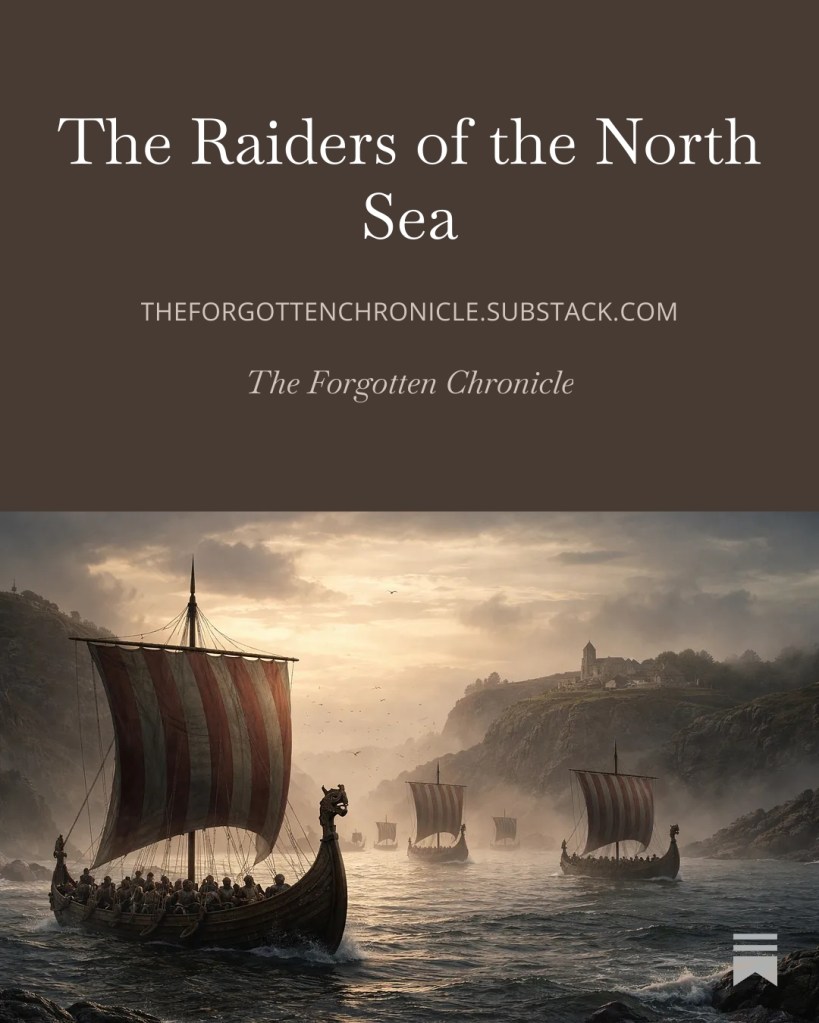
The Raiders of the North Sea | Viking Longships & Coastal Raids Story
Morning gathered slowly across the wide waters of the North Sea as a pale band of light lifted along the eastern horizon. The tide moved with quiet patience against the dark rocks of the English coast while seabirds wheeled above the surf, their distant cries echoing through the cool air. Along the shoreline, villages stirred into another ordinary day, unaware that beyond the horizon, sails were already rising through the morning haze.
In the early centuries of the Viking Age, the coasts of Britain existed in a delicate balance between trade, faith, and quiet isolation. The sea brought merchants, pilgrims, and travellers whose arrivals shaped the rhythm of coastal life.
This Chronicle explores the moment that balance began to shift.
From the distant horizon came vessels unlike any seen before. Long, narrow ships capable of crossing open sea and shallow rivers alike. Their arrival introduced a new kind of encounter, one defined by speed, precision, and uncertainty.
What began as isolated raids would, over time, reshape the memory of the sea itself.
A Visual Chronicle
Watch a short visual interpretation of the events that marked the beginning of Viking activity along the British coast:
Chronicle Series Context
The Future Chronicle is a narrative publication that presents moments of history and speculation as immersive chronicles, allowing readers to experience events through atmosphere and lived perspective rather than explanation.
Each entry functions as a reconstructed record, blending storytelling with historical and speculative insight. This approach places the reader directly within the unfolding moment, where environment and detail reveal the deeper significance of each event.
The Chronicle you are reading forms part of a wider archive exploring turning points across time, from ancient civilisations to distant futures.
Continue the Chronicle
The arrival of the longships marked only the beginning of a much larger transformation.
Coastal settlements would soon learn that the horizon carried more than trade and travel. It carried a new kind of presence that would return again and again across the generations.
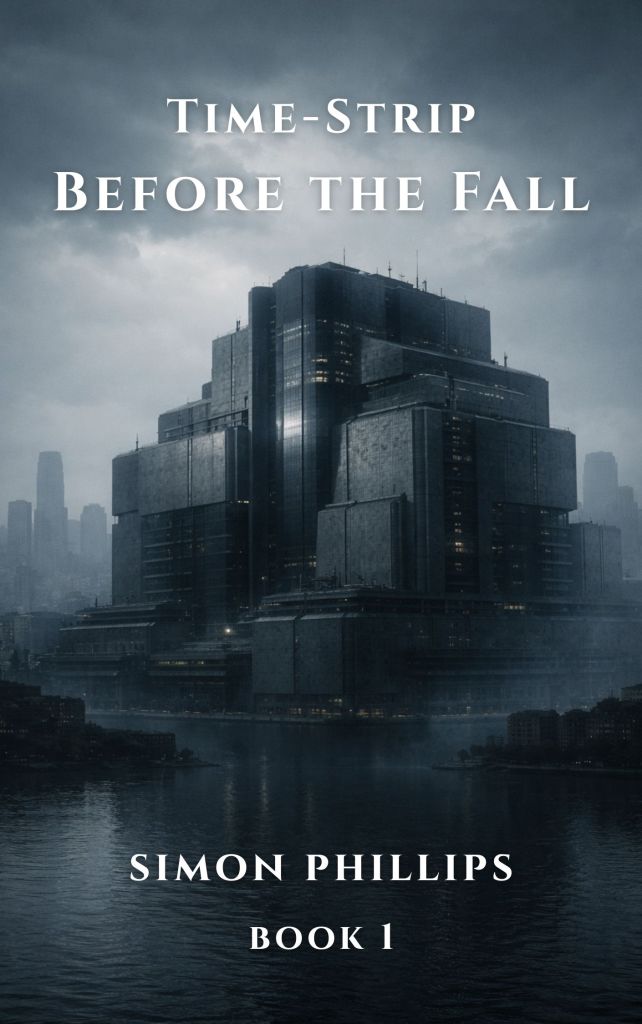
Deep beneath layers of reinforced concrete and controlled silence, a research complex prepares for an experiment that humanity has imagined for centuries. Engineers monitor fields of energy that bend along equations still fresh within scientific literature, analysts observe streams of temporal telemetry, and somewhere within that quiet machinery a gateway waits for the moment when theory becomes reality. Within this atmosphere of restrained anticipation emerges a time travel science fiction novella rooted in the believable language of research institutions and technological ambition.
Time Strip: Before the Fall unfolds within a near-future environment where advanced systems guide human movement through buildings designed for precision and containment. Artificial intelligence manages daily routines, environmental controls respond to bodily rhythms, and the routines of scientific life proceed with the calm confidence that accompanies successful technological progress. Within such surroundings, a near-future time experiment fiction setting feels plausible rather than distant.
At the centre of this environment stands Caelen, a participant within a research programme dedicated to opening what scientists have begun to call the Time Strip, a phenomenon capable of bending chronology itself. Within the language of contemporary speculative research this experiment resembles a temporal anomaly science fiction concept, where a portal emerges through enormous energy concentration and carefully calculated containment systems.
In the early hours before the experiment begins, the facility remains almost serene. Laboratories hum with restrained power, corridors glow with quiet lighting, and human movement flows through automated architecture designed for efficiency. Every detail communicates control, calculation, and confidence. The scientific community within this world believes the experiment represents the next step in human exploration.
Yet beneath that surface calm lies the unsettling awareness that humanity now approaches the edge of something vast.
The Human Desire to Control Time
For centuries the idea of travelling through time existed largely within imagination, philosophical speculation, and theoretical mathematics. Modern speculative literature frequently explores this idea through distant futures or fantastical technology. A more grounded approach to realistic time-travel science fiction asks a quieter question: what happens when contemporary scientific culture truly attempts such an experiment.
Within the world of the Time Strip series, time travel emerges through institutional research rather than adventurous curiosity. Government agencies, corporate laboratories, and academic partnerships converge around a technology capable of generating immense energy distortions. The purpose appears straightforward: observation of past and future states, controlled experimentation, and perhaps the eventual ability to move information or travellers across chronology itself.
Within such a framework, the story transforms into a psychological science fiction story rather than a spectacle of machines. The true tension grows within the human mind confronting forces that stretch beyond familiar experience.
Scientists spend their careers mastering systems that obey measurable laws. Laboratories operate through procedure and repetition. Instruments respond predictably when calibrated correctly. The promise of a time distortion sci-fi fiction concept challenges those expectations. Time itself behaves as the underlying structure of every scientific discipline. Once that structure bends, every assumption surrounding cause and effect begins to tremble.
The earliest moments within the Time Strip research facility therefore carry a subtle psychological pressure. Engineers observe instruments that drift by fractions of a second. Timing protocols require adjustment. Minor anomalies appear within readings that previously held perfect alignment. None of these changes appear dramatic in isolation. Together they suggest a reality shifting by almost invisible degrees.
Such details build the atmosphere characteristic of a time portal science fiction novella grounded in scientific culture. Instead of sudden catastrophe, the narrative explores the creeping realisation that the universe may contain layers of complexity far beyond human modelling.
Institutional Control and the Fragility of Certainty
Large research programmes rely upon layers of institutional authority. Government oversight, scientific committees, security protocols, and carefully defined procedures maintain order within environments dealing with dangerous technology. In theory such structures prevent chaos.
Within the Time Strip facility, these systems function flawlessly during the early stages of the experiment. Automated architecture guides personnel through corridors designed for efficiency. Artificial intelligence manages schedules, monitors health indicators, and ensures that participants remain within operational parameters. Environmental systems maintain temperature, air quality, and lighting according to biometric feedback.
This environment reflects the ambition of a speculative time research fiction setting in which technology anticipates human behaviour almost before it occurs. People move through the building with the quiet trust that advanced systems will guide every step.
Yet time itself refuses simple containment.
As the experiment approaches activation, the atmosphere within the facility grows subtly different. Conversations slow as scientists watch their instruments with increased attention. Security personnel maintain calm posture while absorbing unfamiliar instructions from research supervisors. Artificial intelligence systems continue providing guidance with perfect composure.
Within such moments emerges a profound question that lies at the heart of many indie science fiction novella projects exploring technological boundaries: can institutions truly manage forces that operate on a cosmic scale.
The research teams believe preparation remains complete. The facility stands fortified beneath the earth. Energy containment fields exceed projected requirements. Mathematical models predict stable conditions throughout the activation sequence.
Confidence surrounds the experiment like a shield.
Yet the deeper narrative tension suggests that confidence alone may offer little protection when humanity begins manipulating the structure of time.
Memory, Identity, and Temporal Uncertainty
Time travel stories often focus upon dramatic paradoxes or adventurous journeys across centuries. The Time Strip series approaches the concept through a more intimate lens. When chronology bends, human perception becomes the first instrument affected.
Memory forms the core of identity. Each person carries a continuous thread of experience connecting past moments to present consciousness. Temporal distortion threatens that continuity in subtle ways long before physical travel occurs.
Inside the research facility, participants begin noticing small irregularities. A corridor feels longer than expected. A scheduled announcement arrives moments earlier than predicted. An internal sense of timing grows slightly uncertain. None of these sensations immediately appear alarming. Each observation invites reflection rather than panic.
Such details transform the narrative into a psychological science fiction story where perception itself becomes an unreliable instrument.
Scientists trained to trust empirical data suddenly face experiences that resist measurement. Artificial intelligence systems report stable readings while human participants sense minute shifts within their awareness. The gap between machine certainty and human intuition widens.
Within that space of uncertainty grows the quiet dread characteristic of time distortion sci-fi fiction grounded in human psychology. If time itself begins to slip, memory may follow. Identity may stretch across unfamiliar moments. Cause and consequence may detach from their expected order.
The Time Strip experiment therefore explores more than technological ambition. It examines how human consciousness responds when the framework of reality begins to loosen.
Novella Spotlight: Time Strip: Before the Fall
The opening entry in the Kindle sci-fi novella series introduces readers to the earliest phase of humanity’s attempt to reach across time. Time Strip: Before the Fall stands as the foundation of the broader narrative, establishing the research facility, the institutional structures supporting the experiment, and the subtle pressures building around the activation of the Time Strip itself.
At its centre stands Caelen, a participant whose life unfolds within a society deeply integrated with artificial intelligence and predictive technology. Daily routines proceed with quiet efficiency. Personal AI companions manage schedules and environmental comfort. Urban infrastructure anticipates human movement with remarkable precision.
Within such a world the decision to pursue temporal experimentation appears almost inevitable. Scientific progress continually reaches toward new frontiers, and the possibility of opening a controlled passage through time represents one of the most compelling frontiers imaginable.
The novella explores this moment before the experiment crosses its threshold. Scientists prepare instruments. Observers gather within containment areas. Systems align for the activation sequence that may transform humanity’s relationship with chronology.
The narrative tension resides within atmosphere and perception rather than explosive action. Readers encounter a time travel science fiction novella where quiet scientific ambition gradually meets the unsettling possibility that time itself holds depths beyond calculation.
Further details surrounding the novella can be found through its Kindle listing, where the story stands as the first chapter within the expanding Time Strip series.
A Glimpse Through the Research Facility: The Visual Mini-Read
Alongside the written narrative exists a brief visual fragment preserved through a short cinematic presentation. The YouTube visual mini-read offers a glimpse inside the research facility where the experiment unfolds.
Within a few moments of imagery the viewer enters the sterile corridors, the calm glow of laboratory interfaces, and the quiet movement of personnel preparing for an event that may reshape human history. The visual sequence captures the restrained atmosphere that defines the early phase of the Time Strip story.
Rather than summarising the novella, the visual piece functions as a preserved moment within the world itself. A corridor illuminated by soft light. A figure moving toward the containment chamber. Instruments waiting for activation.
The video becomes an atmospheric doorway through which the broader narrative quietly reveals its presence.
Embedded within this article, the visual fragment invites viewers to experience the mood of the facility before the experiment begins.
Closing Movement
Human civilisation has always advanced through experiments that stretched the boundaries of understanding. Fire, electricity, flight, and nuclear energy each transformed the course of history once theory met reality.
The Time Strip experiment extends that tradition toward the most fundamental structure of existence: time itself.
Inside a fortified research complex, scientists continue refining their instruments. Artificial intelligence maintains the calm rhythm of daily operations. Participants move through corridors designed for precision and containment.
Somewhere within those systems, the first distortion in chronology begins to form.
At first the shift appears almost imperceptible. A subtle hesitation within timing protocols. A faint sense that events unfold with slightly altered rhythm. Observers continue their work, guided by training and procedure, trusting the calculations that brought them to this moment.
Yet time remains older than every instrument attempting to measure it.
Within the quiet heart of the research facility, the Time Strip waits.
And humanity prepares to discover what lives beyond the edge of its own chronology.
The first light of morning crept slowly across the waters of the North Sea, pale and uncertain beneath a sky still heavy with the fading colours of night. Lindisfarne lay quiet upon its small tidal island, the stone church and timbered buildings of the monastery rising from the grass like an outpost of prayer set against the restless edge of the world. Waves moved softly across the rocks below the cliffs while seabirds circled through the cold air, their distant cries carrying over the water.
The Moment That Changed the Shores of England
In the year 793, the quiet island monastery of Lindisfarne stood as one of the most sacred places in the Christian world of northern England. Pilgrims travelled across the kingdom of Northumbria to pray at the shrine of Saint Cuthbert, and the monastery had long been regarded as a place of learning, peace, and devotion.
That calm morning on the North Sea would soon be remembered for a very different reason.
From the sea came unfamiliar ships with tall sails and narrow hulls built for speed across open water and shallow rivers. These vessels carried warriors from Scandinavia, men who would soon become known across Europe as Vikings.
The raid on Lindisfarne shocked the kingdoms of England and echoed across Christian Europe. Chroniclers recorded the attack with fear and disbelief, describing it as a sign that a new and uncertain age had begun along the northern coasts.
Historians now view this event as the beginning of the Viking Age, a period when Norse seafarers would reshape the political and cultural landscape of Britain.
Watch the Chronicle in Video Form
You can explore this moment in history through a short visual retelling.
YouTube Short
The Forgotten Chronicle
Each week The Forgotten Chronicle explores a moment when history quietly changed the world.
The series follows the story of the Viking Age in England, beginning with the first raids along the coast and continuing through the wars, settlements, and transformations that reshaped the island.
The raid on Lindisfarne was only the beginning.
Continue the Chronicle
Read the full Chronicle and discover what happened when the Viking ships reached the sacred island.
A Timeline Fantasy Story from Chronicles of the Spiral Ages
The Memory of Sand and the First Age of Story
Across the earliest horizon of civilisation, long before cities gathered beside rivers and long before history carved its record into clay or stone, humanity moved across the land in small and fragile communities. These early peoples lived within landscapes that shaped every instinct and every belief. Wind across desert ridges, shifting dunes beneath distant mountains, and the slow passage of seasons formed the boundaries of existence. Within such worlds, myth emerged quietly, carried through memory rather than through writing.
Stone Age fantasy fiction often returns to this distant threshold of humanity, since the age itself invites a different kind of storytelling. Survival and wonder exist beside each other. Every natural formation might conceal meaning. Every unexplained ruin stands like a question carved into the earth. When mythic historical fantasy explores this era, the story begins where language itself still searches for shape.
In a timeline fantasy series, these early moments become the first turning of a much larger wheel. Civilisations grow across centuries, belief systems evolve, and symbols travel through cultures long after their original meaning fades. The earliest ages therefore hold unusual significance, since they reveal the beginning of ideas that echo across the entire arc of history.
Within Chronicles of the Spiral Ages, the Stone Age stands as the first chapter of that unfolding world. Here the landscape remains vast and untamed, and the people who cross it carry the first sparks of story. What they encounter in these silent lands will shape memory long after their own voices disappear.
Where Myth Begins: The Landscape of Early Civilisation
Across mythic historical imagination, deserts often become places where forgotten knowledge lingers beneath the sand. The environment itself encourages reflection. Endless red dunes stretch toward a horizon where the sky grows pale and distant, while ancient rock formations rise from the desert floor as though they have watched countless generations pass.
In such a setting, the boundary between natural formation and ancient construction becomes uncertain. A weathered stone structure might appear as though it has stood since the dawn of the world. A carving discovered beneath centuries of wind erosion might resemble a symbol that no living tribe remembers.
This ambiguity forms the foundation of ancient civilisation fantasy. When a story returns to the earliest ages of humanity, the landscape becomes more than scenery. It acts as a silent archive. Every ridge and valley contains traces of cultures that existed before the present generation. Even when the characters possess no written language and little knowledge of the past, the land itself carries memory.
The Stone Age therefore becomes a fertile setting for mythic fantasy storytelling. Humanity exists close to the natural world, moving with the rhythms of migration and seasonal survival. Ritual emerges gradually as communities attempt to interpret forces that feel older than themselves. Symbols appear long before anyone fully understands their meaning.
One of the most powerful of these symbols within the Chronicles of the Spiral Ages timeline is the Spiral.
The Spiral represents continuity across time. It appears within distant cultures that have never met one another, carved into stone or traced in dust by hands that may never know why they repeat the shape. The symbol becomes a quiet thread binding centuries together, suggesting that memory travels farther than any tribe or kingdom.
In this way, the Spiral functions less as decoration and more as a living trace of history. It suggests that the earliest ages of humanity carried fragments of understanding that later civilisations only half remember.
Symbols Becoming Belief
The birth of mythology often begins with observation. A natural formation that resembles a pattern becomes a symbol. A repeated experience becomes ritual. Over time, these small acts of interpretation accumulate until they form the foundation of belief.
Ancient world fantasy novellas frequently explore this transition, showing how early cultures begin to organise the mysteries around them. When language remains young and history remains unwritten, meaning grows slowly through repeated experience.
A spiral carved into a stone wall might first appear as a curiosity. A generation later it might become a sacred mark of passage. Centuries later the same shape could stand at the centre of an entire cosmology.
The transformation occurs gradually, shaped by migration, survival, and the passage of time. Every generation inherits fragments of the previous one. Stories shift, details change, and meanings deepen.
Within a timeline fantasy series, these evolving interpretations become essential. The earliest appearance of a symbol rarely explains its purpose. Instead, the story reveals how different cultures reinterpret the same mark across centuries. What begins as a mystery eventually becomes legend, and legend slowly becomes faith.
This process forms the emotional core of mythic historical fantasy. The stories themselves become echoes of forgotten experiences. A traveller’s discovery, a tribal memory, or a carved monument may ripple outward through centuries until entire civilisations grow around those first quiet moments.
The Stone Age therefore holds unusual narrative weight. It represents the earliest turning of the wheel. Here the foundations of later myth are laid without anyone recognising their importance.
Novella Spotlight: The Sand Beyond Memory
The opening entry within the Chronicles of the Spiral Ages timeline explores this early world through the novella The Sand Beyond Memory. Set within the deep desert of the Stone Age, the story follows a migrating tribe as they encounter a monument whose origin lies far beyond their understanding.
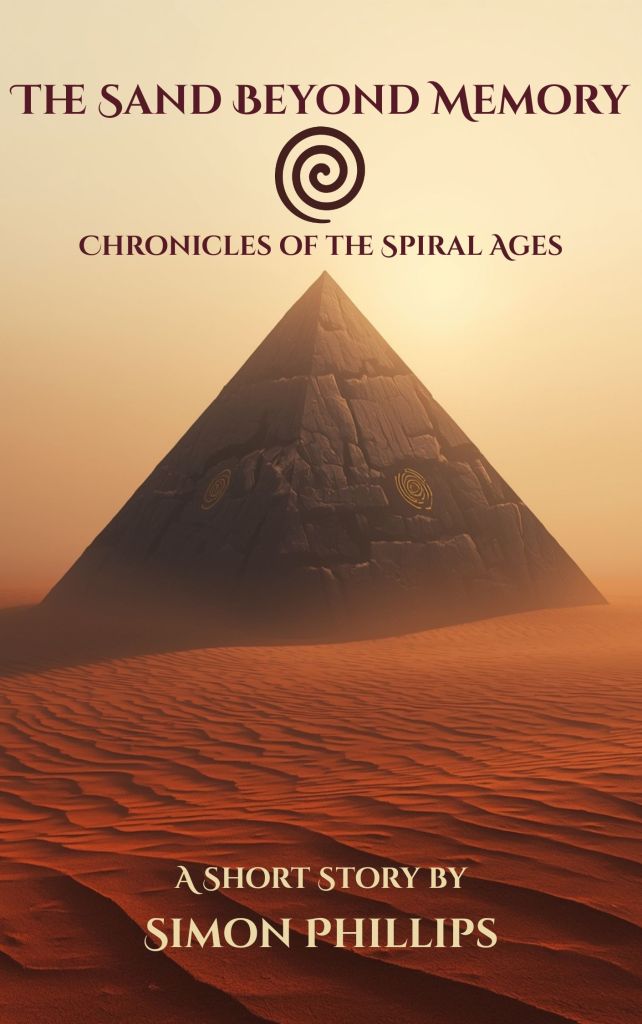
Within the red basin where the desert winds carve endless dunes, a broken pyramid rises from the sand. Time has stripped the monument of its upper form, leaving fractured stone blocks and eroded carvings exposed to the sky. No living tribe remembers who raised it. Even the oldest storytellers speak only in fragments.
For the travellers who discover it, the structure becomes a source of both curiosity and unease. Its scale suggests a civilisation older than any living memory. Its carvings hint at symbols that feel strangely familiar, even to people who have never seen them before.
Through this encounter, the novella explores the earliest tension between instinct and belief. The tribe carries its own traditions, shaped through migration and survival, yet the monument suggests a deeper past that challenges those inherited stories.
Rather than presenting the Stone Age as a primitive world, the story treats it as a formative moment in human memory. The characters stand at the edge of something larger than themselves. They sense the presence of an earlier civilisation without possessing the knowledge required to interpret it.
This quiet confrontation with the unknown forms the emotional centre of the novella. The landscape itself becomes a witness to forgotten ages, while the Spiral symbol begins its long journey through history.
A Fragment Preserved in Motion: The Illustrated Mini-Read
Alongside the written novella, a brief illustrated mini-read offers a glimpse into the atmosphere of this early age. The video functions less as a summary and more as a preserved moment from the world itself.
The sequence focuses on a single fragment of experience within the desert landscape. Dust drifts across the broken monument. Light moves across eroded stone surfaces. The tribe approaches the structure slowly, uncertain whether the place carries danger or meaning.
Within the broader ancient civilisation fantasy setting, such moments hold unusual power. They capture the emotional texture of the story without revealing its deeper transformation. The viewer stands beside the travellers, sensing the presence of history beneath the sand.
This short visual fragment acts as a threshold into the wider world of Chronicles of the Spiral Ages, offering a brief immersion into the earliest chapter of the timeline.
You can view the illustrated mini-read here:
The Spiral Across the Ages
The Stone Age marks only the beginning of the larger timeline explored throughout the Chronicles of the Spiral Ages series. As centuries pass, new cultures emerge across distant regions. Metallurgy reshapes tools and weapons. Trade routes connect societies that once lived in isolation. Kingdoms rise beside rivers and coastlines.
Yet the Spiral continues to appear.
Sometimes it emerges as a sacred carving within temple walls. Sometimes it appears within pottery or woven cloth. In other eras it becomes a philosophical symbol associated with the passage of time itself.
Each appearance suggests continuity across generations who possess no direct knowledge of one another. The symbol survives because memory itself survives. Even when languages fade and cultures disappear, traces remain embedded within tradition and myth.
Through this long historical arc, the Spiral becomes a quiet witness to humanity’s unfolding story. It represents the persistence of meaning across centuries, a reminder that even the smallest discoveries in the earliest ages can ripple outward across time.
A Story That Begins Before History
Stories set in the earliest ages of humanity carry a unique atmosphere. They unfold in worlds where the future remains entirely unknown and where every discovery might shape the direction of civilisation.
Stone Age fantasy fiction therefore invites readers to step into a moment when myth itself still waits to be born. Symbols appear without explanation. Landscapes conceal fragments of forgotten worlds. Every encounter with the unknown becomes part of a larger historical memory.
Within Chronicles of the Spiral Ages, The Sand Beyond Memory stands as the first step into that long journey through time. The desert monument, the Spiral carving, and the quiet uncertainty felt by the travellers form the beginning of a much larger narrative stretching across centuries.
The earliest ages rarely leave written records, yet their influence lingers in the stories told by later civilisations. By returning to that distant beginning, the series explores how myth grows from memory and how symbols endure long after the voices that first carved them have faded.
Across the red desert basin, the wind continues to move across the broken pyramid. Sand drifts slowly against stone that has watched countless generations pass. Beneath those ancient carvings, the Spiral waits patiently for the ages that will follow.