Egyptian Mythic Fantasy, Anubis, and the Burden of the Dead


Where the River Meets the Dead

The dead were never far from the living in The Forgotten Gods of the Drowned Kingdom. They pressed close through river stink, damp stone, old prayers, sealed doors, and the narrow spaces where poverty forced the living to touch what should have remained undisturbed. In this Egyptian mythic fantasy world, tombs were never simple ruins. They were sacred architecture, built around memory, judgement, passage, and the uneasy belief that the dead still had claims upon the world they had left behind.

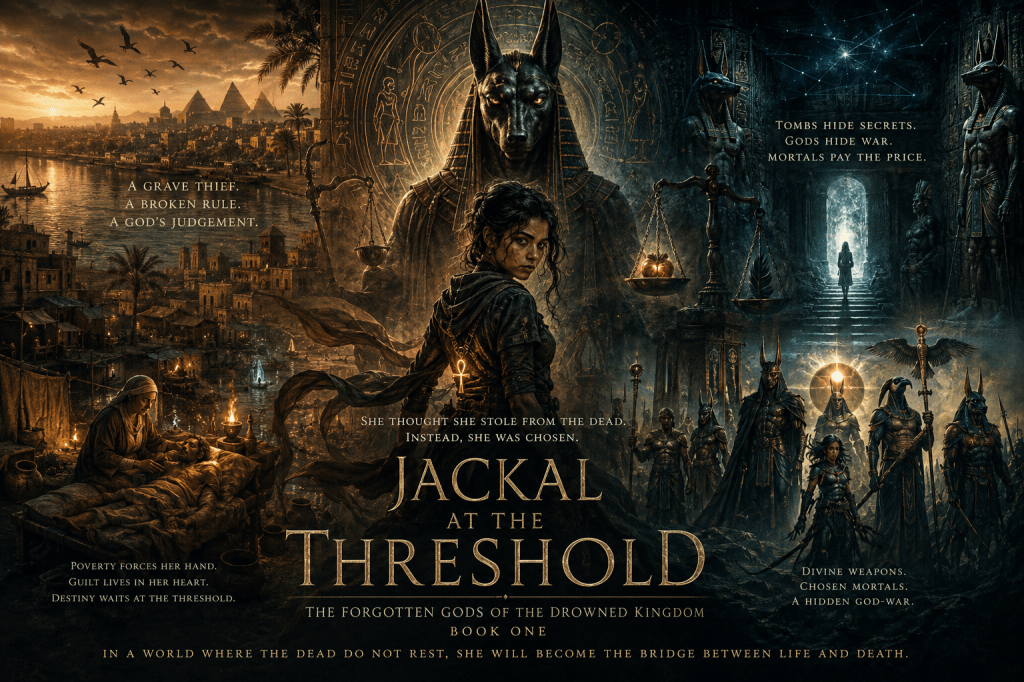
That closeness shaped Jackal at the Threshold, the first book in the series, before Anubis ever stepped fully into view. The story began in the river quarter, where Neris lived between hunger and guilt, between the need to keep her mother alive and the knowledge that her work among the dead had already cost too much. The noble terraces rose upriver in white stone, catching the last light of the day, while the slums below sank into shadow, smoke, mudbrick, and the rot lifted from the water by evening heat.

This is the root of the series. Egyptian mythology is not laid over the world as decoration. It is felt through burial practice, thresholds, funerary silence, jackal imagery, and the dreadful possibility that judgement may be waiting in places ordinary people have learned to rob, fear, or ignore. The gods do not begin as distant names from old stories. They begin as pressure in the stone, as warnings cut into doorways, as whispered talk of Anubis stirring when a boundary has been broken too often.


Anubis at the Edge of Judgement
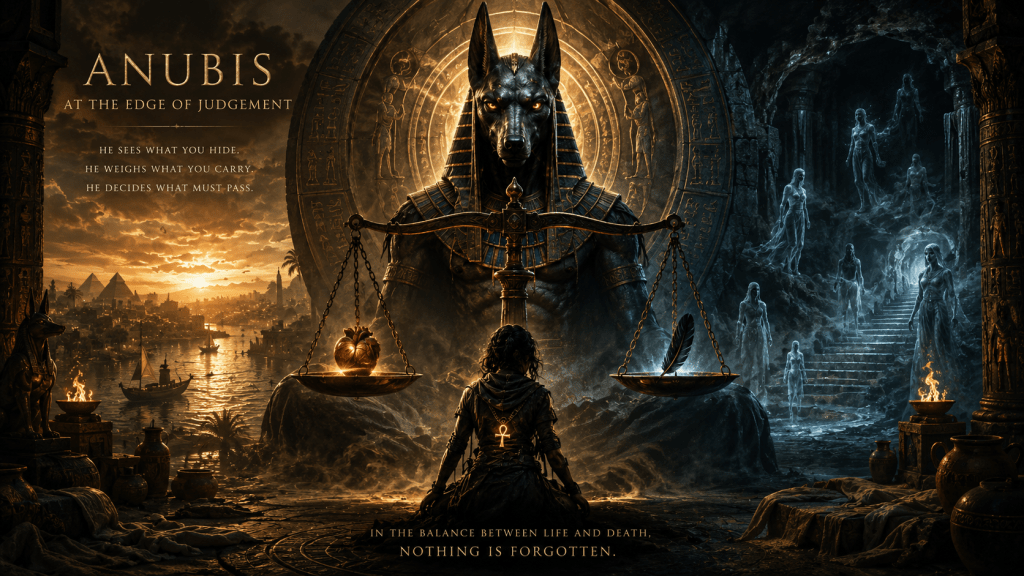
Anubis belongs to thresholds. He stands at the edge between the living and the dead, between burial and desecration, between memory and judgement. In this dark mythological fantasy series, that role matters more than spectacle. He is not a generic shadow god, nor a simple patron offering power to a chosen hero. His presence is severe, patient, and bound to what has been done.

That is why Jackal at the Threshold begins with theft rather than battle. Neris is a tomb robber from the river slums, and her skill lies in stone, rope, darkness, narrow ledges, old mechanisms, and the ability to keep moving when fear should have stopped her. She steals from the dead because rent, food, medicine, and hunger have left little room for clean choices. Yet the story refuses to make survival into absolution. Poverty explains much. It does not erase everything.

Anubis enters through that tension. The western dunes uncover black stone after a storm. Workers enter and fail to return. Rumours move through the slums faster than certainty. A buried place, older than the known order of the city, waits beneath the sand. Neris goes because the world has trained her to see danger and value together. She knows the signs. She reads blood, abandoned tools, carvings, warnings, and silence. Still, need pulls harder.

When she crosses into the Drowned Kingdom, the tomb itself becomes an instrument of judgement. Jackals walk the walls. Scales wait in carved stillness. Hearts are shown in stone as if every secret has already been measured. The deeper Neris goes, the less the place feels like a tomb built for the dead alone. It becomes a boundary that remembers who has entered it, what they carried, and what they tried to leave unnamed.


Neris and the Cost of Survival
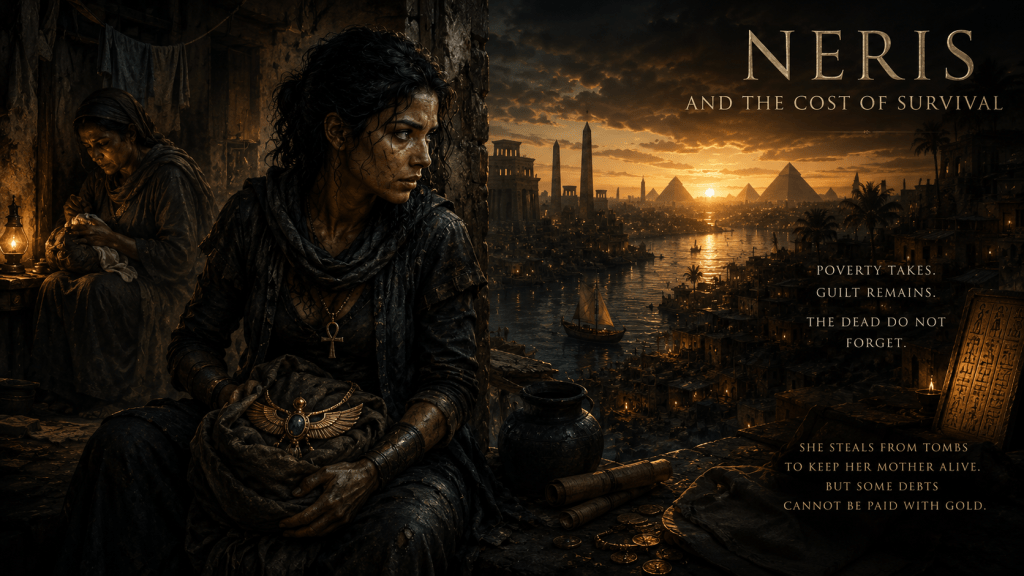
Neris is central because she is human before she is anything else. She is not a polished champion waiting for a divine weapon. She is a daughter, a thief, a survivor, and a woman shaped by a death she has never truly faced. Her brother’s collapse in a tomb shaft lies beneath every choice she makes. She saw the crack. She dismissed it. She sent him ahead. That single remembered moment gives the first book its deepest weight.

The power of this Egyptian mythology fantasy series comes from that kind of pressure. Divine judgement does not arrive in an empty life. It arrives where guilt has already made a home.

Neris’s mother keeps the story grounded in the mortal world. Her illness, the cost of healers, the bare room by the river, the careful division of four silvers between medicine, rent, and food all matter. These details prevent the mythic world from floating away into abstract gods and relics. Before Neris stands before Anubis, she stands before hunger. Before she touches the Threshold, she has already crossed moral boundaries in order to survive.

That makes her judgement more painful. Anubis does not condemn her simply because she is poor. He does not ignore the cruelty of a world where the dead are buried with gold while the living starve beside the river. Yet he draws her back to the moment where choice remained. The crack in the stone. The hurry. The brother who trusted her. The weight she carried and refused to name.

This is where the story changes. Neris returns the relic she came to steal. She confesses what she has hidden even from herself. Anubis marks her, and the burden he gives is no easy blessing. She will see when souls stray. She will hear unrest where others hear only night wind and water. What she disturbed will no longer pass unnoticed.


The Door Opened by Jackal at the Threshold

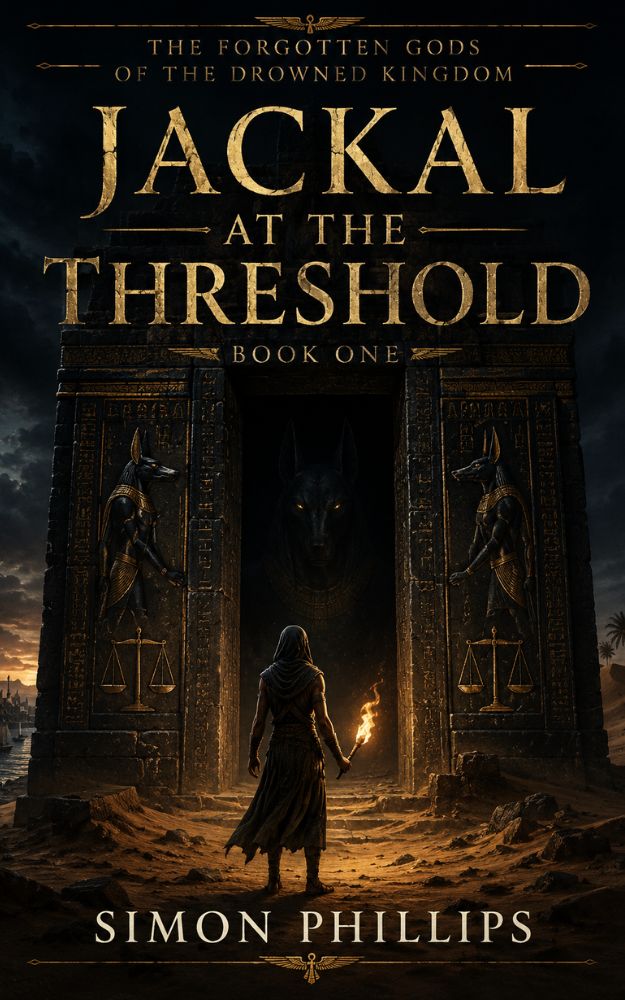
Jackal at the Threshold is the first entry in The Forgotten Gods of the Drowned Kingdom, and it works as a doorway rather than an explanation of the entire war. It brings the reader into a world of tombs, river-prayers, restless spirits, funerary dread, and divine attention without emptying the larger series of mystery.

The book belongs to Egyptian mythic fantasy because its supernatural force rises from recognisable sacred ground. The Drowned Kingdom is not simply an ancient ruin with treasure inside. It is a necropolis of judgement, silence, and unfinished passage. Its walls are carved with jackals, scales, hearts, stars, drowned kings, and warnings left by those who understood too late that the dead are not abandoned things.

The experience of entering the book is intimate rather than grand. The reader follows Neris through the alleys, the heat, the old smoke of her home, the desert road, and finally into cold black stone. Every movement carries the body with it: sand under sandals, torchlight bending across carved walls, breath misting in impossible cold, fingers testing ledges, muscles straining against fear. This is not a clean chosen-one adventure. It is a story about what happens when someone desperate crosses into death’s territory and is allowed to return.

By the end, Neris has stopped being merely a thief of the dead, yet she has not become safe, powerful, or fully informed. She believes she has become a bridge between the living and the dead. She has no understanding yet of the full hidden god-war moving beneath the surface of the world. That ignorance is essential. The first book closes with a woman changed by judgement, walking back into the same poor streets, with the same hunger still waiting, and a new awareness of the dead moving around her.

The Gods Beneath the Sand
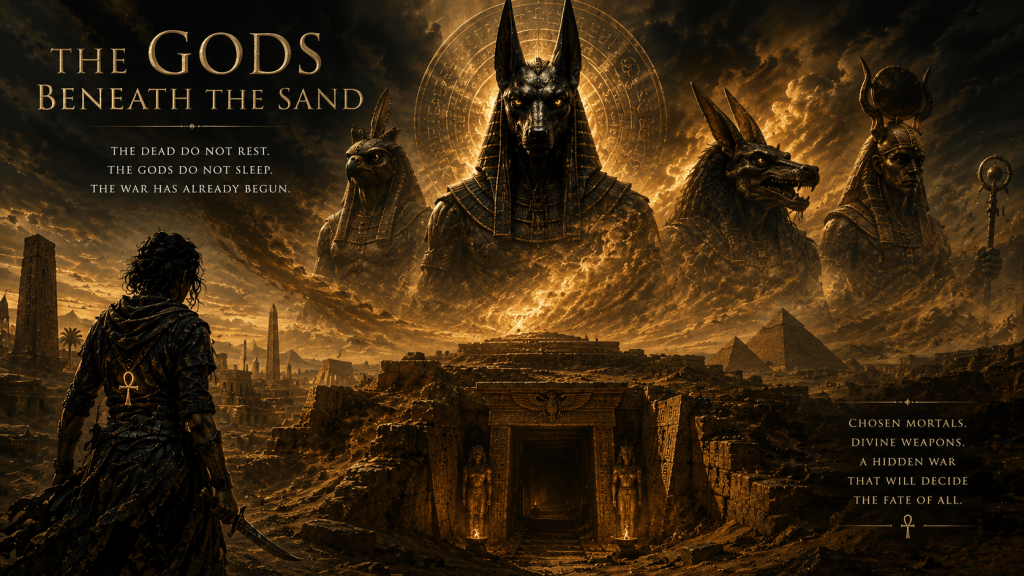
The wider series will open slowly from that first burden. The Egyptian gods do not begin by shattering the sky. Their war begins through sacred wrongness. Burial routes falter. Souls fail to pass cleanly. Tombs open when they should remain sealed. Relics wake. Human beings are chosen, armed, watched, and used.

This is the hidden engine of The Forgotten Gods of the Drowned Kingdom. The gods avoid open war because such conflict would devastate the mortal world. Instead, they act through chosen humans bound to divine weapons. The weapon carries the force first. The human bearer becomes dangerous only through endurance, discipline, survival, and cost.

That rule keeps the series grounded. Neris does not rise because she has been handed effortless power. Her first Anubis-linked weapon is intimate, funerary, close-range, and judgement-bound. It belongs to tombs and thresholds, not battlefield spectacle. Its danger comes from what it is tied to: burial order, false return, broken passage, and the dead who have failed to rest.

Other gods wait beyond the first threshold. Set moves through disorder, desert violence, destabilisation, and predatory pressure. Thoth brings record, reckoning, hidden knowledge, and an intelligence that can be as dangerous as any blade. Neith carries ancient discipline, strategy, and martial severity. Horus represents visible legitimacy, kingship, and ordered force. Ra remains the remote solar authority whose weight shapes the divine hierarchy even before he steps forward.

Yet the series must always return to Neris. Gods may shift the board, but human lives carry the cost. The river slums, Hamat’s warnings, her mother’s illness, the memory of her brother, and the quiet work of guiding unsettled souls remain as important as any relic duel or divine decree. Without those things, the war would become spectacle. With them, it remains sacred, dangerous, and painfully human.


What Waits Beyond the Threshold
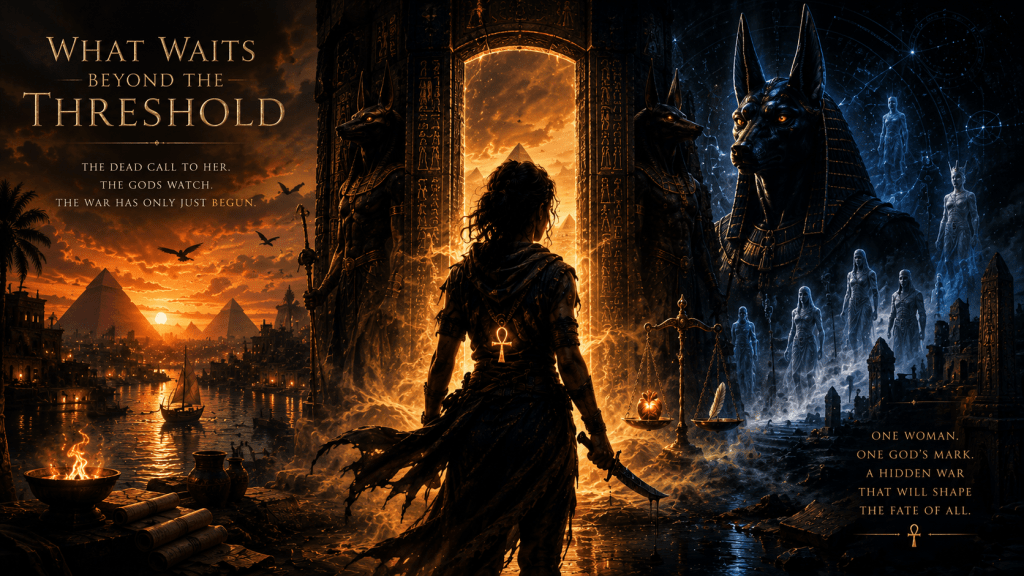
The first book leaves its deepest questions unanswered because the world has only begun to move. Neris has crossed the Threshold. Anubis has marked her. The dead now call to her when their passage fails. Somewhere beyond the city, old stone shifts beneath the sand, and attention stirs in places she cannot yet name.

That is the shape of the series promise. A grave thief has been pulled into the service of judgement, yet the judgement of gods may prove no cleaner than the lives they weigh. Divine weapons will appear as burdens rather than gifts. Chosen humans will discover that being claimed by a god can mean being protected, used, lied to, or sacrificed. The dead will not always pass cleanly, and the living will not always understand who has broken the route.

In this world, tombs are not background scenery. They are pressure points between the living and the dead. The river is not merely water. It is memory, passage, rot, need, and prayer. Anubis is not a symbol printed on the surface of a fantasy setting. He is first felt through the silence before judgement, the dark edge of a doorway, the unseen weight of a heart, and the terrible mercy of being sent back changed.

The war has already begun, though Neris does not yet understand its shape.

She has only heard the dead.

The gods will come later.
Ancient Gods, Forbidden Magic, and the First Turning of an Epic Fantasy Saga


Where the Road Begins Beneath Winter Stone

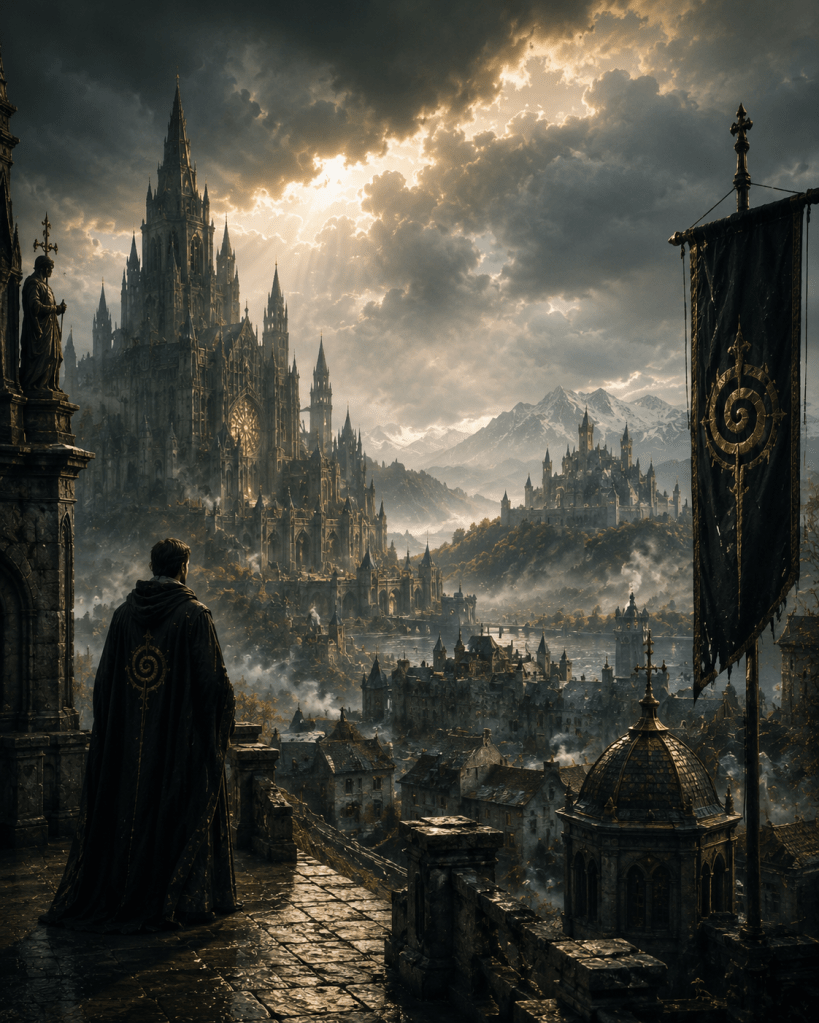
A cold road leads into Bremyra, where the sea wind carries salt through narrow streets and old stone holds more memory than any living court dares to name. In The Unmarked Path, the opening novella of The Veil of Kings and Gods, magic is never treated as ornament. It belongs to law, fear, inheritance, and silence. It lingers beneath castle floors, inside sealed books, in the guarded breath of the Church, and in the hands of a magician who scarcely understands why the world has begun to turn around him.

This is the beginning of The Chronicles of the Spiral Realms, a serious adult high fantasy series shaped by ancient gods, forbidden magic, kingdom politics, fallen empires, and the slow return of truths buried beneath the present age. Ældorra is a world where mortal institutions believe they hold power, yet every crown, altar, and magical order stands upon older ground.


A World Built Over Forgotten Power

The world of Ældorra carries the remains of the Imperium Arcana, a fallen magical empire whose ruins still press through the age of kings. Its laws have decayed into custom. Its divine wounds have hardened into doctrine. Its power survives in fragments, watched over by institutions that remember enough to fear the past, yet never enough to understand it.

The Order of Magicians stands at the centre of that inheritance. Powerful, feared, and separate from crown or Church, the Order preserves magic through discipline and secrecy. Yet preservation is not the same as wisdom. Beneath its authority lies fracture, and beneath its history lies a truth far older than its masters are willing to face.

Opposite it stands the Church of Christiana, sacred and political in equal measure. Its cathedrals offer prayer, order, and memory, yet those memories are guarded by men who understand that truth can unmake authority as easily as war can unmake kingdoms. In this kind of mythic fantasy series, faith and magic are never safely divided. Each claims to serve the world. Each fears what the other might uncover.


Simion and the Burden of Reluctant Power

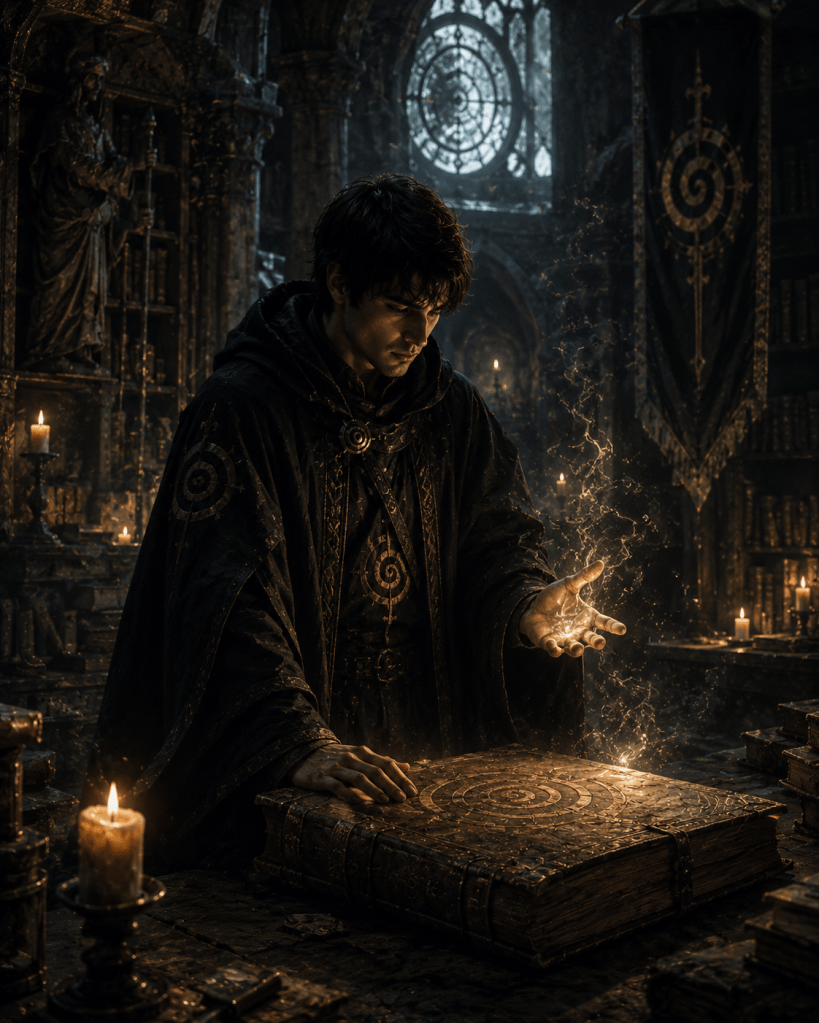
Simion enters the story as no triumphant chosen hero. He arrives tired, uncertain, and obedient, sent by the Order to Bremyra under instructions he only partly understands. His strength lies not in arrogance, but in restraint. He carries power, yet he also carries doubt, old loneliness, and the uneasy knowledge that magic has never fitted him in the way it fitted others.

That makes him central to the series’ tone. The Unmarked Path is an epic fantasy novella concerned with consequence before spectacle. Simion’s magic matters because it alters rooms, relationships, loyalties, and fear. When he walks through Bremyra, people remember the idea of magicians before they see the man. His black robe is enough to change the air around him.

Yet the deeper pressure comes from what he cannot explain. A hidden book. A seal. A divine whisper. A moment when magic moves through him in silence, beyond the methods the Order taught him. These are not answers. They are openings.


Kingdoms, Churches, and the Shape of War

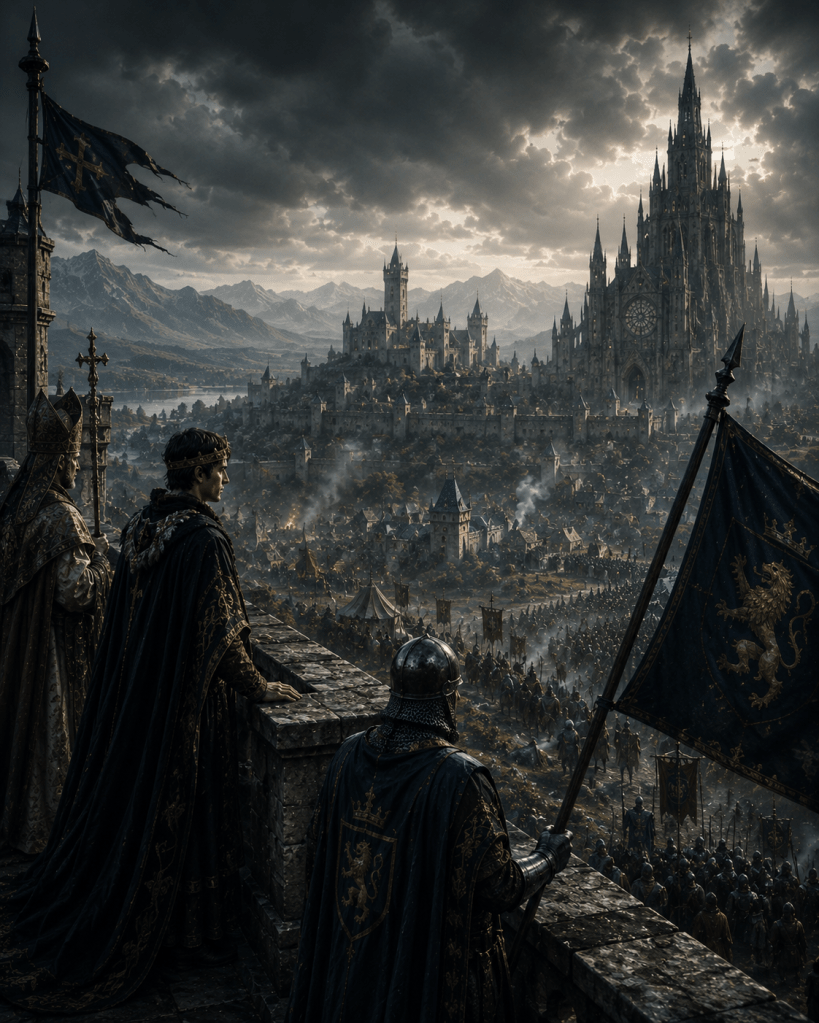
While Simion is drawn toward buried magic, Prince Patrick struggles beneath the weight of mortal rule. Bremyra is a kingdom under strain, held together by court procedure, family duty, marriage alliances, and the absence of a king whose return grows less certain with every passing day.

Patrick’s world is political fantasy in its most human form. There are borders to guard, letters to answer, marriages to arrange, rumours to test, and enemies to watch. War does not arrive as grand spectacle at first. It arrives through uncertainty, through foreign blades in city streets, through reports from the north, through councils where no one has enough knowledge to feel safe.

Týrnan Valgrim’s northern arc gives that pressure another face. His people move south beneath the command of a High Chieftain whose ambition already carries a shadow. Týrnan is a war leader, yet not a simple raider or clean heroic figure. His path is marked by survival, honour, violence, and doubt. Through him, the series begins to show war as moral corrosion as much as military action.


Why Silent Gods Carry More Weight

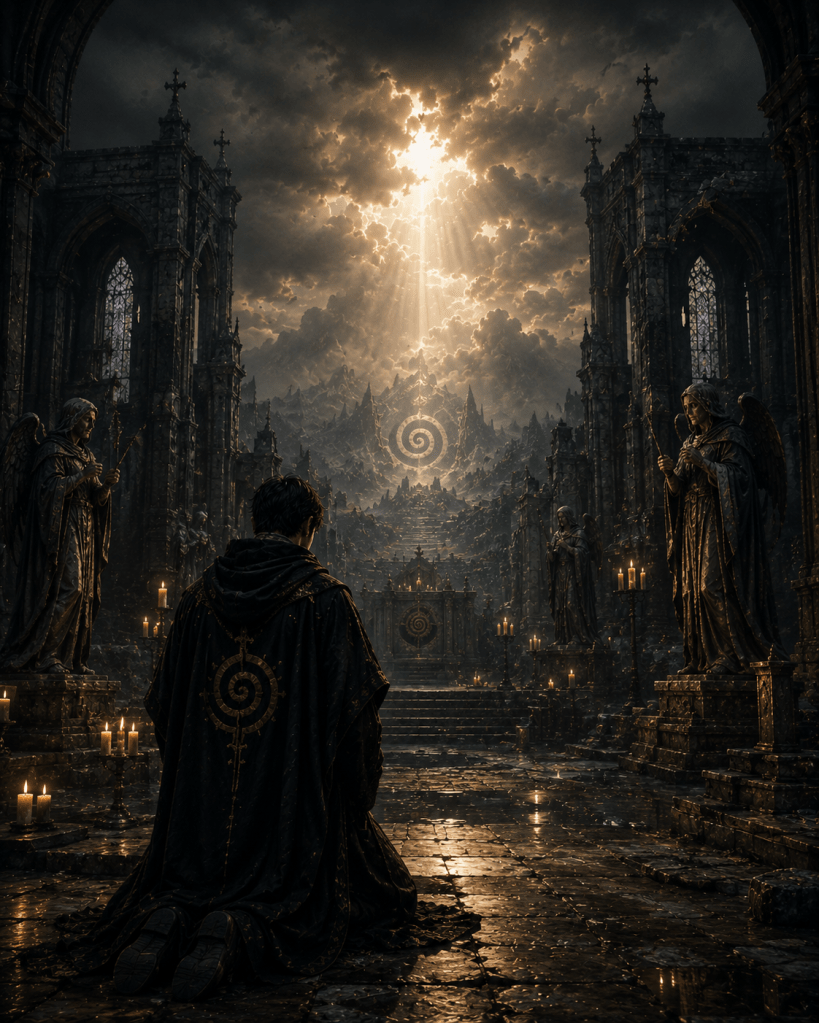
The gods of The Chronicles of the Spiral Realms are powerful because they are distant. They do not stride through the mortal world giving simple answers. Their silence hangs over prayer, magic, fear, and memory. When divine presence touches the story, it arrives through pressure, vision, symbol, and burden.

This makes the series closer to ancient gods fantasy than conventional quest fantasy. The divine is not a ladder for characters to climb. It is a cost. Mortals pray into silence, institutions build doctrine around absence, and magicians inherit fragments of power whose origins have been softened by myth.

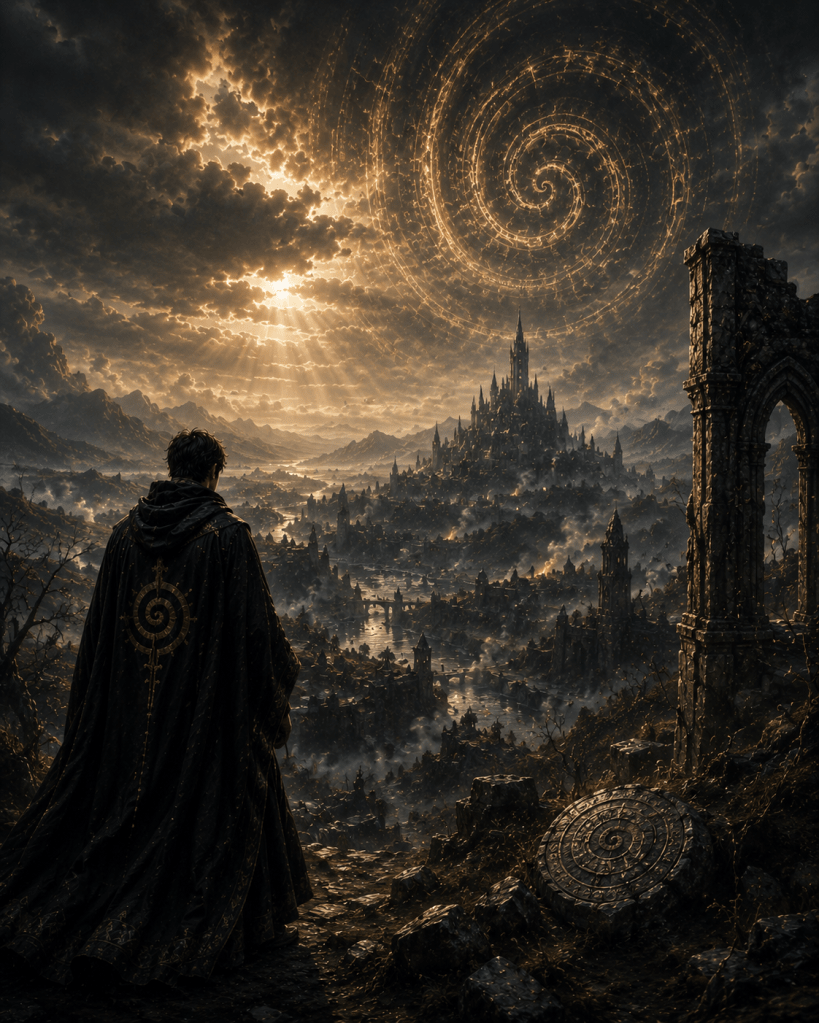
The Spiral itself belongs to that hidden language. It suggests recurrence, divine memory, forgotten truth, and a pattern returning through the lives of people who believe they are facing isolated crises. In The Unmarked Path, the Spiral is felt before it is understood. That restraint gives the saga much of its force.


Entering The Unmarked Path

Readers can begin the saga with The Unmarked Path, available on Amazon Kindle or paperback.

The novella opens the world without emptying it of mystery. It gives the reader Bremyra’s winter roads, the fear of magicians, the weight of royal duty, the unease of the Church, the first movement of northern war, and the sense that older powers have begun to stir beneath every visible conflict.

This is a fantasy novella series for readers who enjoy slow-burn epic fantasy, ancient gods, forbidden magic, magical orders, political tension, and worlds where history is never truly dead. Its power lies in the way the mortal and divine pressures touch one another. A prince’s council, a hidden chamber, a northern storm, a royal ambush, and a sealed book all belong to the same turning, even before the characters can see the shape of it.


The First Sign of a Larger Chronicle

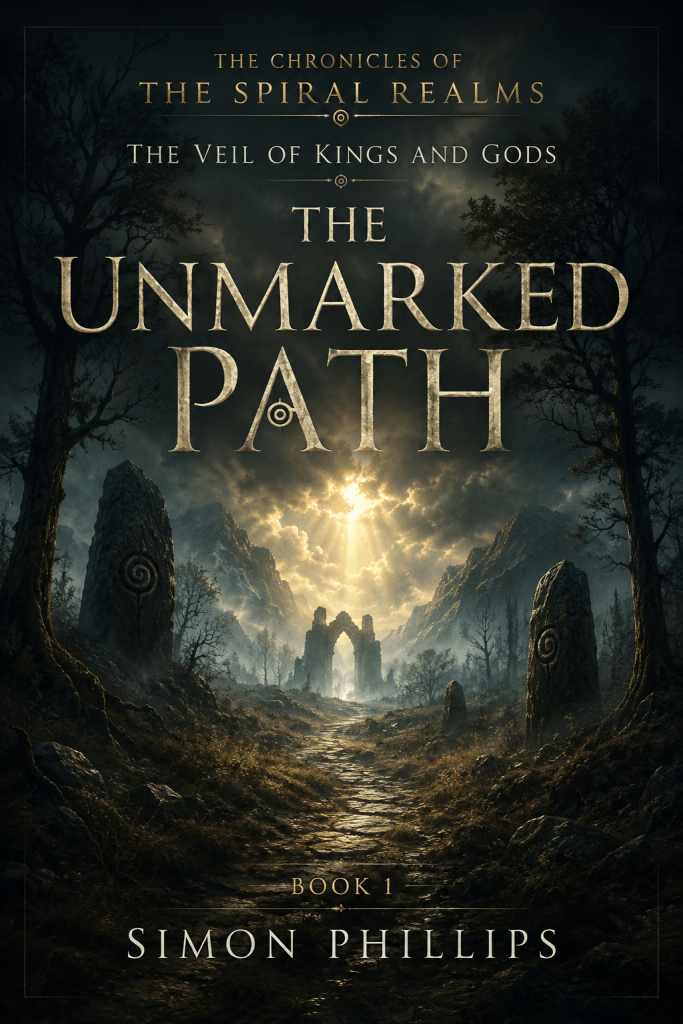
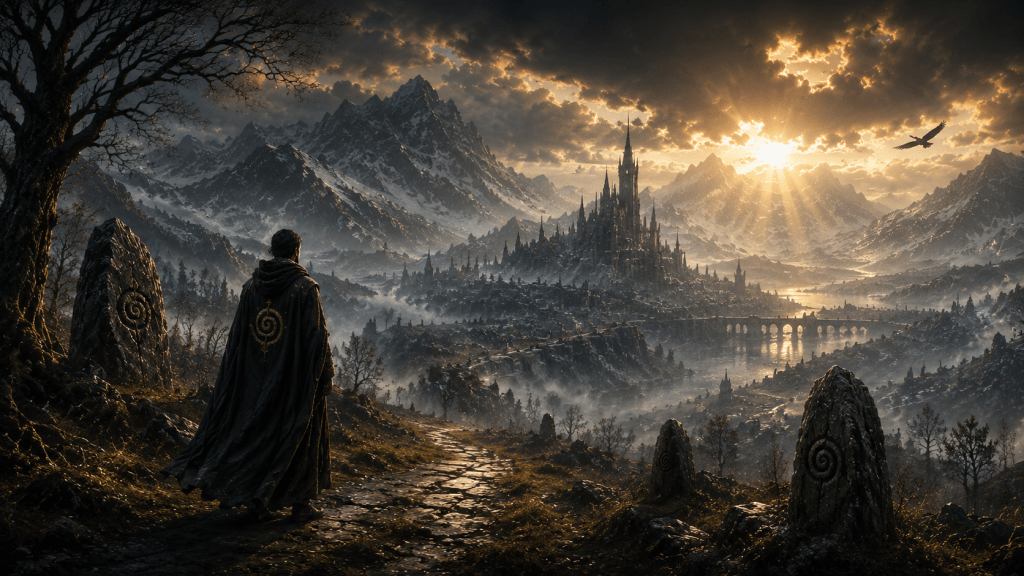
The cover of The Unmarked Path captures that threshold well: a road leading through dark trees and ancient stones, spiral marks cut into a landscape where ruin and destiny seem to share the same breath. It is an image of entry rather than conclusion. The path waits. The title promises no certainty.

That is the heart of the opening novella. The world has not yet broken, yet the first strain is audible. The gods remain silent, yet something divine has already reached toward Simion. The kingdoms continue their ceremonies, yet war gathers beyond their borders. The Order still believes it controls magic, yet magic has begun to move beyond its rules.

The saga is entered through a road, a castle, a book, and a burden. What waits beyond them is older than any king’s claim, deeper than any archive, and far less willing to remain forgotten.

Jackal at the Threshold: A Mythic Fantasy Novella of Anubis, Judgement, and the Drowned Kingdom

A Dark Fantasy Novella at the Edge of Life and Death

In a landscape shaped by river mud, drifting sand, and forgotten dynasties, Jackal at the Threshold unfolds as a mythic fantasy novella rooted in Egyptian-inspired fantasy and the quiet terror of judgement. This dark fantasy novella follows a thief who crosses a boundary older than kings, only to discover that the gods who guard the dead remain watchful long after temples fall silent.

For readers searching for atmospheric fantasy fiction, short fantasy reads, and Amazon fantasy novellas that carry mythic weight without spectacle, this story stands at the meeting point of ruin and reckoning. It draws from ancient necropolises and jackal-haunted desert winds, yet remains grounded in human frailty: hunger, grief, guilt, and the unbearable cost of choice.

As a British fantasy author working within mythic structures and quiet horror, I have always been drawn to thresholds. Doorways. Riverbanks. The moment before a decision reshapes a life. This Kindle novella lives in that moment and lingers there, asking what remains when gold loses its shine and judgement answers in silence.

The Drowned Kingdom and the Weight of Memory

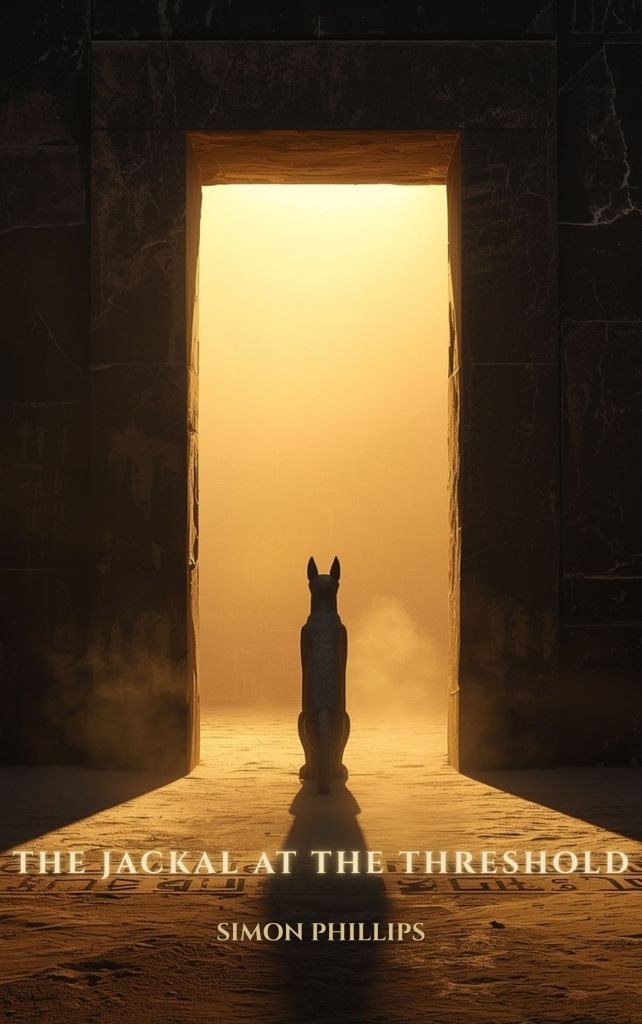
At the heart of this fantasy novella lies the Drowned Kingdom, an ancient necropolis buried beneath shifting western dunes. Its rulers predate the settled river, its corridors carved with jackals who walk between stars and sand. The tomb does not roar. It waits.

Egyptian-inspired fantasy often leans toward spectacle: plagues, curses, elaborate tomb traps bursting into flame. In Jackal at the Threshold, the horror is colder and more intimate. The air grows still. The pigment on the walls remains untouched by time. Scales hang in perfect balance. The jackal god watches without haste.

The Weighing of the Heart forms the mythic spine of the novella. Yet this weighing concerns more than virtue. It concerns intention. Responsibility. The moment when someone sees the crack in the stone and chooses to hurry anyway.

This is where mythic fantasy becomes personal.

Neris, the central figure, robs tombs because hunger demands it. The river quarter starves while the noble terraces gleam. She descends shafts and clears chambers because coin buys breath for her mother. Such choices feel practical. Necessary. Yet beneath them lie fractures that no silver can mend.

The Drowned Kingdom does not rage at her theft. It does something far more unsettling. It remembers.

Anubis Reimagined: The Jackal at the Boundary

Anubis in this dark fantasy novella is neither tyrant nor saviour. He stands at the threshold, patient and precise, weighing what is carried across his domain. He speaks without spectacle. He offers no absolution. What has been done remains part of the one who has done it.

In many indie fantasy books, gods arrive in thunder and blaze. Here, the jackal god emerges from starlit shimmer and still air. His judgement is measured, his presence quiet and vast. He allows choice. He allows consequence.

This portrayal of Anubis honours the ancient imagery of scales and feather, yet reshapes it into something interior. The weighing becomes a confrontation with memory: a brother sent ahead into a cracking shaft, graves opened in haste, gold lifted from silence. The heart holds all of it.

The result is a mythic fantasy experience that explores divine encounter through restraint rather than spectacle. The god does not shout. The chamber grows colder. The light fades. The boundary tightens. And in that stillness, truth surfaces.

For readers seeking atmospheric fantasy fiction that treats gods as forces of measure rather than miracle, this Kindle novella offers a different path through the myth.

From Tomb Robber to Guide of the Dead

The transformation within this short fantasy read does not hinge on conquest. There is no monster slain, no hoard carried triumphantly into sunlight. Instead, the relic is returned. The sceptre becomes a talisman. The thief becomes a guide.

This shift reframes the entire novella. The necropolis, once a place of plunder, reveals itself as a structure of balance. The jackals carved along the walls do more than threaten. They protect the poor man’s burial as surely as the drowned king’s chamber. The threshold exists for all.

Back in the river quarter, the gift of judgement reshapes Neris’s life. She sees spirit-trails where others see nothing. She speaks river-prayers learned from her grandmother. She eases the hesitant dead toward current and rest.

The world remains narrow. Hunger still lingers. Coin still shapes the day. Yet something has altered. The weight she carries now lifts others rather than burying them.

This is the emotional core of the novella. Mythic fantasy, at its strongest, returns the reader to the human scale. The boundary crossed in desert darkness echoes in a small room by the river. A mark on the chest replaces stolen gold. Service replaces theft.

Jackal at the Threshold: Novella Spotlight

Title: Jackal at the Threshold
Genre: Mythic fantasy novella / Egyptian-inspired dark fantasy
Format: Kindle novella on Amazon
Tone: Atmospheric, restrained, immersive

This Amazon fantasy novella stands alone as a complete story, yet opens the way into a broader mythos of drowned dynasties and watchful gods. It is designed for readers who value short fantasy reads that linger, who prefer atmosphere over haste, and who find meaning in quiet reckoning.

If you are searching for:

  • A fantasy novella rooted in ancient desert imagery
  • A dark fantasy novella centred on judgement rather than battle
  • Indie fantasy books by a British fantasy author exploring myth and threshold
  • Kindle novellas that favour consequence over spectacle

then this story offers a deliberate and immersive experience.

You can find the Kindle edition here:
https://www.amazon.com/dp/B0GM9PLM9M

Allow the boundary to open where you choose to cross it.

A Cinematic Glimpse: The Flash-Fiction Threshold

Alongside the novella, a cinematic flash-fiction adaptation is available on YouTube. This short piece acts as a threshold glimpse into the world of the Drowned Kingdom, capturing the atmosphere of desert dusk, carved jackals, and the silent moment before a door yields.

It functions as a fragment. A doorway. A sliver of torchlight against black stone.

For readers who prefer to taste the cadence and mood before stepping fully into the Kindle novella, this flash-fiction video provides that first crossing. It carries the same immersive tone, the same slow gathering of pressure, without revealing the full arc of judgement and transformation.

You can watch the flash-fiction adaptation here:

Consider it the first step into shadow before the chamber opens.

Mythic Fantasy, Indie Spirit, and the Quiet Return of Gods

As part of a growing catalogue of indie fantasy books, Jackal at the Threshold reflects a commitment to mythic structures explored through restraint. These stories move between fantasy novella and quiet horror, between buried histories and layered cities, tracing how ordinary lives intersect with forces older than language.

Living within layered environments where old shrines sit beside neon streets has shaped my sense of story. Thresholds exist everywhere. In a doorway. In a decision. In a single breath held too long.

This dark fantasy novella asks a simple question: what happens when someone crosses a boundary and is allowed to return?

The answer lies less in reward than in responsibility. In the choice to carry balance rather than escape it. In the steady work of guiding what has been unsettled toward rest.

For readers of atmospheric fantasy fiction, Egyptian-inspired fantasy, and Kindle novellas that dwell in silence as much as speech, this story invites you to stand at the edge and listen.

The desert remains wide. The river continues to flow. Somewhere beneath the dunes, stone shifts in the dark and waits.

Step toward the threshold when you are ready.