Why Free Fiction and Paid Reading Both Belong on the Same Website

Finding a Fair Shape for the Website
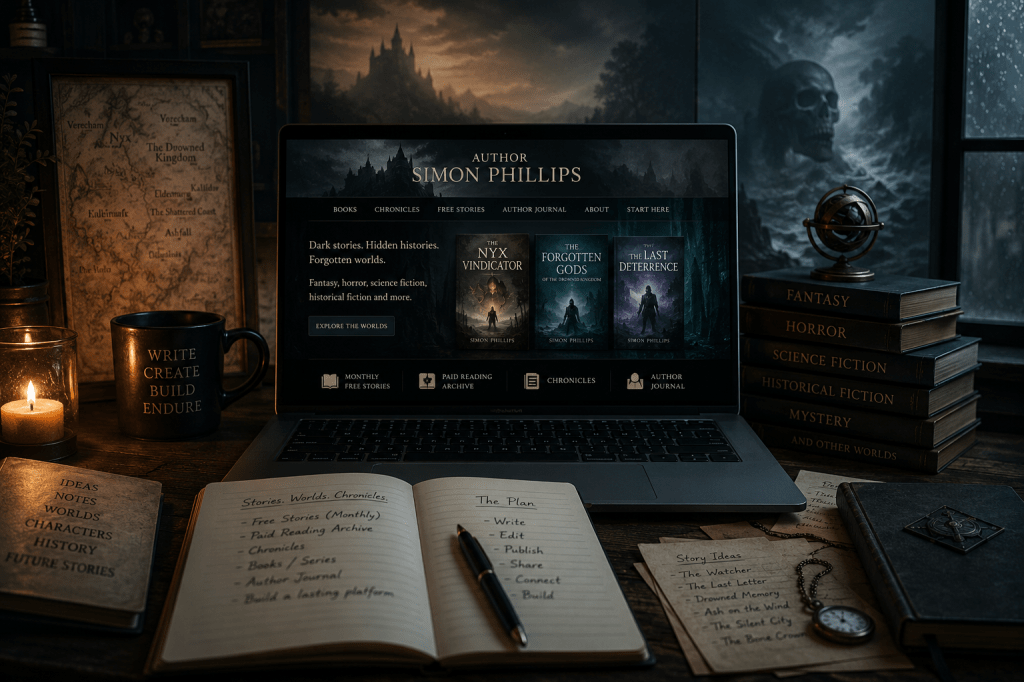
One question has kept returning while I rebuild my author website: how should complete free fiction and paid reading sit beside each other?

I want the website to give readers a genuine way into my writing. I also want it to support the time, planning, writing, editing, publishing, and maintenance behind that work. Those aims can appear to pull in different directions, especially when an author website is trying to welcome new readers while becoming part of a long-term independent income.

For me, the answer is to give both forms of reading a clear place.

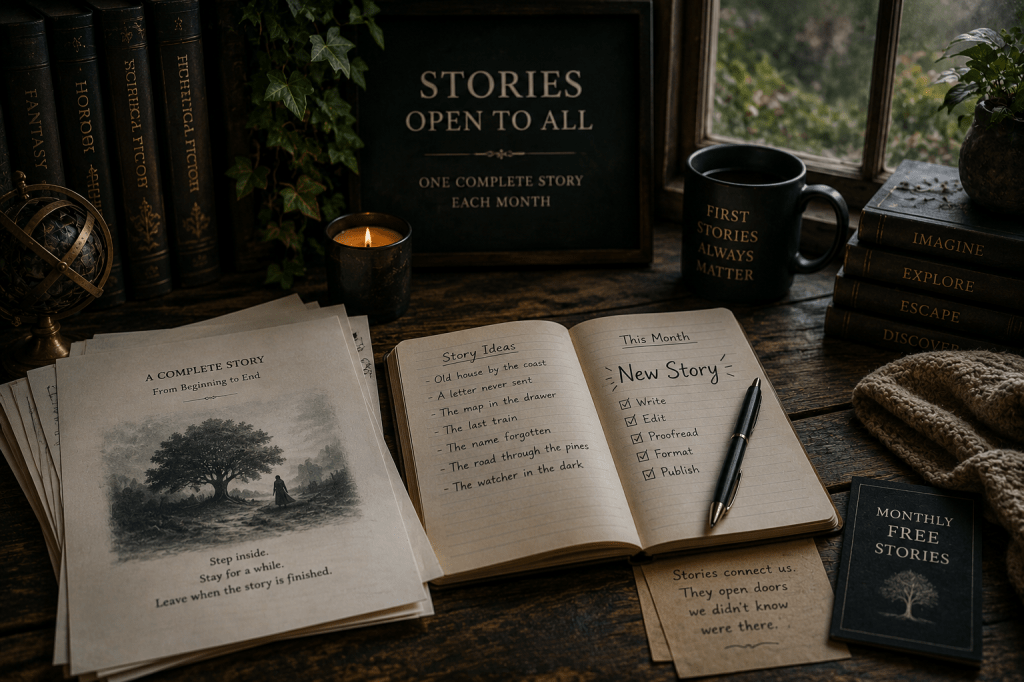
Monthly Free Stories offers one complete free story each month. The Paid Reading Archive gives selected continuing work, particularly the Chronicles, a place where it can help support the wider platform. Each area serves a different purpose, and the distinction needs to remain honest.


Why I Wanted Complete Free Stories

I never wanted every route into the website to end at a payment screen. A new reader may know very little about my books, the Chronicles, or the different series I am building. Asking that reader to subscribe or pay before they have had a proper opportunity to read my fiction would place the decision too early.

Monthly Free Stories provides a simpler starting point.

Each month, I will publish one complete story on the website. The genre may change according to the idea. One month may bring horror, while another may lean towards science fiction, fantasy, historical fiction, mystery, modern fiction, or something that sits between established genres.

The important part is that the story should feel finished. A reader should be able to arrive, choose a story, and read it from beginning to end. There should be no missing conclusion or sudden payment gate before the final section. The free story should give the reader a complete piece of fiction, even when the idea later proves capable of growing into something larger.

This also gives me room to write beyond the established series. Some ideas clearly belong inside a book project from the beginning. Others are smaller, stranger, or still uncertain. A complete standalone story gives those ideas room to exist before I decide whether they deserve a larger future.

Some may eventually suggest a series or book. Others may remain single stories that achieved exactly what they were meant to achieve.

Why Paid Reading Still Matters

Writing carries practical costs that readers rarely see directly. The time spent developing a story is only one part of the process. There is also revision, proofreading, formatting, cover preparation, website maintenance, image work, archive management, platform subscriptions, and the regular work required to keep everything organised.

A paid reading section gives part of that work a direct way to support itself.

The Paid Reading Archive is intended for material that benefits from an ongoing home, especially Chronicle issues and other selected work connected to the regular publishing structure. Readers may begin with an open section, understand the subject and tone, and then choose whether they wish to continue.

That choice needs to remain clear. Readers should understand which material is free, which material requires payment, and what access provides. Clear labelling matters because trust can disappear very quickly when the boundaries between free and paid material become uncertain.

Paid reading also allows WordPress to function as a full author platform instead of acting as a collection of links pointing towards other services. The website should hold fiction, organise it properly, give readers reasons to return, and contribute towards the continuing work behind the books.

Different Forms of Reading Serve Different Needs

Free fiction and paid content are sometimes discussed as though one must weaken the other. I see them as serving different readers and different kinds of work.

The free stories help readers discover my fiction. They show the range of genres I write, the kinds of atmosphere I return to, and the human pressure, uncertainty, history, strange systems, or hidden danger that often sits inside the work. They also give existing readers something complete to read between book releases and Chronicle posts.

The paid archive supports regular and continuing material. It gives readers who want to follow the work more closely a clear place to do so, while helping with the practical cost of keeping the website active.

The distinction matters. Free fiction should feel complete and worthwhile. Paid reading should offer enough depth, continuity, or regular material to justify the cost. Each side can remain clear about what it offers.


Avoiding the Feeling of a Sales Funnel

I am wary of turning every free piece into a carefully disguised route towards payment. Readers can usually sense when a story exists mainly to push them towards a purchase, and that approach would make the fiction feel secondary on an author website.

Monthly Free Stories needs its own integrity.

Each story should provide a full reading experience. A closing link may guide readers towards the books, another free story, a related series page, or the Paid Reading Archive, yet the story itself should already have delivered what it promised.

One reader may finish a story and leave the site. Another may return the following month. Someone else may move towards a book series, a Chronicle branch, or the paid archive. Each response is reasonable, and those choices should grow naturally from interest.

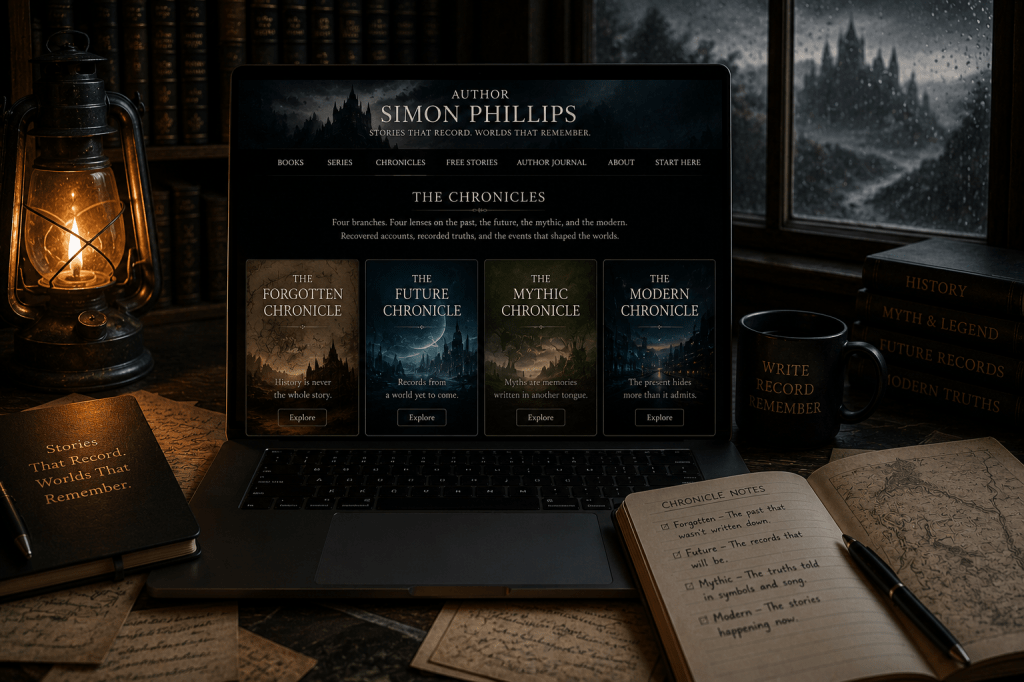
This means the website has to be organised carefully. Free stories need a clear home. Paid material needs equally clear labelling. Series pages need to remain focused on the books. Chronicle pages need to explain what readers can expect, while the Author Journal should remain a supporting area where I can discuss the work behind the fiction.

Clear structure helps readers understand where they are and what each part of the site offers.


Giving Readers Several Ways Into the Work

Readers will arrive with different interests and different levels of familiarity with my writing. Some may already know one of the books. Some may discover the website through a Chronicle post. Others may find an Author Journal article, a free story, a social post, or a short video.

Trying to force every reader through one route would make the website too narrow.

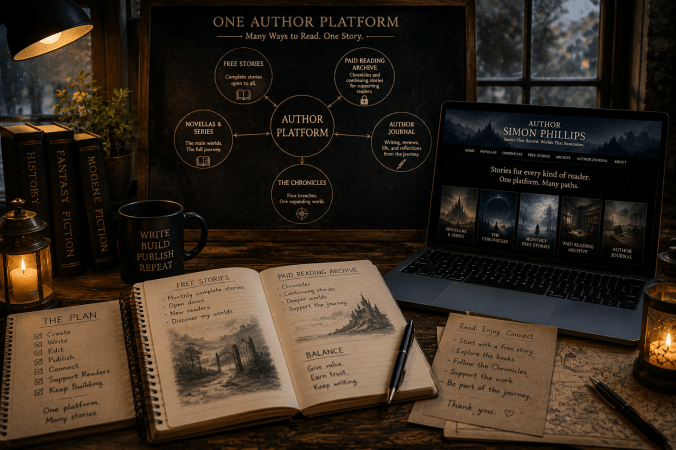
The books remain the main body of the work. The permanent series pages give each larger project a proper home. The Chronicles provide regular themed reading. Monthly Free Stories offers complete standalone fiction. The Paid Reading Archive holds selected continuing material. The Author Journal explains parts of the work and the decisions behind it.

These areas can connect to one another while still making sense individually.

That is particularly important for a website covering several genres and many long-term series. A reader interested in historical fiction may have little interest in science-fiction horror. Someone who enjoys a free ghost story may later discover one of the darker historical series. Another reader may prefer the Chronicle format and spend most of their time within that part of the site.

The website needs enough structure to support those different reading habits while keeping the overall author identity clear.


Keeping the Balance Honest
The balance between free and paid reading will probably need adjustment as the website develops. Some monthly stories may grow longer than expected. Certain Chronicle strands may suit the paid structure better than others. Some experiments may prove manageable, while others may demand too much time beside the books and existing publishing work.

I prefer to make those decisions through actual experience instead of pretending the whole system is already settled.

The main principles are clear enough to begin. Free stories will remain complete. Paid material will be labelled properly. The books will remain central. The Chronicles will keep their own identity. The website will offer several entry points, with each one connected to the wider author platform.

That gives me a structure I can develop while respecting the fact that readers use author websites in different ways.


What I Hope to Build Over Time

Over time, I want the website to hold a growing body of fiction that readers can move through at their own pace.

The Monthly Free Stories archive should become a shelf of complete standalone work across different genres. The Paid Reading Archive should become a deeper collection for readers who want regular access to Chronicle material and other selected pieces. The books and series pages should remain the main route into the larger story worlds.

A reader might begin with a free story, browse the books, follow a Chronicle, read an Author Journal post, or support the paid archive. There is no expectation that every reader will use every section.

The purpose is to respect different ways of reading while giving the work a practical chance to support itself. Free fiction gives new readers an open door. Paid reading gives interested readers a way to follow the work further and contribute towards its continuation.


Building the Sections Through Regular Work

The next stage is straightforward, even though it requires steady work. I need to keep adding the material that gives each area a reason to exist.

That means publishing the monthly stories, building the archive carefully, connecting posts to the correct pages, and making sure readers always understand where they are and what they are being offered.

The balance will develop through use. Some parts may change as I learn what is manageable and what readers choose to follow. The central idea will remain the same.

Complete free fiction and paid reading can belong on the same author website because they support the same wider purpose. They keep the fiction available, organised, and moving forward, while giving readers the freedom to decide how deeply they want to follow the work.

The Unexpected Challenges of Being a Self-Publishing Author

There’s something rather thrilling about building a world from scratch. You craft your kingdoms, shape your gods, breathe life into characters who, over time, start talking back to you. But once you decide you actually want people to read what you’ve written, that’s when the reality sets in.

When I first began writing The Veil of Kings and Gods, I wasn’t thinking about publishing at all. I was just trying to write the story I’d been carrying around in my head for years. But now, with the second draft taking shape and the word count tipping well past 200,000, I’ve had to ask myself the real question: do I go down the traditional route, or do I take the leap into self-publishing?

For now, I’m leaning toward the latter. Not because I don’t believe in the traditional path, it has its strengths but because I believe in the world I’ve created, and I want the freedom to build it my way. That said, the journey to self-publishing isn’t all late-night writing sessions and dreamy cover design mockups. There are challenges you don’t quite anticipate until you’re knee-deep in them.

One of the trickiest is time. I work multiple jobs, juggle family responsibilities, and still try to make space for the novel. It’s not glamorous. Most of my writing happens in brief snatches, at school during breaks, late in the evening when the rest of the world has quieted down. Managing that with content creation for YouTube, blog writing, and building an author presence online is like spinning several plates while plotting a civil war between two kingdoms.

Then there’s the learning curve. Book formatting, ISBNs, metadata, newsletter tools, SEO, and reader psychology, none of it has anything to do with actually writing, and yet all of it matters if you want your book to reach readers. I’ve spent more time Googling “how to not look like an amateur author” than I care to admit.

Another odd challenge: sharing your work in public before it’s finished. Through Shorts, blog posts, and early lore reveals, I’ve let people peek into the world of The Veil of Kings and Gods before the final draft is done. It’s exciting but vulnerable. You’re inviting feedback, forming connections, and trying to grow a following, all while the foundations of your novel are still shifting beneath your feet.

The last thing I didn’t expect? The silence. Sometimes you pour yourself into a post, a video, a piece of lore, and it gets a handful of views, maybe a like or two. No comments. No shares. And that’s when you realise: you’re not just writing stories. You’re building faith. Quietly. Steadily. On days when no one is watching.

So yes, I’m leaning towards self-publishing. Because despite all that, I believe in this story and I believe in the long game. Traditional publishing may still be an option one day, but for now, the creative control, the direct connection to readers, and the freedom to pace this journey in a way that suits both the book and my life, that’s what I need.

If you’re also on this path, or thinking about it, I’d love to know what’s been the hardest part for you so far. Or maybe the most rewarding. Feel free to share it in the comments or just quietly know that you’re not the only one spinning the plates and chasing the dream.

5 Things I’ve Learned Writing My First Novel

When I first sat down to write The Veil of Kings and Gods, I thought I had a pretty good idea of what I was getting into. Turns out, I didn’t. Not entirely. What started as a story I’d been carrying around for years quickly became something bigger, more demanding, and surprisingly personal.

So here are five honest things I’ve learned while writing my first novel. No fluff, no glory, just the raw truths behind the word count.

1. Writing a novel is 20% writing, 80% rewriting

When people talk about “finishing a book,” what they usually mean is “finishing a first draft.” The actual writing is just the beginning. What follows is a long dance of trimming, reshaping, rewriting, and wondering what on earth you were thinking when you named a city “Flarnrath.”

Most of my real progress has come in the second draft, when characters became real, scenes started breathing, and I finally admitted that yes, that one chapter was absolute rubbish and needed to go.

2. Plot holes are sneaky little things

You can outline. You can plan. You can spend hours naming every town and hill. But I promise you, by Chapter 20, a plot hole you never saw coming will sneak up behind you like a fantasy tax collector.

Sometimes it’s a missing motivation. Sometimes a character forgets something they knew two chapters ago. Sometimes your own world’s logic turns on you. And that’s okay. Spotting the flaws means you’re actually building something worth fixing.

3. Characters have a mind of their own

This one still baffles me.

You give a character a role, supportive friend, rival noble, doomed warrior and before you know it, they’re wandering off-script, falling in love with the wrong person, or refusing to die when they’re supposed to.

It’s frustrating and brilliant. Because when a character surprises you, they’re starting to feel real. That’s when the story stops being yours alone and starts becoming something living on the page.

4. Worldbuilding is addictive (and dangerous)

Creating maps, lore, languages, timelines, ancient conflicts, it’s endlessly fun. But it can also become a brilliant excuse to avoid actual writing.

I’ve spent entire evenings designing a river system no one will probably ever look at, just to avoid a tough scene. It’s a delicate balance: build the world deep enough to feel real, but not so deep you never come up for air.

5. Progress isn’t linear, but momentum is everything

Some weeks I write two thousand words a day. Other weeks I barely manage two hundred. And that’s alright. It doesn’t mean I’m failing. It just means I’m human.

The trick is to keep showing up, to keep the story alive in your head and your heart, even when life pulls you in five different directions. Momentum builds when you stay close to the work, even if it’s just scribbling a line on your phone while riding the train.

Final Thoughts

Writing this novel has been one of the hardest and most rewarding things I’ve ever done. It’s taught me patience, discipline, and the strange kind of joy that comes from creating something nobody else can quite see, yet.

If you’re writing something of your own, or just thinking about it, I hope this little list reminds you that the struggle is part of the journey. And that you’re not alone in it.

Feel free to drop a comment below or subscribe to the blog if you’d like updates on my novel progress, lore posts, or random ramblings from the author cave.

See you in the next post.

What I’m Polishing Right Now And Why It Matters

I’ve reached Chapter 36 in the proofreading and editing phase of The Veil of Kings and Gods, and the pattern has become clear: this is no longer about fixing mistakes. It’s about tone. Rhythm. Weight. The spaces between words.

When I began this second draft, I thought I’d be reshaping large sections, reordering scenes, reworking arcs, perhaps cutting full paragraphs. And in truth, some chapters needed that. Yet here, in the later stages, the work has become quieter. More precise. Less like carving, more like tuning.

I’m refining sentence flow. Ensuring no paragraph ends with a stumble. Trimming where the language slows the momentum or where an image tries too hard to impress. Dialogue has taken centre stage again too. In Simion’s chapters especially, I’ve been paying attention to how he thinks, how he observes. His voice must remain grounded, measured, introspective, often solemn, but never flat. He is not a man who wastes words. So neither should I.

There’s also the matter of emotional pacing. Certain scenes strike harder now than they did in the first draft, and I’ve begun to see where quiet moments need to linger longer, or where a single line can carry the echo of something far greater if allowed room to breathe. Chapter 36, for instance, held a moment that was previously brushed over, just a line or two. This time, I let it unfold. Let it weigh down the silence.

None of these changes are structural. You won’t find a new character or a rewritten ending here. What’s happening is deeper: it’s the voice of the book aligning with its soul. And I know I’m close. There’s something sacred about this part of the process, where the raw story becomes refined enough to stand on its own, without commentary or apology.

So, that’s where I am. Nearing the final arc. Reading aloud. Listening for false notes. Letting the book breathe.

Thank you for walking alongside me.

Writing Through Illness Keeping the Flame Lit

There’s a particular stillness to the house when one is unwell. The windows dim, the hours stretch thin, and even the simple act of sitting at a desk becomes a task weighed with strange solemnity. Over the past week, I’ve been writing through a heavy spell of illness, not the romantic sort that lends itself to poetic fever-dreams and sudden inspiration, but the ordinary kind. The draining, silent kind. Head fog, aching bones, and the slow drag of breath.

And still, the story asks to be told.

It hasn’t been easy. The rhythm of my chapters, those long, rolling sentences that mirror the breath of the world I’m building, do not come quickly when my mind is wrapped in cotton. Dialogue feels slower to surface, the flow of magic across a battlefield takes more effort to visualise, and Simion’s thoughts… his weariness starts to echo my own. Yet somehow, that makes the writing more honest. There’s no room for pretense when you are sick. What emerges on the page feels stripped back to truth.

There’s comfort in the discipline, too. Even a few hundred words become a kind of anchor. I’ve been working steadily through Chapter 31, part by part, and while I’ve not progressed at my usual pace, I’ve remained in the world. That matters more than anything. Staying inside the rhythm of the novel, no matter how slowly, prevents the silence from becoming distance. And when you are tired, truly tired, that distance grows fast.

This post is not a grand revelation, nor a triumphant declaration of productivity. It is simply a mark on the wall. A quiet signal that the story lives, even on days when the author does not feel particularly alive himself. If you are also working through something, whether a cold, a long week, or a deeper weariness, I hope you remember this: words written under strain are still worthy. They still carry weight. And sometimes, they carry more of you than you realise.

I’ll return to the cliff’s edge soon, where Simion waits beside those ancient stones. There is much still to tell.

Until then, rest, breathe, and if you can, keep the flame lit.

When Characters Refuse to Obey A Quiet Update from the Writing Desk

There are days when the words arrive with purpose, unfolding like the tide, steady, inevitable, drawn by unseen moons I never named. And then there are days like this past week, where a single scene becomes something else entirely. Not broken, nor wrong, simply… changed. Unexpected. Alive in a way I had not planned.

I was rewriting a chapter for The Veil of Kings and Gods, one that should have followed the arc I had carefully woven. The notes were there, the pacing mapped, the motivations aligned. Simion was meant to speak. A single line. Firm, measured, final. A rejection. It would have been a turning point of sorts, the moment he chooses distance over duty.

And yet, as I reached that moment, he waited.

Not in defiance. He was simply still. Listening. Watching. And when the words came, they were not rejection, but understanding. A softness I had not intended entered the scene, subtle, unexpected, entirely right. It changed the shape of the moment. It changed him. And through him, the shape of what follows.

This is not the first time a character has shifted beneath my hands. Patrick once delayed a speech for two chapters because his silence held more weight than I had imagined. Elana once turned back when I thought she would walk away. Even Týrnan, who so often walks the edge of fire and certainty, veered off course once to grant mercy where I had written none.

These are not dramatic revisions. They are the quiet revolts, the ones that happen deep in the bones of the work. You do not always see them coming. They’re not betrayals of plan or plot. They are corrections of truth. A character, fully formed, will sometimes remind you that they are no longer yours to shape so easily.

So this is where I am. Still within the final stretch of the book. Still rewriting, refining, listening. Not rushing. Letting the weight of each word find its proper place. Some chapters arrive like stone. Others like river. All must settle before the storm.

Thank you for reading and for walking this strange, shifting path with me.

Until the next.

The village doesn’t exist yet but I know it’s there

It’s just past midnight.

A candle flickers beside me, catching the curl of parchment and the edge of an old teacup. I’m staring at a map no one’s ever seen. A blank patch of woodland sits untouched waiting. Not for a battle or a prophecy. Just a name.

Thronheim. Thornwynde. Djenhara.

Each one arrives with a different weight. A different feeling. As though I’ve stepped into a new season, a different wind stirring the trees. I try one, then another, letting the sound of it sit on the tongue.

Naming a place in a fantasy world isn’t just about the sound. It’s about the history you haven’t written yet. The lives you haven’t met. A name carries the mood of the land, its sorrow, its strength, its story.

And some nights, I can’t move forward until I find the one that fits.

Naming places is like uncovering them

Sometimes it feels less like creating and more like discovering. The name already exists somewhere, I’m just trying to hear it clearly. It might come from a half-remembered dream or an echo of another language. Often it arrives when I’m nowhere near the desk. Walking. Waiting. Listening.

Other times, I sit like this. Quiet. Focused. Letting the world grow through the stillness.

The right name shapes the path ahead. It tells me what kind of people might live there. What kind of secrets the soil might keep. A name like Sahmirra might belong to a place scarred by fire. Solvryn whispers of hidden things in the marsh.

And once I hear it, the true one, I know where to go next.

Behind the scenes of a quiet worldbuilder

This is what fantasy writing really looks like most days. Not sweeping battles or lightning storms of inspiration. Just quiet choices, made in the dark, that slowly build a world.

You don’t always need to rush. Some villages take longer to appear. Some names wait until you’re ready to find them.

If you’d like to see more of how I write these stories, how the world of Ældorra unfolds through maps, short stories, and strange midnight moments, you’re always welcome here.