After the Wound: Roman Britain, Blood Hunger, and the Quiet Horror of Historical Vampire Fiction

When Survival Becomes the First Sign of Horror

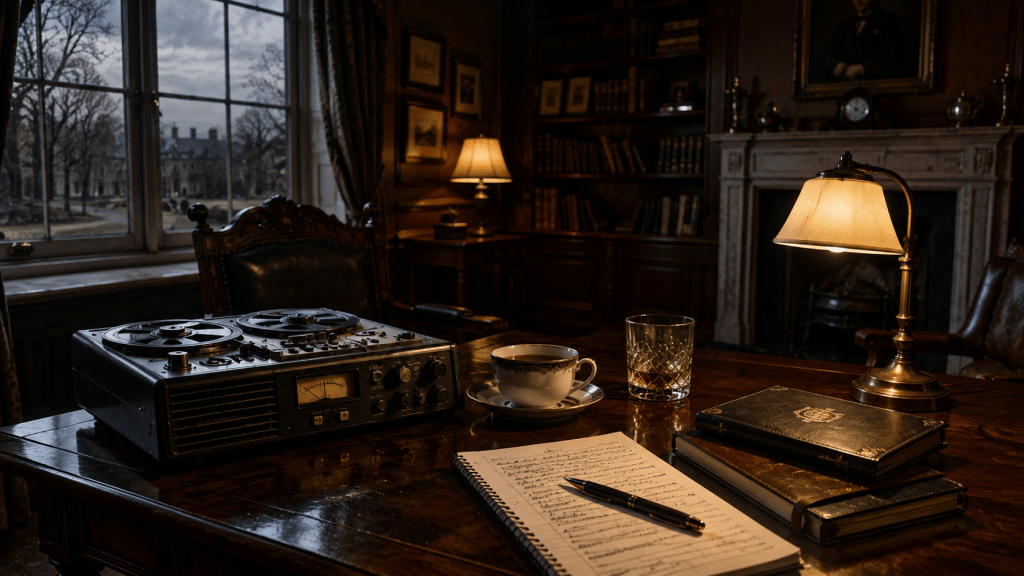
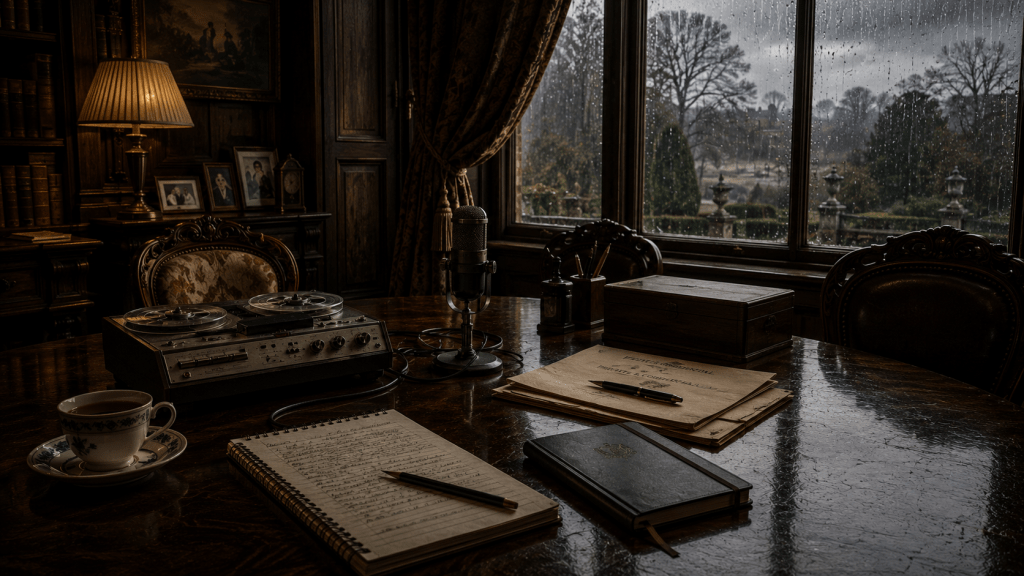
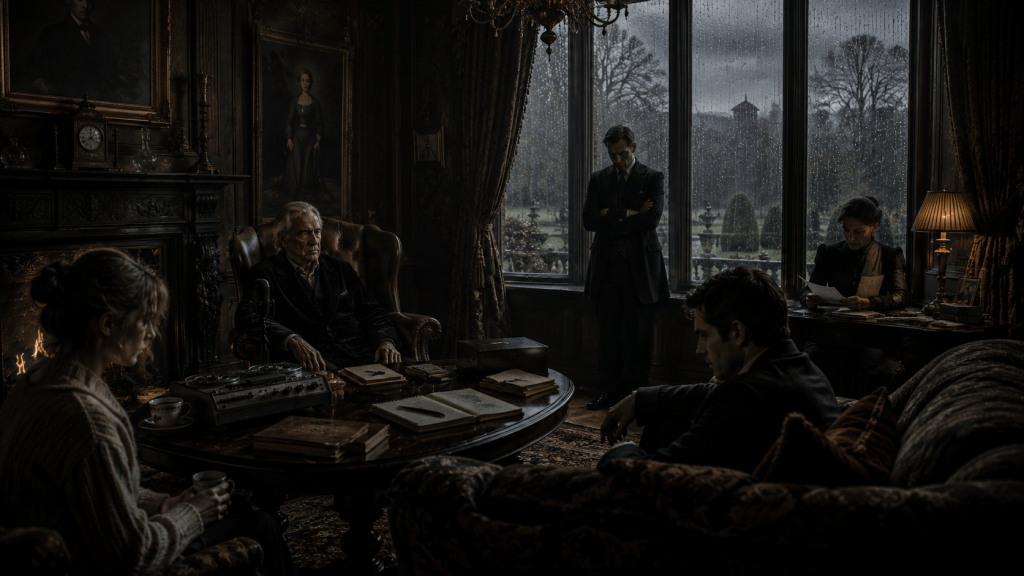
Rain presses against the glass of Vale House, soft enough to seem harmless until it begins to mark the room. On the table lies the recording equipment, the kind chosen because it feels deliberate, contained, almost old-fashioned; a machine with a patient wheel, a notebook, a pencil, a clean space on polished wood where memory is expected to become record. Marcus Vale sits nearby, old enough to be handled carefully by those who love him, composed enough to make that care feel almost unnecessary, and carrying within him a life that should have ended before the world became recognisable to anyone now living.

This is the pressure at the centre of The Vale Record, a work of historical vampire fiction where immortality is not treated as glamour, romance, or triumph. It is treated as evidence. It is there in the hand resting too long over an old wound, in the silence before Thomas Hargreave asks another question, in the family members who know too much and those who know almost nothing, and in the uneasy realisation that history may have been witnessed by someone who had no right to survive it.

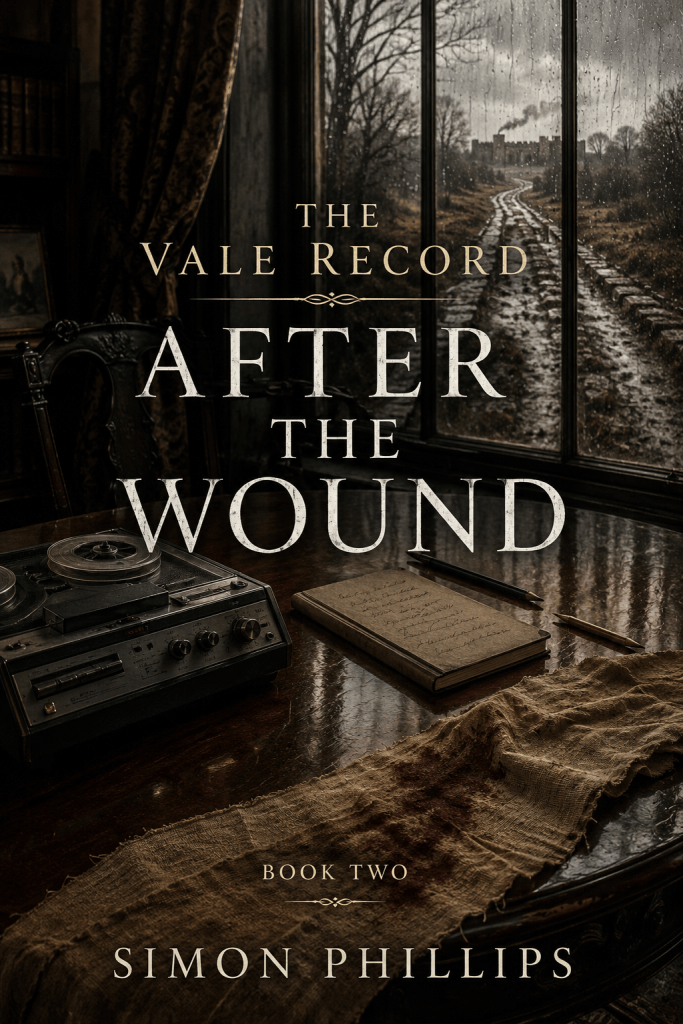
The Vale Record: After the Wound, the second book in the series, moves deeper into that unease. The first book opened the record and allowed Marcus’s memory to return to a Britain standing on the edge of Roman invasion. This second entry turns toward the aftermath, where empire is no longer merely arriving through shields and terror, but settling into roads, grain tallies, labour demands, marked doors, and the slow rearrangement of ordinary lives. It is a book about early Roman Britain, quiet vampire horror, family secrecy, and the frightening moment when survival itself begins to look like something less human.

The House Where Memory Has Already Started to Damage the Present

Vale House is not simply a grand old residence with a recording room inside it. It is a place designed by habit, silence, money, affection, and containment. Its surface remains domestic: tea cooling in mugs, doors closing carefully, family members crossing landings, staff moving quietly through rooms that know when to pretend nothing has changed. Yet after the first recording session, the house no longer feels neutral. The table has shifted. The chairs have been arranged with more intention. Margaret Vale has brought documents into a room where memory was supposed to be spoken, and Julian Vale no longer watches only the outside approach. He watches the room itself.

That alteration matters because After the Wound understands that testimony is not passive. Once Marcus speaks, other people change around what they have heard. Thomas Hargreave, hired as a careful archivist and private recorder, returns not with easy belief, but with discipline. He has listened to something that cannot be fitted safely inside accepted chronology, and walking away has failed to make it smaller. Margaret, alert to reputation and exposure, tries to turn fear into procedure. Eleanor Vale, emotionally close to Marcus and still kept from the central truth, feels the shape of exclusion even when no one will name it for her.

This is where the series becomes more than a tale of an immortal protagonist remembering the past. The present-day frame is alive. It tightens each time the recorder turns. Thomas is not merely preserving Marcus’s words; he is learning how to hear the pauses, the evasions, the places where memory becomes too exact. Eleanor is not simply waiting outside the truth; she is being wounded by the silence meant to protect her. Julian is not only a guardian of secrecy; he is a controlled danger inside the same room. The record is supposed to contain history, yet history keeps altering the people who gather to hear it.

Roman Britain After the First Violence

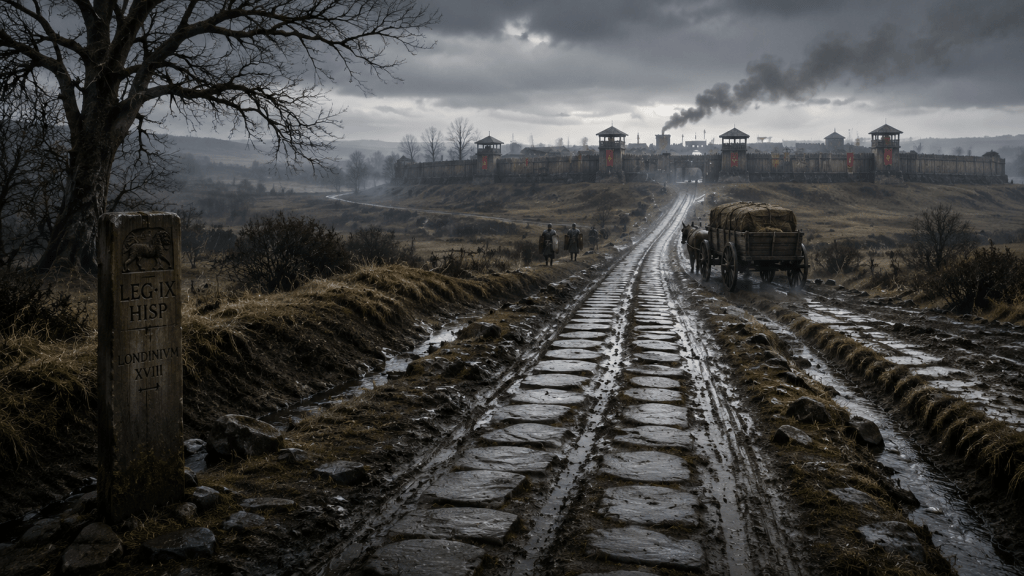
In many stories, conquest is treated as a dramatic moment: a battle, a burning settlement, a leader fallen, a people broken. After the Wound is more interested in what comes after that first rupture, when the smoke thins and the road remains. Roman Britain in this book is not presented through detached explanation or grand historical lecture. It is felt through hunger, wet ground, cold camps, grain moving under guard, doors marked for collection, men taken for labour, and families forced to decide which compromises will keep children alive.

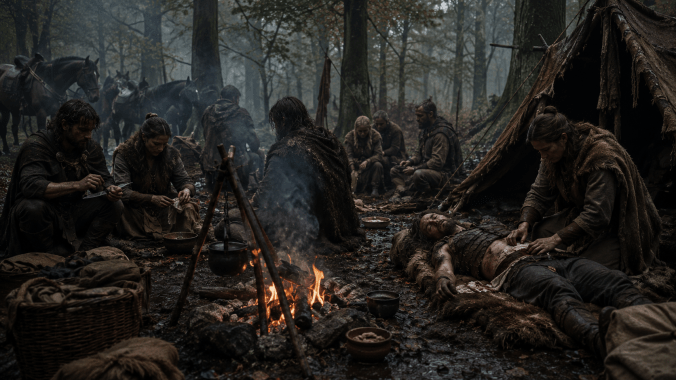
Marcus’s remembered world is one of displaced survivors moving through woodland and broken margins after resistance has been damaged. Aeddan’s group is not heroic in any clean or theatrical way. They are hungry, wounded, frightened, practical, suspicious, generous when they can afford it, and cruel when survival narrows the room available for kindness. Rheda binds wounds and sees too much. Celyn watches Marcus with gratitude that slowly becomes observation. Garan bleeds in a hollow after a raid, and that blood changes the book’s direction more deeply than the fight itself.

The Romans in the book are frightening because they stay. Their roads cut through the land with a permanence older tracks never claimed. Their carts carry grain away from people who need it. Their forts gather smoke in the distance. Their order is not supernatural, yet it possesses its own quiet horror: the horror of a system that returns every day until the people living beneath it must adapt, resist, collaborate, starve, or move again.

That grounding gives the book its force as British historical supernatural fiction. The vampire element does not rewrite Roman history or explain empire away. Marcus does not stand above events as a hidden ruler or secret architect. He survives among people being pressed by real historical forces, and the supernatural emerges through the body rather than through spectacle. Mud, iron, rain, leather, blood, hunger, and cold carry more weight than any dramatic declaration ever could.

The Body That Refuses to Behave Like a Human Body

The title After the Wound is exact because the wound itself is not the only terror. The terror lies in what follows it.

Marcus has already survived once when he should have died. In the second book, that survival becomes pattern. He wakes after another severe injury, lying in damp earth beneath trees, his body damaged enough that others believed him gone. Celyn finds him. Rheda examines him. The wound should remain open. He should be colder. He should be weaker. He should not be speaking so steadily, standing so soon, walking so far, or returning to usefulness while others carry injuries that scar, stiffen, and remain.

This is where the series becomes powerful as literary vampire fiction. Marcus does not understand himself through a burst of lore or revelation. He understands through discomfort. Through other people looking at him for slightly too long. Through Rheda’s practical concern when the body under her hands refuses ordinary sequence. Through Aeddan’s recognition that Marcus can do too much. Through Celyn’s quiet observation that Marcus looks the same while everyone else is changing.

The horror grows because Marcus remains morally awake. He is not frightened because he has become a monster in the simple sense. He is frightened because his body begins answering before he has given it permission. He runs too fast when Celyn falls. He carries too much after the grain raid. He heals too cleanly. He stands when other wounded men remain bound to the ground by pain. At first these differences make him useful, and usefulness is dangerous because people in desperate circumstances will accept almost anything that keeps them alive.

Yet usefulness is never the same as belonging. Aeddan understands this. People may lean towards what saves them, then turn against it once they feel ashamed for needing it. Marcus’s condition begins isolating him before anyone names it, and the book’s deepest unease lives in that space between gratitude and suspicion.

Blood, Shame, and the First Shape of Hunger

The most important moment in After the Wound does not arrive as a dramatic feeding scene. No one is attacked in theatrical fashion. There is no gothic flourish, no indulgent monster moment, no romanticised appetite. Instead, the horror arrives in a hollow after violence has already passed, when Garan is wounded and Marcus moves close with cloth in his hand.

The smell of warm blood reaches him. His attention narrows. The ordinary world recedes. His mouth dries. Something inside him leans towards the wound before he has shaped the movement into thought. His hand moves closer when it should be helping. Then shame catches up.

That is quiet vampire horror at its strongest. The danger is not spectacle. It is delay. The tiny interval between bodily impulse and moral control. Marcus’s fear is not that he has become powerful, but that part of him may move before choice arrives. That single recognition changes how he behaves afterwards. He washes his hands too long in the stream. He avoids the wounded. He chooses tasks that take him away from blood. He begins the long work of concealment before he fully understands what he is concealing.

For readers looking for vampire fiction without romance, this is where The Vale Record offers something different. It does not treat blood as seduction. It treats blood as need, danger, repair, shame, and discipline. Marcus remains human in conscience even as his body begins proving otherwise. That tension gives the series its emotional centre: the vampire is not frightening because he has lost all humanity, but because he has retained enough humanity to be horrified by what survival demands.


Thomas Hargreave and the Danger of Learning How to Listen

In the present day, Thomas Hargreave’s role sharpens. In the first book, he was troubled by impossible chronology. In After the Wound, he becomes troubled by biology. He begins to understand that the most revealing parts of Marcus’s account are not always dates, names, or formal historical markers, but bodily repetitions: wounds that heal too quickly, cold that fails to take hold, hunger near blood, strength arriving where collapse should have been, and Marcus’s own careful avoidance when a subject comes too close to truth.

Thomas’s danger lies in his restraint. He is not reckless. He is not a sensationalist. He does not burst into accusation or demand an explanation the story has no intention of giving too early. He listens. He notices. He waits. He begins to understand that belief is a poor starting point, yet pattern is harder to dismiss.

That makes him one of the most important figures in the series. He is not simply a recorder of old stories. He is becoming a witness to the cost of them. When Marcus gives him a chance to leave, Thomas understands that leaving would serve comfort more than clarity. By choosing to continue, he accepts that the record is changing him as well.

The series therefore becomes a story about recorded history in a deeply intimate sense. Not public history. Not museum history. Not the kind of history arranged safely behind glass. This is history spoken by an old man whose body remembers too much, taken down by a careful listener who cannot yet know what his listening will cost.

Family Secrecy as Wound, Not Decoration

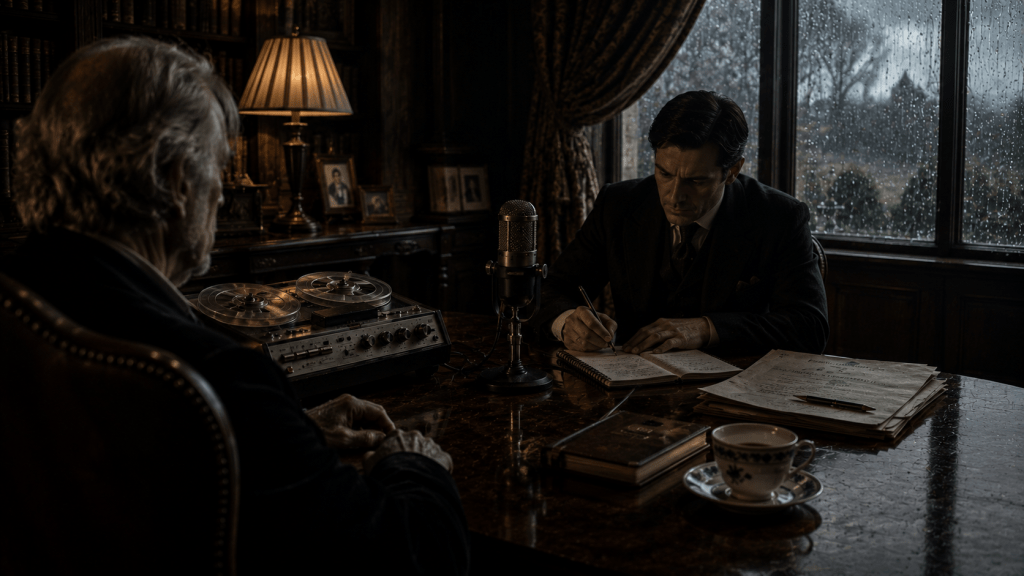
The present-day family pressure in After the Wound is as important as the Roman past. Margaret Vale tries to control the recording through documents because paper is the kind of authority she understands. Julian tries to control the room through position, attention, and readiness. Eleanor tries to understand why everyone suddenly speaks around her. Marcus tries to keep the people he loves safe from a truth that may already be hurting them through absence.

This is why Vale House matters so strongly. It is not a generic old house placed around a vampire for atmosphere. It is a family structure under strain. Every closed door means something. Every unanswered question leaves a mark. Eleanor’s pain comes from being loved and excluded at the same time, and that is one of the series’ most human pressures. Marcus wants her to love him as her grandfather, not as a myth, monster, or impossible witness to human history. Yet protection has its own cruelty, and Eleanor is beginning to feel it.

Julian’s role deepens as well. He is secrecy’s safeguard, yet the second recording shows that even he can be affected by what is spoken. When Thomas presses Marcus about blood, Julian’s restraint strains in a way Marcus recognises immediately. The past has entered the present with enough force to make the room unsafe. The danger is no longer contained in memory.

For readers drawn to books about family secrets and immortality, After the Wound offers a restrained, emotionally weighted version of that promise. The secret is not a puzzle-box gimmick. It is inheritance, love, fear, bodily need, and the cost of deciding who deserves truth before the person holding it disappears.

Why After the Wound Belongs to Adult Historical Vampire Fiction

The Vale Record: After the Wound is historical vampire fiction for readers who prefer atmosphere over spectacle, consequence over action display, and moral pressure over easy supernatural glamour. It belongs to the tradition of gothic historical fiction in mood, yet it resists the obvious trappings of gothic melodrama. Its darkness lies in the quiet places: the altered recording room, the road that stays after conquest, the wound closing too quickly, the bowl of thin broth, the hand reaching towards blood before conscience catches it.

The book’s vampire element remains grounded in the body. Marcus is not invulnerable. He is wounded, frightened, ashamed, and forced into self-observation. His strength does not free him from history. His endurance does not save the people around him from Rome, hunger, injury, or compromise. The supernatural thread deepens the human pressure rather than replacing it.

That is what makes the series compelling as literary supernatural historical fiction. It asks what immortality would feel like once stripped of glamour. What happens when a man survives long enough to become evidence against his own humanity? What does family love become when truth would damage the people it is meant to protect? What does memory become when speaking it aloud alters the room, the listener, and the old man telling it?

In After the Wound, Marcus Vale is no longer only the man who remembers before the empire. He is the man who begins to understand that his body has carried him into something he cannot name, something that will shape every later century, every act of concealment, every relationship he tries to preserve, and every silence inside Vale House.

The record has only just begun, yet it has already learned where to hurt him.
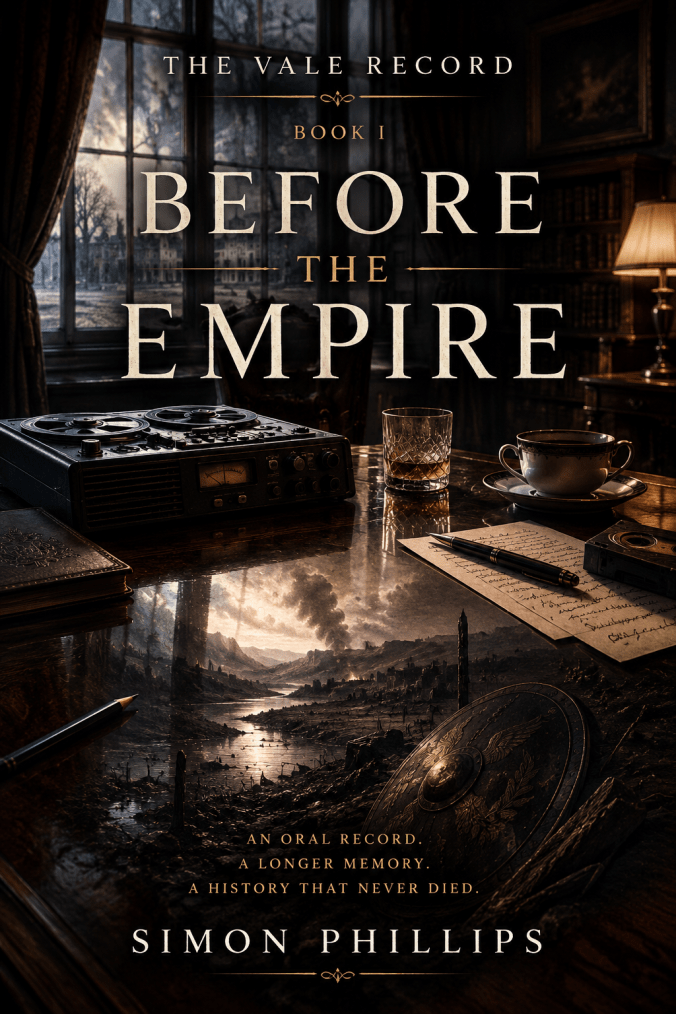
Historical Vampire Fiction, Roman Britain, and the Burden of Memory in The Vale Record: Before the Empire

The room is quiet before the record begins. A table holds its polished surface against the morning light. A recorder waits beside paper, pencils, and the small, careful equipment of a man trained to preserve what others are usually content to forget. Outside the windows, winter sits against the glass. Inside Vale House, the ordinary sounds of family life continue through walls and corridors, steady enough to suggest that nothing truly dangerous has entered the room.

Then Marcus Vale begins to speak.

The Vale Record: Before the Empire opens a historical vampire fiction series built around memory rather than spectacle, decline rather than glamour, and survival rather than conquest. This is literary supernatural historical fiction where the vampire is first encountered as an ageing family patriarch, seated in an old house with tea cooling beside him, preparing to have his memories recorded before they disappear with him. The unease does not arrive through fangs, seduction, or gothic excess. It arrives through dates that refuse to fit, through a body that has outlived its own explanation, and through the quiet understanding that some histories were never meant to be spoken aloud in a family home.

For readers looking for vampire fiction without romance, quiet vampire horror, Roman Britain vampire fiction, or gothic historical fiction grounded in human consequence, this first book in The Vale Record offers something deliberately different. It does not ask what power immortality might bring. It asks what remains after survival has gone on too long.


The Old House Where History Begins to Speak

Vale House is not presented as a ruined gothic mansion or a theatrical lair. It is older, quieter, and more dangerous because it remains domestic. Doors close. Tea is made. Family members cross landings. Julian Vale watches too closely. Eleanor Vale loves her grandfather without knowing how near she stands to the truth. Thomas Hargreave arrives with analogue recording equipment and the professional restraint of an archivist who believes that every life, however complicated, can eventually be placed into order.

The danger is that Marcus Vale cannot be placed into order.

He gives Thomas ordinary answers at first. A name. A place. A year. A human life that appears to belong safely to the twentieth and twenty-first centuries. Yet his body betrays strain before his testimony breaks chronology. His hand trembles. Words fail and return. Fatigue gathers beneath his composure. The act of remembering is not a decorative frame around the story; it is physical labour, and every question asked in that room changes the air around it.

This is where The Vale Record finds its true shape. The series is not built around a monster revealing himself in dramatic fashion. It is built around an old man choosing what to say while his family remains close enough to be harmed by the truth. Thomas is not a hunter or a sceptical investigator barging into forbidden rooms. He is a listener. That makes the recording more intimate, and far more unsettling. He is there to preserve memory, but memory in this world does not sit quietly once released.

Marcus says he will not give Thomas an origin story. That refusal matters. Before the Empire does not flatten itself into a familiar vampire explanation. It begins, as Marcus chooses, with land.


Before Rome, Before Explanation, Before the Myth

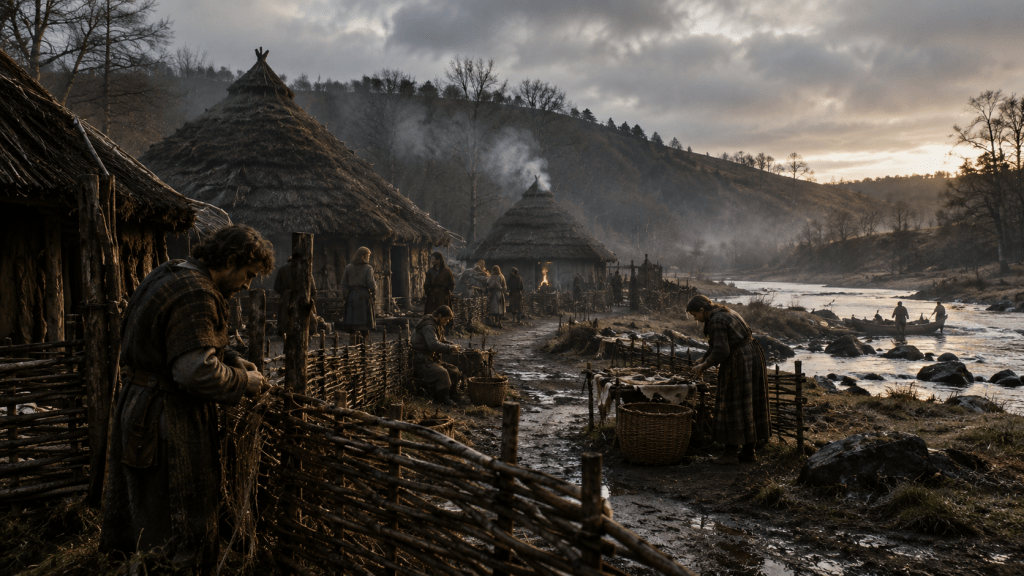
When the first memory opens, the polished table of Vale House gives way to damp ground, cold air, river water, smoke, leather, leaf mould, and the communal rhythms of pre-Roman Britain. Marcus belongs to a world where identity is carried through work, kin, weather, firelight, and the ground beneath the feet. There is no grand speech about empire, no distant historical lecture, no modern explanation imposed over ancient life. The reader enters through the body.

This is one of the strongest promises of the book. History is felt before it is interpreted.

Marcus repairs fences, shares water, listens by the fire, watches the river, and hears rumours that do not yet know how to become history. Strange metal passes from hand to hand. Roads are said to be cut in straight lines, laid with no care for the land already there. Soldiers are mentioned as something distant, perhaps exaggerated, perhaps manageable. In that early part of the memory, Rome is not yet the empire of schoolbooks and monuments. It is pressure moving nearer through objects, reports, unease, and the slight alteration of familiar paths.

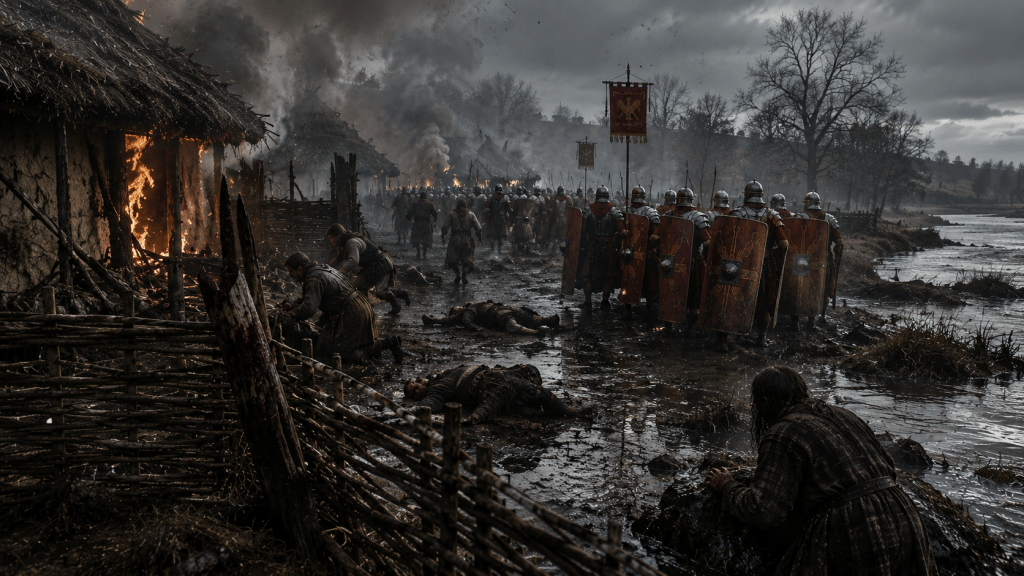
That restraint gives the Roman arrival its weight. The invasion does not come as spectacle. It comes as order imposed on a world that has no time to understand it. Shields catch the light. Boots strike in rhythm. Lines form where bodies once moved by habit and local knowledge. Marcus’s settlement is not defeated as an abstract political unit. It is broken as a lived place. People shout for children. Huts burn. The river darkens. A repaired fence becomes the place where a friend dies.

For readers drawn to ancient Britain historical fiction, Roman Britain fiction, or supernatural historical fiction that respects the human scale of the past, Before the Empire offers a deeply grounded entry point. The historical world does not exist as a painted backdrop for vampire lore. It exists as a place Marcus once belonged to, and that is why its destruction matters.


Marcus Vale and the Horror of Continuing

The supernatural element in Before the Empire is powerful because it remains restrained. Marcus is not shown as an invincible creature striding through Roman violence. He is struck, thrown down, hurt, exhausted, and overwhelmed. He fights because others fight. He helps where he can. He fails where anyone would fail. He survives when others do not, and that survival is the wound the book leaves open.

This is quiet vampire horror in its most human form. The frightening question is not how Marcus feeds, how strong he is, or what ancient powers he possesses. The frightening question is what it means to continue when the people, places, and meanings that shaped the self have been destroyed.

In the historical memory, Marcus’s survival is interpreted by others through the language available to them. Perhaps the gods have hold of him. Perhaps luck has refused to release him. Perhaps the body has simply failed to do what death expected of it. The book does not rush to correct them. It allows the moment to remain human, confused, and painful. Marcus is taken up again by the same earth on which others remain dead, and the ground marks no difference.

That image is central to the entire series. Immortality here is not a fantasy of endless youth. It is erosion. It is being carried forward while the world repeatedly removes the people who made continuation meaningful. Marcus Vale is compelling because he remains human in feeling even when his body proves otherwise. He can be dry, affectionate, controlled, irritated, protective, and tired. His age does not turn him into a mythic voice above history. It makes him a witness burdened by too much of it.


A Vampire Story Without Romance or Spectacle

Many vampire books lean towards seduction, eternal beauty, violent glamour, or power fantasy. The Vale Record: Before the Empire moves in another direction entirely. It is vampire fiction without romance, built for readers who want atmosphere, historical pressure, family secrecy, and literary supernatural unease rather than paranormal courtship or theatrical monster mythology.

The vampire condition is treated through consequence. Marcus’s body is old, altered, and failing. His memory reaches beyond any human lifespan. His presence in Vale House is both beloved and dangerous. Julian’s vigilance suggests that the family has survived by controlling knowledge, timing, and access. Eleanor’s closeness makes secrecy emotionally costly. Thomas’s recording work turns private memory into an object that can be preserved, misread, stolen, believed, or feared.

That is where the modern frame becomes essential. Vale House is not a pause between historical sections. It is the pressure chamber where each memory returns changed. Thomas begins with method, but method cannot easily hold a testimony that contradicts the official record of a man’s life. Eleanor senses tension without being given its source. Margaret Vale arrives with the instinctive suspicion of someone who understands that family stories can damage reputation, inheritance, and control once they escape their proper boundaries.

The result is a book where the present and the past press against one another. Roman roads, burned settlements, family rooms, archive notes, pencils, analogue tape, old money, and old blood all belong to the same slow unease.


Thomas Hargreave and the Danger of Listening

Thomas Hargreave gives the book one of its most important human tensions. He does not arrive looking for monsters. He arrives to do a job properly. His equipment is practical, deliberately restricted, and almost humble beside the scale of what Marcus carries. He is careful with questions. He respects boundaries. He notices strain. He writes things down.

That is what makes his position dangerous.

To record Marcus Vale is to become responsible for something that cannot be comfortably filed. Thomas hears a man who claims a modern birth date speak of pre-Roman Britain as remembered life, not research, fantasy, or inherited story. He hears details carried through the senses rather than through historical summary. He understands enough to be unsettled, and not enough to be safe.

This is one reason Before the Empire works so well as the opening entry in a larger historical supernatural series. It does not explain everything at once. It lets Thomas stand where the reader stands, close to the impossible, aware that something has changed, unable to force the truth into a convenient shape. His unease becomes part of the reading experience. The archive is no longer neutral. The record has begun to act upon the people preserving it.


Family Secrecy, Old Blood, and the Cost of Protection

At the heart of The Vale Record lies a family arrangement built on love and concealment. Marcus has protected Eleanor from the truth because he wants her to love him as her grandfather, not as a legend, monster, miracle, or historical impossibility. That protection may be tender, yet it is also a form of control. Eleanor is close enough to notice his tremor, his fatigue, and the strange tension surrounding Thomas’s visits, while still being kept outside the knowledge that would allow her to understand what she is seeing.

Julian Vale represents another layer of the same secrecy. He watches, calculates, and contains. His presence is quiet, controlled, and edged with the threat of action if exposure becomes too great. He is not written as a flamboyant supernatural guardian. He is far more interesting than that: a family member shaped by vigilance, loyalty, danger, and long practice.

Margaret Vale brings a different pressure into the house. Her concern is not wonder. It is damage. Archives can disturb reputations. Testimony can unsettle businesses, inheritance, and family order. She understands that the past is never harmless once preserved in a form that can travel beyond a room. Her arrival turns the recording from private arrangement into family risk.

For readers drawn to books about family secrets and immortality, this is where The Vale Record gains much of its emotional force. The vampire truth matters, but the human relationships around that truth matter just as much. Every silence has a cost. Every protection creates another danger. Every memory Marcus releases brings someone else closer to what he has spent generations controlling.


Why Before the Empire Belongs on the Shelf of Adult Historical Vampire Fiction

The Vale Record: Before the Empire is historical fiction with vampires, but it resists the easy path of making the vampire responsible for history. Marcus does not create Rome, guide rebellion, command armies from the shadows, or stand behind famous events as their hidden author. Human history remains human. That choice gives the book its integrity.

Marcus survives history; he does not own it.

This makes the series especially appealing for readers who enjoy British historical vampire fiction, literary vampire fiction, immortal protagonist fiction, and adult supernatural historical fiction where atmosphere and character carry more weight than spectacle. The book understands that a long life would not simply accumulate power. It would accumulate grief, omissions, practical adaptations, and memories that no longer fit the identities required by the present.

The Roman material in Before the Empire is not there for grandeur. It is there because empire changes the shape of ordinary ground. Roads cut through older paths. Military discipline overwhelms local rhythm. The settlement, once held together by work, speech, repair, and familiarity, becomes an arranged aftermath. Marcus’s first great fracture is not the discovery of supernatural power. It is the loss of belonging.

That makes the title feel quietly exact. Before the empire, Marcus had a place. After it, survival continues, and everything begins to move away from what he once understood.


Entering the Record

The best way to approach The Vale Record: Before the Empire is not as a conventional vampire tale, nor as a simple piece of Roman Britain fiction. It is the beginning of a record, and records carry their own dangers. They preserve, but they also expose. They give shape, while changing what they hold. Once Marcus speaks, the memory no longer belongs only to him.

The book invites the reader into a room where an old man sits beside a recorder, watched by people who love him, fear for him, or fear what he may reveal. From there it moves into mud, smoke, iron, blood, cold water, and the first terrible understanding that survival can become its own form of loss. It returns to Vale House with that pressure still clinging to the body, leaving Thomas with impossible notes, Eleanor with unanswered unease, Julian with strained restraint, and Marcus with the knowledge that another memory is already waiting.

For readers seeking indie vampire books with a serious historical atmosphere, Kindle vampire books for adults, or literary supernatural fiction centred on memory, family secrecy, and old blood, Before the Empire offers an opening that is quiet, controlled, and difficult to shake loose.

The record has begun. The first memory has been spoken. The house still stands, outwardly ordinary, yet something has moved through it that cannot be put back exactly where it was.