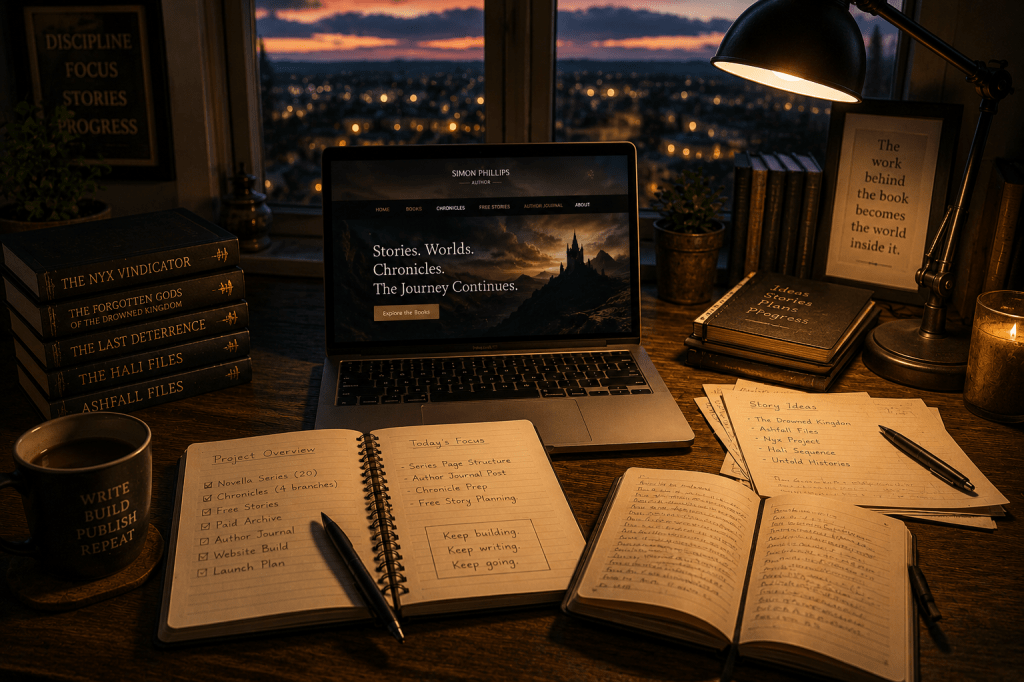
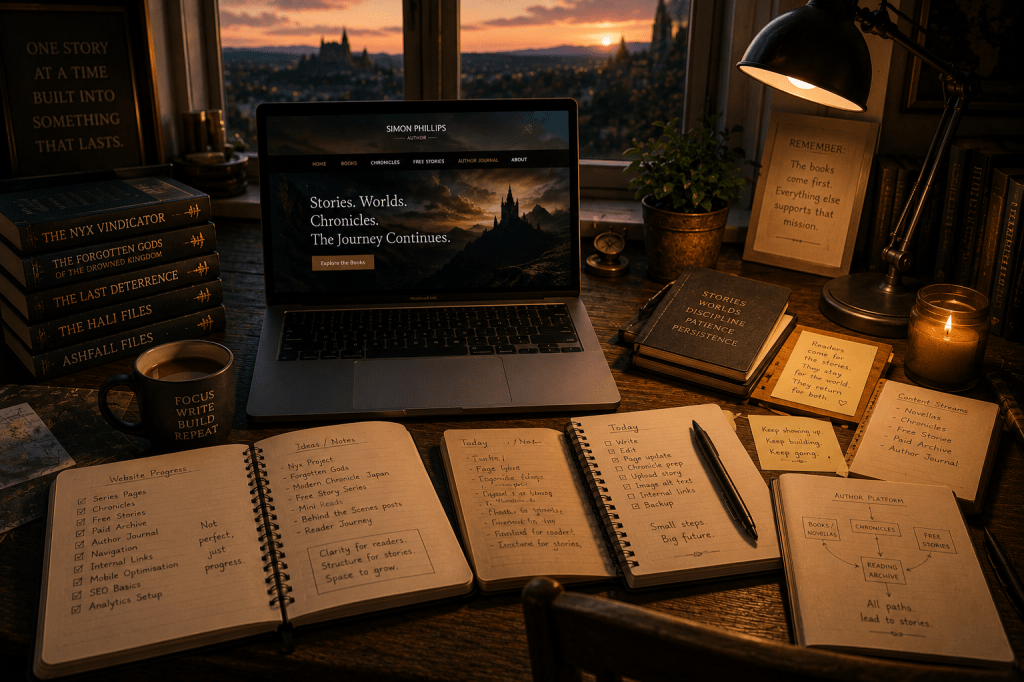
Why Free Fiction and Paid Reading Both Belong on the Same Website

Finding a Fair Shape for the Website
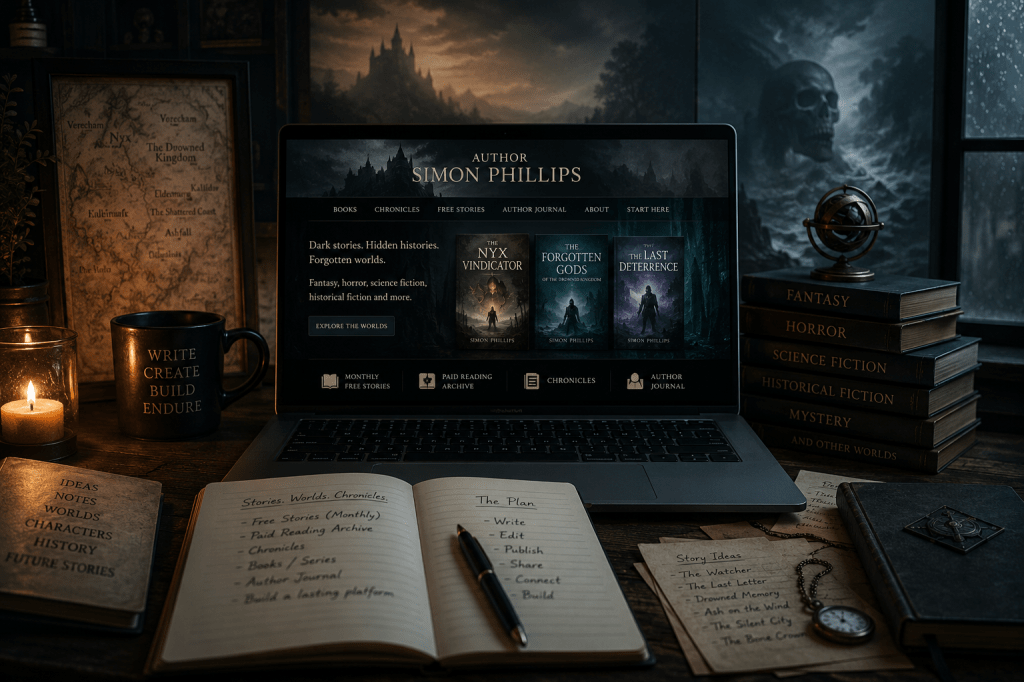
One question has kept returning while I rebuild my author website: how should complete free fiction and paid reading sit beside each other?

I want the website to give readers a genuine way into my writing. I also want it to support the time, planning, writing, editing, publishing, and maintenance behind that work. Those aims can appear to pull in different directions, especially when an author website is trying to welcome new readers while becoming part of a long-term independent income.

For me, the answer is to give both forms of reading a clear place.

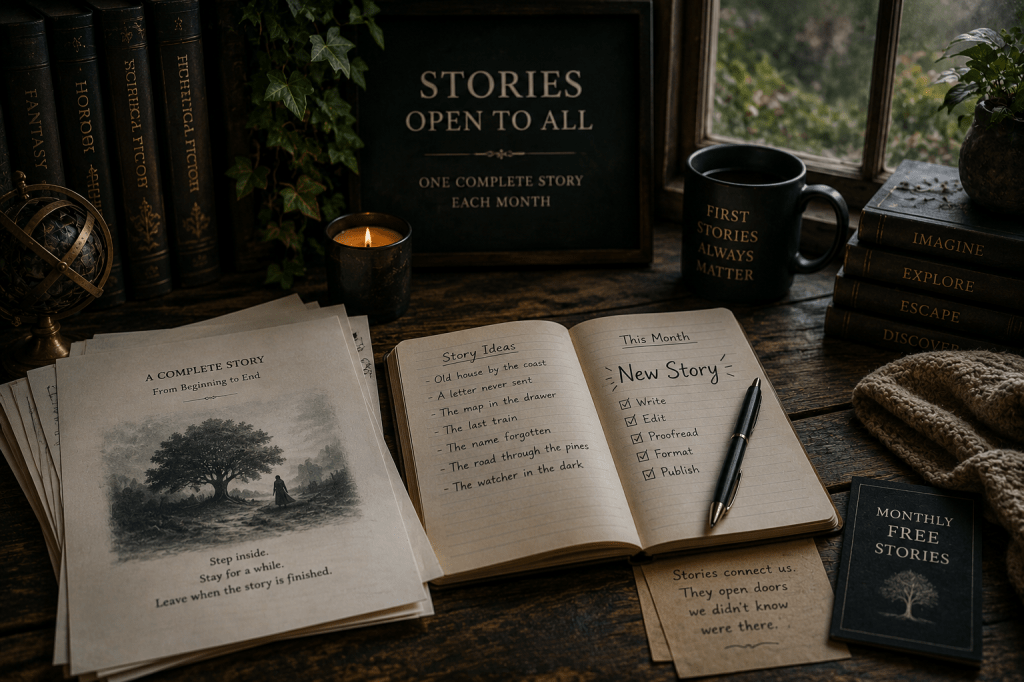
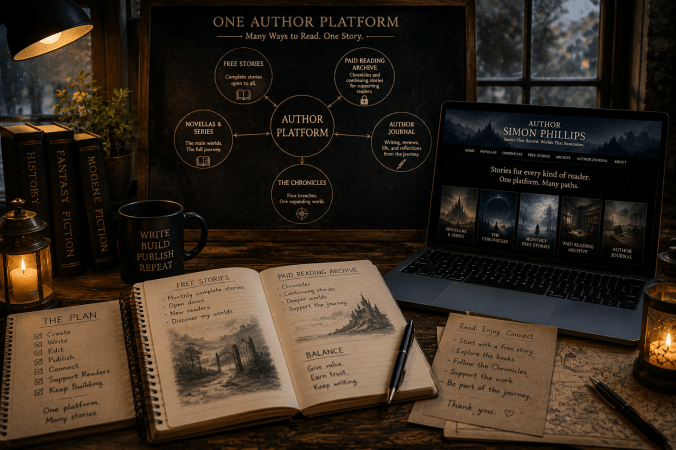
Monthly Free Stories offers one complete free story each month. The Paid Reading Archive gives selected continuing work, particularly the Chronicles, a place where it can help support the wider platform. Each area serves a different purpose, and the distinction needs to remain honest.


Why I Wanted Complete Free Stories

I never wanted every route into the website to end at a payment screen. A new reader may know very little about my books, the Chronicles, or the different series I am building. Asking that reader to subscribe or pay before they have had a proper opportunity to read my fiction would place the decision too early.

Monthly Free Stories provides a simpler starting point.

Each month, I will publish one complete story on the website. The genre may change according to the idea. One month may bring horror, while another may lean towards science fiction, fantasy, historical fiction, mystery, modern fiction, or something that sits between established genres.

The important part is that the story should feel finished. A reader should be able to arrive, choose a story, and read it from beginning to end. There should be no missing conclusion or sudden payment gate before the final section. The free story should give the reader a complete piece of fiction, even when the idea later proves capable of growing into something larger.

This also gives me room to write beyond the established series. Some ideas clearly belong inside a book project from the beginning. Others are smaller, stranger, or still uncertain. A complete standalone story gives those ideas room to exist before I decide whether they deserve a larger future.

Some may eventually suggest a series or book. Others may remain single stories that achieved exactly what they were meant to achieve.

Why Paid Reading Still Matters

Writing carries practical costs that readers rarely see directly. The time spent developing a story is only one part of the process. There is also revision, proofreading, formatting, cover preparation, website maintenance, image work, archive management, platform subscriptions, and the regular work required to keep everything organised.

A paid reading section gives part of that work a direct way to support itself.

The Paid Reading Archive is intended for material that benefits from an ongoing home, especially Chronicle issues and other selected work connected to the regular publishing structure. Readers may begin with an open section, understand the subject and tone, and then choose whether they wish to continue.

That choice needs to remain clear. Readers should understand which material is free, which material requires payment, and what access provides. Clear labelling matters because trust can disappear very quickly when the boundaries between free and paid material become uncertain.

Paid reading also allows WordPress to function as a full author platform instead of acting as a collection of links pointing towards other services. The website should hold fiction, organise it properly, give readers reasons to return, and contribute towards the continuing work behind the books.

Different Forms of Reading Serve Different Needs

Free fiction and paid content are sometimes discussed as though one must weaken the other. I see them as serving different readers and different kinds of work.

The free stories help readers discover my fiction. They show the range of genres I write, the kinds of atmosphere I return to, and the human pressure, uncertainty, history, strange systems, or hidden danger that often sits inside the work. They also give existing readers something complete to read between book releases and Chronicle posts.

The paid archive supports regular and continuing material. It gives readers who want to follow the work more closely a clear place to do so, while helping with the practical cost of keeping the website active.

The distinction matters. Free fiction should feel complete and worthwhile. Paid reading should offer enough depth, continuity, or regular material to justify the cost. Each side can remain clear about what it offers.


Avoiding the Feeling of a Sales Funnel

I am wary of turning every free piece into a carefully disguised route towards payment. Readers can usually sense when a story exists mainly to push them towards a purchase, and that approach would make the fiction feel secondary on an author website.

Monthly Free Stories needs its own integrity.

Each story should provide a full reading experience. A closing link may guide readers towards the books, another free story, a related series page, or the Paid Reading Archive, yet the story itself should already have delivered what it promised.

One reader may finish a story and leave the site. Another may return the following month. Someone else may move towards a book series, a Chronicle branch, or the paid archive. Each response is reasonable, and those choices should grow naturally from interest.

This means the website has to be organised carefully. Free stories need a clear home. Paid material needs equally clear labelling. Series pages need to remain focused on the books. Chronicle pages need to explain what readers can expect, while the Author Journal should remain a supporting area where I can discuss the work behind the fiction.

Clear structure helps readers understand where they are and what each part of the site offers.


Giving Readers Several Ways Into the Work

Readers will arrive with different interests and different levels of familiarity with my writing. Some may already know one of the books. Some may discover the website through a Chronicle post. Others may find an Author Journal article, a free story, a social post, or a short video.

Trying to force every reader through one route would make the website too narrow.

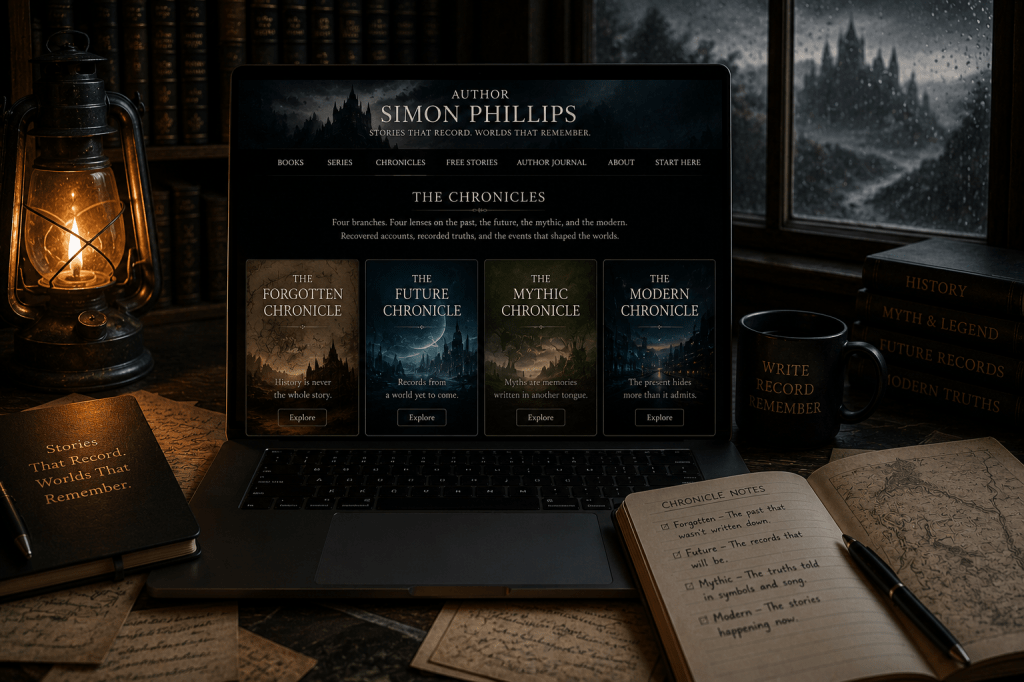
The books remain the main body of the work. The permanent series pages give each larger project a proper home. The Chronicles provide regular themed reading. Monthly Free Stories offers complete standalone fiction. The Paid Reading Archive holds selected continuing material. The Author Journal explains parts of the work and the decisions behind it.

These areas can connect to one another while still making sense individually.

That is particularly important for a website covering several genres and many long-term series. A reader interested in historical fiction may have little interest in science-fiction horror. Someone who enjoys a free ghost story may later discover one of the darker historical series. Another reader may prefer the Chronicle format and spend most of their time within that part of the site.

The website needs enough structure to support those different reading habits while keeping the overall author identity clear.


Keeping the Balance Honest
The balance between free and paid reading will probably need adjustment as the website develops. Some monthly stories may grow longer than expected. Certain Chronicle strands may suit the paid structure better than others. Some experiments may prove manageable, while others may demand too much time beside the books and existing publishing work.

I prefer to make those decisions through actual experience instead of pretending the whole system is already settled.

The main principles are clear enough to begin. Free stories will remain complete. Paid material will be labelled properly. The books will remain central. The Chronicles will keep their own identity. The website will offer several entry points, with each one connected to the wider author platform.

That gives me a structure I can develop while respecting the fact that readers use author websites in different ways.


What I Hope to Build Over Time

Over time, I want the website to hold a growing body of fiction that readers can move through at their own pace.

The Monthly Free Stories archive should become a shelf of complete standalone work across different genres. The Paid Reading Archive should become a deeper collection for readers who want regular access to Chronicle material and other selected pieces. The books and series pages should remain the main route into the larger story worlds.

A reader might begin with a free story, browse the books, follow a Chronicle, read an Author Journal post, or support the paid archive. There is no expectation that every reader will use every section.

The purpose is to respect different ways of reading while giving the work a practical chance to support itself. Free fiction gives new readers an open door. Paid reading gives interested readers a way to follow the work further and contribute towards its continuation.


Building the Sections Through Regular Work

The next stage is straightforward, even though it requires steady work. I need to keep adding the material that gives each area a reason to exist.

That means publishing the monthly stories, building the archive carefully, connecting posts to the correct pages, and making sure readers always understand where they are and what they are being offered.

The balance will develop through use. Some parts may change as I learn what is manageable and what readers choose to follow. The central idea will remain the same.

Complete free fiction and paid reading can belong on the same author website because they support the same wider purpose. They keep the fiction available, organised, and moving forward, while giving readers the freedom to decide how deeply they want to follow the work.
The Work Behind the Books

Why I Wanted to Start This Section

Most author websites naturally place the finished book first. That makes sense, because the book is usually the reason someone has arrived on the site. A reader wants to know what the story is, what kind of world they are entering, where to begin, and whether there is another book waiting after the first one.

I still want that to remain true here. The books, stories, series pages, Chronicles, free fiction, and paid archive are the main parts of this website. They are the reason the site exists. They are also the work I want readers to find, follow, and hopefully return to over time.

Even so, there is another side to the work that does not always fit neatly on a book page or a story page. It is the planning, the testing, the rebuilding, the slow decisions, and the small corrections that happen before a reader ever sees the finished result. That side is quieter, but it matters.

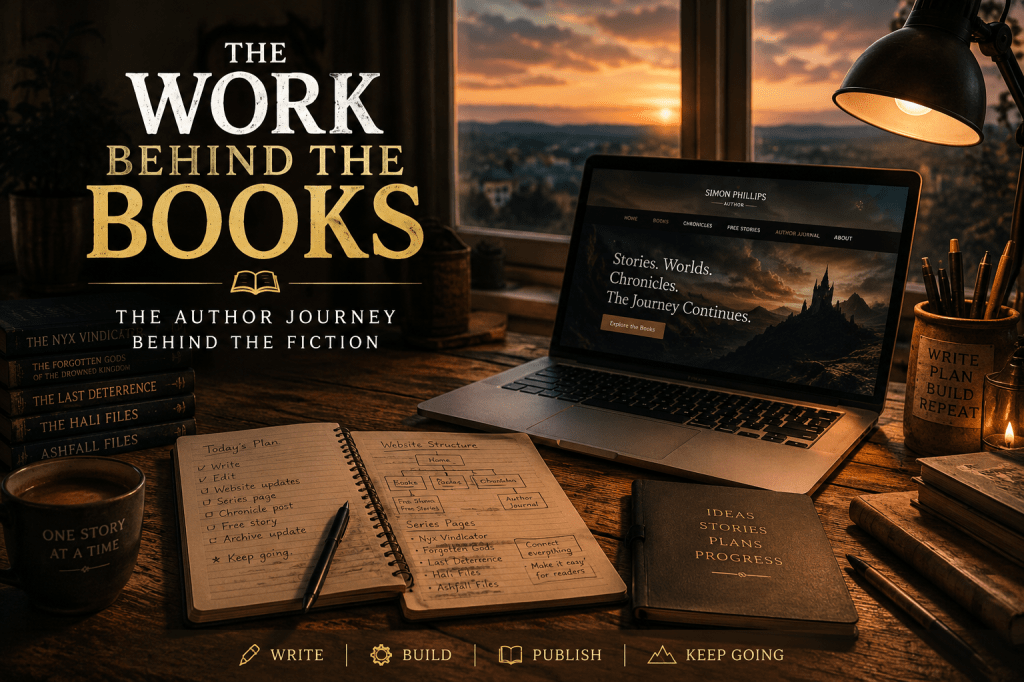
This Author Journey section is where I want to write about that part of the work.


What Readers Usually See First

By the time a book appears on a website, it can look fixed and simple. There is a cover, a title, a description, a purchase link, and perhaps a short note about the series. Everything seems clean because the messy part has already happened somewhere else.

The same is true of a Chronicle issue, a free story, or a new page on the site. The visible result is only the final layer. Behind it are choices about structure, timing, categories, images, links, tone, format, and how the piece fits into the wider author platform.

I have been thinking about that more as I rebuild the WordPress side of my author work. A website can easily become a list of books with a few links attached. There is nothing wrong with that in a basic sense, but it does not give much sense of the author behind the work, or the shape of the larger project being built.

I wanted a place where I could talk about that without turning every update into an announcement or a sales post.


The Work That Sits Behind a Finished Page

A lot of the work behind the books is not dramatic. It is often a matter of deciding where something belongs, what it connects to, and how a reader might find it later.

A story has to sit in the right place. A series needs a page that can grow over time. A Chronicle post needs to connect to the right branch without overwhelming the fiction it is meant to support. A free story should be easy to find, but it should not confuse the paid archive. A writing update should help readers understand what is happening without pulling attention away from the books themselves.

These decisions are small on their own, but they add up. They decide whether the website feels clear or scattered. They decide whether a reader has a simple path through the work, or whether everything becomes a pile of posts with no real direction.

That is one reason I have been treating WordPress as a serious part of the author platform rather than a spare noticeboard. I do not want the site to exist only as a bridge to somewhere else. I want it to hold the books, the story worlds, the Chronicles, the free fiction, the paid material, and the author updates in one organised place.


Building the Website Around the Fiction

The website is being built around the fiction first. That matters to me because it keeps the whole project honest.

The series pages are there for the books. The Chronicle branches are there to support discovery and give readers another route into the work. The free stories are there to let readers try the fiction without needing to pay first. The paid archive gives some of the longer material a proper home. The Author Journal sits beside those things, but it does not replace them.

That balance is important. I do not want the website to become a general blog where the books are pushed into the background. I also do not want every post to feel as though it is trying to sell something. Readers can usually sense that, and I do not think it helps build trust.

For me, the better path is to show the work clearly. Some posts will be about new stories or releases. Some will be about changes to the website. Some will be about what I am learning as I publish, organise, and keep going. The fiction remains the centre, but the process around it can still be worth sharing.


Why Every Update Should Not Be an Advertisement

A book advertisement has its place. A release post has its place. A paid archive update also has its place. Those posts are useful because readers need to know what is available and where to find it.

Still, if every update is only about buying, subscribing, or clicking through to something, the author begins to disappear behind the promotion. That is not what I want from this section.

I want some posts to feel quieter than that. I want room to write about decisions that are still forming, changes that have taken longer than expected, and practical lessons that might not sound impressive but are part of building something that lasts.

There is also value in admitting that not every part of the work is clean or fast. Some pages need rebuilding. Some ideas need sorting out before they make sense. Some stories take longer to place within the wider structure. Some plans look clear at the start and then need adjusting once the real work begins.

That does not mean the project is failing. It usually means the project is becoming more honest.


Writing Around Real Life

Another reason I wanted this section is that writing does not happen in a perfect empty space. It happens around work, family, tiredness, time pressure, and ordinary responsibilities. I do not want to turn that into the main subject of the website, but it is part of the truth behind the books.

There are days when the work moves quickly. There are other days when the most useful thing I can do is fix a category, update a page, make a note for a future story, or check whether the website still makes sense from a reader’s point of view. That kind of progress does not look impressive from outside, but it keeps the larger structure moving.

I have learned to take those smaller steps more seriously. A finished story matters, of course. A published book matters. A complete series page matters. Still, the quiet maintenance matters too, because without it the website becomes harder to use and the work becomes harder to follow.

The long-term goal is not to appear busy. The goal is to keep building in a way that readers can understand.


The Value of Small Progress

One thing I have had to accept is that slow progress is still progress when it is moving in the right direction. That sounds simple, but it is easy to forget when there are several books, several story worlds, different content streams, and a website that needs to hold all of them properly.

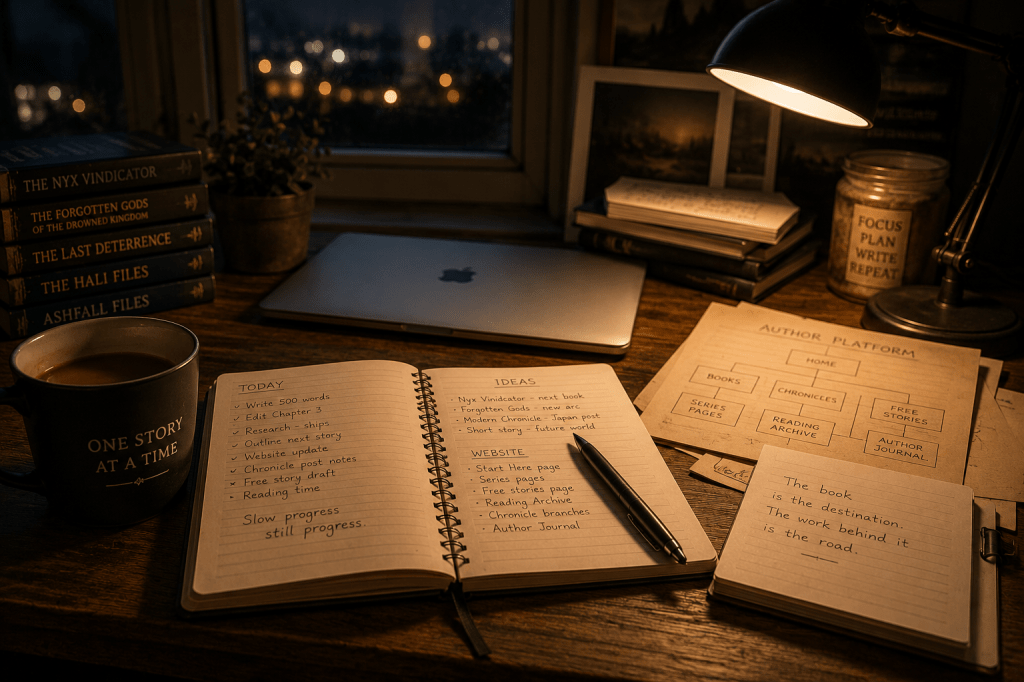
Small progress might mean writing a post like this. It might mean making the Author Journey section clearer. It might mean giving the Monthly Free Stories page a proper place. It might mean making sure a Chronicle issue links back to the right series page. It might mean writing a better excerpt, choosing a cleaner title, or deciding that a page should not try to do too many jobs at once.

Those things are not as visible as a new book cover, but they shape how the whole site works. They help the fiction feel less scattered. They also help me see the project more clearly as I build it.

That is one of the main reasons I want to write these posts. They give me a place to record the practical thinking behind the work while giving readers a clearer sense of what is being built.


What I Will Share Here

This section will mostly be about the writing life behind the books and the author platform around them. I expect to write about story progress, series planning, publishing decisions, KDP lessons, website building, WordPress changes, Substack reflections, YouTube experiments, mini-reads, free stories, paid archive updates, and the slow discipline of keeping a large fiction project organised.

Some posts may be simple progress notes. Others may look at a decision in more detail, such as why a page was added, why a series needs its own hub, or why free fiction belongs beside paid content. There may also be posts about setbacks, tiredness, false starts, and the problem of trying to build a writing career in real life rather than in theory.

What I do not want is a section full of empty advice. I am still learning many parts of this. I would rather write honestly about what I am trying, what has helped, what has been slower than expected, and what I am changing as the work develops.

That feels more useful than pretending everything was planned perfectly from the beginning.


Where This Fits on the Website

The Author Journey section is a support layer for the main website. It is here for readers who want to know more about the person building the books, the choices behind the site, and the practical work that sits around the fiction.

It should not take over from the books themselves. The series pages, Chronicle branches, free stories, paid archive, and main book pages remain the main paths through the site. This section simply gives those paths some human context.

I think that matters, especially with a site that is carrying several types of content. A reader might arrive through a free story, a Chronicle issue, a book page, or a post about the writing process. However they arrive, I want the site to feel connected rather than random.

That means building slowly, making careful decisions, and accepting that some of the less visible work is still part of the author life.


A Quiet Starting Point

This first post is not a major announcement. It is simply a starting point for a section I think the website needs.

There will still be book updates, story releases, Chronicle posts, free fiction, and paid material. Those are the main reasons the site exists. This section will sit beside them as a place for the quieter work: the planning, the lessons, the adjustments, the doubts, the useful mistakes, and the small steps that help the whole platform become clearer over time.

If you are here for the fiction, that remains the best place to begin. The books and stories are the centre of the site. If you also want to follow how the work is being built behind the scenes, this is where I will write about it.

I will keep adding updates as the site develops.