Burning Breath: Demon Hunter Horror Beneath a City Built Over Sacred Ruin


The city in The Hali Files rarely reveals its wounds openly.

It covers them first.

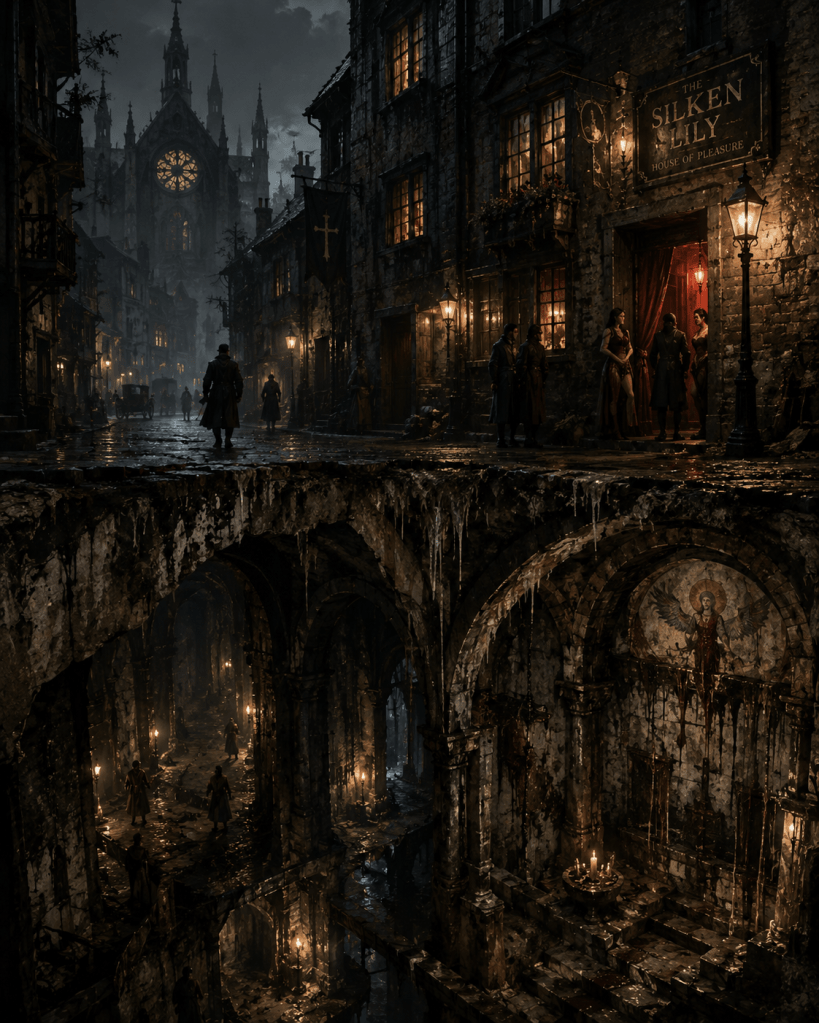
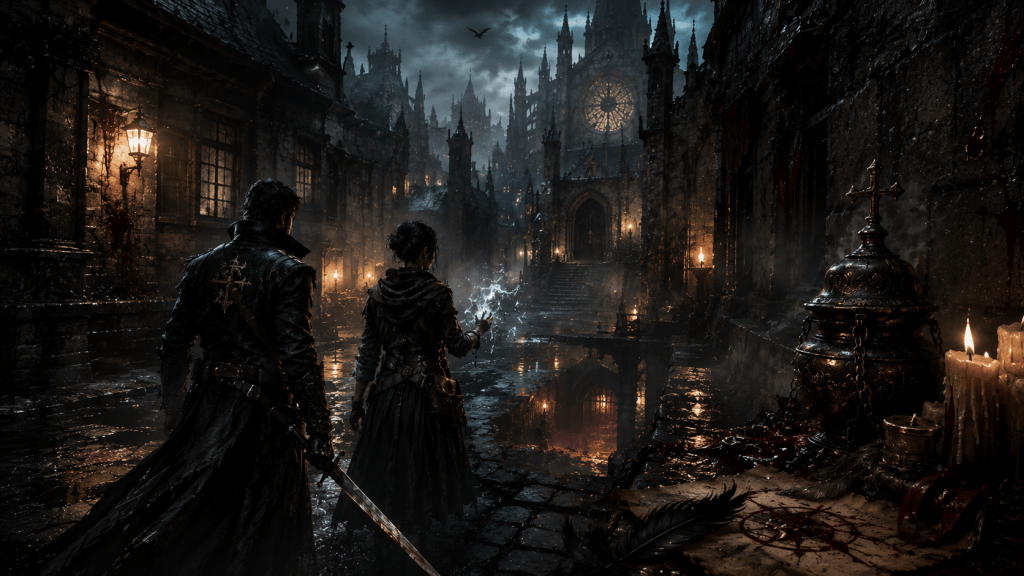
A prayer house becomes a charity room. A ruined chapel becomes a storage yard. A watch post rises inside the shell of an old gatehouse, while magistrates and clerks keep clean records above passages whose first purpose has been forgotten, renamed, or quietly removed from speech. Ordinary life gathers around these places with stubborn persistence. Bakers open before dawn. Porters drag carts through wet squares. Candles are sold beside walls that once held saints. Men with respectable coats speak of theft, damage, and public order while older things strain beneath the stone.

That pressure sits at the heart of Burning Breath, the second novella in The Hali Files, a dark fantasy horror series where bounty work becomes the doorway into occult corruption, Church secrecy, and a world that has begun to shift before its institutions are willing to name the change.


A City That Learnt to Build Over Its Dead
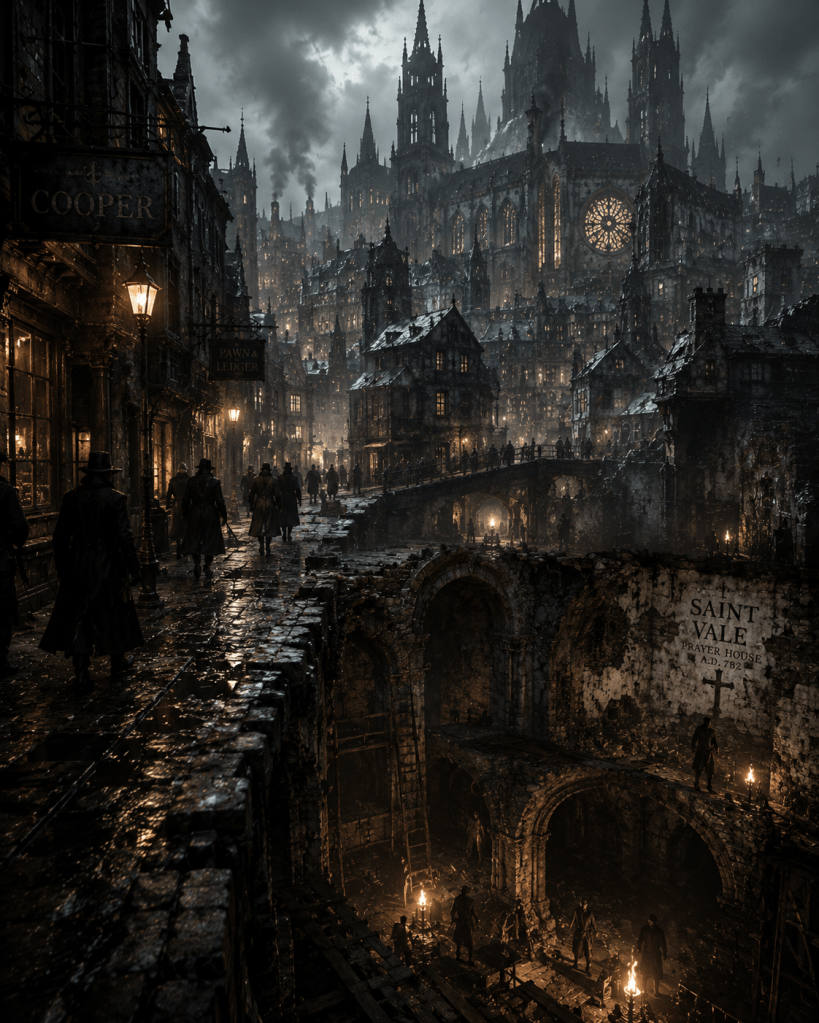
One of the central tensions in Hali Files is the distance between what a place appears to be and what it continues to carry.

The city has survived war, fear, religious collapse, and the slow administrative hunger that follows any age of catastrophe. It has reused everything. Sacred districts have been absorbed into civic wards. Chapels have been split into shops, infirmaries, hall offices, kitchens, storage spaces, and rented rooms. Old underworlds remain below newer roads, their sealed routes pressed beneath trade, charity, and respectability.

That is why the setting matters so deeply in this modern dark fantasy world. Horror does not arrive from some distant wilderness. It rises through familiar ground. It clings to the lower wards where drains steam after rain, to market rooms hired for discreet exchanges, to church property kept out of public ledgers, to sealed ruins politely described as derelict storage.

In Burning Breath, the city feels inhabited by denial. The problem begins with a private note, good paper, careful handwriting, and a request for recovery before “wider notice.” The language is measured. The danger is already loose.

Kael and Maris enter the case through bounty work, as they often do, because crime remains easier to admit than supernatural resurgence. A vessel has been stolen. A seller has turned violent. A buyer has been injured. The watch became involved. The Church wants the matter contained.

The phrasing is narrow enough for officials to survive it.

The truth is far wider.


When a Bounty Stops Behaving Like a Crime
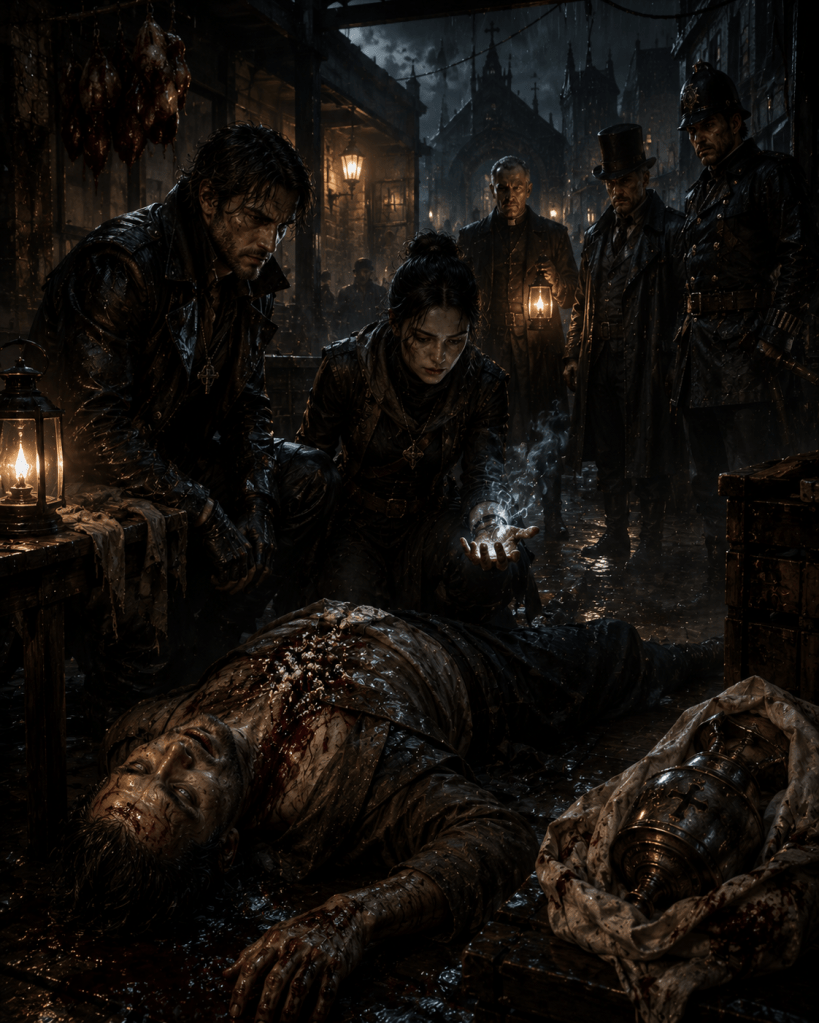
A strong supernatural bounty hunter story often begins with something human enough to explain away. A missing person. A stolen relic. A body found in the wrong room. A frightened witness whose account sounds exaggerated until the details start repeating across separate places.

Burning Breath uses that structure with great control. The first signs feel almost procedural. Kael and Maris visit the scene of a failed illicit sale. They question those involved. They follow blood, frightened memory, and half-truths left behind by men who saw more than they intended to admit.

Then the shape begins to distort.

The seller carried a wrapped church vessel and behaved as though the air itself had turned hostile. He recoiled from imagined smoke. He begged for shutters to be opened. He heard singing where others heard market noise. He continued moving after a pistol ball struck his side. His blood dried with pale flecks threaded through it. Incense lingered in rooms he had crossed, though no censer burned there.

These details give the novella its occult horror force. The danger enters through body, smell, breath, and mistaken explanations. It never needs to announce itself with spectacle. The host’s transformation feels wrong because his body continues under a purpose that exceeds human endurance. His breathing becomes the case. His fever becomes evidence. His wounds refuse ordinary meaning.

This is where Burning Breath leans into body horror fantasy while remaining restrained. The host is frightening because he still appears human for too long. He remains a wounded man, a thief, a bearer, a victim, and a danger at once. His body has been pressed into service by something older, and the tragedy of that pressure prevents the novella from collapsing into a simple monster pursuit.

Kael sees a threat.

Maris sees the wound around it.

Both are right.


The Church Has Better Words Than Truth

The Church in The Hali Files rarely needs to lie outright. It survives through smaller names.

A relic becomes a vessel. A hidden chamber becomes a lower ruin. A buried store of dangerous sacred objects becomes a sealed site. A man warped by contact with something impossible becomes a violent thief requiring recovery and discretion.

That habit gives the series its theological horror. The returning danger is terrible in itself, yet the greater dread comes from recognising that parts of the institution expected such things to return. They prepared rooms, chains, lock-halls, transit cases, and careful phrases. They feared what they preserved. They feared what might answer it. Their refusal to speak clearly is no longer ignorance. It is policy.

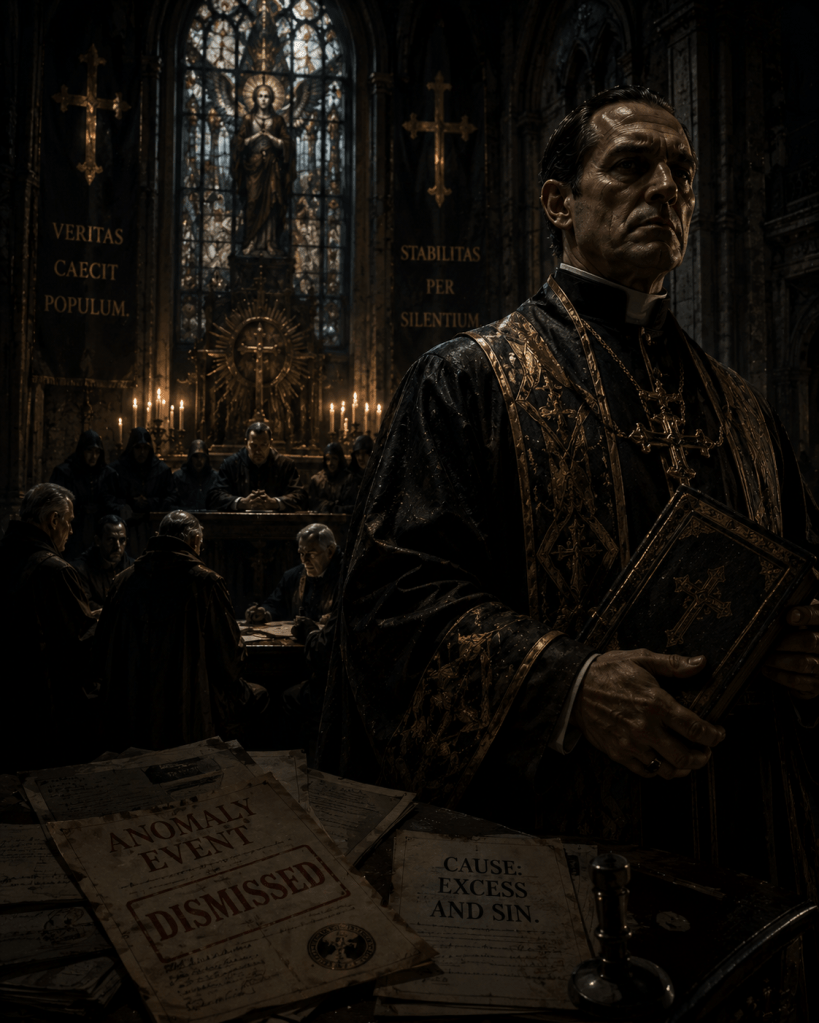
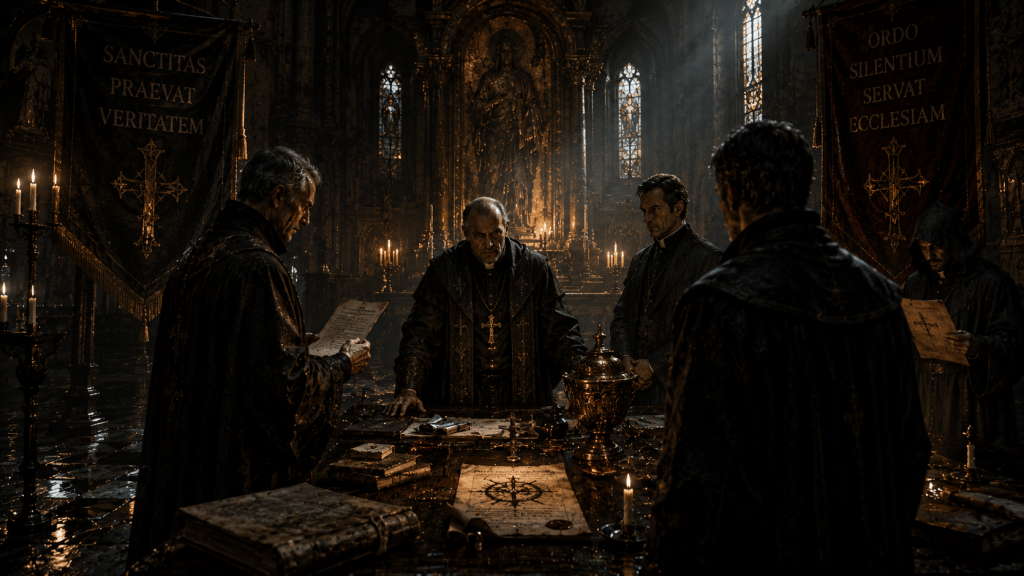
Burning Breath makes that pressure public through Brother Carrow, Canon Vey, and Magistrate Henshaw. Each represents a different form of containment. Carrow fears the object and knows more than he wishes to say. Vey fears names, because names create recognition. Henshaw fears disorder, because civic calm matters more to him than the foundation beneath it.

Together they embody one of the sharpest threads in the Hali Files world: institutions begin failing long before they appear to collapse. Their first instinct is rarely to investigate honestly. It is to protect the frame around the truth.

A dark fantasy horror novella gains tremendous weight when the danger is denied by people who have already built procedures around it. Burning Breath understands that. The Church does not appear confused by the lock-hall beneath Saint Vale’s Close. It appears embarrassed that Kael and Maris reached it.

Burning Breath and the Horror of Containment
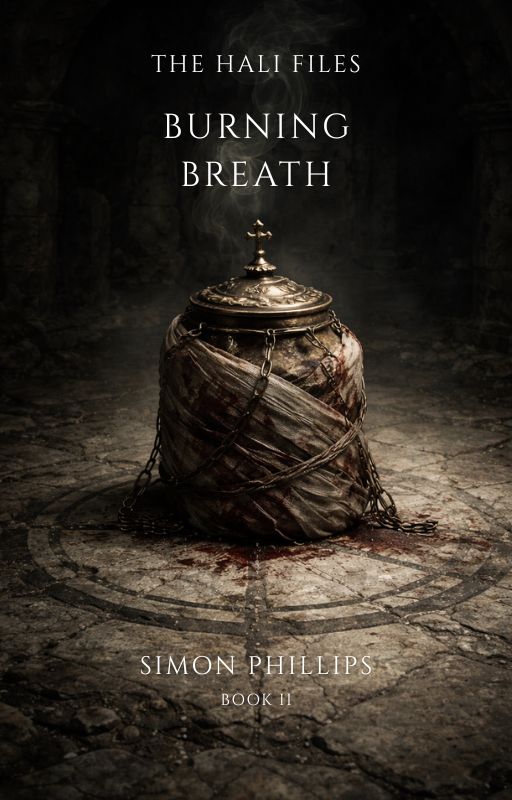
For readers entering The Hali Files, Burning Breath works as a vivid second step into the series. It widens the world beyond the immediate supernatural encounter and reveals how deeply old war-scars remain embedded beneath civic life.

The novella follows Kael and Maris through dye markets, bridge watch rooms, respectable streets, chapel walls, a hospice yard, and finally into buried lower ground where the recovered vessel is no longer merely stolen property. It belongs to a system of containment. It seeks an answering place. The city has rooms beneath its rooms, and some were built less to honour the sacred than to keep sacred damage from finding its way back into the world.

What makes the story linger is its refusal to tidy the threat once the immediate danger is ended. The host can be stopped. The vessel can be reclaimed. The Church can pack its evidence into a case and command the district to forget what happened before breakfast. Yet the buried structure remains. The lock-hall remains. The awareness that it was only shallow remains.

By the final movement, the horror has shifted lower.

That is the greater purpose of the novella inside the wider series. The case is complete. The world is less stable than it was before.


Kael, Maris, and the Cost of Sensing Too Much

The emotional strength of Burning Breath rests in the way its supernatural escalation draws pressure through both central characters.

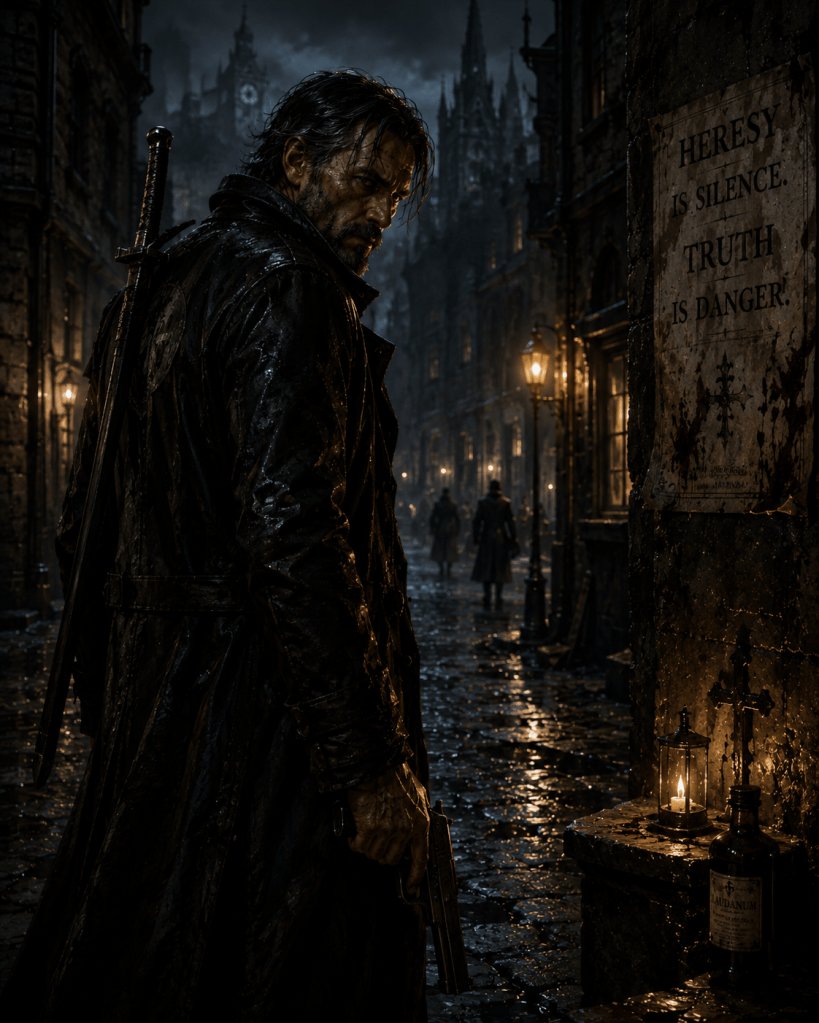
Kael enters the case as a former demon hunter who has already seen how quickly official language breaks under real horror. He knows that Church requests rarely arrive clean. He reads the omission in Brother Carrow’s words. He sees the watch trying to treat the host as a prisoner after the event has already moved beyond common custody. He recognises how public horror gets reduced to manageable phrases.

Yet knowledge offers him no protection from what rises inside him.

The Hali Sickness responds throughout the novella through incense, sharpened perception, old combat instinct, and the dangerous clarity that appears when the buried wrongness grows near. Kael’s strength remains useful. His restraint grows less certain. In the undercroft struggle, he protects Maris and drives the host away from the central ring, yet the same pressure strips harsh words from him when her magic misfires. Later, when the deeper presence under the street stirs through rat-patterns and ash-thick sensation, Maris has to call him back from the edge of his own reflex.

That moment matters. The Hali hunter is feared because his value and his danger live too close together.

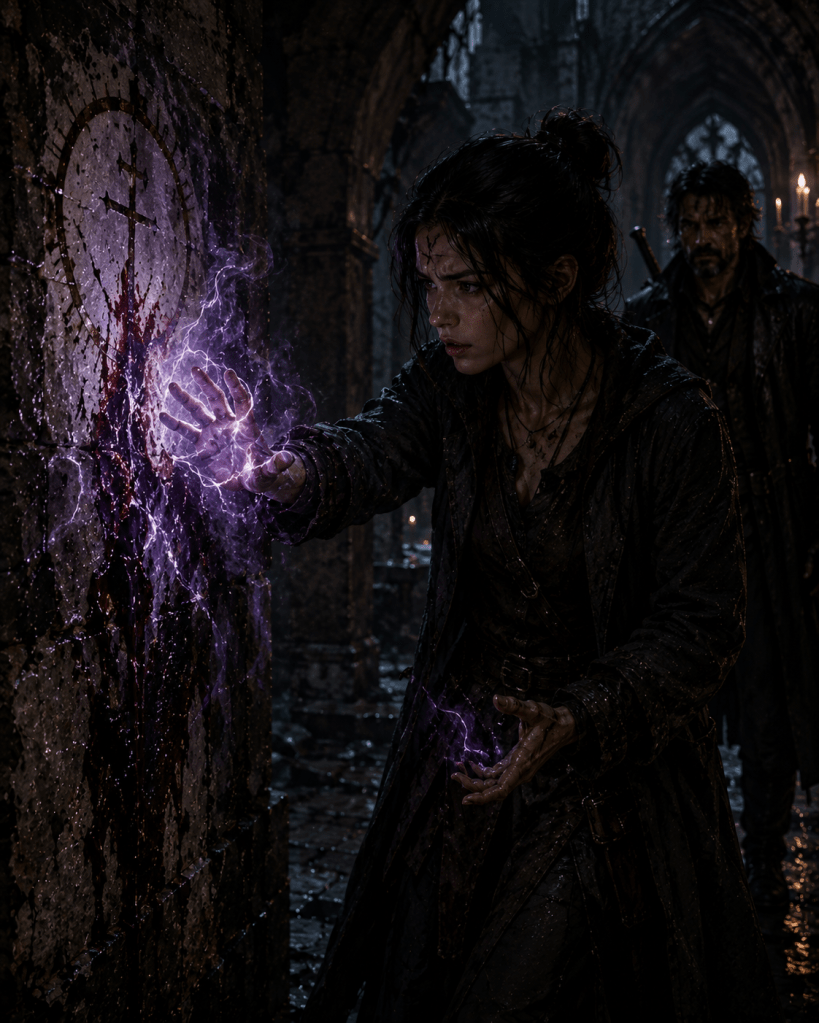
Maris carries a different burden. Her magic senses what others cover over. She detects false air in rooms, old pressure in stone, the shape of the host’s route, the wound beneath the hospice yard, and the frightening truth that the stolen vessel may have guided its bearer rather than merely infected him. Yet her gift never arrives in mastery. It arrives through instinct, partial comprehension, and costly error.

Her misfire opens more than a passage. It exposes the scale of the lower place and risks giving the host clearer access to what he seeks. Later, another attempted intervention lights the lock-hall at the worst possible moment. The magic remains meaningful precisely because it is unstable. Maris is valuable, frightened, and dangerous in ways that remain intertwined.

That balance keeps The Hali Files from becoming clean action fantasy. Power never arrives as relief. It arrives as further responsibility.


Symbols That Refuse to Stay Decorative

The symbolic language of Burning Breath deepens the world without turning it into abstract lore.

The scratched halo mark appears early on the note and returns through old carvings, broken sacred architecture, and the receiving ring in the chamber below. The image carries institutional panic more than comfort. It suggests damage done to holy certainty itself.

Burning incense follows the case like a trace of concealed ritual and Hali disturbance. It appears where it should not, clinging to Brother Carrow, the market room, the watch cell, and the lower chamber. The scent becomes more than atmosphere. It behaves like residue from a pressure already passing through the city.

White flecks in blood point towards mutation, contamination, or a bodily change deeper than ordinary fever. They recur in cloth, on stone, and in wounds, allowing readers to register that the host’s condition belongs to a wider supernatural grammar rather than a single bizarre illness.

Then come the rats.

Their organised emergence in the final pages shifts the story from contained case to series-wide warning. They gather in patterns before fleeing in panic from something deeper under the street. Maris recognises that the lock-hall was shallow. Kael recognises that whatever lies below is what locks were built against.

The series never needs to stop and lecture the reader on its larger threat. It allows the symbols to do that work first.


A Dark Fantasy World Where Recognition Comes Too Late
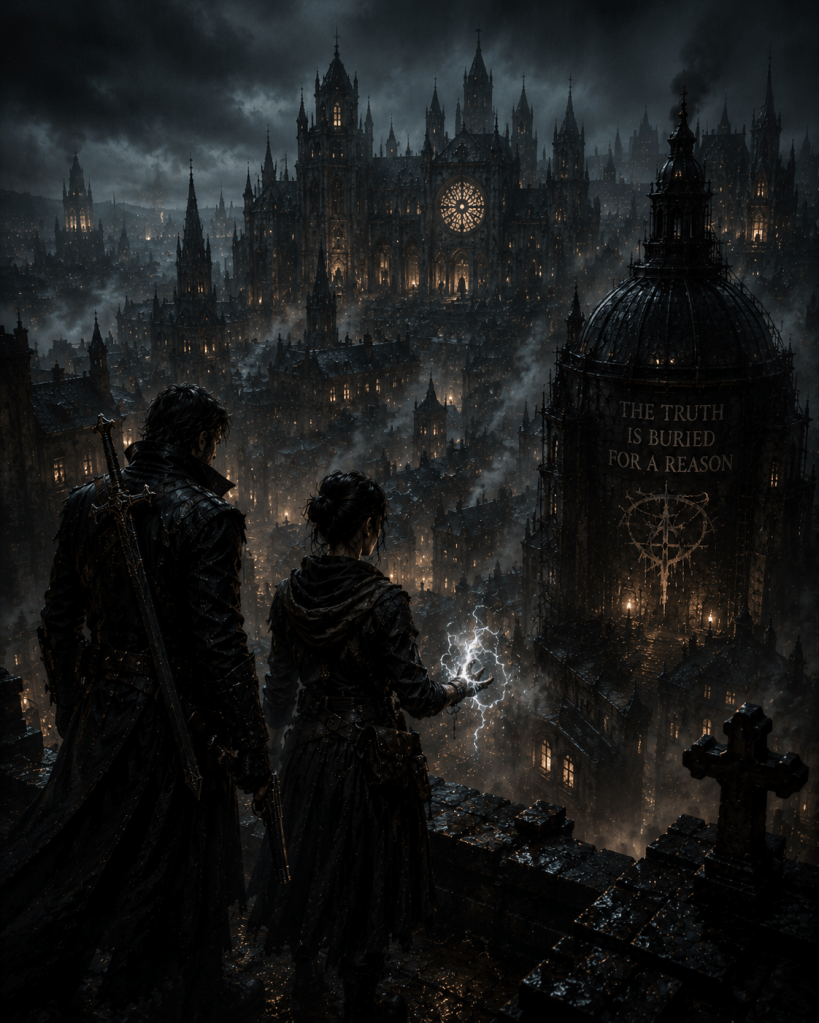
At its strongest, occult fantasy understands that horror rarely begins with revelation. It begins with inconvenience. A report that arrives after hours. A sick guard. A cleric requesting quiet recovery. A magistrate angry about noise in a respectable district. A sealed chamber described as a nuisance of old construction.

Burning Breath thrives inside that delay.

The novella asks what happens when an old war has been declared finished so thoroughly that the systems built after it can only respond to recurrence as administrative embarrassment. It asks what former hunters become when the world wants their usefulness while resenting the truth their existence proves. It asks what magic feels like when it returns through fractured instinct instead of sanctioned doctrine. It asks how long a city can continue its morning labour after something beneath it has already begun to answer.

These questions give the Hali Files series its particular identity within adult dark fantasy horror. It is filled with demon hunters, occult objects, bodily corruption, buried chambers, frightened priests, bounty work, and supernatural escalation, yet its deepest fear lies in recognition arriving too slowly.

By the end of Burning Breath, the city has resumed its ordinary face. Carts roll. Shops open. Clerks climb the hill. Nothing has visibly collapsed.

That calm feels worse than panic.

Because beneath Saint Vale’s Close, something has stirred. The Church has already moved to seal the evidence. Kael knows the warning by feel. Maris knows the depth of it through bone and stone. The case may be closed in the records. The world has shifted all the same.

And somewhere below the waking city, the locks are beginning to matter again.
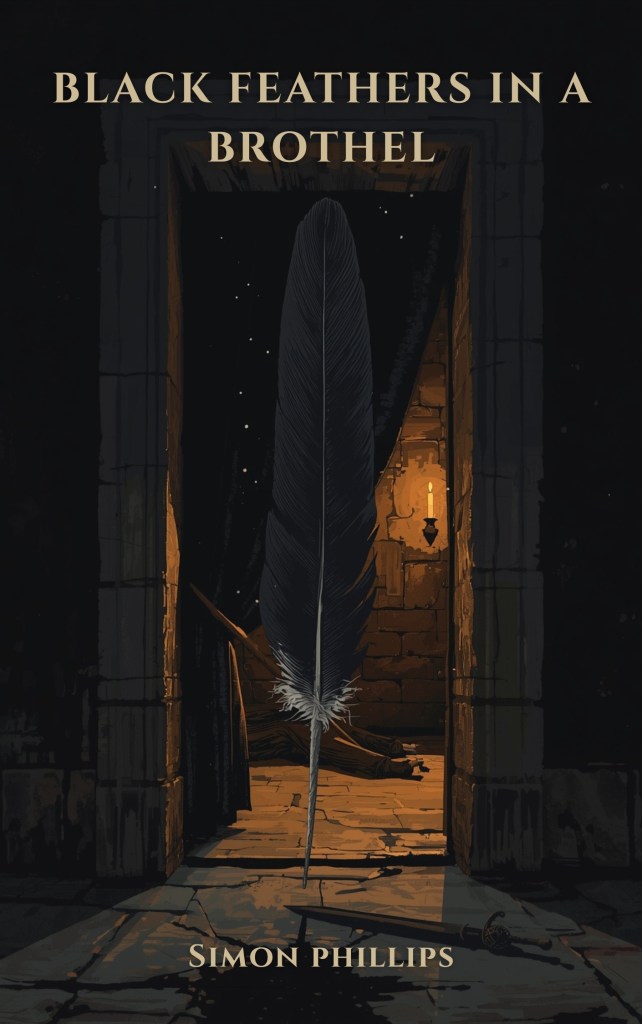
Black Feathers in a Brothel: Dark Fantasy Horror, Demon Hunters, and the Buried Corruption of Hali Files

The City Above the Wound

The city in Hali Files has already survived the age people still speak about in lowered voices. The great conflict sits behind them, filed away through doctrine, rebuilt streets, revised civic records, and the steady labour of ordinary life continuing because ordinary life has to continue. Taverns fill. Brothels trade through the late hours. Priests keep offices beside old shrines whose purpose has thinned with neglect. Clerks move through districts where the walls carry older masonry beneath fresh repair, and no one pauses long enough to ask what was sealed inside before the newer plaster went up.

That refusal to look too closely gives Hali Files its particular kind of dark fantasy horror. The world has no appetite for catastrophe. It prefers weakness, vice, bad blood, failed moral character, unfortunate illness. Anything can be named safely, so long as it avoids the word returning.

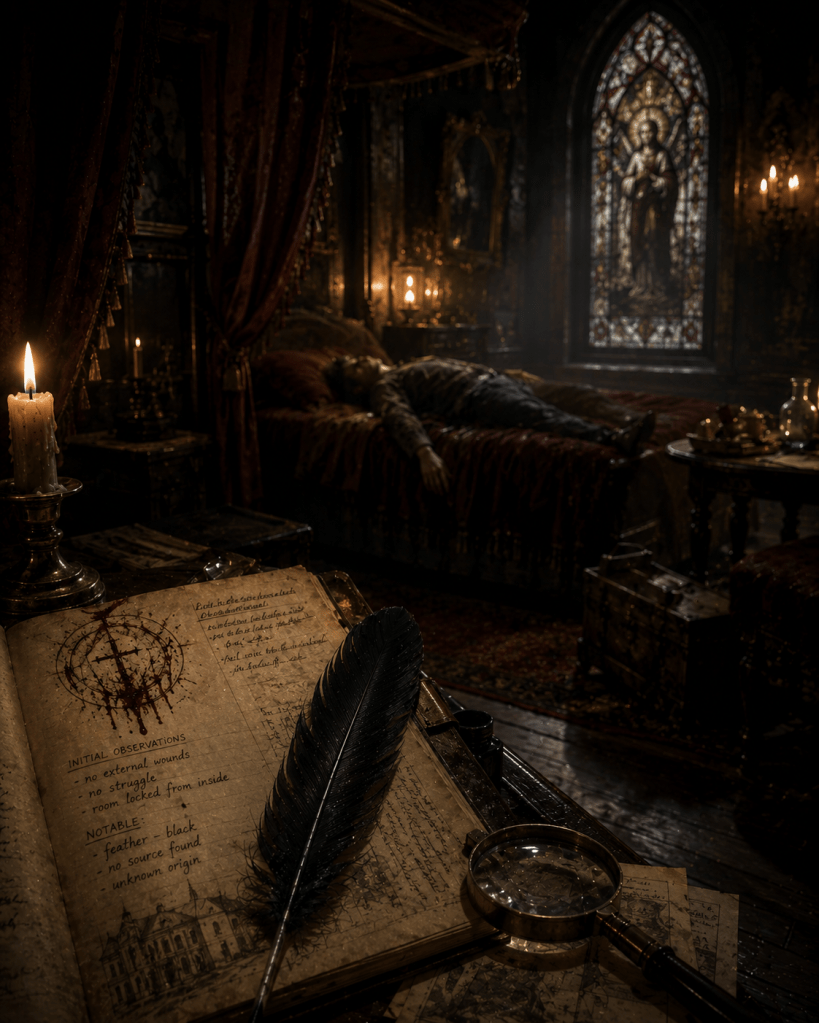
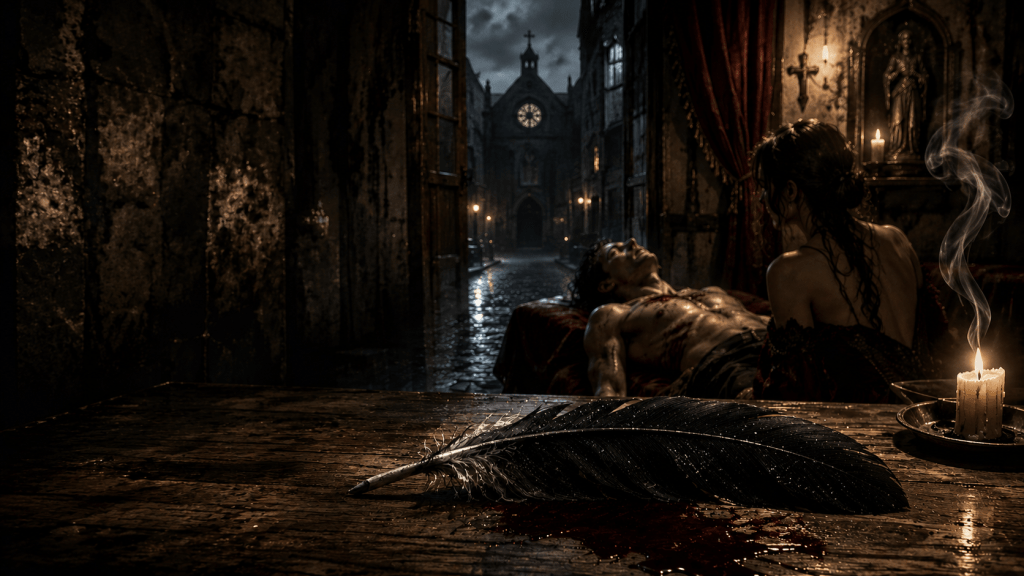
In the opening novella, Black Feathers in a Brothel, horror begins in a room that should have remained small. A paid chamber. A nervous clerk. A woman whose profession has taught her to recognise fear before men name it. The first signs arrive through atmosphere rather than spectacle: heat beneath the smell of candles, pressure against the ear, something scorched in a place where incense has long been banned. Then a feather appears where no feather belongs.

The room has no reason to matter. That is precisely why it does.

A contained death in a lower district can be dismissed. A body distorted beyond natural explanation can be softened through official language. A haunted room can become gossip by morning, folded back into the district’s rhythm before those with authority are forced to speak plainly. This is the texture of the Hali Files world: supernatural horror enters through places society already prefers to ignore, then grows under the cover of institutional convenience.


When the War Ends in Public and Continues in Stone

Many dark fantasy novella series begin with open danger. Hali Files begins with a quieter wound. The danger has already existed for a long time. People simply rebuilt over it.

The city’s modern structures sit above older sacred spaces, abandoned passages, ruined containment chambers, and foundations once marked by prayer, panic, and hurried sealing. History remains physically present. It has not faded into legend. It survives as uneven walls, old tunnels behind cupboards, chapels repurposed for commerce, and cold spaces under buildings where the air still carries the residue of events no living official wants reopened.

That layering matters. Black Feathers in a Brothel works as an occult horror novella because the supernatural pressure feels inseparable from the built environment. Corruption does not arrive from elsewhere. It pushes out through a wall. It gathers in stone. It follows old routes. It turns a private room into the shallowest visible edge of a deeper structure.

This is where Hali Files separates itself from cleaner demon hunter fantasy. The threat has no desire to stage itself neatly. It spreads through architecture, bodies, gaps in doctrine, and the human habit of explaining away what causes inconvenience. A clerk’s death, a sealed passage, a thin chalk mark on a door, a priest reaching too quickly for a moral judgement. Each detail belongs to the same condition. The city continues functioning while the ground beneath it learns how to answer.


Kael and the Cost of Surviving the First War

At the centre of the first case stands Kael, a former demon hunter whose greatest danger no longer comes only from what he hunts. He carries the Hali Sickness, a burned condition left by divine fallout and sustained through violence, proximity, and the strain of continued existence. He moves through the city like a man who has practised appearing ordinary. The flask at his belt, the roughness in his speech, the coat drawn close, the readiness of his hand near the hidden hilt all suggest someone surviving through habits that have replaced peace.

Kael is compelling because the series refuses to frame him as a polished supernatural bounty hunter. He is useful, feared, and visibly functional, yet every encounter risks narrowing him towards something less governable. The Hali burn sharpens him around corruption. It also weakens his restraint. Violence becomes easier in the same moment control becomes harder.

That tension gives Black Feathers in a Brothel much of its emotional weight. Kael recognises patterns others overlook. He understands that the room above the sealed passage holds more than residue. He sees that what has surfaced is early, messy, hungry. Even so, recognition offers no safety. The closer he moves towards the anomaly, the more fiercely the Hali condition answers inside him.

The strongest demon hunter horror often comes from this split: the one most capable of facing the threat also carries a version of the same world damage within himself. Kael can draw the sword others cannot use. He can stand where others would break. Yet each act of standing there costs him. The body that protects Maris is also the body steadily slipping away from him.


Maris and the Return of Magic Through Failure

Maris enters the first novella with a different kind of instability. Her magic has no clean ritual structure, no disciplined command system, no safe vocabulary through which to present itself. It comes as reflex. Pressure touches pressure. Fear, proximity, and half-understood resonance bring something out of her before intention catches up.

That matters deeply for the wider occult fantasy series. Returning magic in Hali Files has no triumphant grandeur. It is erratic, embarrassing, dangerous, and often frightening to the person carrying it. Maris senses what lies beneath the brothel because the buried corruption speaks to parts of the world that official structures insist are dormant. When she reaches for understanding, the environment reacts. Blood opens in stone. White flecks catch in it. Scratches flare into a ruined halo mark. Knowledge itself becomes escalation.

Her role within the opening case gives the novella more than investigation. She becomes evidence that the world is changing beneath denial. The Mage Order may dismiss the return of meaningful magic in the broader Hali Files framework, while the Church controls its preferred story of reality, yet Maris exists as a contradiction walking beside Kael. She cannot be filed away cleanly. Her power arrives through misfire, and the misfire reveals more truth than any authorised institution seems willing to tolerate.

By the close of the novella, her fear has shifted. She fears the anomaly, certainly. More piercingly, she fears what her presence does to Kael. When her magic presses against the corruption, something in his Hali sickness answers. Their partnership has already become necessary and dangerous in equal measure.


The Church and the Language of Denial

The Church appears early in Black Feathers in a Brothel, and its role is more unsettling because it rarely needs to shout. A priest entering the room after the death sees enough to know the event sits beyond ordinary explanation. The response arrives all the same: excess, guilt, moral failure. The body is made doctrinally manageable through a lie spoken with institutional calm.

That gesture holds the wider theological horror of Hali Files. The Church is not presented as ignorant. Its denial carries structure. It recognises remnants, Hali Sickness, buried anomaly sites, and the dangerous residue of what history prefers to call finished. Its power rests in deciding which truths remain restricted and which events receive harmless public names.

Within an adult dark fantasy horror setting, that distinction is crucial. The world’s governing authority faces no simple choice between belief and disbelief. It faces a problem of control. A population that accepts systemic supernatural reactivation becomes difficult to govern through routine doctrine. So the evidence is sealed. The records remain partial. Priests learn which questions to close before they widen.

The brothel death becomes the perfect opening instance. A lower-district clerk, a sexual setting, and a body the Church can fold into a familiar moral judgement. The supernatural element survives because the official explanation is socially convenient. The feather vanishes. The incense smell lingers. The ledgers close.

Horror proceeds.


Entering Black Feathers in a Brothel

As the first published case in the Hali Files cycle, Black Feathers in a Brothel establishes the series through pressure rather than exposition. It offers a contained supernatural investigation, yet the deeper effect comes from how the case widens underneath Kael and Maris as they follow it.

The novella moves from a chamber above an abandoned chapel into a sealed lower passage where stone has absorbed biological distortion. Bone appears in mortar. Black feathers gather where no airflow reaches. Rats move in deliberate lines. The anomaly embedded below the brothel behaves less like a monster and more like an early expression of a living system. It responds to proximity. It adjusts under attack. It learns.

That unfolding turns the story from demon hunter fantasy into something more uneasy. Kael can cut through what has surfaced, though the encounter refuses to become a clean victory. The final recognition lands with far greater force than a simple defeat: the thing beneath the city was listening.

Readers entering the Hali Files through this first novella can find Black Feathers in a Brothel

The value of the opening novella rests in its restraint. It gives enough of the buried system to create dread, enough of Kael’s condition to make future violence emotionally costly, enough of Maris’s magic to suggest a wider awakening, and enough of the Church’s denial to show how the coming danger will be allowed to spread. It opens a door, then makes clear that the room behind it was never the true problem.


Symbols That Refuse to Stay Decorative

The first Hali Files novella also begins building the visual and sensory language that carries through the wider cycle. These symbols are never decorative flourishes. They operate as signs of pressure, recurrence, and hidden organisation.

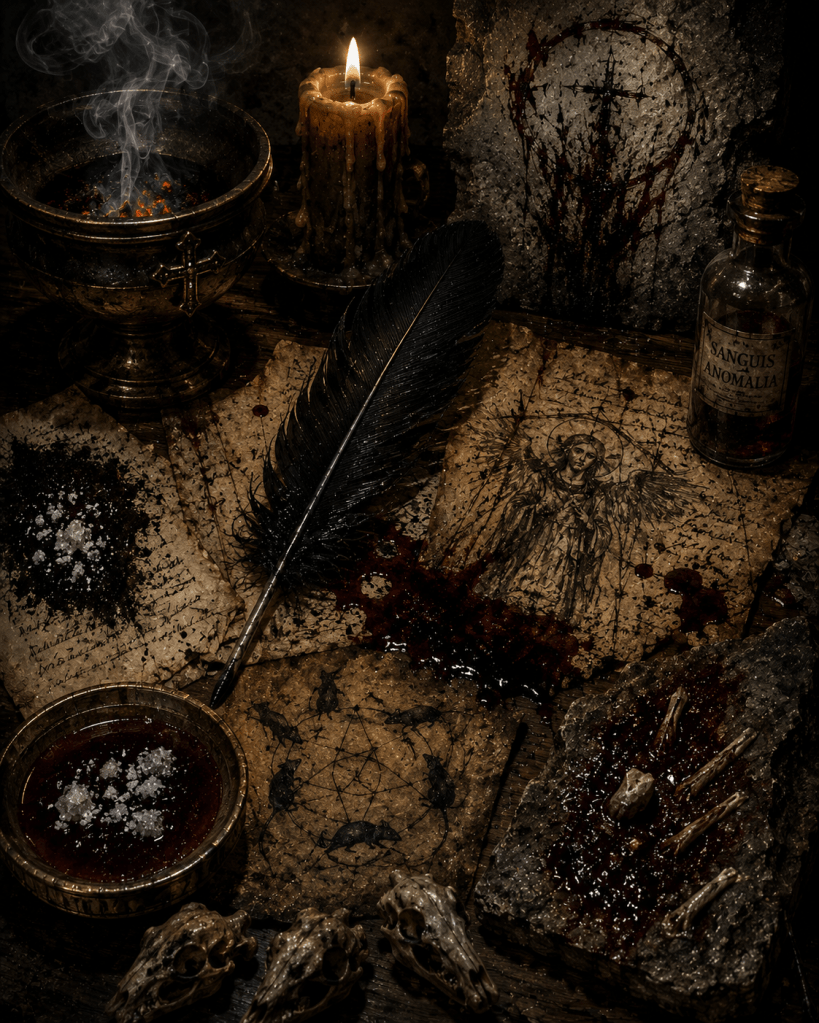
The black feather appears first as a residue of wrongness, then as a promise that the event has not truly ended. Burning incense signals Hali reaction, threading into scenes where bodies and environments recognise corruption before characters have words for it. The static choir introduces a sacred distortion that feels fractured, ancient, and unresolved. White-flecked blood turns the body into a map of continuing change. Rats moving in deliberate pattern suggest an intelligence or network more patient than individual appetite. A scratched halo mark speaks of divine panic buried beneath human repairs.

Together, these elements give the occult horror novella its distinctive identity. The supernatural is felt through texture, smell, rhythm, and small impossible motions before it declares itself through violence. Readers experience corruption as a pressure on perception. The world becomes wrong by inches.

That approach fits the wider Hali Files series dossier. The Demon Core remains broad series pressure rather than a fully exposed explanation at this stage. It functions through pattern, adaptation, reactivation, and the slow conversion of ordinary spaces into evidence. The symbols let the reader sense that wider architecture long before the world openly names it.


A Case That Opens the Series Without Emptying It

The most important quality of Black Feathers in a Brothel is its refusal to behave like a disposable first monster encounter. It resolves the immediate case with a satisfying shape. The brothel chamber is investigated. The sealed under-space is entered. The anomaly is confronted. Kael draws the sword. Maris’s magic fails and helps in the same motion. The characters emerge changed by what they have witnessed.

Yet the novella leaves the true damage active.

Kael knows the threat bears an unfamiliar behaviour. Maris senses that magic and corruption speak through the same broken atmosphere. The Church remains committed to stabilising appearances. The city settles above the wound almost as soon as the immediate noise fades. Beneath that return to routine, a black feather falls into watered blood, and the pale flecks spread as though tracing a pattern already in progress.

That is where the wider Hali Files dark fantasy novella series begins. Each later case can move through a different district, crime, ruin, bounty, or failure of witness, though the deeper question remains constant: how much can a world misname before denial becomes part of the disaster?

Black Feathers in a Brothel gives the first answer quietly. The city has already begun. Recognition simply lags behind it.