Every epic fantasy needs a doorway.
Sometimes that doorway is a battlefield. Sometimes it is a throne room, a prophecy, a blade drawn under stormlight, or a kingdom already burning beneath the weight of war.
In The Unmarked Path, the doorway is quieter.
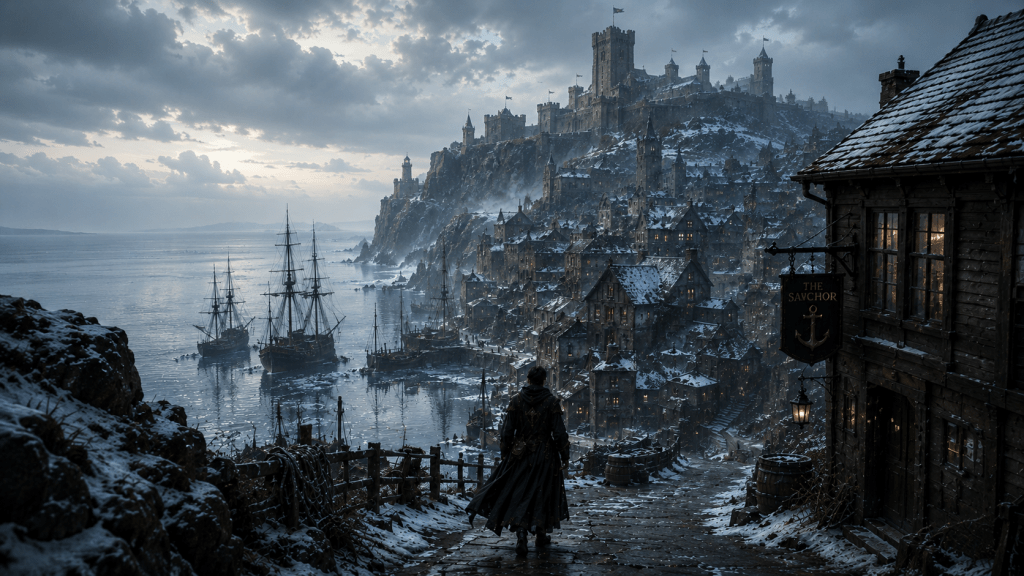
It opens with Simion, a magician of the Order, arriving in the cold coastal kingdom of Bremyra beneath a winter sky. He comes dressed in the black robes of an institution feared across the realm, carrying the authority of ancient magic and the uncertainty of a man who has never fully believed he belongs among those who wield it.
That tension is where his story begins.
Simion is no simple fantasy hero waiting for applause. He is no flawless master of the arcane, no proud champion striding into the world with certainty burning in his hands. He is weary, observant, guarded, and deeply human. He has been trained by the Order of Magicians, shaped by discipline and expectation, yet his place among them has always felt uneasy. Magic answers him in strange ways. Some simple things resist him, while darker and older powers seem to recognise him before he recognises himself.
That makes him dangerous.
It also makes him compelling.
A Magician Who Feels Out of Place
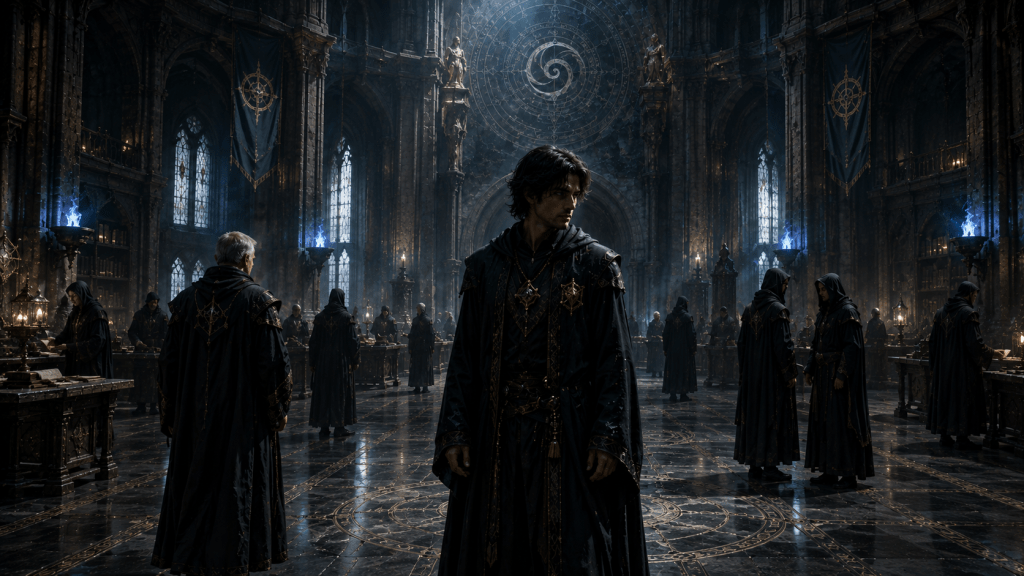
The Order of Magicians stands as one of the great institutions of Ældorra. It is old, powerful, and shaped by a history most of the living world only half-remembers. Its members are trained in discipline, ritual, incantation, and obedience. They carry an authority separate from kings, priests, and ordinary law.
Simion has passed through that world. He has learned its rules. He wears its robes.
Yet from the beginning, he feels like someone standing at the edge of his own life.
He has never been entirely comfortable among magicians who treat power as rank. At the Academy, he struggled where others advanced easily. He lacked the arrogance that often comes with mastery. His gifts seemed uneven, almost unreliable, as though the magic within him moved by some older rhythm than the lessons placed before him.
That uncertainty matters.
Simion begins the story believing himself ordinary by the standards of the Order. Skilled, perhaps. Capable enough to be useful. Still, he sees himself as a man chosen for duty, not destiny. He obeys because obedience is familiar. He studies because study is safer than instinct. He observes because action carries consequences he rarely feels ready to command.
The tragedy and beauty of Simion is that the world has already begun to move around him before he understands why.
Bremyra and the Weight of Return
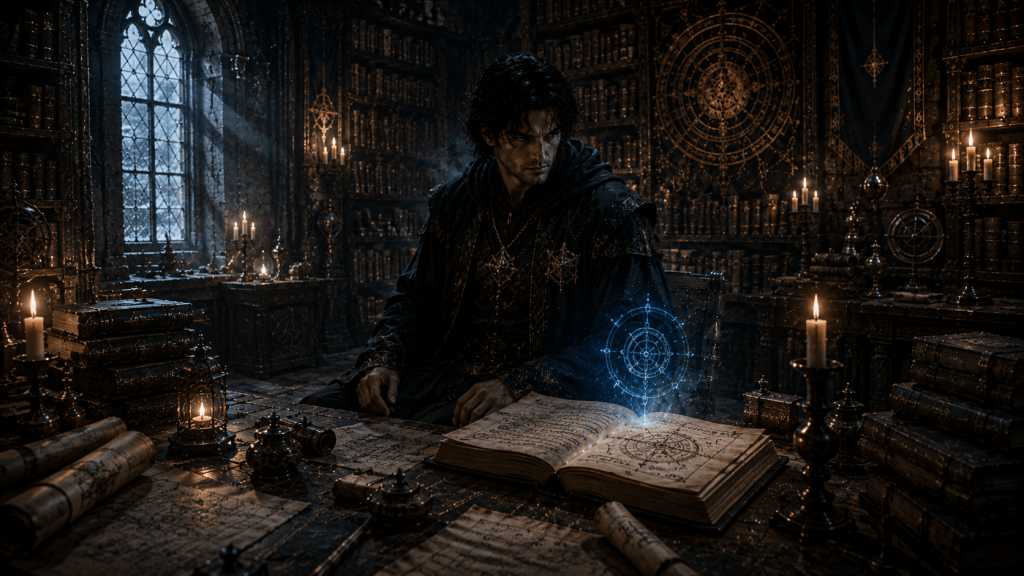
When Simion arrives in Bremyra, he enters more than a kingdom under political strain. He returns to a place tied to his own buried past.
Before the robes, before the Order, before the careful distance he now keeps between himself and others, Simion once knew Bremyra through smaller rooms, warmer memories, and the overlooked spaces of castle life. He was once close enough to the royal children to carry echoes of childhood mischief, laughter, and belonging.
Years later, he returns as Lord Magician.
That title changes everything.
The servants fear him. The court watches him. The Church distrusts him. Patrick measures him with the caution of a prince carrying too many burdens. Elana remembers the boy beneath the robes, and that memory unsettles him more than suspicion ever could.
This is one of the strongest tensions in Simion’s character. He is treated as a figure of power, yet part of him still remembers being powerless. He is feared by people who once might have ignored him. He is addressed with reverence in halls where he once moved unseen.
Bremyra forces him to confront the distance between who he was and who the world now believes him to be.
The Mission Beneath the Surface
Simion’s official presence in Bremyra carries a polished explanation. He is there to observe, advise, and assist if needed. That is the surface truth presented to the court.
The deeper truth is more troubling.
Three magicians of the Order vanished in connection with King Cedric’s expedition and investigations into remnants of the ancient Imperium Arcana. Simion has been sent to uncover what happened. His task places him at the centre of a dangerous triangle: the Order, the royal household, and the Church.
Every question he asks risks offence. Every answer he finds may damage the fragile balance of the kingdom. If the missing magicians were betrayed, the consequences could reach far beyond Bremyra. If the Order is wrong, then Simion has arrived as a quiet threat inside a court already strained by absence, politics, and approaching war.
This gives his role a constant unease.
He is adviser and investigator. Guest and watcher. Servant of the Order and reluctant participant in royal life. He stands close enough to Patrick to earn trust, close enough to Elana to awaken old feeling, and close enough to hidden history to disturb forces that were meant to stay buried.
A Power Beyond the Lessons He Was Taught
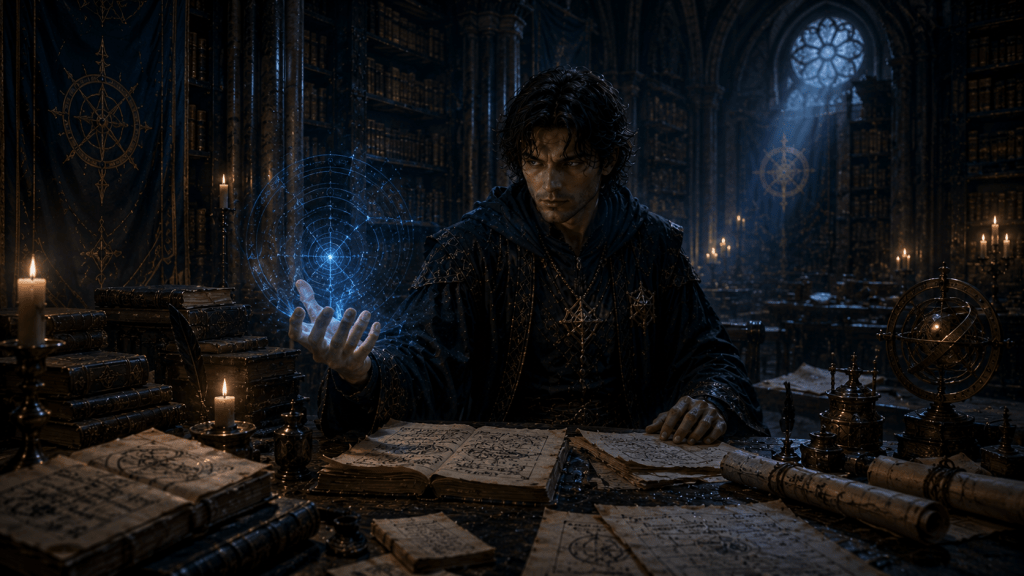
The heart of Simion’s story lies in the gap between learned magic and something older.
In the world of The Veil of Kings and Gods, magic is structured. Magicians speak Flow. They shape power through words, training, and controlled forms. The Order teaches magic as discipline. It gives names to the currents of the world and expects its students to follow them.
Simion’s magic begins to move differently.
At first, these moments are subtle. A sealed book responds to him. Runes stir beneath his hands. Power gathers in silence, where silence should carry no spell. He feels forces he has no language for, forces that seem to reach past the laws of the Order and into the buried bones of the world.
This does not make him triumphant.
It frightens him.
That fear is important. Simion is powerful, yet he is also careful. He does not rush towards glory. He does not understand what has awakened around him. The old structures that shaped his life offer little comfort once his own magic begins to break their rules.
He begins to realise that the Order may have taught him how magic behaves, while something far older may be showing him what magic remembers.
The Hidden Book and the Call of the Seal
One of the defining images of The Unmarked Path is the hidden book beneath Bremyra.
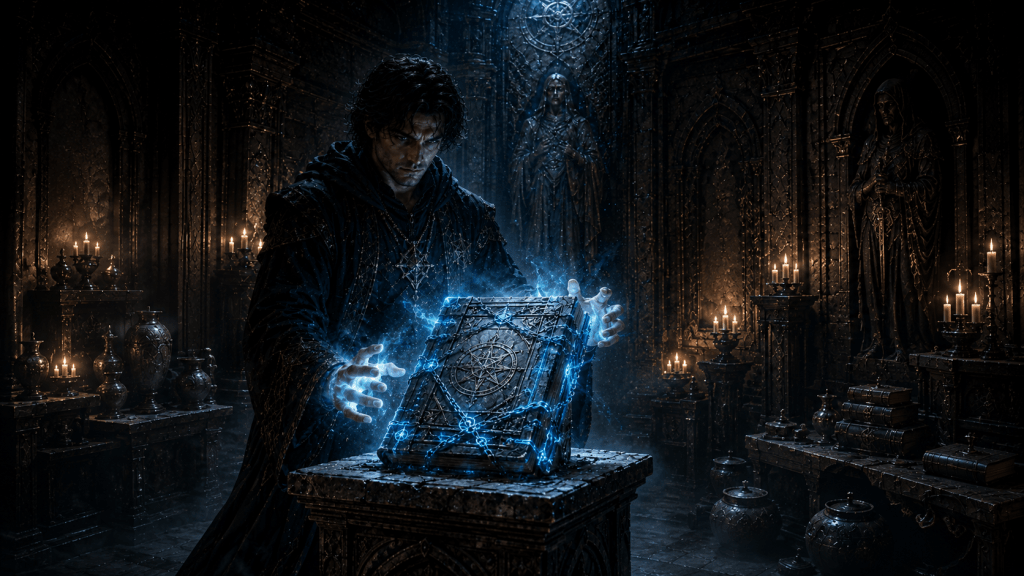
Simion is drawn into the castle’s depths by whispers and old magic, where the familiar world of court duty, council suspicion, and royal politics gives way to something older. Beneath the halls where princes argue, priests watch, and servants move through their ordinary routines, another Bremyra waits in the dark. Its stones remember an age the kingdom has forgotten, and in that buried chamber, the past begins to reach for him.
At its centre waits an ancient book protected by a weave he does not understand.
The book is more than an object. It is a threshold.
It belongs to the part of Ældorra that survived in ruins, buried rooms, sealed warnings, and fragments of divine memory. It represents everything Simion cannot yet name: hidden history, forgotten magic, divine pressure, and the unsettling sense that his life has been touched by something older than the Order. The magicians who trained him taught rules, forms, and discipline. The book offers none of those comforts. It gives him no easy explanation, no clear command, no gentle revelation. It simply waits.
That waiting is what makes it powerful.
When the warning comes, it arrives in fragments. The seal weakens. The burden waits. The path will reveal itself only when its weight is accepted. There is no grand ceremony, no clean answer, and no voice kind enough to tell Simion exactly what he has become part of. The moment feels less like discovery and more like inheritance, as though something ancient has finally found the one person able to hear it.
For a man who has spent much of his life feeling uncertain of his place, this is devastating.
Simion wants understanding. What he receives is responsibility.
He wants answers. What he receives is a sealed path.
He wants control. What he receives is a mystery that responds to him in ways no ordinary magician should be able to explain.
That is why the hidden book matters so deeply to his story. It marks the point where Simion’s life begins to move beyond the limits of the Order. He can still pretend, for a time, that he is only an advisor, only an investigator, only a magician sent to Bremyra under orders. Yet the book has already changed the shape of the world around him. It has placed a quiet hand on his fate.
From that moment onward, Simion is no longer searching only for missing magicians.
He is searching for the truth of magic itself.
And the deeper he follows that truth, the more dangerous the path becomes.
Elana and the Human Thread
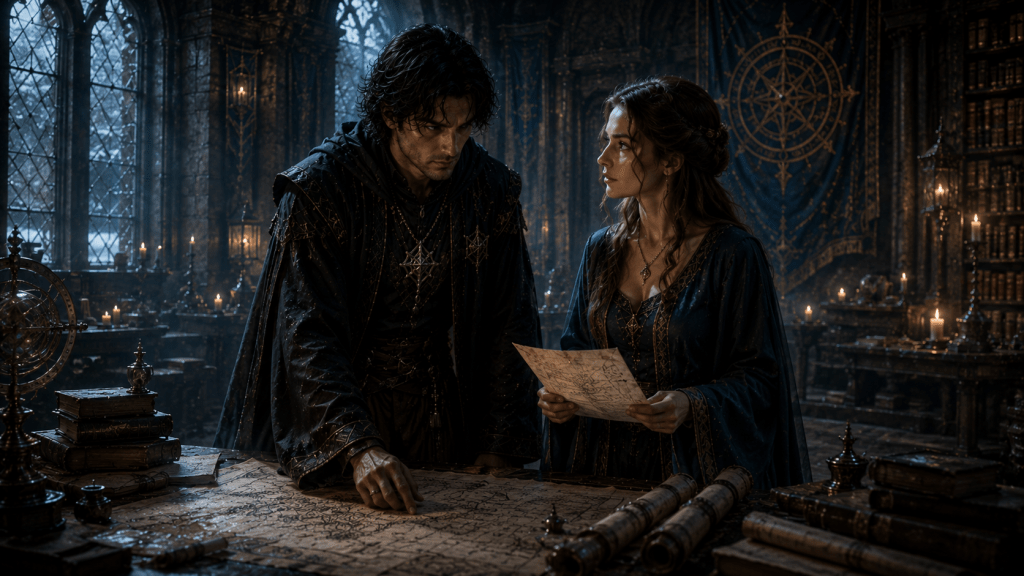
Simion’s story would lose much of its force if it only moved through magic, prophecy, and ancient danger.
Elana gives his arc its human warmth.
She remembers him before the title, before the robes, before the fear others attach to him. Her presence cuts through his formal distance, drawing forward traces of the boy he once was. She is bold, perceptive, and unafraid in a way few people around Simion are. Where others see the Order, she sees the man beneath it.
Their connection is layered with memory, restraint, duty, and danger. Elana is bound to royal obligation. Simion is bound to the Order. Neither of them moves freely, and that makes every exchange carry more weight than open confession could.
Through Elana, Simion is reminded that he is still human. He can still be seen. He can still be unsettled by kindness. He can still feel the pull of a life beyond duty, even as darker forces gather around him.
That matters because Simion’s greatest conflict is not simply whether he has power.
It is whether power will leave enough of him behind to love, fear, hesitate, and choose.
Why Simion Matters to the Saga
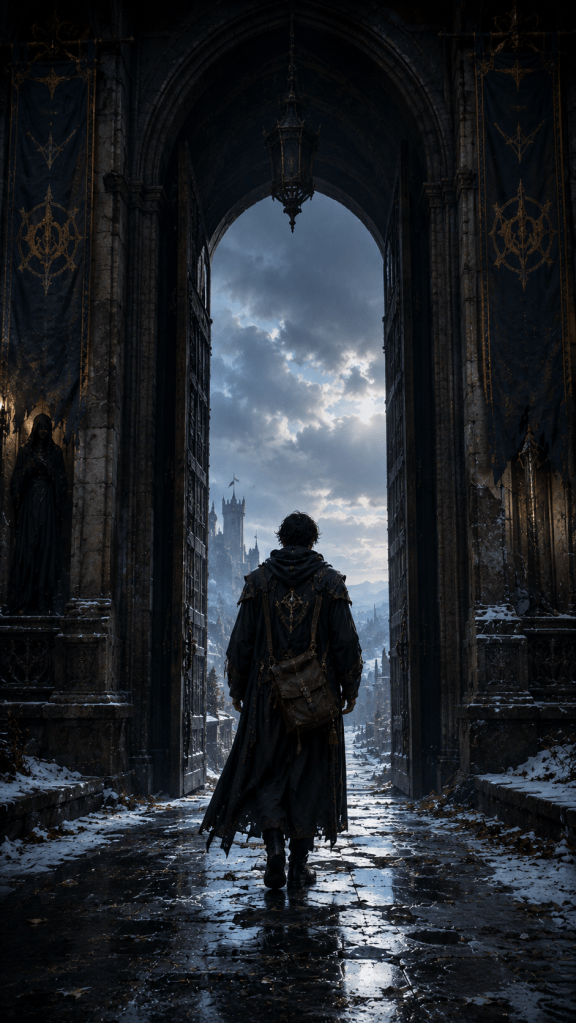
Simion matters because he stands at the meeting point of several forces that shape The Chronicles of the Spiral Realms.
He belongs to the Order, yet his power challenges its laws.
He enters Bremyra as an outsider, yet his past ties him to its royal family.
He seeks missing magicians, yet finds traces of something divine.
He believes he is following instructions, yet the world around him begins to move as though history has taken notice.
That is the kind of character who can carry a long fantasy saga. Not because he knows all the answers, and not because he rushes towards destiny with a raised blade. He matters because he is uncertain in the face of forces that demand certainty. He matters because he resists becoming the thing others expect him to be. He matters because the power awakening around him is vast, yet the emotional core of his story remains intimate.
He is a man caught between institutions, kingdoms, memory, and magic.
He is also the first sign that the forgotten history of Ældorra has begun to return.
The Story Begins With The Unmarked Path
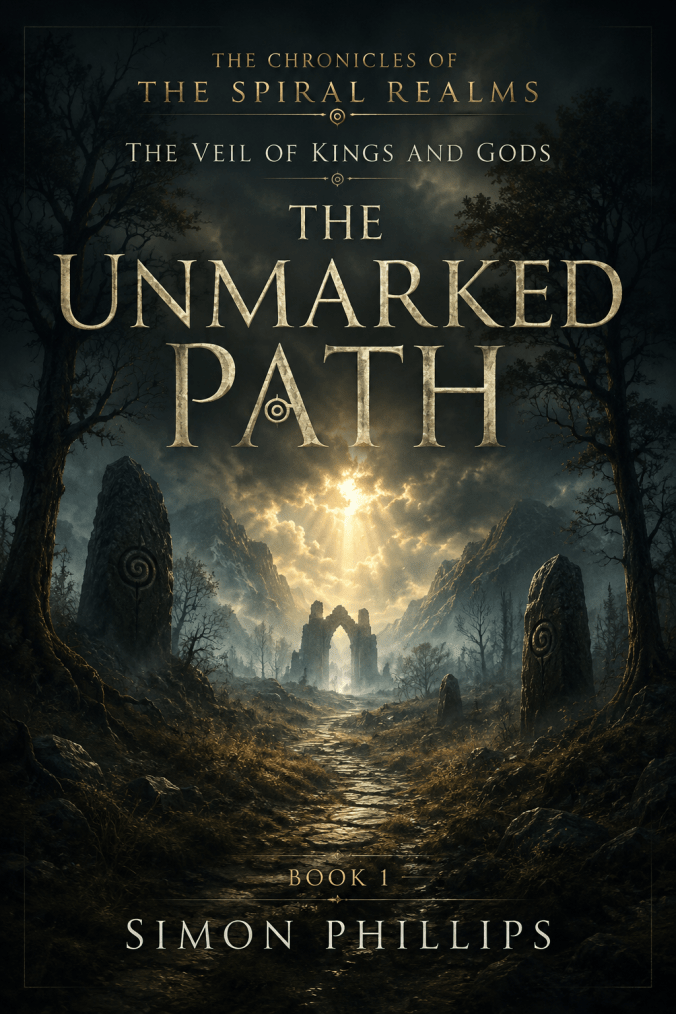
The Unmarked Path is the opening book of The Veil of Kings and Gods, set within The Chronicles of the Spiral Realms. It begins a slow-burn epic fantasy saga of forbidden magic, ancient gods, royal duty, political tension, hidden histories, and divine silence.
For readers who enjoy mythic high fantasy with atmosphere, mystery, and character-driven tension, Simion’s story offers the first step into a much larger world.
He does not begin as a hero.
He begins as a magician sent to Bremyra under orders he barely understands.
Beneath the castle stones, something waits.
Above him, gods remain silent.
Around him, kingdoms begin to shift.
And somewhere within the sealed places of the world, the Spiral begins to turn.
The Unmarked Path is available now on Amazon Kindle.