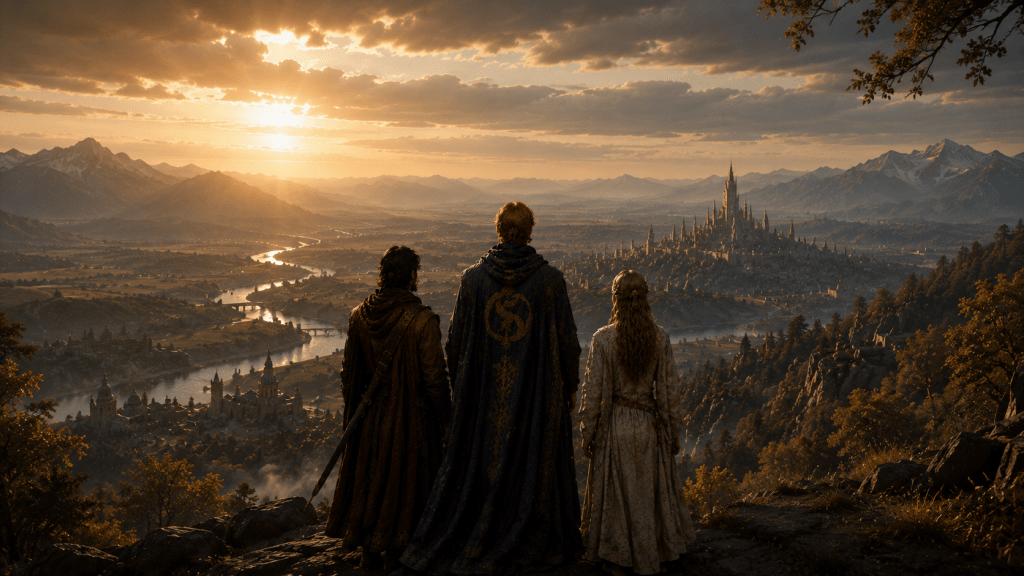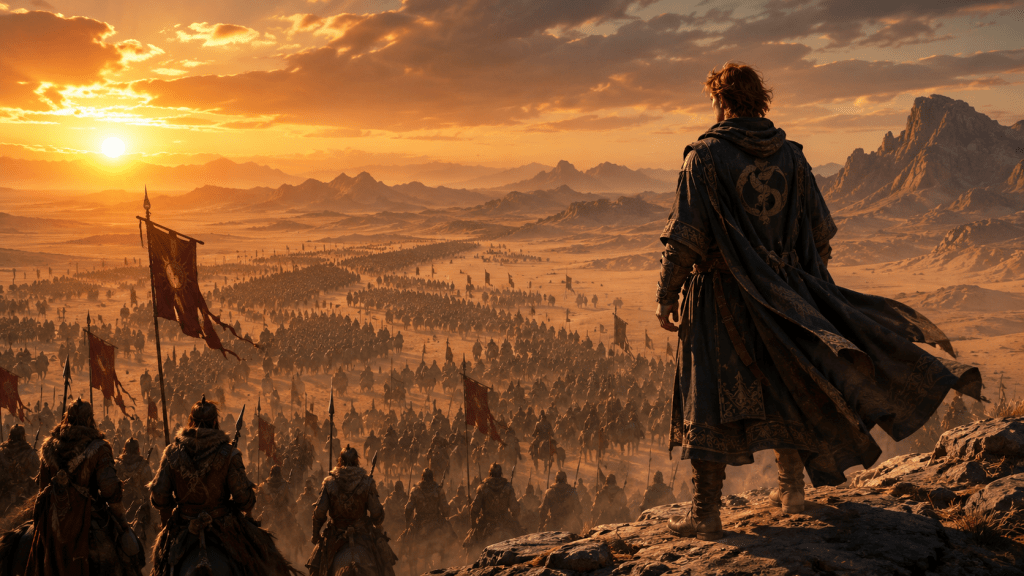
There are fantasy novels that widen a series, and there are fantasy novels that make expansion feel dangerous. The Fires of Heaven belongs to the second kind.
By the time Robert Jordan reaches Book Five of The Wheel of Time, the world has already grown vast in geography, history, prophecy, factional strain, and remembered grievance. This novel gives that vastness motion. Armies begin crossing the land. Institutions begin splitting under pressure. Old certainties lose their shape. The Dragon Reborn stands closer to the centre of everything, and each step towards power seems to draw him further from ordinary life.
That shift gives the book its force. Earlier volumes often carried the feeling of a dangerous road opening ahead. The Fires of Heaven carries a different sensation: the road has already opened, and the world itself has started moving along it. The result feels heavier, more political, more emotionally charged. It reads like a point of no easy return.
A World Moving Under Its Own Weight
The clearest strength of The Fires of Heaven lies in the way Jordan makes consequence spread. Rand’s rise affects rulers, armies, religious authority, Aiel clans, Aes Sedai politics, and every person trying to decide what the Dragon Reborn means for their future. The novel feels less like a sequence of quests and more like the first great shaking of a continent.
In a weaker series, scale can become decoration. Jordan turns scale into pressure. Distance matters. Rumour matters. A command given in one place changes the atmosphere somewhere far away. A political fracture creates personal danger. A march across open land carries the weight of hunger, confusion, belief, and fear. The book gains its depth through this accumulation.
The Shaido Aiel become one of the clearest signs of that movement. Their advance gives the novel a harsh sense of momentum, an approaching force moving beyond the control of any single character. At the same time, the White Tower’s fracture opens another line of instability. The institutions meant to guide events now pull in divided directions. Power has multiplied; order has thinned.
Jordan gives the world a sense of gathering strain. Each major thread seems to press against another. Military movement meets political fracture. Prophecy meets personality. Ancient obligation meets present fear. The series had already grown large before this book. Here, largeness begins carrying weight.
What makes that weight so effective is Jordan’s refusal to treat world events as distant background. Every widening conflict settles somewhere close to the characters. It shapes the way people speak, the risks they accept, the loyalties they cling to, and the speed with which fear spreads through a camp, a city, or a court. The larger story never floats above the human one. It bears down on it.
Rand’s presence intensifies that effect. He has become too important for any place to remain untouched by him for long. Even people who have never seen him are forced to live in the shadow of what he represents. Some see salvation. Some see upheaval. Some see a threat to structures that once seemed permanent. Jordan allows those responses to coexist, which gives the world a convincing instability. The Dragon Reborn has arrived, yet agreement over what that means remains far away.
That is why The Fires of Heaven feels so powerful as a middle-book novel. It expands the series while tightening its pressure. The world opens further, yet the room around the characters feels smaller. Choices begin closing paths instead of revealing them. The age ahead remains vast, though this book makes clear that no one will enter it unchanged.
Scale Beyond Spectacle
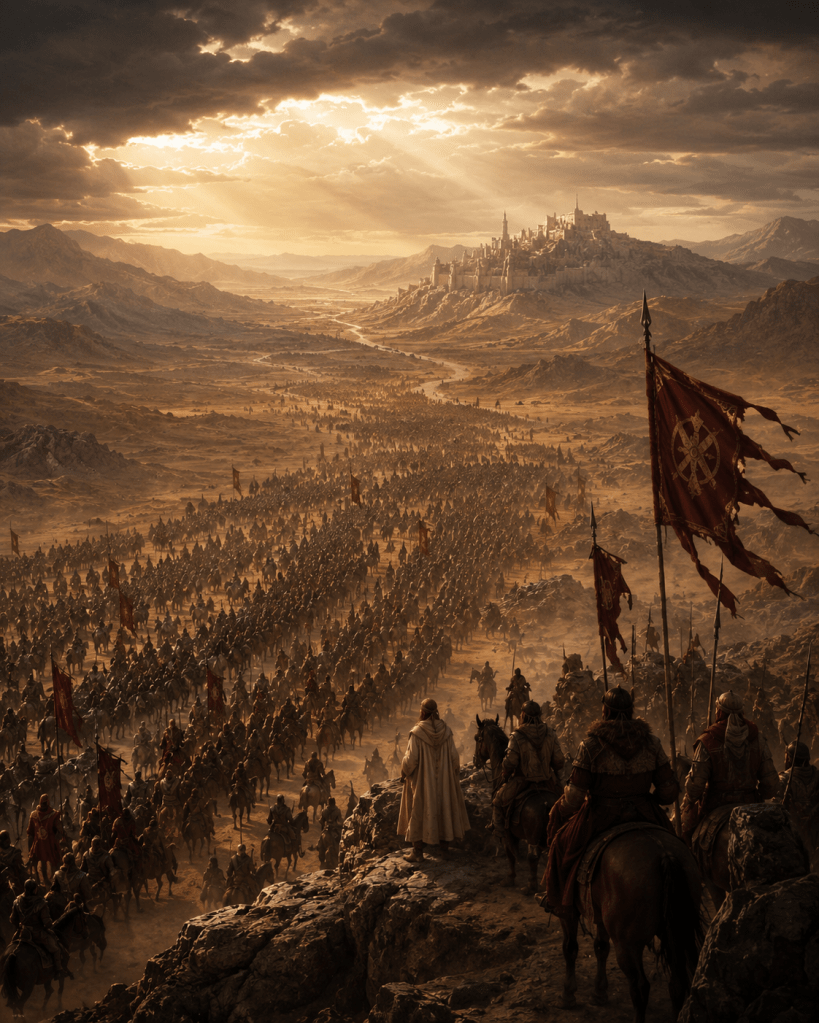
Epic fantasy can chase scale through battles, councils, prophecies, and named threats. Jordan reaches scale through consequence. The Shaido advance matters less as a single danger than as proof that the world can now be thrown out of alignment by the conflicts gathered around Rand. The White Tower fracture matters because knowledge, legitimacy, and guidance have split. Rhuidean’s instability matters because the past is no longer safely contained in memory. Across the novel, each movement suggests that history has grown restless.
That creates a richer effect than simple escalation. The book rarely needs to announce that events are larger now. The reader feels it through how many lives seem exposed to each choice. A character can speak in private, and the consequences seem to echo across borders. A leadership decision can carry the threat of famine, war, or political fracture. Jordan’s scale remains human because the pressure always travels back into people.
This is one of the reasons The Fires of Heaven feels so substantial. It offers major fantasy spectacle, yet spectacle serves a larger design. The action matters because the world around it has been prepared with care. When violence arrives, it lands inside history, loyalty, command, and fear. The result feels earned.
Rand al’Thor and the Cost of Becoming Central
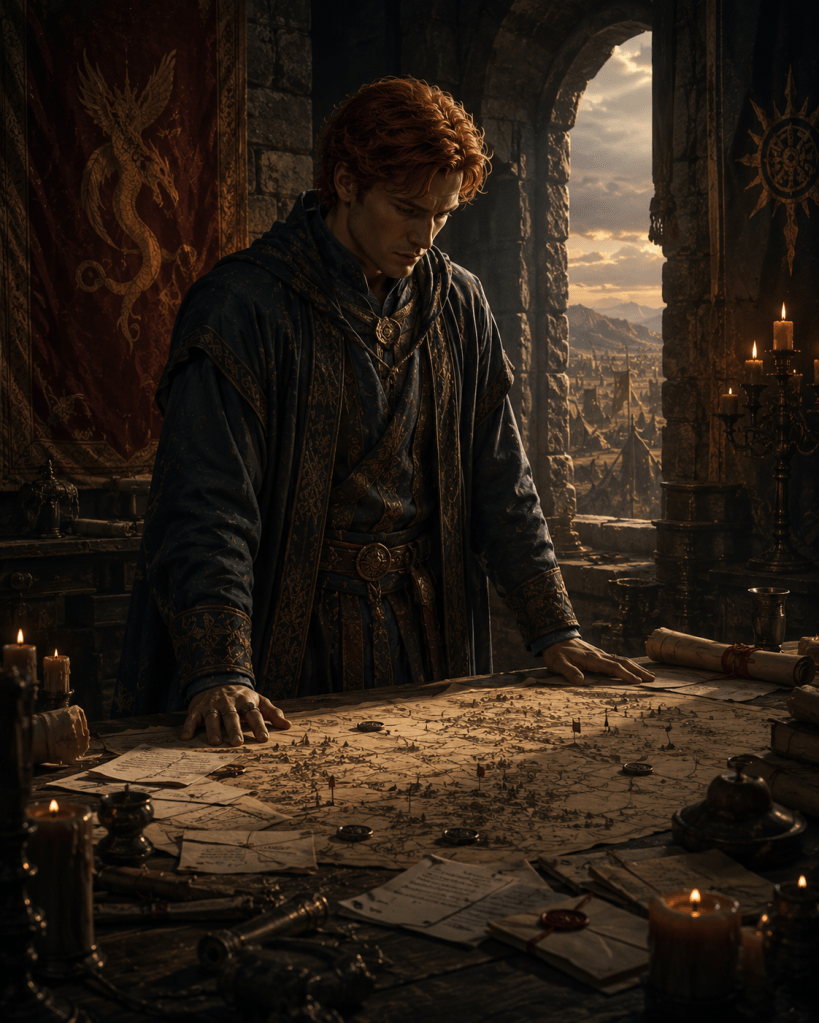
Rand remains the emotional centre of the review for me, because Jordan refuses to treat power as simple escalation. Rand grows stronger, and the more authority he gathers, the more his life narrows around duty. He has followers, advisers, allies, and enemies, and the burden settles inward. Every choice carries a larger human cost. Every refusal leaves consequences behind. Every act of leadership separates him a little further from the young man who once left the Two Rivers.
The Fires of Heaven captures that transition with real power. Rand’s path grows darker here, though darkness arrives less through spectacle than through strain. He has seen enough to understand the scale of what faces him. He has gained enough power to act. He lacks the peace required to carry that power cleanly. Jordan lets those elements grind against one another.
That tension gives Rand’s chapters a charged quality. Even moments of planning and conversation feel edged by expectation. Someone always wants something from him. Someone always fears him. Someone always believes they know what he should become. The prophecy surrounding him has ceased to feel distant. It has entered the room.
His relationship with Moiraine also gains sharper emotional weight. Their conversations carry accumulated frustration, trust, pride, and urgency. She understands the danger of delay. Rand understands the danger of surrendering his judgement. Their friction lends the novel some of its finest quiet tension, because Jordan allows care and conflict to occupy the same space.
What makes Rand compelling here is the sense that he remains aware of the damage surrounding him, even as the scale of events keeps forcing him forward. He has power, yet power offers no clean shelter. He stands at the centre of a widening storm, and the storm has begun speaking through every decision he makes.
Heat, Dust, Stone, and Gathering Force
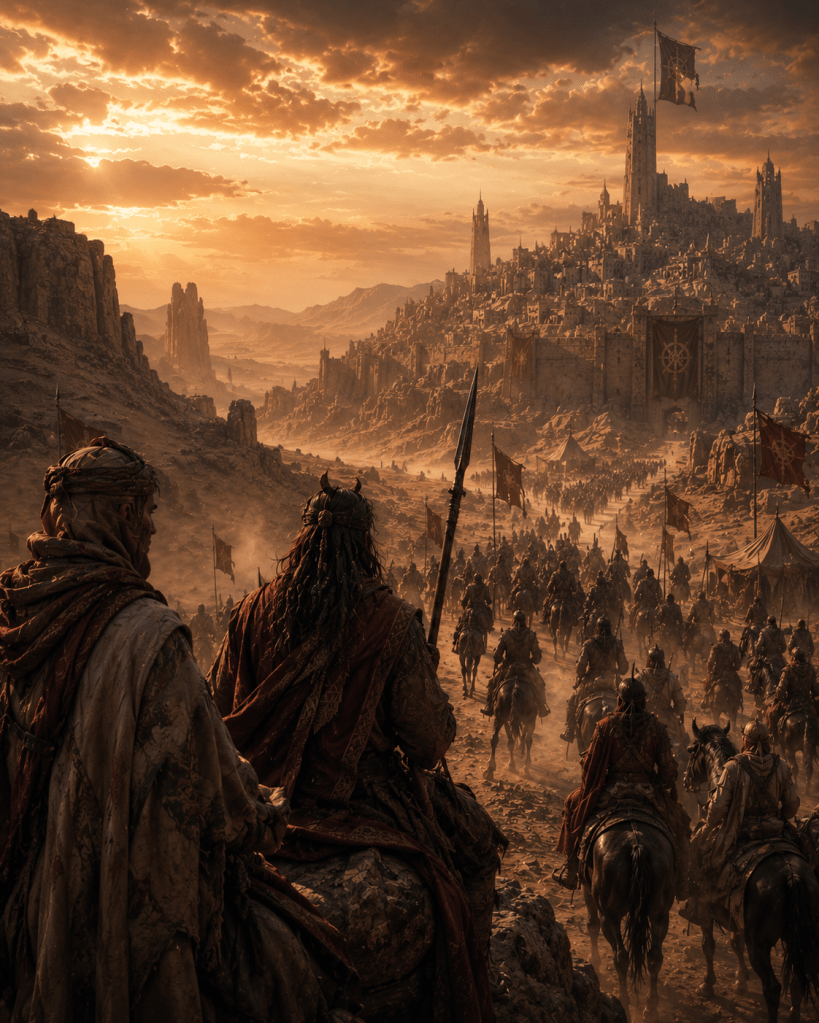
Jordan’s fantasy landscapes matter. The Waste, the camps, the roads, the halls of authority, the spaces where characters measure one another through etiquette and restraint, all contribute to the novel’s feel. This book carries heat. It carries dust. It carries stone cities, tense rooms, and the stale breath of politics under strain.
Atmosphere in Jordan often works through material detail, customs, clothing, gesture, ritual, weather, and repetition of social behaviour. Those passages give the plot texture before crisis. The world seems inhabited long before danger reaches its peak. People live inside traditions that pre-date the scene before us. Their choices grow from those traditions, even when those choices push the world towards upheaval.
That quality matters in The Fires of Heaven. The novel’s conflicts gain force because Jordan spends time making societies feel lived-in. Aiel custom has weight because it reaches into personal honour, clan memory, leadership, shame, and belonging. Aes Sedai politics has weight because the Tower carries centuries of authority. Rand’s actions matter because the world he touches has depth before he touches it.
The book’s atmosphere comes from this sense of inheritance. Everyone seems to be carrying something handed down from the past. Sometimes it is duty. Sometimes it is fear. Sometimes it is a belief that has grown too rigid to survive the age arriving around it.
Mat Cauthon Becomes Far More Compelling
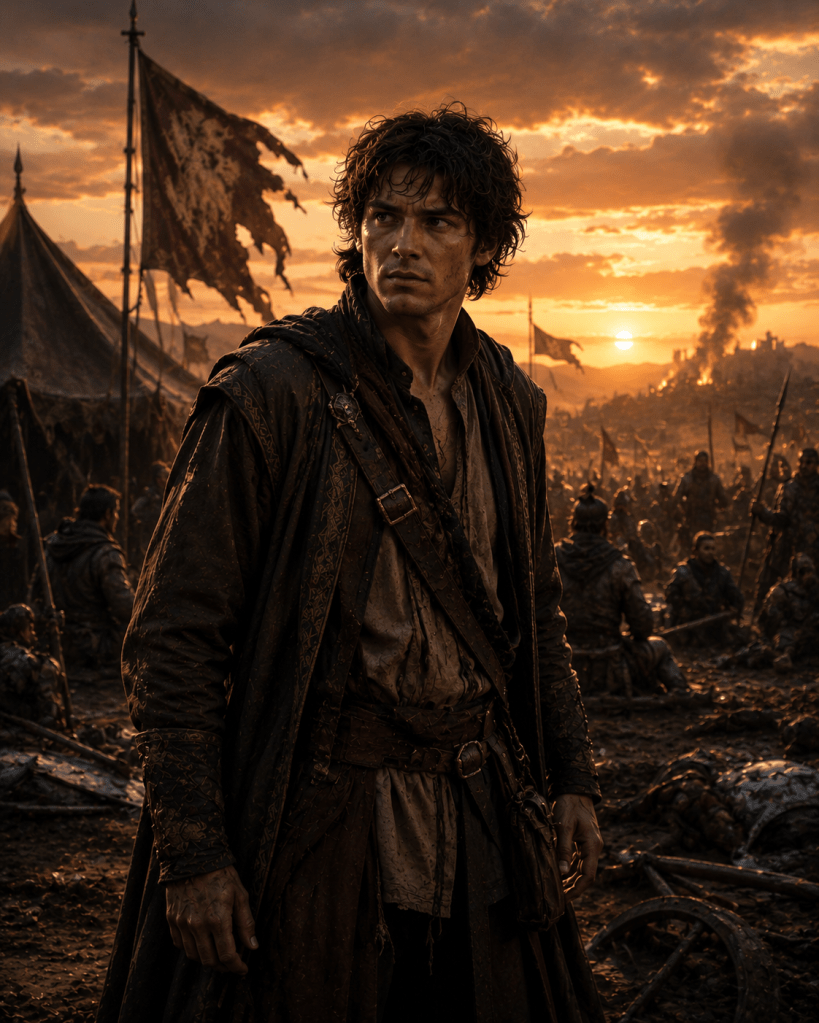
If Rand carries the novel’s burden, Mat carries one of its great pleasures. By this point, Mat has already become far more than comic friction or reluctant companion. The Fires of Heaven brings his instincts, memory, and unwilling competence into sharper focus. He keeps trying to move away from destiny, and destiny keeps finding useful ground beneath his feet.
What makes Mat so compelling here is the tension between what he says he wants and what he repeatedly proves capable of doing. He speaks like a man seeking escape. He acts like someone others will follow when the ground turns dangerous. Jordan lets this emerge through pressure, movement, and decision, which makes it far more satisfying than any blunt declaration of importance.
His presence gives the book a welcome shift in texture. Rand’s scenes often carry the ache of command. Mat’s scenes carry energy, surprise, and a sense of capability arriving almost against his own wishes. He creates motion simply by being placed near danger. By the time the novel settles into its later movements, he feels essential.
Mat also gives the series a different emotional flavour. He resists solemnity. He distrusts grand declarations. He keeps one foot pointed towards freedom even while events continue drawing him into history. That makes his growth feel alive. His importance develops through contradiction, instinct, and action, which suits him perfectly.
Rand and Mat as Two Different Answers to Pressure
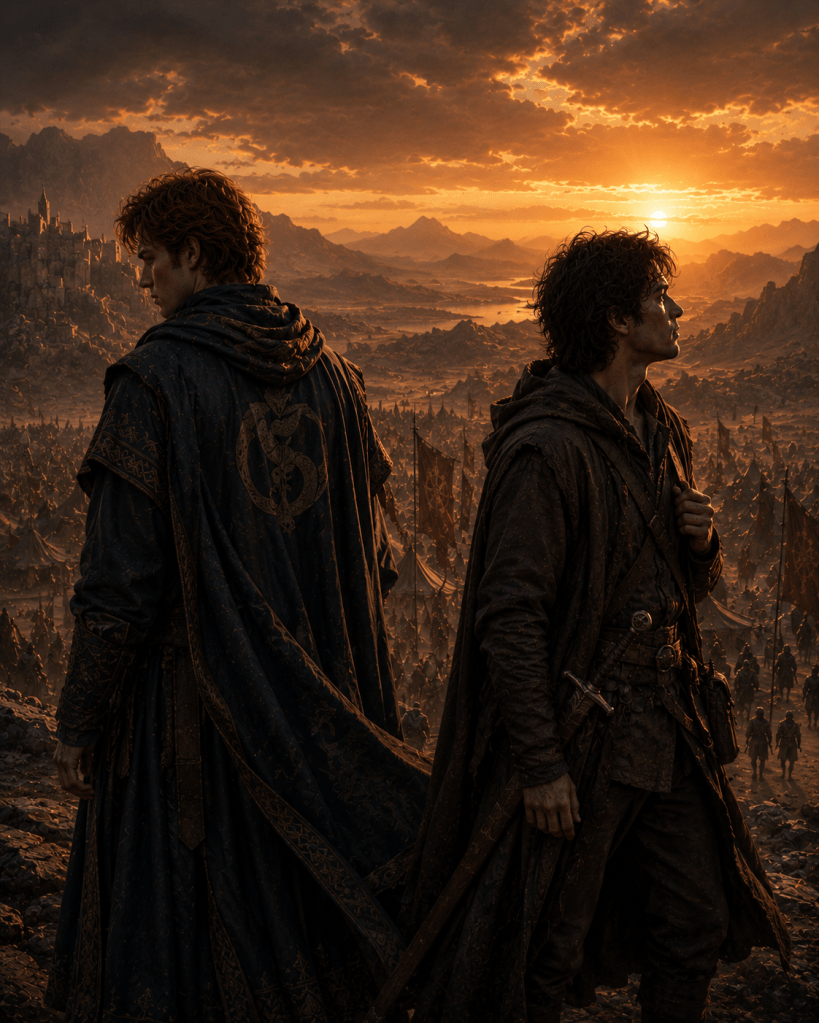
One of the reasons the novel feels so satisfying is the contrast between Rand and Mat. Rand increasingly accepts that escape has vanished. Mat keeps insisting he seeks escape even as responsibility discovers him again and again. Their paths speak to two different responses to the same widening world.
Rand becomes more deliberate, more severe, more aware of what people expect from him. Mat remains restless, irreverent, and surprisingly lucid whenever danger clears the air. Rand feels history closing around him. Mat feels history snatching at his sleeve while he swears he has somewhere else to be. Both are compelling, and together they give the novel a strong emotional balance.
The contrast matters because Jordan avoids repeating the same heroic arc through different characters. Rand’s burden grows through command, prophecy, fear, and isolation. Mat’s burden grows through competence, chance, memory, and the inability to walk away once real lives depend on him. The reader watches identity form under pressure in two very different shapes.
That dual movement gives The Fires of Heaven much of its energy. The book can feel heavy in one chapter and suddenly quicken in another. It can hold great political strain, then shift into the sharper vitality Mat brings whenever he enters a dangerous situation. The range strengthens the entire novel.
The Wider Cast Keeps the Series Open
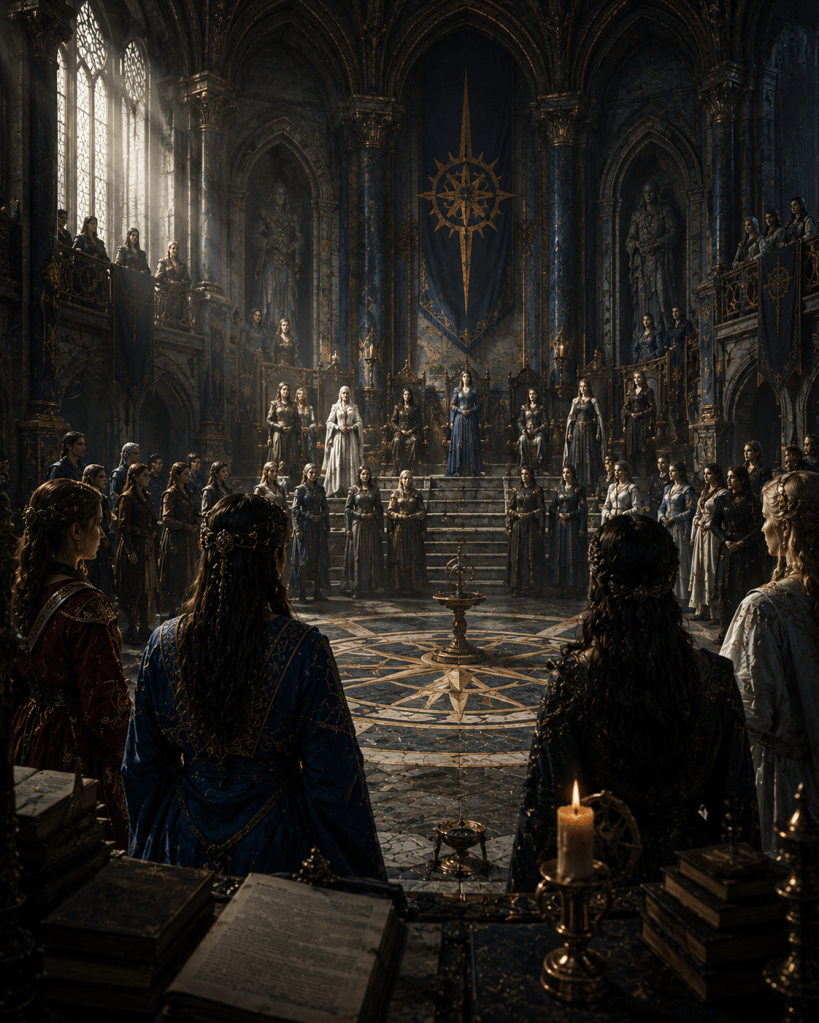
Even as Rand and Mat deliver much of the novel’s force, the wider cast helps keep the series expansive. Jordan refuses to collapse the world into a single heroic line. Other threads continue to carry political uncertainty, personal friction, magical danger, and the wider consequences of institutional collapse. That breadth can demand concentration, yet it preserves the scale that makes the series distinctive.
For me, Rand and Mat provide the clearest emotional through-line, yet the surrounding cast prevents the novel from becoming narrow. The world remains larger than any one figure, even the Dragon Reborn. Other characters carry their own hopes, mistakes, grudges, loyalties, and acts of courage. Jordan allows that complexity to remain visible.
That choice also matters structurally. A world threatened at this level should feel larger than any one protagonist. The Fires of Heaven sustains that feeling. It allows pressure to develop on several fronts, which means the reader senses history forming in overlapping directions.
The Series Shifts from Journey to Consequence
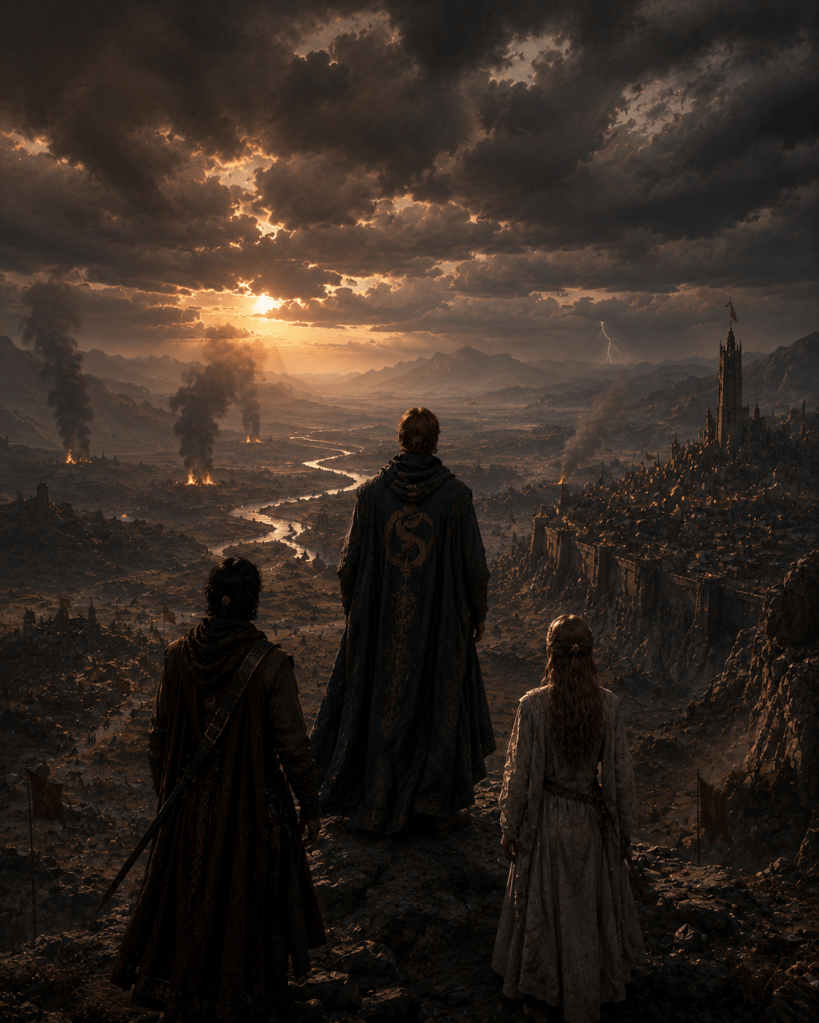
The phrase that keeps returning to me is simple: this is where The Wheel of Time stops feeling like a journey and starts feeling like a world moving under its own weight. That change explains why the book lingers. The earlier novels established landscape, myth, faction, threat, and wonder. The Fires of Heaven shows those elements colliding with greater force.
Jordan’s world has always felt broad. Here it feels active. The political order shifts. Military danger grows. The Forsaken press closer against the edges of events. Characters once defined by movement now become defined by consequence. Where they stand begins to matter as much as where they travel.
This is also why the book feels like such a strong middle-series experience. Middle volumes can sometimes serve as bridges between major turning points. The Fires of Heaven feels larger than a bridge. It takes everything already built and turns it towards collision. The scale keeps opening, yet the story never loses the sense that individual lives are being squeezed inside it.
Robert Jordan’s Great Strength: Accumulation
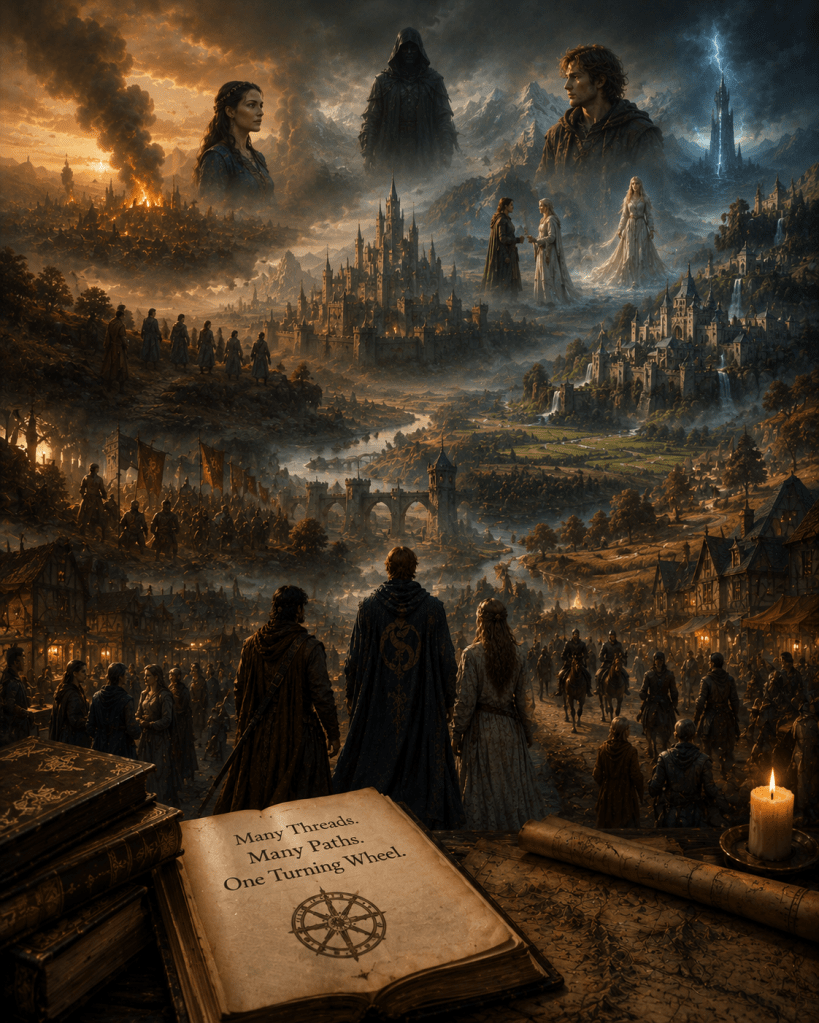
Jordan’s great gift in this novel lies in accumulation. He builds pressure through customs, councils, terrain, memory, warnings, jealousy, devotion, and unease. Scenes grow meaningful because of everything surrounding them. A military decision carries history inside it. A conversation carries institutional fear. A character’s silence can hold more weight than another author’s battle cry.
That style asks patience from the reader. It rewards attention in equal measure. The pleasure comes from feeling the world gain density while the narrative keeps drawing its threads tighter. Jordan trusts the reader to remain inside long stretches of preparation, friction, travel, and political positioning because he understands the release those stretches create once events turn.
By Book Five, that method has become one of the series’ defining strengths. The world has memory. People react to earlier choices. Institutions carry old habits into new crises. Very little feels created only for the immediate scene. The novel gains authority through that depth.
Why the Later Movement Lands
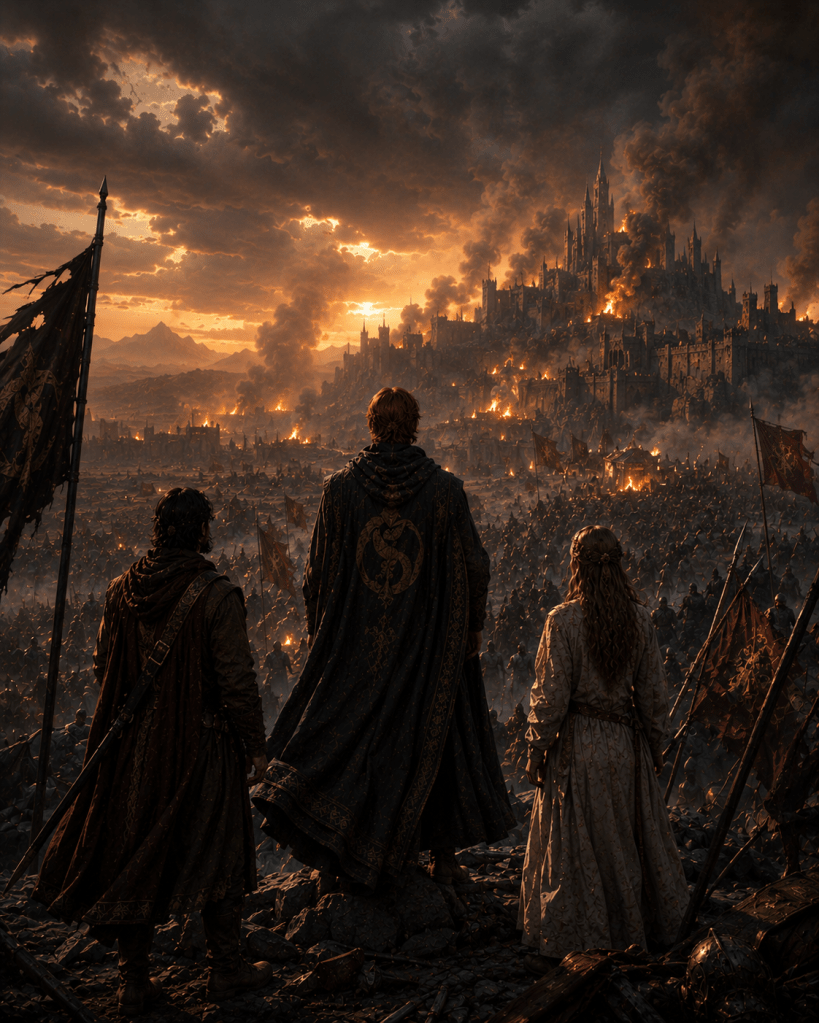
Keeping late-book revelations aside, the closing movement gains power because the novel has spent so long tightening its world. Events feel earned. Emotions feel prepared. The later chapters draw on tensions laid down across politics, loyalty, memory, and pride. Jordan allows release, yet he preserves cost.
That is a key reason the book feels so complete as a reading experience. It opens outward through war, prophecy, and unstable institutions, then gathers its emotional force around characters who have been carrying too much for too long. The closing impact grows from pressure, more than spectacle.
Even after finishing, the book leaves behind the sense that the series has crossed a threshold. The world feels more unstable. The central characters feel less sheltered. The stakes feel less theoretical. The future of the series lies far ahead, yet its harsher shape has begun to appear.
Final Reflection
When I think about the book after finishing it, the scenes remain vivid, though the deeper impression comes from movement. Everything feels closer. The final shape of the series lies far ahead, yet the pressure of that future has already entered the present. People move faster. Powers reveal sharper edges. The old road-story comfort recedes.
That is why I place The Fires of Heaven among the strongest middle-book experiences in epic fantasy. It expands with confidence, deepens key characters, gives Mat one of his great rises in significance, and pushes Rand into a more severe relationship with power. Above all, it makes the world feel alive in a new way.
The Wheel has gathered momentum. From here, it turns with greater force.