One thing I have been thinking about while working on The Veil of Kings and Gods is how much of a fictional world exists beyond the people carrying the main story. A book has to stay focused on the characters, problems and consequences that matter most to its plot, which means there will always be people standing nearby whose experiences remain largely unseen. They might be servants, guards, clerks, priests or ordinary people who witness part of an important event while knowing very little about what is really happening. I have found myself increasingly interested in those people.
The Unmarked Path, the first book in The Veil of Kings and Gods, already has a lot moving through it. Simion returns to Bremyra under orders from the Order of Magicians, Prince Patrick is trying to govern during his father’s absence, Princess Elana is preparing to leave for an arranged marriage, and pressure is beginning to build far beyond the kingdom itself. The Order and the Church distrust one another, trouble is developing in the north, and Simion gradually discovers that his reason for being in Bremyra reaches further than he expected.
Those are the people and events the book needs to follow closely. While writing around that story, though, I kept wondering what the same period looked like to people who stood several steps away from it. I wanted to know what the servants thought when they were suddenly ordered to reopen an old Order manor above the city, what a castle clerk made of a sealed letter arriving beneath gold wax, and what the people working inside the cathedral noticed when Archbishop Alaric prepared to receive a magician he clearly distrusted.
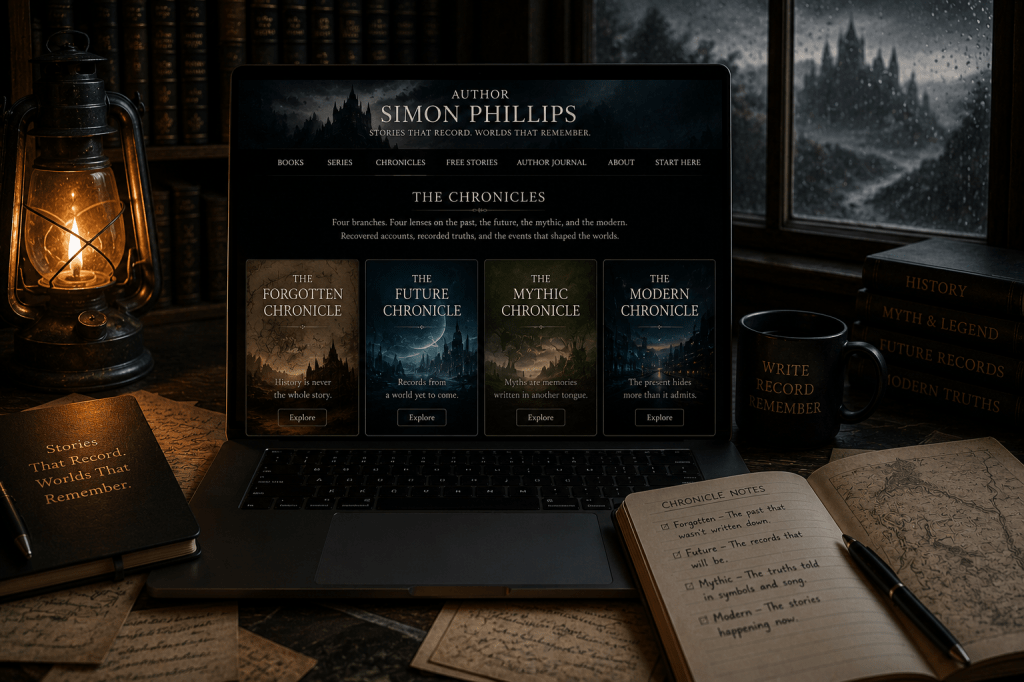
That became one of the reasons I started using The Mythic Chronicle alongside the books.
Looking Beyond the Main Story
The current Chronicle cycle is called The Sealed Road of Bremyra. It surrounds the events of The Unmarked Path, with some accounts taking place shortly before the book, others during it, and others dealing with what remains immediately afterwards.
I wanted the distinction between the two to stay clear. The Unmarked Path carries the direct story, while the Chronicle follows fragments around it. Those fragments can come from servants, clerks, chapel attendants, guards, household records, later copies of old accounts or people trying to understand something after the event has already passed.
That difference has given me far more room than I expected because I can stay inside Bremyra while changing where the reader stands.
The first Chronicle, The Manor That Waited, follows the servants sent to prepare the old Order manor before Simion arrives. In the book, Simion reaches the manor and finds an old house that has been out of regular use for years, still carrying traces of the Order’s former presence. The Chronicle allowed me to go back to the hours before he reached it and spend time with the people ordered to reopen those rooms.
They climb the hill carrying keys, linen, lamp oil and instructions from the castle. They open shutters, lay fires and prepare the western suite for a guest whose name they have never been given. As they work, small things begin to feel wrong. A lock seems to turn before the key has fully moved, marks appear in dust, doors behave strangely and a lamp is found burning where nobody remembers lighting it.
The servants have no idea what Simion is involved in, and they have no reason to understand the larger events beginning around Bremyra. They only know that an old house has suddenly been ordered back into use and that, somewhere during their preparations, it begins to feel as though the manor was already expecting someone.
I probably would never have followed those people inside the main book because Simion’s story has other places to go. The Chronicle gives that quieter part of Bremyra somewhere to exist.
What a Sealed Letter Means to Someone Else
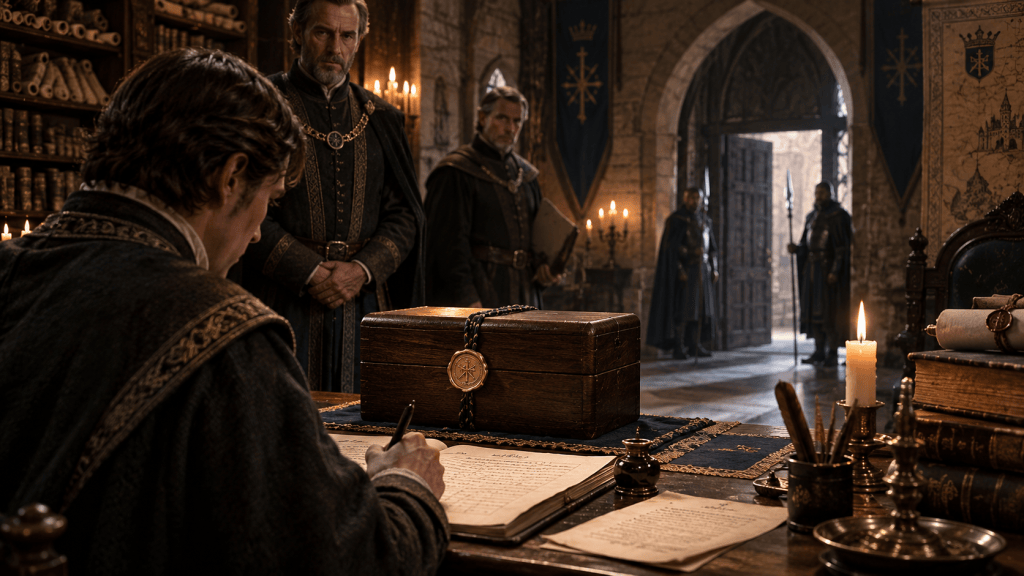
The second Chronicle, The Letter Beneath Gold Wax, gave me another way of looking at the same period.
For Simion, the Council of Five belongs to the structure of his life. He was trained by the Order, he understands its authority, and the instructions sent to him affect his future directly. A clerk working inside Bremyra Castle has a very different relationship with the same event because, from his position, the Council arrives as an object carried through the door.
He sees a cedar case bound with dark cord and sealed beneath gold wax. He sees senior officials become unusually careful around it, watches the receipt entered formally into the castle record, and notices that people who usually deal with royal paperwork suddenly measure every word. He cannot read the wider story behind the letter, although he can tell from the behaviour around him that something important has entered Bremyra.
I have enjoyed working with that kind of limitation because the person recording an event does not always understand what the reader may later come to know. A clerk can preserve the hour, the condition of the seal, the names of the witnesses and the route taken through the castle, yet still have no idea why the letter matters so much.
That feels right for the Chronicle. History often survives through people who saw one small part of something larger and recorded what their position allowed them to see.
Standing at the Edge of a Scene From the Book
The Cathedral Warning pushed the idea in another direction because it sits close to a scene that already exists in The Unmarked Path.
Simion is summoned to Bremyra Cathedral by Archbishop Alaric, and their meeting makes the tension between the Church and the Order very clear. From Simion’s position, the encounter is about suspicion, authority and the limits Alaric intends to place around him.
The Chronicle moves away from Simion and spends its time with the people preparing the cathedral before he arrives.
Sister Maelis notices candles behaving strangely. Brother Osric is given responsibility for the undercroft key. Parts of the cathedral are restricted, doors are watched and Archbishop Alaric makes preparations that suggest he is worried about something deeper than an awkward meeting with a visiting magician.
When Simion finally enters, those people hear the same formal conversation, although they experience it from the edges. Their attention moves towards the locked doors, the keys, the candles and the sounds beneath the floor. They have no access to Simion’s thoughts, and Alaric certainly gives them no explanation for his concern.
I like being able to return to a moment from the book in that way because I am not rewriting the scene from another camera angle. I am looking at what the scene disturbed around it and asking what the people standing nearby might have carried away afterwards.
Remembering Simion Before He Became the Lord Magician
The fourth Chronicle, The Boy Remembered in the Kitchens, has probably been one of my favourite examples so far because it looks at Simion through a very different kind of memory.
By the time he returns to Bremyra, people see the black robes of the Order before they see the person wearing them. Servants lower their eyes, officials address him by title and even people who knew him years earlier have to reconcile the man standing before them with the person they once remembered.
The kitchens carry a different version of him. Their memories are connected to bread, work, illness, cold rooms and the ordinary routines of castle service. They remember a boy who once carried food through the halls and slept close to the hearth during a winter fever, long before anyone expected him to return as a magician.
That interested me because institutions remember people according to their own needs. A court remembers rank, the Church remembers authority and the Order remembers its own position, while servants may remember who was hungry, who worked beside them or who disappeared from their rooms one winter.
The Chronicle lets those memories sit beside the person Simion has become. It adds something to Bremyra without asking the main book to stop and explain every part of his childhood through exposition.
Leaving Some Things Uncertain
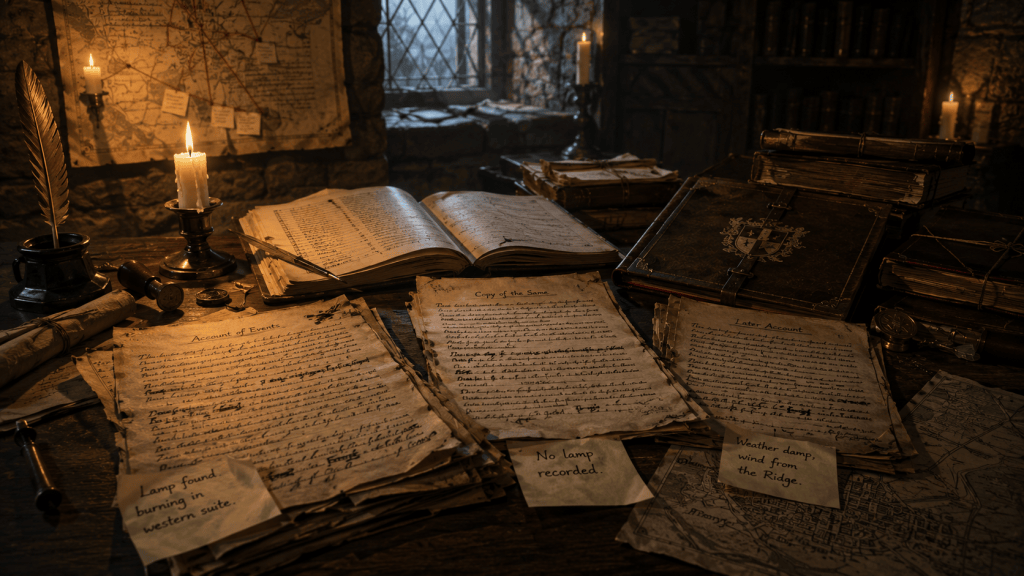
Another part of the Chronicle that I have come to value is that the records are allowed to be incomplete.
A servant can misunderstand what happened. A clerk may record only what his office required. A later copy of an account might remove a detail found in an earlier one, while someone writing years afterwards may decide that an unexplained event was caused by damp stone, winter weather, frightened servants or an old building settling in the cold.
I do not want every Chronicle to provide a final answer because that would weaken what makes the format interesting to me. The book remains closer to the direct events, while the Chronicle preserves what other people thought they saw and what later records chose to keep.
Sometimes the difference between those accounts matters as much as the event itself. A formal register may describe a perfectly ordinary household preparation while a lesser copy remembers that a lamp was already burning. A church record may describe proper restrictions during a formal reception while someone in the margins remembers candles bending towards a locked stair.
That leaves room for the reader to decide how much of each account they trust.
Another Way Into The Veil of Kings and Gods
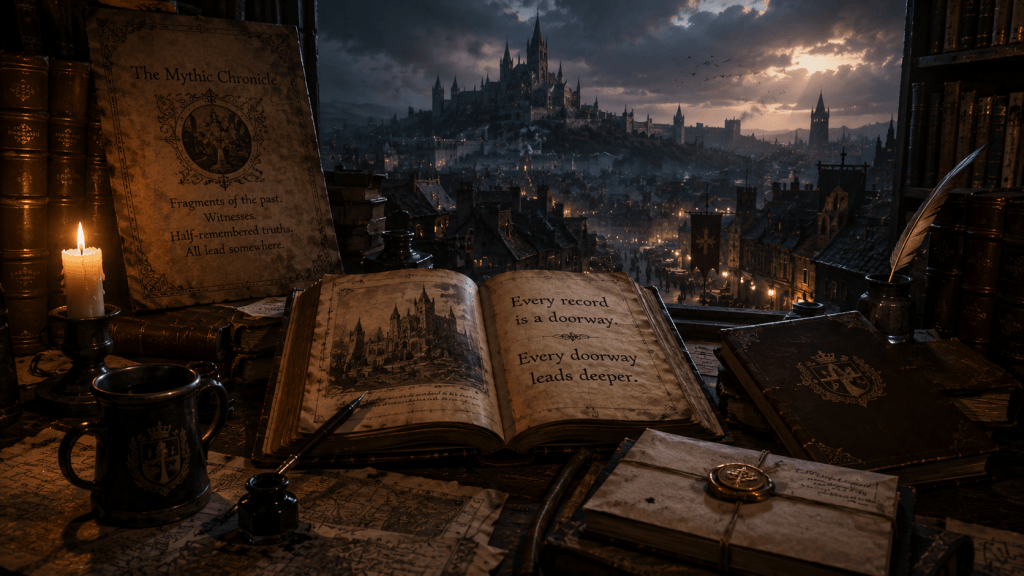
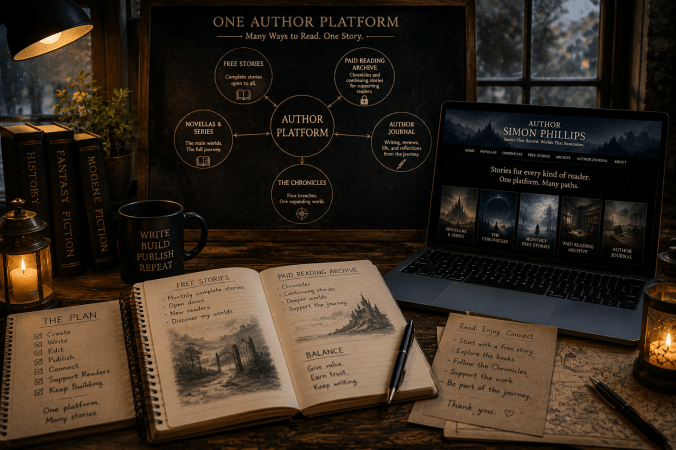
There is a practical reason I like this approach as well because I want the website to give readers several ways into the fiction.
Someone who has already read The Unmarked Path can enter The Mythic Chronicle and return to Bremyra from places the book only passed briefly. They can stand inside the old manor before Simion arrives, sit beside a clerk as the Council’s letter enters the castle, or wait inside the cathedral while Alaric prepares for a confrontation the reader already knows is coming.
Another reader may discover the Chronicle first. They might begin with an abandoned manor that appears to be waiting for an unknown guest, a sealed letter that makes an entire chancery uneasy, or a cathedral locking its lower doors before a magician arrives. They do not need to understand everything about Simion, the Order or Bremyra before those accounts can work.
If the records make them curious about what is happening beyond the edges, The Unmarked Path is there to carry them into the main story.
I prefer that to repeatedly telling readers that I have another book available. The Chronicle can offer something worth reading for itself while quietly opening a door towards the larger series behind it.
The People Standing Nearby
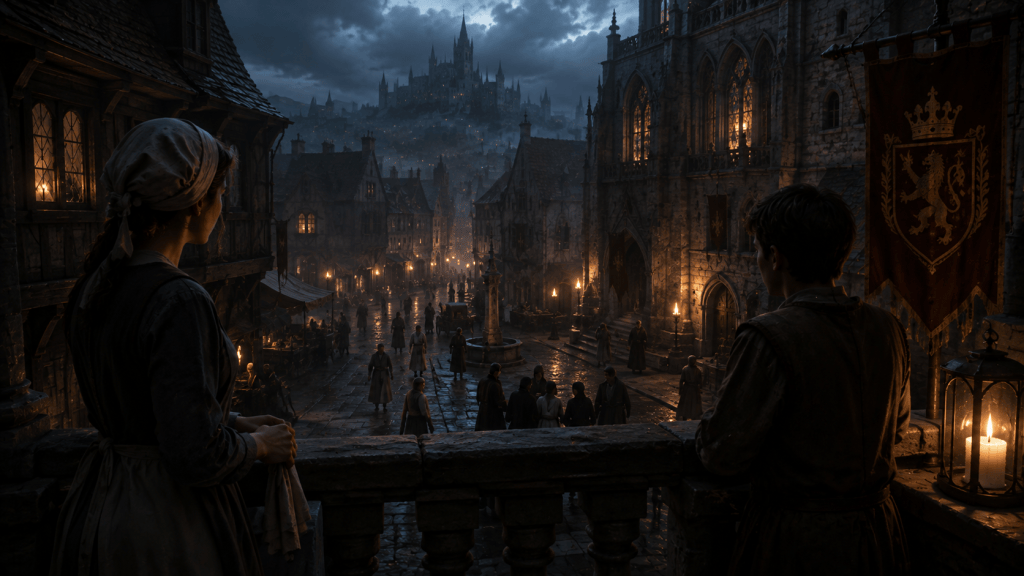
I think that is what I have loved most about The Sealed Road of Bremyra so far. It gives me the chance to stay inside the world for longer and follow parts of the story that the main book could never reasonably stop to include. I can spend time with a housekeeper opening rooms that have stood empty for years, a clerk examining a seal with unusual care, a chapel attendant watching candles lean towards a locked stair, or a cook looking at a feared magician and remembering the boy who once worked beside the hearth.
That kind of thing has always appealed to me. When I was a child, I could spend hours, sometimes days, thinking through parts of a story that might never actually be used. I would imagine places beyond the main setting, work out what happened in rooms the characters never entered, think about people who only existed at the edge of the story, or decide what might have happened years before the part I was actually telling. Most of it never needed to appear anywhere. I simply enjoyed knowing it was there.
I still write that way now. The more time I spend inside a world, the more real it begins to feel in my own head, and I enjoy following those smaller threads even when they sit outside the central plot. They help me understand the place, the people and the history around them, and they make writing the main story feel less like moving characters through a constructed setting and more like returning somewhere that already has its own memory.
The Mythic Chronicle has given me somewhere to put some of that imagination instead of leaving all of it hidden in notes or in my head. The book can stay focused on Simion, Patrick, Týrnan and the larger events moving around them, while the Chronicle can step sideways and spend time with the people who only caught a glimpse of what was happening.
None of those witnesses understand the whole story. They see enough to know that something is changing, then carry away their own version of it as memory, rumour or record. For me, that makes Bremyra feel larger than the central plot because the world continues beyond whichever character happens to be on the page.
That is probably the part I enjoy most. I get to write the story I need to tell, while still giving myself permission to wander into the corners that first made me love making up worlds in the first place.
If you would like to see Bremyra from some of those quieter corners, The Sealed Road of Bremyra begins with The Manor That Waited, before Simion has even climbed the hill.