Seeing the Story Through Other Eyes: Why I Use The Mythic Chronicle

One thing I have been thinking about while working on The Veil of Kings and Gods is how much of a fictional world exists beyond the people carrying the main story. A book has to stay focused on the characters, problems and consequences that matter most to its plot, which means there will always be people standing nearby whose experiences remain largely unseen. They might be servants, guards, clerks, priests or ordinary people who witness part of an important event while knowing very little about what is really happening. I have found myself increasingly interested in those people.

The Unmarked Path, the first book in The Veil of Kings and Gods, already has a lot moving through it. Simion returns to Bremyra under orders from the Order of Magicians, Prince Patrick is trying to govern during his father’s absence, Princess Elana is preparing to leave for an arranged marriage, and pressure is beginning to build far beyond the kingdom itself. The Order and the Church distrust one another, trouble is developing in the north, and Simion gradually discovers that his reason for being in Bremyra reaches further than he expected.

Those are the people and events the book needs to follow closely. While writing around that story, though, I kept wondering what the same period looked like to people who stood several steps away from it. I wanted to know what the servants thought when they were suddenly ordered to reopen an old Order manor above the city, what a castle clerk made of a sealed letter arriving beneath gold wax, and what the people working inside the cathedral noticed when Archbishop Alaric prepared to receive a magician he clearly distrusted.

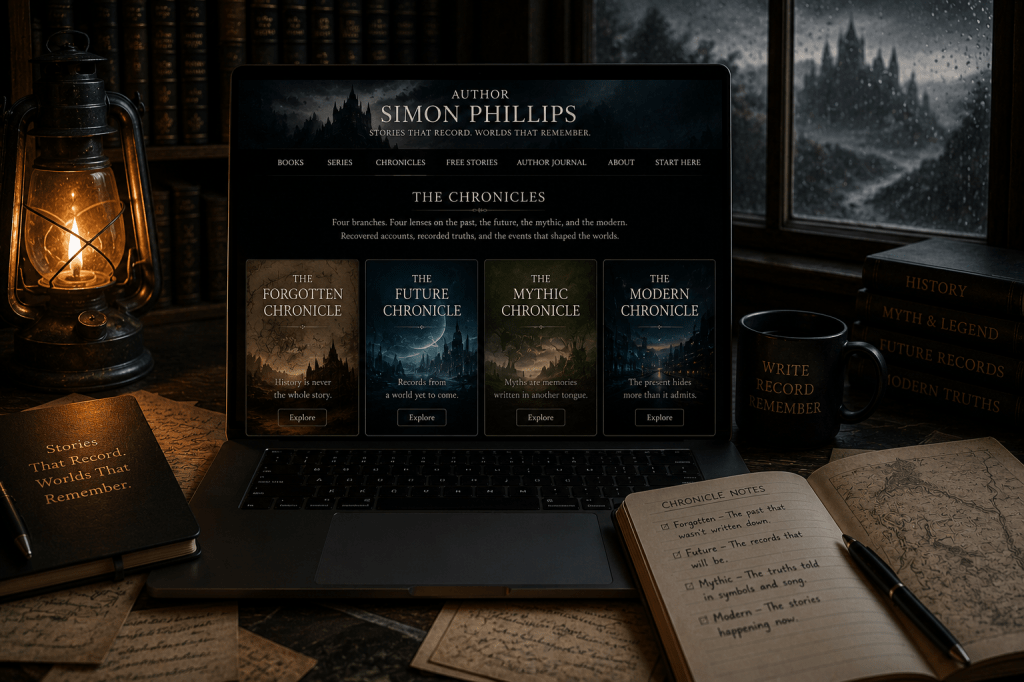
That became one of the reasons I started using The Mythic Chronicle alongside the books.


Looking Beyond the Main Story

The current Chronicle cycle is called The Sealed Road of Bremyra. It surrounds the events of The Unmarked Path, with some accounts taking place shortly before the book, others during it, and others dealing with what remains immediately afterwards.

I wanted the distinction between the two to stay clear. The Unmarked Path carries the direct story, while the Chronicle follows fragments around it. Those fragments can come from servants, clerks, chapel attendants, guards, household records, later copies of old accounts or people trying to understand something after the event has already passed.

That difference has given me far more room than I expected because I can stay inside Bremyra while changing where the reader stands.

The first Chronicle, The Manor That Waited, follows the servants sent to prepare the old Order manor before Simion arrives. In the book, Simion reaches the manor and finds an old house that has been out of regular use for years, still carrying traces of the Order’s former presence. The Chronicle allowed me to go back to the hours before he reached it and spend time with the people ordered to reopen those rooms.

They climb the hill carrying keys, linen, lamp oil and instructions from the castle. They open shutters, lay fires and prepare the western suite for a guest whose name they have never been given. As they work, small things begin to feel wrong. A lock seems to turn before the key has fully moved, marks appear in dust, doors behave strangely and a lamp is found burning where nobody remembers lighting it.

The servants have no idea what Simion is involved in, and they have no reason to understand the larger events beginning around Bremyra. They only know that an old house has suddenly been ordered back into use and that, somewhere during their preparations, it begins to feel as though the manor was already expecting someone.

I probably would never have followed those people inside the main book because Simion’s story has other places to go. The Chronicle gives that quieter part of Bremyra somewhere to exist.


What a Sealed Letter Means to Someone Else
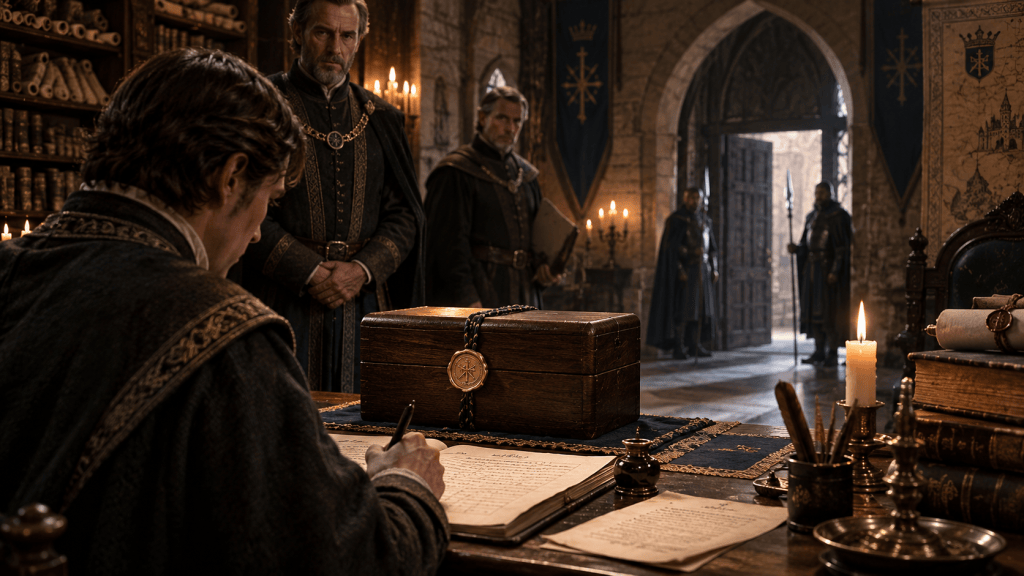
The second Chronicle, The Letter Beneath Gold Wax, gave me another way of looking at the same period.

For Simion, the Council of Five belongs to the structure of his life. He was trained by the Order, he understands its authority, and the instructions sent to him affect his future directly. A clerk working inside Bremyra Castle has a very different relationship with the same event because, from his position, the Council arrives as an object carried through the door.

He sees a cedar case bound with dark cord and sealed beneath gold wax. He sees senior officials become unusually careful around it, watches the receipt entered formally into the castle record, and notices that people who usually deal with royal paperwork suddenly measure every word. He cannot read the wider story behind the letter, although he can tell from the behaviour around him that something important has entered Bremyra.

I have enjoyed working with that kind of limitation because the person recording an event does not always understand what the reader may later come to know. A clerk can preserve the hour, the condition of the seal, the names of the witnesses and the route taken through the castle, yet still have no idea why the letter matters so much.

That feels right for the Chronicle. History often survives through people who saw one small part of something larger and recorded what their position allowed them to see.


Standing at the Edge of a Scene From the Book

The Cathedral Warning pushed the idea in another direction because it sits close to a scene that already exists in The Unmarked Path.

Simion is summoned to Bremyra Cathedral by Archbishop Alaric, and their meeting makes the tension between the Church and the Order very clear. From Simion’s position, the encounter is about suspicion, authority and the limits Alaric intends to place around him.

The Chronicle moves away from Simion and spends its time with the people preparing the cathedral before he arrives.

Sister Maelis notices candles behaving strangely. Brother Osric is given responsibility for the undercroft key. Parts of the cathedral are restricted, doors are watched and Archbishop Alaric makes preparations that suggest he is worried about something deeper than an awkward meeting with a visiting magician.

When Simion finally enters, those people hear the same formal conversation, although they experience it from the edges. Their attention moves towards the locked doors, the keys, the candles and the sounds beneath the floor. They have no access to Simion’s thoughts, and Alaric certainly gives them no explanation for his concern.

I like being able to return to a moment from the book in that way because I am not rewriting the scene from another camera angle. I am looking at what the scene disturbed around it and asking what the people standing nearby might have carried away afterwards.


Remembering Simion Before He Became the Lord Magician

The fourth Chronicle, The Boy Remembered in the Kitchens, has probably been one of my favourite examples so far because it looks at Simion through a very different kind of memory.

By the time he returns to Bremyra, people see the black robes of the Order before they see the person wearing them. Servants lower their eyes, officials address him by title and even people who knew him years earlier have to reconcile the man standing before them with the person they once remembered.

The kitchens carry a different version of him. Their memories are connected to bread, work, illness, cold rooms and the ordinary routines of castle service. They remember a boy who once carried food through the halls and slept close to the hearth during a winter fever, long before anyone expected him to return as a magician.

That interested me because institutions remember people according to their own needs. A court remembers rank, the Church remembers authority and the Order remembers its own position, while servants may remember who was hungry, who worked beside them or who disappeared from their rooms one winter.

The Chronicle lets those memories sit beside the person Simion has become. It adds something to Bremyra without asking the main book to stop and explain every part of his childhood through exposition.


Leaving Some Things Uncertain
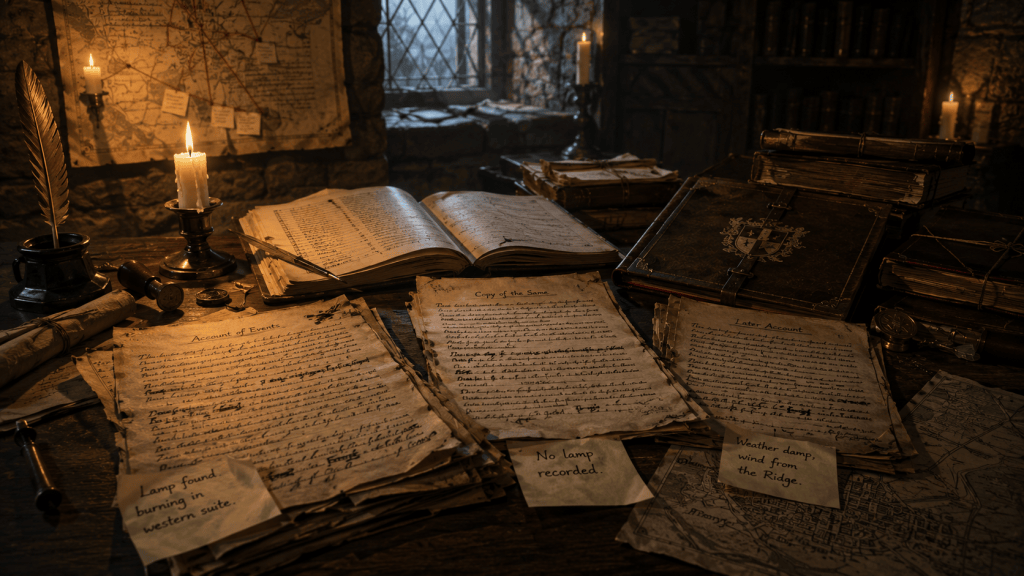
Another part of the Chronicle that I have come to value is that the records are allowed to be incomplete.

A servant can misunderstand what happened. A clerk may record only what his office required. A later copy of an account might remove a detail found in an earlier one, while someone writing years afterwards may decide that an unexplained event was caused by damp stone, winter weather, frightened servants or an old building settling in the cold.

I do not want every Chronicle to provide a final answer because that would weaken what makes the format interesting to me. The book remains closer to the direct events, while the Chronicle preserves what other people thought they saw and what later records chose to keep.

Sometimes the difference between those accounts matters as much as the event itself. A formal register may describe a perfectly ordinary household preparation while a lesser copy remembers that a lamp was already burning. A church record may describe proper restrictions during a formal reception while someone in the margins remembers candles bending towards a locked stair.

That leaves room for the reader to decide how much of each account they trust.


Another Way Into The Veil of Kings and Gods
There is a practical reason I like this approach as well because I want the website to give readers several ways into the fiction.

Someone who has already read The Unmarked Path can enter The Mythic Chronicle and return to Bremyra from places the book only passed briefly. They can stand inside the old manor before Simion arrives, sit beside a clerk as the Council’s letter enters the castle, or wait inside the cathedral while Alaric prepares for a confrontation the reader already knows is coming.

Another reader may discover the Chronicle first. They might begin with an abandoned manor that appears to be waiting for an unknown guest, a sealed letter that makes an entire chancery uneasy, or a cathedral locking its lower doors before a magician arrives. They do not need to understand everything about Simion, the Order or Bremyra before those accounts can work.

If the records make them curious about what is happening beyond the edges, The Unmarked Path is there to carry them into the main story.

I prefer that to repeatedly telling readers that I have another book available. The Chronicle can offer something worth reading for itself while quietly opening a door towards the larger series behind it.


The People Standing Nearby
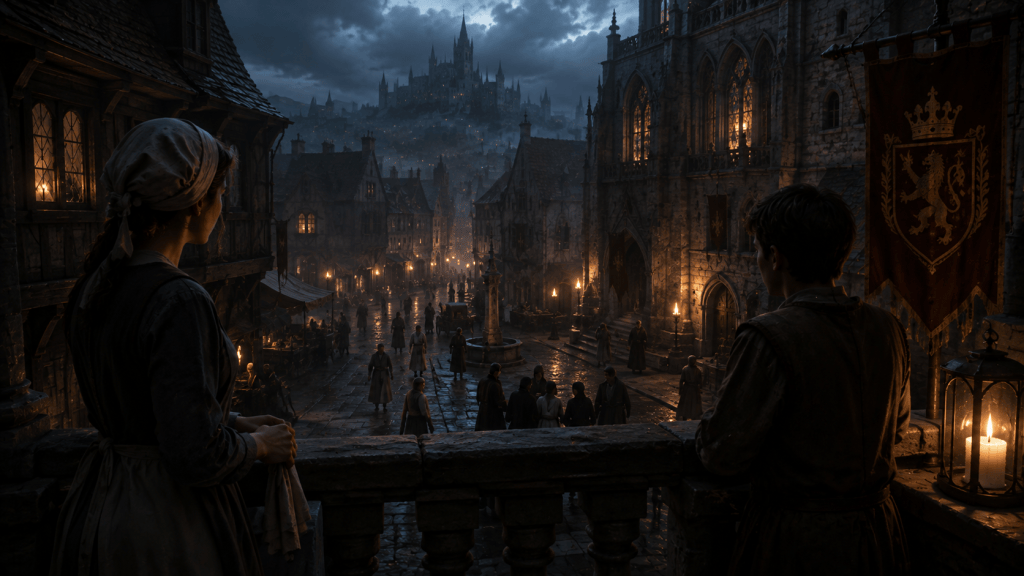
I think that is what I have loved most about The Sealed Road of Bremyra so far. It gives me the chance to stay inside the world for longer and follow parts of the story that the main book could never reasonably stop to include. I can spend time with a housekeeper opening rooms that have stood empty for years, a clerk examining a seal with unusual care, a chapel attendant watching candles lean towards a locked stair, or a cook looking at a feared magician and remembering the boy who once worked beside the hearth.

That kind of thing has always appealed to me. When I was a child, I could spend hours, sometimes days, thinking through parts of a story that might never actually be used. I would imagine places beyond the main setting, work out what happened in rooms the characters never entered, think about people who only existed at the edge of the story, or decide what might have happened years before the part I was actually telling. Most of it never needed to appear anywhere. I simply enjoyed knowing it was there.

I still write that way now. The more time I spend inside a world, the more real it begins to feel in my own head, and I enjoy following those smaller threads even when they sit outside the central plot. They help me understand the place, the people and the history around them, and they make writing the main story feel less like moving characters through a constructed setting and more like returning somewhere that already has its own memory.

The Mythic Chronicle has given me somewhere to put some of that imagination instead of leaving all of it hidden in notes or in my head. The book can stay focused on Simion, Patrick, Týrnan and the larger events moving around them, while the Chronicle can step sideways and spend time with the people who only caught a glimpse of what was happening.

None of those witnesses understand the whole story. They see enough to know that something is changing, then carry away their own version of it as memory, rumour or record. For me, that makes Bremyra feel larger than the central plot because the world continues beyond whichever character happens to be on the page.

That is probably the part I enjoy most. I get to write the story I need to tell, while still giving myself permission to wander into the corners that first made me love making up worlds in the first place.

If you would like to see Bremyra from some of those quieter corners, The Sealed Road of Bremyra begins with The Manor That Waited, before Simion has even climbed the hill.
Why Free Fiction and Paid Reading Both Belong on the Same Website

Finding a Fair Shape for the Website

One question has kept returning while I rebuild my author website: how should complete free fiction and paid reading sit beside each other?

I want the website to give readers a genuine way into my writing. I also want it to support the time, planning, writing, editing, publishing, and maintenance behind that work. Those aims can appear to pull in different directions, especially when an author website is trying to welcome new readers while becoming part of a long-term independent income.

For me, the answer is to give both forms of reading a clear place.

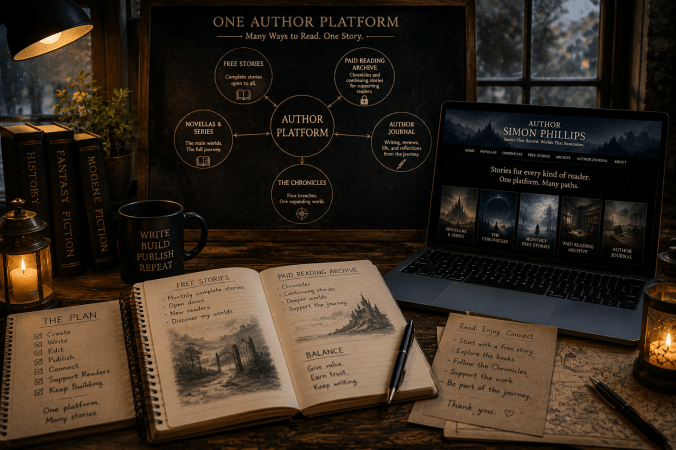
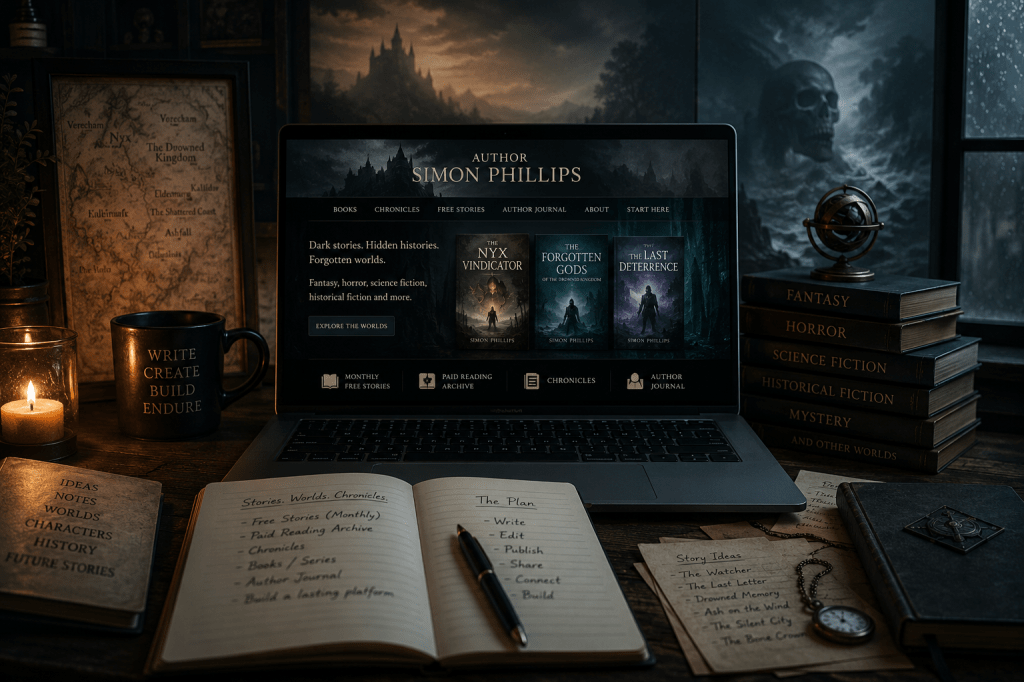
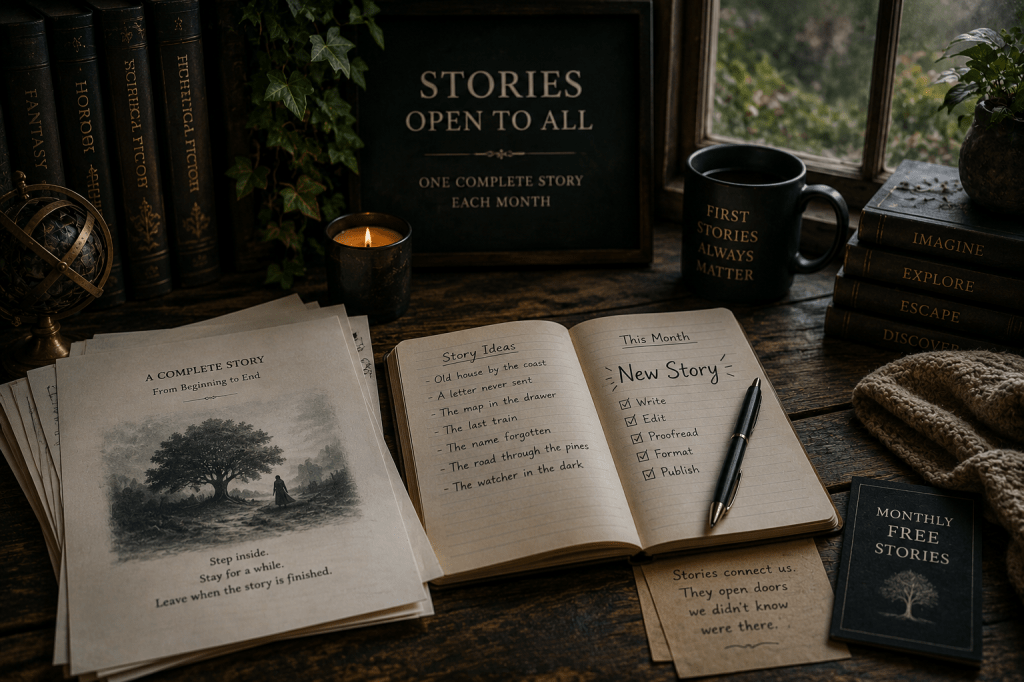
Monthly Free Stories offers one complete free story each month. The Paid Reading Archive gives selected continuing work, particularly the Chronicles, a place where it can help support the wider platform. Each area serves a different purpose, and the distinction needs to remain honest.


Why I Wanted Complete Free Stories

I never wanted every route into the website to end at a payment screen. A new reader may know very little about my books, the Chronicles, or the different series I am building. Asking that reader to subscribe or pay before they have had a proper opportunity to read my fiction would place the decision too early.

Monthly Free Stories provides a simpler starting point.

Each month, I will publish one complete story on the website. The genre may change according to the idea. One month may bring horror, while another may lean towards science fiction, fantasy, historical fiction, mystery, modern fiction, or something that sits between established genres.

The important part is that the story should feel finished. A reader should be able to arrive, choose a story, and read it from beginning to end. There should be no missing conclusion or sudden payment gate before the final section. The free story should give the reader a complete piece of fiction, even when the idea later proves capable of growing into something larger.

This also gives me room to write beyond the established series. Some ideas clearly belong inside a book project from the beginning. Others are smaller, stranger, or still uncertain. A complete standalone story gives those ideas room to exist before I decide whether they deserve a larger future.

Some may eventually suggest a series or book. Others may remain single stories that achieved exactly what they were meant to achieve.


Why Paid Reading Still Matters

Writing carries practical costs that readers rarely see directly. The time spent developing a story is only one part of the process. There is also revision, proofreading, formatting, cover preparation, website maintenance, image work, archive management, platform subscriptions, and the regular work required to keep everything organised.

A paid reading section gives part of that work a direct way to support itself.

The Paid Reading Archive is intended for material that benefits from an ongoing home, especially Chronicle issues and other selected work connected to the regular publishing structure. Readers may begin with an open section, understand the subject and tone, and then choose whether they wish to continue.

That choice needs to remain clear. Readers should understand which material is free, which material requires payment, and what access provides. Clear labelling matters because trust can disappear very quickly when the boundaries between free and paid material become uncertain.

Paid reading also allows WordPress to function as a full author platform instead of acting as a collection of links pointing towards other services. The website should hold fiction, organise it properly, give readers reasons to return, and contribute towards the continuing work behind the books.


Different Forms of Reading Serve Different Needs

Free fiction and paid content are sometimes discussed as though one must weaken the other. I see them as serving different readers and different kinds of work.

The free stories help readers discover my fiction. They show the range of genres I write, the kinds of atmosphere I return to, and the human pressure, uncertainty, history, strange systems, or hidden danger that often sits inside the work. They also give existing readers something complete to read between book releases and Chronicle posts.

The paid archive supports regular and continuing material. It gives readers who want to follow the work more closely a clear place to do so, while helping with the practical cost of keeping the website active.

The distinction matters. Free fiction should feel complete and worthwhile. Paid reading should offer enough depth, continuity, or regular material to justify the cost. Each side can remain clear about what it offers.


Avoiding the Feeling of a Sales Funnel

I am wary of turning every free piece into a carefully disguised route towards payment. Readers can usually sense when a story exists mainly to push them towards a purchase, and that approach would make the fiction feel secondary on an author website.

Monthly Free Stories needs its own integrity.

Each story should provide a full reading experience. A closing link may guide readers towards the books, another free story, a related series page, or the Paid Reading Archive, yet the story itself should already have delivered what it promised.

One reader may finish a story and leave the site. Another may return the following month. Someone else may move towards a book series, a Chronicle branch, or the paid archive. Each response is reasonable, and those choices should grow naturally from interest.

This means the website has to be organised carefully. Free stories need a clear home. Paid material needs equally clear labelling. Series pages need to remain focused on the books. Chronicle pages need to explain what readers can expect, while the Author Journal should remain a supporting area where I can discuss the work behind the fiction.

Clear structure helps readers understand where they are and what each part of the site offers.


Giving Readers Several Ways Into the Work

Readers will arrive with different interests and different levels of familiarity with my writing. Some may already know one of the books. Some may discover the website through a Chronicle post. Others may find an Author Journal article, a free story, a social post, or a short video.

Trying to force every reader through one route would make the website too narrow.

The books remain the main body of the work. The permanent series pages give each larger project a proper home. The Chronicles provide regular themed reading. Monthly Free Stories offers complete standalone fiction. The Paid Reading Archive holds selected continuing material. The Author Journal explains parts of the work and the decisions behind it.

These areas can connect to one another while still making sense individually.

That is particularly important for a website covering several genres and many long-term series. A reader interested in historical fiction may have little interest in science-fiction horror. Someone who enjoys a free ghost story may later discover one of the darker historical series. Another reader may prefer the Chronicle format and spend most of their time within that part of the site.

The website needs enough structure to support those different reading habits while keeping the overall author identity clear.


Keeping the Balance Honest

The balance between free and paid reading will probably need adjustment as the website develops. Some monthly stories may grow longer than expected. Certain Chronicle strands may suit the paid structure better than others. Some experiments may prove manageable, while others may demand too much time beside the books and existing publishing work.

I prefer to make those decisions through actual experience instead of pretending the whole system is already settled.

The main principles are clear enough to begin. Free stories will remain complete. Paid material will be labelled properly. The books will remain central. The Chronicles will keep their own identity. The website will offer several entry points, with each one connected to the wider author platform.

That gives me a structure I can develop while respecting the fact that readers use author websites in different ways.


What I Hope to Build Over Time

Over time, I want the website to hold a growing body of fiction that readers can move through at their own pace.

The Monthly Free Stories archive should become a shelf of complete standalone work across different genres. The Paid Reading Archive should become a deeper collection for readers who want regular access to Chronicle material and other selected pieces. The books and series pages should remain the main route into the larger story worlds.

A reader might begin with a free story, browse the books, follow a Chronicle, read an Author Journal post, or support the paid archive. There is no expectation that every reader will use every section.

The purpose is to respect different ways of reading while giving the work a practical chance to support itself. Free fiction gives new readers an open door. Paid reading gives interested readers a way to follow the work further and contribute towards its continuation.


Building the Sections Through Regular Work

The next stage is straightforward, even though it requires steady work. I need to keep adding the material that gives each area a reason to exist.

That means publishing the monthly stories, building the archive carefully, connecting posts to the correct pages, and making sure readers always understand where they are and what they are being offered.

The balance will develop through use. Some parts may change as I learn what is manageable and what readers choose to follow. The central idea will remain the same.

Complete free fiction and paid reading can belong on the same author website because they support the same wider purpose. They keep the fiction available, organised, and moving forward, while giving readers the freedom to decide how deeply they want to follow the work.

The Work Behind the Books

Why I Wanted to Start This Section

Most author websites naturally place the finished book first. That makes sense, because the book is usually the reason someone has arrived on the site. A reader wants to know what the story is, what kind of world they are entering, where to begin, and whether there is another book waiting after the first one.

I still want that to remain true here. The books, stories, series pages, Chronicles, free fiction, and paid archive are the main parts of this website. They are the reason the site exists. They are also the work I want readers to find, follow, and hopefully return to over time.

Even so, there is another side to the work that does not always fit neatly on a book page or a story page. It is the planning, the testing, the rebuilding, the slow decisions, and the small corrections that happen before a reader ever sees the finished result. That side is quieter, but it matters.

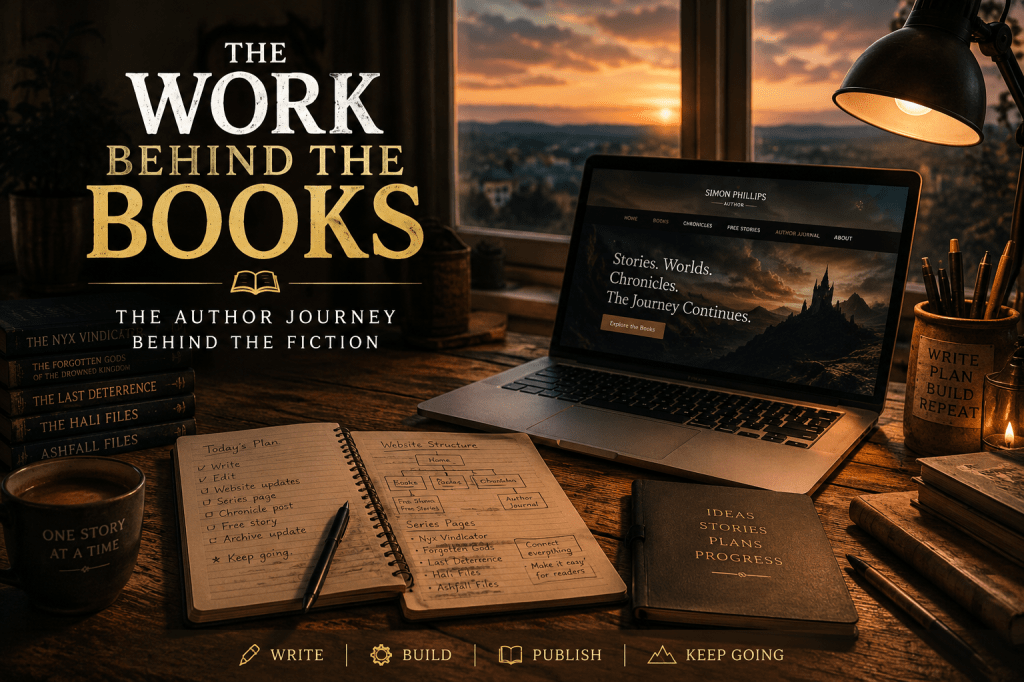
This Author Journey section is where I want to write about that part of the work.


What Readers Usually See First

By the time a book appears on a website, it can look fixed and simple. There is a cover, a title, a description, a purchase link, and perhaps a short note about the series. Everything seems clean because the messy part has already happened somewhere else.

The same is true of a Chronicle issue, a free story, or a new page on the site. The visible result is only the final layer. Behind it are choices about structure, timing, categories, images, links, tone, format, and how the piece fits into the wider author platform.

I have been thinking about that more as I rebuild the WordPress side of my author work. A website can easily become a list of books with a few links attached. There is nothing wrong with that in a basic sense, but it does not give much sense of the author behind the work, or the shape of the larger project being built.

I wanted a place where I could talk about that without turning every update into an announcement or a sales post.


The Work That Sits Behind a Finished Page

A lot of the work behind the books is not dramatic. It is often a matter of deciding where something belongs, what it connects to, and how a reader might find it later.

A story has to sit in the right place. A series needs a page that can grow over time. A Chronicle post needs to connect to the right branch without overwhelming the fiction it is meant to support. A free story should be easy to find, but it should not confuse the paid archive. A writing update should help readers understand what is happening without pulling attention away from the books themselves.

These decisions are small on their own, but they add up. They decide whether the website feels clear or scattered. They decide whether a reader has a simple path through the work, or whether everything becomes a pile of posts with no real direction.

That is one reason I have been treating WordPress as a serious part of the author platform rather than a spare noticeboard. I do not want the site to exist only as a bridge to somewhere else. I want it to hold the books, the story worlds, the Chronicles, the free fiction, the paid material, and the author updates in one organised place.


Building the Website Around the Fiction

The website is being built around the fiction first. That matters to me because it keeps the whole project honest.

The series pages are there for the books. The Chronicle branches are there to support discovery and give readers another route into the work. The free stories are there to let readers try the fiction without needing to pay first. The paid archive gives some of the longer material a proper home. The Author Journal sits beside those things, but it does not replace them.

That balance is important. I do not want the website to become a general blog where the books are pushed into the background. I also do not want every post to feel as though it is trying to sell something. Readers can usually sense that, and I do not think it helps build trust.

For me, the better path is to show the work clearly. Some posts will be about new stories or releases. Some will be about changes to the website. Some will be about what I am learning as I publish, organise, and keep going. The fiction remains the centre, but the process around it can still be worth sharing.


Why Every Update Should Not Be an Advertisement

A book advertisement has its place. A release post has its place. A paid archive update also has its place. Those posts are useful because readers need to know what is available and where to find it.

Still, if every update is only about buying, subscribing, or clicking through to something, the author begins to disappear behind the promotion. That is not what I want from this section.

I want some posts to feel quieter than that. I want room to write about decisions that are still forming, changes that have taken longer than expected, and practical lessons that might not sound impressive but are part of building something that lasts.

There is also value in admitting that not every part of the work is clean or fast. Some pages need rebuilding. Some ideas need sorting out before they make sense. Some stories take longer to place within the wider structure. Some plans look clear at the start and then need adjusting once the real work begins.

That does not mean the project is failing. It usually means the project is becoming more honest.


Writing Around Real Life

Another reason I wanted this section is that writing does not happen in a perfect empty space. It happens around work, family, tiredness, time pressure, and ordinary responsibilities. I do not want to turn that into the main subject of the website, but it is part of the truth behind the books.

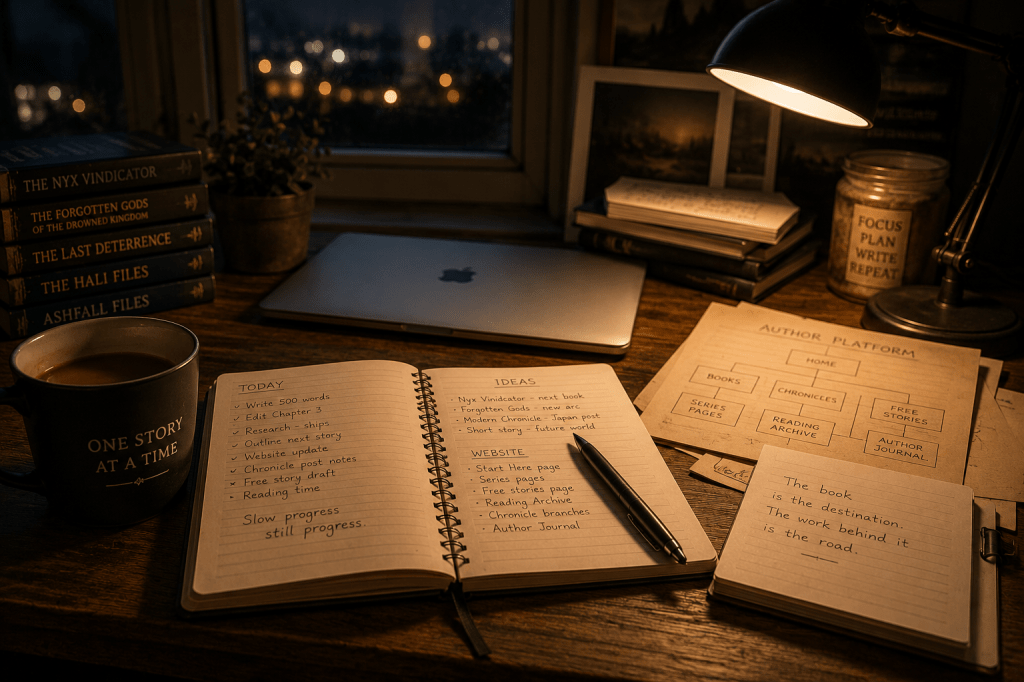
There are days when the work moves quickly. There are other days when the most useful thing I can do is fix a category, update a page, make a note for a future story, or check whether the website still makes sense from a reader’s point of view. That kind of progress does not look impressive from outside, but it keeps the larger structure moving.

I have learned to take those smaller steps more seriously. A finished story matters, of course. A published book matters. A complete series page matters. Still, the quiet maintenance matters too, because without it the website becomes harder to use and the work becomes harder to follow.

The long-term goal is not to appear busy. The goal is to keep building in a way that readers can understand.


The Value of Small Progress

One thing I have had to accept is that slow progress is still progress when it is moving in the right direction. That sounds simple, but it is easy to forget when there are several books, several story worlds, different content streams, and a website that needs to hold all of them properly.

Small progress might mean writing a post like this. It might mean making the Author Journey section clearer. It might mean giving the Monthly Free Stories page a proper place. It might mean making sure a Chronicle issue links back to the right series page. It might mean writing a better excerpt, choosing a cleaner title, or deciding that a page should not try to do too many jobs at once.

Those things are not as visible as a new book cover, but they shape how the whole site works. They help the fiction feel less scattered. They also help me see the project more clearly as I build it.

That is one of the main reasons I want to write these posts. They give me a place to record the practical thinking behind the work while giving readers a clearer sense of what is being built.


What I Will Share Here

This section will mostly be about the writing life behind the books and the author platform around them. I expect to write about story progress, series planning, publishing decisions, KDP lessons, website building, WordPress changes, Substack reflections, YouTube experiments, mini-reads, free stories, paid archive updates, and the slow discipline of keeping a large fiction project organised.

Some posts may be simple progress notes. Others may look at a decision in more detail, such as why a page was added, why a series needs its own hub, or why free fiction belongs beside paid content. There may also be posts about setbacks, tiredness, false starts, and the problem of trying to build a writing career in real life rather than in theory.

What I do not want is a section full of empty advice. I am still learning many parts of this. I would rather write honestly about what I am trying, what has helped, what has been slower than expected, and what I am changing as the work develops.

That feels more useful than pretending everything was planned perfectly from the beginning.


Where This Fits on the Website

The Author Journey section is a support layer for the main website. It is here for readers who want to know more about the person building the books, the choices behind the site, and the practical work that sits around the fiction.

It should not take over from the books themselves. The series pages, Chronicle branches, free stories, paid archive, and main book pages remain the main paths through the site. This section simply gives those paths some human context.

I think that matters, especially with a site that is carrying several types of content. A reader might arrive through a free story, a Chronicle issue, a book page, or a post about the writing process. However they arrive, I want the site to feel connected rather than random.

That means building slowly, making careful decisions, and accepting that some of the less visible work is still part of the author life.


A Quiet Starting Point

This first post is not a major announcement. It is simply a starting point for a section I think the website needs.

There will still be book updates, story releases, Chronicle posts, free fiction, and paid material. Those are the main reasons the site exists. This section will sit beside them as a place for the quieter work: the planning, the lessons, the adjustments, the doubts, the useful mistakes, and the small steps that help the whole platform become clearer over time.

If you are here for the fiction, that remains the best place to begin. The books and stories are the centre of the site. If you also want to follow how the work is being built behind the scenes, this is where I will write about it.

I will keep adding updates as the site develops.

When Writing Becomes More Than a Hobby

You know what I’ve realised lately?

Writing, not just novels but short stories, flash fiction, even blog posts, has become more enjoyable to me than watching TV. More than movies. Sometimes, even more than reading.

Don’t get me wrong, I still love a good story in any form. But there’s something different about sitting down with a blank page. Something alive. It’s not passive, it’s creation. Every sentence, every scene, is something I get to build. To breathe life into.

It’s strange, isn’t it? We spend so much of our lives consuming stories, but when you start creating them, time shifts. You stop watching from the outside and begin shaping the inside, the heartbeat of the world you’re building.

And it’s not just about finishing something. It’s about the act itself, the quiet joy of shaping a world from nothing, of following a character you didn’t plan to meet, of reaching a line and thinking, Ah. That one was honest.

Writing has become my pause in the noise, a place where time disappears, yet I feel more present than anywhere else. It’s where I find myself again.

So I wonder, does anyone else feel this? Has writing ever felt more fulfilling than bingeing a series? More grounding than scrolling through a feed?

If so, I’d love to hear your thoughts. Because for me, writing isn’t just a pastime anymore. It’s where life slows down just enough for meaning to take shape.

Watch the video here: Why Writing Feels Better Than Watching TV | Life as an Author

Why I’m Writing Fantasy Short Stories (And How They Expand My Novel’s World)

Before my epic fantasy novel The Veil of Kings and Gods releases, I wanted to open a small window into the world of Ældorra, a world of stone kingdoms, fading gods, and myths that refuse to die.

Each short story I write is its own world in miniature. They don’t rely on the main novel, yet every one of them echoes it, a fragment of history, a lost prayer, or a legend that shaped the lands my characters now walk. Some are quiet and personal; others burn with the power of the divine. Together, they breathe life into Ældorra in a way that maps and lore pages never could.

Writing these stories is more than worldbuilding, it’s a way of feeling the world I’ve spent years creating. When I step into a new tale, I discover the texture of the world again: the smell of rain on stone, the flicker of temple light, the forgotten names carved into the ruins.

These short stories aren’t just for readers waiting for the novel, they’re for anyone who loves myth, emotion, and the quiet moments that make a fantasy world feel alive.

You’ll soon be able to explore them as ebooks, see the artwork behind them, and even collect the prints.

Welcome to Ældorra. The gods don’t stay silent forever.

🎥 Watch the video

A Return to Midkemia Rereading The Magician

Some books never really leave you.

Even when they’re tucked on a shelf or buried behind newer titles, their stories linger. A sentence, a scene, a spell you didn’t quite understand the first time, it waits. And then one day, without planning to, you find yourself reaching for that book again.

This week, for what might be the fifth… or sixth time (I’ve honestly lost count), I picked up The Magician by Raymond E. Feist.

It wasn’t for research. It wasn’t for content. It wasn’t even because I had a review planned, though I probably will do one soon.

It was comfort. Familiar. Like slipping into an old cloak that still smells of cold air and campfires.

Not Just a Fantasy Classic, It’s a Personal One

I first read The Magician when I was much younger. I remember being drawn in by the idea of a world that felt so real, yet entirely imagined. There was something alive beneath the pages, something that stretched beyond just Pug’s journey. The kingdoms, the magic, the war between worlds, it planted a seed.

Years later, I can see just how much it shaped my own writing.

The novel I’m currently working on: The Veil of Kings and Gods, owes more than a little to that early inspiration. Not in structure or setting, but in feeling. In that desire to build something layered. Something with blood and dirt and ancient magic still echoing through the stones. Something with characters who don’t always say the right thing, who make mistakes, who grow.

Rereading it now, as someone building their own world and story, hits differently.

I see the gears turning. I notice choices I didn’t catch before, what Feist reveals and withholds. Where he lingers. Where he lets silence speak. And, maybe most of all, I see how much freedom there is in the early pages of a world you’ve only just started to map.

No Pressure, Just Pages

I’ll save the full review for another day. One where I can dig into the structure, the craft, and why this book still holds up decades later.

But for now, this reread has reminded me that sometimes, you don’t need to analyse a book to love it. You don’t need to annotate the margins or write notes on pacing. You just need to sit with it. Let it wash over you again.

Not every read needs to be productive. Some are just for the soul.

What I’m Thinking About Now

Maybe you have a book like that. One you return to when your own pages feel stuck. One that reminds you why you write or why you started writing.

If so, I’d love to hear what it is.

And if you’ve never read The Magician, maybe this is your sign to give it a go. Or to dust it off and re-enter Midkemia for a while.

There’s something magical about going back.

How I Stay Inspired While Writing the Same Story for Years

Writing a novel isn’t always a straight path. For me, it’s been more like a winding mountain trail, sometimes clear and exciting, other times foggy and slow. I’ve been working on The Veil of Kings and Gods for years now. The world, the characters, and the themes have all evolved over time. And yet, somehow, I’ve never walked away from it.

So how do I stay inspired?

It’s not some mystical lightning bolt. It’s smaller than that, quieter. Sometimes it’s rediscovering an old scene I wrote months ago that still makes me smile. Other times it’s worldbuilding, filling in the map of Ældorra, thinking about what life is like in a ruined empire or how a long-forgotten piece of magic reshapes a character’s fate.

I also let the story grow with me. When I started this book, I was in a very different place in life. But I didn’t throw it out and start over. Instead, I’ve allowed my voice, my ideas, and my perspective to shift as the years have passed. I’ve rewritten, restructured, and reimagined, but never lost the heart of it.

What helps most, though, is this: I don’t pressure myself to rush.

This is a story I care about. I want it to be the best version of itself, not the fastest one. That mindset keeps the love alive. Some days I only manage a few lines. Other days I go deep. But each word brings me closer to the story I want to share.

If you’re writing something that’s taken years, you’re not alone. Let it take the time it needs. Let it change with you. The story will be stronger for it.

I’d love to hear about your long-term projects. What keeps you going? What has changed since you started?

Welcome to the Archive

The beginning of this archive, and the journey behind it.


This space has taken time to shape. Like the stories I write, it came together slowly, with silence between the threads. I didn’t rush it. I couldn’t. The worlds I build are not made in bursts of light. They are carved out of quiet, over long nights and early mornings, in the hours when everything else has settled and the work finally begins.

If you’ve arrived here, I’m grateful. Perhaps you’ve come from my YouTube channel. Perhaps from a short story, a drawing, or something whispered in passing from one page to another. However you found this place, know that it was built with purpose. It is an archive of things still in progress. A collection of worlds that are not yet whole, but growing.


What I Write

I write across fantasy and science fiction, but neither word quite holds what I mean. My stories often begin with silence. A god gone quiet. A system no longer stable. A spiral forming in the place where something once held firm.

You will find epic fantasy here, shaped by prophecy, broken kingdoms, and gods that do not answer. You will also find slow, psychological science fiction, where deep-space vessels drift far from Earth, and the only sound left is the echo of something watching from behind the interface.

I don’t believe in tidy stories. I write to explore what happens when power collapses, when prophecy fails, and when the line between magic and memory fades.


What This Site Offers

This blog will carry fragments of everything I build. It will grow slowly, as the projects do, shaped by time and intention.

Here you’ll find:

  • Reflections on the creative process and what it demands
  • Updates on my current projects, including novels and short story collections
  • Lore fragments, worldbuilding notes, and mythic structures from my worlds
  • Occasional behind-the-scenes artwork and video features drawn from my YouTube channel

If you’re unsure where to begin, you might want to explore the Projects archive, or glance through the Short Stories & Lore page, where fragments from different timelines are gathered.


What Comes Next

I have no announcement to make here. No date to mark on a calendar. This is not a launch. It is an opening.

I intend to release short stories in digital form, first as standalones, later in curated bundles. I am also working toward the completion of my epic fantasy novel, The Veil of Kings and Gods, a project that holds the heart of much of this world. There will be more. Other books. Other timelines. But not all at once.

This site will grow. Quietly. Steadily. As I do.


Beyond the Page

My YouTube channel is a companion to this space. There I read from my stories, draw maps from broken histories, and speak on the slow road of building worlds from scratch. If you prefer to listen or to watch, you may find what you’re looking for there.


Thank you for visiting. Thank you for arriving at this point in the process, the part no one sees, when the work is still forming and the pieces do not yet connect.

The spiral has begun. The first thread is drawn.

Simon J. Phillips