Haunted Rooms in Dark Fantasy: Stillness, Memory, and the Weight of Place

A haunted room in dark fantasy exerts its power through air, pressure, silence, and arrangement. The door closes, the bed remains where it stood, the chair faces the table, the papers wait in their ordered stacks, and still the place feels altered, as though an event has settled into the grain of the world and chosen to remain. Among ancient-feeling fantasy settings, this kind of chamber carries a singular force, since it suggests that memory can cling to matter itself, entering timber, plaster, cloth, and breath until place becomes witness.

That quiet form of haunting carries a deeper hold than spectacle ever could. A monstrous shape may terrify for a moment, while a room that has learned how to keep an absence can linger for far longer, pressing upon the reader with a slower and more intelligent unease. Such spaces feel lived in. They have served ordinary tasks. They have known routine, labour, sleep, ledgers, heat, and dust. Then something enters the pattern, and the familiar order of daily life begins to gather a second meaning.

This is where dark fantasy often finds its most lasting power. The haunted room stands at the meeting point between domestic habit and mythic disturbance. A house may appear ordinary from the lane below. An upper chamber may seem suited to work, sleep, or prayer. Yet once the atmosphere inside it begins to return in the same form after each interruption, the reader senses that the structure itself has joined the story. The haunting no longer belongs to a single hour. It belongs to the building.


The Room as a Vessel of Memory

Old fantasy worlds carry weight through layers. Streets rise above buried foundations. Chapels stand over sealed passages. Walls accept repair after repair until the visible surface and the hidden structure cease to belong to the same age. Within such places, a room becomes more than an enclosed interior. It becomes a vessel, holding the residue of every gesture that has passed through it.

A chamber used for work and rest is especially potent because order makes disturbance easier to feel. A ruined hall already bears the signs of collapse. A battlefield already carries violence in its soil. An occupied room, however, presents another kind of tension. Its chair remains in place. The cord around the papers stays tight. The coverlet lies smoothed from the morning. Every ordinary object reassures the eye, while the air itself begins to resist that reassurance. The result is a far quieter species of dread, one grounded in small recognisable details that begin to estrange one another.

This matters in mythic fantasy because memory seldom survives in complete form. It comes back through fragments, gestures, reports, and traces. A retained smell. A pressure upon the chest. A recurring stillness after the window stands open. These signs feel older than explanation. They belong to the realm of preserved account and partial witness, where certainty thins and atmosphere grows stronger.

In such writing, the room becomes a page that cannot stop rewriting itself. Each person who enters adds a further layer of record, though the deepest impression lies below language. What remains strongest is rarely the formal cause entered into a ledger. What remains strongest is the sense that the place itself has chosen to keep something.


Why Stillness Disturbs More Deeply Than Apparition

Stillness is often more frightening than motion because it suggests patience. An apparition arrives and startles. A sound in the wall provokes immediate alarm. A room that settles into a fixed condition after every disturbance offers something colder. It conveys duration. It implies that the event within the chamber has already passed into the structure, where it can endure with no visible effort.

This is one reason dark fantasy readers remain drawn to enclosed spaces shaped by silence. Silence in such settings never feels empty. It feels occupied. The absence of noise becomes its own kind of presence, and the reader begins to listen for what the room already knows. A hush over a bed, a dimness that gathers too quickly, air that weakens before it reaches the centre of the floor: these details create dread through restraint. The imagination then completes what the record declines to state.

The ancient atmosphere of a mythic setting strengthens that effect. In a contemporary apartment, stillness may suggest poor ventilation or an unpleasant memory. In an older fantasy city built over forgotten works, stillness feels tied to inheritance, ritual failure, or a pressure buried within the foundations. The room belongs to a wider order of things. It has neighbours above and below, and those neighbours belong to a district, and that district stands over earlier structures, older materials, forgotten interventions. A single chamber therefore carries the weight of an entire world beneath it.

This gives the haunted room its symbolic reach. It suggests that private life never stands entirely apart from buried history. A death recorded as strain or failure may still bear the shape of something older. A clerk working at his table may still sit above a line of pressure he has never seen. Dark fantasy becomes most compelling when the visible life of a city continues untouched on the surface while its deeper truth gathers quietly in the spaces people believe they understand.


The Clerk Who Folded Inward and the Architecture of Quiet Dread
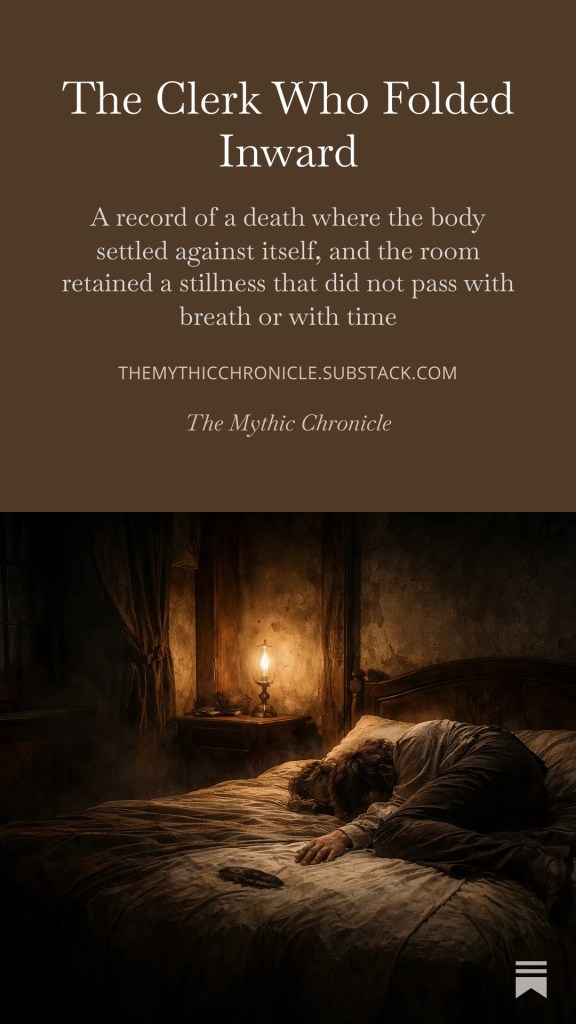
The fourth Mythic Chronicle entry, The Clerk Who Folded Inward, appeared on Substack on 28 April 2026 with the subtitle describing a death where the body settled against itself and a room whose stillness outlasted breath and time. Its opening section presents an upper chamber above a trade lane, a bed, a table, ordered papers, and an atmosphere that gathers again after each intrusion, while the post itself stands as a paid Chronicle entry approached through a free opening threshold.

What gives this Chronicle its force is the refusal of excess. The chamber remains plain. The event receives the practical language of inquiry. The witnesses behave with measured reserve. Even the unease enters gently, first as a pressure within the chest, then as a quality of air, then as a pattern of return. The space accepts fresh air only briefly. The impression upon the bed holds the eye. The chair carries a slight turn away from order. Through these details, the room becomes an instrument of dread.

The reader feels the disturbance through arrangement. Nothing has been overturned. No visible breach gives itself away. The chamber has endured within ordinary life, which makes its altered condition feel more intimate and more invasive. The haunting lies in continuity. The room remains useful. The lane continues below. The work of the house carries on. Yet each new entry confirms the same fact: once the disturbance settles, the chamber restores itself to that same enclosed state.

This kind of haunted room embodies a central strength in mythic fantasy. The supernatural enters through pressure, recurrence, and record. The official explanation may stand. The deeper reality continues beneath it. That tension between ledger and atmosphere gives the piece its authority, since the world within the Chronicle still behaves as a world of houses, clerks, constables, shutters, work, and habit. The strangeness grows from inside the structure, never from outside the frame.


When a Room Becomes Part of a Larger Pattern

A single chamber becomes truly memorable when it feels linked to something wider than itself. The upper room in Chronicle 4 carries exactly that quality. It presents an isolated death on the surface, though the atmosphere inside the space suggests continuity with a larger buried pressure. The room feels like one visible symptom in a city that has already begun to answer through its own materials.

This is where the haunted room moves beyond gothic ornament and enters mythic territory. It no longer serves as a backdrop for fear alone. It becomes evidence. A retained stillness hints at a structure learning how to hold events, perhaps even how to shape response. The room begins to feel less like a location and more like a node within a pattern stretching through walls, passages, plaster, and older unseen lines.

Readers who love ancient fantasy often seek precisely this sense of scale concealed inside intimacy. The larger power remains indirect, though its pressure reaches the smallest details. A mark under plaster. A sound beneath stone. A change in the air over a bed. Each sign appears slight when taken alone. Together they suggest a world where forgotten forces persist through environment long before they reveal themselves through open action.

That environmental form of storytelling is especially rich because it preserves mystery. The room can be entered, described, ventilated, reassigned, recorded, and still remain unresolved. The unanswered quality becomes part of the pleasure. The reader leaves with the sense that explanation exists somewhere deeper in the archive, though the fragment itself remains complete in mood and emotional consequence.


The Fuller Record Beneath the Chamber
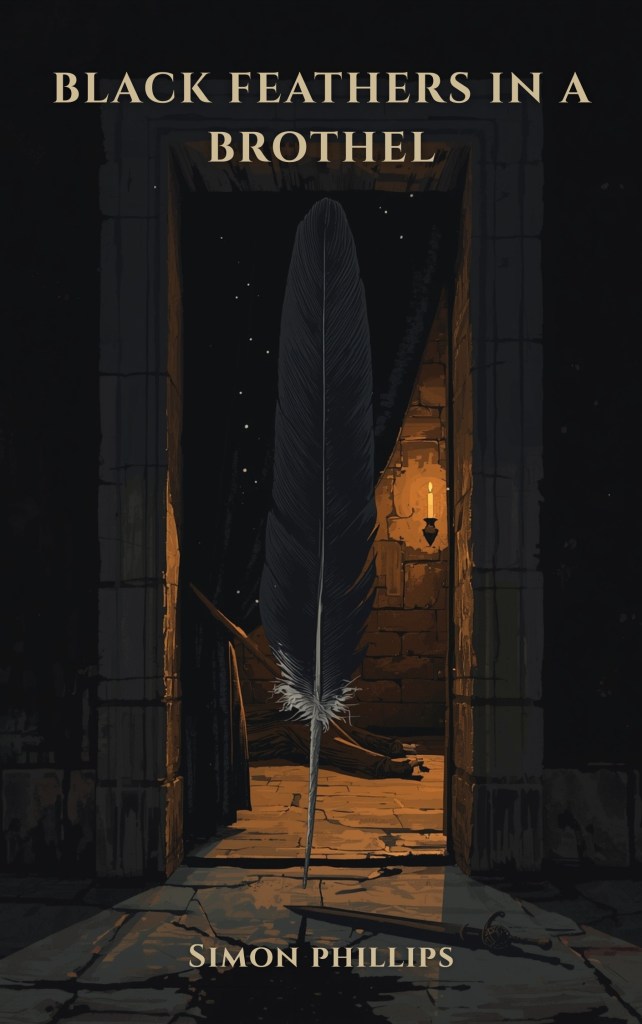
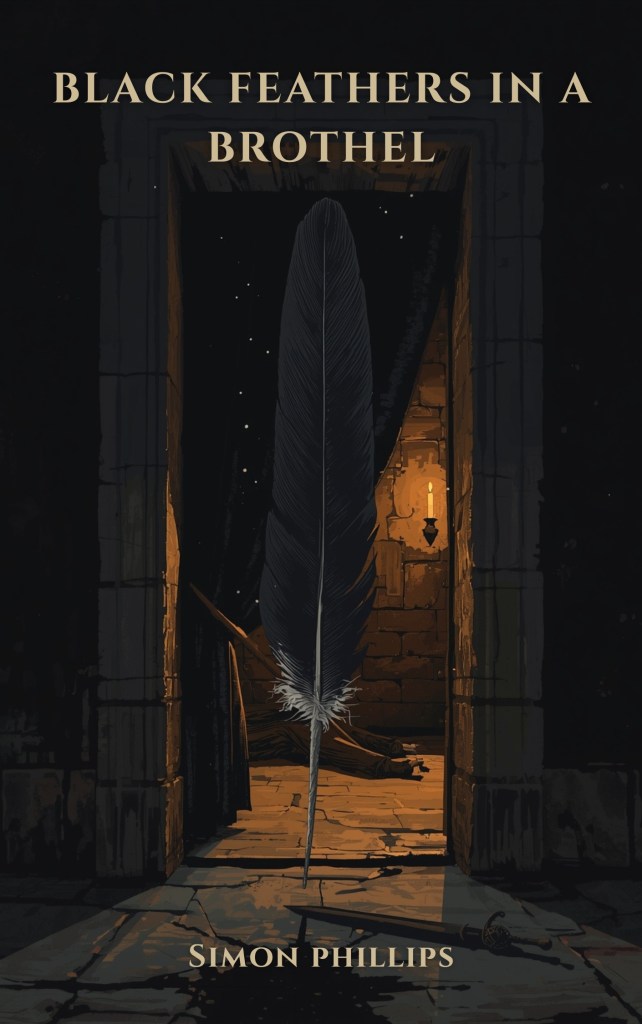
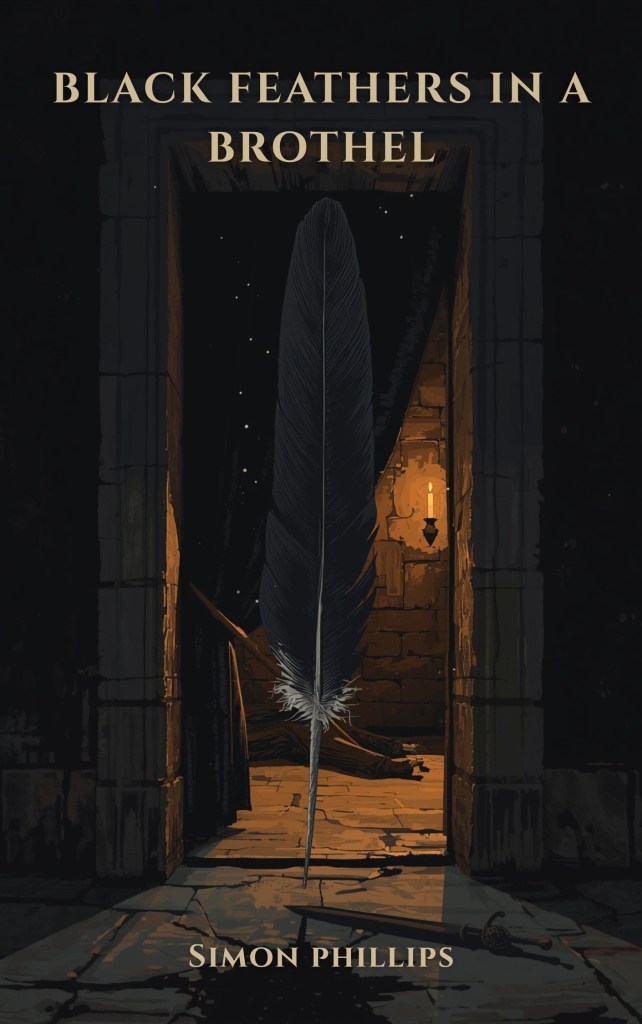
The wider thread beneath Chronicle 4 leads towards the connected novella, Black Feathers in a Brothel, which the Chronicle page presents as the fuller account preserved elsewhere. Amazon listings for ASIN B0GHHZDYVB identify it as Black Feathers in a Brothel: A Dark Fantasy Horror Story from the Hali Files, published on 18 January 2026.

This relationship between Chronicle and novella is part of what gives The Mythic Chronicle its unusual power. The Chronicle approaches the world through fragment, pressure, and half-preserved authority. The novella follows closer to the wound. One form allows memory to drift through the architecture of the city. The other moves nearer to the people caught within it. Together they produce a reading experience shaped through distance and descent.

For a reader arriving through the blog, Chronicle 4 offers an ideal threshold. The upper chamber stands clear in the mind. The imagery remains grounded. The mystery feels self-contained, while the wider pressure of the world still gathers beyond the walls. From there, the passage into the Chronicle archive feels natural, and the movement towards the novella feels like a continuation of the same atmosphere, only nearer the source.


Entering the Archive Through Place

Fantasy readers often speak of characters, magic systems, dynasties, and wars. Place deserves equal attention, especially in work that seeks a more ancient and preserved mode of storytelling. A memorable fantasy world lives through its rooms as much as through its heroes. Chambers, stairwells, chapels, passages, and yards become the vessels through which pressure moves. They hold the world in material form.

This is why the haunted room remains such a powerful gateway into dark fantasy. It offers scale through enclosure. It offers history through atmosphere. It offers emotional reality through small tactile details. Most of all, it gives myth somewhere to settle. Once that happens, even the simplest room can feel older than the house around it, and far older than the explanation written beside it.

Within The Mythic Chronicle, that power is approached through fragments and preserved accounts, where the world feels remembered, partially obscured, and quietly alive beneath the visible order of things. Chronicle 4 stands as one of those thresholds, a chamber above the lane where a death entered the ledger and the air continued to gather after every departure. From that point onward, the room belongs to memory as much as to architecture.

And that may be the deepest strength of the haunted room in dark fantasy. The door closes. The street continues. The house resumes its labour. Somewhere above the lane, the stillness returns to its appointed place, holding what the record could only touch in passing, and waiting there with the patience of stone.
Forgotten Chambers in Mythic Fantasy: Why Rooms That Hold Their Air Endure

There are places in mythic fantasy where danger arrives with iron, flame, prophecy, or blood, and there are places where the pressure gathers in silence, within a room, along a stair, beneath a district whose people have carried on above it for so long that the older ground has begun to feel patient. Forgotten chambers hold a particular authority in fantasy because they draw the reader towards enclosure, memory, and the sense that stone itself has accepted a burden no living witness can fully name.

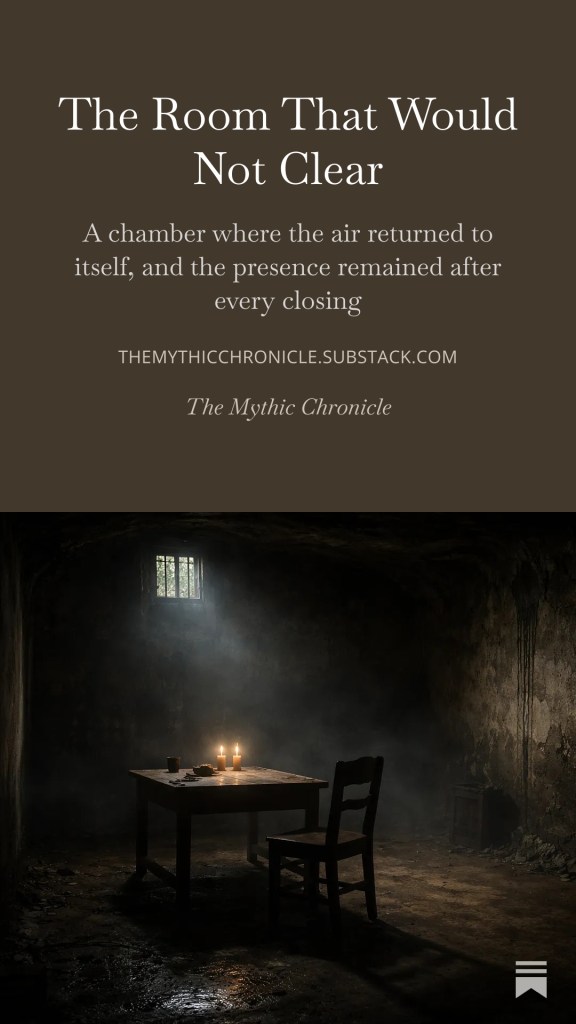
That atmosphere stands at the heart of The Mythic Chronicle and of Chronicle Three, Chronicle Three, a preserved account from The Whispering Foundations cycle in which a lower chamber restores its own air after every opening, as though the space has settled into a condition of its own choosing. The entry moves through cellar stone, closed doors, lamp light, and the uneasy rhythm of practical investigation, allowing the chamber to speak through weight, repetition, and the behaviour of the air itself.

Within mythic fantasy, rooms like this endure because they feel older than the people who enter them. They carry the pull of a shrine after worship has faded, a burial place after names have thinned, a store chamber built over an earlier structure whose purpose has long since slipped out of record. A reader steps into such a place and feels, almost at once, that the room has been waiting.


Where Enclosed Spaces Gather Power

A forgotten chamber in fantasy rarely depends upon spectacle. Its force comes from boundary. Wall, stair, lintel, beam, floor, and air create a limit around the body, and within that limit every change becomes more intimate. A hall can echo. A forest can suggest distance. A chamber presses close. It narrows the world until breath, silence, and presence begin to carry the full burden of the scene.

This is why enclosed spaces recur across ancient-seeming fantasy. Temples keep their cold. Burial rooms keep their dust. Undercrypts keep the residue of prayer, grief, and ceremony. Cellars beneath mercantile districts keep the overlooked matter of daily life, and in that neglect they become ideal vessels for another kind of inheritance. What has been sealed away acquires weight. What has gone unexamined acquires shape.

The strongest mythic settings understand that place is never passive. Stone records pressure. Timber holds smoke. Air takes on the character of whatever has passed through it. A chamber that returns to the same atmosphere after every disturbance carries more than a physical oddity. It suggests continuity. It gives the sense that the room has entered into a pattern, and that pattern can outlast the efforts of those who try to name it in the plain language of storage, damp, or disuse.

In Chronicle Three, this effect arrives through repetition. The door opens. The air eases. The air returns. The chamber is cleared. The chamber restores itself. That cycle matters because repetition is one of the oldest engines of mythic dread. A single event may be dismissed as chance. A recurrence begins to feel ordained. The world appears to be obeying a law whose terms remain hidden.


Air, Stone, and the Language of Presence

One of the most compelling features of this Chronicle lies in its treatment of atmosphere as record. The lower chamber is entered and examined through practical eyes. Merchants, clerks, ward keepers, and labourers meet the space with the habits of their work. They weigh, inspect, clear, measure, and return. Even their fear carries restraint. That restraint gives the chamber its power, since the language remains close to lived experience and close to material fact.

This approach matters for mythic fantasy as a form. The genre often becomes most persuasive when it allows mystery to remain inside the grain of ordinary life. The chamber sits beneath trade houses. The shelves are real. The table is real. The lamp flame shortens in air that has grown too close, and the room receives every attempt at clearing with the same quiet persistence. Nothing in the scene asks for thunder. The authority comes from calm observation meeting a condition that refuses to alter.

Readers remain drawn to forgotten rooms for this very reason. Such spaces hold the meeting point between the known and the withheld. A lower room can still be counted on a register, still be entered on a plan, still be used for storage, and yet every practical description starts to bend under the pressure of repeated encounter. Terms such as stale, close, damp, or confined begin as explanation, then gradually reveal their own insufficiency. The language remains grounded while the meaning deepens beneath it.

There is also a sacred echo within these scenes, even when the setting appears secular. A chamber beneath trade houses may carry the emotional force of a buried shrine. Repetition turns use into ritual. Opening the door becomes an act of approach. Standing at the threshold becomes a kind of observance. The air itself begins to feel like a vessel, and the vessel remembers.

That quality gives forgotten chambers a lasting place in fantasy literature. They hold the sense that memory can survive outside speech, outside inscription, outside dynasty. Long after names have faded, a room may keep its pressure. Long after purpose has altered, a space may continue to receive those who enter it according to an older order.


Why This Chronicle Feels Like a Recovered Fragment

The Mythic Chronicle has built its identity around preserved accounts, partial records, and disturbed remnants of older worlds, and Chronicle Three embodies that method with unusual clarity. The reading experience is shaped less like a conventional fantasy scene and more like an entry drawn from surviving testimony, where several hands, several visits, and several layers of understanding settle into a single line of record.

That structure gives the Chronicle a quiet authority. The chamber is never flattened into a convenient answer. The account stays with the room, the stair, the workers, the register, the later annotations. It trusts atmosphere to carry meaning. It allows contradiction and incompletion to remain within the page. For readers who hunger for fantasy that feels ancient, tactile, and preserved through damaged memory, that method has immense force.

The same entry point can be found through the free opening section of Chronicle Three on Substack, where the first movement of the account opens the lower chamber and lets the reader feel the room settle around them. From there, the wider archive of The Mythic Chronicle begins to reveal its deeper habit: each preserved fragment opens onto further disturbance, further record, further hints of a world whose foundations have never been entirely still.


A Threshold into The Whispering Foundations

Chronicle Three also serves as a strong threshold into The Whispering Foundations, the active cycle that follows buried passages, altered air, disturbed stone, and the quiet spread of corruption beneath the city. The chamber stands as a local event on the surface of the record, though its implications travel further. It suggests that the city rests above spaces whose behaviour can no longer be contained by trade practice, repair work, or official language.

This is where the Chronicle form becomes especially powerful. A novella can follow direct experience. A Chronicle entry can widen the world around that experience by showing what the district believed, what the registers preserved, and what passed from one witness to another in forms too partial for certainty. The result feels less like plot and more like recovered history.

Readers who enter through this chamber are entering through atmosphere first. The room offers pressure before explanation, presence before doctrine, and physical unease before any wider pattern has been spoken aloud. That makes it an ideal doorway into the publication as a whole. The Chronicle is approached through mood, material, and symbolic weight, with the city itself behaving like an archive whose pages have been laid beneath plaster, timber, and stone.


Where the Fuller Record Lies

For those who wish to move from fragment into fuller narrative, the connected novella Black Feathers in a Brothel preserves a closer account from the same world. The relationship remains restrained and organic. The Chronicle deepens the atmosphere. The novella follows the pressure as it moves through lived experience. One form watches the world from the angle of record. The other walks into the room and stays there.

That connection matters because mythic fantasy often gains its richest texture when world and story are allowed to answer one another across different forms. A Chronicle entry can hold rumour, register, and marginal hand. A novella can hold encounter, consequence, and proximity. Together they create the sense of a world that extends beyond any single page, and that extension is part of the pleasure. The reader feels that one surviving account has led them towards another.

In the case of Chronicle Three, the movement feels especially natural. The chamber already carries the pressure of an unwitnessed inheritance. It hints at prior structures, unseen causes, and the quiet failure of ordinary remedies. A fuller narrative from the same world therefore feels less like a diversion and more like a descent.


The Lasting Pull of the Room

Forgotten chambers endure in mythic fantasy because they speak to an old human fear and an old human desire at once. They suggest that place can remember, that air can hold a trace, that the built world may preserve forces long after language has thinned around them. At the same time, they invite approach. The threshold remains there. The lamp is lifted. The door opens again.

Chronicle Three understands that power with admirable restraint. Its lower chamber never needs to proclaim itself. It gathers pressure, restores its own atmosphere, and settles back into the record with the patience of something that has found its place beneath the city. Through that patience, the room acquires gravity. Through that gravity, the reader is drawn onward.

Those who step into Chronicle Three are entering more than a single scene. They are entering a preserved account within a larger archive of stone, memory, and buried continuance. Beyond that threshold, Black Feathers in a Brothel keeps the fuller record close at hand, waiting where another door opens, and where the air has already begun to settle.

Buried Paths and Unquiet Foundations in Dark Fantasy: The Rats Beneath the Walls

There are cities whose history rests in towers, banners, gates, and names carried openly from reign to reign. There are others whose truest memory lies lower, pressed into cellar stone, sealed within repair work, or held beneath streets that continue their daily traffic while older roads persist below. Mythic fantasy returns to such places again and again because buried ground carries a peculiar authority. It suggests age without needing proclamation. It suggests danger before any blade is raised. It allows a reader to feel that the world has been built over something earlier, and that the earlier shape has never wholly gone.

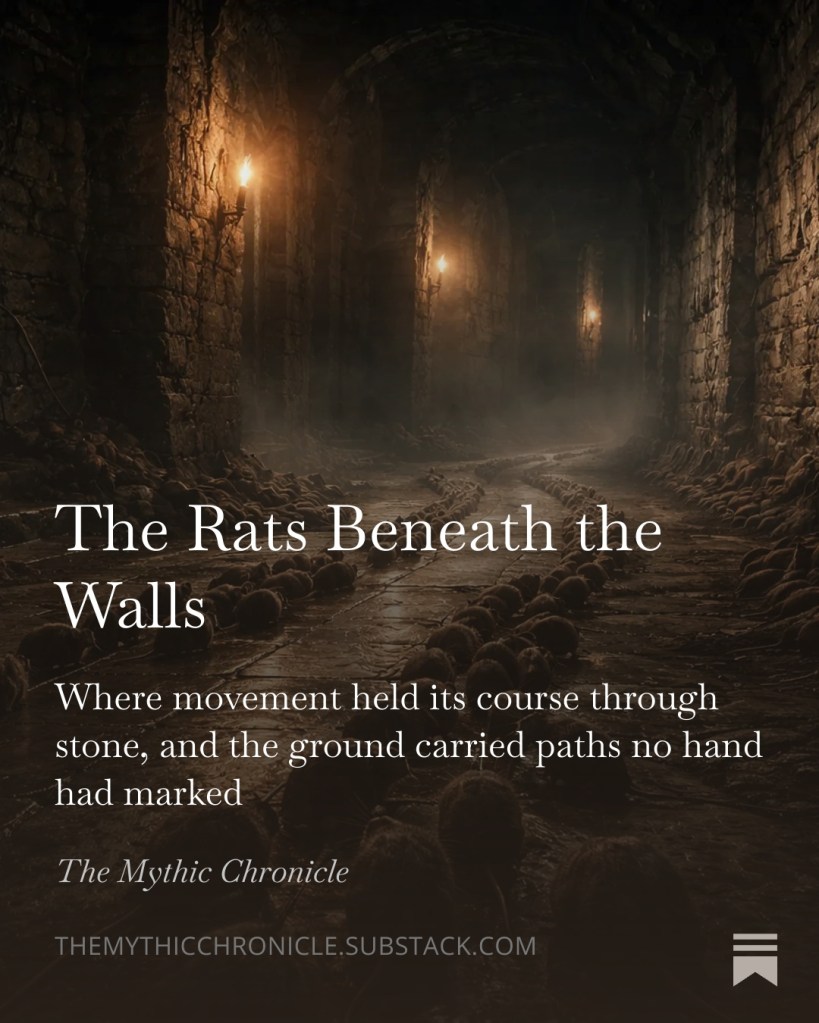
That pressure runs through dark fantasy at its strongest. A ruin in the forest carries one kind of silence. A living district raised upon forgotten foundations carries another, for ordinary life continues above while older forms exert their influence below. Grain is stored, lamps are lit, the lane fills with work and trade, and somewhere under all of it a hidden alignment begins to make itself known. In The Rats Beneath the Walls, the second Chronicle in The Whispering Foundations, that emergence takes place through the most common of creatures, whose movement becomes more disturbing precisely because it remains so calm, so exact, and so resistant to the easy comfort of ordinary explanation. The series guide places this Chronicle within a larger arc of buried corruption and misunderstood foundations, where the city’s lower layers begin to reveal themselves through fragmented accounts and partial records.


The Old Language of Vermin and Stone

Rats belong to the oldest grammar of human settlement. They move where grain is stored, where water gathers, where timber rots, where refuse lingers, and where the shape of habitation creates warmth enough to sustain lesser lives in the margins of greater ones. Their presence usually points toward material facts: hunger, damp, neglect, breach, waste. That is why they are so effective in mythic fantasy. They begin within the language of the practical. They seem legible.

When that legibility begins to fail, unease deepens far more quickly than it would with some grander marvel. A dragon announces itself as legend from the first glimpse. A line of rats crossing a cellar floor should remain within the reach of habit and craft. A householder knows what such creatures mean. A warden knows what measures to take. A priest knows the words used to restore ordinary order. Once those familiar structures touch the phenomenon and find that the phenomenon continues unchanged, the ground under certainty begins to soften.

That is the precise force of The Rats Beneath the Walls. The Chronicle does not depend upon spectacle. It depends upon repetition, direction, and the unnerving calm of a pattern that refuses to break. The creatures cross stone in narrow lines, keep their spacing, bend around interruption, and pass through walls as though earlier roads persist within the masonry. Their movement feels less like infestation than adherence. They travel as if answering an alignment older than the houses themselves.

In mythic fantasy, this kind of image carries unusual strength because it joins the low and the ancient. Vermin belongs to the cellar. Forgotten alignments belong to the buried past. When those two meet, the result feels intimate and civilisational at once. The menace has already entered the lived fabric of the city, and the city has no language prepared for what that entrance implies.


When a City Keeps Earlier Roads

A buried city, a layered city, or a city built upon older works has long held a special place within fantasy. Such settings create the sense that every visible structure stands in relation to something prior: an earlier faith, an erased dynasty, a sealed chamber, a failed ward, a road whose purpose has outlived its name. Readers are drawn to these worlds because they suggest that history is never finished. It persists physically. It presses upward. It leaves consequences in mortar, drainage, subsidence, ritual habit, and half-understood custom.

The lower districts in The Rats Beneath the Walls belong to this tradition. Cellars extend beyond their original use. Foundation walls rest upon older stone whose full origin no longer appears in the surviving plans. Seams, damp, hollows, and concealed alignments turn the district into an archive of physical memory. That setting matters because the Chronicle’s central disturbance would lose much of its power in open country or within some untouched ruin. Here, the menace arises in a working quarter where life continues. The pressure comes through storage rooms, brewer’s cellars, plaster repairs, ledger entries, and the low routines of those who maintain the city without ever seeing the whole of what supports it.

This is one reason mythic fantasy remains so drawn to subterranean architecture. The understructure of a city offers more than atmosphere. It offers an argument about inheritance. Streets may belong to the present, yet foundations belong to many ages at once. A ruler may claim dominion over the district, yet the district still obeys the geometry of works laid down long before his reign. When animals begin to trace those hidden geometries, the city briefly reveals its true allegiance.

The Chronicle’s power also comes from the way official record and lived observation begin to part company. Separate reports remain manageable in isolation. Seasonal damp, settlement, infestation, underlying channels: each explanation can stand on its own. Once someone sets the entries beside one another, a shape emerges that exceeds any single case. That tension is central to fantasy shaped by archives and fragments. Truth survives in repetition long before it is granted authority.


Why These Images Hold Such Weight in Mythic Fantasy

There is a reason readers continue to seek fantasy shaped by forgotten structures, sacred tension, and incomplete records. Such fiction offers more than lore. It restores consequence to place. A corridor is never only a corridor. A wall may hold repair work, older stone, and an erased sign beneath the plaster. A cellar may function as a place of storage while also serving as the roof of something earlier and less benign. The world feels inhabited across time.

In that kind of writing, small disturbances matter. A pressure in the air, a room that refuses to clear, a line of flour reforming after it has been swept aside, the sound of interior movement passing downward through stone: these details carry mythic force because they suggest pattern without forcing immediate disclosure. Mystery thrives where explanation remains partial and physical consequence remains immediate.

That balance is difficult to achieve. Too much explanation reduces wonder into system. Too much obscurity weakens the reader’s footing. The most resonant mythic fantasy occupies the middle ground where the senses remain clear, the record remains fragmentary, and the world hints at coherence beyond what any single witness can grasp. The Rats Beneath the Walls enters that space with assurance. It allows the line of movement to become the central image, and through that image the Chronicle touches themes of buried inheritance, civic blindness, and the old fear that a city may still be shaped by designs its current inhabitants have forgotten.


Chronicle Spotlight: The Rats Beneath the Walls

Within The Mythic Chronicle, this entry works as a preserved account from the lower districts, where practical observation begins to brush against something older. The reading experience feels close to a recovered municipal record crossed with a whispered local memory. A cellar becomes the threshold. A procession of animals becomes evidence. A wall becomes a surface through which the city briefly speaks.

The Chronicle entry itself can be entered through The Rats Beneath the Walls on The Mythic Chronicle. It carries the publication’s characteristic mode: immersive prose, archive fragments, interpretive pressure, and the sense that every recovered account belongs to a greater pattern whose full shape remains withheld. For a reader approaching the archive for the first time, this Chronicle serves as a strong threshold because it offers a clear image, a confined space, and a disturbance that widens as the record expands outward from one household into the wider district.

A visual companion to the same Chronicle also survives in watch form on YouTube. It extends the atmosphere of the entry through image and motion, which suits this particular subject well, since the core unease lies in patterned movement. Here again, the power comes from persistence. The viewer sees a sign that could almost belong to ordinary life, until repetition gives it another meaning.


A Fuller Record Beyond the Fragment

Chronicles of this kind thrive on incompletion. They preserve what was seen, what was entered, what was argued over in the margins, and what later readers may infer from the pattern. Yet somewhere beyond the fragment, a fuller account often survives. That relationship gives The Mythic Chronicle much of its quiet force. The archive entry and the novella stand beside one another in different modes of truth.

For readers drawn toward the deeper narrative beneath the preserved account, a fuller record remains in Black Feathers in a Brothel on KDP. The Chronicle approaches the world through memory, distance, and partial authority. The novella moves closer, following event, consequence, and the spaces where atmosphere hardens into direct experience. That movement from archive to story feels especially apt in a world shaped by layered foundations, since such settings always imply that surface evidence belongs to larger buried histories.

The relationship between these forms is part of what gives the series its distinction. One text preserves. Another inhabits. One gives the city’s remembered shape. Another passes through the rooms where that shape begins to assert itself. The reader moves from sign to presence, from register to encounter, from the visible line upon the floor to the deeper question of what caused the line to hold.


What Remains Beneath the Floor

Fantasy concerned with forgotten powers often reaches toward crowns, gods, ruins, and wars. Those elements carry grandeur, and grandeur has its place. Yet some of the oldest fears begin lower. They begin where a household keeps its winter stores. They begin where plaster parts from stone. They begin where someone opens a cellar after supper and finds that the ground has already chosen a road.

That is why The Rats Beneath the Walls lingers. It understands that buried history rarely announces itself with ceremony. It arrives through repetition, through altered behaviour, through the subtle conviction that a visible room has joined itself to an invisible system. The lower district continues above. Ledgers are filed. Repairs are made. Daily life resumes its rhythm. Under that rhythm, the earlier lines remain.

In mythic fantasy, those are the moments that endure. A city becomes memorable when its stones seem to remember more than its citizens. A Chronicle becomes compelling when it preserves the instant in which common life brushes against that deeper memory and fails to master it. The path survives beyond the eye’s reach. The record closes. The pressure remains.

And somewhere beneath the walls, the road continues.

Sealed Passages in Mythic Fantasy: The Buried Foundations Behind The First Sealed Passage

The Mythic Chronical

Beneath a chapel floor, where candle smoke thins into colder air and stone remembers hands long gone, a sealed passage waits with a patience older than the living city. Few images in mythic fantasy carry such lasting force as the hidden stair, the buried foundation, the chamber whose purpose has slipped from surviving record. A sealed passage suggests more than secrecy. It suggests pressure, memory, and a world whose deepest truths lie beneath the places people still pray, trade, grieve, and sleep.

This is part of the reason ancient fantasy worlds remain so compelling. Their streets rest upon previous ages. Their halls stand over ruins. Their shrines inherit ground whose first name has fallen away. When a stair is uncovered under a chapel, the discovery opens more than a route through stone. It opens a relationship between the visible city and the older city pressed below it, where sacred use, forgotten labour, failed warding, and buried fear have settled together through time.

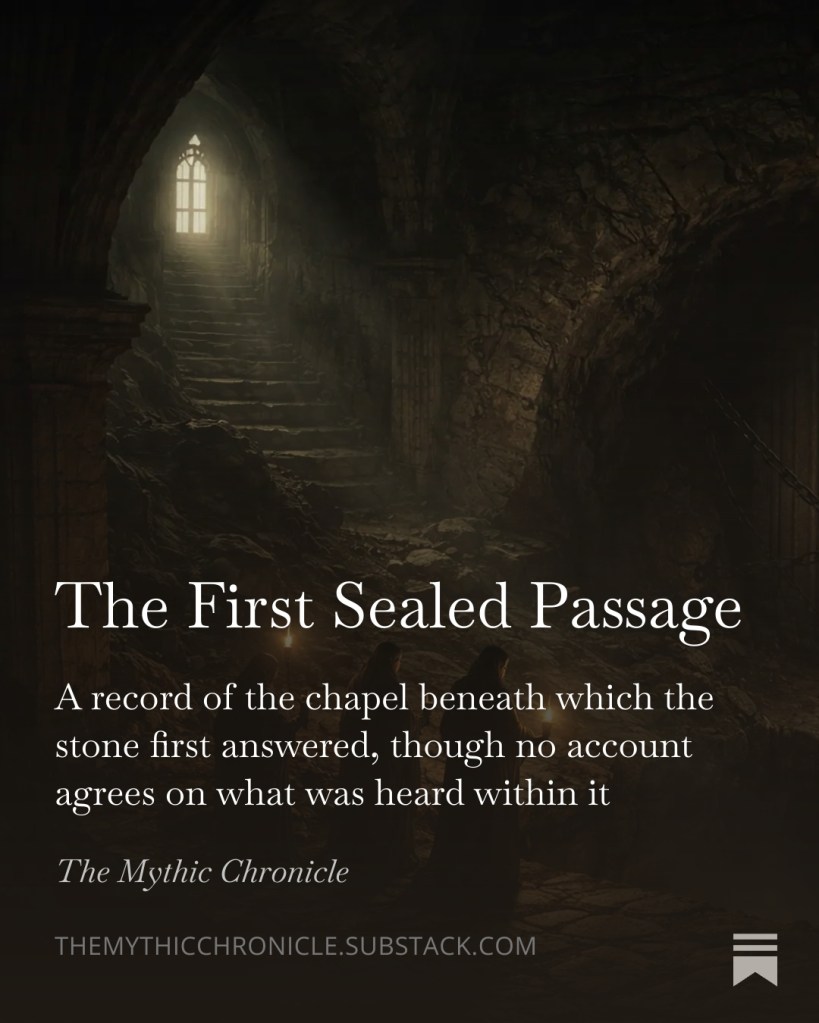
Chronicle One of The Mythic Chronicle, The First Sealed Passage, enters exactly that kind of place. Its power comes through restraint. The stone gives little. The record gives less. Yet the pressure within the scene gathers around every mark in the wall, every held murmur, every decision to close a passage whose closure feels uncertain even as it is recorded. That quiet weight forms the true spell of the sealed passage in mythic fantasy.

Why Sealed Passages Hold Such Power

A ruin in open air offers scale. A sealed passage offers trespass. The body feels the narrowing stair, the failing light, the change in air against the chest. Mythic fantasy thrives on such thresholds because they pull fear inward. The reader moves from landscape into enclosure, from history seen at a distance into history felt against skin and breath. Every surface begins to matter. A scratch in plaster, a gap in a register, a scent that lingers too long in stillness, each one carries force because the space around it has already been chosen for concealment.

That act of sealing matters deeply. A buried chamber may carry age, mystery, and sacred unease, yet the moment a passage has been closed by human hands, the place gains moral weight as well as atmospheric weight. Someone made a judgement. Someone chose stone, mortar, labour, and silence. In mythic fantasy, that human decision often carries more dread than any creature glimpsed in darkness, since it implies contact has already happened and memory has already failed. The wall stands as both barrier and confession.

This is where The First Sealed Passage proves so effective. The Chronicle never hurries toward spectacle. It lingers with lantern light on worn steps, with the pressure inside the stair, with the sense that sound has settled into the stone itself. Through that restraint, the passage gathers authority. The world feels old enough to have forgotten its own foundations, and human enough to keep recording stability long after certainty has weakened.

Buried Foundations and the Memory of Stone

Old cities in fantasy carry emotional force when their foundations feel layered, used, and inherited. A living district gains depth when its chapel, market, bath, tavern, or hall stands upon earlier structures whose names have faded from common speech. The ground beneath daily life becomes an archive. Stone ceases to be scenery and becomes memory given form. A stair beneath a chapel therefore carries two pressures at once: the sacred authority of the present structure and the unresolved claim of whatever came before it.

That layered architecture gives mythic fantasy its deepest atmosphere. The visible city offers order, ritual, trade, law, and custom. The buried city below offers fracture, erasure, repetition, and unfinished return. When writers bring those two cities into contact, the result feels richer than a simple haunted corridor. The setting itself begins to behave like a wounded record. Gaps appear. Marginal voices survive. Official language remains calm while the physical world suggests a stranger truth.

The chapel beneath Saint Veyne works through exactly that tension. The stair descends into a foundation whose origin has slipped from the surviving register, while the later record still tries to name the structure stable. That single contrast carries much of the Chronicle’s force. Stability is written above. Unease gathers below. Between those two layers lies the old fascination of buried foundations in fantasy literature: the sense that a city may continue functioning while its deeper stone has already begun to answer to some older pressure.

Sound becomes especially powerful in such places. A seen figure can be measured, pursued, perhaps even named. A sound held within stone resists that comfort. It belongs to structure, to weight, to enclosure, to matter that should remain still. Once a murmur seems fused to foundation, fear spreads through every block and seam around it. The threat no longer waits at the far end of the tunnel. It inhabits the tunnel itself, and by extension the city resting above it.

The First Sealed Passage and the Reading Experience of The Mythic Chronicle

The Mythic Chronicle carries a distinctive kind of fantasy authority because its entries feel preserved and lived. The reading experience resembles the handling of a surviving fragment: a record, a register, a corrected folio, a later note in the margin, a surface account whose omissions carry as much force as the lines left intact. That method suits the sealed passage perfectly, since the theme itself concerns partial knowledge, uncertain closure, and the long survival of things buried without full understanding.

In The First Sealed Passage, the reader enters through place before explanation arrives. A chapel, a stair, a mason, a brother of the order, the faint sweetness in the air, the wall drawn across the lower way, all of it gathers with measured patience. Then the Chronicle widens into register, archive, interpretation, and continuation. The effect is quietly cumulative. Instead of offering a single scene and stepping away, it allows the passage to echo through several forms of record, each one carrying its own degree of confidence and fracture.

That structure makes Chronicle One an ideal threshold into the wider Whispering Foundations cycle. The series concerns the buried layers beneath the city and the way corruption begins, spreads, and is misunderstood through broken accounts. Chronicle One establishes that governing pressure with admirable clarity. The deeper stone answers. The official record steadies itself. The gap between those two gestures becomes the space in which the wider cycle lives.

For readers who wish to enter the preserved opening itself, the first fragment rests here:

A visual companion shaped from the same buried pressure rests here: The First Sealed Passage

From Chronicle Fragment to Fuller Record

A Chronicle entry such as this one gains further weight through the sense that other records survive elsewhere, half adjacent and half concealed. The sealed passage beneath the chapel feels complete as an individual fragment, yet it also carries the impression of a wider disturbance moving through the city’s lower structures, through walls, cellars, chambers, and misread deaths. That widening pressure gives the blog reader a natural route onward, since curiosity grows from atmosphere already established, without any abrupt invitation.

This is where the movement from Chronicle to novella becomes especially effective. The Chronicle preserves distance, symbolic weight, and partial record. The novella draws nearer to consequence, human contact, and the cost of ignoring what older places continue to hold. One form gives the mythic contour of the world. The other gives the lived encounter within it. Together they create the feeling of an archive whose surviving pieces speak across different depths of time and witness.

The fuller record connected to this buried pressure, preserved in Black Feathers in a Brothel, rests here:

Placed beside Chronicle One, the novella link feels less like a sales gesture and more like a second folio brought carefully from the shelf. The reader follows the pressure from chapel stone toward the lower district, from early disturbance toward later consequence, from the moment a passage is found and sealed toward the wider pattern that seal was meant to contain. That movement honours the oldest pleasure of mythic fantasy, which lies in the sense that every surviving fragment opens onto a larger darkness holding its own order.

Why Ancient-Seeming Fantasy Worlds Continue to Linger

Readers return again and again to ancient-seeming fantasy because such worlds allow memory to remain physically present. History lives in masonry, scent, ritual, crack lines, worn thresholds, reused foundations, and names half preserved within damaged records. The past has texture there. It can be climbed, touched, uncovered, sealed again, and still felt pressing upward through the present. That intimacy gives mythic fantasy a form of gravity few other modes of storytelling can sustain.

A sealed passage expresses that gravity with unusual purity. It is at once threshold and refusal, answer and erasure, architecture and omen. It promises a world larger than the immediate scene, while also reminding the reader that access always carries cost. Once the wall is opened, even briefly, the city above can never feel entirely simple again. Every chapel floor, every cellar, every quiet district street begins to imply a second life below its visible order.

That is the lasting achievement of The First Sealed Passage. It does far more than offer a mysterious stair. It restores the oldest fantasy intuition that the world beneath the world remains active, patient, and deeply woven into the lives of those who move above it with incomplete records in hand. Through calm language, fragmentary authority, and the pressure of older stone, the Chronicle turns buried architecture into a form of memory that continues speaking even when the record insists upon silence.

The passage beneath Saint Veyne remains sealed, the register remains composed, and the city above keeps its rhythm. Yet some places hold their earlier claim with great patience, and every archive worthy of return leaves one feeling that the truest movement has only just begun, somewhere below the point where the lantern light gives way.