A library-side account of the day a hidden passage stirred beneath Bremyra Castle, and the shelves were said to remember what the court had left sealed below.
Beneath the Quiet Shelves
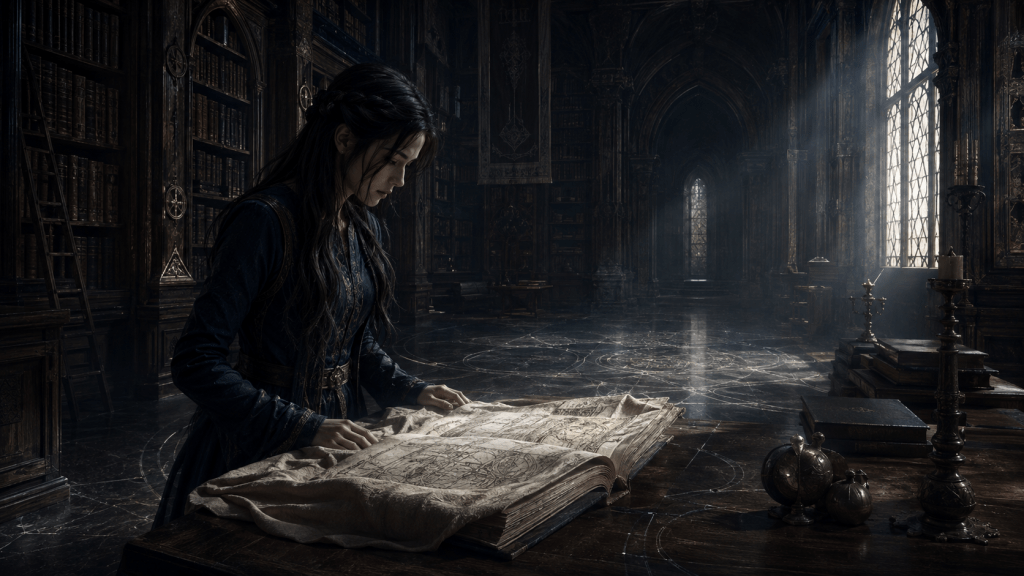
The royal library of Bremyra Castle opened later than the kitchens, later than the chapel, and later than the guards who crossed the inner court before dawn with frost silvering their cloaks, for books kept their own hour and yielded poorly to haste. Morning entered that high chamber by slow degrees, first as grey thinning behind the eastern glass, then as a pale wash across the upper shelves, until gold leaf along certain spines gave back a dull glow like embers buried under ash. The air held vellum, old leather, lamp smoke, winter wool, and the faint mineral chill that rose from the stones whenever snow lay across the outer walls.
Master Orlan Thesse had served the library through the last years of King Cedric’s father, through Cedric’s accession, through Prince Patrick’s growing seriousness, and through the bright impatience of Princess Elana, who as a child had once hidden beneath the southern reading table until she had been promised a book of road legends judged unsuitable for a princess of her age. Orlan remembered small truths because books trained men to keep them safely when great ones made too much noise, and his life had passed among maps cracked at their corners, treaties copied under differing seals, births entered in gold ink, and deaths written in plain black because grief had emptied ceremony from the hand that wrote them.
That morning, he had been summoned for inventory before the second bell. The order came from Master Vaynor’s office, folded square, sealed in common brown wax, and written in the clipped manner of a household trying to appear calm while every corridor carried whispers. The upper library was to be checked in full, with special care given to the western wall, the royal histories, the locked lower case, the architectural rolls, and those shelves nearest the old foundation line. Orlan read the order twice beside the lamp, tracing the firmness of the hand, for men asked full inventory during succession disputes, after water damage, before royal marriage journeys, and when something had gone missing that nobody wished to name.
He entered with two assistants: Corven, who copied titles cleanly while fearing ladders, and Mina, who climbed shelves as steadily as a cat. They carried wax tablets, cloths, a ledger board, trimmed lamps, and a narrow brass measure for checking warped panels. The library received them in its usual solemn manner, high rafters dark above, galleries ribbed along the walls, and shelves rising in tiered ranks from floor to shadow. At the far end, where the western wall thickened above the oldest part of the castle, the bookcases stood heavier than the rest, carved in dark wood whose grain had blackened over generations of oil, smoke, and touch.
Corven read titles aloud in a careful voice while Mina checked the upper rows from the ladder and Orlan entered each section into the inventory. The royal genealogies stood complete. The Bremyran law folios remained in place. The Vaeldring marriage copies had been removed under receipt, leaving a gap wrapped in blue ribbon where the clerk had tied a label for return. Arvendral correspondence occupied the side table under guard seal. All of it formed the visible life of the kingdom, ordered, indexed, and given proper weight, while beneath that labour the library seemed to hold itself apart, as if the chamber listened from inside the wood.
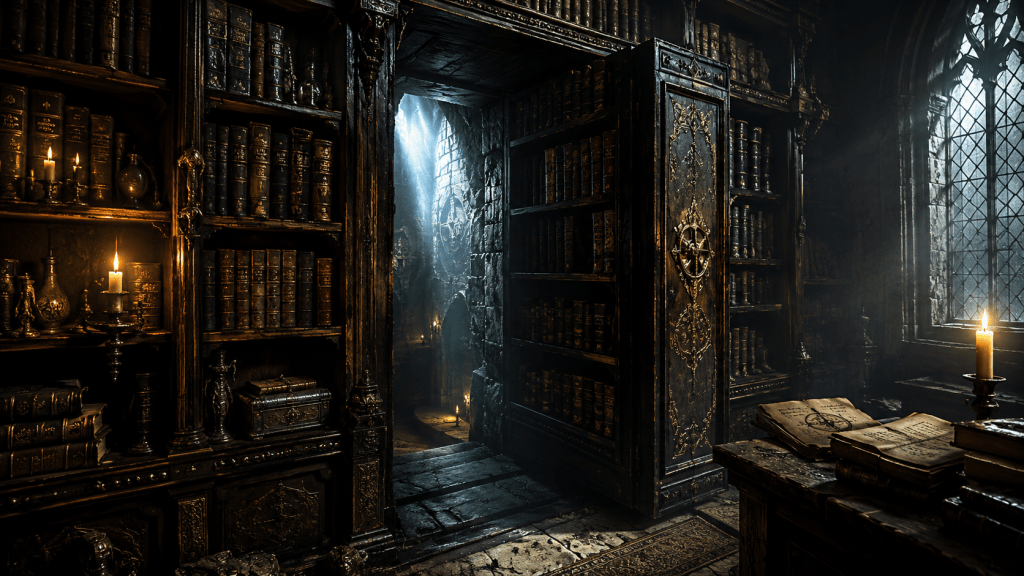
Mina first sensed the change near the fifth western shelf. She had climbed to inspect the chronicle rolls above the naval charters when she lowered her hand and looked along the carved upright beside her cheek. “Master,” Mina said as one palm rested against the ladder rail, her voice held low through habit learned among old pages, “this panel has shifted.” Orlan crossed the carpet slowly. The upright she indicated bore a pattern of curling leaves, though age had drawn the carving into darker lines that almost suggested letters when seen from the side. He lifted the lamp. Dust lay thick along the horizontal moulding. A narrow break ran through it where two pieces of wood met, clean and pale, as if a blade had passed there during the night.
“Dry timber moves in winter,” Corven said from the lower table, his hand hovering above the wax tablet while relief showed too plainly in his face. Orlan gave the words space to settle and chose silence for his answer. He had lived among old timber long enough to know its groans, its swellings, and the tiny betrayals made by damp and cold. This break looked fresh in a different fashion, with the careful line of use, the kind of seam a man might miss for twenty years before a single morning taught his eye to fear it.
The brass measure found a gap behind the shelf where the previous record allowed none. Orlan checked the ledger himself, turning back through entries with a thumb darkened by ink. The western theological shelf had been measured after the summer rains, and its depth had matched the adjoining cases. The shelf before him now stood a finger’s breadth proud of its neighbours, too slight for most eyes, too precise for the library to forgive. Mina descended with dust on her sleeves and unease in her face, while Corven rose from the table with the tablet pressed against his chest as if wax and board might protect him from whatever waited behind wood.
“Shall I call the steward?” Mina asked as she stepped clear of the ladder and kept her gaze fixed upon the carved upright. Orlan looked towards the double doors, closed against the passage, then towards the far windows where winter light pressed weakly through clouded glass. A steward would call a guard. A guard would call an officer. An officer would ask whether anything had been removed, whether any servant had entered, whether the Lord Magician had passed this way, whether Princess Elana’s curiosity had found a key, whether Prince Patrick’s household held more secrets than it admitted. Questions multiplied quickly in castles. Records survived by moving slower.
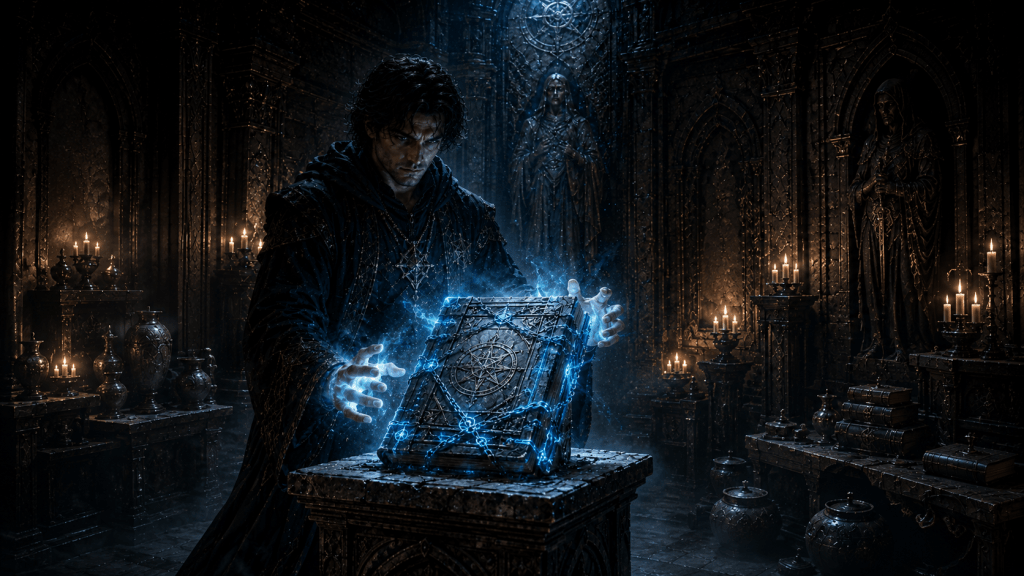
“Hold the ladder steady and keep the tablet ready,” Orlan said as he set the lamp upon the nearest table and laid two fingers along the carved leaves. The wood felt warmer than the room. His touch found a shallow hollow beneath the carving, smooth through long concealment. Somewhere behind the shelves, too deep for the visible chamber, a faint sound answered the pressure of Orlan’s fingers. It resembled a latch remembering its purpose after years spent inside silence.
The three of them remained still as the case shifted inward by less than the width of a nail. The library kept its face arranged around old titles, dusted labels, gold names, and recorded order. A breath of cold air moved through the join, carrying stone damp and a scent Orlan placed only after it had passed: sealed air, untouched by hearth, hand, or living speech for longer than memory felt comfortable holding. Mina stepped back and crossed herself under her sleeve. Corven lowered the tablet slowly, his lips moving through a prayer he likely wished the others had failed to see.
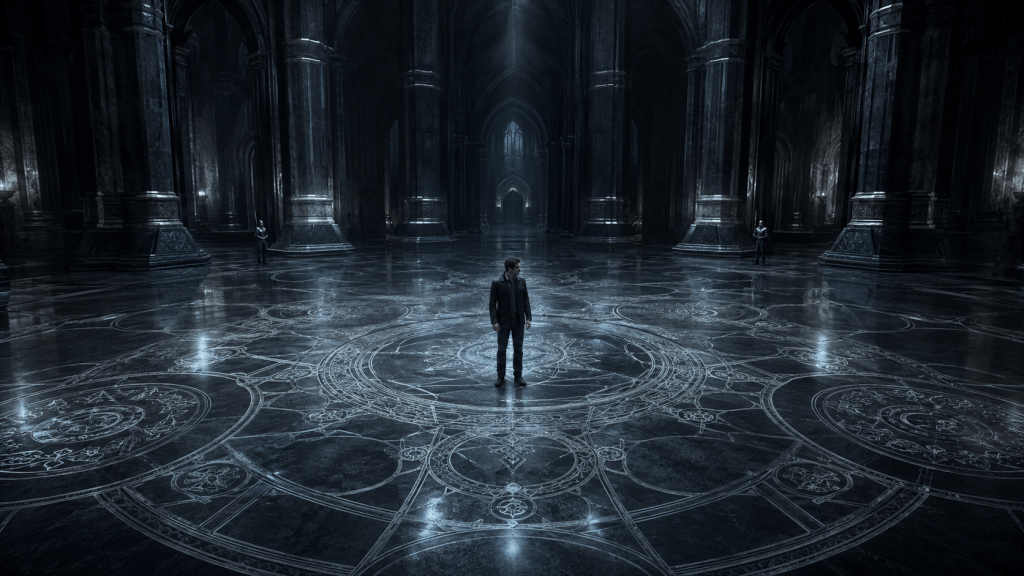
Orlan removed his hand. The shelf eased back into place with a softness that made the hairs rise along his wrists. He thought then of the castle above and below itself, the known halls laid over older courses, the royal rooms resting upon stones set before the current line of kings, the chapel records speaking of foundations blessed, strengthened, repaired, and sealed. The western shelf had answered like a thing accustomed to being touched by those who knew where to place the hand.
He returned to the table and opened the inventory ledger to a fresh line. Date, hour, room, shelf, section, witnesses. The act steadied him. Ink had saved more men from foolish speech than courage ever had. He wrote that a western case showed slight movement during inspection, that every visible volume remained in place, that the surrounding bindings appeared sound, and that a depth irregularity required later carpentry review under household authority. He avoided the word passage. He avoided the word hidden. He avoided the colder phrase that had entered his mind when the air came through the join, because a royal library served the kingdom best when its records offered truth enough for future hands, with danger folded cleanly beneath proper wording.
Mina watched the shelf while he wrote. Corven watched the doors. The lamps burned with small, straight flames, and beyond the windows Bremyra carried on beneath the grey weight of morning, unaware that the library had shifted behind its ordered wall. When the second bell rang, its sound travelled through the library and settled among the shelves in a low tremor. The western case answered by the faintest touch, a single wooden murmur passing behind the carved leaves. Orlan sanded the ink, closed the ledger, and kept his palm resting upon the cover until the vibration faded. Later copies would reduce the matter to a shelf defect, a winter swelling, a minor irregularity along the oldest wall of the royal library. Those present that morning carried a harsher memory: that the castle’s books had stood in perfect order while something behind them stirred, and for one guarded instant, the shelves of Bremyra seemed less like furniture than guardians who had nearly forgotten what they were meant to keep closed.
A Visual Chronicle
In Bremyra Castle’s royal library, a routine winter inventory reveals that one ancient shelf has moved, and something long sealed behind the kingdom’s histories appears to remember how to open.
Royal Library Register: The Western Foundation Shelf
The western wall of Bremyra’s royal library was entered in the old castle inventories as foundation-adjacent shelving, containing theological folios, royal histories, architectural rolls, and certain bound copies of early household surveys connected to the first raising of the inner keep.
During a winter inventory taken under Master Orlan Thesse, a minor displacement was recorded along the fifth western shelf, where the carved upright stood proud of its neighbouring cases and a narrow break in settled dust suggested recent movement within the wood.
The formal ledger described the matter as a depth irregularity requiring later carpentry review, with all visible volumes entered as present, undamaged, and properly ordered at the time of inspection.
A lesser library copy preserved additional remarks concerning cold air from behind the case, warmth held within the carved upright, and a sound beneath the shelf described as a latch answering pressure after long silence.
The entry gave no direct cause for the disturbance, and the shelf was afterwards entered as restored, secure, and fit for continued use, though a later hand amended the margin with the phrase old passage memory before the words were scraped thin.
Subsequent inventories retained the western shelf among ordinary library fixtures, recording its contents by title and shelf mark, while the foundation line behind it remained absent from the public catalogue and appeared only in damaged household copies kept apart from the royal register.
About the Creator
The Mythic Chronicle is written and curated by Simon Phillips, a writer of mythic and speculative fantasy whose work explores forgotten kingdoms, fractured records, old institutions, and the moments when history begins to shift before those living through it understand what has changed.
The accounts preserved within these Chronicles form part of a wider body of work in which castles keep older secrets beneath familiar rooms, roads carry rumours ahead of armies, and ordinary witnesses preserve fragments of events whose true meaning remained sealed from them at the time.
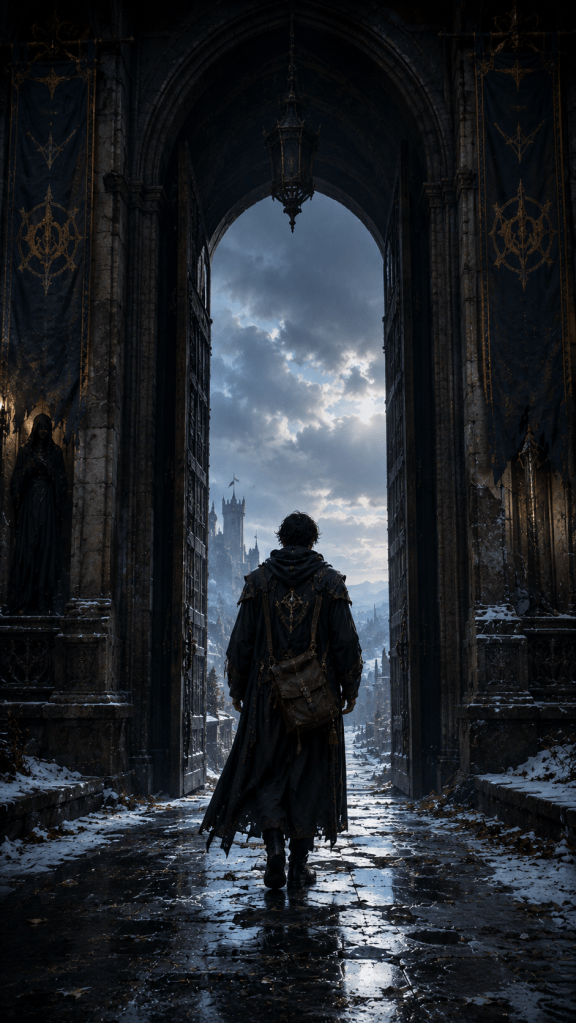
One such account survives in a separate record, following the return of a magician to Bremyra during a season of court unease, royal absence, Church suspicion, and gathering danger beyond the kingdom’s roads. What the servants, clerks, and watchers of the city remembered only in fragments is followed more closely in The Unmarked Path, the opening book of The Veil of Kings and Gods within The Chronicles of the Spiral Realms.
Readers who wish to examine that fuller account may find the record below.
Read the Novella:
The Unmarked Path
Explore the wider saga:
The Chronicles of the Spiral Realms
You can watch his YouTube channel here:
Author Simon Phillips

Continuation of the Record
What follows is taken from a later library account concerning the western foundation shelf of Bremyra Castle, where a minor inventory irregularity was preserved before rumours of a hidden passage entered the household record.

Subscribe to continue reading
Subscribe to get access to the rest of this post and other subscriber-only content.