The Modern Chronicle: The Road Held Open

A protected route cut through ordinary England, and for those left beside it, the delay was the first sign that the road had begun to belong to something else.

The Morning the Road Changed Hands

Ashwell Roundabout had begun taking the shape it would keep for hours by the time the police cars settled across the western approach, a slow curve of brake lights bending past the petrol station, along the supermarket service road, and towards the damp fields beyond the last row of houses. Rain had arrived before dawn and left the tarmac shining beneath a low grey sky, each puddle catching the amber blink of temporary signs and the blue pulse from vehicles positioned where school traffic usually moved through with practised irritation. On most mornings the roundabout carried commuters, delivery vans, farm pick-ups, buses, and late parents, yet that morning it held them in place while a road team in waterproof jackets lifted cones from a flatbed and built a corridor through the middle of their day.

Paul Seddon sat three vehicles from the front with the engine idling and the temperature alarm on his dashboard giving a soft, regular chirp that had grown more personal with every minute. Fresh produce, pharmacy bins, and milk for a primary school kitchen had become a marker beside Ashwell Services, although stationary made the morning feel calmer than the road outside the windscreen. He saw the school bus ahead of him at the edge of the roundabout, hazard lights blinking, windows steamed from inside, children’s hands drawing brief marks through condensation while the driver leaned out and spoke to a police constable under the rain.

The constable looked young enough to still expect approved words to carry useful weight. She stood with one gloved hand resting on the bus door frame and the other raised towards the temporary closure board as she explained the diversion again. The bus driver, square-shouldered in a purple fleece beneath her uniform jacket, listened with a face arranged for patience and eyes moving towards the clock above her windscreen. Behind her, a boy in the front seat had pressed his forehead against the glass and watched the roundabout as if the cones and barriers had been placed there for him alone. Paul saw the driver shape the words school run through the rain, and the constable lowered her hand, offering a small apologetic tilt of the head before she directed the bus into the side lane beside the petrol queue.

The queue had become its own argument before eight. Cars waited two deep at the station entrance, cutting across the supermarket slip and blocking half the service road where delivery bays sat behind locked gates. A man in a dark estate car had left his driver’s door open while he walked towards the forecourt kiosk, calling over the weather about priority, children, work, and how the council had given the village no useful warning. The woman at the kiosk window kept both hands flat on the counter and repeated the same sentence because no safer sentence had been supplied. Fuel remained available, customers would be served in order, and emergency access had to remain clear. Each line came back across the forecourt changed by rain, engines, and the harder sound people made when delay had joined a wider kind of fear.

Paul checked his phone again, although the depot had already sent the instruction that mattered: hold position until police released the route, preserve load temperature, update customer delay category to external road-management pressure. The phrase sat on his screen with a cold neatness he disliked, fit for resurfacing, flooding, a crash, or any local misery that belonged to local roads. It struggled to cover what he could now see beyond the roundabout, where two police motorcycles had taken position at the far approach and a pair of dark military trucks waited beneath the trees with their lights dipped. Farther back, beyond the bend, more headlights gathered in a line that held its own discipline.

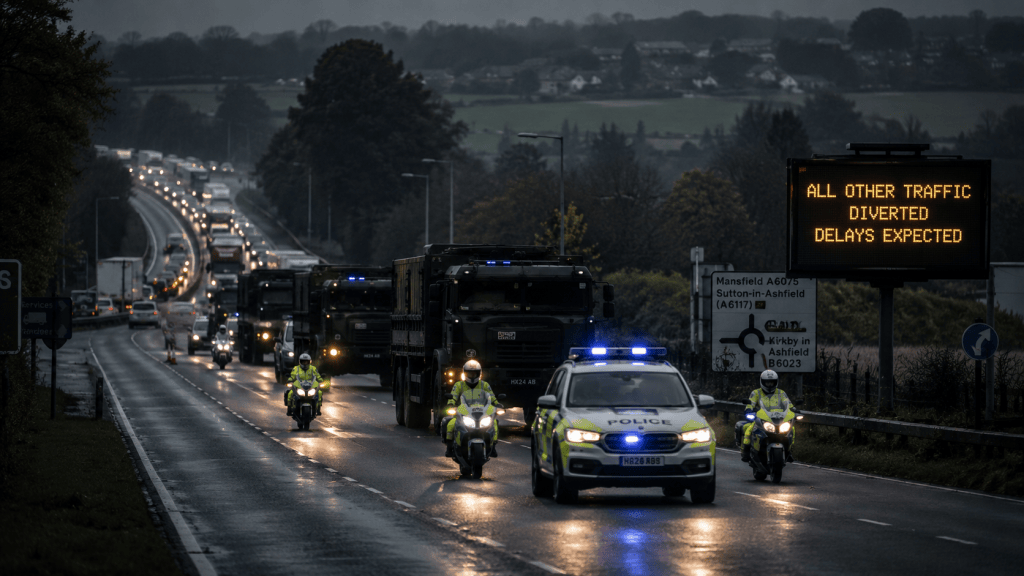
At half past eight, the roundabout quietened in a way that travelled through the waiting vehicles before the sound changed. The constables moved first, stepping out from the cones and raising their arms, while buses, vans, cars, and supermarket lorries stayed where they had been told to stay. The petrol station forecourt seemed to pause around pumps and raised voices, and even the children on the bus stopped drawing in the condensation. Then the leading police motorcycle came through from the western approach, blue light glancing across wet tarmac, followed by the first covered truck, then a second, then three low loaders carrying equipment under dark tarpaulins. Paul watched the wheels pass through the cleared centre of the roundabout, tyres hissing through standing water, the vehicles moving steadily east while everyone else sat behind cones and learned that the road had a second purpose when someone higher up required it.

The convoy held no spectacle, which made its authority harder to absorb. Its movement came through the village as a settled fact, passing under temporary traffic lights and past a petrol queue that had received no explanation beyond traffic management and essential national movement. A police 4×4 followed the first section, then a gap wide enough for radios to crackle and heads to turn, then two more heavy vehicles with rear doors sealed and number plates already filmed by half the waiting traffic. The school bus driver climbed down during the second gap and walked towards Paul’s van, rain dotting her glasses and darkening the shoulders of her fleece. She glanced towards the convoy, then towards the service-road queue, assessing the same road through three separate obligations.

The bus driver rested one hand on Paul’s half-open window. “Have they told you anything useful?” she asked, her voice carrying the rough edge of a morning slipping beyond timetable.

Paul lowered the glass and felt rain reach his sleeve. “Depot says hold position,” he said, nodding towards the phone on his passenger seat. “External road-management pressure.”

The driver gave a tired laugh while a fresh line of trucks entered the roundabout behind her. “That sounds expensive for saying stuck.”

Paul looked towards the bus, where the boy in the front seat still watched through the glass. “How late are they?”

“Late enough for every parent to ring the school,” the driver said as she wiped water from her glasses with her sleeve. “My youngest is front left, pretending he is fine, which usually means I get the fallout at tea.”

Paul found the boy again, small against the wide bus window, his attention fixed on a covered vehicle carrying what looked like generator housings beneath canvas. A further truck had side panels stripped of company markings, leaving pale rectangles where old names had been removed. A marked highways officer stood beside the cones with a clipboard held inside his jacket, writing each passage down as if recording could keep the route ordinary. Paul wanted to say the convoy would pass, the bus would go on, and the day would become late instead of altered. The sentence fitted the weather, the road, and the careful look on the constable’s face, so he left it where it belonged, inside his own mouth.

A horn sounded near the petrol station, short and angry, followed by a second from farther back. The man from the estate car had reached the kiosk window and was jabbing his hand towards the blocked slip road. A supermarket worker in a green jacket came out to move delivery cages away from the service gate, then stood with both hands on the metal rail, caught between stock that needed unloading and a road that had ceased to answer to the shop. When the final vehicles entered the roundabout, the rain thickened and drew the village, the school bus, the petrol queue, the supermarket yard, and the trapped delivery vans into one blurred reflection.

The police sergeant spoke into his radio, listened, then nodded towards the far approach as if the corridor had gone through cleanly. The cones stayed in place for several minutes after the final truck disappeared beyond the trees, and that delay unsettled the waiting drivers more than the convoy itself. It suggested that the movement had left something behind besides water on the road and tyre tracks through the roundabout. It had left a revised understanding of priority, one everyone could feel while still lacking permission to name it.

The constable returned to the bus first, and Paul watched the driver nod, climb back into her seat, close the door, and ease the vehicle into the diversion lane. The petrol queue released next in bad temper, each car moving too close to the one ahead. Paul’s tracker flashed a new estimated delivery time and revised itself again before he had taken his foot from the brake. The road opened by degrees, ordinary traffic pouring back into the shape left for it, as if the interruption had been a passing inconvenience. Yet as Paul guided the van past the cones and saw the water still trembling in the lorry tracks, he understood that the road had held open for something larger than traffic.


A Visual Chronicle

An ordinary school run stalled in the rain as Ashwell Roundabout briefly became part of a protected route moving east.


Extract from County Roads Policing and Local Resilience Coordination Log

Subject: Ashwell Roundabout / Essential Movement Hold
Time: 08:06–09:18
Circulation: Roads Policing Unit / Local Authority Duty Officer / Highways Liaison / Regional Movement Desk

Purpose
To record temporary traffic-management measures applied at Ashwell Roundabout in support of protected eastbound movement through the A-road corridor, with associated disruption to civilian traffic, school transport, commercial delivery access, and fuel-station queuing.

Public Position
Short-term traffic controls were applied to support essential movement through the local road network. Police, highways staff, and local authority partners worked to maintain public safety, preserve emergency access, and limit wider disruption during the movement window.

Incident Summary
At 08:06, roads policing units established a controlled hold on the western and southern approaches to Ashwell Roundabout. Highways contractors placed cones and temporary signage under police direction. Civilian traffic accumulated across the supermarket service road, petrol-station entrance, and school-bus approach within twelve minutes of the first hold.

At 08:24, the first protected movement entered the controlled corridor from the western approach under police motorcycle escort. The movement consisted of covered heavy vehicles, support vehicles, and low-loader units carrying sealed equipment under tarpaulin. Vehicles proceeded east through the roundabout under continuous police control.

At 08:31, local bus service 42A was diverted into the side lane due to corridor clearance requirements. The bus carried school pupils bound for Ashwell Primary and Harford Road Academy. Driver reported anticipated lateness and requested school notification. Local authority education contact was advised through the duty channel.

At 08:37, fuel-station queuing extended across the supermarket slip road and affected rear delivery access. Forecourt staff reported customer agitation linked to route closure, pump access, and visible police movement. No physical disorder was recorded. One male driver challenged kiosk staff and was verbally redirected by attending officers.

At 08:49, final protected vehicles cleared the eastern approach. Police retained the hold for route-confirmation checks before staggered civilian release began at 08:57. Full civilian movement through the roundabout resumed by 09:18, although residual congestion continued across the service road and petrol-station entrance.

Approved Local Explanation
Members of the public were advised that short-term traffic management had been applied to support essential national movement. Police and highways teams were present to maintain safety, manage congestion, and reopen the route as soon as conditions allowed.

Lines to Avoid
Refrain from identifying vehicle category, load type, destination, escort protocol, or connection to wider allied-support movement.
Refrain from suggesting routine civilian traffic had been displaced by defence-linked movement.
Refrain from confirming repeated use of the route unless cleared through regional handling.
Refrain from linking the hold directly to overseas military events or recent freight disruption.

Local Impact Assessment
The route hold created visible public disruption in a mixed civilian setting, with school transport, retail delivery access, fuel queues, and commuter traffic affected during the morning peak. Public frustration increased where road users observed escorted vehicles passing through while ordinary traffic remained stationary.

The presence of marked police units, temporary signage, and covered heavy vehicles increased public speculation around the purpose of the movement. Several members of the public filmed the convoy from stationary vehicles. Local communications teams should assume social-media circulation of images from Ashwell Roundabout across the morning period.

Operational Note
Further use of Ashwell Roundabout for protected movement may require earlier school transport warning, revised petrol-station access control, and supermarket delivery coordination to reduce visible civilian delay.


About the Creator
The Modern Chronicle is written and curated by Simon Phillips, an author of modern speculative fiction and contemporary crisis-driven storytelling who explores the point where ordinary life begins to tighten beneath political strain, military movement, institutional caution, and the public language used to keep dangerous realities at a distance.

Many of the records presented in these Chronicles sit alongside Simon’s wider modern-war novella series, where governments, soldiers, families, and civilian systems are forced to absorb a world changing faster than its official explanations. The stories remain grounded in recognisable places: ports, school corridors, freight yards, government rooms, roadside queues, transfer sites, and homes where the news has started to feel too close.

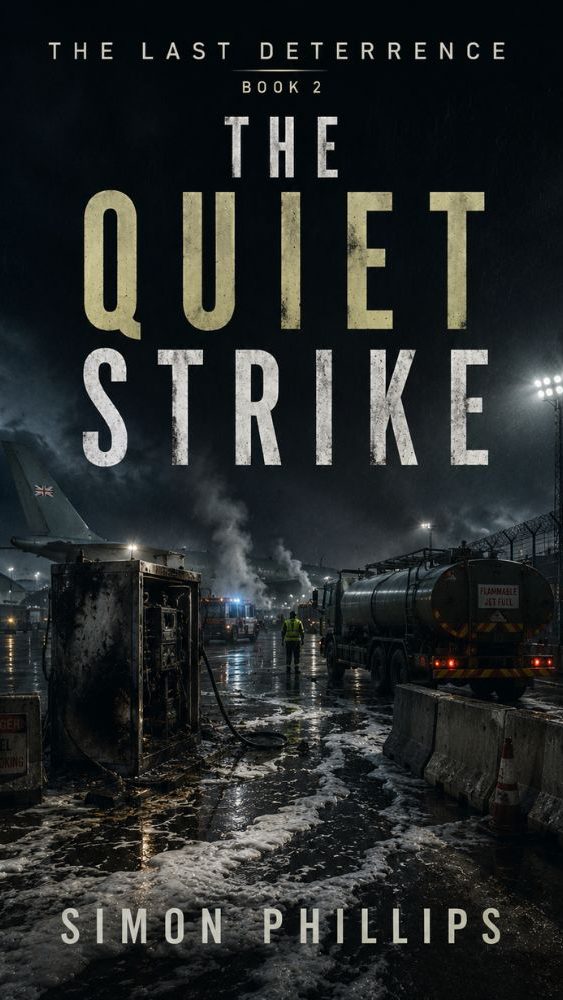
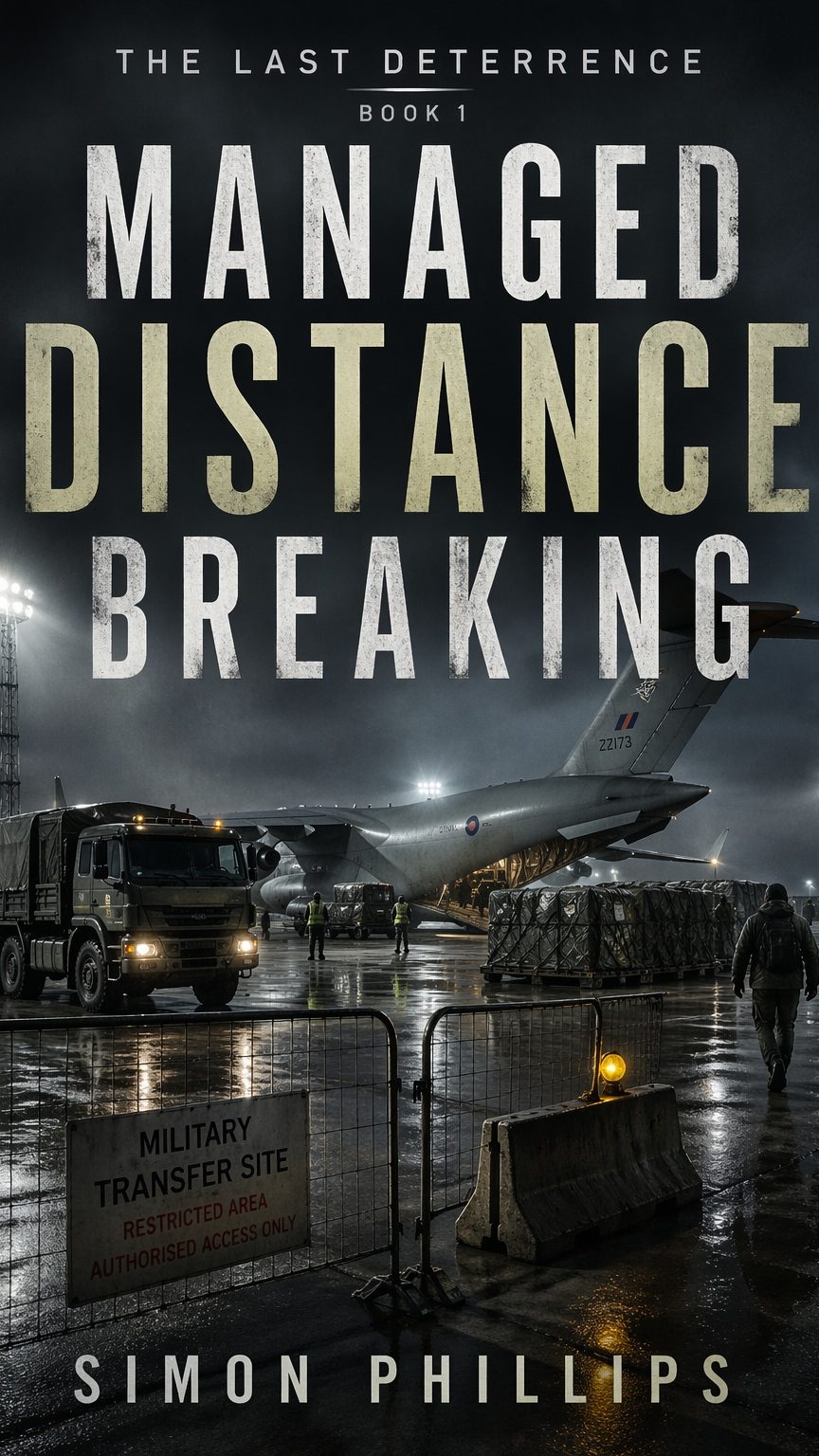
One such world unfolds through The Last Deterrence, a modern-war novella sequence beginning with Managed Distance Breaking and continuing in The Quiet Strike. Together, the first two books follow Britain as support language begins to fracture under freight pressure, European escalation, domestic infrastructure strain, and the growing sense that distance from war has already begun to fail.

Readers who wish to explore the wider published story world connected to this Chronicle can find the novellas below.

Explore the books:
The Last Deterrence: Managed Distance Breaking
The Last Deterrence: The Quiet Strike

You can watch his YouTube channel here:
Author Simon Phillips


Continuing the Chronicle

The following Chronicle continues the morning at Ashwell Roundabout, where police route control, delayed school transport, a worsening petrol queue, and a protected eastbound convoy turned a familiar local road into part of a corridor few people had been allowed to understand.

Readers supporting The Modern Chronicle can continue the record below.

Subscribe to continue reading

Subscribe to get access to the rest of this post and other subscriber-only content.
The Modern Chronicle: The Night Germany Entered the Yard

After reports of a strike in Germany reached a Midlands freight holding site, the routes changed before the workers understood why.


T he Yard That Turned East

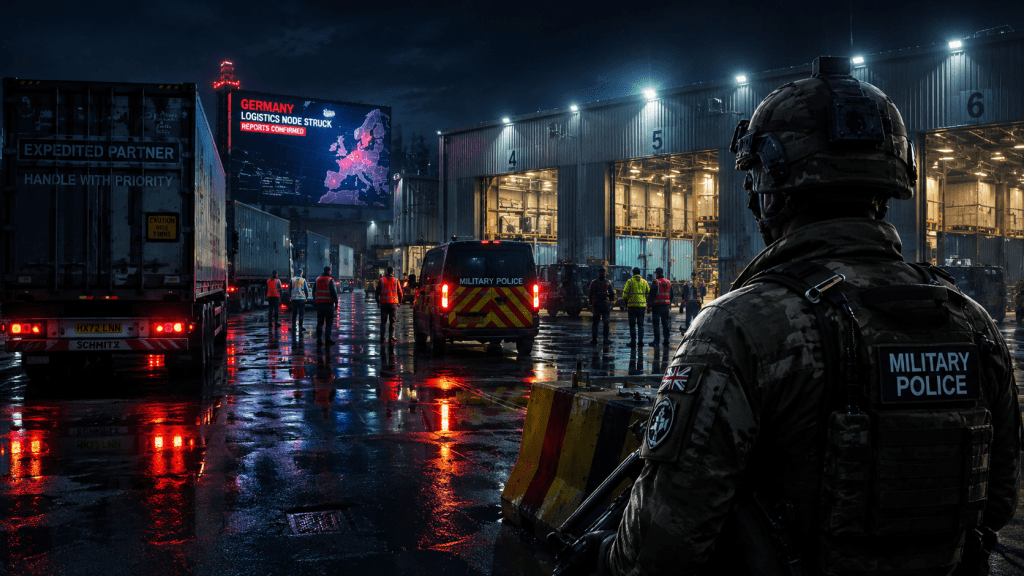
The first report from Germany reached Hartlow Freight Holding Yard through a driver’s phone before any official instruction had crossed the dispatch system, carried into the evening shift by a man who had come to the hatch angry about a cancelled rail slot and then stood there with his anger thinned by what he had seen on the screen. Rain had blown in across the Midlands all afternoon and settled over the yard in a shining film, silvering the hardstanding beneath the floodlights, darkening the shrink-wrapped pallets beside the rail spur, and turning the painted arrows between the road lanes into broken reflections. On the phone, a presenter stood before a map of western Germany while emergency lights moved behind her in red and blue fragments, and although the sound barely carried through the glass, the strip beneath the image gave the room enough to understand why the driver’s hand had started to shake. Suspected strike. Logistics site affected. European freight movement disrupted.

The yard carried on around the words because freight places were built from habit and pressure. Forklifts crossed between pallet rows while tractor units crept forwards in the holding lanes, their headlights fixed on trailers late for places farther east. The dispatch office held its usual smells of printer heat, old coffee, damp coats, and paper kept too close to radiators, yet the air inside it seemed to tighten as staff looked from the driver’s screen to the movement board above Mara Ellison’s desk. During the previous fortnight, the holding yard had become harder to describe, as sealed loads arrived late, moved first, and left behind civilian consignments once protected by morning delivery windows.

“What site?” Mara asked as she rose from her chair and moved towards the hatch.

Ed Baines lifted the phone closer to the glass, rain dripping from his cuff onto the sill. “They’re saying western Germany. Near a freight route. They keep changing the wording.”

Mara unlocked the side door and stepped into the narrow vestibule, where cold air pressed around her and made the dispatch room seem suddenly too warm. “Who are they?”

Ed looked past her towards Lane Three, where two plain-sided trailers were being guided under escort handling while commercial traffic remained held beside the barrier. “All of them, by the look of it.”

The dispatch printer started again, grinding out a fresh movement sheet with the exhausted rhythm it had kept since late afternoon. Yusuf Hale, the shift coordinator, pulled the page clear with two fingers and read the top line, his shoulders rising the way they always did when the room began obeying instructions written by people safely distant from the yard.

“Rail sequence has shifted,” Yusuf said, keeping his eyes on the paper.

Mara looked back at Ed’s screen, where the footage had moved from emergency vehicles to a studio map. “Linked to Germany?”

Yusuf read farther down the page, his mouth tightening around the official line before he gave it voice. “European infrastructure disruption and route protection review.”

Ed gave a short laugh that held more disbelief than humour. “That is a generous number of words for yes.”

Mara took the sheet from Yusuf and scanned the lines. The old sequence had carried automotive parts, mixed retail, and chilled food consignments through rail transfer before midnight, with three protected loads threaded between them where space permitted. The new sequence pulled the protected loads forward, froze two civilian releases, turned one Sheffield driver back into reholding, and marked a whole row of pallets for rescan under supervision. A second instruction sat below the schedule in smaller print, advising staff to await military-police arrival before opening the auxiliary gate.

For a moment Mara felt the yard rearrange in her head before the physical place moved outside the windows. Lane Four would choke first. The chilled load would lose its rail margin unless the reefer points stayed clear. Somewhere beyond all of that, across wet roads, changed sheets, and a damaged site hundreds of miles away, Germany had entered Hartlow through columns, seals, gate positions, and men who had left home expecting a further miserable shift in a crowded yard.

Yusuf lowered his voice as he folded the sheet back against the desk. “Auxiliary gate means they are bringing more through than we have space to stage.”

“It means they want the space made before anyone asks where it came from,” Mara said as she reached for her radio. “Call Yard One. Tell Niall to hold the chilled row beside the reefer points until the rescan team is placed. If a driver asks for timing, sequencing review is under way.”

Ed watched her through the open doorway. “You sound like the people on television.”

“I sound like someone who has spent six years talking to angry men in wet jackets,” Mara said as she clipped the radio to her belt.

Mara stepped into the rain as a forklift crossed the hardstanding with its beacon turning across the water. Lately, Hartlow had begun to matter to people who never came to the gate and whose instructions arrived through regional channels, red-handled emails, and calls that left fewer choices than they named.

Across Lane Three, two staff in high-visibility jackets peeled old route labels from wrapped pallets and smoothed fresh tags over the plastic. Near the rail spur, Niall Ford stood beneath the loading canopy with a radio pressed close to his ear. He saw Mara and lifted one hand, palm up, asking the question everyone had started asking through gestures because the radios had filled with approved phrases. Mara raised the revised sheet through the rain, and Niall turned towards the staff-entrance screen, where the map of Germany glowed above workers checking numbers they had already checked twice.

The first military-police vehicle arrived at nine fourteen, rolling through the main gate with blue lights dimmed and headlights low. A second vehicle followed with two uniformed personnel and a civilian liaison officer in a dark coat. Gate staff stepped from beneath the shelter, their stance shifting at once from routine control to something straighter and less practised.

Mara crossed the yard towards the incoming party with rain running down the back of her neck. The leading officer, a woman with close-cropped hair beneath her beret and wet marks darkening her sleeves, stepped from the vehicle and looked across the lanes with a measured attention that unsettled Mara more than any raised voice could have managed. She saw the waiting drivers, the rail spur, the sealed units, the warehouse staff gathered beneath the lights, and the route through the auxiliary gate, placing each part into a map she had brought with her.

“Mara Ellison?” the officer asked as she came forwards.

“Yes,” Mara said, drawing the sheet from her jacket.

“Staff Sergeant Keane,” the woman said, giving a brief nod towards the vehicles behind her. “We are here for access-control support and protected movement verification. Regional should have sent the updated handling pack.”

“They sent half of it,” Mara said as rain spotted the paper between them. “The rest appears to have arrived in vehicles.”

Keane’s mouth moved by the smallest degree, close enough to a smile to show she had heard the line and far from enough to accept it as a joke. “Auxiliary gate stays closed to civilian movement. Rescan team works under supervision. Drivers turned back from rail release receive the approved explanation.”

“European infrastructure disruption and route protection review,” Mara said, keeping the paper flat against her palm.

Keane glanced towards the staff-entrance screen, where footage from Germany had returned to smoke, floodlights, and emergency tape snapping in the wind. “That line will carry the shift.”

“It rarely carries the people waiting inside it.”

Keane looked back at her. “Tonight it has to carry both.”

The words came as instruction, carrying little comfort. Mara looked towards the lanes, where drivers had begun leaving their cabs in ones and twos, drawn by the military-police vehicles, the changed sequence, the news on the screen, and the shared sense that something larger had entered the yard. An alarm never sounded across Hartlow. A barrier never crashed down. The freight system simply altered its priorities in the rain, and everyone inside it felt the change before any public statement could reach them.

By half past nine, the first turned-around driver was arguing at the gate, the chilled load had lost its rail slot, and Niall’s team were rescanning pallets beneath the canopy while the German map glowed above them in red and grey. Mara stood beside the dispatch hatch with the revised sheets pinned under her hand and watched sealed freight move through lanes cleared by delay, anger, and careful language. Officially, Hartlow had entered a temporary rerouting of freight following disruption to European logistics infrastructure. In the yard itself, beneath the floodlights and the rain, the route east had begun to feel less like support and more like the reason everyone else had been told to wait.


A Visual Chronicle

The following Visual Chronicle presents a cinematic reconstruction of the events described above.


Transport Movement Room Log

Extract from Regional Freight Re-Routing Instruction Sheet
Subject: Hartlow Freight Holding Yard / European Infrastructure Disruption
Time: 21:22–22:10
Circulation: Regional Movement Desk / Yard Dispatch / Rail Coordination / Police Liaison / Defence Access Support

Purpose

To support controlled re-sequencing of freight movement through Hartlow Freight Holding Yard following disruption to European logistics infrastructure and associated review of protected onward routes.

This extract covered the first instruction window after reports emerged of a strike affecting a German logistics site with relevance to eastbound movement. The purpose of the instruction was to preserve onward handling capacity, maintain rail flexibility, and reduce avoidable visibility around priority movement categories.

Movement Position

Hartlow Freight Holding Yard remained operational during the instruction window. Civilian freight, chilled consignments, automotive parts, and mixed retail loads remained present across the scheduled evening sequence. Protected movement categories were advanced through the yard following regional direction.

The revised sequence required immediate adjustment to Lane Three, Lane Four, the rail spur holding area, and auxiliary-gate access. Yard dispatch was instructed to preserve clear movement for sealed onward consignments and maintain staging flexibility for additional protected arrivals.

Civilian releases originally scheduled before midnight were subject to delay, reholding, or renewed scan control. Rail coordination was advised that previous timing assurances should be treated as provisional pending wider route review.

Approved Handling Language

Staff were advised to describe changes as temporary re-routing caused by European infrastructure disruption and route protection review.

Drivers, commercial operators, and depot callers were to be told that the yard remained operational, freight sequencing was under active review, and onward movement would resume as soon as revised clearance permitted.

Staff were advised against discussing protected categories, destination assumptions, military liaison, route sensitivity, or changes linked to specific overseas events.

Sequence Adjustments

21:22 — Regional Movement Desk issued revised sequence for Hartlow Freight Holding Yard. Protected consignments were moved ahead of mixed commercial freight across Lane Three and Lane Four. Yard dispatch was instructed to preserve direct access to the auxiliary gate pending further clearance.

21:31 — Rail coordination advised that two civilian consignments were moved out of the first release window. One chilled load remained under reefer monitoring while awaiting revised rail access. Automotive component load was placed into temporary reholding.

21:39 — Rescan requirement issued for pallet group H-17 through H-24. Yard staff instructed to conduct supervised scan verification before onward handling. Existing route labels were withdrawn and replaced under dispatch control.

21:46 — Gate team reported driver challenge concerning reversed release instruction. Approved handling language was used. Driver returned to vehicle after exchange with gate staff. Queue remained contained.

21:58 — Military Police access-support team arrived on site. Auxiliary gate placed under controlled entry status. Civilian vehicle access through auxiliary lane suspended for remainder of instruction window.

22:04 — Yard dispatch confirmed protected movement lane was clear. Regional Movement Desk advised that additional sealed units may be routed through Hartlow if European rail disruption widened across the overnight period.

22:10 — Hartlow remained functional under revised sequence. Civilian dwell time increased across three active categories. Protected consignments continued to move within assigned tolerance.

Internal Assessment

Hartlow’s operating position remained viable through controlled displacement of lower-priority freight. Continued viability depended upon yard staff compliance, rail-slot flexibility, police access support, driver containment, and continued availability of chilled holding capacity.

The German incident increased sensitivity across the eastbound freight chain. Although public phrasing should continue to emphasise temporary disruption and route review, regional desks should assume that workers, drivers, and commercial operators may connect revised sequencing to overseas reports.

Visible arrival of military-police access teams may increase driver speculation. Yard staff should use approved language and refer wider questions to regional communications.

Further Action

Regional Movement Desk to review Hartlow sequence again before 23:00.

Rail coordination to supply revised release timing for chilled and automotive loads.

Police Liaison to remain available for gate-pressure support.

Defence Access Support to confirm whether auxiliary gate control remained required beyond the first instruction window.

Public-facing explanation to remain unchanged unless civilian delay exceeded revised tolerance or visible disruption reached local media.


About the Creator

The Modern Chronicle is written and curated by Simon Phillips, an author of modern speculative fiction and contemporary crisis-driven storytelling who explores the point where ordinary life begins to tighten beneath political strain, military movement, institutional caution, and the public language used to keep dangerous realities at a distance.

Many of the records presented in these Chronicles sit alongside Simon’s wider modern-war novella series, where governments, soldiers, families, and civilian systems are forced to absorb a world changing faster than its official explanations. The stories remain grounded in recognisable places: ports, school corridors, freight yards, government rooms, roadside queues, transfer sites, and homes where the news has started to feel too close.

One such world unfolds through The Last Deterrence, a modern-war novella sequence beginning with Managed Distance Breaking and continuing in The Quiet Strike. Together, the first two books follow Britain as support language begins to fracture under freight pressure, European escalation, domestic infrastructure strain, and the growing sense that distance from war has already begun to fail.

Readers who wish to explore the wider published story world connected to this Chronicle can find the novellas below.

Explore the books:
The Last Deterrence: Managed Distance Breaking
The Last Deterrence: The Quiet Strike

You can watch his YouTube channel here:
Author Simon Phillips

You can watch his YouTube channel here:
Author Simon Phillips


Continuing the Chronicle

The following Chronicle continues the night at Hartlow Freight Holding Yard, where reports from Germany moved through the dispatch office faster than any official explanation, and route changes, rescan orders, military-police access control, and delayed civilian freight began turning an ordinary holding site into part of a protected eastbound corridor.

Readers supporting The Modern Chronicle can continue the record below.

Subscribe to continue reading

Subscribe to get access to the rest of this post and other subscriber-only content.