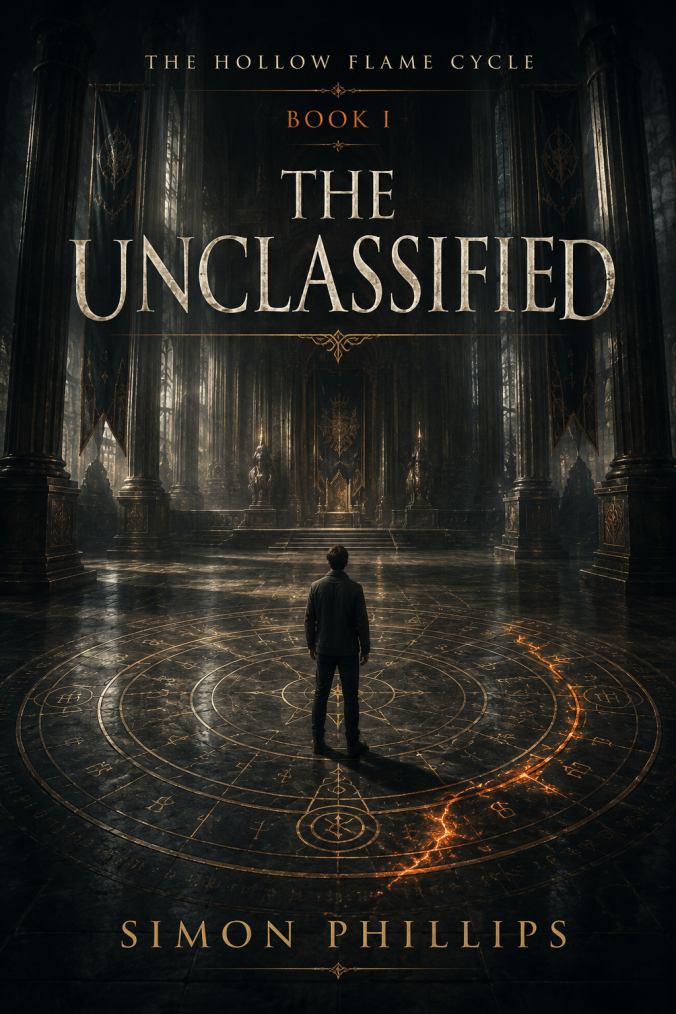
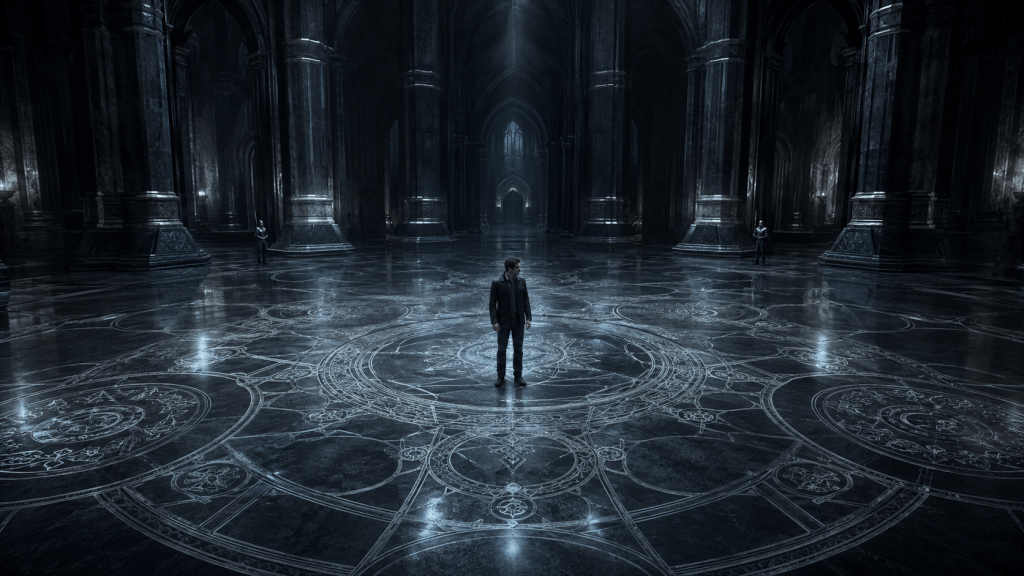
Silas Thorn has already crossed through an ancient book and awakened inside the secured foundations of a royal palace. By the following morning, the impossible has acquired a locked door, a permanent guard, an official record, and a carefully chosen vocabulary designed to make captivity sound like protection.
The Wards Beneath the Crown, Book Two of The Hollow Flame Cycle, continues directly from The Unclassified. The first book carried a London manuscript conservator through an unidentified volume and into the heart of a hidden magical realm. Book Two follows the consequences as the Crown attempts to contain what it cannot explain, the Guild begins measuring disturbances it may already recognise, and the palace itself responds to Silas with increasing intensity.
This is slow-burn epic fantasy shaped through royal intrigue, living magical architecture, institutional conflict, ancient records, guarded relationships, and a displaced man who still wants only to know whether his father remains alive beyond the Veil.
The danger arrives quietly. Lamps brighten around handwritten questions. Ink acquires impossible depth. Buried routes remember that they once existed. A beautiful royal estate is prepared before its future resident has been asked whether he wishes to enter it.
Silas has been promised protection, yet every attempt to find his way home gives the realm another reason to fear him.
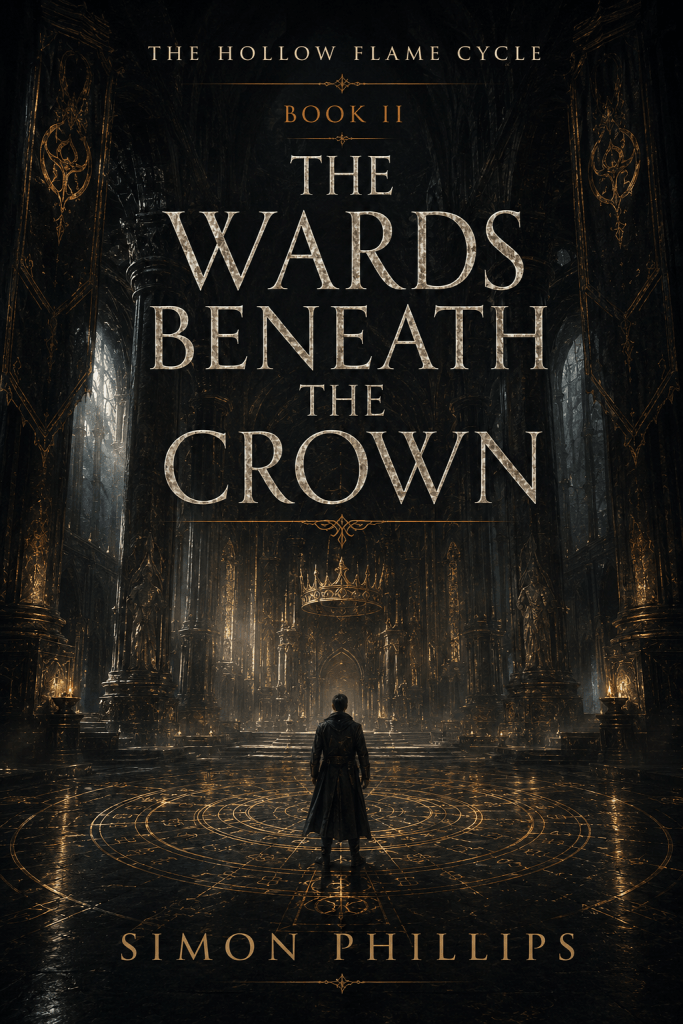
A Beautiful Chamber Becomes a Civilised Prison
Silas awakens in the eastern guest wing of the royal palace after a night of fractured sleep and unfamiliar sounds.
The chamber contains everything a generous official might present as evidence of humane treatment. Clean linen covers a broad bed. Controlled warmth rests behind a curved hearth screen. Fresh water, prepared food, new clothing, and attentive service await him. Tall windows offer a view across palace courtyards where servants, clerks, guards, and household pages continue their ordinary work.
The door remains locked.
A guard waits outside. Silas’s possessions have been catalogued. The knife placed beside his breakfast has been deliberately dulled, and movement beyond the chamber requires permission, escort, and an approved route.
His professional understanding of conservation makes the contradiction especially sharp. Silas has spent years preserving rare books, protecting fragile objects from careless handling, unstable environments, and further damage. He understands that something may be kept safe while losing every meaningful form of freedom.
The Crown calls him a protected resident. Silas sees a beautiful enclosure whose comfort changes none of its essential purpose.
That tension gives The Wards Beneath the Crown its emotional foundation. The Crown’s concern is genuine. The guards are disciplined. The servant assigned to him, Maren, offers practical kindness and restrained humour. Halren Voss, the Crown liaison responsible for his residence, listens carefully and refuses easy consolation.
Even so, Silas cannot leave.
The story asks a difficult question from its opening pages: when protection cannot be refused, how far does it remain separate from imprisonment?
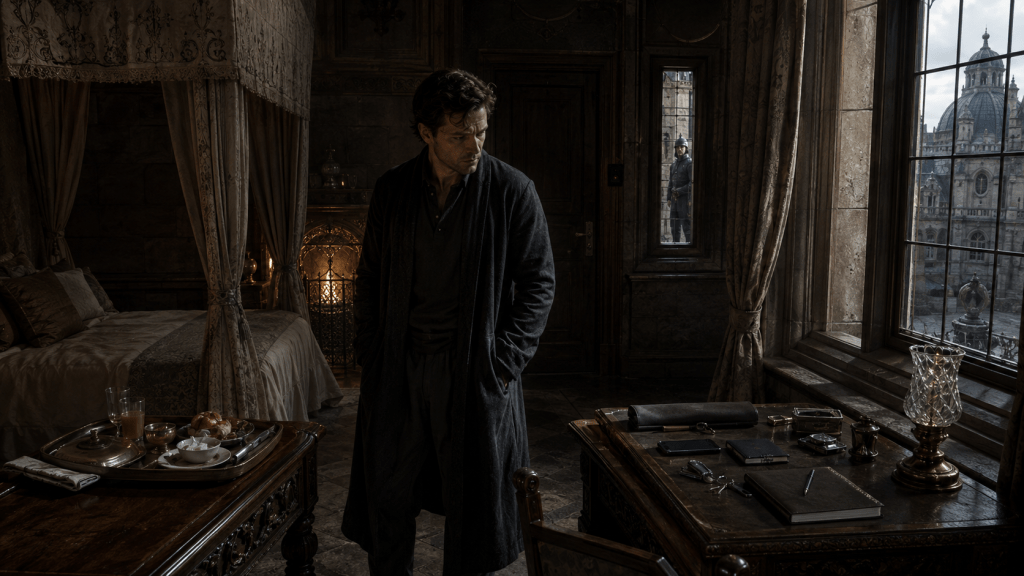
Silas Thorn Wants Answers More Than Power
Silas remains an unusually human centre for a story filled with royal wards, magical instruments, ancient foundations, and political authority.
He has no wish to become a mage, fulfil a prophecy, conquer a hidden realm, or claim a heroic place within it. His questions remain painfully ordinary:
Is London still there?
Is his father alive?
Does time continue at the same pace beyond the Veil?
What happened to the book?
Can anyone send him home?
Voss answers the final question with the honesty Silas has been dreading. No one can simply return him.
That truth reaches more deeply than the guarded chamber or the royal decree. Until someone states it plainly, Silas can still imagine the crossing as a misplaced road, an accidental doorway waiting to be found again. Once Voss speaks, return becomes an uncertainty that every institution around him may study, delay, or eventually declare impossible.
Silas responds through the skills and habits that shaped his former life. He observes language. He notices how records are phrased. He asks that his own account be preserved in his own handwriting because he understands how testimony becomes cleaner, safer, and less human as it travels through official hands.
He knows that naming determines how an object is handled.
He soon discovers that the same principle applies to people.
London Finds an Echo in Lundenvar
During a supervised orientation, Silas is shown maps of Valebrin, its capital Elyrion, and the wider shape of the realm into which he has fallen.
The hidden magical world is neither a medieval imitation nor a decorative kingdom designed around castles and spellcraft alone. It possesses roads, administrative borders, civic transport, communication systems, illuminated cities, royal offices, military structures, archives, and technologies shaped through magical development.
The map offers Silas his first chance to place himself somewhere measurable.
Instead, it makes the distance from home stranger.
Near the western edge of Valebrin lies Lundenvar, an old threshold city occupying an uneasy correspondence with London. It is no direct equivalent, yet its position carries enough similarity to disturb him. Rain-dark streets, Underground platforms, buses, libraries, his father’s house, and the conservation studio return through association while an unfamiliar place-name sits where his mind expects home.
The connection suggests that Earth and the hidden realm may preserve echoes of one another through geography, history, or the Veil itself.
Silas receives no comfort from the discovery. London has become more than a distant city. It is now a place that may possess a distorted reflection inside another world.
The distance between them can no longer be understood in miles.
The Written Word Refuses to Remain Ordinary
Silas is given paper and ink so that his questions can enter the Crown record.
He writes his name, the last place he remembers, and the matters no official answer has resolved. He asks about his father, the vanished book, the passage of time, the Veil, and the authority deciding what knowledge he may receive.
As he writes, the chamber lamps brighten.
The change is initially slight enough to invite doubt. Silas watches the crystal lights steady themselves and wonders whether fear has made him unreliable. Then the word Veil begins holding the light differently from every other word upon the page.
Its ink acquires the same inward depth he remembers from the ancient book in London.
When Silas calls for help, Guard Arven enters first, followed by Voss, Sera Valn, and Warden Cael Orven. Their response reveals how thoroughly magic has been integrated into this civilisation. Instruments are brought. The desk perimeter is measured. Chamber wards are examined. Technical language gathers around the page with unnerving speed.
Silas possesses no recognised casting discipline, visible training marks, declared magical focus, or knowledge of glyph construction. By the realm’s accepted understanding, his handwriting should have no power to alter a chamber ward.
Yet the page produces a second register.
The lamps respond. Passage-related words deepen. Ordinary questions about home become magical evidence.
Silas’s fear changes at that moment. He is no longer frightened solely because he cannot return to London. He is frightened because every attempt to ask for London becomes another reason for Crown and Guild to measure him.

The Crown and Guild Contest the Meaning of a Page
The altered page passes immediately into a political struggle.
The Guild of Mages possesses the expertise required to investigate unusual ward behaviour, crossing phenomena, glyph structures, and the ancient divisions between realms. The Crown possesses physical custody of Silas and responsibility for everything occurring within the palace.
Both institutions have legitimate grounds for involvement.
Neither fully trusts the other.
Lirael Vaerenthis permits the Guild to examine the page under Crown supervision. She refuses its removal to a private Guild chamber, blocks unsupervised copying, requires Crown witnesses, and ensures that the official record remains under royal custody.
The resulting audit is one of the book’s strongest expressions of political fantasy. No armies gather, no throne room erupts into open conflict, and no theatrical spell is cast across the chamber. Power moves through seals, witness rights, terminology, instrument placement, access restrictions, withheld interpretations, and the authority to decide which account becomes official.
High Mage Elarion approaches the event with intelligence and restraint. He refuses to classify Silas prematurely and recognises that the disturbance extends beyond ink. The response appears to move across written language, spoken words, remembered place, ward-lines, and Silas’s presence.
When Silas speaks the word London, the instruments respond.
When he speaks Veil, the reaction strengthens.
A pattern connected to older foundation behaviour briefly appears upon a Guild tablet, and one representative attempts to cover it before Lirael requires its inclusion in the Crown record.
The room discovers enough to become afraid and too little to become certain.
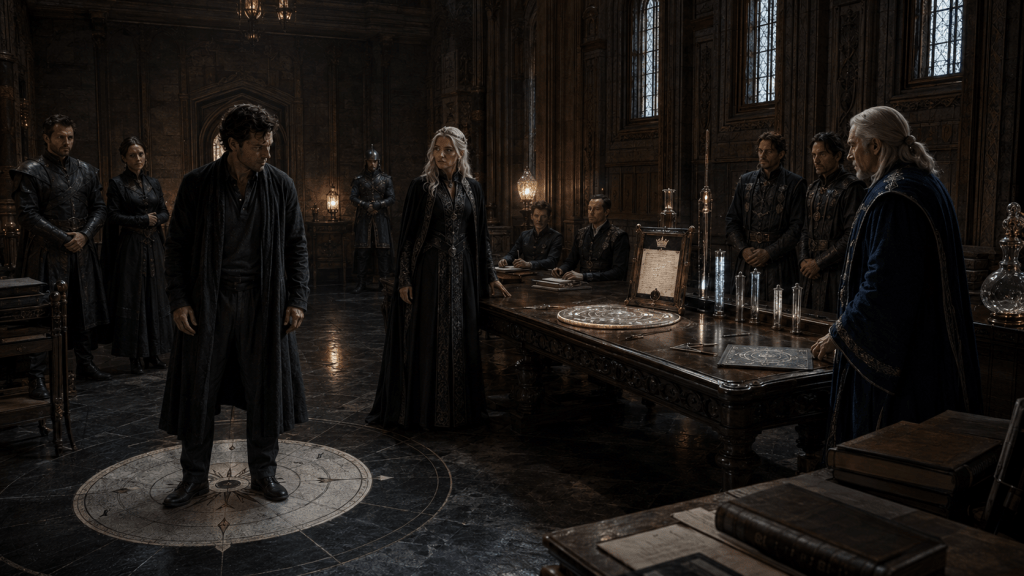
Lirael Vaerenthis Protects the Man Inside the Record
Lirael’s role throughout Book Two is politically demanding because every possible decision contains harm.
She cannot release Silas while the palace responds unpredictably around him. She cannot surrender him to the Guild merely because its mages possess greater technical knowledge. She cannot ignore the risk to servants, guards, clerks, petitioners, and families living within the palace.
She also refuses to allow official language to erase him.
When draft reports begin referring to Silas as a subject, anomaly, or ward-active presence, Lirael orders the language corrected. Within Crown records, he remains Master Thorn.
That choice carries more than courtesy. Lirael understands that technical wording can quietly change responsibility. Once Silas becomes an anomaly, officials may find it easier to isolate him, test him, relocate him, or claim jurisdiction over him. A name keeps his humanity inside the machinery processing his existence.
Her protection still has a coercive edge. She controls access, testimony, movement, and eventual relocation. Silas experiences her as one of the people deciding his life while asking him to trust the care within their restrictions.
Lirael offers him honesty in place of false reassurance. She protects his status as a person while acknowledging that his choices remain limited.
Her danger lies far from cruelty. It lies in the necessary authority she controls and the possibility that sensible governance can still wound the person it intends to preserve.
Seréne Searches the Language History Tried to Erase
Princess Seréne Vaerenthis approaches the disturbance from another direction.
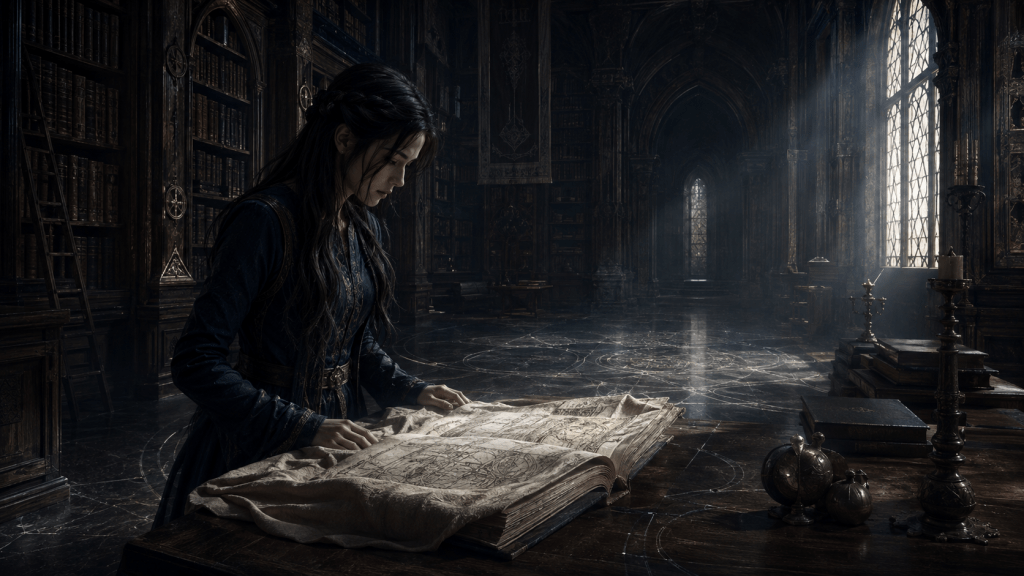
While Crown and Guild examine instruments, Seréne enters the lower record arcade and searches older foundation texts. She studies marginal copies, disputed glossaries, early descriptions of reception, and words that later doctrine has simplified into cleaner administrative categories.
The oldest records describe warded stone in strikingly different terms.
Later scholars write of admission, rejection, intrusion, and instability. Earlier texts speak of presences being met, failing to settle, remaining unplaced, or creating an argument in stone.
Those differences matter.
Modern authority treats wards as systems that obey recognised command. The older language suggests something more responsive, uncertain, and alive. Seréne discovers references to one arrival producing two answers, an unseen answer requiring protection, and a mark that resembles Silas’s memory of the ancient book.
Her investigation shifts the central mystery. The problem may extend beyond what Silas is doing to the palace. The deeper question may concern how the palace, the Veil, or the realm itself is attempting to understand him.
Seréne recognises another danger as well. Crown and Guild are studying the second page, the one Silas wrote inside the guest chamber. Only Silas saw the first page, the ancient page in London whose dark markings opened beneath his hands.
Before official interpretation buries that original account, Seréne decides to hear it from him directly.
Old Books Create the First Ground of Trust
Seréne’s private conversation with Silas provides the book’s most intimate counterweight to institutional pressure.
Silas initially distrusts her. She is another royal daughter, another person connected to the authority holding him, and another visitor whose access has been granted through rank.
Their conversation changes when Seréne asks about the ancient book, his conservation work, and the distinction between repairing an object and preserving what survives.
Silas explains that conservation avoids forcing modern certainty into damaged history. A conservator stabilises evidence, respects alteration, and allows an object to retain the marks of what it has endured.
Seréne understands the principle because her own archival work has shown her how official histories become smoother as difficult meanings are copied away.
Their connection grows through shared intellectual ground rather than immediate romantic declaration. They speak about manuscripts, erased corrections, restricted texts, his father, his phone, the vanished book, and the danger of allowing institutions to replace a person’s first account with a cleaner summary.
Seréne treats Silas as someone who arrived with a profession, a family, memories, and a complete life beyond the palace.
That recognition matters enough for Silas to ask her to remain when Lirael enters.
Later, when he learns that he must be moved from the palace, he asks for Seréne to travel in his carriage because she has spoken to him as though his previous life still counts.
The request marks an important change. Silas still possesses little freedom, yet he has begun asserting whom he trusts within its limits.
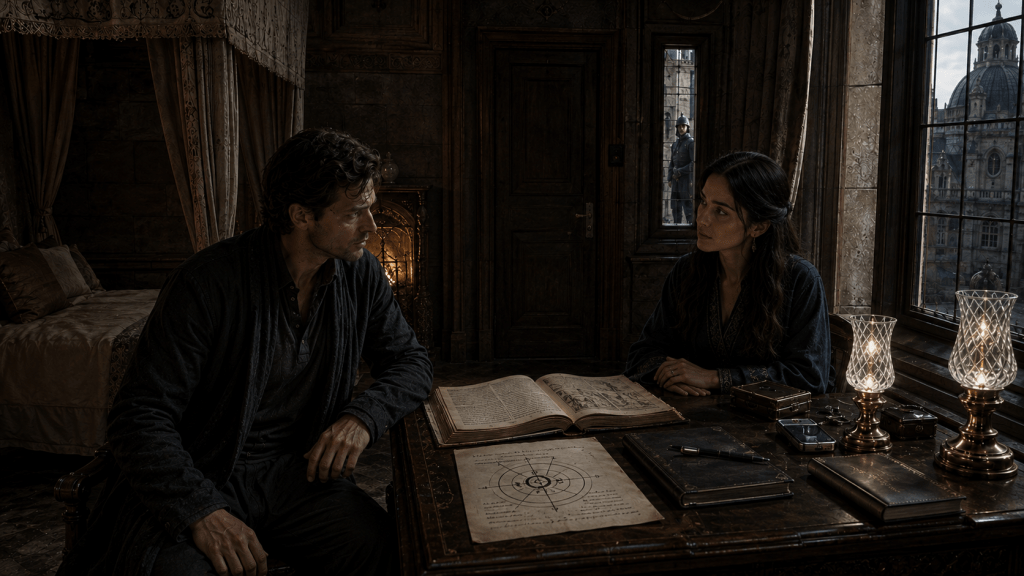
The Palace Remembers a Buried Road
The disturbance refuses to remain inside the audit room.
As Silas returns towards his chamber, lamps dim in sequence along the gallery. Floor markers divide into conflicting routes. A sealed service passage beneath the visible corridor registers as available even though it has remained closed since an earlier reign.
The palace is no longer reacting only to a page or spoken word.
Its architecture has begun remembering.
This escalation transforms the palace from setting into participant. Its ancient wards, buried routes, foundation layers, and accumulated authority respond to Silas as though attempting to place him inside systems whose original instructions have been partly forgotten.
Elarion warns that each event has reached farther than the one before it. The disturbance began with page and lamp, moved into voice and measuring instruments, then spread into corridors and sealed structures.
He offers the Crown a deeply unsettling interpretation: the realm appears unable to decide whether to receive Silas, reject him, or answer through him.
The palace has become too old, too layered, and too closely bound to royal authority to hold him safely.
The Crown must move him.
Alderwick House Offers Space Inside Another Boundary
Alderwick House lies east of Elyrion, beyond the densest palace foundations and beneath a newer outer ward.
The Crown presents the estate as a safer residence with larger rooms, gardens, library access, fresh air, and distance from the reactive systems beneath the palace. Silas hears the truth beneath the amenities immediately.
It is another enclosure.
When he asks whether he can refuse, Lirael answers with painful clarity. He can object. His objection can enter the record. He cannot remain in the palace.
The early-morning carriage journey finally carries Silas beyond Crown corridors and gives him partial glimpses of the hidden realm’s roads, bridges, vehicles, settlements, and magical infrastructure. Curtains restrict his view, guards manage the route, and unexplained shadows pass high above the road.
Inside the carriage, Silas and Seréne compare their worlds through ordinary details. He describes buses, cars, trains, moving stairs, and mobile phones. She answers with guided platforms, line-stone routes, magical vehicles, and systems shaped through an entirely different history.
Their exchange reveals the scale of the world more effectively than an explanation could accomplish. Silas begins recognising that he has entered a functioning civilisation whose people find Earth as strange as he finds them.
When the carriage crosses Alderwick’s outer ward, Seréne and Arven pass through cleanly.
Silas does not.
The estate waits beyond the boundary, beautiful and guarded, with Crown officers, ward-stones, restricted shutters, and Guild-marked equipment already prepared. Then Silas steps from the carriage, looks beyond the roofline, and sees something above the ridge that changes the scale of everything he thought he understood.
The book closes before the sight is fully named.
Slow-Burn Fantasy Where Institutions Become the Source of Tension
The Wards Beneath the Crown will appeal especially to readers who enjoy political fantasy, hidden magical realms, portal fantasy, ancient manuscripts, royal intrigue, living architecture, institutional mysteries, gradual worldbuilding, and character-driven stories where consequences matter more than effortless spectacle.
The book’s tension grows through rooms, language, lamps, pages, maps, ward-lines, archives, sealed evidence, and guarded roads. Its characters behave intelligently, even when their competing responsibilities place them in conflict.
The Crown genuinely wishes to prevent harm.
The Guild genuinely needs to understand the disturbance.
Lirael genuinely protects Silas while restricting him.
Seréne genuinely seeks truth while approaching areas her sister has placed under control.
Silas genuinely wants home, even as the hidden realm begins answering him in ways that suggest his arrival carries meaning beyond accident.
No institution becomes foolish merely so the story can move. The danger emerges because intelligent people possess incomplete knowledge and enough authority to act upon it.
That combination makes every careful decision consequential.
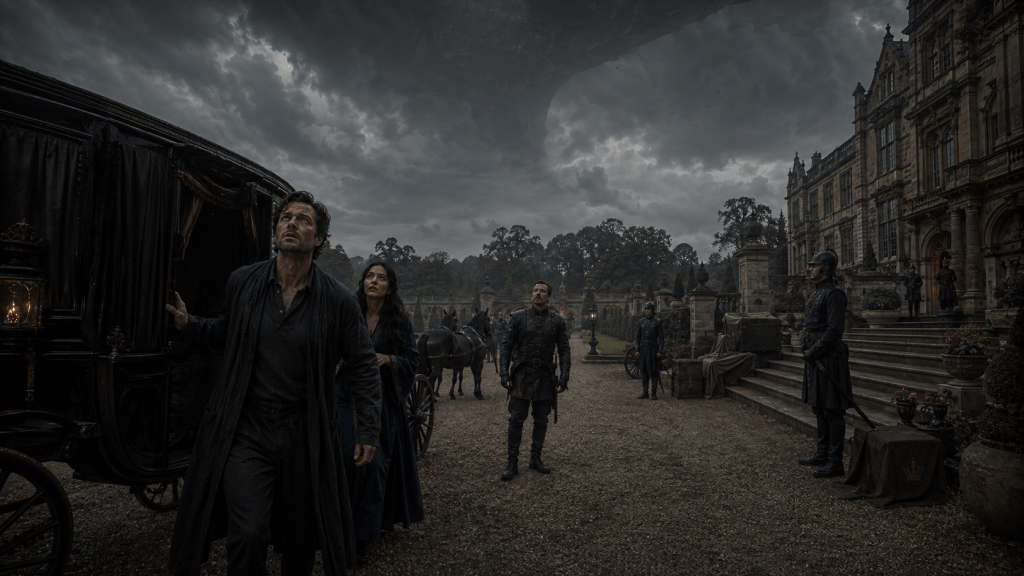
Continue The Hollow Flame Cycle with The Wards Beneath the Crown
Book Two carries the crossing beyond its first shock and into the systems attempting to contain its consequences.
Silas Thorn remains far from home, watched by the Crown, examined by the Guild, and surrounded by warded structures that appear increasingly uncertain about his presence. Lirael must protect a kingdom and a man whose needs no longer align cleanly. Seréne has begun uncovering older language that may explain why the realm’s foundations answer differently from modern doctrine.
The palace has released Silas because it can no longer hold him safely.
Alderwick House has received him imperfectly.
Something impossible is waiting in the sky.
Readers who have completed The Unclassified can continue Silas Thorn’s journey in The Wards Beneath the Crown, Book Two of The Hollow Flame Cycle.