The Forgotten Chronicle: Alfred’s England

How a king shaped by exile rebuilt Wessex into a kingdom strong enough to endure.


After the Marshes

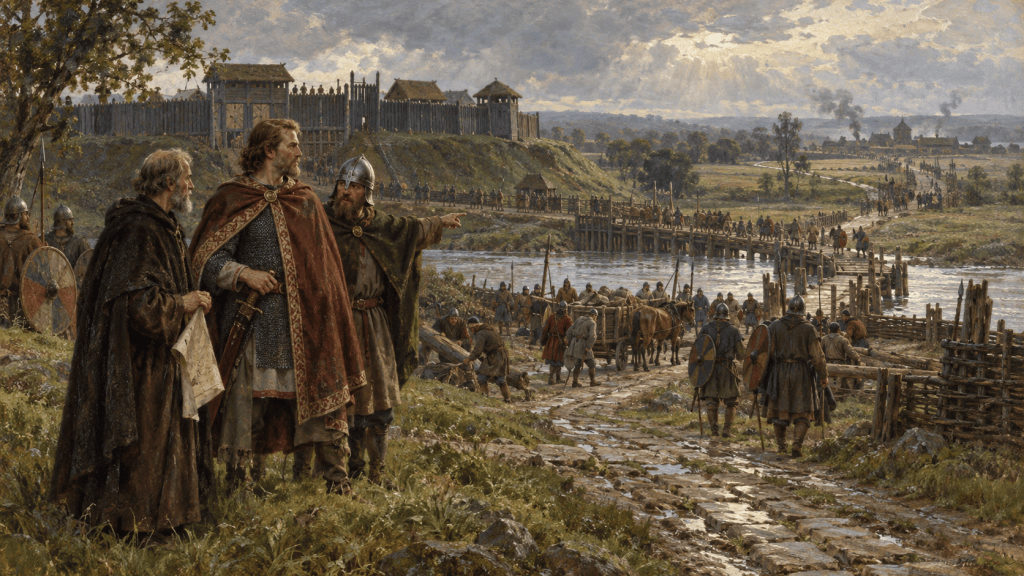
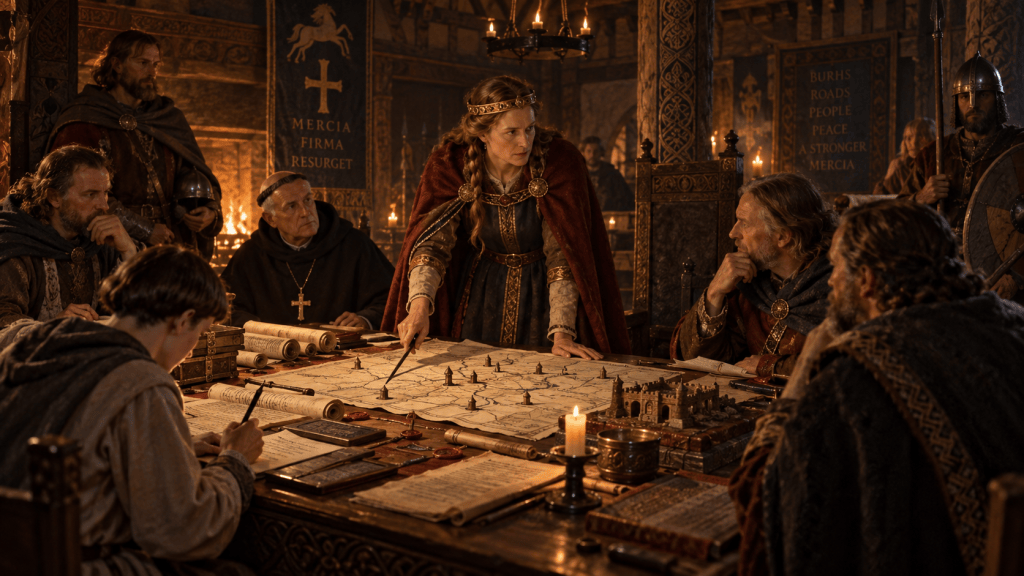
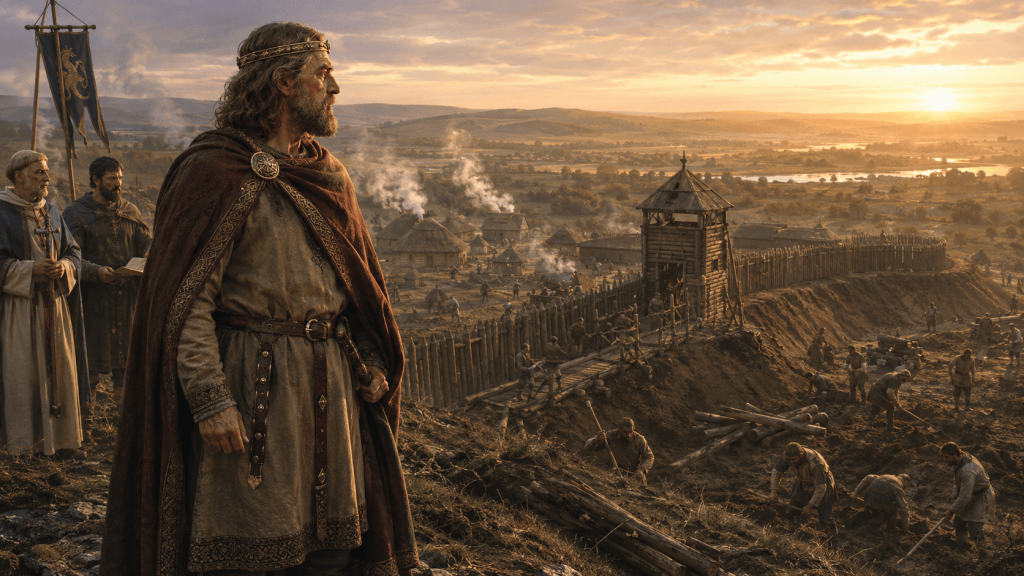
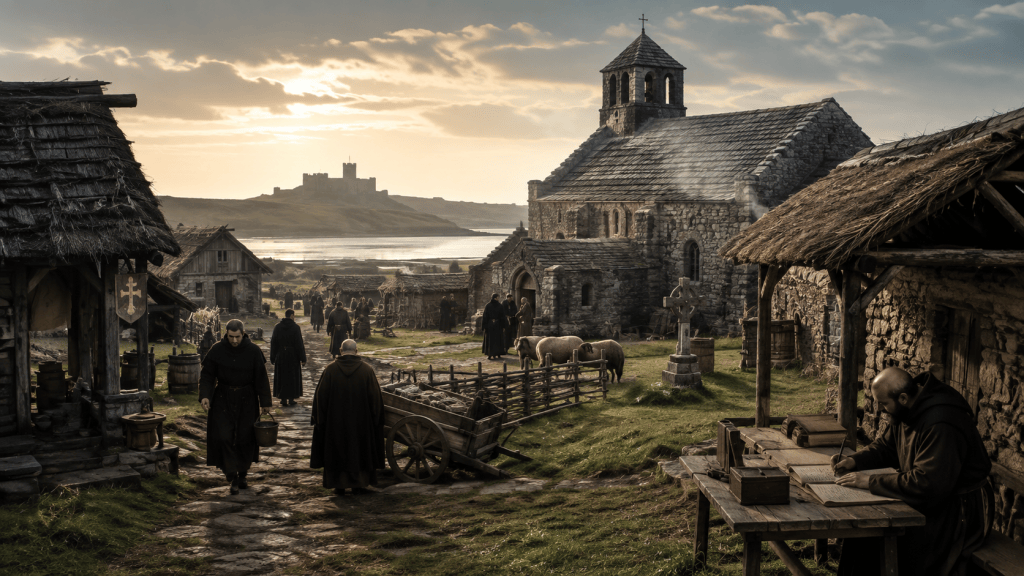
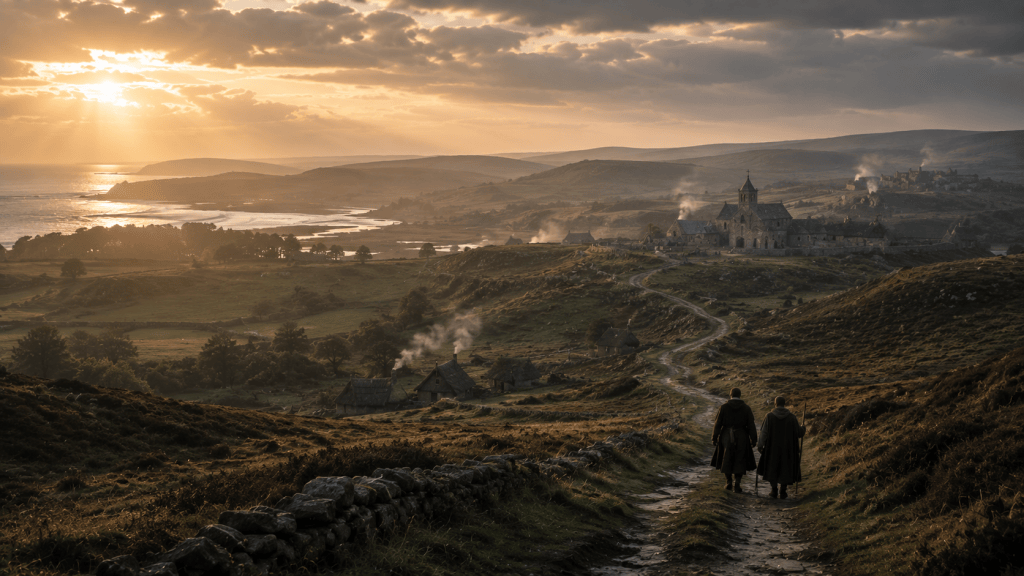
Morning settled over Wessex with the pale patience of a land that had survived too much to greet the light with ease. Across the low fields, mist clung to the grass in silver folds, and smoke rose from hearths where families had returned to homes once emptied by fear. The roads still bore the memory of war. Cart ruts cut through damp earth, fences leaned where men had torn timber for firewood, and church bells rang across villages where prayer had become a habit of endurance as much as devotion. In the distance, beyond the fields and grazing land, men worked along the line of a new defence, driving posts into the ground while others hauled stone, timber, and earth beneath the watchful eyes of royal officials.

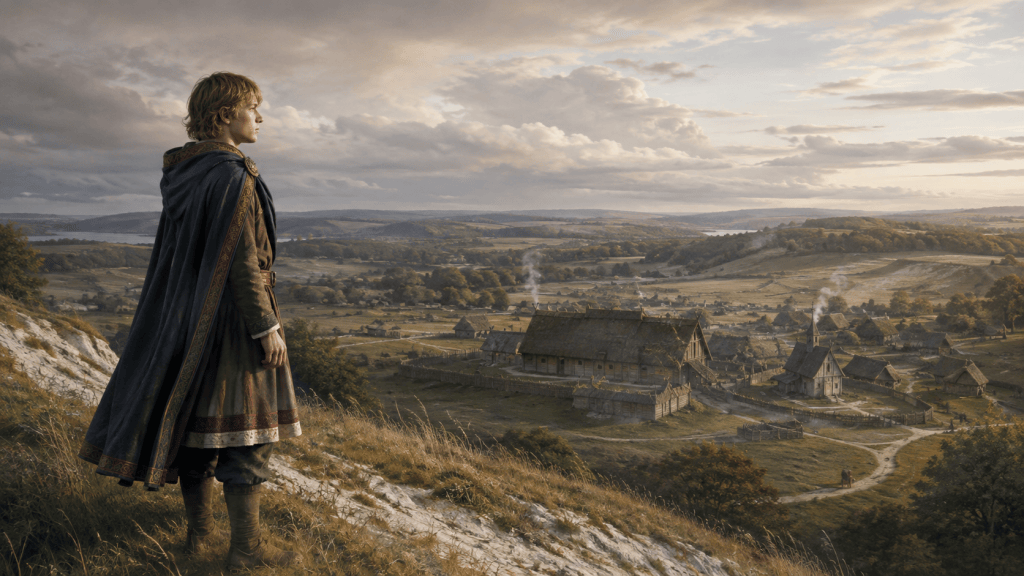
Alfred watched from a slight rise above the settlement, his cloak drawn close against the morning chill. He had come through marsh water, hunger, secrecy, and the long shadow of defeat, and Edington had given him victory enough to breathe. Yet the king’s gaze rested less on the memory of battle than on the men below him, the labourers setting walls where open ground had once invited danger, the clerks marking supplies upon wax tablets, the priests moving between workmen with quiet words of encouragement. A kingdom could be saved by courage in a single hour, though it could only endure through labour repeated day after day until fear itself found fewer doors left open.

“My lord,” one of his companions said as he stepped closer, boots dark with wet grass. “The men ask where the next ditch should be cut.”

Alfred turned, studying the line of ground that sloped toward the road. His face carried the weariness of a man whose triumph had offered duty instead of rest.

“There,” Alfred said, lifting his hand toward the lower ridge. “The road must remain watched from the gate. A wall that guards only itself serves the enemy more than the town.”

The official bowed his head and hurried away, calling orders across the work line. Voices answered, rough and practical, and soon the dull thud of tools began again. Each strike seemed small against the wide morning, yet together they made a sound unlike battle. It was steadier, heavier, shaped by purpose instead of panic.

Beside Alfred, a priest wrapped in a plain woollen cloak looked over the settlement with tired eyes. “The people still speak of the Danes,” he said, his fingers resting upon the small cross at his breast. “They ask whether Guthrum’s baptism will hold, whether peace has truly come.”

Alfred’s expression shifted only slightly. “Peace has come for a season,” he replied, his voice low. “A season must be used wisely.”

The priest looked at him then, as though hearing the king beneath the survivor.

“And if the storm returns?”

Alfred kept his gaze on the rising timber wall, where men strained together beneath the weight of a beam. “Then it will find a kingdom with gates, roads, law, learning, ships, and men ready to answer. We have lived too long as scattered fires. It is time Wessex burned as one hearth.”

The priest said no more. Below them, the settlement continued to take shape, rough and incomplete, its future still vulnerable to weather, hunger, ambition, and the sea. Yet something had changed. The years before had taught Alfred how swiftly a kingdom could be broken. The years ahead would show whether one could be rebuilt strongly enough to stand.


Timeline of Events

878 AD – Alfred defeats Guthrum at Edington, ending the immediate Viking threat to Wessex and giving the kingdom space to recover.

878 AD – Guthrum accepts baptism after his defeat, creating a fragile peace between Alfred’s Wessex and the Viking ruler who had nearly destroyed it.

c. 879–880s AD – Alfred begins strengthening Wessex through fortified burhs, organised defence, improved administration, and renewed royal authority.

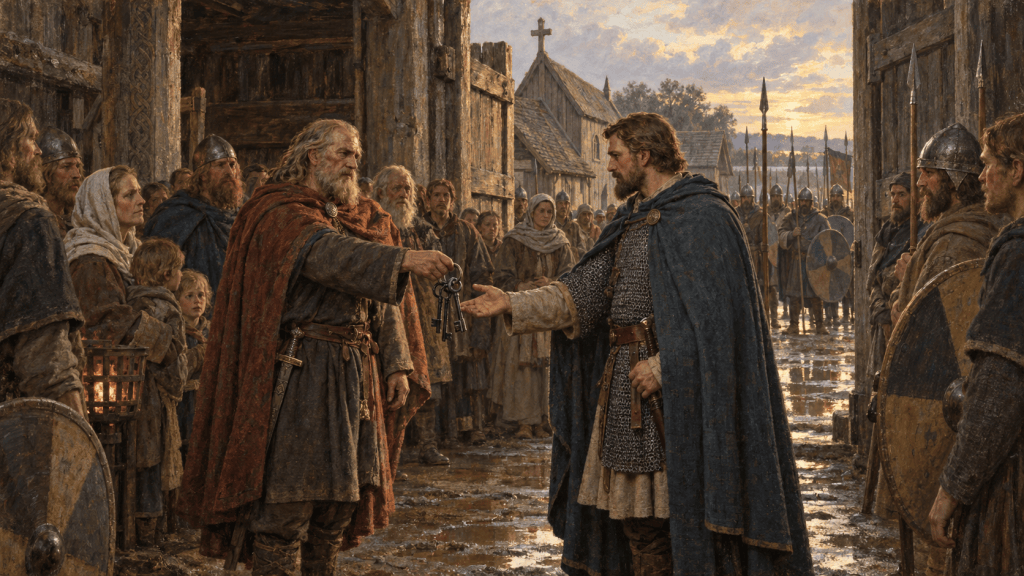
886 AD – Alfred takes control of London, restoring a major centre of trade and power while drawing wider English loyalty toward his rule.

c. 890s AD – Alfred promotes law, learning, translation, and written wisdom, shaping a kingdom built for memory as well as defence.


A Visual Chronicle

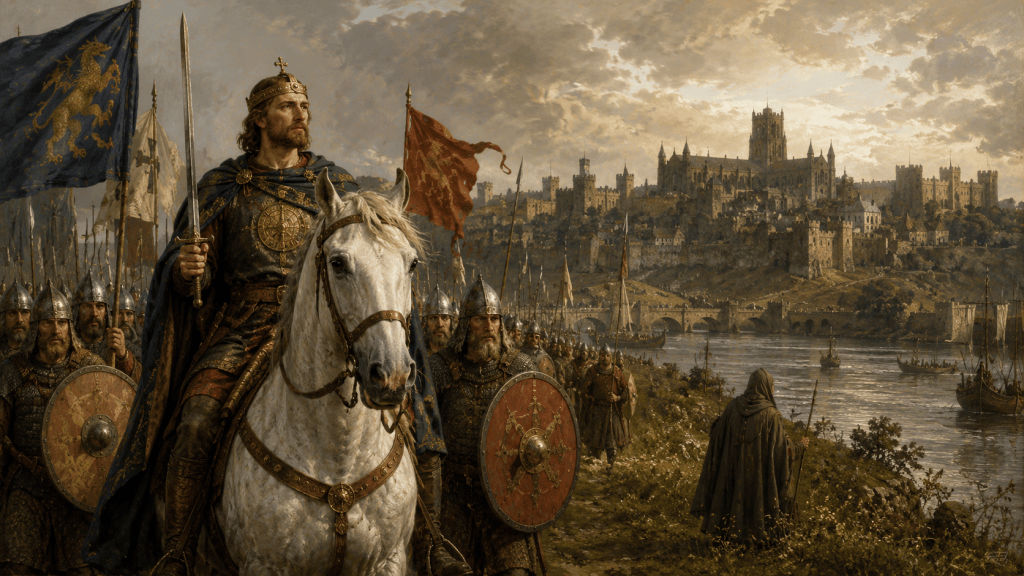
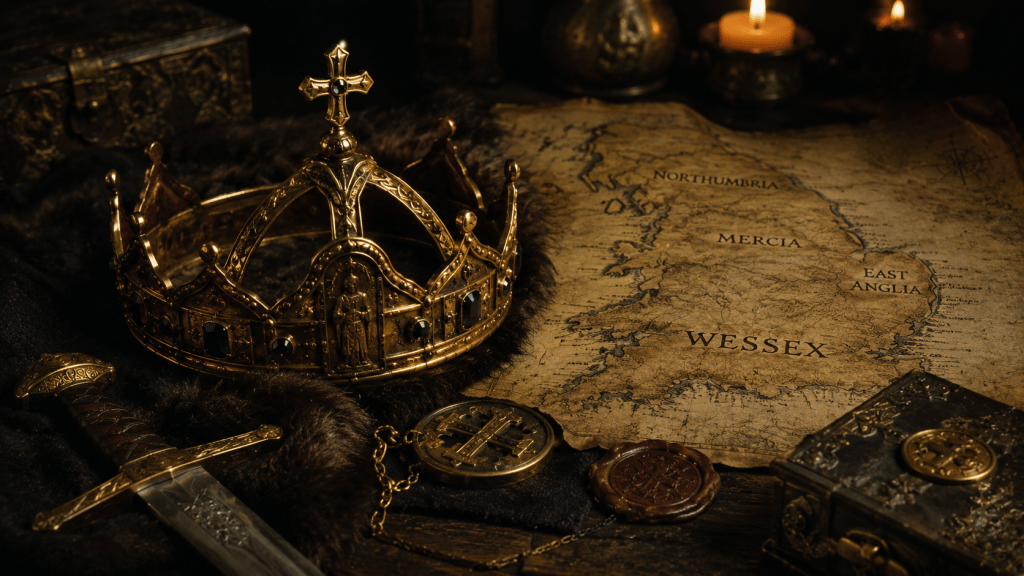
Alfred survived the Vikings, but rebuilding Wessex would help shape the future of England.


About the Creator

This Chronicle is written by Simon Phillips, author of several historical and speculative fiction works exploring forgotten worlds, myth, and the turning points of history.

You can explore his books here:
Books by Simon Phillips

You can watch his YouTube channel here:
Author Simon Phillips


Continuing the Chronicle

The account that follows moves beyond the marshes of Athelney and into the years after Edington, when Alfred turned survival into structure and began rebuilding Wessex through fortified towns, renewed law, learning, defence, and royal authority strong enough to withstand the storms that had almost broken the kingdom.

Readers supporting The Forgotten Chronicle may continue into the full record below.

Subscribe to continue reading

Subscribe to get access to the rest of this post and other subscriber-only content.

The Forgotten Chronicle: Alfred in the Marshes

The fugitive king of Wessex, the hidden refuge of Athelney, and the fragile resistance that kept Anglo-Saxon England from disappearing.


The King Among the Reeds

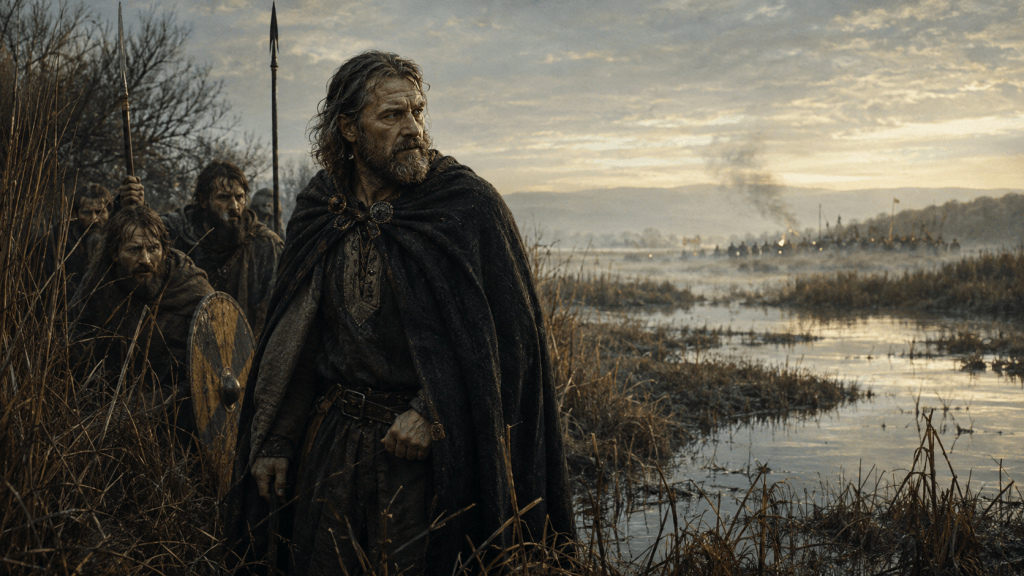
The winter light lay thin across the marshes, silvering the reed beds and the slow black water that wound through the hidden places of Somerset. Mist gathered low over the channels, drifting between alder roots and drowned grass, softening the world until land and water seemed to fold into one muted expanse. Somewhere beyond that quiet reach, Viking fires burned in captured halls, and the roads of Wessex carried rumours of defeat from village to village. The king who had once ridden beneath the protection of household men, priests, messengers, and royal expectation now moved through wet earth and secrecy, wrapped in the rough cloak of a man hunted by the enemies who had broken into the heart of his kingdom.

Alfred had reached the marshes after the blow at Chippenham, when Guthrum’s army struck deep into Wessex during the cold season and shattered the confidence that remained around the royal house. The attack came during a time when men expected feasting, rest, and the slower duties of winter, yet war seldom honoured the habits of Christian kingdoms. Royal halls emptied into fear. Companions scattered into the countryside. Oaths bent beneath pressure as families weighed survival against loyalty, while across Wessex some submitted, some fled, and others waited in silence to see whether the house of Cerdic still possessed a king worth following.

Athelney offered little splendour to a ruler born into sacred ancestry and trained amid the burdens of command. It was a low island amid water and reeds, half-hidden from the roads that carried armies, surrounded by marshland that swallowed careless footsteps and confused strangers who lacked local knowledge. To those who knew its paths, it offered concealment, and to Alfred it became refuge, fortress, chapel, and council chamber within the same narrow refuge. Here, kingship shed its gold. Authority became a damp cloak, a shared fire, a whispered message carried after dusk, a blade kept dry beneath cloth, and a prayer spoken softly while enemies held the roads beyond the wetlands.

The men who gathered around him came in fragments from the broken edges of the kingdom. A loyal thegn came by one hidden path, a household warrior by another, a messenger crossing through mist and water with news from estates and villages still willing to resist. Each arrival mattered because each man brought more than strength. He brought proof that Wessex still remembered itself. A kingdom could lose towns, treasure, open roads, and royal halls, yet endure for a time if its people still believed the centre lived somewhere beyond sight.

In later memory, Alfred’s time in the marshes gathered stories around itself: the hidden king, the poor shelter, the cakes left to burn while his thoughts remained fixed upon war and survival. Whether every detail belonged to truth or legend, the deeper meaning endured. A king had been driven to the edge of his realm and stripped almost bare, and that edge became the place where endurance hardened. In the reeds of Athelney, beneath winter sky and watchful silence, the future of Anglo-Saxon England rested upon a fugitive king who still refused to yield.


Timeline of Events

871 AD – Alfred becomes king of Wessex after the death of his brother Æthelred, inheriting a kingdom already strained by repeated Viking attacks.

876 AD – Guthrum’s Viking army enters Wessex and takes Wareham, forcing Alfred into negotiation while the threat to his kingdom deepens.

877 AD – Viking pressure continues across southern England, leaving Wessex increasingly isolated as other Anglo-Saxon kingdoms weaken or fall under Scandinavian control.

January 878 AD – Guthrum launches a surprise winter attack on Chippenham, driving Alfred from the royal centre and scattering much of the West Saxon resistance.

878 AD – Alfred withdraws into the marshes of Athelney, where he gathers loyal men, rebuilds his strength, and prepares the resistance that will soon return from hiding.


A Visual Chronicle

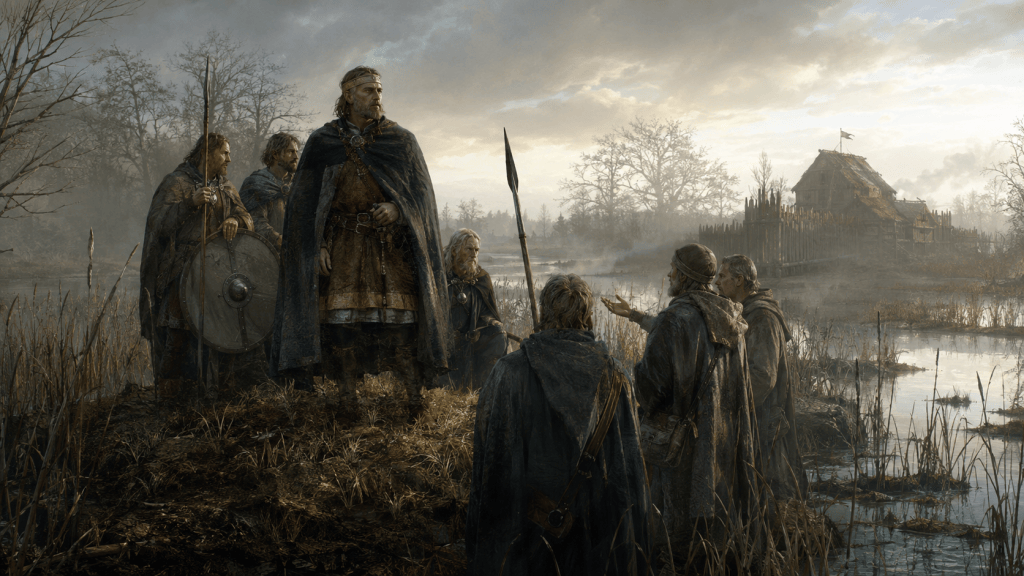
Driven from his kingdom and hidden among the reeds of Athelney, Alfred the Great began gathering the scattered resistance that would keep Wessex alive.


About the Creator

This Chronicle is written by Simon Phillips, author of several historical and speculative fiction works exploring forgotten worlds, myth, and the turning points of history.

You can explore his books here:
Books by Simon Phillips

You can watch his YouTube channel here:
Author Simon Phillips


Continuing the Chronicle

The account that follows moves deeper into the marshes of Athelney, where Alfred’s kingship passed through its darkest test after the winter attack on Chippenham, and where the survival of Wessex depended upon hidden paths, loyal men, and the quiet endurance of a fugitive king gathering strength among the reeds.

Readers supporting The Forgotten Chronicle may continue into the full record below.


The Hidden King of Athelney

The marshes of Athelney lay far from the clean roads and open halls of Wessex, hidden among water, reed beds, alder roots, and low islands where a stranger’s horse could sink into black earth before its rider understood the ground beneath him. In winter, mist rose from the channels and moved across the wetland in pale sheets, softening the edges of trees, banks, and paths until the whole place seemed shaped for secrecy. Alfred came into that silence stripped of the splendour that usually surrounded kingship. The royal hall had fallen behind him, his household had scattered, and Guthrum’s men held the advantage gained through sudden winter violence. Around the fugitive king gathered only the few who had found their way through fear, water, and darkness to reach him.

The blow at Chippenham had cut deep into Wessex at the opening of 878, when the cold season should have slowed the business of war. The Christmas feasts had only recently passed, and men across the kingdom would have expected hearths, prayers, repairs, and the hard quiet of winter. Guthrum chose that moment for speed. His army struck into the royal centre and shattered the fragile order Alfred had fought to preserve since taking the crown. In the confusion that followed, loyalty became a test carried in each man’s chest. Some sought safety under Viking authority. Some vanished into the countryside. Others watched the roads and waited for a rumour that might prove the king still lived.

In Athelney, the world narrowed to survival. Firewood had to be gathered where smoke would draw few eyes. Food had to be carried across wet ground and shared among men whose strength would soon be needed. Weapons had to be wrapped against damp and held close through long nights. The men around Alfred slept lightly, waking at the shift of reeds or the distant call of birds, hearing danger in every broken sound from the marsh. A king who had heard Latin in royal instruction, who had ridden beside warriors and spoken with bishops, now shared the same cold, hunger, and watchful silence as the companions who stayed with him. The marshes allowed no illusion of grandeur. They accepted only endurance.

Athelney’s strength lived in its hidden nature. Roads rarely favoured it. Armies could find little ease there. Water divided the land into passages known best by local people, and each pool, bank, and channel worked against those who came in haste. To Viking warriors used to speed along roads and rivers, the wetland offered frustration. To Alfred and those who guided him, it became a shield wider than any wall. The place guarded him by confusion, by distance, by the plain difficulty of moving through a landscape that seemed to shift beneath the weather. There, among the reeds, royal power survived by becoming small enough to escape notice.

The first men who gathered around Alfred came by fragments, each arrival bringing more than a body to the hidden camp. A thegn crossing by a secret path brought news from estates still loyal. A household warrior carried memory of the king’s earlier battles. A messenger arriving through dusk brought word of villages where men still kept weapons close and waited for a summons. These men arrived cold, tired, and careful, yet every arrival strengthened the same quiet truth. Wessex had lost its centre in sight of the world, yet its centre still breathed somewhere in the marshes. A kingdom could lose halls, treasure, and open roads, while its will survived inside men who still answered their king.

Alfred’s task in those weeks reached beyond concealment. He had to become a living sign that the kingdom had a future. A dead king would have ended much. A king lost to silence might have achieved almost the same. A king hidden, breathing, planning, and sending messages through the wetland edge became something far more dangerous to Guthrum than a defeated ruler fleeing through winter mud. He became a promise that Wessex had only bent beneath the blow. The work around him must have been patient and exacting: names remembered, loyalties tested, meeting places chosen, food secured, scouts sent, and hope passed quietly from one trusted hand to the next.

Later memory placed one of its most human stories within this hardship. The tale of the burned cakes showed Alfred sheltering in a poor woman’s dwelling, so burdened by thought that he allowed cakes beside the fire to blacken while his mind remained fixed upon war and survival. The story belonged to legend as much as record, shaped through generations that wished to see the great king humbled before his return. Its exact shape lay beyond certainty, yet its meaning endured because it brought Alfred close to ordinary life. In that tale, he was a weary man beside a hearth, subject to rebuke, weighed down by a kingdom’s ruin while small domestic labour continued around him.

The deeper truth of the marshes required no legend. Alfred held fast while the land around him remained uncertain. The men who supported him worked through shadows, carrying news through Somerset and beyond, keeping alive the channels of obedience that had once flowed openly through the kingdom. Priests, local landholders, warriors, guides, and families whose names slipped from record all helped preserve the line of resistance. Their part rarely received the brightness of battle, yet the recovery of Wessex depended upon such hidden labour. The future being formed in Athelney rested as much upon quiet service as upon the king’s own resolve.

As winter loosened and spring approached, Alfred’s refuge became more than a place of escape. A small stronghold rose there, giving shape to the resistance that had gathered in secrecy. From Athelney, men could raid, watch, and prepare, striking at the edges of Viking control while Alfred rebuilt the confidence needed for open war. Each act carried meaning beyond its immediate gain. A road watched again, a band of men gathered again, a message answered again; these signs told Wessex that the royal line had regained movement. The Vikings had seized the visible heart of the kingdom, yet the heart beyond sight had begun to beat with greater force.

Then came the moment when hiding could turn toward action. Alfred sent word for the fighting men of Somerset, Wiltshire, and Hampshire to gather at Egbert’s Stone. The summons carried the weight of everything endured in the marshes. Men who had waited through fear now had a place to go. Those who had doubted the kingdom’s survival now had proof of its return. The gathering at Egbert’s Stone would lead toward the field at Edington, where Alfred would face Guthrum in open battle and change the course of the war. Yet that visible victory began in the hidden places, in the damp nights and secret paths of Athelney, where defeat had been held back one breath at a time.

The marshes stripped kingship down to its last foundation. A crown held meaning only while men still believed in the one who wore it, and Alfred’s authority survived because enough people chose to carry that belief through danger. He entered Athelney as a fugitive, pursued by the consequences of a shattered kingdom. He emerged with resistance gathered around him and the road to renewal opening ahead. The reeds and mist had sheltered more than a hidden king. They had guarded the remaining will of Wessex, and through that fragile endurance, the making of England continued.


Alfred stands among the marshes of Athelney, where the hidden strength of Wessex began to gather again beneath mist, water, and winter light.


Inspiration Behind the Story

Alfred’s time in the marshes holds its power because it begins with loss instead of triumph. The image of a king hidden among reeds, water, mist, and uncertain paths carries a quieter force than any battlefield. Wessex had been wounded almost to breaking, its royal centre shaken, its loyalties strained, and its future reduced to the survival of one hunted ruler in a place far from splendour.

What fascinates me about this moment is how history sometimes turns in hidden spaces before it returns to the open field. The marshes of Athelney gave Alfred more than shelter. They gave him time, concealment, and the chance to gather scattered courage into something that could move again. The great victory that followed at Edington began here, in hardship, secrecy, and endurance.

For storytelling, this is one of the strongest images in Anglo-Saxon history. A king who had nearly lost everything survived in a landscape that seemed poor, cold, and forgotten, while the future of a kingdom gathered around him in fragments. That contrast gives the Chronicle its emotional centre.

This Chronicle matters because it reminds us that survival can become its own form of command, and that a kingdom’s future can sometimes begin again in the places where power appears to have vanished.


From the Author’s Desk

What stayed with me while writing this Chronicle was the image of kingship reduced to its barest form. Alfred’s story in the marshes carries none of the splendour usually attached to royal power. There were no shining halls, no easy procession of loyal nobles, no visible centre from which command could be seen. There was water, cold ground, hidden paths, and the quiet labour of staying alive long enough for resistance to gather again.

That is what makes Athelney so powerful to me. It shows history at the point where everything grand has fallen away, leaving only endurance. Alfred’s authority survived because men still chose to answer him, even when the roads were dangerous and the kingdom’s future looked uncertain. A crown meant very little in the reeds unless loyalty still moved through the hands of those willing to carry messages, food, weapons, and hope.

There is a strong storytelling truth inside this moment. The turning point arrives before the famous battle. It begins in secrecy, hardship, patience, and the decision to keep going when defeat appears almost complete. Athelney reminds us that survival can become the foundation of renewal.

This series continues to interest me because the making of England passed through fragile places. Before unity, before victory, before later memory shaped Alfred into a legendary king, there was a hunted ruler in the marshes, waiting for the moment when Wessex could rise again.

You can explore my books here:
Books by Simon Phillips

You can watch my YouTube channel here:
Author Simon Phillips


Historical Notes & Context

Additional Historical Notes

Alfred’s withdrawal into the Somerset marshes followed Guthrum’s surprise attack on Chippenham in early 878 AD. The attack struck at the royal centre of Wessex during the winter season, scattering Alfred’s followers and placing the kingdom under severe pressure. The Anglo-Saxon Chronicle records that Alfred escaped with a small company into the woods and marsh-fastnesses, a detail that gives this episode its enduring sense of danger and isolation.

Athelney itself lay within the wetland landscape of the Somerset Levels. Its value came from concealment, difficult access, and local knowledge. To an army seeking swift movement, the marshes formed a frustrating and uncertain environment. To Alfred and his supporters, they offered protection, time, and a base from which resistance could survive. Later tradition remembered Alfred building a stronghold there, turning a hidden refuge into the centre of renewed West Saxon resistance.

The famous story of Alfred and the burned cakes came from later tradition, especially through accounts associated with Alfred’s growing legend. Its historical detail remains open to question, yet its symbolic force explains why it survived. It presents Alfred as humbled, distracted, and human during a moment of extreme pressure, far from royal splendour and close to ordinary life. Whether literal event or moral tale, it deepened the image of a king tested in hardship before his return.


Related Events

Alfred had become king of Wessex in 871 AD after the death of his brother Æthelred. His early reign was shaped by repeated conflict with Viking forces, including the battles and negotiations that followed the arrival of large Scandinavian armies in southern England. By 878 AD, Wessex stood as the main surviving Anglo-Saxon kingdom still capable of organised resistance.

Guthrum’s attack at Chippenham marked one of the greatest crises of Alfred’s reign. The Viking leader came close to breaking Wessex as an independent kingdom, forcing Alfred into hiding and compelling many West Saxons to submit or wait in uncertainty. The months at Athelney became the bridge between near-collapse and renewed action.

After gathering strength in the marshes, Alfred summoned men from Somerset, Wiltshire, and Hampshire to Egbert’s Stone. From there, the restored West Saxon force moved toward the Battle of Edington, where Alfred defeated Guthrum and forced a settlement that reshaped the struggle between Saxon and Viking power. Athelney therefore stands as the hidden beginning of the victory that followed.


Further Reading

Alfred the Great: Asser’s Life of King Alfred and Other Contemporary Sources – translated by Simon Keynes and Michael Lapidge

Alfred the Great: War, Kingship and Culture in Anglo-Saxon England – Richard Abels

The Anglo-Saxon World – Nicholas J. Higham and Martin J. Ryan

The Viking Wars of Alfred the Great – Paul Hill


Next Chronicle

Alfred had survived the marshes, gathered the strength of Wessex from hidden places, and prepared to return from the edge of ruin. Athelney had stripped kingship down to endurance, secrecy, loyalty, and faith, yet survival alone could never secure a kingdom for long. Once the danger had passed its darkest hour, Alfred faced a greater task: rebuilding a realm strong enough to endure the next storm.

The victory that followed at Edington gave Wessex breathing space, although it also revealed how fragile the old order had become. Roads, towns, defences, learning, law, and royal authority all required renewal. Alfred’s greatness rests in more than the defeat of Guthrum. It rests in what came after, when a king shaped by hardship began turning survival into structure.

What makes this next Chronicle so important is that Alfred’s England shows the making of a kingdom through deliberate repair. The burhs strengthened defence. Law gave order. Learning restored memory. Ships, roads, fortified towns, and written wisdom became part of a wider vision in which Wessex could stand firm while the wider Anglo-Saxon world continued to change around it.

The next Chronicle moves from the hidden refuge of Athelney into the rebuilding of a kingdom, where Alfred’s rule became more than resistance and began to shape the foundations of an England that could outlast invasion, fear, and the broken years that had almost consumed it.

Next Chronicle: Alfred’s England


The marshes kept their silence, yet from that silence Wessex began to rise again.

After the Viking Raid on Lindisfarne: Sanctuary, Fear and Faith in Anglo-Saxon Britain

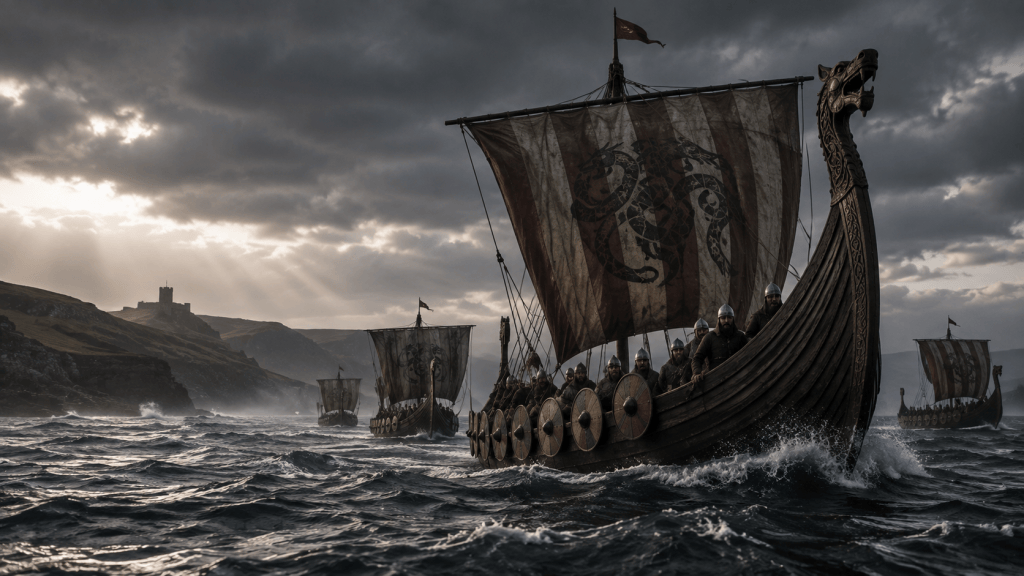
Along the Northumbrian coast, a monastery bell could carry across water and open ground, yet the meaning of the raid on Lindisfarne travelled far beyond the reach of any bell. On 8 June 793, Scandinavian raiders attacked the church of St Cuthbert on Holy Island, killing, plundering, and violating a place held among the most sacred centres of Northumbrian Christianity. English Heritage describes the assault as a shock that reached far beyond the island itself, while the response of the Northumbrian scholar Alcuin shows how deeply the attack unsettled Christian assumptions about sanctuary, divine protection, and the security of holy places.

The physical destruction formed only one part of what followed. News had to leave the island in the mouths of survivors, travellers, clergy, fishermen, and messengers, crossing stretches of coast and inland road where certainty could weaken with every retelling. A man several days away might hear first of smoke above the sea, then of monks killed beside their church, then of treasure carried towards waiting ships, with each account arriving through someone who had heard the story from another frightened voice. Long before any distant household understood exactly what had happened, people could understand something simpler and more immediate: the coast had become less certain, and holiness alone offered no protection against men arriving from the water.

For readers drawn to Viking Age Britain, that wider shock matters as much as the violence of the raid itself. Lindisfarne was bound closely to the cult of St Cuthbert and to the religious identity of Northumbria, which meant its violation carried a message that required no formal proclamation: a sacred place could be reached, its treasures could be taken, its clergy could be killed, and communities beyond the island had to reconsider what safety meant once that knowledge entered their roads, chapels, halls, and households.

That change would have been felt through ordinary decisions long before anyone could see the larger historical pattern forming around them. A priest might wonder whether valuable church objects should remain near the coast, a farmer might listen more carefully when unfamiliar voices approached his gate, and travellers carrying Church business could find hospitality mixed with questions that would once have seemed unnecessary. The raid belonged to Lindisfarne, yet its consequences travelled with every person who carried word away from Holy Island, entering communities that had seen no longship and heard no weapon strike, while still learning that the sea could bring a danger their older habits of safety had failed to imagine.


When a Holy Place Could Be Broken

The modern image of a monastery can become too still, with stone, manuscripts, prayer, and isolation arranged into a peaceful picture that belongs more to memory than lived early medieval experience. Lindisfarne was a religious community, a centre of devotion, and the home of Cuthbert’s cult, with spiritual importance extending far beyond its shoreline. Its sacred status made the attack especially disturbing because the raid struck at a place whose meaning rested upon holiness, continuity, and the expectation that Christian order had substance in the world.

Alcuin’s surviving reaction gives that disturbance a human voice. Writing from the Frankish world, he wrestled with the question of how such a place could suffer so violently, framing the disaster through faith, judgement, sin, and the search for meaning inside catastrophe. He was living within a culture where theology shaped the interpretation of public disaster, so the fall of a sanctuary demanded more than military explanation and pressed upon belief itself.

The deeper historical pressure lay in what happened after the attackers had gone, when survivors, clergy, rulers, farmers, traders, and families had to continue living inside a world whose boundaries had changed. Christian life on Lindisfarne survived the raid, and later sculpture points to continued Christian presence after 793, which creates a more complex picture than destruction followed by silence. The sanctuary had been violated, while the community and its memory endured.


Roads Carried Fear Faster Than Certainty

Early medieval Britain had no single mechanism through which reliable news travelled evenly across the country. Information moved with people, through clerical networks, royal households, merchants, messengers, travellers, river routes, and roads whose condition varied greatly from place to place. Some Roman roads remained in use long after Roman government had disappeared, and Historic England notes that such routes continued to matter in later periods as lines of movement, commerce, settlement, and property definition.

A report leaving the coast could change as it passed through several mouths, especially where fear had prepared listeners for worse news. One person might know of smoke, another of missing clergy, another of a vessel seen offshore, while someone farther inland might receive only a fragment joined to an older rumour. Medieval communication could carry urgency over distance, while certainty moved more slowly and became harder to preserve beyond major centres of authority.

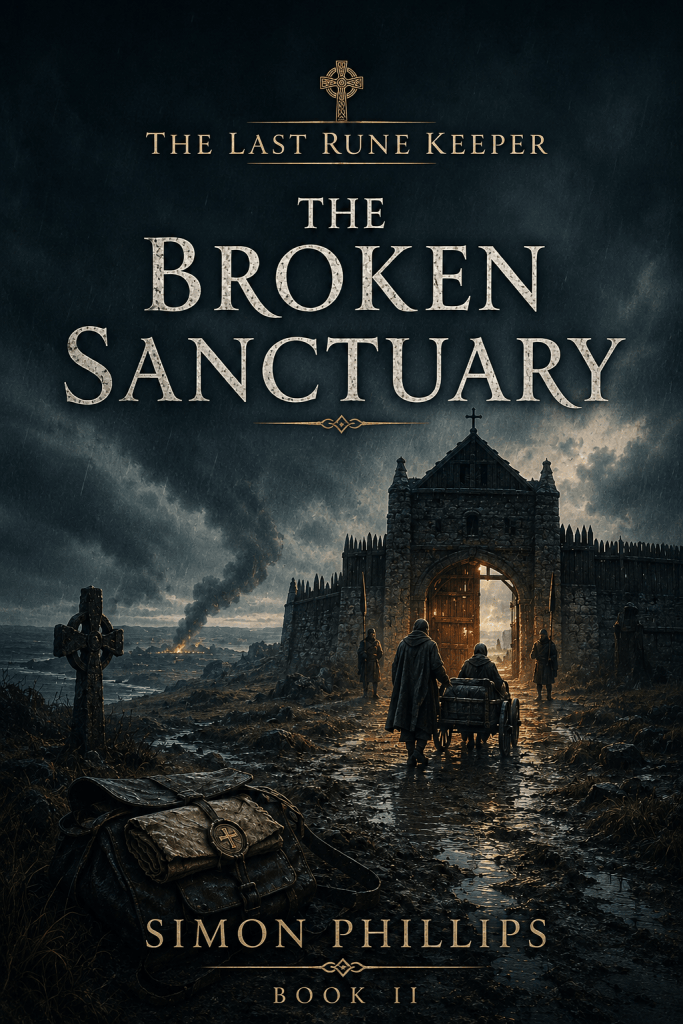
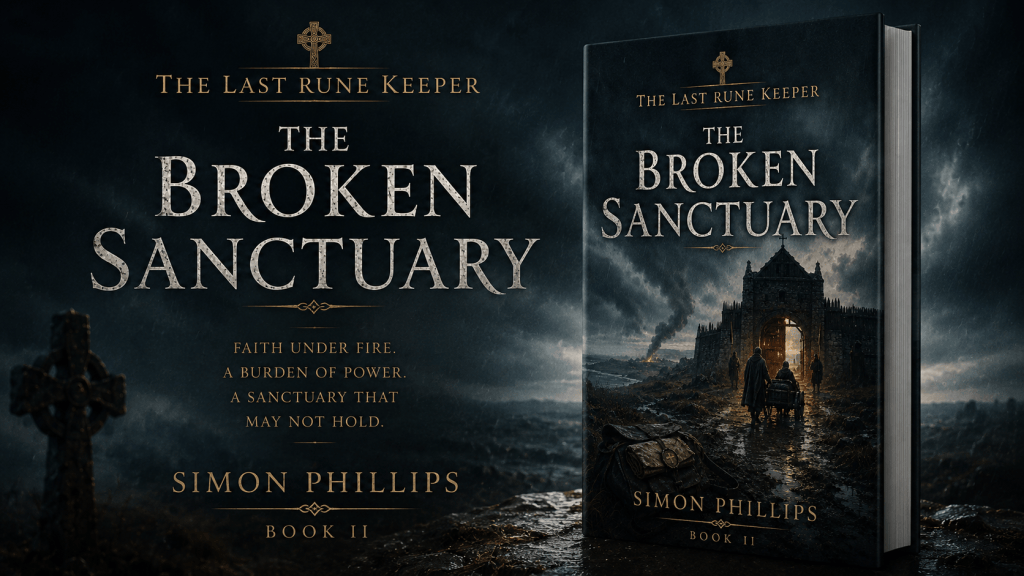
This is why the world surrounding The Broken Sanctuary, Book Two of The Last Rune Keeper, is built around roads, crossings, names, guarded approaches, and the problem of deciding which account deserves belief. The completed book keeps Lindisfarne behind the characters once the scale of danger becomes clear, allowing the raid to be experienced through second-hand testimony, frightened households, Church messages, watched routes, and the gradual hardening of local caution into procedure. The Book Two report identifies this as one of the story’s central pressures, where fear travels through roads, farms, chapels, ferry crossings, and Church houses while the historical event remains fixed.

The exact checkpoints, households, and encounters belong to the fiction, while the wider landscape of inherited roads, local authority, river crossings, clerical communication, and uncertain travel is historically grounded. Historical fantasy gains strength when invention occupies spaces the record leaves open and allows recorded history to retain its own weight.


Sanctuary Meant People as Much as Walls

A sanctuary can be imagined as a protected building, yet early medieval safety depended upon relationships as much as timber or stone. A traveller needed shelter, food, water, local knowledge, a usable crossing, and people willing to recognise his purpose. A church or religious house could provide spiritual authority and practical support, while the value of that support still depended upon the condition of the surrounding country and the people responsible for maintaining it.

Lindisfarne exposes the fragility inside that idea. Its sacred standing could never make the island physically unreachable, and the raid forced contemporaries to confront the distance between holiness and earthly security. English Heritage describes the attack as physically and psychologically devastating, which helps explain why its significance endured beyond the immediate loss of treasure or life.

A broken sanctuary therefore means more than damaged doors. It can mean a family wondering whether the chapel near its fields remains safe, a cleric deciding whether sacred objects should be moved inland, a messenger carrying names because the road ahead has become uncertain, or a traveller discovering that welcome now comes after questions. These are smaller pressures than a raid seen from the shoreline, yet they are the pressures through which historical change becomes intimate.


Christianity After Violence

Christianity in Anglo-Saxon Britain belonged deeply to public and private life, shaping kingship, literacy, burial, memory, moral order, and the language through which suffering could be understood. The raid on Lindisfarne gained much of its force because the target was sacred, and Alcuin’s reaction shows that the attack was interpreted through a Christian search for meaning as well as through anger at foreign violence. The question reached beyond how armed men had reached an island and into how believers should understand a world in which such an event could happen.

That religious response deserves care in historical fantasy, since easy modern caricature strips early medieval people of the seriousness with which they understood faith. Prayer could coexist with fear, grief, practical defence, political calculation, and uncertainty. A priest could believe completely in God while still recognising that a door required barring, a road required watching, and frightened people still needed food, direction, and somewhere to sleep.

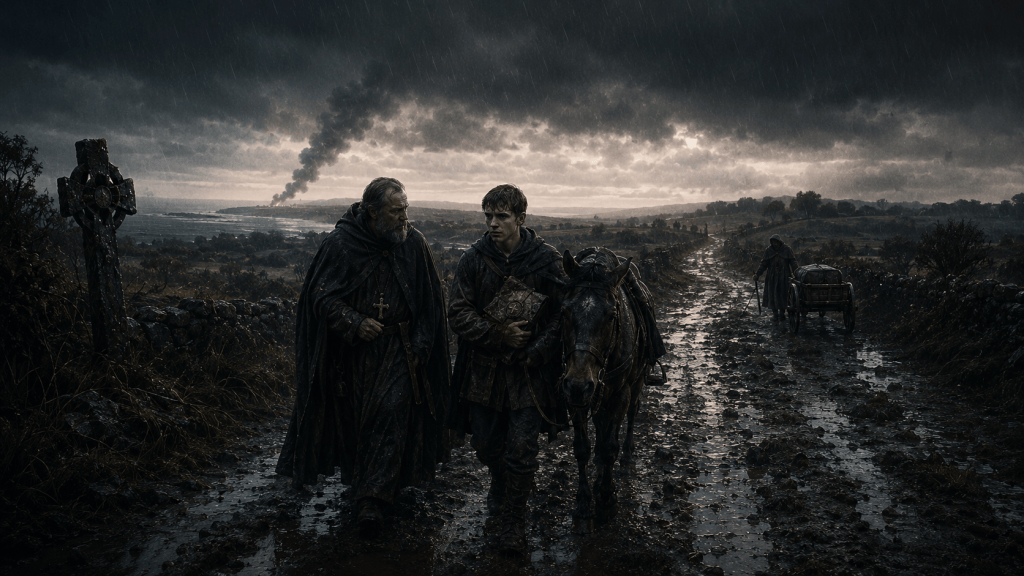
This tension sits close to the heart of The Broken Sanctuary. Father Oswin remains a man of faith and Church duty, yet the story places that faith inside exhaustion, responsibility, and the need to protect Eadric from dangers that include human curiosity as well as the sealed relic under their charge. The Book Two report describes Oswin as the story’s moral centre, with his role shifting towards active protection while Church order continues through writs, records, guarded gates, storage, witnesses, and procedure.


Seeing the Norse World Beyond the Raid

The word Viking can dominate modern discussion so completely that Scandinavians appear only at the moment of attack. Historical reality widened across the generations that followed, with raiding joined by trade, migration, settlement, political ambition, family life, cultural exchange, and communities that became permanent parts of Britain. Even in the early phase, Scandinavians should never be reduced to a single motive or social type.

The attack on Lindisfarne deserves its full violent weight, while the North Sea also connected communities through movement and exchange. English Heritage notes that Anglo-Saxon England already had peaceful links with Scandinavian lands before the best-known raids, a useful reminder that contact across the sea carried more than warfare.

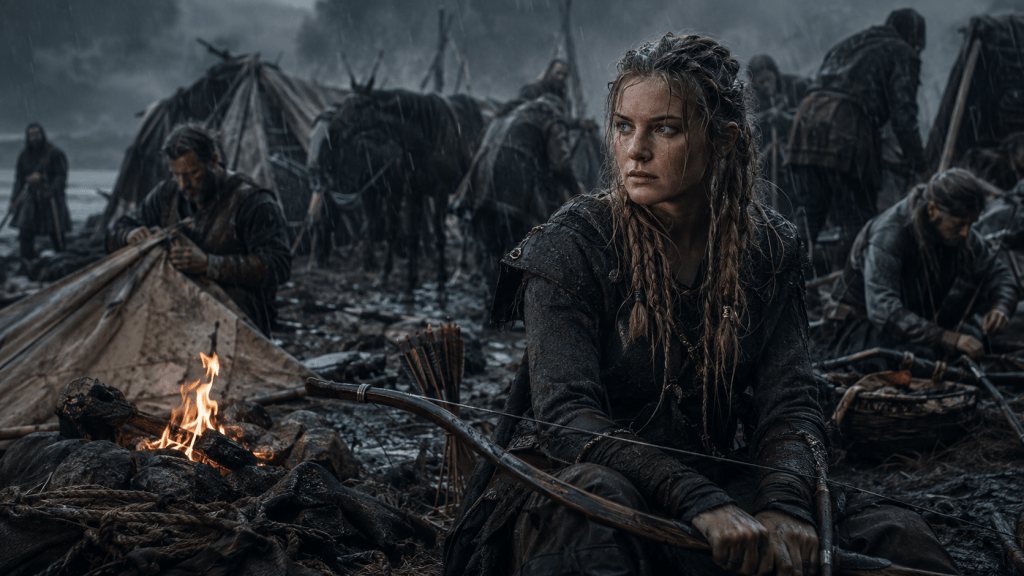
That complexity shapes the fictional treatment of Sigrun in The Broken Sanctuary. Her presence is restrained, first as an armed young woman watching Eadric from the willows, then through a vision that places her among people tending animals, repairing equipment, carrying arrows, cleaning blood from clothing, keeping watch, and enduring rain. Danger remains present throughout the scene, yet Eadric is forced to see human labour and community where fear had encouraged him to imagine only an enemy.

This matters because cultural collision becomes far more compelling once every side is allowed ordinary life. Norse people can raid, trade, farm, migrate, worship, negotiate, fight, raise children, and seek advantage, just as Anglo-Saxon communities can pray, defend land, fear strangers, offer hospitality, and misunderstand what approaches them. History becomes inhabited when broad labels loosen enough for people to appear inside them.


The Broken Sanctuary and the World of The Last Rune Keeper

The Last Rune Keeper follows Eadric through a Britain still divided among kingdoms, local powers, religious networks, and competing identities, with the long formation of England lying beyond the understanding of people living through the earliest pressures that will eventually help shape it. The series dossier places him inside a landscape where movement is uncertain, authority is experienced locally, Scandinavian presence arrives in different forms, and Church structure offers one of the strongest networks capable of carrying belief, records, instruction, and institutional memory across unstable territory.

The fantasy layer sits beside that history instead of claiming to explain it. Eadric’s relic work, his strange sensitivity to old objects, the rare presence of magic, and the fictional tensions surrounding sacred material belong wholly to the story world. The historical Lindisfarne raid remains the historical Lindisfarne raid, while the fantasy asks what it might feel like to carry an additional hidden burden through a society already learning that holy places, familiar roads, and inherited certainties can all be placed under pressure.

That separation allows the real history to keep its force. Lindisfarne mattered because people believed the place mattered, because St Cuthbert mattered, because Christian institutions mattered, and because violence against such a centre unsettled far more than a single religious community. The fictional magic of The Last Rune Keeper adds another layer of fear and memory at the edges, while the human centre remains recognisable through tired travellers, guarded thresholds, conflicting testimony, faith under strain, and the search for safety in a landscape where safety has ceased to feel permanent.


When Safety Changes Meaning

The deepest consequence of the Lindisfarne raid may lie in the questions it forced upon people who still had to wake, travel, pray, work, and care for others after hearing what had happened. A sanctuary could be sacred and vulnerable together, a road could connect refuge with danger, and a rumour could shape behaviour long before anyone possessed a complete account. The Christian community at Lindisfarne endured beyond 793, which makes the event a story of continuity under pressure as much as a story of devastation.

That is the historical ground beneath The Broken Sanctuary. The world has changed before most people have had time to understand the change, and the first response is made through small acts: a gate watched more closely, a name written down, a traveller questioned, a sacred burden moved, a stranger viewed with greater suspicion, or a prayer spoken by someone who still believes while fear sits beside belief. England lies generations away and the long Viking Age has barely begun, yet the pressures that will reshape kingdoms are already entering roads, households, churches, and memory, where history is usually felt first.

Lindisfarne Before the Viking Raid: Faith, Relics and Fear in Anglo-Saxon Northumbria

Along the Northumbrian coast, the sea was both boundary and road. Fishing boats worked close to shore, traders moved between communities that were far less isolated than they can appear from the present, and monasteries stood within landscapes shaped by farming, royal power, prayer, obligation and exchange. Beyond the horizon lay routes leading towards Ireland, Francia and Scandinavia.

In 793, one of those routes carried violence to Lindisfarne.

The Viking raid on Lindisfarne has become one of the most familiar markers in the history of Viking Age Britain. Its importance lies partly in the attack itself and partly in what Lindisfarne represented. This was no anonymous settlement on an exposed coast. It was one of the great religious centres of Anglo-Saxon Northumbria, closely connected to kingship, learning and the cult of St Cuthbert. English Heritage describes the attack of 8 June 793 as a devastating raid whose effect was psychological as well as physical.

To understand the shock, it helps to look beyond the image of ships reaching a beach.

Lindisfarne belonged to a world in which faith, political authority, land, memory and sacred objects were closely connected. An assault upon the monastery therefore reached much further than its buildings.


Lindisfarne at the Heart of Anglo-Saxon Northumbria

The monastery on Lindisfarne had been founded in 635, when King Oswald of Northumbria invited Aidan from Iona and granted him the tidal island as a base for Christian mission.

Its position mattered.

Bamburgh, one of the principal centres of Northumbrian royal power, lay only a short distance along the coast. Lindisfarne consequently developed close connections with kings and nobles while becoming an important centre of Christianity in northern Britain. St Cuthbert, who died in 687, became central to the island’s religious identity, and the growth of his cult brought pilgrims, gifts and further influence. The Lindisfarne Gospels were produced there in the early eighth century, evidence of a community connected not merely with worship, but with scholarship, artistic labour and the preservation of knowledge.

This is an important distinction when imagining Anglo-Saxon monasteries.

They were never simply lonely stone churches occupied by men removed from the concerns of the surrounding world. A major monastery could possess land, receive royal patronage, maintain relationships with other religious communities and participate in networks extending far beyond its immediate surroundings.

Daily life still depended upon ordinary things: food, livestock, firewood, weather, boats, labour and the arrival of travellers. Manuscripts required skins, pigments, time and trained hands. Communities required grain and shelter. Pilgrims had to be received. Messages had to travel.

Sacred importance rested upon a deeply physical foundation.

That is part of what made a monastery vulnerable.


Why the Raid of 793 Mattered

The Lindisfarne attack was not necessarily the first encounter between people in Anglo-Saxon England and Scandinavians. Contacts across the North Sea already existed, and other violent encounters may have preceded it. The significance of Lindisfarne comes from the combination of its date, the surviving written response and the religious importance of the place itself. English Heritage notes that it is the first Viking attack on what is now England that can be securely tied to a specific date, while earlier incidents may have occurred elsewhere.

Contemporary reaction shows how disturbing the attack appeared.

Alcuin of York, then living at Charlemagne’s court, wrote in horror about the violation of St Cuthbert’s church. His concern went beyond military weakness. The event raised a religious question: how could a place associated with such holiness suffer in this way?

For people whose understanding of kingship, morality, divine favour and earthly events could overlap, the question mattered.

Violence against Lindisfarne could therefore be interpreted through several layers at once. It was an attack by foreign raiders. It was a destruction of property and lives. It was an assault upon a religious community. It could also be read as judgement, warning or evidence that the expected order of the world had somehow failed.

The surviving sources reveal some of those reactions, even though they cannot tell us exactly how every monk, farmer, fisherman or household along the Northumbrian coast understood what had happened.

History becomes particularly human in that uncertainty.

A distant political crisis can remain distant. Ships appearing off a familiar coast cannot.


Northumbria Was Powerful, Yet Far From Stable

There was no single kingdom of England in 793.

The political landscape consisted of separate kingdoms whose strength rose and fell through war, marriage, inheritance, religious patronage and the ability of rulers to retain powerful supporters. Northumbria had once dominated much of Britain, while Mercian power had become increasingly important during the eighth century. The eventual creation of a unified English kingdom still lay generations ahead.

Northumbria itself had experienced serious political instability. King Ælfwald had been murdered in 788, only a few years before the Lindisfarne raid. Alcuin’s reaction to the attack was shaped partly by his anxiety about disorder within Northumbrian society and politics.

For ordinary people, royal instability was unlikely to arrive as a neat sequence of reigns remembered from a textbook.

It could mean uncertain loyalties, armed followers on roads, changes in obligation, rumours moving between settlements, demands from local authority, and the knowledge that a dispute among powerful families could eventually reach fields and households far from a royal centre.

This fractured political landscape matters enormously when approaching Viking Age Britain.

The Scandinavian arrivals of the following decades would encounter several kingdoms, regional identities and competing centres of authority. The later struggle that contributed to the formation of England cannot be understood properly if England is imagined as already waiting intact for the Vikings to attack.

It was still being made.


The Sea Was Never Empty

Modern maps can make the North Sea appear like empty space separating Britain from Scandinavia.

For early medieval communities, water connected as readily as it divided.

Ships carried goods, people, news and violence. Rivers extended those routes inland. Coastal communities lived with the practical knowledge that something beyond sight could eventually arrive upon the tide.

The Scandinavian presence in Britain would later include raiding armies, settlers, traders, farmers, political leaders and communities whose identities changed through contact with the people already living there. Reducing that history to raiders alone removes much of what made the period transformative.

In 793, however, the immediate experience at Lindisfarne was violence.

The broader cultural entanglement came over generations.

That distinction matters. The Norse presence in Britain became complex; the suffering caused by raids remains equally real. Neither truth needs to erase the other.


Faith, Relics and the Power of Objects

Sacred objects were already part of the real religious world surrounding Lindisfarne.

The remains of St Cuthbert became the centre of an important cult after his death, and the community’s guardianship of his shrine helped make Lindisfarne a major pilgrimage centre. Objects associated with saints could carry profound religious meaning for medieval Christians, while books, crosses, vessels and reliquaries could possess devotional, artistic and material value at the same time.

This historical relationship between belief and physical objects provides one of the points where The Last Rune Keeper moves from history into historical fantasy.

The distinction is important.

There is no historical evidence for the magical relic system found in the series, nor for Church relic-hunters performing the work undertaken by Eadric and Father Oswin. Those elements belong entirely to the fictional world.

What history provides is a society in which objects could matter intensely.

The fictional question then becomes more interesting: what if some objects carried something other than memory, holiness, craftsmanship or inherited meaning?

That is where the fantasy enters.


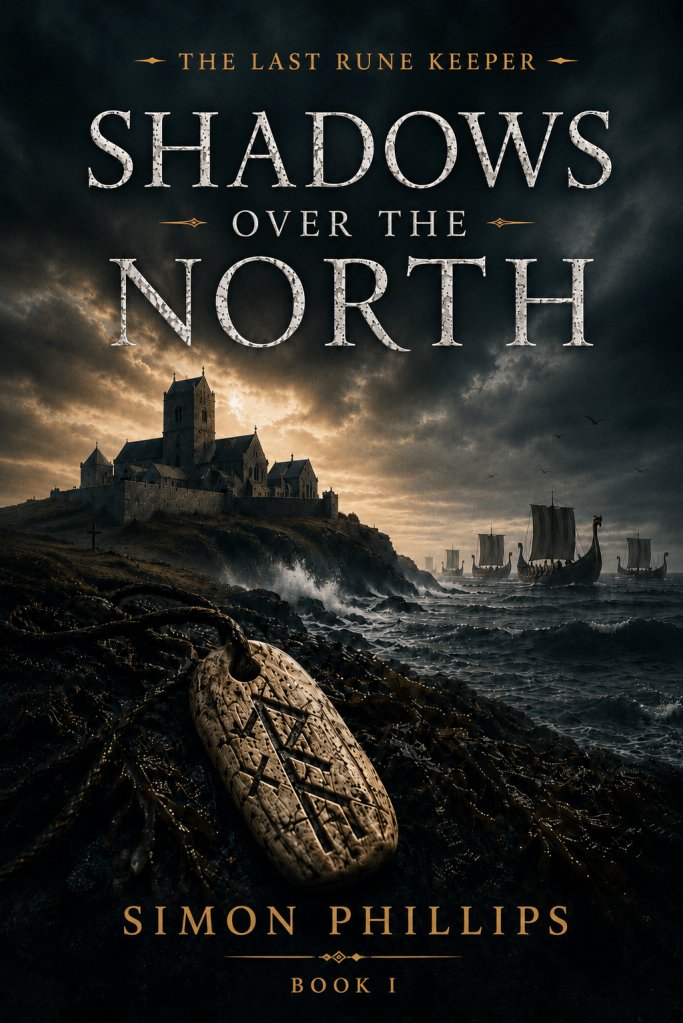
Shadows Over the North and the World Before the Breaking

Book One of The Last Rune Keeper, Shadows Over the North, begins inside this unsettled Northumbrian world.

Eadric is a young Church-trained relic hunter whose work brings him into contact with objects that the institution around him prefers to contain, remove or place beyond ordinary reach. His mentor, Father Oswin, provides experience and religious structure, while Eadric increasingly encounters things that resist the clear boundaries he has been taught to trust.

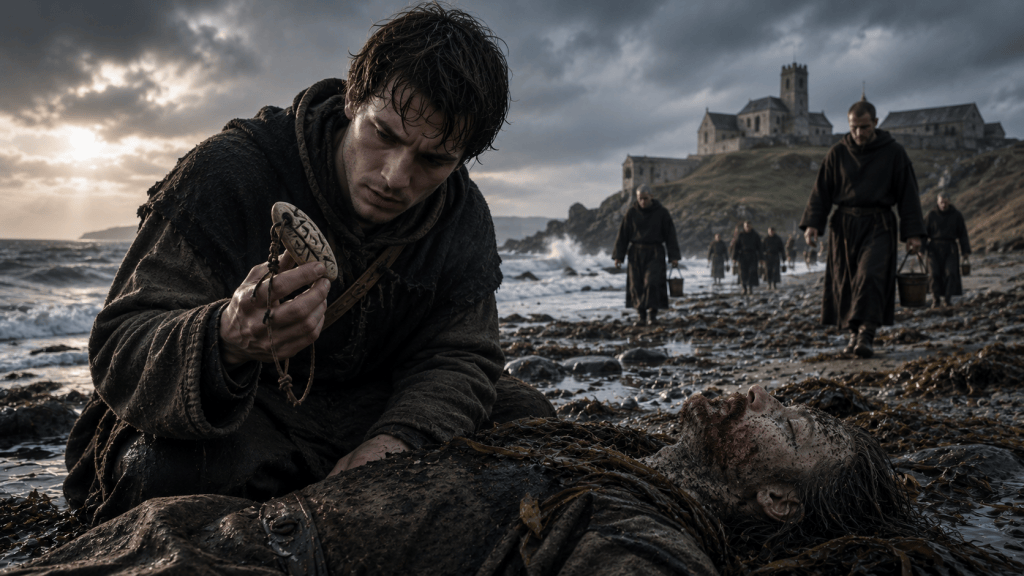
The book takes place around the Lindisfarne era rather than using the famous raid merely as spectacle. The monastery, shoreline, roads, battlefield remains and rumours of ships matter because they place Eadric inside a society already experiencing political and religious strain. The story’s movement begins with relics recovered from the shore and develops through Eadric’s growing recognition that these objects can respond to him in ways neither doctrine nor training entirely explains.

That approach reflects the wider identity of the series.

The historical world remains responsible for its own history. Kings, invasions, settlement, Christianity and eventual political consolidation are real forces rather than scenery surrounding a magical adventure. Eadric moves through that transformation. He does not replace it.


Magic at the Edge of Belief

The fantasy of The Last Rune Keeper is deliberately placed where historical certainty ends.

Early medieval people lived within cultures containing prayer, prophecy, signs, charms, sacred places, dreams, healing traditions and inherited stories about forces beyond ordinary perception. The evidence for individual practices can be fragmentary and difficult to interpret, especially when it survives through texts written by people who viewed older or competing traditions through their own religious framework.

Historical fantasy can enter that uncertainty while still preserving the boundary between evidence and invention.

Within The Last Rune Keeper, magic exists as something increasingly difficult for the changing world to sustain. Runes depend upon relationships between symbol, place and understanding. Relics preserve older conditions more stubbornly. Norse magical practice is embodied through culture, ritual and lived connection rather than presented as a universal system available to anyone who learns the correct words. Eadric himself interferes with these forces more readily than he commands them.

None of this is presented as hidden historical fact.

It is the fictional layer running beside history.

Its purpose is less to make the Viking Age more spectacular than to ask what happens when one understanding of the world slowly loses the conditions required for its survival.


Christianity Was Already Part of the Landscape

The eventual Christianisation and political consolidation of England can sometimes be described as though Christianity simply advanced across a pagan landscape from outside.

The history was far more complicated.

By the time of the Lindisfarne raid, Christianity had already been deeply embedded in Northumbrian political and cultural life for generations. Lindisfarne itself had helped drive that process since the seventh century. Bishops, monasteries, saints’ cults and royal patronage formed part of the structures through which communities understood authority and memory.

That makes the religious tension surrounding The Last Rune Keeper more complicated than a simple conflict between Christianity and paganism.

Eadric belongs to the Church. His faith is part of the way he understands himself. Oswin’s belief is equally genuine. The institution gives them purpose, language, protection and order.

The tension arises because the same structure that preserves one form of memory can help displace another.

Within the fictional series, fading magic becomes one way of exploring that process.


Before England, There Were People Living Through Change

The political transformation eventually producing England took well over a century beyond the events of 793.

People living along the Northumbrian coast when the first Scandinavian raids intensified could not know where that process would lead. They could see local consequences: ships, burned buildings, altered routes, missing people, changing rulers, threatened monasteries and new communities arriving in lands that already possessed histories of their own.

Generations later, raiding would become settlement. Settlement would become political presence. Scandinavian and Anglo-Saxon communities would trade, fight, intermarry, convert, negotiate and reshape one another.

Kingdoms would fall.

Others would expand.

Christian authority would deepen.

Old identities would survive in altered forms.

Eventually a kingdom called England would emerge from a process far more complicated than any single victory or ruler.

That long transformation is the historical ground beneath The Last Rune Keeper. Its fading magic belongs to fiction, while the pressure causing people to reconsider loyalty, faith, land and belonging comes from a real world already changing beneath their feet.

Lindisfarne matters because it allows us to see that world near the beginning of one of its great disruptions.

The ships on the horizon had yet to become settlements, armies, political alliances and new generations born into mixed landscapes.

England itself still lay far ahead.

For the people standing on those shores, there was only the sea, the uncertain north, and the knowledge that something had reached them which would no longer remain beyond the horizon.

The Forgotten Chronicle: Wessex and the Young Alfred

Before the marshes, before the legend, there was a youngest son growing inside a kingdom learning how close disaster could come.


The Prince Before the Legend

The morning light came gently over Wessex, spreading across chalk ridges, timber halls, church roofs, sheep pasture, wooded valleys, and the long roads that tied royal estates to bishoprics, river crossings, and borderlands. This was still a divided island, shaped by rival crowns, older British territories, Mercian memory, church learning, and the restless pull of the sea, yet Wessex already carried a harder outline than many realms around it. Its kings understood that power lived in movement as much as inheritance, in marriage, pilgrimage, battle, counsel, and the slow gathering of loyalty from halls where men listened closely whenever travellers arrived with news from beyond the horizon.

Into that world Alfred was born, youngest son of King Æthelwulf, a child placed deep within the royal household of a kingdom that expected its princes to serve long before any crown came near them. His elder brothers stood before him in the line of succession, each shaped by duty and watched by those who measured the future through blood, land, and alliance. Alfred’s earliest years would have seemed small beside theirs, framed by prayer, instruction, household discipline, and the nearness of power carried by others, yet childhood inside a royal hall was never a quiet thing. Even a youngest son learned the sound of armour being lifted from pegs, the murmur of priests beside candlelit manuscripts, and the way adult voices lowered whenever danger entered the room by rumour.

Those rumours travelled quickly through the Anglo-Saxon world. A merchant from the coast might bring word of ships sighted in hard weather, their sails cutting through mist where only fishermen should have been. A cleric might speak of monasteries stripped of treasure, of frightened communities watching the sea with new dread, of sacred places discovering that prayer alone could never bar an oar-driven hull from shore. Names that once belonged to distant politics began to gather the weight of warning. The northern kingdom had fractured before York fell. Mercia’s old dominance had thinned beneath the strain of changing power. East Anglia had suffered beneath Viking violence, and Edmund’s death had already begun its passage from royal tragedy into sacred memory.

Wessex listened to these stories from the west, close enough to understand their meaning and far enough away to imagine time still remained. In Alfred’s childhood, faith and rulership pressed close together. A prince could be taught scripture in one chamber while armed men spoke of levies, borders, and ships in another. The journey to Rome, remembered in later tradition, placed him within the wider world of Christian authority while he was still young, giving the boy a vision of kingship that reached beyond the halls and fields of his own people. Sickness also followed him through life, according to the accounts that later shaped his memory, and even before kingship claimed him, his body carried its own private struggle.

Before the marshes, before Edington, before burhs, laws, learning, and the name that later generations would bind to greatness, Alfred was a boy growing inside a kingdom that had begun to understand how near ruin could come. His story opened in childhood, family, faith, illness, and inheritance, while the shadow moving across the Anglo-Saxon kingdoms crept ever closer to Wessex.


A Visual Chronicle

Before Alfred became the defender of Wessex, he was a young prince growing beneath the shadow of a Viking threat moving ever closer.


Timeline of Events

c. 849 AD – Alfred is born at Wantage, youngest son of King Æthelwulf of Wessex, far from the direct line of royal expectation.

853 AD – Alfred is sent to Rome as a child, where later tradition records that Pope Leo IV received him with honour.

855–856 AD – King Æthelwulf travels to Rome, taking Alfred with him, placing the young prince within the wider world of Christian kingship and continental power.

858 AD – Æthelwulf dies, leaving Alfred’s elder brothers to rule in succession while Wessex faces a changing and dangerous political world.

865 AD – The Great Heathen Army lands in East Anglia, turning Viking pressure from coastal raiding into a deeper threat to the Anglo-Saxon kingdoms.


About the Creator

This Chronicle is written by Simon Phillips, author of several historical and speculative fiction works exploring forgotten worlds, myth, and the turning points of history.

You can explore his books here:
Books by Simon Phillips

You can watch his YouTube channel here:
Author Simon Phillips


Continuing the Chronicle

The account that follows moves deeper into Wessex and the royal household that shaped Alfred’s early life, from the rule of King Æthelwulf and the journey to Rome to the burden of illness, inheritance, and Viking pressure gathering beyond the borders of the kingdom.

Readers supporting The Forgotten Chronicle may continue into the full record be

Subscribe to continue reading

Subscribe to get access to the rest of this post and other subscriber-only content.