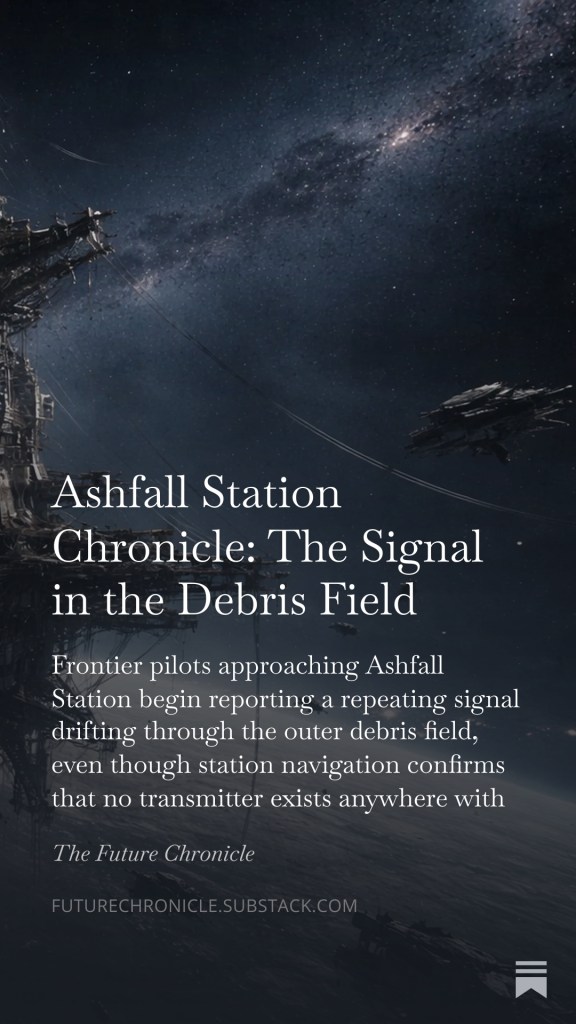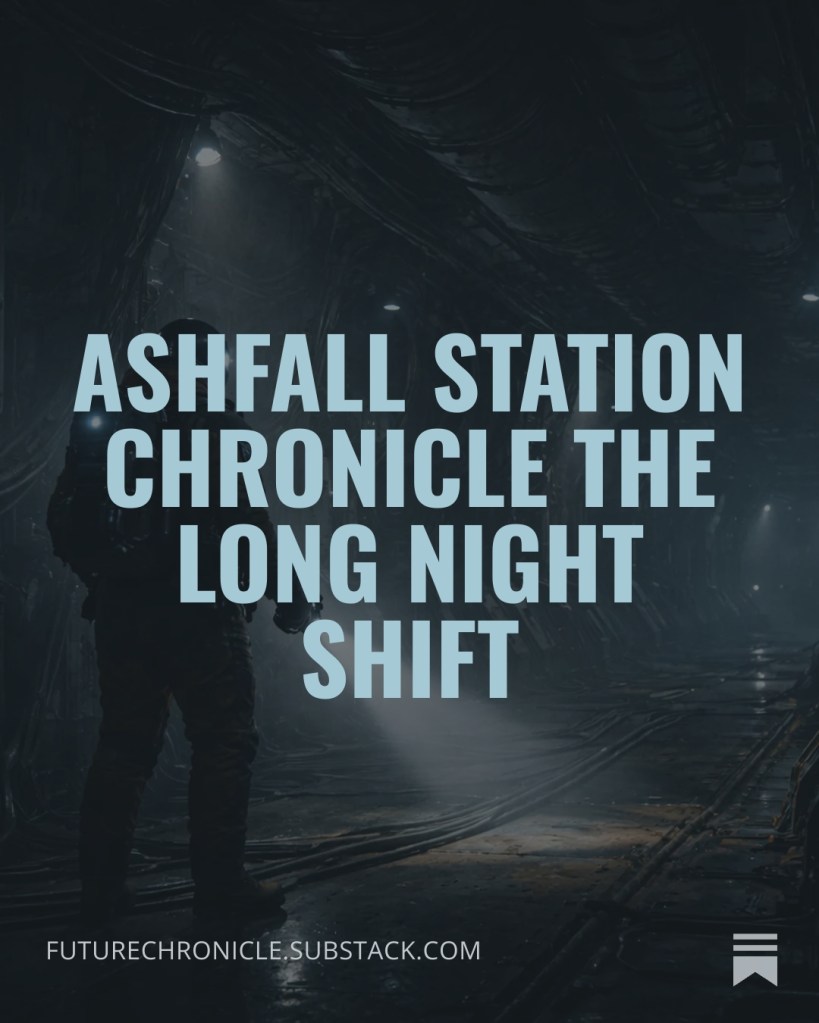
A sealed corridor inside a space station carries a peculiar kind of gravity. The image feels simple at first glance: a pressure door buried behind later construction, a service level erased from current schematics, a section of infrastructure left sleeping inside the larger body of the station. Yet that image opens a deeper unease, because a hidden passage suggests more than age. It suggests choice. Someone closed that route. Someone covered it over. Someone left it inside the walls, where future crews would keep living beside it without knowing what had been folded away.
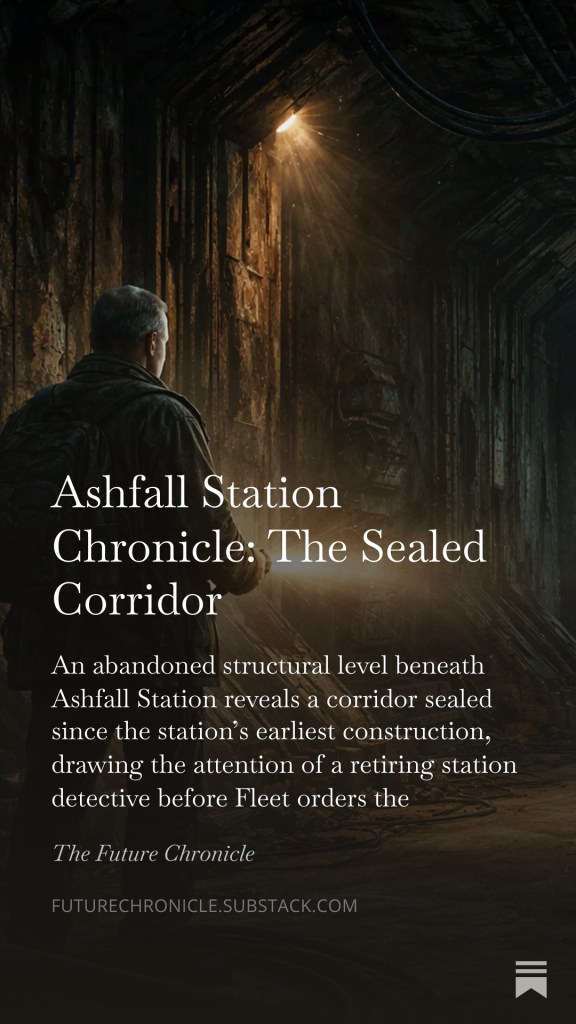
That tension lies at the centre of Ashfall Station Chronicle: The Sealed Corridor, the current Ashfall entry on The Future Chronicle on Substack, where a routine engineering survey on Deck Twelve reveals a transit corridor concealed since the earliest phase of Ashfall Station’s construction. Detective Adrian Mercer, drawn into what first appears to be an ordinary security review, finds himself standing before a doorway that has vanished from three generations of station records, only for Fleet authority to reach downward with unusual speed once the passage opens.
What makes that premise linger is the way it treats the space station as an inhabited archive instead of a clean machine. Many futuristic settings depend on smooth surfaces and visible systems, as though advanced civilisation would sand away every rough seam left by time. Ashfall moves in the opposite direction. Its corridors carry freight dust, maintenance residue, ageing structure, and the long accumulation of decisions made by people who served the station during earlier decades. The result feels industrial, human, and quietly uneasy. A door sealed within that kind of place does more than add mystery. It reveals a wound in institutional memory.
Why sealed corridors remain so unsettling in science fiction
Science fiction returns again and again to abandoned decks, closed service shafts, darkened access tunnels, and transit routes erased from the active life of a station or ship. The reason reaches beyond visual atmosphere. A sealed corridor creates pressure between two versions of a place. One version is the official environment, mapped, lit, regulated, and understood well enough for daily routine. The other sits just behind it, preserved in silence, carrying the possibility that the world has always possessed an interior layer hidden from ordinary movement.
Within a planetary city, forgotten streets can sink beneath redevelopment. Within a station, forgotten passageways remain physically near every working system. Crews sleep, work, eat, and age only metres from chambers they no longer remember. That closeness gives the idea unusual force. The past has never truly gone anywhere. It remains in the walls, under the decking, behind the reinforcement plates, waiting for expansion work, structural failure, or human curiosity to cut back into it.
A sealed corridor also sharpens one of science fiction’s oldest questions: how much of a technological civilisation survives in genuine human memory, and how much survives only through procedure? In places built for endurance, procedure often outlasts explanation. Teams inherit maps, security classifications, maintenance routes, and authority chains whose origins have faded into archival depth. The station keeps functioning. Freight still moves. Atmosphere still cycles. Lights still come on across the inhabited decks. Meanwhile, older choices remain embedded in the structure, stripped of context, still exerting force.
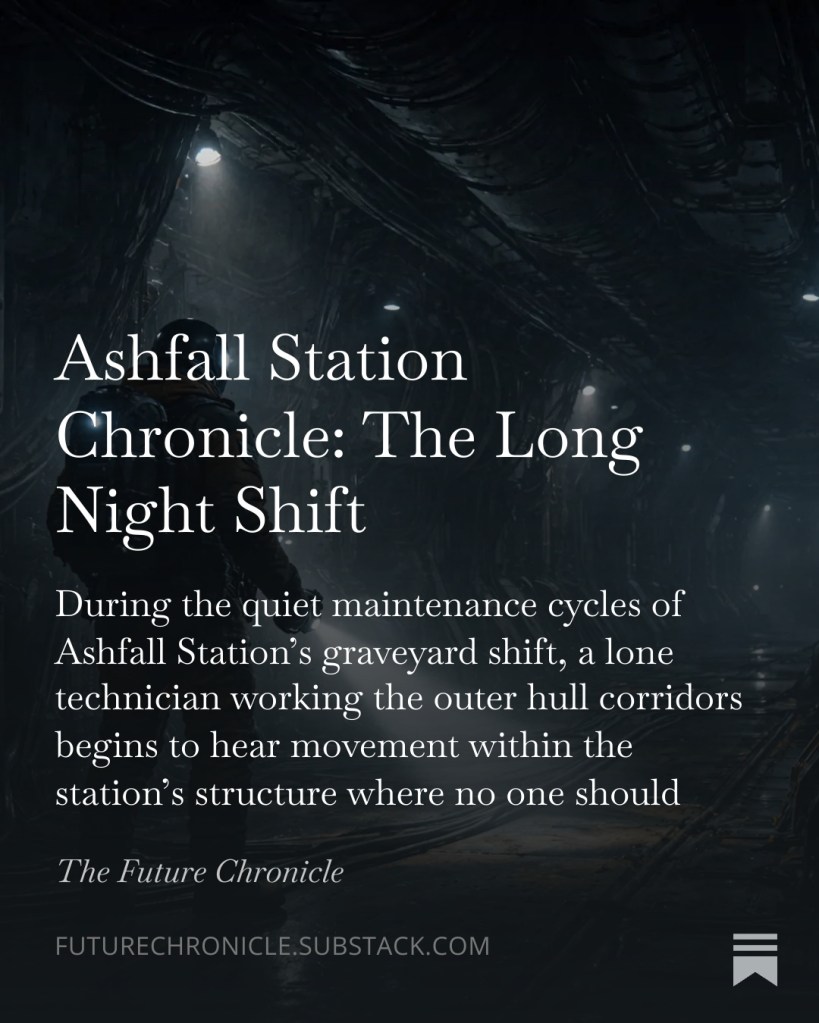
That idea gives The Sealed Corridor its weight. The discovery on Deck Twelve carries no theatrical spectacle. There is no immediate catastrophe, no screaming alarm, no violent rupture across the station. The unease arrives through restraint. Engineers uncover an access frame where a solid wall was expected. Scanner readings show a hollow route inside the subframe. Dust, faded lettering, and the cold seam of an old pressure door begin to suggest that Ashfall’s history contains areas where concealment mattered more than record keeping. Then Fleet intervenes, and the station’s calm surface becomes harder to trust. A space station grows like a city, then begins to forget itself
The strongest space station stories often treat infrastructure as social history made physical. Every expansion ring, service transit, docking arm, and support grid reflects a previous phase of labour, urgency, policy, and economic need. Over time, a station gains layers. New freight systems bypass old ones. Living districts migrate. Engineering standards change. Administrative power centralises, fragments, or hardens. What once served as a vital artery can become a dead route sealed behind newer plating.
Ashfall Station feels convincing because its buried levels follow that logic. Deck Twelve belongs to the station’s earliest industrial period, when Ashfall served as an ore transfer hub above Kestren-4. Later growth covered those earlier transit networks beneath newer sectors and revised structural plans. From an engineering point of view, that process feels entirely plausible. From a narrative point of view, it creates a setting where the physical environment can hold memory more faithfully than the people moving through it. A wall panel can preserve history long after the registry has thinned it into omission. s is one of the quiet strengths of industrial science fiction. It understands that future settings carry bureaucracy as well as invention. Large systems create blind zones. Records become layered. Departments protect their own authority. Classification settles over awkward histories like dust over unused metal. Once that happens, space itself begins to participate in secrecy. The corridor on Deck Twelve has no voice, no overt intelligence, no dramatic display. Its mere existence is enough. The concealed access frame, the obsolete transit markings, and the absent schematics tell their own institutional story.
Engineering memory and human memory drift apart
One reason sealed infrastructure feels so effective in science fiction is that it captures a familiar modern anxiety in a future form. People already live inside systems few individuals fully understand. Cities depend on hidden services. Digital life depends on opaque layers of code, policy, and ownership. Industrial life depends on technical inheritance, old standards, legacy machinery, and habits passed forward through routine. A frontier station only intensifies that truth. Distance from central oversight, long operational life, and successive waves of expansion create the ideal conditions for forgotten corridors, sealed chambers, and partial records.
In The Sealed Corridor, Detective Mercer stands at the edge of precisely that divide. He is no engineer and no grand political figure. He is a station detective approaching retirement, someone who has spent enough years inside Ashfall to hear its changing mood through the background vibration of machinery and freight movement. That makes him an ideal witness. He reads the corridor through professional instinct and through accumulated familiarity with the station as a lived environment. The discovery unsettles him because it violates the station’s ordinary logic. A decommissioned passage would make sense. A deliberately erased one suggests an older decision whose consequences may still be active. Ashfall Station turns mystery into atmosphere
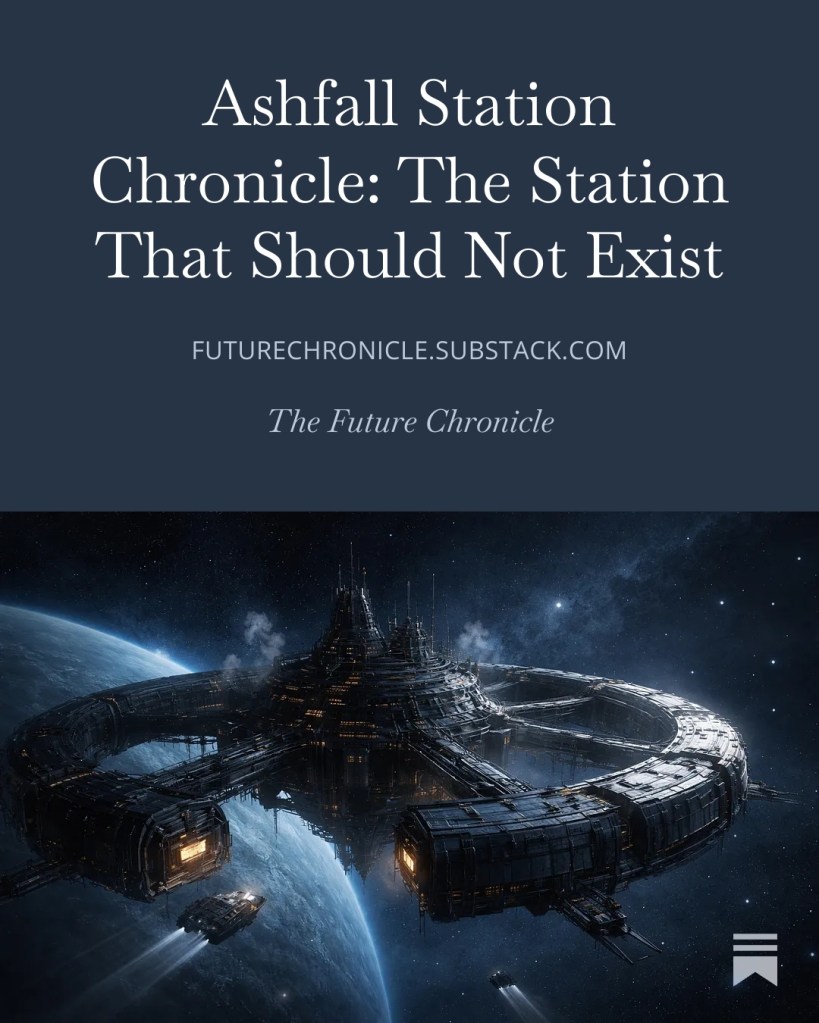
Many mystery-driven science fiction stories rely on puzzle mechanics alone. A clue appears, a question rises, and plot movement follows. Ashfall works through atmosphere first. The mystery gains force because the station already feels heavy with work, age, and endurance before the sealed passage enters view. Offices remain lit through the station cycle. Freight departures continue. Dust gathers in engineering spaces. Amber light reflects from older lift interiors. Outer docking arms glow above the pale clouded world below. Every detail deepens the sense that this place has kept functioning for a very long time, carrying more history than any single worker could hold in mind at once. t atmosphere makes the Chronicle an especially strong entry point for readers curious about science fiction built from pressure, environment, and institutional behaviour instead of spectacle. The Future Chronicle frames its Ashfall series as recovered future records, reconstructed incidents, and quiet disturbances unfolding across the life of an ageing frontier station. Entering through The Sealed Corridor feels like stepping into a report whose edges have started to fray, where the visible account is steady enough to trust and strange enough to invite a second look.
For readers arriving fresh to Ashfall, the Chronicle offers a contained threshold into the wider archive. It introduces the station through labour, architecture, and omission. It shows how minor engineering work can touch something older than the current order of things. It also leaves room for the larger implication to spread on its own, which suits this kind of fiction beautifully. A hidden corridor carries power precisely because full explanation remains at a distance. The station keeps orbit. The authority chain remains in place. The question settles deeper.
From the sealed corridor to the dead girl in Sector Twelve
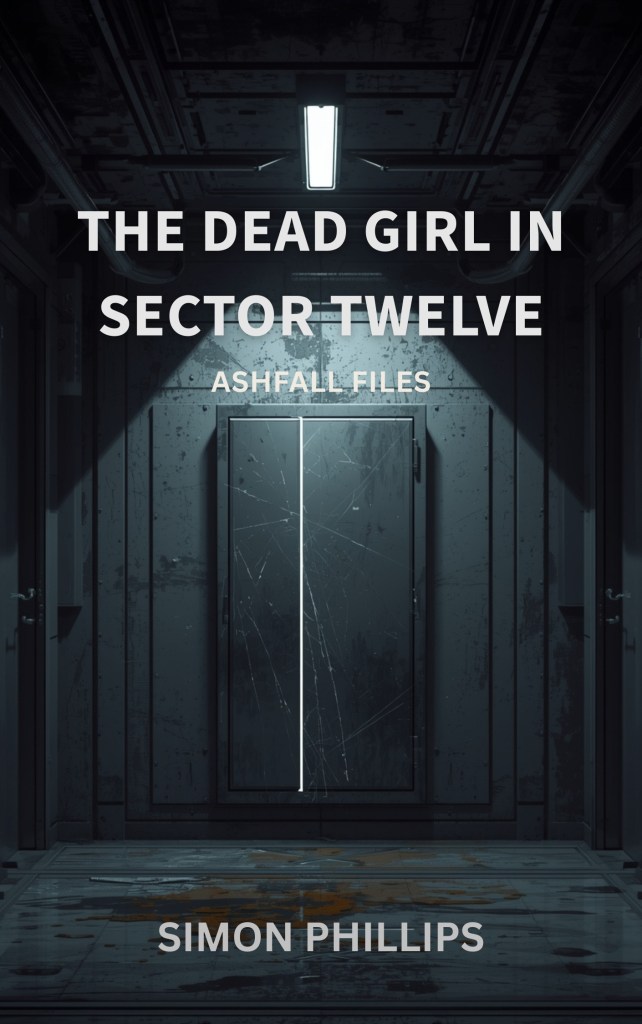
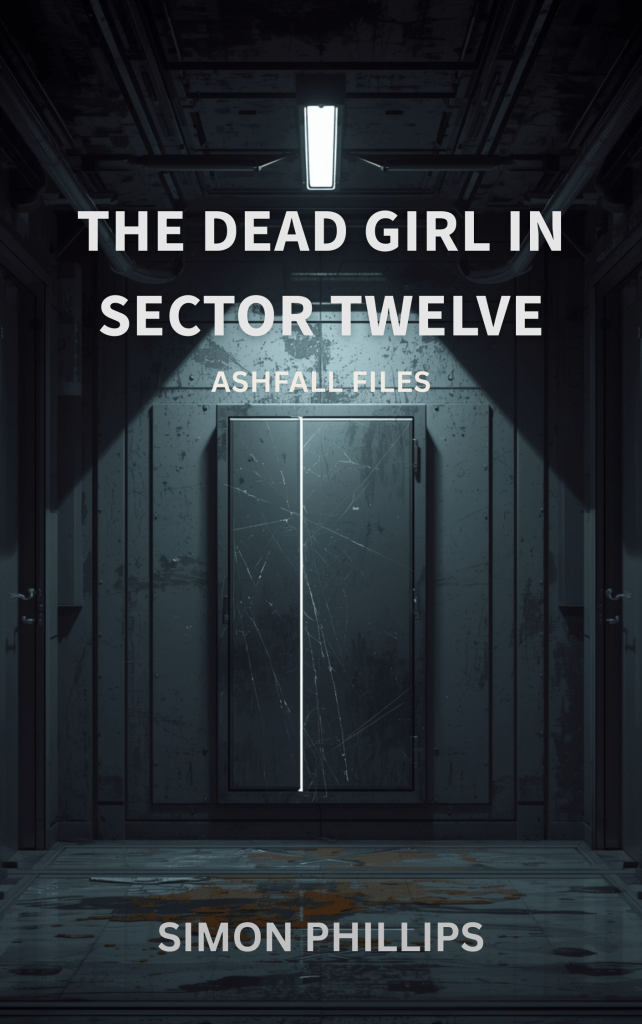
The Chronicle also gains depth from its connection to the wider Ashfall setting. The corridor on Deck Twelve exists years before the later events of Ashfall Files: The Dead Girl in Sector Twelve, the linked ebook set within the same broader environment. The relation between those works gives the station an appealing sense of duration. One text opens a buried seam in the station’s past. The other follows an investigation unfolding inside a place already shaped by long neglect, institutional pressure, and structural secrets. t relationship is where The Future Chronicle feels especially effective as a literary gateway. The Chronicle stands on its own as a finished speculative essay-story, with its own internal weight and unease. At the same time, it opens a route toward the novella for readers who want to remain inside Ashfall a little longer, to move from reconstructed station history into a fuller noir investigation carried through living corridors and working sectors. The transition feels organic because the setting has already been prepared through texture, mood, and accumulated pressure.
There is also a short visual companion on YouTube, which works well as a brief atmospheric threshold before or after the written Chronicle. In a project built around reports, fragments, future records, and recurring disturbances, that kind of cross-format echo strengthens the sense that Ashfall is being approached from several angles, each one revealing a different surface of the same old structure.
The corridor behind the wall
A sealed corridor inside a space station endures in the imagination because it transforms architecture into withheld knowledge. The wall ceases to be a boundary and becomes a decision preserved in metal. On Ashfall Station, that decision carries the residue of labour, authority, and time. Engineers uncover a passage where current plans promised solid structure. A detective senses that the omission has weight. Fleet moves to close the opening before inquiry can gather momentum. The corridor returns to silence, though the silence now feels charged.
That is the quiet spell of The Sealed Corridor. It understands that the most unsettling future environments rarely depend on scale alone. They depend on layers. They depend on inhabited systems whose official version of themselves has begun to slip against the deeper truth held in their structure. A station like Ashfall keeps turning above Kestren-4, freight moving through its active decks, lights shining across its present routines, while older routes remain hidden in the body of the place, carrying histories that still press against the wall from the other side.
For readers drawn to abandoned infrastructure, industrial space station fiction, and science fiction shaped by secrecy, labour, and buried records, Ashfall offers a compelling threshold. The first doorway stands open in The Sealed Corridor on Substack. Beyond it waits a larger station history, and further in, the investigation at the heart of Ashfall Files: The Dead Girl in Sector Twelve. The pressure inside these stories comes from what a place continues to hold after memory has thinned, after maps have changed, and after official language has settled over the seam.