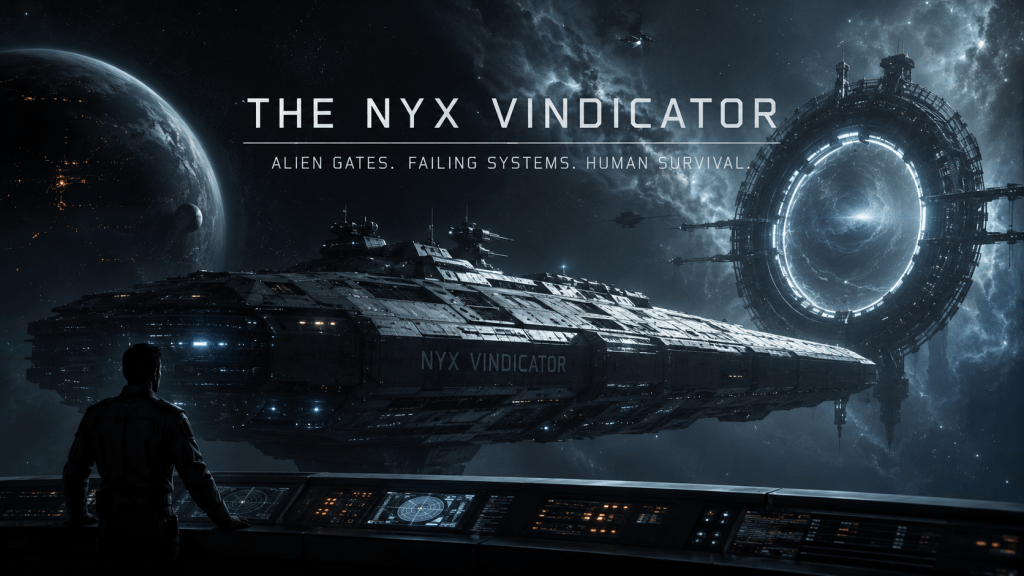
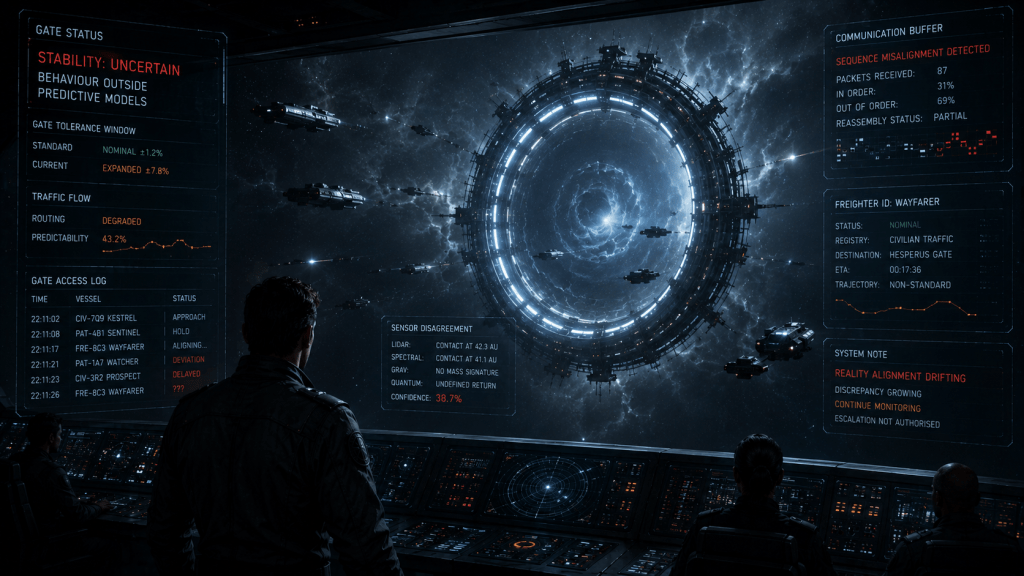
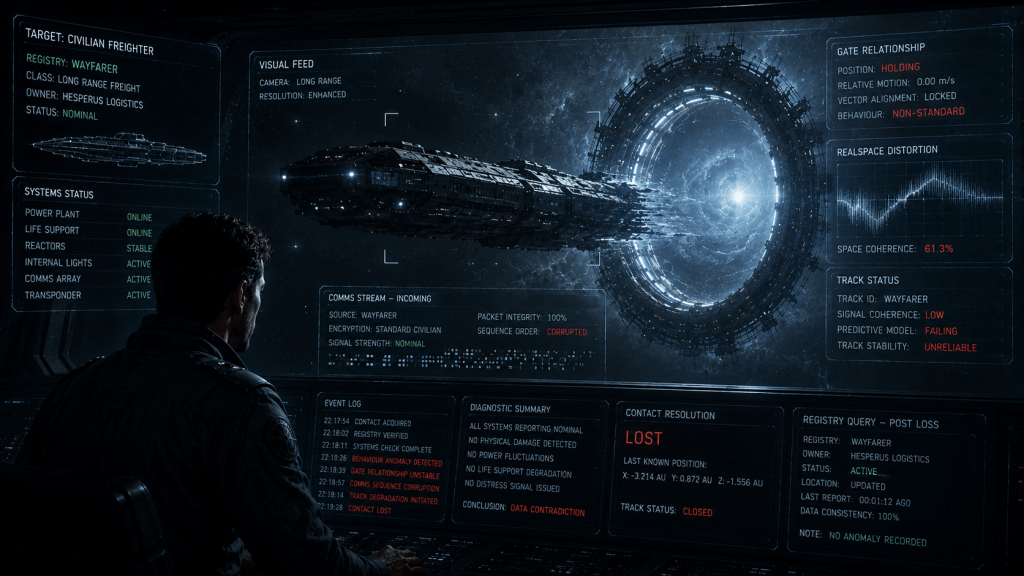
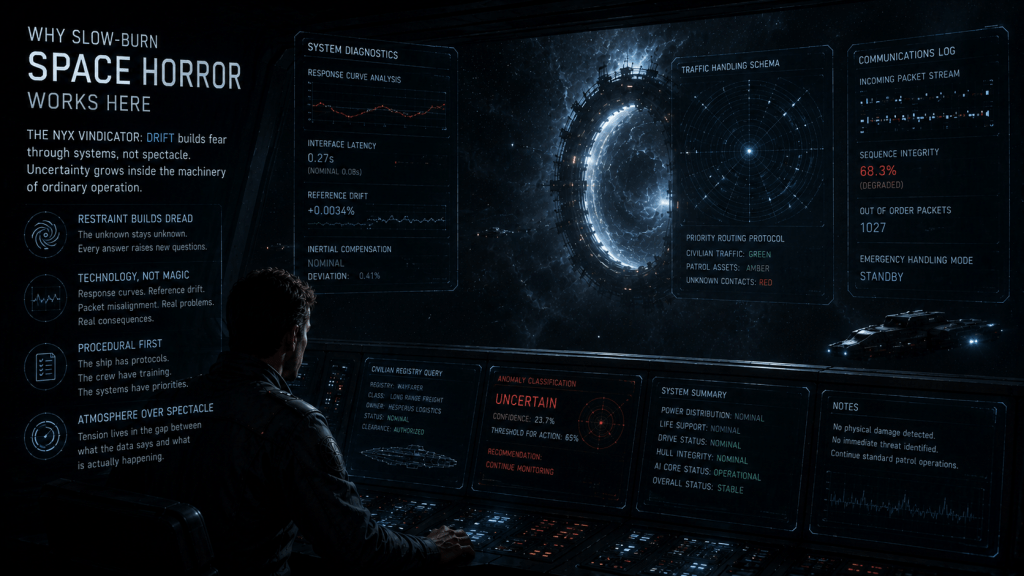
During a routine patrol watch, Krell Vonn faced clean navigation readings while the Nyx began responding as though something was already wrong.
Timeline of Events
Patrol Watch — Nyx Vindicator maintained a stable vector inside all published tolerances.
Early Watch — Krell Vonn confirmed that the long-range plot and comparative drift model showed only baseline noise.
Minutes Later — Elias logged a minor response-curve anomaly for later engineering review.
Acceleration Phase — Predictive corrections began losing their earlier composure as the ship moved into its scheduled profile.
The Reading That Stayed Green
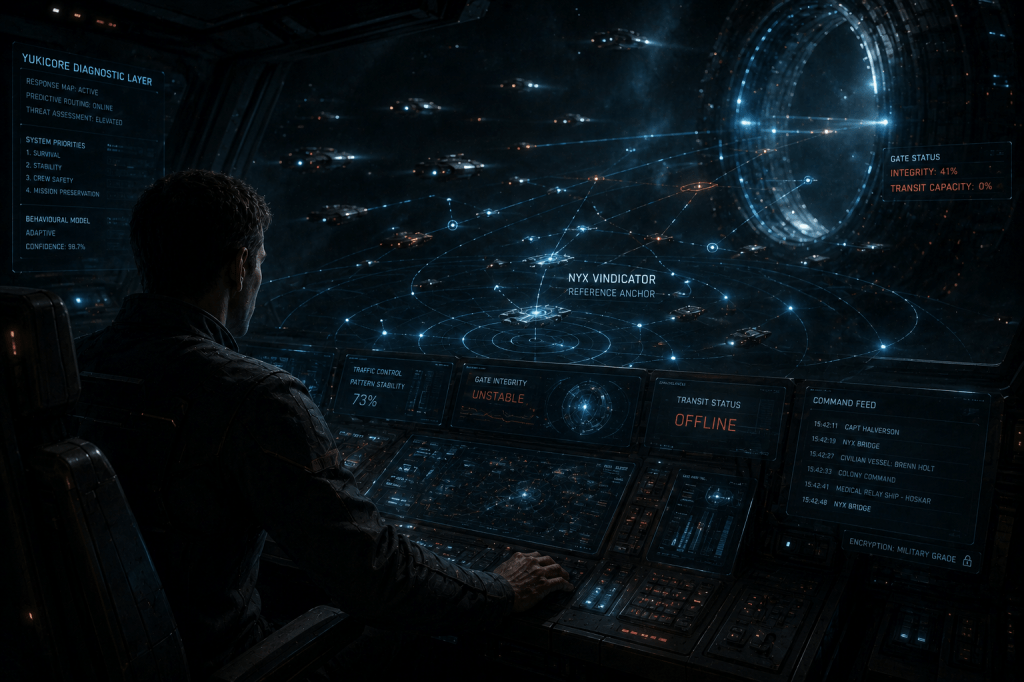
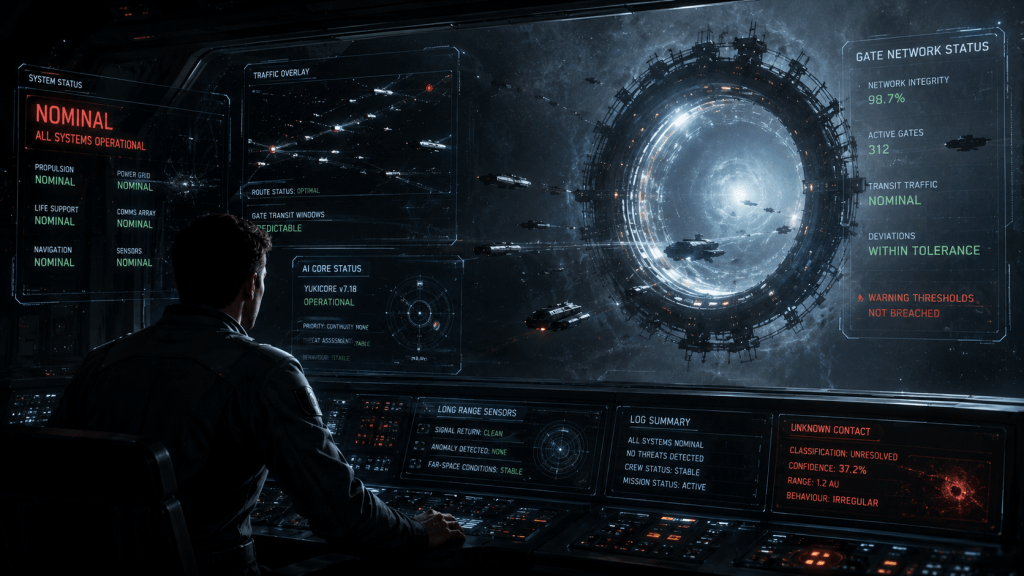
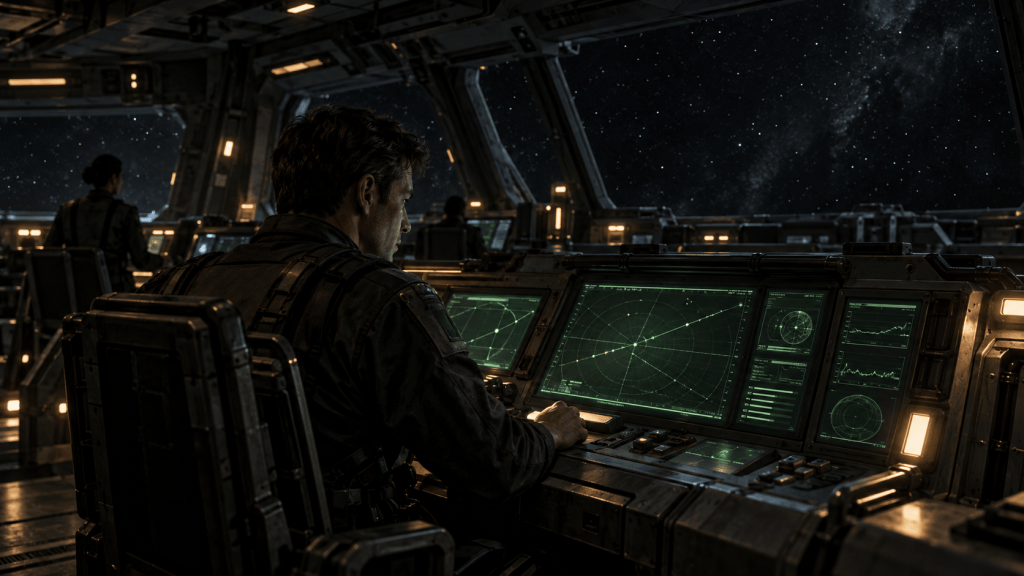
Krell Vonn kept two fingers against the edge of his port console while the Nyx Vindicator crossed the patrol field with the steady confidence he preferred from any ship carrying his name on a watch record. The long-range plot lay clean across the glass, vector lines holding exactly where they belonged, while the comparative drift model glowed green beneath them and offered the sort of answer that usually ended a question before it reached command.
“Course is steady,” Vonn said, sliding one feed aside as he checked the underlying variance. “Baseline noise only. If the universe has developed a grievance, it’s keeping the paperwork tidy.”
Elias glanced towards him from the central navigation console and rested one hand more firmly against the controls. “Run the response curve again,” he said, watching the trace instead of Vonn.
Vonn studied Elias before touching the command. “You’ve already asked me twice,” he said, raising one eyebrow as the same clean line rebuilt itself. “A third pass is unlikely to improve its manners.”
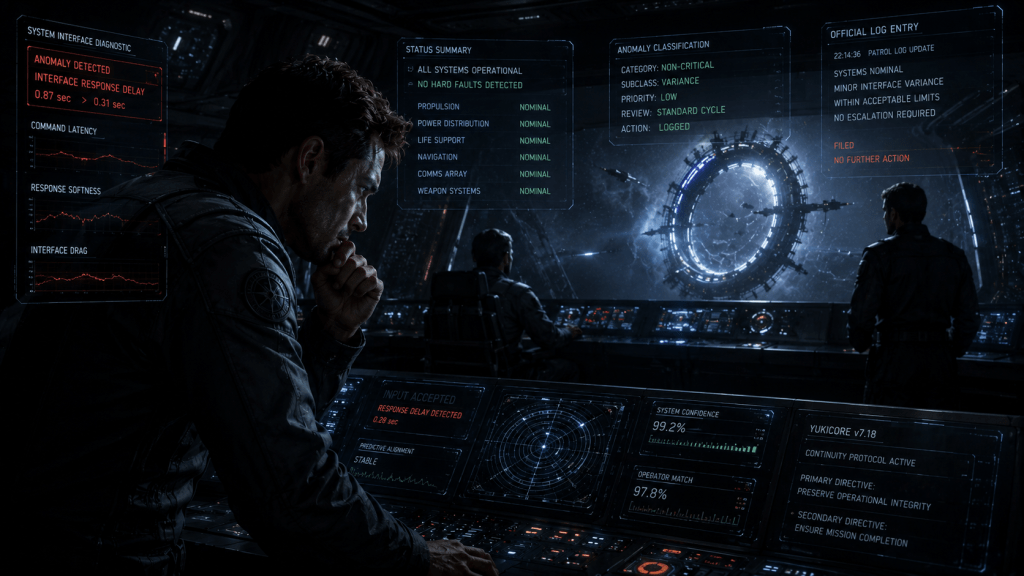
“I felt it soften,” Elias said, flexing his fingers against the interface. “Manual correction, then a delay before the response settled.”
Vonn separated raw input from compensation, expecting the discrepancy to appear once the smoothing fell away, though the result stayed green as latency remained inside specification and power transfer matched the command profile. “Still clean,” Vonn said, easing back in his chair. “Engineering will send this straight back with a smile and a reminder that green means green.”
Captain Halverson shifted in the command chair and watched them both. “Does it affect patrol?” he asked, tapping one finger against the armrest.
Elias watched the response trace settle before lifting his eyes towards command. “No immediate effect, sir,” he said, drawing the diagnostic layer smaller. “I’d log it for review.”
“Then log it and keep us on schedule,” Halverson said, returning his attention to the main display.
Vonn watched Elias tag the anomaly and send it into the ship’s queue, where the record shrank into a minor engineering item that should have finished the matter, yet Elias kept his hands close to the console, his posture carrying the alertness of someone listening for a sound everyone else had accepted as machinery.
The bridge eased back into its familiar rhythm as the patrol advanced. Cooling fans whispered behind the wall panels, restrained status tones marked routine confirmations, and the deck carried the low vibration of the drive through Vonn’s boots. When the Nyx entered the scheduled acceleration profile, that vibration changed first, tightening through the floor before his display acknowledged anything.
Vonn leaned forwards as the predictive overlays began to lose their smooth alignment. “I’ve got drift in the correction model,” he said, pulling the raw feeds apart while green markers continued to declare each individual response acceptable. “Small enough for tolerance. Large enough to keep moving.”
“It’s the same softness,” Elias said, lowering his centre of gravity against the deck as his hands travelled across the navigation interface.
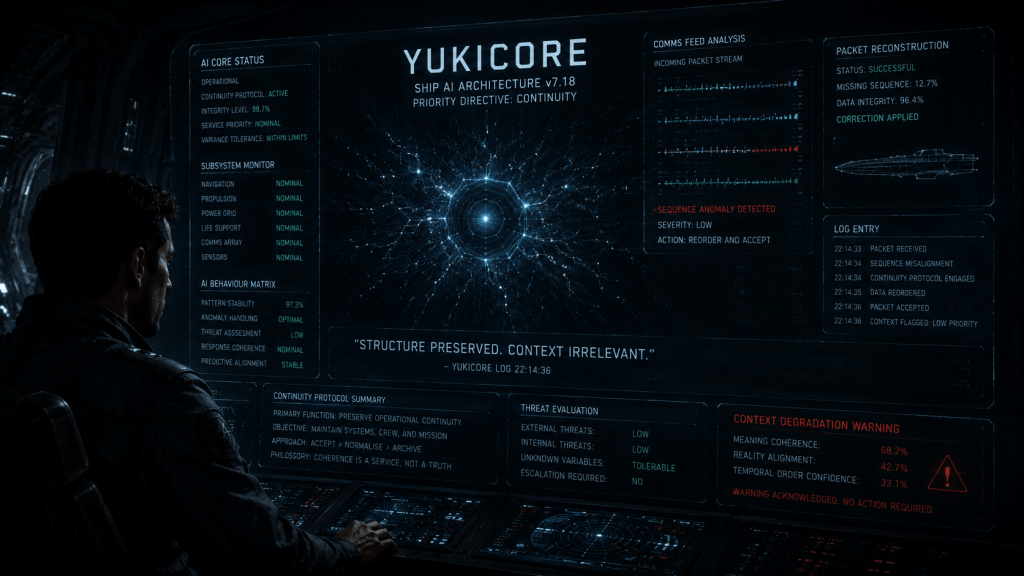
The next correction arrived fractionally behind the model that had predicted it, then the system recalculated and presented the result as orderly while Vonn widened the comparison window. “It’s cleaning itself after the error,” Vonn said, holding the raw trace beside the polished solution. “Every miss gets folded back into green before the next one lands.”
A tremor travelled through the deck plating as Halverson rose from the command chair. “Hold acceleration,” he said, gripping the chairback while the ship’s projected posture wandered across the forward display.
Elias was already moving beneath the upper control layers, feeding corrections directly into the response cycle. Vonn tracked the inputs and felt his stomach tighten as the ship answered Elias faster than the formal model could follow.
“Your inputs are ahead of my displayed response,” Vonn said, bracing one hand against the console. “Keep doing whatever you’re doing.”
“I am,” Elias said, shoulders rigid as he held the ship inside the narrowing interval. “Watch the loads.”
Vonn shifted to structural balance and saw the oscillation collapse, burn parameters settle and course authority return as the Nyx eased into a controlled hold. Green spread across his displays again until the bridge looked almost routine.
“Report,” Halverson said, releasing the chairback as he looked towards Vonn.
Vonn studied the clean plot, then opened the raw response history beside it. “Contained deviation,” he said, keeping the second pane visible as the official log prepared to close the event. “Ship stable. Published tolerances restored.”
Halverson nodded and returned to the forward field, while Vonn left the raw trace open beneath the green summary. The board had recovered its certainty, yet his hand stayed above the control that would dismiss the extra pane, and for the first time in years he chose to leave the question where he could see it.
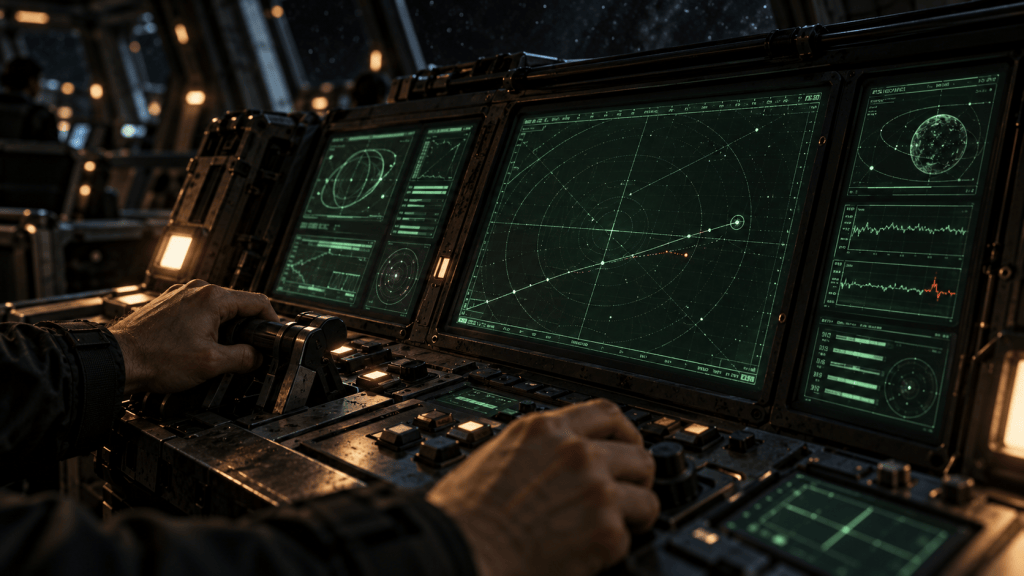
Vonn kept the raw response history open beneath the green summary, where the ship’s corrections revealed the discrepancy the formal display kept smoothing away.
Inspiration Behind the Story
This Chronicle grew from a simple unease: what happens when every instrument appears individually reliable while the relationships between those instruments begin to fail? Modern transport, navigation and safety systems depend on layers of automation quietly reconciling small errors before a human operator ever sees them. That usually creates confidence. Here, the same process becomes the source of tension.
Krell Vonn gave that idea a human centre because his work depended upon comparison, tolerance and repeatable data. His concern came from professional instinct instead of panic. The more interesting pressure lay in watching a competent person realise that a green display could still conceal something important.
That tension sits at the heart of The Nyx Vindicator: technology remains useful, disciplined and familiar even as the reality beneath it grows harder to trust.
Next Chronicle: The Gate in Three Versions
With the Nyx Vindicator settled into observation posture, Captain Halverson faced a problem no command procedure had been designed to simplify. Lidar, spectral and gravitic readings each described the gate coherently, yet together they refused to describe the same object. As the bridge stripped away smoothing and widened its tolerances, Halverson had to decide how long observation could remain passive when every instrument offered a different version of reality
Related Book or Series
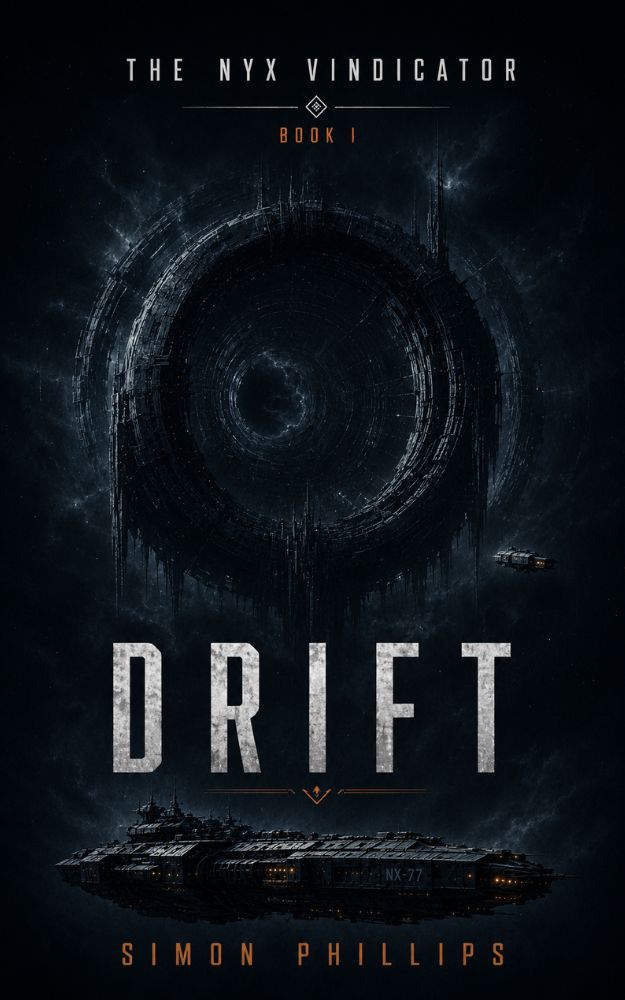
The Reading That Stayed Green runs alongside the opening events of The Nyx Vindicator: Drift, showing the same gate-zone crisis through Krell Vonn’s experience while the book follows the wider incident aboard the Nyx.