Týrnan Valgrim: The Warleader Who Feared Victory

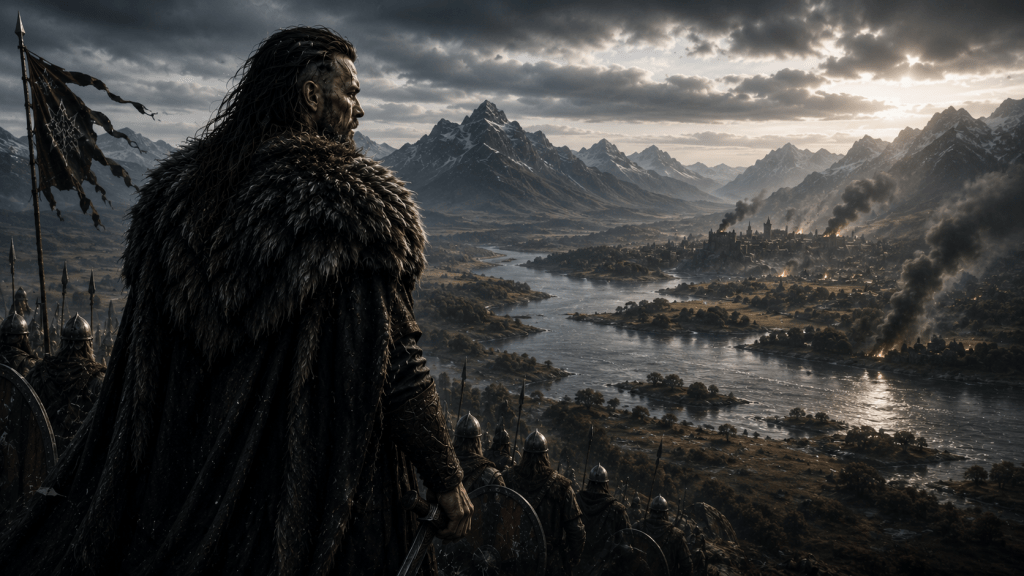
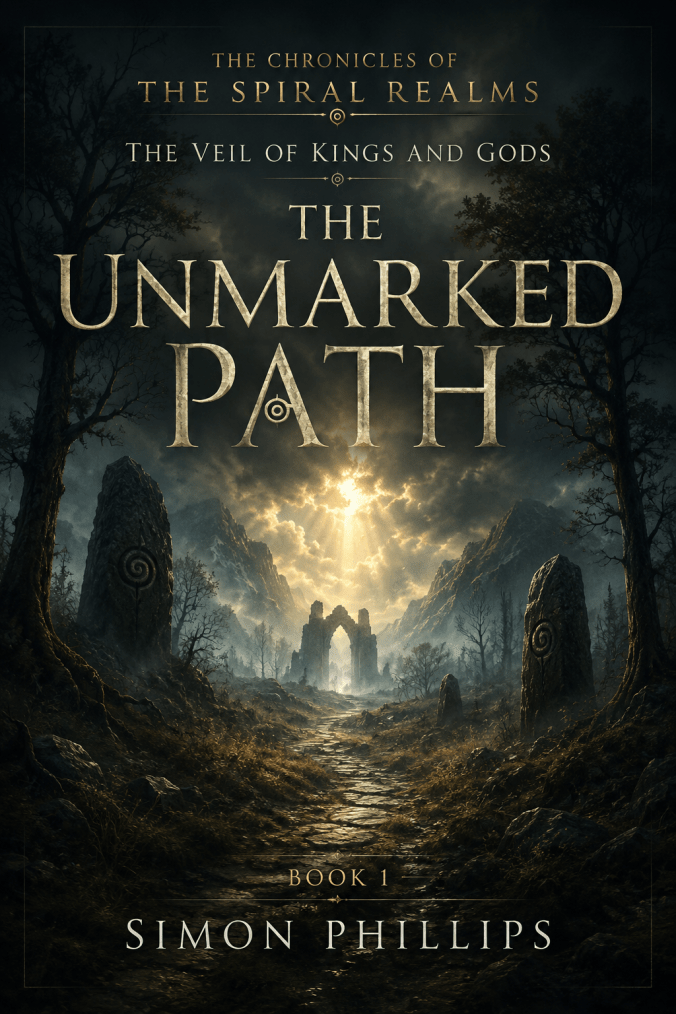
In The Unmarked Path, Book 1 of The Veil of Kings and Gods, Týrnan Valgrim enters the story from the cold edge of Ældorra, where the northern seas carve strength into those who survive them and the people of Njorvik learn early that mercy does not always keep a tribe alive.

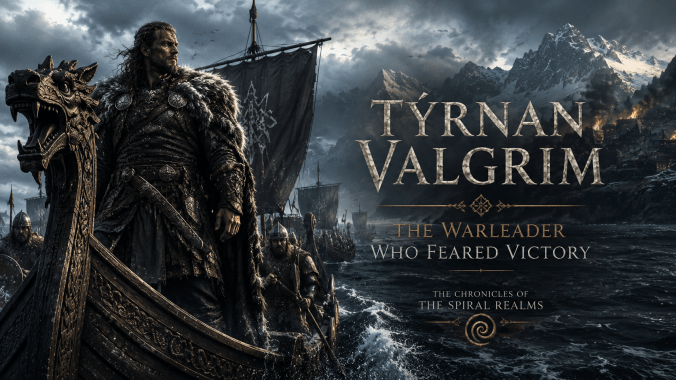
He is introduced as a warleader, yet not as a simple raider hungry for blood or glory. Týrnan stands at the prow of a longboat with the bitter wind pulling at his fur-lined cloak, surrounded by warriors preparing for the voyage south. Behind him are the Frostbane, his own people, bound by loyalty, hardship, and the old belief that endurance is the truest measure of strength. Before him lies the sea, the storm, and the uncertain promise of conquest.

What makes Týrnan compelling is not that he sails towards war, but that he already understands something is wrong before the first battle has truly begun. His world expects strength from him. His warriors expect command. The High Chieftain expects obedience. Yet beneath those demands, Týrnan carries a more difficult burden, because he is beginning to see that victory may require a man to surrender more of himself than defeat ever could.


A Warleader Shaped by the Frozen North

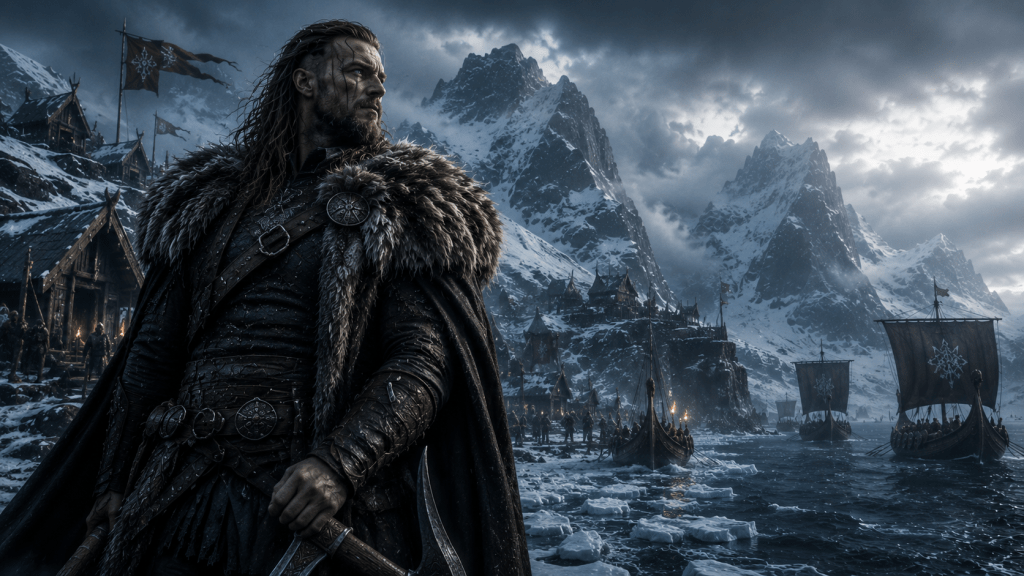
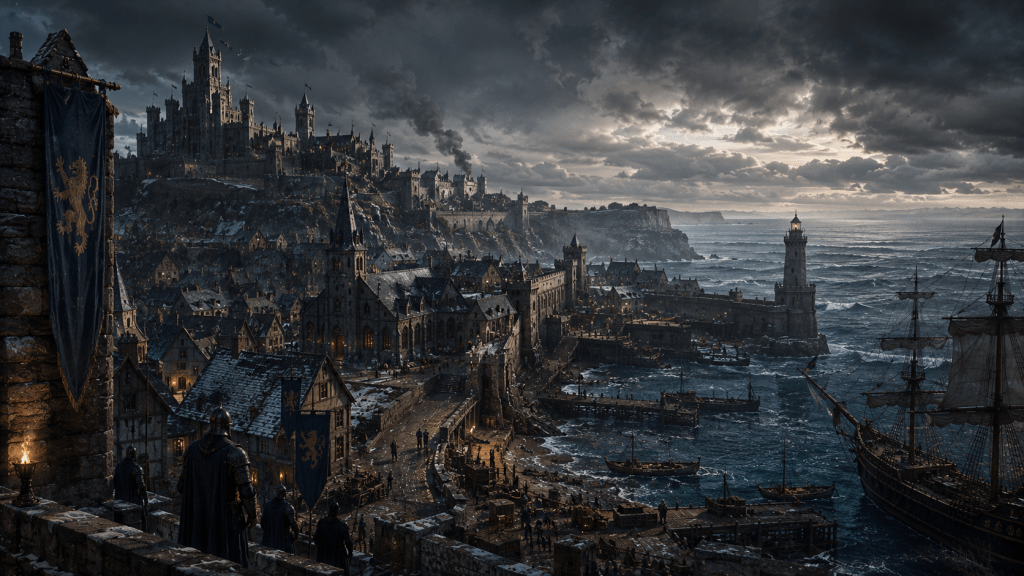
Týrnan belongs to Njorvik, a northern realm of icy fjords, restless seas, and hard coastlines where survival is never treated as a gentle thing. The land itself teaches discipline before any elder or warrior can speak of it. Winter presses close, food must be guarded, ships must be built well enough to withstand storms, and every clan knows that weakness can place an entire people at risk.

That background matters because Týrnan’s violence does not come from emptiness. He has been shaped by a culture that understands war as one of the tools by which a people endure. The Frostbane are not soft men dragged unwillingly into conflict. They are seafarers, fighters, raiders, and survivors, and Týrnan has risen among them because they trust his judgement as much as his strength.

Yet leadership in such a world is never only a matter of being the strongest man with an axe. Týrnan must hold together warriors who carry pride, old grudges, fear, hunger, loyalty, and ambition into the same ships. When men under his command threaten to turn their blades upon one another before the voyage has even begun, he does not answer with rage for its own sake. He steps between them and reminds them that their strength belongs to the tribe, not to private quarrels.

That moment reveals the foundation of his character. Týrnan is dangerous, certainly, but he is not careless. He understands that a warband divided by pride will break long before an enemy army reaches it. His authority rests not merely in his ability to kill, but in his ability to restrain men who might otherwise mistake violence for honour.


The Shadow of the High Chieftain

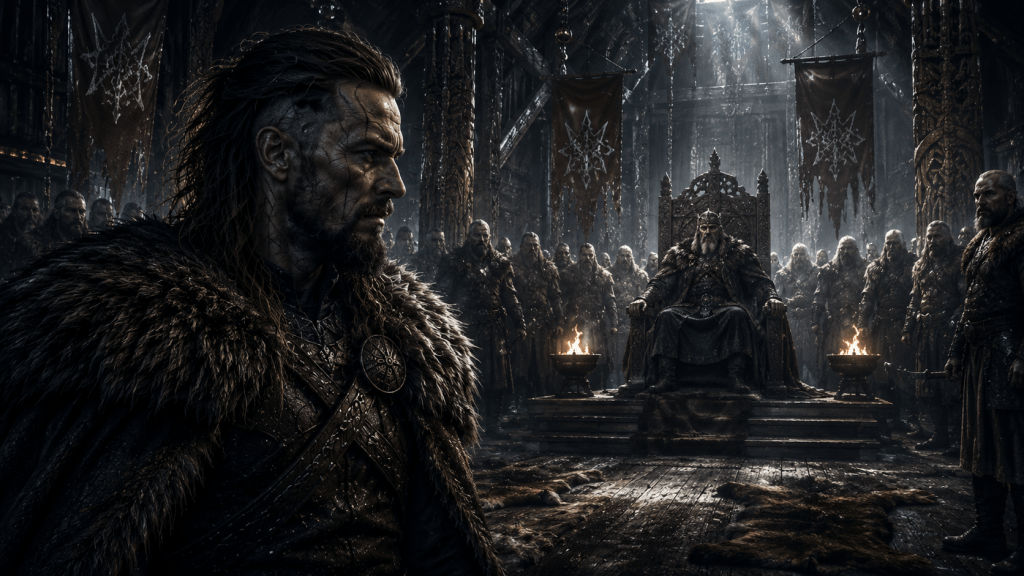
The southern invasion does not begin under clean banners or noble certainty. It begins under the influence of a High Chieftain whose rule has already darkened into fear. Whispers move through the clans of villages punished for defiance and warriors slain for questioning commands, suggesting that the campaign is being driven by more than survival alone.

For Týrnan, this creates a fracture he cannot easily ignore. He is loyal to his people, and he understands the need for strength, but he also recognises the difference between command and cruelty. The High Chieftain speaks of conquest and unity, yet his rule begins to look less like leadership and more like domination. That distinction becomes important because Týrnan’s own authority depends upon trust, while the High Chieftain’s power increasingly depends upon fear.

Elder Gormund’s warning sharpens this tension. When he tells Týrnan that the Frostbane follow him more than they follow the High Chieftain, he is not simply offering praise. He is placing a weight upon him. It means Týrnan can no longer hide behind obedience. If the campaign becomes brutal, if honour gives way to appetite, if the invasion ceases to be about survival and becomes something uglier, then Týrnan will have to decide how much of it he is willing to carry.

That is where his story begins to deepen. He is not outside the violence. He is part of it. He sails with the invasion, commands warriors within it, and benefits from its victories. Yet the story does not allow him the comfort of pretending that all violence is the same. From the beginning, Týrnan is forced to measure the difference between necessary war and the kind of brutality that consumes the people who practise it.


Across the Storm-Torn Sea

The crossing south is one of Týrnan’s defining early trials because it strips leadership back to its simplest form. There are no walls, councils, thrones, or excuses upon the open sea. There is only the longboat, the storm, the oars, the men, and the question of whether fear will break them before the waves do.

As the sea rises and the sky darkens, Týrnan must become the voice his warriors cling to. He invokes Tharok, the war god revered among the northern tribes, not as decoration, but as a language his people understand in moments of terror. When a young warrior falters and cries that the gods have turned away, Týrnan does not dismiss the fear as weakness. He turns it into endurance, telling the men that the gods test those who would be worthy of their gaze.

This is not simple faith. It is leadership shaped through belief.

Týrnan understands that warriors do not survive because they are never afraid. They survive because someone gives their fear a shape that can be endured. In that storm, he does exactly that. He takes the panic spreading through the crew and binds it back into rhythm, rowing, prayer, and defiance. When lightning reveals the other longboats still moving through the dark sea, the sight becomes more than relief. It becomes proof that the tribes have not yet been scattered, even if the gods remain silent.

The storm therefore becomes a mirror of Týrnan himself. On the surface he is steady, commanding, and immovable. Beneath that strength, uncertainty continues to gather, because surviving the sea only brings him closer to the harder question waiting on land.


The First Shore and the First Doubt

When the longboats reach Vaeldring, the invasion becomes real. The ships grind onto the shore, warriors spill into the shallows, and the first village falls beneath Frostbane steel. It would be easy to frame this moment as triumph, but Týrnan’s reaction complicates it. The victory comes too easily, and that ease unsettles him more than resistance might have done.

The defenders are few. The settlements seem exposed. Villages are abandoned with a speed that suggests preparation rather than cowardice. Other chieftains see weakness and opportunity, while Týrnan sees a pattern he cannot yet explain. Something has drawn Vaeldring’s strength elsewhere, and the silence left behind feels less like surrender than a warning.

This is where Týrnan’s mind separates from the men around him. Some see plunder. Some see captives. Some see a road opening towards greater conquest. Týrnan sees absence, and that absence troubles him because it implies a larger movement beyond the reach of his immediate knowledge.

His refusal to let the Frostbane take slaves matters here. It does not make him innocent, and it does not erase the violence of the invasion, but it marks a boundary within him. He will take resources for war. He will fight enemies. He will march into foreign lands for the future he believes his people need. Yet he refuses to let his tribe become a swarm of men who mistake suffering for spoils.

That line may not be enough to save him from guilt, but it shows that a line still exists.


The Conqueror Who Has Not Yet Chosen Himself

Týrnan’s Book 1 arc matters because he begins as a conqueror who has not fully understood what conquest will ask of him. He believes he is moving towards survival, honour, and perhaps divine favour, yet every step south places him closer to truths that disturb the simplicity of that belief.

He is not a hero standing cleanly apart from the darkness. He is not a villain without conscience. He is a man moving through war while still trying to preserve some inner law against the appetite of the campaign around him. That makes his choices more interesting because they do not come from purity. They come from pressure, contradiction, and the slow recognition that a leader may be judged not only by the victories he wins, but by what he allows victory to turn him into.

The lands ahead are already preparing for another threat, and Týrnan does not yet understand how wide the conflict truly is. The southern kingdoms are not empty prizes waiting for northern hands. They are part of a larger world already strained by hidden forces, political fractures, ancient memory, and powers moving beneath the surface of ordinary war.

By the end of his early movement, Týrnan has crossed the sea, entered the southern kingdoms, and begun the invasion that will shape his future. Yet the most important part of his story is not the land he takes. It is the doubt he carries with him.

The war he crossed the sea to fight is only the beginning, and before long the warleader of the Frostbane will be forced to decide whether strength means obedience, conquest, restraint, or something far harder than any of them.

He will have to decide what kind of man he truly is.

Prince Patrick: The Reluctant Heir of Bremyra

In The Unmarked Path, the first book of The Veil of Kings and Gods, Prince Patrick begins in a place of uneasy authority.

He is not introduced as a king in waiting, nor as a prince hungry for power. He is third in line to Bremyra’s throne, shaped by tutors, court duties, and the quiet expectation that others would stand before him when history made its demands. His father, King Cedric, carried the crown. His elder brothers, Aric and Aiden, carried the future.

Patrick was meant to serve beside them, to advise, to support, to understand the workings of power without being forced to become its centre.

Their absence changes everything.

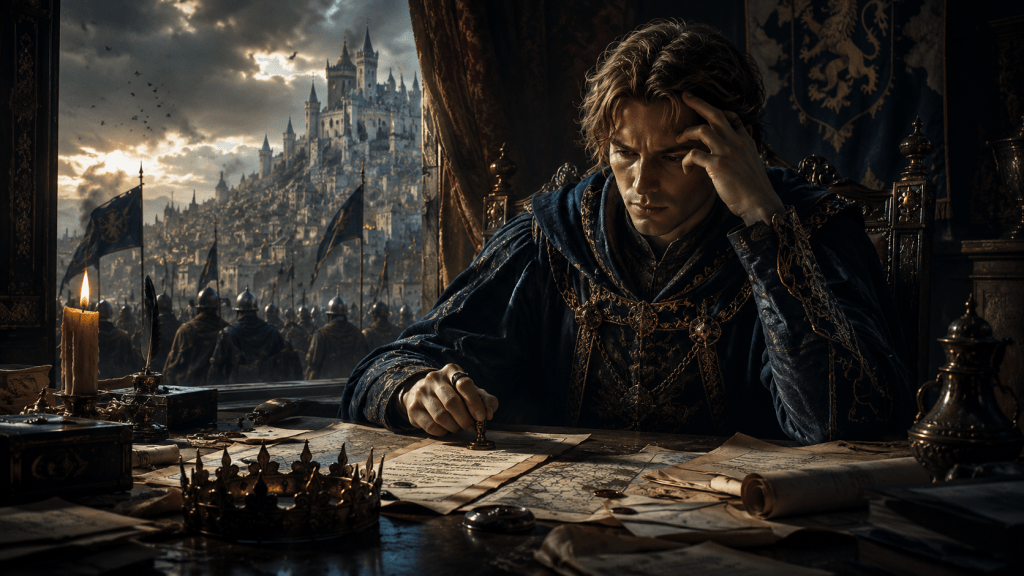
With the King and the twin princes gone beyond the familiar borders of the realm, Patrick is left at a desk that still feels like his father’s, answering petitions beneath banners that seem to remember stronger hands. The kingdom has not stopped to mourn their silence. Bremyra still requires judgement, diplomacy, restraint, and command. Each sealed letter and whispered report draws him deeper into a role he never sought, while the court watches to see whether the third son can hold steady beneath the weight of a crown that has not yet been placed upon his head.


A Prince Left at His Father’s Desk

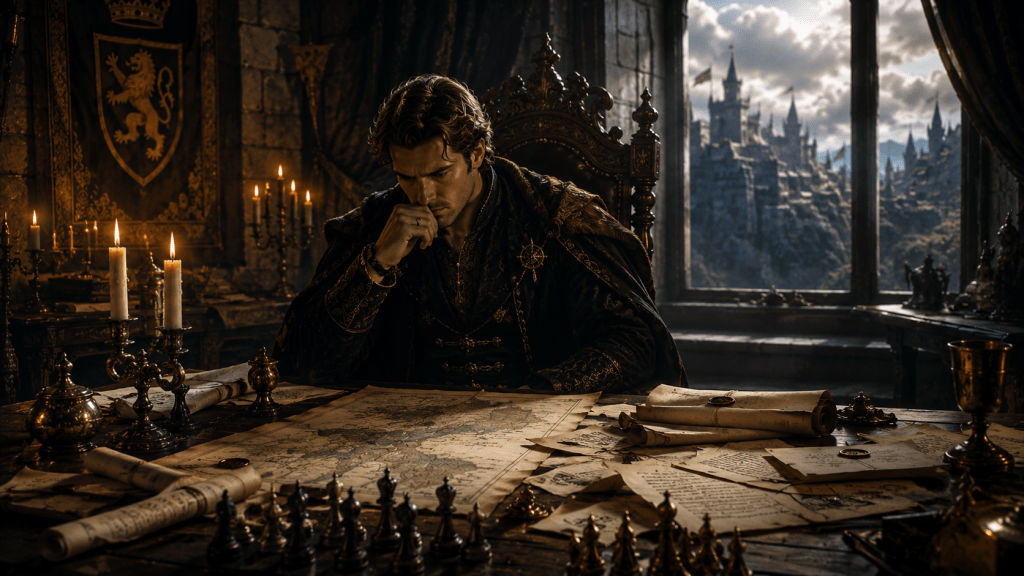
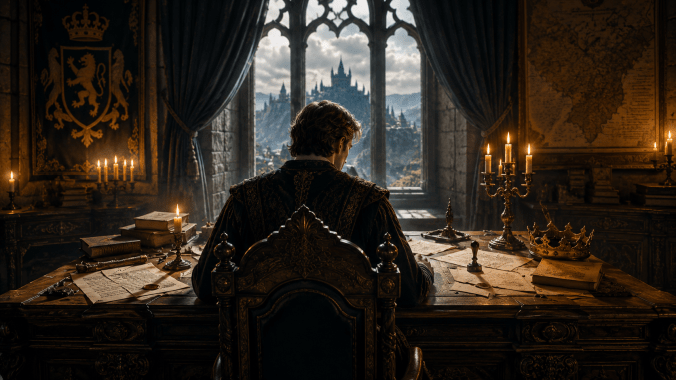
Patrick’s first appearance places him at his father’s desk, surrounded by court proceedings, petitions, diplomatic letters, and the ordinary machinery of rule. The scene is quiet, yet it carries pressure from the beginning. Bremyra has not collapsed. The castle still functions. Servants still move through its halls, guards still hold their posts, and the court still expects decisions.

That is what makes Patrick’s position so difficult.

There is no grand ceremony announcing that power has shifted. There is no clean moment where he chooses the burden. Instead, responsibility gathers around him slowly, page by page, seal by seal, until the absence of his father becomes its own form of command.

The desk itself matters. It is more than furniture in this scene. It is the place where King Cedric once shaped the movement of the kingdom, where treaties were read, roads considered, disputes answered, and royal judgement turned into law. For Patrick, sitting there is not an act of possession. It is an intrusion into a space that still belongs to someone else.

Every object around him reminds him of that. The papers waiting for his seal, the chair beside him, the formal language of court proceedings, even the silence of the room all point towards the same truth. Bremyra has continued, but it has continued around an absence.

King Cedric and the twin princes have been gone too long. Their expedition beyond the known reaches of the old empire has fallen into silence, and the court cannot live on hope alone. Patrick feels that silence every time he sits in the chair that should not yet belong to him.

This is where his burden begins. Not on a battlefield. Not before cheering banners. Not with a crown lowered onto his head.

It begins in paperwork, in waiting, and in the uneasy knowledge that a kingdom still needs ruling even when the rightful voices have gone quiet.


Patrick is trained, intelligent, and capable, yet capability is not the same as certainty.

He understands statecraft. He understands alliances. He understands that kingdoms survive through careful balances rather than noble feeling alone. His education has prepared him to read treaties, weigh counsel, manage factions, and recognise the danger hidden inside polite words. Yet Book 1 catches him at the moment where knowledge begins to harden into lived responsibility.

Bremyra is not waiting for him to feel ready.

Arvendral stirs with uncertain intentions, offering the language of peace while its movements suggest something more cautious and dangerous. Vaeldring becomes vital through Elana’s arranged marriage, turning his sister’s future into part of Bremyra’s political survival. Thalosia presses its own designs upon Patrick’s future, reminding him that even his personal life is no longer fully his own.

Every alliance has a cost, and every delay invites danger.

Patrick must decide while still grieving absence. He must govern while wondering whether his father and brothers will return. He must listen to advisers who expect steadiness from him, even as he feels the shape of his own inexperience beneath every command. The court sees a prince at the centre of power, but Patrick feels the empty spaces around him more sharply than the authority in his hands.

He is forced to think not as a younger son waiting behind the true heirs, but as the man currently holding the centre of the realm together.

This is the quiet tragedy of his opening arc. He has inherited pressure without inheriting clarity, and the kingdom has begun asking him for the certainty that no one has given him.


Elana and the Human Cost of Royal Duty

Patrick’s bond with Princess Elana gives his story its human warmth.

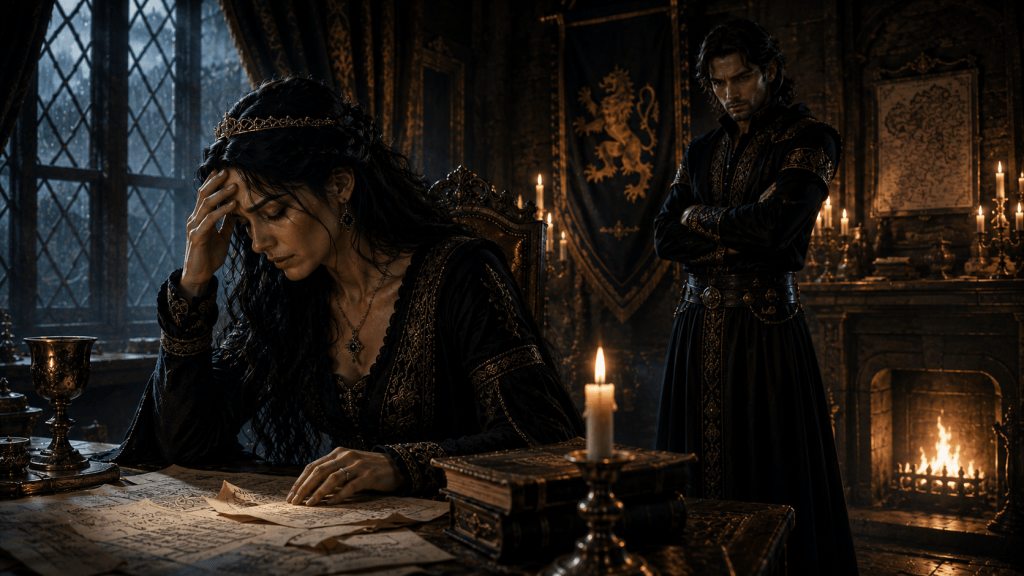
Their conversations carry the ease of siblings who have known one another beyond titles, ceremony, and court expectation. Elana does not look at Patrick only as the acting ruler of Bremyra. She sees the brother beneath the office, the young man sitting at their father’s desk before he has fully learned how to bear its weight. Patrick, in turn, sees more in Elana than the court allows. She is not merely a princess to be sent towards Vaeldring, nor a name placed into marriage negotiations. She is his sister, perceptive, spirited, and quietly braver than many of the men who speak around her.

That makes her departure harder.

Her marriage to Vaeldring is not treated as decoration. It is political architecture. Through her, Bremyra reaches towards stability, alliance, and protection at a time when the kingdom cannot afford isolation. Through Patrick, the same pressure appears in another form, as Thalosia looks towards him as a future husband and political partner. Their lives are being shaped into bridges between realms, and those bridges are built from obedience, silence, and sacrifice.

For Patrick, Elana’s journey is both necessary and painful. He understands why she must go, yet understanding does not soften the loss. Her absence removes one of the few voices able to speak to him honestly, one of the few people who can meet his burden without turning it into performance.

Both siblings are being moved by the needs of the realm.

Neither is truly free.


Bremyra Beneath Strain

Book 1 presents Bremyra as a kingdom still standing, yet already under pressure from several directions.

The danger is not simple. It does not arrive through one army at the gate or one enemy declaring war. Instead, it comes through rumours, border tension, court unease, foreign movement, and unanswered questions. Patrick must govern inside that uncertainty.

The court watches him. The Church measures the arrival of the Order. The nobles depend upon him while also studying his weakness. Every decision he makes is made beneath the shadow of men who are absent and institutions that remain powerful.

Patrick’s strength in Book 1 is not certainty. It is endurance. He keeps sitting at the desk. He keeps answering. He keeps listening. He keeps choosing, even when every choice feels incomplete.


The Arrival of Simion

The arrival of Simion changes the shape of Patrick’s burden.

Until that point, Patrick’s problems, however heavy, still belong to the visible world of rule: letters, borders, marriages, missing family, restless neighbours, and a court that expects him to answer before he feels ready. Simion brings something different into Bremyra. He brings the Order with him, and the Order is not simply another political body waiting to be managed.

To the court, Simion is a magician, and that alone is enough to unsettle the air inside the castle. The Order does not stand beneath a crown in the way soldiers, servants, and councillors do. It carries older authority, colder memory, and laws of its own. Its presence reminds Bremyra that there are powers in Ældorra which do not bend easily to royal command.

Patrick senses this immediately.

He wants plain answers, yet Simion does not offer them. The magician speaks with restraint, carries himself with controlled distance, and seems to move through Bremyra as both guest and investigator. He has returned to a place he once knew, yet he does not belong to it in any simple way. That makes him difficult for Patrick to read. Simion is familiar and foreign at once, tied to childhood memory through Elana, yet shaped by an institution Patrick cannot fully trust.

His presence stirs different fears in different people. Elana remembers the boy from the kitchens and sees something human beneath the robes. The Church sees the shadow of the Order and answers with suspicion. Patrick stands between both responses, aware that Simion may be dangerous, useful, wounded, or all three at once.

That uncertainty matters.

Patrick is not naïve enough to dismiss the threat a magician might pose, but neither is he foolish enough to ignore what Simion represents. Bremyra’s dangers are widening beyond ordinary court business. Foreign attackers have begun to move where they should not. The silence surrounding King Cedric’s expedition has grown harder to explain. The old world, once safely buried in books and ruins, seems to be pressing closer to the present.

In that atmosphere, Simion becomes more than an unsettling arrival.

He becomes a question Patrick cannot afford to put aside.

That tension becomes one of the important relationships in Book 1. Patrick cannot fully trust Simion, but he cannot ignore him either. He needs answers, yet the man most likely to find them carries secrets of his own. The prince and the magician stand on opposite sides of old authority, crown and Order, yet both are being drawn towards the same gathering storm.

For Patrick, accepting Simion’s presence is not an act of comfort.

It is an act of necessity.


Patrick’s understanding of power changes during the ambush in Bremyra.

Until that moment, magic can still be kept at a distance. It belongs to the Order, to old stories, to political caution, and to the fear other people carry when a magician walks through the room. Patrick can study it as a matter of court risk. He can weigh Simion’s presence as a political complication. He can listen to the Church’s distrust and the council’s unease while still treating magic as something held beyond the ordinary shape of his duties.

Then foreign attackers strike inside Patrick’s own city, and all distance vanishes.

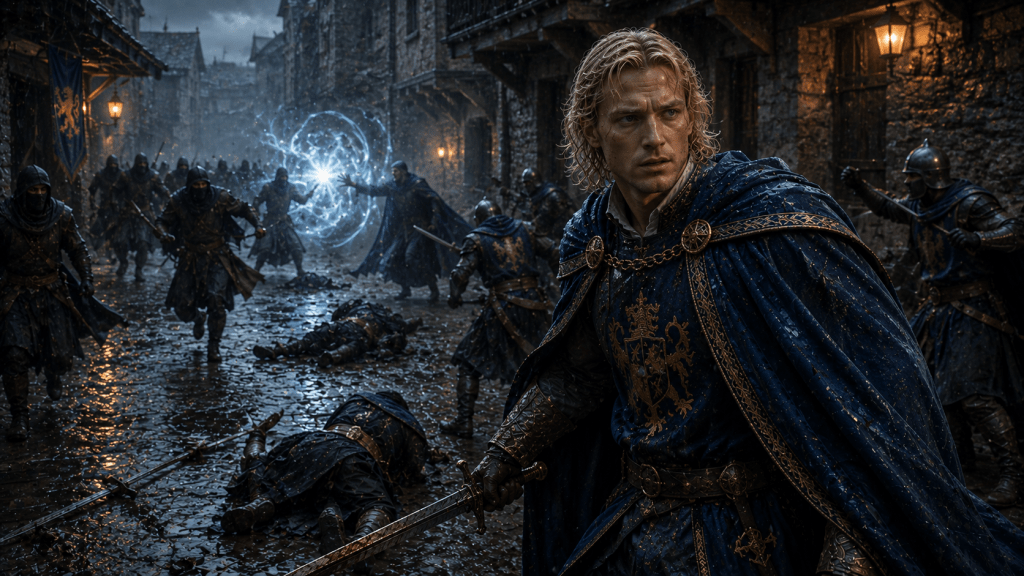
The attack is brutal, immediate, and personal. Patrick is no longer dealing with reports, rumours, or border movement. He is facing steel, strength, and death at close range, with the guards around him struggling to contain a threat that should never have reached him. The street becomes a place of sudden exposure. The prince who has spent his days behind desks, councils, letters, and guarded ceremony is forced into the raw truth of violence.

When Simion intervenes, Patrick sees magic not as theory, but as force.

There is no courtly veil around it. No ancient language softened by distance. No comfortable illusion that such power belongs safely inside the boundaries of the Order. Simion acts with speed and precision, and the world around Patrick changes in the space of a breath. The magician does not merely assist. He alters the outcome entirely.

It saves Patrick’s life.

It also unsettles him.

That is what makes the moment important. Patrick is grateful, yet he is too perceptive to be simple in his gratitude. He understands that the same power which protected him could terrify a court, silence a street, or reshape the balance between crown and Order if misused. He has seen something no council report could fully prepare him for: a man standing beside him who carries a kind of authority no prince can command in the ordinary way.

Patrick does not respond like a fool. He does not dismiss what he has seen, nor does he surrender blindly to it. He recognises the truth placed before him. Bremyra’s troubles may reach beyond ordinary politics, and Simion’s strength may be part of whatever answer the kingdom needs.

From there, Patrick’s relationship with Simion shifts. Gratitude enters the space between them. So does caution. So does necessity.

Patrick may not yet understand what Simion truly is, but he understands this much: Bremyra has stepped onto ground where steel, law, and royal blood may no longer be enough.


The Crown Begins Before the Coronation

Patrick’s arc in The Unmarked Path is not about becoming king in name. It is about the crown beginning to shape him before he is ready to wear it.

He is still a prince. He is still waiting for news of his father. He is still measuring himself against brothers who were meant to stand ahead of him. Aric and Aiden carry the image of succession more naturally in Patrick’s mind, while King Cedric remains the figure whose judgement should steady the realm. Yet their absence leaves no living hand between Patrick and the demands of Bremyra.

That absence becomes a kind of pressure.

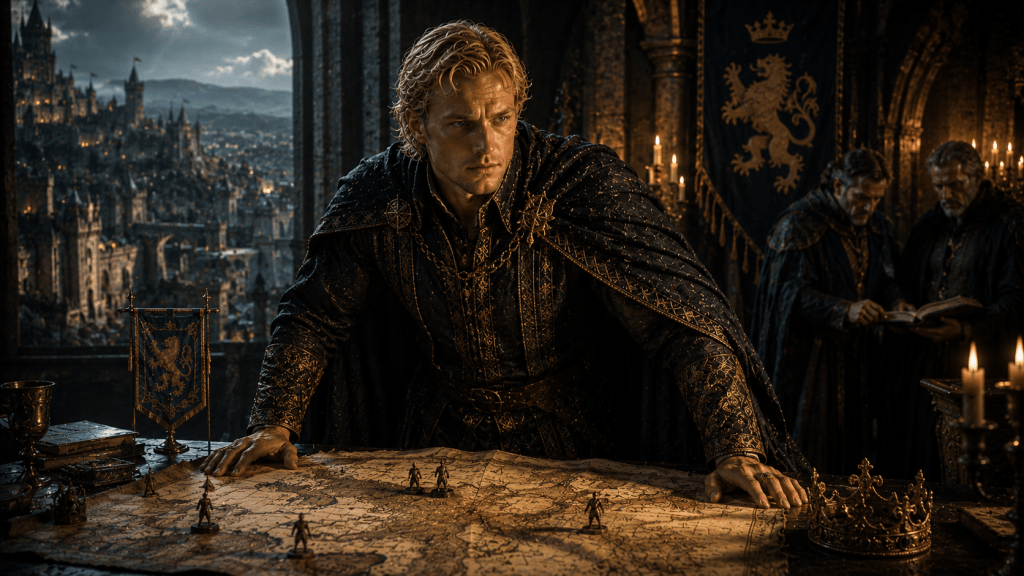
Every petition placed before him reminds him that the kingdom cannot pause. Every council meeting asks him to speak with a confidence he does not fully feel. Every border report, marriage negotiation, and whisper from the court presses him closer to the shape of rule. He is not crowned, yet already he is being tested by the crown’s demands.

That is where his story gains its weight.

Patrick does not have Simion’s magic. He does not have Týrnan’s warrior certainty. He does not carry Elana’s hidden brilliance in the same way. His burden is different. He must stand in rooms where everyone wants something. He must listen to soldiers, priests, councillors, nobles, and foreign powers, knowing that each voice carries its own fear, ambition, or concealed truth.

He must make choices with incomplete knowledge. He must protect a kingdom that may already be part of a much older conflict. He must learn that leadership is not always a matter of bold speeches or battlefield glory, but of remaining steady while the world quietly removes every certainty around him.

Patrick’s strength in Book 1 is not triumph. It is endurance under scrutiny. He continues to sit at the desk, answer the summons, weigh the reports, and hold the centre while forces greater than one prince begin to move around Bremyra.


Why Patrick Matters in Book 1

Patrick matters because he gives the opening story its political heart.

Through him, Bremyra becomes more than a backdrop. It becomes a living kingdom, full of fragile alliances, absent rulers, cautious advisers, religious authority, old loyalties, and roads that no longer feel safe. His chapters show what happens when ancient danger begins pressing against ordinary governance, not through prophecy alone, but through letters, councils, rumours, borders, and the silence left by those who should have returned.

He stands between the personal and the political. Elana’s future is not only his sister’s sorrow, but part of Bremyra’s survival. Simion’s arrival is not only the return of a childhood memory, but a threat to the balance between crown, Church, and Order. Every private fear Patrick carries is mirrored by a public consequence waiting beyond the chamber door.

The wider world may be turning towards magic, invasion, and divine memory, but Patrick’s struggle remains deeply human.

He is tired.

He is uncertain.

He is watched.

And still, he must rule.


The Reluctant Heir

By the end of Book 1, Patrick has not solved Bremyra’s troubles. He has not uncovered the full truth of the foreign attackers, his father’s disappearance, or the strange forces gathering around Simion. What he has done is survive the first testing of his authority, and that survival matters.

He has seen that danger can reach him inside his own city, slipping through streets he believed protected by law, guard, and stone.

He has seen that Simion’s power may alter the fate of Bremyra, not as distant legend or court rumour, but as a force standing beside him when steel comes too close.

He has seen that Elana’s path is far more fragile than politics allowed him to believe, and that royal duty cannot always protect those it claims to serve.

Most of all, Patrick has begun to understand that rulership does not arrive with certainty. It arrives through pressure, through fear carefully hidden, through decisions made before every answer is known. His father’s chair remains too large for him, yet the kingdom has already begun looking to him as though he belongs there.

The crown is not waiting politely in the future.

It is already pressing its weight into his hands.

The Unmarked Path begins the first movement of The Veil of Kings and Gods, a fantasy series of political pressure, ancient magic, divine silence, and the people caught at the edge of forces older than kingdoms.

Zone Thirteen and the Pressure of a Fractured Sci-Fantasy World

Where Broken Systems Still Breathe

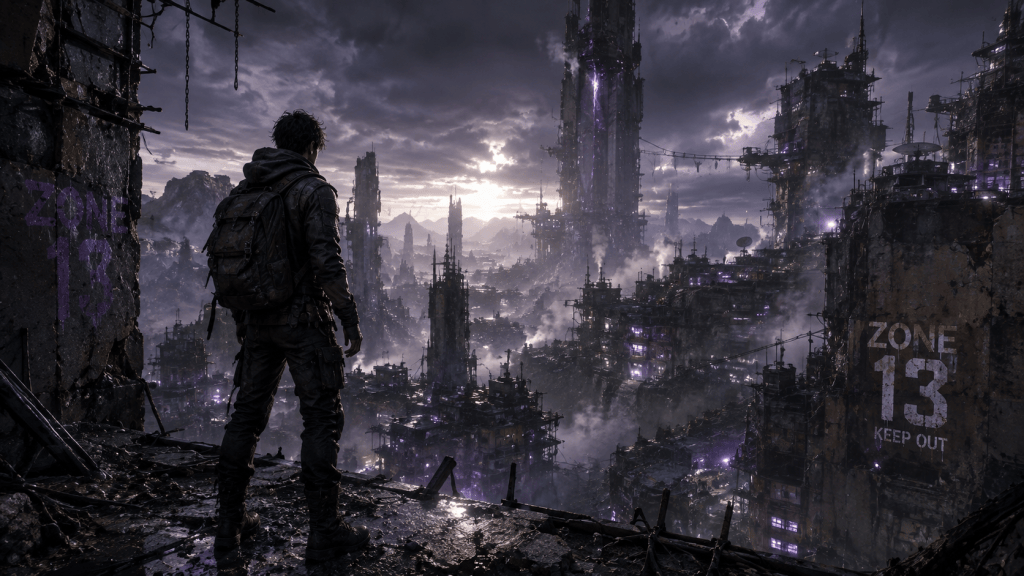
Zone Thirteen stood at the edge of human order, though order had become a generous word for what remained there. The roads held their shape through habit more than repair. Pylons leaned into the wind with stripped frames and tired wires. Habitation shells endured by patchwork, scavenged metal, old clamps, and the quiet discipline of those who had learned to survive among systems already past their intended life.

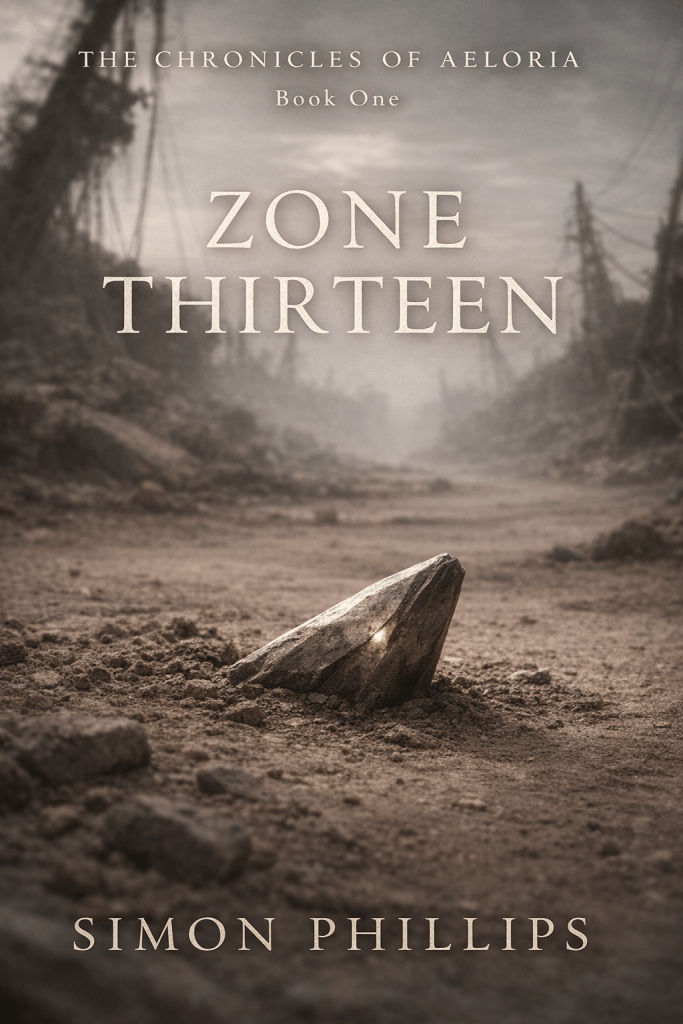
For a mythic sci-fantasy novella, this kind of place matters. Power rarely begins inside palaces or temples. It begins where nobody expects consequence to gather. It begins in forgotten ground, beneath broken infrastructure, among salvage routes and old machines that still carry a faint memory of function. In Zone Thirteen, the opening movement of The Chronicles of Aeloria, the world does not announce itself through prophecy. It presses against the skin first.

Aeloria’s world is built from edges. The edge of roads. The edge of notice. The edge of value. The edge of systems that still respond in fragments. His life among salvage, tokens, failed conduits, and old relay units places him inside a fractured worlds fantasy series before the wider realms are ever named. The science fantasy pressure is already present in the environment itself, where broken technology carries something older than machinery and where dormant crystal behaviour waits beneath practical survival.

Zone Thirteen is not simply a damaged settlement. It is a pressure space. Every surface suggests previous use, previous collapse, previous hands stripping away whatever could still be sold or made useful. The people living there have inherited failure without receiving explanation. They cross unstable ground because the ground still allows them to cross. They use systems because enough of those systems continue to answer. They survive without believing survival has larger meaning.

That is why the shard matters before it is understood.


Power Before Understanding

In many fantasy stories, power arrives as revelation. In Zone Thirteen, power arrives as misalignment. The hum changes. The ground delays its response. Pylons flare when no working line should carry current. A storm gathers around an object whose shape and behaviour exceed every category available to the boy who finds it.

This is where the novella’s strongest discovery language sits. Aeloria does not step into mastery. He is pulled into pressure. The shard responds to him through heat, weight, resistance, and bodily consequence, making power feel like an event before it becomes a destiny. It is a magical crystal world fantasy without the comfort of clean enchantment. The crystal does not explain itself. It enters the body’s awareness through pulse and strain.

That restraint gives the world its force. Ancient systems remain present, yet their purpose has thinned into fragments. Relay units, pylons, conduits, machines, and scanning beams all belong to a technological order, while the shard and surge belong to an inheritance older than human control. The result is fantasy with ancient technology shaped through use, decay, and response. Nothing feels decorative. Nothing exists only to signal wonder. Every object carries function, failure, or threat.

The Zone teaches Aeloria how to read surfaces. He knows which paths draw attention, which structures still offer cover, which salvage holds value, and which movements might leave traces. That training becomes crucial once the world itself begins acting like a system that can notice him. He has spent his life avoiding attention in a place where attention costs. Once the shard wakes, hiding becomes more difficult because the environment responds before people do.

This is one of the deeper tensions inside atmospheric sci-fantasy fiction. A broken system can remain survivable for years, even generations, until something returns meaning to it. Zone Thirteen has survived through neglect because neglect is predictable. The surge changes that. It reminds the Zone of older pathways, older connections, and older power. What once failed quietly begins answering in fragments, and each answer draws the attention of forces trained to contain rather than understand.

The figures who arrive after the surge carry a different kind of fear. They are clean where the Zone is worn. Their machines move with coordinated precision through a place that usually belongs to improvisation and adaptation. They speak in controlled signals: contact, containment, grid. Their presence turns Aeloria’s home into an operational field, reducing lived ground into a map of detection and response.

That shift matters because The Awakening of Power is a series about misreading. Institutions see signal before person. Systems see anomaly before fear. Power is classified before it is understood. Aeloria becomes dangerous to others the moment the world reacts to him, even though he remains the one least able to explain what has happened.


Entering Zone Thirteen

Zone Thirteen is Book 1 of The Chronicles of Aeloria, and it functions as the first contained movement in a slow-burn fantasy novella series shaped around pressure, displacement, and awakening. Its focus remains intimate. It holds close to one boy, one settlement, one guardian figure, one shard, and one rupture that changes the scale of everything.

The novella’s surface is survival. Aeloria moves through salvage routes, trades recovered parts, returns to the shack he shares with Larn, and measures value through tokens, repairs, and risk. Beneath that practical rhythm, the world begins to reveal its deeper instability. The ground shifts by fractions before larger distortions arrive. Systems respond in brief fragments before the surge takes hold. The storm grows from environmental pressure into something that feels almost structural, as though reality itself has begun to move out of alignment.

The experience of entering Zone Thirteen is the experience of entering a world already strained past comfort. It does not rush to explain its history. Instead, it lets the reader feel the shape of life inside its failure. Salvage is labour, habit, economy, and concealment. Larn’s shack is shelter, base, repair space, and emotional centre. The shard is discovery, wound, inheritance, and signal. The rupture is departure, threat, and threshold at once.

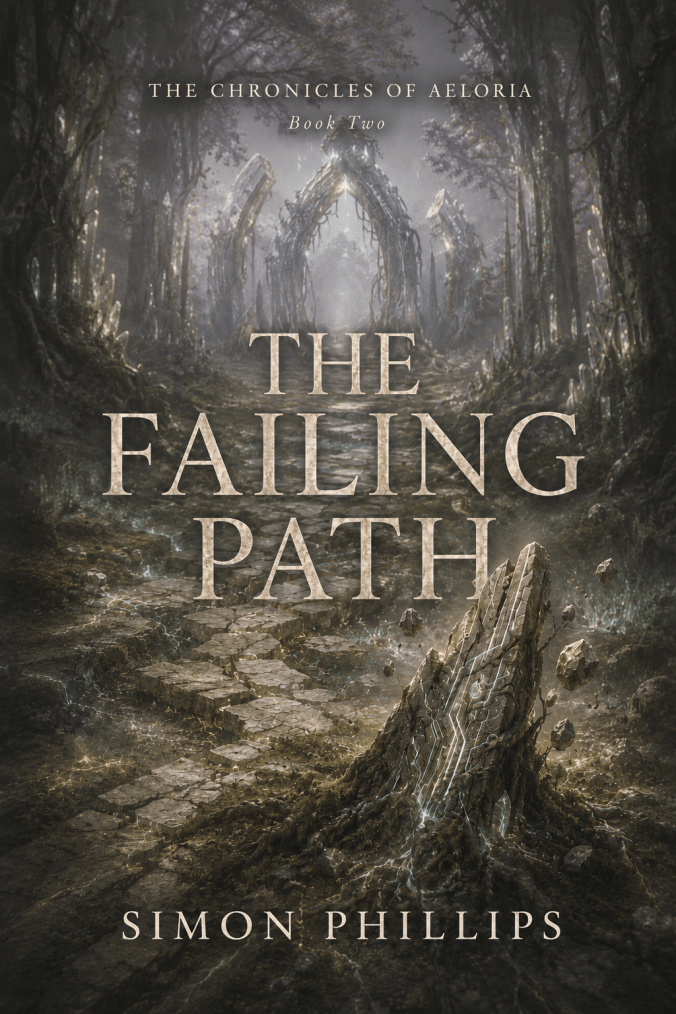
The KDP ebook link can sit quietly as the reader’s next step rather than as a loud interruption: The Chronicles of Aeloria: Zone Thirteen

What makes this opening work as a science fantasy novella series entry is its refusal to treat awakening as triumph. Aeloria gains no clean victory from the shard. He loses stability. He loses the safety of being overlooked. He sees Larn threatened. He feels the world answer him without consent. By the end, the Zone itself tears open, and the familiar ground beneath him gives way to motion, light, and the unknown.

The result is a beginning that feels complete in emotional pressure while leaving the larger mythic system unresolved. The novella closes the life Aeloria knew. It opens the passage into everything his world had buried.


The First Pressure of the Fractured Realms

Beyond Zone Thirteen, the larger movement of The Awakening of Power rests on fractured realms, ancient crystal systems, separated races, weakened pathways, and a forgotten inheritance that each civilisation understands only in part. The first novella keeps that larger architecture mostly beneath the surface, which strengthens its mystery. The reader senses scale through reaction rather than explanation.

The shard’s behaviour suggests inheritance before history names it. The surge shows that dormant systems can awaken through contact with the right presence. The glider introduces the possibility of non-human craft without turning the scene into exposition. The machines and external operators reveal that human authority has already developed methods for detection and containment, perhaps long before Aeloria ever became visible to them.

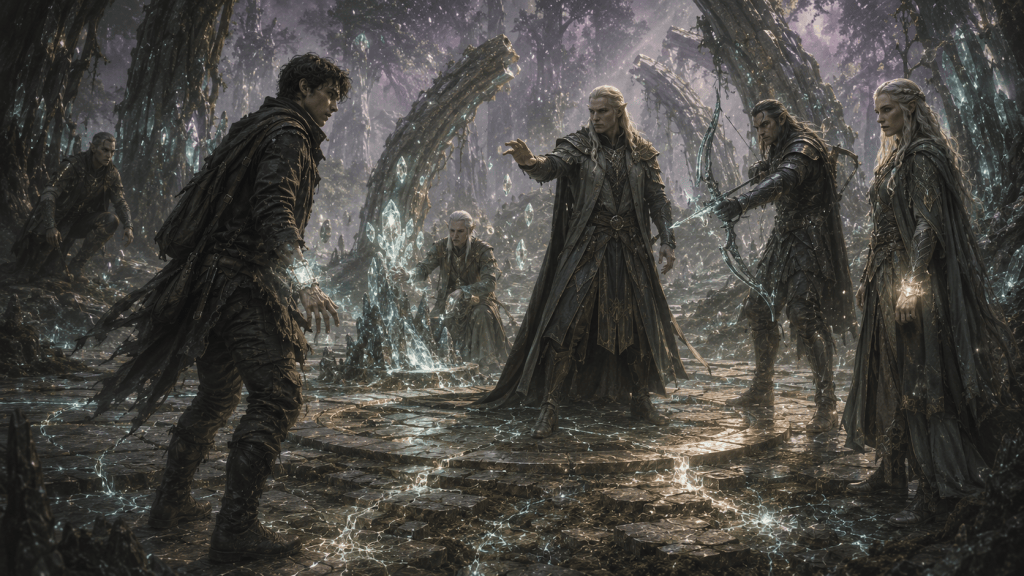
This layered approach allows the series to grow without feeling sudden. Zone Thirteen becomes the first pressure chamber of the wider fractured worlds fantasy series. It shows the human edge of a broken order: poor infrastructure, procedural enforcement, salvage economies, survival routes, and old systems degraded into partial function. Later realms may bring temples, pathways, crystal harmonics, elven vessels, ancient ruins, and political fear, yet their foundation is already present in the way Zone Thirteen behaves.

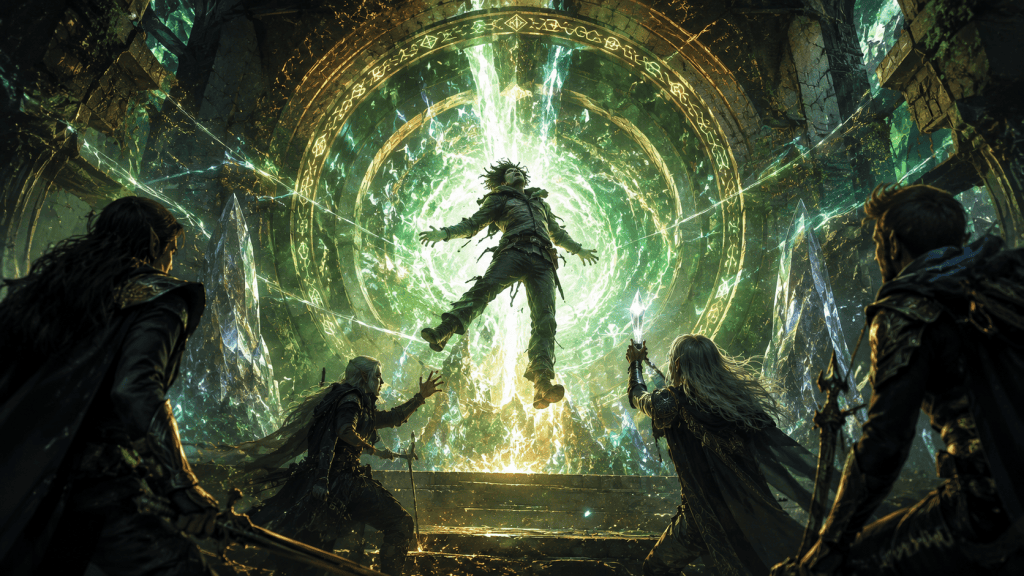
The fractured realms are living systems rather than simple locations. They remember through infrastructure. They answer through instability. They preserve old connections in damaged forms. When Aeloria touches the shard, he does more than activate an object. He forces the hidden relationship between body, crystal, environment, and old design into motion again.

That is where the mythic weight begins. Power in this world is neither prize nor weapon in its first expression. It is pressure. It changes footing. It changes sound. It changes how machines move and how people speak. It turns a scavenger into a signal and a home into a containment zone.

The cost of that awakening lies in the way no one present can fully interpret it. The Zone cannot explain itself. The operators act through procedure. Larn understands enough to recognise danger, yet even his protection cannot hold against the scale of what has begun. Aeloria feels the truth physically, long before he can name it. That gives the series its strongest continuity thread: understanding always arrives late.


What the World Remembers

Zone Thirteen remains behind, though it does not vanish. Places like that never vanish cleanly. They remain in the body through habit, caution, and the memory of ground tested before each step. They remain in the way a person watches doorways, listens to hums, weighs silence, and understands that attention can become a form of danger.

Aeloria leaves the Zone through rupture, yet the Zone has already shaped the way he will move through every realm that follows. He has learned broken systems before he learns ancient ones. He has learned survival before inheritance. He has learned that value is always judged by those holding power, and that being useful can become another kind of trap.

The world beyond the rupture waits with its own temples, pathways, ruins, and crystal pressures. Other races will carry their own partial truths. Other systems will claim older authority. The fractured realms may speak of balance, restoration, fear, and unity, yet the first lesson remains grounded in dust, salvage, and failing pylons.

A forgotten place answered first.

A shard woke inside a boy who had spent his life avoiding notice.

The world shifted before anyone understood why.