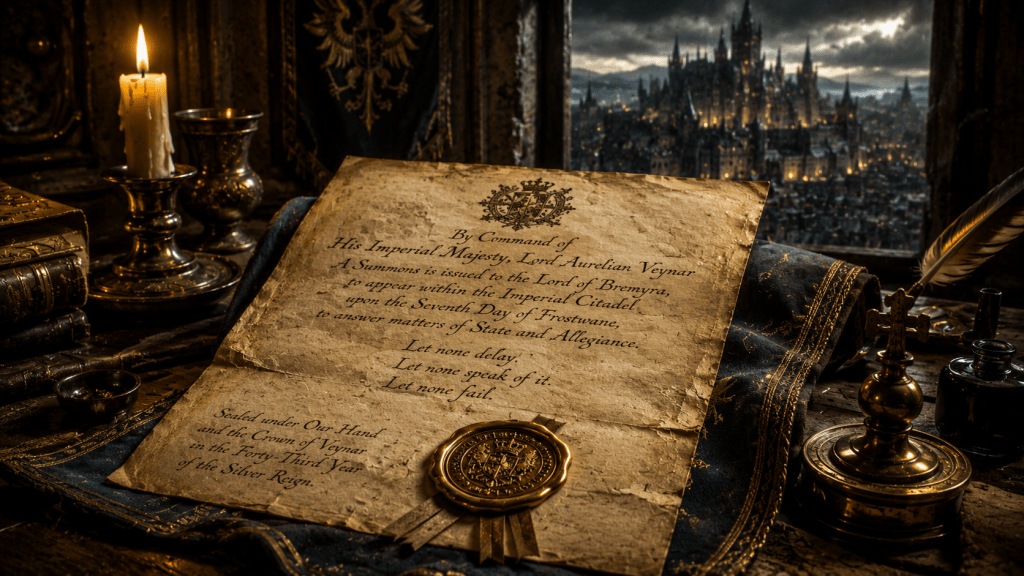
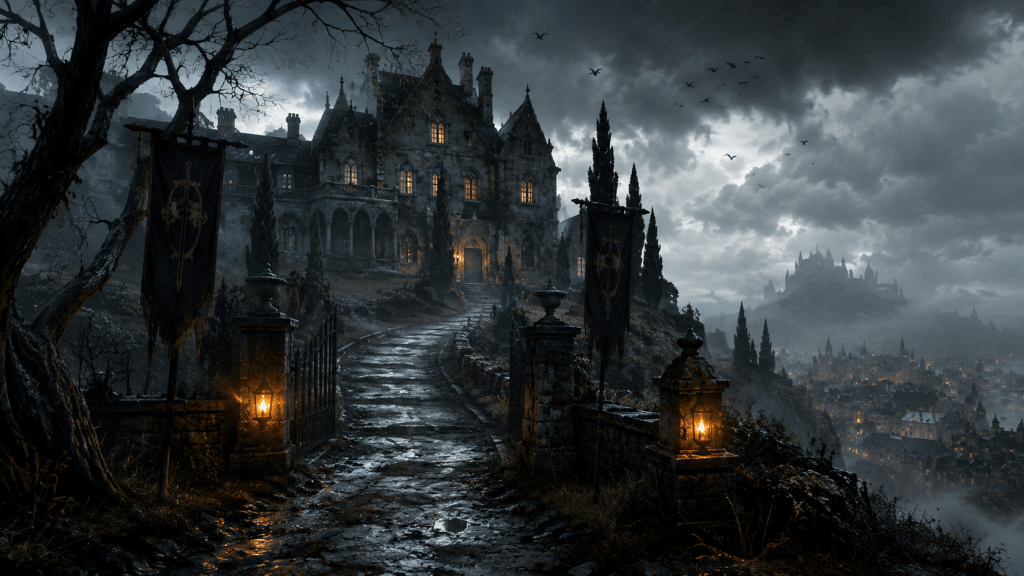
Some stories begin with war. Others begin with prophecy, a fallen kingdom, or a blade drawn at the edge of an empire.
The Unmarked Path begins with a quieter disturbance.
A magician arrives in a coastal kingdom under sealed orders. A prince governs in the absence of his father and elder brothers. A northern war leader crosses the sea with warriors at his back, uncertain whether the conquest ahead will preserve his people or carry them into something far darker. Beneath these movements, older powers begin to stir. The world has shifted before any of them fully understand what has changed.
This is the opening movement of The Veil of Kings and Gods, my upcoming fantasy novella series, and the first book, The Unmarked Path, will be released soon.
To mark that approaching release, I have created a short animated promotional video offering a first glimpse of the stakes surrounding the story. It is not a full trailer in the traditional sense, and it is not meant to explain every strand of the plot. It is a mood piece, a visual opening into the pressure gathering around the novella: ancient danger, royal uncertainty, invasion from the north, and one magician beginning to stand too close to forces far older than he realises.
At the centre of The Unmarked Path is Simion, a magician of the Order who has never thought of himself as exceptional. He returns to Bremyra, the kingdom where he once lived as a kitchen boy, carrying private instructions from the Council of Five. Three magicians vanished there years earlier while investigating disturbances tied to the ruins of the ancient Imperium Arcana. Simion has been sent to discover what became of them, even as the court around him grows increasingly unstable.
Bremyra is already strained when he arrives. Prince Patrick, third in line to the throne, has been left to manage the kingdom while his father and elder brothers remain absent on a distant expedition. Border tensions are rising. Marriage alliances carry more weight than comfort. The Church watches the Order’s return with suspicion. Every part of the court appears to be functioning, yet uncertainty has settled beneath it.
Then the threats begin to move closer.
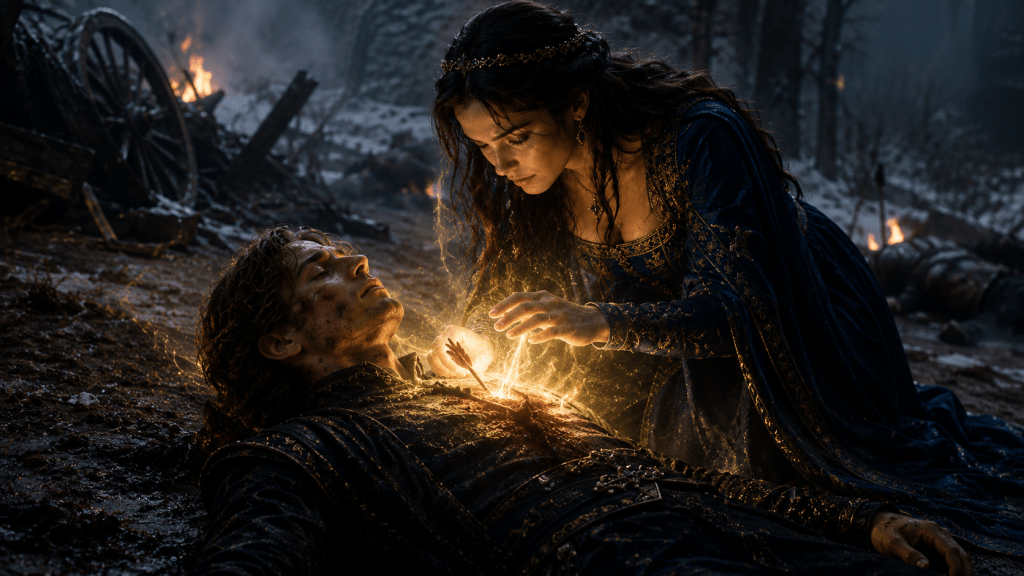
An ambush inside Bremyra reveals attackers whose weapons and clothing belong to no familiar neighbouring realm. A royal journey turns violent. Ancient magic hidden beneath the castle awakens to Simion’s touch. A sealed book comes into his possession. A voice beyond mortal understanding warns that the balance is failing and that an old binding is beginning to weaken.
At the same time, far to the north, Týrnan Valgrim leads his people across storm-torn seas. He is a war leader, disciplined and respected, yet already troubled by the cruelty growing within the wider invasion. His arrival on southern shores widens the novella beyond Bremyra’s walls. The world is not facing one contained crisis. Several pressures are beginning to converge, each still distant enough to be misunderstood, each moving towards consequence.
That convergence is what drew me most strongly to this opening book.
I wanted The Unmarked Path to begin at the point before the central conflict becomes fully visible. The story is not about heroes already prepared for destiny. It is about people standing inside ordinary duties, court work, political obligation, military command, magical service, before realising that the ground beneath those duties has started to give way.
Simion does not arrive knowing that his life has entered a larger design. Patrick does not yet know that his temporary stewardship of Bremyra may demand far more than governance. Týrnan does not understand what the southern campaign will truly become. Even Princess Elana, whose presence carries an emotional warmth through the first novella, begins the story on a path chosen for dynastic duty rather than personal freedom.
Each of them is caught at the edge of change.
That was the feeling I wanted the animated promo to carry. Not a summary. Not a sequence of plot revelations. A sense that several lives are moving towards the same gathering storm, and that once they cross the threshold, the world they understood will no longer be enough.
The Veil of Kings and Gods is a long-form fantasy novella series concerned with power, belief, memory, empire, and the individuals drawn into histories they never asked to inherit. The Unmarked Path opens that wider arc through political tension, magical mystery, northern invasion, and the first signs of an ancient danger pressing once more against the world.
The book will be released soon, and I will share the publication details once the final launch is ready.
For now, this animated preview offers the first public look at the tone and stakes of the story.
A salvage vessel returning from the silent debris field delivers a fragment that does not appear in any Fleet registry.
The Salvage Run Beyond the Debris Perimeter
The salvage vessel Kestrel Drift emerged slowly from the outer debris field, with engines glowing a faint amber against the darkness. Its heavy hull moved with the deliberate patience of a ship that had travelled far beyond the mapped traffic lanes surrounding Kestren-4. Far ahead, the vast ring of Ashfall Station turned in silent orbit above the pale curve of the exhausted mining world. Its long industrial spines caught thin starlight while docking lights burned like distant embers along the station’s outer arms. Around the vessel, fragments of abandoned machinery and forgotten satellites drifted through the wide expanse of the system’s outer graveyard. These were remnants of earlier decades when cargo fleets and refinery platforms filled this region with activity that had long since faded into quiet isolation. The deeper edges of the debris field stretched outward into a quieter region of orbit, where salvage crews occasionally ventured in search of forgotten structures whose value lay hidden beneath years of drifting metal and silence.
Captain Elia Marr stood beside the forward observation console while the ship’s navigation system guided their slow return trajectory toward the station’s approach corridor. Her attention remained fixed upon the massive structure secured within the vessel’s external tow frame. The object followed the salvage ship through space with unsettling stillness, its surface reflecting faint bands of light across plates of metal whose design resembled no vessel recorded within the station registry. Salvage crews recovered thousands of fragments across the debris perimeter each year, pieces of forgotten cargo carriers or broken relay towers scattered across the long history of frontier industry. This fragment carried a different presence entirely. It was an immense cylinder of dark alloy whose structure appeared older than the wreckage surrounding it, its edges carved with patterns that drifted across the surface like weathered markings left behind by an unknown engineering language.
The discovery had occurred several hours earlier during a routine sweep along the fading edge of the debris perimeter, where the density of wreckage fell away into the darker reaches of the system’s outer orbit. The Kestrel Drift had traced its scanning pattern through a cloud of drifting relay antennae and shattered docking pylons when the object appeared upon the ship’s long-range sensors. Its dense mass stood out among the scattered fragments of abandoned industry. At first Marr assumed the reading belonged to the broken core of a transport module whose hull plating had collapsed long ago. When the ship closed the distance, the fragment revealed itself as something far stranger. It was an intact structure rotating slowly through open space, as though it had arrived from somewhere far beyond the ordinary boundaries of the debris field.
Inside the cockpit, the ship’s systems hummed steadily while Kestrel Drift advanced toward Ashfall Station, with its unusual cargo trailing silently behind. Marr allowed her gaze to follow the faint glow emanating from narrow seams running along the fragment’s exterior. Those lights pulsed at irregular intervals, subtle shifts of colour moving through the object’s surface in a pattern that resisted simple explanation. Salvage crews possessed equipment capable of identifying most known alloys circulating through the frontier systems. Yet every scan performed during the recovery process returned incomplete results, as if the fragment belonged to a category of construction that station registries had never recorded.
“Captain,” the navigation officer said quietly from the secondary console while the sensor displays flickered across his station. “Dock control is requesting cargo classification for the tow frame. They want confirmation before opening Docking Arm Twelve.”
Marr continued watching the fragment drift behind the ship, its dark surface turning slowly through the thin light of distant stars while Ashfall Station grew larger across the forward viewport.
“Transmit standard salvage clearance,” she replied after a moment of consideration. “Independent recovery operation. Unknown industrial fragment recovered beyond the debris perimeter.”
The navigation officer hesitated while entering the classification codes into the communication console. “That description leaves plenty of room for interpretation.”
“Ashfall specialises in interpretation,” Marr said calmly. “Let the station decide what it believes that thing might be.”
Ashfall Station continued its slow rotation ahead while the salvage vessel threaded its course toward Docking Arm Twelve, the station’s long industrial corridor reserved for freight traffic and independent recovery crews returning from the distant wreckage zones. The immense structure filled the viewport with growing detail as the ship advanced through the traffic corridor. It revealed layers of docking arms, maintenance gantries, and habitation sectors that had accumulated across decades of frontier construction. Amber guidance lights flickered along the docking arm while cargo tugs drifted between the outer platforms, guiding freight containers toward interior transit lifts. Life inside the station carried on with the steady rhythm of a place that had endured long enough to become part of the frontier itself.
Docking control acknowledged the vessel’s approach with routine clearance codes, unaware that the salvage ship carried something far older than the frontier installations scattered across the system. Within a few hours, the fragment would pass quietly through the station’s cargo registry and vanish behind sealed research doors deep within Ashfall’s inner decks. It would leave only the faintest trace within the official records of a salvage run that had recovered an object whose origins lay far beyond the station’s forgotten debris fields.
Station Record: Docking Arm Twelve
Station cargo archives record that the independent salvage vessel Kestrel Drift entered the Ashfall traffic corridor during the early maintenance cycle of Sector Rotation 4481. It approached through the outer freight lane used by vessels returning from the distant debris fields surrounding the Kestren system. Docking guidance systems directed the ship toward Docking Arm Twelve, a freight corridor commonly assigned to recovery crews operating beyond the mapped salvage perimeter.
The vessel reported the retrieval of a large unidentified fragment recovered from deep orbit several hundred kilometres beyond the outer debris boundary. Salvage operations within that region occasionally return damaged infrastructure from abandoned industrial platforms or fragments of transport vessels lost during earlier decades of frontier expansion. Initial cargo declarations submitted by the crew of Kestrel Drift classified the object simply as an industrial structure of unknown origin.
Dock control authorised standard recovery clearance and assigned the vessel a temporary cargo transfer window within the station’s external freight platforms. Maintenance records indicate that the fragment remained secured within the vessel’s tow frame during docking. Its transfer required the use of a heavy cargo crane normally reserved for refinery modules and structural salvage recovered from the deeper sectors of the debris field.
Internal station documentation confirms that the object was moved into Ashfall’s cargo network shortly after the vessel completed its docking sequence. Transport logs show the fragment passing through several internal freight elevators before arriving in a sealed research hold located deep within the station’s interior industrial sectors.
Public cargo registry entries referencing the object remained visible within the station’s open records for only a short period. Access to the documentation was then restricted under research authority protocols. Subsequent references to the recovered fragment appear only within internal archive systems accessible to a limited number of station departments.
Within the wider operational records of Ashfall Station, the salvage run conducted by Kestrel Drift appears at first glance to have been routine. Yet later archive reviews would identify this docking record as the earliest documented reference to an object whose arrival quietly altered the future of the station itself.
About the Creator
The Future Chronicle is written and curated by Simon Phillips, a writer of science fiction and speculative storytelling who explores the quiet edges of human expansion, where ageing stations, distant worlds, and forgotten technologies continue their slow existence beyond the reach of the central worlds.
Many of the stories presented in these Chronicles exist within a wider fictional universe that follows the lives of investigators, engineers, and frontier workers living far from the comfort of the inner systems, where the machinery of civilisation continues to function long after its original purpose has begun to fade.
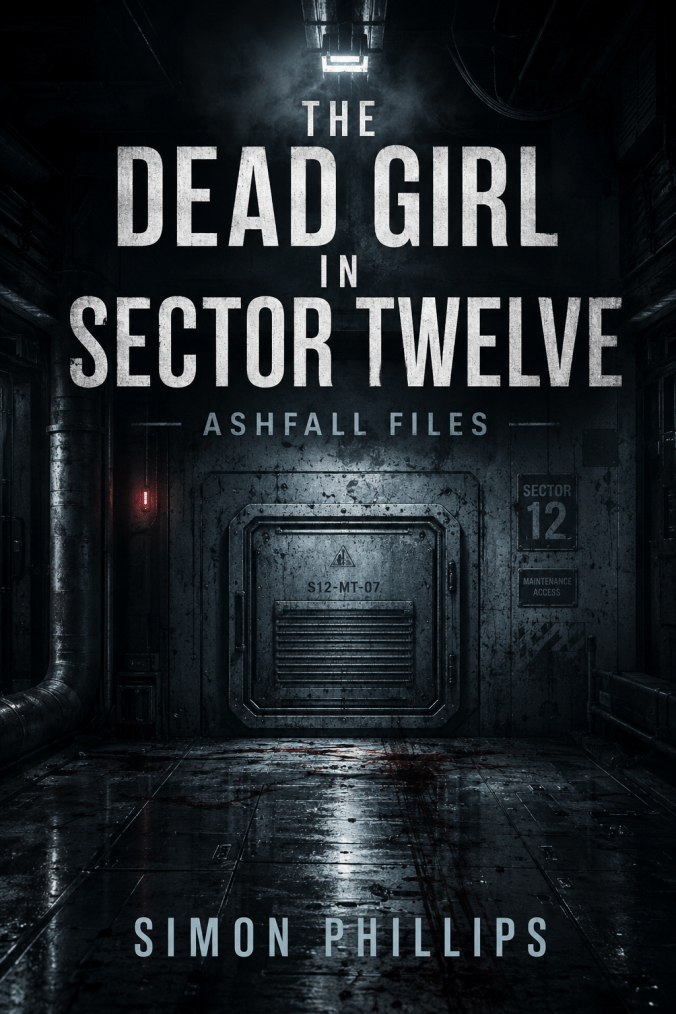
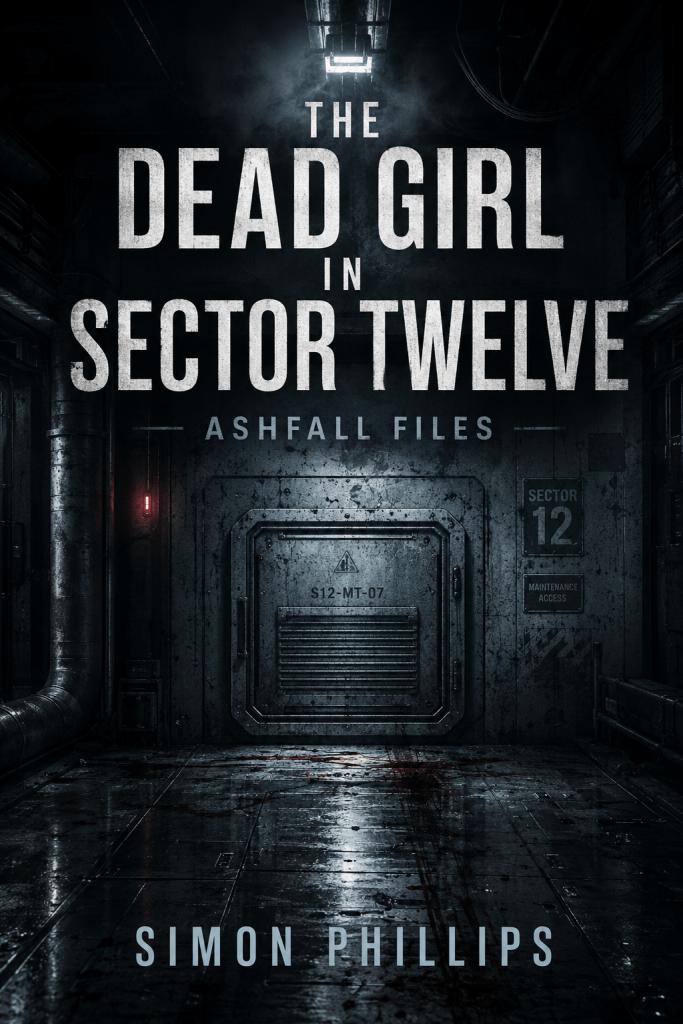
One such story unfolds aboard Ashfall Station, an ageing orbital installation whose corridors and industrial sectors form the setting for the science-fiction mystery novella Ashfall Station: The Dead Girl in Sector Twelve. What begins as a routine investigation gradually reveals that something hidden within the station’s structure may have been present for far longer than the official records suggest.
Readers who wish to explore the full investigation and its unfolding events can find the novella below.
The following Chronicle reconstructs the arrival of the salvage vessel Kestrel Drift at Ashfall Station and the quiet transfer of the unidentified fragment recovered from deep orbit beyond the system’s outer debris field.
Station records describe the event as routine salvage processing. Later archival reviews suggest that the object brought aboard the station that day would become the earliest trace of changes whose significance remained unrecognised for many years.
Readers supporting The Future Chronicle can continue the record below.
The Transfer into the Inner Holds
Docking Arm Twelve extended from the outer industrial ring of Ashfall Station like a long skeletal bridge reaching into the quiet of orbit. Its massive framework was illuminated by rows of amber maintenance lights that cast slow reflections across the drifting freight platforms surrounding the arm’s entrance. Cargo tugs moved through the corridor with the unhurried rhythm of a place accustomed to the steady labour of frontier industry, guiding containers toward loading gantries while station workers in magnetised suits drifted between hull surfaces and scaffold rails that had accumulated across decades of repairs and expansion. Within this immense structure, the arrival of an independent salvage vessel rarely drew more than passing interest. Ashfall’s outer docks received a constant flow of battered transports, survey craft, and recovery ships returning from the wide fields of abandoned machinery that circled the system beyond the mining world below.
The salvage vessel Kestrel Drift entered the docking corridor under guidance thrusters that glowed softly against the dark metal of the arm’s interior walls. Its tow frame carried the recovered fragment with slow and deliberate motion while the station’s automated traffic beacons adjusted the vessel’s path toward the heavy freight platform positioned halfway along the arm. From the observation gallery above the docking grid, a small group of station engineers watched the approach through thick viewing panels whose surfaces bore the faint scratches of earlier decades, when Ashfall still received traffic from the central trade lanes. Among them stood Cargo Supervisor Dalen Rhyse, whose responsibility for coordinating heavy salvage transfers had accustomed him to the strange assortment of objects occasionally dragged in from the deeper reaches of the debris field.
Even from the gallery, the fragment attached to the salvage ship appeared unusual. Salvage debris recovered from the system’s outer perimeter often carried the battered shapes of broken transports or collapsed refinery structures whose origins could be traced through registry numbers etched into their hull plating. The object following the Kestrel Drift revealed no such markings. Its surface displayed broad plates of dark alloy whose faint seams emitted a dull internal glow. The light shifted across the metal with a quiet persistence that unsettled several of the engineers observing the approach.
“That piece came from the outer perimeter?” one of the younger technicians asked while leaning toward the viewing glass.
Rhyse studied the fragment with the patient attention of someone accustomed to measuring unfamiliar salvage against the long catalogue of industrial wreckage that had passed through the station during his years of service.
“According to the docking request,” he replied, his voice carrying the steady calm of routine authority. “Recovered beyond the debris boundary during a deep sweep.”
The technician continued watching the fragment rotate behind the salvage vessel as its strange surface reflected the station lights drifting across Docking Arm Twelve.
“That alloy carries a strange sheen,” he said quietly.
Rhyse allowed a faint smile to cross his expression while the salvage ship completed its slow alignment with the freight platform below.
“Everything looks strange when it drifts in from the graveyard long enough,” he answered. “Give the registry office a few hours and someone will decide which forgotten construction yard left it behind.”
Below the gallery, the heavy clamps of the freight platform locked around the salvage ship’s hull while docking cranes unfolded from their storage housings along the arm’s structural beams. The cranes moved with deliberate strength, extending long articulated arms toward the fragment secured within the vessel’s tow frame while the cargo crew guided the machinery through precise adjustments transmitted from the platform’s control station. Ashfall’s salvage infrastructure had grown formidable across the decades, designed to recover entire refinery segments from the drifting wreckage fields that surrounded the system. Even so, the recovered fragment demanded careful handling. Its dense mass forced the crane operators to adjust the lifting sequence through several cautious increments before the object finally rose free of the salvage ship’s frame.
For a brief moment, the fragment hung suspended within the wide chamber of Docking Arm Twelve. Its strange alloy surface reflected the amber lights that stretched along the arm’s immense corridor. Several workers below paused in their tasks to watch the slow movement of the cargo as the cranes guided it toward the freight platform’s interior rail system.
“Registry classification pending,” one of the control operators announced through the platform intercom while scanning the incomplete data arriving from the salvage crew’s recovery logs. “Temporary designation assigned under unidentified industrial structure.”
The words echoed across the control station with the calm authority of routine cargo processing. No one within the docking arm suspected that the object drifting slowly through the rail corridor carried origins far removed from the abandoned machinery of the debris fields.
The fragment settled onto the transport carriage with a low vibration that travelled through the platform’s framework while the crane arms withdrew into their resting positions. Once secured, the carriage engaged the internal freight rails that connected Docking Arm Twelve with the deeper cargo elevators buried within Ashfall’s industrial sectors. The movement began with a slow metallic shudder as the transport system drew the fragment away from the docking grid and into the long tunnel leading toward the station’s interior.
Rhyse remained beside the observation gallery window while the carriage disappeared into the dim freight corridor beyond the platform.
“Research hold transfer request,” the control operator said after reviewing the cargo routing instructions arriving through the station network. “Authorisation received from the inner systems office.”
One of the engineers raised an eyebrow while glancing toward Rhyse.
“Research division moves quickly,” he remarked.
Rhyse folded his arms across the railing while watching the fading lights of the freight carriage retreat deeper into the station.
“Anything without a clear registry attracts their curiosity,” he replied. “Give them a few days and the piece will return to storage with a catalogue number attached.”
Beyond the walls of Docking Arm Twelve, the transport carriage travelled steadily through the vast mechanical arteries that connected Ashfall’s outer docks with the station’s inner industrial decks. Freight tunnels stretched through layers of steel corridors and maintenance shafts where automated lifts guided cargo between sectors that had grown labyrinthine through years of incremental construction. Few workers travelled these interior routes unless assigned to maintenance duties. The passageways remained silent except for the distant hum of power conduits and the rhythmic movement of the freight system carrying materials across the station’s immense structure.
Within one such tunnel, the carriage bearing the recovered fragment slowed as it approached a sealed bulkhead whose heavy doors protected a research hold rarely accessed by the ordinary cargo network. Security lights along the corridor flickered to life while the carriage halted before the bulkhead’s sensor array. Moments later, the doors parted with a deep mechanical resonance that echoed across the empty passage.
Inside the chamber, the lighting remained dim. It revealed rows of reinforced containment frames designed to secure experimental machinery awaiting analysis by Ashfall’s internal research staff. The carriage advanced through the open bulkhead until the fragment reached the centre of the hold, where automated clamps secured the object within a circular support ring built to stabilise unusually heavy cargo.
As the freight system disengaged and withdrew toward the corridor outside, the bulkhead doors closed once more with the slow finality of a sealed archive chamber returning to silence.
Within the quiet of the research hold, the fragment rested beneath the faint glow of overhead inspection lamps whose pale light revealed subtle patterns etched across the alloy plates forming its surface. The seams running through the object continued their quiet pulsation. Faint shifts of colour moved through the metal like distant signals travelling across the skin of a machine whose purpose remained unrecorded within Ashfall’s official systems.
Elsewhere across the station, the arrival of the salvage ship passed into the long stream of routine events that filled the operational records of frontier installations. Cargo transfers continued across the docks, refinery shipments departed for distant trade routes, and the workers of Ashfall Station carried on with their ordinary lives beneath the rotating structure that circled the silent world of Kestren-4.
Deep within the sealed research chamber, the fragment remained alone within its containment frame. It waited quietly within the station’s vast interior while the earliest movements of a much larger story began to unfold beyond the reach of the records that first attempted to describe its arrival.
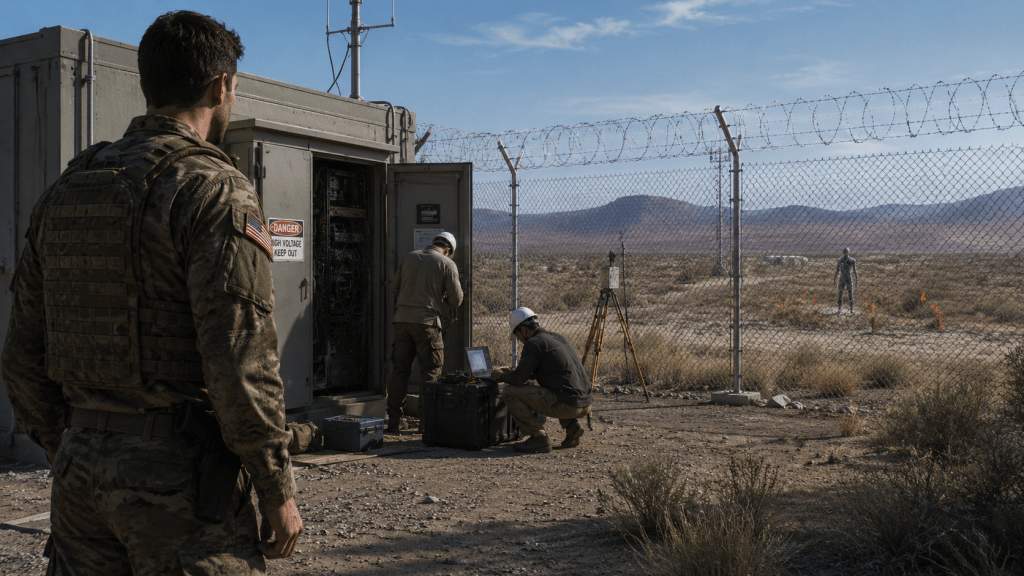
The salvage vessel Kestrel Drift approaches Docking Arm Twelve at Ashfall Station, carrying a fragment recovered from deep orbit beyond the system’s outer debris field.
The Idea Behind the Chronicle
Many of the earliest events that shape larger stories begin in moments that appear routine to those who witness them. Frontier stations such as Ashfall receive a constant flow of vessels returning from survey missions, mining expeditions, and salvage runs carried out in the distant debris fields surrounding exhausted industrial worlds. Most of these arrivals pass through the station’s docks with little attention beyond the ordinary procedures of cargo registration and freight transfer.
Salvage crews play a particularly important role within these frontier economies. Operating far beyond the established navigation corridors, their ships recover abandoned machinery, broken transports, and fragments of industrial infrastructure drifting through the quiet regions of orbit where earlier generations of expansion once left their mark. The work is dangerous and frequently uneventful, since the majority of recovered structures prove to be little more than forgotten wreckage left behind by earlier waves of settlement.
The idea behind this Chronicle explores what might happen when one such routine recovery operation returns with something that does not belong to the familiar catalogue of frontier industry. Within the vast mechanical systems of a station like Ashfall, an unusual object can pass quietly through the normal procedures of docking, registration, and research analysis without anyone immediately recognising its true significance.
In historical records, moments like these often appear ordinary when viewed in isolation. Only years later do investigators recognise that the arrival of a single cargo shipment or the discovery of an unidentified fragment marked the beginning of events whose consequences would slowly reshape the future of the station itself.
This Chronicle revisits one such moment in Ashfall’s past, when a salvage vessel returned from deep orbit carrying an object that would soon disappear into the station’s sealed research holds.
From the Author’s Desk
The Chronicle you have just read returns to one of the quieter moments in Ashfall Station’s early history, when a routine salvage operation carried something unusual back from the distant debris fields surrounding the Kestren system. Events like this rarely attract attention when they first occur. A cargo transfer is completed, the object is catalogued, and the station continues its work. Only later do historians begin to notice that certain small records mark the beginning of much larger stories.
Ashfall Station began as a simple image that lingered in my imagination for several years: the idea of an immense industrial structure drifting at the far edge of human space long after the frontier that created it had moved on. Science fiction often grows most naturally from such quiet beginnings, where a single place or moment suggests a much larger history waiting somewhere beyond the visible story.
The Chronicles presented here explore the earlier life of that station, revealing fragments of its past through the people who lived and worked within its corridors. Each episode focuses on a single event or encounter, gradually uncovering how Ashfall evolved from an ordinary frontier installation into a place carrying deeper layers of history hidden within its structure.
The novella Ashfall Station: The Dead Girl in Sector Twelve takes place much later in that timeline, when the station has already accumulated decades of expansion, modification, and quiet mystery. Writing the Chronicle series offers the opportunity to step backwards into that earlier period and observe the smaller moments that shaped the station long before the events of that investigation began.
Alongside these Chronicles I continue writing fiction across several science fiction and speculative projects, many of which explore frontier environments where technology, distance, and human persistence intersect in unexpected ways.
Readers interested in those stories can explore more through the links below.
Salvage work in frontier systems often extends far beyond the formal navigation corridors used by freight vessels and survey ships. Over time the outer regions of industrial star systems accumulate large fields of abandoned machinery, ranging from broken relay platforms and transport hulls to fragments of mining infrastructure left behind during earlier phases of expansion.
These regions become natural targets for independent recovery crews willing to operate at considerable distance from established ports. Equipped with long-range scanners and heavy tow frames, salvage vessels travel through the quieter edges of orbital space searching for structures whose remaining materials retain economic value. Many discoveries prove mundane, consisting of collapsed hull sections or obsolete machinery drifting through vacuum after decades of neglect.
Occasionally, however, salvage crews encounter objects whose origins remain unclear even after initial scans. In such cases the safest course of action is to transport the structure intact to the nearest frontier station, where specialised equipment and research staff can examine the material under controlled conditions.
Cargo Transfer Systems
Large orbital installations require extensive freight-handling infrastructure capable of moving cargo between external docking arms and the deeper sectors of the station. Heavy salvage items recovered from deep orbit frequently exceed the mass limits of standard loading systems, requiring reinforced cranes, magnetic clamps, and rail-mounted transport platforms designed to guide unusually large structures through the station’s internal freight corridors.
These transport networks function as the industrial arteries of the installation, linking the exposed docking arms with cargo elevators, storage vaults, and research facilities hidden within the station’s interior layers. Much of this machinery operates far from the public habitation districts, occupying maintenance tunnels and structural compartments whose existence remains invisible to most residents.
For stations that serve as salvage hubs, such systems become particularly important. Entire modules of abandoned spacecraft or refinery equipment may pass through these internal corridors on their way to storage or dismantling facilities.
Research Containment
When unidentified technology arrives at a frontier station, the object is normally transferred to a controlled research environment before any attempt is made to dismantle or catalogue its components. These research holds are typically located deep within the station’s interior where structural reinforcement and environmental isolation reduce the risk of accidental damage to surrounding systems.
Containment frameworks inside these chambers allow technicians to stabilise large objects while scanning equipment analyses structural composition and internal energy signatures. The majority of unidentified fragments eventually prove to be rare alloys or unfamiliar industrial designs originating from distant manufacturing centres.
Even so, the precaution of isolating such discoveries reflects a practical understanding common among frontier engineers: objects recovered from deep orbit sometimes carry histories that extend far beyond the debris fields where they are found.
Salvage Stations as Frontier Archives
Over long periods of operation, salvage ports such as Ashfall accumulate a vast and often incomplete archive of technological history. Each recovered fragment represents a small surviving trace of earlier exploration, industrial experimentation, or abandoned infrastructure scattered throughout human space.
Most of these objects eventually disappear into recycling facilities where their materials are reused for new construction. Yet some pieces remain stored within research holds or forgotten storage sectors, preserved simply because no one ever finished the process of analysing them.
In this way a frontier station gradually becomes a layered record of the expansion that created it, carrying within its structure the silent remains of many different eras of human activity.
Next Chronicle
Several hours after the salvage vessel Kestrel Drift completed its docking sequence, the fragment recovered from deep orbit briefly appeared within Ashfall Station’s cargo registry system under a temporary industrial classification.
The entry remained visible for only a short period before access to the record was quietly restricted, leaving behind a small gap in the station’s otherwise meticulous administrative archives.
The next Chronicle returns to that moment inside Ashfall’s cargo offices, where routine registration procedures would produce one of the earliest documented traces of the object whose arrival had already begun to alter the station’s future.
Next Week: The Cargo Registry
Ashfall Station continued its slow orbit above the silent world of Kestren-4, while deep within its inner research holds an unidentified fragment from the distant debris fields rested quietly inside a structure whose long history had only just begun to record its arrival.
A record of the chapel beneath which the stone first answered, though no account agrees on what was heard within it
The Record of the Lower Chapel Stair
The steps beneath the chapel had been sealed long before any of them were born, while the stone held the memory of passage and the air carried a stillness that belonged to use long since withdrawn.
Brother Halven paused at the threshold where the last of the daylight reached, his lantern held low as though the flame itself might disturb what lay below, and he remained there for a time as his eyes adjusted to the dimness and the quiet settled more firmly around him. The stairwell curved away in a narrow descent, worn smooth by a passage that had once seen frequent use, even if no record within the chapel spoke of its purpose, and the marks left by that former movement seemed to linger with a presence that had not entirely faded.
“Are you certain it begins here?” he asked, the words drawn out more from a need for sound than from doubt, as though the act of speaking might steady the space itself.
The man beside him, a stonemason by trade, though called here under a quieter instruction, shifted his weight and looked down into the dark as though it might answer before he did, his gaze lingering in a way that suggested he had already measured what could be seen and found it insufficient.
“It is where it was closed,” the mason said after a moment, his voice carrying without strain into the confined space. “Where it begins lies further in.”
Halven held his gaze on the stair, taking in the shallow curve of the walls and the faint marks left by hands long gone, each one catching the lantern light in ways that suggested presence lingering in absence, and he found that his attention returned to them again and again, as though they carried some trace of what had passed through here before the sealing had taken place.
Behind them, the chapel doors had been drawn shut, leaving the world above reduced to a distant sense of structure rather than sound, while the faint trace of incense lingered along the stone as though unwilling to fade, and the memory of it seemed to press downward with them as they stood at the edge of the descent.
Halven stepped forward, committing his weight to the stair with a measured motion that carried him from the threshold into the enclosed passage, and the change in the air came at once, subtle though unmistakable.
The first step took his weight with a dull shift that travelled further than it should have, and the dust that rose beneath his boot hung for a moment in the air as though held in place before it settled again, while the faint sound of the movement seemed to linger longer than its cause.
He raised the lantern, allowing the light to press outward into the space ahead, where it thinned as it reached forward, fading into the darkness without meeting any clear boundary, and as he watched it, he became aware that the walls seemed to draw closer as the stair descended, rough where the stone had been cut and smoother where time and touch had worn it down.
“How far?” he asked, his voice lowered by the space itself, shaped by the closeness of the walls and the weight that seemed to rest within them.
The mason followed a pace behind, his own lamp casting a second shadow that moved against the first in a slow and uneven rhythm, the two shapes crossing and separating as the descent continued.
“Only a short distance,” he said. “The break lies near the base. The stone there carries through the wall.”
Halven let the words settle, the phrasing holding without opening, and he moved on as the stair drew them further down.
They continued step by step, the passage narrowing in feeling, if not in measure, while the air cooled as they descended and pressed against the chest in a manner that belonged to confinement rather than depth, and Halven became aware of his breathing as it moved through him with a faint resistance that had not followed him from above.
At the turn of the stair, he slowed and then came to a stop, his hand tightening around the lantern’s handle as he listened more closely to what lay ahead.
“Do you hear that?” he asked, keeping his voice low as though the space itself might answer if given cause.
The mason inclined his head, listening with a stillness that suggested familiarity with such moments, his attention fixed on something that lay beyond the reach of sight, and he remained in that posture long enough that the silence around them seemed to deepen in response.
“It is within the stone,” he said.
Halven frowned, his eyes narrowing as he strained to place the sound, which seemed to rest in the space rather than move through it, and each attempt to follow it only caused it to slip further from clear perception.
“This carries no shape,” he said. “It holds itself in place.”
“It requires no path,” the mason replied, his voice quiet though steady.
The sound lingered, a low and layered presence that rose and fell without direction, slipping from any attempt to follow it and leaving only the sense that it had been there at all, while beneath it a faint scent threaded through the air, turning slowly as it settled, something sweet that had been left too long in stillness.
“We should leave this place,” Halven said, though he remained where he stood, his grip tightening slightly on the lantern as the thought failed to carry him back.
The mason gave a small nod, his attention still held ahead, and together they continued downward until the stair ended at a narrow landing where the passage met its closure.
The wall ahead had been reinforced with heavy stone blocks set at a later time than the passage itself, their edges uneven and their placement hurried, as though the act of closing had mattered more than the manner of it, and the join between them held a tension that had not settled into age.
Halven stepped forward and placed his hand against the surface, feeling the cold of the stone beneath his palm, while within that cold there lay a faint movement that passed into him, slight at first though it held once it reached him, as though something shifted deep within the wall.
He drew his hand back, his fingers tightening slightly as he looked to the mason, the sensation lingering in his skin even after contact had been broken.
“This was done in haste,” he said, allowing the words to settle into the space between them.
“Years ago,” the mason replied, his gaze still fixed on the wall. “The marks remain.”
Halven lifted the lantern closer, bringing the light across the surface where scratches ran along the blocks, shallow and uneven, as though something had pressed against them from the other side, each line catching the light before fading back into the roughness of the stone, and the repetition of them suggested a persistence that had not eased.
“Tools would leave a cleaner edge,” Halven said, his voice quieter now, shaped by the closeness of the space and the weight of what lay before him.
The mason shook his head once.
“No tool reaches through stone from the far side,” he said.
The sound came again, and this time it gathered for longer, a layered murmur that seemed to rise through the wall itself, holding for a breath before breaking apart into something that slipped away again, leaving a trace that lingered in the air.
Halven felt his throat tighten as he stepped back from the surface, the space around him seeming to shift with the movement.
“There are people below,” he said, though the words failed to hold as they left him.
The mason remained still, his attention fixed beyond the wall.
“There is something below,” he said.
The lantern light flickered, its flame bending without any movement in the air to disturb it, and Halven steadied it with his hand, watching as the shadows shifted along the walls in a slow and uneven motion.
“We must break through,” he said, forcing the words into shape as the pressure within the space grew harder to ignore. “If anything remains.”
“There is nothing left to reach,” the mason said quietly.
Halven turned to him, searching his expression, though the man’s gaze remained fixed beyond the wall, as though the stone itself held more than its surface revealed.
“How can you speak with such assurance?” he asked.
The mason remained still, his attention held by what lay unseen.
“Because this was sealed to hold something in place,” he said.
The sound returned once more, and it held longer this time, gathering into something that almost took shape before slipping away again, while the scent in the air deepened and settled between them.
Halven felt the space thicken around him as the lantern light dimmed without losing its flame, and the words came as though they had been spoken before.
“We close it again,” he said.
The mason remained where he stood.
“It was never closed,” he said.
Halven held his breath for a moment, the weight of the stair rising behind him and the chapel above reduced to something distant, while before him the wall remained steady in a way that grew less certain with each passing breath, and the presence within the stone seemed to settle more fully into the space.
The sound faded, and the silence that followed carried it more fully than any echo could have done, settling into the stone as though it had always been there.
Foundation Register: Chapel of Saint Veyne
The chapel stood upon an earlier foundation whose origin was absent from the surviving register, and what remained of the record held only passing reference to structures that had once occupied the ground before the present walls had been raised.
During restoration of the lower chamber, structural surveys recorded a void beneath the western section, reached by a narrow stair that descended into the foundation and was later sealed at its base, the entry noting the closure as completed following disturbance encountered within the stone during inspection of the wall.
The nature of that disturbance was left without description, though a separate notation, set apart from the main record, referred to the presence of sound within the structure, described only as persistent and unaffected by movement within the passage, and no attempt was made within the register to assign cause or meaning to what had been heard.
The stair was marked as secured, though later annotations suggested further work had been required after the initial closure, and the absence of any formal record of its completion remained without correction, leaving the entry incomplete in a manner that was neither revised nor removed.
No subsequent references to the passage appeared within the register, and the foundation beneath the chapel was thereafter recorded as stable.
About the Creator
The Mythic Chronicle is written and curated by Simon Phillips, a writer of mythic and speculative fantasy whose work explores the quieter edges of forgotten worlds, where buried structures, fractured records, and lingering presences continue beneath the surface of recorded history.
The accounts preserved within these Chronicles form part of a wider body of work in which cities stand upon older foundations, and events recorded as isolated disturbances are understood, in later tellings, to belong to patterns that were never fully recognised at the time.
One such account survives in a separate record, detailing an incident within a lower district where a death was first dismissed as excess, though the space in which it occurred retained a presence that resisted clearing, and where investigation revealed signs that the disturbance had not been confined to a single room.
This record is preserved in the novella Black Feathers in a Brothel, where the events surrounding that incident are followed more closely, though even there the full nature of what lay beneath the structure remains uncertain.
Readers who wish to examine that account in its fuller form may find the record below.
They returned to the chapel before dawn, when the streets above still held the quiet that came before trade and prayer reclaimed the day, and the doors were opened only far enough to admit those who had already been told what they would find within, the hinges giving a low sound that carried briefly before settling into the stillness of the nave.
Brother Halven stood at the front with two others drawn from the order, men who carried themselves with the restraint expected of their station, while their attention moved often toward the western wall where the stair lay concealed beneath stone that gave no outward sign of what rested below. The air within the chapel held its usual scent of wax and incense, while beneath it a faint sweetness lingered, settled so lightly that it might have passed unnoticed had it not already been known.
“You heard it clearly?” one of the brothers asked, his voice kept low so that it remained within the space between them and did not travel further into the chamber.
“It held within the stone,” Halven said, keeping his tone even, though the memory of it remained present as he spoke, resting within him with a weight that had not lessened since the night before. “It carried no distance.”
The second man, older and marked by years of quiet service, inclined his head in a slow acknowledgement, his gaze fixed upon Halven with a steadiness that measured more than the words alone.
“And the passage remains sealed.”
“It was sealed when we left it,” Halven replied, his eyes shifting briefly toward the wall before returning. “Whether it holds is another matter.”
The older brother turned slightly, his attention moving toward the wall as though he might read it through the stone alone, and after a moment he spoke again, his tone steady and contained, shaped by long habit rather than hesitation.
“We will leave it,” he said. “The work below has been concluded. There is no purpose in opening what has already been set aside.”
Halven held his silence, the memory of the sound resting within him with a persistence that gave the words little weight, and the stillness of the chapel pressed more firmly around him, as though it held that same memory in place.
“It remains active,” he said after a moment, his voice quiet though certain. “Whatever lies below has not settled.”
The older man’s expression remained unchanged, though his eyes sharpened slightly as he regarded Halven more closely, weighing what had been said without allowing it to alter his stance.
“Then it will settle,” he said. “Such things pass.”
Halven lowered his gaze, the answer meeting the weight of the space and falling short, and he turned his attention toward the wall once more, where the stone held its place with an ease that felt too steady to trust.
“We should confirm the seal,” he said, the suggestion carried with quiet insistence, though it held the shape of something already decided.
The two men exchanged a brief glance, and the younger shifted his stance as though preparing to object, though the older brother raised a hand and the motion ceased before it took form.
“You will confirm it,” he said to Halven. “You will do so with care, and you will record that the foundation remains stable.”
Halven inclined his head, accepting the instruction without further word, and turned toward the western wall, where the covering stone had already been prepared for removal.
The stair was opened again, the slab drawn back and the narrow descent revealed once more, while the air that rose from it felt heavier than before, as though it had settled deeper into itself in the hours since they had left it, carrying with it the same faint sweetness that had no place within stone.
Halven took the lantern and stepped down, the others remaining above at the edge of the opening where the light did not reach, and as he descended the silence below deepened into something that held rather than waited, enclosing the space around him with a steadiness that resisted change.
Each step carried him further into that held space, and the marks along the walls seemed more pronounced, the worn stone catching the light in ways that suggested movement long after it had ceased, and his gaze returned to them again and again, as though they held some trace of what had passed here before the passage had been closed.
At the turn of the stair, he slowed, listening for the sound that had lingered before, though it gave no immediate answer, leaving only the weight of the air and the scent that had deepened into something more difficult to ignore as it settled within the passage.
He continued downward, the stair giving way to the narrow landing where the reinforced wall stood as it had before, its surface marked by shallow lines that caught the lantern light and faded again, though the pattern of them suggested a persistence that had not eased with time.
As Halven approached, he felt the faint movement within the stone before his hand reached it, the vibration passing outward with a presence that required no contact, and he stopped a short distance from the wall, holding himself still as he listened.
The sound came then, filling the space at once, a layered murmur that held within the stone and pressed outward without direction, and as Halven listened, he felt it settle into him, received and held.
He drew a breath and stepped closer, raising the lantern so that the light moved across the scratches, where they seemed to shift as the flame moved, though no change held once his gaze fixed upon them.
“Brother Halven.”
The voice came from above, distant though clear, and he turned his head slightly, though his stance remained, the sound within the wall holding his attention even as the call reached him.
“It holds,” he said, his voice carrying upward through the stair. “The stone remains set.”
“Then return,” the voice replied. “The record will be made.”
Halven remained where he stood, the sound within the wall gathering again, holding longer this time, and within it there came a pattern that gathered toward shape before slipping away again.
“Brother Halven.”
The call came again, sharper now, and he drew a breath, forcing his attention back toward the stair, though the sound lingered within him as he turned away from the wall.
“I am returning,” he said, and stepped back, the movement breaking something in the air so that the sound shifted with it, thinning for a moment before gathering again, though it no longer held with the same weight as before.
He began the ascent, the stair rising before him in a slow curve that seemed longer than before, and with each step the air grew lighter, the pressure remaining with him as he moved upward, settling deeper with each step.
When he reached the threshold, the light from above pressed down, and the presence within the passage fell away enough that he drew a full breath, though the faint trace of sweetness lingered still.
“It holds,” he said as he stepped into the chapel once more, his voice steady, though the memory of the space below remained with him.
The older brother watched him, his gaze measuring more than the words alone, and then inclined his head in quiet acceptance.
“Then it will remain so,” he said, and the covering stone was returned to its place, the stair sealed once more beneath it as the chapel resumed its usual order.
Halven remained for a time after the others had gone, standing near the western wall where the stone gave no sign of what lay below, and his attention returned to that place again and again, where the wall gave nothing back.
The day passed in its accustomed rhythm, the chapel filling and emptying as it always did, though the memory of the stair remained close, held without fading as the light shifted and the hours moved on.
As evening fell, Halven returned to the lower chamber, carrying no lantern, allowing the dimness of the space to remain undisturbed as he stood before the sealed stair, his breath steady as he listened into the stillness that held there.
For a long time, the space remained quiet, though the quiet itself held a weight that pressed gently against the ear, and when the sound came again, it rose slowly from within the stone, gathering into a layered murmur that held in place and pressed outward without direction.
Halven stood without speaking, feeling the presence settle into him once more, deeper now, and he remained there as it gathered and shifted, pressing toward shape before slipping away again.
When it faded, the silence that followed held its shape, settling into the stone as though it had always been there, and Halven remained for a time longer before turning away, leaving the wall as it stood.
The chapel above remained unchanged, the record would carry the foundation as stable, and the stair would remain sealed, while beneath it the sound held its place without need of witness.
A stair reopened beneath the chapel revealed a passage that held its silence too closely, where the stone carried a presence that remained unchanged by time or touch, and where those who descended found that the quiet itself did not remain empty for long.
The Idea Behind the Chronicle
Many cities are built upon ground that has been used and reshaped across generations, where each new structure rests upon what came before, and the earlier layers are seldom removed entirely. Foundations remain, passages are sealed, and spaces that once held purpose are left beneath the visible world, their presence acknowledged only when something disturbs them.
The Chronicle of the lower chapel draws upon this quiet layering of place, where construction does not erase what lies beneath, though it conceals it within stone and time. In such environments, the boundary between past use and present structure becomes uncertain, and what has been closed away does not always settle into stillness as expected.
Throughout history, records of sealed passages, hidden chambers, and disturbed foundations appear in fragments rather than complete accounts. Repairs uncover voids where none were expected, walls reveal markings that hold no clear origin, and spaces once considered secure are revisited only when something alters the behaviour of the structure itself.
The Whispering Foundations series explores this idea of persistence within built environments. Rather than presenting corruption as something that arrives from outside, these accounts suggest that it exists within the structure, moving through stone, settling within walls, and remaining present even when the spaces it inhabits are closed.
In such places, sound behaves differently. Air carries traces that do not disperse. Surfaces hold impressions that resist removal. Those who encounter these conditions often record what they observe, though their accounts remain incomplete, shaped by what they can perceive rather than what fully exists.
The chapel in this Chronicle stands as one such place. Its foundation supports the structure above, while beneath it the earlier construction remains, carrying with it a presence that is neither fully understood nor entirely absent. The record preserves only what was noted at the time, leaving the rest to remain within the stone.
From the Author’s Desk
Thank you for continuing into this Chronicle.
This first account was shaped around the idea that a place can change long before anyone understands that it has, and that those early moments are often recorded in fragments that carry more uncertainty than clarity. The lower chapel passage sits within that space, where observation comes before understanding, and where what is noted at the time rarely reflects the full extent of what is present.
Across this series, each Chronicle will return to similar spaces beneath the city, where structures hold traces of disturbance that were once dismissed, misread, or left unresolved. These are not complete accounts, though fragments preserved from different points of contact, each one adding to a pattern that was never fully recognised.
Beyond the Chronicle, my writing continues across a range of fantasy and speculative work, including short stories and novellas that explore the same underlying themes from a different perspective. Some of those accounts follow events more closely, while others remain at a distance, allowing the world to emerge through what is recorded rather than what is explained.
Readers who wish to explore further may find additional work through the links included in this publication.
From the sealed folios of Saint Veyne, origin uncertain. The script shows signs of partial erasure and later correction.
The lower passage was first entered during repair of the western foundation, where the stone gave way beneath inspection and revealed a void that held no place within the earlier plans, and those sent below recorded no immediate hazard, though the air within the passage carried a stillness that resisted disturbance, while the light failed to travel far beyond the first stretch of descent.
A second entry, written in a different hand, records that those assigned to the work began to remark upon sound within the walls, though the accounts remain inconsistent in their description, some referring to a low murmur, others to a pressure that settled within the space, and one entry, less steady in its form, describing the sound as remaining even when no movement was made and no voice was raised.
The passage was ordered sealed after a short period of inspection, and the method of closure is recorded in detail, though the reason for that decision is absent from the primary entry, leaving the act preserved without the cause that required it.
A later annotation, set within the margin in a tighter script, states that the sealing required reinforcement beyond the original instruction, and that further work was undertaken after the first attempt failed to hold, though no full account of that failure remains within the folio.
The final notation marks the passage as secured, and no further entries refer to the lower chamber, leaving the record complete in form, though lacking in explanation.
Marginal Notes & Interpretations
Collected from later annotations found in the outer margins of the same folio.
One annotation suggests that the reports of sound arose from strain within the foundation, attributed to age and shifting weight from the structure above, and the writer dismisses the accounts as the result of confined air and heightened awareness within a closed space, though no supporting detail is offered beyond the assertion itself.
Another note, written in a firmer hand, disputes this interpretation, stating that the persistence of the sound, as described in the earlier entries, does not align with movement within the structure alone, and that the absence of variation between positions within the passage suggests a source that does not correspond to natural cause, though the writer leaves the statement without further conclusion.
A third annotation, faint and partially obscured, records that those assigned to the sealing spoke little after the work was completed, and that one requested reassignment without offering reason, the line ending before the thought is fully set down and the remainder of the note lost to the damage along the edge of the page.
World Notes
Saint Veyne Chapel A modest structure built upon an earlier foundation whose origin is not preserved within the surviving records, the current chapel serving the surrounding district, while the lower construction beneath it belongs to an earlier phase that has not been fully accounted for
Foundation Passages Subterranean spaces uncovered during repair or expansion of older structures, often absent from formal plans and recorded only at the point of discovery, after which they are commonly sealed, particularly where their origin or purpose cannot be determined with certainty.
Recorded Disturbance A term found within limited ecclesiastical records, used to describe irregularities within structure or space that resist immediate classification, where official entries tend to assign natural cause, though marginal annotations sometimes preserve alternative observations that remain unresolved.
Next Chronicle
In the weeks following the sealing of the passage beneath Saint Veyne, brief reports began to appear across the lower district, noting unusual rat movement within cellars and along foundation walls, where the animals were observed moving in narrow, repeated paths that did not break when disturbed.
These movements were recorded without further inquiry, attributed to changes within the ground beneath the city, though several entries remark upon the consistency of the routes, which appeared to hold their place even where no passage was known to exist.
No connection was made to the earlier disturbance beneath the chapel.
Next Chronicle: The Rats Beneath the Walls
The chapel of Saint Veyne remained as it had been, its walls steady and its records complete, while beneath its foundation the sealed passage held in silence, and within that silence something persisted, unchanged by its concealment and untouched by the certainty recorded above it.
A Fleet inspection mission arrives expecting to close a dying industrial outpost. Instead, the station receives quiet orders for expansion
Chronicle Opening: The Arrival at Ashfall
The inspection shuttle drifted through the outer traffic corridor with the slow patience of an ageing machine that had travelled far beyond the routes it once served. Ashfall Station filled the viewport ahead, an immense ring of darkened metal turning in quiet orbit above the pale curve of the planet below. From a distance the structure possessed the appearance of a relic left behind after a long war, its surfaces scarred by decades of repairs, extensions, and forgotten construction. Amber maintenance lights burned along the docking arms like distant lanterns hanging in a storm.
Inspector Halverin remained seated beside the forward console while the shuttle’s guidance system threaded its approach vector through a cloud of drifting cargo tugs and maintenance craft. Each vessel moved with the weary rhythm of workers who had spent their lives in the shadow of machinery, their engines leaving thin trails of ion light that faded into the deep blue of the surrounding stars. Ashfall grew larger with every passing second until the station occupied the entire frame of the viewport, its ring sections broken by thick industrial spines that connected to a central tower rising through the station’s heart.
Halverin studied the structure in silence while the shuttle rotated to align with Docking Arm Twelve. Fleet files described Ashfall as an ageing extraction hub at the far edge of controlled territory, a place built during an earlier phase of expansion when ore routes from the outer belt carried real promise. Those routes had faded many years earlier, leaving the station suspended between usefulness and abandonment. The inspection order carried a simple purpose: to evaluate the installation and prepare the paperwork required for closure.
Through the shuttle glass Halverin observed long rows of habitation windows scattered across the station ring. Many remained dark. Others glowed with dim interior light that hinted at quiet lives unfolding behind metal walls. Somewhere inside those corridors engineers maintained life support systems older than most Fleet vessels, while cargo crews moved freight between bays that had witnessed decades of traffic. Ashfall continued to function through habit as much as necessity.
The pilot cleared his throat while guiding the shuttle toward the docking corridor.
“Dock control confirms our arrival,” he said. “They sound relieved to see a Fleet inspection team.”
Halverin allowed his gaze to follow the slow movement of a cargo hauler sliding away from the docking arm ahead. The vessel’s hull carried a patchwork of weld seams and fresh plating where older sections had been replaced. Every surface told the same story of endurance and improvisation. A station like this survived through constant repair.
“Relief usually appears when rumours begin,” Halverin replied quietly.
The pilot glanced toward him. “Rumours, sir?”
Halverin opened the inspection tablet resting across his lap and scrolled through the preliminary maintenance reports transmitted by the station administration. Power fluctuations across several outer sectors. Unscheduled system resets inside the older structural corridors. Salvage traffic arriving from beyond the debris perimeter. Each entry carried the tone of routine paperwork, though the pattern beneath the reports suggested a station working harder than its ageing systems allowed.
Beyond the viewport Docking Arm Twelve opened like a vast mechanical tunnel. Rows of guidance lights stretched into the interior bay while maintenance drones drifted along the outer hull inspecting the arm’s pressure seals. Ashfall Station continued its slow rotation above the silent planet below, an immense structure that had survived long enough to become part of the frontier itself.
Fleet command expected a recommendation for decommissioning, a quiet administrative ending for a station that had already outlived the era that built it.
Halverin held the tablet screen in his hands while the shuttle glided toward the docking cradle. The files suggested a different future unfolding across the station’s decks, one that would require expansion orders instead of closure.
By every measure recorded in the inspection files, Ashfall Station had reached the end of its intended life, a frontier installation whose purpose had faded as trade routes shifted and distant mining operations closed.
Yet the deeper layers of Fleet correspondence suggested another direction unfolding beyond the official briefing, a quiet decision somewhere within command. This ageing station drifting at the edge of human expansion would expand instead of vanish.
The arrival of Fleet Inspector Halverin marked the beginning of a series of quiet events that would gradually change the fate of Ashfall Station.
Station Record: Ashfall Station
Ashfall Station occupies a slow orbital path above the frontier world of Kestren-4, a mining planet whose richest deposits were exhausted many decades earlier, leaving behind a landscape of silent refineries and abandoned extraction pits that once supplied entire industrial regions across the expanding territories of human space.
The station itself began life as a resource transfer hub during the fourth wave of outer-system expansion, an era when cargo vessels arrived daily from the belt refineries and the surrounding mining fields, unloading vast shipments of processed ore that were then routed inward toward the manufacturing worlds closer to the core systems, where factories and orbital shipyards transformed that material into the infrastructure of a rapidly growing civilisation.
As the richest mining zones declined and transport routes shifted toward newer territories, many installations built during that period were gradually dismantled or abandoned, their structural rings stripped for salvage or their corridors left drifting in quiet orbit around worlds that had already been forgotten by the trade fleets.
Ashfall, however, remained in operation through a mixture of persistence, adaptation, and the quiet administrative decisions that often shaped the frontier more strongly than official policy ever admitted.
Fleet administration eventually classified the station as a declining industrial outpost whose continued operation served a limited set of purposes, most notably the coordination of salvage vessels working the debris fields beyond the system and the support of long-range transport traffic that occasionally passed through this region of space while travelling between distant territories.
Inspection orders issued shortly before the events recorded in this Chronicle suggested that Ashfall Station had reached the final stage of its operational life and that Fleet command intended to evaluate the installation for decommissioning once the remaining contracts tied to the station had concluded.
Yet within a matter of weeks, the direction of those orders began to change, as if information circulating through the deeper layers of Fleet command had altered the station’s fate long before the reason for that decision ever appeared in the official record.
About the Creator
The Future Chronicle is written and curated by Simon Phillips, a writer of science fiction and speculative storytelling who explores the quiet edges of human expansion, where ageing stations, distant worlds, and forgotten technologies continue their slow existence beyond the reach of the central worlds.
Many of the stories presented in these Chronicles exist within a wider fictional universe that follows the lives of investigators, engineers, and frontier workers living far from the comfort of the inner systems, where the machinery of civilisation continues to function long after its original purpose has begun to fade.
One such story unfolds aboard Ashfall Station, an ageing orbital installation whose corridors and industrial sectors form the setting for the science-fiction mystery novella Ashfall Station: The Dead Girl in Sector Twelve, where a routine investigation gradually reveals that something hidden within the station’s structure may have been present for far longer than the official records suggest.
Readers who wish to explore the full investigation and its unfolding events can find the novella below.
Inspector Halverin followed the station administrator along the docking corridor while the sounds of the bay settled into a steady industrial rhythm that seemed to pulse through every plate of metal beneath his boots. The corridor stretched forward beneath rows of amber maintenance lamps whose light reflected across the worn alloy floor in long warm bands. Along the distant walls, cargo machinery moved with patient deliberation while crews guided freight containers toward the interior lifts that carried materials deeper into the rotating ring of the station.
Ashfall possessed the atmosphere of a place whose working life had continued for so many years that every surface carried the quiet marks of labour. Rail tracks cut shallow grooves through the deck plating where freight trolleys had rolled for decades, and handrails bore the polished sheen left by countless gloved hands guiding themselves through artificial gravity shifts during docking operations. Above them, the massive skeletal framework of Docking Arm Twelve rose into the dimness like the interior of an enormous machine that had grown layer upon layer through successive expansions.
“Your arrival stirred a certain level of curiosity among the station crews,” the administrator said while guiding Halverin toward a security arch positioned at the end of the corridor. “Fleet inspections arrive rarely this far beyond the core trade lanes.”
Halverin glanced across the open docking chamber where two cargo haulers drifted slowly into their assigned berths while docking clamps moved outward to receive them.
“Curiosity usually accompanies uncertainty,” he replied. “Inspection orders tend to appear when Fleet administration begins reconsidering the value of a frontier installation.”
The administrator allowed a thoughtful expression to pass across her face while the security arch scanned Halverin’s identification tablet and cleared them into the interior access corridor.
“Ashfall has endured several such reconsiderations across its history,” she said. “Each time the station adapted to whatever circumstances followed.”
Beyond the checkpoint, the corridor widened into a long transit gallery whose walls were lined with structural ribs and exposed service conduits that carried power and atmosphere throughout the station. Freight lifts descended through circular shafts positioned at intervals along the passage, each platform transporting containers toward sectors hidden deeper within the ring. Overhead, the slow rotation of the station created a subtle sensation of movement, as if the entire structure breathed with mechanical patience.
Halverin studied the gallery while they walked, noting the layered architecture that revealed decades of construction phases. Some sections of the corridor carried the clean geometric lines typical of modern Fleet engineering, while older segments retained heavier structural plating from earlier eras when stations were built to endure harsher industrial demands. The result created a complex patchwork of engineering philosophies that had merged together through years of expansion.
“Fleet records describe Ashfall as a declining transfer hub,” Halverin said while examining a series of maintenance panels mounted along the wall. “Traffic levels appear healthier than the reports suggested.”
“Salvage operations increased across the outer debris field,” the administrator explained. “When older transport routes collapsed, many vessels and relay structures remained scattered across that region of space. Independent crews began recovering those materials several years ago, and Ashfall gradually became their primary staging port.”
The explanation carried the tone of an administrative summary that had been repeated many times. Halverin sensed an additional layer of thought behind the words, something unspoken that hovered beneath the careful clarity of the station official’s voice. Frontier installations often survived through precisely such quiet adjustments, yet the inspection reports resting inside Halverin’s tablet suggested deeper structural changes occurring within the station.
They passed beneath another bank of lighting where maintenance drones hovered close to the corridor ceiling while scanning the integrity of the power conduits embedded in the wall. Each machine moved with delicate mechanical grace, extending slender sensor arms that traced the seams between metal plates. The drones worked with such silent efficiency that their presence almost blended into the surrounding machinery.
“Your crew maintains a considerable amount of infrastructure,” Halverin observed. “The station appears larger than the official registry diagrams indicate.”
The administrator slowed slightly as they approached a junction where three corridors met beneath a circular observation window overlooking the inner ring of Ashfall Station. Through the glass, Halverin saw the immense curve of the rotating habitation decks stretching across the interior structure like the inside wall of a vast mechanical horizon. Cargo traffic moved along illuminated transit lanes while distant maintenance vehicles travelled between docking sectors that appeared as small points of light scattered along the ring.
“Ashfall grew in stages,” the administrator said while gesturing toward the interior view. “Each phase connected new construction to older frameworks. Salvage materials often supplemented the official supply chains during those expansions.”
Halverin listened while studying the station’s interior landscape. Layers of habitation modules, cargo corridors, and structural trusses formed a dense industrial ecosystem whose complexity extended far beyond the simple diagrams included in the Fleet archives. The station resembled a living organism assembled from decades of improvisation.
“Expansion during a period of declining traffic suggests unusual priorities,” Halverin said thoughtfully.
“Frontier economies evolve through necessity,” the administrator replied while guiding him toward a lift platform descending into the lower administrative decks. “Ashfall discovered ways to remain useful.”
The lift platform engaged with a low mechanical vibration and began its descent through the circular shaft that opened beneath the gallery floor. As the platform lowered into the interior levels of the station, Halverin watched the layered structure pass slowly around them, each deck revealing new corridors filled with workers moving between maintenance stations, habitation modules, and equipment lockers arranged along the walls.
Artificial gravity strengthened slightly as they travelled deeper into the rotating ring. The change produced a subtle shift in the balance of Halverin’s stance while the platform continued downward through the immense framework of the station.
Across the descending levels, he noticed several sealed corridors branching away from the primary decks. Their entrances carried reinforced bulkheads whose surfaces bore the faded markings of earlier construction authorities. Some appeared old enough to predate the most recent expansions recorded within Fleet engineering logs.
“Several sectors remain isolated,” Halverin observed while pointing toward one of the sealed passages sliding past the lift cage.
“Structural preservation zones,” the administrator said calmly. “Older engineering frameworks occasionally require separation from modern systems while reinforcement projects proceed.”
Halverin considered the answer while the lift continued its steady descent. Frontier stations possessed many hidden compartments where obsolete equipment waited for eventual removal. Yet the inspection reports inside his tablet contained references to unexplained power fluctuations originating from precisely such sealed areas.
The lift platform reached the administrative deck and slowed as the surrounding corridor came into view. Unlike the industrial spaces above, this level carried the quieter atmosphere of operational management. Offices lined the passage while communication terminals flickered with the pale light of long-range transmissions travelling between Ashfall and distant Fleet relays.
The administrator stepped from the lift and guided Halverin toward a wide observation corridor overlooking the station’s central command tower. From this vantage point, the immense rotating ring of Ashfall Station curved upward into the distance while the planet below cast a soft blue reflection across the lower structural beams.
Halverin paused beside the observation rail and studied the vast interior landscape spreading across the station. Freight moved through the illuminated corridors. Maintenance drones traced their patient circuits along the structural ribs. Human lives unfolded quietly inside thousands of compartments distributed across the rotating ring.
Ashfall continued its slow orbit above the silent world below while the machinery of the station carried on with the steady rhythm of a place that had grown accustomed to survival.
Yet somewhere within that immense industrial labyrinth, the inspection files suggested the presence of changes that had begun long before Fleet command issued the order that brought Halverin to this distant frontier installation.
Docking Arm Twelve formed one of the oldest sections of Ashfall Station, a corridor of machinery and freight traffic where decades of expansion had layered new construction upon the station’s original industrial framework.
The Idea Behind the Chronicle
Large orbital stations like Ashfall appear frequently in science fiction, yet their origins come from very real ideas that engineers and planners have considered for decades. As humanity expands further into space, the distances between settled worlds grow wider, and the infrastructure required to support trade, travel, and exploration becomes increasingly complex. Vast stations positioned along transport routes would function as the ports and industrial centres of those distant frontiers.
Early visions of space colonisation imagined elegant rotating habitats filled with gardens and cities suspended in orbit, though the practical reality of expansion would likely unfold in a far more industrial manner. Freight depots, salvage ports, fuel processing hubs, and maintenance platforms would appear long before comfortable civilian settlements, and many of those installations would begin life as harsh working environments where engineers and cargo crews kept machinery running under difficult conditions.
Ashfall Station belongs to this imagined era of expansion. It represents the kind of installation built quickly to serve a specific economic purpose, then left to adapt when the frontier moved elsewhere. Across human history many places have followed a similar path. Mining towns, remote harbours, and railway settlements have often survived long after the industries that created them began to fade, reshaping themselves into something new through the quiet persistence of the people who remained behind.
The Chronicle of Ashfall explores that idea of survival and adaptation. A station designed for one purpose gradually becomes something more complex as new trades appear, old systems are modified, and sections of the structure accumulate decades of layered construction. Over time the installation begins to feel less like a machine and more like a living environment shaped by the countless lives that have passed through its corridors.
In such places the boundary between past and present becomes blurred. Old infrastructure remains hidden behind modern upgrades, forgotten corridors continue to exist beyond sealed bulkheads, and the history of the station lingers within the machinery that keeps it alive.
Ashfall Station therefore serves as both setting and character within the Chronicle, an immense frontier installation whose long history has left traces that the official records may never fully explain.
From the Author’s Desk
Ashfall Station began as a simple image that lingered in my imagination for several years: the idea of an immense industrial structure drifting at the far edge of human space long after the frontier that created it had moved on. Science fiction often grows most naturally from such quiet beginnings, where a single place or moment suggests a much larger history waiting somewhere beyond the visible story.
The Chronicles presented here explore the earlier life of that station, revealing small fragments of its past through the people who lived and worked within its corridors. Each episode focuses on a single event or encounter, gradually uncovering how Ashfall evolved from an ordinary frontier installation into a place carrying deeper layers of history hidden within its structure.
The novella Ashfall Station: The Dead Girl in Sector Twelve takes place much later in that timeline, when the station has already accumulated decades of expansion, modification, and quiet mystery. Writing the Chronicle series offers the opportunity to step backwards into that earlier period and observe the smaller moments that shaped the station long before the events of the investigation began.
Alongside these Chronicles I continue writing fiction across several science fiction and speculative projects, many of which explore frontier environments where technology, distance, and human persistence intersect in unexpected ways.
Readers interested in those stories can explore more through the links below.
Industrial stations such as Ashfall represent one of the most practical solutions to the challenge of distance in space exploration. Vast orbital platforms positioned along transport routes would form the logistical backbone of any expanding civilisation, providing docking capacity for freight vessels, repair facilities for long-range ships, and storage infrastructure for resources moving between distant systems.
During the earliest phases of expansion such stations would likely resemble harsh industrial environments rather than comfortable settlements. Engineers, cargo crews, and salvage operators would occupy modular habitats attached to immense structural frameworks designed primarily for durability and efficiency. Over time these installations might grow far beyond their original plans as new sectors were added to support changing economic activity.
Ashfall Station reflects this gradual evolution. A structure originally designed for ore transfer slowly becomes a hybrid of freight port, salvage hub, and frontier settlement as different industries pass through the system.
Salvage Economies
Salvage operations often emerge in regions where earlier waves of exploration have left abandoned infrastructure behind. Derelict cargo ships, obsolete relay stations, and fragments of industrial platforms may remain drifting through orbital space for decades or even centuries. Independent crews recover valuable materials from these forgotten structures and return them to frontier ports, where metal and components can be reused.
A station positioned near a large debris field would therefore become a natural gathering point for salvage crews and transport contractors. Over time such activity could replace the station’s original purpose entirely, allowing an installation once built for mining traffic to survive long after the surrounding resource economy has faded.
Layered Structures
One intriguing feature of long-lived orbital stations would be the accumulation of multiple engineering eras within a single structure. New modules could be attached to older frameworks, outdated systems might remain sealed behind bulkheads, and corridors originally designed for industrial machinery might later become part of habitation districts or storage sectors.
This layered architecture creates environments where the past remains physically embedded within the present. Forgotten corridors and abandoned compartments can persist inside the station’s interior, hidden behind structural reinforcements that few workers ever have reason to access.
Ashfall Station carries the weight of this accumulated history, a frontier installation whose present appearance reflects decades of adaptation, expansion, and quiet improvisation by the people who have kept its machinery running.
Next Chronicle
Several months before the inspection recorded in this Chronicle, a salvage vessel arrived at Ashfall Station after operating far beyond the normal navigation perimeter of the system. The ship returned with a fragment of unidentified structure recovered from deep orbit within the outer debris field, an object whose origin could not immediately be traced to any registered vessel or industrial installation.
Station logs record that the fragment was transferred quietly into a sealed research hold shortly after the salvage crew docked, and within a few hours the object disappeared from the public cargo registry entirely. Few workers on Ashfall understood what had been recovered from the silent region of space beyond the station, though rumours began to circulate through the docking sectors that the salvage crew had discovered something far older than the drifting wreckage normally collected from the debris field.
The next Chronicle returns to that earlier moment, when the salvage ship first approached the station carrying its unusual cargo and the events began that would slowly alter the future of Ashfall Station.
Next Week: The Salvage Run
Ashfall Station continued its slow orbit above the silent world of Kestren-4, carrying within its vast structure the quiet beginnings of events that few among its workers yet realised had already begun.
Ashfall Station kept its corridors lit because darkness made people ask questions.
The light was rarely clean. It came from failing strips fixed into patched ceilings, from public screens rolling calm station updates over ration queues, from warning panels that flickered above bulkhead doors which sealed too slowly during drills and too quickly during unrest. Every surface carried the memory of pressure. Scratched metal. Repaired seams. Old stains worked into floor plating by boots, coolant, and time.
For readers entering a sci-fi noir novella, that kind of world matters. A crime aboard a space station only carries weight when the station itself has something to hide. Ashfall Station is built around that pressure. It is an orbital place of work, scarcity, surveillance, and exhausted routine, where a death can be filed as maintenance failure before anyone has finished looking at the body.
The first case, The Dead Girl in Sector Twelve, opens the door into an atmospheric sci-fi noir world shaped by crime, rationing, damaged infrastructure, official silence, and the slow corrosion of trust. It is a space station crime thriller built around investigation rather than spectacle, where one body in a ventilation shaft reveals more about the system around it than the system is willing to admit.
When a Body Becomes a Question
A failing station teaches people to lower their expectations before it teaches them to survive.
On Ashfall, power dips are routine until they happen at the wrong moment. Missing camera feeds become technical faults until they protect the wrong person. Records vanish into administrative language. Witnesses remember enough to be frightened, then stop speaking before a name leaves their mouth.
That is the central pressure of the series. Crime on Ashfall Station grows from scarcity and neglect. People steal ration tokens because water has value. They lie to security because truth carries cost. They move through half-lit service corridors because official routes belong to patrols, supervisors, cameras, and Fleet oversight. Every investigation becomes a study of how people behave when survival has narrowed their choices.
The noir element emerges through that moral compression. Ruff Kale, the detective at the centre of the Ashfall Files, understands the station too well to trust its explanations. He knows how quickly a report can soften a death into an incident. He knows the difference between disorder and arrangement. He knows silence when it has been trained into a room.
Lena Marik enters the case with procedure, discipline, and a belief that careful work still matters. Her presence gives the investigation its second pressure point. She records, checks, documents, and follows the lines the system claims to respect. The case teaches her what happens when those lines lead directly into obstruction.
Together, Ruff and Lena form the human scale of the wider Ashfall cycle. He reads the station through habit and damage. She reads it through records and inconsistencies. Between them, the reader sees how a corrupt space station fiction world becomes believable: through the small details that refuse to align.
A death in Sector Twelve becomes more than a crime scene. It becomes a question.
Who benefits when the records clear themselves?
Who decides which worker stays visible?
Who controls the broadcasts that tell civilians everything remains stable?
And what kind of authority needs a dead maintenance courier forgotten so quickly?
The Dead Girl in Sector Twelve
The Dead Girl in Sector Twelve is the first novella in the Ashfall Files cycle, and it works as the opening case in a larger detective science fiction series. The surface story is controlled and intimate: Ruff Kale and Lena Marik investigate a young woman found dead inside a maintenance shaft in Sector Twelve. Her placement feels wrong. Her records have been stripped. The systems around her hesitate in ways old infrastructure alone cannot explain.
Its strength lies in how quietly it expands. The investigation starts with a body, then moves through missing logs, frightened workers, erased evidence, and Fleet pressure. The case never needs to announce itself as a space station conspiracy. It becomes one through behaviour. A supervisor answers too quickly. A corridor falls silent. A witness disappears from the record before anyone can take a statement. An official explanation arrives with suspicious speed.
The result is an adult science fiction mystery rooted in atmosphere and consequence. The reader is taken through service corridors, Freight Spine noise, tired workers, precinct pressure, and the controlled politeness of authority. Ashfall Station never pauses to explain itself. It continues running, which makes its cruelty feel more convincing.
This opening novella also establishes the wider Ashfall Files method. Each case can be entered as a contained investigation, yet each one contributes to the larger movement of the station. A single death leads toward erased records. Erased records lead toward missing witnesses. Missing witnesses lead toward Fleet jurisdiction. Fleet jurisdiction points toward something far larger than the official report.
That sense of scale remains restrained. The story stays close to Ruff, Lena, and the immediate investigation. It lets the reader feel the conspiracy through pressure before understanding its full shape.
Ashfall Station as a Living Pressure System
Ashfall Station is a living pressure system.
Its sectors carry their own forms of decay. The Upper Concourse holds the polished language of administration and command. The Mid-Ring carries family noise, work exhaustion, and ration anxiety. The Freight Spine moves cargo, rumours, bribes, and bodies of evidence that pass through too many hands. The Red Decks hold the markets, dens, gangs, and informal networks that flourish wherever official supply fails. Beneath them all, the Underworks remain close, dark, humid, and only partly mapped.
Earth Fleet sits across that structure as authority, security, and threat. Its power appears through access locks, jurisdictional claims, missing files, controlled announcements, and the careful shaping of public truth. Fleet control is rarely dramatic at first. It arrives as a polite correction. A procedural reminder. A closed file. A warning phrased so cleanly it leaves no mark.
That is what makes Ashfall Files work as political sci-fi thriller material. The politics are lived before they are named. Civilians feel them in ration lines. Workers feel them when patrols pass. Detectives feel them when evidence disappears from intake. The station’s broadcasts ask people to remain calm while the people closest to the damage already understand that calm is being manufactured.
Ruff’s investigations provide the entry point into this world. He walks the corridors, talks to workers, pressures informants, reads silence, and notices when a room has been made too clean. Lena brings structure and conscience, forcing the case into forms the system then tries to corrupt. Her role matters because Ashfall needs someone who still believes procedure should protect people. Watching that belief bend under pressure gives the series its emotional edge.
The wider Ashfall Files cycle moves from grounded crime into civil fracture. That movement begins here, in small ways. A dead worker. A missing shard. A witness erased from housing records. A public system that keeps speaking after truth has been removed from the room.
A station never collapses all at once. It teaches collapse in stages.
First, people accept faulty lights.
Then they accept missing footage.
Then they accept closed reports.
Then they accept the absence of someone they spoke to yesterday.
By the time open unrest arrives, the damage has already been living in the walls.
The First Thread of the Ashfall Files
The Dead Girl in Sector Twelve matters because it begins with a simple institutional reflex: make the problem small enough to file.
That is how power survives aboard Ashfall Station. It reduces a life to a case number. It reduces fear to rumour. It reduces obstruction to procedure. It reduces truth to something that can be delayed until the station moves on.
Ruff Kale knows better than to expect justice from the machinery around him. Lena Marik still needs to learn how much machinery can lie. Between them, the first Ashfall Files case becomes a quiet act of resistance, carried through observation, unease, and the refusal to let a dead girl vanish cleanly into official language.
The station continues to hum. Broadcasts continue to roll. Ration queues continue to form beneath flickering light.
Somewhere inside that noise, the first thread has already been pulled.
Zone Thirteen stood at the edge of human order, though order had become a generous word for what remained there. The roads held their shape through habit more than repair. Pylons leaned into the wind with stripped frames and tired wires. Habitation shells endured by patchwork, scavenged metal, old clamps, and the quiet discipline of those who had learned to survive among systems already past their intended life.
For a mythic sci-fantasy novella, this kind of place matters. Power rarely begins inside palaces or temples. It begins where nobody expects consequence to gather. It begins in forgotten ground, beneath broken infrastructure, among salvage routes and old machines that still carry a faint memory of function. In Zone Thirteen, the opening movement of The Chronicles of Aeloria, the world does not announce itself through prophecy. It presses against the skin first.
Aeloria’s world is built from edges. The edge of roads. The edge of notice. The edge of value. The edge of systems that still respond in fragments. His life among salvage, tokens, failed conduits, and old relay units places him inside a fractured worlds fantasy series before the wider realms are ever named. The science fantasy pressure is already present in the environment itself, where broken technology carries something older than machinery and where dormant crystal behaviour waits beneath practical survival.
Zone Thirteen is not simply a damaged settlement. It is a pressure space. Every surface suggests previous use, previous collapse, previous hands stripping away whatever could still be sold or made useful. The people living there have inherited failure without receiving explanation. They cross unstable ground because the ground still allows them to cross. They use systems because enough of those systems continue to answer. They survive without believing survival has larger meaning.
That is why the shard matters before it is understood.
Power Before Understanding
In many fantasy stories, power arrives as revelation. In Zone Thirteen, power arrives as misalignment. The hum changes. The ground delays its response. Pylons flare when no working line should carry current. A storm gathers around an object whose shape and behaviour exceed every category available to the boy who finds it.
This is where the novella’s strongest discovery language sits. Aeloria does not step into mastery. He is pulled into pressure. The shard responds to him through heat, weight, resistance, and bodily consequence, making power feel like an event before it becomes a destiny. It is a magical crystal world fantasy without the comfort of clean enchantment. The crystal does not explain itself. It enters the body’s awareness through pulse and strain.
That restraint gives the world its force. Ancient systems remain present, yet their purpose has thinned into fragments. Relay units, pylons, conduits, machines, and scanning beams all belong to a technological order, while the shard and surge belong to an inheritance older than human control. The result is fantasy with ancient technology shaped through use, decay, and response. Nothing feels decorative. Nothing exists only to signal wonder. Every object carries function, failure, or threat.
The Zone teaches Aeloria how to read surfaces. He knows which paths draw attention, which structures still offer cover, which salvage holds value, and which movements might leave traces. That training becomes crucial once the world itself begins acting like a system that can notice him. He has spent his life avoiding attention in a place where attention costs. Once the shard wakes, hiding becomes more difficult because the environment responds before people do.
This is one of the deeper tensions inside atmospheric sci-fantasy fiction. A broken system can remain survivable for years, even generations, until something returns meaning to it. Zone Thirteen has survived through neglect because neglect is predictable. The surge changes that. It reminds the Zone of older pathways, older connections, and older power. What once failed quietly begins answering in fragments, and each answer draws the attention of forces trained to contain rather than understand.
The figures who arrive after the surge carry a different kind of fear. They are clean where the Zone is worn. Their machines move with coordinated precision through a place that usually belongs to improvisation and adaptation. They speak in controlled signals: contact, containment, grid. Their presence turns Aeloria’s home into an operational field, reducing lived ground into a map of detection and response.
That shift matters because The Awakening of Power is a series about misreading. Institutions see signal before person. Systems see anomaly before fear. Power is classified before it is understood. Aeloria becomes dangerous to others the moment the world reacts to him, even though he remains the one least able to explain what has happened.
Entering Zone Thirteen
Zone Thirteen is Book 1 of The Chronicles of Aeloria, and it functions as the first contained movement in a slow-burn fantasy novella series shaped around pressure, displacement, and awakening. Its focus remains intimate. It holds close to one boy, one settlement, one guardian figure, one shard, and one rupture that changes the scale of everything.
The novella’s surface is survival. Aeloria moves through salvage routes, trades recovered parts, returns to the shack he shares with Larn, and measures value through tokens, repairs, and risk. Beneath that practical rhythm, the world begins to reveal its deeper instability. The ground shifts by fractions before larger distortions arrive. Systems respond in brief fragments before the surge takes hold. The storm grows from environmental pressure into something that feels almost structural, as though reality itself has begun to move out of alignment.
The experience of entering Zone Thirteen is the experience of entering a world already strained past comfort. It does not rush to explain its history. Instead, it lets the reader feel the shape of life inside its failure. Salvage is labour, habit, economy, and concealment. Larn’s shack is shelter, base, repair space, and emotional centre. The shard is discovery, wound, inheritance, and signal. The rupture is departure, threat, and threshold at once.
What makes this opening work as a science fantasy novella series entry is its refusal to treat awakening as triumph. Aeloria gains no clean victory from the shard. He loses stability. He loses the safety of being overlooked. He sees Larn threatened. He feels the world answer him without consent. By the end, the Zone itself tears open, and the familiar ground beneath him gives way to motion, light, and the unknown.
The result is a beginning that feels complete in emotional pressure while leaving the larger mythic system unresolved. The novella closes the life Aeloria knew. It opens the passage into everything his world had buried.
The First Pressure of the Fractured Realms
Beyond Zone Thirteen, the larger movement of The Awakening of Power rests on fractured realms, ancient crystal systems, separated races, weakened pathways, and a forgotten inheritance that each civilisation understands only in part. The first novella keeps that larger architecture mostly beneath the surface, which strengthens its mystery. The reader senses scale through reaction rather than explanation.
The shard’s behaviour suggests inheritance before history names it. The surge shows that dormant systems can awaken through contact with the right presence. The glider introduces the possibility of non-human craft without turning the scene into exposition. The machines and external operators reveal that human authority has already developed methods for detection and containment, perhaps long before Aeloria ever became visible to them.
This layered approach allows the series to grow without feeling sudden. Zone Thirteen becomes the first pressure chamber of the wider fractured worlds fantasy series. It shows the human edge of a broken order: poor infrastructure, procedural enforcement, salvage economies, survival routes, and old systems degraded into partial function. Later realms may bring temples, pathways, crystal harmonics, elven vessels, ancient ruins, and political fear, yet their foundation is already present in the way Zone Thirteen behaves.
The fractured realms are living systems rather than simple locations. They remember through infrastructure. They answer through instability. They preserve old connections in damaged forms. When Aeloria touches the shard, he does more than activate an object. He forces the hidden relationship between body, crystal, environment, and old design into motion again.
That is where the mythic weight begins. Power in this world is neither prize nor weapon in its first expression. It is pressure. It changes footing. It changes sound. It changes how machines move and how people speak. It turns a scavenger into a signal and a home into a containment zone.
The cost of that awakening lies in the way no one present can fully interpret it. The Zone cannot explain itself. The operators act through procedure. Larn understands enough to recognise danger, yet even his protection cannot hold against the scale of what has begun. Aeloria feels the truth physically, long before he can name it. That gives the series its strongest continuity thread: understanding always arrives late.
What the World Remembers
Zone Thirteen remains behind, though it does not vanish. Places like that never vanish cleanly. They remain in the body through habit, caution, and the memory of ground tested before each step. They remain in the way a person watches doorways, listens to hums, weighs silence, and understands that attention can become a form of danger.
Aeloria leaves the Zone through rupture, yet the Zone has already shaped the way he will move through every realm that follows. He has learned broken systems before he learns ancient ones. He has learned survival before inheritance. He has learned that value is always judged by those holding power, and that being useful can become another kind of trap.
The world beyond the rupture waits with its own temples, pathways, ruins, and crystal pressures. Other races will carry their own partial truths. Other systems will claim older authority. The fractured realms may speak of balance, restoration, fear, and unity, yet the first lesson remains grounded in dust, salvage, and failing pylons.
A forgotten place answered first.
A shard woke inside a boy who had spent his life avoiding notice.
A sealed corridor inside a space station carries a peculiar kind of gravity. The image feels simple at first glance: a pressure door buried behind later construction, a service level erased from current schematics, a section of infrastructure left sleeping inside the larger body of the station. Yet that image opens a deeper unease, because a hidden passage suggests more than age. It suggests choice. Someone closed that route. Someone covered it over. Someone left it inside the walls, where future crews would keep living beside it without knowing what had been folded away.
That tension lies at the centre of Ashfall Station Chronicle: The Sealed Corridor, the current Ashfall entry on The Future Chronicle on Substack, where a routine engineering survey on Deck Twelve reveals a transit corridor concealed since the earliest phase of Ashfall Station’s construction. Detective Adrian Mercer, drawn into what first appears to be an ordinary security review, finds himself standing before a doorway that has vanished from three generations of station records, only for Fleet authority to reach downward with unusual speed once the passage opens.
What makes that premise linger is the way it treats the space station as an inhabited archive instead of a clean machine. Many futuristic settings depend on smooth surfaces and visible systems, as though advanced civilisation would sand away every rough seam left by time. Ashfall moves in the opposite direction. Its corridors carry freight dust, maintenance residue, ageing structure, and the long accumulation of decisions made by people who served the station during earlier decades. The result feels industrial, human, and quietly uneasy. A door sealed within that kind of place does more than add mystery. It reveals a wound in institutional memory.
Why sealed corridors remain so unsettling in science fiction
Science fiction returns again and again to abandoned decks, closed service shafts, darkened access tunnels, and transit routes erased from the active life of a station or ship. The reason reaches beyond visual atmosphere. A sealed corridor creates pressure between two versions of a place. One version is the official environment, mapped, lit, regulated, and understood well enough for daily routine. The other sits just behind it, preserved in silence, carrying the possibility that the world has always possessed an interior layer hidden from ordinary movement.
Within a planetary city, forgotten streets can sink beneath redevelopment. Within a station, forgotten passageways remain physically near every working system. Crews sleep, work, eat, and age only metres from chambers they no longer remember. That closeness gives the idea unusual force. The past has never truly gone anywhere. It remains in the walls, under the decking, behind the reinforcement plates, waiting for expansion work, structural failure, or human curiosity to cut back into it.
A sealed corridor also sharpens one of science fiction’s oldest questions: how much of a technological civilisation survives in genuine human memory, and how much survives only through procedure? In places built for endurance, procedure often outlasts explanation. Teams inherit maps, security classifications, maintenance routes, and authority chains whose origins have faded into archival depth. The station keeps functioning. Freight still moves. Atmosphere still cycles. Lights still come on across the inhabited decks. Meanwhile, older choices remain embedded in the structure, stripped of context, still exerting force.
That idea gives The Sealed Corridor its weight. The discovery on Deck Twelve carries no theatrical spectacle. There is no immediate catastrophe, no screaming alarm, no violent rupture across the station. The unease arrives through restraint. Engineers uncover an access frame where a solid wall was expected. Scanner readings show a hollow route inside the subframe. Dust, faded lettering, and the cold seam of an old pressure door begin to suggest that Ashfall’s history contains areas where concealment mattered more than record keeping. Then Fleet intervenes, and the station’s calm surface becomes harder to trust. A space station grows like a city, then begins to forget itself
The strongest space station stories often treat infrastructure as social history made physical. Every expansion ring, service transit, docking arm, and support grid reflects a previous phase of labour, urgency, policy, and economic need. Over time, a station gains layers. New freight systems bypass old ones. Living districts migrate. Engineering standards change. Administrative power centralises, fragments, or hardens. What once served as a vital artery can become a dead route sealed behind newer plating.
Ashfall Station feels convincing because its buried levels follow that logic. Deck Twelve belongs to the station’s earliest industrial period, when Ashfall served as an ore transfer hub above Kestren-4. Later growth covered those earlier transit networks beneath newer sectors and revised structural plans. From an engineering point of view, that process feels entirely plausible. From a narrative point of view, it creates a setting where the physical environment can hold memory more faithfully than the people moving through it. A wall panel can preserve history long after the registry has thinned it into omission. s is one of the quiet strengths of industrial science fiction. It understands that future settings carry bureaucracy as well as invention. Large systems create blind zones. Records become layered. Departments protect their own authority. Classification settles over awkward histories like dust over unused metal. Once that happens, space itself begins to participate in secrecy. The corridor on Deck Twelve has no voice, no overt intelligence, no dramatic display. Its mere existence is enough. The concealed access frame, the obsolete transit markings, and the absent schematics tell their own institutional story.
Engineering memory and human memory drift apart
One reason sealed infrastructure feels so effective in science fiction is that it captures a familiar modern anxiety in a future form. People already live inside systems few individuals fully understand. Cities depend on hidden services. Digital life depends on opaque layers of code, policy, and ownership. Industrial life depends on technical inheritance, old standards, legacy machinery, and habits passed forward through routine. A frontier station only intensifies that truth. Distance from central oversight, long operational life, and successive waves of expansion create the ideal conditions for forgotten corridors, sealed chambers, and partial records.
In The Sealed Corridor, Detective Mercer stands at the edge of precisely that divide. He is no engineer and no grand political figure. He is a station detective approaching retirement, someone who has spent enough years inside Ashfall to hear its changing mood through the background vibration of machinery and freight movement. That makes him an ideal witness. He reads the corridor through professional instinct and through accumulated familiarity with the station as a lived environment. The discovery unsettles him because it violates the station’s ordinary logic. A decommissioned passage would make sense. A deliberately erased one suggests an older decision whose consequences may still be active. Ashfall Station turns mystery into atmosphere
Many mystery-driven science fiction stories rely on puzzle mechanics alone. A clue appears, a question rises, and plot movement follows. Ashfall works through atmosphere first. The mystery gains force because the station already feels heavy with work, age, and endurance before the sealed passage enters view. Offices remain lit through the station cycle. Freight departures continue. Dust gathers in engineering spaces. Amber light reflects from older lift interiors. Outer docking arms glow above the pale clouded world below. Every detail deepens the sense that this place has kept functioning for a very long time, carrying more history than any single worker could hold in mind at once. t atmosphere makes the Chronicle an especially strong entry point for readers curious about science fiction built from pressure, environment, and institutional behaviour instead of spectacle. The Future Chronicle frames its Ashfall series as recovered future records, reconstructed incidents, and quiet disturbances unfolding across the life of an ageing frontier station. Entering through The Sealed Corridor feels like stepping into a report whose edges have started to fray, where the visible account is steady enough to trust and strange enough to invite a second look.
For readers arriving fresh to Ashfall, the Chronicle offers a contained threshold into the wider archive. It introduces the station through labour, architecture, and omission. It shows how minor engineering work can touch something older than the current order of things. It also leaves room for the larger implication to spread on its own, which suits this kind of fiction beautifully. A hidden corridor carries power precisely because full explanation remains at a distance. The station keeps orbit. The authority chain remains in place. The question settles deeper.
From the sealed corridor to the dead girl in Sector Twelve
The Chronicle also gains depth from its connection to the wider Ashfall setting. The corridor on Deck Twelve exists years before the later events of Ashfall Files: The Dead Girl in Sector Twelve, the linked ebook set within the same broader environment. The relation between those works gives the station an appealing sense of duration. One text opens a buried seam in the station’s past. The other follows an investigation unfolding inside a place already shaped by long neglect, institutional pressure, and structural secrets. t relationship is where The Future Chronicle feels especially effective as a literary gateway. The Chronicle stands on its own as a finished speculative essay-story, with its own internal weight and unease. At the same time, it opens a route toward the novella for readers who want to remain inside Ashfall a little longer, to move from reconstructed station history into a fuller noir investigation carried through living corridors and working sectors. The transition feels organic because the setting has already been prepared through texture, mood, and accumulated pressure.
There is also a short visual companion on YouTube, which works well as a brief atmospheric threshold before or after the written Chronicle. In a project built around reports, fragments, future records, and recurring disturbances, that kind of cross-format echo strengthens the sense that Ashfall is being approached from several angles, each one revealing a different surface of the same old structure.
The corridor behind the wall
A sealed corridor inside a space station endures in the imagination because it transforms architecture into withheld knowledge. The wall ceases to be a boundary and becomes a decision preserved in metal. On Ashfall Station, that decision carries the residue of labour, authority, and time. Engineers uncover a passage where current plans promised solid structure. A detective senses that the omission has weight. Fleet moves to close the opening before inquiry can gather momentum. The corridor returns to silence, though the silence now feels charged.
That is the quiet spell of The Sealed Corridor. It understands that the most unsettling future environments rarely depend on scale alone. They depend on layers. They depend on inhabited systems whose official version of themselves has begun to slip against the deeper truth held in their structure. A station like Ashfall keeps turning above Kestren-4, freight moving through its active decks, lights shining across its present routines, while older routes remain hidden in the body of the place, carrying histories that still press against the wall from the other side.
For readers drawn to abandoned infrastructure, industrial space station fiction, and science fiction shaped by secrecy, labour, and buried records, Ashfall offers a compelling threshold. The first doorway stands open in The Sealed Corridor on Substack. Beyond it waits a larger station history, and further in, the investigation at the heart of Ashfall Files: The Dead Girl in Sector Twelve. The pressure inside these stories comes from what a place continues to hold after memory has thinned, after maps have changed, and after official language has settled over the seam.
In the years before England carried a single name, Britain lived in pieces. A king might rule a hall, a monastery, a stretch of coast, a chain of roads held through oath and fear, yet the land itself remained uneven in its loyalties. Word travelled slowly. Protection travelled slower still. Along the eastern shore, where salt worked into timber and stone, people learned to read danger in weather, in sails, in the behaviour of birds, in the way a bell carried across water. The 793 raid on Lindisfarne stands at the opening of that fracture, and within The Last Rune Keeper it forms the first lived pressure point of a wider historical fantasy saga in which Eadric moves through Church authority, relic work, and the early violence of the Viking Age while magic remains active, feared, and unstable.
Britain before England
Early England historical fantasy works best when the land still feels unsettled, and this saga leans fully into that condition. Britain here is no neat kingdom map viewed from above. It is a scattered system of monasteries, halls, ports, burial grounds, rough roads, and local powers holding as much as they can hold. Coastal regions remain exposed. Inland authority reaches only as far as men can enforce it. Norse arrivals deepen that instability, since they come as raiders, settlers, traders, and warbands all at once, each movement forcing old boundaries to answer questions they were never built to answer.
That matters because the series never treats history as painted scenery behind a fantasy plot. The land acts more like a pressure field. Small disturbances travel. A relic hauled from a corpse on the shore, a ship seen in bad light offshore, a report carried from one monastery to another, each event gathers force as it crosses a fractured country. In a world like this, authority is local, memory is physical, and fear often arrives before explanation. That is part of what gives Anglo-Saxon and Viking historical fantasy its weight when handled with restraint. The world changes first. Understanding follows later.
The Church as road, record, and control
One of the strongest elements in this Viking historical fantasy series lies in how the Church is presented. It is never reduced to simple virtue or simple oppression. It is structure. In an unstable land, structure means survival. Monasteries preserve records, move messages, define law, shape moral language, and carry influence beyond the reach of a single local lord. A road to a minster may offer more security than a road to any noble hall. A prior’s judgement may travel further than a swordsman’s threat.
Yet the same system that preserves order also narrows what the world can sustain. The Church within The Last Rune Keeper accepts the reality of relics and older powers in practice, while condemning them in doctrine. That contradiction gives the saga much of its spiritual tension. Relic-hunters exist because magic is real. Relic-hunters remain half-hidden because magic is also incompatible with ordered faith and central control. A world that depends on relics, local rites, ancestral practices, and unstable places resists governance at scale. A Church network can live with that world for a time. It cannot build itself securely inside it.
That is where the series becomes more than a tale of raid and aftermath. It begins asking what gets lost when order hardens. In Church and pagan conflict fiction, the easy route is spectacle: priests against seers, miracles against curses, doctrine against blood. This saga chooses a quieter road. The real conflict lies in management, naming, classification, burial, transfer, suppression. The hand that seals a coffer may alter history more deeply than the hand that swings an axe.
Relics, runes, and the older memory of the land
The most compelling relics and rune magic fantasy often treats power as a residue held in things, in use, in memory, in the body’s response to place. That is the current running through this series. Magic here is a condition of the world, uneven and local, emerging where meaning, place, and belief still hold together. Runes function through preserved relationships. Relics preserve patterns within themselves. Embodied Norse practice moves through weather, body, breath, and rite. None of it feels tidy. None of it feels safe.
That gives The Last Rune Keeper an especially strong identity within dark historical fantasy Britain. The fear surrounding magic does not come from blazing displays. It comes from pressure in a room, altered light across timber, a waking sealed object, moisture gathering where it should never gather, a body marked by contact, a field that refuses to fall quiet after battle. These are smaller manifestations, though they carry greater unease because they suggest a world in which the sacred and the dangerous still overlap within daily life.
Eadric stands at the centre of that unease. He is valuable to the Church because he can interfere with magical conditions, suppressing or narrowing their force. Even here, at the opening of Arc One, his work carries a cost. He quiets, binds, observes, endures, and senses more than those around him can easily name. His role is already moving beyond simple obedience. He begins as a servant of containment. He is already becoming a witness marked by contact.
Where Shadows Over the North enters
The Last Rune Keeper: Shadows Over the North enters this world at the right point: the shore, the monastery, the object taken from a corpse, the sense that something foreign has already crossed into local ground. As Novella 1 of Arc One, The First Wound, it establishes the 793 Lindisfarne era as lived experience rather than distant history. Eadric retrieves a whalebone charm from the shoreline, carries it into monastic custody, and from there the whole atmosphere of the novella begins to tighten. The Church answers with sealing, removal, and burial language. Eadric answers with touch, perception, measured restraint, and a growing awareness that the objects under his care are far from inert.
That difference between institutional response and bodily witness gives the novella its force. The first movement carries the chill of surf and stone. The second gathers unease inside cloister and storehouse. The later movement carries Eadric north toward a battlefield and then into a longhouse where a serpent pendant tests the line within him. The surface narrative is simple enough to describe: a young relic-hunter is sent into places where old force still lingers. The lived effect is far denser. Every threshold he crosses feels as though it records him as he passes.
This is also where the wider saga begins to show its design. Eadric’s conflict is never only personal. He stands inside overlapping systems: Church discipline, local fear, coastal instability, Norse approach, relic activity, the first signs that the world’s old continuity is under strain. Even Sigrun’s presence at this stage remains indirect, more pressure than person, which suits the novella’s mood. The Norse world is nearing the shore long before it stands fully before him.
A world moving towards exclusion
What makes this British historical fantasy novella feel larger than its immediate events is the sense of direction beneath everything. The saga’s deepest movement concerns displacement. Magic fades across the series, never through one grand extinction, though through systemic change. The more Britain moves towards doctrine, law, hierarchy, central authority, and the eventual formation of England, the less room remains for powers that depend on local continuity, inherited practice, unstable places, and meanings held in the body rather than in record.
That gives Shadows Over the North a special kind of gravity. It is early in the sequence, so magic still feels present and potent. Relics answer. Places react. Eadric feels the cost physically. Yet the direction of travel is already clear. The world capable of holding such things is under pressure. Monastic order expands even as coastal violence widens. Christian structure and pagan continuity press against each other across the same ground. The birth of England begins to appear, faintly, as the long narrowing of what the older world could carry.
What remains after the bell falls silent
There is a particular sadness in historical fantasy set in Viking Britain when it understands that survival and loss often arrive together. A stronger realm may emerge. Roads may become safer. Kingship may gather force. Records may grow cleaner. Yet every gain in structure asks something from the world that came before it. A grove loses meaning. A boundary stone goes quiet. A relic is buried, locked away, or carried south under seal. A man trained to suppress danger begins to understand that he is also helping to close a world.
That is the atmosphere Shadows Over the North leaves behind. It offers no clean ending, and it should offer none. Eadric leaves carrying more than metal and bone. The longhouse is altered. The road ahead has already taken notice. The first wound lies open, and Britain, still far from England, continues under a sky where bells, tide, prayer, weather, memory, and fear all move through the same air.
In an alternate history British Empire setting, the deepest impression rarely comes from spectacle. It comes from the settled confidence of systems that have existed long enough to mistake endurance for permanence, and from the quiet majesty of an empire that never collapsed, whose authority stretches from Westminster across the Americas, Africa, Asia, and the Pacific while Japan stands as its closest ally and China and Russia press against the edges of that order with gathering force. The world of The Measure of Empire carries that scale with unusual calm, offering a geopolitical alternate history in which modern colonial America serves as the industrial and technological heart of imperial power, even as older assumptions begin to strain beneath the weight of the century.
What gives this imperial world political fiction its particular force is the sense that control remains visible everywhere. Trade routes are supervised, fleets are deployed, encrypted messages cross oceans within seconds, and authority travels through offices, council rooms, embassies, naval towers, and colonial departments with the assurance of a structure that has governed for generations. The British Empire modern timeline at the centre of the series rests upon more than flags and ceremony. It rests upon procedure, upon military reach, upon administrative confidence, and upon the conviction that motion itself preserves stability.
That conviction gives the opening volume its atmosphere. Instruments of Authority begins far from battlefield drama and grand declaration. It opens in Ashiya, within the ordered domestic calm of Simon Hale’s life in Japan, where diplomatic service, family intimacy, and imperial duty appear to belong to the same continuous fabric. From there the novella widens across Hong Kong and Philadelphia, revealing a system whose breadth feels almost serene. Even so, every corridor carries the faint pressure of change, and every routine exchange suggests that the empire’s coherence depends upon constant adjustment.
America Within the Imperial Design
The most compelling pressure inside this speculative political fiction series lies in the place America occupies within the imperial structure. This modern colonial America thrives inside empire, draws wealth from it, strengthens it, and supplies much of its industrial and technological force. The American territories remain prosperous, militarily essential, and politically mature, which means the old language of colonial subordination carries an increasingly hollow sound. London governs the continent through a Governor-General, Colonial Congress, territorial governors, defence command, and local assemblies, yet the very sophistication of those institutions creates the conditions through which a separate political identity can harden.
That is where the larger American revolution alternate history of the series acquires its gravity. This future conflict does emerge from romantic rebellion or decorative grievance. It grows from the mismatch between administrative form and lived power. America within this world builds fleets, industries, research centres, shipyards, air bases, and communications systems that sustain the empire on a global scale. A continent carrying that degree of responsibility will eventually begin asking whether service and sovereignty can remain permanently divided. The great illusion of imperial continuity lies here: prosperity can conceal fracture for a very long time, while at the same time deepening the self-awareness that one day breaks a system open from within.
In that sense, The Measure of Empire handles imperial power global narrative with unusual intelligence. The empire remains formidable. Its armed forces possess carriers, stealth aircraft, missiles, drones, cyber systems, satellite networks, nuclear deterrence, and the global basing structure required to project power across several oceans. The Pacific, East Asia, and the American continent all exist within the same military architecture. Strength is real, visible, and measurable. Yet strength of this kind also creates obligations on a scale that no central authority can absorb forever without consequence.
Instruments of Authority and the First Movement of the Series
As the first volume in The Measure of Empire, Instruments of Authority chooses a disciplined surface narrative. Simon Hale, a gifted imperial administrator whose confidence in reform and structure defines much of his character, begins in Japan within the diplomatic sphere, receives an abrupt summons from London, and moves toward the political centre without yet understanding the full meaning of that recall. Around him, Admiral Edward Halstead embodies the empire’s naval reach in the Pacific, while Charlotte Mercer stands closer to the American administrative world where correspondence, policy, and political weather reveal the earliest shifts in imperial attention.
This structure matters because the novella refuses the easy route of telling the reader what to fear. It allows pressure to gather through setting, routine, tone, and institutional behaviour. Simon’s household in Ashiya carries warmth, education, and cultivated ease, even as Erina senses larger currents beneath the polished language of administration. Halstead’s Hong Kong reveals the calm geometry of maritime command, where freighters and carrier groups share the same horizon and where diplomacy, logistics, and strategic deterrence merge into one continuous practice. Charlotte’s Philadelphia, by contrast, reveals empire through desks, ledgers, inquiries, and corridors, where paper traffic begins rising before public events acquire a name.
That restraint gives the novella its authority. The machinery of empire appears through habit. A recall notice, a packet from Whitehall, a courier crossing a gallery, a harbour under surveillance, an aide carrying encrypted traffic, a city whose streets have grown prosperous through generations of imperial integration: these details create a sense of lived control far stronger than overt explanation could achieve. The result feels less like a conventional opening act and more like standing inside a structure just before its foundations begin to register strain.
The World Beyond the Page
The wider world continuity surrounding this novella deepens that impression. The British Empire remains the dominant global superpower. Japan, allied closely with Britain, anchors the eastern half of that imperial reach. China expands, Russia aligns against imperial influence, and East Asia becomes one of the most volatile theatres in the world. Within this setting, modern warfare belongs fully to the age of satellites, drones, stealth aircraft, long-range strike systems, cyber operations, naval groups, and nuclear deterrence. This matters because the coming crisis of the series unfolds inside a recognisably modern strategic order, which gives every administrative decision a wider military consequence.
The series blueprint extends that continuity further. Three central figures shape the long movement ahead: Simon Hale as the imperial administrator whose reforms help create the conditions for American independence, a revolutionary organiser seeking sovereignty, and a colonial military commander responsible for holding imperial order together as the world begins to fracture. Through them the saga moves toward the rise and fall of empires, the emergence of a new state, and the long decline that follows the first successful break in an apparently permanent global system.
Seen from that distance, Instruments of Authority gains an added richness. It reads as the first formal pressure line in a broader empire that never collapsed narrative, a volume concerned with attention, placement, and the early alignment of forces. The novella’s achievement lies in how completely it understands that history seldom announces itself at the moment it begins. More often it gathers in rooms where people still believe they are managing continuity. It passes through professional language before it reaches public speech. It takes shape in the interval between confidence and recognition.
The Pressure Beneath Continuity
Every enduring system teaches its servants to read motion as reassurance. Ships continue crossing harbours, dispatches continue crossing desks, aircraft continue carrying envoys between capitals, and ministers continue assuming that authority can absorb one more adjustment without changing its essential form. That is the atmosphere The Measure of Empire captures with such composure. Its world carries immense confidence, immense reach, and immense inherited force, though beneath that polished continuity lies a quieter truth: institutions evolve, colonies mature, loyalties divide, and the language of governance can only carry so much strain before it begins revealing what it once concealed.
For that reason, the opening volume leaves behind a feeling more durable than simple suspense. It leaves the impression of standing within history before history has accepted its own name. Simon travels toward Westminster. Halstead watches the Pacific frontier. Charlotte feels the administrative weather shifting through the corridors of Philadelphia. Across those distances the empire still appears whole, still speaks in the accents of control, still governs through ritual confidence and vast material reach. Even so, the pressure has already entered the system, and once such pressure begins to move through a world of this size, every port, office, fleet, and family will eventually feel its weight.