Where Ordinary Life Still Covers the Old Defences
Before sunrise, the bakery ovens had already warmed the walls, flour dust sat across the tables, and the village had begun moving towards another market day. Beyond the first houses, an old boundary stone stood where the road divided, its broken halo softened by rain, moss and generations of people who had stopped asking why somebody once carved it there. A stranger crouched beside that forgotten mark while animals watched from a distance, and the smell of incense travelled through the cold air even though the chapel remained closed.
Hester, the baker, approached because ordinary life demanded ordinary explanations. Travellers became lost, thieves watched roads, pilgrims carried strange habits, and damaged village property eventually became somebody’s problem to repair. The figure offered none of those familiar explanations. It traced the halo, studied the roads and asked when the bells called people together, how many answered them, and which routes carried movement through the settlement. The Sixth Lock
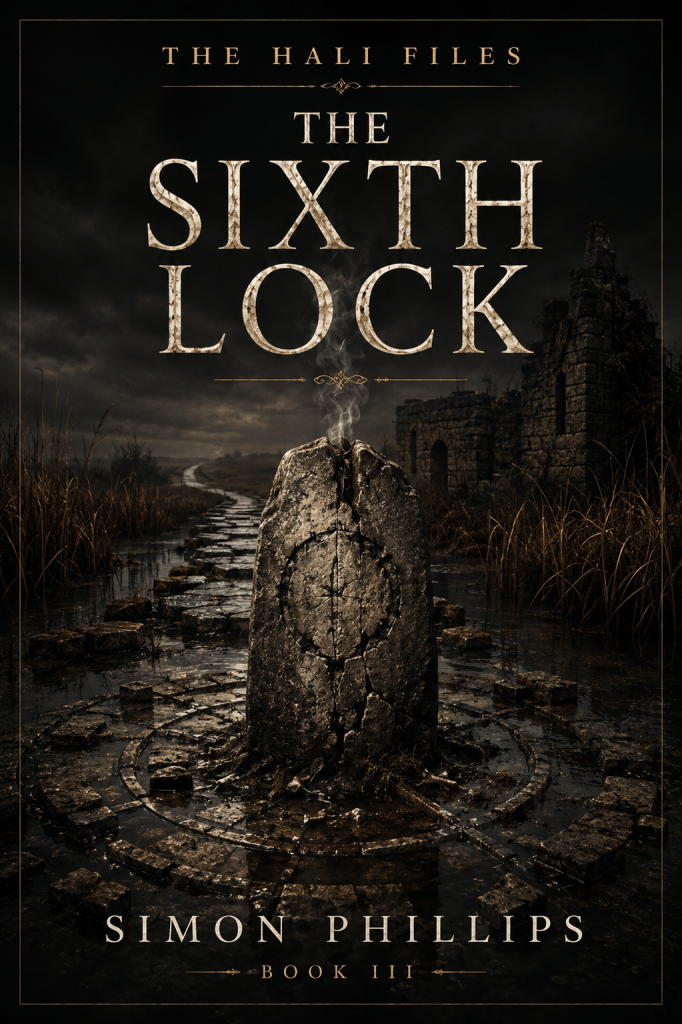
That encounter established the pressure running through The Sixth Lock, Book Three of The Hali Files. This dark fantasy horror story moved beyond buried rooms and corrupted sacred sites into farmland, old roads and settlements whose inhabitants still used the physical remains of a supernatural war while understanding almost nothing about their original purpose. The danger arrived quietly enough for people to continue baking bread, repairing pumps, opening stalls and arguing over whether anything unusual had happened at all.
The village survived the first warning by making it smaller, which was exactly what generations of peace had taught people to do.
A Demon Interested in Roads Rather Than Blood
The creature moving through the western country disturbed Kael because its behaviour carried purpose. It had the strength to attack villagers, kill livestock or turn the settlement into a place of immediate panic, yet no such violence followed the early sightings. Instead, it watched bells, roads, boundary stones, markets and the movement of people through familiar spaces.
Kael recognised the pattern from the old war. A creature driven by hunger would take whatever came close, while something frightened would hide from attention. A soldier studied response, distance and weakness, and the reports reaching Brother Carrow described something behaving much more like a scout than an isolated predator. Carrow eventually brought Kael and Maris a secret bounty because the Church could no longer dismiss the possibility that a complete manifested demon had crossed into the human world. Book 3 Report
That distinction gave The Sixth Lock much of its occult horror. The stranger had no need to terrorise the village when ordinary behaviour provided more useful information. Market bells revealed how quickly people gathered, roads showed where carts and travellers moved, old marks revealed which defensive structures still survived, and the Church’s eventual response showed whether anyone recognised what those structures once meant.
The investigation gradually turned scattered village unease into a deliberate system. Hester’s testimony, disturbed boundary stones, animal behaviour, unusual footprints and sightings along western tracks led Kael and Maris towards an abandoned store overlooking several routes. Inside, they found a body-shaped hollow in straw, blackened material, bone grit and marks aligned towards roads and gathering places. The building had become an observation post, and the creature had spent its time studying the village rather than hunting it. Book 3 Report
The horror lay in the patience behind that choice. Something from the old war had returned to a world that believed the crossings were finished, and its first concern had been learning how much humanity had forgotten.
Old Roads Remembered What People Had Lost
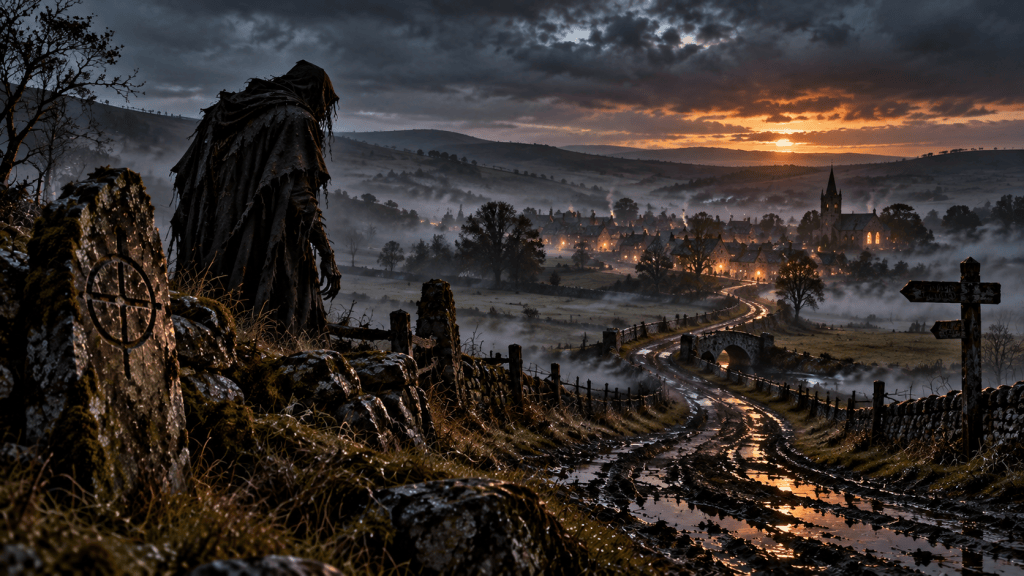
The countryside surrounding the village carried its own evidence. Drainage channels had once helped slow approaching enemies, bridges had been widened across older defensive crossings, boundary stones had become gateposts, and old shelters had changed purpose often enough for their first use to disappear from local memory. Farmers and road workers maintained these structures because they remained useful, even after the knowledge that created them had faded.
That made the landscape itself part of the supernatural mystery. Modern life had grown across the remains of war without fully removing them, leaving physical systems in place after their meaning had been stripped away. The series dossier describes the wider Hali world in similar terms, with visible society operating above older ruins, sealed spaces and suppressed structures that continue affecting people who no longer understand them. Series Report
Kael could read some of those remnants because he remembered fighting when roads, mills, chapels and drainage lines had all become pieces of defence. Maris approached them differently, sensing pressure through structures whose magical purpose had survived more clearly than their history. Together, they moved through a countryside where practical use had preserved the shape of the past while ordinary survival had erased its explanation.
The demon understood that weakness as well. Forgotten protections were still there, yet a protection nobody recognised could be tested, crossed or studied before anyone thought to raise an alarm.
Six Locks Beneath the City
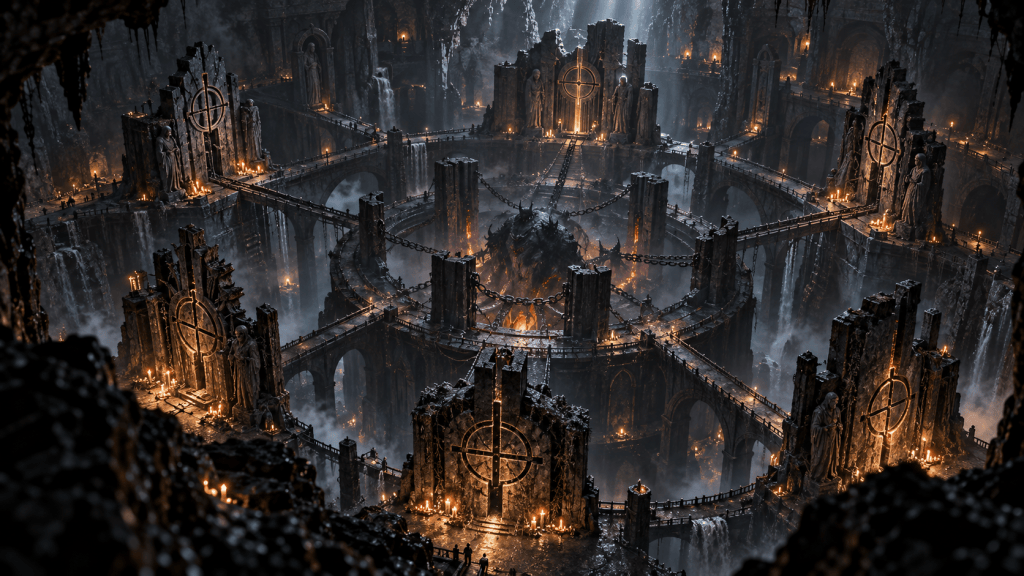
Brother Carrow’s fear forced another piece of the old war into the open. Beneath the city lay a containment zone built around a high-ranking warrior demon that human forces had been unable to destroy safely. Hali fighters held the creature while mages completed the binding, and four High Mages died during the work after the structure continued drawing power from them. The Sixth Lock
The central prison was considered too dangerous to leave behind a single defence. Six separate protections were built around it, each covering a different path towards release and overlapping strongly enough that one failure should never free the prisoner. Carrow regarded their survival as proof that the containment remained secure after generations of peace. The Sixth Lock
Kael heard a different meaning in the same history. Six locks also meant six admissions that the first binding could never be trusted alone, while an imprisoned enemy remained an enemy even after cities, markets and homes grew across the ground above it. His experience of war had taught him to distinguish between killing something and postponing its next opportunity to move.
Carrow’s defence of the Church remained more complicated than simple deceit. Humanity had lived through years when fields went untended, roads carried soldiers and burial carts, and children grew up inside permanent defences. Once the crossings ceased, civilisation needed to rebuild, and an endless state of alarm would eventually have destroyed much of what the war had left alive. The Sixth Lock
The Church therefore gave people an ending that allowed them to live again. The growing danger inside The Hali Files came from the possibility that this necessary ending became stronger than the evidence supporting it.
The Church Preserved the Warning and Removed Its Meaning
The western parish records revealed that contradiction in a smaller and more human form. The old scratched halos had once marked guarded ground, and early instructions required local holders to keep those marks visible while reporting strange smells, abnormal animal behaviour and changes along the roads. Later authorities stopped maintaining the warning marks because they feared preserving superstition and wartime anxiety.
The reporting mechanism survived even after the public meaning disappeared.
Hester’s family had preserved another fragment in behaviour. Her grandmother had warned her against tracing the old halo with a finger, though the reason behind that warning had faded long before Hester inherited it. The action remained because families often carried habits farther than explanations.
The Mage Order possessed its own incomplete memory. Maris knew the story of four High Mages destroyed by a shared binding, although the Order’s surviving account had lost the location and wider circumstances surrounding their deaths. Carrow held the Church version, Kael carried the memories of Hali fighters, and village records preserved practical instructions whose original danger had been stripped from public understanding. Book 3 Report
None of those accounts stood entirely alone as the truth. Together, they showed a history broken into pieces because different survivors preserved whatever their institutions, families or bodies could carry forward.
Kael’s Hali Sickness Was Becoming Harder to Leave Behind
The old war survived most painfully inside Kael. By the beginning of The Sixth Lock, sleep had become unreliable, food often remained untouched, alcohol had lost much of its ability to dull the pressure, and phantom incense reached him even inside rooms where nothing burned. His hands trembled, his eyes changed under strain, heat moved beneath old scars, and the sword remained close enough to reach before conscious thought caught up.
The Hali Sickness made him capable of meeting a creature built for supernatural war, while every use of that capability pushed him closer to the condition he feared. During conflict, pain became distant, perception sharpened and strength increased. The deeper danger appeared after violence ended, when the part of him awakened for battle became increasingly reluctant to settle again. Book 3 Report
That tension separated Kael from a cleaner demon hunter fantasy figure. His power carried no comfortable division between weapon and wound because the same condition allowing him to protect others also threatened the restraint that kept him human. The hunt west therefore became a confrontation with something beyond the outrider. Kael was being forced to recognise how easily his body still remembered what the war required from him.
The fear sharpened during the final pursuit. His fatigue receded, movement accelerated and pain lost its urgency while the sword responded more strongly than Maris had previously witnessed. Killing the demon became possible; stopping once the creature was dead became the more frightening uncertainty. Book 3 Report
Maris Was Learning That Control Could Become Another Form of Risk
Maris carried a different instability into the same fight. Her magic recognised pressure before conscious memory could always explain it, leaving her with instincts connected to systems she had only partly been taught to understand. When Carrow described the four dead mages, her hands reacted before she fully recalled the surviving Order account, suggesting that her body understood something her education had preserved only as history.
At the old boundary station, that instinct became genuine control. Maris used damaged stone, wet earth and the surviving shape of wartime defences to build two pressure-seals around the outrider. Both held long enough for Kael and Maris to question the creature, proving that her magic could operate with far greater structure than either of them had previously trusted.
The failure came when she tried to strengthen that success. A third working joined too deeply with the first two, allowing pressure to move through the entire system and break the containment. Maris suffered the backlash while the demon escaped, turning a successful magical structure into the route through which the creature regained freedom. Book 3 Report
Her response mattered more than the mistake alone. During the pursuit she abandoned the attempt to recreate the larger cage and began using smaller workings to alter footing, expose buried stone and influence the road beneath the fight. Greater control came from understanding how much structure the situation could bear, instead of assuming that another layer of power would automatically make the first success safer.
Kael and Maris Were Becoming Part of the Same Supernatural Pressure
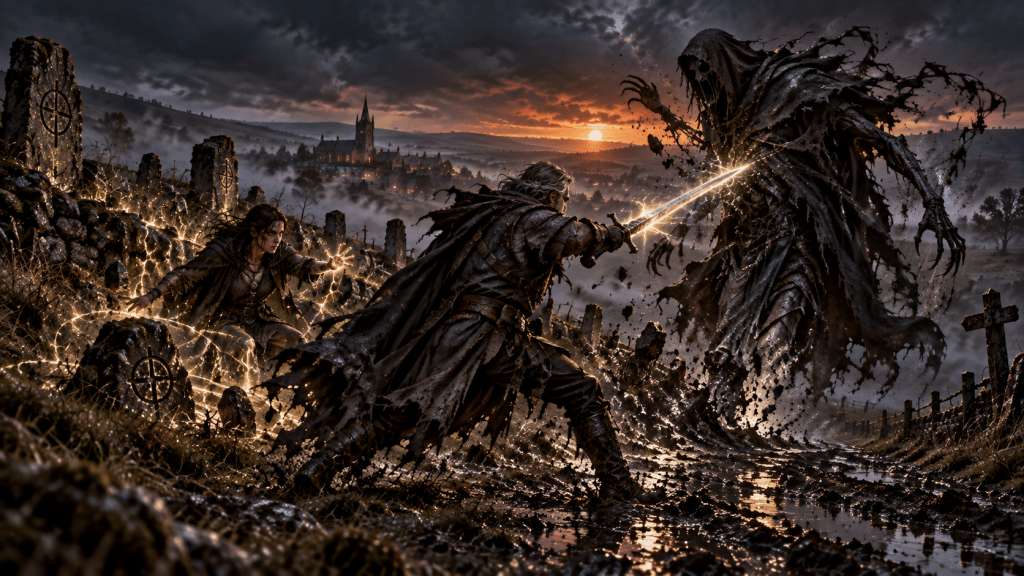
The outrider exposed another possibility while trapped between Maris’s seals. Kael’s Hali response appeared to intensify when distance opened between them and narrow when Maris focused her fear and attention towards him. The demon recognised something resembling the relationship between wartime mages and Hali fighters, suggesting that Maris might already be influencing Kael through magic she had never consciously chosen to cast. Book 3 Report
That discovery changed the meaning of their partnership. Kael had spent years treating the Hali as a condition he managed inside himself, while Maris feared magic that acted ahead of deliberate choice. Their growing dependence suggested that each person’s instability might now affect the other’s ability to remain in control.
The relationship remained grounded in quieter behaviour long before either could explain the supernatural connection. Maris brought Kael food when he stopped caring for himself, watched the signs of his sleeplessness and learned how his body changed before the Hali fully surfaced. Kael increasingly trusted her judgement, recognised the success inside her failed containment and refused to let one mistake erase what she had achieved. Book 3 Report
They were becoming stronger together, although that strength carried its own danger. Dependence could preserve them during the next encounter, while the same connection might expose both of them to forces neither yet understood.
The War Had Begun Measuring the World Again
The death of the outrider completed the bounty while leaving the larger problem unresolved. Its body destroyed itself from within, flesh burning as bone collapsed into grit and white-flecked residue spread through the wet ground. Maris managed to preserve a small sample, creating another piece of evidence that might eventually reach the Mage Order instead of disappearing completely into Church custody. Book 3 Report
More troubling was what the creature’s presence had already proved. The six locks beneath the city remained intact, meaning the imprisoned warrior had stayed contained while the outrider entered the human world through another route. The immediate danger had therefore come from somewhere beyond the prison that had dominated so much of Kael and Maris’s recent fear.
Kael chose to seek surviving Hali who might remember the war before later institutions shaped its history into safer forms. Maris chose to approach the Mage Order because her hands, her bindings and her effect upon Kael had become too significant to leave unexplored. They agreed to pursue those answers together, carrying different fragments of the same unfinished history towards people who might preserve pieces the Church had lost or buried. Book 3 Report
Readers can find The Sixth Lock, Book Three of The Hali Files, on Amazon.
The village continued behind Kael and Maris as they prepared to leave, with ovens warming, carts moving and bells marking an hour most people had no reason to fear. The scratched halo remained beside the road, carrying a warning whose meaning had almost disappeared while the road beyond the worked fields stretched back into wet country. Somewhere within that ordinary landscape, the old war had already tested the boundaries, measured the response and learned how much the world still remembered.
Discover more from Simon J. Phillips
Subscribe to get the latest posts sent to your email.
